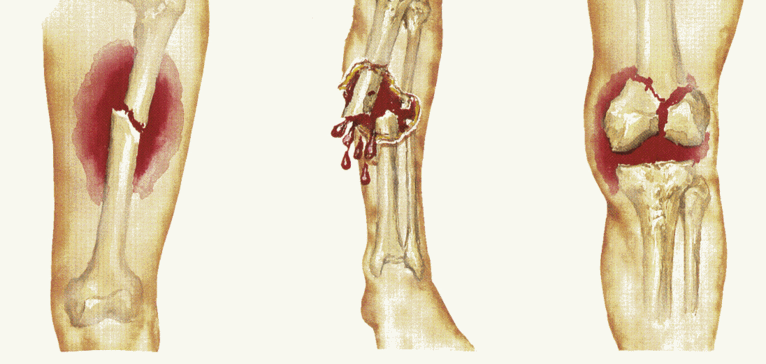
Category Archive Fracture of Bone A-Z

By

Collarbone Fracture; Causes, Symptoms, Diagnosis, Treatment

Collarbone Fracture/Clavicle fracture is one of the most common injuries around the shoulder girdle []. It has been reported that fractures of the clavicle account for approximately 2.6% of all fractures []. Incidence in males is usually highest in the second and third decade which decreases thereafter as per age []. In females, it is usually bimodal, with a peak incidence in young and elderly []. Allman classified clavicle fractures into three groups based on their location along the bone. The middle-third fractures are most common and account for approximately 80–85% all clavicular fractures [].

Fractures of the clavicle are common injuries accounting for between 2.6 and 4% of adult fractures and 35% of injuries to the shoulder girdle []. Early reports of clavicle fractures date back to Hippocrates [], who noted that “when a fractured clavicle is fairly broken across it is more easily treated, but when broken obliquely it is more difficult to manage”.

clavicle fracture


Anatomy

The clavicle is the first bone in the human body to begin intramembranous ossification directly from mesenchyme during the fifth week of fetal life. Similar to all long bones, the clavicle has both a medial and lateral epiphysis. The growth plates of the medial and lateral clavicular epiphyses do not fuse until the age of 25 years [.

Peculiar among long bones is the clavicle’s S-shaped double curve, which is convex medially and concaves laterally. This contouring allows the clavicle to serve as a strut for the upper extremity, while also protecting and allowing the passage of the axillary vessels and brachial plexus medially. The cross-sectional geometry also changes along its course. It progresses from more tubular medially to flat laterally. This change of contour, which is most acute at the junction of the middle and outer thirds, may explain the frequency of fractures seen in this area [.

The lateral clavicle is anchored to the coracoid process by the coracoclavicular ligament, composed of the lateral trapezoid and medial conoid parts. The static joint stabilizers are the AC ligaments, controlling the horizontal stability, and the CC ligament controlling the vertical stability. The dynamic stabilizers are the deltoid and trapezius muscles. The trapezius muscle attaches at the dorsal aspect of the acromion, part of the anterior deltoid muscle inserts on the clavicle medial to the AC joint. Their force vectors prevent excessive superior migration of the distal clavicle after disruption of the AC and CC ligaments alone [.

The deltoid, trapezius and pectoralis major muscles have important attachments to the clavicle. The deltoid muscle inserts onto the anterior surface of the lateral third of the clavicle, and the trapezius muscle onto the posterior aspect. The pectoralis major muscle inserts onto the anterior surface of the medial two thirds.

Mechanism of Injury of Collarbone Fracture

With the exception of the rare pathologic fracture due to metastatic or metabolic disease, clavicle fractures are typically due to trauma [. Younger individuals often sustain these injuries by way of moderate to high-energy mechanisms such as motor vehicle accidents or sports injuries, whereas elderly individuals are more likely to sustain injuries because of the sequela of a low-energy fall [. Although a fall onto an outstretched hand was traditionally considered the common mechanism, it has been found that the clavicle most often fails in direct compression from the force applied directly to the shoulder. In a study of 122 consecutive patients, 87% clavicle injuries resulted from a fall onto the shoulder, 7% resulted from a direct blow, and 6% resulted from a fall onto an outstretched hand [.

Types of Collarbone Fracture

Classification

GROUP I – Middle third fractures (80%)

GROUP II – Distal third fractures (15%)

  • Type I – Minimally displaced / interligamentous
  • Type II – Displaced fractures, fracture medial to the coracoclavicular ligaments
    • IIA – Both ligaments (conoid and trapezoid) attached to the distal fragment
    • IIB – Conoid tore, trapezoid attached to the distal fragment
  • Type III – Fractures involving articular surface
  • Type IV – intact coracoclavicular ligaments attached to periosteal sleeve plus proximal fragment displaced
  • Type V – Comminuted

GROUP III – Fracture of the proximal third (5%)

  • Type I – Minimally displacement
  • Type II – Displaced
  • Type III – Intra-articular
  • Type IV – Epiphyseal separation
  • Type V – Comminuted

Classification by Robinson (Edinburgh classification)

ED managementthirdFollow-upMiddle

Fracture type
(Mismanagement third) Broad arm sling to support limb for 2 weeks or until comfortable.  No evidence to support Figure of 8 bandages or brace

If age >12 years and shortened >2 cm refer to orthopedics for opinion

Give parent fracture of the clavicle (collarbone) fact sheet.  Advise to give regular analgesia as required

If <11 years and undisplaced, follow-up by a GP or fracture clinic is usually not required.  Repeat x-rays are usually not required

If displaced or ≥11 years, follow up with GP or fracture clinic in 1 week

Lateral third Broad arm sling to support limb for 2 weeks or until comfortable.  No evidence to support Figure of 8 bandages or brace

If displaced, refer to the nearest orthopedic service on call

Fracture clinic in 5-7 days with x-ray
Medial third If displaced, urgent referral to the nearest orthopedic on call service To be arranged by orthopedic service

Classifications of a fractured clavicle

Allman Nordqvist & Petersson Craig Edinburgh (Robinson) Neer
Group 1: mid third Undisplaced
Displaced comminuted
Type 1 : mid third Medial third (type 1) Non displaced (1A) 1A1 – Extra-articular
1A2 – Intra-articular
Type 1: fracture lateral to the coracoclavicular ligament attachment, which has very minimal displacement
Displaced (1B) 1B1 – Extra-articular
1B2 – Intra-articular
Type 2: medial to the ligament attachment
2A – both the conoid and the trapezoid ligaments are attached to the distal fragment
2B – conoid is detached from the proximal fragment while the trapezoid is attached to the distal fragment
Middle third (type 2) Cortical alignment fractures (2A) 2A1 – Undisplaced
2A2 – Angulated
Type 3: with intra-articular extension
Group 2: lateral third Undisplaced
Displaced
Type 2: Distal 1/3 fractures

a. Minimally displaced
b. Displaced fractures, fracture medial to the C–C ligament
1. Conoid and trapezoid intact
2. Conoid torn, trapezoid intact
c. Fractures into the articular surface
d. Fractures in children, intact C–C ligaments attached to the periosteal sleeve, proximal fragment displaced
 e. Comminuted fractures
Displaced fractures (2B) 2B1 – Simple or wedge comminuted
2B2 – Isolated or comminuted segmental
Type 4: occurs in children where a periosteal sleeve gets avulsed from the inferior cortex with the attached coracoclavicular ligament and the medial fragment gets displaced upwards
Type 5: avulsion fracture leaving behind an inferior cortical fragment attached to the coracoclavicular ligament
Group 3: medial third Undisplaced Displaced Type 3: Proximal 1/3 fractures

a. Minimally displaced
b. Displaced
c. Intra-articular
d. Epiphyseal separation
e. Comminuted
Distal third (type 3) Cortical alignment fractures (3A) 3A1 – Extra-articular
3A2 – Intra-articular
Displaced fractures (3B) 3B1 – Extra-articular
3B2 – Intra-articular

Causes of Collarbone Fracture

  • Clavicle fractures  – are most often caused by a direct blow to the shoulder. This can happen during a fall onto the shoulder or a car collision. A fall onto an outstretched arm can also cause a clavicle fracture. In a baby, a clavicle fracture can occur during the passage through the birth canal.
  • Sudden forceful  fall down
  • Road traffic accident
  • Falls – Falling onto an outstretched hand is one of the most common causes of a broken clavicle.
  • Sports injuries – Many wrist fractures occur during contact sports or sports in which you might fall onto an outstretched hand — such as in-line skating or snowboarding.
  • Motor vehicle crashes – Motor vehicle crashes can cause wrist bones to break, sometimes into many pieces, and often require surgical repair.
  • Have osteoporosis – a disease that weakens your bones
  • Eave low muscle mass or poor muscle strength – or lack agility and have poor balance (these conditions make you more likely to fall)
  • Walk or do other activities in snow or on the ice – or do activities that require a lot of forwarding momenta, such as in-line skating and skiing
  • Wave an inadequate – intake of calcium or vitamin D
  • Football or soccer – especially on artificial turf
  • Rugby
  • Horseback riding
  • Hockey
  • Skiing
  • Snowboarding
  • In-line skating
  • Jumping on a trampoline

Symptoms of Collarbone Fracture

  • Pain – particularly with arm movement or on the front part of the upper chest
  • Often – after the swelling has subsided, the fracture can be felt through the skin.
  • Sharp pain – when any movement is made
  • Referred pain – dull to extreme ache in and around clavicle area, including surrounding muscles
  • Possible nausea – dizziness, and/or spotty vision due to extreme pain
  • Bruising –  swelling, or bulging over your collarbone
  • Decreased feeling – or a tingling feeling in your arm or fingers
  • Swelling – ecchymosis, and tenderness may be noted over the clavicle
  • Abrasion – over the clavicle may be noted, suggesting that the fracture was from a direct mechanism
  • Crepitus from – the fracture ends rubbing against each other may be noted with gentle manipulation
  • Difficulty breathing – or diminished breath sounds on the affected side may indicate a pulmonary injury, such as a pneumothorax
  • Palpation of the scapula – and ribs may reveal a concomitant injury
  • Tenting and blanching of the skin – at the fracture site may indicate an impending open fracture, which most often requires surgical stabilization
  • The shoulder may appear shortened – relative to the opposite side and may droop
  • Non-use – of the arm on the affected side is a neonatal presentation
  • Associated distal nerve dysfunction indicates a brachial plexus injury
  • Decreased pulses may indicate a subclavian artery injury
  • Venous stasis discoloration and swelling indicate a subclavian venous injury.
  • Pain where the broken bone is
  • Having a hard time moving your shoulder or arm, and pain when you do move them
  • A shoulder that seems to be sagging
  • A cracking or grinding noise when you raise your arm
  • The bone that is pushing against or through the skin
  • The patient may cradle the injured extremity with the uninjured arm

Diagnosis of Collarbone Fracture

clavicle fracture

Physical Examination

  • In a clavicle fracture, there is usually an obvious deformity, or “bump,” at the fracture site. Gentle pressure over the break will bring about pain. Although it is rare for a bone fragment to break through the skin, it may push the skin into a “tent” formation.
  • During the physical examination, a dropped shoulder on the affected side, swelling, and hematoma at the middle third of the clavicle are usually observed. Often the fracture elements are palpable. Assessment of possible skin compromise and neurovascular status is important. In addition to the physical assessment, radiological assessment is part of the diagnostic workup.
  • The basic method to check for a clavicle fracture is by an X-ray of the clavicle to determine the fracture type and extent of the injury. In former times, X-rays were taken of both clavicle bones for comparison purposes. Due to the curved shape in a tilted plane X-rays are typically oriented with ~15° upwards facing tilt from the front.[rx]

Differential Diagnosis/ Associated Injuries

  • Scapholunate ligament tear
  • Median nerve injury
  • TFCC (triangular fibrocartilage complex) injury, up to 50% when ulnar styloid fx also present
  • Carpal ligament injury – Scapholunate Instability(most common), lunotriquetral ligament
  • Tendon injury, attritional EPL rupture, usually treated with EIP tendon transfer
  • Compartment syndrome
  • DRUJ (Distal Radial Ulnar Joint) Instability
  • Galeazzi Fracture: highly associated with distal 1/3 radial shaft fractures[rx]

Plain radiographs

  • Radiographic imaging is important in diagnosis, classification, treatment and follow-up assessment of these fractures. The routine minimal evaluation for distal radius fractures must include two views-a postero-anterior (PA) view and lateral view.[]
  • The PA view should be obtained with the humerus abducted 90 degrees from the chest wall, so that the elbow is at the same level as the shoulder and flexed 90 degrees.[] The palm is maintained flat against the cassette

Computed Tomography

  • CT may be useful and can give significant information in comparison with that obtained with conventional radiography in the evaluation of complex or occult fractures, distal radial articular surface, distal radio-ulnar joint, ventromedial fracture fragment (as described by Melone),[] assessments of fracture healing as well as post-surgical evaluation.[]
  • CT may be indicated for the confirmation of occult fractures suspected on the basis of physical examination when plain films are normal.

Magnetic Resonance Imaging

  • Although this modality is not the first choice in evaluating acute distal radius fractures, it is a powerful diagnostic tool to assess bony, ligamentous and soft tissue abnormalities associated with these fractures.
  • MRI has proved to be a very important diagnostic tool for delineating perforation of triangular fibrocartilage complex (TFCC),[] perforation of interosseous ligaments of the proximal carpal row, evaluating occult fractures, post-traumatic or avascular necrosis of carpal bones.

Treatment of Collarbone Fracture

clavicle fracture

Treatment available can be broadly

  • Get medical help immediately – If you fall on an outstretched arm, get into a car accident or are hit while playing a sport and feel intense pain in your shoulder area, then get medical care immediately. Fractured clavicles cause significant pain in the front part of your shoulder, closer to the base of your neck. You’ll innately know that something is seriously wrong because you won’t be able to lift your arm up. Other symptoms include immediate swelling and/or bruising near the fracture, grinding sounds with arm movements and potential numbness and tingling in the arm/hand.
  • Apply ice to your fractured clavicle. After you get home from the hospital (regardless if you had surgery or not), you should apply a bag of crushed ice (or something cold) to your injured clavicle in order to reduce the swelling and numb the pain. Ice therapy is effective for acute (recent) injuries that involve swelling because it reduces blood flow by constricting local blood vessels. Apply the crushed ice to your clavicle for 15 minutes three to five times daily until the soreness and inflammation eventually fades away
    Lightly exercise after the pain fades. After a couple of weeks when the swelling has subsided and the pain has faded away, remove your arm sling for short periods and carefully move your arm and shoulder in all different directions. Don’t aggravate the clavicle so that it hurts, but gently reintroduce movements to the involved joints and muscles. Start cautiously, maybe starting with light calisthenics and then progress to holding light weights (five-pound weights to start). Your clavicle needs to move a little bit during the later phases of the injury to stimulate complete recovery.
  • Practice stretching and strengthening exercises – of the fingers, elbow, and shoulder if your doctor recommends them.
  • A splint – which you might use for a few days to a week while the swelling goes down; if a splint is used initially, a cast is usually put on about a week later.
  • A cast – which you might need for six to eight weeks or longer, depending on how bad the break is (you might need a second cast if the first one gets too loose after the swelling goes away.)
  • Get a supportive arm sling – Due to their anatomical position, fractured clavicles can’t be cast like a broken limb can. Instead, a supportive arm sling or “figure-eight” splint is typically used for support and comfort, either immediately after the injury if it’s just a hairline fracture or following surgery, if it’s a complicated fracture. A figure-eight splint wraps around both shoulders and the base of your neck in order to support the injured shoulder and keep it positioned up and back. Sometimes a larger swath of material is wrapped around the sling to keep it closer to your body. You’ll need to wear the sling constantly until there is no pain with arm movements, which takes between two to four weeks for children or four to eight weeks for adults.
  • Get a referral to physical therapy. Once you’ve recovered and able to remove your arm sling splint for good, you’ll likely notice that the muscles surrounding your shoulder and upper chest look smaller and feel weaker. That’s because muscle tissue atrophies without movement. If this occurs, then you’ll need to get a referral for some physical rehabilitation. Rehab can start once you are cleared by your orthopedist, are pain-free, and can perform all the basic arm and shoulder movements. A physiotherapist or athletic trainer can show you specific rehabilitation exercises and stretches to restore your muscle strength, joint movements, and flexibility
  • Rigid fixation – osteosynthesis with locking plate, hook plate fixation, fixation with a distal radius locking plate, coracoclavicular screws, Knowles pin fixation.
  • Flexible fixation – simple k wire fixation, tension band wiring, suture anchors, vicryl tape, dacron arterial graft for coracoclavicular ligament reconstruction.

Rest your shoulder

Once you’re discharged from the hospital in an arm sling, your top priority is to rest your shoulder and not further inflame the injury. Of course, the arm sling not only provides support, but it also restricts movement, which is why you should keep it on even during sleep. Avoiding the temptation to move your shoulder and arm will help the bone mend quicker and the pain fades away sooner.
  • Depending on what you do for a living and if the injury is to your dominant side, you may need to take a couple of weeks off work to recuperate.
  • Healing takes between four to six weeks in younger people and up to 12 weeks in the elderly, but it depends on the severity of the fractured clavicle.
  • Athletes in good health are typically able to resume their sporting activities within two months of breaking their clavicle, depending on the severity of the break and the specific sport.
  • Sleeping on your back (with the sling on) is necessary to keep the pressure off your shoulder and prevent stressing the clavicle injury.

Eat nutritiously during your recovery

  • All bones and tissues in the body need certain nutrients in order to heal properly and in a timely manner. Eating a nutritious and balanced diet that includes lots of minerals and vitamins is proven to help heal broken bones of all types, including clavicles.[rx] Therefore, focus on eating lots of fresh produce (fruits and veggies), whole grains, lean meats, and fish to give your body the building blocks needed to properly repair your clavicle. In addition, drink plenty of purified water, milk, and other dairy-based beverages to augment what you eat.
    • Broken bones need ample minerals (calcium, phosphorus, magnesium, boron) and protein to become strong and healthy again.
    • Excellent sources of minerals/protein include dairy products, tofu, beans, broccoli, nuts and seeds, sardines and salmon.
    • Important vitamins that are needed for bone healing include vitamin C (needed to make collagen), vitamin D (crucial for mineral absorption), and vitamin K (binds calcium to bones and triggers collagen formation).
    • Conversely, don’t consume food or drink that is known to impair bone/tissue healing, such as alcoholic beverages, sodas, most fast food items and foods made with lots of refined sugars and preservatives.


Physical therapy

  • Although there will be some pain, it is important to maintain arm motion to prevent stiffness. Often, patients will begin doing exercises for elbow motion immediately after the injury.  After a clavicle fracture, it is common to lose some shoulder and arm strength. Once the bone begins to heal, your pain will decrease and your doctor may start gentle shoulder exercises. These exercises will help prevent stiffness and weakness. More strenuous exercises will be started gradually once the fracture is completely healed.

Follow-up care

  • You will need to see your doctor regularly until your fracture heals. During these visits, he or will take x-rays to make sure the bone is healing in a good position. After the bone has healed, you will be able to gradually return to your normal activities.

Breathing Exercise

  • To elevate breathing problem or remove the lung congestion.

Medications

Medication can be prescribed to ease the pain. 

Surgery

The evidence for different types of surgery for breaks of the middle part of the clavicle is poor as of 2015.[10]

Surgery is considered when one or more of the following conditions present.

  • Comminution with separation (bone is broken into multiple pieces)
  • Significant foreshortening of the clavicle (indicated by shoulder forward)
  • Skin penetration (open fracture)
  • Associated nervous and vascular trauma (brachial plexus or supraclavicular nerves)
  • Nonunion after several months (3–6 months, typically)
  • Displaced distal third fractures (high risk of nonunion)

Open reduction and internal fixation. This is the procedure most often used to treat clavicle fractures. During the procedure, the bone fragments are first repositioned (reduced) into their normal alignment. The pieces of bone are then held in place with special metal hardware.

Common methods of internal fixation include:

  • Plates and screws – After being repositioned into their normal alignment, the bone fragments are held in place with special screws and metal plates attached to the outer surface of the bone. After surgery, you may notice a small patch of numb skin below the incision. This numbness will become less noticeable with time. Because the clavicle lies directly under the skin, you may be able to feel the plate through your skin.
  • Pins or screws –  Pins or screws can also be used to hold the fracture in good position after the bone ends have been put back in place. The incisions for pin or screw placement are usually smaller than those used for plates.
    Pins or screws often irritate the skin where they have been inserted and are usually removed once the fracture has healed.
  • Precontoured locking plates
  • Hook plate
  • Distal radius plates
  • Coracoclavicular screws
  • Flexible coracoclavicular fixation
  • Arthroscopic treatment
  • Intra-medullary fixation
  • Tension band fixation

Complications of Collarbone Fracture

There are risks associated with any type of surgery. These include:

  • Nonunion (1-5%)
  • Infection (~4.8%)
  • Pneumothorax
  • Adhesive capsulitis
  • 4% in the surgical group develop adhesive capsulitis requiring surgical intervention
  • Bleeding
  • Problems with wound healing
  • Blood clots
  • Damage to blood vessels or nerves
  • Reaction to anesthesia
  • Hardware prominence
  • Malunion with cosmetic deformity
  • Restriction of ROM
  • Difficulty with bone healing
  • Lung injury
  • Hardware irritation
  • Fracture comminution (Z deformity)
  • Fracture displacement
  • Increased fatigue with overhead activities
  • Thoracic outlet syndrome
  • Dissatisfaction with appearance
  • The difficulty with shoulder straps, backpacks and the like
  • ~30% of patient request plate removal
  • Superior plates associated with increased irritation
  • Superior plates associated with increased risk of subclavian artery or vein penetration
  • Subclavian thrombosis

Rehabilitation of Collarbone Fracture

  • A rehabilitation protocol was started after removal of the bandage in group 1 and immediately after plate fixation in group 2. Gentle pendulum exercises of the shoulder in the sling/arm pouch were allowed as per pain tolerance immediately after surgery in the surgically treated group and after 3 weeks in the conservative group.
  • At 3 weeks, gentle active range of motion of the shoulder was allowed with abduction limiting to 90°. Subsequently, the active range of motion exercises that are to be performed at home is advised. At four to 6 weeks, active to an active assisted range of motion in all planes were allowed.
  • When fracture union (defined as radiographic union with no pain or motion with manual stressing of the fracture) was evident, muscle strengthening exercises were also allowed. At eight to 12 weeks, isometric and isotonic exercises were prescribed to the shoulder girdle muscles with a return to full activities (including sports) at 3 months.
  • Regular follow-up was done every fortnight for the initial 6 weeks, then at 06 weeks, 03 and 06 months using the patient’s subjective evaluation, functional outcome, and radiographic assessment. Patients’ subjective evaluation was investigated by direct interview at the follow-up visits. Functional outcome was graded on the standardized clinical evaluation and completion of the Constant and Murley score [].

References

Clavicle fracture

By

Clavicle Fracture; Causes, Symptoms, Diagnosis, Treatment

Clavicle fracture is one of the most common injuries around the shoulder girdle []. It has been reported that fractures of the clavicle account for approximately 2.6% of all fractures []. Incidence in males is usually highest in the second and third decade which decreases thereafter as per age []. In females, it is usually bimodal, with a peak incidence in young and elderly []. Allman classified clavicle fractures into three groups based on their location along the bone. The middle-third fractures are most common and account for approximately 80–85% all clavicular fractures [].

Fractures of the clavicle are common injuries accounting for between 2.6 and 4% of adult fractures and 35% of injuries to the shoulder girdle []. Early reports of clavicle fractures date back to Hippocrates [], who noted that “when a fractured clavicle is fairly broken across it is more easily treated, but when broken obliquely it is more difficult to manage”.

clavicle fracture


Anatomy

The clavicle is the first bone in the human body to begin intramembranous ossification directly from mesenchyme during the fifth week of fetal life. Similar to all long bones, the clavicle has both a medial and lateral epiphysis. The growth plates of the medial and lateral clavicular epiphyses do not fuse until the age of 25 years [.

Peculiar among long bones is the clavicle’s S-shaped double curve, which is convex medially and concaves laterally. This contouring allows the clavicle to serve as a strut for the upper extremity, while also protecting and allowing the passage of the axillary vessels and brachial plexus medially. The cross-sectional geometry also changes along its course. It progresses from more tubular medially to flat laterally. This change of contour, which is most acute at the junction of the middle and outer thirds, may explain the frequency of fractures seen in this area [.

The lateral clavicle is anchored to the coracoid process by the coracoclavicular ligament, composed of the lateral trapezoid and medial conoid parts. The static joint stabilizers are the AC ligaments, controlling the horizontal stability, and the CC ligament controlling the vertical stability. The dynamic stabilizers are the deltoid and trapezius muscles. The trapezius muscle attaches at the dorsal aspect of the acromion, part of the anterior deltoid muscle inserts on the clavicle medial to the AC joint. Their force vectors prevent excessive superior migration of the distal clavicle after disruption of the AC and CC ligaments alone [.

The deltoid, trapezius and pectoralis major muscles have important attachments to the clavicle. The deltoid muscle inserts onto the anterior surface of the lateral third of the clavicle, and the trapezius muscle onto the posterior aspect. The pectoralis major muscle inserts onto the anterior surface of the medial two thirds.

Mechanism of Injury of Clavicle Fracture

With the exception of the rare pathologic fracture due to metastatic or metabolic disease, clavicle fractures are typically due to trauma [. Younger individuals often sustain these injuries by way of moderate to high-energy mechanisms such as motor vehicle accidents or sports injuries, whereas elderly individuals are more likely to sustain injuries because of the sequela of a low-energy fall [. Although a fall onto an outstretched hand was traditionally considered the common mechanism, it has been found that the clavicle most often fails in direct compression from the force applied directly to the shoulder. In a study of 122 consecutive patients, 87% clavicle injuries resulted from a fall onto the shoulder, 7% resulted from a direct blow, and 6% resulted from a fall onto an outstretched hand [.

Types of Clavicle Fracture

Classification

GROUP I – Middle third fractures (80%)

GROUP II – Distal third fractures (15%)

  • Type I – Minimally displaced / interligamentous
  • Type II – Displaced fractures, fracture medial to the coracoclavicular ligaments
    • IIA – Both ligaments (conoid and trapezoid) attached to the distal fragment
    • IIB – Conoid tore, trapezoid attached to the distal fragment
  • Type III – Fractures involving articular surface
  • Type IV – intact coracoclavicular ligaments attached to periosteal sleeve plus proximal fragment displaced
  • Type V – Comminuted

GROUP III – Fracture of the proximal third (5%)

  • Type I – Minimally displacement
  • Type II – Displaced
  • Type III – Intra-articular
  • Type IV – Epiphyseal separation
  • Type V – Comminuted

Classification by Robinson (Edinburgh classification)

ED managementthirdFollow-upMiddle

Fracture type
(Mismanagement third) Broad arm sling to support limb for 2 weeks or until comfortable.  No evidence to support Figure of 8 bandages or brace

If age >12 years and shortened >2 cm refer to orthopedics for opinion

Give parent fracture of the clavicle (collarbone) fact sheet.  Advise to give regular analgesia as required

If <11 years and undisplaced, follow-up by a GP or fracture clinic is usually not required.  Repeat x-rays are usually not required

If displaced or ≥11 years, follow up with GP or fracture clinic in 1 week

Lateral third Broad arm sling to support limb for 2 weeks or until comfortable.  No evidence to support Figure of 8 bandages or brace

If displaced, refer to the nearest orthopedic service on call

Fracture clinic in 5-7 days with x-ray
Medial third If displaced, urgent referral to the nearest orthopedic on call service To be arranged by orthopedic service

Classifications of fractured clavicle

Allman Nordqvist & Petersson Craig Edinburgh (Robinson) Neer
Group 1: mid third Undisplaced
Displaced comminuted
Type 1 : mid third Medial third (type 1) Non displaced (1A) 1A1 – Extra-articular
1A2 – Intra-articular
Type 1: fracture lateral to the coracoclavicular ligament attachment, which has very minimal displacement
Displaced (1B) 1B1 – Extra-articular
1B2 – Intra-articular
Type 2: medial to the ligament attachment
2A – both the conoid and the trapezoid ligaments are attached to the distal fragment
2B – conoid is detached from the proximal fragment while the trapezoid is attached to the distal fragment
Middle third (type 2) Cortical alignment fractures (2A) 2A1 – Undisplaced
2A2 – Angulated
Type 3: with intra-articular extension
Group 2: lateral third Undisplaced
Displaced
Type 2: Distal 1/3 fractures

a. Minimally displaced
b. Displaced fractures, fracture medial to the C–C ligament
1. Conoid and trapezoid intact
2. Conoid torn, trapezoid intact
c. Fractures into the articular surface
d. Fractures in children, intact C–C ligaments attached to the periosteal sleeve, proximal fragment displaced
 e. Comminuted fractures
Displaced fractures (2B) 2B1 – Simple or wedge comminuted
2B2 – Isolated or comminuted segmental
Type 4: occurs in children where a periosteal sleeve gets avulsed from the inferior cortex with the attached coracoclavicular ligament and the medial fragment gets displaced upwards
Type 5: avulsion fracture leaving behind an inferior cortical fragment attached to the coracoclavicular ligament
Group 3: medial third Undisplaced Displaced Type 3: Proximal 1/3 fractures

a. Minimally displaced
b. Displaced
c. Intra-articular
d. Epiphyseal separation
e. Comminuted
Distal third (type 3) Cortical alignment fractures (3A) 3A1 – Extra-articular
3A2 – Intra-articular
Displaced fractures (3B) 3B1 – Extra-articular
3B2 – Intra-articular

Causes of Clavicle Fracture

  • Clavicle fractures  – are most often caused by a direct blow to the shoulder. This can happen during a fall onto the shoulder or a car collision. A fall onto an outstretched arm can also cause a clavicle fracture. In a baby, a clavicle fracture can occur during the passage through the birth canal.
  • Sudden forceful  fall down
  • Road traffic accident
  • Falls – Falling onto an outstretched hand is one of the most common causes of a broken clavicle.
  • Sports injuries – Many wrist fractures occur during contact sports or sports in which you might fall onto an outstretched hand — such as in-line skating or snowboarding.
  • Motor vehicle crashes – Motor vehicle crashes can cause wrist bones to break, sometimes into many pieces, and often require surgical repair.
  • Have osteoporosis – a disease that weakens your bones
  • Eave low muscle mass or poor muscle strength – or lack agility and have poor balance (these conditions make you more likely to fall)
  • Walk or do other activities in snow or on the ice – or do activities that require a lot of forwarding momenta, such as in-line skating and skiing
  • Wave an inadequate – intake of calcium or vitamin D
  • Football or soccer – especially on artificial turf
  • Rugby
  • Horseback riding
  • Hockey
  • Skiing
  • Snowboarding
  • In-line skating
  • Jumping on a trampoline

Symptoms of Clavicle Fracture

  • Pain – particularly with arm movement or on the front part of the upper chest
  • Often – after the swelling has subsided, the fracture can be felt through the skin.
  • Sharp pain – when any movement is made
  • Referred pain – dull to extreme ache in and around clavicle area, including surrounding muscles
  • Possible nausea – dizziness, and/or spotty vision due to extreme pain
  • Bruising –  swelling, or bulging over your collarbone
  • Decreased feeling – or a tingling feeling in your arm or fingers
  • Swelling – ecchymosis, and tenderness may be noted over the clavicle
  • Abrasion – over the clavicle may be noted, suggesting that the fracture was from a direct mechanism
  • Crepitus from – the fracture ends rubbing against each other may be noted with gentle manipulation
  • Difficulty breathing – or diminished breath sounds on the affected side may indicate a pulmonary injury, such as a pneumothorax
  • Palpation of the scapula – and ribs may reveal a concomitant injury
  • Tenting and blanching of the skin – at the fracture site may indicate an impending open fracture, which most often requires surgical stabilization
  • The shoulder may appear shortened – relative to the opposite side and may droop
  • Non-use – of the arm on the affected side is a neonatal presentation
  • Associated distal nerve dysfunction indicates a brachial plexus injury
  • Decreased pulses may indicate a subclavian artery injury
  • Venous stasis discoloration and swelling indicate a subclavian venous injury.
  • Pain where the broken bone is
  • Having a hard time moving your shoulder or arm, and pain when you do move them
  • A shoulder that seems to be sagging
  • A cracking or grinding noise when you raise your arm
  • The bone that is pushing against or through the skin
  • The patient may cradle the injured extremity with the uninjured arm

Diagnosis of Clavicle Fracture

clavicle fracture

Physical Examination

  • In a clavicle fracture, there is usually an obvious deformity, or “bump,” at the fracture site. Gentle pressure over the break will bring about pain. Although it is rare for a bone fragment to break through the skin, it may push the skin into a “tent” formation.
  • During the physical examination, a dropped shoulder on the affected side, swelling, and hematoma at the middle third of the clavicle are usually observed. Often the fracture elements are palpable. Assessment of possible skin compromise and neurovascular status is important. In addition to the physical assessment, radiological assessment is part of the diagnostic workup.
  • The basic method to check for a clavicle fracture is by an X-ray of the clavicle to determine the fracture type and extent of the injury. In former times, X-rays were taken of both clavicle bones for comparison purposes. Due to the curved shape in a tilted plane X-rays are typically oriented with ~15° upwards facing tilt from the front.[rx]

Differential Diagnosis/ Associated Injuries

  • Scapholunate ligament tear
  • Median nerve injury
  • TFCC (triangular fibrocartilage complex) injury, up to 50% when ulnar styloid fx also present
  • Carpal ligament injury – Scapholunate Instability(most common), lunotriquetral ligament
  • Tendon injury, attritional EPL rupture, usually treated with EIP tendon transfer
  • Compartment syndrome
  • DRUJ (Distal Radial Ulnar Joint) Instability
  • Galeazzi Fracture: highly associated with distal 1/3 radial shaft fractures[rx]

Plain radiographs

  • Radiographic imaging is important in diagnosis, classification, treatment and follow-up assessment of these fractures. The routine minimal evaluation for distal radius fractures must include two views-a postero-anterior (PA) view and lateral view.[]
  • The PA view should be obtained with the humerus abducted 90 degrees from the chest wall, so that the elbow is at the same level as the shoulder and flexed 90 degrees.[] The palm is maintained flat against the cassette

Computed Tomography

  • CT may be useful and can give significant information in comparison with that obtained with conventional radiography in the evaluation of complex or occult fractures, distal radial articular surface, distal radio-ulnar joint, ventromedial fracture fragment (as described by Melone),[] assessments of fracture healing as well as post-surgical evaluation.[]
  • CT may be indicated for the confirmation of occult fractures suspected on the basis of physical examination when plain films are normal.

Magnetic Resonance Imaging

  • Although this modality is not the first choice in evaluating acute distal radius fractures, it is a powerful diagnostic tool to assess bony, ligamentous and soft tissue abnormalities associated with these fractures.
  • MRI has proved to be a very important diagnostic tool for delineating perforation of triangular fibrocartilage complex (TFCC),[] perforation of interosseous ligaments of the proximal carpal row, evaluating occult fractures, post-traumatic or avascular necrosis of carpal bones.

Treatment of Clavicle Fracture

clavicle fracture

Treatment available can be broadly

  • Get medical help immediately – If you fall on an outstretched arm, get into a car accident or are hit while playing a sport and feel intense pain in your shoulder area, then get medical care immediately. Fractured clavicles cause significant pain in the front part of your shoulder, closer to the base of your neck. You’ll innately know that something is seriously wrong because you won’t be able to lift your arm up. Other symptoms include immediate swelling and/or bruising near the fracture, grinding sounds with arm movements and potential numbness and tingling in the arm/hand.
  • Apply ice to your fractured clavicle. After you get home from the hospital (regardless if you had surgery or not), you should apply a bag of crushed ice (or something cold) to your injured clavicle in order to reduce the swelling and numb the pain. Ice therapy is effective for acute (recent) injuries that involve swelling because it reduces blood flow by constricting local blood vessels. Apply the crushed ice to your clavicle for 15 minutes three to five times daily until the soreness and inflammation eventually fades away
    Lightly exercise after the pain fades. After a couple of weeks when the swelling has subsided and the pain has faded away, remove your arm sling for short periods and carefully move your arm and shoulder in all different directions. Don’t aggravate the clavicle so that it hurts, but gently reintroduce movements to the involved joints and muscles. Start cautiously, maybe starting with light calisthenics and then progress to holding light weights (five-pound weights to start). Your clavicle needs to move a little bit during the later phases of the injury to stimulate complete recovery.
  • Practice stretching and strengthening exercises – of the fingers, elbow, and shoulder if your doctor recommends them.
  • A splint – which you might use for a few days to a week while the swelling goes down; if a splint is used initially, a cast is usually put on about a week later.
  • A cast – which you might need for six to eight weeks or longer, depending on how bad the break is (you might need a second cast if the first one gets too loose after the swelling goes away.)
  • Get a supportive arm sling – Due to their anatomical position, fractured clavicles can’t be casted like a broken limb can. Instead, a supportive arm sling or “figure-eight” splint is typically used for support and comfort, either immediately after the injury if it’s just a hairline fracture or following surgery, if it’s a complicated fracture. A figure-eight splint wraps around both shoulders and the base of your neck in order to support the injured shoulder and keep it positioned up and back. Sometimes a larger swath of material is wrapped around the sling to keep it closer to your body. You’ll need to wear the sling constantly until there is no pain with arm movements, which takes between two to four weeks for children or four to eight weeks for adults.
  • Get a referral to physical therapy. Once you’ve recovered and able to remove your arm sling splint for good, you’ll likely notice that the muscles surrounding your shoulder and upper chest look smaller and feel weaker. That’s because muscle tissue atrophies without movement. If this occurs, then you’ll need to get a referral for some physical rehabilitation. Rehab can start once you are cleared by your orthopedist, are pain-free, and can perform all the basic arm and shoulder movements. A physiotherapist or athletic trainer can show you specific rehabilitation exercises and stretches to restore your muscle strength, joint movements and flexibility
  • Rigid fixation – osteosynthesis with locking plate, hook plate fixation, fixation with a distal radius locking plate, coracoclavicular screws, Knowles pin fixation.
  • Flexible fixation – simple k wire fixation, tension band wiring, suture anchors, vicryl tape, dacron arterial graft for coracoclavicular ligament reconstruction.

Rest your shoulder

Once you’re discharged from the hospital in an arm sling, your top priority is to rest your shoulder and not further inflame the injury. Of course, the arm sling not only provides support, but it also restricts movement, which is why you should keep it on even during sleep. Avoiding the temptation to move your shoulder and arm will help the bone mend quicker and the pain fades away sooner.
  • Depending on what you do for a living and if the injury is to your dominant side, you may need to take a couple of weeks off work to recuperate.
  • Healing takes between four to six weeks in younger people and up to 12 weeks in the elderly, but it depends on the severity of the fractured clavicle.
  • Athletes in good health are typically able to resume their sporting activities within two months of breaking their clavicle, depending on the severity of the break and the specific sport.
  • Sleeping on your back (with the sling on) is necessary to keep the pressure off your shoulder and prevent stressing the clavicle injury.

Eat nutritiously during your recovery

  • All bones and tissues in the body need certain nutrients in order to heal properly and in a timely manner. Eating a nutritious and balanced diet that includes lots of minerals and vitamins is proven to help heal broken bones of all types, including clavicles.[rx] Therefore, focus on eating lots of fresh produce (fruits and veggies), whole grains, lean meats, and fish to give your body the building blocks needed to properly repair your clavicle. In addition, drink plenty of purified water, milk, and other dairy-based beverages to augment what you eat.
    • Broken bones need ample minerals (calcium, phosphorus, magnesium, boron) and protein to become strong and healthy again.
    • Excellent sources of minerals/protein include dairy products, tofu, beans, broccoli, nuts and seeds, sardines and salmon.
    • Important vitamins that are needed for bone healing include vitamin C (needed to make collagen), vitamin D (crucial for mineral absorption), and vitamin K (binds calcium to bones and triggers collagen formation).
    • Conversely, don’t consume food or drink that is known to impair bone/tissue healing, such as alcoholic beverages, sodas, most fast food items and foods made with lots of refined sugars and preservatives.


Physical therapy

  • Although there will be some pain, it is important to maintain arm motion to prevent stiffness. Often, patients will begin doing exercises for elbow motion immediately after the injury.  After a clavicle fracture, it is common to lose some shoulder and arm strength. Once the bone begins to heal, your pain will decrease and your doctor may start gentle shoulder exercises. These exercises will help prevent stiffness and weakness. More strenuous exercises will be started gradually once the fracture is completely healed.

Follow-up care

  • You will need to see your doctor regularly until your fracture heals. During these visits, he or will take x-rays to make sure the bone is healing in a good position. After the bone has healed, you will be able to gradually return to your normal activities.

Breathing Exercise

  • To elevate breathing problem or remove the lung congestion.

Medications

Medication can be prescribed to ease the pain. 

Surgery

The evidence for different types of surgery for breaks of the middle part of the clavicle is poor as of 2015.[10]

Surgery is considered when one or more of the following conditions present.

  • Comminution with separation (bone is broken into multiple pieces)
  • Significant foreshortening of the clavicle (indicated by shoulder forward)
  • Skin penetration (open fracture)
  • Associated nervous and vascular trauma (brachial plexus or supraclavicular nerves)
  • Nonunion after several months (3–6 months, typically)
  • Displaced distal third fractures (high risk of nonunion)

Open reduction and internal fixation. This is the procedure most often used to treat clavicle fractures. During the procedure, the bone fragments are first repositioned (reduced) into their normal alignment. The pieces of bone are then held in place with special metal hardware.

Common methods of internal fixation include:

  • Plates and screws – After being repositioned into their normal alignment, the bone fragments are held in place with special screws and metal plates attached to the outer surface of the bone. After surgery, you may notice a small patch of numb skin below the incision. This numbness will become less noticeable with time. Because the clavicle lies directly under the skin, you may be able to feel the plate through your skin.
  • Pins or screws –  Pins or screws can also be used to hold the fracture in good position after the bone ends have been put back in place. The incisions for pin or screw placement are usually smaller than those used for plates.
    Pins or screws often irritate the skin where they have been inserted and are usually removed once the fracture has healed.
  • Precontoured locking plates
  • Hook plate
  • Distal radius plates
  • Coracoclavicular screws
  • Flexible coracoclavicular fixation
  • Arthroscopic treatment
  • Intra-medullary fixation
  • Tension band fixation

Complications

There are risks associated with any type of surgery. These include:

  • Nonunion (1-5%)
  • Infection (~4.8%)
  • Pneumothorax
  • Adhesive capsulitis
  • 4% in the surgical group develop adhesive capsulitis requiring surgical intervention
  • Bleeding
  • Problems with wound healing
  • Blood clots
  • Damage to blood vessels or nerves
  • Reaction to anesthesia
  • Hardware prominence
  • Malunion with cosmetic deformity
  • Restriction of ROM
  • Difficulty with bone healing
  • Lung injury
  • Hardware irritation
  • Fracture comminution (Z deformity)
  • Fracture displacement
  • Increased fatigue with overhead activities
  • Thoracic outlet syndrome
  • Dissatisfaction with appearance
  • The difficulty with shoulder straps, backpacks and the like
  • ~30% of patient request plate removal
  • Superior plates associated with increased irritation
  • Superior plates associated with increased risk of subclavian artery or vein penetration
  • Subclavian thrombosis

Rehabilitation of Clavicle Fracture

  • A rehabilitation protocol was started after removal of the bandage in group 1 and immediately after plate fixation in group 2. Gentle pendulum exercises of the shoulder in the sling/arm pouch were allowed as per pain tolerance immediately after surgery in the surgically treated group and after 3 weeks in the conservative group.
  • At 3 weeks, gentle active range of motion of the shoulder was allowed with abduction limiting to 90°. Subsequently, the active range of motion exercises that are to be performed at home is advised. At four to 6 weeks, active to an active assisted range of motion in all planes were allowed.
  • When fracture union (defined as radiographic union with no pain or motion with manual stressing of the fracture) was evident, muscle strengthening exercises were also allowed. At eight to 12 weeks, isometric and isotonic exercises were prescribed to the shoulder girdle muscles with a return to full activities (including sports) at 3 months.
  • Regular follow-up was done every fortnight for the initial 6 weeks, then at 06 weeks, 03 and 06 months using the patient’s subjective evaluation, functional outcome, and radiographic assessment. Patients’ subjective evaluation was investigated by direct interview at the follow-up visits. Functional outcome was graded on the standardized clinical evaluation and completion of the Constant and Murley score [].

References

Clavicle fracture

By

Fracture Complications, Causes, Symptoms

Fracture Complications/Fracture of Bones is a medical condition in which there is a partial or complete break in the continuity of the bone. In more severe cases, the bone may be broken into several pieces.[rx] A bone fracture may be the result of high force impact or stress, or a minimal trauma injury as a result of certain medical conditions that weaken the bones, such as osteoporosis, osteopenia, bone cancer, or osteogenesis imperfecta, where the fracture is then properly termed a pathologic fracture.[rx]

Fracture Complications

Types of Fracture of Bones

Mechanism

  • Traumatic fracture – This is a fracture due to sustained trauma. e.g., fractures caused by a fall, road traffic accident, fight, etc.
  • Pathologic fracture – A fracture through a bone that has been made weak by some underlying disease is called pathological fracture. e.g., a fracture through a bone weakened by metastasis. Osteoporosis is the most common cause of pathological fracture.
  • Periprosthetic fracture – This is a fracture at the point of mechanical weakness at the end of an implant

Soft-tissue involvement

  • Closed fractures are those in which the overlying skin is intact
  • Open/compound fractures involve wounds that communicate with the fracture, or where fracture hematoma is exposed, and may thus expose bone to contamination. Open injuries carry a higher risk of infection.
    • Clean fracture
    • Contaminated fracture

Displacement

  • Non-displaced
  • Displaced
    • Translated, or ad latus, with sideways displacement.[11]
    • Angulated
    • Rotated
    • Shortened

Fracture Pattern

  • Linear fracture – A fracture that is parallel to the bone’s long axis
  • Transverse fracture – A fracture that is at a right angle to the bone’s long axis
  • Oblique fracture – A fracture that is diagonal to a bone’s long axis (more than 30°)
  • Spiral fracture – A fracture where at least one part of the bone has been twisted
  • Compression fracture/wedge fracture – usually occurs in the vertebrae, for example when the front portion of a vertebra in the spine collapses due to osteoporosis (a medical condition which causes bones to become brittle and susceptible to fracture, with or without trauma)
  • Impacted fracture – A fracture caused when bone fragments are driven into each other
  • Avulsion fracture – A fracture where a fragment of bone is separated from the main mass

Fragments

  • Incomplete fracture – Is a fracture in which the bone fragments are still partially joined, in such cases, there is a crack in the osseous tissue that does not completely traverse the width of the bone.
  • Complete fracture – Is a fracture in which bone fragments separate completely.
  • Comminuted fracture – Is a fracture in which the bone has broken into several pieces.

Fracture types

  • Avulsion fracture
  • Articular surface injuries
    • Bone contusion
    • Chondral fracture
    • Subchondral fracture
    • Subchondral insufficiency fracture

Osteochondral fracture

  • Complete fracture
  • Transverse fracture
  • Oblique fracture
  • Spiral fracture
  • Longitudinal fracture
  • Comminuted fracture
  • segmental fracture
  • Incomplete fracture
    • Bowing fracture
    • Buckle fracture (torus)
    • Greenstick fracture
  • Compound fracture
    • Gustilo Anderson classification (compound fracture)
  • Pathological fracture
  • Stress fracture
    • insufficiency fracture
    • fatigue fracture
      • grey cortex sign

Fracture displacement

  • Fracture translation > off-ended fracture
  • Fracture angulation
  • Fracture rotation
  • Fracture length
    • distraction
    • impaction
    • shortening

Skull Fractures

  • The base of skull fractures
  • Occipital condyle fracture
  • Temporal bone fractures
    • Longitudinal fractures
    • Transverse fractures
    • Mixed fractures
    • Transsphenoidal basilar skull fracture
  • Skull vault fractures
    • Depressed skull fracture
    • Ping pong skull fracture

Facial fractures

  • Fractures involving a single facial buttress
  • Alveolar process fractures
  • Frontal sinus fracture
  • Isolated zygomatic arch fractures
  • Mandibular fracture
  • Nasal bone fracture
  • Orbital blow-out fracture
  • Paranasal sinus fractures

Complex fractures

  • Complex midfacial fracture
  • Le Fort fractures
  • Naso-orbitoethmoid (NOE) complex fracture
  • Zygomaticomaxillary complex fracture

Cervical spine fracture classification systems

  • AO classification of upper cervical injuries
  • AO classification of subaxial injuries
  • Anderson and D’Alonzo classification (odontoid fracture)
  • Levine and Edwards classification (hangman fracture)
  • Roy-Camille classification (odontoid process fracture )
  • Allen and Ferguson classification (subaxial spine injuries)
  • subaxial cervical spine injury classification (SLIC)

Thoracolumbar spinal fracture classification systems

  • AO classification of thoracolumbar injuries
  • Magerl classification
  • McAfee classification
  • Thoracolumbar injury classification and severity score (TLICS)
  • Limbus fractures
    • Three column concept of spinal fractures (Denis classification)
    • Classification of sacral fractures
    • AO classification of sacral injuries

Cervical spine fractures

  • clay-shoveler’s fracture
  • dens fracture
  • hangman fracture
  • Jefferson fracture
  • extension teardrop fracture
  • flexion teardrop fracture
  • cervical spine floating pillar

Thoracic spine fractures

  • Chance fracture
  • Transverse process fracture
  • Spondylolysis
    • lumbar spine fractures
    • sacral fractures

Spinal fracture types

  • Burst fracture
  • Chance fracture
  • Clay-shoveler fracture
  • Chalk stick fracture
  • Dens fracture
  • Extension teardrop fracture
  • Flexion teardrop fracture
  • Hangman fracture
  • Jefferson fracture
  • Vertebra plana
  • Wedge fracture

Rib fractures

  • Flail chest
  • Stove-in chest
  • Sternal fractures

Upper limb fractures classification

  • Rockwood classification (acromioclavicular joint injury)
  • Neer classification (proximal humeral fracture)
  • AO classification (proximal humeral fracture)
  • Milch classification (lateral humeral condyle fracture)
  • Weiss classification (lateral humeral condyle fracture)
  • Bado classification of Monteggia fracture-dislocations (radius-ulna)
  • Mason classification (radial head fractures
  • Frykman classification (distal radial fracture)

Mayo classification (scaphoid fracture)

  • Hintermann classification (gamekeeper’s thumb)
  • Eaton classification (volar plate avulsion injury)
  • Keifhaber-Stern classification (volar plate avulsion injury)

Upper limb fractures by region

Shoulder

  • Clavicular fracture
  • Scapular fracture
  • Acromion fracture
  • Coracoid process fracture
  • Glenoid fracture
    • Bankart lesion
    • reverse Bankart lesion

Humeral head fracture

  • Hill-Sachs lesion
  • reverse Hill-Sachs lesion
  • proximal humeral fracture
  • humeral neck fracture

Arm

  • Humeral shaft fracture

Elbow

  • Humeral condyle fracture
  • Lateral humeral condyle fracture
  • Medial humeral condyle fracture
  • Epicondyle fracture
  • Medial epicondyle fracture
  • Lateral epicondyle fracture
  • Olecranon fracture
  • Supracondylar fracture (extension)
  • Supracondylar fracture (flexion)
  • Radial head fracture
  • Radial neck fracture

Forearm

  • Forearm fracture-dislocation
  • Essex-Lopresti fracture-dislocation
  • Galeazzi fracture-dislocation
  • Monteggia fracture-dislocation
  • Forearm fracture
  • nightstick fracture

Wrist > distal radial fracture

  • Chauffeur fracture
  • Colles fracture
  • Smith fracture
  • Barton fracture
  • reverse Barton fracture

Distal ulnar fracture

  • Ulnar styloid fracture
  • Carpal bones
  • Humpback deformities
  • Scaphoid fracture
  • Scaphoid non-union
  • A scaphoid non-union advanced collapse

Lunate fracture

  • Perilunate fracture-dislocation
  • Lunate dislocation
  • Capitate fracture
  • Triquetral fracture
  • Pisiform fracture
  • Hamate fracture
  • Hook of hamate fracture
  • Trapezoid fracture
  • Trapezium fracture

Hand

  • Metacarpal fractures > boxer fracture &  reverse Bennett fracture-dislocation

Fractures of the thumb

  • Gamekeeper thumb
  • Epibasal fracture of the thumb
  • Rolando fracture
  • Bennett fracture-dislocation

Phalanx fractures

  • Proximal phalanx fracture
  • Middle phalanx fracture
  • Volar plate avulsion injury
  • Distal phalanx fracture
    • Jersey finger
    • mallet finger

Lower limb fractures > classification by region

  • pelvis
  • Judet and Letournel classification (acetabular fracture)
  • Young and Burgess classification of pelvic ring fractures

Hip

  • Pipkin classification (femoral head fracture)
  • Garden classification (hip fracture)
  • American Academy of Orthopedic Surgeons classification (periprosthetic hip fracture)
  • Cooke and Newman classification (periprosthetic hip fracture)
  • Johansson classification (periprosthetic hip fracture)
  • Vancouver classification (periprosthetic hip fracture)

Femoral

  • Winquist classification (femoral shaft fracture)

Knee

  • Schatzker classification (tibial plateau fracture)
  • Meyers and McKeevers classification (anterior cruciate ligament avulsion fracture)

Tibia/fibula

  • Watson-Jones classification (tibial tuberosity avulsion fracture)

Ankle

  • Lauge-Hansen classification (ankle injury)
  • Danis-Weber classification (ankle fracture)

Foot

  • Berndt and Harty classification (osteochondral lesions of the talus)
  • Sanders CT classification (calcaneal fracture)
  • Hawkins classification (talar neck fracture)
  • Myerson classification (Lisfranc injury)
  • Nunley-Vertullo classification (Lisfranc injury)

Lower limb fractures by region> pelvic fracture

  • Malgaigne fracture
  • Wind-swept pelvis fracture
  • Pelvic bucket handle fracture
  • Pelvic insufficiency fracture
  • Parasymphyseal insufficiency fracture
  • anterior inferior iliac spine avulsion
  • Duverney fracture
  • Open book fracture
  • Pubic rami fracture
  • Anterior superior iliac spine (ASIS) avulsion

Sacral fracture

  • Sacral insufficiency fractures
  • Honda sign

Hip

  • Acetabular fracture
  • Femoral head fracture
  • Femoral neck fracture
    • subcapital fracture
    • transcervical fracture
    • basicervical fracture

Trochanteric fracture

  • Pertrochanteric fracture
  • Intertrochanteric fracture
  • Subtrochanteric fracture

Thigh

  • Mid-shaft fracture
  • Bisphosphonate-related fracture

Knee > avulsion fractures

  • Segond fracture
  • Reverse Segond fracture
  • Anterior cruciate ligament avulsion fracture
  • Posterior cruciate ligament avulsion fracture
  • Arcuate complex avulsion fracture (arcuate sign)
  • Biceps femoris avulsion fracture
  • Iliotibial band avulsion fracture
  • Semimembranosus tendon avulsion fracture
  • Stieda fracture (MCL avulsion fracture)
  • Patella fracture
  • Tibial plateau fracture

leg

  • Tibial tuberosity avulsion fracture
  • Tibial shaft fracture
  • Fibular shaft fracture
  • Maisonneuve fracture

Ankle

  • Bimalleolar fracture
  • Trimalleolar fracture
  • Triplane fracture
  • Tillaux fracture
  • Bosworth fracture
  • Pilon fracture
  • Wagstaffe-Le Forte fracture

Foot

  • Tarsal bones
  • Chopart fracture
  • Calcaneal fracture
  • Lover’s fracture
  • Calcaneal tuberosity avulsion fracture

Talus fracture

  • Talar body fractures
  • Talar dome osteochondral fracture
  • Posterior talar process fracture
  • Lateral talar process fracture
  • Talar neck fracture
    • aviator fracture
    • talar head fracture
    • navicular fracture
    • medial cuneiform fracture
    • intermediate cuneiform fracture
    • lateral cuneiform fracture
    • cuboid fracture
    • nutcracker fracture

Metatarsal Bones

  • March fracture
  • Lisfranc fracture-dislocation
  • 5th metatarsal fracture
  • Stress fracture of the 5th metatarsal
  • Jones fracture
  • Pseudo-Jones fracture
  • Avulsion fracture of the proximal 5th metatarsal
  • phalanges

Symptoms of Fracture of Bones

Although bone tissue itself contains no nociceptors, the bone fracture is painful for several reasons:[rx]

  • Breaking in the continuity of the periosteum, with or without similar discontinuity in endosteum, as both contain multiple pain receptors.
  • Edema of nearby soft tissues caused by bleeding of broken periosteal blood vessels evokes pressure pain.
  • Involuntary muscle spasms trying to hold bone fragments in place.
  • Hematoma on the fracture site.

Damage to adjacent structures such as nerves, muscles or blood vessels, spinal cord, and nerve roots (for spine fractures), or cranial contents (for skull fractures) may cause other specific signs and symptoms.

Complications

An old fracture with nonunion of the fracture fragments

Some fractures may lead to serious complications including a condition known as compartment syndrome. If not treated, eventually, compartment syndrome may require amputation of the affected limb. Other complications may include non-union, where the fractured bone fails to heal or mal-union, where the fractured bone heals in a deformed manner.

Complications of fractures may be classified into three broad groups, depending upon their time of occurrence. These are as follows –

  • Immediate complications – occurs at the time of the fracture.
  • Early complications – occurring in the initial few days after the fracture.
  • Late complications – occurring a long time after the fracture.
Immediate complications Early complications Late complications
Systemic

  • Hypovolaemic shock
Systemic

  • Hypovolaemic shock
  • ARDS – Adult respiratory distress syndrome
  • Fat embolism syndrome
  • Deep vein thrombosis
  • Pulmonary syndrome
  • Aseptic traumatic fever
  • Septicemia (in open fracture )
  • Crush syndrome
Imperfect union of the fracture

  • Delayed union
  • Nonunion
  • Malunion
  • Cross union
Local

  • Injury to major vessels
  • Injury to muscles and tendons
  • Injury to joints
  • Injury to viscera
Local

  • Infection
  • Compartment syndrome
Others

  • Avascular necrosis
  • Shortening
  • Joint stiffness
  • Sudeck’s dystrophy
  • Osteomyelitis
  • Ischaemic contracture
  • Myositis ossificans
  • Osteoarthritis

References

Fracture Complications

By

Fractures Bones; Symptoms, Classifications

Fractures Bones is a medical condition in which there is a partial or complete break in the continuity of the bone. In more severe cases, the bone may be broken into several pieces.[rx] A bone fracture may be the result of high force impact or stress, or a minimal trauma injury as a result of certain medical conditions that weaken the bones, such as osteoporosis, osteopenia, bone cancer, or osteogenesis imperfecta, where the fracture is then properly termed a pathologic fracture.[rx]

Types of Fractures Bones

Mechanism

  • Traumatic fracture – This is a fracture due to sustained trauma. e.g., fractures caused by a fall, road traffic accident, fight, etc.
  • Pathologic fracture – A fracture through a bone that has been made weak by some underlying disease is called pathological fracture. e.g., a fracture through a bone weakened by metastasis. Osteoporosis is the most common cause of pathological fracture.
  • Periprosthetic fracture – This is a fracture at the point of mechanical weakness at the end of an implant

Soft-tissue involvement

  • Closed fractures are those in which the overlying skin is intact
  • Open/compound fractures involve wounds that communicate with the fracture, or where fracture hematoma is exposed, and may thus expose bone to contamination. Open injuries carry a higher risk of infection.
    • Clean fracture
    • Contaminated fracture

Displacement

  • Non-displaced
  • Displaced
    • Translated, or ad latus, with sideways displacement.[11]
    • Angulated
    • Rotated
    • Shortened

Fracture Pattern

  • Linear fracture – A fracture that is parallel to the bone’s long axis
  • Transverse fracture – A fracture that is at a right angle to the bone’s long axis
  • Oblique fracture – A fracture that is diagonal to a bone’s long axis (more than 30°)
  • Spiral fracture – A fracture where at least one part of the bone has been twisted
  • Compression fracture/wedge fracture – usually occurs in the vertebrae, for example when the front portion of a vertebra in the spine collapses due to osteoporosis (a medical condition which causes bones to become brittle and susceptible to fracture, with or without trauma)
  • Impacted fracture – A fracture caused when bone fragments are driven into each other
  • Avulsion fracture – A fracture where a fragment of bone is separated from the main mass

Fragments

  • Incomplete fracture – Is a fracture in which the bone fragments are still partially joined, in such cases, there is a crack in the osseous tissue that does not completely traverse the width of the bone.
  • Complete fracture – Is a fracture in which bone fragments separate completely.
  • Comminuted fracture – Is a fracture in which the bone has broken into several pieces.

Fracture types

  • Avulsion fracture
  • Articular surface injuries
    • Bone contusion
    • Chondral fracture
    • Subchondral fracture
    • Subchondral insufficiency fracture

Osteochondral fracture

  • Complete fracture
  • Transverse fracture
  • Oblique fracture
  • Spiral fracture
  • Longitudinal fracture
  • Comminuted fracture
  • segmental fracture
  • Incomplete fracture
    • Bowing fracture
    • Buckle fracture (torus)
    • Greenstick fracture
  • Compound fracture
    • Gustilo Anderson classification (compound fracture)
  • Pathological fracture
  • Stress fracture
    • insufficiency fracture
    • fatigue fracture
      • grey cortex sign

Fracture displacement

  • Fracture translation > off-ended fracture
  • Fracture angulation
  • Fracture rotation
  • Fracture length
    • distraction
    • impaction
    • shortening

Skull Fractures

  • The base of skull fractures
  • Occipital condyle fracture
  • Temporal bone fractures
    • Longitudinal fractures
    • Transverse fractures
    • Mixed fractures
    • Transsphenoidal basilar skull fracture
  • Skull vault fractures
    • Depressed skull fracture
    • Ping pong skull fracture

Facial fractures

  • Fractures involving a single facial buttress
  • Alveolar process fractures
  • Frontal sinus fracture
  • Isolated zygomatic arch fractures
  • Mandibular fracture
  • Nasal bone fracture
  • Orbital blow-out fracture
  • Paranasal sinus fractures

Complex fractures

  • Complex midfacial fracture
  • Le Fort fractures
  • Naso-orbitoethmoid (NOE) complex fracture
  • Zygomaticomaxillary complex fracture

Cervical spine fracture classification systems

  • AO classification of upper cervical injuries
  • AO classification of subaxial injuries
  • Anderson and D’Alonzo classification (odontoid fracture)
  • Levine and Edwards classification (hangman fracture)
  • Roy-Camille classification (odontoid process fracture )
  • Allen and Ferguson classification (subaxial spine injuries)
  • subaxial cervical spine injury classification (SLIC)

Thoracolumbar spinal fracture classification systems

  • AO classification of thoracolumbar injuries
  • Magerl classification
  • McAfee classification
  • Thoracolumbar injury classification and severity score (TLICS)
  • Limbus fractures
    • Three column concept of spinal fractures (Denis classification)
    • Classification of sacral fractures
    • AO classification of sacral injuries

Cervical spine fractures

  • clay-shoveler’s fracture
  • dens fracture
  • hangman fracture
  • Jefferson fracture
  • extension teardrop fracture
  • flexion teardrop fracture
  • cervical spine floating pillar

Thoracic spine fractures

  • Chance fracture
  • Transverse process fracture
  • Spondylolysis
    • lumbar spine fractures
    • sacral fractures

Spinal fracture types

  • Burst fracture
  • Chance fracture
  • Clay-shoveler fracture
  • Chalk stick fracture
  • Dens fracture
  • Extension teardrop fracture
  • Flexion teardrop fracture
  • Hangman fracture
  • Jefferson fracture
  • Vertebra plana
  • Wedge fracture

Rib fractures

  • Flail chest
  • Stove-in chest
  • Sternal fractures

Upper limb fractures classification

  • Rockwood classification (acromioclavicular joint injury)
  • Neer classification (proximal humeral fracture)
  • AO classification (proximal humeral fracture)
  • Milch classification (lateral humeral condyle fracture)
  • Weiss classification (lateral humeral condyle fracture)
  • Bado classification of Monteggia fracture-dislocations (radius-ulna)
  • Mason classification (radial head fractures
  • Frykman classification (distal radial fracture)

Mayo classification (scaphoid fracture)

  • Hintermann classification (gamekeeper’s thumb)
  • Eaton classification (volar plate avulsion injury)
  • Keifhaber-Stern classification (volar plate avulsion injury)

Upper limb fractures by region

Shoulder

  • Clavicular fracture
  • Scapular fracture
  • Acromion fracture
  • Coracoid process fracture
  • Glenoid fracture
    • Bankart lesion
    • reverse Bankart lesion

Humeral head fracture

  • Hill-Sachs lesion
  • reverse Hill-Sachs lesion
  • proximal humeral fracture
  • humeral neck fracture

Arm

  • Humeral shaft fracture

Elbow

  • Humeral condyle fracture
  • Lateral humeral condyle fracture
  • Medial humeral condyle fracture
  • Epicondyle fracture
  • Medial epicondyle fracture
  • Lateral epicondyle fracture
  • Olecranon fracture
  • Supracondylar fracture (extension)
  • Supracondylar fracture (flexion)
  • Radial head fracture
  • Radial neck fracture

Forearm

  • Forearm fracture-dislocation
  • Essex-Lopresti fracture-dislocation
  • Galeazzi fracture-dislocation
  • Monteggia fracture-dislocation
  • Forearm fracture
  • nightstick fracture

Wrist > distal radial fracture

  • Chauffeur fracture
  • Colles fracture
  • Smith fracture
  • Barton fracture
  • reverse Barton fracture

Distal ulnar fracture

  • Ulnar styloid fracture
  • Carpal bones
  • Humpback deformities
  • Scaphoid fracture
  • Scaphoid non-union
  • A scaphoid non-union advanced collapse

Lunate fracture

  • Perilunate fracture-dislocation
  • Lunate dislocation
  • Capitate fracture
  • Triquetral fracture
  • Pisiform fracture
  • Hamate fracture
  • Hook of hamate fracture
  • Trapezoid fracture
  • Trapezium fracture

Hand

  • Metacarpal fractures > boxer fracture &  reverse Bennett fracture-dislocation

Fractures of the thumb

  • Gamekeeper thumb
  • Epibasal fracture of the thumb
  • Rolando fracture
  • Bennett fracture-dislocation

Phalanx fractures

  • Proximal phalanx fracture
  • Middle phalanx fracture
  • Volar plate avulsion injury
  • Distal phalanx fracture
    • Jersey finger
    • mallet finger

Lower limb fractures > classification by region

  • pelvis
  • Judet and Letournel classification (acetabular fracture)
  • Young and Burgess classification of pelvic ring fractures

Hip

  • Pipkin classification (femoral head fracture)
  • Garden classification (hip fracture)
  • American Academy of Orthopedic Surgeons classification (periprosthetic hip fracture)
  • Cooke and Newman classification (periprosthetic hip fracture)
  • Johansson classification (periprosthetic hip fracture)
  • Vancouver classification (periprosthetic hip fracture)

Femoral

  • Winquist classification (femoral shaft fracture)

Knee

  • Schatzker classification (tibial plateau fracture)
  • Meyers and McKeevers classification (anterior cruciate ligament avulsion fracture)

Tibia/fibula

  • Watson-Jones classification (tibial tuberosity avulsion fracture)

Ankle

  • Lauge-Hansen classification (ankle injury)
  • Danis-Weber classification (ankle fracture)

Foot

  • Berndt and Harty classification (osteochondral lesions of the talus)
  • Sanders CT classification (calcaneal fracture)
  • Hawkins classification (talar neck fracture)
  • Myerson classification (Lisfranc injury)
  • Nunley-Vertullo classification (Lisfranc injury)

Lower limb fractures by region> pelvic fracture

  • Malgaigne fracture
  • Wind-swept pelvis fracture
  • Pelvic bucket handle fracture
  • Pelvic insufficiency fracture
  • Parasymphyseal insufficiency fracture
  • anterior inferior iliac spine avulsion
  • Duverney fracture
  • Open book fracture
  • Pubic rami fracture
  • Anterior superior iliac spine (ASIS) avulsion

Sacral fracture

  • Sacral insufficiency fractures
  • Honda sign

Hip

  • Acetabular fracture
  • Femoral head fracture
  • Femoral neck fracture
    • subcapital fracture
    • transcervical fracture
    • basicervical fracture

Trochanteric fracture

  • Pertrochanteric fracture
  • Intertrochanteric fracture
  • Subtrochanteric fracture

Thigh

  • Mid-shaft fracture
  • Bisphosphonate-related fracture

Knee > avulsion fractures

  • Segond fracture
  • Reverse Segond fracture
  • Anterior cruciate ligament avulsion fracture
  • Posterior cruciate ligament avulsion fracture
  • Arcuate complex avulsion fracture (arcuate sign)
  • Biceps femoris avulsion fracture
  • Iliotibial band avulsion fracture
  • Semimembranosus tendon avulsion fracture
  • Stieda fracture (MCL avulsion fracture)
  • Patella fracture
  • Tibial plateau fracture

leg

  • Tibial tuberosity avulsion fracture
  • Tibial shaft fracture
  • Fibular shaft fracture
  • Maisonneuve fracture

Ankle

  • Bimalleolar fracture
  • Trimalleolar fracture
  • Triplane fracture
  • Tillaux fracture
  • Bosworth fracture
  • Pilon fracture
  • Wagstaffe-Le Forte fracture

Foot

  • Tarsal bones
  • Chopart fracture
  • Calcaneal fracture
  • Lover’s fracture
  • Calcaneal tuberosity avulsion fracture

Talus fracture

  • Talar body fractures
  • Talar dome osteochondral fracture
  • Posterior talar process fracture
  • Lateral talar process fracture
  • Talar neck fracture
    • aviator fracture
    • talar head fracture
    • navicular fracture
    • medial cuneiform fracture
    • intermediate cuneiform fracture
    • lateral cuneiform fracture
    • cuboid fracture
    • nutcracker fracture

Metatarsal Bones

  • March fracture
  • Lisfranc fracture-dislocation
  • 5th metatarsal fracture
  • Stress fracture of the 5th metatarsal
  • Jones fracture
  • Pseudo-Jones fracture
  • Avulsion fracture of the proximal 5th metatarsal
  • phalanges

Symptoms of Fractures Bones

Although bone tissue itself contains no nociceptors, the bone fracture is painful for several reasons:[rx]

  • Breaking in the continuity of the periosteum, with or without similar discontinuity in endosteum, as both contain multiple pain receptors.
  • Edema of nearby soft tissues caused by bleeding of broken periosteal blood vessels evokes pressure pain.
  • Involuntary muscle spasms trying to hold bone fragments in place.
  • Hematoma on the fracture site.

Damage to adjacent structures such as nerves, muscles or blood vessels, spinal cord, and nerve roots (for spine fractures), or cranial contents (for skull fractures) may cause other specific signs and symptoms.

Complications of Fractures Bones

An old fracture with nonunion of the fracture fragments

Some fractures may lead to serious complications including a condition known as compartment syndrome. If not treated, eventually, compartment syndrome may require amputation of the affected limb. Other complications may include non-union, where the fractured bone fails to heal or mal-union, where the fractured bone heals in a deformed manner.

Complications of fractures may be classified into three broad groups, depending upon their time of occurrence. These are as follows –

  • Immediate complications – occurs at the time of the fracture.
  • Early complications – occurring in the initial few days after the fracture.
  • Late complications – occurring a long time after the fracture.
Immediate complications Early complications Late complications
Systemic

  • Hypovolaemic shock
Systemic

  • Hypovolaemic shock
  • ARDS – Adult respiratory distress syndrome
  • Fat embolism syndrome
  • Deep vein thrombosis
  • Pulmonary syndrome
  • Aseptic traumatic fever
  • Septicemia (in open fracture )
  • Crush syndrome
Imperfect union of the fracture

  • Delayed union
  • Nonunion
  • Malunion
  • Cross union
Local

  • Injury to major vessels
  • Injury to muscles and tendons
  • Injury to joints
  • Injury to viscera
Local

  • Infection
  • Compartment syndrome
Others

  • Avascular necrosis
  • Shortening
  • Joint stiffness
  • Sudeck’s dystrophy
  • Osteomyelitis
  • Ischaemic contracture
  • Myositis ossificans
  • Osteoarthritis

References

Fractures Bones

By

Fracture of Bones; Types, Mechanism, Symptoms

Fracture of Bones is a medical condition in which there is a partial or complete break in the continuity of the bone. In more severe cases, the bone may be broken into several pieces.[rx] A bone fracture may be the result of high force impact or stress, or a minimal trauma injury as a result of certain medical conditions that weaken the bones, such as osteoporosis, osteopenia, bone cancer, or osteogenesis imperfecta, where the fracture is then properly termed a pathologic fracture.[rx]

Types of Fracture of Bones

Mechanism

  • Traumatic fracture – This is a fracture due to sustained trauma. e.g., fractures caused by a fall, road traffic accident, fight, etc.
  • Pathologic fracture – A fracture through a bone that has been made weak by some underlying disease is called pathological fracture. e.g., a fracture through a bone weakened by metastasis. Osteoporosis is the most common cause of pathological fracture.
  • Periprosthetic fracture – This is a fracture at the point of mechanical weakness at the end of an implant

Soft-tissue involvement

  • Closed fractures are those in which the overlying skin is intact
  • Open/compound fractures involve wounds that communicate with the fracture, or where fracture hematoma is exposed, and may thus expose bone to contamination. Open injuries carry a higher risk of infection.
    • Clean fracture
    • Contaminated fracture

Displacement

  • Non-displaced
  • Displaced
    • Translated, or ad latus, with sideways displacement.[11]
    • Angulated
    • Rotated
    • Shortened

Fracture Pattern

  • Linear fracture – A fracture that is parallel to the bone’s long axis
  • Transverse fracture – A fracture that is at a right angle to the bone’s long axis
  • Oblique fracture – A fracture that is diagonal to a bone’s long axis (more than 30°)
  • Spiral fracture – A fracture where at least one part of the bone has been twisted
  • Compression fracture/wedge fracture – usually occurs in the vertebrae, for example when the front portion of a vertebra in the spine collapses due to osteoporosis (a medical condition which causes bones to become brittle and susceptible to fracture, with or without trauma)
  • Impacted fracture – A fracture caused when bone fragments are driven into each other
  • Avulsion fracture – A fracture where a fragment of bone is separated from the main mass

Fragments

  • Incomplete fracture – Is a fracture in which the bone fragments are still partially joined, in such cases, there is a crack in the osseous tissue that does not completely traverse the width of the bone.
  • Complete fracture – Is a fracture in which bone fragments separate completely.
  • Comminuted fracture – Is a fracture in which the bone has broken into several pieces.

Fracture types

  • Avulsion fracture
  • Articular surface injuries
    • Bone contusion
    • Chondral fracture
    • Subchondral fracture
    • Subchondral insufficiency fracture

Osteochondral fracture

  • Complete fracture
  • Transverse fracture
  • Oblique fracture
  • Spiral fracture
  • Longitudinal fracture
  • Comminuted fracture
  • segmental fracture
  • Incomplete fracture
    • Bowing fracture
    • Buckle fracture (torus)
    • Greenstick fracture
  • Compound fracture
    • Gustilo Anderson classification (compound fracture)
  • Pathological fracture
  • Stress fracture
    • insufficiency fracture
    • fatigue fracture
      • grey cortex sign

Fracture displacement

  • Fracture translation > off-ended fracture
  • Fracture angulation
  • Fracture rotation
  • Fracture length
    • distraction
    • impaction
    • shortening

Skull Fractures

  • The base of skull fractures
  • Occipital condyle fracture
  • Temporal bone fractures
    • Longitudinal fractures
    • Transverse fractures
    • Mixed fractures
    • Transsphenoidal basilar skull fracture
  • Skull vault fractures
    • Depressed skull fracture
    • Ping pong skull fracture

Facial fractures

  • Fractures involving a single facial buttress
  • Alveolar process fractures
  • Frontal sinus fracture
  • Isolated zygomatic arch fractures
  • Mandibular fracture
  • Nasal bone fracture
  • Orbital blow-out fracture
  • Paranasal sinus fractures

Complex fractures

  • Complex midfacial fracture
  • Le Fort fractures
  • Naso-orbitoethmoid (NOE) complex fracture
  • Zygomaticomaxillary complex fracture

Cervical spine fracture classification systems

  • AO classification of upper cervical injuries
  • AO classification of subaxial injuries
  • Anderson and D’Alonzo classification (odontoid fracture)
  • Levine and Edwards classification (hangman fracture)
  • Roy-Camille classification (odontoid process fracture )
  • Allen and Ferguson classification (subaxial spine injuries)
  • subaxial cervical spine injury classification (SLIC)

Thoracolumbar spinal fracture classification systems

  • AO classification of thoracolumbar injuries
  • Magerl classification
  • McAfee classification
  • Thoracolumbar injury classification and severity score (TLICS)
  • Limbus fractures
    • Three column concept of spinal fractures (Denis classification)
    • Classification of sacral fractures
    • AO classification of sacral injuries

Cervical spine fractures

  • clay-shoveler’s fracture
  • dens fracture
  • hangman fracture
  • Jefferson fracture
  • extension teardrop fracture
  • flexion teardrop fracture
  • cervical spine floating pillar

Thoracic spine fractures

  • Chance fracture
  • Transverse process fracture
  • Spondylolysis
    • lumbar spine fractures
    • sacral fractures

Spinal fracture types

  • Burst fracture
  • Chance fracture
  • Clay-shoveler fracture
  • Chalk stick fracture
  • Dens fracture
  • Extension teardrop fracture
  • Flexion teardrop fracture
  • Hangman fracture
  • Jefferson fracture
  • Vertebra plana
  • Wedge fracture

Rib fractures

  • Flail chest
  • Stove-in chest
  • Sternal fractures

Upper limb fractures classification

  • Rockwood classification (acromioclavicular joint injury)
  • Neer classification (proximal humeral fracture)
  • AO classification (proximal humeral fracture)
  • Milch classification (lateral humeral condyle fracture)
  • Weiss classification (lateral humeral condyle fracture)
  • Bado classification of Monteggia fracture-dislocations (radius-ulna)
  • Mason classification (radial head fractures
  • Frykman classification (distal radial fracture)

Mayo classification (scaphoid fracture)

  • Hintermann classification (gamekeeper’s thumb)
  • Eaton classification (volar plate avulsion injury)
  • Keifhaber-Stern classification (volar plate avulsion injury)

Upper limb fractures by region

Shoulder

  • Clavicular fracture
  • Scapular fracture
  • Acromion fracture
  • Coracoid process fracture
  • Glenoid fracture
    • Bankart lesion
    • reverse Bankart lesion

Humeral head fracture

  • Hill-Sachs lesion
  • reverse Hill-Sachs lesion
  • proximal humeral fracture
  • humeral neck fracture

Arm

  • Humeral shaft fracture

Elbow

  • Humeral condyle fracture
  • Lateral humeral condyle fracture
  • Medial humeral condyle fracture
  • Epicondyle fracture
  • Medial epicondyle fracture
  • Lateral epicondyle fracture
  • Olecranon fracture
  • Supracondylar fracture (extension)
  • Supracondylar fracture (flexion)
  • Radial head fracture
  • Radial neck fracture

Forearm

  • Forearm fracture-dislocation
  • Essex-Lopresti fracture-dislocation
  • Galeazzi fracture-dislocation
  • Monteggia fracture-dislocation
  • Forearm fracture
  • nightstick fracture

Wrist > distal radial fracture

  • Chauffeur fracture
  • Colles fracture
  • Smith fracture
  • Barton fracture
  • reverse Barton fracture

Distal ulnar fracture

  • Ulnar styloid fracture
  • Carpal bones
  • Humpback deformities
  • Scaphoid fracture
  • Scaphoid non-union
  • A scaphoid non-union advanced collapse

Lunate fracture

  • Perilunate fracture-dislocation
  • Lunate dislocation
  • Capitate fracture
  • Triquetral fracture
  • Pisiform fracture
  • Hamate fracture
  • Hook of hamate fracture
  • Trapezoid fracture
  • Trapezium fracture

Hand

  • Metacarpal fractures > boxer fracture &  reverse Bennett fracture-dislocation

Fractures of the thumb

  • Gamekeeper thumb
  • Epibasal fracture of the thumb
  • Rolando fracture
  • Bennett fracture-dislocation

Phalanx fractures

  • Proximal phalanx fracture
  • Middle phalanx fracture
  • Volar plate avulsion injury
  • Distal phalanx fracture
    • Jersey finger
    • mallet finger

Lower limb fractures > classification by region

  • pelvis
  • Judet and Letournel classification (acetabular fracture)
  • Young and Burgess classification of pelvic ring fractures

Hip

  • Pipkin classification (femoral head fracture)
  • Garden classification (hip fracture)
  • American Academy of Orthopedic Surgeons classification (periprosthetic hip fracture)
  • Cooke and Newman classification (periprosthetic hip fracture)
  • Johansson classification (periprosthetic hip fracture)
  • Vancouver classification (periprosthetic hip fracture)

Femoral

  • Winquist classification (femoral shaft fracture)

Knee

  • Schatzker classification (tibial plateau fracture)
  • Meyers and McKeevers classification (anterior cruciate ligament avulsion fracture)

Tibia/fibula

  • Watson-Jones classification (tibial tuberosity avulsion fracture)

Ankle

  • Lauge-Hansen classification (ankle injury)
  • Danis-Weber classification (ankle fracture)

Foot

  • Berndt and Harty classification (osteochondral lesions of the talus)
  • Sanders CT classification (calcaneal fracture)
  • Hawkins classification (talar neck fracture)
  • Myerson classification (Lisfranc injury)
  • Nunley-Vertullo classification (Lisfranc injury)

Lower limb fractures by region> pelvic fracture

  • Malgaigne fracture
  • Wind-swept pelvis fracture
  • Pelvic bucket handle fracture
  • Pelvic insufficiency fracture
  • Parasymphyseal insufficiency fracture
  • anterior inferior iliac spine avulsion
  • Duverney fracture
  • Open book fracture
  • Pubic rami fracture
  • Anterior superior iliac spine (ASIS) avulsion

Sacral fracture

  • Sacral insufficiency fractures
  • Honda sign

Hip

  • Acetabular fracture
  • Femoral head fracture
  • Femoral neck fracture
    • subcapital fracture
    • transcervical fracture
    • basicervical fracture

Trochanteric fracture

  • Pertrochanteric fracture
  • Intertrochanteric fracture
  • Subtrochanteric fracture

Thigh

  • Mid-shaft fracture
  • Bisphosphonate-related fracture

Knee > avulsion fractures

  • Segond fracture
  • Reverse Segond fracture
  • Anterior cruciate ligament avulsion fracture
  • Posterior cruciate ligament avulsion fracture
  • Arcuate complex avulsion fracture (arcuate sign)
  • Biceps femoris avulsion fracture
  • Iliotibial band avulsion fracture
  • Semimembranosus tendon avulsion fracture
  • Stieda fracture (MCL avulsion fracture)
  • Patella fracture
  • Tibial plateau fracture

leg

  • Tibial tuberosity avulsion fracture
  • Tibial shaft fracture
  • Fibular shaft fracture
  • Maisonneuve fracture

Ankle

  • Bimalleolar fracture
  • Trimalleolar fracture
  • Triplane fracture
  • Tillaux fracture
  • Bosworth fracture
  • Pilon fracture
  • Wagstaffe-Le Forte fracture

Foot

  • Tarsal bones
  • Chopart fracture
  • Calcaneal fracture
  • Lover’s fracture
  • Calcaneal tuberosity avulsion fracture

Talus fracture

  • Talar body fractures
  • Talar dome osteochondral fracture
  • Posterior talar process fracture
  • Lateral talar process fracture
  • Talar neck fracture
    • aviator fracture
    • talar head fracture
    • navicular fracture
    • medial cuneiform fracture
    • intermediate cuneiform fracture
    • lateral cuneiform fracture
    • cuboid fracture
    • nutcracker fracture

Metatarsal Bones

  • March fracture
  • Lisfranc fracture-dislocation
  • 5th metatarsal fracture
  • Stress fracture of the 5th metatarsal
  • Jones fracture
  • Pseudo-Jones fracture
  • Avulsion fracture of the proximal 5th metatarsal
  • phalanges

Classification parameter

fracture types

      • avulsion fracture
      • articular surface injuries
        • bone contusion
        • chondral fracture
        • subchondral fracture
          • subchondral insufficiency fracture
        • osteochondral fracture
      • complete fracture
        • transverse fracture
        • oblique fracture
        • spiral fracture
        • longitudinal fracture
        • comminuted fracture
        • segmental fracture
      • incomplete fracture
        • bowing fracture
        • buckle fracture (torus)
        • greenstick fracture
      • infraction
      • compound fracture
        • Gustilo Anderson classification (compound fracture)
      • pathological fracture
      • stress fracture
        • insufficiency fracture
        • fatigue fracture
          • grey cortex sign
    • fracture displacement
      • fracture translation
        • off-ended fracture
      • fracture angulation
      • fracture rotation
      • fracture length
        • distraction
        • impaction
        • shortening
  • skull fractures[–]
    • base of skull fractures
      • occipital condyle fracture
      • temporal bone fractures
        • longitudinal fractures
        • transverse fractures
        • mixed fractures
      • transsphenoidal basilar skull fracture
    • skull vault fractures
      • depressed skull fracture
      • ping pong skull fracture
  • facial fractures[–]
    • fractures involving a single facial buttress
      • alveolar process fractures
      • frontal sinus fracture
      • isolated zygomatic arch fractures
      • mandibular fracture
      • nasal bone fracture
      • orbital blow-out fracture
      • paranasal sinus fractures
    • complex fractures
      • complex midfacial fracture
      • Le Fort fractures
      • naso-orbitoethmoid (NOE) complex fracture
      • zygomaticomaxillary complex fracture
  • spinal fractures[–]
    • classification (AO Spine classification systems)
      • cervical spine fracture classification systems
        • AO classification of upper cervical injuries
        • AO classification of subaxial injuries
        • Anderson and D’Alonzo classification (odontoid fracture)
        • Levine and Edwards classification (hangman fracture)
        • Roy-Camille classification (odontoid process fracture )
        • Allen and Ferguson classification (subaxial spine injuries)
        • subaxial cervical spine injury classification (SLIC)
      • thoracolumbar spinal fracture classification systems
        • AO classification of thoracolumbar injuries
        • Magerl classification
        • McAfee classification
        • thoracolumbar injury classification and severity score (TLICS)
        • limbus fractures
      • three column concept of spinal fractures (Denis classification)
      • classification of sacral fractures
        • AO classification of sacral injuries
    • spinal fractures by region
      • cervical spine fractures
        • clay-shoveler’s fracture
        • dens fracture
        • hangman fracture
        • Jefferson fracture
        • extension teardrop fracture
        • flexion teardrop fracture
        • cervical spine floating pillar
      • thoracic spine fractures
        • Chance fracture
        • transverse process fracture
        • spondylolysis
      • lumbar spine fractures
      • sacral fractures
    • spinal fracture types
      • burst fracture
      • Chance fracture
      • clay-shoveler fracture
      • chalk stick fracture
      • dens fracture
      • extension teardrop fracture
      • flexion teardrop fracture
      • hangman fracture
      • Jefferson fracture
      • vertebra plana
      • wedge fracture
  • rib fractures[–]
    • flail chest
    • stove-in chest
  • sternal fractures
  • upper limb fractures
    • classification
      • Rockwood classification (acromioclavicular joint injury)
      • Neer classification (proximal humeral fracture)
      • AO classification (proximal humeral fracture)
      • Milch classification (lateral humeral condyle fracture)
      • Weiss classification (lateral humeral condyle fracture)
      • Bado classification of Monteggia fracture-dislocations (radius-ulna)
      • Mason classification (radial head fracture)
      • Frykman classification (distal radial fracture)
      • Mayo classification (scaphoid fracture)
      • Hintermann classification (gamekeeper’s thumb)
      • Eaton classification (volar plate avulsion injury)
      • Keifhaber-Stern classification (volar plate avulsion injury)
    • upper limb fractures by region[–]
      • shoulder
        • clavicular fracture
        • scapular fracture
          • acromion fracture
          • coracoid process fracture
          • glenoid fracture
            • Bankart lesion
            • reverse Bankart lesion
        • humeral head fracture
          • Hill-Sachs lesion
          • reverse Hill-Sachs lesion
        • proximal humeral fracture
        • humeral neck fracture
      • arm
        • humeral shaft fracture
      • elbow
        • humeral condyle fracture
          • lateral humeral condyle fracture
          • medial humeral condyle fracture
        • epicondyle fracture
          • medial epicondyle fracture
          • lateral epicondyle fracture
        • olecranon fracture
        • supracondylar fracture (extension)
        • supracondylar fracture (flexion)
        • radial head fracture
        • radial neck fracture
      • forearm
        • forearm fracture-dislocation
          • Essex-Lopresti fracture-dislocation
          • Galeazzi fracture-dislocation
          • Monteggia fracture-dislocation
        • forearm fracture
          • nightstick fracture
      • wrist
        • distal radial fracture
          • Chauffeur fracture
          • Colles fracture
          • Smith fracture
          • Barton fracture
          • reverse Barton fracture
        • distal ulnar fracture
          • ulnar styloid fracture
      • carpal bones
        • scaphoid fracture
          • scaphoid non-union
            • scaphoid non-union advanced collapse
          • humpback deformity
        • lunate fracture
          • perilunate fracture-dislocation
          • lunate dislocation
        • capitate fracture
        • triquetral fracture
        • pisiform fracture
        • hamate fracture
          • hook of hamate fracture
        • trapezoid fracture
        • trapezium fracture
      • hand
        • metacarpal fractures
          • boxer fracture
          • reverse Bennett fracture-dislocation
        • fractures of the thumb
          • gamekeeper thumb
          • epibasal fracture of the thumb
          • Rolando fracture
          • Bennett fracture-dislocation
        • phalanx fractures
          • proximal phalanx fracture
          • middle phalanx fracture
            • volar plate avulsion injury
          • distal phalanx fracture
            • Jersey finger
            • mallet finger
  • lower limb fractures
    • classification by region
      • pelvis
        • Judet and Letournel classification (acetabular fracture)
        • Young and Burgess classification of pelvic ring fractures
      • hip
        • Pipkin classification (femoral head fracture)
        • Garden classification (hip fracture)
        • American Academy of Orthopedic Surgeons classification (periprosthetic hip fracture)
        • Cooke and Newman classification (periprosthetic hip fracture)
        • Johansson classification (periprosthetic hip fracture)
        • Vancouver classification (periprosthetic hip fracture)
      • femoral
        • Winquist classification (femoral shaft fracture)
      • knee
        • Schatzker classification (tibial plateau fracture)
        • Meyers and McKeevers classification (anterior cruciate ligament avulsion fracture)
      • tibia/fibula
        • Watson-Jones classification (tibial tuberosity avulsion fracture)
      • ankle
        • Lauge-Hansen classification (ankle injury)
        • Danis-Weber classification (ankle fracture)
      • foot
        • Berndt and Harty classification (osteochondral lesions of the talus)
        • Sanders CT classification (calcaneal fracture)
        • Hawkins classification (talar neck fracture)
        • Myerson classification (Lisfranc injury)
        • Nunley-Vertullo classification (Lisfranc injury)
    • lower limb fractures by region
      • pelvic fracture
        • Malgaigne fracture
        • wind-swept pelvis fracture
        • pelvic bucket handle fracture
        • pelvic insufficiency fracture
          • parasymphyseal insufficiency fracture
        • anterior inferior iliac spine avulsion
        • Duverney fracture
        • open book fracture
        • pubic rami fracture
        • anterior superior iliac spine (ASIS) avulsion
      • sacral fracture
        • sacral insufficiency fractures
          • Honda sign
      • hip
        • acetabular fracture
        • femoral head fracture
        • femoral neck fracture
          • subcapital fracture
          • transcervical fracture
          • basicervical fracture
        • trochanteric fracture
          • pertrochanteric fracture
          • intertrochanteric fracture
          • subtrochanteric fracture
      • thigh
        • mid-shaft fracture
        • bisphosphonate-related fracture
      • knee
        • avulsion fractures
          • Segond fracture
          • reverse Segond fracture
          • anterior cruciate ligament avulsion fracture
          • posterior cruciate ligament avulsion fracture
          • arcuate complex avulsion fracture (arcuate sign)
          • biceps femoris avulsion fracture
          • iliotibial band avulsion fracture
          • semimembranosus tendon avulsion fracture
          • Stieda fracture (MCL avulsion fracture)
        • patella fracture
        • tibial plateau fracture
      • leg
        • tibial tuberosity avulsion fracture
        • tibial shaft fracture
        • fibular shaft fracture
        • Maisonneuve fracture
      • ankle
        • bimalleolar fracture
        • trimalleolar fracture
        • triplane fracture
        • Tillaux fracture
        • Bosworth fracture
        • pilon fracture
        • Wagstaffe-Le Forte fracture
      • foot
        • tarsal bones
          • Chopart fracture
          • calcaneal fracture
            • lover’s fracture
            • calcaneal tuberosity avulsion fracture
          • talus fracture
            • talar body fractures
              • talar dome osteochondral fracture
              • posterior talar process fracture
              • lateral talar process fracture
            • talar neck fracture
              • aviator fracture
            • talar head fracture
          • navicular fracture
          • medial cuneiform fracture
          • intermediate cuneiform fracture
          • lateral cuneiform fracture
          • cuboid fracture
            • nutcracker fracture
        • metatarsal bones
          • general
            • march fracture
            • Lisfranc fracture-dislocation
          • 5th metatarsal fracture
            • stress fracture of the 5th metatarsal
            • Jones fracture
            • pseudo-Jones fracture
            • avulsion fracture of the proximal 5th metatarsal
        • phalanges

Symptoms of Fracture of Bones

Although bone tissue itself contains no nociceptors, the bone fracture is painful for several reasons:[rx]

  • Breaking in the continuity of the periosteum, with or without similar discontinuity in endosteum, as both contain multiple pain receptors.
  • Edema of nearby soft tissues caused by bleeding of broken periosteal blood vessels evokes pressure pain.
  • Involuntary muscle spasms trying to hold bone fragments in place.
  • Hematoma on the fracture site.

Damage to adjacent structures such as nerves, muscles or blood vessels, spinal cord, and nerve roots (for spine fractures), or cranial contents (for skull fractures) may cause other specific signs and symptoms.

Complications

An old fracture with nonunion of the fracture fragments

Some fractures may lead to serious complications including a condition known as compartment syndrome. If not treated, eventually, compartment syndrome may require amputation of the affected limb. Other complications may include non-union, where the fractured bone fails to heal or mal-union, where the fractured bone heals in a deformed manner.

Complications of fractures may be classified into three broad groups, depending upon their time of occurrence. These are as follows –

  • Immediate complications – occurs at the time of the fracture.
  • Early complications – occurring in the initial few days after the fracture.
  • Late complications – occurring a long time after the fracture.
Immediate complications Early complications Late complications
Systemic

  • Hypovolaemic shock
Systemic

  • Hypovolaemic shock
  • ARDS – Adult respiratory distress syndrome
  • Fat embolism syndrome
  • Deep vein thrombosis
  • Pulmonary syndrome
  • Aseptic traumatic fever
  • Septicemia (in open fracture )
  • Crush syndrome
Imperfect union of the fracture

  • Delayed union
  • Nonunion
  • Malunion
  • Cross union
Local

  • Injury to major vessels
  • Injury to muscles and tendons
  • Injury to joints
  • Injury to viscera
Local

  • Infection
  • Compartment syndrome
Others

  • Avascular necrosis
  • Shortening
  • Joint stiffness
  • Sudeck’s dystrophy
  • Osteomyelitis
  • Ischaemic contracture
  • Myositis ossificans
  • Osteoarthritis

References

Fracture of Bones

By

Colles Fracture Causes, Symptoms, Treatment

Colles Fracture Causes/Colles’ fracture is an extra-articular distal radius fracture described by Abraham Colles in 1814. Colles’ fracture is a common fracture presentation in the orthopedic emergency department. It commonly affects the elderly female population. There is a direct relationship between osteoporosis and Colles’ fracture. Colles gave a description of a fracture of the distal radius, that is, within 2.5 cm above the wrist joint line, dorsally angulated and displaced, radially angulated and displaced, impacted and supinated, with or without distal radio-ulnar joint disruption []. Fractures of the distal radius were considered uncomplicated injuries in the past. Initially, Abraham Colles treated these fractures when there was no radiography, aseptic surgery, or anesthesia, and the amount of disability following malunion was accepted. Malunion results in pain, mid-carpal instability, and post-traumatic arthritis [].

Colles Fracture Treatment

Mechanism of Colles Fracture

Most of the fractures are caused by a fall on the outstretched hand with the wrist in dorsiflexion. The form and severity of fracture of distal radius as well as the concomitant injury of disco-ligamentary structures of the wrist also depend on the position of the wrist at the moment of hitting the ground. The width of this angle influences the localization of the fracture. Pronation, supination, and abduction determine the direction of the force and the compression of the carpus and different appearances of ligament injuries.[]

The radius initially fails in tension on the volar aspect, with the fracture progressing dorsally where bending forces induce compressive stresses, resulting in dorsal comminution. Cancellous impaction of the metaphysis further compromises dorsal stability. Additional shearing forces influence the injury pattern, resulting in articular surface involvement.[]

Types of Colles Fracture

Melone classification

The system that comes closest to directing treatment has been devised by Melone. This system breaks distal radius fractures down into 4 components: radial styloid, dorsal medial fragment, volar medial fragment, and radial shaft. The two medial fragments (which together create the lunate fossa) are grouped together as the medial complex.[rx]

Type Description Note
I No displacement of a medial complex

  • No comminution.
Fracture is stable after closed reduction
II Unstable depression fracture of lunate fossa (“die-punch”)

  • Moderate/severe medial complex displacement.
  • Comminution of dorsal and volar cortices.
  • IIA – Irreducible, closed fracture.
  • IIB – Irreducible, closed due to impaction
III Type II fracture plus a ‘spike’ of the radius volarly May impinge on the median nerve
IV Split fracture

  • Severe comminution
  • Rotation of fragments.
Unstable
V Explosion injuries

  • Severe displacement/comminution
Often associated with diaphyseal comminution

Frykman Classification

Though the Frykman classification system has traditionally been used, there is little value in its use because it does not help direct treatment. This system focuses on articular and ulnar involvement. The classification is as follows:[rx]

Radius Fracture Ulna Fracture
Absent Present
  • Extra-articular
I II
  • Intra-articular involving  radiocarpal joint
III IV
  • Intra-articular involving DRUJ (distal radio-ulnar joint)
V VI
  • Intra-articular involving both radiocarpal & DRUJ
VII VIII

Universal Classification

The Universal classification system is descriptive but also does not direct treatment. Universal codes are:[rx]

Type Location Displacement Sub-type
I Extra-articular Undisplaced
II Extra-articular Displaced A: Reducible, stableB: Reducible, unstable

C: Irreducible

III Intra-articular Undisplaced
IV Intra-articular Displaced A: Reducible, stableB: Reducible, unstable

C: Irreducible

D: Complex

AO/OTA Classification

A widely used system that includes 27 subgroups. Three main groups based on fracture joint involvement (A – extra-articular, B – partial articular, C – complete articular). Classification further defined based on level of comminution and direction of displacement. A qualification (Q) modifier can be added to classify associated ulnar injury.[rx]

Fernandez Classification

The simplified system developed in response to AO classification, intended to be based off injury mechanism with more treatment-oriented classifications (treatment suggestions not meant to be used as rigid guidelines but can be used to help decision making on a case-by-case basis)[rx]

Type Description Stability Number of Fragments Associated Lesions (see below) Recommended Treatment
I Bending fracture – metaphysis Stable or unstable 2 main fragments with variable metaphyseal comminution Uncommon Stable -> conservativeUnstable -> percutaneous pinning or external fixation
II Shearing fracture – articular surface Unstable 2, 3, comminuted Less uncommon Open reduction with screw-plate fixation
III Compression fracture – articular surface Stable or unstable 2, 3, 4, comminuted Common
  • Closed
  • Limited arthroscopic release
  • Extensile open reduction
  • Percutaneous pins plus external and internal fixation
  • Bone graft
IV Avulsion fracture, radiocarpal fracture, dislocation Unstable 2 (radial/ulnar styloids), 3, comminuted Frequent(especially ligamentous injury) Closed or open reudction with pin/screw fixation or tension wiring
V Combined fracture (high-energy injury) – Often intra-articular and open Unstable Comminuted Always present Combined treatment

Note: Associated Lesions include carpal ligament injury, nerve injury, tendon damage, and compartment syndrome

Colles Fracture Causes

Colles Fracture Treatment

  • Sudden forceful  fall down
  • Road traffic accident
  • Falls – Falling onto an outstretched hand is one of the most common causes of a broken wrist.
  • Sports injuries – Many wrist fractures occur during contact sports or sports in which you might fall onto an outstretched hand — such as in-line skating or snowboarding.
  • Motor vehicle crashes – Motor vehicle crashes can cause wrist bones to break, sometimes into many pieces, and often require surgical repair.
  • Have osteoporosis, a disease that weakens your bones
  • Eave low muscle mass or poor muscle strength, or lack agility and have poor balance (these conditions make you more likely to fall)
  • Walk or do other activities in snow or on the ice, or do activities that require a lot of forwarding momenta, such as in-line skating and skiing
  • Wave an inadequate intake of calcium or vitamin D
  • Football or soccer, especially on artificial turf
  • Rugby
  • Horseback riding
  • Hockey
  • Skiing
  • Snowboarding
  • In-line skating
  • Jumping on a trampoline

Symptoms of Colles Fracture

Common symptoms of a Colles fracture include:

  • Severe pain that might worsen when gripping or squeezing or moving your hand or wrist
  • Swelling
  • Tenderness
  • Bruising
  • Obvious deformity, such as a bent wrist
  • Pain
  • Bruising
  • Tenderness
  • The wrist hanging in a deformed way
  • Pain, especially when flexing the wrist
  • Deformity of the wrist, causing it to look crooked and bent.
  • Your wrist is in great pain.
  • Your wrist, arm, or hand is numb.
  • Your fingers are pale.

Diagnosis of Colles Fracture

Diagnosis can be made upon the interpretation of anteroposterior and lateral views alone.[rx]

The classic Colles fracture has the following characteristics:[rx]

  • Transverse fracture of the radius
  • 2.5 cm (0.98 inches) proximal to the radio-carpal joint
  • dorsal displacement and dorsal angulation, together with radial tilt[rx]

Other characteristics[rx][rx]

  • Radial shortening
  • Loss of ulnar inclination≤
  • Radial angulation of the wrist
  • Comminution at the fracture site
  • Associated fracture of the ulnar styloid process in more than 60% of cases.

Differential Diagnosis/ Associated Injuries

  • Scapholunate ligament tear
  • Median nerve injury
  • TFCC (triangular fibrocartilage complex) injury, up to 50% when ulnar styloid fx also present
  • Carpal ligament injury – Scapholunate Instability(most common), lunotriquetral ligament
  • Tendon injury, attritional EPL rupture, usually treated with EIP tendon transfer
  • Compartment syndrome
  • Ulnar styloid fracture
  • DRUJ (Distal Radial Ulnar Joint) Instability
  • Galeazzi Fracture: highly associated with distal 1/3 radial shaft fractures[rx]

Plain radiographs

  • Radiographic imaging is important in diagnosis, classification, treatment and follow-up assessment of these fractures. The routine minimal evaluation for distal radius fractures must include two views-a postero-anterior (PA) view and lateral view.[]
  • The PA view should be obtained with the humerus abducted 90 degrees from the chest wall, so that the elbow is at the same level as the shoulder and flexed 90 degrees.[] The palm is maintained flat against the cassette

Computed Tomography

  • CT may be useful and can give significant information in comparison with that obtained with conventional radiography in the evaluation of complex or occult fractures, distal radial articular surface, distal radio-ulnar joint, ventromedial fracture fragment (as described by Melone),[] assessments of fracture healing as well as post-surgical evaluation.[]
  • CT may be indicated for the confirmation of occult fractures suspected on the basis of physical examination when plain films are normal.

Magnetic Resonance Imaging

  • Although this modality is not the first choice in evaluating acute distal radius fractures, it is a powerful diagnostic tool to assess bony, ligamentous and soft tissue abnormalities associated with these fractures.
  • MRI has proved to be a very important diagnostic tool for delineating perforation of triangular fibrocartilage complex (TFCC),[] perforation of interosseous ligaments of the proximal carpal row, evaluating occult fractures, post-traumatic or avascular necrosis of carpal bones.

Treatment of Colles Fracture

Non-Surgical

  • Elevate your wrist – on a pillow or the back of a chair above the level of your heart for the first few days. This will ease the pain and swelling.
  • Ice the wrist – Do this for 15-20 minutes every two to three hours for two to three days. Be careful to keep the splint or cast dry while icing.
  • Take over-the-counter painkillers – Ask your doctor about nonsteroidal anti-inflammatory drugs (NSAIDs), like ibuprofen, naproxen, or aspirin(except for children). They can help with pain and swelling. However, these drugs have side effects, such as an increased risk of bleeding and ulcers. They should be used only occasionally unless your doctor specifically says otherwise, as this may delay healing.
  • Practice stretching and strengthening exercises – of the fingers, elbow, and shoulder if your doctor recommends them.
  • A splint – which you might use for a few days to a week while the swelling goes down; if a splint is used initially, a cast is usually put on about a week later.
  • A cast – which you might need for six to eight weeks or longer, depending on how bad the break is (you might need a second cast if the first one gets too loose after the swelling goes away.)

Medication of Distal Radius Fractures

Closed Reduction and Casting

  • All fractures characterized by minor comminution, without or with minimal displacements can be considered for closed reduction and cast immobilization. Mainly type I and type IIA Melone’s fracture can be managed conservatively. The fracture should be kept under closed observation to look for any re-displacement.
  • Despite the widespread acceptance of immobilization in a plaster cast, questions remain regarding the optimum position, the duration of immobilization and the need to extend the cast proximal to the elbow. No clear consensus exists as to the best position for immobilizing the wrist in plaster. Sarmiento et al.[] advocated immobilization in a position of supination to decrease the deforming force of the brachioradialis, which may cause loss of reduction.

Pins and Plaster Technique

  • Placement of pins in the metacarpals and forearm was initially advocated by Bohler in 1923, but it gained popularity after the report by Green, who showed good or excellent results in 86% of his patients.[]
  • However, he noted a high incidence of minor or major complications, one-third of which were related to pin site only. Other researchers also noted that one-third of the complications were related to pins and 16% of the patients needed reoperation for complications.[]

Percutaneous Pinning

  • Extra-articular fractures of the distal end of the radius with extensive comminution or the fractures that have no more than two articular fragments, in which anatomical reduction is obtainable, are amenable to percutaneous pinning of the fracture fragments and application of a plaster cast. A single pin placed through the radial styloid as a means of stabilizing the displaced fracture fragment was first suggested by Lambotte in 1908.[,]

External Fixation

  • External fixation is generally accepted as superior to plaster immobilization in the young patients with an intra-articular comminuted fracture of the distal radius. Other indications for external fixation include some unstable extra-articular fractures with significant comminution and failure to maintain reduction after an initial attempt at closed management in a cast, certain situations of multiple trauma, the presence of dysfunctional contralateral limb, severe open fractures with significant soft tissue injury and neurovascular compromise, and bilateral injuries.[]

Limited Open Reduction

  • In intra-articular fractures that have more than 2 mm of displacement, the radio-carpal joint may be incongruent despite adequate attempts at reduction. The incongruency usually involves the lunate part of the distal end of the radius.
  • The radial styloid process and scaphoid facet are more amenable to reduction through ligamentotaxis or by manipulation and reduction.
  • A new technique of combining external fixation with open reduction of the displaced lunate fossa through a small, longitudinal incision and elevation of the impacted fragment without direct visualization of the surface of the joint has been described.[]

Open Reduction and Internal Fixation

  • One of the recent advances in the treatment of distal radius fractures is the more frequent application of open reduction and internal fixation, especially for intra-articular fractures. There are two groups of fractures for which open reduction and internal fixation is advisable.

Arthroscopic-Assisted Fracture Reduction

  • Intra-articular fractures of the radius can be arthroscopically assessed, and reduction of the articular components and assessment and repair of ligamentous injury can then be undertaken.[,,] The ideal timing for arthroscopically assisted distal radius surgery is 3 to 7 days after injury.

Rehabilitation Guideline for Non-Operative/Conservative rehabilitation by Pho et al[rx]

Acute Stage (0-8 weeks)

Goals

  • Protection with short-arm cast
  • Control pain and edema
  • Maintain range in digits, elbows, shoulder

Interventions

  • AROM and PROM of digits, elbow, shoulder
  • Elevation of hand and digits to control edema
  • Cast removal between 6-8 weeks

Sub Acute Stage

Goal

  • Control pain and edema (TENS, ice)
  • Increase ROM
  • Increase activities of daily living (ADLs)

Interventions

  • AROM and PROM of digits, elbow, shoulder
  • AROM wrist flexion/ extension, forearm supination/ pronation
  • PROM of low load and prolonged stretch

Settled Stage

Goals

  • Regain full ROM
  • Begin strengthening
  • Return to activity

Interventions

  • Continue all ROM exercises
  • Progress to the strengthening of all joints[rx]

Rehabilitation Guideline for External Fixation by Pho et al

Acute Stage (1-6 weeks)

Goals

  • Control pain and edema (TENS, ice)
  • Protect surgical site
  • Maintain ROM of digits, elbow, shoulder

Interventions

  • Elevation
  • AROM of digits, elbow, shoulder
  • AROM forearm supination/ pronation

Sub Acute (7-10 weeks)

Goal

  • Protect fracture site
  • Control pain and edema (TENS, ice)
  • ROM of involved and uninvolved joints

Interventions

  • AROM and PROM of wrist extension/ flexion, radial deviation, and supination/ pronation

Settled Stage (10-16 weeks)

Goal

  • Regain full ROM
  • Begin strengthening
  • Increase tolerance to ADLs

Interventions

  • ROM of wrist flexion/ extension, radial/ ulnar deviation, forearm supination/ pronation progressing to isometric exercises and resisted exercises using dumbbells or resistive bands
  • PROM of low load and prolonged stretching of wrist motions
  • Grip strengthening
  • ADL training within tolerance[rx]

Cryotherapy

  • Cryotherapy is an effective modality for controlling edema in the acute phase after trauma and during rehab due its ability in helping to decrease blood flow through vasoconstriction limiting the amount of fluid escaping from capillaries to the interstitial fluid[rx]. Cryotherapy can also be combined with compression and elevation in the treatment of oedema.[rx]
  • To control pain using cryotherapy, the modality should be applied to the area for 10-15 minutes which can result in pain control up to 2 hours post application.[rx]Precautions for the use of cryotherapy include: over a superficial branch of the nerve, over an open wound, poor sensation or mentation, and very young or very old patients.[rx] Contraindications for cryotherapy include; Acute febrile illness, Vasospasm e.g. Raynaud’s disease, Cryoglobulinemia, Cold urticaria.[rx]

Electrical Stimulation

  • The use of transcutaneous electrical nerve stimulation (TENS) may be used as an adjunct during any phase of rehab to address pain but can be particularly useful for patients that are increasing the level of activity of the wrist. Conventional (high-rate) TENS is useful for disrupting the pain cycle through a prolonged treatment session as great as 24 hours a day.[rx]
  • Low-rate TENS is another form of electrical stimulation that is successful in diminishing pain by targeting motor or nociceptive A-delta nerves. Low-rate TENS has been reported to be effective in pain control for up to 4-5 hours post-treatment.[rx]
  • The literature is still not conclusive on this topic and the results of one study may contradict or, on the contrary, reinforce the results of another study. Yet there is evidence supporting the beneficial effects of electrical stimulation, especially in combination with physiotherapy exercises.

Supervised Active rehabilitation program used in Study

  • ISOMETRIC EXERCISE
    1. Wrist flexors and extensors
  • ACTIVE RANGE OF MOTION EXERCISE
    • Assisted stretch to forearm flexors and extensor musculature and radial/ulnar deviation
    • Weight-bearing wrist extension exercise(hand on the table with the patient leaning forward on them) to patient tolerance
    • Active stretch to shoulder girdle and rotator cuff musculature
    • Active stretch to elbow flexor and extensor musculature
  • INTRINSIC HAND MUSCLE EXERCISE
    • Thumb/digit opposition
    • Repetitive squeezing of theraputty
    • repetitive towel wringing exercise
  • STRENGTHENING ROUTINE
    • Biceps curl with 1,5-2 pound weights bilaterally
    • Shoulder abduction, flexion and extension reps with 2-pound weights bilaterally
    • Repetitive squeezing of a rubber ball in affected wrist
    • Flexion and extension of wrist using 1,5-pound weights increasing as tolerated
  • FUNCTIONAL ACTIVITIES
    • Patient is encouraged to resume pre-accident activities that involve the affected extremity (eg. writing, typing, cooking, etc.)

References

Colles Fracture Causes

By

Colles Fracture Treatment, Complications, Rehabilitations

Colles Fracture Treatment/Colles’ fracture is an extra-articular distal radius fracture described by Abraham Colles in 1814. Colles’ fracture is a common fracture presentation in the orthopedic emergency department. It commonly affects the elderly female population. There is a direct relationship between osteoporosis and Colles’ fracture. Colles gave a description of a fracture of the distal radius, that is, within 2.5 cm above the wrist joint line, dorsally angulated and displaced, radially angulated and displaced, impacted and supinated, with or without distal radio-ulnar joint disruption []. Fractures of the distal radius were considered uncomplicated injuries in the past. Initially, Abraham Colles treated these fractures when there was no radiography, aseptic surgery, or anesthesia, and the amount of disability following malunion was accepted. Malunion results in pain, mid-carpal instability, and post-traumatic arthritis [].

Colles Fracture Treatment

Mechanism of Wrist Fractures

Most of the fractures are caused by a fall on the outstretched hand with the wrist in dorsiflexion. The form and severity of fracture of distal radius as well as the concomitant injury of disco-ligamentary structures of the wrist also depend on the position of the wrist at the moment of hitting the ground. The width of this angle influences the localization of the fracture. Pronation, supination, and abduction determine the direction of the force and the compression of the carpus and different appearances of ligament injuries.[]

The radius initially fails in tension on the volar aspect, with the fracture progressing dorsally where bending forces induce compressive stresses, resulting in dorsal comminution. Cancellous impaction of the metaphysis further compromises dorsal stability. Additional shearing forces influence the injury pattern, resulting in articular surface involvement.[]

Types of Wrist Fractures

Melone classification

The system that comes closest to directing treatment has been devised by Melone. This system breaks distal radius fractures down into 4 components: radial styloid, dorsal medial fragment, volar medial fragment, and radial shaft. The two medial fragments (which together create the lunate fossa) are grouped together as the medial complex.[rx]

Type Description Note
I No displacement of a medial complex

  • No comminution.
Fracture is stable after closed reduction
II Unstable depression fracture of lunate fossa (“die-punch”)

  • Moderate/severe medial complex displacement.
  • Comminution of dorsal and volar cortices.
  • IIA – Irreducible, closed fracture.
  • IIB – Irreducible, closed due to impaction
III Type II fracture plus a ‘spike’ of the radius volarly May impinge on the median nerve
IV Split fracture

  • Severe comminution
  • Rotation of fragments.
Unstable
V Explosion injuries

  • Severe displacement/comminution
Often associated with diaphyseal comminution

Frykman Classification

Though the Frykman classification system has traditionally been used, there is little value in its use because it does not help direct treatment. This system focuses on articular and ulnar involvement. The classification is as follows:[rx]

Radius Fracture Ulna Fracture
Absent Present
  • Extra-articular
I II
  • Intra-articular involving  radiocarpal joint
III IV
  • Intra-articular involving DRUJ (distal radio-ulnar joint)
V VI
  • Intra-articular involving both radiocarpal & DRUJ
VII VIII

Universal Classification

The Universal classification system is descriptive but also does not direct treatment. Universal codes are:[rx]

Type Location Displacement Sub-type
I Extra-articular Undisplaced
II Extra-articular Displaced A: Reducible, stableB: Reducible, unstable

C: Irreducible

III Intra-articular Undisplaced
IV Intra-articular Displaced A: Reducible, stableB: Reducible, unstable

C: Irreducible

D: Complex

AO/OTA Classification

A widely used system that includes 27 subgroups. Three main groups based on fracture joint involvement (A – extra-articular, B – partial articular, C – complete articular). Classification further defined based on level of comminution and direction of displacement. A qualification (Q) modifier can be added to classify associated ulnar injury.[rx]

Fernandez Classification

The simplified system developed in response to AO classification, intended to be based off injury mechanism with more treatment-oriented classifications (treatment suggestions not meant to be used as rigid guidelines but can be used to help decision making on a case-by-case basis)[rx]

Type Description Stability Number of Fragments Associated Lesions (see below) Recommended Treatment
I Bending fracture – metaphysis Stable or unstable 2 main fragments with variable metaphyseal comminution Uncommon Stable -> conservativeUnstable -> percutaneous pinning or external fixation
II Shearing fracture – articular surface Unstable 2, 3, comminuted Less uncommon Open reduction with screw-plate fixation
III Compression fracture – articular surface Stable or unstable 2, 3, 4, comminuted Common
  • Closed
  • Limited arthroscopic release
  • Extensile open reduction
  • Percutaneous pins plus external and internal fixation
  • Bone graft
IV Avulsion fracture, radiocarpal fracture, dislocation Unstable 2 (radial/ulnar styloids), 3, comminuted Frequent(especially ligamentous injury) Closed or open reudction with pin/screw fixation or tension wiring
V Combined fracture (high-energy injury) – Often intra-articular and open Unstable Comminuted Always present Combined treatment

Note: Associated Lesions include carpal ligament injury, nerve injury, tendon damage, and compartment syndrome

Causes of Wrist Fractures

Colles Fracture Treatment

  • Sudden forceful  fall down
  • Road traffic accident
  • Falls – Falling onto an outstretched hand is one of the most common causes of a broken wrist.
  • Sports injuries – Many wrist fractures occur during contact sports or sports in which you might fall onto an outstretched hand — such as in-line skating or snowboarding.
  • Motor vehicle crashes – Motor vehicle crashes can cause wrist bones to break, sometimes into many pieces, and often require surgical repair.
  • Have osteoporosis, a disease that weakens your bones
  • Eave low muscle mass or poor muscle strength, or lack agility and have poor balance (these conditions make you more likely to fall)
  • Walk or do other activities in snow or on the ice, or do activities that require a lot of forwarding momenta, such as in-line skating and skiing
  • Wave an inadequate intake of calcium or vitamin D
  • Football or soccer, especially on artificial turf
  • Rugby
  • Horseback riding
  • Hockey
  • Skiing
  • Snowboarding
  • In-line skating
  • Jumping on a trampoline

Symptoms of Wrist Fractures

Common symptoms of a Colles fracture include:

  • Severe pain that might worsen when gripping or squeezing or moving your hand or wrist
  • Swelling
  • Tenderness
  • Bruising
  • Obvious deformity, such as a bent wrist
  • Pain
  • Bruising
  • Tenderness
  • The wrist hanging in a deformed way
  • Pain, especially when flexing the wrist
  • Deformity of the wrist, causing it to look crooked and bent.
  • Your wrist is in great pain.
  • Your wrist, arm, or hand is numb.
  • Your fingers are pale.

Diagnosis of Wrist Fractures

Diagnosis can be made upon the interpretation of anteroposterior and lateral views alone.[rx]

The classic Colles fracture has the following characteristics:[rx]

  • Transverse fracture of the radius
  • 2.5 cm (0.98 inches) proximal to the radio-carpal joint
  • dorsal displacement and dorsal angulation, together with radial tilt[rx]

Other characteristics[rx][rx]

  • Radial shortening
  • Loss of ulnar inclination≤
  • Radial angulation of the wrist
  • Comminution at the fracture site
  • Associated fracture of the ulnar styloid process in more than 60% of cases.

Differential Diagnosis/ Associated Injuries

  • Scapholunate ligament tear
  • Median nerve injury
  • TFCC (triangular fibrocartilage complex) injury, up to 50% when ulnar styloid fx also present
  • Carpal ligament injury – Scapholunate Instability(most common), lunotriquetral ligament
  • Tendon injury, attritional EPL rupture, usually treated with EIP tendon transfer
  • Compartment syndrome
  • Ulnar styloid fracture
  • DRUJ (Distal Radial Ulnar Joint) Instability
  • Galeazzi Fracture: highly associated with distal 1/3 radial shaft fractures[rx]

Plain radiographs

  • Radiographic imaging is important in diagnosis, classification, treatment and follow-up assessment of these fractures. The routine minimal evaluation for distal radius fractures must include two views-a postero-anterior (PA) view and lateral view.[]
  • The PA view should be obtained with the humerus abducted 90 degrees from the chest wall, so that the elbow is at the same level as the shoulder and flexed 90 degrees.[] The palm is maintained flat against the cassette

Computed Tomography

  • CT may be useful and can give significant information in comparison with that obtained with conventional radiography in the evaluation of complex or occult fractures, distal radial articular surface, distal radio-ulnar joint, ventromedial fracture fragment (as described by Melone),[] assessments of fracture healing as well as post-surgical evaluation.[]
  • CT may be indicated for the confirmation of occult fractures suspected on the basis of physical examination when plain films are normal.

Magnetic Resonance Imaging

  • Although this modality is not the first choice in evaluating acute distal radius fractures, it is a powerful diagnostic tool to assess bony, ligamentous and soft tissue abnormalities associated with these fractures.
  • MRI has proved to be a very important diagnostic tool for delineating perforation of triangular fibrocartilage complex (TFCC),[] perforation of interosseous ligaments of the proximal carpal row, evaluating occult fractures, post-traumatic or avascular necrosis of carpal bones.

Treatment of Wrist Fractures

Non-Surgical

  • Elevate your wrist – on a pillow or the back of a chair above the level of your heart for the first few days. This will ease the pain and swelling.
  • Ice the wrist – Do this for 15-20 minutes every two to three hours for two to three days. Be careful to keep the splint or cast dry while icing.
  • Take over-the-counter painkillers – Ask your doctor about nonsteroidal anti-inflammatory drugs (NSAIDs), like ibuprofen, naproxen, or aspirin(except for children). They can help with pain and swelling. However, these drugs have side effects, such as an increased risk of bleeding and ulcers. They should be used only occasionally unless your doctor specifically says otherwise, as this may delay healing.
  • Practice stretching and strengthening exercises – of the fingers, elbow, and shoulder if your doctor recommends them.
  • A splint – which you might use for a few days to a week while the swelling goes down; if a splint is used initially, a cast is usually put on about a week later.
  • A cast – which you might need for six to eight weeks or longer, depending on how bad the break is (you might need a second cast if the first one gets too loose after the swelling goes away.)

Medication of Distal Radius Fractures

Closed Reduction and Casting

  • All fractures characterized by minor comminution, without or with minimal displacements can be considered for closed reduction and cast immobilization. Mainly type I and type IIA Melone’s fracture can be managed conservatively. The fracture should be kept under closed observation to look for any re-displacement.
  • Despite the widespread acceptance of immobilization in a plaster cast, questions remain regarding the optimum position, the duration of immobilization and the need to extend the cast proximal to the elbow. No clear consensus exists as to the best position for immobilizing the wrist in plaster. Sarmiento et al.[] advocated immobilization in a position of supination to decrease the deforming force of the brachioradialis, which may cause loss of reduction.

Pins and Plaster Technique

  • Placement of pins in the metacarpals and forearm was initially advocated by Bohler in 1923, but it gained popularity after the report by Green, who showed good or excellent results in 86% of his patients.[]
  • However, he noted a high incidence of minor or major complications, one-third of which were related to pin site only. Other researchers also noted that one-third of the complications were related to pins and 16% of the patients needed reoperation for complications.[]

Percutaneous Pinning

  • Extra-articular fractures of the distal end of the radius with extensive comminution or the fractures that have no more than two articular fragments, in which anatomical reduction is obtainable, are amenable to percutaneous pinning of the fracture fragments and application of a plaster cast. A single pin placed through the radial styloid as a means of stabilizing the displaced fracture fragment was first suggested by Lambotte in 1908.[,]

External Fixation

  • External fixation is generally accepted as superior to plaster immobilization in the young patients with an intra-articular comminuted fracture of the distal radius. Other indications for external fixation include some unstable extra-articular fractures with significant comminution and failure to maintain reduction after an initial attempt at closed management in a cast, certain situations of multiple trauma, the presence of dysfunctional contralateral limb, severe open fractures with significant soft tissue injury and neurovascular compromise, and bilateral injuries.[]

Limited Open Reduction

  • In intra-articular fractures that have more than 2 mm of displacement, the radio-carpal joint may be incongruent despite adequate attempts at reduction. The incongruency usually involves the lunate part of the distal end of the radius.
  • The radial styloid process and scaphoid facet are more amenable to reduction through ligamentotaxis or by manipulation and reduction.
  • A new technique of combining external fixation with open reduction of the displaced lunate fossa through a small, longitudinal incision and elevation of the impacted fragment without direct visualization of the surface of the joint has been described.[]

Open Reduction and Internal Fixation

  • One of the recent advances in the treatment of distal radius fractures is the more frequent application of open reduction and internal fixation, especially for intra-articular fractures. There are two groups of fractures for which open reduction and internal fixation is advisable.

Arthroscopic-Assisted Fracture Reduction

  • Intra-articular fractures of the radius can be arthroscopically assessed, and reduction of the articular components and assessment and repair of ligamentous injury can then be undertaken.[,,] The ideal timing for arthroscopically assisted distal radius surgery is 3 to 7 days after injury.

Rehabilitation Guideline for Non-Operative/Conservative rehabilitation by Pho et al[rx]

Acute Stage (0-8 weeks)

Goals

  • Protection with short-arm cast
  • Control pain and edema
  • Maintain range in digits, elbows, shoulder

Interventions

  • AROM and PROM of digits, elbow, shoulder
  • Elevation of hand and digits to control edema
  • Cast removal between 6-8 weeks

Sub Acute Stage

Goal

  • Control pain and edema (TENS, ice)
  • Increase ROM
  • Increase activities of daily living (ADLs)

Interventions

  • AROM and PROM of digits, elbow, shoulder
  • AROM wrist flexion/ extension, forearm supination/ pronation
  • PROM of low load and prolonged stretch

Settled Stage

Goals

  • Regain full ROM
  • Begin strengthening
  • Return to activity

Interventions

  • Continue all ROM exercises
  • Progress to the strengthening of all joints[rx]

Rehabilitation Guideline for External Fixation by Pho et al

Acute Stage (1-6 weeks)

Goals

  • Control pain and edema (TENS, ice)
  • Protect surgical site
  • Maintain ROM of digits, elbow, shoulder

Interventions

  • Elevation
  • AROM of digits, elbow, shoulder
  • AROM forearm supination/ pronation

Sub Acute (7-10 weeks)

Goal

  • Protect fracture site
  • Control pain and edema (TENS, ice)
  • ROM of involved and uninvolved joints

Interventions

  • AROM and PROM of wrist extension/ flexion, radial deviation, and supination/ pronation

Settled Stage (10-16 weeks)

Goal

  • Regain full ROM
  • Begin strengthening
  • Increase tolerance to ADLs

Interventions

  • ROM of wrist flexion/ extension, radial/ ulnar deviation, forearm supination/ pronation progressing to isometric exercises and resisted exercises using dumbbells or resistive bands
  • PROM of low load and prolonged stretching of wrist motions
  • Grip strengthening
  • ADL training within tolerance[rx]

Cryotherapy

  • Cryotherapy is an effective modality for controlling edema in the acute phase after trauma and during rehab due its ability in helping to decrease blood flow through vasoconstriction limiting the amount of fluid escaping from capillaries to the interstitial fluid[rx]. Cryotherapy can also be combined with compression and elevation in the treatment of oedema.[rx]
  • To control pain using cryotherapy, the modality should be applied to the area for 10-15 minutes which can result in pain control up to 2 hours post application.[rx]Precautions for the use of cryotherapy include: over a superficial branch of the nerve, over an open wound, poor sensation or mentation, and very young or very old patients.[rx] Contraindications for cryotherapy include; Acute febrile illness, Vasospasm e.g. Raynaud’s disease, Cryoglobulinemia, Cold urticaria.[rx]

Electrical Stimulation

  • The use of transcutaneous electrical nerve stimulation (TENS) may be used as an adjunct during any phase of rehab to address pain but can be particularly useful for patients that are increasing the level of activity of the wrist. Conventional (high-rate) TENS is useful for disrupting the pain cycle through a prolonged treatment session as great as 24 hours a day.[rx]
  • Low-rate TENS is another form of electrical stimulation that is successful in diminishing pain by targeting motor or nociceptive A-delta nerves. Low-rate TENS has been reported to be effective in pain control for up to 4-5 hours post-treatment.[rx]
  • The literature is still not conclusive on this topic and the results of one study may contradict or, on the contrary, reinforce the results of another study. Yet there is evidence supporting the beneficial effects of electrical stimulation, especially in combination with physiotherapy exercises.

Supervised Active rehabilitation program used in Study

  • ISOMETRIC EXERCISE
    1. Wrist flexors and extensors
  • ACTIVE RANGE OF MOTION EXERCISE
    • Assisted stretch to forearm flexors and extensor musculature and radial/ulnar deviation
    • Weight-bearing wrist extension exercise(hand on the table with the patient leaning forward on them) to patient tolerance
    • Active stretch to shoulder girdle and rotator cuff musculature
    • Active stretch to elbow flexor and extensor musculature
  • INTRINSIC HAND MUSCLE EXERCISE
    • Thumb/digit opposition
    • Repetitive squeezing of theraputty
    • repetitive towel wringing exercise
  • STRENGTHENING ROUTINE
    • Biceps curl with 1,5-2 pound weights bilaterally
    • Shoulder abduction, flexion and extension reps with 2-pound weights bilaterally
    • Repetitive squeezing of a rubber ball in affected wrist
    • Flexion and extension of wrist using 1,5-pound weights increasing as tolerated
  • FUNCTIONAL ACTIVITIES
    • Patient is encouraged to resume pre-accident activities that involve the affected extremity (eg. writing, typing, cooking, etc.)

References

Colles Fracture Treatment

ByRx Harun

Wrist Fractures; Causes, Symptoms, Treatment

Wrist Fractures/Colles’ fracture is an extra-articular distal radius fracture described by Abraham Colles in 1814. Colles’ fracture is a common fracture presentation in the orthopedic emergency department. It commonly affects the elderly female population. There is a direct relationship between osteoporosis and Colles’ fracture. Colles gave a description of a fracture of the distal radius, that is, within 2.5 cm above the wrist joint line, dorsally angulated and displaced, radially angulated and displaced, impacted and supinated, with or without distal radio-ulnar joint disruption []. Fractures of the distal radius were considered uncomplicated injuries in the past. Initially, Abraham Colles treated these fractures when there was no radiography, aseptic surgery, or anesthesia, and the amount of disability following malunion was accepted. Malunion results in pain, mid-carpal instability, and post-traumatic arthritis [].

Wrist Fractures

Mechanism of Wrist Fractures

Most of the fractures are caused by a fall on the outstretched hand with the wrist in dorsiflexion. The form and severity of fracture of distal radius as well as the concomitant injury of disco-ligamentary structures of the wrist also depend on the position of the wrist at the moment of hitting the ground. The width of this angle influences the localization of the fracture. Pronation, supination, and abduction determine the direction of the force and the compression of the carpus and different appearances of ligament injuries.[]

The radius initially fails in tension on the volar aspect, with the fracture progressing dorsally where bending forces induce compressive stresses, resulting in dorsal comminution. Cancellous impaction of the metaphysis further compromises dorsal stability. Additional shearing forces influence the injury pattern, resulting in articular surface involvement.[]

Types of Wrist Fractures

Melone classification

The system that comes closest to directing treatment has been devised by Melone. This system breaks distal radius fractures down into 4 components: radial styloid, dorsal medial fragment, volar medial fragment, and radial shaft. The two medial fragments (which together create the lunate fossa) are grouped together as the medial complex.[rx]

[dropshadowbox align=”none” effect=”lifted-both” width=”auto” height=”” background_color=”#ffffff” border_width=”1″ border_color=”#dddddd” ]

Type Description Note
I No displacement of a medial complex

  • No comminution.
Fracture is stable after closed reduction
II Unstable depression fracture of lunate fossa (“die-punch”)

  • Moderate/severe medial complex displacement.
  • Comminution of dorsal and volar cortices.
  • IIA – Irreducible, closed fracture.
  • IIB – Irreducible, closed due to impaction
III Type II fracture plus a ‘spike’ of the radius volarly May impinge on the median nerve
IV Split fracture

  • Severe comminution
  • Rotation of fragments.
Unstable
V Explosion injuries

  • Severe displacement/comminution
Often associated with diaphyseal comminution

Frykman Classification

Though the Frykman classification system has traditionally been used, there is little value in its use because it does not help direct treatment. This system focuses on articular and ulnar involvement. The classification is as follows:[rx]

Radius Fracture Ulna Fracture
Absent Present
  • Extra-articular
I II
  • Intra-articular involving  radiocarpal joint
III IV
  • Intra-articular involving DRUJ (distal radio-ulnar joint)
V VI
  • Intra-articular involving both radiocarpal & DRUJ
VII VIII

Universal Classification

The Universal classification system is descriptive but also does not direct treatment. Universal codes are:[rx]

Type Location Displacement Sub-type
I Extra-articular Undisplaced
II Extra-articular Displaced A: Reducible, stableB: Reducible, unstable

C: Irreducible

III Intra-articular Undisplaced
IV Intra-articular Displaced A: Reducible, stableB: Reducible, unstable

C: Irreducible

D: Complex

[/dropshadowbox]

AO/OTA Classification

A widely used system that includes 27 subgroups. Three main groups based on fracture joint involvement (A – extra-articular, B – partial articular, C – complete articular). Classification further defined based on level of comminution and direction of displacement. A qualification (Q) modifier can be added to classify associated ulnar injury.[rx]

Fernandez Classification

The simplified system developed in response to AO classification, intended to be based off injury mechanism with more treatment-oriented classifications (treatment suggestions not meant to be used as rigid guidelines but can be used to help decision making on a case-by-case basis)[rx]

[dropshadowbox align=”none” effect=”lifted-both” width=”auto” height=”” background_color=”#ffffff” border_width=”1″ border_color=”#dddddd” ]

Type Description Stability Number of Fragments Associated Lesions (see below) Recommended Treatment
I Bending fracture – metaphysis Stable or unstable 2 main fragments with variable metaphyseal comminution Uncommon Stable -> conservativeUnstable -> percutaneous pinning or external fixation
II Shearing fracture – articular surface Unstable 2, 3, comminuted Less uncommon Open reduction with screw-plate fixation
III Compression fracture – articular surface Stable or unstable 2, 3, 4, comminuted Common
  • Closed
  • Limited arthroscopic release
  • Extensile open reduction
  • Percutaneous pins plus external and internal fixation
  • Bone graft
IV Avulsion fracture, radiocarpal fracture, dislocation Unstable 2 (radial/ulnar styloids), 3, comminuted Frequent(especially ligamentous injury) Closed or open reudction with pin/screw fixation or tension wiring
V Combined fracture (high-energy injury) – Often intra-articular and open Unstable Comminuted Always present Combined treatment

Note: Associated Lesions include carpal ligament injury, nerve injury, tendon damage, and compartment syndrome

[/dropshadowbox]

Causes of Wrist Fractures

Distal Radius Fractures

  • Sudden forceful  fall down
  • Road traffic accident
  • Falls – Falling onto an outstretched hand is one of the most common causes of a broken wrist.
  • Sports injuries – Many wrist fractures occur during contact sports or sports in which you might fall onto an outstretched hand — such as in-line skating or snowboarding.
  • Motor vehicle crashes – Motor vehicle crashes can cause wrist bones to break, sometimes into many pieces, and often require surgical repair.
  • Have osteoporosis, a disease that weakens your bones
  • Eave low muscle mass or poor muscle strength, or lack agility and have poor balance (these conditions make you more likely to fall)
  • Walk or do other activities in snow or on the ice, or do activities that require a lot of forwarding momenta, such as in-line skating and skiing
  • Wave an inadequate intake of calcium or vitamin D
  • Football or soccer, especially on artificial turf
  • Rugby
  • Horseback riding
  • Hockey
  • Skiing
  • Snowboarding
  • In-line skating
  • Jumping on a trampoline

Symptoms of Wrist Fractures

Common symptoms of a Colles fracture include:

  • Severe pain that might worsen when gripping or squeezing or moving your hand or wrist
  • Swelling
  • Tenderness
  • Bruising
  • Obvious deformity, such as a bent wrist
  • Pain
  • Bruising
  • Tenderness
  • The wrist hanging in a deformed way
  • Pain, especially when flexing the wrist
  • Deformity of the wrist, causing it to look crooked and bent.
  • Your wrist is in great pain.
  • Your wrist, arm, or hand is numb.
  • Your fingers are pale.

Diagnosis of Wrist Fractures

Diagnosis can be made upon the interpretation of anteroposterior and lateral views alone.[rx]

The classic Colles fracture has the following characteristics:[rx]

  • Transverse fracture of the radius
  • 2.5 cm (0.98 inches) proximal to the radio-carpal joint
  • dorsal displacement and dorsal angulation, together with radial tilt[rx]

Other characteristics[rx][rx]

  • Radial shortening
  • Loss of ulnar inclination≤
  • Radial angulation of the wrist
  • Comminution at the fracture site
  • Associated fracture of the ulnar styloid process in more than 60% of cases.

Differential Diagnosis/ Associated Injuries

  • Scapholunate ligament tear
  • Median nerve injury
  • TFCC (triangular fibrocartilage complex) injury, up to 50% when ulnar styloid fx also present
  • Carpal ligament injury – Scapholunate Instability(most common), lunotriquetral ligament
  • Tendon injury, attritional EPL rupture, usually treated with EIP tendon transfer
  • Compartment syndrome
  • Ulnar styloid fracture
  • DRUJ (Distal Radial Ulnar Joint) Instability
  • Galeazzi Fracture: highly associated with distal 1/3 radial shaft fractures[rx]

Plain radiographs

  • Radiographic imaging is important in diagnosis, classification, treatment and follow-up assessment of these fractures. The routine minimal evaluation for distal radius fractures must include two views-a postero-anterior (PA) view and lateral view.[]
  • The PA view should be obtained with the humerus abducted 90 degrees from the chest wall, so that the elbow is at the same level as the shoulder and flexed 90 degrees.[] The palm is maintained flat against the cassette

Computed Tomography

  • CT may be useful and can give significant information in comparison with that obtained with conventional radiography in the evaluation of complex or occult fractures, distal radial articular surface, distal radio-ulnar joint, ventromedial fracture fragment (as described by Melone),[] assessments of fracture healing as well as post-surgical evaluation.[]
  • CT may be indicated for the confirmation of occult fractures suspected on the basis of physical examination when plain films are normal.

Magnetic Resonance Imaging

  • Although this modality is not the first choice in evaluating acute distal radius fractures, it is a powerful diagnostic tool to assess bony, ligamentous and soft tissue abnormalities associated with these fractures.
  • MRI has proved to be a very important diagnostic tool for delineating perforation of triangular fibrocartilage complex (TFCC),[] perforation of interosseous ligaments of the proximal carpal row, evaluating occult fractures, post-traumatic or avascular necrosis of carpal bones.

Treatment of Wrist Fractures

Non-Surgical

  • Elevate your wrist – on a pillow or the back of a chair above the level of your heart for the first few days. This will ease the pain and swelling.
  • Ice the wrist – Do this for 15-20 minutes every two to three hours for two to three days. Be careful to keep the splint or cast dry while icing.
  • Take over-the-counter painkillers – Ask your doctor about nonsteroidal anti-inflammatory drugs (NSAIDs), like ibuprofen, naproxen, or aspirin(except for children). They can help with pain and swelling. However, these drugs have side effects, such as an increased risk of bleeding and ulcers. They should be used only occasionally unless your doctor specifically says otherwise, as this may delay healing.
  • Practice stretching and strengthening exercises – of the fingers, elbow, and shoulder if your doctor recommends them.
  • A splint – which you might use for a few days to a week while the swelling goes down; if a splint is used initially, a cast is usually put on about a week later.
  • A cast – which you might need for six to eight weeks or longer, depending on how bad the break is (you might need a second cast if the first one gets too loose after the swelling goes away.)

[dropshadowbox align=”none” effect=”lifted-both” width=”auto” height=”” background_color=”#ffffff” border_width=”1″ border_color=”#dddddd” ]

Medication of Distal Radius Fractures

[/dropshadowbox]

Closed Reduction and Casting

  • All fractures characterized by minor comminution, without or with minimal displacements can be considered for closed reduction and cast immobilization. Mainly type I and type IIA Melone’s fracture can be managed conservatively. The fracture should be kept under closed observation to look for any re-displacement.
  • Despite the widespread acceptance of immobilization in a plaster cast, questions remain regarding the optimum position, the duration of immobilization and the need to extend the cast proximal to the elbow. No clear consensus exists as to the best position for immobilizing the wrist in plaster. Sarmiento et al.[] advocated immobilization in a position of supination to decrease the deforming force of the brachioradialis, which may cause loss of reduction.

Pins and Plaster Technique

  • Placement of pins in the metacarpals and forearm was initially advocated by Bohler in 1923, but it gained popularity after the report by Green, who showed good or excellent results in 86% of his patients.[]
  • However, he noted a high incidence of minor or major complications, one-third of which were related to pin site only. Other researchers also noted that one-third of the complications were related to pins and 16% of the patients needed reoperation for complications.[]

Percutaneous Pinning

  • Extra-articular fractures of the distal end of the radius with extensive comminution or the fractures that have no more than two articular fragments, in which anatomical reduction is obtainable, are amenable to percutaneous pinning of the fracture fragments and application of a plaster cast. A single pin placed through the radial styloid as a means of stabilizing the displaced fracture fragment was first suggested by Lambotte in 1908.[,]

External Fixation

  • External fixation is generally accepted as superior to plaster immobilization in the young patients with an intra-articular comminuted fracture of the distal radius. Other indications for external fixation include some unstable extra-articular fractures with significant comminution and failure to maintain reduction after an initial attempt at closed management in a cast, certain situations of multiple trauma, the presence of dysfunctional contralateral limb, severe open fractures with significant soft tissue injury and neurovascular compromise, and bilateral injuries.[]

Limited Open Reduction

  • In intra-articular fractures that have more than 2 mm of displacement, the radio-carpal joint may be incongruent despite adequate attempts at reduction. The incongruency usually involves the lunate part of the distal end of the radius.
  • The radial styloid process and scaphoid facet are more amenable to reduction through ligamentotaxis or by manipulation and reduction.
  • A new technique of combining external fixation with open reduction of the displaced lunate fossa through a small, longitudinal incision and elevation of the impacted fragment without direct visualization of the surface of the joint has been described.[]

Open Reduction and Internal Fixation

  • One of the recent advances in the treatment of distal radius fractures is the more frequent application of open reduction and internal fixation, especially for intra-articular fractures. There are two groups of fractures for which open reduction and internal fixation is advisable.

Arthroscopic-Assisted Fracture Reduction

  • Intra-articular fractures of the radius can be arthroscopically assessed, and reduction of the articular components and assessment and repair of ligamentous injury can then be undertaken.[,,] The ideal timing for arthroscopically assisted distal radius surgery is 3 to 7 days after injury.

Rehabilitation Guideline for Non-Operative/Conservative rehabilitation[rx]

Acute Stage (0-8 weeks)

Goals

  • Protection with short-arm cast
  • Control pain and edema
  • Maintain range in digits, elbows, shoulder

Interventions

  • AROM and PROM of digits, elbow, shoulder
  • Elevation of hand and digits to control edema
  • Cast removal between 6-8 weeks

Sub Acute Stage

Goal

  • Control pain and edema (TENS, ice)
  • Increase ROM
  • Increase activities of daily living (ADLs)

Interventions

  • AROM and PROM of digits, elbow, shoulder
  • AROM wrist flexion/ extension, forearm supination/ pronation
  • PROM of low load and prolonged stretch

Settled Stage

Goals

  • Regain full ROM
  • Begin strengthening
  • Return to activity

Interventions

  • Continue all ROM exercises
  • Progress to the strengthening of all joints[rx]

Rehabilitation Guideline for External Fixation by Pho et al

Acute Stage (1-6 weeks)

Goals

  • Control pain and edema (TENS, ice)
  • Protect surgical site
  • Maintain ROM of digits, elbow, shoulder

Interventions

  • Elevation
  • AROM of digits, elbow, shoulder
  • AROM forearm supination/ pronation

Sub Acute (7-10 weeks)

Goal

  • Protect fracture site
  • Control pain and edema (TENS, ice)
  • ROM of involved and uninvolved joints

Interventions

  • AROM and PROM of wrist extension/ flexion, radial deviation, and supination/ pronation

Settled Stage (10-16 weeks)

Goal

  • Regain full ROM
  • Begin strengthening
  • Increase tolerance to ADLs

Interventions

  • ROM of wrist flexion/ extension, radial/ ulnar deviation, forearm supination/ pronation progressing to isometric exercises and resisted exercises using dumbbells or resistive bands
  • PROM of low load and prolonged stretching of wrist motions
  • Grip strengthening
  • ADL training within tolerance[rx]

Cryotherapy

  • Cryotherapy is an effective modality for controlling edema in the acute phase after trauma and during rehab due its ability in helping to decrease blood flow through vasoconstriction limiting the amount of fluid escaping from capillaries to the interstitial fluid[rx]. Cryotherapy can also be combined with compression and elevation in the treatment of oedema.[rx]
  • To control pain using cryotherapy, the modality should be applied to the area for 10-15 minutes which can result in pain control up to 2 hours post application.[rx]Precautions for the use of cryotherapy include: over a superficial branch of the nerve, over an open wound, poor sensation or mentation, and very young or very old patients.[rx] Contraindications for cryotherapy include; Acute febrile illness, Vasospasm e.g. Raynaud’s disease, Cryoglobulinemia, Cold urticaria.[rx]

Electrical Stimulation

  • The use of transcutaneous electrical nerve stimulation (TENS) may be used as an adjunct during any phase of rehab to address pain but can be particularly useful for patients that are increasing the level of activity of the wrist. Conventional (high-rate) TENS is useful for disrupting the pain cycle through a prolonged treatment session as great as 24 hours a day.[rx]
  • Low-rate TENS is another form of electrical stimulation that is successful in diminishing pain by targeting motor or nociceptive A-delta nerves. Low-rate TENS has been reported to be effective in pain control for up to 4-5 hours post-treatment.[rx]
  • The literature is still not conclusive on this topic and the results of one study may contradict or, on the contrary, reinforce the results of another study. Yet there is evidence supporting the beneficial effects of electrical stimulation, especially in combination with physiotherapy exercises.

Supervised Active rehabilitation program used in Study

  • ISOMETRIC EXERCISE
    1. Wrist flexors and extensors
  • ACTIVE RANGE OF MOTION EXERCISE
    • Assisted stretch to forearm flexors and extensor musculature and radial/ulnar deviation
    • Weight-bearing wrist extension exercise(hand on the table with the patient leaning forward on them) to patient tolerance
    • Active stretch to shoulder girdle and rotator cuff musculature
    • Active stretch to elbow flexor and extensor musculature
  • INTRINSIC HAND MUSCLE EXERCISE
    • Thumb/digit opposition
    • Repetitive squeezing of theraputty
    • repetitive towel wringing exercise
  • STRENGTHENING ROUTINE
    • Biceps curl with 1,5-2 pound weights bilaterally
    • Shoulder abduction, flexion and extension reps with 2-pound weights bilaterally
    • Repetitive squeezing of a rubber ball in affected wrist
    • Flexion and extension of wrist using 1,5-pound weights increasing as tolerated
  • FUNCTIONAL ACTIVITIES
    • Patient is encouraged to resume pre-accident activities that involve the affected extremity (eg. writing, typing, cooking, etc.)

Complications of Wrist Fracture

Median Nerve Neuropathy (Carpal Tunnel Syndrome)

  • Most frequent neurologic complication
  • One percent to 12% of low-energy fractures and up to 30% of high-energy fractures
  • Treat with acute carpal tunnel release in progressive paresthesias, weakness in thumb opposition if symptoms do not respond to closed reduction, and if they last greater than 24 to 48 hours

Extensor Pollicus Longus Tendon Rupture

  • Nondisplaced distal radius fractures have a higher rate of spontaneous rupture of the extensor pollicus longus tendon

Radiocarpal Arthrosis

  • The reported incidence of up to 30%
  • Ninety percent of young adults will develop symptomatic arthrosis if articular step-off is greater than 1 to 2 mm
  • May also be asymptomatic
  • Malunion and nonunion

Compartment Syndrome

Complex Regional Pain Syndrome

References

Wrist Fractures

By

Distal Radius Fractures; Causes, Symptoms, Treatment

Distal Radius Fractures/Colles’ fracture is an extra-articular distal radius fracture described by Abraham Colles in 1814. Colles’ fracture is a common fracture presentation in the orthopedic emergency department. It commonly affects the elderly female population. There is a direct relationship between osteoporosis and Colles’ fracture. Colles gave a description of a fracture of the distal radius, that is, within 2.5 cm above the wrist joint line, dorsally angulated and displaced, radially angulated and displaced, impacted and supinated, with or without distal radio-ulnar joint disruption []. Fractures of the distal radius were considered uncomplicated injuries in the past. Initially, Abraham Colles treated these fractures when there was no radiography, aseptic surgery, or anesthesia, and the amount of disability following malunion was accepted. Malunion results in pain, mid-carpal instability, and post-traumatic arthritis [].

Distal Radius Fractures

Mechanism of Distal Radius Fractures

Most of the fractures are caused by a fall on the outstretched hand with the wrist in dorsiflexion. The form and severity of fracture of distal radius as well as the concomitant injury of disco-ligamentary structures of the wrist also depend on the position of the wrist at the moment of hitting the ground. The width of this angle influences the localization of the fracture. Pronation, supination, and abduction determine the direction of the force and the compression of the carpus and different appearances of ligament injuries.[]

The radius initially fails in tension on the volar aspect, with the fracture progressing dorsally where bending forces induce compressive stresses, resulting in dorsal comminution. Cancellous impaction of the metaphysis further compromises dorsal stability. Additional shearing forces influence the injury pattern, resulting in articular surface involvement.[]

Types of Distal Radius Fractures

Melone classification

The system that comes closest to directing treatment has been devised by Melone. This system breaks distal radius fractures down into 4 components: radial styloid, dorsal medial fragment, volar medial fragment, and radial shaft. The two medial fragments (which together create the lunate fossa) are grouped together as the medial complex.[rx]

Type Description Note
I No displacement of a medial complex

  • No comminution.
Fracture is stable after closed reduction
II Unstable depression fracture of lunate fossa (“die-punch”)

  • Moderate/severe medial complex displacement.
  • Comminution of dorsal and volar cortices.
  • IIA – Irreducible, closed fracture.
  • IIB – Irreducible, closed due to impaction
III Type II fracture plus a ‘spike’ of the radius volarly May impinge on the median nerve
IV Split fracture

  • Severe comminution
  • Rotation of fragments.
Unstable
V Explosion injuries

  • Severe displacement/comminution
Often associated with diaphyseal comminution

Frykman Classification

Though the Frykman classification system has traditionally been used, there is little value in its use because it does not help direct treatment. This system focuses on articular and ulnar involvement. The classification is as follows:[rx]

Radius Fracture Ulna Fracture
Absent Present
  • Extra-articular
I II
  • Intra-articular involving  radiocarpal joint
III IV
  • Intra-articular involving DRUJ (distal radio-ulnar joint)
V VI
  • Intra-articular involving both radiocarpal & DRUJ
VII VIII

Universal Classification

The Universal classification system is descriptive but also does not direct treatment. Universal codes are:[rx]

Type Location Displacement Sub-type
I Extra-articular Undisplaced
II Extra-articular Displaced A: Reducible, stableB: Reducible, unstable

C: Irreducible

III Intra-articular Undisplaced
IV Intra-articular Displaced A: Reducible, stableB: Reducible, unstable

C: Irreducible

D: Complex

AO/OTA Classification

A widely used system that includes 27 subgroups. Three main groups based on fracture joint involvement (A – extra-articular, B – partial articular, C – complete articular). Classification further defined based on level of comminution and direction of displacement. A qualification (Q) modifier can be added to classify associated ulnar injury.[rx]

Fernandez Classification

The simplified system developed in response to AO classification, intended to be based off injury mechanism with more treatment-oriented classifications (treatment suggestions not meant to be used as rigid guidelines but can be used to help decision making on a case-by-case basis)[rx]

Type Description Stability Number of Fragments Associated Lesions (see below) Recommended Treatment
I Bending fracture – metaphysis Stable or unstable 2 main fragments with variable metaphyseal comminution Uncommon Stable -> conservativeUnstable -> percutaneous pinning or external fixation
II Shearing fracture – articular surface Unstable 2, 3, comminuted Less uncommon Open reduction with screw-plate fixation
III Compression fracture – articular surface Stable or unstable 2, 3, 4, comminuted Common
  • Closed
  • Limited arthroscopic release
  • Extensile open reduction
  • Percutaneous pins plus external and internal fixation
  • Bone graft
IV Avulsion fracture, radiocarpal fracture, dislocation Unstable 2 (radial/ulnar styloids), 3, comminuted Frequent(especially ligamentous injury) Closed or open reudction with pin/screw fixation or tension wiring
V Combined fracture (high-energy injury) – Often intra-articular and open Unstable Comminuted Always present Combined treatment

Note: Associated Lesions include carpal ligament injury, nerve injury, tendon damage, and compartment syndrome

Causes of Distal Radius Fractures

Distal Radius Fractures

  • Sudden forceful  fall down
  • Road traffic accident
  • Falls – Falling onto an outstretched hand is one of the most common causes of a broken wrist.
  • Sports injuries – Many wrist fractures occur during contact sports or sports in which you might fall onto an outstretched hand — such as in-line skating or snowboarding.
  • Motor vehicle crashes – Motor vehicle crashes can cause wrist bones to break, sometimes into many pieces, and often require surgical repair.
  • Have osteoporosis, a disease that weakens your bones
  • Eave low muscle mass or poor muscle strength, or lack agility and have poor balance (these conditions make you more likely to fall)
  • Walk or do other activities in snow or on the ice, or do activities that require a lot of forwarding momenta, such as in-line skating and skiing
  • Wave an inadequate intake of calcium or vitamin D
  • Football or soccer, especially on artificial turf
  • Rugby
  • Horseback riding
  • Hockey
  • Skiing
  • Snowboarding
  • In-line skating
  • Jumping on a trampoline

Symptoms of Distal Radius Fractures

Common symptoms of a Colles fracture include:

  • Severe pain that might worsen when gripping or squeezing or moving your hand or wrist
  • Swelling
  • Tenderness
  • Bruising
  • Obvious deformity, such as a bent wrist
  • Pain
  • Bruising
  • Tenderness
  • The wrist hanging in a deformed way
  • Pain, especially when flexing the wrist
  • Deformity of the wrist, causing it to look crooked and bent.
  • Your wrist is in great pain.
  • Your wrist, arm, or hand is numb.
  • Your fingers are pale.

Diagnosis of Distal Radius Fractures

Diagnosis can be made upon the interpretation of anteroposterior and lateral views alone.[rx]

The classic Colles fracture has the following characteristics:[rx]

  • Transverse fracture of the radius
  • 2.5 cm (0.98 inches) proximal to the radio-carpal joint
  • dorsal displacement and dorsal angulation, together with radial tilt[rx]

Other characteristics[rx][rx]

  • Radial shortening
  • Loss of ulnar inclination≤
  • Radial angulation of the wrist
  • Comminution at the fracture site
  • Associated fracture of the ulnar styloid process in more than 60% of cases.

Differential Diagnosis/ Associated Injuries

  • Scapholunate ligament tear
  • Median nerve injury
  • TFCC (triangular fibrocartilage complex) injury, up to 50% when ulnar styloid fx also present
  • Carpal ligament injury – Scapholunate Instability(most common), lunotriquetral ligament
  • Tendon injury, attritional EPL rupture, usually treated with EIP tendon transfer
  • Compartment syndrome
  • Ulnar styloid fracture
  • DRUJ (Distal Radial Ulnar Joint) Instability
  • Galeazzi Fracture: highly associated with distal 1/3 radial shaft fractures[rx]

Plain radiographs

  • Radiographic imaging is important in diagnosis, classification, treatment and follow-up assessment of these fractures. The routine minimal evaluation for distal radius fractures must include two views-a postero-anterior (PA) view and lateral view.[]
  • The PA view should be obtained with the humerus abducted 90 degrees from the chest wall, so that the elbow is at the same level as the shoulder and flexed 90 degrees.[] The palm is maintained flat against the cassette

Computed Tomography

  • CT may be useful and can give significant information in comparison with that obtained with conventional radiography in the evaluation of complex or occult fractures, distal radial articular surface, distal radio-ulnar joint, ventromedial fracture fragment (as described by Melone),[] assessments of fracture healing as well as post-surgical evaluation.[]
  • CT may be indicated for the confirmation of occult fractures suspected on the basis of physical examination when plain films are normal.

Magnetic Resonance Imaging

  • Although this modality is not the first choice in evaluating acute distal radius fractures, it is a powerful diagnostic tool to assess bony, ligamentous and soft tissue abnormalities associated with these fractures.
  • MRI has proved to be a very important diagnostic tool for delineating perforation of triangular fibrocartilage complex (TFCC),[] perforation of interosseous ligaments of the proximal carpal row, evaluating occult fractures, post-traumatic or avascular necrosis of carpal bones.

Treatment of Distal Radius Fractures

Non-Surgical

  • Elevate your wrist – on a pillow or the back of a chair above the level of your heart for the first few days. This will ease the pain and swelling.
  • Ice the wrist – Do this for 15-20 minutes every two to three hours for two to three days. Be careful to keep the splint or cast dry while icing.
  • Take over-the-counter painkillers – Ask your doctor about nonsteroidal anti-inflammatory drugs (NSAIDs), like ibuprofen, naproxen, or aspirin(except for children). They can help with pain and swelling. However, these drugs have side effects, such as an increased risk of bleeding and ulcers. They should be used only occasionally unless your doctor specifically says otherwise, as this may delay healing.
  • Practice stretching and strengthening exercises – of the fingers, elbow, and shoulder if your doctor recommends them.
  • A splint – which you might use for a few days to a week while the swelling goes down; if a splint is used initially, a cast is usually put on about a week later.
  • A cast – which you might need for six to eight weeks or longer, depending on how bad the break is (you might need a second cast if the first one gets too loose after the swelling goes away.)

Medication of Distal Radius Fractures

Closed Reduction and Casting

  • All fractures characterized by minor comminution, without or with minimal displacements can be considered for closed reduction and cast immobilization. Mainly type I and type IIA Melone’s fracture can be managed conservatively. The fracture should be kept under closed observation to look for any re-displacement.
  • Despite the widespread acceptance of immobilization in a plaster cast, questions remain regarding the optimum position, the duration of immobilization and the need to extend the cast proximal to the elbow. No clear consensus exists as to the best position for immobilizing the wrist in plaster. Sarmiento et al.[] advocated immobilization in a position of supination to decrease the deforming force of the brachioradialis, which may cause loss of reduction.

Pins and Plaster Technique

  • Placement of pins in the metacarpals and forearm was initially advocated by Bohler in 1923, but it gained popularity after the report by Green, who showed good or excellent results in 86% of his patients.[]
  • However, he noted a high incidence of minor or major complications, one-third of which were related to pin site only. Other researchers also noted that one-third of the complications were related to pins and 16% of the patients needed reoperation for complications.[]

Percutaneous Pinning

  • Extra-articular fractures of the distal end of the radius with extensive comminution or the fractures that have no more than two articular fragments, in which anatomical reduction is obtainable, are amenable to percutaneous pinning of the fracture fragments and application of a plaster cast. A single pin placed through the radial styloid as a means of stabilizing the displaced fracture fragment was first suggested by Lambotte in 1908.[,]

External Fixation

  • External fixation is generally accepted as superior to plaster immobilization in the young patients with an intra-articular comminuted fracture of the distal radius. Other indications for external fixation include some unstable extra-articular fractures with significant comminution and failure to maintain reduction after an initial attempt at closed management in a cast, certain situations of multiple trauma, the presence of dysfunctional contralateral limb, severe open fractures with significant soft tissue injury and neurovascular compromise, and bilateral injuries.[]

Limited Open Reduction

  • In intra-articular fractures that have more than 2 mm of displacement, the radio-carpal joint may be incongruent despite adequate attempts at reduction. The incongruency usually involves the lunate part of the distal end of the radius.
  • The radial styloid process and scaphoid facet are more amenable to reduction through ligamentotaxis or by manipulation and reduction.
  • A new technique of combining external fixation with open reduction of the displaced lunate fossa through a small, longitudinal incision and elevation of the impacted fragment without direct visualization of the surface of the joint has been described.[]

Open Reduction and Internal Fixation

  • One of the recent advances in the treatment of distal radius fractures is the more frequent application of open reduction and internal fixation, especially for intra-articular fractures. There are two groups of fractures for which open reduction and internal fixation is advisable.

Arthroscopic-Assisted Fracture Reduction

  • Intra-articular fractures of the radius can be arthroscopically assessed, and reduction of the articular components and assessment and repair of ligamentous injury can then be undertaken.[,,] The ideal timing for arthroscopically assisted distal radius surgery is 3 to 7 days after injury.

Rehabilitation Guideline for Non-Operative/Conservative rehabilitation by Pho et al[rx]

Acute Stage (0-8 weeks)

Goals

  • Protection with short-arm cast
  • Control pain and edema
  • Maintain range in digits, elbows, shoulder

Interventions

  • AROM and PROM of digits, elbow, shoulder
  • Elevation of hand and digits to control edema
  • Cast removal between 6-8 weeks

Sub Acute Stage

Goal

  • Control pain and edema (TENS, ice)
  • Increase ROM
  • Increase activities of daily living (ADLs)

Interventions

  • AROM and PROM of digits, elbow, shoulder
  • AROM wrist flexion/ extension, forearm supination/ pronation
  • PROM of low load and prolonged stretch

Settled Stage

Goals

  • Regain full ROM
  • Begin strengthening
  • Return to activity

Interventions

  • Continue all ROM exercises
  • Progress to the strengthening of all joints[rx]

Rehabilitation Guideline for External Fixation by Pho et al

Acute Stage (1-6 weeks)

Goals

  • Control pain and edema (TENS, ice)
  • Protect surgical site
  • Maintain ROM of digits, elbow, shoulder

Interventions

  • Elevation
  • AROM of digits, elbow, shoulder
  • AROM forearm supination/ pronation

Sub Acute (7-10 weeks)

Goal

  • Protect fracture site
  • Control pain and edema (TENS, ice)
  • ROM of involved and uninvolved joints

Interventions

  • AROM and PROM of wrist extension/ flexion, radial deviation, and supination/ pronation

Settled Stage (10-16 weeks)

Goal

  • Regain full ROM
  • Begin strengthening
  • Increase tolerance to ADLs

Interventions

  • ROM of wrist flexion/ extension, radial/ ulnar deviation, forearm supination/ pronation progressing to isometric exercises and resisted exercises using dumbbells or resistive bands
  • PROM of low load and prolonged stretching of wrist motions
  • Grip strengthening
  • ADL training within tolerance[rx]

Cryotherapy

  • Cryotherapy is an effective modality for controlling edema in the acute phase after trauma and during rehab due its ability in helping to decrease blood flow through vasoconstriction limiting the amount of fluid escaping from capillaries to the interstitial fluid[rx]. Cryotherapy can also be combined with compression and elevation in the treatment of oedema.[rx]
  • To control pain using cryotherapy, the modality should be applied to the area for 10-15 minutes which can result in pain control up to 2 hours post application.[rx]Precautions for the use of cryotherapy include: over a superficial branch of the nerve, over an open wound, poor sensation or mentation, and very young or very old patients.[rx] Contraindications for cryotherapy include; Acute febrile illness, Vasospasm e.g. Raynaud’s disease, Cryoglobulinemia, Cold urticaria.[rx]

Electrical Stimulation

  • The use of transcutaneous electrical nerve stimulation (TENS) may be used as an adjunct during any phase of rehab to address pain but can be particularly useful for patients that are increasing the level of activity of the wrist. Conventional (high-rate) TENS is useful for disrupting the pain cycle through a prolonged treatment session as great as 24 hours a day.[rx]
  • Low-rate TENS is another form of electrical stimulation that is successful in diminishing pain by targeting motor or nociceptive A-delta nerves. Low-rate TENS has been reported to be effective in pain control for up to 4-5 hours post-treatment.[rx]
  • The literature is still not conclusive on this topic and the results of one study may contradict or, on the contrary, reinforce the results of another study. Yet there is evidence supporting the beneficial effects of electrical stimulation, especially in combination with physiotherapy exercises.

Supervised Active rehabilitation program used in Study

  • ISOMETRIC EXERCISE
    1. Wrist flexors and extensors
  • ACTIVE RANGE OF MOTION EXERCISE
    • Assisted stretch to forearm flexors and extensor musculature and radial/ulnar deviation
    • Weight-bearing wrist extension exercise(hand on the table with the patient leaning forward on them) to patient tolerance
    • Active stretch to shoulder girdle and rotator cuff musculature
    • Active stretch to elbow flexor and extensor musculature
  • INTRINSIC HAND MUSCLE EXERCISE
    • Thumb/digit opposition
    • Repetitive squeezing of theraputty
    • repetitive towel wringing exercise
  • STRENGTHENING ROUTINE
    • Biceps curl with 1,5-2 pound weights bilaterally
    • Shoulder abduction, flexion and extension reps with 2-pound weights bilaterally
    • Repetitive squeezing of a rubber ball in affected wrist
    • Flexion and extension of wrist using 1,5-pound weights increasing as tolerated
  • FUNCTIONAL ACTIVITIES
    • Patient is encouraged to resume pre-accident activities that involve the affected extremity (eg. writing, typing, cooking, etc.)

References

Distal Radius Fractures

By

Colles’ Fracture; Causes, Symptoms, Diagnosis, Treatment

Colles’ fracture is an extra-articular distal radius fracture described by Abraham Colles in 1814. Colles’ fracture is a common fracture presentation in the orthopedic emergency department. It commonly affects the elderly female population. There is a direct relationship between osteoporosis and Colles’ fracture. Colles gave a description of a fracture of the distal radius, that is, within 2.5 cm above the wrist joint line, dorsally angulated and displaced, radially angulated and displaced, impacted and supinated, with or without distal radio-ulnar joint disruption []. Fractures of the distal radius were considered uncomplicated injuries in the past. Initially, Abraham Colles treated these fractures when there was no radiography, aseptic surgery, or anesthesia, and the amount of disability following malunion was accepted. Malunion results in pain, mid-carpal instability, and post-traumatic arthritis [].

Colles’ fracture

Mechanism of Colles’ Fracture

Most of the fractures are caused by a fall on the outstretched hand with the wrist in dorsiflexion. The form and severity of fracture of distal radius as well as the concomitant injury of disco-ligamentary structures of the wrist also depend on the position of the wrist at the moment of hitting the ground. The width of this angle influences the localization of the fracture. Pronation, supination, and abduction determine the direction of the force and the compression of the carpus and different appearances of ligamentary injuries.[]

The radius initially fails in tension on the volar aspect, with the fracture progressing dorsally where bending forces induce compressive stresses, resulting in dorsal comminution. Cancellous impaction of the metaphysis further compromises dorsal stability. Additional shearing forces influence the injury pattern, resulting in articular surface involvement.[]

Types of Colles’ Fracture

Melone classification

The system that comes closest to directing treatment has been devised by Melone. This system breaks distal radius fractures down into 4 components: radial styloid, dorsal medial fragment, volar medial fragment, and radial shaft. The two medial fragments (which together create the lunate fossa) are grouped together as the medial complex.[rx]

Type Description Note
I No displacement of a medial complex

  • No comminution.
Fracture is stable after closed reduction
II Unstable depression fracture of lunate fossa (“die-punch”)

  • Moderate/severe medial complex displacement.
  • Comminution of dorsal and volar cortices.
  • IIA – Irreducible, closed fracture.
  • IIB – Irreducible, closed due to impaction
III Type II fracture plus a ‘spike’ of the radius volarly May impinge on the median nerve
IV Split fracture

  • Severe comminution
  • Rotation of fragments.
Unstable
V Explosion injuries

  • Severe displacement/comminution
Often associated with diaphyseal comminution

Frykman Classification

Though the Frykman classification system has traditionally been used, there is little value in its use because it does not help direct treatment. This system focuses on articular and ulnar involvement. The classification is as follows:[rx]

Radius Fracture Ulna Fracture
Absent Present
  • Extra-articular
I II
  • Intra-articular involving  radiocarpal joint
III IV
  • Intra-articular involving DRUJ (distal radio-ulnar joint)
V VI
  • Intra-articular involving both radiocarpal & DRUJ
VII VIII

Universal Classification

The Universal classification system is descriptive but also does not direct treatment. Universal codes are:[rx]

Type Location Displacement Sub-type
I Extra-articular Undisplaced
II Extra-articular Displaced A: Reducible, stableB: Reducible, unstable

C: Irreducible

III Intra-articular Undisplaced
IV Intra-articular Displaced A: Reducible, stableB: Reducible, unstable

C: Irreducible

D: Complex

AO/OTA Classification

A widely used system that includes 27 subgroups. Three main groups based on fracture joint involvement (A – extra-articular, B – partial articular, C – complete articular). Classification further defined based on level of comminution and direction of displacement. A qualification (Q) modifier can be added to classify associated ulnar injury.[rx]

Fernandez Classification

The simplified system developed in response to AO classification, intended to be based off injury mechanism with more treatment-oriented classifications (treatment suggestions not meant to be used as rigid guidelines but can be used to help decision making on a case-by-case basis)[rx]

Type Description Stability Number of Fragments Associated Lesions (see below) Recommended Treatment
I Bending fracture – metaphysis Stable or unstable 2 main fragments with variable metaphyseal comminution Uncommon Stable -> conservativeUnstable -> percutaneous pinning or external fixation
II Shearing fracture – articular surface Unstable 2, 3, comminuted Less uncommon Open reduction with screw-plate fixation
III Compression fracture – articular surface Stable or unstable 2, 3, 4, comminuted Common
  • Closed
  • Limited arthroscopic release
  • Extensile open reduction
  • Percutaneous pins plus external and internal fixation
  • Bone graft
IV Avulsion fracture, radiocarpal fracture, dislocation Unstable 2 (radial/ulnar styloids), 3, comminuted Frequent(especially ligamentous injury) Closed or open reudction with pin/screw fixation or tension wiring
V Combined fracture (high-energy injury) – Often intra-articular and open Unstable Comminuted Always present Combined treatment

Note: Associated Lesions include carpal ligament injury, nerve injury, tendon damage, and compartment syndrome

Causes of Colles’ Fracture

Colles’ fracture

  • Sudden forceful  fall down
  • Road traffic accident
  • Falls – Falling onto an outstretched hand is one of the most common causes of a broken wrist.
  • Sports injuries – Many wrist fractures occur during contact sports or sports in which you might fall onto an outstretched hand — such as in-line skating or snowboarding.
  • Motor vehicle crashes – Motor vehicle crashes can cause wrist bones to break, sometimes into many pieces, and often require surgical repair.
  • Have osteoporosis, a disease that weakens your bones
  • Eave low muscle mass or poor muscle strength, or lack agility and have poor balance (these conditions make you more likely to fall)
  • Walk or do other activities in snow or on the ice, or do activities that require a lot of forwarding momenta, such as in-line skating and skiing
  • Wave an inadequate intake of calcium or vitamin D
  • Football or soccer, especially on artificial turf
  • Rugby
  • Horseback riding
  • Hockey
  • Skiing
  • Snowboarding
  • In-line skating
  • Jumping on a trampoline

Symptoms of Colles’ Fracture

Common symptoms of a Colles fracture include:

  • Severe pain that might worsen when gripping or squeezing or moving your hand or wrist
  • Swelling
  • Tenderness
  • Bruising
  • Obvious deformity, such as a bent wrist
  • Pain
  • Bruising
  • Tenderness
  • The wrist hanging in a deformed way
  • Pain, especially when flexing the wrist
  • Deformity of the wrist, causing it to look crooked and bent.
  • Your wrist is in great pain.
  • Your wrist, arm, or hand is numb.
  • Your fingers are pale.

Diagnosis of Colles’ Fracture

Diagnosis can be made upon the interpretation of anteroposterior and lateral views alone.[rx]

The classic Colles fracture has the following characteristics:[rx]

  • Transverse fracture of the radius
  • 2.5 cm (0.98 inches) proximal to the radio-carpal joint
  • dorsal displacement and dorsal angulation, together with radial tilt[rx]

Other characteristics[rx][rx]

  • Radial shortening
  • Loss of ulnar inclination≤
  • Radial angulation of the wrist
  • Comminution at the fracture site
  • Associated fracture of the ulnar styloid process in more than 60% of cases.

Differential Diagnosis/ Associated Injuries

  • Scapholunate ligament tear
  • Median nerve injury
  • TFCC (triangular fibrocartilage complex) injury, up to 50% when ulnar styloid fx also present
  • Carpal ligament injury – Scapholunate Instability(most common), lunotriquetral ligament
  • Tendon injury, attritional EPL rupture, usually treated with EIP tendon transfer
  • Compartment syndrome
  • Ulnar styloid fracture
  • DRUJ (Distal Radial Ulnar Joint) Instability
  • Galeazzi Fracture: highly associated with distal 1/3 radial shaft fractures[rx]

Plain radiographs

  • Radiographic imaging is important in diagnosis, classification, treatment and follow-up assessment of these fractures. The routine minimal evaluation for distal radius fractures must include two views-a postero-anterior (PA) view and lateral view.[]
  • The PA view should be obtained with the humerus abducted 90 degrees from the chest wall, so that the elbow is at the same level as the shoulder and flexed 90 degrees.[] The palm is maintained flat against the cassette

Computed Tomography

  • CT may be useful and can give significant information in comparison with that obtained with conventional radiography in the evaluation of complex or occult fractures, distal radial articular surface, distal radio-ulnar joint, ventromedial fracture fragment (as described by Melone),[] assessments of fracture healing as well as post-surgical evaluation.[]
  • CT may be indicated for the confirmation of occult fractures suspected on the basis of physical examination when plain films are normal.

Magnetic Resonance Imaging

  • Although this modality is not the first choice in evaluating acute distal radius fractures, it is a powerful diagnostic tool to assess bony, ligamentous and soft tissue abnormalities associated with these fractures.
  • MRI has proved to be a very important diagnostic tool for delineating perforation of triangular fibrocartilage complex (TFCC),[] perforation of interosseous ligaments of the proximal carpal row, evaluating occult fractures, post-traumatic or avascular necrosis of carpal bones.

Treatment of Colles’ Fracture

Non-Surgical

  • Elevate your wrist – on a pillow or the back of a chair above the level of your heart for the first few days. This will ease the pain and swelling.
  • Ice the wrist – Do this for 15-20 minutes every two to three hours for two to three days. Be careful to keep the splint or cast dry while icing.
  • Take over-the-counter painkillers – Ask your doctor about nonsteroidal anti-inflammatory drugs (NSAIDs), like ibuprofen, naproxen, or aspirin(except for children). They can help with pain and swelling. However, these drugs have side effects, such as an increased risk of bleeding and ulcers. They should be used only occasionally unless your doctor specifically says otherwise, as this may delay healing.
  • Practice stretching and strengthening exercises – of the fingers, elbow, and shoulder if your doctor recommends them.
  • A splint – which you might use for a few days to a week while the swelling goes down; if a splint is used initially, a cast is usually put on about a week later.
  • A cast – which you might need for six to eight weeks or longer, depending on how bad the break is (you might need a second cast if the first one gets too loose after the swelling goes away.)

Medication

Closed Reduction and Casting

  • All fractures characterized by minor comminution, without or with minimal displacements can be considered for closed reduction and cast immobilization. Mainly type I and type IIA Melone’s fracture can be managed conservatively. The fracture should be kept under closed observation to look for any re-displacement.
  • Despite the widespread acceptance of immobilization in a plaster cast, questions remain regarding the optimum position, the duration of immobilization and the need to extend the cast proximal to the elbow. No clear consensus exists as to the best position for immobilizing the wrist in plaster. Sarmiento et al.[] advocated immobilization in a position of supination to decrease the deforming force of the brachioradialis, which may cause loss of reduction.

Pins and Plaster Technique

  • Placement of pins in the metacarpals and forearm was initially advocated by Bohler in 1923, but it gained popularity after the report by Green, who showed good or excellent results in 86% of his patients.[]
  • However, he noted a high incidence of minor or major complications, one-third of which were related to pin site only. Other researchers also noted that one-third of the complications were related to pins and 16% of the patients needed reoperation for complications.[]

Percutaneous Pinning

  • Extra-articular fractures of the distal end of the radius with extensive comminution or the fractures that have no more than two articular fragments, in which anatomical reduction is obtainable, are amenable to percutaneous pinning of the fracture fragments and application of a plaster cast. A single pin placed through the radial styloid as a means of stabilizing the displaced fracture fragment was first suggested by Lambotte in 1908.[,]

External Fixation

  • External fixation is generally accepted as superior to plaster immobilization in the young patients with an intra-articular comminuted fracture of the distal radius. Other indications for external fixation include some unstable extra-articular fractures with significant comminution and failure to maintain reduction after an initial attempt at closed management in a cast, certain situations of multiple trauma, the presence of dysfunctional contralateral limb, severe open fractures with significant soft tissue injury and neurovascular compromise, and bilateral injuries.[]

Limited Open Reduction

  • In intra-articular fractures that have more than 2 mm of displacement, the radio-carpal joint may be incongruent despite adequate attempts at reduction. The incongruency usually involves the lunate part of the distal end of the radius.
  • The radial styloid process and scaphoid facet are more amenable to reduction through ligamentotaxis or by manipulation and reduction.
  • A new technique of combining external fixation with open reduction of the displaced lunate fossa through a small, longitudinal incision and elevation of the impacted fragment without direct visualization of the surface of the joint has been described.[]

Open Reduction and Internal Fixation

  • One of the recent advances in the treatment of distal radius fractures is the more frequent application of open reduction and internal fixation, especially for intra-articular fractures. There are two groups of fractures for which open reduction and internal fixation is advisable.

Arthroscopic-Assisted Fracture Reduction

  • Intra-articular fractures of the radius can be arthroscopically assessed, and reduction of the articular components and assessment and repair of ligamentous injury can then be undertaken.[,,] The ideal timing for arthroscopically assisted distal radius surgery is 3 to 7 days after injury.

Rehabilitation Guideline for Non-Operative/Conservative rehabilitation by Pho et al[rx]

Acute Stage (0-8 weeks)

Goals

  • Protection with short-arm cast
  • Control pain and edema
  • Maintain range in digits, elbows, shoulder

Interventions

  • AROM and PROM of digits, elbow, shoulder
  • Elevation of hand and digits to control edema
  • Cast removal between 6-8 weeks

Sub Acute Stage

Goal

  • Control pain and edema (TENS, ice)
  • Increase ROM
  • Increase activities of daily living (ADLs)

Interventions

  • AROM and PROM of digits, elbow, shoulder
  • AROM wrist flexion/ extension, forearm supination/ pronation
  • PROM of low load and prolonged stretch

Settled Stage

Goals

  • Regain full ROM
  • Begin strengthening
  • Return to activity

Interventions

  • Continue all ROM exercises
  • Progress to the strengthening of all joints[rx]

Rehabilitation Guideline for External Fixation by Pho et al

Acute Stage (1-6 weeks)

Goals

  • Control pain and edema (TENS, ice)
  • Protect surgical site
  • Maintain ROM of digits, elbow, shoulder

Interventions

  • Elevation
  • AROM of digits, elbow, shoulder
  • AROM forearm supination/ pronation

Sub Acute (7-10 weeks)

Goal

  • Protect fracture site
  • Control pain and edema (TENS, ice)
  • ROM of involved and uninvolved joints

Interventions

  • AROM and PROM of wrist extension/ flexion, radial deviation, and supination/ pronation

Settled Stage (10-16 weeks)

Goal

  • Regain full ROM
  • Begin strengthening
  • Increase tolerance to ADLs

Interventions

  • ROM of wrist flexion/ extension, radial/ ulnar deviation, forearm supination/ pronation progressing to isometric exercises and resisted exercises using dumbbells or resistive bands
  • PROM of low load and prolonged stretching of wrist motions
  • Grip strengthening
  • ADL training within tolerance[rx]

Cryotherapy

  • Cryotherapy is an effective modality for controlling edema in the acute phase after trauma and during rehab due its ability in helping to decrease blood flow through vasoconstriction limiting the amount of fluid escaping from capillaries to the interstitial fluid[rx]. Cryotherapy can also be combined with compression and elevation in the treatment of oedema.[rx]
  • To control pain using cryotherapy, the modality should be applied to the area for 10-15 minutes which can result in pain control up to 2 hours post application.[rx]Precautions for the use of cryotherapy include: over a superficial branch of the nerve, over an open wound, poor sensation or mentation, and very young or very old patients.[rx] Contraindications for cryotherapy include; Acute febrile illness, Vasospasm e.g. Raynaud’s disease, Cryoglobulinemia, Cold urticaria.[rx]

Electrical Stimulation

  • The use of transcutaneous electrical nerve stimulation (TENS) may be used as an adjunct during any phase of rehab to address pain but can be particularly useful for patients that are increasing the level of activity of the wrist. Conventional (high-rate) TENS is useful for disrupting the pain cycle through a prolonged treatment session as great as 24 hours a day.[rx]
  • Low-rate TENS is another form of electrical stimulation that is successful in diminishing pain by targeting motor or nociceptive A-delta nerves. Low-rate TENS has been reported to be effective in pain control for up to 4-5 hours post-treatment.[rx]
  • The literature is still not conclusive on this topic and the results of one study may contradict or, on the contrary, reinforce the results of another study. Yet there is evidence supporting the beneficial effects of electrical stimulation, especially in combination with physiotherapy exercises.

Supervised Active rehabilitation program used in Study

  • ISOMETRIC EXERCISE
    1. Wrist flexors and extensors
  • ACTIVE RANGE OF MOTION EXERCISE
    • Assisted stretch to forearm flexors and extensor musculature and radial/ulnar deviation
    • Weight-bearing wrist extension exercise(hand on the table with the patient leaning forward on them) to patient tolerance
    • Active stretch to shoulder girdle and rotator cuff musculature
    • Active stretch to elbow flexor and extensor musculature
  • INTRINSIC HAND MUSCLE EXERCISE
    • Thumb/digit opposition
    • Repetitive squeezing of theraputty
    • repetitive towel wringing exercise
  • STRENGTHENING ROUTINE
    • Biceps curl with 1,5-2 pound weights bilaterally
    • Shoulder abduction, flexion and extension reps with 2-pound weights bilaterally
    • Repetitive squeezing of a rubber ball in affected wrist
    • Flexion and extension of wrist using 1,5-pound weights increasing as tolerated
  • FUNCTIONAL ACTIVITIES
    • Patient is encouraged to resume pre-accident activities that involve the affected extremity (eg. writing, typing, cooking, etc.)

References

Translate »