Category Archive Health A – Z

ByRx Harun

Early Symptoms of Ischemic Cardiomyopathy

Early Symptoms of Ischemic Cardiomyopathy/Ischemic Cardiomyopathy (ICM) is a term that refers to the heart’s decreased ability to pump blood properly, due to myocardial damage brought upon by ischemia. When discussing the term ICM, coronary artery disease (CAD) has to be addressed. CAD is a condition characterized by the formation of plaques in the coronary blood vessels, decreasing their capacity to supply nutrients and oxygen to the contractile heart muscle. ICM has a spectrum of clinical changes which eventually leads to congestive heart failure (CHF). Initially, there is a reversible loss of cardiac contractile function because of decreased oxygen supply to the heart muscle; however, when there is ischemia for a prolonged period, there is irreversible cardiac muscle damage resulting in cardiac remodeling.

Types of cardiomyopathy include hypertrophic cardiomyopathy, dilated cardiomyopathy, restrictive cardiomyopathy, arrhythmogenic right ventricular dysplasia, and takotsubo cardiomyopathy (broken heart syndrome).[rx] In hypertrophic cardiomyopathy, the heart muscle enlarges and thickens.[rx] In dilated cardiomyopathy, the ventricles enlarge and weaken.[rx] In restrictive cardiomyopathy, the ventricle stiffens.[rx]

Ischemic Cardiomyopathy

Types of Ischemic Cardiomyopathy

Stained microscopic section of heart muscle in hypertrophic cardiomyopathy. Cardiomyopathies can be classified using different criteria:[rx]

Primary/intrinsic cardiomyopathies

Genetic

  • Hypertrophic cardiomyopathy
  • Arrhythmogenic right ventricular cardiomyopathy (ARVC)
  • LV non-compaction
  • Ion Channelopathies
  • Dilated cardiomyopathy (DCM)
  • Restrictive cardiomyopathy (RCM)

Acquired

  • Stress cardiomyopathy
  • Myocarditis, inflammation of and injury to heart tissue due in part to its infiltration by lymphocytes and monocytes[rx][rx]
  • Eosinophilic myocarditis, inflammation of and injury to heart tissue due in part to its infiltration by eosinophils[rx]
  • Ischemic cardiomyopathy (not formally included in the classification as a direct result of another cardiac problem)[rx]

Secondary/extrinsic cardiomyopathies

Metabolic/storage

  • Fabry’s disease
  • Hemochromatosis

Endomyocardial

  • Endomyocardial fibrosis
  • Hypereosinophilic syndrome

Endocrine

  • Diabetes mellitus
  • Hyperthyroidism
  • Acromegaly

Cardiofacial

  • Noonan syndrome

Neuromuscular

  • Muscular dystrophy
  • Friedreich’s ataxia

Other

  • Obesity-associated cardiomyopathy[rx]

Causes of Ischemic Cardiomyopathy
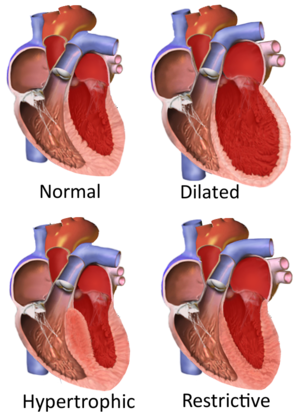
Ischemic Cardiomyopathy

CAD most commonly causes ischemic cardiomyopathy. Lack of adequate blood supply is not able to meet the myocardial metabolic demands that lead to cell death, fibrosis, left ventricular enlargement, and dilation.

Modifiable

  • Diabetes mellitus,
  • Hypertension,
  • Tobacco abuse,
  • Hyperlipidemia,
  • Obesity, and sedentary lifestyle
  • Diabetes
  • Atherosclerosis
  • Vasospasm
  • Inflammation of arteries

Non-modifiable 

  • Age, gender, and family predisposition
  • Ischemic cardiomyopathy is the cause of more than 60% of all cases of systolic congestive heart failure in most countries of the world.[rx][rx]

Symptoms of Ischemic Cardiomyopathy

  • Shortness of breath
  • Swelling of the legs and feet (edema)
  • Fatigue (feeling overly tired), inability to exercise, or carry out activities as usual
  • Angina (chest pain or pressure that occurs with exercise or physical activity and can also occur with rest or after meals) is a less common symptom
  • Weight gain, cough, and congestion related to fluid retention
  • Palpitations or fluttering in the chest due to abnormal heart rhythms (arrhythmia)
  • Fainting (caused by irregular heart rhythms, abnormal responses of the blood vessels during exercise, without apparent cause)
  • Extreme fatigue
  • Dizziness, lightheadedness, or fainting
  • Chest pain and pressure, known as angina
  • Heart palpitations
  • Cough or congestion, caused by fluid in your lungs
  • Difficulty sleeping
  • Weight gain

Diagnosis of Ischemic Cardiomyopathy

After getting a detailed history and physical examination, there are several diagnostic modalities which can help with the diagnosis of ischemic cardiomyopathy.

  • Electrocardiogram (ECG) – important for identifying evidence of acute or prior myocardial infarction or acute ischemia, also rhythm abnormalities, such as atrial fibrillation.
  • Blood test – Cardiac troponin (T or I), complete blood count, serum electrolytes, blood urea nitrogen, creatinine, liver function test and brain natriuretic peptide (BNP). BNP (or NT-proBNP) level adds greater diagnostic value to the history and physical examination than other initial tests mentioned above.
  • Transthoracic Echocardiogram – to determine ventricular function and hemodynamics.
  • Chest x-ray  Simple and readily available test. It may show cardiomegaly and other findings of heart failure if a patient has progressed to that stage. Some x-ray findings in heart failure patients include pulmonary congestion, Kerley B lines, pleural effusion, and blunting of costophrenic angle.
  • ECGAssesses the electrical activity of the heart. Useful in looking at the heart rate, rhythm, past/current ischemic episode, chamber enlargement, and information about heart’s electrical conductivity.
  • Transthoracic echocardiography (TTE)   This ultrasound-based imaging modality is useful in looking at cardiac anatomy and valvular function. It will assess for ventricular systolic/diastolic function, cardiac wall motion, pericardial pathology, and valvular function. All this information is useful in diagnosing ischemic cardiomyopathy.
  • Cardiac stress test There are different stress tests available depending on the patient’s health, functional status, baseline heart rhythm, and exercise tolerance. The goal of these stress tests is to assess for cardiac ischemia. Some stress test modality can also provide information about myocardial viability.
  • Coronary angiography allows for direct visualization of the coronary arteries, level of obstruction, and the blood flow to the myocardium. They also use it for percutaneous coronary intervention (PCI) with balloon angioplasty and coronary stents to allow for better blood flow across the occluded coronary artery.
  • CTCA – It uses computed tomography (CT) to take angiograms of the coronary arteries. Aids with the diagnosis of CAD in patients with low-intermediate risk.
  • Brain natriuretic peptide (BNP) test – BNP is synthesized in the ventricles, and it is secreted when the myocardial muscle has a high wall tension. Important biomarker for heart failure patients.
  • Cardiac magnetic resonance imaging- Differentiate ischemic from non-ischemic cardiomyopathies using Late gadolinium imaging. Late Gadolinium Enhancement (LGE) reflects irreversible damage to the myocardium and fibrosis. When LGE is absent in a dysfunctional segment of the myocardium, it implies the potential for recovery with time (stunning) or by medical treatment or revascularization.

Treatment of Ischemic Cardiomyopathy

Ischemic cardiomyopathy is managed primarily with an optimal goal-directed medical therapy (GDMA). However, for appropriate patient population cardiac intervention for revascularization is a common treatment option. Foremost, the patient will benefit from lifestyle modification which includes smoking cessation, exercise, and diet changes. Below are the medical interventions that can be done to optimize patients with ICM.

  • Revascularization  Patients with ischemic cardiomyopathy may benefit from revascularization. There was a 7% absolute reduction in overall mortality over a 10-year time between patients who had CABG versus GDMA. Revascularization followed by GDMA is recommended for these patients; however, it is important to assess their procedural candidacy. The primary goal is to reperfuse viable ischemic areas of the myocardium. However, a general test for myocardial viability is not recommended.
  • Aspirin – It is shown to have major reductions in cardiovascular morbidity and mortality for patients with coronary heart disease. Historically, low dose aspirin (75 to 100 mg) once daily used; however, new data suggest that patients may need a higher dose (300 to 325 mg) if they weigh over 70 kg.
  • Beta-adrenergic antagonist (beta-blockers) Atenolol, esmolol, labetalol, metoprolol, and propranolol. This group antagonizes the effects of epinephrine on beta receptors on the heart. B1 receptors are present in the heart, and when antagonized they decrease heart rate and heart muscle contractility that leads to decreasing oxygen consumption by the heart. B1 selective blockers decrease mortality in patients with heart failure, but should not be initiated when the patient is having acutely decompensated heart failure.
  • High Potency Statin – Atorvastatin 40 to 80 mg or rosuvastatin 20 to 40 mg orally once daily. The mechanism of action is via HMG-CoA reductase inhibition. These medications inhibit the conversion of HMG-CoA to mevalonate, which is a cholesterol precursor. Statins decrease mortality in patients with coronary artery disease (CAD).
  • Angiotensin-converting enzyme (ACE) inhibitors  Enalapril, lisinopril, captopril, and ramipril. This group of antihypertensive medications decreases mortality in patients with heart failure. The inhibition of the ACE leads to a decrease of angiotensin II which, when inhibited, decreases glomerular filtration rate by preventing constriction of efferent arterioles. This class of medication has cardio and renal protective effects when it comes to remodeling. An undesired added effect is the prevention of inactivation of bradykinin, which is a potent vasodilator that produces a cough and possibly angioedema in patients with C1 esterase inhibitor deficiency.
  • Angiotensin II receptor blockers (ARB)  Valsartan, losartan, candesartan. This group has the same effect as the ACEI by selectively blocking angiotensin II from binding in its AT1 receptor. This group does not affect bradykinin and therefore is the medication of choice, replacing ACE inhibitors, when a patient complains of a cough or presents with angioedema after being started on ACEI.
  • Hydralazine and nitrate This group of medication can be used in patients who are unable to tolerate ACEI or an ARB.
  • Angiotensin receptor neprilysin inhibitor (ARNI)  Recent clinical trial, PARADIGM-HF, showed a reduction in cardiovascular and all-cause mortality along with a reduction in heart failure hospitalization while on valsartan/sacubitril compared to enalapril.
  • Spironolactone Shown to reduce morbidity and mortality in patients with heart failure (NYHA class III and IV) with LVEF 35% or less. It is a potassium-sparing diuretic that works as an antagonist to the aldosterone receptor at the nephron’s cortical collecting tubule.
  • Digoxin – does not decrease mortality but is helpful in decreasing symptoms and hospitalizations in patients with congestive heart failure (CHF). Digoxin works by inhibiting the effects of the enzyme sodium/potassium ATPase in the heart muscle, stopping the sodium/calcium exchange, leaving more calcium inside the cell which increases contractility.
  • ICD placement  Select patients with ischemic cardiomyopathy qualify for ICD to prevent sudden cardiac death (SCD). Patients with ischemic cardiomyopathy (evaluated at least 40 days post-MI or 3 months after revascularization), LVEF of 35% or less, and associated heart failure (HF) with New York Heart Association (NYHA) functional class II or III status, there is a class IA recommendation for ICD placement. Additionally, if a patient with ICM has LVEF of 30% or less and NYHA class I, ICD therapy is indicated for primary prevention of SCD.
  • Biventricular pacing – If a patient has ischemic cardiomyopathy and LVEF 35% or less, then they may be a candidate for cardiac resynchronization therapy (CRT) if their heart failure symptoms are not controlled despite revascularization and GDMA.

Ultimately, a heart transplant is the only option when the disease progresses, and no alleviation is achieved with the intervention mentioned above.

Prevention

Up to 90% of cardiovascular disease may be preventable if established risk factors are avoided. Currently practiced measures to prevent cardiovascular disease include:

  • Reduction in consumption of saturated fat – there is moderate-quality evidence that reducing the proportion of saturated fat in the diet, and replacing it with unsaturated fats or carbohydrates over a period of at least two years, leads to a reduction in the risk of cardiovascular disease.[rx]
  • Stopping smoking and avoidance of second-hand smoke.[rx] Stopping smoking reduces risk by about 35%.[rx]
  • Maintain a healthy diet, such as the Mediterranean diet. Dietary interventions are effective in reducing cardiovascular risk factors over a year, but the longer-term effects of such interventions and their impact on cardiovascular disease events are uncertain.[rx]
  • At least 150 minutes (2 hours and 30 minutes) of moderate exercise per week.
  • Limit alcohol consumption to the recommended daily limits;[rx] People who moderately consume alcoholic drinks have a 25–30% lower risk of cardiovascular disease. However, people who are genetically predisposed to consume less alcohol have lower rates of cardiovascular disease[rx] suggesting that alcohol itself may not be protective. Excessive alcohol intake increases the risk of cardiovascular disease and consumption of alcohol is associated with increased risk of a cardiovascular event in the day following consumption.[rx]
  • Lower blood pressure, if elevated. A 10 mmHg reduction in blood pressure reduces risk by about 20%.[rx]
  • Decrease non-HDL cholesterol. Statin treatment reduces cardiovascular mortality by about 31%.[rx]
  • Decrease body fat if overweight or obese.[rx] The effect of weight loss is often difficult to distinguish from dietary change, and evidence on weight reducing diets is limited.[rx] In observational studies of people with severe obesity, weight loss following bariatric surgery is associated with a 46% reduction in cardiovascular risk.[rx]
  • Decrease psychosocial stress.[rx] This measure may be complicated by imprecise definitions of what constitutes psychosocial interventions.[rx] Mental stress-induced myocardial ischemia is associated with an increased risk of heart problems in those with previous heart disease.[rx] Severe emotional and physical stress leads to a form of heart dysfunction known as Takotsubo syndrome in some people.[rx] Stress, however, plays a relatively minor role in hypertension.[rx] Specific relaxation therapies are of unclear benefit.

References

ByRx Harun

Treatment of Ischemic Cardiomyopathy

Treatment of Ischemic Cardiomyopathy/Ischemic Cardiomyopathy (ICM) is a term that refers to the heart’s decreased ability to pump blood properly, due to myocardial damage brought upon by ischemia. When discussing the term ICM, coronary artery disease (CAD) has to be addressed. CAD is a condition characterized by the formation of plaques in the coronary blood vessels, decreasing their capacity to supply nutrients and oxygen to the contractile heart muscle. ICM has a spectrum of clinical changes which eventually leads to congestive heart failure (CHF). Initially, there is a reversible loss of cardiac contractile function because of decreased oxygen supply to the heart muscle; however, when there is ischemia for a prolonged period, there is irreversible cardiac muscle damage resulting in cardiac remodeling.

Types of cardiomyopathy include hypertrophic cardiomyopathy, dilated cardiomyopathy, restrictive cardiomyopathy, arrhythmogenic right ventricular dysplasia, and takotsubo cardiomyopathy (broken heart syndrome).[rx] In hypertrophic cardiomyopathy, the heart muscle enlarges and thickens.[rx] In dilated cardiomyopathy, the ventricles enlarge and weaken.[rx] In restrictive cardiomyopathy, the ventricle stiffens.[rx]

Ischemic Cardiomyopathy

Types of Ischemic Cardiomyopathy

Stained microscopic section of heart muscle in hypertrophic cardiomyopathy. Cardiomyopathies can be classified using different criteria:[rx]

Primary/intrinsic cardiomyopathies

Genetic

  • Hypertrophic cardiomyopathy
  • Arrhythmogenic right ventricular cardiomyopathy (ARVC)
  • LV non-compaction
  • Ion Channelopathies
  • Dilated cardiomyopathy (DCM)
  • Restrictive cardiomyopathy (RCM)

Acquired

  • Stress cardiomyopathy
  • Myocarditis, inflammation of and injury to heart tissue due in part to its infiltration by lymphocytes and monocytes[rx][rx]
  • Eosinophilic myocarditis, inflammation of and injury to heart tissue due in part to its infiltration by eosinophils[rx]
  • Ischemic cardiomyopathy (not formally included in the classification as a direct result of another cardiac problem)[rx]

Secondary/extrinsic cardiomyopathies

Metabolic/storage

  • Fabry’s disease
  • Hemochromatosis

Endomyocardial

  • Endomyocardial fibrosis
  • Hypereosinophilic syndrome

Endocrine

  • Diabetes mellitus
  • Hyperthyroidism
  • Acromegaly

Cardiofacial

  • Noonan syndrome

Neuromuscular

  • Muscular dystrophy
  • Friedreich’s ataxia

Other

  • Obesity-associated cardiomyopathy[rx]

Causes of Ischemic Cardiomyopathy

Ischemic Cardiomyopathy

CAD most commonly causes ischemic cardiomyopathy. Lack of adequate blood supply is not able to meet the myocardial metabolic demands that lead to cell death, fibrosis, left ventricular enlargement, and dilation.

Modifiable

  • Diabetes mellitus,
  • Hypertension,
  • Tobacco abuse,
  • Hyperlipidemia,
  • Obesity, and sedentary lifestyle
  • Diabetes
  • Atherosclerosis
  • Vasospasm
  • Inflammation of arteries

Non-modifiable 

  • Age, gender, and family predisposition
  • Ischemic cardiomyopathy is the cause of more than 60% of all cases of systolic congestive heart failure in most countries of the world.[rx][rx]

Symptoms of Ischemic Cardiomyopathy

  • Shortness of breath
  • Swelling of the legs and feet (edema)
  • Fatigue (feeling overly tired), inability to exercise, or carry out activities as usual
  • Angina (chest pain or pressure that occurs with exercise or physical activity and can also occur with rest or after meals) is a less common symptom
  • Weight gain, cough, and congestion related to fluid retention
  • Palpitations or fluttering in the chest due to abnormal heart rhythms (arrhythmia)
  • Fainting (caused by irregular heart rhythms, abnormal responses of the blood vessels during exercise, without apparent cause)
  • Extreme fatigue
  • Dizziness, lightheadedness, or fainting
  • Chest pain and pressure, known as angina
  • Heart palpitations
  • Cough or congestion, caused by fluid in your lungs
  • Difficulty sleeping
  • Weight gain

Diagnosis of Ischemic Cardiomyopathy

After getting a detailed history and physical examination, there are several diagnostic modalities which can help with the diagnosis of ischemic cardiomyopathy.

  • Electrocardiogram (ECG) – important for identifying evidence of acute or prior myocardial infarction or acute ischemia, also rhythm abnormalities, such as atrial fibrillation.
  • Blood test – Cardiac troponin (T or I), complete blood count, serum electrolytes, blood urea nitrogen, creatinine, liver function test and brain natriuretic peptide (BNP). BNP (or NT-proBNP) level adds greater diagnostic value to the history and physical examination than other initial tests mentioned above.
  • Transthoracic Echocardiogram – to determine ventricular function and hemodynamics.
  • Chest x-ray  Simple and readily available test. It may show cardiomegaly and other findings of heart failure if a patient has progressed to that stage. Some x-ray findings in heart failure patients include pulmonary congestion, Kerley B lines, pleural effusion, and blunting of costophrenic angle.
  • ECGAssesses the electrical activity of the heart. Useful in looking at the heart rate, rhythm, past/current ischemic episode, chamber enlargement, and information about heart’s electrical conductivity.
  • Transthoracic echocardiography (TTE)   This ultrasound-based imaging modality is useful in looking at cardiac anatomy and valvular function. It will assess for ventricular systolic/diastolic function, cardiac wall motion, pericardial pathology, and valvular function. All this information is useful in diagnosing ischemic cardiomyopathy.
  • Cardiac stress test There are different stress tests available depending on the patient’s health, functional status, baseline heart rhythm, and exercise tolerance. The goal of these stress tests is to assess for cardiac ischemia. Some stress test modality can also provide information about myocardial viability.
  • Coronary angiography allows for direct visualization of the coronary arteries, level of obstruction, and the blood flow to the myocardium. They also use it for percutaneous coronary intervention (PCI) with balloon angioplasty and coronary stents to allow for better blood flow across the occluded coronary artery.
  • CTCA – It uses computed tomography (CT) to take angiograms of the coronary arteries. Aids with the diagnosis of CAD in patients with low-intermediate risk.
  • Brain natriuretic peptide (BNP) test – BNP is synthesized in the ventricles, and it is secreted when the myocardial muscle has a high wall tension. Important biomarker for heart failure patients.
  • Cardiac magnetic resonance imaging- Differentiate ischemic from non-ischemic cardiomyopathies using Late gadolinium imaging. Late Gadolinium Enhancement (LGE) reflects irreversible damage to the myocardium and fibrosis. When LGE is absent in a dysfunctional segment of the myocardium, it implies the potential for recovery with time (stunning) or by medical treatment or revascularization.

Treatment of Ischemic Cardiomyopathy

Ischemic cardiomyopathy is managed primarily with an optimal goal-directed medical therapy (GDMA). However, for appropriate patient population cardiac intervention for revascularization is a common treatment option. Foremost, the patient will benefit from lifestyle modification which includes smoking cessation, exercise, and diet changes. Below are the medical interventions that can be done to optimize patients with ICM.

  • Revascularization  Patients with ischemic cardiomyopathy may benefit from revascularization. There was a 7% absolute reduction in overall mortality over a 10-year time between patients who had CABG versus GDMA. Revascularization followed by GDMA is recommended for these patients; however, it is important to assess their procedural candidacy. The primary goal is to reperfuse viable ischemic areas of the myocardium. However, a general test for myocardial viability is not recommended.
  • Aspirin – It is shown to have major reductions in cardiovascular morbidity and mortality for patients with coronary heart disease. Historically, low dose aspirin (75 to 100 mg) once daily used; however, new data suggest that patients may need a higher dose (300 to 325 mg) if they weigh over 70 kg.
  • Beta-adrenergic antagonist (beta-blockers) Atenolol, esmolol, labetalol, metoprolol, and propranolol. This group antagonizes the effects of epinephrine on beta receptors on the heart. B1 receptors are present in the heart, and when antagonized they decrease heart rate and heart muscle contractility that leads to decreasing oxygen consumption by the heart. B1 selective blockers decrease mortality in patients with heart failure, but should not be initiated when the patient is having acutely decompensated heart failure.
  • High Potency Statin – Atorvastatin 40 to 80 mg or rosuvastatin 20 to 40 mg orally once daily. The mechanism of action is via HMG-CoA reductase inhibition. These medications inhibit the conversion of HMG-CoA to mevalonate, which is a cholesterol precursor. Statins decrease mortality in patients with coronary artery disease (CAD).
  • Angiotensin-converting enzyme (ACE) inhibitors  Enalapril, lisinopril, captopril, and ramipril. This group of antihypertensive medications decreases mortality in patients with heart failure. The inhibition of the ACE leads to a decrease of angiotensin II which, when inhibited, decreases glomerular filtration rate by preventing constriction of efferent arterioles. This class of medication has cardio and renal protective effects when it comes to remodeling. An undesired added effect is the prevention of inactivation of bradykinin, which is a potent vasodilator that produces a cough and possibly angioedema in patients with C1 esterase inhibitor deficiency.
  • Angiotensin II receptor blockers (ARB)  Valsartan, losartan, candesartan. This group has the same effect as the ACEI by selectively blocking angiotensin II from binding in its AT1 receptor. This group does not affect bradykinin and therefore is the medication of choice, replacing ACE inhibitors, when a patient complains of a cough or presents with angioedema after being started on ACEI.
  • Hydralazine and nitrate This group of medication can be used in patients who are unable to tolerate ACEI or an ARB.
  • Angiotensin receptor neprilysin inhibitor (ARNI)  Recent clinical trial, PARADIGM-HF, showed a reduction in cardiovascular and all-cause mortality along with a reduction in heart failure hospitalization while on valsartan/sacubitril compared to enalapril.
  • Spironolactone Shown to reduce morbidity and mortality in patients with heart failure (NYHA class III and IV) with LVEF 35% or less. It is a potassium-sparing diuretic that works as an antagonist to the aldosterone receptor at the nephron’s cortical collecting tubule.
  • Digoxin – does not decrease mortality but is helpful in decreasing symptoms and hospitalizations in patients with congestive heart failure (CHF). Digoxin works by inhibiting the effects of the enzyme sodium/potassium ATPase in the heart muscle, stopping the sodium/calcium exchange, leaving more calcium inside the cell which increases contractility.
  • ICD placement  Select patients with ischemic cardiomyopathy qualify for ICD to prevent sudden cardiac death (SCD). Patients with ischemic cardiomyopathy (evaluated at least 40 days post-MI or 3 months after revascularization), LVEF of 35% or less, and associated heart failure (HF) with New York Heart Association (NYHA) functional class II or III status, there is a class IA recommendation for ICD placement. Additionally, if a patient with ICM has LVEF of 30% or less and NYHA class I, ICD therapy is indicated for primary prevention of SCD.
  • Biventricular pacing – If a patient has ischemic cardiomyopathy and LVEF 35% or less, then they may be a candidate for cardiac resynchronization therapy (CRT) if their heart failure symptoms are not controlled despite revascularization and GDMA.

Ultimately, a heart transplant is the only option when the disease progresses, and no alleviation is achieved with the intervention mentioned above.

Prevention

Up to 90% of cardiovascular disease may be preventable if established risk factors are avoided. Currently practiced measures to prevent cardiovascular disease include:

  • Reduction in consumption of saturated fat – there is moderate-quality evidence that reducing the proportion of saturated fat in the diet, and replacing it with unsaturated fats or carbohydrates over a period of at least two years, leads to a reduction in the risk of cardiovascular disease.[rx]
  • Stopping smoking and avoidance of second-hand smoke.[rx] Stopping smoking reduces risk by about 35%.[rx]
  • Maintain a healthy diet, such as the Mediterranean diet. Dietary interventions are effective in reducing cardiovascular risk factors over a year, but the longer-term effects of such interventions and their impact on cardiovascular disease events are uncertain.[rx]
  • At least 150 minutes (2 hours and 30 minutes) of moderate exercise per week.
  • Limit alcohol consumption to the recommended daily limits;[rx] People who moderately consume alcoholic drinks have a 25–30% lower risk of cardiovascular disease. However, people who are genetically predisposed to consume less alcohol have lower rates of cardiovascular disease[rx] suggesting that alcohol itself may not be protective. Excessive alcohol intake increases the risk of cardiovascular disease and consumption of alcohol is associated with increased risk of a cardiovascular event in the day following consumption.[rx]
  • Lower blood pressure, if elevated. A 10 mmHg reduction in blood pressure reduces risk by about 20%.[rx]
  • Decrease non-HDL cholesterol. Statin treatment reduces cardiovascular mortality by about 31%.[rx]
  • Decrease body fat if overweight or obese.[rx] The effect of weight loss is often difficult to distinguish from dietary change, and evidence on weight reducing diets is limited.[rx] In observational studies of people with severe obesity, weight loss following bariatric surgery is associated with a 46% reduction in cardiovascular risk.[rx]
  • Decrease psychosocial stress.[rx] This measure may be complicated by imprecise definitions of what constitutes psychosocial interventions.[rx] Mental stress-induced myocardial ischemia is associated with an increased risk of heart problems in those with previous heart disease.[rx] Severe emotional and physical stress leads to a form of heart dysfunction known as Takotsubo syndrome in some people.[rx] Stress, however, plays a relatively minor role in hypertension.[rx] Specific relaxation therapies are of unclear benefit.

References

ByRx Harun

Ischemic Cardiomyopathy – Causes, Symptoms, Treatment

Ischemic Cardiomyopathy (ICM) is a term that refers to the heart’s decreased ability to pump blood properly, due to myocardial damage brought upon by ischemia. When discussing the term ICM, coronary artery disease (CAD) has to be addressed. CAD is a condition characterized by the formation of plaques in the coronary blood vessels, decreasing their capacity to supply nutrients and oxygen to the contractile heart muscle. ICM has a spectrum of clinical changes which eventually leads to congestive heart failure (CHF). Initially, there is a reversible loss of cardiac contractile function because of decreased oxygen supply to the heart muscle; however, when there is ischemia for a prolonged period, there is irreversible cardiac muscle damage resulting in cardiac remodeling.

Types of cardiomyopathy include hypertrophic cardiomyopathy, dilated cardiomyopathy, restrictive cardiomyopathy, arrhythmogenic right ventricular dysplasia, and takotsubo cardiomyopathy (broken heart syndrome).[rx] In hypertrophic cardiomyopathy, the heart muscle enlarges and thickens.[rx] In dilated cardiomyopathy, the ventricles enlarge and weaken.[rx] In restrictive cardiomyopathy, the ventricle stiffens.[rx]

Ischemic Cardiomyopathy

Types of Ischemic Cardiomyopathy

Stained microscopic section of heart muscle in hypertrophic cardiomyopathy. Cardiomyopathies can be classified using different criteria:[rx]

Primary/intrinsic cardiomyopathies

Genetic

  • Hypertrophic cardiomyopathy
  • Arrhythmogenic right ventricular cardiomyopathy (ARVC)
  • LV non-compaction
  • Ion Channelopathies
  • Dilated cardiomyopathy (DCM)
  • Restrictive cardiomyopathy (RCM)

Acquired

  • Stress cardiomyopathy
  • Myocarditis, inflammation of and injury to heart tissue due in part to its infiltration by lymphocytes and monocytes[rx][rx]
  • Eosinophilic myocarditis, inflammation of and injury to heart tissue due in part to its infiltration by eosinophils[rx]
  • Ischemic cardiomyopathy (not formally included in the classification as a direct result of another cardiac problem)[rx]

Secondary/extrinsic cardiomyopathies

Metabolic/storage

  • Fabry’s disease
  • Hemochromatosis

Endomyocardial

  • Endomyocardial fibrosis
  • Hypereosinophilic syndrome

Endocrine

  • Diabetes mellitus
  • Hyperthyroidism
  • Acromegaly

Cardiofacial

  • Noonan syndrome

Neuromuscular

  • Muscular dystrophy
  • Friedreich’s ataxia

Other

  • Obesity-associated cardiomyopathy[rx]

Causes of Ischemic Cardiomyopathy

Ischemic Cardiomyopathy

CAD most commonly causes ischemic cardiomyopathy. Lack of adequate blood supply is not able to meet the myocardial metabolic demands that lead to cell death, fibrosis, left ventricular enlargement, and dilation.

Modifiable

  • Diabetes mellitus,
  • Hypertension,
  • Tobacco abuse,
  • Hyperlipidemia,
  • Obesity, and sedentary lifestyle
  • Diabetes
  • Atherosclerosis
  • Vasospasm
  • Inflammation of arteries

Non-modifiable 

  • Age, gender, and family predisposition
  • Ischemic cardiomyopathy is the cause of more than 60% of all cases of systolic congestive heart failure in most countries of the world.[rx][rx]

Symptoms of Ischemic Cardiomyopathy

  • Shortness of breath
  • Swelling of the legs and feet (edema)
  • Fatigue (feeling overly tired), inability to exercise, or carry out activities as usual
  • Angina (chest pain or pressure that occurs with exercise or physical activity and can also occur with rest or after meals) is a less common symptom
  • Weight gain, cough, and congestion related to fluid retention
  • Palpitations or fluttering in the chest due to abnormal heart rhythms (arrhythmia)
  • Fainting (caused by irregular heart rhythms, abnormal responses of the blood vessels during exercise, without apparent cause)
  • Extreme fatigue
  • Dizziness, lightheadedness, or fainting
  • Chest pain and pressure, known as angina
  • Heart palpitations
  • Cough or congestion, caused by fluid in your lungs
  • Difficulty sleeping
  • Weight gain

Diagnosis of Ischemic Cardiomyopathy

After getting a detailed history and physical examination, there are several diagnostic modalities which can help with the diagnosis of ischemic cardiomyopathy.

  • Electrocardiogram (ECG) – important for identifying evidence of acute or prior myocardial infarction or acute ischemia, also rhythm abnormalities, such as atrial fibrillation.
  • Blood test – Cardiac troponin (T or I), complete blood count, serum electrolytes, blood urea nitrogen, creatinine, liver function test and brain natriuretic peptide (BNP). BNP (or NT-proBNP) level adds greater diagnostic value to the history and physical examination than other initial tests mentioned above.
  • Transthoracic Echocardiogram – to determine ventricular function and hemodynamics.
  • Chest x-ray  Simple and readily available test. It may show cardiomegaly and other findings of heart failure if a patient has progressed to that stage. Some x-ray findings in heart failure patients include pulmonary congestion, Kerley B lines, pleural effusion, and blunting of costophrenic angle.
  • ECGAssesses the electrical activity of the heart. Useful in looking at the heart rate, rhythm, past/current ischemic episode, chamber enlargement, and information about heart’s electrical conductivity.
  • Transthoracic echocardiography (TTE)   This ultrasound-based imaging modality is useful in looking at cardiac anatomy and valvular function. It will assess for ventricular systolic/diastolic function, cardiac wall motion, pericardial pathology, and valvular function. All this information is useful in diagnosing ischemic cardiomyopathy.
  • Cardiac stress test There are different stress tests available depending on the patient’s health, functional status, baseline heart rhythm, and exercise tolerance. The goal of these stress tests is to assess for cardiac ischemia. Some stress test modality can also provide information about myocardial viability.
  • Coronary angiography allows for direct visualization of the coronary arteries, level of obstruction, and the blood flow to the myocardium. They also use it for percutaneous coronary intervention (PCI) with balloon angioplasty and coronary stents to allow for better blood flow across the occluded coronary artery.
  • CTCA – It uses computed tomography (CT) to take angiograms of the coronary arteries. Aids with the diagnosis of CAD in patients with low-intermediate risk.
  • Brain natriuretic peptide (BNP) test – BNP is synthesized in the ventricles, and it is secreted when the myocardial muscle has a high wall tension. Important biomarker for heart failure patients.
  • Cardiac magnetic resonance imaging- Differentiate ischemic from non-ischemic cardiomyopathies using Late gadolinium imaging. Late Gadolinium Enhancement (LGE) reflects irreversible damage to the myocardium and fibrosis. When LGE is absent in a dysfunctional segment of the myocardium, it implies the potential for recovery with time (stunning) or by medical treatment or revascularization.

Treatment of Ischemic Cardiomyopathy

Ischemic cardiomyopathy is managed primarily with an optimal goal-directed medical therapy (GDMA). However, for appropriate patient population cardiac intervention for revascularization is a common treatment option. Foremost, the patient will benefit from lifestyle modification which includes smoking cessation, exercise, and diet changes. Below are the medical interventions that can be done to optimize patients with ICM.

  • Revascularization  Patients with ischemic cardiomyopathy may benefit from revascularization. There was a 7% absolute reduction in overall mortality over a 10-year time between patients who had CABG versus GDMA. Revascularization followed by GDMA is recommended for these patients; however, it is important to assess their procedural candidacy. The primary goal is to reperfuse viable ischemic areas of the myocardium. However, a general test for myocardial viability is not recommended.
  • Aspirin – It is shown to have major reductions in cardiovascular morbidity and mortality for patients with coronary heart disease. Historically, low dose aspirin (75 to 100 mg) once daily used; however, new data suggest that patients may need a higher dose (300 to 325 mg) if they weigh over 70 kg.
  • Beta-adrenergic antagonist (beta-blockers) Atenolol, esmolol, labetalol, metoprolol, and propranolol. This group antagonizes the effects of epinephrine on beta receptors on the heart. B1 receptors are present in the heart, and when antagonized they decrease heart rate and heart muscle contractility that leads to decreasing oxygen consumption by the heart. B1 selective blockers decrease mortality in patients with heart failure, but should not be initiated when the patient is having acutely decompensated heart failure.
  • High Potency Statin – Atorvastatin 40 to 80 mg or rosuvastatin 20 to 40 mg orally once daily. The mechanism of action is via HMG-CoA reductase inhibition. These medications inhibit the conversion of HMG-CoA to mevalonate, which is a cholesterol precursor. Statins decrease mortality in patients with coronary artery disease (CAD).
  • Angiotensin-converting enzyme (ACE) inhibitors  Enalapril, lisinopril, captopril, and ramipril. This group of antihypertensive medications decreases mortality in patients with heart failure. The inhibition of the ACE leads to a decrease of angiotensin II which, when inhibited, decreases glomerular filtration rate by preventing constriction of efferent arterioles. This class of medication has cardio and renal protective effects when it comes to remodeling. An undesired added effect is the prevention of inactivation of bradykinin, which is a potent vasodilator that produces a cough and possibly angioedema in patients with C1 esterase inhibitor deficiency.
  • Angiotensin II receptor blockers (ARB)  Valsartan, losartan, candesartan. This group has the same effect as the ACEI by selectively blocking angiotensin II from binding in its AT1 receptor. This group does not affect bradykinin and therefore is the medication of choice, replacing ACE inhibitors, when a patient complains of a cough or presents with angioedema after being started on ACEI.
  • Hydralazine and nitrate This group of medication can be used in patients who are unable to tolerate ACEI or an ARB.
  • Angiotensin receptor neprilysin inhibitor (ARNI)  Recent clinical trial, PARADIGM-HF, showed a reduction in cardiovascular and all-cause mortality along with a reduction in heart failure hospitalization while on valsartan/sacubitril compared to enalapril.
  • Spironolactone Shown to reduce morbidity and mortality in patients with heart failure (NYHA class III and IV) with LVEF 35% or less. It is a potassium-sparing diuretic that works as an antagonist to the aldosterone receptor at the nephron’s cortical collecting tubule.
  • Digoxin – does not decrease mortality but is helpful in decreasing symptoms and hospitalizations in patients with congestive heart failure (CHF). Digoxin works by inhibiting the effects of the enzyme sodium/potassium ATPase in the heart muscle, stopping the sodium/calcium exchange, leaving more calcium inside the cell which increases contractility.
  • ICD placement  Select patients with ischemic cardiomyopathy qualify for ICD to prevent sudden cardiac death (SCD). Patients with ischemic cardiomyopathy (evaluated at least 40 days post-MI or 3 months after revascularization), LVEF of 35% or less, and associated heart failure (HF) with New York Heart Association (NYHA) functional class II or III status, there is a class IA recommendation for ICD placement. Additionally, if a patient with ICM has LVEF of 30% or less and NYHA class I, ICD therapy is indicated for primary prevention of SCD.
  • Biventricular pacing – If a patient has ischemic cardiomyopathy and LVEF 35% or less, then they may be a candidate for cardiac resynchronization therapy (CRT) if their heart failure symptoms are not controlled despite revascularization and GDMA.

Ultimately, a heart transplant is the only option when the disease progresses, and no alleviation is achieved with the intervention mentioned above.

Prevention

Up to 90% of cardiovascular disease may be preventable if established risk factors are avoided. Currently practiced measures to prevent cardiovascular disease include:

  • Reduction in consumption of saturated fat – there is moderate-quality evidence that reducing the proportion of saturated fat in the diet, and replacing it with unsaturated fats or carbohydrates over a period of at least two years, leads to a reduction in the risk of cardiovascular disease.[rx]
  • Stopping smoking and avoidance of second-hand smoke.[rx] Stopping smoking reduces risk by about 35%.[rx]
  • Maintain a healthy diet, such as the Mediterranean diet. Dietary interventions are effective in reducing cardiovascular risk factors over a year, but the longer-term effects of such interventions and their impact on cardiovascular disease events are uncertain.[rx]
  • At least 150 minutes (2 hours and 30 minutes) of moderate exercise per week.
  • Limit alcohol consumption to the recommended daily limits;[rx] People who moderately consume alcoholic drinks have a 25–30% lower risk of cardiovascular disease. However, people who are genetically predisposed to consume less alcohol have lower rates of cardiovascular disease[rx] suggesting that alcohol itself may not be protective. Excessive alcohol intake increases the risk of cardiovascular disease and consumption of alcohol is associated with increased risk of a cardiovascular event in the day following consumption.[rx]
  • Lower blood pressure, if elevated. A 10 mmHg reduction in blood pressure reduces risk by about 20%.[rx]
  • Decrease non-HDL cholesterol. Statin treatment reduces cardiovascular mortality by about 31%.[rx]
  • Decrease body fat if overweight or obese.[rx] The effect of weight loss is often difficult to distinguish from dietary change, and evidence on weight reducing diets is limited.[rx] In observational studies of people with severe obesity, weight loss following bariatric surgery is associated with a 46% reduction in cardiovascular risk.[rx]
  • Decrease psychosocial stress.[rx] This measure may be complicated by imprecise definitions of what constitutes psychosocial interventions.[rx] Mental stress-induced myocardial ischemia is associated with an increased risk of heart problems in those with previous heart disease.[rx] Severe emotional and physical stress leads to a form of heart dysfunction known as Takotsubo syndrome in some people.[rx] Stress, however, plays a relatively minor role in hypertension.[rx] Specific relaxation therapies are of unclear benefit.

References

ByRx Harun

Chronic Kidney Disease (CKD) – Types, Symptoms, Treatment

Chronic Kidney Disease (CKD)/Chronic kidney disease (CKD) is defined as the presence of kidney damage or an estimated glomerular filtration rate (eGFR) less than 60 ml/min/1.73 mt2, persisting for 3 months or more, irrespective of the cause. It is a state of progressive loss of kidney function ultimately resulting in the need for renal replacement therapy (dialysis or transplantation). Kidney damage refers to pathologic abnormalities either suggested by imaging studies or renal biopsy, abnormalities in urinary sediment, or increased urinary albumin excretion rates. The 2012 KDIGO CKD classification recommends details about the cause of the CKD and classifies into 6 categories based on glomerular filtration rate (G1 to G5 with G3 split into 3a and 3b). It also includes the staging based on three levels of albuminuria (A1, A2, and A3), with each stage of CKD being sub-categorized according to the urinary albumin-creatinine ratio in (mg/gm) or (mg/mmol) in an early morning “spot” urine sample.

The 6 categories include:

  • G1: GFR 90 ml/min per 1.73 m2 and above
  • G2: GFR 60 to 89 ml/min per 1.73 m2
  • G3a: GFR 45 to 59 ml/min per 1.73 m2
  • G3b: GFR 30 to 44 ml/min per 1.73 m2
  • G4: GFR 15 to 29 ml/min per 1.73 m2
  • G5: GFR less than 15 ml/min per 1.73 m2 or treatment by dialysis

The three levels of albuminuria include an albumin-creatinine ratio (ACR)

  • A1: ACR less than 30 mg/gm (less than 3.4 mg/mmol)
  • A2: ACR 30 to 299 mg/gm (3.4 to 34 mg/mmol)
  • A3: ACR greater than 300 mg/gm (greater than 34 mg/mmol).

The improved classification of CKD has been beneficial in identifying prognostic indications related to decreased kidney function and increased albuminuria. However, a downside of the use of classification systems is the possible overdiagnosis of CKD, especially in the elderly.

Causes of Chronic Kidney Disease (CKD)

The causes of CKD vary globally, and the most common primary diseases causing CKD and ultimately end-stage renal disease (ESRD) are as follows:

  • Diabetes mellitus type 2 (30% to 50%)
  • Diabetes mellitus type 1 (3.9%)
  • Hypertension (27.2%)
  • Primary glomerulonephritis (8.2%)
  • Chronic Tubulointerstitial nephritis (3.6%)
  • Hereditary or cystic diseases (3.1%)
  • Secondary glomerulonephritis or vasculitis (2.1%)
  • Plasma cell dyscrasias or neoplasm (2.1)
  • Sickle Cell Nephropathy (SCN) which accounts for less than 1% of ESRD patients in the United States

CKD may result from disease processes in any of the three categories: prerenal (decreased renal perfusion pressure), intrinsic renal (pathology of the vessels, glomeruli, or tubules-interstitium), or postrenal (obstructive).

Prerenal Disease

  • Chronic prerenal disease occurs in patients with chronic heart failure or cirrhosis with persistently decreased renal perfusion, which increases the propensity for multiple episodes of an intrinsic kidney injury, such as acute tubular necrosis (ATN). This leads to progressive loss of renal function over time.

Intrinsic Renal Vascular Disease

  • The most common chronic renal vascular disease is nephrosclerosis, which causes chronic damage to blood vessels, glomeruli, and tubulointerstitium.
  • The other renal vascular diseases are renal artery stenosis from atherosclerosis or fibro-muscular dysplasia which over months or years, cause ischemic nephropathy, characterized by glomerulosclerosis and tubulointerstitial fibrosis.

Intrinsic Glomerular Disease (Nephritic or Nephrotic)

  • A nephritic pattern is suggested by abnormal urine microscopy with red blood cell (RBC) casts and dysmorphic red cells, occasionally white blood cells (WBCs), and a variable degree of proteinuria. The most common causes are post-streptococcal GN, infective endocarditis, shunt nephritis, IgA nephropathy, lupus nephritis, Goodpasture syndrome, and vasculitis. 
  • A nephrotic pattern is associated with proteinuria, usually in the nephrotic range (greater than 3.5 gm per 24 hours), and an inactive urine microscopic analysis with few cells or casts. It is commonly caused by minimal change disease, focal segmental glomerulosclerosis, membranous GN, membranoproliferative GN (Type 1 and 2 and associated with cryoglobulinemia), diabetic nephropathy, and amyloidosis.

Some patients may be assigned to one of these two categories.

Intrinsic Tubular and Interstitial Disease

  • The most common chronic tubulointerstitial disease is polycystic kidney disease (PKD). Other etiologies include nephrocalcinosis (most often due to hypercalcemia and hypercalciuria), sarcoidosis, Sjogren syndrome, reflux nephropathy in children and young adults, 
  • There is increased recognition of the relatively high prevalence of CKD of unknown cause among agricultural workers from Central America and parts of Southeast Asia called Mesoamerican nephropathy,

Postrenal (Obstructive Nephropathy)

  • Chronic obstruction may be due to prostatic disease, nephrolithiasis or abdominal/pelvic tumor with mass effect on ureter(s) are the common causes. Retroperitoneal fibrosis is a rare cause of chronic ureteral obstruction.

Epidemiology

The true incidence and prevalence of CKD are difficult to determine because of the asymptomatic nature of early to moderate CKD. The prevalence of CKD is around 10% to 14% in the general population. Similarly, albuminuria (microalbuminuria or A2) and GFR less than 60 ml/min/1.73 mt2 have a prevalence of 7% and 3% to 5%, respectively.

Worldwide, CKD accounted for 2,968,600 (1%) of disability-adjusted life-years and 2,546,700 (1% to 3%) of life-years lost in 2012.

Kidney Disease Outcomes Quality Initiative (KDOQI) mandates that for labeling of chronicity and CKD, patients should be tested on three occasions over a 3-month period with 2 of the 3 results being consistently positive.

Natural History and Progression of CKD

CKD diagnosed in the general population (community CKD) has a significantly different natural history and the course of progression compared to the CKD in patients referred to the nephrology practices (referred CKD).

Community CKD is seen mainly in the older population. These individuals have had a lifelong exposure to cardiovascular risk factors, hypertension, and diabetes which can also affect the kidneys. The average rate of decline in GFR in this population is around 0.75 to 1 ml/min/year after the age of 40 to 50 years.  In a large study of community based CKD by Kshirsagar et al., only 1% and 20% of patients with CKD stages G3 and G4 required renal replacement therapy (RRT), however, 24% and 45% respectively died predominantly from cardiovascular disease (CVD), suggesting that cardiac events rather than progressing to ESRD is the predominant outcome in community-based CKD.

In contrast to community CKD, patients with referred CKD present at an early age because of hereditary (autosomal dominant polycystic kidney disease ADPKD) or acquired nephropathy (glomerulonephritis, diabetic nephropathy, or tubulointerstitial disease) causing progressive renal damage and loss of function. The rate of progression in referred CKD varies according to the underlying disease process and between individual patients. Diabetic nephropathy has shown to have a rapid rate of decline in GFR averaging around 10 ml/min/year. In nondiabetic nephropathies, the rate of progression is usually faster in patients with chronic proteinuric GN than those with a low level of proteinuria. Patients with ADPKD and renal impairment, CKD stage G3b and beyond, may have a faster rate of progression compared to other nephropathies. In patients with hypertensive nephrosclerosis, good blood pressure control and minimal proteinuria are associated with very slow progression.

Risk Factors for Progression of CKD

Non-Modifiable CKD Risk Factors

  • Older age, male gender, a non-Caucasian ethnicity which includes African Americans, Afro-Caribbean individuals, Hispanics, and Asians (South Asians and Pacific Asians) all adversely affect CKD progression.
  • Genetic factors that affect CKD progression have been found in different Kidney diseases. In a population-based cohort study by Luttropp et al., single nucleotide polymorphisms in the genes TCF7L2 and MTHFS were associated with diabetic nephropathy and CKD progression. In the same study, polymorphisms of genes coding for mediators of renal scarring and renin-angiotensin-aldosterone system (RAAS) were found to influence CKD progression.

Modifiable CKD Risk Factors

  • These include systemic hypertension, proteinuria, and metabolic factors.
  • Systemic hypertension is one of the main causes of ESRD worldwide and the second leading cause in the United States after diabetes. The transmission of systemic hypertension into glomerular capillary beds and the resulting glomerular hypertension is believed to contribute to the progression of glomerulosclerosis. Night-time and 24-hour blood pressure measurement (ABPM) appear to correlate best with the progression of CKD. Systolic rather than diastolic BP seems to be predictive of CKD progression and has also been associated with complications in CKD.
  • Multiple studies in patients with diabetic and nondiabetic kidney diseases have shown that marked proteinuria (albuminuria A3) is associated with a faster rate of CKD progression. Also, a reduction in marked proteinuria by RAS blockade or by diet is associated with a better renal outcome. However, in large intervention studies like Avoiding Cardiovascular Events Through Combination Therapy in Patients Living with Systolic Hypertension (ACCOMPLISH) and Ongoing Telmisartan Alone and in Combination with Ramipril Global End Point Trial (ONTARGET), significant declines in GFR were noted despite a marked reduction in albuminuria. Therefore, moderate level albuminuria (A2) is not a reliable surrogate marker for CKD progression and reduction in albuminuria can be associated with both improving and worsening of CKD progression.
  • Multiple studies have linked the RAAS system in the pathogenesis of hypertension, proteinuria, and renal fibrosis throughout CKD. Subsequently, interventions targeting RAAS have proved effective in slowing the progression of CKD. This has led to widespread use of RAAS blockers in proteinuric and diabetic kidney disease.
  • Obesity and smoking have been related to the development and progression of CKD. Also, metabolic factors such as insulin resistance, dyslipidemia, and hyperuricemia have been implicated in the development and progression of CKD.

Recommendations for CKD Screening

Screening, mostly targeting high-risk individuals is being implemented worldwide. The KDOQI guidelines recommend screening high-risk populations which include individuals with Hypertension, Diabetes mellitus, and those older than 65 years. This should include urinalysis, a urine albumin-creatinine ratio (ACR), measurement of serum creatinine and estimation of GFR preferably by chronic kidney disease epidemiology collaboration (CKD-EPI) equation. It is the most cost-effective approach, and there is no evidence to justify screening asymptomatic individuals in the general population for CKD.

Pathophysiology

Unlike acute kidney injury (AKI), where the healing process is complete with complete functional kidney recovery, chronic and sustained insults from chronic and progressive nephropathies evolve to progressive kidney fibrosis and destruction of the normal architecture of the kidney. This affects all the 3 compartments of the kidney, namely glomeruli, the tubules, the interstitium, and the vessels. It manifests histologically as glomerulosclerosis, tubulointerstitial fibrosis, and vascular sclerosis.

The sequence of events which lead to scarring and fibrosis are complex, overlapping, and are multistage phenomena.

  • Infiltration of damaged kidneys with extrinsic inflammatory cells
  • Activation, proliferation, and loss of intrinsic renal cells (through apoptosis, necrosis, mesangiolysis, and podocytopenia)
  • Activation and proliferation of extracellular matrix (ECM) producing cells including myofibroblasts and fibroblasts
  • Deposition of ECM replacing the normal architecture

Mechanisms of Accelerated Progression of CKD

  • Systemic and intraglomerular hypertension
  • Glomerular hypertrophy
  • Intrarenal precipitation of calcium phosphate
  • Altered prostanoid metabolism

All these mechanisms lead to a histological entity called focal segmental glomerulosclerosis.

Clinical risk factors for accelerated progression of CKD are proteinuria, hypertension, black race, and hyperglycemia. Also, environmental exposures such as lead, smoking, metabolic syndrome, possibly some analgesic agents, and obesity have also been linked to accelerated progression of CKD.

Symptoms of Chronic Kidney Disease (CKD)

Early CKD stages are asymptomatic, and symptoms manifest in stages 4 or 5. It is commonly detected by routine blood or urine testing. Some common symptoms and signs at these stages of CKD are:

  • Nausea
  • Vomiting
  • Loss of appetite
  • Fatigue and weakness
  • Sleep disturbance
  • Oliguria
  • Decreased mental sharpness
  • Muscle twitches and cramps
  • Swelling of feet and ankles
  • Persistent pruritus
  • Chest pain due to uremic pericarditis
  • Shortness of breath due to pulmonary edema from fluid overload
  • Hypertension that’s difficult to control
  • Physical examination is often not helpful, but patients may have
  • Skin pigmentation
  • Scratch marks from pruritus
  • Pericardial friction rub due to uremic pericarditis
  • Uremic frost, where high levels of BUN result in urea in sweat
  • Hypertensive fundal changes suggesting chronicity

Diagnosis of Chronic Kidney Disease (CKD)

Establishing Chronicity

When an eGFR of less than 60 ml/min/1.73m is detected in a patient, attention needs to be paid to the previous blood and urine test results and clinical history to determine whether this is a result of AKI or CKD that has been present but asymptomatic. The following factors would be helpful.

  • History of long-standing chronic hypertension, proteinuria, microhematuria, and symptoms of the prostatic disease
  • Skin pigmentation, scratch marks, left ventricular hypertrophy, and hypertensive fundal changes
  • Blood test results of other conditions like multiple myeloma, systemic vasculitis would be helpful.
  • Low serum calcium and high phosphorus levels have little discriminatory value, but normal Parathyroid hormone levels suggest AKI rather than CKD
  • Patients who have very high blood urea nitrogen (BUN) values greater than 140 mg/dl, serum creatinine greater than 13.5 mg/dl, who appear relatively well and still passing normal volumes of urine are much more likely to have CKD than acute kidney disease.

Assessment of Glomerular Filtration Rate

  • For patients in whom the distinction between AKI and CKD is unclear, kidney function tests should be repeated in 2 weeks of the initial finding of low eGFR below 60 ml/min/1.73 m.
  • If previous tests confirm that the low eGFR is chronic or the repeat blood test results over 3 months are consistent, CKD is confirmed.
  • If eGFR based on serum creatinine is known to be less accurate, then other markers like cystatin-c or an isotope-clearance measurement can be undertaken.

Assessment of Proteinuria

  • KDIGO recommends that proteinuria should be assessed by obtaining an early morning urine sample and quantifying the albumin-creatinine ratio (ACR). The degree of albuminuria is graded from A1 to A3, replacing previous terms such as microalbuminuria.
  • Some patients may excrete proteins other than albumin and urine protein-creatinine ratio (PCR) may be more useful for certain conditions.

Imaging of Kidneys

  • If an ultrasound – examination of kidneys shows small kidneys with reduced cortical thickness, increased echogenicity, scarring, or multiple cysts, this suggests a chronic process. It may also be helpful to diagnose chronic hydronephrosis from obstructive uropathy, cystic enlargement of the kidney in ADPKD.
  • Renal ultrasound Doppler – can be used in suspected renal artery stenosis to evaluate the renal vascular flow
  • Computerized tomography – A low dose of non-contrast CT is used to diagnose renal stone disease. It is also used to diagnose suspected ureteric obstruction which cannot be seen by ultrasonography.
  • Renal angiography – has its role in the diagnosis of polyarteritis nodosa where multiple aneurysms and irregular areas of constriction are seen.
  • Voiding cystourethrography is mainly used when chronic vesicourethral reflux is suspected as the cause of CKD. It is used to confirm the diagnosis and estimate the severity of reflux.
  • Renal scans – can give sufficient information about the anatomy and function of kidneys. They are used predominantly in children as they are associated with lesser radiation exposure compared to CT scan. Radionuclide renal scans are used to measure the difference in function between the kidneys.

Establishing an Accurate Diagnosis

  • An accurate cause of CKD needs to be established such as when there is an underlying treatable condition that requires appropriate management, for example, lupus nephritis, ANCA vasculitis, among others. In addition, certain diseases carry a higher frequency of recurrence in the kidney after transplantation and accurate diagnosis will influence later management. A kidney biopsy is used to diagnose the etiology of CKD, and it also gives information about the extent of fibrosis in the kidney.

Treatment of Chronic Kidney Disease (CKD)

General Management

  • Adjusting drug doses for the level of estimated glomerular filtration rate (GFR)
  • Preparation of renal replacement therapy by placing an arteriovenous fistula or graft

Treat the Reversible Causes of Renal Failure

  • The potentially reversible causes of acute kidney injury like infection, drugs which reduce the GFR, hypotension such as from shock, instances which cause hypovolemia such as vomiting, diarrhea should be identified and intervened.
  • Patients with CKD should be evaluated carefully for the use of intravenous contrast studies, and any alternatives for the contrast studies should be utilized first. Other nephrotoxic agents such as aminoglycoside antibiotics and NSAIDs should be avoided.

Retarding the Progression of CKD

  • The factors which result in progression of CKD should be addressed such as hypertension, proteinuria, metabolic acidosis, and hyperlipidemia. Hypertension should be managed in CKD by establishing blood pressure goals. Similarly, proteinuria goal should be met.
  • Multiple studies have shown that smoking is associated with risk of developing nephrosclerosis and smoking cessation retards the progression of CKD.
  • Protein restriction has also been shown to slow the CKD progression. However, the type and amount of protein intake are yet to be determined.
  • Bicarbonate supplementation for the treatment of chronic metabolic acidosis has been shown to delay the CKD progression as well.  Also, intensive glucose control in diabetics has been shown to delay the development of albuminuria and also the progression of albuminuria to overt proteinuria.

Preparation and Initiation of Renal Replacement Therapy

Once the CKD progression is noted, the patient should be offered various options for renal replacement therapy.

  • Hemodialysis (home or in-center)
  • Peritoneal dialysis (continuous or intermittent)
  • Kidney transplantation (living or deceased donor): It is the treatment of choice for ESRD given better long-term outcomes.
  • Patients who do not want renal replacement therapy should be provided with information about conservative and palliative care management.
  • The hemodialysis is performed after stable vascular access is placed in a nondominant arm. In this arm, intravenous cannulas are avoided to preserve the veins. The preferred vascular access is AV fistula. The other hemodialysis access options are AV graft and tunneled hemodialysis catheters. The patency rates of AV fistula is good, and infections are very infrequent. Higher flows can be achieved through AV fistula, and there is less chance of recirculation.
  • Peritoneal dialysis is performed after placing a peritoneal catheter.

Indications for Renal Replacement Therapy

  • Pericarditis or pleuritis (urgent indication)
  • Progressive uremic encephalopathy or neuropathy, with signs such as confusion, asterixis, myoclonus, and seizures (urgent indication)
  • A clinically significant bleeding diathesis is attributable to uremia (urgent indication)
  • Hypertension is poorly responsive to antihypertensive medications
  • Fluid overload is refractory to diuretics
  • Metabolic disorders that are refractory to medical therapy such as hyperkalemia, hyponatremia, metabolic acidosis, hypercalcemia, hypocalcemia, and hyperphosphatemia
  • Persistent nausea and vomiting
  • Evidence of malnutrition

Renal transplantation is the best treatment option of ESRD due to its survival benefit compared to long-term dialysis therapy. The patients with CKD become eligible to be listed for Deceased donor renal transplant program when the eGFR is less than 20 ml/min/1.73m2

Conservative management of ESRD is also an option for all patients who decide not to pursue renal replacement therapy. Conservative care includes the management of symptoms, advance-care planning, and provision of appropriate palliative care. This strategy is often underutilized and needs to be considered for very frail patients with poor functional status with numerous comorbidities. For facilitating this discussion a 6-month mortality score calculator is being used which includes variables such as age, serum albumin, the presence of dementia, peripheral vascular disease, and (yes/no) answer to a question by a treating nephrologist “would I be surprised if this patient died in the next year?”

When to Refer to a Nephrologist

Patients with CKD should be referred to a nephrologist when the estimated GFR is less than 30 ml/min/1.73 mt2. This is the time to discuss the options of renal replacement therapy.

Staging

The 6 categories include:

  • G1: GFR 90 ml/min per 1.73 m2 and above
  • G2: GFR 60 to 89 ml/min per 1.73 m2
  • G3a: GFR 45 to 59 ml/min per 1.73 m2
  • G3b: GFR 30 to 44 ml/min per 1.73 m2
  • G4: GFR 15 to 29 ml/min per 1.73 m2
  • G5: GFR less than 15 ml/min per 1.73 m2 or treatment by dialysis

The 3 levels of albuminuria include albumin-creatinine ratio (ACR):

  • A1: ACR less than 30 mg/gm (less than 3.4 mg/mmol)
  • A2: ACR 30 to 299 mg/gm (3.4 to 34 mg/mmol)
  • A3: ACR greater than 300 mg/gm (greater than 34 mg/mmol)

Prognosis

Significant racial and ethnic differences exist in the incidence and prevalence rates of ESRD. The highest incidence is found in African Americans; followed by American Indians and Alaska Natives; followed by Asian Americans, Native Hawaiians, and other Pacific Islanders; followed by Caucasians. Hispanics have higher incidence rates of ESRD than non-Hispanics.

Early-stage CKD and ESRD are associated with increased morbidity and health care utilization rates. A review of the USRDS 2009 annual data report suggests that the number of hospitalizations in ESRD patients is 1.9% per patient-year. In a study by Khan SS et al., the prevalence of the cardiovascular disease, cerebrovascular disease, and peripheral vascular disease in earlier stages of CKD were comparable to those in US dialysis population. It was also found that patients with CKD had 3-fold higher rates of hospitalization and hospital days spent per patient-year compared to the general US population. CKD patients are at a higher risk of hospitalization and cardiovascular diseases and the risk increases with a decline in GFR.

Patients with CKD and particularly end-stage renal disease (ESRD) are at increased risk of mortality, particularly from cardiovascular disease. Review of USRDS 2009 data suggests that 5-year survival probability in a patient on dialysis is only around 34%.

Complications

Treatment of Complications of Chronic Kidney Disease

  • Patients with CKD have diminished the ability to maintain a fluid balance after a rapid sodium load and becomes more apparent in stages IV and V of CKD. These patients respond to sodium restriction and a loop diuretic. The 2012 KDIGO guidelines recommend all CKD patients should be sodium restricted to less than 2 gm per day.
  • Hyperkalemia in CKD can occur specifically in oliguric patients and in whom where aldosterone secretion is diminished. Dietary intake of potassium, tissue breakdown and hypoaldosteronism could result in hyperkalemia. Drugs such as ACE inhibitors and nonselective beta-blockers could also result in hyperkalemia.
  • Metabolic acidosis is a common complication of advanced CKD due to the increased tendency of kidneys in CKD to retain H. Chronic metabolic acidosis in CKD would result in osteopenia, increased protein catabolism, and secondary hyperparathyroidism. These patients should be treated with bicarbonate supplementation to target serum bicarbonate of equal to 23.
  • CKD is a significant risk factor for CVD and risk increases with increased severity of the CKD. Considerable evidence indicates a significant association between Epicardial adipose tissue (EAT) thickness and the incidence of CVD events in CKD patients. In CKD patients, EAT assessment could be a reliable parameter for cardiovascular risk assessment..

Bone and Mineral Disorders

  • Hyperphosphatemia is a frequent complication of CKD due to a decreased filtered load of phosphorous. This leads to increased secretion of a Parathyroid hormone (PTH) and causes secondary hyperparathyroidism. Hyperparathyroidism results in normalization of phosphorous and calcium but at the expense of bone. This results in renal osteodystrophy. Therefore, phosphorus binders along with dietary restriction of phosphorus are used to treat secondary hyperparathyroidism.
  • Hypertension is a manifestation of volume expansion in CKD. Patients in CKD do not always have edema to suggest volume expansion. Therefore, all patients with CKD should have a loop diuretic added to control the blood pressure which needs to be titrated before considering an increase in antihypertensive therapy.
  • Anemia in CKD is usually normocytic normochromic. It is primarily due to reduced erythropoietin production from reduced functioning renal mass and also due to reduced red cell survival. Hemoglobin should be checked at least yearly in CKD 3, every 6 months in CKD IV and V, and every 3 months in dialysis patients. Erythropoietin stimulating agents (ESA) in CKD patients should be considered when Hb is less than 10 and provided iron saturation is at least 25% and ferritin greater than 200 ng/mL. In dialysis patients, the goal Hb concentration is 10 to 11.5 gm/dl.

Treatment of Complications of ESRD

  • Malnutrition in ESRD is due to anorexia and poor protein intake. The diet in ESRD should provide at least 30 to 35 Kcal/kg per day. A low plasma albumin concentration is suggestive of malnutrition.
  • Uremic bleeding is a complication resulting from impaired platelet function. It results in prolonged bleeding time. Asymptomatic patients are not treated. However, correction of uremic platelet dysfunction is needed during active bleeding, need for a surgical procedure. Some interventions used are desmopressin (dDAVP), cryoprecipitate, estrogen, and initiation of dialysis.
  • Uremia can present as uremic pericarditis and is an indication for initiation of dialysis. Uremic pericarditis is treated with dialysis and responds well.

Complications of Renal Transplantation

  • Complications related to cardiovascular, renal, neurologic, and gastrointestinal systems.
  • Common complications include hypertension, dyslipidemia, coronary artery disease from new-onset diabetes mellitus and renal failure, left ventricular hypertrophy, arrhythmias, and heart failure.
  • Neurologic complications include stroke and posterior reversible encephalopathy syndrome, central nervous system (CNS) infections, neuromuscular disease, seizure disorders, and neoplastic disease.
  • GI complications include infection, malignancy (posttransplant lymphoproliferative disorder), mucosal injury, mucosal ulceration, perforation, biliary tract disease, pancreatitis, and diverticular disease.

References

ByRx Harun

Kidney Failure – Causes, Symptoms, Diagnosis, Treatment

Kidney failure, also known as end-stage kidney disease, is a medical condition in which the kidneys are functioning at less than 15% of normal. Kidney failure is classified as either acute kidney failure, which develops rapidly and may resolve; and chronic kidney failure, which develops slowly.[rx] Symptoms may include leg swelling, feeling tired, vomiting, loss of appetite, and confusion.[rx] Complications of acute and chronic failure include uremia, high blood potassium, and volume overload.[rx] Complications of chronic failure also include heart disease, high blood pressure, and anemia.[rx][rx]

The term renal failure denotes the inability of the kidneys to perform excretory function leading to retention of nitrogenous waste products from the blood. Functions of the kidney are as follows:

  • Electrolyte and volume regulation
  • Excretion of nitrogenous waste
  • Elimination of exogenous molecules, for example, many drugs
  • Synthesis of a variety of hormones, for example, erythropoietin
  • Metabolism of low molecular weight proteins, for example, insulin

Kidney failure

Types of Kidney Failure

Acute and chronic renal failure are the two kinds of kidney failure.

Acute Renal Failure (ARF)

  • ARF is the syndrome in which glomerular filtration declines abruptly (hours to days) and is usually reversible. According to the KDIGO criteria in 2012, AKI can be diagnosed with any one of the following: (1) creatinine increase of 0.3 mg/dL in 48 hours, (2) creatinine increase to 1.5 times baseline within last 7 days, or (3) urine volume less than 0.5 mL/kg per hour for 6 hours.  Recently the term acute kidney injury (AKI) has replaced ARF because AKI denotes the entire clinical spectrum from a mild increase in serum creatinine to overt renal failure. 

Chronic Renal Failure (CRF)

  • CRF or chronic kidney disease (CKD) is defined as a persistent impairment of kidney function, in other words, abnormally elevated serum creatinine for more than 3 months or calculated glomerular filtration rate (GFR) less than 60 ml per minute / 1.73m2. It often involves a progressive loss of kidney function necessitating renal replacement therapy (dialysis or transplantation). When a patient needs renal replacement therapy, the condition is called end-stage renal disease (ESRD). 

CKD classified based on grade

  • Grade 1: GFR greater than 90
  • Grade 2: 60 to 89
  • Grade 3a: 45 to 59
  • Grade 3b: 30 to 44
  • Grade 4: 15 to 29
  • Grade 5: Less than 15

CKD classified based on stage

  • Stage 1: GFR greater than 90
  • Stage 2: 60 to 89
  • Stage 3: 30 to 59
  • Stage 4: 15 to 29
  • Stage 5: Less than 15

Causes of Kidney Failure

Renal Failure Etiopathogenesis

Acute Renal Failure 

  • Prerenal (approximately 60%) – Hypotension, volume contraction (e.g., sepsis, hemorrhage), severe organ failure such as heart failure or liver failure, drugs like non-steroidal anti-inflammatory drugs (NSAIDs), angiotensin receptor blockers (ARB) and angiotensin-converting enzyme inhibitors (ACEI), and cyclosporine
  • Intrarenal (approximately 35%) – Acute tubule necrosis (from prolonged prerenal failure, radiographic contrast material, drugs like aminoglycosides, or nephrotoxic substances), acute interstitial nephritis (drug-induced), connective tissue disorders (vasculitis), arteriolar insults, fat emboli, intrarenal deposition (seen in tumor-lysis syndrome, increased uric acid production and multiple myeloma-Bence-Jones proteins), rhabdomyolysis
  • Postrenal (approximately 5%) – Extrinsic compression (prostatic hypertrophy, carcinoma), intrinsic obstruction (calculus, tumor, clot, stricture), decreased function (neurogenic bladder)

Chronic Renal Failure

  • Diabetes mellitus, especially type 2 diabetes mellitus, is the most frequent cause of ESRD.
  • Hypertension is the second most frequent cause.
  • Glomerulonephritis
  • Polycystic kidney diseases
  • Renal vascular diseases
  • Other known causes, like prolonged obstruction of the urinary tract, nephrolithiasis
  • Vesicoureteral reflux, a condition in which urine to back up into the kidneys
  • Recurrent kidney infections/ pyelonephritis
  • Unknown etiology 

Renal failure pathophysiology can be described by a sequence of events that happen while during acute insult in the setting of acute renal failure and also gradually over a period in cases of chronic kidney diseases.

Broadly, AKI can be classified into three groups: 

  • The decrease in renal blood flow (prerenal azotemia): Prerenal AKI occurs secondary to either an absolute reduction in extracellular fluid volume or a reduction in circulating volume despite a normal total fluid volume, e.g., in advanced cirrhosis, heart failure, and sepsis. Normally kidney auto-regulatory mechanism maintains intra-capillary pressure during initial phase by causing dilation of afferent arterioles and constriction of efferent arterioles. When prerenal conditions become severe, renal adaptive mechanisms fail to compensate unmasking the fall in GFR and the increase in BUN and creatinine levels.
  • Intrinsic renal parenchymal diseases (renal azotemia): Intrinsic disorders can be sub-divided into those involving the glomeruli, vasculature, or tubulointerstitium respectively.
  • Obstruction of urine outflow (postrenal azotemia)

The pathophysiology of CRF is related mainly to specific initiating mechanisms. Over the course of time-adaptive physiology plays a role leading to compensatory hyperfiltration and hypertrophy of remaining viable nephrons. As insult continues, sub sequentially histopathologic changes occur which include distortion of glomerular architecture, abnormal podocyte function, and disruption of filtration leading to sclerosis. 

Symptoms of Kidney Failure

Symptoms can vary from person to person. Someone in early-stage kidney disease may not feel sick or notice symptoms as they occur. When the kidneys fail to filter properly, waste accumulates in the blood and the body, a condition called azotemia. Very low levels of azotemia may produce few, if any, symptoms. If the disease progresses, symptoms become noticeable (if the failure is of sufficient degree to cause symptoms). Kidney failure accompanied by noticeable symptoms is termed uremia.[rx]

Symptoms of kidney failure include the following

High levels of urea in the blood, which can result in:

  • Vomiting or diarrhea (or both) may lead to dehydration
  • Nausea
  • Weight loss
  • Nocturnal urination (nocturia)
  • More frequent urination, or in greater amounts than usual, with pale urine
  • Less frequent urination, or in smaller amounts than usual, with dark coloured urine
  • Blood in the urine
  • Pressure, or difficulty urinating
  • Unusual amounts of urination, usually in large quantities

A buildup of phosphates in the blood that diseased kidneys cannot filter out may cause

  • Itching
  • Bone damage
  • Nonunion in broken bones
  • Muscle cramps (caused by low levels of calcium which can be associated with hyperphosphatemia)

A buildup of potassium in the blood that diseased kidneys cannot filter out (called hyperkalemia) may cause

  • Abnormal heart rhythms
  • Muscle paralysis
  • Swelling of the hands, legs, ankles, feet, or face
  • Shortness of breath due to extra fluid on the lungs (may also be caused by anemia)

Polycystic kidney disease, which causes large, fluid-filled cysts on the kidneys and sometimes the liver, can cause

  • Pain in the back or side
  • Healthy kidneys produce the hormone erythropoietin that stimulates the bone marrow to make oxygen-carrying red blood cells. As the kidneys fail, they produce less erythropoietin, resulting in decreased production of red blood cells to replace the natural breakdown of old red blood cells. As a result, the blood carries less hemoglobin, a condition known as anemia. This can result in:
    • Feeling tired or weak
    • Memory problems
    • Difficulty concentrating
    • Dizziness
    • Low blood pressure

Normally proteins are too large to pass through the kidneys. However they are able to pass through when the glomeruli are damaged. This does not cause symptoms until extensive kidney damage has occurred,[20] after which symptoms include:

  • Foamy or bubbly urine
  • Swelling in the hands, feet, abdomen, and face

Other symptoms include

  • Appetite loss, which may include a bad taste in the mouth
  • Difficulty sleeping
  • Darkening of the skin
  • Excess protein in the blood
  • With high doses of penicillin, people with kidney failure may experience seizures[21]

Diagnosis of Kidney Failure

The relevant history and physical examination findings associated with renal failure include:

History

  • Detailed present medical illness history
  • Medical history such as diabetes mellitus, hypertension
  • A family history of kidney diseases
  • Review of hospital records
  • Previous renal function
  • Medications especially start date, drug levels of nephrotoxic agents, NSAIDs
  • Any use of a contrast agent or any procedure performed

Physical Examination

  • Hemodynamics including blood pressure, heart rate, weight
  • Volume status, look for edema, jugular venous distention, lung crackles, and S3 gallop
  • Skin: check for any diffuse rash or uremic frost
  • Look for signs of uremia: asterixis, lethargy, seizures, pericardial friction rub, peripheral neuropathies
  • Abdomen exam: check for bladder distention, note any suprapubic fullness

Patients with renal failure have a variety of different clinical presentations as explained in the history and physical exam section. Many patients are asymptomatic and are incidentally found to have an elevated serum creatinine concentration, abnormal urine studies (such as proteinuria or microscopic hematuria), or abnormal radiologic imaging of the kidneys. The key laboratory and imaging studies to be ordered in patients with renal failure follow.

Laboratory Tests

Urinalysis, dipstick, and microscopy

  • Dipstick for blood and protein – microscopy for cells, casts, and crystals
  • Casts – Pigmented granular/muddy brown casts-ATN; WBC casts-acute interstitial nephritis; RBC casts-glomerulonephritis

Urine electrolytes

  • Fractional excretion of sodium (FENa) = [(UNa x PCr)/ (PNa x UCr)] x 100, where U is urine, P is plasma, Na is sodium, andCr is Creatinine. If FeNa less than 1, then likely prerenal; greater than 2, then likely intrarenal; greater than 4, then likely postrenal
  • If the patient is on diuretics, use FEurea instead of FENa. Complete blood count, BUN, creatinine (Cr), arterial blood gases (ABGs)
  • Calculate Cr clearance to ensure that medications are dosed appropriately: Cockcroft-Gault equation Cr clearance (mL/min) = (140-age) x (weight in kilograms) x (0.85 if female)/(72 x serum creatinine)

Special Labs

  • Creatinine Kinase (CK)
  • Immunology antibodies based on the clinical scenario

Imaging

  • Renal ultrasound (US)
  • Doppler-flow kidney US depending upon the clinical scenario
  • An abdominal x-ray (KUB): Rules out renal calculi

More advanced imaging techniques should be considered if initial tests do not reveal etiology

  • Radionucleotide renal scan, CT scan, and/or MRI
  • Cystoscopy with retrograde pyelogram
  • Kidney biopsy

Treatment of Kidney Failure

Treatment options for renal failure vary widely and depend on the cause of failure. Broadly options are divided into two groups: treating the cause of renal failure in acute states versus replacing the renal function in acute or chronic situations and chronic conditions. Below is a summary of renal failure treatment.

Acute Renal Failure

  • The mainstay is treating the underlying cause and associated complications
  • In case of oliguria and no volume, overload is noted, a fluid challenge may be appropriate with diligent monitoring for volume overload
  • In the case of hyperkalemia with ECG changes, IV calcium, sodium bicarbonate, and glucose with insulin should be given. These measures drive potassium into cells and can be supplemented with polystyrene sulfonate, which removes potassium from the body. Hemodialysis is also an emergency method of removal.
  • Oliguric patients should have a fluid restriction of 400 mL + the previous day’s urine output (unless there are signs of volume depletion or overload).
  • If acidosis: Serum bicarbonate intravenous or per oral, versus emergency/urgent dialysis based on the clinical situation
  • If obstructive etiology present treat accordingly and or if bladder outlet obstruction secondary to prostatic hypertrophy may benefit from Flomax or other selective alpha-blockers

General Measures

  • First things first, always review the drug list.
  • Stop nephrotoxic drugs and renally adjust others. Many supplements not approved by the FDA can be nephrotoxic.
  • Always record ins and outs
  • Monitor daily weights
  • Watch for complications, including hyperkalemia, pulmonary edema, and acidosis-all potential reasons to start dialysis
  • Ensure good cardiac output and subsequent renal blood flow.
  • Pay attention to diet: total caloric intake should be 35 to 50 kcal/kg per day to avoid catabolism. Potassium intake restricted to 40 mEq per day; phosphorus restricted to 800 mg per day. If it becomes high, treat with calcium carbonate or another phosphate binder. Magnesium compounds should be avoided.
  • Treat infections aggressively.

Immediate Dialysis Indications

  • Severe hyperkalemia
  • Acidosis
  • Volume overload refractory to conservative therapy
  • Uremic pericarditis
  • Encephalopathy
  • Alcohol and drug intoxications

Chronic Renal Failure

  • Optimize control of specific causes of CKD such as diabetes mellitus and hypertension
  • Measure sequentially and plot the rate of decline in GFR in all patients
  • Any acceleration in the rate of decline should prompt a search for a superimposed acute or subacute process that may be reversible
  • Rule out extracellular fluid volume depletion, uncontrolled hypertension, urinary tract infection, new obstructive uropathy, exposure to nephrotoxic agents (such as NSAIDs or contrast dye), reactivation or flare of the original disease such as lupus or vasculitis
  • Interventions to slow the progression of CKD
  • Reduce intra-glomerular filtration
  • Reduce proteinuria; effective meds include ACE/ARB
  • Strict glycemic control
  • Prevent and treat complications of CKD
  • Discuss renal replacement therapy with patients appropriately and timely
  • Periodically review medications and avoid nephrotoxic medicines. Dose renally excreted medications appropriately.
  • Patients with CKD should be referred to a nephrologist when eGFR is less than 30 ml per minute, as this provides enough time for adequate preparation for kidney replacement therapy.

Complications

  • Volume overload
  • Hyponatremia
  • Hyperkalemia
  • Acidosis
  • Calcium and phosphate balance
  • Anemia
  • Consult nephrology in all cases where the patient has a drop in urine output with elevated creatinine.
    Urology consultation for obstructive nephropathies
  • Relief of obstruction with retrograde ureteral catheters or percutaneous nephrostomy
  • Surgical consults for placement of hemodialysis catheter

References

Kidney failure

ByRx Harun

Tensor Fasciae Latae Muscle – Origin, Nerve Supply, Function

Tensor Fasciae Latae Muscle(TFL) is a muscle of the proximal anterolateral ligament located between the superficial and deep fibers of the iliotibial (IT) band. The muscles have higher variability in abdominal length, although in most patients the TFL muscle ends before the larger trochanter of the abdominal femur. TFL works closely with gluteus maximus, gluteus medium, and gluteus minimus in a variety of hip movements, including flexibility, abduction, and internal rotation. It acts via the iliotibial (IT) band’s attachment to the tibia to assist in knee flexion and lateral rotation. The TEFL is most important clinically for assisting in pelvis stability while standing and walking.

The Tensor fasciae latae (or tensor fasciae latae or, formerly, the tensor vagina femoris) is a muscle of the thigh. Together with the gluteus maximus, it works in the iliotibial band and remains uninterrupted with the iliotibial tract, which is attached to the tibia. Muscles help to balance the pelvis when standing, walking or running.


Origin

It arises from the anterior part of the outer lip of the iliac crest; from the outer surface of the anterior superior iliac spine, and part of the outer border of the notch below it, between the gluteus medius and sartorius; and from the deep surface of the fascia lata.

It is inserted between the two layers of the iliotibial tract of the fascia lata about the junction of the middle and upper thirds of the thigh. The tensor fasciae latae tautens the iliotibial tract and braces the knee, especially when the opposite foot is lifted.[rx] The terminal insertion point lies on the lateral condyle of the tibia.[rx]

Nerves

The TFL is innervated by the superior gluteal nerve, L4, L5, and S1. The superior gluteal nerve is formed from the anterior rami of L4-S1. It runs with the superior gluteal artery and vein, passing superior to the piriformis before exiting the pelvis through the greater sciatic foramen. It runs anterior to the gluteus maximus muscle before ending at the gluteus minimus and TFL muscles.

Blood Supply and Lymphatics

The TFL is supplied by the deep branch of the superior gluteal artery.  The superior gluteal artery is the largest branch of the posterior division of the internal iliac artery.  It runs posteriorly between the lumbosacral trunk and the first sacral nerve root. It exits the pelvis via the greater sciatic foramen where it divides into superficial and deep branches. The deep branch travels between the gluteus minimus and gluteus medius to supply those muscles and the TFL.

Function

The TFL acts on the tibia via the IT band’s attachment to the Gerdy tubercle of the lateral tibia. The TFL is an accessory knee flexor, though its action is only seen once the knee is flexed beyond 30 degrees. Furthermore, it works with the IT band to stabilize the knee when the knee is in full extension. It also acts via the IT band in the lateral rotation of the tibia. This lateral rotation may be performed while the hip is in the abduction and medial rotation as is seen when kicking a soccer ball.

Clinically, the main function of the TFL is to assist in walking. The TFL does this by pulling the ilium inferiorly on the weight-bearing side, causing the contralateral hip to rise. The rise in the non-weight-bearing hip allows the leg to swing through without hitting the ground during the swing phase of the gait.

  • TFL is the prime mover in hip medial rotation and a weak hip abductor
  • It serves as an accessory muscle/ hip synergist in abduction and flexion of the hip
  • Together with gluteus maximus and the iliotibial band, it stabilizes the hip joint by holding the head of the femur in the acetabulum
  • The tensor of fasciae latae, together with the gluteus maximus contributes instability of the knee during extension and also in partial flexion
  • As part of the iliotibial tract, it aids lateral rotation of the leg.
  • TFL also assists in walking by inferiorly tilting the ilium on the weight-bearing side, with resultant an upward tilt of the contralateral hip. Thus, allowing the leg of the nonweight bearing hip to swing through without hitting the ground during the swing phase of the gait.

References

ByRx Harun

Cartilage Injury/ Sick Cartilage – Symptoms, Treatment

Cartilage Injury/ Sick Cartilage/ Chondromalacia (sick cartilage) is an affliction of the hyaline cartilage coating of the articular surfaces of the bone. It results in the softening and then subsequent tearing, fissuring, and erosion of hyaline cartilage. Most commonly, it is recognized as involving the extensor mechanism of the knee and accordingly is often referred to as chondromalacia of the patella, patellofemoral syndrome, or runner’s knee. The undersurface of the patella is covered with hyaline cartilage that articulates with the hyaline cartilage covered femoral groove (trochlear groove). Post-traumatic injuries, microtrauma wear and tear, and iatrogenic injections of medication can lead to the development of chondromalacia. Chondromalacia occurs in any joint and is especially common in joints that have had trauma and deformities.

Causes of Cartilage Injury/ Sick Cartilage

In most patients with PFPS an examination of their history will highlight a precipitating event that caused the injury. Changes in activity patterns such as excessive increases in running mileage, repetitions such as running up steps and the addition of strength exercises that affect the patellofemoral joint are commonly associated with symptom onset. Excessively worn or poorly fitted footwear may be a contributing factor. To prevent recurrence the causal behaviour should be identified and managed correctly.

The medical cause of PFPS is thought to be increased pressure on the patellofemoral joint. There are several theorized mechanisms relating to how this increased pressure occurs:

  • Trauma, especially a fracture (break) or dislocation of the kneecap
  • An imbalance of the muscles around the knee (Some muscles are weaker than others.)
  • Overuse (repeated bending or twisting) of the knee joint, especially during sports
  • Poorly aligned muscles or bones near the knee joint
  • Injury to a meniscus (C-shaped cartilage inside the knee joint)
  • Rheumatoid arthritis or osteoarthritis
  • An infection in the knee joint
  • Repeated episodes of bleeding inside the knee joint
  • Repeated injections of steroid drugs into the knee
  • Increased levels of physical activity
  • Malalignment of the patella as it moves through the femoral groove
  • Quadriceps muscle imbalance
  • Tight anatomical structures, e.g. retinaculum or iliotibial band.

Causes can also be a result of excessive genu valgum and the above-mentioned repetitive motions leading to abnormal lateral patellar tracking. Individuals with genu valgum have larger than normal Q-angles causing the weight-bearing line to fall lateral to the centre of the knee causing overstretching of the MCL and stressing the lateral meniscus and cartilages.

The cause of pain and dysfunction often results from either abnormal forces (e.g. increased pull of the lateral quadriceps retinaculum with acute or chronic lateral PF subluxation/dislocation) or prolonged repetitive compressive or shearing forces (running or jumping) on the PF joint. The result is synovial irritation and inflammation and subchondral bony changes in the distal femur or patella known as “bone bruises”. Secondary causes of PF Syndrome are fractures, internal knee derangement, osteoarthritis of the knee and bony tumors in or around the knee.

Symptoms of Chondromalacia/Cartilage Injury/ Sick Cartilage

The most common symptom of chondromalacia is a dull, aching pain in the front of your knee, behind your kneecap. This pain can get worse when you go up or downstairs. It also can flare up after you have been sitting in one position for a long time. For example, your knee may be painful and stiff when you stand up after watching a movie or after a long trip in a car or plane.

Chondromalacia also can make your knee joint “catch” meaning you suddenly have trouble moving it past a certain point, or “give way” (buckle unexpectedly). These symptoms tend to occur when you bend your knee repeatedly, especially when you go down stairs. In some cases, the painful knee also can appear puffy or swollen.

Chondromalacia can cause a creaky sound or grinding sensation when you move your knee. However, creaking sounds during bending do not always mean that cartilage is damaged.

Diagnosis of Chondromalacia

  • Fractured your kneecap or any other bone in the knee joint
  • Sprained your knee or injured your knee’s meniscus (the disk-shaped, shock-absorbing cartilage inside the knee)
  • Had bleeding or an infection inside your knee joint
  • Been diagnosed with arthritis in your knee
  • Your doctor also will ask about the type of work you do and your recreational and sports activities.
  • Patellar grind test or Clarke’s sign – This test detects the presence of patellofemoral joint disorder. A positive sign on this test is pain in the patellofemoral joint.
  • Compression test
  • Extension-resistance test – This test is used to perform a maximal provocation on the muscle-tendon mechanism of the extensor muscles and is positive when the affected knee demonstrates less power when trying to maintain the pressure.
  • The critical test – This is done with the patient in high sitting and performing isometric quadriceps contractions at 5 different angles (0°, 30°, 60°, 90° and 120°) while the femur is externally rotated, sustaining the contractions for 10 seconds. If pain is produced then the leg is positioned in full extension. In this position, the patella and femur have no more contact. The lower leg of the patient is supported by the therapist so the quadriceps can be fully relaxed. When the quadriceps is relaxed, the therapist is able to glide the patella medially. This glide is maintained while the isometric contractions are again performed. If this reduces the pain and the pain is patellofemoral in origin, there is a high chance of a favourable outcome.[42]

Anterior knee pain is the most common chief complaint of patients with chondromalacia. This pain is usually made worse with activities that increase the stress on the patellofemoral joint, for example, stair climbing, squatting, and running. Differential diagnoses for anterior knee pain include Hoffa disease, osteochondritis dessicans of the patellofemoral joint, patellar tendonitis, patella alta, patella Baja, patella instability, plica, and bi-partite patella.

The history should include an evaluation of previous trauma, co-morbid conditions, unstable joints, foot and ankle pain or dysfunction, and activity. Likewise, the physical exam should appraise quadriceps appearance, the orientation of foot and ankle, as well a specific evaluation of the patellofemoral joint.

Specific evaluation of the patellofemoral joint should include assessment of pain,  effusion, quadriceps strength, patella mobility, and crepitance. The physical examination test which specifically evaluates the knee for chondromalacia is Clark’s test. This test evaluates patellofemoral grinding and pain by compressing the patella into the femoral trochlea and having the patient contract their quadriceps muscle-pulling the patella through the groove.

X-ray examination of the knee allows for assessment of patella anatomy and positioning in the knee, and MRI allows for additional assessment of articular cartilage water content and wear.

Treatment of Chondromalacia

Your doctor probably will recommend nonsurgical treatments first. These include:

  • Applying ice after exercise and as needed for pain or swelling
  • Taking a nonsteroidal anti-inflammatory drug, such as ibuprofen (Advil, Motrin and others), to relieve your knee pain and ease any swelling
  • Taking other pain relievers, such as acetaminophen (Tylenol), which may also relieve pain
  • Starting an exercise program to strengthen the muscles around your knee
  • Avoiding high-impact exercises
  • Avoiding all kneeling and squatting
  • Using knee tape, a brace or a special patellar-tracking sleeve to keep your kneecap aligned properly

In the absence of cartilage damage, pain at the front of the knee due to overuse can be managed with a combination of RICE (rest, ice, compression, elevation), anti-inflammatory medications, and physiotherapy.

Management of the patient with chondromalacia is difficult, and there is no one specific form of treatment that is universally accepted as a standard of care. Medical management should be based on the physical exam findings and can include patella stabilizing braces, physical therapy for quadriceps strengthening, orthotics which decrease pronation of the foot, and nonsteroidal anti-inflammatory medication.  The use of platelet-rich plasma (PRP) is sometimes advocated, but it is not the standard of care. PRP has not been shown to improve patient outcomes consistently. Likewise, prolotherapy has been recommended by some authors, but it is not the standard of care and has not been shown to improve patient outcomes consistently.

Physical therapy

Physical therapy focusing on strengthening the quadriceps, hamstrings, adductors, and abductors can help improve your muscle strength and balance. Muscle balance will help prevent knee misalignment.

Typically recommended are non-weight-bearing exercises, such as swimming or riding a stationary bike. Additionally, isometric exercises that involve tightening and releasing your muscles can help to maintain muscle mass.

Surgery

Surgical management is indicated when there is a failure to respond to medical management. Arthroscopic evaluation and subsequent debridement of diseased cartilage (chondro abrasion), plica releases, or lateral retinacular releases are frequently the first-line of surgical management. Sometimes, open re-alignment procedures are used to improve patellofemoral tracking. The option for patellofemoral replacement arthroplasty is available but rarely used.

Arthroscopic surgery may be necessary to examine the joint and determine whether there’s the misalignment of the knee. This surgery involves inserting a camera into your joint through a tiny incision. A surgical procedure may fix the problem. One common procedure is a lateral release. This operation involves cutting some of your ligaments to release tension and allow for more movement.

Prevention

You may be able to reduce your risk of chondromalacia by preventing knee injuries and overuse of your knee joints. To do this:

  • Warm up and stretch before you participate in athletic activities.
  • Do exercises to strengthen the leg muscles around your knee, especially the muscles in your thigh called the quadriceps.
  • Increase the intensity of your training program gradually. Never push yourself too hard, too fast.
  • Wear comfortable, supportive shoes that fit your feet and your sport. Problems with foot alignment can increase your risk of knee injuries. Ask your doctor about shoe inserts that can correct alignment problems.
  • If you ski or if you play football or soccer, ask your doctor or trainer about specific equipment that can help to reduce your risk of knee injuries.
  • If you often kneel on hard surfaces when you work, wear protective knee pads.

References

ByRx Harun

Chondromalacia – Causes, Symptoms, Diagnosis, Treatment

Chondromalacia (sick cartilage) is an affliction of the hyaline cartilage coating of the articular surfaces of the bone. It results in the softening and then subsequent tearing, fissuring, and erosion of hyaline cartilage. Most commonly, it is recognized as involving the extensor mechanism of the knee and accordingly is often referred to as chondromalacia of the patella, patellofemoral syndrome, or runner’s knee. The undersurface of the patella is covered with hyaline cartilage that articulates with the hyaline cartilage covered femoral groove (trochlear groove). Post-traumatic injuries, microtrauma wear and tear, and iatrogenic injections of medication can lead to the development of chondromalacia. Chondromalacia occurs in any joint and is especially common in joints that have had trauma and deformities.

Causes of Chondromalacia

In most patients with PFPS an examination of their history will highlight a precipitating event that caused the injury. Changes in activity patterns such as excessive increases in running mileage, repetitions such as running up steps and the addition of strength exercises that affect the patellofemoral joint are commonly associated with symptom onset. Excessively worn or poorly fitted footwear may be a contributing factor. To prevent recurrence the causal behaviour should be identified and managed correctly.

The medical cause of PFPS is thought to be increased pressure on the patellofemoral joint. There are several theorized mechanisms relating to how this increased pressure occurs:

  • Trauma, especially a fracture (break) or dislocation of the kneecap
  • An imbalance of the muscles around the knee (Some muscles are weaker than others.)
  • Overuse (repeated bending or twisting) of the knee joint, especially during sports
  • Poorly aligned muscles or bones near the knee joint
  • Injury to a meniscus (C-shaped cartilage inside the knee joint)
  • Rheumatoid arthritis or osteoarthritis
  • An infection in the knee joint
  • Repeated episodes of bleeding inside the knee joint
  • Repeated injections of steroid drugs into the knee
  • Increased levels of physical activity
  • Malalignment of the patella as it moves through the femoral groove
  • Quadriceps muscle imbalance
  • Tight anatomical structures, e.g. retinaculum or iliotibial band.

Causes can also be a result of excessive genu valgum and the above-mentioned repetitive motions leading to abnormal lateral patellar tracking. Individuals with genu valgum have larger than normal Q-angles causing the weight-bearing line to fall lateral to the centre of the knee causing overstretching of the MCL and stressing the lateral meniscus and cartilages.

The cause of pain and dysfunction often results from either abnormal forces (e.g. increased pull of the lateral quadriceps retinaculum with acute or chronic lateral PF subluxation/dislocation) or prolonged repetitive compressive or shearing forces (running or jumping) on the PF joint. The result is synovial irritation and inflammation and subchondral bony changes in the distal femur or patella known as “bone bruises”. Secondary causes of PF Syndrome are fractures, internal knee derangement, osteoarthritis of the knee and bony tumors in or around the knee.

Symptoms of Chondromalacia

The most common symptom of chondromalacia is a dull, aching pain in the front of your knee, behind your kneecap. This pain can get worse when you go up or downstairs. It also can flare up after you have been sitting in one position for a long time. For example, your knee may be painful and stiff when you stand up after watching a movie or after a long trip in a car or plane.

Chondromalacia also can make your knee joint “catch” meaning you suddenly have trouble moving it past a certain point, or “give way” (buckle unexpectedly). These symptoms tend to occur when you bend your knee repeatedly, especially when you go down stairs. In some cases, the painful knee also can appear puffy or swollen.

Chondromalacia can cause a creaky sound or grinding sensation when you move your knee. However, creaking sounds during bending do not always mean that cartilage is damaged.

Diagnosis of Chondromalacia

  • Fractured your kneecap or any other bone in the knee joint
  • Sprained your knee or injured your knee’s meniscus (the disk-shaped, shock-absorbing cartilage inside the knee)
  • Had bleeding or an infection inside your knee joint
  • Been diagnosed with arthritis in your knee
  • Your doctor also will ask about the type of work you do and your recreational and sports activities.
  • Patellar grind test or Clarke’s sign – This test detects the presence of patellofemoral joint disorder. A positive sign on this test is pain in the patellofemoral joint.
  • Compression test
  • Extension-resistance test – This test is used to perform a maximal provocation on the muscle-tendon mechanism of the extensor muscles and is positive when the affected knee demonstrates less power when trying to maintain the pressure.
  • The critical test – This is done with the patient in high sitting and performing isometric quadriceps contractions at 5 different angles (0°, 30°, 60°, 90° and 120°) while the femur is externally rotated, sustaining the contractions for 10 seconds. If pain is produced then the leg is positioned in full extension. In this position, the patella and femur have no more contact. The lower leg of the patient is supported by the therapist so the quadriceps can be fully relaxed. When the quadriceps is relaxed, the therapist is able to glide the patella medially. This glide is maintained while the isometric contractions are again performed. If this reduces the pain and the pain is patellofemoral in origin, there is a high chance of a favourable outcome.[42]

Anterior knee pain is the most common chief complaint of patients with chondromalacia. This pain is usually made worse with activities that increase the stress on the patellofemoral joint, for example, stair climbing, squatting, and running. Differential diagnoses for anterior knee pain include Hoffa disease, osteochondritis dessicans of the patellofemoral joint, patellar tendonitis, patella alta, patella Baja, patella instability, plica, and bi-partite patella.

The history should include an evaluation of previous trauma, co-morbid conditions, unstable joints, foot and ankle pain or dysfunction, and activity. Likewise, the physical exam should appraise quadriceps appearance, the orientation of foot and ankle, as well a specific evaluation of the patellofemoral joint.

Specific evaluation of the patellofemoral joint should include assessment of pain,  effusion, quadriceps strength, patella mobility, and crepitance. The physical examination test which specifically evaluates the knee for chondromalacia is Clark’s test. This test evaluates patellofemoral grinding and pain by compressing the patella into the femoral trochlea and having the patient contract their quadriceps muscle-pulling the patella through the groove.

X-ray examination of the knee allows for assessment of patella anatomy and positioning in the knee, and MRI allows for additional assessment of articular cartilage water content and wear.

Treatment of Chondromalacia

Your doctor probably will recommend nonsurgical treatments first. These include:

  • Applying ice after exercise and as needed for pain or swelling
  • Taking a nonsteroidal anti-inflammatory drug, such as ibuprofen (Advil, Motrin and others), to relieve your knee pain and ease any swelling
  • Taking other pain relievers, such as acetaminophen (Tylenol), which may also relieve pain
  • Starting an exercise program to strengthen the muscles around your knee
  • Avoiding high-impact exercises
  • Avoiding all kneeling and squatting
  • Using knee tape, a brace or a special patellar-tracking sleeve to keep your kneecap aligned properly

In the absence of cartilage damage, pain at the front of the knee due to overuse can be managed with a combination of RICE (rest, ice, compression, elevation), anti-inflammatory medications, and physiotherapy.

Management of the patient with chondromalacia is difficult, and there is no one specific form of treatment that is universally accepted as a standard of care. Medical management should be based on the physical exam findings and can include patella stabilizing braces, physical therapy for quadriceps strengthening, orthotics which decrease pronation of the foot, and nonsteroidal anti-inflammatory medication.  The use of platelet-rich plasma (PRP) is sometimes advocated, but it is not the standard of care. PRP has not been shown to improve patient outcomes consistently. Likewise, prolotherapy has been recommended by some authors, but it is not the standard of care and has not been shown to improve patient outcomes consistently.

Physical therapy

Physical therapy focusing on strengthening the quadriceps, hamstrings, adductors, and abductors can help improve your muscle strength and balance. Muscle balance will help prevent knee misalignment.

Typically recommended are non-weight-bearing exercises, such as swimming or riding a stationary bike. Additionally, isometric exercises that involve tightening and releasing your muscles can help to maintain muscle mass.

Surgery

Surgical management is indicated when there is a failure to respond to medical management. Arthroscopic evaluation and subsequent debridement of diseased cartilage (chondro abrasion), plica releases, or lateral retinacular releases are frequently the first-line of surgical management. Sometimes, open re-alignment procedures are used to improve patellofemoral tracking. The option for patellofemoral replacement arthroplasty is available but rarely used.

Arthroscopic surgery may be necessary to examine the joint and determine whether there’s the misalignment of the knee. This surgery involves inserting a camera into your joint through a tiny incision. A surgical procedure may fix the problem. One common procedure is a lateral release. This operation involves cutting some of your ligaments to release tension and allow for more movement.

Prevention

You may be able to reduce your risk of chondromalacia by preventing knee injuries and overuse of your knee joints. To do this:

  • Warm up and stretch before you participate in athletic activities.
  • Do exercises to strengthen the leg muscles around your knee, especially the muscles in your thigh called the quadriceps.
  • Increase the intensity of your training program gradually. Never push yourself too hard, too fast.
  • Wear comfortable, supportive shoes that fit your feet and your sport. Problems with foot alignment can increase your risk of knee injuries. Ask your doctor about shoe inserts that can correct alignment problems.
  • If you ski or if you play football or soccer, ask your doctor or trainer about specific equipment that can help to reduce your risk of knee injuries.
  • If you often kneel on hard surfaces when you work, wear protective knee pads.

References

ByRx Harun

Synovial Plicae – Causes, Symptoms, Treatment

Synovial Plicae are synovial folds that may be found as intraarticular structures within the knee joint. They are remnants of incomplete resorption of mesenchymal tissue during fetal development. Synovial plicae, if present, are supposed to be non-pathological and asymptomatic, however, if they are exposed to special events like direct trauma or repeated activities, they may be inflamed and become fibrosed and rigid and irritates the synovium of the underlying femoral condyle resulting in secondary mechanical synovitis and chondromalacia leading to what is known as plica syndrome of the knee.

Plica syndrome is a condition that occurs when a plica (a vestigial extension of the protective synovial capsule of the knee) becomes irritated, enlarged, or inflamed.

A plica is a band of thick, fibrotic tissue that extends from the synovial capsule of a joint. Plica can be present in multiple joints, but this article will review plica in the knee, the joints most commonly affected by plica tissue. As a result of overuse or injury, plica can become inflamed or irritated due to friction across the patella or the medial femoral condyle. When the plica becomes inflamed or irritated, it can cause plica syndrome, which is anterior knee pain due to the plica.

Types of Plica Syndrome

In the knee, 4 types of plicae can be distinguished, depending on the anatomical location within the knee joint cavities: suprapatellar, mediopatellar, infrapatellar, and lateral plicae. The last one is rarely seen and, therefore, there is some controversy regarding its existence or its exact nature. The plicae in the knee joint can vary in both structure and size; they can be fibrous or fatty, longitudinal or crescent-shaped[rx].

Suprapatellar plica

  • The suprapatellar plica also referred to as the plica synovial suprapatellar, superior plica, superomedial plica, medial suprapatellar plica, or septum is a domed, crescent-shaped septum that generally lies between the suprapatellar bursa and the tibiofemoral joint of the knee. It runs down from the synovium at the anterior side of the femoral metaphysis, to the posterior side of the quadriceps tendon, inserting above the patella.
  • Its free border appears sharp, thin, wavy, or crenated in normal conditions. This type of plica can be present as an arched or peripheral membrane around an opening, called porta. It often blends into the medial plica. As the suprapatellar plica is anteriorly attached to the quadriceps tendon, it changes dimension and orientation when moving the knee.

Based on arthroscopic investigations the suprapatellar plicae can generally be classified by location and shape into different types. Kim and Choe (1997) have distinguished the following 7 types;[rx]

  • Absent No sharp-edged fold.
  • Vestigial Plica with less than 1 mm protrusion. Disappeared with external pressure
  • Medial Plica lying on the medial side of the suprapatellar pouch
  • Lateral Plica lying on the lateral side of the suprapatellar pouch
  • Arch Plica present medially, laterally and anteriorly but not over the anterior femur
  • Hole Plica extending completely across the suprapatellar pouch but with a central defect.
  • Complete Plica dividing the suprapatellar pouch into two separate compartments

Medial patella plica

  • The medial patellar plica is also known as plica synovial mediopatellaris, medial synovial shelf, plica alaris elongate, medial parapatellar plica, the meniscus of the patella or after its first two descriptors as Iion’s band or Aoki’s ledge. It is found along the medial wall of the joint.[rx]
  • It attaches to the lower patella and the lower femur and crosses the suprapatellar plica to insert in the synovium surrounding the infrapatellar fat pad. Its free border can have different appearances. As the medial plica is attached to the synovium covering the fat pad and ligament patellae, it also changes dimension and orientation during knee movement. The medial plica is known to be the most commonly injured plica due to its anatomical location and it is usually this plica which is implicated when describing the plica syndrome.

Similar to the suprapatellar plicae, the medial plicae has also can be classified by appearance. Kim and choe  have defined the following 6 types:[rx]

  • Absent No synovial shelf on the medial wall
  • Vestigial Less than 1 mm of synovial elevation which disappears with external pressure
  • Shelf A complete fold with a sharp free margin.
  • Reduplicated Two or more sheves running parallel. They may be of differing sizes.
  • Fenestra The shelf contains a central defect

High-Riding A shelf like structure running anterior to the posterior aspect of the patella, in a position where I could not touch the femur.
Each type is subdivided according to size and relation to femoral condyle with flexion and extension of the knee into:

  • A—Narrow non touch (never makes contact with the femoral condyle).
  • B—Medium touch (touches condyle with knee movement).
  • C—Wide covering (covers the femoral condyle).

Infrapatellar plica

  • The infrapatellar plica is also called as ligamentum mucosum, plica synovial infrapatellaris, inferior plica or anterior plica. It is a fold of synovium which originates from a narrow base in the intercondylar notch, extends distally in front of the anterior cruciate ligament (ACL), and inserts into the interior of the infrapatellar fat pad.
  • It is often difficult to differentiate the infrapatellar plica from the ACL. Mostly it appears as a thin, cord-like, fibrous band. The infrapatellar plica is considered to be the most common plica in the human knee. Discussion is on-going whether this plica is structurally important to regular knee movement or whether it is redundant.[rx]

A classification for infrapatellar plicae can be as follows:[rx]

  • Absent No synovial fold between the condyles of the femur.
  • Separated A complete synovial fold that was separate from the anterior cruciate ligament (ACL).
  • Split Synovial fold that is separate from the ACL but is also divided into two or more cords.
  • Vertical septum A complete synovial fold that is attached to the ACL and divided the joint into medial and lateral compartments.
  • Fenestra A vertical septum pattern that contains a hole or defect.

 Lateral plica

  • The lateral plica is also known as plica synovialis lateralis or lateral para-patellar plica. It is longitudinal, thin and is located 1-2 cm lateral to the patella. It is formed as a synovial fold along the lateral wall above the popliteus hiatus, extending inferiorly and inserting into the synovium of the infrapatellar fat pad.
  • Some authors doubt whether it is a true septal remnant from the embryological phase of development or whether it is derived from the parapatellar adipose synovial fringe. [rx]
    This type of plica is only seen on rare occasions; its incidence being well below 1%

Causes of Plica Syndrome

  • This inflammation is typically caused by the plica being caught on the femur or pinched between the femur and the patella. The most common location of plica tissue is along the medial (inside) side of the knee. The plica can tether the patella to the femur, be located between the femur and patella, or be located along the femoral condyle. If the plica tethers the patella to the femoral condyle, the symptoms may cause it to be mistaken for chondromalacia.
  • The plica themselves are remnants of the fetal stage of development where the knee is divided into three compartments. The plica normally diminishes in size during the second trimester of fetal development, as the three compartments develop into the synovial capsule.
  • In adults, they normally exist as sleeves of tissue called synovial folds. The plica are usually harmless and unobtrusive; plica syndrome only occurs when the synovial capsule becomes irritated, which thickens the plica themselves (making them prone to irritation/inflammation, or being caught on the femur).

Symptoms of Plica Syndrome

  • Symptoms of plica syndrome are often similar to many other etiologies of knee pain. As a result, the differential diagnosis can be lengthy and may include osteochondritis dissecans, patellofemoral syndrome, patellofemoral subluxation, meniscal disease, osteoarthritis, patellar tendonitis, cruciate ligament pathology, and pigmented villonodular synovitis. These differential diagnoses can be differentiated from plica syndrome as follows:

Other symptoms of knee plica syndrome can also include the following 

  • a catching or locking sensation on the knee while getting up from a chair after sitting for an extended period of time,
  • difficulty sitting for extended intervals,
  • a cracking or clicking noise when bending or stretching the knee,
  • a feeling that the knee is slowly giving out,
  • a sense of instability on slopes and stairs,
  • and may feel swollen plica when pushing on the knee cap.

Diagnosis of Plica Syndrome

As the symptoms experienced with pathological plicae are not specific, the diagnostic procedure should keep a high level of suspicion and ideally work through exclusion, to differentiate from any other knee derangement.[rx]

  • Physical examination – not give exclusive results due to possible tenderness of the anteromedial capsule or the area around the suprapatellar pouch on direct palpation.
  • Provocation test – Provocation test which simulates conditions that can lead to the occurrence of symptoms could be applied. These results will be considered positive if the symptoms resulting from the tests are similar to the symptoms the patient is usually experiencing. Yet as similar symptoms may also be associated with other conditions of the knee joint, this method will not give an unambiguous result either.
  • Radiography will be of no diagnostic –  value to determine whether patients suffer from plica syndrome, as the radiograph will be negative. Yet, radiography can be helpful to rule out other syndromes where the symptoms are common with those of a plica syndrome (see differential diagnosis). If there is symptomatic plicae, it will demonstrate hypertrophy and inflammation. This will lead to thickening and eventually fibrosis. If the fibrosis is significant, changes in the articular surface and the subchondral bone may occur.
  • Arthroscopy – can be helpful because plica syndrome is often confused with chondromalacia or a medial meniscal tear. Lateral pneumoarthrography and double-contrast arthrography have been used with varying success. In combination with CT, it can not only visualize the plica, but it also demonstrates whether or not impingement is present. However, currently, it has gone out of use because of problems to obtain reproducible and reliable results and the exposure to radiation.[rx]
  • Nowadays, the best results are obtained through MRI Scans –  Most cases of plica syndrome do not absolutely require MRI, but it can help to rule out other pathologies that can cause knee pain. An MRI can exclude bone bruises, meniscus tears, ligament injuries, cartilage defects, OCD lesions,… that may masquerade as plica syndrome. MRI is useful to evaluate the thickness and extension of synovial plicae and it can also detect a pathologic plica, particularly if an intra-articular effusion is present.[rx]
  • Osteochondritis dissecans Differentiate with radiographs and MRI.
  • Patellofemoral syndrome  Patellofemoral knee pain can be difficult to distinguish from plica syndrome as the symptoms overlap significantly. Other causes of patellofemoral pain, such as chondromalacia, may be apparent in history and imaging.
  • Patellofemoral subluxation Differentiate because patients with a patellofemoral subluxation will often provide a history consistent with subluxation and may have apprehension with a displacement of the lateral patella.
  • Meniscus pathology  Differentiate because meniscus pathology will have tenderness in the joint line, whereas plica pain tends to localize above the joint line. Also, physical exam tests such as Apley, Thessaly, bounce home, and/or McMurray can help distinguish the 2 entities.
  • OsteoarthritisDifferentiate with radiographs showing decreased joint space, osteophytes, subchondral sclerosis, subchondral cysts, among others, although this does not rule out also having symptomatic plicae.
  • Patellar tendonitis – Differentiate by palpating the patellar tendon on either the proximal or distal attachment.
  • Cruciate ligament dysfunction – Differentiate by physical exam techniques suggesting laxity including Lachman, anterior drawer, or posterior drawer would likely be positive in cruciate ligament injury.
  • Pigmented Villonodular Synovitis (PVNS) Differentiate via MRI.

Staging

Medial plicae are most commonly symptomatic and can be classified by the Sakakibara arthroscopic classification:

  • Type A – Elevation in the synovial wall
  • Type B – Appear shelf-like, but not covering the anterior surface of the medial femoral condyle
  • Type C – Large, shelf-like appearance and covering the anterior surface of the medial femoral condyle
  • Type D – Fenestrated plica with a central defect.

Treatment of Plica Syndrome

Treatment options for plica syndrome include stretching and strengthening, intrapleural corticosteroid injections, and arthroscopy.

The Sakakibara classification system is important when considering treatment because type A and B have a low likelihood to cause pain. Type C and D, on the other hand, can impinge on the medial condyle due to their larger size. Type A and B respond much better to conservative therapies than C and D do. As a result, patients with type A and B should be encouraged to attempt conservative therapy first.

Conservative treatment for plica syndrome can either be performed at home by the patient or via formal physical therapy. Either way, this would involve lower extremity stretching and knee extension exercises with the goal of strengthening the joint capsule musculature, hamstrings, and quadriceps. NSAIDs and ice are reasonable treatments at this stage to calm down inflammation. Conservative management also includes avoiding activities that incite pain. At least 3 months of conservative treatment is recommended before advancing to more aggressive therapies. One study demonstrated that 49 of 55 patients treated conservatively returned to their prior baseline without a return of symptoms. The remaining 6 patients were also able to return to their prior baseline, but they reported an occasional return of symptoms, which were tolerable.

Often the next step if stretching and strengthening do not release symptoms is intrapleural corticosteroid injection. This is a reasonable treatment option, especially early in the disease process when conservative management has not provided relief. Research of 31 patients with medial plica syndrome treated with intrapleural steroid injection found that 73% had a full return to activity with complete pain relief.

Resection via arthroscopy is a favorable option for medial plicae that do not respond to conservative treatment. Resection is also reasonable when cartilage damage is suspected, such as in type C and D lesions, even if conservative measures have not been completed for 3 months. Another study showed that compared to conservative treatment, arthroscopy yields a greater therapeutic effect for plica syndrome and the effect is longer lasting.

Physical Therapy Management of Plica Syndrome

  • Conservative treatment of the synovial plica syndrome first consists of pain relief with NSAIDs and repeated cryotherapy during the day using ice packs or ice massage, to reduce the initial inflammation. Other measures will include limiting aggravating activities by changing the daily physical movements to reduce repetitive flexion and extension movements and by correcting biomechanical abnormalities (tight hamstrings, weak quads).
  • Additionally, microwaves diathermy, phonophoresis, ultrasound, and/or friction massage might be considered. Friction massage is also used in this therapy to break down scar tissue. Occasionally, immobilization of the knee in the extended position for a few days can be helpful, as well as avoiding maintenance of the knee in a flexed position during longer periods.[rx]
  • Once the acute inflammation is reduced, physical therapy can be initiated, aiming at decreasing compressive forces by stretching exercises and by increasing quadriceps strength and hamstring flexibility.[rx]
  • This treatment is usually recommended for the first 6-8 weeks after the initial examination.[rx]
  • It consists of strengthening and improving the flexibility of the muscles adjacent to the knee, such as the quadriceps, hamstrings, adductors, abductors, M Gastrocnemius, and M Soleus. [rx][rx]

The key components of the rehabilitation program will involve flexibility, cardiovascular condition training, strengthening and return to ADL.

  • An exercise to regain flexibility in extension is the supine passive knee extension exercise while placing a foam roller under the ankle. Gravity will help to stretch the knee in maximal extension. If possible you can make the exercise more difficult by putting weights on the anterior sight of the knee.[rx]
  • Quadriceps sets[rx]
  • Prone passive knee extension exercise, laying down on the belly, with knees over the bench (unsupported leg).[rx]
  • Straight leg raises[rx]
  • Leg presses[rx]
  • Also mini-squats, a walking program, the use of a recumbent or stationary bicycle, a swimming program, or possibly an elliptical machine are the most successful rehabilitation programs.[rx]
    Rehabilitation programs will have the greatest success when focussing on strengthening the quadriceps muscles which are directly attached to the medial plica, and when avoiding activities that cause medial plica irritation.[rx]

The most important part of the quadriceps to train is the m. vastus mediale. Full range of quadriceps training is not recommended because these create excessive patellar compression at 90°. Instead, straight leg raises and short-arc quadriceps exercises at 5°-10°, also hip adductor strengthening should be performed. Other exercises to be performed are squad, go up and down the stairs, and lunging forward.[rx]. Other important components of this treatment are a stretching program for these muscles(quadriceps, hamstrings, and gastrocnemius) and knee extension exercises. The goal of these knee extension exercises is the strengthening of the tensor musculature of the joint capsule. But if the patient has too much pain when reaching terminal extension, then this should be avoided[rx]. This conservative treatment is effective in most cases, but in some patients surgery is necessary. In this case, post-operative therapy is necessary. The postoperative treatment is identical to the conservative treatment and is usually started 15 days after the surgery. The main goal of physiotherapy in plica syndrome is to reduce pain, maximize the ROM, and increase the strength of the muscles.

The type of plica, the age of the patient, and the duration of symptoms will greatly influence the success rate of conservative non-operative treatment of plica syndrome. It is generally believed that infrapatellar and lateral plica syndrome is not very responsive to physical therapy and will normally require surgery. The success of conservative therapy is also more likely in younger patients with only a short duration of symptoms, as the plica will not yet have undergone morphological changes. In general, the overall success of the non-surgical treatment is relatively low and complete relief of symptoms is only rarely achieved.

Resources

ByRx Harun

Plica Syndrome – Causes, Symptoms, Diagnosis, Treatment

Plica syndrome is a condition that occurs when a plica (a vestigial extension of the protective synovial capsule of the knee) becomes irritated, enlarged, or inflamed.

A plica is a band of thick, fibrotic tissue that extends from the synovial capsule of a joint. Plica can be present in multiple joints, but this article will review plica in the knee, the joints most commonly affected by plica tissue. As a result of overuse or injury, plica can become inflamed or irritated due to friction across the patella or the medial femoral condyle. When the plica becomes inflamed or irritated, it can cause plica syndrome, which is anterior knee pain due to the plica.

Synovial plicae are synovial folds that may be found as intraarticular structures within the knee joint. They are remnants of incomplete resorption of mesenchymal tissue during fetal development. Synovial plicae, if present, are supposed to be non-pathological and asymptomatic, however, if they are exposed to special events like direct trauma or repeated activities, they may be inflamed and become fibrosed and rigid and irritates the synovium of the underlying femoral condyle resulting in secondary mechanical synovitis and chondromalacia leading to what is known as plica syndrome of the knee.

Types of Plica Syndrome

In the knee, 4 types of plicae can be distinguished, depending on the anatomical location within the knee joint cavities: suprapatellar, mediopatellar, infrapatellar, and lateral plicae. The last one is rarely seen and, therefore, there is some controversy regarding its existence or its exact nature. The plicae in the knee joint can vary in both structure and size; they can be fibrous or fatty, longitudinal or crescent-shaped[rx].

Suprapatellar plica

  • The suprapatellar plica also referred to as the plica synovial suprapatellar, superior plica, superomedial plica, medial suprapatellar plica, or septum is a domed, crescent-shaped septum that generally lies between the suprapatellar bursa and the tibiofemoral joint of the knee. It runs down from the synovium at the anterior side of the femoral metaphysis, to the posterior side of the quadriceps tendon, inserting above the patella.
  • Its free border appears sharp, thin, wavy, or crenated in normal conditions. This type of plica can be present as an arched or peripheral membrane around an opening, called porta. It often blends into the medial plica. As the suprapatellar plica is anteriorly attached to the quadriceps tendon, it changes dimension and orientation when moving the knee.

Based on arthroscopic investigations the suprapatellar plicae can generally be classified by location and shape into different types. Kim and Choe (1997) have distinguished the following 7 types;[rx]

  • Absent No sharp-edged fold.
  • Vestigial Plica with less than 1 mm protrusion. Disappeared with external pressure
  • Medial Plica lying on the medial side of the suprapatellar pouch
  • Lateral Plica lying on the lateral side of the suprapatellar pouch
  • Arch Plica present medially, laterally and anteriorly but not over the anterior femur
  • Hole Plica extending completely across the suprapatellar pouch but with a central defect.
  • Complete Plica dividing the suprapatellar pouch into two separate compartments

Medial patella plica

  • The medial patellar plica is also known as plica synovial mediopatellaris, medial synovial shelf, plica alaris elongate, medial parapatellar plica, the meniscus of the patella or after its first two descriptors as Iion’s band or Aoki’s ledge. It is found along the medial wall of the joint.[rx]
  • It attaches to the lower patella and the lower femur and crosses the suprapatellar plica to insert in the synovium surrounding the infrapatellar fat pad. Its free border can have different appearances. As the medial plica is attached to the synovium covering the fat pad and ligament patellae, it also changes dimension and orientation during knee movement. The medial plica is known to be the most commonly injured plica due to its anatomical location and it is usually this plica which is implicated when describing the plica syndrome.

Similar to the suprapatellar plicae, the medial plicae has also can be classified by appearance. Kim and choe  have defined the following 6 types:[rx]

  • Absent No synovial shelf on the medial wall
  • Vestigial Less than 1 mm of synovial elevation which disappears with external pressure
  • Shelf A complete fold with a sharp free margin.
  • Reduplicated Two or more sheves running parallel. They may be of differing sizes.
  • Fenestra The shelf contains a central defect

High-Riding A shelf like structure running anterior to the posterior aspect of the patella, in a position where I could not touch the femur.
Each type is subdivided according to size and relation to femoral condyle with flexion and extension of the knee into:

  • A—Narrow non touch (never makes contact with the femoral condyle).
  • B—Medium touch (touches condyle with knee movement).
  • C—Wide covering (covers the femoral condyle).

Infrapatellar plica

  • The infrapatellar plica is also called as ligamentum mucosum, plica synovial infrapatellaris, inferior plica or anterior plica. It is a fold of synovium which originates from a narrow base in the intercondylar notch, extends distally in front of the anterior cruciate ligament (ACL), and inserts into the interior of the infrapatellar fat pad.
  • It is often difficult to differentiate the infrapatellar plica from the ACL. Mostly it appears as a thin, cord-like, fibrous band. The infrapatellar plica is considered to be the most common plica in the human knee. Discussion is on-going whether this plica is structurally important to regular knee movement or whether it is redundant.[rx]

A classification for infrapatellar plicae can be as follows:[rx]

  • Absent No synovial fold between the condyles of the femur.
  • Separated A complete synovial fold that was separate from the anterior cruciate ligament (ACL).
  • Split Synovial fold that is separate from the ACL but is also divided into two or more cords.
  • Vertical septum A complete synovial fold that is attached to the ACL and divided the joint into medial and lateral compartments.
  • Fenestra A vertical septum pattern that contains a hole or defect.

 Lateral plica

  • The lateral plica is also known as plica synovialis lateralis or lateral para-patellar plica. It is longitudinal, thin and is located 1-2 cm lateral to the patella. It is formed as a synovial fold along the lateral wall above the popliteus hiatus, extending inferiorly and inserting into the synovium of the infrapatellar fat pad.
  • Some authors doubt whether it is a true septal remnant from the embryological phase of development or whether it is derived from the parapatellar adipose synovial fringe. [rx]
    This type of plica is only seen on rare occasions; its incidence being well below 1%

Causes of Plica Syndrome

  • This inflammation is typically caused by the plica being caught on the femur or pinched between the femur and the patella. The most common location of plica tissue is along the medial (inside) side of the knee. The plica can tether the patella to the femur, be located between the femur and patella, or be located along the femoral condyle. If the plica tethers the patella to the femoral condyle, the symptoms may cause it to be mistaken for chondromalacia.
  • The plica themselves are remnants of the fetal stage of development where the knee is divided into three compartments. The plica normally diminishes in size during the second trimester of fetal development, as the three compartments develop into the synovial capsule.
  • In adults, they normally exist as sleeves of tissue called synovial folds. The plica are usually harmless and unobtrusive; plica syndrome only occurs when the synovial capsule becomes irritated, which thickens the plica themselves (making them prone to irritation/inflammation, or being caught on the femur).

Symptoms of Plica Syndrome

  • Symptoms of plica syndrome are often similar to many other etiologies of knee pain. As a result, the differential diagnosis can be lengthy and may include osteochondritis dissecans, patellofemoral syndrome, patellofemoral subluxation, meniscal disease, osteoarthritis, patellar tendonitis, cruciate ligament pathology, and pigmented villonodular synovitis. These differential diagnoses can be differentiated from plica syndrome as follows:

Other symptoms of knee plica syndrome can also include the following 

  • a catching or locking sensation on the knee while getting up from a chair after sitting for an extended period of time,
  • difficulty sitting for extended intervals,
  • a cracking or clicking noise when bending or stretching the knee,
  • a feeling that the knee is slowly giving out,
  • a sense of instability on slopes and stairs,
  • and may feel swollen plica when pushing on the knee cap.

Diagnosis of Plica Syndrome

As the symptoms experienced with pathological plicae are not specific, the diagnostic procedure should keep a high level of suspicion and ideally work through exclusion, to differentiate from any other knee derangement.[rx]

  • Physical examination – not give exclusive results due to possible tenderness of the anteromedial capsule or the area around the suprapatellar pouch on direct palpation.
  • Provocation test – Provocation test which simulates conditions that can lead to the occurrence of symptoms could be applied. These results will be considered positive if the symptoms resulting from the tests are similar to the symptoms the patient is usually experiencing. Yet as similar symptoms may also be associated with other conditions of the knee joint, this method will not give an unambiguous result either.
  • Radiography will be of no diagnostic –  value to determine whether patients suffer from plica syndrome, as the radiograph will be negative. Yet, radiography can be helpful to rule out other syndromes where the symptoms are common with those of a plica syndrome (see differential diagnosis). If there is symptomatic plicae, it will demonstrate hypertrophy and inflammation. This will lead to thickening and eventually fibrosis. If the fibrosis is significant, changes in the articular surface and the subchondral bone may occur.
  • Arthroscopy – can be helpful because plica syndrome is often confused with chondromalacia or a medial meniscal tear. Lateral pneumoarthrography and double-contrast arthrography have been used with varying success. In combination with CT, it can not only visualize the plica, but it also demonstrates whether or not impingement is present. However, currently, it has gone out of use because of problems to obtain reproducible and reliable results and the exposure to radiation.[rx]
  • Nowadays, the best results are obtained through MRI Scans –  Most cases of plica syndrome do not absolutely require MRI, but it can help to rule out other pathologies that can cause knee pain. An MRI can exclude bone bruises, meniscus tears, ligament injuries, cartilage defects, OCD lesions,… that may masquerade as plica syndrome. MRI is useful to evaluate the thickness and extension of synovial plicae and it can also detect a pathologic plica, particularly if an intra-articular effusion is present.[rx]
  • Osteochondritis dissecans Differentiate with radiographs and MRI.
  • Patellofemoral syndrome  Patellofemoral knee pain can be difficult to distinguish from plica syndrome as the symptoms overlap significantly. Other causes of patellofemoral pain, such as chondromalacia, may be apparent in history and imaging.
  • Patellofemoral subluxation Differentiate because patients with a patellofemoral subluxation will often provide a history consistent with subluxation and may have apprehension with a displacement of the lateral patella.
  • Meniscus pathology  Differentiate because meniscus pathology will have tenderness in the joint line, whereas plica pain tends to localize above the joint line. Also, physical exam tests such as Apley, Thessaly, bounce home, and/or McMurray can help distinguish the 2 entities.
  • OsteoarthritisDifferentiate with radiographs showing decreased joint space, osteophytes, subchondral sclerosis, subchondral cysts, among others, although this does not rule out also having symptomatic plicae.
  • Patellar tendonitis – Differentiate by palpating the patellar tendon on either the proximal or distal attachment.
  • Cruciate ligament dysfunction – Differentiate by physical exam techniques suggesting laxity including Lachman, anterior drawer, or posterior drawer would likely be positive in cruciate ligament injury.
  • Pigmented Villonodular Synovitis (PVNS) Differentiate via MRI.

Staging

Medial plicae are most commonly symptomatic and can be classified by the Sakakibara arthroscopic classification:

  • Type A – Elevation in the synovial wall
  • Type B – Appear shelf-like, but not covering the anterior surface of the medial femoral condyle
  • Type C – Large, shelf-like appearance and covering the anterior surface of the medial femoral condyle
  • Type D – Fenestrated plica with a central defect.

Treatment of Plica Syndrome

Treatment options for plica syndrome include stretching and strengthening, intrapleural corticosteroid injections, and arthroscopy.

The Sakakibara classification system is important when considering treatment because type A and B have a low likelihood to cause pain. Type C and D, on the other hand, can impinge on the medial condyle due to their larger size. Type A and B respond much better to conservative therapies than C and D do. As a result, patients with type A and B should be encouraged to attempt conservative therapy first.

Conservative treatment for plica syndrome can either be performed at home by the patient or via formal physical therapy. Either way, this would involve lower extremity stretching and knee extension exercises with the goal of strengthening the joint capsule musculature, hamstrings, and quadriceps. NSAIDs and ice are reasonable treatments at this stage to calm down inflammation. Conservative management also includes avoiding activities that incite pain. At least 3 months of conservative treatment is recommended before advancing to more aggressive therapies. One study demonstrated that 49 of 55 patients treated conservatively returned to their prior baseline without a return of symptoms. The remaining 6 patients were also able to return to their prior baseline, but they reported an occasional return of symptoms, which were tolerable.

Often the next step if stretching and strengthening do not release symptoms is intrapleural corticosteroid injection. This is a reasonable treatment option, especially early in the disease process when conservative management has not provided relief. Research of 31 patients with medial plica syndrome treated with intrapleural steroid injection found that 73% had a full return to activity with complete pain relief.

Resection via arthroscopy is a favorable option for medial plicae that do not respond to conservative treatment. Resection is also reasonable when cartilage damage is suspected, such as in type C and D lesions, even if conservative measures have not been completed for 3 months. Another study showed that compared to conservative treatment, arthroscopy yields a greater therapeutic effect for plica syndrome and the effect is longer lasting.

Physical Therapy Management of Plica Syndrome

  • Conservative treatment of the synovial plica syndrome first consists of pain relief with NSAIDs and repeated cryotherapy during the day using ice packs or ice massage, to reduce the initial inflammation. Other measures will include limiting aggravating activities by changing the daily physical movements to reduce repetitive flexion and extension movements and by correcting biomechanical abnormalities (tight hamstrings, weak quads).
  • Additionally, microwaves diathermy, phonophoresis, ultrasound, and/or friction massage might be considered. Friction massage is also used in this therapy to break down scar tissue. Occasionally, immobilization of the knee in the extended position for a few days can be helpful, as well as avoiding maintenance of the knee in a flexed position during longer periods.[rx]
  • Once the acute inflammation is reduced, physical therapy can be initiated, aiming at decreasing compressive forces by stretching exercises and by increasing quadriceps strength and hamstring flexibility.[rx]
  • This treatment is usually recommended for the first 6-8 weeks after the initial examination.[rx]
  • It consists of strengthening and improving the flexibility of the muscles adjacent to the knee, such as the quadriceps, hamstrings, adductors, abductors, M Gastrocnemius, and M Soleus. [rx][rx]

The key components of the rehabilitation program will involve flexibility, cardiovascular condition training, strengthening and return to ADL.

  • An exercise to regain flexibility in extension is the supine passive knee extension exercise while placing a foam roller under the ankle. Gravity will help to stretch the knee in maximal extension. If possible you can make the exercise more difficult by putting weights on the anterior sight of the knee.[rx]
  • Quadriceps sets[rx]
  • Prone passive knee extension exercise, laying down on the belly, with knees over the bench (unsupported leg).[rx]
  • Straight leg raises[rx]
  • Leg presses[rx]
  • Also mini-squats, a walking program, the use of a recumbent or stationary bicycle, a swimming program, or possibly an elliptical machine are the most successful rehabilitation programs.[rx]
    Rehabilitation programs will have the greatest success when focussing on strengthening the quadriceps muscles which are directly attached to the medial plica, and when avoiding activities that cause medial plica irritation.[rx]

The most important part of the quadriceps to train is the m. vastus mediale. Full range of quadriceps training is not recommended because these create excessive patellar compression at 90°. Instead, straight leg raises and short-arc quadriceps exercises at 5°-10°, also hip adductor strengthening should be performed. Other exercises to be performed are squad, go up and down the stairs, and lunging forward.[rx]. Other important components of this treatment are a stretching program for these muscles(quadriceps, hamstrings, and gastrocnemius) and knee extension exercises. The goal of these knee extension exercises is the strengthening of the tensor musculature of the joint capsule. But if the patient has too much pain when reaching terminal extension, then this should be avoided[rx]. This conservative treatment is effective in most cases, but in some patients surgery is necessary. In this case, post-operative therapy is necessary. The postoperative treatment is identical to the conservative treatment and is usually started 15 days after the surgery. The main goal of physiotherapy in plica syndrome is to reduce pain, maximize the ROM, and increase the strength of the muscles.

The type of plica, the age of the patient, and the duration of symptoms will greatly influence the success rate of conservative non-operative treatment of plica syndrome. It is generally believed that infrapatellar and lateral plica syndrome is not very responsive to physical therapy and will normally require surgery. The success of conservative therapy is also more likely in younger patients with only a short duration of symptoms, as the plica will not yet have undergone morphological changes. In general, the overall success of the non-surgical treatment is relatively low and complete relief of symptoms is only rarely achieved.

Resources

ByRx Harun

Plica – Causes, Symptoms, Diagnosis, Treatment

A plica is a band of thick, fibrotic tissue that extends from the synovial capsule of a joint. Plica can be present in multiple joints, but this article will review plica in the knee, the joints most commonly affected by plica tissue. As a result of overuse or injury, plica can become inflamed or irritated due to friction across the patella or the medial femoral condyle. When the plica becomes inflamed or irritated, it can cause plica syndrome, which is anterior knee pain due to the plica.

Plica syndrome is a condition that occurs when a plica (a vestigial extension of the protective synovial capsule of the knee) becomes irritated, enlarged, or inflamed.

Synovial plicae are synovial folds that may be found as intraarticular structures within the knee joint. They are remnants of incomplete resorption of mesenchymal tissue during fetal development. Synovial plicae, if present, are supposed to be non-pathological and asymptomatic, however, if they are exposed to special events like direct trauma or repeated activities, they may be inflamed and become fibrosed and rigid and irritates the synovium of the underlying femoral condyle resulting in secondary mechanical synovitis and chondromalacia leading to what is known as plica syndrome of the knee.

Types of Plica

In the knee, 4 types of plicae can be distinguished, depending on the anatomical location within the knee joint cavities: suprapatellar, mediopatellar, infrapatellar, and lateral plicae. The last one is rarely seen and, therefore, there is some controversy regarding its existence or its exact nature. The plicae in the knee joint can vary in both structure and size; they can be fibrous or fatty, longitudinal or crescent-shaped[rx].

Suprapatellar plica

  • The suprapatellar plica also referred to as the plica synovial suprapatellar, superior plica, superomedial plica, medial suprapatellar plica, or septum is a domed, crescent-shaped septum that generally lies between the suprapatellar bursa and the tibiofemoral joint of the knee. It runs down from the synovium at the anterior side of the femoral metaphysis, to the posterior side of the quadriceps tendon, inserting above the patella.
  • Its free border appears sharp, thin, wavy, or crenated in normal conditions. This type of plica can be present as an arched or peripheral membrane around an opening, called porta. It often blends into the medial plica. As the suprapatellar plica is anteriorly attached to the quadriceps tendon, it changes dimension and orientation when moving the knee.

Based on arthroscopic investigations the suprapatellar plicae can generally be classified by location and shape into different types. Kim and Choe (1997) have distinguished the following 7 types;[rx]

  • Absent No sharp-edged fold.
  • Vestigial Plica with less than 1 mm protrusion. Disappeared with external pressure
  • Medial Plica lying on the medial side of the suprapatellar pouch
  • Lateral Plica lying on the lateral side of the suprapatellar pouch
  • Arch Plica present medially, laterally and anteriorly but not over the anterior femur
  • Hole Plica extending completely across the suprapatellar pouch but with a central defect.
  • Complete Plica dividing the suprapatellar pouch into two separate compartments

Medial patella plica

  • The medial patellar plica is also known as plica synovial mediopatellaris, medial synovial shelf, plica alaris elongate, medial parapatellar plica, the meniscus of the patella or after its first two descriptors as Iion’s band or Aoki’s ledge. It is found along the medial wall of the joint.[rx]
  • It attaches to the lower patella and the lower femur and crosses the suprapatellar plica to insert in the synovium surrounding the infrapatellar fat pad. Its free border can have different appearances. As the medial plica is attached to the synovium covering the fat pad and ligament patellae, it also changes dimension and orientation during knee movement. The medial plica is known to be the most commonly injured plica due to its anatomical location and it is usually this plica which is implicated when describing the plica syndrome.

Similar to the suprapatellar plicae, the medial plicae has also can be classified by appearance. Kim and choe  have defined the following 6 types:[rx]

  • Absent No synovial shelf on the medial wall
  • Vestigial Less than 1 mm of synovial elevation which disappears with external pressure
  • Shelf A complete fold with a sharp free margin.
  • Reduplicated Two or more sheves running parallel. They may be of differing sizes.
  • Fenestra The shelf contains a central defect

High-Riding A shelf like structure running anterior to the posterior aspect of the patella, in a position where I could not touch the femur.
Each type is subdivided according to size and relation to femoral condyle with flexion and extension of the knee into:

  • A—Narrow non touch (never makes contact with the femoral condyle).
  • B—Medium touch (touches condyle with knee movement).
  • C—Wide covering (covers the femoral condyle).

Infrapatellar plica

  • The infrapatellar plica is also called as ligamentum mucosum, plica synovial infrapatellaris, inferior plica or anterior plica. It is a fold of synovium which originates from a narrow base in the intercondylar notch, extends distally in front of the anterior cruciate ligament (ACL), and inserts into the interior of the infrapatellar fat pad.
  • It is often difficult to differentiate the infrapatellar plica from the ACL. Mostly it appears as a thin, cord-like, fibrous band. The infrapatellar plica is considered to be the most common plica in the human knee. Discussion is on-going whether this plica is structurally important to regular knee movement or whether it is redundant.[rx]

A classification for infrapatellar plicae can be as follows:[rx]

  • Absent No synovial fold between the condyles of the femur.
  • Separated A complete synovial fold that was separate from the anterior cruciate ligament (ACL).
  • Split Synovial fold that is separate from the ACL but is also divided into two or more cords.
  • Vertical septum A complete synovial fold that is attached to the ACL and divided the joint into medial and lateral compartments.
  • Fenestra A vertical septum pattern that contains a hole or defect.

 Lateral plica

  • The lateral plica is also known as plica synovialis lateralis or lateral para-patellar plica. It is longitudinal, thin and is located 1-2 cm lateral to the patella. It is formed as a synovial fold along the lateral wall above the popliteus hiatus, extending inferiorly and inserting into the synovium of the infrapatellar fat pad.
  • Some authors doubt whether it is a true septal remnant from the embryological phase of development or whether it is derived from the parapatellar adipose synovial fringe. [rx]
    This type of plica is only seen on rare occasions; its incidence being well below 1%

Causes of Plica syndrome

  • This inflammation is typically caused by the plica being caught on the femur or pinched between the femur and the patella. The most common location of plica tissue is along the medial (inside) side of the knee. The plica can tether the patella to the femur, be located between the femur and patella, or be located along the femoral condyle. If the plica tethers the patella to the femoral condyle, the symptoms may cause it to be mistaken for chondromalacia.
  • The plica themselves are remnants of the fetal stage of development where the knee is divided into three compartments. The plica normally diminishes in size during the second trimester of fetal development, as the three compartments develop into the synovial capsule.
  • In adults, they normally exist as sleeves of tissue called synovial folds. The plica are usually harmless and unobtrusive; plica syndrome only occurs when the synovial capsule becomes irritated, which thickens the plica themselves (making them prone to irritation/inflammation, or being caught on the femur).

Symptoms of Plica

  • Symptoms of plica syndrome are often similar to many other etiologies of knee pain. As a result, the differential diagnosis can be lengthy and may include osteochondritis dissecans, patellofemoral syndrome, patellofemoral subluxation, meniscal disease, osteoarthritis, patellar tendonitis, cruciate ligament pathology, and pigmented villonodular synovitis. These differential diagnoses can be differentiated from plica syndrome as follows:

Other symptoms of knee plica syndrome can also include the following 

  • a catching or locking sensation on the knee while getting up from a chair after sitting for an extended period of time,
  • difficulty sitting for extended intervals,
  • a cracking or clicking noise when bending or stretching the knee,
  • a feeling that the knee is slowly giving out,
  • a sense of instability on slopes and stairs,
  • and may feel swollen plica when pushing on the knee cap.

Diagnosis of Plica

As the symptoms experienced with pathological plicae are not specific, the diagnostic procedure should keep a high level of suspicion and ideally work through exclusion, to differentiate from any other knee derangement.[rx]

  • Physical examination – not give exclusive results due to possible tenderness of the anteromedial capsule or the area around the suprapatellar pouch on direct palpation.
  • Provocation test – Provocation test which simulates conditions that can lead to the occurrence of symptoms could be applied. These results will be considered positive if the symptoms resulting from the tests are similar to the symptoms the patient is usually experiencing. Yet as similar symptoms may also be associated with other conditions of the knee joint, this method will not give an unambiguous result either.
  • Radiography will be of no diagnostic –  value to determine whether patients suffer from plica syndrome, as the radiograph will be negative. Yet, radiography can be helpful to rule out other syndromes where the symptoms are common with those of a plica syndrome (see differential diagnosis). If there is symptomatic plicae, it will demonstrate hypertrophy and inflammation. This will lead to thickening and eventually fibrosis. If the fibrosis is significant, changes in the articular surface and the subchondral bone may occur.
  • Arthroscopy – can be helpful because plica syndrome is often confused with chondromalacia or a medial meniscal tear. Lateral pneumoarthrography and double-contrast arthrography have been used with varying success. In combination with CT, it can not only visualize the plica, but it also demonstrates whether or not impingement is present. However, currently, it has gone out of use because of problems to obtain reproducible and reliable results and the exposure to radiation.[rx]
  • Nowadays, the best results are obtained through MRI Scans –  Most cases of plica syndrome do not absolutely require MRI, but it can help to rule out other pathologies that can cause knee pain. An MRI can exclude bone bruises, meniscus tears, ligament injuries, cartilage defects, OCD lesions,… that may masquerade as plica syndrome. MRI is useful to evaluate the thickness and extension of synovial plicae and it can also detect a pathologic plica, particularly if an intra-articular effusion is present.[rx]
  • Osteochondritis dissecans Differentiate with radiographs and MRI.
  • Patellofemoral syndrome  Patellofemoral knee pain can be difficult to distinguish from plica syndrome as the symptoms overlap significantly. Other causes of patellofemoral pain, such as chondromalacia, may be apparent in history and imaging.
  • Patellofemoral subluxation Differentiate because patients with a patellofemoral subluxation will often provide a history consistent with subluxation and may have apprehension with a displacement of the lateral patella.
  • Meniscus pathology  Differentiate because meniscus pathology will have tenderness in the joint line, whereas plica pain tends to localize above the joint line. Also, physical exam tests such as Apley, Thessaly, bounce home, and/or McMurray can help distinguish the 2 entities.
  • OsteoarthritisDifferentiate with radiographs showing decreased joint space, osteophytes, subchondral sclerosis, subchondral cysts, among others, although this does not rule out also having symptomatic plicae.
  • Patellar tendonitis – Differentiate by palpating the patellar tendon on either the proximal or distal attachment.
  • Cruciate ligament dysfunction – Differentiate by physical exam techniques suggesting laxity including Lachman, anterior drawer, or posterior drawer would likely be positive in cruciate ligament injury.
  • Pigmented Villonodular Synovitis (PVNS) Differentiate via MRI.

Staging

Medial plicae are most commonly symptomatic and can be classified by the Sakakibara arthroscopic classification:

  • Type A – Elevation in the synovial wall
  • Type B – Appear shelf-like, but not covering the anterior surface of the medial femoral condyle
  • Type C – Large, shelf-like appearance and covering the anterior surface of the medial femoral condyle
  • Type D – Fenestrated plica with a central defect.

Treatment of Plica

Treatment options for plica syndrome include stretching and strengthening, intrapleural corticosteroid injections, and arthroscopy.

The Sakakibara classification system is important when considering treatment because type A and B have a low likelihood to cause pain. Type C and D, on the other hand, can impinge on the medial condyle due to their larger size. Type A and B respond much better to conservative therapies than C and D do. As a result, patients with type A and B should be encouraged to attempt conservative therapy first.

Conservative treatment for plica syndrome can either be performed at home by the patient or via formal physical therapy. Either way, this would involve lower extremity stretching and knee extension exercises with the goal of strengthening the joint capsule musculature, hamstrings, and quadriceps. NSAIDs and ice are reasonable treatments at this stage to calm down inflammation. Conservative management also includes avoiding activities that incite pain. At least 3 months of conservative treatment is recommended before advancing to more aggressive therapies. One study demonstrated that 49 of 55 patients treated conservatively returned to their prior baseline without a return of symptoms. The remaining 6 patients were also able to return to their prior baseline, but they reported an occasional return of symptoms, which were tolerable.

Often the next step if stretching and strengthening do not release symptoms is intrapleural corticosteroid injection. This is a reasonable treatment option, especially early in the disease process when conservative management has not provided relief. Research of 31 patients with medial plica syndrome treated with intrapleural steroid injection found that 73% had a full return to activity with complete pain relief.

Resection via arthroscopy is a favorable option for medial plicae that do not respond to conservative treatment. Resection is also reasonable when cartilage damage is suspected, such as in type C and D lesions, even if conservative measures have not been completed for 3 months. Another study showed that compared to conservative treatment, arthroscopy yields a greater therapeutic effect for plica syndrome and the effect is longer lasting.

Physical Therapy Management of Plica

  • Conservative treatment of the synovial plica syndrome first consists of pain relief with NSAIDs and repeated cryotherapy during the day using ice packs or ice massage, to reduce the initial inflammation. Other measures will include limiting aggravating activities by changing the daily physical movements to reduce repetitive flexion and extension movements and by correcting biomechanical abnormalities (tight hamstrings, weak quads).
  • Additionally, microwaves diathermy, phonophoresis, ultrasound, and/or friction massage might be considered. Friction massage is also used in this therapy to break down scar tissue. Occasionally, immobilization of the knee in the extended position for a few days can be helpful, as well as avoiding maintenance of the knee in a flexed position during longer periods.[rx]
  • Once the acute inflammation is reduced, physical therapy can be initiated, aiming at decreasing compressive forces by stretching exercises and by increasing quadriceps strength and hamstring flexibility.[rx]
  • This treatment is usually recommended for the first 6-8 weeks after the initial examination.[rx]
  • It consists of strengthening and improving the flexibility of the muscles adjacent to the knee, such as the quadriceps, hamstrings, adductors, abductors, M Gastrocnemius, and M Soleus. [rx][rx]

The key components of the rehabilitation program will involve flexibility, cardiovascular condition training, strengthening and return to ADL.

  • An exercise to regain flexibility in extension is the supine passive knee extension exercise while placing a foam roller under the ankle. Gravity will help to stretch the knee in maximal extension. If possible you can make the exercise more difficult by putting weights on the anterior sight of the knee.[rx]
  • Quadriceps sets[rx]
  • Prone passive knee extension exercise, laying down on the belly, with knees over the bench (unsupported leg).[rx]
  • Straight leg raises[rx]
  • Leg presses[rx]
  • Also mini-squats, a walking program, the use of a recumbent or stationary bicycle, a swimming program, or possibly an elliptical machine are the most successful rehabilitation programs.[rx]
    Rehabilitation programs will have the greatest success when focussing on strengthening the quadriceps muscles which are directly attached to the medial plica, and when avoiding activities that cause medial plica irritation.[rx]

The most important part of the quadriceps to train is the m. vastus mediale. Full range of quadriceps training is not recommended because these create excessive patellar compression at 90°. Instead, straight leg raises and short-arc quadriceps exercises at 5°-10°, also hip adductor strengthening should be performed. Other exercises to be performed are squad, go up and down the stairs, and lunging forward.[rx]. Other important components of this treatment are a stretching program for these muscles(quadriceps, hamstrings, and gastrocnemius) and knee extension exercises. The goal of these knee extension exercises is the strengthening of the tensor musculature of the joint capsule. But if the patient has too much pain when reaching terminal extension, then this should be avoided[rx]. This conservative treatment is effective in most cases, but in some patients surgery is necessary. In this case, post-operative therapy is necessary. The postoperative treatment is identical to the conservative treatment and is usually started 15 days after the surgery. The main goal of physiotherapy in plica syndrome is to reduce pain, maximize the ROM, and increase the strength of the muscles.

The type of plica, the age of the patient, and the duration of symptoms will greatly influence the success rate of conservative non-operative treatment of plica syndrome. It is generally believed that infrapatellar and lateral plica syndrome is not very responsive to physical therapy and will normally require surgery. The success of conservative therapy is also more likely in younger patients with only a short duration of symptoms, as the plica will not yet have undergone morphological changes. In general, the overall success of the non-surgical treatment is relatively low and complete relief of symptoms is only rarely achieved.

Resources

ByRx Harun

Degenerative Osteoarthritis of Knee

Degenerative Osteoarthritis of Knee/Degenerative Osteoarthritis (OA) also known as degenerative joint disease, is typically the result of wear and tear and progressive loss of articular cartilage. It is most common in elderly women and men. Knee osteoarthritis can be divided into two types, primary and secondary. Primary osteoarthritis is articular degeneration without any apparent underlying reason. Secondary osteoarthritis is the consequence of either an abnormal concentration of force across the joint as with post-traumatic causes or abnormal articular cartilage, such as rheumatoid arthritis (RA). Osteoarthritis is typically a progressive disease that may eventually lead to disability. The intensity of the clinical symptoms may vary from each individual. However, they typically become more severe, more frequent, and more debilitating over time. The rate of progression also varies for each individual. Common clinical symptoms include knee pain that is gradual in onset and worse with activity, knee stiffness and swelling, pain after prolonged sitting or resting, and pain that worsens over time. Treatment for knee osteoarthritis begins with conservative methods and progresses to surgical treatment options when conservative treatment fails. While medications can help slow the progression of RA and other inflammatory conditions, no proven disease-modifying agents for the treatment of knee osteoarthritis currently exist.

test-diagnosis-of-knee-osteoarthritis-treatment/

Causes of Degenerative Osteoarthritis

Knee osteoarthritis is classified as either primary or secondary, depending on its cause. Primary knee osteoarthritis is the result of articular cartilage degeneration without any known reason. This is typically thought of as degeneration due to age as well as wear and tear. Secondary knee osteoarthritis is the result of articular cartilage degeneration due to a known reason.

Possible Causes of Secondary Knee OA

  • Posttraumatic
  • Postsurgical
  • Congenital or malformation of the limb
  • Malposition (Varus/Valgus)
  • Scoliosis
  • Rickets
  • Hemochromatosis
  • Chondrocalcinosis
  • Ochronosis
  • Wilson disease
  • Gout
  • Pseudogout
  • Acromegaly
  • Avascular necrosis
  • Rheumatoid arthritis
  • Infectious arthritis
  • Psoriatic arthritis
  • Hemophilia
  • Paget disease
  • Sickle cell disease

Risk Factors for Knee OA

Modifiable

  • Articular trauma
  • Occupation – prolonged standing and repetitive knee bending
  • Muscle weakness or imbalance
  • Weight
  • Health – metabolic syndrome

Non-modifiable

  • Gender – females more common than males
  • Age
  • Genetics
  • Race

Pathophysiology

Articular cartilage is composed primarily of type II collagen, proteoglycans, chondrocytes, and water. Healthy articular cartilage constantly maintains an equilibrium between each of the components so that any degradation of cartilage is matched by synthesis. Healthy articular cartilage is thus maintained. In the process of osteoarthritis, matrix metalloproteases (MMPs), or degradative enzymes, are overexpressed, disrupting the equilibrium and resulting in an overall loss of collagen and proteoglycans. In the early stages of osteoarthritis, chondrocytes secrete tissue inhibitors of MMPs (TIMPs) and attempt to increase synthesis of proteoglycans to match the degradative process. However, this reparative process is not enough. The loss in equilibrium results in a decreased amount of proteoglycans despite increased synthesis, increase in water content, the disorganized pattern of collagen, and ultimately loss of articular cartilage elasticity. Macroscopically these changes result in cracking and fissuring of the cartilage and ultimately erosion of the articular surface.

Although knee osteoarthritis is closely correlated with aging, it is important to note that knee osteoarthritis is not simply a consequence of aging, but rather its own disease. This is supported by the differences seen in cartilage with both osteoarthritis and aging. Furthermore, it the enzymes responsible for cartilage degradation are expressed in higher amounts in knee osteoarthritis, whereas they are at normal levels in the normal aging cartilage.

Cartilage Changes in Aging

  • Water content – decreased
  • Collagen – same
  • Proteoglycan content – decreased
  • Proteoglycan synthesis – same
  • Chondrocyte size – increased
  • Chondrocyte number – decreased
  • Modulus of elasticity – increased

Cartilage Changes in OA

  • Water content – increased
  • Collagen – disorganized
  • Proteoglycan content – decreased
  • Proteoglycan synthesis – increased
  • Chondrocyte size – same
  • Chondrocyte number – same
  • Modulus of elasticity – decreased

Matrix Metalloproteases

Responsible for cartilage matrix degradation

  • Stromelysin
  • Plasmin
  • Aggrecanase-1 (ADAMTS-4)
  • Collagenase
  • Gelatinase

Tissue inhibitors of MMPs

Control MMP activity preventing excess degradation

  • TIMP-1
  • TIMP-2
  • Alpha-2-macroglobulin

Diagnosis of Degenerative Osteoarthritis

Patients typically present to their healthcare provider with the chief complaint of knee pain. It is essential to obtain a detailed history of their symptoms. Pay careful attention to history as knee pain can be referred from the lumbar spine or the hip joint. It is equally important to obtain a detailed medical and surgical history to identify any risk factors associated with secondary knee OA.

The history of the present illness should include the following

  • Onset of symptoms
  • The specific location of pain
  • Duration of pain and symptoms
  • Characteristics of the pain
  • Alleviating and aggravating factors
  • Any radiation of pain
  • The specific timing of symptoms
  • Severity of symptoms
  • The patient’s functional activity

Symptoms of Degenerative Osteoarthritis of Knee

Knee pain

  • Typically of gradual onset
  • Worse with prolonged activity
  • Worse with repetitive bending or stairs
  • Worse with inactivity
  • Worsening over time
  • Better with rest
  • Better with ice or anti-inflammatory medication
  • Knee stiffness
  • Knee swelling
  • Decreased ambulatory capacity

Physical examination of the knee should begin with a visual inspection. With the patient standing, look for periarticular erythema and swelling, quadriceps muscle atrophy, and varus or valgus deformities. Observe gait for signs of pain or abnormal motion of the knee joint that can be indicative of ligamentous instability. Inspect the surrounding skin for the presence and location of any scars from previous surgical procedures, overlying evidence of trauma, or any soft tissue lesions.

Range of motion (ROM) testing is a very important aspect of the knee exam. Active and passive ROM with regard to flexion and extension should be assessed and documented.

Palpation along the bony and soft tissue structures is an essential part of any knee exam. The palpatory exam can be broken down into the medial, midline, and lateral structures of the knee.

Areas of focus for the medial aspect of the knee

  • Vastus medialis obliquus
  • Superomedial pole patella
  • Medial facet of the patella
  • Origin of the medial collateral ligament (MCL)
  • Midsubstance of the MCL
  • Broad insertion of the MCL
  • Medial joint line
  • Medial meniscus
  • Pes anserine tendons and bursa

Areas of focus for the midline of the knee

  • Quadricep tendon
  • Suprapatellar pouch
  • Superior pole patella
  • Patellar mobility
  • Prepatellar bursa
  • Patellar tendon
  • Tibial tubercle

Areas of focus for the lateral aspect of the knee

  • Iliotibial band
  • Lateral facet patella
  • Lateral collateral ligament (LCL)
  • Lateral joint line
  • Lateral meniscus
  • Gerdy’s tubercle

A thorough neurovascular exam should be performed and documented. It is important to assess the strength of the quadriceps and hamstring muscles as these often times will become atrophied in the presence of knee pain. A sensory exam of the femoral, peroneal, and tibial nerve should be assessed as there may be concomitant neurogenic symptoms associated. Palpation of a popliteal, dorsalis pedis, and posterior tibial pulse is important as any abnormalities may raise the concern for vascular problems.

Other knee tests may be performed, depending on the clinical suspicion based on the history.

Special knee tests

  • Patella apprehension – patellar instability
  • J-sign – patellar maltracking
  • Patella compression/grind – chondromalacia or patellofemoral arthritis
  • Medial McMurray – a medial meniscus tear
  • Lateral McMurray – lateral meniscus tear
  • Thessaly test – a meniscus tear
  • Lachman – anterior cruciate ligament (ACL) injury
  • Anterior drawer – ACL injury
  • Pivot shift – ACL injury
  • Posterior drawer – posterior cruciate ligament (PCL) injury
  • Posterior sag – PCL injury
  • Quadriceps active test – PCL injury
  • Valgus stress test – MCL injury
  • Varus stress test – LCL injury

Radiographic Findings of OA

  • Joint space narrowing
  • Osteophyte formation
  • Subchondral sclerosis
  • Subchondral cysts

Treatment of Degenerative Osteoarthritis of Knee

Treatment for knee osteoarthritis can be broken down into non-surgical and surgical management. Initial treatment begins with non-surgical modalities and moves to surgical treatment once the non-surgical methods are no longer effective. A wide range of non-surgical modalities is available for the treatment of knee osteoarthritis. These interventions do not alter the underlying disease process, but they may substantially diminish pain and disability.

Non-Surgical Treatment Options

  • Patient education
  • Activity modification
  • Physical therapy
  • Weight loss
  • Knee bracing
  • Acetaminophen
  • Nonsteroidal anti-inflammatory drugs (NSAIDs)
  • COX-2 inhibitors
  • Glucosamine and chondroitin sulfate
  • Corticosteroid injections
  • Hyaluronic acid (HA)

The first-line treatment for all patients with symptomatic knee osteoarthritis includes patient education and physical therapy. A combination of supervised exercises and a home exercise program have been shown to have the best results. These benefits are lost after 6 months if the exercises are stopped. The American Academy of Orthopedic Surgeons (AAOS) recommends this treatment.

Weight loss is valuable in all stages of knee osteoarthritis. It is indicated in patients with symptomatic arthritis with a body mass index greater than 25. The best recommendation to achieve weight loss is with diet control and low-impact aerobic exercise. There is moderate evidence for weight loss based on the AAOS guidelines.

Knee bracing in the setting of osteoarthritis includes unloader-type braces which shift the load away from the involved knee compartment. This may be useful in the setting where either the lateral or medial compartment of the knee is involved such as in a valgus or varus deformity.

Drug therapy is also a first-line treatment for patients with symptomatic osteoarthritis. There are a wide variety of NSAIDs available, and the choice should be based on physician preference, patient acceptability, and cost. The duration of treatment with NSAIDs should be based on effectiveness, adverse effects, and past medical history. There is strong evidence for NSAID use based on the AAOS guidelines.

Glucosamine and chondroitin sulfate are available as dietary supplements. They are structural components of articular cartilage, and the thought is that a supplement will aid in the health of articular cartilage. No strong evidence exists that these supplements are beneficial in knee OA; in fact, there is strong evidence against the use according to the AAOS guidelines. There are no major downsides to taking the supplement. If the patient understands the evidence behind these supplements and is willing to try the supplement, it is a relatively safe option. Any benefit gained from supplementation is likely due to a placebo effect.

The dosage of glucosamine differed between studies included in the Cochrane review. The dose of glucosamine was 1500mg per day in studies administering glucosamine orally, although the division of doses differed between studies. In the RCTs using parenteral routes, the dosage was 400mg once daily in two studies, and twice per week in another study. In the three papers identified published after the Cochrane, one study used 1500mg per day, one used approximately 500mg per day and in the other study, it was assumed that 1500mg per day was administered, although this is not clear.

Intra-articular corticosteroid injections may be useful for symptomatic knee osteoarthritis, especially where there is a considerable inflammatory component. The delivery of the corticosteroid directly into the knee may reduce local inflammation associated with osteoarthritis and minimize the systemic effects of the steroid.

Intra-articular hyaluronic acid injections (HA) injections are another injectable option for knee osteoarthritis. HA is a glycosaminoglycan that is found throughout the human body and is an important component of synovial fluid and articular cartilage. HA breaks down during the process of osteoarthritis and contributes to the loss of articular cartilage as well as stiffness and pain. Local delivery of HA into the joint acts as a lubricant and may help increase the natural production of HA in the joint. Depending on the brand of HA, it can either be produced from avian cells or bacterial cells in the laboratory and therefore must be used with caution in those with avian allergies. While this is a prevalent treatment option, it is not highly supported in the literature, and there is strong evidence against its use based on the AAOS guidelines.

Physiotherapy

  • Ultrasound – The therapeutic effects of ultrasound have been classified as relating to thermal and non-thermal effects. Thermal effects cause a rise in temperature in the tissue and non-thermal effects (cavitation, acoustic streaming) can alter the permeability of the cell membrane[ which is thought to produce therapeutic benefits. The potential therapeutic benefits seen in clinical practice may be more likely in tissue that has a high collagen content, for example, a joint capsule rather than cartilage and bone which have a lower collagen content.
  • Pulsed shortwave therapy (Pulsed electromagnetic energy, PEME) – Pulsed short wave therapy has been purported to work by increasing blood flow, facilitating the resolution of inflammation and increasing deep collagen extensibility. The application of this type of therapy can also produce thermal and non-thermal effects. The specific effect may be determined by the specific dose.
  • Transcutaneous Electrical Nerve Stimulation or TENS (also termed TNS) – TENS produces selected pulsed currents which are delivered cutaneously via electrode placement on the skin. These currents can activate specific nerve fibers potentially producing analgesic responses,. TENS is recognized as a treatment modality with minimal contraindications. The term AL-TENS is not commonly used in the UK. It involves switching between high and low-frequency electrical stimulation and many TENS machines now do this. The term is more specific to stimulating acupuncture points.
  • Interferential therapy – Interferential therapy can be described as the transcutaneous application of alternating medium-frequency electrical currents and may be considered a form of TENS. Interferential therapy may be useful in pain relief, promoting healing, and producing muscular contraction.
  • Laser – Laser is an acronym for Light Amplification by the Stimulated Emission of Radiation. Therapeutic applications of low intensity or low-level laser therapy at doses considered too low to affect any detectable heating of the tissue have been applied to treat musculoskeletal injury.
  • Manual therapy – The majority of studies evaluated manual therapy for osteoarthritis in combination with other treatment approaches, for example, exercise. This reflected current practice in physiotherapy, where manual therapy would not be used as a sole treatment for osteoarthritis but as part of a package of care.
  • Exercise therapy –  This included quadriceps strengthening, the aerobic exercise taught in a graded program, and resistance exercises using a rubber exercise band. A research nurse taught the program in the participants’ homes. The initial training phase consisted of 4 visits lasting ~30 minutes in the first 2 months, with follow-up visits scheduled every 6 months thereafter. Participants were encouraged to perform the program daily, taking 20–30 minutes.

One US study conducted an economic analysis comparing exercise interventions and education intervention. The study was 18 months long and focused on people aged 60 or over who have pain on most days of the month in one or both knees; who have difficulty with one of a variety of everyday activities; radiographic evidence of knee OA in the tibial-femoral compartments on the painful knee(s) as judged by a radiologist. The interventions included were:

  • Aerobic exercise program = 3-month facility-based program and a 15-month home-based program. At each session, the exercise lasted 60 minutes including warm-up, stimulus, and cool-down phases. The exercise was prescribed three times per week. During the three-month period training was under the supervision of a trained exercise leader. Between 4 and 6 months, participants were instructed to continue exercise at home and were contacted bi-weekly by the program leader who made 4 home visits and 6 telephone follow-up calls to participants. For months 7–9 telephone contact was made every 3 weeks, and during months 10–18 monthly follow-up telephone calls were made.
  • Resistance exercise program = 3-month facility-based, 15 months home-based. The duration of the session, the number, timing, and type of follow-up were consistent with the aerobic exercise. Weights were used.
  • Health education = this was used as a control to minimize attention and social interaction bias. During months 1–3 participants received a monthly 1.5 hr educational session, and during months 4–18 participants were regularly contacted by a nurse to discuss the status of their arthritis and any problems with medications. Telephone contacts were bi-weekly during months 4–6, and monthly for months 7–18.

Effectiveness data were from the single-blind Fitness and Arthritis in Seniors Trial (FAST) RCT.

Surgical Treatment Options

  • Osteotomy
  • Unicompartmental knee arthroplasty (UKA)
  • Total knee arthroplasty (TKA)

A high tibial osteotomy (HTO) may be indicated for unicompartmental knee osteoarthritis associated with malalignment. Typically an HTO is done for varus deformities where the medial compartment of the knee is worn and arthritic. The ideal patient for an HTO would be a young, active patient in whom arthroplasty would fail due to excessive component wear. An HTO preserves the actual knee joint, including the cruciate ligaments, and allows the patient to return to high-impact activities once healed. It does require additional healing time compared to an arthroplasty, is more prone to complications, depends on bone and fracture healing, is less reliable for pain relief, and ultimately does not replace cartilage that is already lost or repair any remaining cartilage. An osteotomy will delay the need for an arthroplasty for up to 10 years.

Indications for HTO

  • Young (less than 50 years old), active patient
  • Healthy patient with good vascular status
  • Non-obese patients
  • Pain and disability interfering with daily life
  • Only one knee compartment is affected
  • Compliant patient who will be able to follow postoperative protocol

Contraindications for HTO

  • Inflammatory arthritis
  • Obese patients
  • Knee flexion contracture greater than 15 degrees
  • Knee flexion less than 90 degrees
  • If the procedure will need greater than 20 degrees of deformity correction
  • Patellofemoral arthritis
  • Ligamentous instability

A UKA also is indicated in unicompartmental knee osteoarthritis. It is an alternative to an HTO and a TKA. It is indicated for older patients, typically 60 years or older, and relatively thin patients; although, with newer surgical techniques the indications are being pushed.

Indications for UKA

  • Older (60 years or older), lower demand patients
  • Relatively thin patients

Contraindications for UKA

  • Inflammatory arthritis
  • ACL deficiency
  • Fixed varus deformity greater than 10 degrees
  • Fixed valgus deformity greater than 5 degrees
  • Arc of motion less than 90 degrees
  • Flexion contracture greater than 10 degrees
  • Arthritis in more than one compartment
  • Younger, higher activity patients or heavy laborers
  • Patellofemoral arthritis

A TKA is the surgical treatment option for patients failing conservative management and those with osteoarthritis in more than one compartment. It is regarded as a valuable intervention for patients who have severe daily pain along with radiographic evidence of knee osteoarthritis.

Indications for TKA

  • Symptomatic knee OA in more than one compartment
  • Failed non-surgical treatment options

Contraindications for TKA

Absolute

  • Active or latent knee infection
  • Presence of active infection elsewhere in the body
  • Incompetent quadriceps muscle or extensor mechanism

Relative

  • Neuropathic arthropathy
  • Poor soft tissue coverage
  • Morbid obesity
  • Noncompliance due to major psychiatric disorder or alcohol or drug abuse
  • Insufficient bone stock for reconstruction
  • Poor health or presence of comorbidities that make the patient an unsuitable candidate for major surgery and anesthesia
  • Patient’s poor motivation or unrealistic expectations
  • Severe peripheral vascular disease

Advantages of UKA vs TKA

  • Faster rehabilitation and quicker recovery
  • Less blood loss
  • Less morbidity
  • Less expensive
  • Preservation of normal kinematics
  • Smaller incision
  • Less post-surgical pain and shorter hospital stay

Advantages of UKA vs HTO

  • Faster rehabilitation and quicker recovery
  • Improved cosmesis
  • Higher initial success rate
  • Fewer short-term complications
  • Lasts longer
  • Easier to convert to TKA

Differential Diagnosis

Any potential cause of local or diffuse knee pain should be considered in the differential diagnosis of knee osteoarthritis.

  • Hip arthritis
  • Low back pain
  • Spinal stenosis
  • Patellofemoral syndrome
  • Meniscal tear
  • Pes anserine bursitis
  • Infections of arthritis
  • Gout
  • Pseudogout
  • Iliotibial band syndrome
  • Collateral or cruciate ligament injury

Complications

Complications associated with non-surgical treatment are largely associated with NSAID use.

Common Adverse Effects of NSAID Use

  • Stomach pain and heartburn
  • Stomach ulcers
  • A tendency to bleed, especially while taking aspirin
  • Kidney problems

Common Adverse Effects of Intra-Articular Corticosteroid Injection

  • Pain and swelling (cortisone flare)
  • Skin discoloration at the site of injection
  • Elevated blood sugar
  • Infection
  • Allergic reaction

Common Adverse Effects of Intra-Articular HA Injection

  • Injection site pain
  • Muscle pain
  • Trouble walking
  • Fever
  • Chills
  • Headache

Complications Associated with HTO

  • Recurrence of deformity
  • Loss of posterior tibial slope
  • Patella baja
  • Compartment syndrome
  • Peroneal nerve palsy
  • Malunion or nonunion
  • Infection
  • Persistent pain
  • Blood clot

Complications Associated with UKA

  • Stress fracture of the tibia
  • Tibial component collapse
  • Infection
  • Osteolysis
  • Persistent pain
  • Neurovascular injury
  • Blood clot

Complications Associated with TKA

  • Infection
  • Osteolysis
  • Neurovascular injury
  • Extensor mechanism rupture
  • Patellar maltracking
  • Patellar clunk syndrome
  • Stiffness
  • Peroneal nerve palsy
  • Wound complications
  • Heterotopic ossification
  • Blood clot

References

Translate »