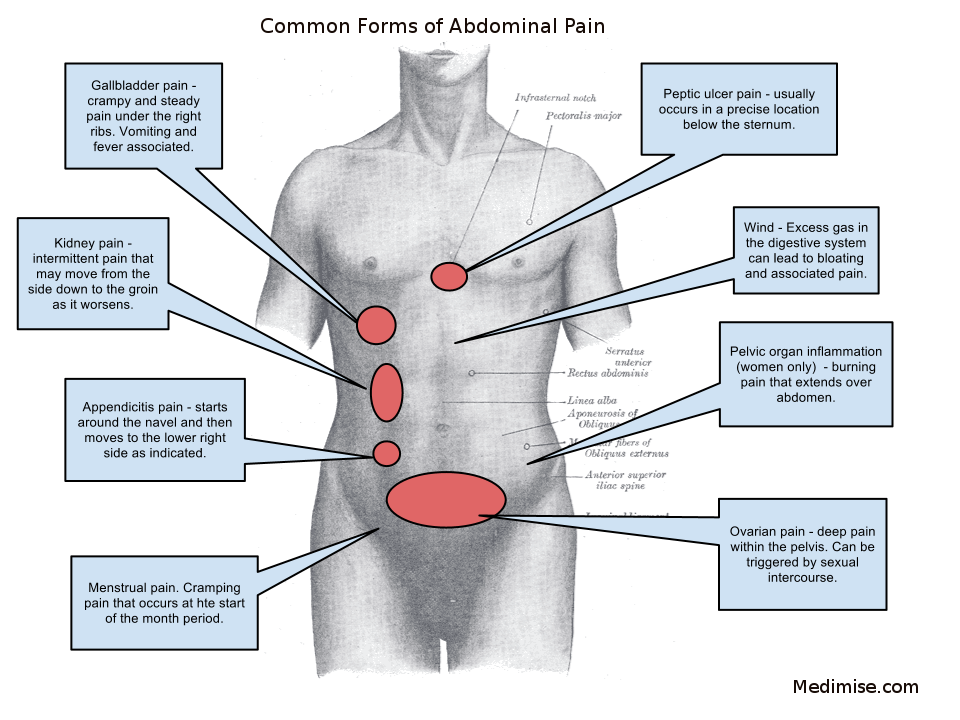
Acid Reflux is a sensation of burning in the chest caused by stomach acid backing up into the esophagus (food pipe). It is also known as acid indigestion, is a burning sensation in the central chest or upper central abdomen. The pain often rises in the chest and may radiate to the neck, throat, or angle of the jaw. The burning is usually in the central part of the chest, just behind the sternum (breastbone). The burning can worsen or can be brought on by lying flat or on the right side. Pregnancy tends to aggravate heartburn.
Causes of Acid Reflux
Heartburn is actually a symptom of GERD (gastroesophageal reflux disease), and is caused by acid refluxing back into the esophagus. Risk factors include those that increase the production of acid in the stomach, as well as structural problems that allow acid reflux into the esophagus.
Some common foods that we eat and drink, stimulate increased stomach acid secretion setting the stage for heartburn. Over-the-counter medications also may precipitate heartburn. Examples of these irritants include:
Smoking and the consumption of high-fat content foods tend to affect function of the lower esophageal sphincter (LES), causing it to relax from the stomach and allow acid to reflux into the esophagus.
A hiatal hernia where a portion of the stomach lies within the chest instead of the in abdomen, can affect the way the LES works and is a risk factor for reflux. Hiatal hernias by themselves cause no symptoms. It is only when the LES fails that heartburn occurs.
Pregnancy can cause increased pressure within the abdominal cavity and affect LES function and predispose it to reflux.
Obesity may also cause increased pressure in the abdomen, and thus reflux in the same way.
Primary diseases of the esophagus can also present with heartburn as a symptom. These include, among others, scleroderma and sarcoidosis.
Some types of food aggravate heartburn, including:
Acidic foods, such as tomatoes, oranges, and grapefruits
Fatty or fried foods
Black pepper, mustard, and spicy foods
Large meals or portion sizes.
Symptoms of Acid Reflux
You have a sharp, burning feeling just below your breastbone or ribs. The chest pain can be accompanied by an acidic taste in your mouth, regurgitation of food, or a burning in your throat.
To evaluate if there is any damage and how severe your heartburn is, the doctor my suggests some of the following tests:
Endoscopy – A flexible scope is passed down the esophagus to examine the esophagus as well as the stomach. Biopsies can be taken if indicated. This lets the doctor see if there is any obvious damage, and also eliminate other reasons for the patient’s symptoms (foreign body, malignancy).
Upper GI series (upper GI series) – After drinking a liquid that coats the inside of the digestive tract, X-ray sare taken. These X-rays will show the outline of the digestive system.
Ambulatory pH testing – This test measures the acidity in the esophagus via a small tube that goes through the nose into the stomach.
Manometry and pH testing – Less commonly, when conventional therapy has failed to confirm the diagnosis, or when symptoms are atypical, use of pressure monitors and acid measurements from within the esophagus may be helpful in making the diagnosis.
Treatment of Acid Reflux
Common OTC antacids such as Rolaids, Tums or Maalox are effective for some individuals;
Other people may do well with proton pump inhibitors (PPIs) such as
There are many over-the-counter and prescription medications available. These fall into three major categories
Medications that neutralize stomach acid (antacids)
Antacids provide quick relieve because they decrease the acid. These medications don’t heal existing damage to your esophagus nor prevent future episodes of heartburn.
Medications that reduce the production of acid
These medications are named after the receptor they block (H-2 blockers) and are available as over-the-counter as well as prescription medications. Their symptom relief tends to last longer than antacids, but it also takes longer for them to start working.
Food and drink tips for night-time heartburn relief
Reduce heartburn risk by limiting acidic foods such as grapefruit, oranges, tomatoes, and vinegar.
Spicy foods giving you heartburn? Cut back on pepper and chillies.
Don’t lie down for at least three hours after you eat. When you are sitting up, gravity helps prevent food and stomach acid from going up into the gullet (oesophagus) and causing heartburn.
Enjoy lean meats and non-fatty foods. Greasy foods – such as chips and burgers – can trigger heartburn.
Avoid or reduce drinks that can trigger reflux such as alcohol, drinks with caffeine and fizzy drinks.
Size matters – eat smaller meals and you may avoid triggering heartburn symptoms.
Enjoy an after-work drink? You may want to turn teetotal – alcohol can relax the oesophageal sphincter, worsening heartburn.
Crazy about colas? It may be time to cut back. Colas can be related to reflux and to heartburn symptoms.
Avoid snacking at bedtime. Eating close to bedtime can trigger heartburn symptoms.
Lifestyle tips for night-time Acid Reflux
Steer clear of tight clothes. Tight belts, waistbands and underwear can press on your stomach triggering heartburn.
Strive for a less stressful life. Stress may increase stomach acids, increasing heartburn symptoms.
Heavy? Try losing weight. The pressure of excess weight increases the chance stomach acid will reflux back up into the oesophagus causing heartburn.
Popping antacids more than once a week? You may have GORD and need specific treatment.
Try chewing gum at night. This can boost the production of saliva, which helps neutralise stomach acid.
Not all “trigger” foods cause heartburn symptoms in everyone. Keep track of your symptoms to find your personal triggers.
Pregnant? You may experience heartburn or GORD. Seek medical adviceabout finding relief.
Heartburn worse after exercise? Drink plenty of water. It helps with hydration and digestion.
Try keeping a diary or heartburn log to keep track of activities that might trigger attacks.
Wait for your work-out if you don’t want to trigger heartburn. Wait at least two hours after a meal before exercising.
Nicotine can cause your oesophageal sphincter to relax. If you smoke, stop smoking.
Some medicines can worsen reflux and heartburn. Seek medical advice about alternatives.
Use blocks or bricks under the bedpost to raise the head of your bed 15cm (6in) so you can sleep with head and chest elevated. You can also try a wedge pillow.
Bend with your knees. Bending over at the waist tends to increase reflux and heartburn symptoms.
How can I reduce heartburn during pregnancy
Prevention is your best bet to reduce heartburn during your pregnancy. Though you may not be able to avoid the condition entirely, here are some ways to prevent it and minimize any discomfort:
Avoid food and drinks that upset your stomach – These include carbonated drinks, alcohol, caffeine, chocolate, citrus fruits and juices, tomatoes, mustard, vinegar, mint products, processed meats, and foods that are fatty, spicy, fried, or highly seasoned.
Eat small meals – Instead of three large meals, eat several small ones throughout the day. Take your time eating and chew thoroughly.
Drink water in between meals – It’s important to drink plenty of water daily during pregnancy, but too much liquid can distend your stomach. Stay hydrated by drinking most of your water in between meals.
Chew gum after eating – Chewing gum stimulates your salivary glands, and saliva can help neutralize acid.
Eat two or three hours before bedtime – This gives your body time to digest before you lie down.
Sleep propped up – Elevate your upper body by about 6 inches with several pillows or a wedge when you sleep. This helps stomach acid stay down and aids digestion.
Dress comfortably – Wear loose, relaxed clothing. Don’t wear clothes that are tight around your waist and tummy.
Ask your provider about heartburn medicines – An antacid that contains magnesium or calcium may ease discomfort. Check with your provider before taking one because some brands are high in sodium or contain aluminum or aspirin. You can also talk to your provider about prescription heartburn medications that are safe during pregnancy.
Don’t smoke – In addition to contributing to serious health problems, smoking boosts the acid in the stomach.
Overweight is a medical condition in which excess body fat has accumulated to the extent that it may have a negative effect on health. People are generally considered obese when their body mass index (BMI), a measurement obtained by dividing a person’s weight by the square of the person’s height, is over 30 kg/m2, with the range 25–30 kg/m2 defined as overweight. Some East Asian countries use lower values. Obesity increases the likelihood of various diseases and conditions, particularly cardiovascular diseases,type 2 diabetes, obstructive sleep apnea, certain types of cancer,osteoarthritis and depression.
Calculation of Overweight
Body Mass Index (BMI) is a mathematical calculation involving height and weight, irrespective of family history, gender, age or race. BMI is calculated by dividing a person’s body weight in kilograms by their height in meters squared (weight [kg] height [m]2) or by using the conversion with pounds (lbs) and inches (in) squared as shown below, This number can be misleading, however, for very muscular people, or for pregnant or lactating women.
[Weight (lbs) ÷ height (in)2 ] x 704.5 =BMI
BMI calculator
The BMI cutoffs are
Health Canada classifies BMI according to the associated risk of developing health problems
BMI value
Classification*
Health risk
Less than 18.5
Underweight
Increased
18.5 to 24.9
Normal weight
Least
25.0 to 29.9
Overweight
Increased
30.0 to 34.9
Obese class I
High
35.0 to 39.9
Obese class II
Very high
40 or higher
Obese class III
Extremely high
Causes of Overweight
There are many causes that directly and indirectly contribute to obesity. Behavior, environment and genetics are among the main contributors to obesity. The Centers for Disease Control has identified these three as the main causes to the complexity of the obesity epidemic.
Behavior
In today’s fast-paced environment, it is easy to adopt unhealthy behaviors. Behavior, in the case of obesity, relates to food choices, amount of physical activity you get and the effort to maintain your health.
Americans are consuming more calories on average than in past decades. The increase in calories has also decreased the nutrients consumed that are needed for a healthy diet. This behavioral problem also relates to the increase in portion sizes at home and when dining out.
Environment
Environment plays a key role in shaping an individual’s habits and lifestyle. There are many environmental influences that can impact your health decisions. Today’s society has developed a more sedentary lifestyle. Walking has been replaced by driving cars, physical activity has been replaced by technology and nutrition has been overcome by convenience foods.
Genetics
Science shows that genetics play a role in obesity. Genes can cause certain disorders which result in obesity. However, not all individuals who are predisposed to obesity become affected by obesity. Research is currently underway to determine which genes contribute most to obesity.
Gut bacteria
The study of the effect of infectious agents on metabolism is still in its early stages. Gut flora has been shown to differ between lean and obese humans. There is an indication that gut flora in obese and lean individuals can affect the metabolic potential. This apparent alteration of the metabolic potential is believed to confer a greater capacity to harvest energy contributing to obesity.
Sedentary lifestyle
A sedentary lifestyle plays a significant role in obesity.Worldwide there has been a large shift towards less physically demanding work,and currently at least 30% of the world’s population gets insufficient exercise.This is primarily due to increasing use of mechanized transportation and a greater prevalence of labor-saving technology in the home.In children, there appear to be declines in levels of physical activity due to less walking and physical education.
Other illnesses
Certain physical and mental illnesses and the pharmaceutical substances used to treat them can increase risk of obesity. Medical illnesses that increase obesity risk include several rare genetic syndromes (listed above) as well as some congenital or acquired conditions: hypothyroidism, Cushing’s syndrome, growth hormone deficiency,[129] and the eating disorders: binge eating disorder and night eating syndrome.
Physiological influences
Some researchers believe that every person has a predetermined weight that the body resists moving away from. Also, people of the same age, sex and body size often have different metabolic rates. This means their bodies burn food differently. Someone with a low metabolic rate may require fewer calories to maintain approximately the same weight as someone whose metabolic rate is high.
Medical problems.In some people, obesity can be traced to a medical cause, such as Prader-Willi syndrome, Cushing’s syndrome and other conditions. Medical problems, such as arthritis, also can lead to decreased activity, which may result in weight gain.
Certain medications – Some medications can lead to weight gain if you don’t compensate through diet or activity. These medications include some antidepressants, anti-seizure medications, diabetes medications, antipsychotic medications, steroids and beta blockers.
Social and economic issues – Research has linked social and economic factors to obesity. Avoiding obesity is difficult if you don’t have safe areas to exercise. Similarly, you may not have been taught healthy ways of cooking, or you may not have money to buy healthier foods. In addition, the people you spend time with may influence your weight — you’re more likely to become obese if you have obese friends or relatives.
Age – Obesity can occur at any age, even in young children. But as you age, hormonal changes and a less active lifestyle increase your risk of obesity. In addition, the amount of muscle in your body tends to decrease with age. This lower muscle mass leads to a decrease in metabolism. These changes also reduce calorie needs, and can make it harder to keep off excess weight. If you don’t consciously control what you eat and become more physically active as you age, you’ll likely gain weight.
Pregnancy – During pregnancy, a woman’s weight necessarily increases. Some women find this weight difficult to lose after the baby is born. This weight gain may contribute to the development of obesity in women.
Quitting smoking – Quitting smoking is often associated with weight gain. And for some, it can lead to enough weight gain that the person becomes obese. In the long run, however, quitting smoking is still a greater benefit to your health than continuing to smoke.
Lack of sleep – Not getting enough sleep or getting too much sleep can cause changes in hormones that increase your appetite. You may also crave foods high in calories and carbohydrates, which can contribute to weight gain.
Others Cause of Overweight
Eating large amounts of processed or fast food– that’s high in fat and sugar
Drinking too much alcohol– alcohol contains a lot of calories, and people who drink heavily are often overweight
Eating out a lot – you may be tempted to also have a starter or dessert in a restaurant, and the food can be higher in fat and sugar
Eating larger portions than you need – you may be encouraged to eat too much if your friends or relatives are also eating large portions
drinking too many sugary drinks– including soft drinks and fruit juice
comfort eating– if you have low self-esteem or feel depressed, you may eat to make yourself feel better
an increased intake of energy-dense foods that are high in fat; and
an increase in physical inactivity due to the increasingly sedentary nature of many forms of work, changing modes of transportation, and increasing urbanization.
Obesity caused others health problem
Obesity can cause a number of further problems, including difficulties with daily activities and serious health conditions.
sleep apnoea – a condition that causes interrupted breathing during sleep, which can lead to daytime sleepiness with an increased risk of road traffic accidents, as well as a greater risk of diabetes, high blood pressure and heart disease
pregnancy complications, such as gestational diabetes or pre-eclampsia (when a woman experiences a potentially dangerous rise in blood pressure during pregnancy)
Symptoms of Overweight
The primary warning sign of obesity is an above-average body weight.
Taking your health history – Your doctor may review your weight history, weight-loss efforts, exercise habits, eating patterns, what other conditions you’ve had, medications, stress levels and other issues about your health. Your doctor may also review your family’s health history to see if you may be predisposed to certain conditions.
A general physical exam – This includes also measuring your height; checking vital signs, such as heart rate, blood pressure and temperature; listening to your heart and lungs; and examining your abdomen.
Calculating your BMI – Your doctor will check your body mass index (BMI) to determine your level of obesity. This should be done at least once a year. Your BMI also helps determine your overall health risk and what treatment may be appropriate.
Measuring your waist circumference – Fat stored around your waist, sometimes called visceral fat or abdominal fat, may further increase your risk of diseases, such as diabetes and heart disease. Women with a waist measurement (circumference) of more than 35 inches (80 centimeters, or cm) and men with a waist measurement of more than 40 inches (102 cm) may have more health risks than do people with smaller waist measurements.
Blood tests – What tests you have depend on your health, risk factors and any current symptoms you may be having. Tests may include a cholesterol test, liver function tests, a fasting glucose, a thyroid test and others. Your doctor may also recommend certain heart tests, such as an electrocardiogram.
Treatment of Overweight
Weight reduction is achieved by
Consuming fewer calories
Increasing activity and exercise
Structured approaches and therapies to reduce weight include:
A modified diet. A reasonable weight loss goal is 1 to 2 pounds per week. This can usually be achieved by eating 500 to 1,000 fewer calories each day. Whether you concentrate on eating less fat or fewer carbohydrates is up to you. Fats have more than twice as many calories per ounce than carbohydrates or protein. If you cut out carbohydrates, you still need to limit fat intake. Choose healthy fats, such as monounsaturated and polyunsaturated oils.
Regular exercise – To effectively lose weight, most people need to do moderate intensity exercise for 60 minutes most days of the week. Add more activity during the day. Take the stairs and get up often from your desk or sofa.
Non-prescription orlistat (Alli) – Orlistat inhibits fat absorption in the intestine. Until recently, this medication was only available by prescription (Xenical). The over-the-counter medicine is sold at a lower dose than Xenical. But the active ingredient is the same.
Other non-prescription diet pills – Over-the-counter diet pills often contain ingredients that can increase heart rate and blood pressure. It is not clear how effective they are in producing weight loss that can be maintained over time. Common side effects include feeling jittery and nervous and having heart palpitations. Some experts believe they may be associated with an increased risk of stroke.
Prescription diet pills. To help you lose weight, your doctor may prescribe medications along with a calorie-restricted diet. Almost all people regain weight when they stop using these medications. The effects of long-term use of these drugs have not been determined.
Exercise.People who are overweight or obese need to get at least 150 minutes a week of moderate-intensity physical activity to prevent further weight gain or to maintain the loss of a modest amount of weight. To achieve more-significant weight loss, you may need to exercise 300 minutes or more a week. You probably will need to gradually increase the amount you exercise as your endurance and fitness improve.
Keep moving – Even though regular aerobic exercise is the most efficient way to burn calories and shed excess weight, any extra movement helps burn calories. Making simple changes throughout your day can add up to big benefits. Park farther from store entrances, rev up your household chores, garden, get up and move around periodically, and wear a pedometer to track how many steps you actually take over the course of a day.
Dietary changes to treat obesity include
Cutting calories – The key to weight loss is reducing how many calories you take in. You and your health care providers can review your typical eating and drinking habits to see how many calories you normally consume and where you can cut back. You and your doctor can decide how many calories you need to take in each day to lose weight, but a typical amount is 1,200 to 1,500 calories for women and 1,500 to 1,800 for men.
Feeling full on less – The concept of energy density can help you satisfy your hunger with fewer calories. All foods have a certain number of calories within a given amount (volume). Some foods — such as desserts, candies, fats and processed foods — are high in energy density. This means that a small volume of that food has a large number of calories. In contrast, other foods, such as fruits and vegetables, have lower energy density.
Making healthier choices – To make your overall diet healthier, eat more plant-based foods, such as fruits, vegetables and whole-grain carbohydrates. Also emphasize lean sources of protein — such as beans, lentils and soy — and lean meats. If you like fish, try to include fish twice a week.
Restricting certain foods – Certain diets limit the amount of a particular food group, such as high-carbohydrate or full-fat foods. Ask your doctor which diet plans have been found effective and which might be helpful for you.
Meal replacements –These plans suggest that you replace one or two meals with their products — such as low-calorie shakes or meal bars — and eat healthy snacks and a healthy, balanced third meal that’s low in fat and calories.
Surgery of Overweight
In general, weight-loss surgery (called bariatric surgery) may be considered if your BMI is 40 or greater, or your BMI is 30-35 or greater and you have at least one medical condition directly related to obesity. In addition, you must have participated in a structured weight loss program without success.
Common weight-loss surgeries include
Gastric bypass surgery – In gastric bypass (Roux-en-Y gastric bypass), the surgeon creates a small pouch at the top of your stomach. The small intestine is then cut a short distance below the main stomach and connected to the new pouch. Food and liquid flow directly from the pouch into this part of the intestine, bypassing most of your stomach.
Laparoscopic adjustable gastric banding (LAGB) – In this procedure, your stomach is separated into two pouches with an inflatable band. Pulling the band tight, like a belt, the surgeon creates a tiny channel between the two pouches. The band keeps the opening from expanding and is generally designed to stay in place permanently.
Biliopancreatic diversion with duodenal switch – This procedure begins with the surgeon removing a large part of the stomach. The surgeon leaves the valve that releases food to the small intestine and the first part of the small intestine (duodenum). Then the surgeon closes off the middle section of the intestine and attaches the last part directly to the duodenum. The separated section of the intestine is reattached to the end of the intestine to allow bile and digestive juices to flow into this part of the intestine.
Gastric sleeve – In this procedure, part of the stomach is removed, creating a smaller reservoir for food. It’s a less complicated surgery than gastric bypass or biliopancreatic diversion with duodenal switch.
Gastroplasty– also known as stomach stapling. A surgeon creates a small pouch in the stomach that allows only limited amounts of food to be eaten at one time.
Laparoscopic adjustable gastric banding – A surgeon places an adjustable band around the stomach with minimally invasive surgery.
Complications of Obesity
Other complications from obesity or becoming overweight are:
Osteoarthritis, a chronic inflammation that damages the cartilage and bone in or around the affected joint. It can cause mild or severe pain and usually affects weight-bearing joints in people who are obese. It is a major cause of knee replacement surgery in patients who are obese for a long time.
Cancers of the esophagus, pancreas, colon, rectum, kidney, endometrium, ovaries, gallbladder, breast, or liver.
Lifestyle and Home Remedies of Obesity
Your effort to overcome obesity is more likely to be successful if you follow strategies at home in addition to your formal treatment plan. These can include:
Learning about your condition – Education about obesity can help you learn more about why you became obese and what you can do about it. You may feel more empowered to take control and stick to your treatment plan. Read reputable self-help books and consider talking about them with your doctor or therapist.
Setting realistic goals – When you have to lose a significant amount of weight, you may set goals that are unrealistic, such as trying to lose too much too fast. Don’t set yourself up for failure. Set daily or weekly goals for exercise and weight loss. Make small changes in your diet instead of attempting drastic changes that you’re not likely to stick with for the long haul.
Sticking to your treatment plan – Changing a lifestyle you may have lived with for many years can be difficult. Be honest with your doctor, therapist or other health care providers if you find your activity or eating goals slipping. You can work together to come up with new ideas or new approaches.
Enlisting support – Get your family and friends on board with your weight-loss goals. Surround yourself with people who will support you and help you, not sabotage your efforts. Make sure they understand how important weight loss is to your health. You might also want to join a weight-loss support group.
Keeping a record – Keep a food and activity log. This record can help you remain accountable for your eating and exercise habits. You can discover behavior that may be holding you back and, conversely, what works well for you. You can also use your log to track other important health parameters such as blood pressure and cholesterol levels and overall fitness.
Identifying and avoiding food triggers – Distract yourself from your desire to eat with something positive, such as calling a friend. Practice saying no to unhealthy foods and big portions. Eat when you’re actually hungry — not simply when the clock says it’s time to eat.
Taking your medications as directed –If you take weight-loss medications or medications to treat obesity-related conditions, such as high blood pressure or diabetes, take them exactly as prescribed. If you have a problem sticking with your medication regimen or have unpleasant side effects, talk to your doctor.
Congestive Heart Failure is a chronic, progressive condition in which the heart muscle is unable to pump enough blood through to meet the body’s needs for blood and oxygen. It is the inability of the heart to keep up with the demands on it and, specifically, failure of the heart to pump blood with normal efficiency. When this occurs, the heart is unable to provide adequate blood flow to other organs such as the brain, liver, and kidneys. Heart failure may be due to failure of the right or left or both ventricles.
At first, the heart tries to make up for this by
Enlarging – The heart stretches to contract more strongly and keep up with the demand to pump more blood. Over time this causes the heart to become enlarged.
Developing more muscle mass – The increase in muscle mass occurs because the contracting cells of the heart get bigger. This lets the heart pump more strongly, at least initially.
Pumping faster – This helps to increase the heart’s output.
The body also tries to compensate in other ways
The blood vessels narrow to keep blood pressure up, trying to make up for the heart’s loss of power.
The body diverts blood away from less important tissues and organs (like the kidneys), and towardsthe heart and brain.
These temporary measures mask the problem of heart failure, but they don’t solve it. Heart failure continues and worsens until these substitute processes no longer work.
Types of Heart Congestive Heart Failure
Systolic heart failure – This happens when your heart muscle doesn’t squeeze with enough force. When that’s the case, it pumps less oxygen-rich blood through your body.
Diastolic heart failure – Your heart squeezes normally, but the ventricle — the main pumping chamber — doesn’t relax properly. This lowers the amount of blood that can enter your heart and raises blood pressure in your lungs. When that happens, you get fluid in your lungs, legs, and belly.
Heart failure can involve the left side (left ventricle), right side (right ventricle) or both sides of your heart. Generally, heart failure begins with the left side, specifically the left ventricle — your heart’s main pumping chamber.
[stextbox id=’info’]
Type of heart failure
Description
Left-sided heart failure
Fluid may back up in your lungs, causing shortness of breath.
Right-sided heart failure
Fluid may back up into your abdomen, legs and feet, causing swelling.
Systolic heart failure
The left ventricle can’t contract vigorously, indicating a pumping problem.
Diastolic heart failure
(also called heart failure with preserved ejection fraction)
The left ventricle can’t relax or fill fully, indicating a filling problem.
[/stextbox]
Stages of Congestive Heart Failure
The American Heart Association and American College of Cardiology have put out a list of heart failure stages that helps you understand how the condition changes over time and the kinds of treatments that are used in each phase.
Stage A – This is the period when you are at risk for heart failure. You may be in this stage if you have:
High blood pressure
Diabetes
Coronary artery disease
Metabolic syndrome
You may also be at risk if you have a history of:
Cardiotoxic drug therapy
Alcohol abuse
Rheumatic fever
Family members with cardiomyopathy
If you’re in stage A, your doctor may suggest lifestyle changes and treatment such as:
Regular exercise
If you smoke, quit.
Treat high blood pressure or high cholesterol.
Stop drinking alcohol or using illegal drugs.
Take an ACE inhibitor or an angiotensin II receptor blocker (ARB) if you’ve had coronary artery disease or if you have diabetes, high blood pressure, or other heart and blood vessel conditions.
Take beta-blockers if you have high blood pressure or you’ve had a heart attack.
Stage B – You’re in this phase if you never had symptoms of heart failure but you’re diagnosed with systolic left ventricular dysfunction, which means the left chamber of your heart doesn’t pump well. You may be in this group if you had or have:
Stage D – You’re in this phase if you have systolic heart failure and advanced symptoms after you get medical care.
Treatments for Stage D –Your doctor may suggest some of the treatments from stages A, B, and C. You may also talk with your doctor about some other kinds of treatments, like:
Heart transplant
Ventricular assist devices
Surgery options
Continuous infusion of intravenous inotropic drugs
[stextbox id=’info’]
Stage
Definition of Stage
Usual Treatments
Stage A
People at high risk of developing heart failure (pre-heart failure), including people with:
High blood pressure
Diabetes
Coronary artery disease
Metabolic syndrome
History of cardiotoxic drug therapy
History of alcohol abuse
History of rheumatic fever
Family history of cardiomyopathy
Exercise regularly.
Quit smoking.
Treat high blood pressure.
Treat lipid disorders.
Discontinue alcohol or illegal drug use.
An angiotensin-converting enzyme inhibitor (ACE inhibitor) or an angiotensin II receptor blocker (ARB) is prescribed if you have coronary artery disease, diabetes, high blood pressure, or other vascular or cardiac conditions.
Beta-blockers may be prescribed if you have high blood pressure or if you’ve had a previous heart attack.
Stage B
People diagnosed with systolic left ventricular dysfunction but who have never had symptoms of heart failure (pre-heart failure), including people with:
Prior heart attack
Valve disease
Cardiomyopathy
The diagnosis is usually made when an ejection fraction of less than 40% is found during an echocardiogram test.
Treatment methods above for Stage A apply
All patients should take an angiotensin converting enzyme inhibitor (ACE inhibitors) or angiotensin II receptor blocker (ARB)
Beta-blockers should be prescribed for patients after a heart attack
Surgery options for coronary artery repair and valve repair or replacement (as appropriate) should be discussed
If appropriate, surgery options should be discussed for patients who have had a heart attack.
Stage C
Patients with known systolic heart failure and current or prior symptoms. Most common symptoms include:
Shortness of breath
Fatigue
Reduced ability to exercise
Treatment methods above for Stage A apply
All patients should take an angiotensin converting enzyme inhibitor (ACE inhibitors) and beta-blockers
African-American patients may be prescribed a hydralazine/nitrate combination if symptoms persist
Diuretics (water pills) and digoxin may be prescribed if symptoms persist
An aldosterone inhibitor may be prescribed when symptoms remain severe with other therapies
Restrict dietary sodium (salt)
Monitor weight
Restrict fluids (as appropriate)
Drugs that worsen the condition should be discontinued
As appropriate, cardiac resynchronization therapy (biventricular pacemaker) may be recommended
An implantable cardiac defibrillator (ICD) may be recommended
Stage D
Patients with systolic heart failure and presence of advanced symptoms after receiving optimum medical care.
Treatment methods for Stages A, B & C apply
Patient should be evaluated to determine if the following treatments are available options: heart transplant, ventricular assist devices, surgery options, research therapies, continuous infusion of intravenous inotropic drugs and end-of-life (palliative or hospice) care
[/stextbox]
Classification of Congestive Heart Failure
There are many different ways to categorize heart failure, including
The side of the heart involved (left heart failure versus right heart failure). Right heart failure compromises pulmonary flow to the lungs. Left heart failure compromises aortic flow to the body and brain. Mixed presentations are common; left heart failure often leads to right heart failure in the longer term.
Whether the abnormality is due to insufficient contraction (systolic dysfunction), or due to insufficient relaxation of the heart (diastolic dysfunction), or to both.
Whether the problem is primarily increased venous back pressure (preload), or failure to supply adequate arterial perfusion (afterload).
Whether the abnormality is due to low cardiac output with high systemic vascular resistance or high cardiac output with low vascular resistance (low-output heart failure vs. high-output heart failure).
The degree of functional impairment conferred by the abnormality (as reflected in the New York Heart Association Functional Classification)
The degree of coexisting illness: i.e. heart failure/systemic hypertension, heart failure/pulmonary hypertension, heart failure/diabetes, heart failure/kidney failure, etc.
Functional classification generally relies on the New York Heart Association functional classification. The classes (I-IV) are:
Class I: no limitation is experienced in any activities; there are no symptoms from ordinary activities.
Class II: slight, mild limitation of activity; the patient is comfortable at rest or with mild exertion.
Class III: marked limitation of any activity; the patient is comfortable only at rest.
Class IV: any physical activity brings on discomfort and symptoms occur at rest.
This score documents the severity of symptoms and can be used to assess response to treatment. While its use is widespread, the NYHA score is not very reproducible and does not reliably predict the walking distance or exercise tolerance on formal testing.
In its 2001 guidelines, the American College of Cardiology/American Heart Association working group introduced four stages of heart failure
Stage A: Patients at high risk for developing HF in the future but no functional or structural heart disorder.
Stage B: a structural heart disorder but no symptoms at any stage.
Stage C: previous or current symptoms of heart failure in the context of an underlying structural heart problem, but managed with medical treatment.
Stage D: advanced disease requiring hospital-based support, a heart transplant or palliative care.
The ACC staging system is useful in that Stage A encompasses “pre-heart failure” – a stage where intervention with treatment can presumably prevent progression to overt symptoms. ACC Stage A does not have a corresponding NYHA class. ACC Stage B would correspond to NYHA Class I. ACC Stage C corresponds to NYHA Class II and III, while ACC Stage D overlaps with NYHA Class IV.
Causes of Congestive Heart Failure
Heart failure is caused by any conditions that damage the heart muscle. These include:
Coronary artery disease– the coronary arteries supply the heart muscle with blood. If these are blocked or the flow is reduced, the heart does not receive the blood supply it needs.
Heart attack – a sudden block of the coronary arteries; this causes scars in the heart’s tissues and decreases how effectively it can pump.
Cardiomyopathy – damage to the heart muscle other than by artery or blood flow problems; for instance caused by drug side effects or infections.
Conditions that overwork the heart – for instance, valve disease, hypertension(high blood pressure), diabetes, kidney disease, or heart defects present from birth.
The following are risk factors for congestive heart failure; they may make it more likely:
Myocarditis– inflammation of the heart muscle, usually caused by a virus, leading to left-sided heart failure.
Heart arrhythmias – abnormal heart rhythms, may cause the heart to beat too fast, creating more work for the heart. Eventually, the heart may weaken, leading to heart failure. If the heartbeat is too slow not enough blood may get out from the heart to the body, leading to heart failure.
Atrial fibrillation – an irregular, often rapid heartbeat; patients with atrial fibrillation have a higher risk of hospitalization due to heart failure, a study found.
Emphysema– a chronic disease that makes it hard for the patient to breathe.
Lupus – the patient’s immune system attacks healthy cells and tissues.
Hemochromatosis – a condition where iron accumulates in the tissues.
Amyloidosis – one or more organ systems in the body accumulate deposits of abnormal proteins.
Chest pain if your heart failure is caused by a heart attack
Diagnosis of Congestive Heart Failure
Your doctor may also order other tests to determine the cause and severity of your heart failure. These include
Blood tests – Blood tests are used to evaluate kidney and thyroid function as well as to check cholesterol levels and the presence of anemia. Anemia is a blood condition that occurs when there is not enough hemoglobin (the substance in red blood cells that enables the blood to transport oxygen through the body) in a person’s blood.
B-type Natriuretic Peptide (BNP) blood test – BNP is a substance secreted from the heart in response to changes in blood pressure that occur when heart failure develops or worsens. BNP blood levels increase when heart failure symptoms worsen, and decrease when the heart failure condition is stable. The BNP level in a person with heart failure — even someone whose condition is stable — is higher than in a person with normal heart function. BNP levels do not necessarily correlate with the severity of heart failure.
Chest X-ray – A chest X-ray shows the size of your heart and whether there is fluid build-up around the heart and lungs.
Echocardiogram –This test is an ultrasound which shows the heart’s movement, structure, and function.
Blood and urine tests– these will check the patient’s blood count and liver, thyroid, and kidney function. The doctor may also want to check the blood for specific chemical markers of heart failure.
An ECG (electrocardiogram)– this device records the electrical activity and rhythms of the patient’s heart. The test may also reveal any damage to the heart from a heart attack. Heart attacks are often the underlying cause of heart failure.
An echocardiogram– this is an ultrasound scan that checks the pumping action of the patient’s heart. The doctor measures the percentage of blood pumped out of the patient’s left ventricle (the main pumping chamber) with each heartbeat – this measurement is called the ejection fraction.
The Ejection Fraction (EF) – is used to measure how well your heart pumps with each beat to determine if systolic dysfunction or heart failure with preserved left ventricular function is present. Your doctor can discuss which condition is present in your heart.
Angiogram (coronary catheterization) – a catheter (thin, flexible tube) is introduced into a blood vessel until it goes through the aorta into the patient’s coronary arteries. The catheter usually enters the body at the groin or arm. A dye is injected through the catheter into the arteries.
Coronary angiogram – In this test, a thin, flexible tube (catheter) is inserted into a blood vessel at your groin or in your arm and guided through the aorta into your coronary arteries. A dye injected through the catheter makes the arteries supplying your heart visible on an X-ray, helping doctors spot blockages.
Myocardial biopsy – In this test, your doctor inserts a small, flexible biopsy cord into a vein in your neck or groin, and small pieces of the heart muscle are taken. This test may be performed to diagnose certain types of heart muscle diseases that cause heart failure.
In this type of X-ray exam, the doctor inserts a catheter into your blood vessel, usually in the groin or arm. They then guide it into the heart. This test can show how much blood is currently flowing through the heart.
During a stress exam, an EKG machine monitors your heart function while you run on a treadmill or perform another type of exercise.
Holter monitoring
Electrode patches are placed on your chest and attached to a small machine called a Holter monitor for this test. The machine records the electrical activity of your heart for at least 24 to 48 hours.
[/stextbox]
Treatment of Heart Failure
ACE inhibitors (inhibitors of Angiotensin-Converting Enzyme)
These drugs help the arteries relax, lower blood pressure, making it easier for the heart to pump blood around the body – they lower the heart’s workload. Ace inhibitors generally boost the performance of the heart and invariably improve the quality of life of the heart failure patient. These drugs are unsuitable for some patients, though. They can cause an irritating cough in some people.
Angiotensin II receptor blockers
These drugs, which include losartan and valsartan , have many of the same benefits as ACE inhibitors. They may be an alternative for people who can’t tolerate ACE inhibitors.
Anticoagulants
These drugs make it harder for the blood to clot; they help thin the blood and help prevent a stroke. The most commonly used anticoagulant is Warfarin. However, it has to be carefully monitored by the doctor to ensure the blood thinning effect is not excessive, and it will only be used if you have another reason to thin your blood. There have been a lot of studies on this discussion point. Most point toward no anticoagulation in patients without a diagnosis of afibrilation with or without another indication.
Angiotensin-converting enzyme inhibitors
(ACE inhibitors) open up narrowed blood vessels to improve blood flow. Vasodilators are another option if you cannot tolerate ACE inhibitors.
Reduce your body’s fluid content. CHF can cause your body to retain more fluid than it should.
Thiazide diuretics – These cause blood vessels to widen and help the body remove any extra fluid. Examples include metolazone , indapamide , and hydrochlorothiazide .
Loop diuretics – These cause the kidneys to produce more urine. This helps remove excess fluid from your body. Examples include furosemide ethacrynic acid , and torsemide .
Potassium-sparingdiuretics –These help get rid of fluids and sodium while still retaining potassium. Examples include triamterene , eplerenone ,
Diuretics should be taken with caution with the following medications, as they may cause an adverse reaction:
This is an abbreviated list containing only the most common drug interactions. You should always talk to your doctor before taking any new medications.
Digoxin
A drug for patients with a fast irregular heart rhythm. Digoxin slows down the heartbeat.
Antiplatelet medicine
These stop the blood platelets from forming clots in the blood Aspirin is an antiplatelet drug and can be considered in certain patient populations. Patients who take low-dose aspirin for heart failure will need to continue taking it for the rest of their life.
Aldosterone antagonists
These drugs include spironolactone and eplerenone . These are potassium-sparing diuretics, which also have additional properties that may help people with severe systolic heart failure live longer.
Unlike some other diuretics,spironolactone and eplerenone can raise the level of potassium in your blood to dangerous levels, so talk to your doctor if increased potassium is a concern, and learn if you need to modify your intake of food that’s high in potassium.
Surgery of Heart Failure
In some cases, doctors recommend surgery to treat the underlying problem that led to heart failure. Some treatments being studied and used in certain people include
Coronary bypass surgery – If severely blocked arteries are contributing to your heart failure, your doctor may recommend coronary artery bypass surgery. In this procedure, blood vessels from your leg, arm or chest bypass a blocked artery in your heart to allow blood to flow through your heart more freely.
Heart valve repair or replacement – If a faulty heart valve causes your heart failure, your doctor may recommend repairing or replacing the valve. The surgeon can modify the original valve to eliminate backward blood flow. Surgeons can also repair the valve by reconnecting valve leaflets or by removing excess valve tissue so that the leaflets can close tightly. Sometimes repairing the valve includes tightening or replacing the ring around the valve (annuloplasty).Valve replacement is done when valve repair isn’t possible.
Implantable cardioverter-defibrillators (ICDs) – An ICD is a device similar to a pacemaker. It’s implanted under the skin in your chest with wires leading through your veins and into your heart.The ICD monitors the heart rhythm. If the heart starts beating at a dangerous rhythm, or if your heart stops, the ICD tries to pace your heart or shock it back into normal rhythm. An ICD can also function as a pacemaker and speed your heart up if it is going too slow.
Cardiac resynchronization therapy (CRT), or biventricular pacing – A biventricular pacemaker sends timed electrical impulses to both of the heart’s lower chambers (the left and right ventricles) so that they pump in a more efficient, coordinated manner.Many people with heart failure have problems with their heart’s electrical system that cause their already-weak heart muscle to beat in an uncoordinated fashion. This inefficient muscle contraction may cause heart failure to worsen. Often a biventricular pacemaker is combined with an ICD for people with heart failure.
Ventricular assist devices (VADs) – A VAD, also known as a mechanical circulatory support device, is an implantable mechanical pump that helps pump blood from the lower chambers of your heart (the ventricles) to the rest of your body. A VAD is implanted into the abdomen or chest and attached to a weakened heart to help it pump blood to the rest of your body.Doctors first used heart pumps to help keep heart transplant candidates alive while they waited for a donor heart. VADs may also be used as an alternative to transplantation. Implanted heart pumps can enhance the quality of life of some people with severe heart failure who aren’t eligible for or able to undergo heart transplantation or are waiting for a new heart.
Heart transplant – Some people have such severe heart failure that surgery or medications don’t help. They may need to have their diseased heart replaced with a healthy donor heart.
Heart valve surgery– Diseased heart valves can be treated both surgically (traditional heart valve surgery) and non-surgically (balloon valvuloplasty).
Risk factors of Heart Failure
A single risk factor may be enough to cause heart failure, but a combination of factors also increases your risk.
High blood pressure – Your heart works harder than it has to if your blood pressure is high.
Coronary artery disease – Narrowed arteries may limit your heart’s supply of oxygen-rich blood, resulting in weakened heart muscle.
Heart attack – A heart attack is a form of coronary disease that occurs suddenly. Damage to your heart muscle from a heart attack may mean your heart can no longer pump as well as it should.
Diabetes – Having diabetes increases your risk of high blood pressure and coronary artery disease.
Some diabetes medications – The diabetes drugs rosiglitazone and pioglitazone (Actos) have been found to increase the risk of heart failure in some people. Don’t stop taking these medications on your own, though. If you’re taking them, discuss with your doctor whether you need to make any changes.
Certain medications – Some medications may lead to heart failure or heart problems. Medications that may increase the risk of heart problems include nonsteroidal anti-inflammatory drugs (NSAIDs); certain anesthesia medications; some anti-arrhythmic medications; certain medications used to treat high blood pressure, cancer, blood conditions, neurological conditions, psychiatric conditions, lung conditions, urological conditions, inflammatory conditions and infections; and other prescription and over-the-counter medications.Don’t stop taking any medications on your own.
Sleep apnea – The inability to breathe properly while you sleep at night results in low blood oxygen levels and increased risk of abnormal heart rhythms. Both of these problems can weaken the heart.
Congenital heart defects – Some people who develop heart failure were born with structural heart defects.
Valvular heart disease – People with valvular heart disease have a higher risk of heart failure.
Viruses – A viral infection may have damaged your heart muscle.
Alcohol use– Drinking too much alcohol can weaken heart muscle and lead to heart failure.
Tobacco use – Using tobacco can increase your risk of heart failure.
Obesity – People who are obese have a higher risk of developing heart failure.
Irregular heartbeats – These abnormal rhythms, especially if they are very frequent and fast, can weaken the heart muscle and cause heart failure.
Coronary artery disease and heart attack – Coronary artery disease is the most common form of heart disease and the most common cause of heart failure. The disease results from the buildup of fatty deposits (plaque) in your arteries, which reduce blood flow and can lead to heart attack.
High blood pressure (hypertension) – If your blood pressure is high, your heart has to work harder than it should to circulate blood throughout your body. Over time, this extra exertion can make your heart muscle too stiff or too weak to effectively pump blood.
Faulty heart valves – The valves of your heart keep blood flowing in the proper direction through the heart. A damaged valve — due to a heart defect, coronary artery disease or heart infection — forces your heart to work harder, which can weaken it over time.
Damage to the heart muscle (cardiomyopathy) – Heart muscle damage (cardiomyopathy) can have many causes, including several diseases, infections, alcohol abuse and the toxic effect of drugs, such as cocaine or some drugs used for chemotherapy. Genetic factors also can play a role.
Myocarditis – Myocarditis is an inflammation of the heart muscle. It’s most commonly caused by a virus and can lead to left-sided heart failure.
Heart defects you’re born with (congenital heart defects) – If your heart and its chambers or valves haven’t formed correctly, the healthy parts of your heart have to work harder to pump blood through your heart, which, in turn, may lead to heart failure.
Abnormal heart rhythms (heart arrhythmias) – Abnormal heart rhythms may cause your heart to beat too fast, creating extra work for your heart. A slow heartbeat also may lead to heart failure.
Other diseases – Chronic diseases — such as diabetes, HIV, hyperthyroidism, hypothyroidism, or a buildup of iron (hemochromatosis) or protein (amyloidosis) — also may contribute to heart failure.Causes of acute heart failure include viruses that attack the heart muscle, severe infections, allergic reactions, blood clots in the lungs, the use of certain medications or any illness that affects the whole body.
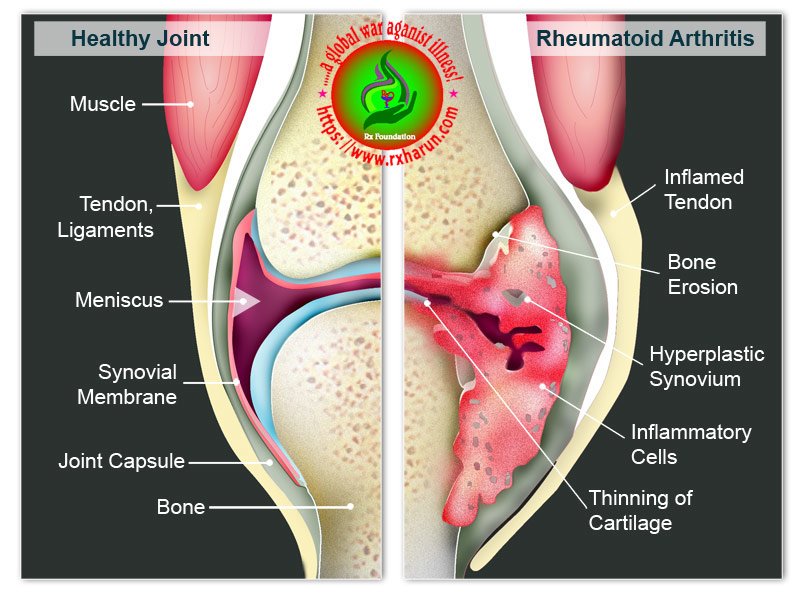
Causes of Rheumatoid Arthritis is a systemic chronic inflammatory disease of unclear etiology that is manifested in by a progressive and destructive polyarthritis in association with serological evidence of autoreactivity. Its diagnosis is based on the classification criteria that involve four parameters: joint involvement, serology (rheumatoid factor and anti-cyclic citrullinated peptide–anti-CCP), levels of acute phase reactants and the duration of the symptoms Aletaha, et al. [1]. This classification simplifies the categorization of the patients with early RA; however, the diagnosis requires highly trained specialists who are able to differentiate early symptoms of RA from other pathologies.
Rheumatoid arthritis is a long-term condition that causes pain, swelling and stiffness in the joints. The symptoms usually affect the hands, feet, and wrist.
Causes of Rheumatoid Arthritis
Oral mucosa and RA-related autoimmunity
In recent years, the oral mucosa, specifically the gingiva and periodontal regions, has been studied as a potential site for the origins of RA. In classifiable RA, there is an increased prevalence and severity of periodontitis that has been associated with systemic RA-related autoantibodies [Rx], and in subjects without classified RA, severe periodontitis has also been associated with RA-related autoantibodies [Rx]. In addition, Porphyromonas gingivalis (P. ging), a microbe commonly involved in periodontitis, is uniquely found to express a peptidyl arginine deiminase (PAD) enzyme capable of citrullinating human peptides/proteins [Rx]. Furthermore, in subjects without classified RA, Mikuls and colleagues identified an association between elevations of antibodies to P. ging and serum RA-related autoantibodies [Rx], and inflamed gingival tissue has been shown to express increased levels of PAD and citrullinated proteins [Rx]. Of interest, Harvey and colleagues also identified the presence of local anti-CCP antibodies in gingival crevicular fluid associated with gingivitis. However, despite these intriguing associations, a recent study by Scher and colleagues found that P. ging was associated with the severity of periodontitis but not specifically associated with new-onset RA[Rx]. Rather, they found that Prevotella and Leptotrichia were expanded in new-onset RA, and Anaeroglobus geminatus was associated with RA-related autoantibody positivity.
The lung and RA-related autoimmunity
Another mucosal surface that is a potential originating site of autoimmunity in RA is the lung. This possibility is supported by established data that demonstrate increased RA risk is associated with inhaled exposures such as cigarette smoke [Rx], and a high prevalence of lung disease including airways inflammation has been identified in established RA[Rx]. Furthermore, Demoruelle and colleagues recently identified a higher prevalence of inflammatory airways disease by computed tomographic imaging in arthritis-free subjects (by joint examination and in a subset of subjects, by MRI) with serum RA-related autoantibodies compared to autoantibody negative matched controls [Rx]. Importantly, this finding was independent of prior or current cigarette smoking. Additionally, Fischer and colleagues found 80% of anti-CCP positive subjects with chronic lung disease and no joint symptoms had imaging evidence of airways inflammation [Rx]; furthermore, in a subset of these subjects that had a lung biopsy, 96% demonstrated histologic evidence of lung inflammation. Importantly, in these 2 studies, 5 subjects developed synovitis classifiable as RA during longitudinal follow-up, and all 5 had evidence of lung inflammation preceding the development of clinically apparent arthritis.
The gut and RA-related autoimmunity
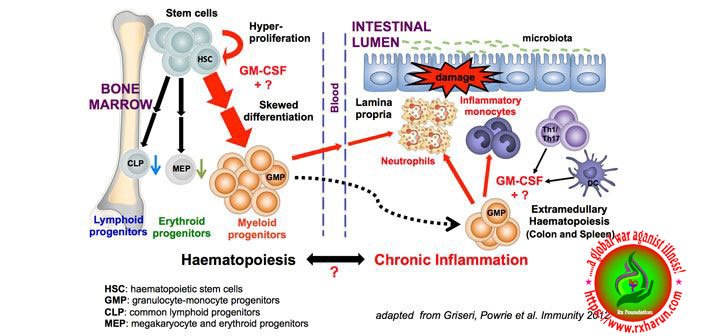
To date, much of the data investigating the gastrointestinal mucosa in RA has focused on the gut microbiome. The gut microbiome is known to influence the development of the innate and adaptive immune system, and may therefore also play a role in the development of autoimmunity [Rx]. In murine studies, specific alterations of gut bacteria can enhance or attenuate susceptibility to experimentally-induced arthritis [Rx]. In humans, studies have identified differences in the gut microbiota, specifically differences in relative abundance of various microbes, in patients with classifiable RA compared to controls [Rx]. However, these studies have been unable to distinguish whether differences in gut microbial communities are a cause of inflammation in RA, the result of an underlying inflammatory environment that selects for the survival of certain microbes, or whether the therapies used in RA are responsible for altering the gut microbial composition. Additional study of subjects prior to the onset of joint inflammation will be informative to understand the relationship between the gastrointestinal microbiome and the development RA.
Pathophysiology of Rheumatoid Arthritis
Prominent immunologic abnormalities include immune complexes produced by synovial lining cells and in inflamed blood vessels. Plasma cells produce antibodies (eg, rheumatoid factor [RF], anti-cyclic citrullinated peptide antibody [anti-CCP]) that contribute to these complexes, but destructive arthritis can occur in their absence. Macrophages also migrate to diseased synovium in early disease; increased macrophage-derived lining cells are prominent along with vessel inflammation. Lymphocytes that infiltrate the synovial tissue are primarily CD4+ T cells. Macrophages and lymphocytes produce pro-inflammatory cytokines and chemokines (eg, TNF-α, granulocyte-macrophage-colony-stimulating factor [GM-CSF], various ILs, interferon-γ) in the synovium. The release of inflammatory mediators probably contributes to the systemic and joint manifestations of RA.
In chronically affected joints, the normally thin synovium proliferates, thickens, and develops many villous folds. The synovial lining cells produce various materials, including collagenase and stromelysin, which contribute to cartilage destruction, and IL-1 and TNF-α, which stimulate cartilage destruction, osteoclast-mediated bone absorption, synovial inflammation, and prostaglandins (which potentiate inflammation). Fibrin deposition, fibrosis, and necrosis are also present. Hyperplastic synovial tissue (pannus) releases these inflammatory mediators, which erode cartilage, subchondral
Rheumatoid arthritis statistics
The Center for Disease Control and Prevention (CDC) estimates that 1.5 million US adults suffer from rheumatoid arthritis.
According to The National Health Service (NHS), UK, about 350,000 British people are affected by rheumatoid arthritis.
According to the National Rheumatoid Arthritis Society (UK) rheumatoid arthritis affects 0.8% of the UK population.
According to The Mayo Clinic, USA, the disease is two to three times more common in women than in men.
Although people of any age may be affected, rheumatoid arthritis is much more common after the age of 40. According to the National Rheumatoid Arthritis Society (UK), approximately 12,000 children under 16 years of age have a juvenile form of the disease.
According to the John Hopkins Arthritis Center, USA
Approximately 1% to 2% of the world’s population is affected by the disease.
Prevalence increases with age, approaching 5% in women over 55 years of age.
Annual average incidence is 70 in every 100,000 in the USA.
It is 4 times more common in smokers than non-smokers.
Rheumatoid arthritis is much more common that MS (multiple sclerosis) or leukemia. However, awareness of the disease’s effects and severity are more restricted to patients, their caregivers and their relatives because it is not well publicized.
Classification Criteria
In 2010 the 2010 ACR / EULAR Rheumatoid Arthritis Classification Criteria were introduced. The new criterion is not a diagnostic criterion but a classification criterion to identify disease with a high likelihood of developing a chronic form. However, a score of 6 or greater unequivocally classifies a person with a diagnosis of rheumatoid arthritis.
These new classification criteria overruled the “old” ACR criteria of 1987 and are adapted for early RA diagnosis. The “new” classification criteria, jointly published by the American College of Rheumatology (ACR) and the European League Against Rheumatism (EULAR) establish a point value between 0 and 10. Four areas are covered in the diagnosis:
Joint involvement, designating the metacarpophalangeal joints, proximal interphalangeal joints, the interphalangeal joint of the thumb, second through fifth metatarsophalangeal joint and wrist as small joints, and shoulders, elbows, hip joints, knees, and ankles as large joints:
Involvement of 1 large joint gives 0 points
Involvement of 2–10 large joints gives 1 point
Involvement of 1–3 small joints (with or without the involvement of large joints) gives 2 points
Involvement of 4–10 small joints (with or without the involvement of large joints) gives 3 points
Involvement of more than 10 joints (with the involvement of at least 1 small joint) gives 5 points
Serological parameters – including the rheumatoid factor as well as ACPA – “ACPA” stands for “anti-citrullinated protein antibody”:
Negative RF and negative ACPA gives 0 points
Low-positive RF or low-positive ACPA gives 2 points
High-positive RF or high-positive ACPA gives 3 points
acute phase reactants: 1 point for elevated erythrocyte sedimentation rate, ESR, or elevated CRP value (c-reactive protein)
duration of arthritis: 1 point for symptoms lasting six weeks or longer
Risk Factors
The etiology, or cause, of RA is unknown. Many cases are believed to result from an interaction between genetic factors and environmental exposures.
Age and sex: The incidence of RA is typically two to three times higher in women than men. The onset of RA, in both women and men, is highest among those in their sixties.
Genetics: There is longstanding evidence that specific HLA class II genotypes are associated with increased risk of developing RA. Most attention has been given to the DR4 and DRB1 molecules of the major histocompatibility complex HLA class II genes. The strongest associations have been found between RA and the DRB1*0401 and DRB1*0404 alleles. Other recent investigations indicate that of the more than 30 genes studied, the strongest candidate gene is PTPN22, a gene that has been linked to several autoimmune conditions.
Modifiable: Several modifiable risk factors for RA have been studied including reproductive hormonal exposures, tobacco use, dietary factors, and microbial exposures.
Smoking: Among the modifiable risk factors, smoking is the strongest and most consistent modifiable risk factor for RA. A history of smoking is associated with a modest to moderate (1.3 to 2.4 times) increased risk of RA onset. This relationship between smoking and RA is strongest among people who are ACPA-positive (anti-citrullinated protein/peptide antibodies), a marker of auto-immune activities
Reproductive and Breastfeeding History: Hormones related to reproduction have been studied extensively as potential risk factors for RA.
Oral Contraceptives (OC) – Early studies found that women who had taken OCs had a modest to moderate decrease in risk of RA. However, most recent studies have not found a decreased risk. The estrogen concentration of contemporary OCs is typically 80%-90% lower than the first OCs introduced in the 1960s. This may account for the lack of associations in recent studies.
Hormone Replacement Therapy (HRT) – There is mixed evidence of an association between HRT and RA onset.
Live Birth History – Most studies have found that women who have never had a live birth have a slight to moderately increased risk of RA.
Breastfeeding – Almost all recent population-based studies have found that RA is less common among women who breastfeed.
Menstrual History – At least two studies have observed that women with irregular menses or a truncated menstrual history (e.g., early menopause) have an increased risk of RA. Because women with the polycystic ovarian syndrome (PCOS) have an increased risk of RA, the association with an irregular menstrual history may result from PCOS.
Early Life Exposures – Early life exposures may alter the risk of developing RA in adulthood. For example, one study found that maternal smoking doubled the risk of children developing RA as adults. The relationship between birthweight and later onset of RA is inconsistent: one study found no effect while others have found that both low and high birth weight are risk factors. Lower socio-economic status in childhood has been linked to heightened risk of developing RA.
Physical Activity – The only study examining the role of physical activity in the development of RA found a dose-response relationship; that is, the risk of RA declined with increasing levels of leisure time physical activity. However, the risk ratios were not statistically significant.
Vitamin D: Two studies examining vitamin D as a risk factor for RA onset found no associations.
Symptoms of Rheumatoid Arthritis
The joints most commonly affected by rheumatoid arthritis are in the hands, wrists, feet, ankles, knees, shoulders, and elbows. The disease typically causes inflammation symmetrically in the body, meaning the same joints are affected on both sides of the body. Symptoms of rheumatoid arthritis may begin suddenly or gradually.
The typical symptoms of rheumatoid arthritis include the following:
Warm, swollen joints – It’s common for the same joints to be swollen on both sides of the body, for instance, the fingers of both the right and left hand.
Painful joints
Stiff joints – After longer periods of rest, and especially in the morning right after you wake up, your joints are stiff. They usually only become more flexible again after an hour or more, or once you have been active for a while.
Weakness – Painful, stiff joints often end up not getting as much use, which can cause the muscles to gradually weaken.
Exhaustion – Rheumatoid arthritis is an inflammatory disease that affects the entire body. So it often causes tiredness, general physical weakness and occasionally more extreme exhaustion (fatigue).
Rheumatoid nodules – As the disease progresses, small hard lumps called rheumatoid nodules sometimes develop under the skin. They’re usually not sensitive to pressure or touch.
Rheumatoid arthritis symptoms vary a lot from person to person: It might be that a different joint is affected, or that other symptoms are causing the most trouble.
The following are the most common symptoms of rheumatoid arthritis. However, each individual may experience symptoms differently. Symptoms may include:
Inflamed, painful joints
Stiff joints
Enlarged and/or deformed joints (such as fingers bent toward the little finger and/or swollen wrists)
Frozen joints (joints that freeze in one position)
Cysts behind the knees that may rupture, causing lower leg swelling and pain
Hard nodules (bumps) under the skin near affected joints
Low-grade fever
Inflamed blood vessels (vasculitis) may occur occasionally, leading to nerve damage and leg sores
Inflamed membranes around the lungs (pleurisy), the sac around the heart (pericarditis), or inflammation and scarring of the lungs themselves, that may lead to chest pain, difficulty breathing, and abnormal heart function
Swollen lymph nodes
Sjögren’s syndrome (dry eyes and mouth)
Eye inflammation
If a person has four or more of the following symptoms, he/she may be diagnosed with rheumatoid arthritis:
Morning stiffness that lasts longer than one hour for at least six weeks
Three or more joints that are inflamed for at least six weeks
Presence of arthritis in the hand, wrist, or finger joints for at least six weeks
Blood tests that reveal rheumatoid factor
X-rays that show characteristic changes in the joints
According to WHo
Symptoms of Rheumatoid Arthritis
Rheumatoid arthritis usually develops gradually, but some people experience a sudden onset of symptoms: one day they are perfectly healthy and the next they are dealing with rheumatoid arthritis.
Symptoms commonly associated with rheumatoid arthritis include:
Joint pain, joint swelling, joint stiffness, and warmth around the affected joint
Morning stiffness that lasts one or more hours
Symmetrical pattern of affected joints, meaning the same joint on both sides of the body is affected (e.g., both knees)
Small joints of the hands and feet are characteristically involved, although any joint can be affected
Rheumatoid nodules (firm lumps under the skin), found on elbows and hands of about one-fifth of people with rheumatoid arthritis
Fatigue and noticeable loss of energy
Low-grade fever and sometimes flu-like symptoms
Loss of appetite, weight loss, anemia associated with chronic diseases, depression
Dry eyes and dry mouth associated with a secondary condition Sjogren’s syndrome
Joint deformity and instability from damage to cartilage, tendons, ligaments, and bone
Limited range of motion in affected joints
Flares and remission of disease activity is characteristic of rheumatoid arthritis
Rheumatoid arthritis may have systemic effects (i.e., affect the organs of the body)
No two rheumatoid arthritis cases are exactly the same. There is so much variety among the symptoms that some researchers suspect rheumatoid arthritis is not one disease but rather a several diseases with commonalities.
The symptoms of rheumatoid arthritis may resemble other medical conditions or problems, including acute rheumatic fever, Lyme disease, psoriatic arthritis, gout, osteoarthritis, gonococcal arthritis, and ankylosing spondylitis. Always consult your physician for a diagnosis
Rheumatoid Arthritis Diagnosed
Rheumatoid arthritis can be difficult to diagnose in its early stages for several reasons.
Classification Criteria of diagnosis
In 2010 the 2010 ACR / EULAR Rheumatoid Arthritis Classification Criteria were introduced. The new criterion is not a diagnostic criterion but a classification criterion to identify disease with a high likelihood of developing a chronic form. However, a score of 6 or greater unequivocally classifies a person with a diagnosis of rheumatoid arthritis.
These new classification criteria overruled the “old” ACR criteria of 1987 and are adapted for early RA diagnosis. The “new” classification criteria, jointly published by theAmerican College of Rheumatology (ACR) and the European League Against Rheumatism (EULAR) establish a point value between 0 and 10. Four areas are covered in the diagnosis
Joint involvement – designating the metacarpophalangeal joints, proximal interphalangeal joints, the interphalangeal joint of the thumb, second through fifth metatarsophalangeal joint and wrist as small joints, and shoulders, elbows, hip joints, knees, and ankles as large joints:
Involvement of 1 large joint gives 0 points
Involvement of 2–10 large joints gives 1 point
Involvement of 1–3 small joints (with or without the involvement of large joints) gives 2 points
Involvement of 4–10 small joints (with or without the involvement of large joints) gives 3 points
Involvement of more than 10 joints (with the involvement of at least 1 small joint) gives 5 points
Serological parameters – including the rheumatoid factor as well as ACPA – “ACPA” stands for “anti-citrullinated protein antibody”:
Negative RF and negative ACPA gives 0 points
Low-positive RF or low-positive ACPA gives 2 points
High-positive RF or high-positive ACPA gives 3 points
acute phase reactants: 1 point for elevated erythrocyte sedimentation rate, ESR, or elevated CRP value (c-reactive protein)
duration of arthritis: 1 point for symptoms lasting six weeks or longer
The new criteria accommodate to the growing understanding of RA and the improvements in diagnosing RA and disease treatment. In the “new” criteria serology and autoimmune diagnostics carry major weight, as ACPA detection is appropriate to diagnose the disease in an early stage before joints destructions occur. Destruction of the joints viewed in radiological images was a significant point of the ACR criteria from 1987. This criterion no longer is regarded to be relevant, as this is just the type of damage that treatment is meant to avoid.
In clinical practice, the following criteria apply
two or more swollen joints
morning stiffness lasting more than one hour for at least six weeks
the detection of rheumatoid factors or autoantibodies against ACPA such as autoantibodies to mutated citrullinated vimentin can confirm the suspicion of RA. A negative autoantibody result does not exclude a diagnosis of RA.
Differential Diagnosis
Several other medical conditions can resemble RA, and usually, need to be distinguished from it at the time of diagnosis
Crystal-induced arthritis(gout, and pseudogout) – usually involves particular joints (knee, MTP1, heels) and can be distinguished with an aspiration of joint fluid if in doubt. Redness, asymmetric distribution of affected joints, pain occurs at night and the starting pain is less than an hour with gout.
Osteoarthritis– distinguished with X-rays of the affected joints and blood tests, age (mostly older persons), starting painless than an hour, asymmetric distribution of affected joints and pain worsens when using joint for longer periods.
Systemic lupus erythematosus (SLE) – distinguished by specific clinical symptoms and blood tests (antibodies against double-stranded DNA)
Lyme disease – causes erosive arthritis and may closely resemble RA – it may be distinguished by blood test in endemic areas
Reactive arthritis (previously Reiter’s disease) – asymmetrically involves heel, sacroiliac joints and large joints of the leg. It is usually associated with urethritis, conjunctivitis, iritis, painless buccal ulcers, and keratoderma blennorrhagica.
Axial spondyloarthritis – (including ankylosing spondylitis) – this involves the spine, although an RA-like symmetrical small-joint polyarthritis may occur in the context of this condition.
Hepatitis C – RA-like symmetrical small-joint polyarthritis may occur in the context of this condition. Hepatitis C may also induce Rheumatoid Factor auto-antibodies
Rarer causes that usually behave differently but may cause joint pains
Sarcoidosis, amyloidosis, and Whipple’s disease can also resemble RA.
Acute rheumatic fever can be differentiated from RA by a migratory pattern of joint involvement and evidence of antecedent streptococcal infection. Bacterial arthritis (such as by Streptococcus) is usually asymmetric, while RA usually involves both sides of the body symmetrically.
Gonococcal arthritis (another bacterial arthritis) – is also initially migratory and can involve tendons around the wrists and ankles.
Medical history – The doctor begins by asking the patient to describe the symptoms, and when and how the condition started, as well as how the symptoms have changed over time.
Physical examination- The doctor will check the patient’s reflexes and general health, including muscle strength. The doctor will also examine bothersome joints and observe the patient’s ability to walk, bend, and carry out activities of daily living. The doctor will also look at the skin for a rash and listen to the chest for signs of inflammation in the lungs.
Laboratory tests – A number of lab tests may be useful in confirming a diagnosis of rheumatoid arthritis. Following are some of the more common ones:
Rheumatoid factor (RF)- Rheumatoid factor is an antibody that is present eventually in the blood of most people with rheumatoid arthritis. (An antibody is a special protein made by the immune system that normally helps fight foreign substances in the body.) Not all people with rheumatoid arthritis test positive for rheumatoid factor, and some people test positive for rheumatoid factor, yet never develop the disease. Rheumatoid factor also can be positive in some other diseases; however, a positive RF in a person who has symptoms consistent with those of rheumatoid arthritis can be useful in confirming a diagnosis. Furthermore, high levels of rheumatoid factor are associated with more severe rheumatoid arthritis.
Anti-CCP antibodies – This blood test detects antibodies to cyclic citrullinated peptide (anti-CCP). This test is positive in most people with rheumatoid arthritis and can even be positive years before rheumatoid arthritis symptoms develop.
Others – Other common laboratory tests include a white blood cell count, a blood test for anemia, which is common in rheumatoid arthritis; the erythrocyte sedimentation rate (often called the sed rate), which measures inflammation in the body; and
C-reactive protein – another common test for inflammation that is useful both in making a diagnosis and monitoring disease activity and response to anti-inflammatory therapy.
Erythrocyte Sedimentation Rate – An erythrocyte sedimentation rate (ESR or sed rate) measures how fast red blood cells (erythrocytes) fall to the bottom of a fine glass tube that is filled with the patient’s blood. The higher the sed rate the greater the inflammation.
C-Reactive Protein – High levels of C-reactive protein (CRP) are also indicators of active inflammation. Like the ESR, a high result does not indicate what part of the body is inflamed, or what is causing the inflammation.
Anti-CCP Antibody –The presence of antibodies to cyclic citrullinated peptides (CCP) can identify RA years before symptoms develop. In combination with the test for rheumatoid factor, the CCP antibody test is the best predictor of which patients will go on to develop severe RA.
Tests for Anemia–Anemia is a common complication. Blood tests determine the number of red blood cells (hemoglobin and hematocrit) and iron (soluble transferrin receptor and serum ferritin) in the blood.
Joint aspiration– Involves a removal of fluid from the swollen bursa to exclude infection or gout as possible causes
Biopsy (of nodules tissue)– A procedure in which tissue samples are removed (with a needle or during surgery) from the body for examination under a microscope; to determine if cancer or other abnormal cells are present
X rays–X rays are used to determine the degree of joint destruction. They are not useful in the early stages of rheumatoid arthritis before bone damage is evident; however, they may be used to rule out other causes of joint pain. They may also be used later to monitor the progression of the disease.
MRI-It can be needed in the critical case to diagnosis the internal structure of joints to ensure where osteophyte form or not, tendon, cartilage, ligament, synovial fluid.
Non-pharmacologic therapies include treatments other than medications and are the foundation of treatment for all people with rheumatoid arthritis.
Rest – When joints are inflamed, the risk of injury of the joint itself and the adjacent soft tissue structures (such as tendons and ligaments) is high. This is why inflamed joints should be rested. However, physical fitness should be maintained as much as possible. At the same time, maintaining a good range of motion in your joints and good fitness overall are important in coping with the systemic features of the disease.
Exercise – Pain, and stiffness often prompt people with rheumatoid arthritis to become inactive. However, inactivity can lead to a loss of joint motion, contractions, and a loss of muscle strength. These, in turn, decrease joint stability and further increase fatigue. Regular exercise, especially in a controlled fashion with the help of physical therapists and occupational therapists, can help prevent and reverse these effects. Types of exercises that have been shown to be beneficial include range-of-motion exercises to preserve and restore joint motion, exercises to increase strength and exercises to increase endurance (walking, swimming, and cycling).
Physical and Occupational Therapy – Physical and occupational therapy can relieve pain, reduce inflammation, and help preserve joint structure and function for patients with rheumatoid arthritis.
Treatment of Rheumatoid Arthritis
Specific types of therapy are used to address the specific effects of rheumatoid arthritis:
The application of heat or cold can relieve pain or stiffness.
Use of ultrasound to help reduce inflammation of the sheaths surrounding tendons (tenosynovitis)
Passive and active exercises to improve and maintain the range of motion of the joints
Rest and splinting to reduce joint pain and improve joint function
Finger-splinting and other assistive devices to prevent deformities and improve hand function.
Relaxation techniques to relieve secondary muscle spasm
Occupational therapists also focus on helping people with rheumatoid arthritis to be able to continue to actively participate in work and recreational activity with special attention to maintaining good function of the hands and arms.
Nutrition and dietary therapy – Weight loss may be recommended for overweight and obese people to reduce stress on inflamed joints. People with rheumatoid arthritis have a higher risk of developing coronary artery disease. High blood cholesterol is one risk factor for coronary disease that can respond to changes in diet. A nutritionist can recommend specific foods to eat or avoid in order to achieve a desirable cholesterol level. Changes in diet have been investigated as treatments for rheumatoid arthritis, but there is no diet that is proven to cure rheumatoid arthritis. No herbal or nutritional supplements, such as cartilage or collagen, can cure rheumatoid arthritis. These treatments can be dangerous and are not usually recommended.
Smoking and alcohol – Smoking is a risk factor for rheumatoid arthritis and it has been shown that quitting smoking can improve the condition. People who smoke need to quit completely. Assistance in quitting should be obtained if needed. Moderate alcohol consumption is not harmful to rheumatoid arthritis, although it may increase the risk of liver damage from some drugs such as methotrexate. People should discuss the safety of alcohol use with a doctor because recommendations depend on the medications a person is taking and on their other medical conditions.
Measures to reduce bone loss – Inflammatory conditions such as rheumatoid arthritis can cause bone loss, which can lead to osteoporosis. The use of prednisone further increases the risk of bone loss, especially in postmenopausal women. It is important to do a risk assessment and address risk factors that can be changed in order to help prevent bone loss.
Patients may do the following to help minimize the bone loss associated with steroid therapy:
Use the lowest possible dose of glucocorticoids for the shortest possible time, when possible, to minimize bone loss.
Consume an adequate amount of calcium and vitamin D, either in the diet or by taking supplements.
Use medications that can reduce bone loss, including that which is caused by glucocorticoids.
Control the disease itself with appropriate medications prescribed by your doctor.
There are many medications available to decrease joint pain, swelling and inflammation and hopefully, prevent or minimize the progression of the disease. The type of drugs that your doctor recommends will depend on how severe your arthritis is and how well you respond to the medications. These medications include:
Analgesics – Prescription-strength drugs that relieve pain but not inflammation.
Non-steroidal anti-inflammatory drugs (NSAIDs – such as aspirin, ibuprofen or naproxen)Pain medicines and anti-inflammatory drugs help to relieve pain and stiffness, allowing for increased mobility and exercise. There are many common over-the-counter medicines called non-steroidal anti-inflammatory drugs (NSAIDs). They include aspirin, ibuprofen (Motrin, Advil), and naproxen (Naprosyn, Aleve).
COX-2 inhibitors (celecoxib)
Antidepressants- A Drugs that block pain messages from your brain and boost the effects of endorphins (your body’s natural painkillers).
Corticosteroids – Also known as oral steroids, these medications reduce inflammation.
Muscle Relaxants– These medications provide relief from spinal muscle spasms.
Corticosteroid to healing the nerve inflammation and clotted blood in the joints.
A dietary supplement to remove the general weakness & improved the health.
Disease-modifying anti-rheumatic drugs (DMARDs) – such as hydroxychloroquine, methotrexate, sulfasalazine, and leflunomide, An improvement in symptoms may require four to six weeks of treatment with methotrexate. Improvement may require one to two months of treatment with sulfasalazine and two to three months of treatment with hydroxychloroquine.
Biologic agents (such as infliximab,etanercept,adalimumab,certolizumab and golimumab, tocilizumab, rituximab,abatacept, anakinra, tofacitinib) Biologics tend to work rapidly, within two weeks for some medications and within four to six weeks for others. Biologics may be used alone or in combination with other DMARDs. Usually, they are reserved for patients who do not adequately respond to DMARDs, or if adverse prognostic factors are present. Combinations of DMARDs may be more effective than single drugs. For example, hydroxychloroquine, sulfasalazine, and methotrexate together are more effective than methotrexate alone or the other two together.
Combining a DMARD – with another drug, such as methotrexate plus a TNF-α antagonist or an IL-1 receptor antagonist or a rapidly tapered corticosteroid, may be more effective than using DMARDs alone.
Methotrexate – is a folate antagonist with immunosuppressive effects at the high dose. It is anti-inflammatory at doses used in RA. It is very effective and has a relatively rapid onset (a clinical benefit often within 3 to 4 wk). Methotrexate should be used with caution, if at all, in patients with hepatic dysfunction or renal failure. Alcohol should be avoided. Supplemental folate, 1 mg PO once/day, reduces the likelihood of adverse effects. CBC, AST, ALT, and albumin and creatinine level should be determined about every 8 wks. When used early in the course of RA, efficacy may equal the biologic agents. Rarely, a liver biopsy is needed if liver function test findings are persistently twice the upper limit of normal or more and the patient needs to continue to use methotrexate. Severe relapses of arthritis can occur after withdrawal of methotrexate. Paradoxically, rheumatoid nodules may enlarge with methotrexate therapy.
Hydroxychloroquine – can also control symptoms of mild RA. Funduscopic examination should be done and visual fields should be assessed before and every 12 mo during treatment. The drug should be stopped if no improvement occurs after 9 mo.
Leflunomide – interferes with an enzyme involved with pyrimidine metabolism. It is about as effective as methotrexate but is less likely to suppress bone marrow, cause abnormal liver function, or cause pneumonitis. Alopecia and diarrhea are fairly common at the onset of therapy but may resolve with the continuation of therapy.
Sulfasalazine – Sulfasalazine (Azulfidine, generic) works best when the disease is confined to the joints. Symptom relief occurs within 1 – 3 months. Side effects are common, particularly stomach and intestinal distress, which usually occur early in the course of treatment. (However, serious gastrointestinal side effects, such as stomach ulcers, occur less frequently with sulfasalazine than with NSAIDs.) A coated-tablet form may help reduce side effects. Other side effects include skin rash and headache. Sulfasalazine increases sensitivity to sunlight. Be sure to wear sunscreen (SPF 15 or higher) while taking this drug. People with intestinal or urinary obstructions or who have allergies to sulfa drugs or salicylates should not take sulfasalazine.
Minocycline – Minocycline is a tetracycline antibiotic that is generally reserved for patients with mild RA. It can take 2 – 3 months before symptoms begin to improve and up to a year for full benefit. Side effects include upset stomach, dizziness, and skin rash. Long-term use of minocycline can cause changes in skin color, but this side effect usually disappears once the medication is stopped. Minocycline can cause yeast infections in women. It should not be used by women who are pregnant or planning on becoming pregnant. Minocycline increases sensitivity to sunlight and patients should be sure to wear sunscreen. In rare cases, minocycline can affect the kidneys and liver.
Tofacitinib-Tofacitinib is the newest DMARD. Approved in 2012, tofacitinib is the first in a new class of drugs. It works by blocking “Janus kinase” molecules involved in joint inflammation. There is hope that DMARD might be an alternative to biologic DMARDs and a new option for patients with moderate-to-severe RA who have not been helped by methotrexate. Tofacitinib, which is taken as a twice-daily pill, can be used alone or in combination with methotrexate. Tofacitinib may increase the risk of serious infections. Because it is new a drug, long-term side effects are still unknown.
Gold- Gold used to be a time-honored DMARD for rheumatoid arthritis but its use has decreased with the development of newer DMARDs and biologic drugs. Gold is usually administered in an injected form because the oral form, auranofin (Ridaura, generic), is much less effective. There are two injectable forms of gold: Gold sodium thiomalate (Myochrysine, generic) and aurothioglucose (Solganal, generic). It can take 3 – 6 months before injections have an effect on RA symptoms. Gold injections can cause a number of side effects including mouth sores and skin rash and in rare cases more serious problems such as kidney damage.
Azathioprine – Azathioprine suppresses immune system activity. It takes 6 – 8 weeks for early symptom improvement and up to 12 weeks for full benefit. Azathioprine can cause serious problems with the gastrointestinal tract including nausea and vomiting, often accompanied by stomach pain and diarrhea. Azathioprine can also cause problems with liver function and pancreas gland inflammation and can reduce white blood cell count.
Cyclosporine – Like azathioprine, cyclosporine (Sandimmune, Neoral, generic) is an immunosuppressant. It is used for people with RA who have not responded to other drugs. It can take a week before symptoms improve and up to 3 months for full benefit. The most serious and common side effects of cyclosporine are high blood pressure and kidney function problems. While kidney function usually improves once the drug is stopped, mild-to-moderate high blood pressure may continue. Swelling of the gums is also common. Patients should practice good dental hygiene, including regular brushing and flossing.
Corticosteroids– Systemic corticosteroids decrease inflammation and other symptoms more rapidly and to a greater degree than other drugs. They also seem to slow bone erosion. However, they may not prevent joint destruction, and their clinical benefit often diminishes with time. Furthermore, rebound often follows the withdrawal of corticosteroids in active disease. Because of their long-term adverse effects, some doctors recommend that corticosteroids are given to maintain function only until another DMARD has taken effect Corticosteroids may be used for severe joint or systemic manifestations of RA (eg, vasculitis, pleurisy, pericarditis). Relative contraindications include peptic ulcer disease, hypertension, untreated infections, diabetes mellitus, and glaucoma. The risk of latent TB should be considered before corticosteroid therapy is begun.
Intra-articular injections – of depot corticosteroids may temporarily help control pain and swelling in particularly painful joints. Triamcinolone hexacetonide may suppress inflammation for the longest time. Triamcinolone acetonide and methylprednisolone acetate are also effective. No single joint should be injected with a corticosteroid more than 3 to 4 times a year, as too-frequent injections may accelerate joint destruction (although there are no specific data from humans to support this effect). Because injectable corticosteroid esters are crystalline, local inflammation transiently increases within a few hours in < 2% of patients receiving injections. Although infection occurs in only < 1:40,000 patients, it must be considered if pain occurs > 24 h after injection.
Immunomodulatory, cytotoxic, and immunosuppressive drugs – Treatment with azathioprine or cyclosporine (an immunomodulatory drug) provides efficacy similar to DMARDs. However, these drugs are more toxic. Thus, they are used only for patients in whom treatment with DMARDs has failed or to decrease the need for corticosteroids. They are used infrequently unless there are extra-articular complications. For maintenance therapy with azathioprine, the lowest effective dose should be used. Low-dose cyclosporine may be effective alone or when combined with methotrexate. It may be less toxic than azathioprine. Cyclophosphamide is no longer recommended due to its toxicity
Rituximab – is an anti-CD 20 antibody that depletes B cells. It can be used in refractory patients. The response is often delayed but may last 6 mo. The course can be repeated after 6 mo. Mild adverse effects are common, and analgesia, corticosteroids, diphenhydramine, or a combination may need to be given concomitantly. Rituximab is usually restricted to patients who have not improved after using a TNF-α inhibitor and methotrexate. Rituximab therapy has been associated with progressive multifocal leukoencephalopathy, mucocutaneous reactions, delayed leukopenia, and hepatitis B reactivation.
Abatacept – a soluble fusion cytotoxic T lymphocyte-associated antigen 4 (CTLA-4) Ig, is indicated for patients with RA with an inadequate response to other DMARDs.
Anakinra – is a recombinant IL-1 receptor antagonist. IL-1 is heavily involved in the pathogenesis of RA. Infection and leukopenia can be problems.
TNF-α antagonists – (eg, adalimumab, etanercept, golimumab, certolizumab pegol, and infliximab) reduce the progression of erosions and reduce the number of new erosions. Although not all patients respond, many have a prompt, dramatic feeling of well being, sometimes with the first injection. Inflammation is often dramatically reduced. These drugs are often added to methotrexate therapy to increase the effect and possibly prevent the development of drug-neutralizing antibodies.
Tocilizumab – blocks the effect of IL-6 and has clinical efficacy in patients who have responded incompletely to other biologic agents.
Tofacitinib – is a Janus kinase (JAK) inhibitor that is given orally with or without concomitant methotrexate to patients who do not respond to methotrexate alone or other biologic agents. Although there are some differences among agents, the most serious problem is an infection, particularly with reactivated TB. Patients should be screened for TB with PPD or an interferon-gamma release assay. TNF-α antagonists should probably be stopped before major surgery. Etanercept, infliximab, and adalimumab can and probably should be used with methotrexate. High-dose infliximab should not be used in patients with severe heart failure.
However, the risk of side effects from treatment must be weighed against the benefits on an individual basis.
Common treatments for RA and their targets and toxicities
CBC every 4–8 weeks during first year of treatment
Biologic DMARDs
Anti-TNF drugs
TNF-α
TB screen, Hepatitis B and C screen, fungal screens (depending on geography)
Infusion and injection site reactions, Rash, Infections, Lymphoma
None
Rituximab
CD-20
Hepatitis B screen, TB screen
Infusion reaction (can be severe), PML (rare)
None
Abatacept
CTLA-4 CD 80/86 interaction
TB screen, Hepatitis B and C screen, fungal screens (depending on geography)
Possible infusion reaction, Infections
None
Anakinra
IL-1 receptor antagonist
TB screen, CBC
Injection site reactions, Neutropenia, Infections
Monthly CBC
Tocilizumab
IL-6 receptor antagonist
Lipid profile, CBC, TB screen, hepatitis B and C screen, fungal screens (depending on geography)
Neutropenia, Thrombocytopenia, Elevated total cholesterol and triglycerides, Bowel perforations (rare), Infections
Monthly CBC, Cr, cholesterol profile.
DMARDs approved for the treatment of rheumatoid arthritis (cDMARD white, bDMARD olive)
Active substance
Dosage
The strength of recommendation (S1 guideline [Rx])
When?
Frequent adverse effects (>1/100; recorded using the treatment monitoring form of the DGRh [http://dgrh.de/therapieueberwachen.html] unless otherwise specified)
Abatacept
10 mg/kg BW/ 4 weeks after induction phase
↑ ↑
As 1st or 2ndbDMARD following inadequate response to 2 cDMARDs
4 mg chloroquine/kg or >6.5 mg hydroxychloroquine/kg BW/day
↑
As alternative to 2ndcDMARD or in combination with cDMARDs
Nausea, lack of appetite, diarrhea
Azathioprine
2–3 mg/kg BW/day
–
As alternative to 2ndcDMARD
Nausea, vomiting, diarrhea, leukopenia, anemia, infection, drug fever
Certolizumab
200 mg/ 2 weeks after induction phase
↑ ↑
As 1st or 2ndbDMARD following inadequate response to 2 cDMARDs
Urinary tract infection, herpes simplex, upper airway infections, headache, dizziness, skin rash, pruritus, exhaustion, pyrexia, pain and reddening at site of administration (product information 04/2009)
Cyclosporine
2.5–3.5 mg/kg BW/day
↑
As alternative to 2ndcDMARD or in combination with cDMARDs
Lack of appetite, nausea and occasional vomiting, diarrhea, muscle twitching and cramp may indicate magnesium deficiency, slight trembling of hands, slight increase in body hair, swelling and inflammation of gums, hypertension, tiredness
Etanercept
50 mg/week
↑ ↑
As 1st or 2ndbDMARD following inadequate response to 2 cDMARDs
Irritation at injection site, infections
Golimumab
50 mg/month
↑ ↑
As 1st or 2ndbDMARD following inadequate response to 2 cDMARDs
As alternative to 1st or 2ndcDMARD or in combination treatment with cDMARDs
Exanthema, pruritus, nausea, abdominal pain, lack of appetite, hyperchromasia, oligospermia, reversible loss of fertility in men, headache, feeling of weakness, tiredness
Tocilizumab
8 mg/kg BW every 28 days
↑ ↑
As 1st or 2ndbDMARD following inadequate response to 2 cDMARDs
Omega-3 or omega-6 fatty acids – have shown their potential as immunosuppressants and anti-inflammatory agents (Rx). Borage seed oil provides a high amount of omega-6 fatty acid or gamma-linolenic acid (GLA) [Rx]. A double-blind trial was conducted on 37 patients with active RA, and they were assigned to consume borage seed oil containing 1.4 g of GLA per day while the placebo group was given cottonseed oil. After 24 weeks of consumption, the group which received GLA had significantly reduced tender and swollen joint scores, whereas the placebo group did not show any change [Rx].
Gamma-linolenic acid and omega-3 fatty acid – alpha-linolenic and stearidonic acid from black currant seed oil (BCSO) have also been investigated for their therapeutic activity. About 10.5 g of BCSO were given to RA patients in double-blind fashion and soybean oil as a placebo for 24 weeks continuously. BCSO treated group, when compared with placebo group came up with significant positive effects in pain relieving and joint tenderness [Rx].
Fish oils – provide a high amount of omega-3 fatty acids, and their efficacy to treat RA has been checked in several controlled trials. RA patients were provided with fish oil with 3.6 g of omega-3 fatty acids per day in double-blind fashion, and placebo group was treated with a mixture of fatty acids for 12 weeks, which was very much similar in the amount found in the average diet. The group which received fish oil had reduced morning stiffness, a significant increase in grip strength compared to the placebo group [Rx]. Eicosapentaenoic and docosahexaenoic acids are ethyl ester derivatives of omega-3 fatty acids, and their capability to reduce the severity of RA has been assessed. When RA patients consumed these derivatives in an amount of 130 mg/kg body weight/day for 26–30 weeks, a significant decrease in pain, morning stiffness, and tender joints was observed in comparison with the placebo group that received only corn oil [RX].
Synbiotics – are composed of probiotics and prebiotics (the non-digestible food products beneficial for the growth of helpful bacteria in the large intestine and provides health-promoting effects) [Rx]. Several reports have confirmed the reduction of oxidative stress in the human body by consumption of synbiotics [Rx]. As per FDA, probiotics are “live microorganisms which, when administered in adequate amounts, confer a health benefit on the host” [Rx]. Bifidobacterium and Lactobacillus are the key strains widely used as probiotics in commercial, pharmaceutical, and nutraceutical products [Rx]. Many reports have frequently stated that the population of gut microbes gets altered in a person affected with RA [Rx], and several animal studies have already proved that any alteration in gut microbiota corresponds to the initiation of RA [Rx].
Tea
Epigallocatechin-3-gallate (EGCG) has proved its therapeutic potential and has been of particular interest among natural products for its use as a nutraceutical [Rx]. It is a main phytochemical present in green tea that is obtained from dried leaves of Camellia sinensis and C. assamica of Theacease family [Rx]. The protective effects exerted by green tea have been well proved in neurodegenerative disease, inflammatory disease, cardiovascular disease, and several types of cancer [Rx].
Herbs
Plants with effective health-promoting effects are known as herbs, and these have a long history of being used as medicine to cure several diseases. Synthetic drugs used in arthropathies have been associated with numerous side effects on health, which in return has led the focus toward medicines of botanical origin [Rx].
Sallaki (Boswellia serrata) – is widely recommended as an anti-inflammatory herb as prescribed in Ayurveda [Rx]. The phytochemical which acts as a key player is boswellic acid from pentacyclic triterpene family [Rx]. Boswellic acid inhibits the expression of lipoxygenase-5 and eventually lowering down leukotriene synthesis and leukotrienes are well known for their role in inflammation [Rx]. These have also proved their potency to block NF-κβ activation and brought down the levels of pro-inflammatory cytokines like TNF-α, IL-1, IL-2, IL-4, IL-6, and IFN-γ and also prevented classical complement pathway by restricting the cleavage of C3 to C3b [Rx].
Ashwagandha (Withania somnifera) – is one of the plants being described in Ayurveda as a potent anti-inflammatory plant [Rx]. It is rich in Withaferin A, a steroidal phytochemical which can prevent proceeding of the NF-κβ signaling pathway [Rx]. In vitro studies with ashwagandha extract suppressed the release of pro-inflammatory cytokines as TNF-α, IL-12, and IL-1β from synoviocytes of RA patients but it failed to stop synthesis and subsequent release of IL-6 [Rx]. Rats with induced arthritis, when treated with powder of Ashwagandha roots, showed less destruction of bone collagen [Rx]. Moreover, in a double-blind placebo-controlled study aqueous extract significantly reduced stiffness, disability to move knee and joints, and pain score [Rx].
Ginger – has been known for its therapeutic properties due to the presence of pungent phenolics such as shogaols and gingerols [Rx]. Turmeric, rich in phenolic curcuminoids, has also proved its beneficial effects against several malignancies [Rx]. In a study, a perfect mixture of blended ginger and turmeric were given to the adjuvant-induced arthritic rats. This mixture showed protective effects against extra-articular complications of RA [Rx]. In another study conducted by the same group, they found that ginger and turmeric administered at a dose of 200 mg/kg body weight could independently lower down the signs and symptoms of RA in the adjuvant-induced arthritic male Wistar albino rats. The results were significant with a p-value <0.05 as compared to the control group receiving only indomethacin [Rx].
Curcumin – has also presented itself as a potent anti-inflammatory spice by blocking the expression of IL-1 and IL-6 in an in vitro study with RA patient-derived fibroblast-like synoviocytes [Rx]. Methotrexate is a widely prescribed antirheumatic drug for the treatment of RA but it increases oxidative stress, decreases NO levels, and leads to vascular endothelial dysfunction [Rx]. Curcumin and folic acid co-administration were found to lower down methotrexate-induced vascular endothelial dysfunctions in male Wistar rats [Rx].
The bark of Cinnamomum zeylanicum (Cinnamon bark) – is widely used in South-East Asian dishes. Rathi et al. treated RA animal models involving male Swiss albino mice and Wistar rats with a polyphenolic fraction of cinnamon barks and found inhibitory effects on the secretion of cytokines IL-2, IL-4, and IFN-γ and reduction in levels of TNF-α [Rx].
Kaempferol – an important phytochemical found in grapefruits, can bring down the level of inflammatory cytokine IL-1β, inhibiting the cell signaling pathways like phosphorylation of ERK1/2, p38, and JNK and activation of NF-κβ [Rx]. Several enzymes inducing oxidative stress such as MMPs, COX-2, and PGE-2 in RA-derived synoviocytes were lowered down on the administration of kaempferol [Rx]. These molecules are reported in the destruction of bone and articular cartilage leading to the pathogenesis of RA [Rx]. A mixture of polyphenols composed of epigallocatechin, gallate, catechin, tannic acid, and quercetin when injected at the intra-articular region of a rat model of RA, prevented cartilage destruction while reducing inflammation [Rx].
p-Coumaric acid – is largely present in grapes, oranges, apples, tomatoes, spinach, and potatoes. In an in vivo study using a rat model of adjuvant-induced arthritis, p-coumaric acid intake significantly reduced the expression of TNF-α [Rx]. Genistein, an important isoflavone present in soybeans maintained a perfect balance between T helper cell, Th1, and Th2, and inhibited IFN-γ and IL-4 production which ultimately brings down the inflammation [Rx]. Freshly prepared orange juice has a high content of beta-cryptoxanthin and its intake reduces the risk of RA in humans [Rx]. Pineapple stem is a rich source of a proteolytic enzyme called as bromelain. In a study, bromelain was consumed orally by RA patients in dosages of 20 or 40 mg for 3–4 times daily up to 13 months. About 72% of the total patients involved in the study came up with promising results, and there were no side effects detected. In spite of promising results obtained, the significance of the study cannot be explained due to the lack of control groups (Rx].
Anthocyanins – have proved themselves as potent antioxidants and are more abundant in black rice, eggplant, and black soybean. These have properties to reduce oxidative stress by increasing superoxide dismutase (SOD) and decreasing serum malondialdehyde (MDA). It has been reported in mouse models of RA that the uptake of anthocyanins can bring down TNF-α levels [Rx], thereby reducing disease activity. Resveratrol from black grapes has been found to exert a protective effect in rat model of RA [Rx]. It was reported that resveratrol can lower down specific RA biomarkers such as serum RF, COMP, and MMP-3; immunological biomarkers as IgG and antinuclear antibody; immunomodulatory cytokines (TNF-α) and oxidative stress [Rx]. Mangiferin, a polyphenolic compound found in mangoes, used in an in vivo study on RA-induced DBA-1/J male mice reported downregulation of IL-1β, IL-6, and TNF-α, inhibited NF-κβ signaling, and activated extracellular signal-regulated kinase 1/2 (ERK1/2) [Rx]. In another study with mangiferin, it was observed that mangiferin prevented joint destruction in RA by inducing proapoptotic effects on human synovium-derived synoviocytes [Rx].
Kaempferol – an important phytochemical found in grapefruits, can bring down the level of inflammatory cytokine IL-1β, inhibiting the cell signaling pathways like phosphorylation of ERK1/2, p38, and JNK and activation of NF-κβ [Rx]. Several enzymes inducing oxidative stress such as MMPs, COX-2, and PGE-2 in RA-derived synoviocytes were lowered down on the administration of kaempferol [Rx]. These molecules are reported in the destruction of bone and articular cartilage leading to the pathogenesis of RA[Rx]. A mixture of polyphenols composed of epigallocatechin, gallate, catechin, tannic acid, and quercetin when injected at the intra-articular region of a rat model of RA, prevented cartilage destruction while reducing inflammation [Rx].
p-Coumaric acid – is largely present in grapes, oranges, apples, tomatoes, spinach, and potatoes. In an in vivo study using a rat model of adjuvant-induced arthritis, p-coumaric acid intake significantly reduced the expression of TNF-α [Rx]. Genistein, an important isoflavone present in soybeans maintained a perfect balance between T helper cell, Th1, and Th2, and inhibited IFN-γ and IL-4 production which ultimately brings down the inflammation [Rx]. Freshly prepared orange juice has a high content of beta-cryptoxanthin and its intake reduces the risk of RA in humans [Rx]. Pineapple stem is a rich source of a proteolytic enzyme called as bromelain. In a study, bromelain was consumed orally by RA patients in dosages of 20 or 40 mg for 3–4 times daily up to 13 months. About 72% of the total patients involved in the study came up with promising results, and there were no side effects detected. In spite of promising results obtained, the significance of the study cannot be explained due to lack of control groups [Rx].
Other strategies to manage rheumatoid arthritis
Other important strategies that can help you manage rheumatoid arthritis include
Self-management courses – can help people with rheumatoid arthritis and other chronic (ongoing) conditions to build skills and confidence in becoming more actively involved in your healthcare and in managing rheumatoid arthritis day to day.
Aids and equipment – supports such as walking aids and specialized cooking utensils reduce joint strain and can help you to manage pain and fatigue. An occupational therapist can give you advice on aids. You can also phone the Independent Living Centre for advice.
Relaxation techniques – muscle relaxation, distraction, guided imagery, and other techniques can help you manage pain and difficult emotions such as anxiety. If exercise is causing sharp pain, stop immediately. If lesser aches and pains continue for more than 2 hours afterward, try a lighter exercise program for a while. Using large joints instead of small ones for ordinary tasks can help relieve pressure, for instance, closing a door with the hip or pushing buttons with the palm of the hand.
Exercise – It is important for patients with RA to maintain a balance between rest (which will reduce inflammation) and moderate exercise (which will relieve stiffness and weakness). Studies have suggested that even as little as 3 hours of physical therapy over 6 weeks can help people with RA and that these benefits are sustained. The goal of the exercise is to Maintain a wide range of motion. Increase strength, endurance, and mobility Improve general health, Promote well-being
In general, doctors recommend the following approaches
Start with the easiest exercises, stretching and tensing of the joints without movement.
Next, attempt mild strength training.
The next step is to try aerobic exercises. These include walking, dancing, or swimming, particularly in heated pools. Avoid heavy impact exercises, such as running, downhill skiing, and jumping.
Tai chi, which uses graceful slow sweeping movements, is an excellent method for combining stretching and range-of-motion exercises with relaxation techniques. It may be of particular value for elderly patients with RA.
A common-sense approach to exercise is the best guide
Rest – can help you to manage fatigue and is particularly important when your joints are swollen.
Nutrition – while there is no specific ‘diet’ for people with rheumatoid arthritis, it is important to have a healthy, balanced diet to maintain general health and, prevent weight gain and other medical problems, such as diabetes and heart disease.
Support – a peer support group can provide understanding, advice, support, and information from others in a similar situation. Contact MOVE muscle, bone & joint health for more information.
Complementary therapies – such as massage or acupuncture may be helpful. Consult your doctor or rheumatologist before commencing any treatment. Fish oil supplements may also be helpful as they contain a certain type of fat called omega-3. Current research suggests omega-3 fats can help reduce inflammation in rheumatoid arthritis.
Omega-3 fatty acids There are lots of natural anti-inflammatories, but the best studied by far are omega-3 fatty acids. These heart-healthy, brain-boosting fats are especially prevalent in seafood, especially fatty fish such as salmon, sardines, and tuna. Studies have found that adding omega-3s to the diet can reduce joint pain and morning stiffness in people with RA, says Chaim Putterman, M.D., chief of rheumatology at Montefiore Medical Center and Albert Einstein College of Medicine in New York City. Not a fan of fish? Fish oil capsules can give you the same benefits. But beware: High concentrations of omega-3s can thin the blood, so consult your doctor for the right dose.
Gamma linolenic acid Gamma linolenic acid (GLA) is another fatty acid with anti-inflammatory properties, says Robert Zurier, M.D., who has studied the effects of GLA in rheumatoid arthritis patients at the University of Massachusetts Medical School. GLA is found mostly in botanical oils—evening primrose, black currant seed and especially borage oil, its richest source. The patients in Dr. Zurier’s studies took three 1,000-milliliter capsules of borage oil every day for six months and reported less joint pain and stiffness than patients who took placebo capsules, and they also reduced their dose of nonsteroidal anti-inflammatory drugs.
Joint surgery – may be necessary in some cases if the joint is very painful or there is a risk of losing overall function. Any medication or treatment for arthritis must be discussed with and monitored by your doctor or rheumatologist. They will take into account the condition being treated, any other health issues and identifiable risk factors.
Diet – Many patients with RA try dietary approaches, such as fasting, vegan diets, or eliminating specific foods that seem to worsen RA symptoms. There is little scientific evidence to support these approaches but some patients report anecdotally that they are helpful.In recent years, a number of studies have suggested that the omega-3 fatty acids contained in fish oil may have anti-inflammatory properties useful for RA joint pain relief. The best source of fish oil is through increased consumption of fatty fish such as salmon, mackerel, and herring. Fish oil supplements are another option, but they may interact with certain medications. If you are thinking of trying fish oil supplements, talk to your doctor first.
Pain with Stress Management – Patients can learn strategies to cope with the stress and frustration of living with chronic pain. Relaxation and stress management techniques such as guided imagery, breathing exercises, hypnosis, or biofeedback can be helpful. Although there is no definitive evidence to support their efficacy, some patients report relief with modalities such as acupuncture, massage, and mineral baths.
Assistive Devices – There are many different types of assisted devices that can help make life easier in the home. Kitchen gadgets, such as jar openers, can assist with gripping and grabbing. Door-knob extenders and key turners are helpful for patients who have trouble turning their wrists. Bathrooms can be fitted with shower benches, grip bars, and raised toilet seats. An occupational therapist can advise you on choosing the right kinds of assistive devices.
Miscellaneous Supportive Treatments – Various ointments, including Ben Gay and capsaicin (a cream that uses the active ingredient in chili peppers), may help soothe painful joints. Orthotic devices are specialized braces and splints that support and help align joints. Many such devices made from a variety of light materials are available and can be very helpful when worn properly.
Disease-modifying antirheumatic drugs and monitoring in rheumatoid arthritis
Drug
Adverse drug reaction
Monitoring
Action
For all DMARDs
Myelosuppression Hepatotoxicity
Routine unless otherwise specified: FBE, EUC, LFTs at baseline, 2–4 weekly for 3–6 months and every 6–12 weeks thereafter. This regimen is influenced by comorbidities and changes to therapy.
Abnormalities in blood monitoring may lead to dose adjustments, treatment interruption or cessation.
Malignancy
Age-related cancer screening programs and self-reported symptoms
Infection
Self-reported fever (>38 °C), localising symptoms or unexplained illness. Fever may not always be present due to DMARD-induced alterations in cytokine profile. Maintain a high index of suspicion, particularly for reactivation of latent tuberculosis or hepatitis B infection.
Methotrexate
Alopecia
Self-reported hair loss
Usually reversible after stopping drug
Mouth ulcers
Self-reported mouth ulcers Inspection of oral mucosa
Folic acid supplementation (not on day of methotrexate)
Pneumonitis
Symptoms of cough or dyspnoea Routine respiratory examination
CXR, PFTs and urgent specialist review
Abnormal LFTs Cirrhosis
LFTs as per routine for all DMARDs
Continue folic acid supplementation. If AST or ALT <2 x ULN, repeat LFTs in a month. If normalising, continue. If persistent elevation, reduce dose. If AST or ALT >2 x ULN, interrupt treatment and discuss with rheumatologist.
Sulfasalazine
Haemolytic anaemia
Symptoms of anaemia
Stop treatment and seek specialist advice.
Abnormal LFTs
LFTs as per routine for all DMARDs
If AST or ALT <2 x ULN, repeat LFTs in a month. If normalising, continue. If persistent elevation, reduce dose. If AST or ALT >2 x ULN, interrupt treatment and discuss with rheumatologist.
Corticosteroids
Adrenal suppression (more likely with courses >3 weeks and prednisolone doses ≥7.5 mg)
No specific monitoring required
Do not stop abruptly. Consider increasing the dose during intercurrent acute illness.
Diabetes
Blood glucose and HbA1c monitoring
If continued use is necessary, consider escalation of hypoglycaemic treatment.
Hypertension
Blood pressure checks each visit
If continued use is necessary, consider antihypertensive drugs.
Osteoporosis (when used at doses of prednisolone ≥7.5 mg for ≥3 months)
Bone mineral density assessment at baseline, repeat at 3 months Self-reported skeletal pain suggesting fracture
If continued use is necessary, strongly consider starting a bisphosphonate.
Psychosis Mania Delirium Depression Insomnia
Vigilance for new or worsened mental health or sleep disturbance
Cease, or use the lowest possible dose. Seek specialist advice. Discuss with rheumatologist.
Hydroxychloroquine
Photosensitivity
Self-reported sensitivity
Sun protection strategies
Haemolytic anaemia
Symptoms of anaemia
Stop treatment and seek specialist advice.
Blue–grey skin discolouration
Self-reported skin discolouration and examination of sun-exposed sites
Stop treatment immediately and seek specialist advice. Sun protection strategies
Corneal deposits Retinal toxicity
Baseline ophthalmological assessment, then repeat at 5 years with annual review thereafter if therapy ongoing.20 Annual review is recommended from initiation of therapy in high-risk patients (age >70 years, macular disease, renal disease, liver disease, higher than recommended dose).20 Self-reported visual disturbance
Stop drug and seek specialist advice.
Leflunomide
Alopecia
Self-reported hair loss
Usually reversible. Reduce dose or stop drug.
Hypertension
Blood pressure assessment on each visit
Reduce dose and/or add antihypertensive.
Pneumonitis
Symptoms of cough or dyspnoea Routine respiratory examination
CXR, PFTs and seek specialist review.
Peripheral neuropathy
Self-reported paraesthesia or weakness
Stop drug, consider NCS and EMG if not resolving, seek specialist advice.
Hepatotoxicity
LFTs every 2–4 weeks for 3 months, then every 3 months ongoing
If AST or ALT <2 x ULN, continue and repeat LFTs in a month. If AST or ALT 2–3 x ULN, reduce dose and repeat LFTs in 2–4 weeks. Continue if normalising. If persistent elevation, discuss with rheumatologist. If AST or ALT >3 x ULN, stop drug and repeat LFTs in 2–4 weeks. If elevated, discontinue, consider washout and discuss with rheumatologist. Note: For any severe reactions to leflunomide consider cholestyramine washout (8 g 3 times a day for 11 days)
Tofacitinib
Abnormal LFTs
LFT frequency determined by other DMARDs used
If AST or ALT 1–2 x ULN, seek specialist advice. If AST or ALT >2 x ULN, seek urgent advice.
Myelosuppression
FBE after 3–4 weeks, then every 3 months
Seek specialist advice, stop drug if severe.
Dyslipidaemia
Lipid profile 8 weeks after starting and then guided by results
Modify lifestyle and diet, consider lipid-lowering therapy.
Reactivated tuberculosis
Ideally detected pre-treatment, but may present during treatment as pulmonary or disseminated disease
Stop treatment immediately and seek specialist advice.
Herpes zoster
Patient-reported rash or pain
Start antiviral treatment within 72 hours of rash onset. If recurrent, discuss with rheumatologist.
Abatacept
COPD exacerbation
Symptoms of COPD exacerbation
Treat exacerbation and discuss with rheumatologist.
Hypertension
Blood pressure
Modify lifestyle, consider antihypertensive.
Injection site reactions
Visualisation of injection site
Rotation of injection sites, antihistamines, topical cold packs, topical corticosteroids
As per routine monitoring for all DMARDs Note: CRP is an unreliable marker for infection during tocilizumab therapy due to IL-6 blockade
Minor infection – interrupt treatment until recovered. Serious infection – stop treatment.
Abnormal LFTs
LFTs at baseline and every 4–8 weeks for 6 months, then every 3 months
If AST or ALT >1–3 x ULN, reduce dose, or stop until normal. If AST or ALT >3 x ULN, stop until >1–3 x ULN then reduce dose. If AST or ALT >5 x ULN, discontinue treatment.
This is the first out of the most efficient home remedies for rheumatoid arthritis in the body that I want to reveal in this entire writing.
When being applied properly, massage can help to relieve the pain caused rheumatoid arthritis as it can relax your stiff muscles. Massage will help to boost your blood circulation, which is essential for alleviating the discomfort due to the symptoms of rheumatoid arthritis.
2. Evening Primrose Oil
Evening primrose oil is one kind of plant oil which can help to relieve morning stiffness and pain effectively. This plant oil has the gamma-linolenic acid properties – an essential fatty acid which can help to relieve the intensity of numerous symptoms caused by rheumatoid arthritis.
Take 540 mg to 2.8 g of evening primrose oil in divided doses every day. Remember to consult an expert to get proper dosage because this oil may interfere with some medications.
3. Epsom Salt
Epsom salt is also a great and highly effective natural remedy which can help to soothe the pain and swelling due to rheumatoid arthritis. Epsom salt is an abundant source of magnesium, so it can help to regulate the pH levels in your body effectively as well. In turn, it can help to reduce rheumatoid arthritis, stiffness, and pain in the joints. In addition, it can help to mineralize bone well.
Add 2 cups of Epsom salt to a bathtub full of warm water.
Soak in the bathtub within about half an hour.
Apply this method up to 3 times weekly.
In fact, this is also one of the best home remedies for rheumatoid arthritis in the body that people should make use for good!
4. Ginger
In naturopathy and Ayurvedic as well, ginger has been used for people at all ages to deal with inflammatory conditions, including rheumatoid arthritis. Ginger contains a compound named gingerol – a powerful agent with natural anti-inflammatory properties, helping to relieve swelling and pain due to rheumatoid arthritis effectively.
You can add ginger to daily food dishes or drink two or three cups of ginger tea every day.
Alternatively, you can chew some fresh ginger slices every day.
Use ginger oil to rub onto your affected area. Then expose that area to sunlight for five to ten minutes to generate heat and warmth. Apply this tip on a regular basis.
In brief, making use of ginger is one of the most effective home remedies for rheumatoid arthritis pain that people should never look down and should apply for good!
5. Garlic
Thanks to its powerful anti-inflammatory properties, garlic is also advisable for dealing with rheumatoid arthritis. Garlic can help to inhibit the pro-inflammatory substances (also called “cytokines”) production, helping to relieve swelling and pain efficiently and fast.
You can take garlic capsules. For correct dosage, remember to consult experts.
You can also eat one or two raw garlic cloves every day
6. Apple Cider Vinegar
www.rxharun.com
Apple cider vinegar is considered very useful in helping people relieve several symptoms caused by rheumatoid arthritis. Being rich in minerals, such as phosphorus, potassium, magnesium, and calcium, apple cider vinegar can help to relieve the rheumatoid arthritis pain effectively.
You should use some apple cider vinegar to directly apply to the affected area of your body. Then, use warm castor oil to massage your painful area. Finally, use a cotton cloth to wrap that area and use plastic to cover it. Apply this method every day before bedtime for good results as desired.
Mix one teaspoon of honey with one tablespoon of raw, unfiltered apple cider vinegar and add them to 1/2 cup of warm water. Consume this solution once every day.
7. Turmeric
Turmeric can help to reduce the risk of joint rheumatoid arthritis by blocking certain cytokines and enzymes causing rheumatoid arthritis.
You can add turmeric powder into your daily meals to benefit from this natural ingredient.
Alternatively, you can take turmeric in form of capsules by 500 – 1,000 mg three times daily. Remember to consult experts initially.
Bring 1 quart of water to a boil. Add 1 tablespoon of turmeric powder and boil it for another 10 minutes. Allow it to cool and drink it once or twice daily.
Note: Do not consume high doses of turmeric because it can act as a blood thinner as well as leading to a stomach upset.
This is actually one of the best home remedies for rheumatoid arthritis pain that I would like to reveal in this entire article and want my readers to make use for good!
8. Fish Oil
Fish oil contains omega-3 fatty acids – DHA and EPA – that have a powerful anti-inflammatory ability and can help to relieve pain as well. In addition, fish oil can help to prevent the risks of heart disease, which rheumatoid arthritis sufferers are usually at high risks.
Add cold water fish like salmon and tuna to your daily diet
Take up to 2.6 grams of fish oil (containing 30% DHA/EPA at least) 2 times every day.
Note: Before taking fish oil supplements, remember to consult your doctor because the supplements could interfere with some types of medications you are taking.
9. Hot And Cold Compresses
Alternating hot and cold compresses are also a great way to reduce the symptoms caused by rheumatoid arthritis. While a cold compress can dull the pain and relieve rheumatoid arthritis and joint swelling, a hot compress can help to relieve pain by relaxing sore joints and muscles.
For the cold compress, use a thin towel to wrap some ice cubes.
For the hot compress, use a towel to wrap a hot water bag.
Put the hot compress right onto the affected area and let it stay within just three minutes.
Remove the hot compress and place the cold compress immediately in its place within just one minute.
Repeat these steps for fifteen to twenty minutes 2 – 3 times every day until your pain is relieved.
10. Parsley In a research conducted by JNR (Journal of Natural Remedies) on rats, it was found that extract made of fresh leaves of parsley had reduced inflammation in their paws. Therefore, using it as a home remedy to relieve you from your arthritis pain can have a positive impact.
11. Carrots Carrots have an abundance amount of Vitamin C and beta-carotene. Beta-carotene and Vitamin C both have antioxidant properties that kill free radicals which are responsible for arthritis inflammation.
12. Rosemary Rosemary has a polyphenol called rosmarinic acid which is a potent antioxidant and inflammation reliever.
13. Kale Kale is a vegetable that is a rich source of anti-oxidants, Vitamin C, Vitamin K, and beta-carotene that can reverse arthritis inflammation.
14. Coriander According to a medical research conducted by All India Institute of Medical Sciences, the coriander powder has the potential to reduce swelling and inflammation. It can also be digested as green leaves.
15. Olive Oil Olive oil, especially raw ice-pressed, has many health benefits starting from reducing your blood cholesterol to diabetes and inflammation. It can be used as cooking oil that could not only make your dish tastier but also loads with various health benefits. The anti-inflammatory properties of olive oil relieve you from arthritis joints pain.
16. Greentea Green tea is a wonder drink that is loaded with antioxidants that have anti-inflammatory properties. Along with relieving you from severe arthritis pain, green tea has many health benefits from lowering your LDL cholesterol to minimizing the risk of bladder cancer.
17. Pineapple The stems of pineapples are rich in a protein called bromelain. It acts as a digestive enzyme that relieves from arthritis inflammation.
18. Blueberries Blueberries are rich in various minerals and they are considered to be the potential sources of antioxidants. However, always go for organically grown berries because they have higher amounts of polyphenols than the non-organically grown. These polyphenols and antioxidants prevent cell damage and reduce inflammation.
Homeopathic Treatment for Rheumatoid Arthritis
The treatment for Rheumatoid Arthritis may vary from cases to the case – some requiring short-term whereas others requiring long-term treatment. The duration of treatment depends on various factors such as the severity, duration, and extent of the illness, the nature of treatment taken for the same and general health of the patient.
Common Homeopathy medicines for Rheumatoid Arthritis are
Arnica – Useful for chronic arthritis with a feeling of bruising and soreness. The painful parts feel worse from being moved or touched.
Bryonia – Helpful for stiffness and inflammation with tearing or throbbing pain, made worse by motion. The condition may have developed gradually and is worse in cold dry weather. Discomfort is aggravated by being touched or bumped, or from any movement. Relief can be had from pressure and from rest. The person may want to stay completely still and not be interfered with.
Calcarea carbonica- Helpful for deeply aching arthritis involving node formation around the joints. Inflammation and soreness are worse from cold and dampness, and problems may be focused on the knees and hands. Common symptoms are the weakness in the muscles, easy fatigue from exertion, and a feeling of chilliness or sluggishness. The person who benefits from Calcarea is often solid and responsible, but tends to become extremely anxious and overwhelmed when ill or overworked.
Aurum metallicum- This remedy is often prescribed for wandering pains in the muscles and joints that are better from motion and warmth, and worse at night. The person may experience deep pain in the limbs when trying to sleep.
Causticum – Useful when deformities develop in the joints, in a person with tendon problems, muscle weakness, and contractures. The hands and fingers may be most affected. Stiffness and pain are worse from being cold, and relief may come with warmth. The person often feels best in rainy weather and worse when the days are clear and dry.
Calcarea fluorica – Helpful when arthritic pains improve with heat and motion. Joints become enlarged and hard, and nodes or deformities develop. Arthritis after a chronic injury to joints also responds to Calcarea fluorica.
Dulcamara – Indicated if arthritis flares up during cold damp weather. The person gets chilled and wet. They are often stout, with a tendency toward back pain, chronic stiffness in the muscles, and allergies.
Kali bichromicum – This is useful when arthritic pains alternate with asthma or stomach symptoms. Pains may suddenly come and go, or shift around. Discomfort and inflammation are aggravated by heat and worse when the weather is warm.
Kali carbonicum – Arthritis with great stiffness and stitching pains, worse in the early morning hours and worse from cold and dampness, may respond to Kali carbonicum. The joints may be becoming thickened or deformed.
Kalmia latiflora – Useful for intense arthritic pain that flares up suddenly. The problems start in higher joints and extend to lower ones. Pain and inflammation may begin in the elbows, spreading down to the wrists and hands. Discomfort is worse from motion and often worse at night.
Ledum palustre – Arthritis that starts in lower joints and extends to higher ones are a candidate for this remedy. Pain and inflammation often begin in the toes and spread upward to the ankles and knees. The joints may also make cracking sounds. Ledum is strongly indicated when swelling is significant and relieved by cold applications.
Pulsatilla – Applicable when rheumatoid arthritis pain is changeable in quality, or when the flare-ups move from place to place. The symptoms (and the person) feel worse from warmth, and better from fresh air and cold applications. Can benefit people who are emotional and affectionate, sometimes having teary moods.
Rhododendron – Strongly indicated if swelling and soreness flare up before a storm, continuing until the weather clears. Cold and dampness aggravate the symptoms. Discomfort is often worse toward early morning, or after staying still too long.
Rhus Toxicodendron – Useful for rheumatoid arthritis, with pain and stiffness that is worse in the morning and worse on the first motion, but better from continued movement. Hot baths or showers, and warm applications improve the stiffness and relieve the pain. The condition is worse in cold, wet weather. The person may feel extremely restless, unable to find a comfortable position, and need to keep moving constantly. The continued motion also helps to relieve anxiety.
Ruta graveolens – Arthritis with a feeling of great stiffness and lameness, worse from cold and damp and worse from exertion, may be helped by Ruta graveolens. Tendons and capsules of the joints can be deeply affected or damaged. Arthritis may have developed after overuse, from repeated wear and tear.
Best Drugs for Constipation refers to bowel movements that are infrequent or hard to pass.[rx] The stool is often hard and dry.[rx] Other symptoms may include abdominal pain, bloating, and feeling as if one has not completely passed the bowel movement. Complications from constipation may include hemorrhoids, anal fissure or fecal impaction.[rx] The normal frequency of bowel movements in adults is between three per day and three per week.[rx] Babies often have three to four bowel movements per day while young children typically have two to three per day.[rx]
Constipation has many causes.[rx] Common causes include slow movement of stool within the colon, irritable bowel syndrome, and pelvic floor disorders. Underlying associated diseases include hypothyroidism, diabetes, Parkinson’s disease, celiac disease, non-celiac gluten sensitivity, colon cancer, diverticulitis, and inflammatory bowel disease.[rx][rx][rx][rx] Medications associated with constipation include opioids, certain antacids, calcium channel blockers, and anticholinergics.[4] Of those taking opioids about 90% develop constipation. Constipation is more concerning when there is weight loss or anemia, blood is present in the stool, there is a history of inflammatory bowel disease or colon cancer in a person’s family, or it is of new onset in someone who is older.[rx]
Constipation most commonly occurs when waste or stool moves too slowly through the digestive tract or cannot be eliminated effectively from the rectum, which may cause the stool to become hard and dry. Chronic constipation has many possible causes.
Home Remedies of Abdominal Pain is one of the more common problems that may affect more than 90% of the population. The intensity of the pain may often scare us, but it is not necessarily due to something serious. However, lingering symptoms can indicate a chronic disease that should be treated. Sometimes, its intensity may seem pretty scary, but it does not necessarily mean that you are dealing with a serious health problem. However, oftentimes it indicates a chronic condition that you should treat.
Types of Stomach Ache
Acute Stomach Ache
Acute abdominal pain can be defined as severe, persistent abdominal pain of sudden onset that is likely to require surgical intervention to treat its cause. The pain may frequently be associated with nausea and vomiting, abdominal distention, fever and signs of shock. One of the most common conditions associated with acute abdominal pain is acute appendicitis.
Selected Causes
Traumatic
Blunt or perforating trauma to the stomach, bowel, spleen, liver, or kidney
Inflammatory
Infections such as appendicitis, cholecystitis, pancreatitis, pyelonephritis, pelvic inflammatory disease, hepatitis, mesenteric adenitis, or a subdiaphragmatic abscess
Perforation of a peptic ulcer, a diverticulum, or the caecum
Complications of inflammatory bowel disease such as Crohn’s disease or ulcerative colitis
Mechanical
Small bowel obstruction secondary to adhesions caused by previous surgeries, intussusception, hernias, benign or malignant neoplasms
Large bowel obstruction caused by colorectal cancer, inflammatory bowel disease, volvulus, fecal impaction or a hernia
Vascular: occlusive intestinal ischemia, usually caused by thromboembolism of the superior mesenteric artery
Differences in the location and rate of progression of lesions within the abdominal cavity may be summarized as outlined by Rx in terms of five possible components.
Visceral pain – alone is asymmetric pain located in the midline anteriorly, with or without associated vasomotor phenomena.
On occasion – when visceral pain is of rapid onset and of great severity, at the peak intensity of the pain it may “spill over” at the spinal cord level by viscerosensory and visceromotor reflexes into the corresponding cerebrospinal pathways, producing somatic findings without pathologic involvement of somatic receptors.
Visceral and somatic pain – often become combined as the causative lesion progresses from the viscus to involve adjacent somatic nerves. Visceral pain may continue, but a new and different pain is added.
Somatic pain – may be so severe that it overshadows the visceral pain of origin in the affected viscus, making an accurate diagnosis difficult.
Referred pain – due to irritation of the phrenic, obturator, and genitofemoral nerves are unique and diagnostically important findings remote from the abdomen that may provide clues to the source of abdominal pain.
The clinical significance of the pathways and stimuli responsible for the production of abdominal pain can perhaps best be appreciated by an analysis of the pathogenesis of acute appendicitis, as that disease process correlates with symptoms and physical findings common to that disorder.
Rx
Conditions such as continual bloating, frequent vomiting, diarrhea and blood in the stool, which persist for more than two weeks are signs that ask for immediate medical attention so that a more serious diagnosis is avoided.Abdominal pain can be any kind of discomfort felt between the chest and groin. Since this is an extensive area of the body, it is necessary to know the exact location of the pain so you can easier find the cause.
The evaluation of abdominal pain requires an understanding of the possible mechanisms responsible for pain, a broad differential of common causes, and recognition of typical patterns and clinical presentations. All patients do not have classic presentations.The map on the picture above will help you identify your pain.
rx
Causes of Stomach Ache
Whether it’s a mild stomach ache, sharp pain, or stomach cramps, abdominal pain can have numerous causes. Some of the more common causes include:
from the thorax: pneumonia, pulmonary embolism, ischemic heart disease, pericarditis
from the spine: radiculitis
from the genitals: testicular torsion
Metabolic disturbance
uremia, diabetic ketoacidosis, porphyria, C1-esterase inhibitor deficiency, adrenal insufficiency, lead poisoning, black widow spider bite, narcotic withdrawal
Blood vessels
aortic dissection, abdominal aortic aneurysm
Immune system
sarcoidosis
vasculitis
familial Mediterranean fever
Idiopathic
irritable bowel syndrome (affecting up to 20% of the population, IBS is the most common cause of recurrent, intermittent abdominal pain)
Symptoms of Stomach Ache
If your abdominal pain is severe or recurrent or if it is accompanied by any of the following symptoms, contact your health care provider as soon as possible:
Fever
Inability to keep food down for more than 2 days
Any signs of dehydration
Inability to pass stool, especially if you are also vomiting
Painful or unusually frequent urination
The abdomen is tender to the touch
The pain is the result of an injury to the abdomen
The pain lasts for more than a few hours
These symptoms can be an indication of an internal problem that requires treatment as soon as possible. Seek immediate medical care for abdominal pain if you:
Vomit blood
Have bloody or black tarry stools
Have difficulty breathing
Have pain occurring during pregnancy
Doctors determine the cause of abdominal pain by relying on:
Characteristics of the pain
Physical examination
Exams and tests
Surgery and Endoscopy
Diagnosis of Stomach Ache
In order to better understand the underlying cause of abdominal pain, one can perform a thorough history and physical examination.
The process of gathering a history may include:
Identifying more information about the chief complaint by eliciting a history of present illness; i.e. a narrative of the current symptoms such as the onset, location, duration, character, aggravating or relieving factors, and temporal nature of the pain. Identifying other possible factors may aid in the diagnosis of the underlying cause of abdominal pain, such as recent travel, recent contact with other ill individuals, and for females, a thorough gynecologic history.
Learning about the patient’s past medical history, focusing on any prior issues or surgical procedures.
Clarifying the patient’s current medication regimen, including prescriptions, over-the-counter medications, and supplements.
Confirming the patient’s drug and food allergies.
Discussing with the patient any family history of disease processes, focusing on conditions that might resemble the patient’s current presentation.
Discussing with the patient any health-related behaviors (e.g. tobacco use, alcohol consumption, drug use, and sexual activity) that might make certain diagnoses more likely.
Reviewing the presence of non-abdominal symptoms (e.g., fever, chills, chest pain, shortness of breath, vaginal bleeding) that can further clarify the diagnostic picture.
After gathering a thorough history, one should perform a physical exam in order to identify important physical signs that might clarify the diagnosis, including a cardiovascular exam, lung exam, thorough abdominal exam, and for females, a genitourinary exam.
Additional investigations that can aid diagnosis include:
Blood tests including complete blood count, basic metabolic panel, electrolytes, liver function tests, amylase, lipase, troponin I, and for females, a serum pregnancy test.
If the diagnosis remains unclear after history, examination, and basic investigations as above, then more advanced investigations may reveal a diagnosis. Such tests include
Computed tomography of the abdomen/pelvis
Abdominal or pelvic ultrasound
Endoscopy and/or colonoscopy
Differential diagnosis of Stomach Ache
The most frequent reasons for abdominal pain are gastroenteritis (13%), irritable bowel syndrome (8%), urinary tract problems (5%), inflammation of the stomach (5%) and constipation (5%). In about 30% of cases, the cause is not determined. About 10% of cases have a more serious cause including gallbladder (gallstones or biliary dyskinesia) or pancreas problems (4%), diverticulitis (3%), appendicitis (2%) and cancer (1%). More common in those who are older, mesenteric ischemia and abdominal aortic aneurysms are other serious causes.
Once an initial evaluation has been completed, your health care provider may have you undergo some tests to help find the cause of your pain. These may include stool or urine tests, blood tests, barium swallows or enemas, an endoscopy, X-ray, ultrasound, or CT scan.
Extra-abdominal causes of abdominal pain (i.e., radicular pain, sickle cell disease, myocardial ischemia, pneumonia, among others)
Gastritis/peptic ulcer
Gastroenteritis
Gynecologic pain
Hernias
Iatrogenic pain (both drugs and surgery)
Inflammatory bowel disease
Liver disease (i.e., liver cirrhosis, hepatitis)
Nonspecific abdominal pain (NSAP)
Nonspecific abdominal pain in pregnant women
Oncologic pain
Others (i.e., all those conditions not precisely otherwise classified, such as sarcoidosis, adeno mesenteritis, muscle pain, overeating, alcohol and/or abuse substances, abdominal wall abscess or hematoma, vascular abdominal diseases)
Pancreatitis
Renal colic
Urinary tract infection and other urologic pain (i.e., testicular, prostatic)
Differential Diagnosis of Abdominal Gas, Bloating, and Distention
Aerophagia
Anorexia and bulimia
Gastroparesis
Gastric outlet obstruction (partial or complete)
Functional bloating
Functional dyspepsia
Dietary factors
– Lactose intolerance
– Fructose intolerance
– Fructan consumption
– Consumption of sorbitol or other nonabsorbable sugars
– Carbohydrate intake
– Gluten sensitivity
Celiac disease
Chronic constipation
Irritable bowel syndrome
Disturbances in colonic microflora
Small intestinal bacterial overgrowth
Abnormal small intestinal motility (eg, scleroderma)
Small bowel diverticulosis
Abnormal colonic transit
Evacuation disorders of the pelvic floor
Laboratory tests
Laboratory tests such as the complete blood count (CBC), liver enzymes, pancreatic enzymes (amylase and lipase), pregnancy test and urinalysis are frequently ordered.
An elevated white count suggests inflammation or infection (as with appendicitis, pancreatitis, diverticulitis, or colitis).
A low red blood cell count may indicate a bleed in the intestines.
Amylase and lipase (enzymes produced by the pancreas) commonly are elevated in pancreatitis.
Liver enzymes may be elevated with gallstone attacks or acute hepatitis.
Blood in the urine suggests kidney stones.
When there is diarrhea, white blood cells in the stool suggest intestinal inflammation or infection.
A positive pregnancy test may indicate an ectopic pregnancy (a pregnancy in the fallopian tube instead of the uterus).
Plain X-rays of the abdomen
Plain X-rays of the abdomen also are referred to as a KUB (because they include the kidney, ureter, and bladder). The KUB may show enlarged loops of intestines filled with copious amounts of fluid and air when there is an intestinal obstruction. Patients with a perforated ulcer may have air escape from the stomach into the abdominal cavity. The escaped air often can be seen on a KUB on the underside of the diaphragm. Sometimes a KUB may reveal a calcified kidney stone that has passed into the ureter and resulted in referred abdominal pain or calcifications in the pancreas that suggests chronic pancreatitis.
Radiographic studies
Ultrasound – is useful in diagnosing gallstones, cholecystitis appendicitis, or ruptured ovarian cysts as the cause of the pain.
Computerized tomography (CT) of the abdomen – is useful in diagnosing pancreatitis, pancreatic cancer, appendicitis, and diverticulitis, as well as in diagnosing abscesses in the abdomen. Special CT scans of the abdominal blood vessels can detect diseases of the arteries that block the flow of blood to the abdominal organs.
Barium X-rays of the stomach and the intestines (upper gastrointestinal series or UGI with a small bowel follow-through) can be helpful in diagnosing ulcers, inflammation, and blockage in the intestines.
Capsule enteroscopy – uses a small camera the size of a pill swallowed by the patient, which can take pictures of the entire small bowel and transmit the pictures onto a portable receiver. The small bowel images can be downloaded from the receiver onto a computer to be inspected by a doctor later. Capsule enteroscopy can be helpful in diagnosing Crohn’s disease, small bowel tumors, and bleeding lesions not seen on x-rays or CT scans.
Endoscopic Procedures
Esophagogastroduodenoscopy – or EGD is useful for detecting ulcers, gastritis (inflammation of the stomach), or stomach cancer.
Colonoscopy or flexible sigmoidoscopy is useful for diagnosing infectious colitis, ulcerative colitis, or colon cancer.
Endoscopic ultrasound (EUS) is useful for diagnosing pancreatic cancer or gallstones if the standard ultrasound or CT or MRI scans fail to detect them.
Balloon enteroscopy, the newest technique allows endoscopes to be passed through the mouth or anus and into the small intestine where small intestinal causes of pain or bleeding can be diagnosed, biopsied, and treated.
Breath Testing Breath testing is the most widely used diagnostic test for SIBO. Breath testing is based on the principle that bacteria produce H2 and CH4 gas in response to nonabsorbed carbohydrates in the intestinal tract; H2 gas can then freely diffuse to the bloodstream, where it is exhaled by the patient. A carbohydrate load, typically lactulose or glucose, is administered to the patient, and exhaled breath gases are analyzed at routine intervals. With lactulose, a normal response would be a sharp increase in breath H2(and/or CH4) once the carbohydrate load passes through the ileocecal valve into the colon. In a normal small intestine, glucose should be fully absorbed prior to reaching the ileocecal valve; therefore, any peak in breath H2 or CH4 is indicative of SIBO. There is significant laboratory-to-laboratory variation as to what constitutes a positive breath test; generally, an increase in H2 of 20 parts per million within 60–90 minutes is considered to be diagnostic of SIBO.Rx Elevated fasting levels of H2 and CH4 have also been shown to be highly specific, but not sensitive, for the diagnosis of SIBO.Rx Earlier studies have demonstrated that 14–27% of subjects will not excrete H2 in response to varying loads of lactulose; however, these nonproducers of H2 were found to have significantly higher levels of CH4 after lactulose ingestion. Thus, the addition of CH4 analysis may increase the sensitivity of the H2 breath test.Rx
Empiric Antibiotics A direct test for SIBO is an empiric course of antibiotics, an approach that is similar to a trial of proton pump inhibitors for patients with acid reflux symptoms. The use of empiric antibiotics is limited by their adverse effects, which include the potential to cause pseudomembranous colitis; however, these risks have decreased in recent years with the advent of poorly absorbable antibiotics such as rifampin (Xifaxan, Salix). Few trials to date have evaluated an empiric trial of antibiotics for SIBO, although this approach would be reasonable for any patient with symptoms consistent with SIBO and/or any condition that would predispose the patient to this condition (ie, scleroderma or previous surgery involving the ileocecal valve). Empiric antibiotic trials are not without risks, due to the potential for promoting drug resistance and other side effects, including nausea, abdominal pain, and upper respiratory infections. However, a number of studies have shown that rifaximin has rates of adverse effects that are similar to those associated with placebo.Rx
Treatment of Stomach Ache
Medications
Medications that may help in managing the signs and symptoms of nonulcer stomach pain include
Over-the-counter gas remedies – Drugs that contain the ingredient simethicone may provide some relief by reducing gas. Examples of gas-relieving remedies include Mylanta and Gas-X.
Medications to reduce acid production – Called H-2-receptor blockers, these medications are available over-the-counter and include cimetidine (Tagamet HB), famotidine (Pepcid AC), nizatidine (Axid AR) and ranitidine (Zantac 75). Stronger versions of these medications are available in prescription form.
Medications that block acid ‘pumps – Proton pump inhibitors shut down the acid “pumps” within acid-secreting stomach cells. Proton pump inhibitors reduce acid by blocking the action of these tiny pumps.
Over-the-counter proton pump inhibitors include lansoprazole (Prevacid 24HR) and omeprazole (Prilosec OTC). Stronger proton pump inhibitors also are available by prescription.
Medication to strengthen the esophageal sphincter – Prokinetic agents help your stomach empty more rapidly and may help tighten the valve between your stomach and esophagus, reducing the likelihood of upper abdominal discomfort. Doctors may prescribe the medication metoclopramide (Reglan), but this drug doesn’t work for everyone and may have significant side effects.
Low-dose antidepressants –Tricyclic antidepressants and drugs known as selective serotonin reuptake inhibitors (SSRIs), taken in low doses, may help inhibit the activity of neurons that control intestinal pain.
Antibiotics – If tests indicate that a common ulcer-causing bacterium called H. pylori is present in your stomach, your doctor may recommend following drugs
Aluminum Hydroxide and Magnesium Hydroxide – Aluminum Hydroxide and Magnesium Hydroxide contain antacids, prescribed for preventing ulcers, heartburn relief, acid indigestion, and stomach upsets. Aluminum Hydroxide and Magnesium Hydroxide neutralize acid in the stomach.
Aztreonam – Aztreonam is monobactam antibiotic, prescribed for serious infections caused by susceptible gram negative bacteria like urinary tract infection, lower respiratory tract infection. It works by killing sensitive bacteria that cause infection.
Budesonide – Budesonide is a corticosteroid, prescribed for inflammatory bowel disease, asthma, and also for breathing trouble.
Cefuroxime axetil – Cefuroxime axetil is a semi synthetic cephalosporin antibiotic, prescribed for different types of infections such as lung, ear, throat, urinary tract, and skin.
Dexlansoprazole – Dexlansoprazole is a proton pump inhibitor, prescribed for esophagitis and heartburn due to gastro-esophageal reflux disease (GERD).
Famotidine – Famotidine is a histamine (H2-receptor antagonist), prescribed for an ulcer.
Fenoverine – Fenoverine is an antispasmodic, prescribed for muscle spasms.
Hyoscyamine – Hyoscyamine is an anticholinergic agent, used as a pain killer (Belladonna alkaloid). It blocks cardiac vagal inhibitory reflexes during anesthesia induction and intubation, used to relax muscles.
Levofloxacin – Levofloxacin is prescribed for treating certain bacterial infections, and preventing anthrax. It is a quinolone antibiotic. It kills sensitive bacteria.
Mepenzolate – Mepenzolate is an antimuscarinic agent, prescribed for the treatment of peptic ulcer combined with other medication. It decreases acid secretion in the stomach and controls intestinal spasms.
Mesalamine(Mesalazine) – Mesalamine(Mesalazine) is an anti-inflammatory agent, prescribed for the induction of remission and for the treatment of patients with mild to moderate ulcerative colitis (inflammation of the colon).
Nitrofurantoin – Nitrofurantoin is an antibiotic, prescribed for urinary tract infections.
Rabeprazole – Rabeprazole is a proton pump inhibitor, prescribed for duodenal ulcer, gastro esophageal reflux disease (GERD), and Zollinger-Ellison (gastric acid hyper secretion) syndrome. It works by decreasing the amount of acid made in the stomach.
Gabapentin– Gabapentin, and pregabalin are used in the treatment of a number of chronic pain syndromesRx These compounds bind with high affinity to α2δ subunits of voltage-gated calcium channels in areas of the central nervous system involved in pain signaling. Both gabapentin and pregabalin have been demonstrated to alter pain and sensory thresholds to rectal distension in IBS patientsRx They should, therefore, be considered as adjunctive therapies in patients with refractory symptoms.
Cognitive–behavioral therapy (CBT)– the most common type of psychotherapy employed for FGIDs, is based on the complex interactions between thoughts, feelings, and behaviors. The aims of CBT include learning better coping and problem-solving skills, identification of triggers and reduction of maladaptive reactions to them. Specific techniques can include keeping a diary of symptoms, feelings, thoughts, and behaviors; adopting relaxation and distraction strategies; using positive and negative reinforcement for behavior modification; confronting assumptions or beliefs that may be unhelpful; and gradually facing activities that may have been avoided. The American Academy of Pediatrics subcommittee on chronic abdominal pain recently concluded that CBT may be useful in “improving pain and disability outcome in the short term” [Rx].
Relaxation – is usually used in conjunction with other psychosocial therapies with the goal of reducing psychological stress by achieving a physiological state that is the opposite of how the body reacts under stress [Rx]. A variety of methods can be employed with effects such as decreasing heart rate, respiratory rate, blood pressure, muscle tension, oxygen consumption or brain-wave activity [Rx]. Abdominal or deep breathing stimulates the parasympathetic nervous system to increase feelings of calmness and relaxation. In progressive muscle relaxation, children are guided to systematically tense and relax each muscle group of the body. Patients are then encouraged to maintain attention on the relaxed feeling that results after tensing muscles. Guided imagery is a specific form of relaxed and focused concentration where patients are taught to imagine themselves in a peaceful scene to create an experience void of stress and anxiety. This can be combined with other relaxation techniques to produce a state of increased receptiveness to gut-specific suggestions and ideas, also known as ‘gut-directed’ hypnotherapy.
Biofeedback – uses electronic equipment in combination with controlled breathing, hypnotic or relaxation techniques to generate a visual or auditory indicator of muscle tension, skin temperature or anal control, allowing the child to have external validation of physiological changes.
Probiotics – Commensal bacteria of the GI tract are believed to play an important role in homeostasis, while alterations to these populations have been implicated in dysmotility, visceral hypersensitivity, abnormal colonic fermentation and immunologic activation [Rx]. This hypothesis has been further supported by reports of IBS triggered by gastrointestinal infections and antibiotic use, both of which can disrupt normal enteric bacteria, as well as the finding of significantly decreased populations of normal Lactobacillus and bifidobacteria in patients with diarrhea-predominant IBS [Rx]. Probiotics commonly contain Lactobacillus, bifidobacteria or other living microorganisms thought to be healthy for the host organism when ingested in sufficiently large amounts. Probiotics may improve IBS symptoms by restoring the microbial balance in the gut through metabolic competition with pathogens, by enhancing the intestine’s mucosal barrier or by altering the intestinal inflammatory response [Rx]. Different methods, formulations, dosages and outcome measures have made it difficult to make conclusions about the efficacy of probiotics. A recent meta-analysis concluded that probiotics as a class appeared to be efficacious for adults with IBS, although the magnitude of benefit and most effective species, strain and dosing are not clear [Rx]. Data in pediatric studies have been equally conflicting. In a double-blind placebo-controlled trial, Bausserman et al. randomized 64 children with IBS according to Rome II criteria to receive either Lactobacillus GG (1 × 10¹⁰ colony forming units) or placebo twice daily for 6 weeks [Rx]. Patients had similar rates of abdominal pain relief regardless of treatment: 44% in the Lactobacillus GG group compared with 40% in the placebo group. There was no significant difference in other gastrointestinal symptoms, except for decreased perception of abdominal distension for patients receiving Lactobacillus.
Antispasmodics – Antispasmodic medications, such as peppermint oil and hyoscyamine, are thought to be helpful for FAP and IBS through their effects on decreasing smooth muscle spasms in the GI tract that may produce symptoms such as pain. In a recent meta-analysis, antispasmodics as a class were superior to placebo in the treatment of adults with IBS [Rx]. There was a significant amount of variability among included studies in terms of antispasmodic preparation, measured outcomes, and overall methodological quality. Several agents included in the meta-analysis, such as otilonium, cimetropium, and pinaverium, are not currently available in the USA.
Antidepressants – Antidepressants are among the most studied pharmacologic agents for FGIDs. Mechanisms of action are thought to include reduction of pain perception, improvement of mood and sleep patterns, as well as modulation of the GI tract, often through anticholinergic effects. A recent review of adult studies found that antidepressants, such as tricyclic antidepressants (TCAs) and selective serotonin reuptake inhibitors (SSRIs), were beneficial for the treatment of FGIDs [Rx]. However, in the last few years, overall use of antidepressant medications in children and adolescents has been somewhat tempered by concerns for increased suicidal thoughts and/or behavior, especially after the US FDA issued formal ‘black-box’ warnings in 2004. A subsequent meta-analysis did not find evidence that these suicidal thoughts or behaviors led to an increased risk of suicide [Rx].
Monoamine uptake inhibitors – such as duloxetine and venlafaxine, represent a newer group of antidepressant medications with effects on serotonergic and adrenergic pain inhibition systems. These medications have shown evidence of analgesia in patients with fibromyalgia and diabetic neuropathy, but there have been no studies on the treatment of pediatric FGIDs [Rx].
Selective serotonin reuptake inhibitors – act by blocking uptake of 5-hydroxytryptamine (5-HT), increasing its concentration at presynaptic nerve endings. In addition to its CNS effects on mood and anxiety, SSRIs may also be beneficial for gastrointestinal complaints, since serotonin is an important neurotransmitter in the GI tract and greater than 80% of the body’s stores are located in enterochromaffin cells of the gut [Rx]. The exact role of serotonin in the GI tract has not been fully elucidated, but it has been implicated in the modulation of colonic motility and visceral pain in the gut.
Tricyclic antidepressants – primarily act through noradrenergic and serotonergic pathways but also have antimuscarinic and antihistaminic properties. Anticholinergic effects on the GI tract in terms of slowing transit can be beneficial for patients with IBS characterized by diarrhea but may worsen constipation. Additional side effects include the potential for inducing cardiac arrhythmias, so evaluation for prolonged QT syndrome with a baseline ECG is recommended by the American Heart Association [Rx]. Owing to sedative properties, TCAs should be given at bedtime. The usual starting dose is 0.2 mg/kg and is increased to a therapeutic dose of approximately 0.5 mg/kg.
Hyoscyamine and dicyclomine – are both considered antispasmodics owing to their anticholinergic effects on smooth muscle. Hyoscyamine has occasionally been used in children on a short-term basis for gastrointestinal symptoms of pain, but long-term use has been associated with anticholinergic side effects such as dry mouth, urine retention, blurred vision, tachycardia, drowsiness, and constipation. There have been no studies of either medication for pediatric FAP or IBS, but hyoscyamine was found to have consistent evidence of efficacy in an adult meta-analysis [Rx].
Cyproheptadine – Cyproheptadine is a medication with multiple mechanisms, including antihistaminic, anticholinergic and antiserotonergic properties, as well as possible calcium channel blockade effects. It has been used in appetite stimulation and prevention of pain and vomiting in an abdominal migraine and cyclic vomiting syndrome. Sadeghian et al. studied the use of cyproheptadine in 29 children and adolescents (aged 4.5–12 years) diagnosed with FAP in a 2-week, double-blind placebo-controlled trial. At the end of the study, 86% in the cyproheptadine group had improvement or resolution of abdominal pain compared with 35.7% in the placebo group (p = 0.003) [Rx]. These results need to be confirmed with additional larger trials.
Acid suppressants – Acid suppression agents, such as H2 blockers and proton pump inhibitors, are among the most common medications that are used in children with abdominal pain. Famotidine was studied by See et al. in a randomized, double-blind, placebo-controlled crossover trial of 25 children (aged 5–18 years) who met Apley’s criteria for RAP and reported symptoms of dyspepsia [Rx]. Children who met the criteria for IBS were excluded. Patients received famotidine 0.5 mg/kg per dose twice daily for at least 14 days, although the total treatment length was variable depending on symptom response. On a subjective global assessment scale, more patients reported improvement on famotidine (68%) versus placebo (12%). However, there was no significant difference between famotidine and placebo on quantitative measures of symptom frequency and severity. There have been no controlled studies on the use of proton pump inhibitors for FAP or IBS.
Prokinetics – Prokinetic agents that stimulate gastrointestinal motility have been employed for patients with FGIDs, especially for conditions involving constipation or delayed gastric emptyings, such as IBS and functional dyspepsia [Rx]. Tegaserod is a serotonin agonist that induces acceleration of small bowel and colonic transit through activation of 5-HT4 receptors in the enteric nervous system. When combined with polyethylene glycol (PEG) 3350, tegaserod was found to be more effective in alleviating abdominal pain and increasing the number of bowel movements in adolescents with constipation-predominant IBS compared with PEG 3350 alone [Rx]. However, owing to an increased rate of cardiovascular events in adults taking the medication, tegaserod was removed from the market in March 2007. Two other serotonin-based agents with actions upon the 5-HT3 receptor, alosetron, and cilansetron, were also shown to be effective for adults with diarrhea-predominant IBS, but complications of severe constipation, ischemic colitis and perforations prompted the withdrawal of these medications from the market in 2000 [Rx]. Dopamine (D2) receptor antagonists, such as metoclopramide and domperidone, improve gastric motility, but their use in pediatric FAP and IBS is limited by concerns for side effects including extrapyramidal reactions, drowsiness, agitation, irritability and fatigue [Rx]. Erythromycin, an antibiotic with motilin receptor agonist properties in the stomach at doses of 1–2 mg/kg per dose may also be helpful for symptoms of pain or dyspepsia, but there are no pediatric data to support its routine use in FAP or IBS [Rx].
Loperamide – is an opioid receptor agonist that slows colonic transit by acting on myenteric plexus receptors of the large intestine. Although loperamide is commonly used for treating diarrhea and urgency in patients with diarrhea-predominant IBS, adult studies have shown efficacy only against symptoms of diarrhea and not abdominal pain [Rx]. For patients with FAP or IBS associated with constipation, stool softeners and laxatives have been likewise employed. In the previously mentioned study of adolescents with constipation-predominant IBS conducted by Khoshoo et al., patients treated with PEG 3350 oral solution as sole therapy did have a significant increase in a number of bowel movements, but no improvement in abdominal pain [Rx].
Several herbal preparations – including Chinese herbal medications, ginger, bitter candytuft monoextract and peppermint oil (which was discussed previously in this article) have been employed for the treatment of FGIDs. Bensoussan et al. found that adults with IBS who received Chinese herbal medications in a randomized double-blind trial of 116 patients had significant improvements in bowel symptom scores as rated by patients (p = 0.03) and by gastroenterologists (p = 0.001) when compared with placebo [Rx]. Patients receiving Chinese herbal medications also reported significantly higher overall scores on a global improvement scale. On the other hand, in a later study by Leung et al., traditional Chinese herbal medications were not found to be superior to placebo in terms of symptoms and quality of life in adult patients with diarrhea-predominant IBS [Rx].
Acupuncture – also adapted from traditional Chinese medicine, is postulated to have effects on acid secretion, gastrointestinal motility and sensation of visceral pain, possibly mediated through the release of opioid peptides in the CNS and enteric nervous system. Two recent adult trials, however, did not find evidence to support the superiority of acupuncture compared with sham acupuncture in the treatment of IBS [Rx]. There have been no studies using acupuncture to treat children with FAP or IBS. A small, noncontrolled study of 17 children with chronic constipation reported an increased frequency of bowel movements with true acupuncture compared with placebo acupuncture [Rx]. Massage therapy has been hypothesized to reduce excitation of visceral afferent fibers and possibly dampen central pain perception processing, but there are limited data on the usefulness of massage therapy for FAP or IBS.
Behavior Therapy- Working with a counselor or therapist may help relieve signs and symptoms that aren’t helped by medications. A counselor or therapist can teach you relaxation techniques that may help you cope with your signs and symptoms. You may also learn ways to reduce stress in your life to prevent nonulcer stomach pain from recurring.
Herbal supplements. Herbal remedies that may be of some benefit for nonulcer stomach pain include a combination of peppermint and caraway oil. These supplements may relieve some of the symptoms of nonulcer stomach pain, such as fullness and gastrointestinal spasms. Artichoke leaf extract may also reduce symptoms of nonulcer stomach pain, including vomiting, nausea and abdominal pain.
Relaxation techniques. Activities that help you relax may help you control and cope with your signs and symptoms. Consider trying meditation, yoga or other activities that may help reduce your stress levels.
Osmotic Laxatives These agents, the most common of which is polyethylene glycol, improve symptoms of constipation. Rx One prospective study found that symptoms of bloating improved when patients with chronic constipation were treated with a polyethylene glycol solution. Rx These agents have not been studied in patients who complain predominantly of bloating.
Neostigmine – Neostigmine is a potent cholinesterase inhibitor that is used in the hospital setting to treat acute colonic pseudo-obstruction. In a prospective study of 28 patients with abdominal bloating who underwent jejunal gas infusion, intravenous neostigmine induced significant and immediate clearance of retained gas compared to placebo. Rx A randomized, placebo-controlled study using pyridostigmine in patients with IBS and bloating (n=20) demonstrated only a slight improvement in symptoms of bloating. Rx The small sample sizes of these studies and the need to use neostigmine in a carefully supervised setting limit the applicability of these results.
Cisapride – Cisapride is a mixed 5-HT3/5-HT2 antagonist and 5-HT4 agonist that was previously used to treat reflux, dyspepsia, gastroparesis, constipation, and IBS symptoms. Tfe drug was withdrawn from the US market in July 2000. In a study of FD patients, cisapride improved symptoms of bloating in some patients, although the benefits were not overwhelming.Rx Cisapride did not improve bloating in patients with IBS and constipation.Rx
Domperidone – Domperidone is a dopamine antagonist used to treat FD, gastroparesis, and chronic nausea. Rx–Although this drug may improve dyspeptic symptoms (including upper abdominal bloating) in some patients, its routine use in clinical practice is precluded by the absence of prospective, randomized, controlled studies evaluating its efficacy in patients with functional bloating.
Metoclopramide – Metoclopramide is a dopamine antagonist approved for treatment of diabetic gastroparesis. Rx Patients with FD and gastroparesis frequently have symptoms of bloating. Rx One small study found that metoclopramide did not improve symptoms of abdominal distention in dyspeptic patients.Rx
Tegaserod – Tegaserod is a 5-HT4 (serotonin type 4) receptor agonist that stimulates GI peristalsis, increases intestinal fluid secretion, and reduces visceral sensation. Rx In July 2002, this drug was approved by the US Food and Drug Administration for the treatment of IBS with constipation in women, as studies showed an improvement in bloating symptoms with the drug.Rx Although tegaserod has since been withdrawn from the US market, it is still available for emergency use. Other 5-HT4 agonists (ie, prucalopride) may become available in the United States in the future.
Chloride Channel Activators
Lubiprostone – Two phase III studies evaluated the safety and efficacy of lubiprostone (Amitiza, Sucampo) in patients with IBS and constipation.Rx A total of 1,171 adults (91.6% women) who had been diagnosed with constipation-predominant IBS (based on Rome II criteria) were randomized to receive either 12 weeks of twice-daily lubiprostone (8 mcg) or placebo. The primary efficacy variable was a global question that rated overall IBS symptoms. Patients who received lubiprostone were nearly twice as likely as those who received placebo to achieve overall symptom improvement (17.9% vs 10.1%; P=.001). Secondary endpoints, including bloating, were significantly improved in the lubiprostone group compared to the placebo group (P<.05 for all endpoints). The most common treatment-related side effects were nausea (8%) and diarrhea (6%); these side effects occurred in 4% of the placebo group.
Linaclotide – Linaclotide is a 14-amino-acid peptide that stimulates the guanylate cyclase receptor. Lembo and colleagues conducted a multicenter, placebo-controlled study of 310 patients with chronic constipation (based on modified Rome II criteria). Rx Patients were randomized to receive 1 of 4 linaclotide doses (75 µg, 150 µg, 300 µg, or 600 µg) or placebo once daily for 4 weeks. Patient measures of bloating were significantly better for all linaclotide doses compared to placebo. A multicenter, double-blind, placebo-controlled, dose-ranging study of 420 patients with constipation-predominant IBS (based on modified Rome II criteria; <3 complete spontaneous bowel movements [CSBMs]/week) compared daily linaclotide (75 µg, 150 µg, 300 µg, or 600 µg) to placebo during a 12-week study period. Rx The primary endpoint was the change in CSBM frequency, while other bowel symptoms (eg, abdominal pain and bloating) were secondary endpoints. A total of 337 patients (80%) completed the study. Using a strict intention-to-treat analysis, all doses of linaclotide were shown to significantly improve stool frequency (P<.023 or better) as well as improve symptoms of straining, bloating, and abdominal pain (all with P<.05, except for the 150-µg dose and bloating, which was not statistically better than placebo).
Home Remedies of Abdominal Pain
Stomach aches, also broadly called “abdominal pain,” are tricky things to find remedies for unless you know the cause. Ranging from indigestion and irritable bowel syndrome to gastritis and GERD, an aching tummy can stem from many things. Assuming you are dealing with an uncomplicated stomach ache, these remedies can help bring relief from the pain and discomfort that’s making you miserable.
rx
1. Enjoy a Cup of Chamomile Tea
Chamomile can help ease the pain of a stomach ache by working as an anti-inflammatory (for example the lining of the stomach can become inflamed as a result common gastritis, caused by bacteria) and by relaxing the smooth muscle of the upper digestive track. When it relaxes that muscle, the contractions that are pushing food through your system ease up a bit and lessen the pain of cramping and spasms.
You will need
1 teabag of chamomile tea OR 1-2 teaspoons of dried chamomile
A mug
Hot water
Directions – Pour boiling water over a teabag and cover your mug, letting it steep for 10 minutes. If using dried chamomile, place 1-2 teaspoons in a mug and cover with boiling water. Cover the mug and let steep for 15-20 minutes. Sip slowly.
rx
2. Use a “Hot” Pack
I put hot in quotations because you don’t truly want it hot-just very warm, but comfortably so. You can also use a hot water bottle for this as well. Heat helps to loosen and relax muscles, so if you find yourself cramping up, some warmth can go a long ways for relieving you of the dreadful discomfort.
You will need
A hot pack, hot water bottle, or something similar
A cozy place to lie down
Directions – Find a place to lie down, and rest the hot pack on your belly. It should be a comfortable temperature, but definitely warm. Do this for at least 15 minutes, or as long as you need to, reheating as necessary.
3. Rice Water
Rice water is exactly what it sounds like-the water left-over after you cook rice. It acts a demulcent, meaning a substance that relieves inflammation by forming a sort of soothing barrier over a membrane, in this case, the lining of your stomach.
You will need
1/2 cup of white rice
2 cups of water
A pot
Directions – Cook your rice with twice the amount of water you normally would for your chosen amount. In this case, I am using plain old long-grain white rice. Put your rice in a pot on the stove and add the water, cooking over medium-low heat. As the rice starts to become tender, remove it from the heat and let it soak for 3 minutes with the lid on the pan. Drain and drink the water warm, adding a smidge of honey if needed. Save the rice for a bland meal later.
rx
4. Enjoy Some Mint
Fresh peppermint tea (or just peppermint tea in general) can help relax stomach muscles. It also helps improve the flow of bile, which helps you digest properly. This is especially useful if suffering from indigestion or gas/bloating.
You will need
A handful of fresh peppermint leaves OR 1-2 teaspoons dried
Mug
1 cup water
Directions – Cover the peppermint with 1 cup of boiling water, cover, and let steep for 5-10 minutes. Sip slowly while it’s still toasty warm. If using the fresh peppermint leaves, you can chew on them as well to ease stomach pains. You can also just use a pre-made teabag if you find that more desirable.
rx
5. Warm Lemon Water
Lemon water, if your issue is indigestion, helps a stomachache. The high acidity level stimulates the production of hydrochloric acid, which breaks down our food. By upping the amount of HCL being produced, you help move digestion along at a healthy pace. You get the added bonus of the hydration too, which keeps the system flushed and running smoothly.
You will need
1 fresh lemon
warm water
rx
6. Ginger Root Tea
Ginger contains naturally occurring chemicals called gingerols and shogaols. These chemicals can help relax smooth muscle, such as the muscle that lines the intestinal track, and therefore relieve stomach cramps or a colicky stomach ache. Ginger root is also great for relieving nausea, which may accompany a stomachache. Sipping on some warm tea can prove very useful as a home remedy for stomach aches and is, in my opinion, more effective than ginger ale.
You will need
1 ginger root, 1-2 inches
A sharp knife or peeler
1-2 cups of water
Honey (optional)
Directions – Wash, peel, and then grate or finely chop 1-2 inches of fresh ginger root. Bring 1-2 cups of fresh water to a boil (use less water and more ginger if you want a more concentrated drink) and add your ginger. Boil for 3 minutes and then simmer for 2 more. Remove from heat, strain, and add honey to taste. Sip slowly and relax.
Rx
7. Chew Fennel Seeds
Let’s say your stomach ache is being caused by indigestion. In this case, chewing fennel seeds will help as they contain anethole, a volatile oil that can stimulate the secretion of digestive juices to help move things along. It can also help tame inflammation, and reduce the pain caused by it. If you are suffering from gastritis, inflammation of the stomach, this may provide some relief from the discomfort.
You will need
1/2-1 teaspoon of fennel seeds
Directions – After a meal, chew ½-1 teaspoon of fennel seeds thoroughly. If you are pregnant, avoid fennel.
rx
8. Drink Club Soda and Lime
Like lemon, lime can help ease an aching tummy. Combine the lime with club soda and you have an easy drink to sip on to wash away the pain. If you overate and have a stomach ache as a result, the carbonation in club soda will encourage you to burp, therefore relieving pressure in your belly. It has been shown to help greatly with dyspepsia (basically indigestion) and constipation.
You will need
8 ounces of cool club soda
Fresh lime juice
Directions – Mix 8 ounces of club soda with the juice of half a lime. Stir and sip slowly.
I myself have had more than a few unfortunate run-ins with stomach aches, particularly this past year. Thanks to some generous family genes, I seem quite prone to them. Second, to headaches, I find chronic stomach pain to be one of the most distracting to deal with day-to-day. By keeping a couple options for stomach ache remedies on hand at all time, I find I can usually be prepared to ward it off should it start to creep up.
Precautions About Stomach Ache
Apply heat on your abdomen for 20 to 30 minutes every 2 hours for as many days as directed. Heat helps decrease pain and muscle spasms.
Make changes to the food you eat as directed. Do not eat foods that cause abdominal pain or other symptoms. Eat small meals more often.
Eat more high-fiber foods if you are constipated. High-fiber foods include fruits, vegetables, whole-grain foods, and legumes.
Do not eat foods that cause gas if you have to bloat. Examples include broccoli, cabbage, and cauliflower. Do not drink soda or carbonated drinks, because these may also cause gas.
Do not eat foods or drinks that contain sorbitol or fructose if you have diarrhea and bloating. Some examples are fruit juices, candy, jelly, and sugar-free gum.
Do not eat high-fat foods, such as fried foods, cheeseburgers, hot dogs, and desserts.
Limit or do not drink caffeine. Caffeine may make symptoms, such as heart burn or nausea, worse.
Drink plenty of liquids to prevent dehydration from diarrhea or vomiting. Ask your healthcare provider how much liquid to drink each day and which liquids are best for you.
Manage your stress. Stress may cause abdominal pain. Your healthcare provider may recommend relaxation techniques and deep breathing exercises to help decrease your stress. Your healthcare provider may recommend you talk to someone about your stress or anxiety, such as a counselor or a trusted friend. Get plenty of sleep and exercise regularly.
Limit or do not drink alcohol. Alcohol can make your abdominal pain worse. Ask your healthcare provider if it is safe for you to drink alcohol. Also, ask how much is safe for you to drink.
Do not smoke. Nicotine and other chemicals in cigarettes can damage your esophagus and stomach. Ask your healthcare provider for information if you currently smoke and need help to quit. E-cigarettes or smokeless tobacco still contain nicotine. Talk to your healthcare provider before you use these products.
Homeopathic medicines of Stomach Ache
Arsenicum Album – The pain is burning, and is worse during the nighttime and when eating cold foods or sitting in cold weather. Vomiting, diarrhea, anxiety, restlessness, and weakness are present. You feel better with warmth and when drinking milk.
Bryonia Alba – This is one of homeopathy’s best remedies for conditions striking the abdomen. The pains are sharp and stitching, occurring if you move even slightly, cough, or draw a deep breath. Better when lying still, especially on the painful side.
Aconite – Useful when there are emotional symptoms such as fright, shock, fear, anxiety, and/or restlessness. Helpful for the pain that happens suddenly, after cold weather. Sneezing and jarring movements make it worse.
Carcinosin – Mineral good for burning pain accompanied by hard, dry stools. You may be constipated and be craving sugary foods. Symptoms are worse in the late afternoon, and better when you put pressure on the stomach.
Lycopodium – Good for pain on the right side, along with bloating and rumbling sounds. Cabbage, wheat, oysters, and onions tend to make things worse — as does the early evening. You feel better with loose clothing and warm drinks, and when passing gas.
Belladonna – This common remedy battles those sharp stomach pains that strike and then disappear suddenly. The pain is worse with motion and better with steady pressure and when lying on the stomach.
Chamomilla – This remedy’s hallmark symptom consists of irritability and anger caused by the pain. You experience bad cramps, have green diarrhea, and need to arch your back during painful spasms. The pain is worse at night, after eating, after coffee, and after an angry fit.
Alumina – is an excellent remedy for very severe constipation in elderly people when the desire to open the bowels seems to have been lost. The individual may sit and strain and even feel impelled to use fingers to try to expel hard, knotty motions.
Bryonia – is helpful for people who get constipated when they travel and who experience a burning sensation when they open their bowels in this constipated state.
Calcarea carbonica – is useful in chubby people who paradoxically quite like the sensation of being constipated. They may lose the desire to open their bowels, but suffer no ill effects from it.
Arsenicum album – is extremely useful in very neat, anxious, restless people. The diarrhea produces a burning sensation around the anus, which may become quite red and inflamed. The motions are usually watery and offensive.
China – For cases which start in the early morning or just after midnight China is useful. The motions are watery with undigested residues present.
Sulphur – is useful for people who are forced out of bed every morning, often at 5 or 6 am, by a sudden desire to open the bowels. The motions are loose and extremely offensive.
Treatment of Abdominal Pain is one of the more common problems that may affect more than 90% of the population. The intensity of the pain may often scare us, but it is not necessarily due to something serious. However, lingering symptoms can indicate a chronic disease that should be treated. Sometimes, its intensity may seem pretty scary, but it does not necessarily mean that you are dealing with a serious health problem. However, oftentimes it indicates a chronic condition that you should treat.
Treatment of Abdominal Pain
Medications
Medications that may help in managing the signs and symptoms of non-ulcer stomach pain include
Over-the-counter gas remedies – Drugs that contain the ingredient simethicone may provide some relief by reducing gas. Examples of gas-relieving remedies include Mylanta and Gas-X.
Medications to reduce acid production – Called H-2-receptor blockers, these medications are available over-the-counter and include cimetidine (Tagamet HB), famotidine (Pepcid AC), nizatidine (Axid AR) and ranitidine (Zantac 75). Stronger versions of these medications are available in prescription form.
Medications that block acid ‘pumps – Proton pump inhibitors shut down the acid “pumps” within acid-secreting stomach cells. Proton pump inhibitors reduce acid by blocking the action of these tiny pumps.
Over-the-counter proton pump inhibitors include lansoprazole (Prevacid 24HR) and omeprazole (Prilosec OTC). Stronger proton pump inhibitors also are available by prescription.
Medication to strengthen the esophageal sphincter – Prokinetic agents help your stomach empty more rapidly and may help tighten the valve between your stomach and esophagus, reducing the likelihood of upper abdominal discomfort. Doctors may prescribe the medication metoclopramide (Reglan), but this drug doesn’t work for everyone and may have significant side effects.
Low-dose antidepressants –Tricyclic antidepressants and drugs known as selective serotonin reuptake inhibitors (SSRIs), taken in low doses, may help inhibit the activity of neurons that control intestinal pain.
Antibiotics – If tests indicate that a common ulcer-causing bacterium called H. pylori is present in your stomach, your doctor may recommend following drugs
Aluminum Hydroxide and Magnesium Hydroxide – Aluminum Hydroxide and Magnesium Hydroxide contain antacids, prescribed for preventing ulcers, heartburn relief, acid indigestion, and stomach upsets. Aluminum Hydroxide and Magnesium Hydroxide neutralize acid in the stomach.
Aztreonam – Aztreonam is monobactam antibiotic, prescribed for serious infections caused by susceptible gram negative bacteria like urinary tract infection, lower respiratory tract infection. It works by killing sensitive bacteria that cause infection.
Budesonide – Budesonide is a corticosteroid, prescribed for inflammatory bowel disease, asthma, and also for breathing trouble.
Cefuroxime axetil – Cefuroxime axetil is a semi synthetic cephalosporin antibiotic, prescribed for different types of infections such as lung, ear, throat, urinary tract, and skin.
Dexlansoprazole – Dexlansoprazole is a proton pump inhibitor, prescribed for esophagitis and heartburn due to gastro-esophageal reflux disease (GERD).
Famotidine – Famotidine is a histamine (H2-receptor antagonist), prescribed for an ulcer.
Fenoverine – Fenoverine is an antispasmodic, prescribed for muscle spasms.
Hyoscyamine – Hyoscyamine is an anticholinergic agent, used as a pain killer (Belladonna alkaloid). It blocks cardiac vagal inhibitory reflexes during anesthesia induction and intubation, used to relax muscles.
Levofloxacin – Levofloxacin is prescribed for treating certain bacterial infections, and preventing anthrax. It is a quinolone antibiotic. It kills sensitive bacteria.
Mepenzolate – Mepenzolate is an antimuscarinic agent, prescribed for the treatment of peptic ulcer combined with other medication. It decreases acid secretion in the stomach and controls intestinal spasms.
Mesalamine(Mesalazine) – Mesalamine(Mesalazine) is an anti-inflammatory agent, prescribed for the induction of remission and for the treatment of patients with mild to moderate ulcerative colitis (inflammation of the colon).
Nitrofurantoin – Nitrofurantoin is an antibiotic, prescribed for urinary tract infections.
Rabeprazole – Rabeprazole is a proton pump inhibitor, prescribed for duodenal ulcer, gastro esophageal reflux disease (GERD), and Zollinger-Ellison (gastric acid hyper secretion) syndrome. It works by decreasing the amount of acid made in the stomach.
Gabapentin– Gabapentin, and pregabalin are used in the treatment of a number of chronic pain syndromesRx These compounds bind with high affinity to α2δ subunits of voltage-gated calcium channels in areas of the central nervous system involved in pain signaling. Both gabapentin and pregabalin have been demonstrated to alter pain and sensory thresholds to rectal distension in IBS patientsRx They should, therefore, be considered as adjunctive therapies in patients with refractory symptoms.
Cognitive–behavioral therapy (CBT)– the most common type of psychotherapy employed for FGIDs, is based on the complex interactions between thoughts, feelings, and behaviors. The aims of CBT include learning better coping and problem-solving skills, identification of triggers and reduction of maladaptive reactions to them. Specific techniques can include keeping a diary of symptoms, feelings, thoughts, and behaviors; adopting relaxation and distraction strategies; using positive and negative reinforcement for behavior modification; confronting assumptions or beliefs that may be unhelpful; and gradually facing activities that may have been avoided. The American Academy of Pediatrics subcommittee on chronic abdominal pain recently concluded that CBT may be useful in “improving pain and disability outcome in the short term” [Rx].
Relaxation – is usually used in conjunction with other psychosocial therapies with the goal of reducing psychological stress by achieving a physiological state that is the opposite of how the body reacts under stress [Rx]. A variety of methods can be employed with effects such as decreasing heart rate, respiratory rate, blood pressure, muscle tension, oxygen consumption or brain-wave activity [Rx]. Abdominal or deep breathing stimulates the parasympathetic nervous system to increase feelings of calmness and relaxation. In progressive muscle relaxation, children are guided to systematically tense and relax each muscle group of the body. Patients are then encouraged to maintain attention on the relaxed feeling that results after tensing muscles. Guided imagery is a specific form of relaxed and focused concentration where patients are taught to imagine themselves in a peaceful scene to create an experience void of stress and anxiety. This can be combined with other relaxation techniques to produce a state of increased receptiveness to gut-specific suggestions and ideas, also known as ‘gut-directed’ hypnotherapy.
Biofeedback – uses electronic equipment in combination with controlled breathing, hypnotic or relaxation techniques to generate a visual or auditory indicator of muscle tension, skin temperature or anal control, allowing the child to have external validation of physiological changes.
Probiotics – Commensal bacteria of the GI tract are believed to play an important role in homeostasis, while alterations to these populations have been implicated in dysmotility, visceral hypersensitivity, abnormal colonic fermentation and immunologic activation [Rx]. This hypothesis has been further supported by reports of IBS triggered by gastrointestinal infections and antibiotic use, both of which can disrupt normal enteric bacteria, as well as the finding of significantly decreased populations of normal Lactobacillus and bifidobacteria in patients with diarrhea-predominant IBS [Rx]. Probiotics commonly contain Lactobacillus, bifidobacteria or other living microorganisms thought to be healthy for the host organism when ingested in sufficiently large amounts. Probiotics may improve IBS symptoms by restoring the microbial balance in the gut through metabolic competition with pathogens, by enhancing the intestine’s mucosal barrier or by altering the intestinal inflammatory response [Rx]. Different methods, formulations, dosages and outcome measures have made it difficult to make conclusions about the efficacy of probiotics. A recent meta-analysis concluded that probiotics as a class appeared to be efficacious for adults with IBS, although the magnitude of benefit and most effective species, strain and dosing are not clear [Rx]. Data in pediatric studies have been equally conflicting. In a double-blind placebo-controlled trial, Bausserman et al. randomized 64 children with IBS according to Rome II criteria to receive either Lactobacillus GG (1 × 10¹⁰ colony forming units) or placebo twice daily for 6 weeks [Rx]. Patients had similar rates of abdominal pain relief regardless of treatment: 44% in the Lactobacillus GG group compared with 40% in the placebo group. There was no significant difference in other gastrointestinal symptoms, except for decreased perception of abdominal distension for patients receiving Lactobacillus.
Antispasmodics – Antispasmodic medications, such as peppermint oil and hyoscyamine, are thought to be helpful for FAP and IBS through their effects on decreasing smooth muscle spasms in the GI tract that may produce symptoms such as pain. In a recent meta-analysis, antispasmodics as a class were superior to placebo in the treatment of adults with IBS [Rx]. There was a significant amount of variability among included studies in terms of antispasmodic preparation, measured outcomes, and overall methodological quality. Several agents included in the meta-analysis, such as otilonium, cimetropium, and pinaverium, are not currently available in the USA.
Antidepressants – Antidepressants are among the most studied pharmacologic agents for FGIDs. Mechanisms of action are thought to include reduction of pain perception, improvement of mood and sleep patterns, as well as modulation of the GI tract, often through anticholinergic effects. A recent review of adult studies found that antidepressants, such as tricyclic antidepressants (TCAs) and selective serotonin reuptake inhibitors (SSRIs), were beneficial for the treatment of FGIDs [Rx]. However, in the last few years, overall use of antidepressant medications in children and adolescents has been somewhat tempered by concerns for increased suicidal thoughts and/or behavior, especially after the US FDA issued formal ‘black-box’ warnings in 2004. A subsequent meta-analysis did not find evidence that these suicidal thoughts or behaviors led to an increased risk of suicide [Rx].
Monoamine uptake inhibitors – such as duloxetine and venlafaxine, represent a newer group of antidepressant medications with effects on serotonergic and adrenergic pain inhibition systems. These medications have shown evidence of analgesia in patients with fibromyalgia and diabetic neuropathy, but there have been no studies on the treatment of pediatric FGIDs [Rx].
Selective serotonin reuptake inhibitors – act by blocking uptake of 5-hydroxytryptamine (5-HT), increasing its concentration at presynaptic nerve endings. In addition to its CNS effects on mood and anxiety, SSRIs may also be beneficial for gastrointestinal complaints, since serotonin is an important neurotransmitter in the GI tract and greater than 80% of the body’s stores are located in enterochromaffin cells of the gut [Rx]. The exact role of serotonin in the GI tract has not been fully elucidated, but it has been implicated in the modulation of colonic motility and visceral pain in the gut.
Tricyclic antidepressants – primarily act through noradrenergic and serotonergic pathways but also have antimuscarinic and antihistaminic properties. Anticholinergic effects on the GI tract in terms of slowing transit can be beneficial for patients with IBS characterized by diarrhea but may worsen constipation. Additional side effects include the potential for inducing cardiac arrhythmias, so evaluation for prolonged QT syndrome with a baseline ECG is recommended by the American Heart Association [Rx]. Owing to sedative properties, TCAs should be given at bedtime. The usual starting dose is 0.2 mg/kg and is increased to a therapeutic dose of approximately 0.5 mg/kg.
Hyoscyamine and dicyclomine – are both considered antispasmodics owing to their anticholinergic effects on smooth muscle. Hyoscyamine has occasionally been used in children on a short-term basis for gastrointestinal symptoms of pain, but long-term use has been associated with anticholinergic side effects such as dry mouth, urine retention, blurred vision, tachycardia, drowsiness, and constipation. There have been no studies of either medication for pediatric FAP or IBS, but hyoscyamine was found to have consistent evidence of efficacy in an adult meta-analysis [Rx].
Cyproheptadine – Cyproheptadine is a medication with multiple mechanisms, including antihistaminic, anticholinergic and antiserotonergic properties, as well as possible calcium channel blockade effects. It has been used in appetite stimulation and prevention of pain and vomiting in an abdominal migraine and cyclic vomiting syndrome. Sadeghian et al. studied the use of cyproheptadine in 29 children and adolescents (aged 4.5–12 years) diagnosed with FAP in a 2-week, double-blind placebo-controlled trial. At the end of the study, 86% in the cyproheptadine group had improvement or resolution of abdominal pain compared with 35.7% in the placebo group (p = 0.003) [Rx]. These results need to be confirmed with additional larger trials.
Acid suppressants – Acid suppression agents, such as H2 blockers and proton pump inhibitors, are among the most common medications that are used in children with abdominal pain. Famotidine was studied by See et al. in a randomized, double-blind, placebo-controlled crossover trial of 25 children (aged 5–18 years) who met Apley’s criteria for RAP and reported symptoms of dyspepsia [Rx]. Children who met the criteria for IBS were excluded. Patients received famotidine 0.5 mg/kg per dose twice daily for at least 14 days, although the total treatment length was variable depending on symptom response. On a subjective global assessment scale, more patients reported improvement on famotidine (68%) versus placebo (12%). However, there was no significant difference between famotidine and placebo on quantitative measures of symptom frequency and severity. There have been no controlled studies on the use of proton pump inhibitors for FAP or IBS.
Prokinetics – Prokinetic agents that stimulate gastrointestinal motility have been employed for patients with FGIDs, especially for conditions involving constipation or delayed gastric emptyings, such as IBS and functional dyspepsia [Rx]. Tegaserod is a serotonin agonist that induces acceleration of small bowel and colonic transit through activation of 5-HT4 receptors in the enteric nervous system. When combined with polyethylene glycol (PEG) 3350, tegaserod was found to be more effective in alleviating abdominal pain and increasing the number of bowel movements in adolescents with constipation-predominant IBS compared with PEG 3350 alone [Rx]. However, owing to an increased rate of cardiovascular events in adults taking the medication, tegaserod was removed from the market in March 2007. Two other serotonin-based agents with actions upon the 5-HT3 receptor, alosetron, and cilansetron, were also shown to be effective for adults with diarrhea-predominant IBS, but complications of severe constipation, ischemic colitis and perforations prompted the withdrawal of these medications from the market in 2000 [Rx]. Dopamine (D2) receptor antagonists, such as metoclopramide and domperidone, improve gastric motility, but their use in pediatric FAP and IBS is limited by concerns for side effects including extrapyramidal reactions, drowsiness, agitation, irritability and fatigue [Rx]. Erythromycin, an antibiotic with motilin receptor agonist properties in the stomach at doses of 1–2 mg/kg per dose may also be helpful for symptoms of pain or dyspepsia, but there are no pediatric data to support its routine use in FAP or IBS [Rx].
Loperamide – is an opioid receptor agonist that slows colonic transit by acting on myenteric plexus receptors of the large intestine. Although loperamide is commonly used for treating diarrhea and urgency in patients with diarrhea-predominant IBS, adult studies have shown efficacy only against symptoms of diarrhea and not abdominal pain [Rx]. For patients with FAP or IBS associated with constipation, stool softeners and laxatives have been likewise employed. In the previously mentioned study of adolescents with constipation-predominant IBS conducted by Khoshoo et al., patients treated with PEG 3350 oral solution as sole therapy did have a significant increase in a number of bowel movements, but no improvement in abdominal pain [Rx].
Several herbal preparations – including Chinese herbal medications, ginger, bitter candytuft monoextract and peppermint oil (which was discussed previously in this article) have been employed for the treatment of FGIDs. Bensoussan et al. found that adults with IBS who received Chinese herbal medications in a randomized double-blind trial of 116 patients had significant improvements in bowel symptom scores as rated by patients (p = 0.03) and by gastroenterologists (p = 0.001) when compared with placebo [Rx]. Patients receiving Chinese herbal medications also reported significantly higher overall scores on a global improvement scale. On the other hand, in a later study by Leung et al., traditional Chinese herbal medications were not found to be superior to placebo in terms of symptoms and quality of life in adult patients with diarrhea-predominant IBS [Rx].
Acupuncture – also adapted from traditional Chinese medicine, is postulated to have effects on acid secretion, gastrointestinal motility and sensation of visceral pain, possibly mediated through the release of opioid peptides in the CNS and enteric nervous system. Two recent adult trials, however, did not find evidence to support the superiority of acupuncture compared with sham acupuncture in the treatment of IBS [Rx]. There have been no studies using acupuncture to treat children with FAP or IBS. A small, noncontrolled study of 17 children with chronic constipation reported an increased frequency of bowel movements with true acupuncture compared with placebo acupuncture [Rx]. Massage therapy has been hypothesized to reduce excitation of visceral afferent fibers and possibly dampen central pain perception processing, but there are limited data on the usefulness of massage therapy for FAP or IBS.
Behavior Therapy- Working with a counselor or therapist may help relieve signs and symptoms that aren’t helped by medications. A counselor or therapist can teach you relaxation techniques that may help you cope with your signs and symptoms. You may also learn ways to reduce stress in your life to prevent nonulcer stomach pain from recurring.
Herbal supplements. Herbal remedies that may be of some benefit for nonulcer stomach pain include a combination of peppermint and caraway oil. These supplements may relieve some of the symptoms of nonulcer stomach pain, such as fullness and gastrointestinal spasms. Artichoke leaf extract may also reduce symptoms of nonulcer stomach pain, including vomiting, nausea and abdominal pain.
Relaxation techniques. Activities that help you relax may help you control and cope with your signs and symptoms. Consider trying meditation, yoga or other activities that may help reduce your stress levels.
Osmotic Laxatives These agents, the most common of which is polyethylene glycol, improve symptoms of constipation. Rx One prospective study found that symptoms of bloating improved when patients with chronic constipation were treated with a polyethylene glycol solution. Rx These agents have not been studied in patients who complain predominantly of bloating.
Neostigmine – Neostigmine is a potent cholinesterase inhibitor that is used in the hospital setting to treat acute colonic pseudo-obstruction. In a prospective study of 28 patients with abdominal bloating who underwent jejunal gas infusion, intravenous neostigmine induced significant and immediate clearance of retained gas compared to placebo. Rx A randomized, placebo-controlled study using pyridostigmine in patients with IBS and bloating (n=20) demonstrated only a slight improvement in symptoms of bloating. Rx The small sample sizes of these studies and the need to use neostigmine in a carefully supervised setting limit the applicability of these results.
Cisapride – Cisapride is a mixed 5-HT3/5-HT2 antagonist and 5-HT4 agonist that was previously used to treat reflux, dyspepsia, gastroparesis, constipation, and IBS symptoms. Tfe drug was withdrawn from the US market in July 2000. In a study of FD patients, cisapride improved symptoms of bloating in some patients, although the benefits were not overwhelming.Rx Cisapride did not improve bloating in patients with IBS and constipation.Rx
Domperidone – Domperidone is a dopamine antagonist used to treat FD, gastroparesis, and chronic nausea. Rx–Although this drug may improve dyspeptic symptoms (including upper abdominal bloating) in some patients, its routine use in clinical practice is precluded by the absence of prospective, randomized, controlled studies evaluating its efficacy in patients with functional bloating.
Metoclopramide – Metoclopramide is a dopamine antagonist approved for treatment of diabetic gastroparesis. Rx Patients with FD and gastroparesis frequently have symptoms of bloating. Rx One small study found that metoclopramide did not improve symptoms of abdominal distention in dyspeptic patients.Rx
Tegaserod – Tegaserod is a 5-HT4 (serotonin type 4) receptor agonist that stimulates GI peristalsis, increases intestinal fluid secretion, and reduces visceral sensation. Rx In July 2002, this drug was approved by the US Food and Drug Administration for the treatment of IBS with constipation in women, as studies showed an improvement in bloating symptoms with the drug.Rx Although tegaserod has since been withdrawn from the US market, it is still available for emergency use. Other 5-HT4 agonists (ie, prucalopride) may become available in the United States in the future.
Chloride Channel Activators
Lubiprostone – Two phase III studies evaluated the safety and efficacy of lubiprostone (Amitiza, Sucampo) in patients with IBS and constipation.Rx A total of 1,171 adults (91.6% women) who had been diagnosed with constipation-predominant IBS (based on Rome II criteria) were randomized to receive either 12 weeks of twice-daily lubiprostone (8 mcg) or placebo. The primary efficacy variable was a global question that rated overall IBS symptoms. Patients who received lubiprostone were nearly twice as likely as those who received placebo to achieve overall symptom improvement (17.9% vs 10.1%; P=.001). Secondary endpoints, including bloating, were significantly improved in the lubiprostone group compared to the placebo group (P<.05 for all endpoints). The most common treatment-related side effects were nausea (8%) and diarrhea (6%); these side effects occurred in 4% of the placebo group.
Linaclotide – Linaclotide is a 14-amino-acid peptide that stimulates the guanylate cyclase receptor. Lembo and colleagues conducted a multicenter, placebo-controlled study of 310 patients with chronic constipation (based on modified Rome II criteria). Rx Patients were randomized to receive 1 of 4 linaclotide doses (75 µg, 150 µg, 300 µg, or 600 µg) or placebo once daily for 4 weeks. Patient measures of bloating were significantly better for all linaclotide doses compared to placebo. A multicenter, double-blind, placebo-controlled, dose-ranging study of 420 patients with constipation-predominant IBS (based on modified Rome II criteria; <3 complete spontaneous bowel movements [CSBMs]/week) compared daily linaclotide (75 µg, 150 µg, 300 µg, or 600 µg) to placebo during a 12-week study period. Rx The primary endpoint was the change in CSBM frequency, while other bowel symptoms (eg, abdominal pain and bloating) were secondary endpoints. A total of 337 patients (80%) completed the study. Using a strict intention-to-treat analysis, all doses of linaclotide were shown to significantly improve stool frequency (P<.023 or better) as well as improve symptoms of straining, bloating, and abdominal pain (all with P<.05, except for the 150-µg dose and bloating, which was not statistically better than placebo).
Home Remedies for Abdominal Pain
Stomach aches, also broadly called “abdominal pain,” are tricky things to find remedies for unless you know the cause. Ranging from indigestion and irritable bowel syndrome to gastritis and GERD, an aching tummy can stem from many things. Assuming you are dealing with an uncomplicated stomach ache, these remedies can help bring relief from the pain and discomfort that’s making you miserable.
rx
1. Enjoy a Cup of Chamomile Tea
Chamomile can help ease the pain of a stomach ache by working as an anti-inflammatory (for example the lining of the stomach can become inflamed as a result common gastritis, caused by bacteria) and by relaxing the smooth muscle of the upper digestive track. When it relaxes that muscle, the contractions that are pushing food through your system ease up a bit and lessen the pain of cramping and spasms.
You will need
1 teabag of chamomile tea OR 1-2 teaspoons of dried chamomile
A mug
Hot water
Directions – Pour boiling water over a teabag and cover your mug, letting it steep for 10 minutes. If using dried chamomile, place 1-2 teaspoons in a mug and cover with boiling water. Cover the mug and let steep for 15-20 minutes. Sip slowly.
rx
2. Use a “Hot” Pack
I put hot in quotations because you don’t truly want it hot-just very warm, but comfortably so. You can also use a hot water bottle for this as well. Heat helps to loosen and relax muscles, so if you find yourself cramping up, some warmth can go a long ways for relieving you of the dreadful discomfort.
You will need
A hot pack, hot water bottle, or something similar
A cozy place to lie down
Directions – Find a place to lie down, and rest the hot pack on your belly. It should be a comfortable temperature, but definitely warm. Do this for at least 15 minutes, or as long as you need to, reheating as necessary.
3. Rice Water
Rice water is exactly what it sounds like-the water left-over after you cook rice. It acts a demulcent, meaning a substance that relieves inflammation by forming a sort of soothing barrier over a membrane, in this case, the lining of your stomach.
You will need
1/2 cup of white rice
2 cups of water
A pot
Directions – Cook your rice with twice the amount of water you normally would for your chosen amount. In this case, I am using plain old long-grain white rice. Put your rice in a pot on the stove and add the water, cooking over medium-low heat. As the rice starts to become tender, remove it from the heat and let it soak for 3 minutes with the lid on the pan. Drain and drink the water warm, adding a smidge of honey if needed. Save the rice for a bland meal later.
rx
4. Enjoy Some Mint
Fresh peppermint tea (or just peppermint tea in general) can help relax stomach muscles. It also helps improve the flow of bile, which helps you digest properly. This is especially useful if suffering from indigestion or gas/bloating.
You will need
A handful of fresh peppermint leaves OR 1-2 teaspoons dried
Mug
1 cup water
Directions – Cover the peppermint with 1 cup of boiling water, cover, and let steep for 5-10 minutes. Sip slowly while it’s still toasty warm. If using the fresh peppermint leaves, you can chew on them as well to ease stomach pains. You can also just use a pre-made teabag if you find that more desirable.
rx
5. Warm Lemon Water
Lemon water, if your issue is indigestion, helps a stomachache. The high acidity level stimulates the production of hydrochloric acid, which breaks down our food. By upping the amount of HCL being produced, you help move digestion along at a healthy pace. You get the added bonus of the hydration too, which keeps the system flushed and running smoothly.
You will need
1 fresh lemon
warm water
rx
6. Ginger Root Tea
Ginger contains naturally occurring chemicals called gingerols and shogaols. These chemicals can help relax smooth muscle, such as the muscle that lines the intestinal track, and therefore relieve stomach cramps or a colicky stomach ache. Ginger root is also great for relieving nausea, which may accompany a stomachache. Sipping on some warm tea can prove very useful as a home remedy for stomach aches and is, in my opinion, more effective than ginger ale.
You will need
1 ginger root, 1-2 inches
A sharp knife or peeler
1-2 cups of water
Honey (optional)
Directions – Wash, peel, and then grate or finely chop 1-2 inches of fresh ginger root. Bring 1-2 cups of fresh water to a boil (use less water and more ginger if you want a more concentrated drink) and add your ginger. Boil for 3 minutes and then simmer for 2 more. Remove from heat, strain, and add honey to taste. Sip slowly and relax.
Rx
7. Chew Fennel Seeds
Let’s say your stomach ache is being caused by indigestion. In this case, chewing fennel seeds will help as they contain anethole, a volatile oil that can stimulate the secretion of digestive juices to help move things along. It can also help tame inflammation, and reduce the pain caused by it. If you are suffering from gastritis, inflammation of the stomach, this may provide some relief from the discomfort.
You will need
1/2-1 teaspoon of fennel seeds
Directions – After a meal, chew ½-1 teaspoon of fennel seeds thoroughly. If you are pregnant, avoid fennel.
rx
8. Drink Club Soda and Lime
Like lemon, lime can help ease an aching tummy. Combine the lime with club soda and you have an easy drink to sip on to wash away the pain. If you overate and have a stomach ache as a result, the carbonation in club soda will encourage you to burp, therefore relieving pressure in your belly. It has been shown to help greatly with dyspepsia (basically indigestion) and constipation.
You will need
8 ounces of cool club soda
Fresh lime juice
Directions – Mix 8 ounces of club soda with the juice of half a lime. Stir and sip slowly.
I myself have had more than a few unfortunate run-ins with stomach aches, particularly this past year. Thanks to some generous family genes, I seem quite prone to them. Second, to headaches, I find chronic stomach pain to be one of the most distracting to deal with day-to-day. By keeping a couple options for stomach ache remedies on hand at all time, I find I can usually be prepared to ward it off should it start to creep up.
Precautions About Stomach Ache
Apply heat on your abdomen for 20 to 30 minutes every 2 hours for as many days as directed. Heat helps decrease pain and muscle spasms.
Make changes to the food you eat as directed. Do not eat foods that cause abdominal pain or other symptoms. Eat small meals more often.
Eat more high-fiber foods if you are constipated. High-fiber foods include fruits, vegetables, whole-grain foods, and legumes.
Do not eat foods that cause gas if you have to bloat. Examples include broccoli, cabbage, and cauliflower. Do not drink soda or carbonated drinks, because these may also cause gas.
Do not eat foods or drinks that contain sorbitol or fructose if you have diarrhea and bloating. Some examples are fruit juices, candy, jelly, and sugar-free gum.
Do not eat high-fat foods, such as fried foods, cheeseburgers, hot dogs, and desserts.
Limit or do not drink caffeine. Caffeine may make symptoms, such as heart burn or nausea, worse.
Drink plenty of liquids to prevent dehydration from diarrhea or vomiting. Ask your healthcare provider how much liquid to drink each day and which liquids are best for you.
Manage your stress. Stress may cause abdominal pain. Your healthcare provider may recommend relaxation techniques and deep breathing exercises to help decrease your stress. Your healthcare provider may recommend you talk to someone about your stress or anxiety, such as a counselor or a trusted friend. Get plenty of sleep and exercise regularly.
Limit or do not drink alcohol. Alcohol can make your abdominal pain worse. Ask your healthcare provider if it is safe for you to drink alcohol. Also, ask how much is safe for you to drink.
Do not smoke. Nicotine and other chemicals in cigarettes can damage your esophagus and stomach. Ask your healthcare provider for information if you currently smoke and need help to quit. E-cigarettes or smokeless tobacco still contain nicotine. Talk to your healthcare provider before you use these products.
Homeopathic medicines of Stomach Ache
Arsenicum Album – The pain is burning, and is worse during the nighttime and when eating cold foods or sitting in cold weather. Vomiting, diarrhea, anxiety, restlessness, and weakness are present. You feel better with warmth and when drinking milk.
Bryonia Alba – This is one of homeopathy’s best remedies for conditions striking the abdomen. The pains are sharp and stitching, occurring if you move even slightly, cough, or draw a deep breath. Better when lying still, especially on the painful side.
Aconite – Useful when there are emotional symptoms such as fright, shock, fear, anxiety, and/or restlessness. Helpful for the pain that happens suddenly, after cold weather. Sneezing and jarring movements make it worse.
Carcinosin – Mineral good for burning pain accompanied by hard, dry stools. You may be constipated and be craving sugary foods. Symptoms are worse in the late afternoon, and better when you put pressure on the stomach.
Lycopodium – Good for pain on the right side, along with bloating and rumbling sounds. Cabbage, wheat, oysters, and onions tend to make things worse — as does the early evening. You feel better with loose clothing and warm drinks, and when passing gas.
Belladonna – This common remedy battles those sharp stomach pains that strike and then disappear suddenly. The pain is worse with motion and better with steady pressure and when lying on the stomach.
Chamomilla – This remedy’s hallmark symptom consists of irritability and anger caused by the pain. You experience bad cramps, have green diarrhea, and need to arch your back during painful spasms. The pain is worse at night, after eating, after coffee, and after an angry fit.
Alumina – is an excellent remedy for very severe constipation in elderly people when the desire to open the bowels seems to have been lost. The individual may sit and strain and even feel impelled to use fingers to try to expel hard, knotty motions.
Bryonia – is helpful for people who get constipated when they travel and who experience a burning sensation when they open their bowels in this constipated state.
Calcarea carbonica – is useful in chubby people who paradoxically quite like the sensation of being constipated. They may lose the desire to open their bowels, but suffer no ill effects from it.
Arsenicum album – is extremely useful in very neat, anxious, restless people. The diarrhea produces a burning sensation around the anus, which may become quite red and inflamed. The motions are usually watery and offensive.
China – For cases which start in the early morning or just after midnight China is useful. The motions are watery with undigested residues present.
Sulphur – is useful for people who are forced out of bed every morning, often at 5 or 6 am, by a sudden desire to open the bowels. The motions are loose and extremely offensive.
Stomach Cramping is one of the more common problems that may affect more than 90% of the population. The intensity of the pain may often scare us, but it is not necessarily due to something serious. However, lingering symptoms can indicate a chronic disease that should be treated. Sometimes, its intensity may seem pretty scary, but it does not necessarily mean that you are dealing with a serious health problem. However, oftentimes it indicates a chronic condition that you should treat.
Types of Stomach Cramping
Acute Stomach Cramping
Acute abdominal pain can be defined as severe, persistent abdominal pain of sudden onset that is likely to require surgical intervention to treat its cause. The pain may frequently be associated with nausea and vomiting, abdominal distention, fever and signs of shock. One of the most common conditions associated with acute abdominal pain is acute appendicitis.
Selected Causes
Traumatic
Blunt or perforating trauma to the stomach, bowel, spleen, liver, or kidney
Inflammatory
Infections such as appendicitis, cholecystitis, pancreatitis, pyelonephritis, pelvic inflammatory disease, hepatitis, mesenteric adenitis, or a subdiaphragmatic abscess
Perforation of a peptic ulcer, a diverticulum, or the caecum
Complications of inflammatory bowel disease such as Crohn’s disease or ulcerative colitis
Mechanical
Small bowel obstruction secondary to adhesions caused by previous surgeries, intussusception, hernias, benign or malignant neoplasms
Large bowel obstruction caused by colorectal cancer, inflammatory bowel disease, volvulus, fecal impaction or a hernia
Vascular: occlusive intestinal ischemia, usually caused by thromboembolism of the superior mesenteric artery
Differences in the location and rate of progression of lesions within the abdominal cavity may be summarized as outlined by Rx in terms of five possible components.
Visceral pain – alone is asymmetric pain located in the midline anteriorly, with or without associated vasomotor phenomena.
On occasion – when visceral pain is of rapid onset and of great severity, at the peak intensity of the pain it may “spill over” at the spinal cord level by viscerosensory and visceromotor reflexes into the corresponding cerebrospinal pathways, producing somatic findings without pathologic involvement of somatic receptors.
Visceral and somatic pain – often become combined as the causative lesion progresses from the viscus to involve adjacent somatic nerves. Visceral pain may continue, but a new and different pain is added.
Somatic pain – may be so severe that it overshadows the visceral pain of origin in the affected viscus, making an accurate diagnosis difficult.
Referred pain – due to irritation of the phrenic, obturator, and genitofemoral nerves are unique and diagnostically important findings remote from the abdomen that may provide clues to the source of abdominal pain.
The clinical significance of the pathways and stimuli responsible for the production of abdominal pain can perhaps best be appreciated by an analysis of the pathogenesis of acute appendicitis, as that disease process correlates with symptoms and physical findings common to that disorder.
Rx
Conditions such as continual bloating, frequent vomiting, diarrhea and blood in the stool, which persist for more than two weeks are signs that ask for immediate medical attention so that a more serious diagnosis is avoided.Abdominal pain can be any kind of discomfort felt between the chest and groin. Since this is an extensive area of the body, it is necessary to know the exact location of the pain so you can easier find the cause.
The evaluation of abdominal pain requires an understanding of the possible mechanisms responsible for pain, a broad differential of common causes, and recognition of typical patterns and clinical presentations. All patients do not have classic presentations.The map on the picture above will help you identify your pain.
rx
Causes of Stomach Cramping
Whether it’s a mild stomach ache, sharp pain, or stomach cramps, abdominal pain can have numerous causes. Some of the more common causes include:
from the thorax: pneumonia, pulmonary embolism, ischemic heart disease, pericarditis
from the spine: radiculitis
from the genitals: testicular torsion
Metabolic disturbance
uremia, diabetic ketoacidosis, porphyria, C1-esterase inhibitor deficiency, adrenal insufficiency, lead poisoning, black widow spider bite, narcotic withdrawal
Blood vessels
aortic dissection, abdominal aortic aneurysm
Immune system
sarcoidosis
vasculitis
familial Mediterranean fever
Idiopathic
irritable bowel syndrome (affecting up to 20% of the population, IBS is the most common cause of recurrent, intermittent abdominal pain)
Symptoms of Stomach Cramping
If your abdominal pain is severe or recurrent or if it is accompanied by any of the following symptoms, contact your health care provider as soon as possible:
Fever
Inability to keep food down for more than 2 days
Any signs of dehydration
Inability to pass stool, especially if you are also vomiting
Painful or unusually frequent urination
The abdomen is tender to the touch
The pain is the result of an injury to the abdomen
The pain lasts for more than a few hours
These symptoms can be an indication of an internal problem that requires treatment as soon as possible. Seek immediate medical care for abdominal pain if you:
Vomit blood
Have bloody or black tarry stools
Have difficulty breathing
Have pain occurring during pregnancy
Doctors determine the cause of abdominal pain by relying on:
Characteristics of the pain
Physical examination
Exams and tests
Surgery and Endoscopy
Diagnosis of Stomach Cramping
In order to better understand the underlying cause of abdominal pain, one can perform a thorough history and physical examination.
The process of gathering a history may include:
Identifying more information about the chief complaint by eliciting a history of present illness; i.e. a narrative of the current symptoms such as the onset, location, duration, character, aggravating or relieving factors, and temporal nature of the pain. Identifying other possible factors may aid in the diagnosis of the underlying cause of abdominal pain, such as recent travel, recent contact with other ill individuals, and for females, a thorough gynecologic history.
Learning about the patient’s past medical history, focusing on any prior issues or surgical procedures.
Clarifying the patient’s current medication regimen, including prescriptions, over-the-counter medications, and supplements.
Confirming the patient’s drug and food allergies.
Discussing with the patient any family history of disease processes, focusing on conditions that might resemble the patient’s current presentation.
Discussing with the patient any health-related behaviors (e.g. tobacco use, alcohol consumption, drug use, and sexual activity) that might make certain diagnoses more likely.
Reviewing the presence of non-abdominal symptoms (e.g., fever, chills, chest pain, shortness of breath, vaginal bleeding) that can further clarify the diagnostic picture.
After gathering a thorough history, one should perform a physical exam in order to identify important physical signs that might clarify the diagnosis, including a cardiovascular exam, lung exam, thorough abdominal exam, and for females, a genitourinary exam.
Additional investigations that can aid diagnosis include:
Blood tests including complete blood count, basic metabolic panel, electrolytes, liver function tests, amylase, lipase, troponin I, and for females, a serum pregnancy test.
If the diagnosis remains unclear after history, examination, and basic investigations as above, then more advanced investigations may reveal a diagnosis. Such tests include
Computed tomography of the abdomen/pelvis
Abdominal or pelvic ultrasound
Endoscopy and/or colonoscopy
Differential diagnosis of Stomach Cramping
The most frequent reasons for abdominal pain are gastroenteritis (13%), irritable bowel syndrome (8%), urinary tract problems (5%), inflammation of the stomach (5%) and constipation (5%). In about 30% of cases, the cause is not determined. About 10% of cases have a more serious cause including gallbladder (gallstones or biliary dyskinesia) or pancreas problems (4%), diverticulitis (3%), appendicitis (2%) and cancer (1%). More common in those who are older, mesenteric ischemia and abdominal aortic aneurysms are other serious causes.
Once an initial evaluation has been completed, your health care provider may have you undergo some tests to help find the cause of your pain. These may include stool or urine tests, blood tests, barium swallows or enemas, an endoscopy, X-ray, ultrasound, or CT scan.
Extra-abdominal causes of abdominal pain (i.e., radicular pain, sickle cell disease, myocardial ischemia, pneumonia, among others)
Gastritis/peptic ulcer
Gastroenteritis
Gynecologic pain
Hernias
Iatrogenic pain (both drugs and surgery)
Inflammatory bowel disease
Liver disease (i.e., liver cirrhosis, hepatitis)
Nonspecific abdominal pain (NSAP)
Nonspecific abdominal pain in pregnant women
Oncologic pain
Others (i.e., all those conditions not precisely otherwise classified, such as sarcoidosis, adeno mesenteritis, muscle pain, overeating, alcohol and/or abuse substances, abdominal wall abscess or hematoma, vascular abdominal diseases)
Pancreatitis
Renal colic
Urinary tract infection and other urologic pain (i.e., testicular, prostatic)
Differential Diagnosis of Abdominal Gas, Bloating, and Distention
Aerophagia
Anorexia and bulimia
Gastroparesis
Gastric outlet obstruction (partial or complete)
Functional bloating
Functional dyspepsia
Dietary factors
– Lactose intolerance
– Fructose intolerance
– Fructan consumption
– Consumption of sorbitol or other nonabsorbable sugars
– Carbohydrate intake
– Gluten sensitivity
Celiac disease
Chronic constipation
Irritable bowel syndrome
Disturbances in colonic microflora
Small intestinal bacterial overgrowth
Abnormal small intestinal motility (eg, scleroderma)
Small bowel diverticulosis
Abnormal colonic transit
Evacuation disorders of the pelvic floor
Laboratory tests of Stomach Cramping
Laboratory tests such as the complete blood count (CBC), liver enzymes, pancreatic enzymes (amylase and lipase), pregnancy test and urinalysis are frequently ordered.
An elevated white count suggests inflammation or infection (as with appendicitis, pancreatitis, diverticulitis, or colitis).
A low red blood cell count may indicate a bleed in the intestines.
Amylase and lipase (enzymes produced by the pancreas) commonly are elevated in pancreatitis.
Liver enzymes may be elevated with gallstone attacks or acute hepatitis.
Blood in the urine suggests kidney stones.
When there is diarrhea, white blood cells in the stool suggest intestinal inflammation or infection.
A positive pregnancy test may indicate an ectopic pregnancy (a pregnancy in the fallopian tube instead of the uterus).
Plain X-rays of the abdomen
Plain X-rays of the abdomen also are referred to as a KUB (because they include the kidney, ureter, and bladder). The KUB may show enlarged loops of intestines filled with copious amounts of fluid and air when there is an intestinal obstruction. Patients with a perforated ulcer may have air escape from the stomach into the abdominal cavity. The escaped air often can be seen on a KUB on the underside of the diaphragm. Sometimes a KUB may reveal a calcified kidney stone that has passed into the ureter and resulted in referred abdominal pain or calcifications in the pancreas that suggests chronic pancreatitis.
Radiographic studies of Stomach Cramping
Ultrasound – is useful in diagnosing gallstones, cholecystitis appendicitis, or ruptured ovarian cysts as the cause of the pain.
Computerized tomography (CT) of the abdomen – is useful in diagnosing pancreatitis, pancreatic cancer, appendicitis, and diverticulitis, as well as in diagnosing abscesses in the abdomen. Special CT scans of the abdominal blood vessels can detect diseases of the arteries that block the flow of blood to the abdominal organs.
Barium X-rays of the stomach and the intestines (upper gastrointestinal series or UGI with a small bowel follow-through) can be helpful in diagnosing ulcers, inflammation, and blockage in the intestines.
Capsule enteroscopy – uses a small camera the size of a pill swallowed by the patient, which can take pictures of the entire small bowel and transmit the pictures onto a portable receiver. The small bowel images can be downloaded from the receiver onto a computer to be inspected by a doctor later. Capsule enteroscopy can be helpful in diagnosing Crohn’s disease, small bowel tumors, and bleeding lesions not seen on x-rays or CT scans.
Endoscopic Procedures
Esophagogastroduodenoscopy – or EGD is useful for detecting ulcers, gastritis (inflammation of the stomach), or stomach cancer.
Colonoscopy or flexible sigmoidoscopy is useful for diagnosing infectious colitis, ulcerative colitis, or colon cancer.
Endoscopic ultrasound (EUS) is useful for diagnosing pancreatic cancer or gallstones if the standard ultrasound or CT or MRI scans fail to detect them.
Balloon enteroscopy, the newest technique allows endoscopes to be passed through the mouth or anus and into the small intestine where small intestinal causes of pain or bleeding can be diagnosed, biopsied, and treated.
Breath Testing Breath testing is the most widely used diagnostic test for SIBO. Breath testing is based on the principle that bacteria produce H2 and CH4 gas in response to nonabsorbed carbohydrates in the intestinal tract; H2 gas can then freely diffuse to the bloodstream, where it is exhaled by the patient. A carbohydrate load, typically lactulose or glucose, is administered to the patient, and exhaled breath gases are analyzed at routine intervals. With lactulose, a normal response would be a sharp increase in breath H2(and/or CH4) once the carbohydrate load passes through the ileocecal valve into the colon. In a normal small intestine, glucose should be fully absorbed prior to reaching the ileocecal valve; therefore, any peak in breath H2 or CH4 is indicative of SIBO. There is significant laboratory-to-laboratory variation as to what constitutes a positive breath test; generally, an increase in H2 of 20 parts per million within 60–90 minutes is considered to be diagnostic of SIBO.Rx Elevated fasting levels of H2 and CH4 have also been shown to be highly specific, but not sensitive, for the diagnosis of SIBO.Rx Earlier studies have demonstrated that 14–27% of subjects will not excrete H2 in response to varying loads of lactulose; however, these nonproducers of H2 were found to have significantly higher levels of CH4 after lactulose ingestion. Thus, the addition of CH4 analysis may increase the sensitivity of the H2 breath test.Rx
Empiric Antibiotics A direct test for SIBO is an empiric course of antibiotics, an approach that is similar to a trial of proton pump inhibitors for patients with acid reflux symptoms. The use of empiric antibiotics is limited by their adverse effects, which include the potential to cause pseudomembranous colitis; however, these risks have decreased in recent years with the advent of poorly absorbable antibiotics such as rifampin (Xifaxan, Salix). Few trials to date have evaluated an empiric trial of antibiotics for SIBO, although this approach would be reasonable for any patient with symptoms consistent with SIBO and/or any condition that would predispose the patient to this condition (ie, scleroderma or previous surgery involving the ileocecal valve). Empiric antibiotic trials are not without risks, due to the potential for promoting drug resistance and other side effects, including nausea, abdominal pain, and upper respiratory infections. However, a number of studies have shown that rifaximin has rates of adverse effects that are similar to those associated with placebo.Rx
Treatment of Stomach Cramping
Medications
Medications that may help in managing the signs and symptoms of nonulcer stomach pain include
Over-the-counter gas remedies – Drugs that contain the ingredient simethicone may provide some relief by reducing gas. Examples of gas-relieving remedies include Mylanta and Gas-X.
Medications to reduce acid production – Called H-2-receptor blockers, these medications are available over-the-counter and include cimetidine (Tagamet HB), famotidine (Pepcid AC), nizatidine (Axid AR) and ranitidine (Zantac 75). Stronger versions of these medications are available in prescription form.
Medications that block acid ‘pumps – Proton pump inhibitors shut down the acid “pumps” within acid-secreting stomach cells. Proton pump inhibitors reduce acid by blocking the action of these tiny pumps.
Over-the-counter proton pump inhibitors include lansoprazole (Prevacid 24HR) and omeprazole (Prilosec OTC). Stronger proton pump inhibitors also are available by prescription.
Medication to strengthen the esophageal sphincter – Prokinetic agents help your stomach empty more rapidly and may help tighten the valve between your stomach and esophagus, reducing the likelihood of upper abdominal discomfort. Doctors may prescribe the medication metoclopramide (Reglan), but this drug doesn’t work for everyone and may have significant side effects.
Low-dose antidepressants –Tricyclic antidepressants and drugs known as selective serotonin reuptake inhibitors (SSRIs), taken in low doses, may help inhibit the activity of neurons that control intestinal pain.
Antibiotics – If tests indicate that a common ulcer-causing bacterium called H. pylori is present in your stomach, your doctor may recommend following drugs
Aluminum Hydroxide and Magnesium Hydroxide – Aluminum Hydroxide and Magnesium Hydroxide contain antacids, prescribed for preventing ulcers, heartburn relief, acid indigestion, and stomach upsets. Aluminum Hydroxide and Magnesium Hydroxide neutralize acid in the stomach.
Aztreonam – Aztreonam is monobactam antibiotic, prescribed for serious infections caused by susceptible gram negative bacteria like urinary tract infection, lower respiratory tract infection. It works by killing sensitive bacteria that cause infection.
Budesonide – Budesonide is a corticosteroid, prescribed for inflammatory bowel disease, asthma, and also for breathing trouble.
Cefuroxime axetil – Cefuroxime axetil is a semi synthetic cephalosporin antibiotic, prescribed for different types of infections such as lung, ear, throat, urinary tract, and skin.
Dexlansoprazole – Dexlansoprazole is a proton pump inhibitor, prescribed for esophagitis and heartburn due to gastro-esophageal reflux disease (GERD).
Famotidine – Famotidine is a histamine (H2-receptor antagonist), prescribed for an ulcer.
Fenoverine – Fenoverine is an antispasmodic, prescribed for muscle spasms.
Hyoscyamine – Hyoscyamine is an anticholinergic agent, used as a pain killer (Belladonna alkaloid). It blocks cardiac vagal inhibitory reflexes during anesthesia induction and intubation, used to relax muscles.
Levofloxacin – Levofloxacin is prescribed for treating certain bacterial infections, and preventing anthrax. It is a quinolone antibiotic. It kills sensitive bacteria.
Mepenzolate – Mepenzolate is an antimuscarinic agent, prescribed for the treatment of peptic ulcer combined with other medication. It decreases acid secretion in the stomach and controls intestinal spasms.
Mesalamine(Mesalazine) – Mesalamine(Mesalazine) is an anti-inflammatory agent, prescribed for the induction of remission and for the treatment of patients with mild to moderate ulcerative colitis (inflammation of the colon).
Nitrofurantoin – Nitrofurantoin is an antibiotic, prescribed for urinary tract infections.
Rabeprazole – Rabeprazole is a proton pump inhibitor, prescribed for duodenal ulcer, gastro esophageal reflux disease (GERD), and Zollinger-Ellison (gastric acid hyper secretion) syndrome. It works by decreasing the amount of acid made in the stomach.
Gabapentin– Gabapentin, and pregabalin are used in the treatment of a number of chronic pain syndromesRx These compounds bind with high affinity to α2δ subunits of voltage-gated calcium channels in areas of the central nervous system involved in pain signaling. Both gabapentin and pregabalin have been demonstrated to alter pain and sensory thresholds to rectal distension in IBS patientsRx They should, therefore, be considered as adjunctive therapies in patients with refractory symptoms.
Cognitive–behavioral therapy (CBT)– the most common type of psychotherapy employed for FGIDs, is based on the complex interactions between thoughts, feelings, and behaviors. The aims of CBT include learning better coping and problem-solving skills, identification of triggers and reduction of maladaptive reactions to them. Specific techniques can include keeping a diary of symptoms, feelings, thoughts, and behaviors; adopting relaxation and distraction strategies; using positive and negative reinforcement for behavior modification; confronting assumptions or beliefs that may be unhelpful; and gradually facing activities that may have been avoided. The American Academy of Pediatrics subcommittee on chronic abdominal pain recently concluded that CBT may be useful in “improving pain and disability outcome in the short term” [Rx].
Relaxation – is usually used in conjunction with other psychosocial therapies with the goal of reducing psychological stress by achieving a physiological state that is the opposite of how the body reacts under stress [Rx]. A variety of methods can be employed with effects such as decreasing heart rate, respiratory rate, blood pressure, muscle tension, oxygen consumption or brain-wave activity [Rx]. Abdominal or deep breathing stimulates the parasympathetic nervous system to increase feelings of calmness and relaxation. In progressive muscle relaxation, children are guided to systematically tense and relax each muscle group of the body. Patients are then encouraged to maintain attention on the relaxed feeling that results after tensing muscles. Guided imagery is a specific form of relaxed and focused concentration where patients are taught to imagine themselves in a peaceful scene to create an experience void of stress and anxiety. This can be combined with other relaxation techniques to produce a state of increased receptiveness to gut-specific suggestions and ideas, also known as ‘gut-directed’ hypnotherapy.
Biofeedback – uses electronic equipment in combination with controlled breathing, hypnotic or relaxation techniques to generate a visual or auditory indicator of muscle tension, skin temperature or anal control, allowing the child to have external validation of physiological changes.
Probiotics – Commensal bacteria of the GI tract are believed to play an important role in homeostasis, while alterations to these populations have been implicated in dysmotility, visceral hypersensitivity, abnormal colonic fermentation and immunologic activation [Rx]. This hypothesis has been further supported by reports of IBS triggered by gastrointestinal infections and antibiotic use, both of which can disrupt normal enteric bacteria, as well as the finding of significantly decreased populations of normal Lactobacillus and bifidobacteria in patients with diarrhea-predominant IBS [Rx]. Probiotics commonly contain Lactobacillus, bifidobacteria or other living microorganisms thought to be healthy for the host organism when ingested in sufficiently large amounts. Probiotics may improve IBS symptoms by restoring the microbial balance in the gut through metabolic competition with pathogens, by enhancing the intestine’s mucosal barrier or by altering the intestinal inflammatory response [Rx]. Different methods, formulations, dosages and outcome measures have made it difficult to make conclusions about the efficacy of probiotics. A recent meta-analysis concluded that probiotics as a class appeared to be efficacious for adults with IBS, although the magnitude of benefit and most effective species, strain and dosing are not clear [Rx]. Data in pediatric studies have been equally conflicting. In a double-blind placebo-controlled trial, Bausserman et al. randomized 64 children with IBS according to Rome II criteria to receive either Lactobacillus GG (1 × 10¹⁰ colony forming units) or placebo twice daily for 6 weeks [Rx]. Patients had similar rates of abdominal pain relief regardless of treatment: 44% in the Lactobacillus GG group compared with 40% in the placebo group. There was no significant difference in other gastrointestinal symptoms, except for decreased perception of abdominal distension for patients receiving Lactobacillus.
Antispasmodics – Antispasmodic medications, such as peppermint oil and hyoscyamine, are thought to be helpful for FAP and IBS through their effects on decreasing smooth muscle spasms in the GI tract that may produce symptoms such as pain. In a recent meta-analysis, antispasmodics as a class were superior to placebo in the treatment of adults with IBS [Rx]. There was a significant amount of variability among included studies in terms of antispasmodic preparation, measured outcomes, and overall methodological quality. Several agents included in the meta-analysis, such as otilonium, cimetropium, and pinaverium, are not currently available in the USA.
Antidepressants – Antidepressants are among the most studied pharmacologic agents for FGIDs. Mechanisms of action are thought to include reduction of pain perception, improvement of mood and sleep patterns, as well as modulation of the GI tract, often through anticholinergic effects. A recent review of adult studies found that antidepressants, such as tricyclic antidepressants (TCAs) and selective serotonin reuptake inhibitors (SSRIs), were beneficial for the treatment of FGIDs [Rx]. However, in the last few years, overall use of antidepressant medications in children and adolescents has been somewhat tempered by concerns for increased suicidal thoughts and/or behavior, especially after the US FDA issued formal ‘black-box’ warnings in 2004. A subsequent meta-analysis did not find evidence that these suicidal thoughts or behaviors led to an increased risk of suicide [Rx].
Monoamine uptake inhibitors – such as duloxetine and venlafaxine, represent a newer group of antidepressant medications with effects on serotonergic and adrenergic pain inhibition systems. These medications have shown evidence of analgesia in patients with fibromyalgia and diabetic neuropathy, but there have been no studies on the treatment of pediatric FGIDs [Rx].
Selective serotonin reuptake inhibitors – act by blocking uptake of 5-hydroxytryptamine (5-HT), increasing its concentration at presynaptic nerve endings. In addition to its CNS effects on mood and anxiety, SSRIs may also be beneficial for gastrointestinal complaints, since serotonin is an important neurotransmitter in the GI tract and greater than 80% of the body’s stores are located in enterochromaffin cells of the gut [Rx]. The exact role of serotonin in the GI tract has not been fully elucidated, but it has been implicated in the modulation of colonic motility and visceral pain in the gut.
Tricyclic antidepressants – primarily act through noradrenergic and serotonergic pathways but also have antimuscarinic and antihistaminic properties. Anticholinergic effects on the GI tract in terms of slowing transit can be beneficial for patients with IBS characterized by diarrhea but may worsen constipation. Additional side effects include the potential for inducing cardiac arrhythmias, so evaluation for prolonged QT syndrome with a baseline ECG is recommended by the American Heart Association [Rx]. Owing to sedative properties, TCAs should be given at bedtime. The usual starting dose is 0.2 mg/kg and is increased to a therapeutic dose of approximately 0.5 mg/kg.
Hyoscyamine and dicyclomine – are both considered antispasmodics owing to their anticholinergic effects on smooth muscle. Hyoscyamine has occasionally been used in children on a short-term basis for gastrointestinal symptoms of pain, but long-term use has been associated with anticholinergic side effects such as dry mouth, urine retention, blurred vision, tachycardia, drowsiness, and constipation. There have been no studies of either medication for pediatric FAP or IBS, but hyoscyamine was found to have consistent evidence of efficacy in an adult meta-analysis [Rx].
Cyproheptadine – Cyproheptadine is a medication with multiple mechanisms, including antihistaminic, anticholinergic and antiserotonergic properties, as well as possible calcium channel blockade effects. It has been used in appetite stimulation and prevention of pain and vomiting in an abdominal migraine and cyclic vomiting syndrome. Sadeghian et al. studied the use of cyproheptadine in 29 children and adolescents (aged 4.5–12 years) diagnosed with FAP in a 2-week, double-blind placebo-controlled trial. At the end of the study, 86% in the cyproheptadine group had improvement or resolution of abdominal pain compared with 35.7% in the placebo group (p = 0.003) [Rx]. These results need to be confirmed with additional larger trials.
Acid suppressants – Acid suppression agents, such as H2 blockers and proton pump inhibitors, are among the most common medications that are used in children with abdominal pain. Famotidine was studied by See et al. in a randomized, double-blind, placebo-controlled crossover trial of 25 children (aged 5–18 years) who met Apley’s criteria for RAP and reported symptoms of dyspepsia [Rx]. Children who met the criteria for IBS were excluded. Patients received famotidine 0.5 mg/kg per dose twice daily for at least 14 days, although the total treatment length was variable depending on symptom response. On a subjective global assessment scale, more patients reported improvement on famotidine (68%) versus placebo (12%). However, there was no significant difference between famotidine and placebo on quantitative measures of symptom frequency and severity. There have been no controlled studies on the use of proton pump inhibitors for FAP or IBS.
Prokinetics – Prokinetic agents that stimulate gastrointestinal motility have been employed for patients with FGIDs, especially for conditions involving constipation or delayed gastric emptyings, such as IBS and functional dyspepsia [Rx]. Tegaserod is a serotonin agonist that induces acceleration of small bowel and colonic transit through activation of 5-HT4 receptors in the enteric nervous system. When combined with polyethylene glycol (PEG) 3350, tegaserod was found to be more effective in alleviating abdominal pain and increasing the number of bowel movements in adolescents with constipation-predominant IBS compared with PEG 3350 alone [Rx]. However, owing to an increased rate of cardiovascular events in adults taking the medication, tegaserod was removed from the market in March 2007. Two other serotonin-based agents with actions upon the 5-HT3 receptor, alosetron, and cilansetron, were also shown to be effective for adults with diarrhea-predominant IBS, but complications of severe constipation, ischemic colitis and perforations prompted the withdrawal of these medications from the market in 2000 [Rx]. Dopamine (D2) receptor antagonists, such as metoclopramide and domperidone, improve gastric motility, but their use in pediatric FAP and IBS is limited by concerns for side effects including extrapyramidal reactions, drowsiness, agitation, irritability and fatigue [Rx]. Erythromycin, an antibiotic with motilin receptor agonist properties in the stomach at doses of 1–2 mg/kg per dose may also be helpful for symptoms of pain or dyspepsia, but there are no pediatric data to support its routine use in FAP or IBS [Rx].
Loperamide – is an opioid receptor agonist that slows colonic transit by acting on myenteric plexus receptors of the large intestine. Although loperamide is commonly used for treating diarrhea and urgency in patients with diarrhea-predominant IBS, adult studies have shown efficacy only against symptoms of diarrhea and not abdominal pain [Rx]. For patients with FAP or IBS associated with constipation, stool softeners and laxatives have been likewise employed. In the previously mentioned study of adolescents with constipation-predominant IBS conducted by Khoshoo et al., patients treated with PEG 3350 oral solution as sole therapy did have a significant increase in a number of bowel movements, but no improvement in abdominal pain [Rx].
Several herbal preparations – including Chinese herbal medications, ginger, bitter candytuft monoextract and peppermint oil (which was discussed previously in this article) have been employed for the treatment of FGIDs. Bensoussan et al. found that adults with IBS who received Chinese herbal medications in a randomized double-blind trial of 116 patients had significant improvements in bowel symptom scores as rated by patients (p = 0.03) and by gastroenterologists (p = 0.001) when compared with placebo [Rx]. Patients receiving Chinese herbal medications also reported significantly higher overall scores on a global improvement scale. On the other hand, in a later study by Leung et al., traditional Chinese herbal medications were not found to be superior to placebo in terms of symptoms and quality of life in adult patients with diarrhea-predominant IBS [Rx].
Acupuncture – also adapted from traditional Chinese medicine, is postulated to have effects on acid secretion, gastrointestinal motility and sensation of visceral pain, possibly mediated through the release of opioid peptides in the CNS and enteric nervous system. Two recent adult trials, however, did not find evidence to support the superiority of acupuncture compared with sham acupuncture in the treatment of IBS [Rx]. There have been no studies using acupuncture to treat children with FAP or IBS. A small, noncontrolled study of 17 children with chronic constipation reported an increased frequency of bowel movements with true acupuncture compared with placebo acupuncture [Rx]. Massage therapy has been hypothesized to reduce excitation of visceral afferent fibers and possibly dampen central pain perception processing, but there are limited data on the usefulness of massage therapy for FAP or IBS.
Behavior Therapy- Working with a counselor or therapist may help relieve signs and symptoms that aren’t helped by medications. A counselor or therapist can teach you relaxation techniques that may help you cope with your signs and symptoms. You may also learn ways to reduce stress in your life to prevent nonulcer stomach pain from recurring.
Herbal supplements. Herbal remedies that may be of some benefit for nonulcer stomach pain include a combination of peppermint and caraway oil. These supplements may relieve some of the symptoms of nonulcer stomach pain, such as fullness and gastrointestinal spasms. Artichoke leaf extract may also reduce symptoms of nonulcer stomach pain, including vomiting, nausea and abdominal pain.
Relaxation techniques. Activities that help you relax may help you control and cope with your signs and symptoms. Consider trying meditation, yoga or other activities that may help reduce your stress levels.
Osmotic Laxatives These agents, the most common of which is polyethylene glycol, improve symptoms of constipation. Rx One prospective study found that symptoms of bloating improved when patients with chronic constipation were treated with a polyethylene glycol solution. Rx These agents have not been studied in patients who complain predominantly of bloating.
Neostigmine – Neostigmine is a potent cholinesterase inhibitor that is used in the hospital setting to treat acute colonic pseudo-obstruction. In a prospective study of 28 patients with abdominal bloating who underwent jejunal gas infusion, intravenous neostigmine induced significant and immediate clearance of retained gas compared to placebo. Rx A randomized, placebo-controlled study using pyridostigmine in patients with IBS and bloating (n=20) demonstrated only a slight improvement in symptoms of bloating. Rx The small sample sizes of these studies and the need to use neostigmine in a carefully supervised setting limit the applicability of these results.
Cisapride – Cisapride is a mixed 5-HT3/5-HT2 antagonist and 5-HT4 agonist that was previously used to treat reflux, dyspepsia, gastroparesis, constipation, and IBS symptoms. Tfe drug was withdrawn from the US market in July 2000. In a study of FD patients, cisapride improved symptoms of bloating in some patients, although the benefits were not overwhelming.Rx Cisapride did not improve bloating in patients with IBS and constipation.Rx
Domperidone – Domperidone is a dopamine antagonist used to treat FD, gastroparesis, and chronic nausea. Rx–Although this drug may improve dyspeptic symptoms (including upper abdominal bloating) in some patients, its routine use in clinical practice is precluded by the absence of prospective, randomized, controlled studies evaluating its efficacy in patients with functional bloating.
Metoclopramide – Metoclopramide is a dopamine antagonist approved for treatment of diabetic gastroparesis. Rx Patients with FD and gastroparesis frequently have symptoms of bloating. Rx One small study found that metoclopramide did not improve symptoms of abdominal distention in dyspeptic patients.Rx
Tegaserod – Tegaserod is a 5-HT4 (serotonin type 4) receptor agonist that stimulates GI peristalsis, increases intestinal fluid secretion, and reduces visceral sensation. Rx In July 2002, this drug was approved by the US Food and Drug Administration for the treatment of IBS with constipation in women, as studies showed an improvement in bloating symptoms with the drug.Rx Although tegaserod has since been withdrawn from the US market, it is still available for emergency use. Other 5-HT4 agonists (ie, prucalopride) may become available in the United States in the future.
Chloride Channel Activators
Lubiprostone – Two phase III studies evaluated the safety and efficacy of lubiprostone (Amitiza, Sucampo) in patients with IBS and constipation.Rx A total of 1,171 adults (91.6% women) who had been diagnosed with constipation-predominant IBS (based on Rome II criteria) were randomized to receive either 12 weeks of twice-daily lubiprostone (8 mcg) or placebo. The primary efficacy variable was a global question that rated overall IBS symptoms. Patients who received lubiprostone were nearly twice as likely as those who received placebo to achieve overall symptom improvement (17.9% vs 10.1%; P=.001). Secondary endpoints, including bloating, were significantly improved in the lubiprostone group compared to the placebo group (P<.05 for all endpoints). The most common treatment-related side effects were nausea (8%) and diarrhea (6%); these side effects occurred in 4% of the placebo group.
Linaclotide – Linaclotide is a 14-amino-acid peptide that stimulates the guanylate cyclase receptor. Lembo and colleagues conducted a multicenter, placebo-controlled study of 310 patients with chronic constipation (based on modified Rome II criteria). Rx Patients were randomized to receive 1 of 4 linaclotide doses (75 µg, 150 µg, 300 µg, or 600 µg) or placebo once daily for 4 weeks. Patient measures of bloating were significantly better for all linaclotide doses compared to placebo. A multicenter, double-blind, placebo-controlled, dose-ranging study of 420 patients with constipation-predominant IBS (based on modified Rome II criteria; <3 complete spontaneous bowel movements [CSBMs]/week) compared daily linaclotide (75 µg, 150 µg, 300 µg, or 600 µg) to placebo during a 12-week study period. Rx The primary endpoint was the change in CSBM frequency, while other bowel symptoms (eg, abdominal pain and bloating) were secondary endpoints. A total of 337 patients (80%) completed the study. Using a strict intention-to-treat analysis, all doses of linaclotide were shown to significantly improve stool frequency (P<.023 or better) as well as improve symptoms of straining, bloating, and abdominal pain (all with P<.05, except for the 150-µg dose and bloating, which was not statistically better than placebo).
Home Remedies for Stomach Stomach Cramping
Stomach aches, also broadly called “abdominal pain,” are tricky things to find remedies for unless you know the cause. Ranging from indigestion and irritable bowel syndrome to gastritis and GERD, an aching tummy can stem from many things. Assuming you are dealing with an uncomplicated stomach ache, these remedies can help bring relief from the pain and discomfort that’s making you miserable.
rx
1. Enjoy a Cup of Chamomile Tea
Chamomile can help ease the pain of a stomach ache by working as an anti-inflammatory (for example the lining of the stomach can become inflamed as a result common gastritis, caused by bacteria) and by relaxing the smooth muscle of the upper digestive track. When it relaxes that muscle, the contractions that are pushing food through your system ease up a bit and lessen the pain of cramping and spasms.
You will need
1 teabag of chamomile tea OR 1-2 teaspoons of dried chamomile
A mug
Hot water
Directions – Pour boiling water over a teabag and cover your mug, letting it steep for 10 minutes. If using dried chamomile, place 1-2 teaspoons in a mug and cover with boiling water. Cover the mug and let steep for 15-20 minutes. Sip slowly.
rx
2. Use a “Hot” Pack
I put hot in quotations because you don’t truly want it hot-just very warm, but comfortably so. You can also use a hot water bottle for this as well. Heat helps to loosen and relax muscles, so if you find yourself cramping up, some warmth can go a long ways for relieving you of the dreadful discomfort.
You will need
A hot pack, hot water bottle, or something similar
A cozy place to lie down
Directions – Find a place to lie down, and rest the hot pack on your belly. It should be a comfortable temperature, but definitely warm. Do this for at least 15 minutes, or as long as you need to, reheating as necessary.
3. Rice Water
Rice water is exactly what it sounds like-the water left-over after you cook rice. It acts a demulcent, meaning a substance that relieves inflammation by forming a sort of soothing barrier over a membrane, in this case, the lining of your stomach.
You will need
1/2 cup of white rice
2 cups of water
A pot
Directions – Cook your rice with twice the amount of water you normally would for your chosen amount. In this case, I am using plain old long-grain white rice. Put your rice in a pot on the stove and add the water, cooking over medium-low heat. As the rice starts to become tender, remove it from the heat and let it soak for 3 minutes with the lid on the pan. Drain and drink the water warm, adding a smidge of honey if needed. Save the rice for a bland meal later.
rx
4. Enjoy Some Mint
Fresh peppermint tea (or just peppermint tea in general) can help relax stomach muscles. It also helps improve the flow of bile, which helps you digest properly. This is especially useful if suffering from indigestion or gas/bloating.
You will need
A handful of fresh peppermint leaves OR 1-2 teaspoons dried
Mug
1 cup water
Directions – Cover the peppermint with 1 cup of boiling water, cover, and let steep for 5-10 minutes. Sip slowly while it’s still toasty warm. If using the fresh peppermint leaves, you can chew on them as well to ease stomach pains. You can also just use a pre-made teabag if you find that more desirable.
rx
5. Warm Lemon Water
Lemon water, if your issue is indigestion, helps a stomachache. The high acidity level stimulates the production of hydrochloric acid, which breaks down our food. By upping the amount of HCL being produced, you help move digestion along at a healthy pace. You get the added bonus of the hydration too, which keeps the system flushed and running smoothly.
You will need
1 fresh lemon
warm water
rx
6. Ginger Root Tea
Ginger contains naturally occurring chemicals called gingerols and shogaols. These chemicals can help relax smooth muscle, such as the muscle that lines the intestinal track, and therefore relieve stomach cramps or a colicky stomach ache. Ginger root is also great for relieving nausea, which may accompany a stomachache. Sipping on some warm tea can prove very useful as a home remedy for stomach aches and is, in my opinion, more effective than ginger ale.
You will need
1 ginger root, 1-2 inches
A sharp knife or peeler
1-2 cups of water
Honey (optional)
Directions – Wash, peel, and then grate or finely chop 1-2 inches of fresh ginger root. Bring 1-2 cups of fresh water to a boil (use less water and more ginger if you want a more concentrated drink) and add your ginger. Boil for 3 minutes and then simmer for 2 more. Remove from heat, strain, and add honey to taste. Sip slowly and relax.
Rx
7. Chew Fennel Seeds
Let’s say your stomach ache is being caused by indigestion. In this case, chewing fennel seeds will help as they contain anethole, a volatile oil that can stimulate the secretion of digestive juices to help move things along. It can also help tame inflammation, and reduce the pain caused by it. If you are suffering from gastritis, inflammation of the stomach, this may provide some relief from the discomfort.
You will need
1/2-1 teaspoon of fennel seeds
Directions – After a meal, chew ½-1 teaspoon of fennel seeds thoroughly. If you are pregnant, avoid fennel.
rx
8. Drink Club Soda and Lime
Like lemon, lime can help ease an aching tummy. Combine the lime with club soda and you have an easy drink to sip on to wash away the pain. If you overate and have a stomach ache as a result, the carbonation in club soda will encourage you to burp, therefore relieving pressure in your belly. It has been shown to help greatly with dyspepsia (basically indigestion) and constipation.
You will need
8 ounces of cool club soda
Fresh lime juice
Directions – Mix 8 ounces of club soda with the juice of half a lime. Stir and sip slowly.
I myself have had more than a few unfortunate run-ins with stomach aches, particularly this past year. Thanks to some generous family genes, I seem quite prone to them. Second, to headaches, I find chronic stomach pain to be one of the most distracting to deal with day-to-day. By keeping a couple options for stomach ache remedies on hand at all time, I find I can usually be prepared to ward it off should it start to creep up.
Precautions About Stomach Ache
Apply heat on your abdomen for 20 to 30 minutes every 2 hours for as many days as directed. Heat helps decrease pain and muscle spasms.
Make changes to the food you eat as directed. Do not eat foods that cause abdominal pain or other symptoms. Eat small meals more often.
Eat more high-fiber foods if you are constipated. High-fiber foods include fruits, vegetables, whole-grain foods, and legumes.
Do not eat foods that cause gas if you have to bloat. Examples include broccoli, cabbage, and cauliflower. Do not drink soda or carbonated drinks, because these may also cause gas.
Do not eat foods or drinks that contain sorbitol or fructose if you have diarrhea and bloating. Some examples are fruit juices, candy, jelly, and sugar-free gum.
Do not eat high-fat foods, such as fried foods, cheeseburgers, hot dogs, and desserts.
Limit or do not drink caffeine. Caffeine may make symptoms, such as heart burn or nausea, worse.
Drink plenty of liquids to prevent dehydration from diarrhea or vomiting. Ask your healthcare provider how much liquid to drink each day and which liquids are best for you.
Manage your stress. Stress may cause abdominal pain. Your healthcare provider may recommend relaxation techniques and deep breathing exercises to help decrease your stress. Your healthcare provider may recommend you talk to someone about your stress or anxiety, such as a counselor or a trusted friend. Get plenty of sleep and exercise regularly.
Limit or do not drink alcohol. Alcohol can make your abdominal pain worse. Ask your healthcare provider if it is safe for you to drink alcohol. Also, ask how much is safe for you to drink.
Do not smoke. Nicotine and other chemicals in cigarettes can damage your esophagus and stomach. Ask your healthcare provider for information if you currently smoke and need help to quit. E-cigarettes or smokeless tobacco still contain nicotine. Talk to your healthcare provider before you use these products.
Homeopathic medicines of Stomach Ache
Arsenicum Album – The pain is burning, and is worse during the nighttime and when eating cold foods or sitting in cold weather. Vomiting, diarrhea, anxiety, restlessness, and weakness are present. You feel better with warmth and when drinking milk.
Bryonia Alba – This is one of homeopathy’s best remedies for conditions striking the abdomen. The pains are sharp and stitching, occurring if you move even slightly, cough, or draw a deep breath. Better when lying still, especially on the painful side.
Aconite – Useful when there are emotional symptoms such as fright, shock, fear, anxiety, and/or restlessness. Helpful for the pain that happens suddenly, after cold weather. Sneezing and jarring movements make it worse.
Carcinosin – Mineral good for burning pain accompanied by hard, dry stools. You may be constipated and be craving sugary foods. Symptoms are worse in the late afternoon, and better when you put pressure on the stomach.
Lycopodium – Good for pain on the right side, along with bloating and rumbling sounds. Cabbage, wheat, oysters, and onions tend to make things worse — as does the early evening. You feel better with loose clothing and warm drinks, and when passing gas.
Belladonna – This common remedy battles those sharp stomach pains that strike and then disappear suddenly. The pain is worse with motion and better with steady pressure and when lying on the stomach.
Chamomilla – This remedy’s hallmark symptom consists of irritability and anger caused by the pain. You experience bad cramps, have green diarrhea, and need to arch your back during painful spasms. The pain is worse at night, after eating, after coffee, and after an angry fit.
Alumina – is an excellent remedy for very severe constipation in elderly people when the desire to open the bowels seems to have been lost. The individual may sit and strain and even feel impelled to use fingers to try to expel hard, knotty motions.
Bryonia – is helpful for people who get constipated when they travel and who experience a burning sensation when they open their bowels in this constipated state.
Calcarea carbonica – is useful in chubby people who paradoxically quite like the sensation of being constipated. They may lose the desire to open their bowels, but suffer no ill effects from it.
Arsenicum album – is extremely useful in very neat, anxious, restless people. The diarrhea produces a burning sensation around the anus, which may become quite red and inflamed. The motions are usually watery and offensive.
China – For cases which start in the early morning or just after midnight China is useful. The motions are watery with undigested residues present.
Sulphur – is useful for people who are forced out of bed every morning, often at 5 or 6 am, by a sudden desire to open the bowels. The motions are loose and extremely offensive.
Stomach Cramping is one of the more common problems that may affect more than 90% of the population. The intensity of the pain may often scare us, but it is not necessarily due to something serious. However, lingering symptoms can indicate a chronic disease that should be treated. Sometimes, its intensity may seem pretty scary, but it does not necessarily mean that you are dealing with a serious health problem. However, oftentimes it indicates a chronic condition that you should treat.
Types of Stomach Ache
Acute Stomach Ache
Acute abdominal pain can be defined as severe, persistent abdominal pain of sudden onset that is likely to require surgical intervention to treat its cause. The pain may frequently be associated with nausea and vomiting, abdominal distention, fever and signs of shock. One of the most common conditions associated with acute abdominal pain is acute appendicitis.
Selected Causes
Traumatic
Blunt or perforating trauma to the stomach, bowel, spleen, liver, or kidney
Inflammatory
Infections such as appendicitis, cholecystitis, pancreatitis, pyelonephritis, pelvic inflammatory disease, hepatitis, mesenteric adenitis, or a subdiaphragmatic abscess
Perforation of a peptic ulcer, a diverticulum, or the caecum
Complications of inflammatory bowel disease such as Crohn’s disease or ulcerative colitis
Mechanical
Small bowel obstruction secondary to adhesions caused by previous surgeries, intussusception, hernias, benign or malignant neoplasms
Large bowel obstruction caused by colorectal cancer, inflammatory bowel disease, volvulus, fecal impaction or a hernia
Vascular: occlusive intestinal ischemia, usually caused by thromboembolism of the superior mesenteric artery
Differences in the location and rate of progression of lesions within the abdominal cavity may be summarized as outlined by Rx in terms of five possible components.
Visceral pain – alone is asymmetric pain located in the midline anteriorly, with or without associated vasomotor phenomena.
On occasion – when visceral pain is of rapid onset and of great severity, at the peak intensity of the pain it may “spill over” at the spinal cord level by viscerosensory and visceromotor reflexes into the corresponding cerebrospinal pathways, producing somatic findings without pathologic involvement of somatic receptors.
Visceral and somatic pain – often become combined as the causative lesion progresses from the viscus to involve adjacent somatic nerves. Visceral pain may continue, but a new and different pain is added.
Somatic pain – may be so severe that it overshadows the visceral pain of origin in the affected viscus, making an accurate diagnosis difficult.
Referred pain – due to irritation of the phrenic, obturator, and genitofemoral nerves are unique and diagnostically important findings remote from the abdomen that may provide clues to the source of abdominal pain.
The clinical significance of the pathways and stimuli responsible for the production of abdominal pain can perhaps best be appreciated by an analysis of the pathogenesis of acute appendicitis, as that disease process correlates with symptoms and physical findings common to that disorder.
Rx
Conditions such as continual bloating, frequent vomiting, diarrhea and blood in the stool, which persist for more than two weeks are signs that ask for immediate medical attention so that a more serious diagnosis is avoided.Abdominal pain can be any kind of discomfort felt between the chest and groin. Since this is an extensive area of the body, it is necessary to know the exact location of the pain so you can easier find the cause.
The evaluation of abdominal pain requires an understanding of the possible mechanisms responsible for pain, a broad differential of common causes, and recognition of typical patterns and clinical presentations. All patients do not have classic presentations.The map on the picture above will help you identify your pain.
rx
Causes of Stomach Ache
Whether it’s a mild stomach ache, sharp pain, or stomach cramps, abdominal pain can have numerous causes. Some of the more common causes include:
from the thorax: pneumonia, pulmonary embolism, ischemic heart disease, pericarditis
from the spine: radiculitis
from the genitals: testicular torsion
Metabolic disturbance
uremia, diabetic ketoacidosis, porphyria, C1-esterase inhibitor deficiency, adrenal insufficiency, lead poisoning, black widow spider bite, narcotic withdrawal
Blood vessels
aortic dissection, abdominal aortic aneurysm
Immune system
sarcoidosis
vasculitis
familial Mediterranean fever
Idiopathic
irritable bowel syndrome (affecting up to 20% of the population, IBS is the most common cause of recurrent, intermittent abdominal pain)
Symptoms of Stomach Ache
If your abdominal pain is severe or recurrent or if it is accompanied by any of the following symptoms, contact your health care provider as soon as possible:
Fever
Inability to keep food down for more than 2 days
Any signs of dehydration
Inability to pass stool, especially if you are also vomiting
Painful or unusually frequent urination
The abdomen is tender to the touch
The pain is the result of an injury to the abdomen
The pain lasts for more than a few hours
These symptoms can be an indication of an internal problem that requires treatment as soon as possible. Seek immediate medical care for abdominal pain if you:
Vomit blood
Have bloody or black tarry stools
Have difficulty breathing
Have pain occurring during pregnancy
Doctors determine the cause of abdominal pain by relying on:
Characteristics of the pain
Physical examination
Exams and tests
Surgery and Endoscopy
Diagnosis of Stomach Ache
In order to better understand the underlying cause of abdominal pain, one can perform a thorough history and physical examination.
The process of gathering a history may include:
Identifying more information about the chief complaint by eliciting a history of present illness; i.e. a narrative of the current symptoms such as the onset, location, duration, character, aggravating or relieving factors, and temporal nature of the pain. Identifying other possible factors may aid in the diagnosis of the underlying cause of abdominal pain, such as recent travel, recent contact with other ill individuals, and for females, a thorough gynecologic history.
Learning about the patient’s past medical history, focusing on any prior issues or surgical procedures.
Clarifying the patient’s current medication regimen, including prescriptions, over-the-counter medications, and supplements.
Confirming the patient’s drug and food allergies.
Discussing with the patient any family history of disease processes, focusing on conditions that might resemble the patient’s current presentation.
Discussing with the patient any health-related behaviors (e.g. tobacco use, alcohol consumption, drug use, and sexual activity) that might make certain diagnoses more likely.
Reviewing the presence of non-abdominal symptoms (e.g., fever, chills, chest pain, shortness of breath, vaginal bleeding) that can further clarify the diagnostic picture.
After gathering a thorough history, one should perform a physical exam in order to identify important physical signs that might clarify the diagnosis, including a cardiovascular exam, lung exam, thorough abdominal exam, and for females, a genitourinary exam.
Additional investigations that can aid diagnosis include:
Blood tests including complete blood count, basic metabolic panel, electrolytes, liver function tests, amylase, lipase, troponin I, and for females, a serum pregnancy test.
If the diagnosis remains unclear after history, examination, and basic investigations as above, then more advanced investigations may reveal a diagnosis. Such tests include
Computed tomography of the abdomen/pelvis
Abdominal or pelvic ultrasound
Endoscopy and/or colonoscopy
Differential diagnosis of Stomach Ache
The most frequent reasons for abdominal pain are gastroenteritis (13%), irritable bowel syndrome (8%), urinary tract problems (5%), inflammation of the stomach (5%) and constipation (5%). In about 30% of cases, the cause is not determined. About 10% of cases have a more serious cause including gallbladder (gallstones or biliary dyskinesia) or pancreas problems (4%), diverticulitis (3%), appendicitis (2%) and cancer (1%). More common in those who are older, mesenteric ischemia and abdominal aortic aneurysms are other serious causes.
Once an initial evaluation has been completed, your health care provider may have you undergo some tests to help find the cause of your pain. These may include stool or urine tests, blood tests, barium swallows or enemas, an endoscopy, X-ray, ultrasound, or CT scan.
Extra-abdominal causes of abdominal pain (i.e., radicular pain, sickle cell disease, myocardial ischemia, pneumonia, among others)
Gastritis/peptic ulcer
Gastroenteritis
Gynecologic pain
Hernias
Iatrogenic pain (both drugs and surgery)
Inflammatory bowel disease
Liver disease (i.e., liver cirrhosis, hepatitis)
Nonspecific abdominal pain (NSAP)
Nonspecific abdominal pain in pregnant women
Oncologic pain
Others (i.e., all those conditions not precisely otherwise classified, such as sarcoidosis, adeno mesenteritis, muscle pain, overeating, alcohol and/or abuse substances, abdominal wall abscess or hematoma, vascular abdominal diseases)
Pancreatitis
Renal colic
Urinary tract infection and other urologic pain (i.e., testicular, prostatic)
Differential Diagnosis of Abdominal Gas, Bloating, and Distention
Aerophagia
Anorexia and bulimia
Gastroparesis
Gastric outlet obstruction (partial or complete)
Functional bloating
Functional dyspepsia
Dietary factors
– Lactose intolerance
– Fructose intolerance
– Fructan consumption
– Consumption of sorbitol or other nonabsorbable sugars
– Carbohydrate intake
– Gluten sensitivity
Celiac disease
Chronic constipation
Irritable bowel syndrome
Disturbances in colonic microflora
Small intestinal bacterial overgrowth
Abnormal small intestinal motility (eg, scleroderma)
Small bowel diverticulosis
Abnormal colonic transit
Evacuation disorders of the pelvic floor
Laboratory tests
Laboratory tests such as the complete blood count (CBC), liver enzymes, pancreatic enzymes (amylase and lipase), pregnancy test and urinalysis are frequently ordered.
An elevated white count suggests inflammation or infection (as with appendicitis, pancreatitis, diverticulitis, or colitis).
A low red blood cell count may indicate a bleed in the intestines.
Amylase and lipase (enzymes produced by the pancreas) commonly are elevated in pancreatitis.
Liver enzymes may be elevated with gallstone attacks or acute hepatitis.
Blood in the urine suggests kidney stones.
When there is diarrhea, white blood cells in the stool suggest intestinal inflammation or infection.
A positive pregnancy test may indicate an ectopic pregnancy (a pregnancy in the fallopian tube instead of the uterus).
Plain X-rays of the abdomen
Plain X-rays of the abdomen also are referred to as a KUB (because they include the kidney, ureter, and bladder). The KUB may show enlarged loops of intestines filled with copious amounts of fluid and air when there is an intestinal obstruction. Patients with a perforated ulcer may have air escape from the stomach into the abdominal cavity. The escaped air often can be seen on a KUB on the underside of the diaphragm. Sometimes a KUB may reveal a calcified kidney stone that has passed into the ureter and resulted in referred abdominal pain or calcifications in the pancreas that suggests chronic pancreatitis.
Radiographic studies
Ultrasound – is useful in diagnosing gallstones, cholecystitis appendicitis, or ruptured ovarian cysts as the cause of the pain.
Computerized tomography (CT) of the abdomen – is useful in diagnosing pancreatitis, pancreatic cancer, appendicitis, and diverticulitis, as well as in diagnosing abscesses in the abdomen. Special CT scans of the abdominal blood vessels can detect diseases of the arteries that block the flow of blood to the abdominal organs.
Barium X-rays of the stomach and the intestines (upper gastrointestinal series or UGI with a small bowel follow-through) can be helpful in diagnosing ulcers, inflammation, and blockage in the intestines.
Capsule enteroscopy – uses a small camera the size of a pill swallowed by the patient, which can take pictures of the entire small bowel and transmit the pictures onto a portable receiver. The small bowel images can be downloaded from the receiver onto a computer to be inspected by a doctor later. Capsule enteroscopy can be helpful in diagnosing Crohn’s disease, small bowel tumors, and bleeding lesions not seen on x-rays or CT scans.
Endoscopic Procedures
Esophagogastroduodenoscopy – or EGD is useful for detecting ulcers, gastritis (inflammation of the stomach), or stomach cancer.
Colonoscopy or flexible sigmoidoscopy is useful for diagnosing infectious colitis, ulcerative colitis, or colon cancer.
Endoscopic ultrasound (EUS) is useful for diagnosing pancreatic cancer or gallstones if the standard ultrasound or CT or MRI scans fail to detect them.
Balloon enteroscopy, the newest technique allows endoscopes to be passed through the mouth or anus and into the small intestine where small intestinal causes of pain or bleeding can be diagnosed, biopsied, and treated.
Breath Testing Breath testing is the most widely used diagnostic test for SIBO. Breath testing is based on the principle that bacteria produce H2 and CH4 gas in response to nonabsorbed carbohydrates in the intestinal tract; H2 gas can then freely diffuse to the bloodstream, where it is exhaled by the patient. A carbohydrate load, typically lactulose or glucose, is administered to the patient, and exhaled breath gases are analyzed at routine intervals. With lactulose, a normal response would be a sharp increase in breath H2(and/or CH4) once the carbohydrate load passes through the ileocecal valve into the colon. In a normal small intestine, glucose should be fully absorbed prior to reaching the ileocecal valve; therefore, any peak in breath H2 or CH4 is indicative of SIBO. There is significant laboratory-to-laboratory variation as to what constitutes a positive breath test; generally, an increase in H2 of 20 parts per million within 60–90 minutes is considered to be diagnostic of SIBO.Rx Elevated fasting levels of H2 and CH4 have also been shown to be highly specific, but not sensitive, for the diagnosis of SIBO.Rx Earlier studies have demonstrated that 14–27% of subjects will not excrete H2 in response to varying loads of lactulose; however, these nonproducers of H2 were found to have significantly higher levels of CH4 after lactulose ingestion. Thus, the addition of CH4 analysis may increase the sensitivity of the H2 breath test.Rx
Empiric Antibiotics A direct test for SIBO is an empiric course of antibiotics, an approach that is similar to a trial of proton pump inhibitors for patients with acid reflux symptoms. The use of empiric antibiotics is limited by their adverse effects, which include the potential to cause pseudomembranous colitis; however, these risks have decreased in recent years with the advent of poorly absorbable antibiotics such as rifampin (Xifaxan, Salix). Few trials to date have evaluated an empiric trial of antibiotics for SIBO, although this approach would be reasonable for any patient with symptoms consistent with SIBO and/or any condition that would predispose the patient to this condition (ie, scleroderma or previous surgery involving the ileocecal valve). Empiric antibiotic trials are not without risks, due to the potential for promoting drug resistance and other side effects, including nausea, abdominal pain, and upper respiratory infections. However, a number of studies have shown that rifaximin has rates of adverse effects that are similar to those associated with placebo.Rx
Treatment of Stomach Ache
Medications
Medications that may help in managing the signs and symptoms of nonulcer stomach pain include
Over-the-counter gas remedies – Drugs that contain the ingredient simethicone may provide some relief by reducing gas. Examples of gas-relieving remedies include Mylanta and Gas-X.
Medications to reduce acid production – Called H-2-receptor blockers, these medications are available over-the-counter and include cimetidine (Tagamet HB), famotidine (Pepcid AC), nizatidine (Axid AR) and ranitidine (Zantac 75). Stronger versions of these medications are available in prescription form.
Medications that block acid ‘pumps – Proton pump inhibitors shut down the acid “pumps” within acid-secreting stomach cells. Proton pump inhibitors reduce acid by blocking the action of these tiny pumps.
Over-the-counter proton pump inhibitors include lansoprazole (Prevacid 24HR) and omeprazole (Prilosec OTC). Stronger proton pump inhibitors also are available by prescription.
Medication to strengthen the esophageal sphincter – Prokinetic agents help your stomach empty more rapidly and may help tighten the valve between your stomach and esophagus, reducing the likelihood of upper abdominal discomfort. Doctors may prescribe the medication metoclopramide (Reglan), but this drug doesn’t work for everyone and may have significant side effects.
Low-dose antidepressants –Tricyclic antidepressants and drugs known as selective serotonin reuptake inhibitors (SSRIs), taken in low doses, may help inhibit the activity of neurons that control intestinal pain.
Antibiotics – If tests indicate that a common ulcer-causing bacterium called H. pylori is present in your stomach, your doctor may recommend following drugs
Aluminum Hydroxide and Magnesium Hydroxide – Aluminum Hydroxide and Magnesium Hydroxide contain antacids, prescribed for preventing ulcers, heartburn relief, acid indigestion, and stomach upsets. Aluminum Hydroxide and Magnesium Hydroxide neutralize acid in the stomach.
Aztreonam – Aztreonam is monobactam antibiotic, prescribed for serious infections caused by susceptible gram negative bacteria like urinary tract infection, lower respiratory tract infection. It works by killing sensitive bacteria that cause infection.
Budesonide – Budesonide is a corticosteroid, prescribed for inflammatory bowel disease, asthma, and also for breathing trouble.
Cefuroxime axetil – Cefuroxime axetil is a semi synthetic cephalosporin antibiotic, prescribed for different types of infections such as lung, ear, throat, urinary tract, and skin.
Dexlansoprazole – Dexlansoprazole is a proton pump inhibitor, prescribed for esophagitis and heartburn due to gastro-esophageal reflux disease (GERD).
Famotidine – Famotidine is a histamine (H2-receptor antagonist), prescribed for an ulcer.
Fenoverine – Fenoverine is an antispasmodic, prescribed for muscle spasms.
Hyoscyamine – Hyoscyamine is an anticholinergic agent, used as a pain killer (Belladonna alkaloid). It blocks cardiac vagal inhibitory reflexes during anesthesia induction and intubation, used to relax muscles.
Levofloxacin – Levofloxacin is prescribed for treating certain bacterial infections, and preventing anthrax. It is a quinolone antibiotic. It kills sensitive bacteria.
Mepenzolate – Mepenzolate is an antimuscarinic agent, prescribed for the treatment of peptic ulcer combined with other medication. It decreases acid secretion in the stomach and controls intestinal spasms.
Mesalamine(Mesalazine) – Mesalamine(Mesalazine) is an anti-inflammatory agent, prescribed for the induction of remission and for the treatment of patients with mild to moderate ulcerative colitis (inflammation of the colon).
Nitrofurantoin – Nitrofurantoin is an antibiotic, prescribed for urinary tract infections.
Rabeprazole – Rabeprazole is a proton pump inhibitor, prescribed for duodenal ulcer, gastro esophageal reflux disease (GERD), and Zollinger-Ellison (gastric acid hyper secretion) syndrome. It works by decreasing the amount of acid made in the stomach.
Gabapentin– Gabapentin, and pregabalin are used in the treatment of a number of chronic pain syndromesRx These compounds bind with high affinity to α2δ subunits of voltage-gated calcium channels in areas of the central nervous system involved in pain signaling. Both gabapentin and pregabalin have been demonstrated to alter pain and sensory thresholds to rectal distension in IBS patientsRx They should, therefore, be considered as adjunctive therapies in patients with refractory symptoms.
Cognitive–behavioral therapy (CBT)– the most common type of psychotherapy employed for FGIDs, is based on the complex interactions between thoughts, feelings, and behaviors. The aims of CBT include learning better coping and problem-solving skills, identification of triggers and reduction of maladaptive reactions to them. Specific techniques can include keeping a diary of symptoms, feelings, thoughts, and behaviors; adopting relaxation and distraction strategies; using positive and negative reinforcement for behavior modification; confronting assumptions or beliefs that may be unhelpful; and gradually facing activities that may have been avoided. The American Academy of Pediatrics subcommittee on chronic abdominal pain recently concluded that CBT may be useful in “improving pain and disability outcome in the short term” [Rx].
Relaxation – is usually used in conjunction with other psychosocial therapies with the goal of reducing psychological stress by achieving a physiological state that is the opposite of how the body reacts under stress [Rx]. A variety of methods can be employed with effects such as decreasing heart rate, respiratory rate, blood pressure, muscle tension, oxygen consumption or brain-wave activity [Rx]. Abdominal or deep breathing stimulates the parasympathetic nervous system to increase feelings of calmness and relaxation. In progressive muscle relaxation, children are guided to systematically tense and relax each muscle group of the body. Patients are then encouraged to maintain attention on the relaxed feeling that results after tensing muscles. Guided imagery is a specific form of relaxed and focused concentration where patients are taught to imagine themselves in a peaceful scene to create an experience void of stress and anxiety. This can be combined with other relaxation techniques to produce a state of increased receptiveness to gut-specific suggestions and ideas, also known as ‘gut-directed’ hypnotherapy.
Biofeedback – uses electronic equipment in combination with controlled breathing, hypnotic or relaxation techniques to generate a visual or auditory indicator of muscle tension, skin temperature or anal control, allowing the child to have external validation of physiological changes.
Probiotics – Commensal bacteria of the GI tract are believed to play an important role in homeostasis, while alterations to these populations have been implicated in dysmotility, visceral hypersensitivity, abnormal colonic fermentation and immunologic activation [Rx]. This hypothesis has been further supported by reports of IBS triggered by gastrointestinal infections and antibiotic use, both of which can disrupt normal enteric bacteria, as well as the finding of significantly decreased populations of normal Lactobacillus and bifidobacteria in patients with diarrhea-predominant IBS [Rx]. Probiotics commonly contain Lactobacillus, bifidobacteria or other living microorganisms thought to be healthy for the host organism when ingested in sufficiently large amounts. Probiotics may improve IBS symptoms by restoring the microbial balance in the gut through metabolic competition with pathogens, by enhancing the intestine’s mucosal barrier or by altering the intestinal inflammatory response [Rx]. Different methods, formulations, dosages and outcome measures have made it difficult to make conclusions about the efficacy of probiotics. A recent meta-analysis concluded that probiotics as a class appeared to be efficacious for adults with IBS, although the magnitude of benefit and most effective species, strain and dosing are not clear [Rx]. Data in pediatric studies have been equally conflicting. In a double-blind placebo-controlled trial, Bausserman et al. randomized 64 children with IBS according to Rome II criteria to receive either Lactobacillus GG (1 × 10¹⁰ colony forming units) or placebo twice daily for 6 weeks [Rx]. Patients had similar rates of abdominal pain relief regardless of treatment: 44% in the Lactobacillus GG group compared with 40% in the placebo group. There was no significant difference in other gastrointestinal symptoms, except for decreased perception of abdominal distension for patients receiving Lactobacillus.
Antispasmodics – Antispasmodic medications, such as peppermint oil and hyoscyamine, are thought to be helpful for FAP and IBS through their effects on decreasing smooth muscle spasms in the GI tract that may produce symptoms such as pain. In a recent meta-analysis, antispasmodics as a class were superior to placebo in the treatment of adults with IBS [Rx]. There was a significant amount of variability among included studies in terms of antispasmodic preparation, measured outcomes, and overall methodological quality. Several agents included in the meta-analysis, such as otilonium, cimetropium, and pinaverium, are not currently available in the USA.
Antidepressants – Antidepressants are among the most studied pharmacologic agents for FGIDs. Mechanisms of action are thought to include reduction of pain perception, improvement of mood and sleep patterns, as well as modulation of the GI tract, often through anticholinergic effects. A recent review of adult studies found that antidepressants, such as tricyclic antidepressants (TCAs) and selective serotonin reuptake inhibitors (SSRIs), were beneficial for the treatment of FGIDs [Rx]. However, in the last few years, overall use of antidepressant medications in children and adolescents has been somewhat tempered by concerns for increased suicidal thoughts and/or behavior, especially after the US FDA issued formal ‘black-box’ warnings in 2004. A subsequent meta-analysis did not find evidence that these suicidal thoughts or behaviors led to an increased risk of suicide [Rx].
Monoamine uptake inhibitors – such as duloxetine and venlafaxine, represent a newer group of antidepressant medications with effects on serotonergic and adrenergic pain inhibition systems. These medications have shown evidence of analgesia in patients with fibromyalgia and diabetic neuropathy, but there have been no studies on the treatment of pediatric FGIDs [Rx].
Selective serotonin reuptake inhibitors – act by blocking uptake of 5-hydroxytryptamine (5-HT), increasing its concentration at presynaptic nerve endings. In addition to its CNS effects on mood and anxiety, SSRIs may also be beneficial for gastrointestinal complaints, since serotonin is an important neurotransmitter in the GI tract and greater than 80% of the body’s stores are located in enterochromaffin cells of the gut [Rx]. The exact role of serotonin in the GI tract has not been fully elucidated, but it has been implicated in the modulation of colonic motility and visceral pain in the gut.
Tricyclic antidepressants – primarily act through noradrenergic and serotonergic pathways but also have antimuscarinic and antihistaminic properties. Anticholinergic effects on the GI tract in terms of slowing transit can be beneficial for patients with IBS characterized by diarrhea but may worsen constipation. Additional side effects include the potential for inducing cardiac arrhythmias, so evaluation for prolonged QT syndrome with a baseline ECG is recommended by the American Heart Association [Rx]. Owing to sedative properties, TCAs should be given at bedtime. The usual starting dose is 0.2 mg/kg and is increased to a therapeutic dose of approximately 0.5 mg/kg.
Hyoscyamine and dicyclomine – are both considered antispasmodics owing to their anticholinergic effects on smooth muscle. Hyoscyamine has occasionally been used in children on a short-term basis for gastrointestinal symptoms of pain, but long-term use has been associated with anticholinergic side effects such as dry mouth, urine retention, blurred vision, tachycardia, drowsiness, and constipation. There have been no studies of either medication for pediatric FAP or IBS, but hyoscyamine was found to have consistent evidence of efficacy in an adult meta-analysis [Rx].
Cyproheptadine – Cyproheptadine is a medication with multiple mechanisms, including antihistaminic, anticholinergic and antiserotonergic properties, as well as possible calcium channel blockade effects. It has been used in appetite stimulation and prevention of pain and vomiting in an abdominal migraine and cyclic vomiting syndrome. Sadeghian et al. studied the use of cyproheptadine in 29 children and adolescents (aged 4.5–12 years) diagnosed with FAP in a 2-week, double-blind placebo-controlled trial. At the end of the study, 86% in the cyproheptadine group had improvement or resolution of abdominal pain compared with 35.7% in the placebo group (p = 0.003) [Rx]. These results need to be confirmed with additional larger trials.
Acid suppressants – Acid suppression agents, such as H2 blockers and proton pump inhibitors, are among the most common medications that are used in children with abdominal pain. Famotidine was studied by See et al. in a randomized, double-blind, placebo-controlled crossover trial of 25 children (aged 5–18 years) who met Apley’s criteria for RAP and reported symptoms of dyspepsia [Rx]. Children who met the criteria for IBS were excluded. Patients received famotidine 0.5 mg/kg per dose twice daily for at least 14 days, although the total treatment length was variable depending on symptom response. On a subjective global assessment scale, more patients reported improvement on famotidine (68%) versus placebo (12%). However, there was no significant difference between famotidine and placebo on quantitative measures of symptom frequency and severity. There have been no controlled studies on the use of proton pump inhibitors for FAP or IBS.
Prokinetics – Prokinetic agents that stimulate gastrointestinal motility have been employed for patients with FGIDs, especially for conditions involving constipation or delayed gastric emptyings, such as IBS and functional dyspepsia [Rx]. Tegaserod is a serotonin agonist that induces acceleration of small bowel and colonic transit through activation of 5-HT4 receptors in the enteric nervous system. When combined with polyethylene glycol (PEG) 3350, tegaserod was found to be more effective in alleviating abdominal pain and increasing the number of bowel movements in adolescents with constipation-predominant IBS compared with PEG 3350 alone [Rx]. However, owing to an increased rate of cardiovascular events in adults taking the medication, tegaserod was removed from the market in March 2007. Two other serotonin-based agents with actions upon the 5-HT3 receptor, alosetron, and cilansetron, were also shown to be effective for adults with diarrhea-predominant IBS, but complications of severe constipation, ischemic colitis and perforations prompted the withdrawal of these medications from the market in 2000 [Rx]. Dopamine (D2) receptor antagonists, such as metoclopramide and domperidone, improve gastric motility, but their use in pediatric FAP and IBS is limited by concerns for side effects including extrapyramidal reactions, drowsiness, agitation, irritability and fatigue [Rx]. Erythromycin, an antibiotic with motilin receptor agonist properties in the stomach at doses of 1–2 mg/kg per dose may also be helpful for symptoms of pain or dyspepsia, but there are no pediatric data to support its routine use in FAP or IBS [Rx].
Loperamide – is an opioid receptor agonist that slows colonic transit by acting on myenteric plexus receptors of the large intestine. Although loperamide is commonly used for treating diarrhea and urgency in patients with diarrhea-predominant IBS, adult studies have shown efficacy only against symptoms of diarrhea and not abdominal pain [Rx]. For patients with FAP or IBS associated with constipation, stool softeners and laxatives have been likewise employed. In the previously mentioned study of adolescents with constipation-predominant IBS conducted by Khoshoo et al., patients treated with PEG 3350 oral solution as sole therapy did have a significant increase in a number of bowel movements, but no improvement in abdominal pain [Rx].
Several herbal preparations – including Chinese herbal medications, ginger, bitter candytuft monoextract and peppermint oil (which was discussed previously in this article) have been employed for the treatment of FGIDs. Bensoussan et al. found that adults with IBS who received Chinese herbal medications in a randomized double-blind trial of 116 patients had significant improvements in bowel symptom scores as rated by patients (p = 0.03) and by gastroenterologists (p = 0.001) when compared with placebo [Rx]. Patients receiving Chinese herbal medications also reported significantly higher overall scores on a global improvement scale. On the other hand, in a later study by Leung et al., traditional Chinese herbal medications were not found to be superior to placebo in terms of symptoms and quality of life in adult patients with diarrhea-predominant IBS [Rx].
Acupuncture – also adapted from traditional Chinese medicine, is postulated to have effects on acid secretion, gastrointestinal motility and sensation of visceral pain, possibly mediated through the release of opioid peptides in the CNS and enteric nervous system. Two recent adult trials, however, did not find evidence to support the superiority of acupuncture compared with sham acupuncture in the treatment of IBS [Rx]. There have been no studies using acupuncture to treat children with FAP or IBS. A small, noncontrolled study of 17 children with chronic constipation reported an increased frequency of bowel movements with true acupuncture compared with placebo acupuncture [Rx]. Massage therapy has been hypothesized to reduce excitation of visceral afferent fibers and possibly dampen central pain perception processing, but there are limited data on the usefulness of massage therapy for FAP or IBS.
Behavior Therapy- Working with a counselor or therapist may help relieve signs and symptoms that aren’t helped by medications. A counselor or therapist can teach you relaxation techniques that may help you cope with your signs and symptoms. You may also learn ways to reduce stress in your life to prevent nonulcer stomach pain from recurring.
Herbal supplements. Herbal remedies that may be of some benefit for nonulcer stomach pain include a combination of peppermint and caraway oil. These supplements may relieve some of the symptoms of nonulcer stomach pain, such as fullness and gastrointestinal spasms. Artichoke leaf extract may also reduce symptoms of nonulcer stomach pain, including vomiting, nausea and abdominal pain.
Relaxation techniques. Activities that help you relax may help you control and cope with your signs and symptoms. Consider trying meditation, yoga or other activities that may help reduce your stress levels.
Osmotic Laxatives These agents, the most common of which is polyethylene glycol, improve symptoms of constipation. Rx One prospective study found that symptoms of bloating improved when patients with chronic constipation were treated with a polyethylene glycol solution. Rx These agents have not been studied in patients who complain predominantly of bloating.
Neostigmine – Neostigmine is a potent cholinesterase inhibitor that is used in the hospital setting to treat acute colonic pseudo-obstruction. In a prospective study of 28 patients with abdominal bloating who underwent jejunal gas infusion, intravenous neostigmine induced significant and immediate clearance of retained gas compared to placebo. Rx A randomized, placebo-controlled study using pyridostigmine in patients with IBS and bloating (n=20) demonstrated only a slight improvement in symptoms of bloating. Rx The small sample sizes of these studies and the need to use neostigmine in a carefully supervised setting limit the applicability of these results.
Cisapride – Cisapride is a mixed 5-HT3/5-HT2 antagonist and 5-HT4 agonist that was previously used to treat reflux, dyspepsia, gastroparesis, constipation, and IBS symptoms. Tfe drug was withdrawn from the US market in July 2000. In a study of FD patients, cisapride improved symptoms of bloating in some patients, although the benefits were not overwhelming.Rx Cisapride did not improve bloating in patients with IBS and constipation.Rx
Domperidone – Domperidone is a dopamine antagonist used to treat FD, gastroparesis, and chronic nausea. Rx–Although this drug may improve dyspeptic symptoms (including upper abdominal bloating) in some patients, its routine use in clinical practice is precluded by the absence of prospective, randomized, controlled studies evaluating its efficacy in patients with functional bloating.
Metoclopramide – Metoclopramide is a dopamine antagonist approved for treatment of diabetic gastroparesis. Rx Patients with FD and gastroparesis frequently have symptoms of bloating. Rx One small study found that metoclopramide did not improve symptoms of abdominal distention in dyspeptic patients.Rx
Tegaserod – Tegaserod is a 5-HT4 (serotonin type 4) receptor agonist that stimulates GI peristalsis, increases intestinal fluid secretion, and reduces visceral sensation. Rx In July 2002, this drug was approved by the US Food and Drug Administration for the treatment of IBS with constipation in women, as studies showed an improvement in bloating symptoms with the drug.Rx Although tegaserod has since been withdrawn from the US market, it is still available for emergency use. Other 5-HT4 agonists (ie, prucalopride) may become available in the United States in the future.
Chloride Channel Activators
Lubiprostone – Two phase III studies evaluated the safety and efficacy of lubiprostone (Amitiza, Sucampo) in patients with IBS and constipation.Rx A total of 1,171 adults (91.6% women) who had been diagnosed with constipation-predominant IBS (based on Rome II criteria) were randomized to receive either 12 weeks of twice-daily lubiprostone (8 mcg) or placebo. The primary efficacy variable was a global question that rated overall IBS symptoms. Patients who received lubiprostone were nearly twice as likely as those who received placebo to achieve overall symptom improvement (17.9% vs 10.1%; P=.001). Secondary endpoints, including bloating, were significantly improved in the lubiprostone group compared to the placebo group (P<.05 for all endpoints). The most common treatment-related side effects were nausea (8%) and diarrhea (6%); these side effects occurred in 4% of the placebo group.
Linaclotide – Linaclotide is a 14-amino-acid peptide that stimulates the guanylate cyclase receptor. Lembo and colleagues conducted a multicenter, placebo-controlled study of 310 patients with chronic constipation (based on modified Rome II criteria). Rx Patients were randomized to receive 1 of 4 linaclotide doses (75 µg, 150 µg, 300 µg, or 600 µg) or placebo once daily for 4 weeks. Patient measures of bloating were significantly better for all linaclotide doses compared to placebo. A multicenter, double-blind, placebo-controlled, dose-ranging study of 420 patients with constipation-predominant IBS (based on modified Rome II criteria; <3 complete spontaneous bowel movements [CSBMs]/week) compared daily linaclotide (75 µg, 150 µg, 300 µg, or 600 µg) to placebo during a 12-week study period. Rx The primary endpoint was the change in CSBM frequency, while other bowel symptoms (eg, abdominal pain and bloating) were secondary endpoints. A total of 337 patients (80%) completed the study. Using a strict intention-to-treat analysis, all doses of linaclotide were shown to significantly improve stool frequency (P<.023 or better) as well as improve symptoms of straining, bloating, and abdominal pain (all with P<.05, except for the 150-µg dose and bloating, which was not statistically better than placebo).
Home Remedies for Stomach Aches & Cramps
Stomach aches, also broadly called “abdominal pain,” are tricky things to find remedies for unless you know the cause. Ranging from indigestion and irritable bowel syndrome to gastritis and GERD, an aching tummy can stem from many things. Assuming you are dealing with an uncomplicated stomach ache, these remedies can help bring relief from the pain and discomfort that’s making you miserable.
rx
1. Enjoy a Cup of Chamomile Tea
Chamomile can help ease the pain of a stomach ache by working as an anti-inflammatory (for example the lining of the stomach can become inflamed as a result common gastritis, caused by bacteria) and by relaxing the smooth muscle of the upper digestive track. When it relaxes that muscle, the contractions that are pushing food through your system ease up a bit and lessen the pain of cramping and spasms.
You will need
1 teabag of chamomile tea OR 1-2 teaspoons of dried chamomile
A mug
Hot water
Directions – Pour boiling water over a teabag and cover your mug, letting it steep for 10 minutes. If using dried chamomile, place 1-2 teaspoons in a mug and cover with boiling water. Cover the mug and let steep for 15-20 minutes. Sip slowly.
rx
2. Use a “Hot” Pack
I put hot in quotations because you don’t truly want it hot-just very warm, but comfortably so. You can also use a hot water bottle for this as well. Heat helps to loosen and relax muscles, so if you find yourself cramping up, some warmth can go a long ways for relieving you of the dreadful discomfort.
You will need
A hot pack, hot water bottle, or something similar
A cozy place to lie down
Directions – Find a place to lie down, and rest the hot pack on your belly. It should be a comfortable temperature, but definitely warm. Do this for at least 15 minutes, or as long as you need to, reheating as necessary.
3. Rice Water
Rice water is exactly what it sounds like-the water left-over after you cook rice. It acts a demulcent, meaning a substance that relieves inflammation by forming a sort of soothing barrier over a membrane, in this case, the lining of your stomach.
You will need
1/2 cup of white rice
2 cups of water
A pot
Directions – Cook your rice with twice the amount of water you normally would for your chosen amount. In this case, I am using plain old long-grain white rice. Put your rice in a pot on the stove and add the water, cooking over medium-low heat. As the rice starts to become tender, remove it from the heat and let it soak for 3 minutes with the lid on the pan. Drain and drink the water warm, adding a smidge of honey if needed. Save the rice for a bland meal later.
rx
4. Enjoy Some Mint
Fresh peppermint tea (or just peppermint tea in general) can help relax stomach muscles. It also helps improve the flow of bile, which helps you digest properly. This is especially useful if suffering from indigestion or gas/bloating.
You will need
A handful of fresh peppermint leaves OR 1-2 teaspoons dried
Mug
1 cup water
Directions – Cover the peppermint with 1 cup of boiling water, cover, and let steep for 5-10 minutes. Sip slowly while it’s still toasty warm. If using the fresh peppermint leaves, you can chew on them as well to ease stomach pains. You can also just use a pre-made teabag if you find that more desirable.
rx
5. Warm Lemon Water
Lemon water, if your issue is indigestion, helps a stomachache. The high acidity level stimulates the production of hydrochloric acid, which breaks down our food. By upping the amount of HCL being produced, you help move digestion along at a healthy pace. You get the added bonus of the hydration too, which keeps the system flushed and running smoothly.
You will need
1 fresh lemon
warm water
rx
6. Ginger Root Tea
Ginger contains naturally occurring chemicals called gingerols and shogaols. These chemicals can help relax smooth muscle, such as the muscle that lines the intestinal track, and therefore relieve stomach cramps or a colicky stomach ache. Ginger root is also great for relieving nausea, which may accompany a stomachache. Sipping on some warm tea can prove very useful as a home remedy for stomach aches and is, in my opinion, more effective than ginger ale.
You will need
1 ginger root, 1-2 inches
A sharp knife or peeler
1-2 cups of water
Honey (optional)
Directions – Wash, peel, and then grate or finely chop 1-2 inches of fresh ginger root. Bring 1-2 cups of fresh water to a boil (use less water and more ginger if you want a more concentrated drink) and add your ginger. Boil for 3 minutes and then simmer for 2 more. Remove from heat, strain, and add honey to taste. Sip slowly and relax.
Rx
7. Chew Fennel Seeds
Let’s say your stomach ache is being caused by indigestion. In this case, chewing fennel seeds will help as they contain anethole, a volatile oil that can stimulate the secretion of digestive juices to help move things along. It can also help tame inflammation, and reduce the pain caused by it. If you are suffering from gastritis, inflammation of the stomach, this may provide some relief from the discomfort.
You will need
1/2-1 teaspoon of fennel seeds
Directions – After a meal, chew ½-1 teaspoon of fennel seeds thoroughly. If you are pregnant, avoid fennel.
rx
8. Drink Club Soda and Lime
Like lemon, lime can help ease an aching tummy. Combine the lime with club soda and you have an easy drink to sip on to wash away the pain. If you overate and have a stomach ache as a result, the carbonation in club soda will encourage you to burp, therefore relieving pressure in your belly. It has been shown to help greatly with dyspepsia (basically indigestion) and constipation.
You will need
8 ounces of cool club soda
Fresh lime juice
Directions – Mix 8 ounces of club soda with the juice of half a lime. Stir and sip slowly.
I myself have had more than a few unfortunate run-ins with stomach aches, particularly this past year. Thanks to some generous family genes, I seem quite prone to them. Second, to headaches, I find chronic stomach pain to be one of the most distracting to deal with day-to-day. By keeping a couple options for stomach ache remedies on hand at all time, I find I can usually be prepared to ward it off should it start to creep up.
Precautions About Stomach Ache
Apply heat on your abdomen for 20 to 30 minutes every 2 hours for as many days as directed. Heat helps decrease pain and muscle spasms.
Make changes to the food you eat as directed. Do not eat foods that cause abdominal pain or other symptoms. Eat small meals more often.
Eat more high-fiber foods if you are constipated. High-fiber foods include fruits, vegetables, whole-grain foods, and legumes.
Do not eat foods that cause gas if you have to bloat. Examples include broccoli, cabbage, and cauliflower. Do not drink soda or carbonated drinks, because these may also cause gas.
Do not eat foods or drinks that contain sorbitol or fructose if you have diarrhea and bloating. Some examples are fruit juices, candy, jelly, and sugar-free gum.
Do not eat high-fat foods, such as fried foods, cheeseburgers, hot dogs, and desserts.
Limit or do not drink caffeine. Caffeine may make symptoms, such as heart burn or nausea, worse.
Drink plenty of liquids to prevent dehydration from diarrhea or vomiting. Ask your healthcare provider how much liquid to drink each day and which liquids are best for you.
Manage your stress. Stress may cause abdominal pain. Your healthcare provider may recommend relaxation techniques and deep breathing exercises to help decrease your stress. Your healthcare provider may recommend you talk to someone about your stress or anxiety, such as a counselor or a trusted friend. Get plenty of sleep and exercise regularly.
Limit or do not drink alcohol. Alcohol can make your abdominal pain worse. Ask your healthcare provider if it is safe for you to drink alcohol. Also, ask how much is safe for you to drink.
Do not smoke. Nicotine and other chemicals in cigarettes can damage your esophagus and stomach. Ask your healthcare provider for information if you currently smoke and need help to quit. E-cigarettes or smokeless tobacco still contain nicotine. Talk to your healthcare provider before you use these products.
Homeopathic medicines of Stomach Ache
Arsenicum Album – The pain is burning, and is worse during the nighttime and when eating cold foods or sitting in cold weather. Vomiting, diarrhea, anxiety, restlessness, and weakness are present. You feel better with warmth and when drinking milk.
Bryonia Alba – This is one of homeopathy’s best remedies for conditions striking the abdomen. The pains are sharp and stitching, occurring if you move even slightly, cough, or draw a deep breath. Better when lying still, especially on the painful side.
Aconite – Useful when there are emotional symptoms such as fright, shock, fear, anxiety, and/or restlessness. Helpful for the pain that happens suddenly, after cold weather. Sneezing and jarring movements make it worse.
Carcinosin – Mineral good for burning pain accompanied by hard, dry stools. You may be constipated and be craving sugary foods. Symptoms are worse in the late afternoon, and better when you put pressure on the stomach.
Lycopodium – Good for pain on the right side, along with bloating and rumbling sounds. Cabbage, wheat, oysters, and onions tend to make things worse — as does the early evening. You feel better with loose clothing and warm drinks, and when passing gas.
Belladonna – This common remedy battles those sharp stomach pains that strike and then disappear suddenly. The pain is worse with motion and better with steady pressure and when lying on the stomach.
Chamomilla – This remedy’s hallmark symptom consists of irritability and anger caused by the pain. You experience bad cramps, have green diarrhea, and need to arch your back during painful spasms. The pain is worse at night, after eating, after coffee, and after an angry fit.
Alumina – is an excellent remedy for very severe constipation in elderly people when the desire to open the bowels seems to have been lost. The individual may sit and strain and even feel impelled to use fingers to try to expel hard, knotty motions.
Bryonia – is helpful for people who get constipated when they travel and who experience a burning sensation when they open their bowels in this constipated state.
Calcarea carbonica – is useful in chubby people who paradoxically quite like the sensation of being constipated. They may lose the desire to open their bowels, but suffer no ill effects from it.
Arsenicum album – is extremely useful in very neat, anxious, restless people. The diarrhea produces a burning sensation around the anus, which may become quite red and inflamed. The motions are usually watery and offensive.
China – For cases which start in the early morning or just after midnight China is useful. The motions are watery with undigested residues present.
Sulphur – is useful for people who are forced out of bed every morning, often at 5 or 6 am, by a sudden desire to open the bowels. The motions are loose and extremely offensive.
Knee Joints Pain Treatment Exercise is a common disease of an aged population and one of the leading causes of disability. The incidence of knee OA is rising by increasing average age of the general population. Age, weight, trauma to joint due to repetitive movements, in particular, squatting and kneeling are common risk factors of knee OA. Several factors including cytokines, leptin, and mechanical forces are pathogenic factors of knee OA. In patients with knee pain attribution of pain to knee OA should be considered with caution. Since a proportion of knee OA is asymptomatic and in a number of patients identification of knee OA is not possible due to the low sensitivity of radiographic examination. In this review data presented in regard to prevalence, pathogenesis, risk factors.
Knee Joints Pain Treatment Exercise
Treatment for knee osteoarthritis can be broken down into non-surgical and surgical management. Initial treatment begins with non-surgical modalities and moves to surgical treatment once the non-surgical methods are no longer effective. A wide range of non-surgical modalities is available for the treatment of knee osteoarthritis. These interventions do not alter the underlying disease process, but they may substantially diminish pain and disability.
The non-pharmacological approach includes
Education –Encourage patients to participate in self-management programmes (such as those conducted by the Arthritis Foundation in the United States and Arthritis Care in the United Kingdom), and provide resources for social support and instruction on coping skills.
Weight loss – Encourage overweight patients with osteoarthritis of the hip and knee to lose weight through a combination of diet and exercise.Rx
Exercise – increases aerobic capacity, muscle strength, and endurance and also facilitates weight loss. All people capable of exercise should be encouraged to take part in a low impact aerobic exercise programme (walking, cycling, or swimming or another aquatic exercise). Exercises to strengthen the quadriceps lead to reductions in pain and improvements in function.
Physical therapy – consists of several strategies to facilitate the resolution of symptoms and improve functional deficits, including a range of motion exercise, muscle strengthening, muscle stretching, and soft tissue mobilization.
Knee braces and orthotics – For those with the instability of the knee and varus misalignment, valgus bracing and orthotics shift the load away from the medial compartment and, in doing so, may provide relief of pain and improvement in function.Rx Though some research has shown that heel wedges can reduce medial compartment loads, there is no evidence that, used alone, they improve knee symptoms.Rx Appropriate supportive footwear should be worn by people who have osteoarthritis of the knee and hip.
Activity modification
Weight loss
Knee Bracing
The first-line treatment for all patients with symptomatic knee osteoarthritis includes patient education and physical therapy. A combination of supervised exercises and a home exercise program have been shown to have the best results. These benefits are lost after 6 months if the exercises are stopped. The American Academy of Orthopedic Surgeons (AAOS) recommends this treatment.
www.rxharun.com
Medicine of Osteoarthritis (OA) of Knee
The goal of treatment is to decrease pain and increase mobility.
Analgesics – Paracetamol (up to 4 g/day) is the oral analgesic of choice for mild to moderate pain in osteoarthritis. NSAIDs should be added or substituted in patients who respond inadequately and are sometimes the first choice because of greater efficacy and patients’ preference.13 There are, however, certain disadvantages of routinely using NSAIDs—for example, all NSAIDs (non-selective and COX 2 selective) are associated with potential toxicity, particularly in elderly people. COX 2 selective inhibitors have also been associated with an increased risk for cardiovascular disease. Rofecoxib, a COX 2 selective inhibitor, was recently withdrawn because of such concerns. In people with an increased gastrointestinal risk, nonselective NSAIDs plus a gastroprotective agent or a selective COX 2 inhibitor should be used. Opioid analgesics are useful alternatives in patients in whom NSAIDs are contraindicated, ineffective, or poorly tolerated. Topical formulations of NSAIDs and capsaicin may be helpful.
Antidepressants – A Drugs that block pain messages from your brain and boost the effects of endorphins (your body’s natural painkillers).
Corticosteroid injections – Your doctor will inject a steroid such as prednisone into your thumb joints. Steroids make inflammation go down. However, because of side effects, they are used sparingly
Anesthetics – Used with precision, an injection of a “nerve block” can stop the pain for a time.
Muscle Relaxants – These medications provide relief from spinal muscle spasms.
Glucosamaine & diacerine – can be used to tightening the loose tension and regenerate cartilage or inhabit the further degeneration of cartilage.
Muscle relaxants – such as cyclobenzaprine might be prescribed to relieve the discomfort associated with muscle spasms. However, these medicines might cause confusion in older people. Depending on the level of pain, prescription pain medicines might be used in the initial period of treatment.
Over-the-counter – non-narcotic pain relievers and anti-inflammatory medications are usually the first choices of therapy for arthritis of the knee. Acetaminophen is a simple, over-the-counter pain reliever that can be effective in reducing arthritis pain that is following
Glucosamine compounds – in particular, have attracted a great deal of attention, mostly in the lay press. Possibly as a function of this publicity, osteoarthritis is the leading medical condition for which people use alternative therapies.w6 Glucosamine and chondroitin seem to have the same benefit as placebo,Rxand there is controversy over whether they also have structure modifying benefits.
COX-2 inhibitors
Glucosamine and chondroitin sulfate
Corticosteroid injections
Hyaluronic acid (HA)
Intra-articular Knee Injection Treatments
Viscosupplementation with hyaluronic acid (HA) – Injection into the knee with HA (similar to the main component in cartilage) has been reported to provide temporary pain relief for up to three months. Evidence to date on the use of HA has been contradictory, and recommendations regarding its use remain inconclusive[,2Rx ]Currently, the American Academy of Orthopaedic Surgeons does not recommend using hyaluronic acid for patients with symptomatic end-stage osteoarthritis (OA) of the knee. There are no existing data that any of the HA injections will cause regression of osteophytes, subchondral bone remodeling, or regeneration of cartilage and meniscus in patients with substantial, irreversible bone and cartilage damage. Further investigations are required to determine whether high-molecular-weight and cross-linked preparations of HA have superior efficacy compared with other HA preparations or other currently available treatments. In addition, studies involving long-term outcomes of efficacy, safety, and economic cost-benefit analyses are needed.Rx Because of the paucity of data supporting the effectiveness of HA injections to justify their cost, careful patient selection and decreasing the use of HA among patients with end-stage knee OA may represent a substantial cost reduction without negatively affecting the quality of health care.Rx
Intra-articular corticosteroids – Intra-articular injections of corticosteroids have long been used to try to relieve symptoms from knee OA, but studies addressing their efficacy have been contradictory. The American Academy of Orthopaedic Surgeons guidelines for nonoperative treatment options for patients with OA of the knee does not recommend for or against the use of intra-articular corticosteroids into the knee.Rx Furthermore, a recent Cochrane systematic review concluded that clinically important benefits of one to six weeks remain unclear because of the overall quality of the studies, the heterogeneity between trials, and the presence of small-study effects.Rx
Intra-articular hyaluronan – Though the meta-analyses reviewing the efficacy of intra-articular hyaluronan are not in complete agreement, mainly because of variation in study methods, most suggest that the effect size is relatively small and the placebo response is significant.Rx
Biologics: Biologic injections include cell-based therapies and platelet-rich plasma (PRP).
Cell-based therapies – Cell-based therapies for knee OA are in development stages. A recent systematic review suggested that intra-articular cellular injections for OA and focal cartilage defects in the human knee had positive results and seemed safe. However, improvement in patient symptoms was modest and a placebo effect could not be disregarded. The overall quality of the literature was poor; therefore, accurate assessment and optimization of these therapies will require further research. Rx Most of the studies analyzed reported on the use of autologous cellular therapies. Bone marrow-derived cells were the source chosen more often, followed by adipose-derived cells and blood stem cells.
Platelet-rich plasma – Multiple studies and systematic reviews have reported on the use of intra-articular PRP for the treatment of knee OA.Rx Initial observations support an inference that PRP appears to be safe. Although some transient pain or swelling has been reported after its use, these symptoms typically resolve within two to three days, and no long-term side effects have been reported. Use of PRP, especially a lower leukocyte concentration known as leukocyte-poor PRP, showed improved results compared with HA and placebo, showing beneficial effects of amelioration in pain and improvement in function about two months after application and lasting up to a year. Rx–Rx On the basis of the current evidence, although PRP injections have been demonstrated to more effectively reduce pain and improve overall physical function compared with control studies, the quality of evidence is lacking, and further research is required to establish the efficacy of using PRP as a treatment option.
Glucose Amaine with Chondroitin Sulphate – Glucosamine and chondroitin have been widely promoted as a treatment for OA. Glucosamine, an amino sugar, is thought to promote the formation and repair of cartilage. Chondroitin, a carbohydrate, is a cartilage component that is thought to promote water retention and elasticity and to inhibit the enzymes that break down cartilage. Both compounds are manufactured by the body. Glucosamine supplements are derived from shellfish shells; chondroitin supplements are generally made from cow cartilage.
Duloxetine – This antidepressant, which was evaluated for OA for the first time in these guidelines, may help with chronic pain. However, side effects like nausea, dry mouth,fatigue,constipation, and increased sweating may keep some people from taking it. Duloxetine is appropriate for people with OA of the knee and other joints. Whether people with knee-only OA and coexisting health conditions should take it is uncertain.
Capsaicin – This analgesic, which is derived from chili peppers, is better than a placebo at reducing pain, but it can cause side effects such as a burning sensation or skin redness. It’s appropriate for knee-only OA in people without existing health conditions, but uncertain in people with multi-joint OA and those with health conditions.
Opioid and narcotic analgesics –A review of 18 randomized controlled trials showed a significant reduction in pain and some improvement in physical function with the use of these strong pain relievers. However, these benefits were countered by significant side effects, including nausea,constipation,dizziness,sleepiness, and vomiting. Overall, about a quarter of patients treated with opioids—and particularly with strong drugs like oxycodone and oxymorphone—dropped out of studies because of side effects. The recommendation on both oral and patch forms of opioid pain relievers is “uncertain.”
Corticosteroid injections –Injecting corticosteroid compounds directly into affected joints can be useful for decreasing pain in the short term, although the effect tends to wear off after a few weeks. To maintain relief, you may need to have corticosteroid injections in the same joint every few months or use another treatment.
Hyaluronic acid injections –Hyaluronic acid is meant to supplement a natural substance that gives joint fluid its viscosity. Most of the studies conducted have been in patients with knee OA. Although the study outcomes differ, some do find the treatment relieves pain. Hyaluronic acid injections seem to reach their peak benefit 8 weeks after the shot is given, and the effect lasts for about 24 weeks. Side effects were minimal, including temporary pain and swelling at the injection site. Because of inconsistent study results, hyaluronic acid injections are “not appropriate” for people with OA of the hip and other joints, and “uncertain” for those with knee-only OA.
Risedronate (Actonel) – This bisphosphonate drug is better known for treating osteoporosis, but it may also reduce cartilage degeneration. More studies are needed to determine whether risedronate helps with symptoms, function, or OA disease progression. For now, the drug is deemed “not appropriate.”
Bracing – Knee braces are available for treatment of medial compartmental osteoarthritis (arthritis on the inside of the knee joint). These braces work by unloading the medial (inside) portion of the knee. These braces need to be custom made and therefore can be expensive.
Duloxetine –Normally used as an antidepressant, this medication is also approved to treat chronic pain, including osteoarthritis pain.
Disease-modifying anti-rheumatic drugs (DMARDs) –are used to slow the progression of rheumatoid arthritis. Drugs like methotrexate,sulfasalazine, and hydroxychloroquine are commonly prescribed. In addition, biologic DMARDs like etanercept and adalimumab may reduce the body’s overactive immune response. Because there are many different drugs today for rheumatoid arthritis, a rheumatology specialist is often required to effectively manage medications.
Glucosamine and chondroitin sulfate –substances found naturally in joint cartilage, can be taken as dietary supplements. Although patient reports indicate that these supplements may relieve pain, there is no evidence to support the use of glucosamine and chondroitin sulfate to decrease or reverse the progression of arthritis.
Avocado-soybean unsaponifiables – This nutritional supplement — a mixture of avocado and soybean oils — is widely used in Europe to treat knee and hip osteoarthritis. It acts as an anti-inflammatory, and some studies have shown it may slow down or even prevent joint damage.
Alternative therapies – Many alternative forms of therapy are unproven but may be helpful to try, provided you find a qualified practitioner and keep your doctor informed of your decision. Alternative therapies to treat pain include the use of acupuncture and magnetic pulse therapy.
Strengthening Exercises
Knee extension
Straightening the knee against resistance will strengthen the quadriceps muscles at the front of the thigh. This can be achieved in a number of ways, including using ankle weights and resistance machines. One of the easiest ways involves using a resistance band
The patient sits on a chair with one end of the band tied around their ankle and the other end around one of the chair legs.
The band should be taut when the knee is bent at 90 degrees. The patient straightens the knee before slowly bending it and returning the foot back to the floor.
Perform 10-15 repetitions and repeat this 2-3 times.
Knee flexion
Still using the resistance band:
The patient lies on the floor with the band tied around one ankle and the other end attached to something sturdy, close to the floor. The band should be taught when the knee is straight
The patient bends the knee to bring the heel towards the buttock as far as possible, and then slowly straightens the knee back again.
Perform 10-15 repetitions and repeat this 2-3 times.
Calf raise
Calf raises are good for strengthening the Gastrocnemius muscle which is one of the two main calf muscles, but the only one which crosses the knee joint.
The patient stands with the feet should width apart and close to a wall or chair which can be held for balance if required.
The patient rises up on to the toes, keeping the knees straight, before slowly lowering the heels back to the floor.
Perform 10-15 repetitions and repeat this 2-3 times.
This exercise can be progressed by performing on one leg only.
Squats
Squats are really good exercises for strengthening all the main muscle groups of the legs and buttocks. They can start off as very shallow movements and progress until the knees reach a 90 degree angle at which point weights can be added.
The patient stands with the feet shoulder width apart and back straight.
The knees are then bent as if trying to sit on a chair.
The back should remain straight and the knees should not move forwards past the toes.
Perform 10-15 repetitions and repeat this 2-3 times.
Acupuncture – uses fine needles to stimulate specific body areas to relieve pain or temporarily numb an area. Although it is used in many parts of the world and evidence suggests that it can help ease the pain of arthritis, there are few scientific studies of its effectiveness. Be sure your acupuncturist is certified, and do not hesitate to ask about his or her sterilization practices.
Magnetic pulse therapy –is painless and works by applying a pulsed signal to the knee, which is placed in an electromagnetic field. Like many alternative therapies, magnetic pulse therapy has yet to be proven.
Nonsurgical Treatment
As with other arthritic conditions, initial treatment of arthritis of the knee is nonsurgical. Your doctor may recommend a range of treatment options.
Lifestyle modifications –Some changes in your daily life can protect your knee joint and slow the progress of arthritis.
Minimize activities that aggravate the condition, such as climbing stairs.
Switching from high impact activities (like jogging or tennis) to lower impact activities (like swimming or cycling) will put less stress on your knee.
Losing weight can reduce stress on the knee joint, resulting in less pain and increased function.
Physical therapy – Specific exercises can help increase the range of motion and flexibility, as well as help strengthen the muscles in your leg. Your doctor or a physical therapist can help develop an individualized exercise program that meets your needs and lifestyle.
Assistive devices –Using devices such as a cane, wearing shock-absorbing shoes or inserts, or wearing a brace or knee sleeve can be helpful. A brace assists with stability and function and may be especially helpful if the arthritis is centered on one side of the knee. There are two types of braces that are often used for knee arthritis: An “unloader” brace shifts weight away from the affected portion of the knee, while a “support” brace helps support the entire knee load.
Occupational therapy –An occupational therapist can help you discover ways to do everyday tasks or do your job without putting extra stress on your already painful joint. For instance, a toothbrush with a large grip could make brushing your teeth easier if you have finger osteoarthritis. A bench in your shower could help relieve the pain of standing if you have knee osteoarthritis.
Other remedies –Applying heat or ice, using pain-relieving ointments or creams, or wearing elastic bandages to provide support to the knee may provide some relief from pain.
Aerobic exercise – programs may make OA patients feel better, help reduces the joint pain, and make it easier for them to perform daily tasks. Exercise programs under medical supervision should be balanced with rest and joint care.[Rx] Aerobic programs truly border both clinical (rehabilitation) and home programs. Regardless of the setting, this program type was found to be effective for reducing pain in the hip and knee.[Rx] Patients are typically recommended to exercise between 50% and 70% target heart rate for a minimum of 30 min, 3 times a week, for overall weight management, health benefits, and a reduction in pain which was noted after a 6-month program.[Rx]
Hydrotherapy (balneotherapy) – involves the use of water in any form or at any temperature (steam, liquid, ice) for the purpose of healing. In aquatic physical therapy or hydrotherapy, exercise activities are carried out in heated pools by a variety of providers.[Rx] Hydrotherapy/balneotherapy and aquatic therapy displayed positive results when conducted for testing a subject’s strength and flexibility. The results emphasized the role of these therapies in aiding normal walking and relieving joint pain.[Rx] The sessions typically are run from 6 to 48 weeks for the duration of 60 min and are conducted in a shallow pool with water temperatures ranging from 29°C to 34°C.[Rx]
Surgical Treatment
Your doctor may recommend surgery if your pain from arthritis causes disability and is not relieved with nonsurgical treatment. As with all surgeries, there are some risks and possible complications with different knee procedures. Your doctor will discuss the possible complications with you before your operation.
Arthroscopy –During arthroscopy, doctors use small incisions and thin instruments to diagnose and treat joint problems. Arthroscopic surgery is not often used to treat arthritis of the knee. In cases where osteoarthritis is accompanied by a degenerative meniscal tear, arthroscopic surgery may be recommended to treat the torn meniscus.
Cartilage grafting – Normal, healthy cartilage tissue may be taken from another part of the knee or from a tissue bank to fill a hole in the articular cartilage. This procedure is typically considered only for younger patients who have small areas of cartilage damage.
Synovectomy –The joint lining damaged by rheumatoid arthritis is removed to reduce pain and swelling.
Osteotomy –In a knee osteotomy, either the tibia (shinbone) or femur (thighbone) is cut and then reshaped to relieve pressure on the knee joint. Knee osteotomy is used when you have early-stage osteoarthritis that has damaged just one side of the knee joint. By shifting your weight off the damaged side of the joint, an osteotomy can relieve pain and significantly improve function in your arthritic knee.
Total or partial knee replacement (arthroplasty) – Your doctor will remove the damaged cartilage and bone, and then position new metal or plastic joint surfaces to restore the function of your knee.
(Left) A partial knee replacement is an option when damage is limited to just one part of the knee. (Right) A total knee replacement prosthesis.
Surgical Treatment Options
Osteotomy
Unicompartmental knee arthroplasty (UKA)
Total knee arthroplasty (TKA)
A high tibial osteotomy (HTO) may be indicated for unicompartmental knee osteoarthritis associated with malalignment. Typically an HTO is done for varus deformities where the medial compartment of the knee is worn and arthritic. The ideal patient for an HTO would be a young, active patient in whom arthroplasty would fail due to excessive component wear. An HTO preserves the actual knee joint, including the cruciate ligaments, and allows the patient to return to high-impact activities once healed. It does require additional healing time compared to an arthroplasty, is more prone to complications, depends on bone and fracture healing, is less reliable for pain relief, and ultimately does not replace cartilage that is already lost or repair any remaining cartilage. An osteotomy will delay the need for an arthroplasty for up to 10 years.
Indications for HTO
Young (less than 50 years old), active patient
Healthy patient with good vascular status
Non-obese patients
Pain and disability interfering with daily life
Only one knee compartment is affected
Compliant patient who will be able to follow postoperative protocol
Contraindications for HTO
Inflammatory arthritis
Obese patients
Knee flexion contracture greater than 15 degrees
Knee flexion less than 90 degrees
If the procedure will need greater than 20 degrees of deformity correction
Patellofemoral arthritis
Ligamentous instability
A UKA also is indicated in unicompartmental knee osteoarthritis. It is an alternative to an HTO and a TKA. It is indicated for older patients, typically 60 years or older, and relatively thin patients; although, with newer surgical techniques the indications are being pushed.
Indications for UKA
Older (60 years or older), lower demand patients
Relatively thin patients
Contraindications for UKA
Inflammatory arthritis
ACL deficiency
Fixed varus deformity greater than 10 degrees
Fixed valgus deformity greater than 5 degrees
Arc of motion less than 90 degrees
Flexion contracture greater than 10 degrees
Arthritis in more than one compartment
Younger, higher activity patients or heavy laborers
Patellofemoral arthritis
A TKA is the surgical treatment option for patients failing conservative management and those with osteoarthritis in more than one compartment. It is regarded as a valuable intervention for patients who have severe daily pain along with radiographic evidence of knee osteoarthritis.
Indications for TKA
Symptomatic knee OA in more than one compartment
Failed non-surgical treatment options
Contraindications for TKA
Absolute
Active or latent knee infection
Presence of active infection elsewhere in the body
Incompetent quadriceps muscle or extensor mechanism
Relative
Neuropathic arthropathy
Poor soft tissue coverage
Morbid obesity
Noncompliance due to major psychiatric disorder or alcohol or drug abuse
Insufficient bone stock for reconstruction
Poor health or presence of comorbidities that make the patient an unsuitable candidate for major surgery and anesthesia
Patient’s poor motivation or unrealistic expectations
Severe peripheral vascular disease
Advantages of UKA vs TKA
Faster rehabilitation and quicker recovery
Less blood loss
Less morbidity
Less expensive
Preservation of normal kinematics
Smaller incision
Less postsurgical pain and shorter hospital stay
Advantages of UKA vs HTO
Faster rehabilitation and quicker recovery
Improved cosmesis
Higher initial success rate
Fewer short-term complications
Lasts longer
Easier to convert to TKA
Natural Relief From Arthritis Pain
Arthritis Pain
Arthritis is a painful and degenerative condition marked by inflammation in the joints that causes stiffness and pain. Osteoarthritis, the most common type of arthritis, gets worse with age and is caused by wear and tear over the years.
Doctors traditionally treat arthritis with anti-inflammatory medications and painkillers. However, some medications cause side effects, and a natural approach to pain relief is becoming more popular. Remember to consult your doctor before trying these natural remedies.
Connect With Others Who Have Arthritis
“You do feel as if you are on your own, but with being part of the group you know you are not and it is very helpful to get thoughts and ideas from others who are suffering the same pain as you. “
Lose Weight
Your weight can make a big impact on the amount of pain you experience from arthritis.
Extra weight puts more pressure on your joints—, especially your knees, hips, and feet. Reducing the stress on your joints by losing weight will improve your mobility, decrease pain, and prevent future damage to your joints.
Get More Exercise
There are more benefits to exercise than just weight loss. Regular movement helps to maintain flexibility in your joints. Weight-bearing exercises like running and walking can be damaging. Instead, try low-impact exercises like water aerobics or swimming to flex your joints without adding further stress.
Use Hot and Cold Therapy
Simple hot and cold treatments can make a world of difference when it comes to arthritis pain. Long, warm showers or baths—especially in the morning—help ease stiffness in your joints. Use an electric blanket or heating pad at night to keep your joints loose and use moist heating pads.
Cold treatments are best for relieving joint pain. Wrap a gel ice pack or a bag of frozen vegetables in a towel and apply it to painful joints for quick relief
Use Meditation to Cope With Pain
Meditation and relaxation techniques may be able to help you reduce pain from arthritis by reducing stress and enabling you to cope with it better. According to the National Institutes of Health (NIH), studies have found that the practice of mindfulness meditation is helpful for some people with painful joints. Researchers also found that those with depression and arthritis benefitted the most from meditation.
Include the Right Fatty Acids in Your Diet
Everyone needs omega-3 fatty acids in their diets for optimum health. However, these fats may also help your arthritis. Fish oil supplements, which are high in omega-3s, may help reduce joint stiffness and pain.
Another fatty acid that can help is gamma-linolenic acid or GLA. It’s found in the seeds of certain plants like evening primrose, borage, hemp, and black currants. You can also buy the oils of the seeds as a supplement. However, be sure to check with your doctor before taking them.
Turmeric to Dishes
Turmeric, the yellow spice common in Indian dishes, contains a chemical called curcumin that may be able to reduce arthritis pain. The secret is its anti-inflammatory properties.
The NIH reports that turmeric given to lab rats reduced inflammation in their joints. Research on humans is scarce, but it can’t hurt to add this tasty spice to your dinners.
According to the Arthritis Foundation, regular massaging of arthritic joints can help reduce pain and stiffness and improve your range of motion. Work with a physical therapist to learn self-massage, or schedule appointments with a massage therapist regularly
Your massage therapist should be experienced with working on people who have arthritis. Check with your doctor for a recommendation.
Consider Herbal Supplements
There are many kinds of herbal supplements on the market that claim to be able to reduce joint pain. Some of the herbs touted for arthritis pain include boswellia, bromelain, devil’s claw, ginkgo, stinging nettle, and thunder god vine.
Always talk to your doctor before trying a new supplement to avoid side effects and dangerous drug interactions.
Complications
Complications associated with non-surgical treatment are largely associated with NSAID use.
Common Adverse Effects of NSAID Use
Stomach pain and heartburn
Stomach ulcers
A tendency to bleed, especially while taking aspirin
Kidney problems
Common Adverse Effects of Intra-Articular Corticosteroid Injection
Pain and swelling (cortisone flare)
Skin discoloration at the site of injection
Elevated blood sugar
Infection
Allergic reaction
Common Adverse Effects of Intra-Articular HA Injection
Treatment of Knee Joints Pain is a common disease of an aged population and one of the leading causes of disability. The incidence of knee OA is rising by increasing average age of the general population. Age, weight, trauma to joint due to repetitive movements, in particular, squatting and kneeling are common risk factors of knee OA. Several factors including cytokines, leptin, and mechanical forces are pathogenic factors of knee OA. In patients with knee pain attribution of pain to knee OA should be considered with caution. Since a proportion of knee OA is asymptomatic and in a number of patients identification of knee OA is not possible due to the low sensitivity of radiographic examination. In this review data presented in regard to prevalence, pathogenesis, risk factors.
Treatment of Knee Joints
Treatment for knee osteoarthritis can be broken down into non-surgical and surgical management. Initial treatment begins with non-surgical modalities and moves to surgical treatment once the non-surgical methods are no longer effective. A wide range of non-surgical modalities is available for the treatment of knee osteoarthritis. These interventions do not alter the underlying disease process, but they may substantially diminish pain and disability.
The non-pharmacological approach includes
Education –Encourage patients to participate in self-management programmes (such as those conducted by the Arthritis Foundation in the United States and Arthritis Care in the United Kingdom), and provide resources for social support and instruction on coping skills.
Weight loss – Encourage overweight patients with osteoarthritis of the hip and knee to lose weight through a combination of diet and exercise.Rx
Exercise – increases aerobic capacity, muscle strength, and endurance and also facilitates weight loss. All people capable of exercise should be encouraged to take part in a low impact aerobic exercise programme (walking, cycling, or swimming or another aquatic exercise). Exercises to strengthen the quadriceps lead to reductions in pain and improvements in function.
Physical therapy – consists of several strategies to facilitate the resolution of symptoms and improve functional deficits, including a range of motion exercise, muscle strengthening, muscle stretching, and soft tissue mobilization.
Knee braces and orthotics – For those with the instability of the knee and varus misalignment, valgus bracing and orthotics shift the load away from the medial compartment and, in doing so, may provide relief of pain and improvement in function.Rx Though some research has shown that heel wedges can reduce medial compartment loads, there is no evidence that, used alone, they improve knee symptoms.Rx Appropriate supportive footwear should be worn by people who have osteoarthritis of the knee and hip.
Activity modification
Weight loss
Knee Bracing
The first-line treatment for all patients with symptomatic knee osteoarthritis includes patient education and physical therapy. A combination of supervised exercises and a home exercise program have been shown to have the best results. These benefits are lost after 6 months if the exercises are stopped. The American Academy of Orthopedic Surgeons (AAOS) recommends this treatment.
www.rxharun.com
Medicine of Osteoarthritis (OA) of Knee
The goal of treatment is to decrease pain and increase mobility.
Analgesics – Paracetamol (up to 4 g/day) is the oral analgesic of choice for mild to moderate pain in osteoarthritis. NSAIDs should be added or substituted in patients who respond inadequately and are sometimes the first choice because of greater efficacy and patients’ preference.13 There are, however, certain disadvantages of routinely using NSAIDs—for example, all NSAIDs (non-selective and COX 2 selective) are associated with potential toxicity, particularly in elderly people. COX 2 selective inhibitors have also been associated with an increased risk for cardiovascular disease. Rofecoxib, a COX 2 selective inhibitor, was recently withdrawn because of such concerns. In people with an increased gastrointestinal risk, nonselective NSAIDs plus a gastroprotective agent or a selective COX 2 inhibitor should be used. Opioid analgesics are useful alternatives in patients in whom NSAIDs are contraindicated, ineffective, or poorly tolerated. Topical formulations of NSAIDs and capsaicin may be helpful.
Antidepressants – A Drugs that block pain messages from your brain and boost the effects of endorphins (your body’s natural painkillers).
Corticosteroid injections – Your doctor will inject a steroid such as prednisone into your thumb joints. Steroids make inflammation go down. However, because of side effects, they are used sparingly
Anesthetics – Used with precision, an injection of a “nerve block” can stop the pain for a time.
Muscle Relaxants – These medications provide relief from spinal muscle spasms.
Glucosamaine & diacerine – can be used to tightening the loose tension and regenerate cartilage or inhabit the further degeneration of cartilage.
Muscle relaxants – such as cyclobenzaprine might be prescribed to relieve the discomfort associated with muscle spasms. However, these medicines might cause confusion in older people. Depending on the level of pain, prescription pain medicines might be used in the initial period of treatment.
Over-the-counter – non-narcotic pain relievers and anti-inflammatory medications are usually the first choices of therapy for arthritis of the knee. Acetaminophen is a simple, over-the-counter pain reliever that can be effective in reducing arthritis pain that is following
Glucosamine compounds – in particular, have attracted a great deal of attention, mostly in the lay press. Possibly as a function of this publicity, osteoarthritis is the leading medical condition for which people use alternative therapies.w6 Glucosamine and chondroitin seem to have the same benefit as placebo,Rxand there is controversy over whether they also have structure modifying benefits.
COX-2 inhibitors
Glucosamine and chondroitin sulfate
Corticosteroid injections
Hyaluronic acid (HA)
Intra-articular Knee Injection Treatments
Viscosupplementation with hyaluronic acid (HA) – Injection into the knee with HA (similar to the main component in cartilage) has been reported to provide temporary pain relief for up to three months. Evidence to date on the use of HA has been contradictory, and recommendations regarding its use remain inconclusive[,2Rx ]Currently, the American Academy of Orthopaedic Surgeons does not recommend using hyaluronic acid for patients with symptomatic end-stage osteoarthritis (OA) of the knee. There are no existing data that any of the HA injections will cause regression of osteophytes, subchondral bone remodeling, or regeneration of cartilage and meniscus in patients with substantial, irreversible bone and cartilage damage. Further investigations are required to determine whether high-molecular-weight and cross-linked preparations of HA have superior efficacy compared with other HA preparations or other currently available treatments. In addition, studies involving long-term outcomes of efficacy, safety, and economic cost-benefit analyses are needed.Rx Because of the paucity of data supporting the effectiveness of HA injections to justify their cost, careful patient selection and decreasing the use of HA among patients with end-stage knee OA may represent a substantial cost reduction without negatively affecting the quality of health care.Rx
Intra-articular corticosteroids – Intra-articular injections of corticosteroids have long been used to try to relieve symptoms from knee OA, but studies addressing their efficacy have been contradictory. The American Academy of Orthopaedic Surgeons guidelines for nonoperative treatment options for patients with OA of the knee does not recommend for or against the use of intra-articular corticosteroids into the knee.Rx Furthermore, a recent Cochrane systematic review concluded that clinically important benefits of one to six weeks remain unclear because of the overall quality of the studies, the heterogeneity between trials, and the presence of small-study effects.Rx
Intra-articular hyaluronan – Though the meta-analyses reviewing the efficacy of intra-articular hyaluronan are not in complete agreement, mainly because of variation in study methods, most suggest that the effect size is relatively small and the placebo response is significant.Rx
Biologics: Biologic injections include cell-based therapies and platelet-rich plasma (PRP).
Cell-based therapies – Cell-based therapies for knee OA are in development stages. A recent systematic review suggested that intra-articular cellular injections for OA and focal cartilage defects in the human knee had positive results and seemed safe. However, improvement in patient symptoms was modest and a placebo effect could not be disregarded. The overall quality of the literature was poor; therefore, accurate assessment and optimization of these therapies will require further research. Rx Most of the studies analyzed reported on the use of autologous cellular therapies. Bone marrow-derived cells were the source chosen more often, followed by adipose-derived cells and blood stem cells.
Platelet-rich plasma – Multiple studies and systematic reviews have reported on the use of intra-articular PRP for the treatment of knee OA.Rx Initial observations support an inference that PRP appears to be safe. Although some transient pain or swelling has been reported after its use, these symptoms typically resolve within two to three days, and no long-term side effects have been reported. Use of PRP, especially a lower leukocyte concentration known as leukocyte-poor PRP, showed improved results compared with HA and placebo, showing beneficial effects of amelioration in pain and improvement in function about two months after application and lasting up to a year. Rx–Rx On the basis of the current evidence, although PRP injections have been demonstrated to more effectively reduce pain and improve overall physical function compared with control studies, the quality of evidence is lacking, and further research is required to establish the efficacy of using PRP as a treatment option.
Glucose Amaine with Chondroitin Sulphate – Glucosamine and chondroitin have been widely promoted as a treatment for OA. Glucosamine, an amino sugar, is thought to promote the formation and repair of cartilage. Chondroitin, a carbohydrate, is a cartilage component that is thought to promote water retention and elasticity and to inhibit the enzymes that break down cartilage. Both compounds are manufactured by the body. Glucosamine supplements are derived from shellfish shells; chondroitin supplements are generally made from cow cartilage.
Duloxetine – This antidepressant, which was evaluated for OA for the first time in these guidelines, may help with chronic pain. However, side effects like nausea, dry mouth,fatigue,constipation, and increased sweating may keep some people from taking it. Duloxetine is appropriate for people with OA of the knee and other joints. Whether people with knee-only OA and coexisting health conditions should take it is uncertain.
Capsaicin – This analgesic, which is derived from chili peppers, is better than a placebo at reducing pain, but it can cause side effects such as a burning sensation or skin redness. It’s appropriate for knee-only OA in people without existing health conditions, but uncertain in people with multi-joint OA and those with health conditions.
Opioid and narcotic analgesics –A review of 18 randomized controlled trials showed a significant reduction in pain and some improvement in physical function with the use of these strong pain relievers. However, these benefits were countered by significant side effects, including nausea,constipation,dizziness,sleepiness, and vomiting. Overall, about a quarter of patients treated with opioids—and particularly with strong drugs like oxycodone and oxymorphone—dropped out of studies because of side effects. The recommendation on both oral and patch forms of opioid pain relievers is “uncertain.”
Corticosteroid injections –Injecting corticosteroid compounds directly into affected joints can be useful for decreasing pain in the short term, although the effect tends to wear off after a few weeks. To maintain relief, you may need to have corticosteroid injections in the same joint every few months or use another treatment.
Hyaluronic acid injections –Hyaluronic acid is meant to supplement a natural substance that gives joint fluid its viscosity. Most of the studies conducted have been in patients with knee OA. Although the study outcomes differ, some do find the treatment relieves pain. Hyaluronic acid injections seem to reach their peak benefit 8 weeks after the shot is given, and the effect lasts for about 24 weeks. Side effects were minimal, including temporary pain and swelling at the injection site. Because of inconsistent study results, hyaluronic acid injections are “not appropriate” for people with OA of the hip and other joints, and “uncertain” for those with knee-only OA.
Risedronate (Actonel) – This bisphosphonate drug is better known for treating osteoporosis, but it may also reduce cartilage degeneration. More studies are needed to determine whether risedronate helps with symptoms, function, or OA disease progression. For now, the drug is deemed “not appropriate.”
Bracing – Knee braces are available for treatment of medial compartmental osteoarthritis (arthritis on the inside of the knee joint). These braces work by unloading the medial (inside) portion of the knee. These braces need to be custom made and therefore can be expensive.
Duloxetine –Normally used as an antidepressant, this medication is also approved to treat chronic pain, including osteoarthritis pain.
Disease-modifying anti-rheumatic drugs (DMARDs) –are used to slow the progression of rheumatoid arthritis. Drugs like methotrexate,sulfasalazine, and hydroxychloroquine are commonly prescribed. In addition, biologic DMARDs like etanercept and adalimumab may reduce the body’s overactive immune response. Because there are many different drugs today for rheumatoid arthritis, a rheumatology specialist is often required to effectively manage medications.
Glucosamine and chondroitin sulfate –substances found naturally in joint cartilage, can be taken as dietary supplements. Although patient reports indicate that these supplements may relieve pain, there is no evidence to support the use of glucosamine and chondroitin sulfate to decrease or reverse the progression of arthritis.
Avocado-soybean unsaponifiables – This nutritional supplement — a mixture of avocado and soybean oils — is widely used in Europe to treat knee and hip osteoarthritis. It acts as an anti-inflammatory, and some studies have shown it may slow down or even prevent joint damage.
Alternative therapies – Many alternative forms of therapy are unproven but may be helpful to try, provided you find a qualified practitioner and keep your doctor informed of your decision. Alternative therapies to treat pain include the use of acupuncture and magnetic pulse therapy.
Strengthening Exercises
Knee extension
Straightening the knee against resistance will strengthen the quadriceps muscles at the front of the thigh. This can be achieved in a number of ways, including using ankle weights and resistance machines. One of the easiest ways involves using a resistance band
The patient sits on a chair with one end of the band tied around their ankle and the other end around one of the chair legs.
The band should be taut when the knee is bent at 90 degrees. The patient straightens the knee before slowly bending it and returning the foot back to the floor.
Perform 10-15 repetitions and repeat this 2-3 times.
Knee flexion
Still using the resistance band:
The patient lies on the floor with the band tied around one ankle and the other end attached to something sturdy, close to the floor. The band should be taught when the knee is straight
The patient bends the knee to bring the heel towards the buttock as far as possible, and then slowly straightens the knee back again.
Perform 10-15 repetitions and repeat this 2-3 times.
Calf raise
Calf raises are good for strengthening the Gastrocnemius muscle which is one of the two main calf muscles, but the only one which crosses the knee joint.
The patient stands with the feet should width apart and close to a wall or chair which can be held for balance if required.
The patient rises up on to the toes, keeping the knees straight, before slowly lowering the heels back to the floor.
Perform 10-15 repetitions and repeat this 2-3 times.
This exercise can be progressed by performing on one leg only.
Squats
Squats are really good exercises for strengthening all the main muscle groups of the legs and buttocks. They can start off as very shallow movements and progress until the knees reach a 90 degree angle at which point weights can be added.
The patient stands with the feet shoulder width apart and back straight.
The knees are then bent as if trying to sit on a chair.
The back should remain straight and the knees should not move forwards past the toes.
Perform 10-15 repetitions and repeat this 2-3 times.
Acupuncture – uses fine needles to stimulate specific body areas to relieve pain or temporarily numb an area. Although it is used in many parts of the world and evidence suggests that it can help ease the pain of arthritis, there are few scientific studies of its effectiveness. Be sure your acupuncturist is certified, and do not hesitate to ask about his or her sterilization practices.
Magnetic pulse therapy –is painless and works by applying a pulsed signal to the knee, which is placed in an electromagnetic field. Like many alternative therapies, magnetic pulse therapy has yet to be proven.
Nonsurgical Treatment
As with other arthritic conditions, initial treatment of arthritis of the knee is nonsurgical. Your doctor may recommend a range of treatment options.
Lifestyle modifications –Some changes in your daily life can protect your knee joint and slow the progress of arthritis.
Minimize activities that aggravate the condition, such as climbing stairs.
Switching from high impact activities (like jogging or tennis) to lower impact activities (like swimming or cycling) will put less stress on your knee.
Losing weight can reduce stress on the knee joint, resulting in less pain and increased function.
Physical therapy – Specific exercises can help increase the range of motion and flexibility, as well as help strengthen the muscles in your leg. Your doctor or a physical therapist can help develop an individualized exercise program that meets your needs and lifestyle.
Assistive devices –Using devices such as a cane, wearing shock-absorbing shoes or inserts, or wearing a brace or knee sleeve can be helpful. A brace assists with stability and function and may be especially helpful if the arthritis is centered on one side of the knee. There are two types of braces that are often used for knee arthritis: An “unloader” brace shifts weight away from the affected portion of the knee, while a “support” brace helps support the entire knee load.
Occupational therapy –An occupational therapist can help you discover ways to do everyday tasks or do your job without putting extra stress on your already painful joint. For instance, a toothbrush with a large grip could make brushing your teeth easier if you have finger osteoarthritis. A bench in your shower could help relieve the pain of standing if you have knee osteoarthritis.
Other remedies –Applying heat or ice, using pain-relieving ointments or creams, or wearing elastic bandages to provide support to the knee may provide some relief from pain.
Aerobic exercise – programs may make OA patients feel better, help reduces the joint pain, and make it easier for them to perform daily tasks. Exercise programs under medical supervision should be balanced with rest and joint care.[Rx] Aerobic programs truly border both clinical (rehabilitation) and home programs. Regardless of the setting, this program type was found to be effective for reducing pain in the hip and knee.[Rx] Patients are typically recommended to exercise between 50% and 70% target heart rate for a minimum of 30 min, 3 times a week, for overall weight management, health benefits, and a reduction in pain which was noted after a 6-month program.[Rx]
Hydrotherapy (balneotherapy) – involves the use of water in any form or at any temperature (steam, liquid, ice) for the purpose of healing. In aquatic physical therapy or hydrotherapy, exercise activities are carried out in heated pools by a variety of providers.[Rx] Hydrotherapy/balneotherapy and aquatic therapy displayed positive results when conducted for testing a subject’s strength and flexibility. The results emphasized the role of these therapies in aiding normal walking and relieving joint pain.[Rx] The sessions typically are run from 6 to 48 weeks for the duration of 60 min and are conducted in a shallow pool with water temperatures ranging from 29°C to 34°C.[Rx]
Surgical Treatment
Your doctor may recommend surgery if your pain from arthritis causes disability and is not relieved with nonsurgical treatment. As with all surgeries, there are some risks and possible complications with different knee procedures. Your doctor will discuss the possible complications with you before your operation.
Arthroscopy –During arthroscopy, doctors use small incisions and thin instruments to diagnose and treat joint problems. Arthroscopic surgery is not often used to treat arthritis of the knee. In cases where osteoarthritis is accompanied by a degenerative meniscal tear, arthroscopic surgery may be recommended to treat the torn meniscus.
Cartilage grafting – Normal, healthy cartilage tissue may be taken from another part of the knee or from a tissue bank to fill a hole in the articular cartilage. This procedure is typically considered only for younger patients who have small areas of cartilage damage.
Synovectomy –The joint lining damaged by rheumatoid arthritis is removed to reduce pain and swelling.
Osteotomy –In a knee osteotomy, either the tibia (shinbone) or femur (thighbone) is cut and then reshaped to relieve pressure on the knee joint. Knee osteotomy is used when you have early-stage osteoarthritis that has damaged just one side of the knee joint. By shifting your weight off the damaged side of the joint, an osteotomy can relieve pain and significantly improve function in your arthritic knee.
Total or partial knee replacement (arthroplasty) – Your doctor will remove the damaged cartilage and bone, and then position new metal or plastic joint surfaces to restore the function of your knee.
(Left) A partial knee replacement is an option when damage is limited to just one part of the knee. (Right) A total knee replacement prosthesis.
Surgical Treatment Options
Osteotomy
Unicompartmental knee arthroplasty (UKA)
Total knee arthroplasty (TKA)
A high tibial osteotomy (HTO) may be indicated for unicompartmental knee osteoarthritis associated with malalignment. Typically an HTO is done for varus deformities where the medial compartment of the knee is worn and arthritic. The ideal patient for an HTO would be a young, active patient in whom arthroplasty would fail due to excessive component wear. An HTO preserves the actual knee joint, including the cruciate ligaments, and allows the patient to return to high-impact activities once healed. It does require additional healing time compared to an arthroplasty, is more prone to complications, depends on bone and fracture healing, is less reliable for pain relief, and ultimately does not replace cartilage that is already lost or repair any remaining cartilage. An osteotomy will delay the need for an arthroplasty for up to 10 years.
Indications for HTO
Young (less than 50 years old), active patient
Healthy patient with good vascular status
Non-obese patients
Pain and disability interfering with daily life
Only one knee compartment is affected
Compliant patient who will be able to follow postoperative protocol
Contraindications for HTO
Inflammatory arthritis
Obese patients
Knee flexion contracture greater than 15 degrees
Knee flexion less than 90 degrees
If the procedure will need greater than 20 degrees of deformity correction
Patellofemoral arthritis
Ligamentous instability
A UKA also is indicated in unicompartmental knee osteoarthritis. It is an alternative to an HTO and a TKA. It is indicated for older patients, typically 60 years or older, and relatively thin patients; although, with newer surgical techniques the indications are being pushed.
Indications for UKA
Older (60 years or older), lower demand patients
Relatively thin patients
Contraindications for UKA
Inflammatory arthritis
ACL deficiency
Fixed varus deformity greater than 10 degrees
Fixed valgus deformity greater than 5 degrees
Arc of motion less than 90 degrees
Flexion contracture greater than 10 degrees
Arthritis in more than one compartment
Younger, higher activity patients or heavy laborers
Patellofemoral arthritis
A TKA is the surgical treatment option for patients failing conservative management and those with osteoarthritis in more than one compartment. It is regarded as a valuable intervention for patients who have severe daily pain along with radiographic evidence of knee osteoarthritis.
Indications for TKA
Symptomatic knee OA in more than one compartment
Failed non-surgical treatment options
Contraindications for TKA
Absolute
Active or latent knee infection
Presence of active infection elsewhere in the body
Incompetent quadriceps muscle or extensor mechanism
Relative
Neuropathic arthropathy
Poor soft tissue coverage
Morbid obesity
Noncompliance due to major psychiatric disorder or alcohol or drug abuse
Insufficient bone stock for reconstruction
Poor health or presence of comorbidities that make the patient an unsuitable candidate for major surgery and anesthesia
Patient’s poor motivation or unrealistic expectations
Severe peripheral vascular disease
Advantages of UKA vs TKA
Faster rehabilitation and quicker recovery
Less blood loss
Less morbidity
Less expensive
Preservation of normal kinematics
Smaller incision
Less postsurgical pain and shorter hospital stay
Advantages of UKA vs HTO
Faster rehabilitation and quicker recovery
Improved cosmesis
Higher initial success rate
Fewer short-term complications
Lasts longer
Easier to convert to TKA
Natural Relief From Arthritis Pain
Arthritis Pain
Arthritis is a painful and degenerative condition marked by inflammation in the joints that causes stiffness and pain. Osteoarthritis, the most common type of arthritis, gets worse with age and is caused by wear and tear over the years.
Doctors traditionally treat arthritis with anti-inflammatory medications and painkillers. However, some medications cause side effects, and a natural approach to pain relief is becoming more popular. Remember to consult your doctor before trying these natural remedies.
Connect With Others Who Have Arthritis
“You do feel as if you are on your own, but with being part of the group you know you are not and it is very helpful to get thoughts and ideas from others who are suffering the same pain as you. “
Lose Weight
Your weight can make a big impact on the amount of pain you experience from arthritis.
Extra weight puts more pressure on your joints—, especially your knees, hips, and feet. Reducing the stress on your joints by losing weight will improve your mobility, decrease pain, and prevent future damage to your joints.
Get More Exercise
There are more benefits to exercise than just weight loss. Regular movement helps to maintain flexibility in your joints. Weight-bearing exercises like running and walking can be damaging. Instead, try low-impact exercises like water aerobics or swimming to flex your joints without adding further stress.
Use Hot and Cold Therapy
Simple hot and cold treatments can make a world of difference when it comes to arthritis pain. Long, warm showers or baths—especially in the morning—help ease stiffness in your joints. Use an electric blanket or heating pad at night to keep your joints loose and use moist heating pads.
Cold treatments are best for relieving joint pain. Wrap a gel ice pack or a bag of frozen vegetables in a towel and apply it to painful joints for quick relief
Use Meditation to Cope With Pain
Meditation and relaxation techniques may be able to help you reduce pain from arthritis by reducing stress and enabling you to cope with it better. According to the National Institutes of Health (NIH), studies have found that the practice of mindfulness meditation is helpful for some people with painful joints. Researchers also found that those with depression and arthritis benefitted the most from meditation.
Include the Right Fatty Acids in Your Diet
Everyone needs omega-3 fatty acids in their diets for optimum health. However, these fats may also help your arthritis. Fish oil supplements, which are high in omega-3s, may help reduce joint stiffness and pain.
Another fatty acid that can help is gamma-linolenic acid or GLA. It’s found in the seeds of certain plants like evening primrose, borage, hemp, and black currants. You can also buy the oils of the seeds as a supplement. However, be sure to check with your doctor before taking them.
Turmeric to Dishes
Turmeric, the yellow spice common in Indian dishes, contains a chemical called curcumin that may be able to reduce arthritis pain. The secret is its anti-inflammatory properties.
The NIH reports that turmeric given to lab rats reduced inflammation in their joints. Research on humans is scarce, but it can’t hurt to add this tasty spice to your dinners.
According to the Arthritis Foundation, regular massaging of arthritic joints can help reduce pain and stiffness and improve your range of motion. Work with a physical therapist to learn self-massage, or schedule appointments with a massage therapist regularly
Your massage therapist should be experienced with working on people who have arthritis. Check with your doctor for a recommendation.
Consider Herbal Supplements
There are many kinds of herbal supplements on the market that claim to be able to reduce joint pain. Some of the herbs touted for arthritis pain include boswellia, bromelain, devil’s claw, ginkgo, stinging nettle, and thunder god vine.
Always talk to your doctor before trying a new supplement to avoid side effects and dangerous drug interactions.
Complications
Complications associated with non-surgical treatment are largely associated with NSAID use.
Common Adverse Effects of NSAID Use
Stomach pain and heartburn
Stomach ulcers
A tendency to bleed, especially while taking aspirin
Kidney problems
Common Adverse Effects of Intra-Articular Corticosteroid Injection
Pain and swelling (cortisone flare)
Skin discoloration at the site of injection
Elevated blood sugar
Infection
Allergic reaction
Common Adverse Effects of Intra-Articular HA Injection