Ketorolac is a synthetic pyrrolizine carboxylic acid derivative with anti-inflammatory, analgesic, and antipyretic activities. Ketorolac non-selective inhibits the enzymes cyclooxygenase 1 (COX-1) and COX-2. The inhibition of COX-2, up-regulated at sites of inflammation, prevents the conversion of arachidonic acid to pro-inflammatory prostaglandins. The inhibition of COX-1 by this agent prevents the normal steady-state production of prostaglandins that play housekeeping roles in the protection of the gastrointestinal tract, the regulation of renal blood flow, and platelet aggregation. As a result, the inhibition of COX-1 may be associated with gastrointestinal toxicity, nephrotoxicity, and the inhibition of platelet aggregation.
Ketorolac is a potent, short-acting nonsteroidal anti-inflammatory drug (NSAID) that is available in both parenteral and oral forms. Ketorolac is generally given for a few days only and has not been linked to instances of idiosyncratic drug-induced liver disease in the published literature.
Mechanism of Action of Ketorolac
Ketorolac is a nonsteroidal anti-inflammatory drug (NSAID) chemically related to indomethacin and tolmetin. Ketorolac tromethamine is a racemic mixture of [-]S- and [+]R-enantiomeric forms, with the S-form having analgesic activity. Its anti-inflammatory effects are believed to be due to inhibition of both cyclooxygenase-1 (COX-1) and cyclooxygenase-2 (COX-2) which leads to the inhibition of prostaglandin synthesis leading to decreased formation of precursors of prostaglandins and thromboxanes from arachidonic acid. The resultant reduction in prostaglandin synthesis and activity may be at least partially responsible for many of the adverse, as well as the therapeutic, effects of these medications. Analgesia is probably produced via a peripheral action in which blockade of pain impulse generation results from decreased prostaglandin activity. However, inhibition of the synthesis or actions of other substances that sensitize pain receptors to mechanical or chemical stimulation may also contribute to the analgesic effect. In terms of the ophthalmic applications of ketorolac – ocular administration of ketorolac reduces prostaglandin E2 levels in aqueous humor, secondary to inhibition of prostaglandin biosynthesis.
The combined duration of use of parenteral, oral, and intranasal ketorolac should not exceed 5 days; the oral formulation is only to be used as the continuation to IV or IM therapy.
Intranasal
Weight 50 kg or more: 31.5 mg every 6 to 8 hours (1 spray in each nostril)
Weight less than 50 kg: 15.75 mg every 6 to 8 hours (1 spray in 1 nostril)
Maximum dose: 4 doses per day
Parenteral, Single-Dose Treatment
Weight 50 kg or more: 60 mg IM or 30 mg IV
Weight less than 50 kg: 30 mg IM or 15 mg IV
Multiple-Dose Treatment
Weight 50 kg or more: 30 mg IM/IV every 6 hours as needed
Maximum dose: 120 mg/day
Weight less than 50 kg: 15 mg IM/IV every 6 hours as needed
Maximum dose: 60 mg/day
Oral, as the continuation to parenteral therapy
Weight 50 kg or more: 20 mg orally once followed by 10 mg every 4 to 6 hours as needed
Weight less than 50 kg: 10 mg orally once followed by 10 mg every 4 to 6 hours as needed
Maximum dose: 40 mg/day
Geriatric Pain
The combined duration of use of parenteral, oral, and intranasal ketorolac should not exceed 5 days; the oral formulation is only to be used as the continuation to IV or IM therapy.
Intranasal
Dose: 15.75 mg every 6 to 8 hours (one spray in 1 nostril)
Maximum dose: 4 doses per day
Parenteral
Single-Dose Treatment: 30 mg IM or 15 mg IV
Multiple-Dose Treatment: 15 mg IM/IV every 6 hours as needed
Maximum dose: 60 mg/day
Oral, as the continuation to parenteral therapy
Dose: 10 mg orally once followed by 10 mg every 4 to 6 hours as needed
Maximum dose: 40 mg/day
Pediatric Pain
The combined duration of use of parenteral, oral, and intranasal ketorolac should not exceed 5 days; the oral formulation is only to be used as continuation therapy to IV or IM.
Intranasal Age: Greater than 17 years
Weight 50 kg or more: 31.5 mg every 6 to 8 hours (1 spray in each nostril)
Weight less than 50 kg: 15.75 mg every 6 to 8 hours (1 spray in 1 nostril)
Maximum: 4 doses per day
Oral, as the continuation of parenteral therapy, Age: 17 years or older
Weight 50 kg or more: 20 mg orally once followed by 10 mg every 4 to 6 hours as needed
Weight less than 50 kg: 10 mg orally once followed by 10 mg every 4 to 6 hours as needed
Maximum dose: 40 mg/day
Parenteral Age: 17 years or older
Single-Dose Treatment:
Weight 50 kg or more: 60 mg IM or 30 mg IV
Weight less than 50 kg: 30 mg IM or 15 mg IV
Multiple-Dose Treatment
Weight 50 kg or more: 30 mg IM/IV every 6 hours as needed
Maximum dose: 120 mg/day
Weight less than 50 kg: 15 mg IM/IV every 6 hours as needed
This medication should not be used during pregnancy unless the benefits outweigh the risks. If you become pregnant while taking this medication, contact your doctor immediately. It must not be used during the last 3 months of pregnancy as it may cause heart and kidney problems for the developing baby and cause prolonged labor with excessive bleeding during delivery.
Breastfeeding
This medication passes into breast milk. If you are a breastfeeding mother and are taking ketorolac, it may affect your baby. Breastfeeding is not recommended while you are taking ketorolac.
Etoricoxib is a synthetic, nonsteroidal anti-inflammatory drug (NSAID) with antipyretic, analgesic, and potential antineoplastic properties. Etoricoxibspecifically binds to and inhibits the enzyme cyclooxygenase-2 (COX-2), resulting in inhibition of the conversion of arachidonic acid into prostaglandins. Inhibition of COX-2 may induce apoptosis and inhibit tumor cell proliferation and angiogenesis.
Etoricoxib is a new COX-2 selective inhibitor. Current therapeutic indications are treatment of rheumatoid arthritis, osteoarthritis, ankylosing spondylitis, chronic low back pain, acute pain, and gout. Like any other COX-2 selective inhibitor, Etoricoxib selectively inhibits isoform 2 of cyclo-oxygenase enzyme (COX-2). This reduces the generation of prostaglandins (PGs) from arachidonic acid.
Mechanism of Action of Etoricoxib
Like any other selective COX-2 inhibitor (“coxib”), etoricoxib selectively inhibits isoform 2 of the enzyme cyclooxygenase (COX-2). It has approximately 106-fold selectivity for COX-2 inhibition over COX-1. This reduces the generation of prostaglandins (PGs) from arachidonic acid. Among the different functions exerted by PGs, their role in the inflammation cascade should be highlighted.
Selective COX-2 inhibitors show less activity on COX-1 compared to traditional non-steroidal anti-inflammatory drugs (NSAID). This reduced activity is the cause of reduced gastrointestinal side effects, as demonstrated in several large clinical trials performed with different coxibs.
Like any other COX-2 selective inhibitor Etoricoxib selectively inhibits isoform 2 of cyclo-oxygenase enzyme (COX-2). This reduces prostaglandins (PGs) generation from arachidonic acid.
Indications of Etoricoxib
Etoricoxib tablet is used for the treatment, control, prevention, & improvement of the following diseases, conditions, and symptoms:
You should not take etoricoxib tablets during the last 3 months of pregnancy as it may affect the baby s circulation. If you are in the first 6 months of pregnancy talk to your doctor before taking this medicine etoricoxib tablets should only be taken if the benefit is likely to outweigh the risks.
Lactation
Taking etoricoxib tablets may make it more difficult for you to get pregnant. You should talk to your doctor if you are planning to become pregnant or if you have problems getting pregnant.
Before you take
Note: Etoricoxib has not been approved by the FDA for the U.S. market.
Do not take etoricoxib if:
you have an allergy to etoricoxib or any of the ingredients listed at the end of this leaflet
the packaging is torn or shows signs of tampering
the expiry date on the pack has passed.
If you take this medicine after the expiry date has passed, it may not work.
You have had heart failure, a heart attack, bypass surgery, chest pain (angina), narrow or blocked arteries of the extremities (peripheral arterial disease), a stroke or mini stroke (TIA or transient ischaemic attack).
You have high blood pressure that is not well controlled on blood pressure medication.
You are having major surgery and have conditions which increase your risk of coronary artery disease or atherosclerosis such as high blood pressure, diabetes, high cholesterol or smoking.
Indomethacin is a non-steroidal anti-inflammatory agent (NSAID) that inhibits the enzyme cyclooxygenase necessary for the formation of prostaglandins and other autacoids. It also inhibits the motility of polymorphonuclear leukocytes.
Indomethacin is a Nonsteroidal Anti-inflammatory Drug. The mechanism of action of indomethacin is as a Cyclooxygenase Inhibitor. The chemical classification of indomethacin is Nonsteroidal Anti-inflammatory Compounds.
Indomethacin is a synthetic nonsteroidal indole derivative with anti-inflammatory activity and chemopreventive properties. As a nonsteroidal anti-inflammatory drug (NSAID), indomethacin inhibits the enzyme cyclooxygenase, thereby preventing cyclooxygenase-mediated DNA adduct formation by heterocyclic aromatic amines. This agent also may inhibit the expression of multidrug-resistant protein type 1, resulting in increased efficacies of some antineoplastic agents in treating multi-drug resistant tumors. In addition, indomethacin activates phosphatases that inhibit the migration and proliferation of cancer cells and downregulates survivin, which may result in tumor cell apoptosis.
Indomethacin is used to treat moderate to severe osteoarthritis, rheumatoid arthritis, gouty arthritis, or ankylosing spondylitis. Indomethacin is also used to treat shoulder pain caused by bursitis or tendinitis.
Mechanism of Action of Indomethacin
Indomethacin is a prostaglandin G/H synthase (also known as cyclooxygenase or COX) inhibitor that acts on both prostaglandin G/H synthase 1 and 2 (COX-1 and -2). Prostaglandin G/H synthase catalyzes the conversion of arachidonic acid to a number of prostaglandins involved in fever, pain, swelling, inflammation, and platelet aggregation. Indomethacin antagonizes COX by binding to the upper portion of the active site, preventing its substrate, arachidonic acid, from entering the active site. Indomethacin, unlike other NSAIDs, also inhibits phospholipase A2, the enzyme responsible for releasing arachidonic acid from phospholipids. Indomethacin is more selective for COX-1 than COX-2, which accounts for its increased adverse gastric effects relative to other NSAIDs. COX-1 is required for maintaining the protective gastric mucosal layer. The analgesic, antipyretic and anti-inflammatory effects of indomethacin occur as a result of decreased prostaglandin synthesis. Its antipyretic effects may be due to action on the hypothalamus, resulting in an increased peripheral blood flow, vasodilation, and subsequent heat dissipation.
or
The anti-inflammatory, analgesic, and antipyretic effects of indomethacin and other nonsteroidal anti-inflammatory drugs (NSAIDs), including selective inhibitors of cyclooxygenase-2 (COX-2) (e.g., celecoxib), appear to result from inhibition of prostaglandin synthesis. While the precise mechanism of the anti-inflammatory and analgesic effects of NSAIAs continues to be investigated, these effects appear to be mediated principally through inhibition of the COX-2 isoenzyme at sites of inflammation with subsequent reduction in the synthesis of certain prostaglandins from their arachidonic acid precursors. This effect may be related to inhibition of the synthesis of prostaglandins that are believed to play a role in modulating the rate and extent of leukocyte infiltration during inflammation. Indomethacin also inhibits lysosomal enzyme release from polymorphonuclear leukocytes. Although the mechanism has not been determined, this effect appears to depend on the nature of the stimulus and may not be related to the inhibition of prostaglandin synthesis. It has also been postulated that indomethacin, as an inhibitor of phosphodiesterase, may increase intracellular concentrations of cyclic adenosine monophosphate (AMP) which may play a role in the inflammatory response. In supratherapeutic concentrations, indomethacin depresses the synthesis of mucopolysaccharides through uncoupling of oxidative phosphorylation. By inhibiting cyclooxygenase, indomethacin and some other NSAIDs may also interfere with the prostaglandin-mediated formation of autoantibodies that are involved in the inflammatory process.
Indications of Indomethacin
Indomethacin Tablet is used for the treatment, control, prevention, & improvement of the following diseases, conditions, and symptoms
Carefully consider the potential benefits and risks of indomethacin capsules and other treatment options before deciding to use indomethacin. Use the lowest effective dose for the shortest duration consistent with individual patient treatment goals.
Indomethacin for Injection is indicated to close a hemodynamically significant patent ductus arteriosus in premature infants weighing between 500 and 1,750 g when 48 hours usual medical management (e.g., fluid restriction, diuretics, digitalis, respiratory support, etc.) is ineffective. Clear-cut clinical evidence of a hemodynamically significant patent ductus arteriosus should be present, such as respiratory distress, a continuous murmur, a hyperactive precordium, cardiomegaly, or pulmonary plethora on chest x-ray.
IV indomethacin sodium trihydrate has been used prophylactically in premature neonates with subclinical patent ductus arteriosus (PDA) and as routine prophylaxis during the first day of life in low-birthweight premature neonates.
In the management of Reiter’s syndrome, many clinicians consider indomethacin a drug of choice.
Indomethacin has been used to inhibit uterine contractions during preterm labor (tocolysis) and thus prolong gestation. However, safety and efficacy of indomethacin for tocolysis have not been established and such use is controversial since there have been reports of serious adverse fetal effects, including constriction of the fetal ductus arteriosus, neonatal primary pulmonary hypertension, and fetal deaths.
A 1% indomethacin suspension has been applied topically to the eye for the prevention of postoperative cystoid macular edema in patients undergoing cataract surgery or retinal surgery, but a commercially available ophthalmic preparation currently is not available in the US.
Indomethacin has been recommended by some clinicians to treat orthostatic hypotension associated with multiple system atrophy characterized by predominantly autonomic failure (formerly known as Shy-Drager syndrome). It has been suggested, however, that at least some autonomic activity must be present for indomethacin therapy to be successful in this condition.
Although indomethacin has been used in the treatment of primary pulmonary hypertension, it appears that the drug provides little hemodynamic benefit in these patients and may adversely affect their hemodynamic status.
Indomethacin has been used for its antipyretic effect in the management of fever associated with infection in children and with neoplasms (e.g., Hodgkin’s disease, hepatic metastases of solid tumors).
The drug appears to be more effective in reducing fever associated with neoplasms than fever caused by infections. In adults with fever associated with various neoplasms, indomethacin has effectively controlled fever that had not responded to other antipyretics (e.g., aspirin, acetaminophen), antineoplastic agents, and/or anti-infective agents. Indomethacin has been reported to have a greater antipyretic effect than aspirin in children with infection. However, indomethacin should not be used routinely as an antipyretic because of potentially serious adverse effects.
Indomethacin has been used occasionally to relieve severe primary dysmenorrhea.
Indomethacin has been used for symptomatic treatment of Bartter’s syndrome. However, because of potentially serious adverse effects of indomethacin, the drug may not be suitable for the long-term therapy necessary to control the disease; use of other NSAIAs such as ibuprofen is being evaluated.
Indomethacin also has been used successfully in the treatment of idiopathic pericarditis and postpericardiotomy pericarditis in children (11-15 years of age).
Hypersensitivity to indomethacin tablet is a contraindication. In addition, Aceclofenac Tablet should not be used if you have the following conditions:
You should not take indomethacin tablets during the last 3 months of pregnancy as it may affect the baby s circulation. If you are in the first 6 months of pregnancy talk to your doctor before taking this medicine indomethacin tablet should only be taken if the benefit is likely to outweigh the risks. Taking indomethacin tablets may make it more difficult for you to get pregnant. You should talk to your doctor if you are planning to become pregnant or if you have problems getting pregnant.
Lactation
Tablets during the last 3 months of pregnancy as it may affect the baby s circulation. If you are in the first 6 months of pregnancy talk to your doctor before taking this medicine as indomethacin tablets should only be taken if the benefit is likely to outweigh the risks.
Diclofenac is a Nonsteroidal Anti-inflammatory Drug. The mechanism of action of diclofenac is as a Cyclooxygenase Inhibitor. The physiologic effect of diclofenac is by means of Decreased Prostaglandin Production. The chemical classification of diclofenac is Nonsteroidal Anti-inflammatory Compounds.
Diclofenac is a nonsteroidal benzeneacetic acid derivative with anti-inflammatory activity. As a nonsteroidal anti-inflammatory drug (NSAID), diclofenac binds and chelates both isoforms of cyclooxygenase (COX-1 and-2), thereby blocking the conversion of arachidonic acid to pro-inflammatory-prostaglandins. This agent also may inhibit COX-2-mediated tumor angiogenesis. When inhibiting COX-2, diclofenac may be effective in relieving pain and inflammation; when inhibiting COX-1, it may produce unacceptable gastrointestinal side effects. This agent may be more active against COX-2 than several other carboxylic acid-containing NSAIDs.
Indications of Diclofenac
Diclofenac tablet is used for the treatment, control, prevention, & improvement of the following diseases, conditions and symptoms
Diclofenac sodium also is used topically as an ophthalmic solution for the treatment of postoperative ocular inflammation in patients undergoing cataract extraction.
Oral diclofenac sodium has been used for its antipyretic effect in the management of fever, usually associated with infection.
In one study, the antipyretic effect of usual dosages of diclofenac sodiumas delayed-release (enteric-coated) tablets was about equal to that of usual dosages of aspirin. The drug, however, should not be used routinely as an antipyretic because of its potential adverse effects.
Diclofenac sodium as delayed-release (enteric-coated) tablets also has been used for the symptomatic relief of dysmenorrhea.
Diclofenac potassium is used orally in the management of primary dysmenorrhea. Diclofenac potassium;
Diclofenac also has been used parenterally (a parenteral dosage form is currently not commercially available in the US) for the relief of acute or renal colic, and for relief of postoperative pain (including that associated with gynecologic and orthopedic surgery).
Diclofenac sodium also has been used orally for symptomatic relief of postoperative (including that associated with dental surgery), postpartum, and orthopedic (including musculoskeletal strains or sprains) pain, and visceral pain associated with cancer.
Diclofenac epolamine transdermal system is used for symptomatic relief of acute pain due to minor strains, sprains, and contusions.
Diclofenac potassium is used orally for symptomatic relief of postoperative pain (including that associated with orthopedic, gynecologic, and oral surgery) and orthopedic pain (including musculoskeletal sprains and traumatic joint distortions).
Oral or topical diclofenac has been used for the symptomatic treatment of infusion-related superficial thrombophlebitis.
Oral diclofenac also has been used for the symptomatic treatment of acute painful shoulder (bursitis and or tendinitis), sciatic pain, backache, myositis, and radiohumeral bursitis (radiohumeral epicondylitis, tennis elbow).
The drug has been injected locally (a parenteral dosage form currently is not commercially available in the US) for the relief of myofascial pain in a limited number of patients with fibrositis, but additional study is necessary.
Oral diclofenac has been effective in a limited number of patients for the symptomatic relief of acute gouty arthritis. The drug does not appear to correct hyperuricemia but has been used instead for its anti-inflammatory and analgesic effects to relieve pain, joint tenderness, and swelling associated with this condition.
Diclofenac has been used orally with good results in a number of children for the management of juvenile rheumatoid arthritis.
In the symptomatic treatment of ankylosing spondylitis, oral diclofenac appears to provide relief of spinal pain, tenderness and/or spasm, morning stiffness, and pain at rest (including night pain) and to improve motion, posture, chest expansion, and spinal mobility.
When used in the symptomatic treatment of rheumatoid arthritis, oral diclofenac has relieved pain and stiffness; reduced swelling, tenderness, and the number of joints involved; and improved mobility and grip strength.
In the symptomatic treatment of osteoarthritis, diclofenac has relieved pain and stiffness, improved knee joint function, and increased range of and functional activity.Diclofenac appears to be only palliative in these conditions and has not been shown to permanently arrest or reverse the underlying disease process.
Diclofenac sodium 1% gel is used topically for the symptomatic treatment of osteoarthritis-related joint pain. The gel is used for joints amenable to topical therapy (e.g., hands, knees); the gel has not been evaluated for use on joints of the spine, hip, or shoulder.
Diclofenac sodium in fixed combination with misoprostol is used orally for anti-inflammatory activity and analgesic effects in the symptomatic treatment of rheumatoid arthritis and osteoarthritis in patients at high risk of developing nonsteroidal anti-inflammatory agent (NSAIA)-induced gastric or duodenal ulcers and in patients at high risk of developing complications from these ulcers.
Diclofenac sodium is used orally for anti-inflammatory and analgesic effects in the symptomatic treatment of acute and chronic rheumatoid arthritis, osteoarthritis, ankylosing spondylitis, and other inflammatory conditions.
Diclofenac potassium is used orally for anti-inflammatory and analgesic effects in the symptomatic treatment of acute and chronic rheumatoid arthritis, osteoarthritis, ankylosing spondylitis, and other inflammatory conditions.
Topical or oral diclofenac has been used for the symptomatic treatment of infusion-related superficial thrombophlebitis.
Diclofenac sodium is used topically for the treatment of actinic keratoses.
Diclofenac sodium enteric-coated and delayed-release tablets: 25 mg orally 4 times a day. An additional 25 mg dose may be administered at bedtime, if necessary
Maximum dose: 125 mg per day
Dysmenorrhea
Diclofenac potassium immediate-release tablets: 50 mg orally 3 times a day
Rheumatoid Arthritis
Diclofenac potassium immediate-release tablets
50 mg orally 3 or 4 times a day
Diclofenac sodium enteric-coated and delayed-release tablets
50 mg orally 3 to 4 times a day or 75 mg orally twice a day
Maximum dose: 225 mg daily
Diclofenac sodium extended-release tablets
100 mg orally once a day
Maximum dose: 100 mg orally 2 times a day; this would be for the rare patient in whom the benefits outweigh the clinical risks.
Migraine
Diclofenac potassium for oral solution packets: 50 mg (1 packet) orally once
Pain oral
25 mg orally 4 times a day
Diclofenac free acid capsules: 18 mg or 35 mg orally 3 times a day
Diclofenac potassium immediate-release tablets
50 mg orally 3 times a day; an initial dose of 100 mg orally followed by 50 mg oral doses may provide better relief in some patients.
Parenteral
37.5 mg IV bolus over 15 seconds every 6 hours as needed for pain
You should not take Diclofenac Tablets during the last 3 months of pregnancy as it may affect the baby s circulation. If you are in the first 6 months of pregnancy talk to your doctor before taking this medicine as Diclofenac Tablets should only be taken if the benefit is likely to outweigh the risks.Taking Diclofenac Tablets may make it more difficult for you to get pregnant. You should talk to your doctor if you are planning to become pregnant or if you have problems getting pregnant.
Lactation
It is not known if diclofenac passes into breast milk. Due to the potential for harm to a baby, if they are exposed to this medication, breastfeeding must be stopped before starting this medication.
Important information of Diclofenac
You should not use diclofenac if you have a history of allergic reaction to aspirin or NSAIDs (non-steroidal anti-inflammatory drugs).
Diclofenac can increase your risk of fatal heart attack or stroke, especially if you use it long term or take high doses, or if you have heart disease. Do not use this medicine just before or after heart bypass surgery (coronary artery bypass graft, or CABG).
Diclofenac may also cause stomach or intestinal bleeding, which can be fatal. These conditions can occur without warning while you are using this medicine, especially in older adults.
Aceclofenac is a non-steroidal anti-inflammatory drug (NSAID) with marked anti-inflammatory and analgesic properties. It is reported to have a higher anti-inflammatory action or at least comparable effects than conventional NSAIDs in double-blind studies
Aceclofenac potently inhibits the cyclooxygenase enzyme (COX) that is involved in the synthesis of prostaglandins, which are inflammatory mediators that cause pain, swelling, inflammation, and fever. It is orally administered for the relief of pain and inflammation in osteoarthritis, rheumatoid arthritis, and ankylosing spondylitis. Aceclofenac belongs to BCS Class II as it possesses poor aqueous solubility. It displays high permeability to penetrate into synovial joints wherein patients with osteoarthritis and related conditions, the loss of articular cartilage in the area causes joint pain, tenderness, stiffness, crepitus, and local inflammation.
Aceclofenac belongs to the class of non-steroidal anti-inflammatory preparations for topical use. Used in the treatment of joint and muscular pains due to it muscle relaxing action.
Mechanism of Action of Aceclofenac
Through COX-2 inhibition, aceclofenac downregulates the production of various inflammatory mediators including prostaglandin E2 (PGE2), IL-1β, and TNF from the arachidonic acid (AA) pathway. Inhibition of IL-6 is thought to be mediated by diclofenac converted from aceclofenac. The suppressed action of inflammatory cytokines decreases the production of reactive oxygen species. Aceclofenac is shown to decreased production of nitrous oxide in human articular chondrocytes. In addition, aceclofenac interferes with neutrophil adhesion to endothelium by decreasing the expression of L-selectin (CD62L), which is a cell adhesion molecule expressed on lymphocytes. Aceclofenac is proposed to stimulate the synthesis of glycosaminoglycan in human osteoarthritic cartilage which may be mediated through its inhibitory action on IL-1 production and activity. The chondroprotective effects are generated by 4′-hydroxyaceclofenac which suppresses IL-1 mediated production of matrix metalloproteinase-1 and metalloproteinase-3 and interferes with the release of proteoglycan from chondrocytes
Indications of Aceclofenac
Aceclofenac tablet is used for the treatment, control, prevention, & improvement of the following diseases, conditions, and symptoms
There is no information on the secretion of aceclofenac in breast milk. The use of aceclofenac should therefore be avoided during lactation unless the potential benefits to the mother outweigh the possible risks to the children. During the third trimester of pregnancy, all prostaglandin synthesis inhibitors may expose the foetus to
cardiopulmonary toxicity (with premature closure of the ductus arteriosus and pulmonary hypertension);
renal dysfunction, which may progress to renal failure with oligo-hydramnios;
the mother and the neonate, at the end of pregnancy, to
possible prolongation of bleeding time, an anti-aggregating effect which may occur even at very low doses.
inhibition of uterine contractions resulting in delayed or prolonged labor.
Consequently, aceclofenac is contraindicated during the third trimester of pregnancy
Lactation
There is no information on the secretion of aceclofenac to breast milk; there was, however, no notable transfer of radiolabelled aceclofenac to the milk of lactating rats. The use of aceclofenac should, therefore, be avoided in pregnancy and lactation unless the potential benefits to the other outweigh the possible risks to the fetus.
Etodolac is a nonsteroidal anti-inflammatory agent with potent analgesic and antiarthritic properties. It has been shown to be effective in the treatment of osteoarthritis; rheumatoid arthritis; ankylosing SPONDYLITIS; and in the alleviation of postoperative pain (PAIN, POSTOPERATIVE).
Etodolac is a pyranocarboxylic acid and non-steroidal anti-inflammatory drug (NSAID) with antipyretic and analgesic activities. Etodolac inhibits the activity of cyclooxygenase I and II, thereby preventing the formation of prostaglandin which is involved in the induction of pain, fever, and inflammation. It also inhibits platelet aggregation by blocking platelet cyclooxygenase and the subsequent formation of thromboxane A2.
Etodolac is a nonsteroidal anti-inflammatory drug (NSAID) that is available by prescription only and is used long-term for therapy of chronic arthritis and short-term for acute pain. Etodolac has been linked to rare instances of clinically apparent drug-induced liver disease.
Mechanism of Action of Etodolac
Similar to other NSAIDs, the anti-inflammatory effects of etodolac result from inhibition of the enzyme cyclooxygenase (COX). This decreases the synthesis of peripheral prostaglandins involved in mediating inflammation. Etodolac binds to the upper portion of the COX enzyme active site and prevents its substrate, arachidonic acid, from entering the active site. Etodolac was previously thought to be a non-selective COX inhibitor, but it is now known to be 5 – 50 times more selective for COX-2 than COX-1. Antipyresis may occur by central action on the hypothalamus, resulting in peripheral dilation, increased cutaneous blood flow, and subsequent heat loss.
Indications of Etodolac
Carefully consider the potential benefits and risks of Etodolac and other treatment options before deciding to use Etodolac. Use the lowest effective dose for the shortest duration consistent with individual patient treatment goals.
For acute and long-term management of signs and symptoms of osteoarthritis and rheumatoid arthritis, as well as for the management of pain.
It is unknown whether etodolac is excreted into breast milk. According to the manufacturer, because many drugs are excreted in human milk and because of the potential for serious adverse reactions in nursing babies from etodolac. The safety of using this medication during pregnancy has not been established. Using this medication during pregnancy is not recommended. If you become pregnant while taking this medication, contact your doctor immediately
Lactation
It is not known if etodolac passes into breast milk. If you are a breastfeeding mother and are taking this medication, it may affect your baby. Talk to your doctor about whether you should continue breastfeeding.
Important information
Etodolac can increase your risk of fatal heart attack or stroke, especially if you use it long term or take high doses, or if you have heart disease. Do not use this medicine just before or after heart bypass surgery (coronary artery bypass graft, or CABG). Etodolac may also cause stomach or intestinal bleeding, which can be fatal. These conditions can occur without warning while you are using etodolac, especially in older adults.
Do not use any other over-the-counter cold, allergy, or pain medication without first asking your doctor or pharmacist. Many medicines available over the counter contain aspirin or other medicines similar to etodolac (such as ibuprofen, ketoprofen, or naproxen). If you take certain products together you may accidentally take too much of this type of medication. Read the label of any other medicine you are using to see if it contains aspirin, ibuprofen, ketoprofen, or naproxen. Do not drink alcohol while taking this medicine. Alcohol can increase the risk of stomach bleeding caused by etodolac. Avoid exposure to sunlight or artificial UV rays (sunlamps or tanning beds). This medicine can make your skin more sensitive to sunlight and sunburn may result.
Naproxen is an anti-inflammatory agent with analgesic and antipyretic properties. Both the acid and its sodium salt are used in the treatment of rheumatoid arthritis and other rheumatic or musculoskeletal disorders, dysmenorrhea, and acute gout. Naproxen is a Nonsteroidal Anti-inflammatory Drug. The mechanism of action of naproxen is as a Cyclooxygenase Inhibitor. The chemical classification of naproxen is Nonsteroidal Anti-inflammatory Compounds.
Naproxen is a propionic acid derivative and a non-steroidal anti-inflammatory drug (NSAID) with anti-inflammatory, antipyretic and analgesic activities. Naproxen inhibits the activity of the enzymes cyclo-oxygenase I and II, resulting in a decreased formation of precursors of prostaglandins and thromboxanes. The resulting decrease in prostaglandin synthesis is responsible for the therapeutic effects of naproxen. Naproxen also causes a decrease in the formation of thromboxane A2 synthesis, by thromboxane synthase, thereby inhibiting platelet aggregation.
Mechanism of Action of Naproxen
Naproxen has pharmacologic actions similar to those of other prototypical nonsteroidal anti-inflammatory agents (NSAIAs). The drug exhibits anti-inflammatory, analgesic, and antipyretic activity. The exact mechanisms have not been clearly established, but many of the actions appear to be associated principally with the inhibition of prostaglandin synthesis. Naproxen inhibits the synthesis of prostaglandins in body tissues by inhibiting cyclooxygenase; at least 2 isoenzymes, cyclooxygenase-1 (COX-1) and -2 (COX-2) (also referred to as prostaglandin G/H synthase-1 (PGHS-1) and -2 (PGHS-2), respectively), have been identified that catalyze the formation of prostaglandins in the arachidonic acid pathway. Naproxen, like other prototypical NSAIAs, inhibits both COX-1 and COX-2. Although the exact mechanisms have not been clearly established, NSAIAs appear to exert anti-inflammatory, analgesic, and antipyretic activity principally through inhibition of the COX-2 isoenzyme; COX-1 inhibition presumably is responsible for the drugs’ unwanted effects on GI mucosa and platelet aggregation.
or
The anti-inflammatory, analgesic, and antipyretic effects of naproxen and other nonsteroidal anti-inflammatory agents (NSAIAs), including selective inhibitors of COX-2 (e.g., celecoxib, rofecoxib), appear to result from inhibition of prostaglandin synthesis. While the precise mechanism of the anti-inflammatory and analgesic effects of NSAIAs continues to be investigated, these effects appear to be mediated principally through inhibition of the COX-2 isoenzyme at sites of inflammation with subsequent reduction in the synthesis of certain prostaglandins from their arachidonic acid precursors. Naproxen stabilizes lysosomal membranes and inhibits the response of neutrophils to chemotactic stimuli. The drug does not possess glucocorticoid or adrenocorticoid-stimulating properties.
Naproxen and its salt are used to relieve postoperative pain (including that associated with dental surgery), postpartum pain, primary dysmenorrhea, pain following insertion of an intrauterine contraceptive device, orthopedic pain, headache (including a migraine), and visceral pain associated with cancer.
Naproxen sodium also may be used for self-medication to provide temporary relief of minor aches and pains associated with the common cold, headache, toothache, muscular aches, and backache.
Naproxen has been used in the symptomatic management of osteitis deformans (Paget’s disease of bone) and Bartter’s syndrome.
When used in the treatment of rheumatoid arthritis or juvenile rheumatoid arthritis, naproxen has relieved pain and stiffness, reduced swelling, and improved mobility and grip strength. In the treatment of osteoarthritis, naproxen has relieved pain and stiffness and improved knee joint function.
Naproxen appears to be the only palliative in these conditions and has not been shown to permanently arrest or reverse the underlying disease process. Naproxen sodium also may be used for self-medication to provide temporary relief of minor aches and pains associated with arthritis.
Naproxen and naproxen sodium are used for anti-inflammatory and analgesic effects in the symptomatic treatment of rheumatoid arthritis, osteoarthritis, juvenile rheumatoid arthritis, and ankylosing spondylitis.
Naproxen also is used in combination with lansoprazole for the symptomatic treatment of rheumatoid arthritis, osteoarthritis, and ankylosing spondylitis in patients with a history of documented gastric ulcer who require continued use of an NSAIA.
Naproxen and naproxen sodium are used to relieve mild to moderately severe pain. Conventional (immediate-release) and delayed-release (enteric-coated) tablets and suspension formulations of naproxen or naproxen sodium are used for anti-inflammatory and analgesic effects in the symptomatic treatment of rheumatoid arthritis, osteoarthritis, juvenile rheumatoid arthritis, and ankylosing spondylitis.
Conventional (immediate-release) tablets and suspension formulations of naproxen or naproxen sodium also are used for the symptomatic treatment of tendinitis, bursitis, acute gout, pain, and primary dysmenorrhea. Suspension formulations of naproxen are preferred for the management of juvenile arthritis since this formulation provides maximum dosage flexibility. Because of the delayed-release properties of enteric-coated naproxen tablets, this formulation is not recommended for the management of acute pain.
Extended-release naproxen sodium tablets are used for the symptomatic treatment of rheumatoid arthritis, osteoarthritis, ankylosing spondylitis, tendinitis, bursitis, acute gout, mild to moderately severe pain, and primary dysmenorrhea. (Naproxen 250 mg is approximately equivalent to naproxen sodium 275 mg.) Naproxen sodium also may be used for self-medication for anti-inflammatory and analgesic effects to provide temporary relief of minor aches and pains, including those associated with arthritis, and of dysmenorrhea and for its antipyretic effect to reduce fever.
Naproxen has been used effectively to relieve pain, fever, redness, swelling, and tenderness in patients with acute gouty arthritis.
When used in patients with ankylosing spondylitis, naproxen has relieved night pain, morning stiffness, and pain at rest. In a limited number of controlled studies, the anti-inflammatory and analgesic effects of usual dosages of naproxen in the symptomatic treatment of ankylosing spondylitis were greater than those of placebo and comparable to those of usual dosages of aspirin or phenylbutazone (no longer commercially available in the US).
Contra-Indications of Naproxen
Allergy to medicines called opioid antagonists (e.g. codeine, morphine);
250 mg to 500 mg (naproxen) or 275 mg to 550 mg (naproxen sodium) orally twice a day
Controlled Release
750 mg to 1000 mg orally once a day
Delayed Release
375 mg to 500 mg orally twice a day
Osteoarthritis
Immediate Release Tablets and Suspension
250 mg to 500 mg (naproxen) or 275 mg to 550 mg (naproxen sodium) orally twice a day
Controlled Release
750 mg to 1000 mg orally once a day
Delayed Release
375 mg to 500 mg orally twice a day
Rheumatoid Arthritis
Immediate Release Tablets and Suspension
250 mg to 500 mg (naproxen) or 275 mg to 550 mg (naproxen sodium) orally twice a day
Controlled Release
750 mg to 1000 mg orally once a day
Delayed Release
375 mg to 500 mg orally twice a day
Acute Gout
Immediate Release Tablets and Suspension
Initial dose: 750 mg (naproxen) or 825 mg (naproxen sodium) orally once on first day of attack
Following initial dose: 250 mg (naproxen) or 275 mg (naproxen sodium) orally every 8 hours until attack subsides
Controlled Release
1000 mg to 1500 mg orally once on first day of attack, followed by 1000 mg orally once a day until attack subsides
Bursitis
Immediate Release (naproxen sodium)
550 mg orally once, followed by 275 mg orally every 6 to 8 hours or 550 mg orally every 12 hours as needed
Maximum dose: Initial total daily dose not to exceed 1375 mg; thereafter, not to exceed 1100 mg/day
Controlled Release
1000 mg orally once a day
For patients requiring additional analgesia, may increase to 1500 mg orally once a day for a limited time; thereafter, total daily dose should not exceed 1000 mg/day
Tendonitis
Immediate Release (naproxen sodium)
550 mg orally once, followed by 275 mg orally every 6 to 8 hours or 550 mg orally every 12 hours as needed
Maximum dose: Initial total daily dose not to exceed 1375 mg; thereafter, not to exceed 1100 mg/day
Controlled Release
1000 mg orally once a day
For patients requiring additional analgesia, may increase to 1500 mg orally once a day for a limited time; thereafter, total daily dose should not exceed 1000 mg/day
Dysmenorrhea
Immediate Release (naproxen sodium)
550 mg orally once, followed by 275 mg orally every 6 to 8 hours or 550 mg orally every 12 hours as needed
Maximum dose: 1375 mg/day initial total daily dose; thereafter, not to exceed 1100 mg/day
Controlled Release
1000 mg orally once a day
For patients requiring additional analgesia, may increase to 1500 mg orally once a day for a limited time; thereafter, total daily dose should not exceed 1000 mg/day
Over the Counter
220 mg orally every 8 to 12 hours while symptoms persist
May take 440 mg orally once in the first hour if needed
Maximum dose: 440 mg (in any 8 to 12 hour period); 660 mg (in any 24 hour period)
Pain
Immediate Release (naproxen sodium)
550 mg orally once, followed by 275 mg orally every 6 to 8 hours or 550 mg orally every 12 hours as needed
Maximum dose: 1375 mg/day initial total daily dose; thereafter, not to exceed 1100 mg/day
Controlled Release
1000 mg orally once a day
For patients requiring additional analgesia, may increase to 1500 mg orally once a day for a limited time; thereafter, total daily dose should not exceed 1000 mg/day
Over the Counter
220 mg orally every 8 to 12 hours while symptoms persist
May take 440 mg orally once in the first hour if needed
Maximum dose: 440 mg (in any 8 to 12 hour period); 660 mg (in any 24 hour period)
Fever
Over the Counter
220 mg orally every 8 to 12 hours while symptoms persisttake 440 mg orally once in the first hour if needed
Maximum dose: 440 mg (in any 8 to 12 hour period); 660 mg (in any 24 hour period)
Pediatric Fever
Over the Counter
12 years or older: 220 mg orally every 8 to 12 hours while symptoms persist
May take 440 mg orally once in the first hour if needed
Maximum dose: 440 mg (in any 8 to 12 hour period); 660 mg (in any 24 hour period)
Pediatric Pain
Over the Counter
12 years or older: 220 mg orally every 8 to 12 hours while symptoms persist
May take 440 mg orally once in the first hour if needed
Maximum dose: 440 mg (in any 8 to 12 hour period); 660 mg (in any 24 hour period)
There are no adequate and well-controlled studies in pregnant women; data from observational studies regarding potential embryofetal risks of NSAID use in women in the first or second trimesters of pregnancy are inconclusive; NSAIDs inhibit prostaglandin synthesis, cause delayed parturition, and increase the incidence of stillbirth
Lactation
The naproxen anion has been found in the milk of lactating women at a concentration equivalent to approximately 1% of maximum naproxen concentration in plasma; developmental and health benefits of breastfeeding should be considered along with the mother’s clinical need for therapy and any potential adverse effects on the breastfed infant from therapy or from the underlying maternal condition
Before taking this medicine
Naproxen may also cause stomach or intestinal bleeding, which can be fatal. These conditions can occur without warning while you are using this medicine, especially in older adults.
You should not use naproxen if you are allergic to it, or if you have ever had an asthma attack or severe allergic reaction after taking aspirin or an NSAID.
Ask a doctor or pharmacist if it is safe for you to use this medicine if you have:
heart disease, high blood pressure, high cholesterol, diabetes, or if you smoke;
a history of heart attack, stroke, or blood clot;
a history of stomach ulcers or bleeding;
asthma;
liver or kidney disease; or
fluid retention.
Pregnancy Categories
A: Generally acceptable. Controlled studies in pregnant women show no evidence of fetal risk.
B: May be acceptable. Either animal studies show no risk but human studies not available or animal studies showed minor risks and human studies done and showed no ris.
C: Use with caution if benefits outweigh risks. Animal studies show risk and human studies not available or neither animal nor human studies done.
D:Use in LIFE-THREATENING emergencies when no safer drug available. Positive evidence of human fetal risk.
X: Do not use in pregnancy. Risks involved outweigh potential benefits. Safer alternatives exist.
Antibiotics also called an antibacterial type of antimicrobial drug used in the treatment and prevention of bacterial infections. They may either kill or inhibit the growth of bacteria. A limited number of antibiotics also possess antiprotozoal activity. Antibiotics are not effective against viruses such as the common cold or influenza; drugs which inhibit viruses are termed antiviral drugs or antivirals rather than antibiotics.
You’ve most likely taken an antibiotic at least once in your lifetime. From treatments for painful strep throat or ear infections as a child, to burning urinary tract infections or itchy skin infections as an adult, antibiotics are one of the most highly utilized and important medication classes we have in medicine.
Understanding the vast world of antibiotics and anti-infectives is no easy task. Anti-infectives are a large class of drugs that cover a broad range of infections, including fungal, viral, bacterial, and even protozoal infections. Athletes foot? That’s a common fungal infection. HIV? Antiviral medications are always needed. Bladder infection? Yes, that may need a common antibiotic. And head lice? A topical anti-parasitic can alleviate the itching. There is no one type of antibiotic that cures every infection. Antibioticsspecifically treat infections caused by bacteria, such as Staph., Strep., or E. coli., and either kill the bacteria (bactericidal) or keep it from reproducing and growing (bacteriostatic). Antibiotics do not work against any viral infection.
When To Use Antibiotics
Antibiotics are specific for the type of bacteria being treated and, in general, cannot be interchanged from one infection to another. When antibiotics are used correctly, they are usually safe with few side effects.
However, as with most drugs, antibiotics can lead to side effects that may range from being a nuisance to serious or life-threatening. In infants and the elderly, in patients with kidney or liver disease, in pregnant or breastfeeding women, and in many other patient groups antibiotic doses may need to be adjusted based upon the specific characteristics of the patient, like kidney or liver function, weight, or age. Drug interactions can also be common with antibiotics. Health care providers are able to assess each patient individually to determine the correct antibiotic and dose.
When NOT To Use Antibiotics
Antibiotics are not the correct choice for all infections. For example, most sore throats, cough and colds, flu or acute sinusitis are viral in origin (not bacterial) and do not need an antibiotic. These viral infections are “self-limiting”, meaning that your own immune system will usually kick in and fight the virus off. In fact, using antibiotics for viral infections can increase the risk for antibiotic resistance, lower the options for future treatments if an antibiotic is needed, and put a patient at risk for side effects and extra cost due to unnecessary drug treatment.
Antibiotic-resistant bacteria cannot be fully inhibited or killed by an antibiotic, even though the antibiotic may have worked effectively before the resistance occurred. Don’t share your antibiotic or take medicine that was prescribed for someone else, and don’t save an antibiotic to use the next time you get sick.
Antibiotics Classification
Although there are several systems for classification of antibiotics, the most useful is based on chemical structure. Antibiotics within a structural class will generally have similar patterns of effectiveness, toxicity, and allergic potential.
The main classes of antibiotics are:
Beta-Lactams
Penicillins
Cephalosporins
Macrolides
Fluoroquinolones
Tetracyclines
Aminoglycosides
Most commonly used types of antibiotics are: Aminoglycosides, Penicillins, Fluoroquinolones, Cephalosporins, Macrolides, and Tetracyclines. While each class is composed of multiple drugs, each drug is unique in some way.
Penicillins
The penicillins are the oldest class of antibiotics. Penicillins are bicyclic penam compounds and share their chemical structure with the cephalosporins.
Penicillins are generally bactericidal, inhibiting the formation of the bacterial cell wall. Penicillins are used to treat skin infections, dental infections, ear infections, respiratory tract infections, urinary tract infections, and gonorrhea.
There are four types of penicillins:
The natural penicillins are based on the original penicillin-G structure. Natural penicillins are active against gram-positive streptococci, staphylococci, and some gram-negative bacteria such as meningococcus.
Penicillinase-resistant penicillins (e.g. methicillin, oxacillin) are active against beta-lactamase producing bacteria, that inactivates most penicillin antibiotics.
Aminopenicillins such as ampicillin and amoxicillin are effective against a wider range of bacteria and have a better oral absorption.
Penicillins are generally very safe drugs with minimum toxicity. Their most common side effect is diarrhea. Nausea, vomiting, and upset stomach are also common. In rare cases penicillins can cause immediate or delayed allergic reactions which manifest as skin rashes, fever, angioedema, and anaphylactic shock. Severe hypersensitivity reactions are more common after injections than after oral formulations.
Neurotoxicity
Very high doses of penicillins, especially in patients with renal impairment, may cause convulsions.
All penicillins are classed as Pregnancy category B.
Cephalosporins
Cephalosporins have a mechanism of action identical to that of the penicillins. However, the basic chemical structure of the penicillins and cephalosporins differs in other respects, resulting in different spectrum of antibacterial activity. Like the penicillins, cephalosporins have a beta-lactam ring structure that interferes with synthesis of the bacterial cell wall and so are bactericidal. Cephalosporins are derived from cephalosporin C which is produced from Cephalosporium acremonium.
Cephalosporins are used to treat pneumonia, strep throat, staph infections, tonsillitis, bronchitis, otitis media, various types of skin infections, gonorrhea, urinary tract infections Cephalosporin antibiotics are also commonly used for surgical prophylaxis. Cephalexin can also be used to treat bone infections.
Cephalosporins are extremely diverse class of antibiotics, they are grouped into “generations” by their antimicrobial properties. Each newer generation has a broader spectrum of activity than the one before.
The first generation cephalosporins have quite similar spectrums of activity. They have excellent coverage against most gram-positive pathogens but variable to poor coverage against most gram negative pathogens. The first generation includes:
cephalothin
cefazolin
cephapirin
cephradine
cephalexin
cefadroxil
The second generation cephalosporins have expanded gram negative spectrum in addition to the gram positive spectrum of the first generation cephalosporins. Cefoxitin and cefotetan have good activity against Bacteroides fragilis. Enough variation exists between the second generation cephalosporins in regard to their spectrums of activity against most species of gram negative bacteria, that susceptibility testing is generally required to determine sensitivity. The second generation includes:
cefaclor
cefamandole
cefonicid
ceforanide
cefuroxime
The third generation cephalosporins have much expanded gram negative activity. However, some members of this group have decreased activity against gram-positive organisms. They have the advantage of convenient dosage regimen, but they are expensive. The third generation includes:
cefcapene
cefdaloxime
cefditoren
cefetamet
cefixime
cefmenoxime
cefodizime
cefoperazone
cefotaxime
cefpimizole
cefpodoxime
ceftibuten
ceftriaxone
The fourth generation cephalosporins are extended-spectrum agents with similar activity against gram-positive organisms as first-generation cephalosporins. They also have a greater resistance to beta-lactamases. Many fourth generation cephalosporins can cross blood brain barrier and are effective in meningitis. The fourth generation includes:
cefclidine
cefepime
cefluprenam
cefozopran
cefpirome
cefquinome
Cephalosporins side effects
Cephalosporins are the remarkably safe class of antibiotics and usually cause few adverse effects. Common side effects include diarrhea, nausea, mild stomach cramps or upset. Approximately 5–10% of patients with allergic hypersensitivity to penicillins will also have cross-reactivity with cephalosporins. Thus, cephalosporin antibiotics are contraindicated in people with a history of allergic reactions (urticaria, anaphylaxis, interstitial nephritis, etc) to penicillins or cephalosporins.
Hematologic toxicity
Thrombocytopenia, neutropenia, abnormalities of platelet function and coagulation have been reported with certain cephalosporins.
Cephalosporin antibiotics are classed as Pregnancy category B.
Fluoroquinolones
Fluoroquinolones (fluoridated quinolones) are the newest class of antibiotics. Their generic name often contains the root “floxacin”. They are synthetic compounds, and are not derived from bacteria.
The earliest first-generation medications are referred as quinolones, and newer generations as fluoroquinolones. The older quinolones are not well absorbed and are used to treat mostly urinary tract infections. The fluoroquinolones are broad-spectrum agents with excellent oral bioavailability. Because of their high absorption fluoroquinolones can be administered not only intravenously but orally as well.
Fluoroquinolones are used to treat urinary tract infections, skin infections, and respiratory infections (such as sinusitis, pneumonia, bronchitis), pulmonary infections in cystic fibrosis.
Fluoroquinolones are bactericidal and kill bacteria by inhibiting bacterial enzyme DNA gyrase.
Fluoroquinolone family includes:
clinafloxacin
ciprofloxacin
gatifloxacin
levofloxacin
lomefloxacin
ofloxacin
sparfloxacin
trovafloxacin
Fluoroquinolones side effects
Fluoroquinolones are generally well tolerated and have acceptable level of safety. The most common side effects include nausea, vomiting, diarrhea, abdominal pain. More serious but less common side effects are central nervous system disturbances (headache, confusion, dizziness, tremor), phototoxicity (more common with lomefloxacin and sparfloxacin), prolongation of the QT interval7, tendinopathy and tendon rupture, and convulsions.
Fluoroquinolones should be avoided when possible in pregnant women and children.
Tetracyclines
Tetracyclines are an old class of antibiotics. They got their name for their chemical structure which contains four hexagonal rings. Tetracyclines are derived from a species of Streptomyces bacteria.
Tetracycline antibiotics are bacteriostatic agents and work by inhibiting the bacterial protein synthesis via interaction with the 30S subunit of the bacterial ribosome. Tetracyclines are effective against a wide variety of microorganisms, including spirochetes, atypical bacteria, rickettsia, and amebic parasites.
Current applications of tetracyclines include treatment of peptic ulcer disease as part of a multi-drug regimen, infections of the respiratory tract, cholera, Rocky Mountain spotted fever, Lyme disease, typhus, prophylaxis of traveler’s diarrhea, malaria prophylaxis. Their most common current use is in the treatment of acne vulgaris and rosacea.
Tetracycline antibiotics are:
doxycycline
minocycline
oxytetracycline
tetracycline
Tetracyclines side effects
Common side effects associated with tetracyclines include stomach cramps, diarrhea, nausea, vomiting, esophageal ulceration, sore mouth or tongue. Tetracyclines can cause skin photosensitivity, which increases the risk of sunburn under exposure to UV light. This may be of particular importance for those intending to take on holidays long-term doxycycline as a malaria prophylaxis.
Rarely, tetracyclines may cause allergic reactions. Very rarely severe headache and vision problems may be signs of dangerous secondary intracranial hypertension.
Tetracycline antibiotics should not be used in children under the age of 8, and specifically during periods of tooth development. Tetracyclines are classed as pregnancy category D. Tetracyclines may cause the gray to yellow discoloration of actively forming teeth and deposition in growing bones.
Macrolides
The macrolide antibiotics owe their name to a macrocyclic lactone ring in their chemical structure. They are derived from Streptomyces bacteria.
The macrolides target bacterial ribosomes and prevent protein production and are mainly bacteriostatic agents.
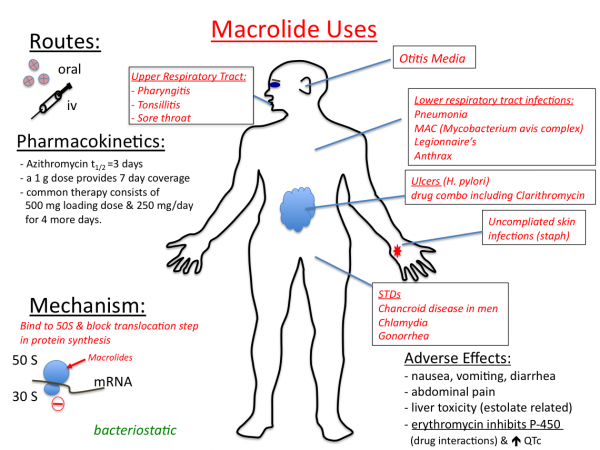
Erythromycin, the prototype of this class, has a spectrum and use similar to penicillin. Newer members of the group, azithromycin and clarithyromycin, are particularly useful for their excellent lung penetration. Macrolide antibiotics are used to treat respiratory tract infections (such as pharyngitis, sinusitis, and bronchitis), genital, gastrointestinal tract, and skin infections.
Macrolide antibiotics are:
azithromycin
clarithromycin
dirithromycin
erythromycin
roxithromycin
troleandomycin
Macrolides side effects
Macrolides are usually tolerated quite well. Most common adverse effects include nausea, vomiting, abdominal discomfort, and diarrhea. They have been rarely associated with reversible deafness and allergic reactions (including angioedema, anaphylaxis, and dermatologic reactions). Oral erythromycin may be highly irritating to the stomach and when given by injection may cause severe thrombophlebitis. Macrolide antibiotics should be used with caution in patients with liver dysfunction.
Aminoglycosides are derived from various species of Streptomyces.
In 1943, Selman Waksman, together with his co-workers, discovered that a bacterium Streptomyces griseus produced an antibiotic substance which they named “streptomycin.” Selman Waksman was awarded the Nobel Prize in Physiology or Medicine in 1952 for his discovery of streptomycin.
The aminoglycosides are bactericidal and work by binding to the 30S subunit of the bacterial ribosome, thus stopping bacteria from making proteins.
Aminoglycoside antibiotics are used to treat infections caused by gram-negative bacteria. Aminoglycosides may be used in combination with with penicillins or cephalosporins to ensure better antimicrobial coverage. Aminoglycosides work quite well, but bacteria can become resistant to them. Since aminoglycosides are broken down easily in the stomach, they can’t be given by mouth and must be injected. Generally, aminoglycosides are given for short time periods.
Aminoglycoside grope includes:
amikacin
gentamicin
kanamycin
neomycin
streptomycin
tobramycin
List of Antibiotic Classes in details(Types of Antibiotics)
Most antibiotics fall into their individual antibiotic classes. An antibiotic class is a grouping of different drugs that have similar chemical and pharmacologic properties. Their chemical structures may look comparable, and drugs within the same class may kill the same or related bacteria.
However, it is important not to use an antibiotic for an infection unless your doctor specifically prescribes it, even if it’s in the same class as another drug you were previously prescribed. Antibiotics are specific for the kind of bacteria they kill. Plus, you would need a full treatment regimen to effectively cure your infection, so don’t use or give away leftover antibiotics.
Penicillins
Another name for this class is the beta-lactam antibiotics, referring to their structural formula. The penicillin class contains five groups of antibiotics: aminopenicillins, antipseudomonal penicillins, beta-lactamase inhibitors, natural penicillins, and the penicillinase-resistant penicillins. Common antibiotics in the penicillin class include:
penicillin V potassium
amoxicillin
amoxicillin/clavulanate (Augmentin)
Tetracyclines
Tetracyclines are broad-spectrum against many bacteria and treat conditions such as acne, urinary tract infections (UTIs), intestinal tract infections, eye infections, sexually transmitted diseases, periodontitis (gum disease), and other bacterial infections. The tetracycline class contains well-known drugs such as:
doxycycline
tetracycline
minocycline
Cephalosporins
There are five generations of cephalosporins, with increasing expanded coverage to include gram-negative infections. Cephalosporins treat many infections, including strep throat, ear infections, urinary tract infections, skin infections, and meningitis. The fifth generation cephalosporin ceftaroline (Teflaro) is active against methicillin-resistant Staphylococcus aureus (MRSA). You’ve probably heard of common medications in this class, like:
The quinolones, also known as the fluoroquinolones, are a synthetic, bactericidal antibacterial class with a broad-spectrum of activity. The quinolones can be used for difficult-to-treat urinary tract infections when other options are aren’t effective, hospital-acquired pneumonia, bacterial prostatitis, and even anthrax or plague. The FDA issued a strong warning about this class in 2016. Familiar names in the fluoroquinolone class include:
ciprofloxacin (Cipro)
levofloxacin (Levaquin)
moxifloxacin (Avelox)
Lincomycins
This class has activity against gram-positive aerobes and anaerobes (bacteria that can live without oxygen), as well as some gram-negative anaerobes. The lincomycin derivatives may be used to treat serious infections like pelvic inflammatory disease, intra-abdominal infections, lower respiratory tract infections, and bone and joint infections. These drugs include:
The macrolides can be use to treat community-acquired pneumonia, pertussis (whooping cough), or for uncomplicated skin infections, among other susceptible infections. Ketolides are a newer generation of antibiotic developed to overcome macrolide bacterial resistance. Frequently prescribed macrolides are
Sulfonamides are effective against some gram-positive and many gram-negative bacteria, but resistance is widespread. Common uses for sulfonamides include UTIs, treatment or prevention of pneumocystis pneumonia, or ear infections (otitis media). Familiar names include:
sulfamethoxazole-trimethoprim
sulfasalazine
sulfisoxazole
Glycopeptide Antibiotics
Members of this group may be used for treating methicillin-resistant staphylococcus aureus (MRSA) infections, complicated skin infections, C. difficile-associated diarrhea, and enterococcal infections such as endocarditis which are resistant to beta-lactams and other antibiotics. Common drug names include:
dalbavancin
oritavancin
telavancin
vancomycin
Aminoglycosides
Aminoglycosides inhibit bacterial synthesis by binding to the 30S ribosome and act rapidly as bactericidal antibiotics (killing the bacteria). These drugs are usually given intravenously (in a vein through a needle). Common examples in this class are:
gentamicin
tobramycin
amikacin
Carbapenems
These injectable beta-lactam antibiotics have a wide spectrum of bacteria-killing power and may be used for moderate to life-threatening bacterial infections like stomach infections, pneumonias, kidney infections, multidrug-resistant hospital-acquired infections and many other types of serious bacterial illnesses. Members of this class include:
imipenem/cilastatin
meropenem
doripenem
ertapenem
Over the Counter Antibiotics
Over-the-counter (OTC) oral antibiotics are not approved in the U.S. A bacterial infection is best treated with a prescription antibiotic that is specific for the type of bacteria causing the infection. This will increase the chances that the infection is cured and help to prevent antibiotic resistance. In addition, a lab culture may need to be performed to pinpoint the bacteria and to help select the best antibiotic. Taking the wrong antibiotic — or not enough — may worsen the infection and prevent the antibiotic from working the next time.
There are a few OTC topical antibiotics that can be used on the skin. Some products treat or prevent minor cuts, scrapes or burn on the skin that may get infected with bacteria. These are available in creams, ointments, and even sprays.
Common OTC topical antibiotics
Neosporin, Medi-Quik (bacitracin/neomycin/polymyxin B)
Polysporin (bacitracin/polymyxin)
Triple antibiotic, generic (bacitracin/neomycin/polymyxin B)
Neosporin Plus (neomycin/polymyxin/pramoxine)
There are some OTC antibacterials for acne sufferers, too. They contain the antibacterial benzoyl peroxide, which also has mild drying effect for acne. Many products are found on the pharmacy shelves as gels, lotions, solutions, foams, cleaning pads, and even facial scrubs.
Common OTC antibacterials for acne
Clearskin
Oxy-10
Proactiv
Trending Antibiotic Articles
Patients frequently have questions about specific topics with antibiotics. Here are some articles that address common questions you may have about antibiotics.
Trying to make sense of the side effects noted on your antibiotic prescription medication guide? Read the Common Side Effects, Allergies and Reactions to Antibiotics article to understand the meanings.
Don’t understand what is meant by antibiotic resistance? Check out our Antibiotic Resistanceprimer and statistics on inappropriate antibiotic use.
Should you be concerned about taking Cipro
Wondering if you can still have that evening cocktail with your antibiotic? Scan the Antibiotics and Drinking Alcohol information to learn if you should skip it or not.
Think You’re Allergic to Penicillin? Maybe Not, Check out why here.
FDA clears the first test to help find antibiotic-resistant bacteria.
Adalimumab is a medication used to treat rheumatoid arthritis, psoriatic arthritis, ankylosing spondylitis, Crohn’s disease, ulcerative colitis, chronic psoriasis, hidradenitis suppurativa, and juvenile idiopathic arthritis. In rheumatoid arthritis, adalimumab has a response rate similar to methotrexate, and in combination, it nearly doubles the response rate of methotrexate alone.
Adalimumab is a TNF-inhibiting, anti-inflammatory, biologic medication. It binds to tumor necrosis factor-alpha (TNFα), which normally binds to TNFα receptors, leading to the inflammatory response of autoimmune diseases. By binding to TNFα, adalimumab reduces this inflammatory response. Because TNFα is also part of the immune system, which protects the body from infection, treatment with adalimumab may increase the risk of infections.
Dosage forms
FORM
ROUTE
STRENGTH
Injection, solution
Subcutaneous
40 mg
Injection, solution
Subcutaneous
40 mg/.8mL
Kit
Solution
Subcutaneous
40 mg
Solution
Subcutaneous
80 mg
Indication
HUMIRA is a prescription medicine used:
To reduce the signs and symptoms of:
Moderate to severe rheumatoid arthritis (RA) in adults. HUMIRA can be used alone, with methotrexate, or with certain other medicines. HUMIRA may prevent further damage to your bones and joints and may help your ability to perform daily activities.
Moderate to severe polyarticular juvenile idiopathic arthritis (JIA) in children 2 years of age and older. HUMIRA can be used alone, with methotrexate, or with certain other medicines.
Psoriatic arthritis (PsA) in adults. HUMIRA can be used alone or with certain other medicines. HUMIRA may prevent further damage to your bones and joints and may help your ability to perform daily activities.
Ankylosing spondylitis (AS) in adults.
Moderate to severe Crohn’s disease (CD) and to achieve and maintain clinical remission in adults who have not responded well to certain other medications. HUMIRA is also used to reduce signs and symptoms and to achieve clinical remission in these adults who have lost response to or are unable to tolerate infliximab.
Moderate to severe Crohn’s disease (CD) and to achieve and maintain clinical remission in children 6 years of age and older when certain other treatments have not worked well enough.
Moderate to severe hidradenitis suppurativa (HS) in adults.
In adults, to help get moderate to severe ulcerative colitis (UC) under control (induce remission) and keep it under control (sustain remission) when certain other medicines have not worked well enough. It is not known if HUMIRA is effective in people who stopped responding to or could not tolerate anti-TNF medicines.
To treat moderate to severe chronic plaque psoriasis (Ps) in adults who are ready for systemic therapy or phototherapy, and are under the care of a doctor who will decide if other systemic therapies are less appropriate.
To treat non-infectious intermediate (middle part of the eye), posterior (back of the eye) and panuveitis (all parts of the eye) (UV) in adults.
What side effects can this medication cause?
Adalimumab injection may cause side effects. Tell your doctor if any of these symptoms are severe or do not go away:
redness, itching, bruising, pain, or swelling in the place you injected adalimumab injection
Some side effects can be serious. If you experience any of the following symptoms or those listed in the IMPORTANT WARNING section, call your doctor immediately or get emergency care:
numbness or tingling
problems with vision
weakness in legs
chest pain
shortness of breath
rash, especially a rash on the cheeks or arms that is sensitive to sunlight
new joint pain
hives
itching
swelling of the face, feet, ankles, or lower legs
difficulty breathing or swallowing
fever, sore throat, chills, and other signs of infection
unusual bruising or bleeding
pale skin
dizziness
red, scaly patches or pus-filled bumps on the skin
Adults who receive adalimumab injection may be more likely to develop skin cancer, lymphoma, and other types of cancer than people who do not receive adalimumab injection. Talk to your doctor about the risks of receiving this medication.
Adalimumab injection may cause other side effects. Call your doctor if you have any unusual problems while using this medication.
Adalimumab biosimilar exhibits same efficacy and safety for rheumatoid arthritis as originator
The trial data was presented at the American College of Rheumatology / Association of Rheumatology Health Professionals Annual Meeting in San Diego, California by the manufacturers of Cyltezo.
‘Biosimilars have potential cost benefits to the healthcare system and support affordable access to important biologic medicines for patients living with chronic inflammatory diseases like rheumatoid arthritis,’ said Karsten Kissel, head of global medical affairs biosimilars at Boehringer Ingelheim
Patients with rheumatoid arthritis (RA) who switched from adalimumab (Humira) to its biosimilar, adalimumab-adbm (Cyltezo), saw no clinically meaningful difference in efficacy, safety or immunogenicity, according to the results of a 48-week Phase III clinical trial[1].
The trial data was presented at the American College of Rheumatology / Association of Rheumatology Health Professionals Annual Meeting in San Diego, California by Boehringer Ingelheim, the manufacturers of Cyltezo.
The study, which aimed to assess equivalence in efficacy between the two drugs, comprised 645 patients aged 18 to 80 years with moderate-to-severely active RA on stable treatment with methotrexate. The patients were randomised to receive either adalimumab or its biosimilar, adalimumab-adbm, at 40mg every two weeks for 48 weeks.
At week 24, those patients receiving adalimumab were re-randomised to switch to the biosimilar or continue with adalimumab until week 48.
At week 48, it was found that adalimumab and its biosimilar had similar efficacy, safety and immunogenicity. In addition, those patients who switched at week 24 showed no difference to those who had continued with adalimumab.
“These data are an important addition to the robust body of evidence demonstrating Cyltezo is biosimilar to Humira,” said Karsten Kissel, head of global medical affairs biosimilars at Boehringer Ingelheim.
“Biosimilars have potential cost benefits to the healthcare system and support affordable access to important biologic medicines for patients living with chronic inflammatory diseases like RA,” he added.
In the European Union, adalimumab-adbm recently received positive opinion from the Committee for Medicinal Products for Human Use of the European Medicines Agency for multiple chronic inflammatory diseases in adults, including moderate to severely active RA; psoriatic arthritis; moderate to severely active Crohn’s disease; and moderate to severely active ulcerative colitis.
It is not currently commercially available in the United States.
Similar agents
Infliximab
Etanercept
Certolizumab pegol
Golimumab
References
Cohen S, Alonso-Ruiz A, Klimiuk P et al. Biosimilar candidate BI 695501 and adalimumab reference product have similar efficacy and safety in patients with moderately-to-severely active rheumatoid arthritis (RA): 1-year results from phase III study. Abstract present at ACR, San Diego, 3–4 November 2017.
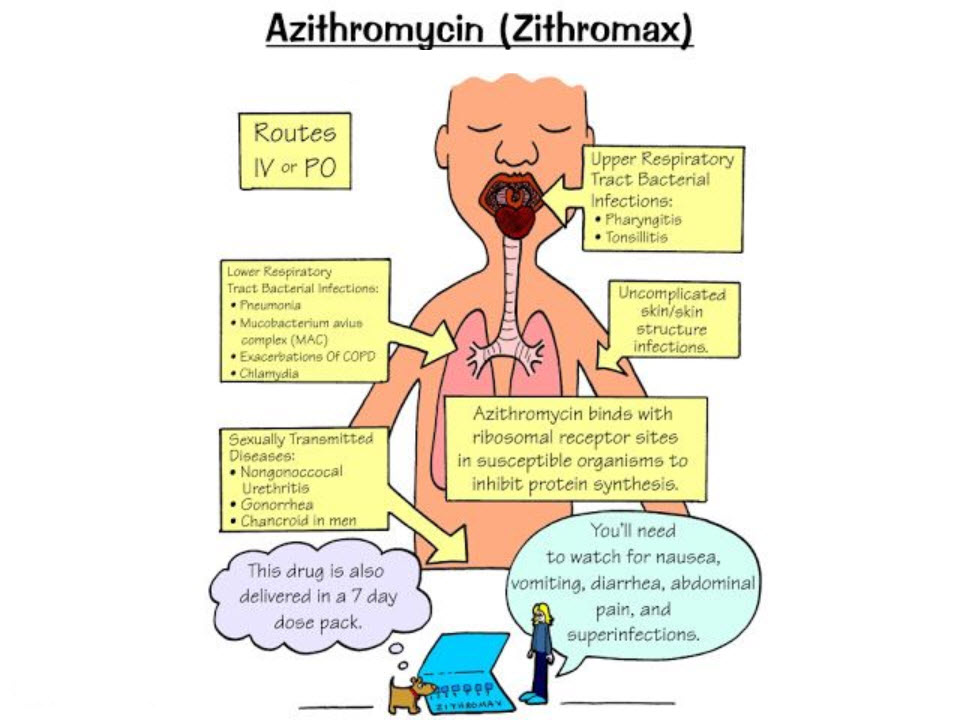
Azithromycin safety is an antibiotic useful for the treatment of a number of bacterial infections. This includes middle ear infections, strep throat, pneumonia, traveler’s diarrhea, and certain other intestinal infections.[2] It may also be used for a number of sexually transmitted infections including chlamydia and gonorrhea infections. Along with other medications, it may also be used for malaria. It can be taken by mouth or intravenously with doses once per day.
Common side effects include nausea, vomiting, diarrhea and upset stomach. An allergic reaction or a type of diarrhea caused by Clostridium difficile is possible. No harm has been found with its use during pregnancy.Its safety during breastfeeding is not confirmed, but it is likely safe. Azithromycin is an azalide, a type of macrolide antibiotic. It works by decreasing the production of protein, thus stopping bacterial growth.
FDA WARNS AZITHROMYCIN “Z-PACK” ANTIBIOTICS COULD LEAD TO DEADLY HEART RHYTHMS STUDY CONFIRM
www.rxharun.com
Azithromycin, a commonly-prescribed antibiotic, may trigger a potentially deadly irregular heart rhythm for some patients, the Food and Drug Administration (FDA) warned Tuesday.
The antibiotic that’s sold as Zithromax, Zmax or sometimes referred to as a “Z-Pack” is prescribed to treat bacterial infections such as bronchitis, pneumonia, or ear infections.
The FDA is warning the public that the pills can cause abnormal changes in the heart’s electrical activity that may lead to a fatal heart rhythm. Not everyone is at risk. Patients with known risk factors such as existing QT interval prolongation, low blood levels of potassium or magnesium, a slower than normal heart rate, or those who use certain drugs to treat abnormal heart rhythms, or arrhythmias face the greatest risk.
“Health care professionals should consider the risk of fatal heart rhythms with azithromycin when considering treatment options for patients who are already at risk for cardiovascular events,” the FDA said in its March 12th update.
The new guidance was prompted by a May 2012 study and another study by the antibiotic’s manufacturer, Pfizer, that looked at risks to electrical activity of the heart in azithromycin-takers.
Last May, a New England Journal of Medicine study paid for by the National Heart, Lung and Blood Institute found there would be 47 extra heart-related deaths per one million course of treatment with five days of Zithromax, as compared to 10 days of amoxicillin and other antibiotics. The risks of cardiovascular death associated with levofloxacin (Levaquin) treatment were similar to those associated with azithromycin treatment, according to the FDA.
Zithromax antibiotics tied to rare heart risks
“People need to recognize that the overall risk is low,” Dr. Harlan Krumholz, a Yale University health outcomes specialist who was not involved in the study, told the Associated Press last May. He added more research was needed but patients with heart disease “should probably be steered away” from Zithromax for now.
The FDA also issued a statement last May following the study saying the agency was aware of the findings, and it would review the results and communicate any new information.
Sales of Zithromax, one of the U.S.’ top-selling antibiotics, totaled $464 million in 2011 according to health care information company IMS Health, the AP reported.
Viagra is a name that can be given to any herbal product advertised as treating erectile dysfunction. There are many different products advertised as herbal viagra, but with varying ingredients. There are no clinical trials or scientific studies that support the effectiveness of any of these ingredients for the treatment of erectile dysfunction and some products have been found to contain drugs and other adulterants, and have been the subject of FDA and FTC warnings and actions to remove them from the market
Viagra (sildenafil) relaxes muscles found in the walls of blood vessels and increases blood flow to particular areas of the body.
Viagra is used to treat erectile dysfunction (impotence) in men. Another brand of sildenafil is Revatio, which is used to treat pulmonary arterial hypertension and improve exercise capacity in men and women.
Mechanism of Action of Viagra
Viagra inhibits the cGMP-specific phosphodiesterase type 5 (PDE5) which is responsible for degradation of cGMP in the corpus cavernosum located around the penis. Penile erection during sexual stimulation is caused by increased penile blood flow resulting from the relaxation of penile arteries and corpus cavernosal smooth muscle. This response is mediated by the release of nitric oxide (NO) from nerve terminals and endothelial cells, which stimulates the synthesis of cGMP in smooth muscle cells. Cyclic GMP causes smooth muscle relaxation and increased blood flow into the corpus cavernosum. The inhibition of phosphodiesterase type 5 (PDE5) by sildenafil enhances erectile function by increasing the amount of cGMP.
Or
It has been extensively demonstrated that hydrogen sulfide (H2S) is implicated is several physiological and pathological conditions. In particular, it has been shown that H2S causes relaxation in human penile tissues and inhibits phosphodiesterase (PDE) activity in vessels. Beside sildenafil increases H2S generation in human bladder and tadalafil in myocardial tissues. Therefore, the aim of the study was to demonstrate the link between H2S and PDE-5 in mice corpus cavernosum tissues. The effects of sildenafil (10 uM, 0.5 hr); PDE-5 inhibitor, on H2S production as well as the H2S -induced relaxations in mice penile tissues /was investigated/. Penile tissues from CD1 mouse corpus cavernosum (MCC) were used. Functional studies were performed by myograph in Krebs solution. Western blot analysis was performed in order to evaluate CBS and CSE expression and methylene blue assay for measurement of H2S levels. In order to investigate functional significance of H2S on sildenafil-induced augmentation of endothelial relaxation in MCC the sildenafil effect was evaluated on acetylcholine (ACh), L-cysteine and NaHS-induced relaxations in presence or not of CSE enzyme inhibitor PPG (10 uM, 0.5 hr). In order to achieve this issue the H2S production in MCC tissues was also evaluated by incubating the penile tissue with sildenafil in presence or absence of the CSE inhibitor PPG (10 uM, 0.5 hr) Both CBS and CSE were expressed in MCC and the enzymes efficiently converted L-cysteine into H2S. Further it was shown that sildenafil caused a significant increase in H2S production and this augmentation was reversed by CSE inhibition. It was found that sildenafil induced an increase in both ACh and L-cysteine-induced relaxations and these augmentations reversed by CSE inhibitor PPG in MCC pre-contracted with phenylephrine . Beside sildenafil did not significantly increase the NaHS -induced relaxations. Therefore it was suggested that both gaseous transmitters NO and H2S affect sildenafil action. In particular results demonstrate that sildenafil effect is partially mediated by H2S pathway. Thus, H2S signaling may represent a new mechanism involved in the effect of sildenafil on erectile dysfunction.
Inability to sustain a satisfactory erection to complete intercourse
Therapeutic Indications [FDA Leveling]
Replacement treatment in acute attacks of angioedema in patients with congenital
Treatment of adult patients with pulmonary arterial hypertension classified as WHO functional class II and III, to improve exercise capacity.
Efficacy has been shown in primary pulmonary hypertension and pulmonary hypertension associated with connective tissue disease.
Treatment of paediatric patients aged 1 year to 17 years old with pulmonary arterial hypertension. Efficacy in terms of improvement of exercise capacity or pulmonary haemodynamics has been shown in primary pulmonary hypertension and pulmonary hypertension associated with congenital heart disease.
Treatment of adult patients with pulmonary arterial hypertension classified as WHO functional class II and III, to improve exercise capacity. Efficacy has been shown in primary pulmonary hypertension and pulmonary hypertension associated with connective tissue disease.
Treatment of paediatric patients aged 1 year to 17 years old with pulmonary arterial hypertension. Efficacy in terms of improvement of exercise capacity or pulmonary haemodynamics has been shown in primary pulmonary hypertension and pulmonary hypertension associated with congenital heart disease.
Viagra is indicated for the treatment of erectile dysfunction
evatio is indicated for the treatment of pulmonary arterial hypertension in adults to improve exercise ability and delay clinical worsening
The role, if any, of sildenafil in the management of sexual dysfunction in women remains to be established. The U.S. Food and Drug Administration (FDA) is clarifying its previous recommendation related to prescribing Revatio (sildenafil) for children with pulmonary arterial hypertension (PAH).
Treatment of erictile dysfunction
AdultsTreatment of adult patients with pulmonary arterial hypertension classified as WHO functional class II and III, to improve exercise capacity. Efficacy has been shown in primary pulmonary hypertension and pulmonary hypertension associated with connective tissue disease.Paediatric populationTreatment of paediatric patients aged 1 year to 17 years old with pulmonary arterial hypertension. Efficacy in terms of improvement of exercise capacity or pulmonary haemodynamics has been shown in primary pulmonary hypertension and pulmonary hypertension associated with congenital heart disease.
Revatio solution for injection is for the treatment of adult patients (≥ 18 years) with pulmonary arterial hypertension who are currently prescribed oral Revatio and who are temporarily unable to take oral therapy, but are otherwise clinically and haemodynamically stable.
Treatment of men with erectile dysfunction, which is the inability to achieve or maintain a penile erection sufficient for satisfactory sexual performance. In order for Sildenafil Actavis to be effective, sexual stimulation is required.
Treatment of men with erectile dysfunction, which is the inability to achieve or maintain a penile erection sufficient for satisfactory sexual performance
Treatment of men with erectile dysfunction, which is the inability to achieve or maintain a penile erection sufficient for satisfactory sexual performance.
indicated in adult men with erectile dysfunction, which is the inability to achieve or maintain a penile erection sufficient for satisfactory sexual performance.In order for VIAGRA to be effective, sexual stimulation is required.
Treatment of men with erectile dysfunction, which is the inability to achieve or maintain a penile erection sufficient for satisfactory sexual performance. In order for Vizarsin to be effective, sexual stimulation is required.
Treatment of congenital diaphragmatic hernia
Contra Indications of Viagra
Concomitant use of nitric oxide donors
Organic nitrites and nitrates
Nitroglycerin
Isosorbide mononitrate
Isosorbide dinitrate
Sodium nitroprusside
Alkyl nitrites (commonly known as “poppers”)
Concomitant use of soluble guanylyl cyclase stimulators, such as riociguat
The usual recommended dose is 25 to 100 mg 1 hour before sexual activity.
The maximum dose is 100 mg daily.
The elderly (over 65 years of age) should start at 25 mg before sexual activity.
Sildenafil is rapidly absorbed. Maximum observed plasma concentrations are reached within 30 to 120 minutes (median 60 minutes) of oral dosing in the fasted state.
Erectile Dysfunction
Initial dose: 25 mg orally once a day 1 hour prior to sexual activity
Pulmonary Hypertension
Initial dose: 5 or 20 mg orally three times a day, 4 to 6 hours apart
Maximum dose: 20 mg orally three times a day
Injection
Initial dose: 2.5 or 10 mg IV bolus three times a day
Some medicines can cause unwanted or dangerous effects when used with Viagra. Tell your doctor about all your current medicines, especially riociguat (Adempas).
Do not take Viagra if you are also using a nitrate drug for chest pain or heart problems, including nitroglycerin, isosorbide dinitrate, isosorbide mononitrate, and some recreational drugs such as “poppers”. Taking sildenafil with a nitrate medicine can cause a sudden and serious decrease in blood pressure.
www.rxharun.com
Contact your doctor or seek emergency medical attention if your erection is painful or lasts longer than 4 hours. A prolonged erection (priapism) can damage the penis.
Stop using Viagra and get emergency medical help if you have sudden vision loss.
Before taking this medicine
You should not use Viagra if you are allergic to sildenafil, or:
if you take other medicines to treat pulmonary arterial hypertension, such as riociguat (Adempas).
Do not take Viagra if you are also using a nitrate drug for chest pain or heart problems. This includes nitroglycerin, isosorbide dinitrate, and isosorbide mononitrate. Nitrates are also found in some recreational drugs such as amyl nitrate or nitrite (“poppers”). Taking Viagra with a nitrate medicine can cause a sudden and serious decrease in blood pressure.
To make sure Viagra is safe for you, tell your doctor about your other medical conditions, especially:
heart disease or heart rhythm problems, coronary artery disease;
a recent history (in the past 6 months) of a heart attack, stroke, or congestive heart failure;
high or low blood pressure;
liver or kidney disease;
a blood cell disorder such as sickle cell anemia, multiple myeloma, or leukemia;
a bleeding disorder such as hemophilia;
a stomach ulcer;
retinitis pigmentosa (an inherited condition of the eye);
a physical deformity of the penis (such as Peyronie’s disease); or
if you have been told you should not have sexual intercourse for health reasons.
Viagra can decrease blood flow to the optic nerve of the eye, causing sudden vision loss. This has occurred in a small number of people taking sildenafil, most of whom also had heart disease, diabetes, high blood pressure, high cholesterol, or certain pre-existing eye problems, and in those who smoked or were over 50 years old. It is not clear whether sildenafil is the actual cause of vision loss.
Viagra is not expected to harm an unborn baby. Tell your doctor if you are pregnant or plan to become pregnant.
It is not known whether sildenafil passes into breast milk or if it could harm a nursing baby. Tell your doctor if you are breast-feeding a baby.
Do not give Viagra to anyone under 18 years old without medical advice.
How should you take Viagra
www.rxharun.com
Take Viagra exactly as it was prescribed for you. Follow all directions on your prescription label. Do not take this medicine in larger or smaller amounts or for longer than recommended.
Viagra is usually taken only when needed, 30 minutes to 1 hour before sexual activity. You may take it up to 4 hours before sexual activity. Do not take Viagra more than once per day.
Viagra can help you have an erection when sexual stimulation occurs. An erection will not occur just by taking a pill. Follow your doctor’s instructions.
During sexual activity, if you become dizzy or nauseated, or have pain, numbness, or tingling in your chest, arms, neck, or jaw, stop and call your doctor right away. You could be having a serious side effect of Viagra.
Store at room temperature away from moisture and heat.
What happens if I miss a dose?
www.rxharun.com
Since Viagra is used as needed, you are not likely to miss a dose.
For Healthcare Professionals
Applies to sildenafil: intravenous solution, oral suspension, oral tablet
Cardiovascular
Very common (10% or more): Flushing (10%)
Uncommon (0.1% to 1%): Heart rate increased, palpitations, tachycardia, hypertension, hypotension
Rare (less than 0.1%): Myocardial infarction, atrial fibrillation, sudden cardiac death, ventricular arrhythmia, unstable angina
Frequency not reported: Ventricular arrhythmia, sudden cardiac death, angina pectoris, AV block, tachycardia, palpitation, hypotension, postural hypotension, myocardial ischemia, cerebral thrombosis, cardiac arrest, heart failure, abnormal electrocardiogram, cardiomyopathy, shock
Postmarketing reports: Serious cardiovascular, cerebrovascular, and vascular events, including myocardial infarction; sudden cardiac death; ventricular arrhythmia; cerebrovascular hemorrhage; transient ischemic attack; hypertension; subarachnoid, intracerebral, and pulmonary hemorrhage have been reported in temporal association with the use of this drug.
Gastrointestinal
Very common (10% or more): Dyspepsia (up to 17%), diarrhea
Common (1% to 10%): Nausea, vomiting, dry mouth, gastritis, gastroesophageal reflux disease, hemorrhoids, abdominal distension
Rare (less than 0.1%): Oral hypoesthesia
Frequency not reported: Glossitis, colitis, dysphagia, gastroenteritis, esophagitis, stomatitis, gingivitis
Musculoskeletal
Very common (10% or more): Pain in extremity
Common (1% to 10%): Back pain, myalgia
Frequency not reported: Arthritis, arthrosis, myalgia, tendon rupture, tenosynovitis, bone pain, myasthenia, synovitis
Nervous system
Very common (10% or more): Headache (up to 28%)
Common (1% to 10%): Dizziness, migraine, tremor, paresthesia, burning sensation
Uncommon (0.1% to 1%): Somnolence, hypoesthesia
Rare (less than 0.1%): Cerebrovascular accident, syncope
Frequency not reported: Transient ischemic attack, seizure, seizure recurrence, ataxia, hypertonia, neuralgia, neuropathy, paresthesia, somnolence, reflexes decreased
Postmarketing reports: Transient global amnesia
Ocular
Very common (10% or more): Abnormal vision (up to 11%)
Common (1% to 10%): Visual color distortion, retinal hemorrhage, visual impairment, vision blurred, photophobia, chromatopsia, cyanopsia, eye irritation, ocular hyperemia
Uncommon (0.1% to 1%): Conjunctival disorders, eye disorders, eye pain, lacrimation disorders, visual acuity reduced, diplopia, abnormal sensation in eye, photopsia, visual brightness, conjunctivitis
Rare (less than 0.1%): Retinal hemorrhage, arteriosclerotic retinopathy, retinal disorder, glaucoma, visual field defect, myopia, asthenopia, vitreous floaters, iris disorder, mydriasis, halo vision, eye edema, eye swelling, eyelid edema, scleral discoloration
Frequency not reported: Non-arteritic anterior ischemic optic neuropathy (NAION), retinal vascular occlusion, visual field defect, cataract.
This drug has lesser affinity for isoenzyme PDE6, an enzyme found in the retina. This lower selectivity is thought to be the basis for abnormalities related to color vision observed with higher doses or plasma levels.
Nonarteritic anterior ischemic optic neuropathy developed in one eye within minutes to hours after ingestion of sildenafil. Four of the five patients had no vascular risk factors for ischemic optic neuropathy.
-Abnormal Vision: Mild to moderate and transient, predominantly color tinge to vision, but also increased sensitivity to light, or blurred vision.
-Visual color distortions: Chloropsia, chromatopsia, cyanopsia, erythropsia and xanthopsia
-Lacrimation disorders: Dry eye, lacrimal disorder and lacrimation increased
Respiratory
Very common (10% or more): Pharyngitis (18%), rhinitis
Common (1% to 10%): Nasal congestion, epistaxis, cough
Uncommon (0.1% to 1%): Sinus congestion
Rare (less than 0.1%): Throat tightness, nasal edema, nasal dryness
Frequency not reported: Asthma, dyspnea, laryngitis, pharyngitis, sinusitis, bronchitis, sputum increased, cough increased
Dermatologic
Common (1% to 10%): Rash, alopecia, erythema, night sweats
Frequency not reported: Steven-Johnson syndrome (SJS), toxic epidermal necrolysis(TEN), urticaria, herpes simplex, pruritus, sweating, skin ulcer, contact dermatitis, exfoliative dermatitis
Hematologic
Common (1% to 10%): Anemia
Frequency not reported: Leukopenia
Postmarketing reports: In patients with pulmonary arterial hypertension (secondary to sickle cell disease) taking Revatio (R), vaso-occlusive crises requiring hospitalization were more commonly reported. The clinical relevance of this finding in male patients treated with sildenafil (the active ingredient contained in Viagra) for erectile dysfunction is unknown.
Metabolic
Common (1% to 10%): Fluid retention
Frequency not reported: Thirst, edema, gout, unstable diabetes, hyperglycemia, hyperuricemia, hypoglycemic reaction, hypernatremia
Other
Common (1% to 10%): Cellulitis, influenza, bronchitis, sinusitis, rhinitis, gastroenteritis, vertigo, pyrexia
Uncommon (0.1% to 1%): Tinnitus, chest pain, fatigue, gynecomastia
Rare (less than 0.1%): Deafness, irritability
Frequency not reported: Sudden hearing loss, edema, face edema, peripheral edema, pain, chills accidental fall, accidental injury
Psychiatric
Common (1% to 10%): Insomnia, anxiety
Frequency not reported: Abnormal dreams, depression.
Genitourinary
Uncommon (0.1% to 1%): Penile hemorrhage, hematospermia
Frequency not reported: Priapism, prolonged erection, increased erection, cystitis, nocturia, urinary frequency, urinary incontinence, abnormal ejaculation, genital edema, anorgasmia
Renal
Uncommon (0.1% to 1%): Hematuria
Hypersensitivity
Rare (less than 0.1%): Hypersensitivity reactions, including rash and urticaria
Hepatic
Frequency not reported: Liver function tests abnormal
What other drugs will affect Viagra?
Do not take Viagra with similar medications such as avanafil (Stendra), tadalafil (Cialis) or vardenafil (Levitra).
Tell your doctor about all your current medicines and any you start or stop using, especially:
an antibiotic such as clarithromycin, erythromycin, or telithromycin;
antifungal medicine such as ketoconazole or itraconazole;
medicine to treat HIV/AIDS, such as atazanavir, indinavir, ritonavir, or saquinavir; or
drugs to treat high blood pressure or a prostate disorder.
This list is not complete. Other drugs may interact with sildenafil, including prescription and over-the-counter medicines, vitamins, and herbal products. Not all possible interactions are listed in this medication guide.
Pregnancy category of medication is an assessment of the risk of fetal injury due to the pharmaceutical if it is used as directed by the mother during pregnancy. It does not include any risks conferred by pharmaceutical agents or their metabolites in breast milk. In 2015 the FDA replaced the former pregnancy risk letter categories with new information to make them more meaningful.
Every drug has specific information listed in its product literature. The British National Formulary used to provide a table of drugs to be avoided or used with caution in pregnancy and did so using a limited number of key phrases, but now Appendix 4 (which was the Pregnancy table) has been removed. Appendix 4 is now titled “Intravenous Additives”. However, information that was previously available in the former Appendix 4 (pregnancy) and Appendix 5 (breastfeeding) is now available in the individual drug monographs
Your body goes through various changes, both from the inside and out, during the nine months you carry your baby. The hormone levels in your body go up while the immune system is suppressed to prevent your body from refusing the baby as a harmful foreign object. This naturally makes you more prone to various common disorders and infections. However, the regular medicines used for treating common ailments, like cough and cold, are not always safe to be taken during pregnancy.
You are responsible for providing your baby with all the nourishment he needs through the placenta. Now, some medicines may cross the placenta and reach the baby’s bloodstream, leading to various birth defects and complications. Due to this reason, the FDA has categorized all drugs and medicines into five categories depending on their potentially harmful effects on the mother and baby.
[stextbox id=’custom’]
The FDA Pregnancy Category Chart
Pregnancy Category A
Adequate research has been done with the conclusion that drugs in this category are not likely to cause any harm to the fetus in the first trimester as well as later in pregnancy.
Pregnancy Category B
Studies carried out on animals have shown no adverse effects on the fetus; however, there is a lack of controlled studies on human pregnancy.
Pregnancy category C
Animal studies have shown evidence of harmful effects on the fetus; however, no controlled study has been done on a human pregnancy. The medicines may be prescribed in cases where the potential benefits outweigh the possible adverse effects.
Pregnancy category D
Studies done on human pregnancy have shown positive risks to the fetus. However, doctors might prescribe them in certain cases where the potential benefits outweigh the risks.
Pregnancy category X
Both human and animal studies have shown positive risks to the fetus, with the adverse effects extending to serious birth defects, miscarriage and fetal death. The possible risks of using these medicines outweigh any potential benefits.
[/stextbox]
List of POSSIBLY SAFE medications during pregnancy
It is recommended to consult your doctor or midwife before using even the safe over-the-counter medicines as your body may respond differently to them during pregnancy.
Thyroid medicationWesthroid, Armour Thyroid (thyroid desiccated)Category A no serious side effects have been reported apart from hair loss in some individuals
Medicines to Avoid during pregnancy
Australis
Australia has a slightly different pregnancy category system from the United States – notably the subdivision of Category B. (For drugs in B1, B2 and B3 categories, human data are lacking or inadequate. Subcategorisation is based on animal data, and allocation of a B category does not imply greater safety than C category). The system, as outlined below, was developed by medical and scientific experts based on available evidence of risks associated with taking particular medicines while pregnant. Being general in nature it is not presented as medical advice to health professionals or the public.
Pregnancy Category
Australian categorization system for prescribing medicines in pregnancy
A
Drugs which have been taken by a large number of pregnant women and women of childbearing age without an increase in the frequency of malformations or other direct or indirect harmful effects on the fetus having been observed.
B1
Drugs which have been taken by only a limited number of pregnant women and women of childbearing age, without an increase in the frequency of malformation or other direct or indirect harmful effects on the human fetus having been observed.
Studies in animals have not shown evidence of an increased occurrence of fetal damage.
B2
Drugs which have been taken by only a limited number of pregnant women and women of childbearing age, without an increase in the frequency of malformation or other direct or indirect harmful effects on the human fetus having been observed.
Studies in animals are inadequate or may be lacking, but available data show no evidence of an increased occurrence of fetal damage.
B3
Drugs which have been taken by only a limited number of pregnant women and women of childbearing age, without an increase in the frequency of malformation or other direct or indirect harmful effects on the human fetus having been observed.
Studies in animals have shown evidence of an increased occurrence of fetal damage, the significance of which is considered uncertain in humans.
C
Drugs which, owing to their pharmaceutical effects, have caused or may be suspected of causing, harmful effects on the human fetus or neonate without causing malformations. These effects may be reversible.
D
Drugs which have caused, are suspected to have caused or may be expected to cause, an increased incidence of human fetal malformations or irreversible damage. These drugs may also have adverse pharmacological effects.
X
Drugs which have such a high risk of causing permanent damage to the fetus that they should not be used in pregnancy or when there is a possibility of pregnancy.
Germany
Category
Group
Description
Group 1
Extensive human tests and animal studies have not shown the drug to be embryotoxic/teratogenic.
Group 2
Extensive human tests of the drug have not shown the drug to be embryotoxic/teratogenic.
Group 3
Extensive human tests of the drug have not shown the drug to be embryotoxic/teratogenic. However, the drug appears to be embryotoxic/teratogenic in animals.
Group 4
No adequate and well-controlled studies of the drug’s effects on humans are available. Animal studies have shown no embryotoxic/teratogenic effects.
Group 5
No adequate and well-controlled studies of the drug’s effects on humans are available.
Group 6
No adequate and well-controlled studies of the drug’s effects on humans are available. Animal studies have shown embryotoxic/teratogenic effects.
Group 7
There is a risk that the drug is embryotoxic/teratogenic in humans, at least in the first trimester.
Group 8
There is a risk that the drug is toxic to fetuses throughout the second and third trimesters.
Group 9
There is a risk that the drug causes prenatal complications or abnormalities.
Group 10
There is a risk that the drug causes hormone specific action on the human fetus.
Group 11
There is a known risk that the drug is a mutagen/carcinogen.
In Bangladesh Pregnency Catagory Index
আমরা ডাক্তারী করতে গিয়ে অনেক সময় প্রেগন্যান্ট মাদারদের ড্রাগ প্রেসক্রাইব করতে ভয় পাই।কারণ আমরা জানি অধিকাংশ ড্রাগ প্রেগন্যান্সির জন্য ক্ষতিকর!! এই প্রবলেমের কথা মাথায় রেখে আমি US FDA র দেয়া pregnancy index থেকে প্রেগন্যান্সির সময়ে কি ড্রাগ দেয়া যাবে বা যাবে না।সেটার একটা লিস্ট দেয়ার চেষ্টা করছি৷আগে চলুন প্রেগন্যান্সি ক্যাটাগরি গুলো জেনে নেই।US FDA প্রেগন্যান্সির সময় ড্রাগ প্রেসক্রাইবের ক্ষেত্রে ৬টা ক্যাটাগরিতে ভাগ করেছে – ……………………………………………………
১) Category A :
এই ড্রাগ গুলো প্রেগন্যান্ট মাদারের উপর ডিরেক্ট স্টাডি করে দেখা ফিটাসের উপর এর কোন ক্ষতিকর রিস্ক নাই ৷
২) Category B :
এই ক্যাটাগরির ড্রাগ গুলো কোন হিউম্যান ট্রায়াল হয়নি কিন্তু এনিম্যাল ট্রায়েলে ফিটাসের উপর কোন ক্ষতিকর প্রভাব দেখা যায়নি ৷এই ক্যাটাগরির ড্রাগও নিশ্চিন্তে দেওয়া যাবে প্রেগন্যান্ট মাকে ৷৷
৩)Category C :
এই ক্যাটেগরির ড্রাগ গুলো এনিম্যাল স্টাডিতে এ্যাডভার্স ইফেক্ট পাওয়া গেছে.(টেরাটোগেনিক / এমব্রায়োডাল/অন্যকিছু) ৷ কিন্তু এই ড্রাগ গুলো নিয়ে কোন হিউম্যান ট্রায়াল নাই ৷ রিস্ক বেনিফিট রেশিও হিসেব ছাড়া প্রেসক্রাইব করা ঠিক হবে না
৪) Category D :
এই ক্যাটাগরির ড্রাগ গুলো হিউম্যান ফিটাল রিস্কের ডিরেক্ট এভিডেন্স খুজে পাওয়া গেছে , কিন্তু প্রেগন্যান্ট মাদারের লাইফ বাঁচাতে অন্য কোন অল্টারনেটিভ ড্রাগ পাওয়া না গেলে এটা দেয়া একসেপটেবল ৷
৫) Category X : এই ড্রাগ গুলো সম্পূর্ণ রুপে টেরাটোজেনিক ৷৷
৬) Category N: এই ড্রাগ নিয়ে এখনো কোন হিউম্যান অর এ্যানিম্যাল ট্রায়াল হয়নি ৷৷ চলুন এবার প্রচলিত ড্রাগ গুলোর প্রেগন্যান্সি ক্যাটেগরি দেখি–
*Vitamines:
———–
1)Thiamine HCl …………………………A
2)Folic acid………………………………..A
4)Tizanidine…………………………..C
*Anti cancer Drugs :
——————-
1)Actinomycin………………………..D
2)Busulfan. ……………………………D
3)Chlorambucil………………………D
4)Cyclophosphamide……………..D
5)Doxorubicin………………………..D
6)Mercaptopurine…………………..D
7)Methotrexate………………………X
8)Vinblastine………………………….D
9)Vincristine…………………………..D
(C+D মানে, এই ড্রাগ গুলো এক ট্রাইমেস্টারে Category C তে আর এক Trimester এ ক্যাটেগরি D তে)
[A= নিশ্চিন্তে প্রেসক্রাইব করা যাবে৷ B= প্রেসক্রাইব করা যাবে৷
C= রিস্ক বেনিফিট রেশিও হিসেব করে প্রেসক্রাইব করতে হবে (এই ঔষধ বাচ্চার ও প্রেগিন্যান্সির জন্য ক্ষতিকর)৷
D= সুস্থ্য বাচ্চা ও প্রেগন্যান্সি চাইলে প্রেসক্রাইব করা যাবেনা (শুধু মাত্র মায়ের জীবন বাঁচানোর মত কন্ডিশন আসলে যেখানে অল্টারনেটিভ নাই সেখানে দেয়া যাবে)৷ X = ক্রস মার্ক, দেয়া যাবেনা৷৷] ক্যাটাগরি C তে প্রেগনেন্সি রিলেটেড যে প্রবলেমেগুলো হতে পারে — spontaneous abortions, delayed onset
of labor, premature closing of the
fetal ductus arteriosus, jaundice,
occasionally maternal (intrapartum
and postpartum) and/or neonatal
hemorrhage, necrotizing enterocolitis,
and oligohydramnios.
ক্যাটাগরি D তে যে প্রবলেমগুলো হবে— Congenital malformations (eg, fetal
growth restriction, mandibular
hypoplasia, cleft palate,cranial
dysostosis, spinal defects, ear defects, clubfoo.