Category Archive Anatomy A – Z

ByRx Harun

Lung Ventilation – Indications, Contraindications

Lung Ventilation involves ventilating one lung and letting the other collapse for providing surgical exposure in the thoracic cavity or isolating ventilation to one lung. The protective role of the single lung ventilation involves protecting one lung from the ill effects of fluid from the other lung – which may be blood, lavage fluid, malignant or purulent secretions. Thus it is prudent to ensure perfect placement of the tube as a misplaced tube defeats the goals of lung isolation or differential ventilation. This is ensured by bronchoscopy done after tube placement and after any position changes thereafter. This activity reviews the technique, indications, contraindications and highlights the role of the interprofessional team in the preoperative workup of patients undergoing lung resection.

Single lung ventilation, also known as ‘One Lung’ ventilation, is a method of ventilation which was first conceptualized by physiologists Eduard Pflüger and Claude Bernard who studied gas exchange in dogs using a lung isolation catheter. Wolffberg isolated the two lungs using the catheter in 1871 which is the first reported concept of an endobronchial single-lumen tube. The first instance of clinical use in humans was by Loewy and von Schrotter with lower lobe bronchus catheterized under fluoroscopic control. Head designed the first double-lumen tube in 1889 which had two tracheal cannulas – one short tracheal and one longer endobronchial one. Gale and Walters in 1932 advanced Head’s design and created the prototype for the modern-day double-lumen tubes. Double lumen tubes paved the way for one-lung ventilation offering better control of ventilation and more efficient separation of the two lungs.

Single lung ventilation involves ventilating one lung and letting the other collapse for providing surgical exposure in the thoracic cavity or isolating ventilation to one lung. The protective role of the single lung ventilation involves protecting one lung from the ill effects of fluid from the other lung – which may be blood, lavage fluid, malignant or purulent secretions. Thus it is prudent to ensure perfect placement of the tube as a misplaced tube defeats the goals of lung isolation or differential ventilation. This is ensured by bronchoscopy done after tube placement and after any position changes thereafter. One lung ventilation is used to facilitate a wide variety of procedures on ipsilateral thoracic or mediastinal structures as well as to provide lung isolation; this is made possible by the use of double-lumen tubes, bronchial blockers, and endobronchial tubes. Familiarity with the use of these instruments and the physiology of one-lung ventilation is essential to the performance of safe anesthesia.

Anatomy and Physiology

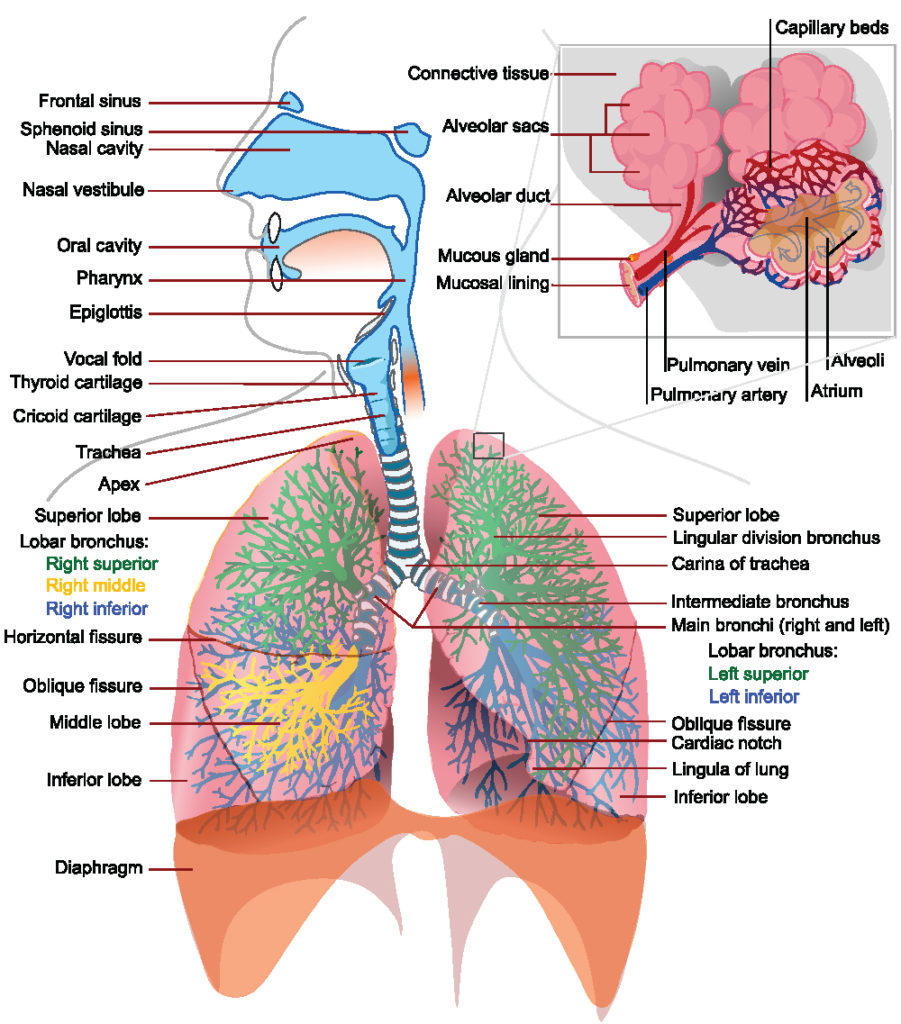
A good understanding of airway anatomy and the tracheobronchial tree is essential to performing safe one-lung ventilation. The fiberoptic bronchoscopy enables a good visualization of the airway anatomy. The first branching point in the airway is the carina – which marks the bifurcation of the trachea into the two mainstem bronchi at the level of the sternal angle – left and right main bronchus. The trachea is about 10 to 13 cm long and has 12 concentric cartilaginous rings. These rings are deficient in their posterior aspect and thus for C-shaped rings as seen on a cross-section. The trachea divides in an area known as the carina which marks the division into left and right main bronchus.

The left main bronchus (LMB) continues for about 5 cms after which it branches into left lower lobe bronchus (LLLB) and left upper lobe bronchus (LULB). The right main bronchus (RMB) is shorter than the left side, but it is also wider and more vertical than the left side. The right main bronchus gives off the right upper lobe bronchus and then continues further as the bronchus intermedius. The take-off of the right upper lobe bronchus is about 2.0cm in adult men and about 1.6 cm in adult females. A knowledge of tracheal anatomy helps the anesthesiologist to position the double-lumen tube for selectively isolating one lung for ventilation. This anatomy must undergo careful observation once the double-lumen tube is in place and the fiberoptic scope is inserted to check the cuff position and verify correct tube placement.

Indications

The indications of single-lung ventilation aim at facilitating surgical exposure by isolating the lung away from the field of surgery or preventing further lung trauma by providing selective ventilation as well as preventing infection or secretions from entering the healthy lung.

Surgical Exposure

  • Video-assisted thoracoscopic surgery including pneumonectomy, wedge resections
  • Pulmonary resections including pneumectomies and lobectomies
  • Mediastinal surgery
  • Thoracic vascular surgery
  • Esophageal surgery
  • Spine surgery

Lung Isolation

For protective isolation:

  • Massive pulmonary hemorrhage
  • Infection/purulent secretions

For control of ventilation:

  • Tracheobronchial trauma
  • Broncho-pleural/Broncho-cutaneous fistula

Contraindications

These are some of the relative contraindications for single lung ventilation.

  • Patient unable to tolerate OLV/Dependence on bilateral ventilation
  • Intraluminal airway masses (making DLT placement difficult)
  • Hemodynamic instability
  • Severe hypoxia
  • Severe COPD
  • Severe pulmonary hypertension
  • Known or suspected difficult intubation

Equipment

Single lung ventilation is achieved with the use of special airway devices such as double-lumen tubes (DLT) and bronchial blockers (BB) which selectively direct the airflow to one lung. They are used to collapse one lung selectively for surgery on the ipsilateral side.

  • Double Lumen Tubes: The most common design of the double-lumen tube used in the present practice of thoracic anesthesia is the Robertshaw design. It is available in left and right-sided types, and varying sizes from 26 Fr to 41 Fr.  The size denotes the external diameter of the tube in cms.  The Robertshaw design of the DLT comprises two semicircles placed back to back to form two independent lumens that can be ventilated independently of each other. The lumens have different openings depending on which sided DLT is present. The right-sided DLT has a curve to the right, and similarly, the left-sided DLT has a curve to the left. The double-lumen tube cuffs are high volume and low-pressure cuffs.
  • Connector: The connector is an important component of the Double lumen tube as it provides the user with an opportunity to selectively block either lumen or ventilate bilaterally. The connector piece is composed of a Y-shaped piece which has two openings – one each for the connection to the bronchial and tracheal lumen respectively and a common portion that fits into the anesthesia circuit. The connector usually has tracheal and bronchial lumen parts made of different colors for ease of use. Universally the blue color is used by manufacturers to denote the endobronchial lumen/cuff. The cuffs are colored similarly to the connector tubes to maintain uniformity in identification. This safety mechanism ensures correct side lung collapse and ventilation achieved by clamping the side on which lung needs to collapse temporarily.
  • Bronchial Blockers: Bronchial blockers are used to achieve single lung ventilation by blocking either left or right primary bronchus. Several manufacturers produce bronchial blockers with different designs. However, their basis is on a simple design comprising an inflatable low pressure, high volume cuff at the end of a catheter. The advantages offered by a bronchial blocker over a DLT include the ability to place through an existing endotracheal tube, ability to use in patients with airway trauma and the ability to perform selective lobar blockade if needed. Bronchial blockers are not without their own disadvantages. They require a minimum of 7.5 endotracheal tubes in place for introduction into the airway. They allow the slower collapse of the lung. Owing to the variable take-off of the right upper lobe, bronchial blockers are often difficult to position to seal off the right upper lobe. They are also much more prone to dislodgement when compared to Double lumen tubes.
  • Fiber-optic Bronchoscope: A fiberoptic scope is mandatory when attempting to place a double-lumen tube; this is because accurate positioning is essential to achieving a good seal and lung isolation. Malpositioned tubes are avoided by checking the tube position after the patient is in place in the final position for the procedure.
  • Endobronchial Tubes: Endotracheal tubes may be placed in the endobronchial to provide one-sided ventilation. The major disadvantage of such a technique is the inability to have access to the non-intubated lung. Endobronchial tubes are preferred in specific clinical scenarios to a DLT, such as patients with previous neck or oral surgery who present with a difficult airway and require adequate lung separation. The placement of a DLT is more challenging than that of an endobronchial SLT. DLT placement has higher chances for airway injury and bleeding. Endobronchial tubes may be mandatory in patients requiring lung isolation who have a short or long-term tracheostomy present before the procedure.

Preparation

Anesthetic Considerations

Patients usually undergoing single lung ventilation for a variety of procedures have underlying pulmonary disease. Patients should be evaluated comprehensively for their primary disease prior to performing the surgical procedure. Echocardiography may be useful in patients with cor pulmonale and may provide information about baseline cardiac function and reserve.

A review of the relevant radiological anatomy on a case-to-case basis may help plan anesthetic management for single lung ventilation. This review will also allow proper preparation for patients who require specialized airway management. Presence of decreased baseline function due to large effusions, consolidations and atelectasis predispose patients to hypoxemia during the procedure, which may obviate the need to use higher fractions of inspired oxygen during the procedure. The presence of any bullae on the non-operative lung may provide clues to patients more likely to develop a pneumothorax in the perioperative period. Tumors need to be evaluated for the presence of any paraneoplastic syndromes as their presence may guide anesthetic management.

Special considerations need to be placed on patients age as it is an independent risk factor which decides complication rates in patients undergoing pulmonary resection using single lung ventilation. Elderly patients have been found to have higher morbidity and mortality from pulmonary resections. Patients undergoing lung resections need additional testing to predict the risks involved in lung resection besides age. The most common tests used for such an assessment are FEV1 (forced expiratory volume-one second) and DLCO (diffusing capacity of the lungs for carbon monoxide).

FEV1 is a predictor of postoperative complications including death that may arise from undergoing pulmonary resection. A reduced preoperative FEV1 (less than 60 percent predicted) was found to be the strongest predictor of postoperative complications by multiple authors.

DLCO has been studied as a factor that decides postoperative morbidity as well. DLCO measured as a percent of the predicted value and predicted postoperative DLCO is considered the most valuable predictors of mortality & postoperative complications in pulmonary resections. The current ACCP guidelines do not provide numerical cutoffs for DLCO below which pulmonary resections should not be performed on patients. Instead, they give importance in determining the predicted postoperative (PPO) values. Assessment of the postoperative predicted values is the deciding factor in such cases and predicts the success of single lung ventilation. The interpretation of postoperative values are as follows:

  • Patients who have both PPO FEV1 and PPO DLCO are greater than 60 percent do not need any further testing to undergo pulmonary resection.
  • Patients who have either PPO FEV1 or PPO DLCO less than 60 percent, however, have both values greater than 30 percent need additional testing with stair climbing or a shuttle walk test.
  • If both values are less than 30 percent, patients should undergo cardiopulmonary exercise testing with additional measurement of the maximal oxygen consumption.

The cut-off for the stair climb test is 22 meters. Incremental shuttle walk test distance greater than 400 meters denotes a maximal oxygen uptake of (VO max) greater than or equal to 15 mL/kg per minute. Such information may help the physician interpret the procedural risks and better clinical outcomes for patients undergoing single lung ventilation.

Technique

The most commonly used DLT is the left-sided DLT irrespective of which side requires the isolation; this is because placing a left-sided DLT is less challenging than the right-sided one. This comparative ease is in part due to the short take-off of the right upper bronchus which leads to higher chances of dislodgement and or impaired ventilation of the right upper bronchus.

DLT placement technique: After inducing the patient with general anesthesia and confirming complete neuromuscular blockade, the following steps are taken to place a Left-sided DLT

  • A direct laryngoscopy using a Macintosh blade is used for laryngoscopy as the DLT is a large tube and this technique provides the maximum space for its insertion.
  • The double-lumen tube is introduced with a rigid stylet with the endobronchial curvature facing anteriorly.
  • The rigid style ensures passage through the vocal cords. After the DLT passes through the vocal cords, the style is removed.
  • The tube is then rotated by a 90 degrees angle anticlockwise to the left until the blue bronchial lumen faces left and tracheal lumen faces right.
  • The next step involves either advancing the tube further until we meet resistance or using a fibreoptic bronchoscope to guide further placement. At this moment the tracheal cuff may be inflated and the connector attached to start ventilation.
  • The shape of the left-sided DLT facilitates the bronchial cuff to be positioned in the left bronchus when advanced, but the DLT position should be confirmed with a fibreoptic bronchoscope to make sure that the tracheal lumen opening is above the carina and bronchial lumen is in the left bronchus. The bronchial cuff can now be inflated with 1 to 2 ml of air.
  • Bilateral ventilation confirmation is by auscultation. Air entry should be audible in bilateral lungs at this point.
  • Next, lung isolation is confirmed with selective clamping of the tracheal and bronchial lumens.
  • When ventilation through the bronchial lumen completes, only the left lung should be inflated.
  • When clamping the bronchial lumen and ventilating through the tracheal lumen, only the right lung should inflate.

Inability to perform a direct laryngoscopy is a contraindication to use of a DLT. In such a situation a bronchial blocker may be a suitable alternative.

Complications

Management of Hypoxemia

During single lung ventilation, the ventilation to one of the lungs is interrupted. However, the perfusion is still present in the non-ventilated lung, which leads to an intrapulmonary shunt in the form of wasted perfusion to the non-ventilated lung. Protective mechanisms like hypoxic pulmonary vasoconstriction can counteract hypoxia to a certain degree. However, it is mandatory for the anesthesiologist to have measures in place for hypoxemia that may arise during single lung ventilation. Ventilation and perfusion (V- Q) matching plays a significant role in the management of oxygenation in patients on single lung ventilation. Some authors note that oxygenation is much better in the lateral decubitus position when compared to the supine position.

Classically, an inspired oxygen fraction (FiO2) of 1.0 has been advocated while performing one-lung ventilation. The rationale behind using a higher inspired fraction of oxygen is to have a safety margin. Higher Fio2 also leads to vasodilatation, and this may help increase the blood to the ventilated lung. Oxygenation at FiO2 of 1.0 can lead to atelectasis, so it is advisable to initiate with a Fio2 less than 1.0 and increase if needed.

If hypoxia develops during the performance of one lung ventilation the following step s must take place :

  • Check the position of the double-lumen tube/endobronchial tube/bronchial blocker. Changes in position may occur due to surgical manipulation. A repeat fiberoptic bronchoscopy through the tracheal lumen is useful in clinching the diagnosis. Additional steps involve suctioning the lumens of the tube to clear secretions which may also contribute to hypoxia.
  • FiO2 is increased to 1.0 to improve the amount of oxygen delivered.
  • Recruitment maneuvers are employed on the ventilated lung which is in the dependent position; this is done to overcome any atelectasis and thus help in oxygenation. PEEP may be applied to this lung to eliminate atelectasis, resulting in a decrease in the shunt thereby improving oxygenation
  • CPAP to the operative lung may be applied to decrease shunting and thus improve oxygenation. However, this does make the surgical procedure challenging to the surgeon, and should only be an option when other measures have not resulted in any improvement.
  • If the hypoxemia is severe and does not resolve with the abovementioned steps, the next best step is to revert to two lung ventilation.
  • Severe hypoxemia should alert the anesthesiologist to look for causes like pneumothorax on the dependent lung. Chronic obstructive lung disease patients are more likely to experience such a complication. Intraoperative development of pneumothorax mandates aborting the surgical procedure and immediate insertion of a chest tube on the side of the pneumothorax.
ByRx Harun

Invasive Mechanical Ventilation – Indications, Contraindications

Invasive mechanical ventilation is an intervention that is frequently used in acutely ill patients requiring either respiratory support or airway protection. The ventilator allows gas exchange to be maintained while other treatments are given to improve the clinical condition. This activity reviews the indications, contraindications, management and possible complications of invasive mechanical ventilation and highlights the importance of the interprofessional team in managing the care of patients requiring ventilatory support.

The need for mechanical ventilation is one of the most common causes of admission to the intensive care unit.

It is imperative to understand some basic terms to understand mechanical ventilation.

  • Ventilation: Exchange of air between the lungs and the air (ambient or delivered by a ventilator), in other words, it is the process of moving air in and out of the lungs. Its most important effect is the removal of carbon dioxide (CO2) from the body, not on increasing blood oxygen content. Ventilation is measured as minute ventilation in the clinical setting, and it is calculated as respiratory rate (RR) times tidal volume (Vt). In a mechanically ventilated patient, the CO2 content of the blood can be modified by changing the tidal volume or the respiratory rate.
  • Oxygenation: Interventions that provide greater oxygen supply to the lungs, thus the circulation. In a mechanically ventilated patient, this can be achieved by increasing the fraction of inspired oxygen (FiO 2%) or the positive end-expiratory pressure (PEEP).
  • PEEP: The positive pressure that will remain in the airways at the end of the respiratory cycle (end of exhalation) is greater than the atmospheric pressure in mechanically ventilated patients. For a full description of the use of PEEP, please review the article titled “Positive End-Expiratory Pressure (PEEP).”
  • Tidal volume: Volume of air moved in and outside the lungs in each respiratory cycle.
  • FiO2: Percentage of oxygen in the air mixture that is delivered to the patient.
  • Flow: Speed in liters per minute at which the ventilator delivers breaths.
  • Compliance: Change in volume divided by change in pressure. In respiratory physiology, total compliance is a mix of lung and chest wall compliance as these two factors cannot be separated in a patient.

Since having a patient on mechanical ventilation allows a practitioner to modify the patient’s ventilation and oxygenation, it has an important role in acute hypoxic and hypercapnic respiratory failure as well as in severe metabolic acidosis or alkalosis.

Physiology of Mechanical Ventilation

Mechanical ventilation has several effects on lung mechanics. Normal respiratory physiology works as a negative pressure system. When the diaphragm pushes down during inspiration, negative pressure in the pleural cavity is generated, this, in turn, creates negative pressure in the airways that suck air into the lungs. This same negative intrathoracic pressure decreases the right atrial (RA) pressure and generates a sucking effect on the inferior vena cava (IVC), increasing venous return. The application of positive pressure ventilation changes this physiology. The positive pressure generated by the ventilator transmits to the upper airways and finally to the alveoli, this, in turn, is transmitted to the alveolar space and thoracic cavity, creating positive pressure (or at least less negative pressure) in the pleural space. The increased RA pressure and decreased venous return generate a decrease in preload. This has a double effect in decreasing cardiac output: Less blood in the right ventricle means less blood reaching the left ventricle and less blood that can be pumped out, decreasing cardiac output. Less preload means that the heart works at a less efficient point in the frank-startling curve, generating less effective work and further decreasing cardiac output, which will result in a drop in mean arterial pressure (MAP) if there is not a compensatory response by increasing systemic vascular resistance (SVR). This is a very important consideration in patients who may not be able to increase their SVR, like in patients with distributive shock (septic, neurogenic, or anaphylactic shock).

On the other hand, mechanical ventilation with positive pressure can significantly decrease the work of breathing. This, in turn, decreases blood flow to respiratory muscles and redistributes it to more critical organs. Reducing the work from respiratory muscles also reduces the generation of CO2 and lactate from these muscles, helping improve acidosis.

The effects of mechanical ventilation with positive pressure on the venous return may be beneficial when used in patients with cardiogenic pulmonary edema. In these patients with volume overload, decreasing venous return will directly decrease the amount of pulmonary edema being generated, by decreasing right cardiac output. At the same time, the decreased return may improve overdistension in the left ventricle, placing it at a more advantageous point in the Frank-Starling curve and possibly improving cardiac output.

Proper management of mechanical ventilation also requires an understanding of lung pressures and lung compliance. Normal lung compliance is around 100 ml/cmH20. This means that in a normal lung the administration of 500 ml of air via positive pressure ventilation will increase the alveolar pressure by 5 cm H2O. Conversely, the administration of positive pressure of 5 cm H2O will generate an increase in lung volume of 500 mL. When working with abnormal lungs, compliance may be much higher or much lower. Any disease that destroys lung parenchyma like emphysema will increase compliance, any disease that generates stiffer lungs (ARDS, pneumonia, pulmonary edema, pulmonary fibrosis) will decrease lung compliance.

The problem with stiff lungs is that small increases in volume can generate large increases in pressure and cause barotrauma. This generates a problem in patients with hypercapnia or acidosis as there may be a need to increase minute ventilation to correct these problems. Increasing respiratory rate may manage this increase in minute ventilation, but if this is not feasible, increasing the tidal volume can increase plateau pressures and create barotrauma.

There are two important pressures in the system to be aware of when mechanically ventilating a patient:

  • Peak pressure is the pressure achieved during inspiration when the air is being pushed into the lungs and is a measure of airway resistance.
  • Plateau pressure is the static pressure achieved at the end of a full inspiration. To measure plateau pressure, we need to perform an inspiratory hold on the ventilator to permit for the pressure to equalize through the system. Plateau pressure is a measure of alveolar pressure and lung compliance. Normal plateau pressure is below 30 cm H20, and higher pressure can generate barotrauma.

Issues of Concern

Indications for Mechanical Ventilation

  • The most common indication for intubation and mechanical ventilation is in cases of acute respiratory failure, either hypoxic or hypercapnic.
  • Other important indications include a decreased level of consciousness with an inability to protect the airway, respiratory distress that failed non-invasive positive pressure ventilation, cases of massive hemoptysis, severe angioedema, or any case of airway compromise such as airway burns, cardiac arrest, and shock.
  • Common elective indications for mechanical ventilation are surgical procedures and neuromuscular disorders.

Contraindications

  • There are no direct contraindications for mechanical ventilation as it is a life-saving measure in a critically ill patient, and all patients should be offered the opportunity to benefit from this if needed.
  • The only absolute contraindication for mechanical ventilation is if it is against the patient’s stated wishes for artificial life-sustaining measures.
  • The only relative contraindication is if non-invasive ventilation is available and its use is expected to resolve the need for mechanical ventilation. This should be started first as it has fewer complications than mechanical ventilation.

Preparation

  • In order to initiate mechanical ventilation, certain measures should be taken. Proper placement of the endotracheal tube must be verified. This may be done by end-tidal capnography or a combination of clinical and radiological findings.
  • Proper cardiovascular support should be ensured with fluids or vasopressors as indicated on a case by case basis.
  • Ensure that proper sedation and analgesia are available. The plastic tube in the patient’s throat is painful and uncomfortable, and if the patient is restless or fighting the tube or the vent, it will make it much more difficult to control the different ventilation and oxygenation parameters.

Modes of Ventilation

  • After intubating a patient and connecting to the ventilator, it is time to select the mode of ventilation to be used. Several principles need to be grasped in order to do this consistently for the patient’s benefit.
  • As mentioned, compliance is the change in volume divided by the change in pressure. When mechanically ventilating a patient, one can select how the ventilator will deliver the breaths. The ventilator can be set up to either deliver a set amount of volume or a set amount of pressure, and it is up to the clinician to decide which would be more beneficial for the patient. When selecting what the ventilator will deliver, you are selecting which will be the dependent and which will be the independent variable in the lung compliance equation.
  • If we select to start the patient on volume-controlled ventilation, the ventilator will always deliver the same amount of volume (independent variable), and the generated pressure will be dependent on compliance. If compliance is poor, the pressure will be high, and barotrauma could ensue.
  • If on the other hand, we decide to start the patient on pressure-controlled ventilation, the ventilator will always deliver the same pressure during the respiratory cycle. However, the tidal volume will depend on lung compliance, and in cases where compliance frequently changes (like in asthma) this will generate unreliable tidal volumes and may cause hypercapnia or hyperventilation.
  • After selecting how the breath is delivered (by pressure or volume) the clinician has to decide which mode of ventilation to use. This means selecting if the ventilator will assist all the patient’s breaths, some patient’s breaths, or none of them and also selecting if the ventilator will deliver breaths even if the patient is not breathing on its own.
  • Other parameters that should be considered are how fast the breath is delivered (flow), what will be the waveform of that flow (decelerating waveform mimics physiological breaths and is more comfortable for the patient, while square waveforms in which the flow is given at full speed during all inhalation, are more uncomfortable for the patient but deliver quicker inspiratory times), and at what rate will breaths be delivered. All these parameters should be adjusted to achieve patient comfort, desired blood gasses, and prevent air trapping.
  • There are many different modes of ventilation that vary minimally between each other. In this review, we will focus on the most common modes of ventilation and their clinical use. The mode of ventilation includes assist control (AC), pressure support (PS), synchronized intermittent mandatory ventilation (SIMV), and airway pressure release ventilation (APRV).

Assist Control Ventilation (AC)

Assist control is when the ventilator will assist the patient by delivering support for every breath the patient takes (that is the assist part), and the ventilator will have control over the respiratory rate if it goes below the set rate (control part). In assist control, if the rate is set at 12 and the patient breathes at 18, the ventilator will assist with the 18 breaths, but if the rate drops to 8, the ventilator will take over control of the respiratory rate and deliver 12 breaths in a minute.

In assist control ventilation, the breath can be delivered by either giving volume or giving pressure. This is termed volume-assist control or pressure-assist control ventilation. In order to maintain simplicity, and understanding that given that ventilation is commonly a major problem than pressure and that volume control is used overwhelmingly more commonly than pressure control, the focus for the remainder of this review will use the term “volume control” interchangeably when discussing assist control.

Assist control (volume control) is the mode of choice used in the majority of intensive care units throughout the United States because it is easy to use. Four settings can be easily adjusted in the ventilator (respiratory rate, tidal volume, FiO2, and PEEP). The volume delivered by the ventilator in each breath in assist control will always be the same, regardless of the breath being initiated by the patient or the ventilator, and regardless of compliance, peak, or plateau pressures in the lungs.

Each breath can be time-triggered (if the patient’s respiratory rate is below the set ventilator rate, the machine will deliver breaths at a set interval of time) or patient-triggered if the patient initiates a breath on its own. This makes assist control a very comfortable mode for the patient as each of his or her efforts will be supplemented by the ventilator.

After making changes on the vent or after starting a patient on mechanical ventilation, careful consideration of checking arterial blood gases should be made and the oxygen saturation on the monitor should be followed to determine if further changes should be made to the ventilator.

The advantages of AC mode are increased comfort, easy corrections for respiratory acidosis/alkalosis, and low work breathing for the patient. Some disadvantages include that being a volume-cycled mode, pressures cannot be directly controlled which may cause barotrauma, the patient can develop hyperventilation with breath stacking, auto-PEEP, and respiratory alkalosis.

Synchronized Intermittent Mandatory Ventilation (SIMV)

SIMV is another frequently used mode of ventilation, although its use had been falling out of favor given its less reliable tidal volumes and failure to show better outcomes when compared to AC.

“Synchronized” means that the ventilator will adjust the delivery of its breaths with the patient’s efforts. “Intermittent”  means that not all breaths are necessarily supported, and “mandatory ventilation” means that, as with AC, a set rate is selected and the ventilator will deliver these mandatory breaths each minute regardless of the patient’s respiratory efforts. The mandatory breaths can be triggered by the patient or by time if the patient’s RR is slower than the ventilator RR (as with AC). The difference from AC is that in SIMV the ventilator only will deliver the breaths that the rate is set up to deliver, any breath taken by the patient above this rate will not receive a full tidal volume or pressure support. This means that for each breath the patient takes above the set RR, the tidal volume pulled by the patient will depend solely on lung compliance and patient effort. This has been proposed as a method of “training” the diaphragm in order to maintain the muscular tone and wean off patients from the ventilator faster. Nonetheless, multiple studies have failed to show any advantages to SIMV. Furthermore, SIMV generates higher work of breathing than AC, which negatively impacts outcomes as well as generates respiratory fatigue. A general rule to go by is that the patient will be liberated from the ventilator when he or she is ready, and no specific mode of ventilation will make this faster. In the meantime, it is better to keep the patient as comfortable as possible and SIMV may not be the best mode to achieve this.

Pressure Support Ventilation (PSV)

PSV is a ventilator mode that relies completely on patient-triggered breaths. As the name implies it is a pressure-driven mode of ventilation. In this setting all breaths are patient-triggered as the ventilator has no backup rate, so each breath has to be started by the patient. In this mode, the ventilator will cycle between two different pressures (PEEP and pressure support). PEEP will be the remaining pressure at the end of exhalation, and pressure support is the pressure above the PEEP that the ventilator will administer during each breath for support of ventilation. This means that if a patient is set up in PSV 10/5, the patient will receive 5 cm H2O of PEEP, and during inhalation, he will receive 15 cm H2O of support (10 PS above PEEP).

Because there is no backup rate, this mode is not for use in patients with decreased consciousness, shock, or cardiac arrest. The tidal volumes will depend solely on the patient’s effort and lung compliance.

PSV often is used for ventilator weaning as it only augments patients breathing efforts but does not deliver a set tidal volume or respiratory rate.

The biggest drawback of PSV is its unreliable tidal volumes that may generate CO2 retention and acidosis as well as the higher work of breathing which can lead to respiratory fatigue.

To address this concern, a new algorithm for PSV was created called volume support ventilation (VSV). VSV is a similar mode to PSV, but in this mode, the tidal volume is used as feedback control, as the pressure support given to the patient will be constantly adjusted to the tidal volume. In this setting, if the tidal volume is decreasing, the ventilator will increase the pressure support to decrease the tidal volume and if the tidal volume increases the pressure support will decrease in order to keep the tidal volume close to the desired minute ventilation. There is some evidence suggesting that the use of VSV may decrease assisted ventilation time, total weaning time, and total T-piece time as well as a decreased need for sedation.

Airway Pressure Release Ventilation (APRV)

As the name suggests, in APRV mode the ventilator will deliver a constant high airway pressure that will deliver oxygenation, and ventilation will be served by releasing that pressure.

This mode has recently gained popularity as an alternative for difficult-to-oxygenate patients with ARDS in whom other modes of ventilation fail to reach the set targets. APRV has been described as a continuous positive airway pressure (CPAP) with an intermittent release phase. What this means is that the ventilator applies a continuous high pressure (P high) for a set amount of time (T high) and then releases that pressure, usually going back to zero (P low) for a much shorter period of time (T low).

The idea behind this is that during T high (which covers 80% to 95% of the cycle), there is constant alveolar recruitment, which improves oxygenation as the time maintained on high pressure is much longer than in other types of ventilation (open lung strategy). This reduces the repetitive inflation and deflation of the lungs that happens with other ventilator modes, preventing ventilator-induced lung injury. During this time (T high) the patient is free to breathe spontaneously (which makes it comfortable) but he will be pulling low tidal volumes as exhaling against such pressure is harder. Then, when T high is reached, the pressure in the ventilator will go down to P low (usually zero). This allows for air to be rushed out of the airways allowing for passive exhalation until T low is reached and the vent delivers another breath. To prevent airway collapse during this time the T low is set short, usually around 0.4-0.8 seconds. What happens here is that when the ventilator pressure goes to zero, the elastic recoil of the lungs pushes air out, but the time is not enough for all the air to leave the lungs, so the alveolar and airway pressure does not reach zero and there is no airway collapse.  This time is usually set up so that T low ends when the exhalation flow drops to 50% of the initial flow.

Minute ventilation, then, will depend on T low and the patient’s tidal volumes during T high.

Indications for the use of APRV:

  • ARDS that is difficult to oxygenate with AC
  • Acute lung injury
  • Postoperative atelectasis.

 Advantages of APRV:

  • APRV is a good mode for lung protection ventilation. The ability to set the P high means that the operator has control over the plateau pressure which can significantly lower the incidence of barotrauma
  • Because the patient initiates his respiratory efforts, there is better gas distribution secondary to improved V/Q matching.
  • Constant high pressure means more recruitment (open lung strategy)
  • APRV may improve oxygenation in ARDS patients who are difficult to oxygenate on AC
  • APRV may reduce the need for sedation and neuromuscular blocking agents as the patient may be more comfortable than with other modes.

Disadvantages and contraindications:

  • Given that spontaneous breathing is an important aspect of APRV, it is not ideal for heavily sedated patients
  • No data for APRV use in neuromuscular disorders or obstructive lung disease and its use should be avoided in these patient populations
  • Theoretically, constant high intrathoracic pressure could generate high pulmonary artery pressure and worsen intracardiac shunts in patients with Eisenmenger physiology
  • Strong clinical reasoning should be employed when selecting APRV as the mode of ventilation over more conventional modes such as AC.

Further information on the details of the different modes of ventilation and their setup can be found in the articles related to each specific mode of ventilation.

Clinical Significance for Invasive mechanical ventilation

Using the Ventilator

The initial ventilator setting can vary greatly depending on the cause for intubation and the scope of this review. Nonetheless, there are some basic settings for the majority of cases.

The most common ventilator mode to use in a newly intubated patient is AC. The AC mode provides good comfort and easy control of some of the most important physiologic parameters.

It is started with a FiO2 of 100% and titrated down guided by pulse oximetry or ABG, depending on the case.

Low tidal volume ventilation has been shown to be lung protective not only in ARDS but in other types of diseases. Starting the patient on a low tidal volume (6 to 8 mL/Kg of ideal body weight) will reduce the incidence of ventilator-induced lung injury (VILI). Always use a lung-protective strategy as there are not many advantages for higher tidal volumes and they will increase shear stress in the alveoli and may induce lung injury.

Initial RR should be comfortable for the patient 10-12 bpm should suffice. A very important caveat on this is for patients with severe metabolic acidosis. For these patients, the minute ventilation should at least be matched to their pre-intubation ventilation as failure to do so will worsen acidosis and can precipitate complications such as cardiac arrest.

Flow should be initiated at or above 60 L/min to prevent auto-PEEP.

Start with a low PEEP of 5 cm H2O and titrate up as tolerated by the patient to the goal for oxygenation. Pay close attention to blood pressure and patient comfort while doing this.

An ABG should be obtained 30 minutes after intubation and changes to the ventilator settings should be made in accordance with ABG findings.

Peak and plateau pressures should be checked on the vent to assure there are no problems with airway resistance or alveolar pressure in order to prevent ventilator-induced lung injury.

Attention should be given to the volume curves in the ventilator display as a reading showing that the curve is not coming back to zero at the time of exhalation is indicative of incomplete exhalation and development of auto-PEEP and corrections to the vent should be made immediately.

Troubleshooting the Ventilator

With a good understanding of the concepts discussed, managing ventilator complications and solving problems should come as second nature.

The most common corrections that have to be done with the ventilator are to solve hypoxemia and hypercapnia or hyperventilation:

  • Hypoxia: Oxygenation depends on the FiO2 and the PEEP (T high and P high for APRV). To correct for hypoxia increasing any of these parameters should raise the oxygenation. Special attention should be paid to the possible adverse effects of raising PEEP which can cause barotrauma and hypotension. Raising FiO2 does not come without its concerns as high FiO2 can cause oxidative damage in the alveoli. Another important aspect of managing oxygen content is to define a goal for oxygenation. In general, there is little benefit from keeping oxygen saturation above 92-94% except for cases of carbon monoxide poisoning for example. A sudden drop in oxygen saturation should raise suspicion for tube misplacement, pulmonary embolism, pneumothorax, pulmonary edema, atelectasis, or the development of mucus plugs.
  • Hypercapnia: To modify CO2 content in blood one needs to modify alveolar ventilation. To do this, the tidal volume or the respiratory rate may be tampered with (T low and P Low in APRV). Raising the rate or the tidal volume, as well as increasing T low, will increase ventilation and decrease CO2. Consideration has to be made while increasing the rate, as this will also increase the amount of dead space and might not be as effective as tidal volume. While increasing volume or rate special attention should be paid to the flow-volume loop to prevent the development of auto-PEEP.
  • Elevated pressures: Two pressures are important in the system: peak and plateau. The peak pressure is a measure of airway resistance as well as compliance and includes the tubing and bronchial tree. Plateau pressures are a reflection of alveolar pressure and thus of lung compliance. If there is an increase in peak pressure, the first step to take is to do an inspiratory hold and check the plateau. Elevated peak pressure and normal plateau pressure: high airway resistance and normal compliance.

Possible causes: (1) Kinked ET tube – The solution is to unkink the tube; use a bite lock if the patient is biting on the tube, (2) Mucus plug – The solution is to suction the patient, (3) Bronchospasm –  The solution is to give bronchodilators.

Elevated Peak and Elevated Plateau: Compliance Problems

Possible causes include:

  • Mainstem intubation: The solution is to retract the ET tube. For diagnosis, you will find a patient with unilateral breath sounds and a dull contralateral lung (atelectatic lung).
  • Pneumothorax: Diagnosis will be made by hearing breath sounds unilaterally and finding a hyper-resonant contralateral lung. In intubated patients, placement of a chest tube is imperative as the positive pressure will only worsen the pneumothorax.
  • Atelectasis: Initial management consists of chest percussions and recruitment maneuvers. Bronchoscopy may be used in resistant cases
  • Pulmonary edema: Diuresis, inotropes, high PEEP
  • ARDS: Use low tidal volume, high PEEP ventilation

Dynamic hyperinflation or auto-PEEP

This is a process in which some of the inhaled air is not fully exhaled at the end of the respiratory cycle. The accumulation of trapped air will increase pulmonary pressures and cause barotrauma and hypotension. The patient will be difficult to ventilate. To prevent and resolve auto-PEEP, enough time should be given for the air to leave the lungs during exhalation. The goal in management is to decrease the inspiratory to expiratory ratio, this can be achieved by decreasing respiratory rate, decreasing tidal volume (higher volume will require a longer time to leave the lungs), and increasing inspiratory flow (if the air is delivered quickly the inspiratory time is less and the expiratory time will be longer at any given respiratory rate). The same effect can be achieved by using a square waveform for inspiratory flow, what this means is that we can set the ventilator to deliver the full flow from beginning to end of inhalation. Other techniques that can be implemented are to assure adequate sedation to prevent patient hyperventilating and the use of bronchodilators and steroids to decrease airway obstruction. If auto-PEEP is severe causing hypotension, disconnecting the patient from the vent and letting time for all the air to be exhaled may be a life-saving measure. For a full description of the management of auto-PEEP please review the article titled “Positive End-Expiratory Pressure (PEEP)”

Another common problem found in mechanically ventilated patients is patient-ventilator dyssynchrony, usually termed as the patient “fighting the vent”. Important causes include hypoxia, auto-PEEP, not satisfying the patient’s oxygenation or ventilation demands, pain, and discomfort. After ruling out important causes as pneumothorax or atelectasis, patient comfort should be considered and proper sedation and analgesia should be assured. Consider changing the ventilator mode as some patients may respond better to different modes of ventilation.

Special Circumstances in Invasive mechanical ventilation

Special attention to vent settings should be taken in the following circumstances:

  • COPD – is a special case, as lungs in pure COPD have high compliance which causes a high tendency for dynamic airflow obstruction due to airway collapse and air trapping, making COPD patients very prone to developing auto-PEEP. Using a preventive ventilation strategy with high flow and low respiratory rate may help prevent auto-PEEP. Another important aspect to consider in chronic hypercapnic respiratory failure (due to COPD or another reason) is that there is no need to correct the CO2 back to normal, as these patients usually have a metabolic compensation for their respiratory problems. If a patient is ventilated to normal CO2 levels, his bicarbonate will decrease, and when a patient is extubated he will quickly go to respiratory acidosis as his kidneys cannot respond as fast as his lungs and his CO2 will go back to his baseline, causing respiratory failure and reintubation. To prevent this, CO2 goals should be determined based on pH and previously known or calculated baseline.
  • Asthma – As with COPD patients with asthma are very prone to air trapping, although the reason is pathophysiologically different. In asthma, air trapping is caused by inflammation, bronchospasm, and mucus plugs, not airway collapse. The strategy to prevent auto-PEEP is similar to the strategy used in COPD.
  • Cardiogenic pulmonary edema – High PEEP may decrease venous return and help resolve pulmonary edema as well as aid in cardiac output. The concern should be to make sure the patient is adequately diuresed before extubating, as the removal of the positive pressure may precipitate new pulmonary edema.
  • ARDS – is a type of non-cardiogenic pulmonary edema. An open lung strategy with high PEEP and low tidal volume has been shown to improve mortality.
  • Pulmonary embolism – is a difficult situation. These patients are very preload-dependent secondary to the acute increase in right atrial pressure. Intubating these patients will increase RA pressure and further decrease venous return, which may precipitate shock. If there is no way to prevent intubation, careful attention to blood pressure and initiation of vasopressors should be done promptly.
  • Severe pure metabolic acidosis – is a concern. When intubating these patients, careful attention should be paid to their pre-intubation minute ventilation. If this ventilation is not provided when starting mechanical support, pH will drop further possibly precipitating cardiac arrest.

Weaning from Mechanical Ventilation

Mechanical ventilation can be a lifesaving intervention and has impacted millions of lives since its invention, but it is not without complications. Shortening the ventilator time has shown to reduce ventilation-related complications like pneumonia, so actively pursuing liberation from mechanical ventilation (the so-called ventilation weaning) is imperative in every ventilated patient.

There are simple criteria that should be satisfied before a patient is determined to be ready for extubation:

  • The indication for intubation and mechanical ventilation must be resolved
  • The patient has to be able to maintain adequate gas exchange on its own without the help of positive pressure ventilation
  • There must be no auto-PEEP
  • The patient must have an adequate cardiovascular reserve (for example, in heart failure patients in which removing the vent can precipitate new pulmonary edema)
  • There should not be copious amounts of secretions in the ET tube that could generate high airway resistance and obstruction after extubation
  • The patient must be able to protect his or her airway.

After these criteria have been satisfied it is time to perform a spontaneous breathing trial (SBT). Two processes have to be completed to perform this:

  • A sedation holiday should be done daily to assess readiness for extubation with appropriate mental status and ability to protect the airway as well as to permit spontaneous breathing. This is usually protocolized in all intensive care units (ICU) and should be performed in every patient who is stable and in whom the indication for mechanical ventilation has resolved. During these daily trials, sedation is reduced to a minimum or completely eliminated until the patient is awake and cooperative but comfortable.
  • The second parameter is the SBT itself. To perform this, ventilator support should be reduced to a minimum. This can be done either via T-piece or pressure support. CPAP has been used in the past although it has been suggested to be inferior to the other two methods. A recent Cochrane review (2014) concluded that there are no major differences between T piece or pressure support trials on extubation success, reintubation, ICU mortality, or ICU length of stay. Nevertheless, pressure support was found to be superior for performing spontaneous breathing trials among patients with simple weaning (meaning patients successfully weaned in the first attempt) as it was shown to have a shorter weaning time.

SBT should be performed for 30 to 120 minutes, and the patient should be monitored closely for any signs of respiratory distress. If these signs are found, the patient should be placed back on his or her prior ventilator settings. If after this time patient meets criteria for successful SBT (RR < 35bpm; no signs of distress; HR <140/min and HR variability less than 20%; O2 sat greater than 90% or PaO2 greater than 60 mmHg on FiO2 less than 0.4; SBP greater than 80 and less than 180 mmHg or greater than 20% change from baseline), then the assessment for airway removal should be done by performing a cuff leak test when indicated.

If the patient is determined to be ready, the ETT should be removed and the patient should be monitored closely. In patients with high risk for reintubation (failure of two or more SBTs, CHF, CO2 greater than 45 after extubation, weak cough, pneumonia as a cause of respiratory failure), the use of noninvasive positive pressure ventilation after extubation as a bridge to ventilator free-breathing, has been shown to reduce ICU mortality and lower risk of intubation. This effect was not seen if the patient had already developed respiratory distress. High flow nasal cannula has also shown reduced reintubation rates, although no effect on mortality has been seen.

ByRx Harun

Pulmonary Ventilation and Its Effects, Mechanism

Pulmonary ventilation is commonly referred to as breathing. It is the process of air flowing into the lungs during inspiration (inhalation) and out of the lungs during expiration (exhalation). Air flows because of pressure differences between the atmosphere and the gases inside the lungs.

Pulmonary Ventilation Pressure Relationships

Inspiration (or inhalation) and expiration (or exhalation) are dependent on the differences in pressure between the atmosphere and the lungs. In a gas, pressure is a force created by the movement of gas molecules that are confined. For example, a certain number of gas molecules in a two-liter container has more room than the same number of gas molecules in a one-liter container. In this case, the force exerted by the movement of the gas molecules against the walls of the two-liter container is lower than the force exerted by the gas molecules in the one-liter container. Therefore, the pressure is lower in the two-liter container and higher in the one-liter container. At a constant temperature, changing the volume occupied by the gas changes the pressure, as does changing the number of gas molecules. Boyle’s law describes the relationship between volume and pressure in a gas at a constant temperature. Boyle discovered that the pressure of a gas is inversely proportional to its volume: If volume increases, pressure decreases. Likewise, if volume decreases, pressure increases. Pressure and volume are inversely related (P = k/V). Therefore, the pressure in the one-liter container (one-half the volume of the two-liter container) would be twice the pressure in the two-liter container. Boyle’s law is expressed by the following formula:

P1V1=P2V2P1V1=P2V2

In this formula, P1 represents the initial pressure and V1 represents the initial volume, whereas the final pressure and volume are represented by P2 and V2, respectively. If the two- and one-liter containers were connected by a tube and the volume of one of the containers were changed, then the gases would move from higher pressure (lower volume) to lower pressure (higher volume).

Pulmonary ventilation is dependent on three types of pressure: atmospheric, intra-alveolar, and intrapleural. Atmospheric pressure is the amount of force that is exerted by gases in the air surrounding any given surface, such as the body. Atmospheric pressure can be expressed in terms of the unit atmosphere, abbreviated atm, or in millimeters of mercury (mm Hg). One atm is equal to 760 mm Hg, which is the atmospheric pressure at sea level. Typically, for respiration, other pressure values are discussed in relation to atmospheric pressure. Therefore, negative pressure is pressure lower than the atmospheric pressure, whereas positive pressure is the pressure that it is greater than the atmospheric pressure. A pressure that is equal to the atmospheric pressure is expressed as zero.

Intra-alveolar pressure (intrapulmonary pressure) is the pressure of the air within the alveoli, which changes during the different phases of breathing. Because the alveoli are connected to the atmosphere via the tubing of the airways (similar to the two- and one-liter containers in the example above), the intrapulmonary pressure of the alveoli always equalizes with the atmospheric pressure.

This diagram shows the lungs and the air pressure in different regions.
Figure 22.16 Intrapulmonary and Intrapleural Pressure Relationships intra-alveolar pressure changes during the different phases of the cycle. It equalizes at 760 mm Hg but does not remain at 760 mm Hg.

Intrapleural pressure is the pressure of the air within the pleural cavity, between the visceral and parietal pleurae. Similar to intra-alveolar pressure, intrapleural pressure also changes during the different phases of breathing. However, due to certain characteristics of the lungs, the intrapleural pressure is always lower than, or negative to, the intra-alveolar pressure (and therefore also to atmospheric pressure). Although it fluctuates during inspiration and expiration, intrapleural pressure remains approximately –4 mm Hg throughout the breathing cycle.

Competing forces within the thorax cause the formation of negative intrapleural pressure. One of these forces relates to the elasticity of the lungs themselves—elastic tissue pulls the lungs inward, away from the thoracic wall. The surface tension of the alveolar fluid, which is mostly water, also creates an inward pull of the lung tissue. This inward tension from the lungs is countered by opposing forces from the pleural fluid and thoracic wall. Surface tension within the pleural cavity pulls the lungs outward. Too much or too little pleural fluid would hinder the creation of the negative intrapleural pressure; therefore, the level must be closely monitored by the mesothelial cells and drained by the lymphatic system. Since the parietal pleura is attached to the thoracic wall, the natural elasticity of the chest wall opposes the inward pull of the lungs. Ultimately, the outward pull is slightly greater than the inward pull, creating the –4 mm Hg intrapleural pressure relative to the intra-alveolar pressure.

Transpulmonary pressure is the difference between the intrapleural and intra-alveolar pressures, and it determines the size of the lungs. A higher transpulmonary pressure corresponds to a larger lung.

Factors Affecting Pulmonary Ventilation: Surface Tension of Alveolar Fluid

The surface tension of alveolar fluid is regulated by pulmonary surfactant, allowing efficient respiration.

Key Points

Type II avleolar epithelial cells secrete pulmonary surfactant to lower the surface tension of water, which helps prevent airway collapse.

Reinflation of the alveoli following exhalation is made easier by pulmonary surfactant.

The surfactant reduces surface tension within all alveoli through hydrophilic and hydrophobic forces.

Insufficient pulmonary surfactant in the alveoli can contribute to atelectasis (collapse of part or all of the lung ).

Premature infants often don’t have the capacity to produce enough surfactant to survive on their own.

Key Terms

  • atelectasis: The collapse of a part of or the whole lung caused by inner factors, rather than a pneumothorax.
  • surfactant: A lipoprotein in the tissues of the lung that reduces surface tension and permits more efficient gas transport.
  • Surface tension: The inward force created by films of molecules that can reduce the area of a surface.

EXAMPLES

Elective cesarean sections are becoming more common. One unfortunate consequence of this is that many of the infants delivered by this method are actually slightly physiologically premature. They lack sufficient surfactant to initiate proper breathing, and therefore, go into respiratory distress.

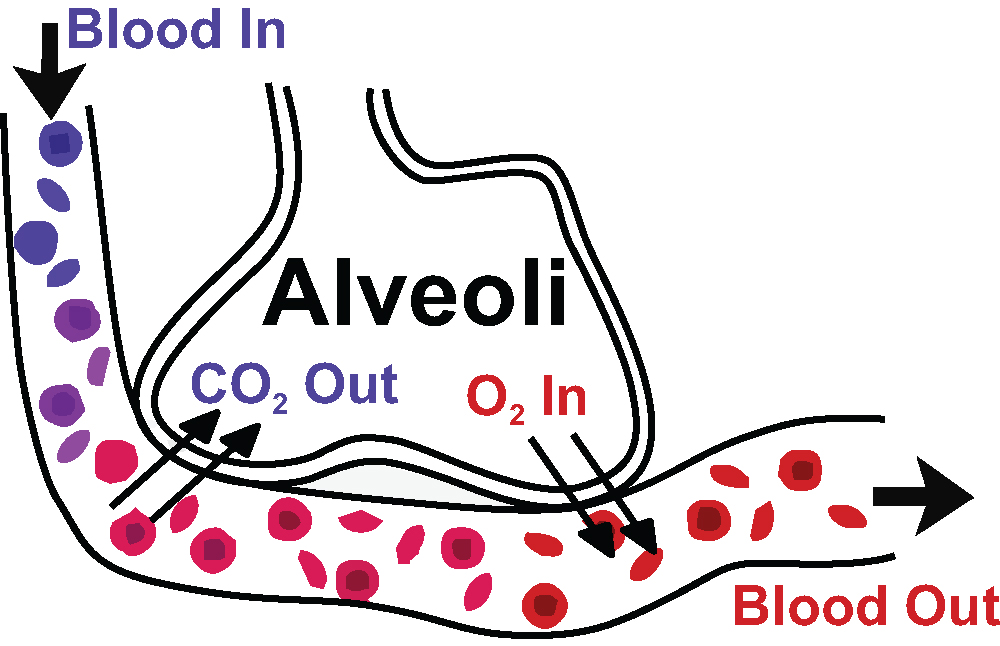
The alveoli are highly elastic structures in the parenchyma of the lungs that are the functional site of gas exchange. As the alveoli fill with air during inhalation they expand, and as air leaves the lung with exhalation, the alvoli return to their non-inflated size. The reason for the elasticity of the alveoli is a protein found in the extracellular matrix of the alveoli, called elastin, as well as the surface tension of water molecules on the alveoli themselves.

Surface Tension in the Lung

Surface tension is the force exerted by water molecules on the surface of the lung tissue as those water molecules pull together. Water (H2O) is a highly polar molecule, so it forms strong covalent bonds with other water molecules. The force of these covalent bonds effectively creates an inward force on surfaces, such as lung tissue, with the effect of lowering the surface area of that surface as the tissue is pulled together. As the air inside the lungs is moist, there is considerable surface tension within the tissue of the lungs. Because the alveoli of the lungs are highly elastic, they do not resist surface tension on their own, which allows the force of that surface tension to deflate the alveoli as air is forced out during exhalation by the contraction of the pleural cavity.

Pulmonary Surfactant

The force of surface tension in the lungs is so great that without something to reduce the surface tension, the airways would collapse after exhalation, making re-inflation during inhalation much more difficult and less effective. The collapse of the lungs is called atelectasis. Fortunately, the type II epithelial cells of the alveoli continually secrete a molecule called surfactant that solves this problem.

A surfactant is a lipoprotein molecule that reduces the force of surface tension from water molecules on the lung tissue. The main reason that surfactant has this function is due to a lipid called dipalmitoylphosphatidylcholine (DPPC) which contains hydrophilic and hydrophobic ends. The hydrophilic ends are water-soluble and attach to the water molecules on the surface of the lungs. The hydrophilic ends are water-insoluble and face towards the air and pull away from the water. The net result is that the surface tension of the lungs from water is reduced so that the lungs can still inflate and deflate properly without the possibility of collapse from surface tension alone.

As unborn humans grow and develop in the womb, they receive oxygen from the mother, so their lungs aren’t fully functional right away. Of particular importance is the fact that they don’t produce surfactants until 24 weeks of development and usually don’t have enough built-up to prevent lung collapse until 35 weeks of development. Therefore prematurely born infants are at a high risk of respiratory distress syndrome from airway collapse, which can cause death if untreated. It is treated through pulmonary surfactant replacement therapy and mechanical ventilator treatment until the infant’s lungs are old enough to secrete enough surfactant to survive on their own. Other diseases may cause atelectasis, such as COPD, or any sort of lung trauma and inflammation that involves extensive damage to the pleural cavity or the lung parenchyma.

image

Diagram of an Alveoli: An alveoli with both cross-section and external views

Factors Affecting Pulmonary Ventilation: Compliance of the Lungs

Lung compliance refers to the magnitude of change in lung volume as a result of the change in pulmonary pressure.

Key Points

Low lung compliance would mean that the lungs would need a greater-than-average change in intrapleural pressure to change the volume of the lungs.

High lung compliance would indicate that little pressure difference in intrapleural pressure is needed to change the volume of the lungs.

Persons with low lung compliance due to obstructive lung diseases tend to take rapid shallow breaths and sit hunched over to make exhalation less difficult.

Persons with high lung compliance due to restrictive lung diseases tend to have difficulty expanding and deflating the lungs.

Two factors determine lung compliance: elasticity of the lung tissue and surface tensions at air-water interfaces.

Two factors determine lung compliance – elasticity of the lung tissue and surface tensions at air-water interfaces.

Key Terms

  • Lung compliance: The ability of the lungs and pleural cavity to change in volume based on changes in pressure.

EXAMPLES

Low lung compliance can be the result of interstitial lung diseases resulting from the inhalation of particulate substances such as asbestos (asbestosis) and silicon (silicosis).

Compliance is the ability of the lungs and pleural cavity to expand and contract based on changes in pressure. Lung compliance is defined as the volume change per unit of pressure change across the lung and is an important indicator of lung health and function. Measurements of lung volumes differ at the same pressure between inhalation and exhalation, meaning that lung compliance differs between inhalation and exhalation. Lung compliance can either be measured as static or dynamic based on whether only volume and pressure (static) are measured or if their changes over time are measured as well (dynamic).

Compliance and Elastic Recoil of the Lung

Compliance depends on the elasticity and surface tension of the lungs. Compliance is inversely related to the elastic recoil of the lungs, so thickening of lung tissue will decrease lung compliance. The lungs must also be able to overcome the force of surface tension from water on lung tissue during inflation in order to be compliant, and greater surface tension causes lower lung compliance. Therefore, surfactant secreted by type II epithelial cells increases lung compliance by reducing the force of surface tension.

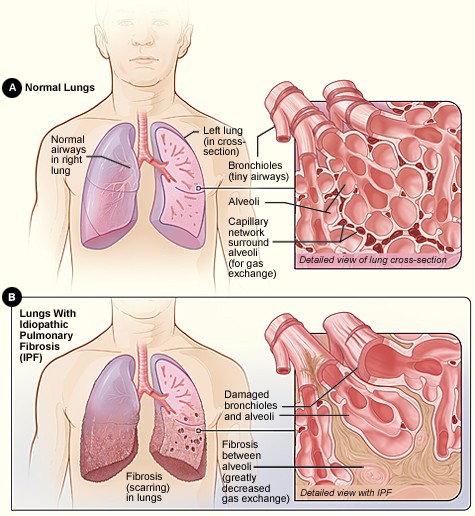
A low lung compliance means that the lungs are “stiff” and have a higher than normal level of elastic recoil. A stiff lung would need a greater-than-average change in pleural pressure to change the volume of the lungs, and breathing becomes more difficult as a result. Low lung compliance is commonly seen in people with restrictive lung diseases, such as pulmonary fibrosis, in which scar tissue deposits in the lung making it much more difficult for the lungs to expand and deflate, and gas exchange is impaired. Pulmonary fibrosis is caused by many different types of inhalation exposures, such as silica dust.

image

Pulmonary Fibrosis: Pulmonary fibrosis stiffens the lungs through deposits of scar tissue, decreasing low compliance and making it more difficult for the lungs to inflate and deflate.

A high lung compliance means that the lungs are too pliable and have a lower than normal level of elastic recoil. This indicates that little pressure difference in pleural pressure is needed to change the volume of the lungs. Exhalation of air also becomes much more difficult because the loss of elastic recoil reduces the passive ability of the lungs to deflate during exhalation. High lung compliance is commonly seen in those with obstructive diseases, such of emphysema, in which destruction of the elastic tissue of the lungs from cigarette smoke exposure causes a loss of elastic recoil of the lung. Those with emphysema have considerable difficulty with exhaling breaths and tend to take fast shallow breaths and tend to sit in a hunched-over position in order to make exhalation easier.

Factors Affecting Pulmonary Ventilation: Airway Resistance

Airway resistance refers to resistance in the respiratory tract to airflow.

Key Points

Airway resistance is a concept in respiratory physiology that describes the resistance of the respiratory tract to airflow during inspiration and expiration.

Airway resistance can be indirectly measured with body plethysmography.

A two-fold change in the radius/diameter of an airway causes a 16-fold change in air resistance in the opposite direction (an inverse relationship).

Diseases affecting the respiratory tract can increase airway resistance.

Laminar flow is orderly and has low resistance while turbulent flow is disorganized and has high resistance.

Key Terms

  • Airway resistance: Airway Resistance is a concept in respiratory physiology that describes the resistance of the respiratory tract to airflow during inspiration and expiration.
  • plethysmography: The diagnostic use of a plethysmograph to measure changes in volume within an organ or whole body.
  • Turbulent flow: Air with disorganized layers that have higher resistance. It is often located in areas where the airways branch or diverge.

EXAMPLES

Airway resistance can change over time, especially during an asthma attack when the airways constrict causing an increase in airway resistance.

Airway Resistance

Airway resistance is the resistance to the flow of air caused by friction with the airways, which includes the conducting zone for air, such as the trachea, bronchi, and bronchioles. The main determinants of airway resistance are the size of the airway and the properties of the flow of air itself.

Size of the Airway

Resistance in an airway is inversely proportional to the radius of the airway. However, the ratio for this relationship is not 1:1. Below is the equation for calculating airway resistance (R).

  • R=8(Length×Gas Viscosity)(πr4)

The most important part of this formula is the radius of the airway (r). A common example is that if one were to double the diameter of an airway  (thus doubling the radius as well) the resistance of the airway would drop by a factor of 16. This mathematical property between radius and resistance is consistent for all tubes and is often applied to the blood vessels in the cardiovascular system.

The radius of the airways of the conducting zone becomes smaller as air goes deeper into the lungs. Therefore the resistance to air in the bronchi is greater than the resistance to air in the trachea. The number of airways also plays a large role in the resistance to air, with more airways reducing resistance because there are more paths for the air to flow into. Therefore, despite the fact that the terminal bronchioles are the smallest airway in terms of radius, their high number compared to the larger airways means that the bronchi actually have greater resistance because there are fewer of them compared to the terminal bronchioles. Another important fact is that airway resistance is inversely related to lung volumes because the airways expand a bit as they inflate, so the airways in a fully inflated lung will have lower resistance than a lung after exhalation.

Airway resistance can be indirectly measured with body plethysmography, which is an instrument used for measuring changes in volume within a structure, such as the airways. The resistance of the airways is an important indicator of lung health and function and can be used to diagnose lung diseases.

The size of the airways, and thus the resistance can change based on the health and conditions of the lungs. Most lung diseases increase airway resistance in many different ways. For example, in asthma attacks the bronchioles spasm and constrict, which increases resistance. Emphysema also increases airway resistance because the lung tissue becomes too pliable and it the airways become more difficult to hold open by the flow of air.

Flow of Air

The air that flows through the lungs varies considerably in the properties of the flow of air. The airflow can either be turbulent, transitional, or laminar based on the airway. Laminar flow involves an orderly and concentric distribution of layers of air particles and tends to occur in smaller airways, and has lower resistance. Turbulent flow is the disorganized distribution of the layers of air and tends to occur in larger airways and places where the airways branch, and has a higher resistance. Transitional flow occurs in places that branch within smaller airways, in which the airflow becomes in between laminar and turbulent flow and has moderate resistance. The relationship between resistance and type of airflow is difficult to measure and apply, but some mathematical models (such as Reynold’s number) can provide a rough estimate.

image

Laminar and Turbulent Flow: Laminar flow (a) has orderly layers and low resistance. Turbulent flow (b) has disorganized layers and high resistance.


ByRx Harun

Mechanics of Breathing – Anatomy, Types, Structure

Mechanics of Breathing/The processes of inspiration (breathing in) and expiration (breathing out) are vital for providing oxygen to tissues and removing carbon dioxide from the body. Inspiration occurs via active contraction of muscles – such as the diaphragm – whereas expiration tends to be passive unless it is forced.

The Lungs and Breathing

The space between the outer surface of the lungs and the inner thoracic wall is known as the pleural space. This is usually filled with pleural fluid, forming a seal that holds the lungs against the thoracic wall by the force of surface tension. This seal ensures that when the thoracic cavity expands or reduces, the lungs undergo expansion or reduction in size accordingly.

During breathing, the contraction and relaxation of muscles act to change the volume of the thoracic cavity. As the thoracic cavity and lungs move together, this changes the volume of the lungs, in turn changing the pressure inside the lungs.

Boyle’s law states that the volume of gas is inversely proportional to pressure (when the temperature is constant). Therefore:

  • When the volume of the thoracic cavity increases – the volume of the lungs increases and the pressure within the lungs decreases.
  • When the volume of the thoracic cavity decreases – the volume of the lungs decreases and the pressure within the lungs increases.

Process of Inspiration

Inspiration is the phase of ventilation in which air enters the lungs. It is initiated by the contraction of the inspiratory muscles:

  • Diaphragm – flattens, extending the superior/inferior dimension of the thoracic cavity.
  • External intercostal muscles – elevates the ribs and sternum, extending the anterior/posterior dimension of the thoracic cavity.

The action of the inspiratory muscles results in an increase in the volume of the thoracic cavity. As the lungs are held against the inner thoracic wall by the pleural seal, they also undergo an increase in volume.

As per Boyle’s law, an increase in lung volume results in a decrease in the pressure within the lungs. The pressure of the environment external to the lungs is now greater than the environment within the lungs, meaning air moves into the lungs down the pressure gradient.

Process of Passive Expiration

Expiration is the phase of ventilation in which air is expelled from the lungs. It is initiated by the relaxation of the inspiratory muscles:

  • Diaphragm – relaxes to return to its resting position, reducing the superior/inferior dimension of the thoracic cavity.
  • External intercostal muscles – relax to depress the ribs and sternum, reducing the anterior/posterior dimension of the thoracic cavity.

The relaxation of the inspiratory muscles results in a decrease in the volume of the thoracic cavity. The elastic recoil of the previously expanded lung tissue allows them to return to their original size.

As per Boyle’s law, a decrease in lung volume results in an increase in the pressure within the lungs. The pressure inside the lungs is now greater than in the external environment, meaning air moves out of the lungs down the pressure gradient.

Forced Breathing

Forced breathing is an active mode of breathing that utilizes additional muscles to rapidly expand and contract the thoracic cavity volume. It most commonly occurs during exercise.

Active Inspiration

Active inspiration involves the contraction of the accessory muscles of breathing (in addition to those of quiet inspiration, the diaphragm, and external intercostals). All of these muscles act to increase the volume of the thoracic cavity:

  • Scalenes – elevates the upper ribs.
  • Sternocleidomastoid – elevates the sternum.
  • Pectoralis major and minor – pulls ribs outwards.
  • Serratus anterior – elevates the ribs (when the scapulae are fixed).
  • Latissimus dorsi – elevates the lower ribs.

Active Expiration

Active expiration utilizes the contraction of several thoracic and abdominal muscles. These muscles act to decrease the volume of the thoracic cavity:

  • Anterolateral abdominal wall – increases the intra-abdominal pressure, pushing the diaphragm further upwards into the thoracic cavity.
  • Internal intercostal – depress the ribs.
  • Innermost intercostal – depress the ribs.

Pressure Changes During Pulmonary Ventilation

Ventilation is the rate at which gas enters or leaves the lung.

Key Points

Ventilation is the rate at which gas enters or leaves the lung.

The three types of ventilation are minute ventilation, alveolar ventilation, and dead space ventilation.

The alveolar ventilation rate changes according to the frequency of breath, tidal volume, and amount of dead space.

PA refers to the alveolar partial pressure of a gas, while Pa refers to the partial pressure of that gas in arterial blood.

Gas exchange occurs from passive diffusion because PAO2 is greater than PaO2 in deoxygenated blood.

Key Terms

  • ventilation: The bodily process of breathing, the inhalation of air to provide oxygen, and the exhalation of spent air to remove carbon dioxide.
  • partial pressure: The pressure exerted by a gas, either in air or dissolved, that indicates the concentration of that gas.

The Types of Ventilation Rates

In respiratory physiology, the ventilation rate is the rate at which gas enters or leaves the lung. Ventilation is generally expressed as volume of air times a respiratory rate.

The volume of air can refer to tidal volume (the amount inhaled in an average breath) or something more specific, such as the volume of dead space in the airways. The three main types of ventilation rates used in respiratory physiology are:

  • Minute ventilation (VE): The amount of air entering the lungs per minute. It can be defined as VE=Tidal Volume×Breaths Per Minute
  • Alveolar ventilation (VA): The amount of gas per unit of time that reaches the alveoli and becomes involved in gas exchange. It is defined as VA=(Tidal Volume−Dead Space Volume)×Respiratory Rate
  • Dead space ventilation (VD): The amount of air per unit of time that is not involved in gas exchange, such as the air that remains in the conducting zones. It is defined as VD=Dead Space Volume×Respiratory Rate.

Additionally, minute ventilation can be described as the sum of alveolar and dead space ventilation, provided that the respiratory rate used to derive them is in terms of breaths per minute.

The three types of ventilation are mathematically linked to one another, so changes in one ventilation rate can cause the change of the other. This is most apparent in changes of the dead space volume. Breathing through a snorkeling tube and having a pulmonary embolism both increase the amount of dead space volume (through anatomical versus alveolar dead space respectively), which will reduce alveolar ventilation.

Alveolar ventilation is the most important type of ventilation for measuring how much oxygen actually gets into the body, which can initiate negative feedback mechanisms to try and increase alveolar ventilation despite the increase in dead space. In particular, the body will generally attempt to combat increased dead space by raising the frequency of breaths to try and maintain sufficient levels of alveolar ventilation.

Partial Pressure of Gasses

This is a diagram of gas exchange in the lungs. It shows the aveoli removing carbon dioxide from the blood and then adding oxygen to the blood. 

Gaseous Exchange in the Lungs: Diagram of gas exchange in the lungs.

When gasses dissolve in the bloodstream during ventilation, they are generally described by the partial pressure of the gasses. Partial pressure more specifically refers to the relative concentration of those gasses by the pressure they exert in a dissolved state.

In respiratory physiology, PAO2 and PACO2,refer to the partial pressures of oxygen and carbon dioxide in the alveoli.

PaO2 and PaCO2 refer to the partial pressures of oxygen and carbon dioxide within arterial blood. Differences in partial pressures of gasses between the alveolar air and the bloodstream are the reason that gas exchange occurs by passive diffusion.

Under normal conditions, PAO2 is about 100 mmHg, while PaO2 is 80–100 mmHg in systemic arteries, but 40–50 mmHg in the deoxygenated blood of the pulmonary artery going to the lungs.

Recall that gasses travel from areas of high pressure to areas of low pressure, so the greater pressure of oxygen in the alveoli compared to that of the deoxygenated blood explains why oxygen can passively diffuse into the bloodstream during gas exchange.

Conversely, PACO2 is 35 mmHg, while PaCO2 is about 40–45 mmHG in systemic arteries and 50 mmHg in the pulmonary artery. The partial pressure, and thus the concentration of carbon dioxide, is greater in the capillaries of the alveoli compared to the alveolar air, so carbon dioxide will passively diffuse from the bloodstream into the alveoli during gas exchange.

Additionally, because PaCO2 is an indicator of the concentration of carbon dioxide in arterial blood, it can be used to measure blood pH and identify cases of respiratory acidosis and alkalosis.

Inspiration

Inhalation is the flow of air into an organism that is due to a pressure difference between the atmosphere and alveolus.

Key Points

In humans, inspiration is the flow of air into an organism from the external environment, through the airways, and into the alveoli.

Inhalation begins with the onset of a contraction of the diaphragm, which results in expansion of the thoracic and pleural cavities and a decrease in pressure (also called an increase in negative pressure).

There are many accessory muscles involved in inhalation—such as external intercostal muscles, scalene muscles, the sternocleidomastoid muscle, and the trapezius muscle.

Breathing only with the accessory muscles instead of the diaphragm is considered inefficient, and provides much less air during inhalation.

The negative pressure in the pleural cavity is enough to hold the lungs open in spite of the inherent elasticity of the tissue. The thoracic cavity increases in volume causing a drop in the pressure (a partial vacuum) within the lung itself.

As long as the pressure within the alveoli is lower than atmospheric pressure, air will continue to move inwardly, but as soon as the pressure is stabilized air movement stops.

Key Terms

  • inspiration: The drawing of air into the lungs, accomplished in mammals by elevation of the chest walls and flattening of the diaphragm.
  • accessory muscles: Muscles that help expand small parts of the thoracic cavity, either working in addition to the diaphragm or substituting for it if the diaphragm becomes injured.
  • intrapleural pressure: The pressure inside the pleural cavity, which is negative compared to outside air and becomes even more negative during inspiration.

Inspiration refers to inhalation—it is the flow of the respiratory current into an organism. In humans, it is the movement of ambient air through the airways and into the alveoli of the lungs.

The Process of Inspiration

Inspiration begins with the contraction of the diaphragm, which results in the expansion of the thoracic cavity and the pleural cavity. The pleural cavity normally has a lower pressure compared to ambient air (–3 mmHg normally and typically –6 mmHg during inspiration), so when it expands, the pressure inside the lungs drops.

Pressure and volume are inversely related to each other, so the drop in pressure inside the lung increases the volume of air inside the lung by drawing outside air into the lung. As the volume of air inside the lung increases, the lung pushes back against the expanded pleural cavity as a result of the drop in intrapleural pressure (pressure inside the pleural cavity).

The force of the intrapleural pressure is even enough to hold the lungs open during inpiration despite the natural elastic recoil of the lung. The alveolar sacs also expand as a result of being filled with air during inspiration, which contributes to the expansion inside the lung.

Eventually, the pressure inside the lung becomes less negative as the volume inside the lung increases and, when pressure and volume stabilize, air movement stops, inspiration ends, and expiration (exhalation) will begin. Deeper breaths have higher tidal volumes and require a greater drop in intrapleural pressure compared to shallower breaths.

This is a schematic drawing of the entire respiratory tract, include inner details such as the aveoli. It illustrates the respiratory tract as a complex, connected system where resistance in any part of it can cause problems. 

Respiratory System: Resistance in any part of the respiratory tract can cause problems.

Accessory Muscles of Inspiration

The diaphragm is the primary muscle involved in breathing, however, several other muscles play a role in certain circumstances. These muscles are referred to as accessory muscles of inhalation.

  • External intercostal muscles: Muscles located between the ribs that help the thoracic cavity and pleural cavity expand during quiet and forced inspiration.
  • Scalene muscles: Muscles in the neck that lift the upper ribs (and the thoracic cavity around the upper ribs) to help with breathing. They provide a mechanism for inspiration when the diaphragm is injured and can’t contract normally.
  • Sternocleidomastoid muscle: Muscles that connect the sternum to the neck and allow for rotation and turning of the head. They can lift the upper ribs as the scalene muscles can.
  • Trapezius muscle: Muscles in the shoulders that retract the scapula and expand the upper part of the thoracic cavity.

The accessory muscles assist breathing by expanding the thoracic cavity in a similar way to the diaphragm. However, they expand a much smaller part of the thoracic cavity compared to diaphragm. Therefore they should not be used as the primary mechanism of inhalation, because they take in much less air compared to the diaphragm resulting in a much lower tidal volume.

For example, singers need a lot of air to support the powerful voice production needed for singing. A common problem in novice singers is breathing with the accessory muscles of the neck, shoulder, and ribs instead of the diaphragm, which gives them a much smaller air supply than what is needed to sing properly.

Expiration

Exhalation (or expiration) is the flow of the respiratory current out of the organism.

Key Points

In humans, exhalation is the movement of air out of the bronchial tubes, through the airways, to the external environment during breathing.

Exhalation is a passive process because of the elastic properties of the lungs.

During forced exhalation, internal intercostal muscles lower the rib cage and decrease the thoracic volume while the abdominal muscles push up on the diaphragm which causes the thoracic cavity to contract.

Relaxation of the thoracic diaphragm causes contraction of the pleural cavity which puts pressure on the lungs to expel the air.

Brain control of exhalation can be broken down into voluntary control and involuntary control.

Key Terms

  • Intercostal muscles: Intercostal muscles are several groups of muscles that run between the ribs, and help form and move the chest wall.
  • exhalation: The act or process of exhaling, or sending forth in the form of steam or vapor; evaporation.

Expiration, also called exhalation, is the flow of the respiratory current out of the organism. The purpose of exhalation is to remove metabolic waste, primarily carbon dioxide from the body from gas exchange. The pathway for exhalation is the movement of air out of the conducting zone, to the external environment during breathing.

This is a schematic drawing of the entire respiratory tract, include inner details such as the aveoli. It illustrates the respiratory tract as a complex, connected system where resistance in any part of it can cause problems. 

Respiratory System: As the diaphragm relaxes, the pleural cavity contracts, which exerts pressure on the lungs, which reduces the volume of the lungs as air is passively pushed out of the lungs.

The Process of Expiration

Expiration is typically a passive process that happens from the relaxation of the diaphragm muscle (that contracted during inspiration). The primary reason that expiration is passive is due to the elastic recoil of the lungs. The elasticity of the lungs is due to molecules called elastins in the extracellular matrix of lung tissues and is maintained by surfactant, a chemical that prevents the elasticity of the lungs from becoming too great by reducing surface tension from water. Without surfactant the lungs would collapse at the end of expiration, making it much more difficult to inhale again. Because the lung is elastic, it will automatically return to its smaller size as air leaves the lung.

Exhalation begins when inhalation ends. Just as the pleural cavity’s increased negative pressure leads to air uptake during inhalation, the pleural cavity will contract during the exhalation (due to relaxation of the diaphragm), which exerts pressure on the lungs and causes the pressure inside the cavity to be less negative. An increase in pressure leads to a decrease in volume inside the lung, and the air is pushed out into the airways as the lung returns to its smaller size. The pleural cavity is so important to breathing because its pressure changes the volume of the lungs, and it provides a frictionless space for the lung to expand and contract during breathing.

While expiration is generally a passive process, it can also be an active and forced process. There are two groups of muscles that are involved in forced exhalation.

  • Internal Intercostal Muscles: Muscles of the ribcage that help lower the ribcage, which pushes down on the thoracic cavity, causing forced exhalation. Note that these are not the same as the external intercostal muscles involved in inspiration.
  • Abdominal Muscles: Any number of muscles in the abdomen that exert pressure on the diaphragm from below to expand it, which in turn contracts the thoracic cavity, causing forced exhalation.

This happens due to the elastic properties of the lungs, as well as the internal intercostal muscles that lower the rib cage and decrease thoracic volume. As the thoracic diaphragm relaxes during exhalation it causes the tissue it has depressed to rise superiorly and put pressure on the lungs to expel the air.

Control of Expiration

Expiration can be either voluntary or involuntary in order to serve different purposes for the body. These two types of expiration are controlled by different centers within the body.

Voluntary expiration is actively controlled. It is generally defined by holding air in the lungs and releasing it at a fixed rate, which enables control over when and how much air to exhale. It is required for voice production during speech or singing, which requires very specific control over air, or even simpler activities, like blowing out a candle on one’s birthday. The nervous system component that controls voluntary expiration is the motor cortex (the ascending respiratory pathway), because it controls muscle movements, but this pathway isn’t fully understood, and there are many other possible sites in the brain that may also be involved.

Involuntary expiration is not under conscious control and is an important component of metabolic function. Examples include breathing during sleep or meditation. Changes in breathing patterns may also occur for metabolic reasons, such as through increased breathing rate in people with acidosis from negative feedback. The principal neural control center for involuntary expiration consists of the medulla oblongata and the pons, which are located in the brainstem directly beneath the brain. While these two structures are involved in neural respiratory control, they also have other metabolic regulatory functions for other body systems, such as the cardiovascular system.

Breathing Patterns

Breathing is an autonomic process that moves air in and out of the lungs.

Key Points

Breathing patterns consist of tidal volume and respiratory rate in an individual.

An average breathing pattern is 12 breaths per minute and 500 mL per breath.

Eupnea is normal breathing at rest.

There are types of altered breathing patterns that are symptoms of many diseases.

Altered breathing patterns refer to changes in respiratory rate or amount of air exchanged during breathing, and do not always indicate changes in alveolar ventilation.

The mechanism of generation of the ventilatory pattern involves the integration of neural signals by respiratory control centers in the medulla and pons.

Key Terms

  • altered breathing patterns: Abnormal breathing patterns that indicate typically indicate either too fast or too slow respiratory rate or too much or too little tidal volume.
  • tidal volume: The amount of air displaced or exchanged in a single breath.

Breathing patterns refer to the respiratory rate, which is defined as the frequency of breaths over a period of time, as well as the amount of air cycled during breathing (tidal volume). Breathing patterns are important diagnostic criteria for many diseases, including some which involve more than the respiratory system itself.

Characteristics of the Breathing Patterns

The respiratory rate is the frequency of breaths over time. The time period is variable but usually expressed in breaths per minute because that time period allows for the estimation of minute ventilation. During normal breathing, the volume of air cycled through inhalation and exhalation is called tidal volume (VT), and is the amount of air exchanged in a single breath. Tidal volume multiplied by the respiratory rate is minute ventilation, which is one of the most important indicators of lung function. In an average human adult, the average respiratory rate is 12 breaths per minute, with a tidal volume of .5 liters and minute ventilation of 6 liters per minute, though these numbers vary from person to person. Infants and children have considerably higher respiratory rates than adults.


Spirometry curve: The normal respiratory rate refers to the cyclical inhalation and exhalation of tidal volume (VT).

The respiratory rate is controlled by involuntary processes of the autonomic nervous system. In particular, the respiratory centers of the medulla and the pons control the overall respiratory rate based on a variety of chemical stimuli from within the body. The hypothalamus can also influence the respiratory rate during emotional and stress responses.

Assessment points

System Effect Assessment by Hx PE Test
HEENT Difficult airway
Intracranial bleed
ROP
Assoc with common difficult airway syndromes, Hx in NICU
Intracranial hemorrhage
Morphology of airway esp. jaw, evaluation of breathing mechanics (stridor)
Fontanel
Ophthalmology exam
Not typically required unless obvious abn, x-ray, head and neck CT, MRI
Cranial USOptho exam under anesthesia
RESP RDS/ BPD
Resp failure
Pneumonia
Pneumothorax
Risk factors, use of supplemental O2
Hx/frequency of apnea
Intubated and/or ventilated
Fever curves, increasing O2 requirement
Resp rate (>60 abn)
Intercostal retractions
Grunting
Rales or rhonchi
Absent/decreased breath sounds, SubQ emphysema
CXR
Blood gases
CVS Hypovolemia
Hypervolemia
PDA
CHF
Vital signs chart
Wt chart
UO
Inotropes infusing
HR (120–160), murmur
Bounding pulses (PDA), BP normal
Liver enlarged (CHF), edema: feet or eyelids
ECG, ECHO
CXR
HEME Anemia
Sepsis
Coagulopathy
Precipitous delivery, placental bleeding
Perinatal exposures
Birth asphyxia (low factors)
Vitamin
K given
Bleeding
Tachycardia, hypotension, poor growth rate
A recent change in physiologic status-activity, resp function, CV stability, peripheral perfusion
Purpura, occult bleeding
CBC, retic count
WBC and differential
Plt count
PT, INR, fibrinogen
METAB ↑ or ↓ glucose, ↑ Temp
Hypocalcemia, hypomagnesemia
Hyperbilirubinemia
Na+ or K+ disturbance
Review charts and reports Twitching
Seizures
Hypotension
Serum electrolytes, Ca2+, Mg2+
Blood glucose, indirect bilirubin levels

Key Reference: Henderson-Smart DJ, Steer P. Postoperative caffeine for preventing apnea in preterm infants. Cochrane Database Syst Rev. 2000; CD000048.

Normal and Altered Breathing Patterns

Eupnea is the term for the normal respiratory rate of an individual at rest. Several other terms describe abnormal breathing patterns that are indicative of symptoms of many diseases, many of which aren’t mainly respiratory diseases. Some of the more common terms for altered breathing patterns include:

  • Dyspnea: commonly called shortness of breath. It describes dramatically decreased tidal volume and sometimes increased respiratory rate, leading to a sensation of breathlessness. It is a common symptom of anxiety attacks, pulmonary embolisms, heart attacks, and emphysema, among other things.
  • Hypernea: refers to increased volume of air cycled to meet the body’s metabolic needs, which may or may not involve a change in frequency of breathing. It is a symptom of exercise and adjustment to high altitude, which are generally not problematic but can also be seen in those with anemia or septic shock, which is problematic.
  • Tachypnea: describes increased respiratory rate. Often a symptom of carbon monoxide poisoning or pneumonia.
  • Bradypnea: describes decreased respiratory rate. Often a symptom of hypertension, heart arrhythmias, or slow metabolic rate from hypothyroidism.
  • Apnea: Transient stopped breathing that begins again soon afterward. It is the main symptom of sleep apnea, in which breathing temporarily stops during sleep.

These terms all describe an altered breathing pattern through increased or decreased (or stopped) tidal volume or respiratory rate. It is important to distinguish these terms from hyperventilation and hypoventilation, which refer to abnormalities in alveolar gas exchange (and thus blood pH) instead of an altered breathing pattern, but they may be associated with an altered breathing pattern. For example, dyspnea or tachypnea often occurs together with hyperventilation during anxiety attacks, though not always.

References


ByRx Harun

Ventilation – Anatomy, Types, Functions, Exercise

Ventilation/Breathing (or ventilation) is the process of moving air out and in the lungs to facilitate gas exchange with the internal environment, mostly to flush out carbon dioxide and bring in oxygen. All aerobic creatures need oxygen for cellular respiration, which uses the oxygen to break down foods for energy and produces carbon dioxide as a waste product. Breathing, or “external respiration”, brings air into the lungs where gas exchange takes place in the alveoli through diffusion. The body’s circulatory system transports these gases to and from the cells, where “cellular respiration” takes place.[rx][rx]

Inhaled air is by volume 78% nitrogen, 20.95% oxygen and small amounts of other gases including argon, carbon dioxide, neon, helium, and hydrogen.[rx]

The gas exhaled is 4% to 5% by volume of carbon dioxide, about a 100 fold increase over the inhaled amount. The volume of oxygen is reduced by a small amount, 4% to 5%, compared to the oxygen inhaled. The typical composition is:[17]

  • 5.0–6.3% water vapor
  • 79% nitrogen [rx]
  • 13.6–16.0% oxygen
  • 4.0–5.3% carbon dioxide
  • 1% argon
  • parts per million (ppm) of hydrogen, from the metabolic activity of microorganisms in the large intestine.[19]
  • ppm of carbon monoxide from the degradation of heme proteins.
  • 1 ppm of ammonia.
  • Trace many hundreds of volatile organic compounds especially isoprene and acetone. The presence of certain organic compounds indicates disease.[rx][rx]

In addition to air, underwater divers practicing technical diving may breathe oxygen-rich, oxygen-depleted or helium-rich breathing gas mixtures. Oxygen and analgesic gases are sometimes given to patients under medical care. The atmosphere in space suits is pure oxygen. However, this is kept at around 20% of Earthbound atmospheric pressure to regulate the rate of inspiration.

Pressure Changes During Pulmonary Ventilation

Ventilation is the rate at which gas enters or leaves the lung.

Key Points

Ventilation is the rate at which gas enters or leaves the lung.

The three types of ventilation are minute ventilation, alveolar ventilation, and dead space ventilation.

The alveolar ventilation rate changes according to the frequency of breath, tidal volume, and amount of dead space.

PA refers to the alveolar partial pressure of a gas, while Pa refers to the partial pressure of that gas in arterial blood.

Gas exchange occurs from passive diffusion because PAO2 is greater than PaO2 in deoxygenated blood.

Key Terms

  • ventilation: The bodily process of breathing, the inhalation of air to provide oxygen, and the exhalation of spent air to remove carbon dioxide.
  • partial pressure: The pressure exerted by a gas, either in air or dissolved, that indicates the concentration of that gas.

The Types of Ventilation Rates

In respiratory physiology, the ventilation rate is the rate at which gas enters or leaves the lung. Ventilation is generally expressed as volume of air times a respiratory rate.

The volume of air can refer to tidal volume (the amount inhaled in an average breath) or something more specific, such as the volume of dead space in the airways. The three main types of ventilation rates used in respiratory physiology are:

  • Minute ventilation (VE): The amount of air entering the lungs per minute. It can be defined as VE=Tidal Volume×Breaths Per Minute
  • Alveolar ventilation (VA): The amount of gas per unit of time that reaches the alveoli and becomes involved in gas exchange. It is defined as VA=(Tidal Volume−Dead Space Volume)×Respiratory Rate
  • Dead space ventilation (VD): The amount of air per unit of time that is not involved in gas exchange, such as the air that remains in the conducting zones. It is defined as VD=Dead Space Volume×Respiratory Rate.

Additionally, minute ventilation can be described as the sum of alveolar and dead space ventilation, provided that the respiratory rate used to derive them is in terms of breaths per minute.

The three types of ventilation are mathematically linked to one another, so changes in one ventilation rate can cause the change of the other. This is most apparent in changes of the dead space volume. Breathing through a snorkeling tube and having a pulmonary embolism both increase the amount of dead space volume (through anatomical versus alveolar dead space respectively), which will reduce alveolar ventilation.

Alveolar ventilation is the most important type of ventilation for measuring how much oxygen actually gets into the body, which can initiate negative feedback mechanisms to try and increase alveolar ventilation despite the increase in dead space. In particular, the body will generally attempt to combat increased dead space by raising the frequency of breaths to try and maintain sufficient levels of alveolar ventilation.

Partial Pressure of Gasses

This is a diagram of gas exchange in the lungs. It shows the aveoli removing carbon dioxide from the blood and then adding oxygen to the blood.

Gaseous Exchange in the Lungs: Diagram of gas exchange in the lungs.

When gasses dissolve in the bloodstream during ventilation, they are generally described by the partial pressure of the gasses. Partial pressure more specifically refers to the relative concentration of those gasses by the pressure they exert in a dissolved state.

In respiratory physiology, PAO2 and PACO2, refer to the partial pressures of oxygen and carbon dioxide in the alveoli.

PaO2 and PaCO2 refer to the partial pressures of oxygen and carbon dioxide within arterial blood. Differences in partial pressures of gasses between the alveolar air and the bloodstream are the reason that gas exchange occurs by passive diffusion.

Under normal conditions, PAO2 is about 100 mmHg, while PaO2 is 80–100 mmHg in systemic arteries, but 40–50 mmHg in the deoxygenated blood of the pulmonary artery going to the lungs.

Recall that gasses travel from areas of high pressure to areas of low pressure, so the greater pressure of oxygen in the alveoli compared to that of the deoxygenated blood explains why oxygen can passively diffuse into the bloodstream during gas exchange.

Conversely, PACO2 is 35 mmHg, while PaCO2 is about 40–45 mmHG in systemic arteries and 50 mmHg in the pulmonary artery. The partial pressure, and thus the concentration of carbon dioxide, is greater in the capillaries of the alveoli compared to the alveolar air, so carbon dioxide will passively diffuse from the bloodstream into the alveoli during gas exchange.

Additionally, because PaCO2 is an indicator of the concentration of carbon dioxide in arterial blood, it can be used to measure blood pH and identify cases of respiratory acidosis and alkalosis.

Inspiration

Inhalation is the flow of air into an organism that is due to a pressure difference between the atmosphere and alveolus.

Key Points

In humans, inspiration is the flow of air into an organism from the external environment, through the airways, and into the alveoli.

Inhalation begins with the onset of a contraction of the diaphragm, which results in expansion of the thoracic and pleural cavities and a decrease in pressure (also called an increase in negative pressure).

There are many accessory muscles involved in inhalation—such as external intercostal muscles, scalene muscles, the sternocleidomastoid muscle, and the trapezius muscle.

Breathing only with the accessory muscles instead of the diaphragm is considered inefficient, and provides much less air during inhalation.

The negative pressure in the pleural cavity is enough to hold the lungs open in spite of the inherent elasticity of the tissue. The thoracic cavity increases in volume causing a drop in the pressure (a partial vacuum) within the lung itself.

As long as the pressure within the alveoli is lower than atmospheric pressure, air will continue to move inwardly, but as soon as the pressure is stabilized air movement stops.

Key Terms

  • inspiration: The drawing of air into the lungs, accomplished in mammals by elevation of the chest walls and flattening of the diaphragm.
  • accessory muscles: Muscles that help expand small parts of the thoracic cavity, either working in addition to the diaphragm or substituting for it if the diaphragm becomes injured.
  • intrapleural pressure: The pressure inside the pleural cavity, which is negative compared to outside air and becomes even more negative during inspiration.

Inspiration refers to inhalation—it is the flow of the respiratory current into an organism. In humans, it is the movement of ambient air through the airways and into the alveoli of the lungs.

The Process of Inspiration

Inspiration begins with the contraction of the diaphragm, which results in the expansion of the thoracic cavity and the pleural cavity. The pleural cavity normally has a lower pressure compared to ambient air (–3 mmHg normally and typically –6 mmHg during inspiration), so when it expands, the pressure inside the lungs drops.

Pressure and volume are inversely related to each other, so the drop in pressure inside the lung increases the volume of air inside the lung by drawing outside air into the lung. As the volume of air inside the lung increases, the lung pushes back against the expanded pleural cavity as a result of the drop in intrapleural pressure (pressure inside the pleural cavity).

The force of the intrapleural pressure is even enough to hold the lungs open during inspiration despite the natural elastic recoil of the lung. The alveolar sacs also expand as a result of being filled with air during inspiration, which contributes to the expansion inside the lung.

Eventually, the pressure inside the lung becomes less negative as the volume inside the lung increases and, when pressure and volume stabilize, air movement stops, inspiration ends, and expiration (exhalation) will begin. Deeper breaths have higher tidal volumes and require a greater drop in intrapleural pressure compared to shallower breaths.

This is a schematic drawing of the entire respiratory tract, include inner details such as the aveoli. It illustrates the respiratory tract as a complex, connected system where resistance in any part of it can cause problems.

Respiratory System: Resistance in any part of the respiratory tract can cause problems.

Accessory Muscles of Inspiration

The diaphragm is the primary muscle involved in breathing, however, several other muscles play a role in certain circumstances. These muscles are referred to as accessory muscles of inhalation.

  • External intercostal muscles: Muscles located between the ribs that help the thoracic cavity and pleural cavity expand during quiet and forced inspiration.
  • Scalene muscles: Muscles in the neck that lift the upper ribs (and the thoracic cavity around the upper ribs) to help with breathing. They provide a mechanism for inspiration when the diaphragm is injured and can’t contract normally.
  • Sternocleidomastoid muscle: Muscles that connect the sternum to the neck and allow for rotation and turning of the head. They can lift the upper ribs as the scalene muscles can.
  • Trapezius muscle: Muscles in the shoulders that retract the scapula and expand the upper part of the thoracic cavity.

The accessory muscles assist breathing by expanding the thoracic cavity in a similar way to the diaphragm. However, they expand a much smaller part of the thoracic cavity compared to the diaphragm. Therefore they should not be used as the primary mechanism of inhalation, because they take in much less air compared to the diaphragm resulting in a much lower tidal volume.

For example, singers need a lot of air to support the powerful voice production needed for singing. A common problem in novice singers is breathing with the accessory muscles of the neck, shoulder, and ribs instead of the diaphragm, which gives them a much smaller air supply than what is needed to sing properly.

Expiration

Exhalation (or expiration) is the flow of the respiratory current out of the organism.

Key Points

In humans, exhalation is the movement of air out of the bronchial tubes, through the airways, to the external environment during breathing.

Exhalation is a passive process because of the elastic properties of the lungs.

During forced exhalation, internal intercostal muscles lower the rib cage and decrease the thoracic volume while the abdominal muscles push up on the diaphragm which causes the thoracic cavity to contract.

Relaxation of the thoracic diaphragm causes contraction of the pleural cavity which puts pressure on the lungs to expel the air.

Brain control of exhalation can be broken down into voluntary control and involuntary control.

Key Terms

  • Intercostal muscles: Intercostal muscles are several groups of muscles that run between the ribs, and help form and move the chest wall.
  • exhalation: The act or process of exhaling, or sending forth in the form of steam or vapor; evaporation.

Expiration, also called exhalation, is the flow of the respiratory current out of the organism. The purpose of exhalation is to remove metabolic waste, primarily carbon dioxide from the body from gas exchange. The pathway for exhalation is the movement of air out of the conducting zone, to the external environment during breathing.

This is a schematic drawing of the entire respiratory tract, include inner details such as the aveoli. It illustrates the respiratory tract as a complex, connected system where resistance in any part of it can cause problems.

Respiratory System: As the diaphragm relaxes, the pleural cavity contracts, which exerts pressure on the lungs, which reduces the volume of the lungs as air is passively pushed out of the lungs.

The Process of Expiration

Expiration is typically a passive process that happens from the relaxation of the diaphragm muscle (that contracted during inspiration). The primary reason that expiration is passive is due to the elastic recoil of the lungs. The elasticity of the lungs is due to molecules called elastins in the extracellular matrix of lung tissues and is maintained by surfactant, a chemical that prevents the elasticity of the lungs from becoming too great by reducing surface tension from water. Without surfactant the lungs would collapse at the end of expiration, making it much more difficult to inhale again. Because the lung is elastic, it will automatically return to its smaller size as air leaves the lung.

Exhalation begins when inhalation ends. Just as the pleural cavity’s increased negative pressure leads to air uptake during inhalation, the pleural cavity will contract during the exhalation (due to relaxation of the diaphragm), which exerts pressure on the lungs and causes the pressure inside the cavity to be less negative. An increase in pressure leads to a decrease in volume inside the lung, and the air is pushed out into the airways as the lung returns to its smaller size. The pleural cavity is so important to breathing because its pressure changes the volume of the lungs, and it provides a frictionless space for the lung to expand and contract during breathing.

While expiration is generally a passive process, it can also be an active and forced process. There are two groups of muscles that are involved in forced exhalation.

  • Internal Intercostal Muscles: Muscles of the ribcage that help lower the ribcage, which pushes down on the thoracic cavity, causing forced exhalation. Note that these are not the same as the external intercostal muscles involved in inspiration.
  • Abdominal Muscles: Any number of muscles in the abdomen that exert pressure on the diaphragm from below to expand it, which in turn contracts the thoracic cavity, causing forced exhalation.

This happens due to elastic properties of the lungs, as well as the internal intercostal muscles that lower the rib cage and decrease thoracic volume. As the thoracic diaphragm relaxes during exhalation it causes the tissue it has depressed to rise superiorly and put pressure on the lungs to expel the air.

Control of Expiration

Expiration can be either voluntary or involuntary in order to serve different purposes for the body. These two types of expiration are controlled by different centers within the body.

Voluntary expiration is actively controlled. It is generally defined by holding air in the lungs and releasing it at a fixed rate, which enables control over when and how much air to exhale. It is required for voice production during speech or singing, which requires very specific control over air, or even simpler activities, like blowing out a candle on one’s birthday. The nervous system component that controls voluntary expiration is the motor cortex (the ascending respiratory pathway), because it controls muscle movements, but this pathway isn’t fully understood, and there are many other possible sites in the brain that may also be involved.

Involuntary expiration is not under conscious control and is an important component of metabolic function. Examples include breathing during sleep or meditation. Changes in breathing patterns may also occur for metabolic reasons, such as through increased breathing rate in people with acidosis from negative feedback. The principal neural control center for involuntary expiration consists of the medulla oblongata and the pons, which are located in the brainstem directly beneath the brain. While these two structures are involved in neural respiratory control, they also have other metabolic regulatory functions for other body systems, such as the cardiovascular system.

Breathing Patterns

Breathing is an autonomic process that moves air in and out of the lungs.

Key Points

Breathing patterns consist of tidal volume and respiratory rate in an individual.

An average breathing pattern is 12 breaths per minute and 500 mL per breath.

Eupnea is normal breathing at rest.

There are types of altered breathing patterns that are symptoms of many diseases.

Altered breathing patterns refer to changes in respiratory rate or amount of air exchanged during breathing, and do not always indicate changes in alveolar ventilation.

The mechanism of generation of the ventilatory pattern involves the integration of neural signals by respiratory control centers in the medulla and pons.

Key Terms

  • altered breathing patterns: Abnormal breathing patterns that indicate typically indicate either too fast or too slow respiratory rate or too much or too little tidal volume.
  • tidal volume: The amount of air displaced or exchanged in a single breath.

Breathing patterns refer to the respiratory rate, which is defined as the frequency of breaths over a period of time, as well as the amount of air cycled during breathing (tidal volume). Breathing patterns are important diagnostic criteria for many diseases, including some which involve more than the respiratory system itself.

Characteristics of the Breathing Patterns

The respiratory rate is the frequency of breaths over time. The time period is variable but usually expressed in breaths per minute because it that time period allows for estimation of minute ventilation. During normal breathing, the volume of air cycled through inhalation and exhalation is called tidal volume (VT), and is the amount of air exchanged in a single breath. Tidal volume multiplied by the respiratory rate is minute ventilation, which is one of the most important indicators of lung function. In an average human adult, the average respiratory rate is 12 breaths per minute, with a tidal volume of .5 liters and minute ventilation of 6 liters per minute, though these numbers vary from person to person. Infants and children have considerably higher respiratory rates than adults.

Spirometry curve: The normal respiratory rate refers to the cyclical inhalation and exhalation of tidal volume (VT).

The respiratory rate is controlled by involuntary processes of the autonomic nervous system. In particular, the respiratory centers of the medulla and the pons control the overall respiratory rate based on a variety of chemical stimuli from within the body. The hypothalamus can also influence the respiratory rate during emotional and stress responses.

Normal and Altered Breathing Patterns

Eupnea is the term for the normal respiratory rate of an individual at rest. Several other terms describe abnormal breathing patterns that are indicative of symptoms of many diseases, many of which aren’t mainly respiratory diseases. Some of the more common terms for altered breathing patterns include:

  • Dyspnea: commonly called shortness of breath. It describes dramatically decreased tidal volume and sometimes increased respiratory rate, leading to a sensation of breathlessness. It is a common symptom of anxiety attacks, pulmonary embolisms, heart attacks, and emphysema, among other things.
  • Hypernea: refers to increased volume of air cycled to meet the body’s metabolic needs, which may or may not involve a change in frequency of breathing. It is a symptom of exercise and adjustment to high altitude, which are generally not problematic but can also be seen in those with anemia or septic shock, which is problematic.
  • Tachypnea: describes increased respiratory rate. Often a symptom of carbon monoxide poisoning or pneumonia.
  • Bradypnea: describes decreased respiratory rate. Often a symptom of hypertension, heart arrhythmias, or slow metabolic rate from hypothyroidism.
  • Apnea: Transient stopped breathing that begins again soon afterward. It is the main symptom of sleep apnea, in which breathing temporarily stops during sleep.

These terms all describe an altered breathing pattern through increased or decreased (or stopped) tidal volume or respiratory rate. It is important to distinguish these terms from hyperventilation and hypoventilation, which refer to abnormalities in alveolar gas exchange (and thus blood pH) instead of an altered breathing pattern, but they may be associated with an altered breathing pattern. For example, dyspnea or tachypnea often occurs together with hyperventilation during anxiety attacks, though not always.

How do you do breathing exercises?

There are lots of breathing exercises you can do to help relax. The first exercise below—belly breathing—is simple to learn and easy to do. It’s best to start there if you have never done breathing exercises before. The other exercises are more advanced. All of these exercises can help you relax and relieve stress.

Belly breathing

Belly breathing is easy to do and very relaxing. Try this basic exercise anytime you need to relax or relieve stress.

  • Sit or lie flat in a comfortable position.
  • Put one hand on your belly just below your ribs and the other hand on your chest.
  • Take a deep breath in through your nose, and let your belly push your hand out. Your chest should not move.
  • Breathe out through pursed lips as if you were whistling. Feel the hand on your belly go in, and use it to push all the air out.
  • Do this breathing 3 to 10 times. Take your time with each breath.
  • Notice how you feel at the end of the exercise.

Next steps

After you have mastered belly breathing, you may want to try one of these more advanced breathing exercises. Try all three, and see which one works best for you:

  • 4-7-8 breathing
  • Roll breathing
  • Morning breathing

4-7-8 breathing

This exercise also uses belly breathing to help you relax. You can do this exercise either sitting or lying down.

  • To start, put one hand on your belly and the other on your chest as in the belly breathing exercise.
  • Take a deep, slow breath from your belly, and silently count to 4 as you breathe in.
  • Hold your breath, and silently count from 1 to 7.
  • Breathe out completely as you silently count from 1 to 8. Try to get all the air out of your lungs by the time you count to 8.
  • Repeat 3 to 7 times or until you feel calm.
  • Notice how you feel at the end of the exercise.

Roll breathing

Roll breathing helps you to develop full use of your lungs and to focus on the rhythm of your breathing. You can do it in any position. But while you are learning, it is best to lie on your back with your knees bent.

  • Put your left hand on your belly and your right hand on your chest. Notice how your hands move as you breathe in and out.
  • Practice filling your lower lungs by breathing so that your “belly” (left) hand goes up when you inhale and your “chest” (right) hand remains still. Always breathe in through your nose and breathe out through your mouth. Do this 8 to 10 times.
  • When you have filled and emptied your lower lungs 8 to 10 times, add the second step to your breathing: inhale first into your lower lungs as before, and then continue inhaling into your upper chest. Breathe slowly and regularly. As you do so, your right hand will rise and your left hand will fall a little as your belly falls.
  • As you exhale slowly through your mouth, make a quiet, whooshing sound as first your left hand and then your right hand fall. As you exhale, feel the tension leaving your body as you become more and more relaxed.
  • Practice breathing in and out in this way for 3 to 5 minutes. Notice that the movement of your belly and chest rises and falls like the motion of rolling waves.
  • Notice how you feel at the end of the exercise.

Practice roll breathing daily for several weeks until you can do it almost anywhere. You can use it as an instant relaxation tool anytime you need one.

Caution: Some people get dizzy the first few times they try roll breathing. If you begin to breathe too fast or feel lightheaded, slow your breathing. Get up slowly.

Morning breathing

Try this exercise when you first get up in the morning to relieve muscle stiffness and clear clogged breathing passages. Then use it throughout the day to relieve back tension.

  • From a standing position, bend forward from the waist with your knees slightly bent, letting your arms dangle close to the floor.
  • As you inhale slowly and deeply, return to a standing position by rolling up slowly, lifting your head last.
  • Hold your breath for just a few seconds in this standing position.
  • Exhale slowly as you return to the original position, bending forward from the waist.
  • Notice how you feel at the end of the exercise.

Relaxation Techniques and Breathing Exercise

Box Breathing 

While there are many different forms of deep breathing exercises, box breathing can be particularly helpful with relaxation. Box breathing is a breathing exercise to assist patients with stress management and can be implemented before, during, and/or after stressful experiences. Box breathing uses four simple steps. Its title is intended to help the patient visualize a box with four equal sides as they perform the exercise. This exercise can be implemented in a variety of circumstances and does not require a calm environment to be effective.

  • Step One: Breathe in through the nose for a count of 4.
  • Step Two: Hold breath for a count of 4.
  • Step Three: Breath out for a count of 4.
  • Step Four: Hold breath for a count of 4.
  • Repeat 

Note: The length of the steps can be adjusted to accommodate the individual (e.g., 2 seconds instead of 4 seconds for each step).

Guided Imagery

Guided imagery is a relaxation exercise intended to assist patients with visualizing a calming environment. Visualization of tranquil settings assists patients with managing stress via distraction from intrusive thoughts. Cognitive-behavioral theory suggests that emotions are derived from thoughts, therefore, if intrusive thoughts can be managed, the emotional consequence is more manageable. Imagery employs all five senses to create a deeper sense of relaxation. Guided imagery can be practiced individually or with the support of a narrator.

  • Step One: Sit or lie down comfortably. Ideally, space will have minimal distractions.
  • Step Two: Visualize a relaxing environment by either recalling one from memory or created one through imagination (e.g., a day at the beach). Elicit elements of the environment using each of the five senses using the following prompts:
  1. What do you see? (e.g., deep, blue color of the water)
  2. What do you hear? (e.g., waves crashing along the shore)
  3. What do you smell? (e.g., fruity aromas from sunscreen)
  4. What do you taste? (e.g., salty sea air)
  5. What do you feel? (e.g., warmth of the sun)
  • Step Three: Sustain the visualization as long as needed or able, focusing on taking slow, deep breaths throughout the exercise. Focus on the feelings of calm associated with being in a relaxing environment.

Progressive Muscle Relaxation

Progressive Muscle Relaxation (PMR) is a relaxation technique targeting the symptom of tension associated with anxiety. The exercise involves tensing and releasing muscles, progressing throughout the body, with the focus on the release of the muscle as the relaxation phase. Progressive muscle relaxation can be practiced individually or with the support of a narrator.

  • Step One: Sit or lie down comfortably. Ideally, the space will have minimal distractions.
  • Step Two: Starting at the feet, curl the toes under and tense the muscles in the foot. Hold for 5 seconds, then slowly release for 10 seconds. During the release, focus attention on the alleviation of tension and the experience of relaxation.
  • Step Three: Tense the muscles in the lower legs. Hold for 5 seconds, then slowly release for 10 seconds. During the release, focus attention on the alleviation of tension and the experience of relaxation.
  • Step Four: Tense the muscles in the hips and buttocks. Hold for 5 seconds, then slowly release for 10 seconds. During the release, focus attention on the alleviation of tension and the experience of relaxation.
  • Step Five: Tense the muscles in the stomach and chest. Hold for 5 seconds, then slowly release for 10 seconds. During the release, focus attention on the alleviation of tension and the experience of relaxation.
  • Step Six: Tense the muscles in the shoulders. Hold for 5 seconds, then slowly release for 10 seconds. During the release, focus attention on the alleviation of tension and the experience of relaxation.
  • Step Seven: Tense the muscles in the face (e.g., squeezing eyes shut). Hold for 5 seconds, then slowly release for 10 seconds. During the release, focus attention on the alleviation of tension and the experience of relaxation.
  • Step Eight: Tense the muscles in the hand, creating a fist. Hold for 5 seconds, then slowly release for 10 seconds. During the release, focus attention on the alleviation of tension and the experience of relaxation.

Note: Be careful not to tense to the point of physical pain, and be mindful to take slow, deep breaths throughout the exercise.

References

ByRx Harun

Breathing – Anatomy, Types, Function, Exercise

Breathing (or ventilation) is the process of moving air out and in the lungs to facilitate gas exchange with the internal environment, mostly to flush out carbon dioxide and bring in oxygen. All aerobic creatures need oxygen for cellular respiration, which uses the oxygen to break down foods for energy and produces carbon dioxide as a waste product. Breathing, or “external respiration”, brings air into the lungs where gas exchange takes place in the alveoli through diffusion. The body’s circulatory system transports these gases to and from the cells, where “cellular respiration” takes place.[rx][rx]

Inhaled air is by volume 78% nitrogen, 20.95% oxygen and small amounts of other gases including argon, carbon dioxide, neon, helium, and hydrogen.[rx]

The gas exhaled is 4% to 5% by volume of carbon dioxide, about a 100 fold increase over the inhaled amount. The volume of oxygen is reduced by a small amount, 4% to 5%, compared to the oxygen inhaled. The typical composition is:[17]

  • 5.0–6.3% water vapor
  • 79% nitrogen [rx]
  • 13.6–16.0% oxygen
  • 4.0–5.3% carbon dioxide
  • 1% argon
  • parts per million (ppm) of hydrogen, from the metabolic activity of microorganisms in the large intestine.[19]
  • ppm of carbon monoxide from the degradation of heme proteins.
  • 1 ppm of ammonia.
  • Trace many hundreds of volatile organic compounds especially isoprene and acetone. The presence of certain organic compounds indicates disease.[rx][rx]

In addition to air, underwater divers practicing technical diving may breathe oxygen-rich, oxygen-depleted or helium-rich breathing gas mixtures. Oxygen and analgesic gases are sometimes given to patients under medical care. The atmosphere in space suits is pure oxygen. However, this is kept at around 20% of Earthbound atmospheric pressure to regulate the rate of inspiration.

Pressure Changes During Pulmonary Ventilation

Ventilation is the rate at which gas enters or leaves the lung.

Key Points

Ventilation is the rate at which gas enters or leaves the lung.

The three types of ventilation are minute ventilation, alveolar ventilation, and dead space ventilation.

The alveolar ventilation rate changes according to the frequency of breath, tidal volume, and amount of dead space.

PA refers to the alveolar partial pressure of a gas, while Pa refers to the partial pressure of that gas in arterial blood.

Gas exchange occurs from passive diffusion because PAO2 is greater than PaO2 in deoxygenated blood.

Key Terms

  • ventilation: The bodily process of breathing, the inhalation of air to provide oxygen, and the exhalation of spent air to remove carbon dioxide.
  • partial pressure: The pressure exerted by a gas, either in air or dissolved, that indicates the concentration of that gas.

The Types of Ventilation Rates

In respiratory physiology, the ventilation rate is the rate at which gas enters or leaves the lung. Ventilation is generally expressed as volume of air times a respiratory rate.

The volume of air can refer to tidal volume (the amount inhaled in an average breath) or something more specific, such as the volume of dead space in the airways. The three main types of ventilation rates used in respiratory physiology are:

  • Minute ventilation (VE): The amount of air entering the lungs per minute. It can be defined as VE=Tidal Volume×Breaths Per Minute
  • Alveolar ventilation (VA): The amount of gas per unit of time that reaches the alveoli and becomes involved in gas exchange. It is defined as VA=(Tidal Volume−Dead Space Volume)×Respiratory Rate
  • Dead space ventilation (VD): The amount of air per unit of time that is not involved in gas exchange, such as the air that remains in the conducting zones. It is defined as VD=Dead Space Volume×Respiratory Rate.

Additionally, minute ventilation can be described as the sum of alveolar and dead space ventilation, provided that the respiratory rate used to derive them is in terms of breaths per minute.

The three types of ventilation are mathematically linked to one another, so changes in one ventilation rate can cause the change of the other. This is most apparent in changes of the dead space volume. Breathing through a snorkeling tube and having a pulmonary embolism both increase the amount of dead space volume (through anatomical versus alveolar dead space respectively), which will reduce alveolar ventilation.

Alveolar ventilation is the most important type of ventilation for measuring how much oxygen actually gets into the body, which can initiate negative feedback mechanisms to try and increase alveolar ventilation despite the increase in dead space. In particular, the body will generally attempt to combat increased dead space by raising the frequency of breaths to try and maintain sufficient levels of alveolar ventilation.

Partial Pressure of Gasses

This is a diagram of gas exchange in the lungs. It shows the aveoli removing carbon dioxide from the blood and then adding oxygen to the blood. 

Gaseous Exchange in the Lungs: Diagram of gas exchange in the lungs.

When gasses dissolve in the bloodstream during ventilation, they are generally described by the partial pressure of the gasses. Partial pressure more specifically refers to the relative concentration of those gasses by the pressure they exert in a dissolved state.

In respiratory physiology, PAO2 and PACO2, refer to the partial pressures of oxygen and carbon dioxide in the alveoli.

PaO2 and PaCO2 refer to the partial pressures of oxygen and carbon dioxide within arterial blood. Differences in partial pressures of gasses between the alveolar air and the bloodstream are the reason that gas exchange occurs by passive diffusion.

Under normal conditions, PAO2 is about 100 mmHg, while PaO2 is 80–100 mmHg in systemic arteries, but 40–50 mmHg in the deoxygenated blood of the pulmonary artery going to the lungs.

Recall that gasses travel from areas of high pressure to areas of low pressure, so the greater pressure of oxygen in the alveoli compared to that of the deoxygenated blood explains why oxygen can passively diffuse into the bloodstream during gas exchange.

Conversely, PACO2 is 35 mmHg, while PaCO2 is about 40–45 mmHG in systemic arteries and 50 mmHg in the pulmonary artery. The partial pressure, and thus the concentration of carbon dioxide, is greater in the capillaries of the alveoli compared to the alveolar air, so carbon dioxide will passively diffuse from the bloodstream into the alveoli during gas exchange.

Additionally, because PaCO2 is an indicator of the concentration of carbon dioxide in arterial blood, it can be used to measure blood pH and identify cases of respiratory acidosis and alkalosis.

Inspiration

Inhalation is the flow of air into an organism that is due to a pressure difference between the atmosphere and alveolus.

Key Points

In humans, inspiration is the flow of air into an organism from the external environment, through the airways, and into the alveoli.

Inhalation begins with the onset of a contraction of the diaphragm, which results in expansion of the thoracic and pleural cavities and a decrease in pressure (also called an increase in negative pressure).

There are many accessory muscles involved in inhalation—such as external intercostal muscles, scalene muscles, the sternocleidomastoid muscle, and the trapezius muscle.

Breathing only with the accessory muscles instead of the diaphragm is considered inefficient, and provides much less air during inhalation.

The negative pressure in the pleural cavity is enough to hold the lungs open in spite of the inherent elasticity of the tissue. The thoracic cavity increases in volume causing a drop in the pressure (a partial vacuum) within the lung itself.

As long as the pressure within the alveoli is lower than atmospheric pressure, air will continue to move inwardly, but as soon as the pressure is stabilized air movement stops.

Key Terms

  • inspiration: The drawing of air into the lungs, accomplished in mammals by elevation of the chest walls and flattening of the diaphragm.
  • accessory muscles: Muscles that help expand small parts of the thoracic cavity, either working in addition to the diaphragm or substituting for it if the diaphragm becomes injured.
  • intrapleural pressure: The pressure inside the pleural cavity, which is negative compared to outside air and becomes even more negative during inspiration.

Inspiration refers to inhalation—it is the flow of the respiratory current into an organism. In humans, it is the movement of ambient air through the airways and into the alveoli of the lungs.

The Process of Inspiration

Inspiration begins with the contraction of the diaphragm, which results in the expansion of the thoracic cavity and the pleural cavity. The pleural cavity normally has a lower pressure compared to ambient air (–3 mmHg normally and typically –6 mmHg during inspiration), so when it expands, the pressure inside the lungs drops.

Pressure and volume are inversely related to each other, so the drop in pressure inside the lung increases the volume of air inside the lung by drawing outside air into the lung. As the volume of air inside the lung increases, the lung pushes back against the expanded pleural cavity as a result of the drop in intrapleural pressure (pressure inside the pleural cavity).

The force of the intrapleural pressure is even enough to hold the lungs open during inspiration despite the natural elastic recoil of the lung. The alveolar sacs also expand as a result of being filled with air during inspiration, which contributes to the expansion inside the lung.

Eventually, the pressure inside the lung becomes less negative as the volume inside the lung increases and, when pressure and volume stabilize, air movement stops, inspiration ends, and expiration (exhalation) will begin. Deeper breaths have higher tidal volumes and require a greater drop in intrapleural pressure compared to shallower breaths.

This is a schematic drawing of the entire respiratory tract, include inner details such as the aveoli. It illustrates the respiratory tract as a complex, connected system where resistance in any part of it can cause problems. 

Respiratory System: Resistance in any part of the respiratory tract can cause problems.

Accessory Muscles of Inspiration

The diaphragm is the primary muscle involved in breathing, however, several other muscles play a role in certain circumstances. These muscles are referred to as accessory muscles of inhalation.

  • External intercostal muscles: Muscles located between the ribs that help the thoracic cavity and pleural cavity expand during quiet and forced inspiration.
  • Scalene muscles: Muscles in the neck that lift the upper ribs (and the thoracic cavity around the upper ribs) to help with breathing. They provide a mechanism for inspiration when the diaphragm is injured and can’t contract normally.
  • Sternocleidomastoid muscle: Muscles that connect the sternum to the neck and allow for rotation and turning of the head. They can lift the upper ribs as the scalene muscles can.
  • Trapezius muscle: Muscles in the shoulders that retract the scapula and expand the upper part of the thoracic cavity.

The accessory muscles assist breathing by expanding the thoracic cavity in a similar way to the diaphragm. However, they expand a much smaller part of the thoracic cavity compared to the diaphragm. Therefore they should not be used as the primary mechanism of inhalation, because they take in much less air compared to the diaphragm resulting in a much lower tidal volume.

For example, singers need a lot of air to support the powerful voice production needed for singing. A common problem in novice singers is breathing with the accessory muscles of the neck, shoulder, and ribs instead of the diaphragm, which gives them a much smaller air supply than what is needed to sing properly.

Expiration

Exhalation (or expiration) is the flow of the respiratory current out of the organism.

Key Points

In humans, exhalation is the movement of air out of the bronchial tubes, through the airways, to the external environment during breathing.

Exhalation is a passive process because of the elastic properties of the lungs.

During forced exhalation, internal intercostal muscles lower the rib cage and decrease the thoracic volume while the abdominal muscles push up on the diaphragm which causes the thoracic cavity to contract.

Relaxation of the thoracic diaphragm causes contraction of the pleural cavity which puts pressure on the lungs to expel the air.

Brain control of exhalation can be broken down into voluntary control and involuntary control.

Key Terms

  • Intercostal muscles: Intercostal muscles are several groups of muscles that run between the ribs, and help form and move the chest wall.
  • exhalation: The act or process of exhaling, or sending forth in the form of steam or vapor; evaporation.

Expiration, also called exhalation, is the flow of the respiratory current out of the organism. The purpose of exhalation is to remove metabolic waste, primarily carbon dioxide from the body from gas exchange. The pathway for exhalation is the movement of air out of the conducting zone, to the external environment during breathing.

This is a schematic drawing of the entire respiratory tract, include inner details such as the aveoli. It illustrates the respiratory tract as a complex, connected system where resistance in any part of it can cause problems. 

Respiratory System: As the diaphragm relaxes, the pleural cavity contracts, which exerts pressure on the lungs, which reduces the volume of the lungs as air is passively pushed out of the lungs.

The Process of Expiration

Expiration is typically a passive process that happens from the relaxation of the diaphragm muscle (that contracted during inspiration). The primary reason that expiration is passive is due to the elastic recoil of the lungs. The elasticity of the lungs is due to molecules called elastins in the extracellular matrix of lung tissues and is maintained by surfactant, a chemical that prevents the elasticity of the lungs from becoming too great by reducing surface tension from water. Without surfactant the lungs would collapse at the end of expiration, making it much more difficult to inhale again. Because the lung is elastic, it will automatically return to its smaller size as air leaves the lung.

Exhalation begins when inhalation ends. Just as the pleural cavity’s increased negative pressure leads to air uptake during inhalation, the pleural cavity will contract during the exhalation (due to relaxation of the diaphragm), which exerts pressure on the lungs and causes the pressure inside the cavity to be less negative. An increase in pressure leads to a decrease in volume inside the lung, and the air is pushed out into the airways as the lung returns to its smaller size. The pleural cavity is so important to breathing because its pressure changes the volume of the lungs, and it provides a frictionless space for the lung to expand and contract during breathing.

While expiration is generally a passive process, it can also be an active and forced process. There are two groups of muscles that are involved in forced exhalation.

  • Internal Intercostal Muscles: Muscles of the ribcage that help lower the ribcage, which pushes down on the thoracic cavity, causing forced exhalation. Note that these are not the same as the external intercostal muscles involved in inspiration.
  • Abdominal Muscles: Any number of muscles in the abdomen that exert pressure on the diaphragm from below to expand it, which in turn contracts the thoracic cavity, causing forced exhalation.

This happens due to elastic properties of the lungs, as well as the internal intercostal muscles that lower the rib cage and decrease thoracic volume. As the thoracic diaphragm relaxes during exhalation it causes the tissue it has depressed to rise superiorly and put pressure on the lungs to expel the air.

Control of Expiration

Expiration can be either voluntary or involuntary in order to serve different purposes for the body. These two types of expiration are controlled by different centers within the body.

Voluntary expiration is actively controlled. It is generally defined by holding air in the lungs and releasing it at a fixed rate, which enables control over when and how much air to exhale. It is required for voice production during speech or singing, which requires very specific control over air, or even simpler activities, like blowing out a candle on one’s birthday. The nervous system component that controls voluntary expiration is the motor cortex (the ascending respiratory pathway), because it controls muscle movements, but this pathway isn’t fully understood, and there are many other possible sites in the brain that may also be involved.

Involuntary expiration is not under conscious control and is an important component of metabolic function. Examples include breathing during sleep or meditation. Changes in breathing patterns may also occur for metabolic reasons, such as through increased breathing rate in people with acidosis from negative feedback. The principal neural control center for involuntary expiration consists of the medulla oblongata and the pons, which are located in the brainstem directly beneath the brain. While these two structures are involved in neural respiratory control, they also have other metabolic regulatory functions for other body systems, such as the cardiovascular system.

Breathing Patterns

Breathing is an autonomic process that moves air in and out of the lungs.

Key Points

Breathing patterns consist of tidal volume and respiratory rate in an individual.

An average breathing pattern is 12 breaths per minute and 500 mL per breath.

Eupnea is normal breathing at rest.

There are types of altered breathing patterns that are symptoms of many diseases.

Altered breathing patterns refer to changes in respiratory rate or amount of air exchanged during breathing, and do not always indicate changes in alveolar ventilation.

The mechanism of generation of the ventilatory pattern involves the integration of neural signals by respiratory control centers in the medulla and pons.

Key Terms

  • altered breathing patterns: Abnormal breathing patterns that indicate typically indicate either too fast or too slow respiratory rate or too much or too little tidal volume.
  • tidal volume: The amount of air displaced or exchanged in a single breath.

Breathing patterns refer to the respiratory rate, which is defined as the frequency of breaths over a period of time, as well as the amount of air cycled during breathing (tidal volume). Breathing patterns are important diagnostic criteria for many diseases, including some which involve more than the respiratory system itself.

Characteristics of the Breathing Patterns

The respiratory rate is the frequency of breaths over time. The time period is variable but usually expressed in breaths per minute because it that time period allows for estimation of minute ventilation. During normal breathing, the volume of air cycled through inhalation and exhalation is called tidal volume (VT), and is the amount of air exchanged in a single breath. Tidal volume multiplied by the respiratory rate is minute ventilation, which is one of the most important indicators of lung function. In an average human adult, the average respiratory rate is 12 breaths per minute, with a tidal volume of .5 liters and minute ventilation of 6 liters per minute, though these numbers vary from person to person. Infants and children have considerably higher respiratory rates than adults.


Spirometry curve: The normal respiratory rate refers to the cyclical inhalation and exhalation of tidal volume (VT).

The respiratory rate is controlled by involuntary processes of the autonomic nervous system. In particular, the respiratory centers of the medulla and the pons control the overall respiratory rate based on a variety of chemical stimuli from within the body. The hypothalamus can also influence the respiratory rate during emotional and stress responses.

Normal and Altered Breathing Patterns

Eupnea is the term for the normal respiratory rate of an individual at rest. Several other terms describe abnormal breathing patterns that are indicative of symptoms of many diseases, many of which aren’t mainly respiratory diseases. Some of the more common terms for altered breathing patterns include:

  • Dyspnea: commonly called shortness of breath. It describes dramatically decreased tidal volume and sometimes increased respiratory rate, leading to a sensation of breathlessness. It is a common symptom of anxiety attacks, pulmonary embolisms, heart attacks, and emphysema, among other things.
  • Hypernea: refers to increased volume of air cycled to meet the body’s metabolic needs, which may or may not involve a change in frequency of breathing. It is a symptom of exercise and adjustment to high altitude, which are generally not problematic but can also be seen in those with anemia or septic shock, which is problematic.
  • Tachypnea: describes increased respiratory rate. Often a symptom of carbon monoxide poisoning or pneumonia.
  • Bradypnea: describes decreased respiratory rate. Often a symptom of hypertension, heart arrhythmias, or slow metabolic rate from hypothyroidism.
  • Apnea: Transient stopped breathing that begins again soon afterward. It is the main symptom of sleep apnea, in which breathing temporarily stops during sleep.

These terms all describe an altered breathing pattern through increased or decreased (or stopped) tidal volume or respiratory rate. It is important to distinguish these terms from hyperventilation and hypoventilation, which refer to abnormalities in alveolar gas exchange (and thus blood pH) instead of an altered breathing pattern, but they may be associated with an altered breathing pattern. For example, dyspnea or tachypnea often occurs together with hyperventilation during anxiety attacks, though not always.

How do you do breathing exercises?

There are lots of breathing exercises you can do to help relax. The first exercise below—belly breathing—is simple to learn and easy to do. It’s best to start there if you have never done breathing exercises before. The other exercises are more advanced. All of these exercises can help you relax and relieve stress.

Belly breathing

Belly breathing is easy to do and very relaxing. Try this basic exercise anytime you need to relax or relieve stress.

  • Sit or lie flat in a comfortable position.
  • Put one hand on your belly just below your ribs and the other hand on your chest.
  • Take a deep breath in through your nose, and let your belly push your hand out. Your chest should not move.
  • Breathe out through pursed lips as if you were whistling. Feel the hand on your belly go in, and use it to push all the air out.
  • Do this breathing 3 to 10 times. Take your time with each breath.
  • Notice how you feel at the end of the exercise.

Next steps

After you have mastered belly breathing, you may want to try one of these more advanced breathing exercises. Try all three, and see which one works best for you:

  • 4-7-8 breathing
  • Roll breathing
  • Morning breathing

4-7-8 breathing

This exercise also uses belly breathing to help you relax. You can do this exercise either sitting or lying down.

  • To start, put one hand on your belly and the other on your chest as in the belly breathing exercise.
  • Take a deep, slow breath from your belly, and silently count to 4 as you breathe in.
  • Hold your breath, and silently count from 1 to 7.
  • Breathe out completely as you silently count from 1 to 8. Try to get all the air out of your lungs by the time you count to 8.
  • Repeat 3 to 7 times or until you feel calm.
  • Notice how you feel at the end of the exercise.

Roll breathing

Roll breathing helps you to develop full use of your lungs and to focus on the rhythm of your breathing. You can do it in any position. But while you are learning, it is best to lie on your back with your knees bent.

  • Put your left hand on your belly and your right hand on your chest. Notice how your hands move as you breathe in and out.
  • Practice filling your lower lungs by breathing so that your “belly” (left) hand goes up when you inhale and your “chest” (right) hand remains still. Always breathe in through your nose and breathe out through your mouth. Do this 8 to 10 times.
  • When you have filled and emptied your lower lungs 8 to 10 times, add the second step to your breathing: inhale first into your lower lungs as before, and then continue inhaling into your upper chest. Breathe slowly and regularly. As you do so, your right hand will rise and your left hand will fall a little as your belly falls.
  • As you exhale slowly through your mouth, make a quiet, whooshing sound as first your left hand and then your right hand fall. As you exhale, feel the tension leaving your body as you become more and more relaxed.
  • Practice breathing in and out in this way for 3 to 5 minutes. Notice that the movement of your belly and chest rises and falls like the motion of rolling waves.
  • Notice how you feel at the end of the exercise.

Practice roll breathing daily for several weeks until you can do it almost anywhere. You can use it as an instant relaxation tool anytime you need one.

Caution: Some people get dizzy the first few times they try roll breathing. If you begin to breathe too fast or feel lightheaded, slow your breathing. Get up slowly.

Morning breathing

Try this exercise when you first get up in the morning to relieve muscle stiffness and clear clogged breathing passages. Then use it throughout the day to relieve back tension.

  • From a standing position, bend forward from the waist with your knees slightly bent, letting your arms dangle close to the floor.
  • As you inhale slowly and deeply, return to a standing position by rolling up slowly, lifting your head last.
  • Hold your breath for just a few seconds in this standing position.
  • Exhale slowly as you return to the original position, bending forward from the waist.
  • Notice how you feel at the end of the exercise.

Relaxation Techniques and Breathing Exercise

Box Breathing 

While there are many different forms of deep breathing exercises, box breathing can be particularly helpful with relaxation. Box breathing is a breathing exercise to assist patients with stress management and can be implemented before, during, and/or after stressful experiences. Box breathing uses four simple steps. Its title is intended to help the patient visualize a box with four equal sides as they perform the exercise. This exercise can be implemented in a variety of circumstances and does not require a calm environment to be effective.

  • Step One: Breathe in through the nose for a count of 4.
  • Step Two: Hold breath for a count of 4.
  • Step Three: Breath out for a count of 4.
  • Step Four: Hold breath for a count of 4.
  • Repeat 

Note: The length of the steps can be adjusted to accommodate the individual (e.g., 2 seconds instead of 4 seconds for each step).

Guided Imagery

Guided imagery is a relaxation exercise intended to assist patients with visualizing a calming environment. Visualization of tranquil settings assists patients with managing stress via distraction from intrusive thoughts. Cognitive-behavioral theory suggests that emotions are derived from thoughts, therefore, if intrusive thoughts can be managed, the emotional consequence is more manageable. Imagery employs all five senses to create a deeper sense of relaxation. Guided imagery can be practiced individually or with the support of a narrator.

  • Step One: Sit or lie down comfortably. Ideally, space will have minimal distractions.
  • Step Two: Visualize a relaxing environment by either recalling one from memory or created one through imagination (e.g., a day at the beach). Elicit elements of the environment using each of the five senses using the following prompts:
  1. What do you see? (e.g., deep, blue color of the water)
  2. What do you hear? (e.g., waves crashing along the shore)
  3. What do you smell? (e.g., fruity aromas from sunscreen)
  4. What do you taste? (e.g., salty sea air)
  5. What do you feel? (e.g., warmth of the sun)
  • Step Three: Sustain the visualization as long as needed or able, focusing on taking slow, deep breaths throughout the exercise. Focus on the feelings of calm associated with being in a relaxing environment.

Progressive Muscle Relaxation

Progressive Muscle Relaxation (PMR) is a relaxation technique targeting the symptom of tension associated with anxiety. The exercise involves tensing and releasing muscles, progressing throughout the body, with the focus on the release of the muscle as the relaxation phase. Progressive muscle relaxation can be practiced individually or with the support of a narrator.

  • Step One: Sit or lie down comfortably. Ideally, the space will have minimal distractions.
  • Step Two: Starting at the feet, curl the toes under and tense the muscles in the foot. Hold for 5 seconds, then slowly release for 10 seconds. During the release, focus attention on the alleviation of tension and the experience of relaxation.
  • Step Three: Tense the muscles in the lower legs. Hold for 5 seconds, then slowly release for 10 seconds. During the release, focus attention on the alleviation of tension and the experience of relaxation.
  • Step Four: Tense the muscles in the hips and buttocks. Hold for 5 seconds, then slowly release for 10 seconds. During the release, focus attention on the alleviation of tension and the experience of relaxation.
  • Step Five: Tense the muscles in the stomach and chest. Hold for 5 seconds, then slowly release for 10 seconds. During the release, focus attention on the alleviation of tension and the experience of relaxation.
  • Step Six: Tense the muscles in the shoulders. Hold for 5 seconds, then slowly release for 10 seconds. During the release, focus attention on the alleviation of tension and the experience of relaxation.
  • Step Seven: Tense the muscles in the face (e.g., squeezing eyes shut). Hold for 5 seconds, then slowly release for 10 seconds. During the release, focus attention on the alleviation of tension and the experience of relaxation.
  • Step Eight: Tense the muscles in the hand, creating a fist. Hold for 5 seconds, then slowly release for 10 seconds. During the release, focus attention on the alleviation of tension and the experience of relaxation.

Note: Be careful not to tense to the point of physical pain, and be mindful to take slow, deep breaths throughout the exercise.

References

ByRx Harun

Respiratory Conducting Zone – Anatomy, Types, Functions

The respiratory Conducting Zone of the respiratory tract is the subdivision of the respiratory system involved with the process of respiration in mammals. Conducting zone consists of the nose, pharynx, larynx, trachea, bronchi, and bronchioles. These structures form a continuous passageway for air to move in and out of the lungs. The respiratory tract is lined with respiratory mucosa or respiratory epithelium.[rx]

Air is breathed in through the nose to the nasal cavity, where a layer of nasal mucosa acts as a filter and traps pollutants and other harmful substances found in the air. Next, air moves into the pharynx, a passage that contains the intersection between the esophagus and the larynx. The opening of the larynx has a special flap of cartilage, the epiglottis, that opens to allow air to pass through but closes to prevent food from moving into the airway.

Nose and Paranasal Sinuses

The shape of the nose is determined by the ethmoid bone and the nasal septum.

KEY TAKEAWAYS

Key Points

  • The shape of the nose is determined by the ethmoid bone and the nasal septum, which consists mostly of cartilage and separates the nostrils.
  • The nose and paranasal sinuses are part of the upper respiratory tract.
  • The functions of the nose include the sense of smell and conditioning of inhaled air by warming it and making it more humid.
  • Hairs inside the nose prevent large particles from entering the lungs.
  • Nasal mucosa and cilia help prevent pathogens and dust from reaching the lungs. Sneezing helps remove foreign particles that irritate the nasal mucosa.
  • The paranasal sinuses are air-filled spaces around the nasal cavity that have many possible functions.
  • The mucosa of the upper respiratory tract contain antimicrobial proteins that are a barrier component of the innate immune system.

Key Terms

  • nostril: Either of the two orifices located on the nose (or on the beak of a bird); used as a passage for air and other gases to travel the nasal passages.
  • paranasal sinuses: Four air-filled spaces around the nasal cavity that perform many functions, such as draining mucus from the nose.

The nose and paranasal sinuses form much of the upper respiratory tract, along with the pharynx. The upper respiratory tract is the entrance to the respiratory system, where air first enters the body. The overall function of the upper respiratory tract is to provide a pathway for air to reach the lower respiratory tract, where gas exchange occurs.

Anatomy and Physiology of the Nose

This is an internal diagram of the human nose. It shows how air flows in through the nasal passage and out through the nasopharynx on the posterior side.

Internal diagram of the human nose: Air flows in through the nasal passage on the right and out through the nasopharynx on the posterior side.

The external part of the human nose is the protruding part of the face that bears the nostrils. The shape of the nose is determined by the ethmoid bone and the nasal septum.

The ethmoid bone is the bone that separates the nose from the brain and supports the shape and structure of the nasal and orbital cavities. The nasal septum is a wall of cartilage that separates the right and left nostril chambers from each other. On average, the nose of a male is larger than that of a female, due to differences in facial bone structure between genders.

The interior of the nasal cavity is lined with mucous membranes, nasal hairs, and cilia (microscopic hairs), that perform many of the specialized functions of the nose. The macroscopic nasal hairs prevent large particles from reaching the lungs, while the cilia and mucus trap pathogens and dust to take them to the pharynx, where they can be destroyed by digestion.

Another function of the nose is the conditioning of inhaled air, warming it and making it more humid. Sneezing occurs from irritation of the nasal mucus, which expels foreign particles, but can also spread microbial and viral infections between humans.

Finally, the nose has an area of specialized cells that are responsible for smelling, which is considered a nervous system function rather than a respiratory system function.

Anatomy and Physiology of the Paranasal Sinuses

The paranasal sinuses are a group of four, paired, air-filled spaces, lined with respiratory epithelium (ciliated columnar epithelium). These are named according to the bones within which the sinuses lie: surrounding the nasal cavity (maxillary sinuses), above the eyes (frontal sinuses), between the eyes (ethmoid sinuses), and behind the ethmoid bone (sphenoid sinuses).

This is a diagram of the locations of the four paranasal sinuses. They are named according to the bones within which the sinuses lie: surrounding the nasal cavity (maxillary sinuses), above the eyes (frontal sinuses), between the eyes (ethmoid sinuses), and behind the ethmoid bone (sphenoid sinuses).

Locations of the paranasal sinuses: The paranasal sinuses are four airspaces around the nasal cavity.

The functions of the sinuses are not fully understood, but there are many possible functions. The most important function is the sinuses’ role in draining mucus from the nasal cavity to the nasopharynx, which helps regulate pressure inside the nasal cavity. This may be a component of the barrier defenses of the innate immune system because of antimicrobial proteins found in the mucosa.

Other possible sinus functions include giving resonance to the voice, supporting the structure of the skull and facial bones, heating and humidifying inhaled air, and protecting the face from injury.

Pharynx

The human pharynx is part of the digestive system and also respiratory system.

KEY TAKEAWAYS

Key Points

  • The human pharynx (plural: pharynges) is part of the digestive system and also respiratory system. It is situated immediately posterior to (behind) the mouth and nasal cavity, and superior to (above) the esophagus and larynx.
  • The human pharynx is conventionally divided into three sections: the nasopharynx (epipharynx), the oropharynx (nasopharynx), and the laryngopharynx (hypopharynx).
  • The Eustachian tubes connect the middle ear to the nasopharynx and serve to equalize the barometric pressure in the middle ear with that of the ambient atmosphere.
  • Because both food and air pass through the pharynx, a flap of connective tissue called the epiglottis closes over the glottis when food is swallowed to prevent food from getting into the lungs.
  • The laryngopharynx includes three major sites: the pyriform sinus, postcricoid area, and the posterior pharyngeal wall.
  • Tonsils (lymphoid tissue) exist in the pharynx. Two of the major sets of tonsils are the adenoids in the nasopharynx and the palatine tonsils in the oropharynx.
  • The oropharynx is the middle chamber of the pharynx that passes food from the mouth into the laryngopharynx. The nasopharynx opens above it as well.
  • The laryngopharynx is the bottom part of the pharynx that marks the branching pathway between the digestive and respiratory systems.

Key Terms

  • nasopharynx: The upper part of the pharynx that connects the nasal cavity to the throat.
  • tonsils: Masses of lymphoid tissue found in the pharynx that play a small role in immune system function.
  • laryngopharynx: The lower part of the pharynx above the larynx and below the oropharynx.
  • oropharynx: The middle part of the pharynx that connects to the oral cavity and the other two chambers of the pharynx.

The Pharynx

This figure illustrates the three main subdivisions of the pharynx: the nasopharynx, the oropharynx, and the laryngopharynx.

The three main sections of the pharynx: This figure illustrates the three main subdivisions of the pharynx.

The human pharynx (plural: pharynges) is the part of the throat situated immediately posterior to the mouth and nasal cavity, and superior to the esophagus and larynx.

The human pharynx is divided into three sections: the nasopharynx (epipharynx), the oropharynx (mesopharynx), and the laryngopharynx (hypopharynx), which are all innervated by the pharyngeal plexus.

The pharynx is part of both the digestive system and the respiratory system. As a component of the upper respiratory tract, the pharynx is part of the conducting zone for air into the lungs. Therefore, one of its primary functions is to warm and humidify the air before it reaches the lungs.

The Nasopharynx

This is a detailed, hand-drawn diagram of the pharynx from Gray's Anatomy, showing the major structures each part of the pharynx.

The Pharynx: This is a detailed diagram of the pharynx from Gray’s Anatomy, showing the major structures in each part of the pharynx.

The nasopharynx is the upper region of the pharynx. It extends from the base of the skull to the upper surface of the soft palate above the oral cavity. The nasopharynx connects the nasal cavity with the throat.

The nasopharynx connects to the eustachian tubes of the middle ear, which allows the nasopharynx to help balance pressure within the ear. However, it also allows infections to spread easily between the nasopharynx and ear. The nasopharynx contains pseudo-stratified squamous cell epithelial tissue that is ciliated (covered in tiny hairs that move mucus).

The adenoids (pharyngeal tonsils) are a mass of lymphatic tissue found in the roof of the nasopharynx. The adenoids play a minor role in embyonic development and have a minor role in producing T-lymphocytes for the immune system after birth.

The adenoids are often removed in childhood due to infection or hypertrophy (enlargement of the cells in its tissues), which can obstruct the flow of air from the nose to the lung if left untreated. While loss of the adenoids does not make a significant difference in immune system function, the procedure occasionally has complications.

The lateral walls of the nasopharynx are made of the pharyngeal Ostia (bone) of the auditory tube and supported by the torus Subarus, a mound of cartilage tissue from the auditory tube. Two folds arise from the cartilaginous opening of the auditory tube.

The salpingopharyngeal fold is a vertical fold of mucous membrane extending from the inferior part of the torus and is made up of salpingopharyngeus muscle. The salpingopalatine fold is a smaller fold extending from the superior part of the torus to the palate; it contains the levator veli palatini muscle.

Behind the bone of the auditory tube is a deep recess, the pharyngeal recess. Above the adenoid, in the midline, is an irregular flask-shaped depression of the mucous membrane called the pharyngeal bursa.

Bronchoconstriction is treated with anti-inflammatory drugs, such as corticosteroids, and prevented by maintaining lung health, such as through avoiding smoking, air pollution, and airborne allergens.

This figure details the respiratory system including the bronchi and its many subdivisions.

The complete respiratory system: This figure details the respiratory system including the bronchi and its many subdivisions.

The Oropharynx

The oropharynx (nasopharynx) is the middle portion of the pharynx. It lies between the oral cavity, below the nasopharynx, and above the laryngopharynx, and has an opening to each of these other cavities. The anterior wall of the oropharynx consists of the base of the tongue and the superior wall consists of the bottom surface of the soft palate and the uvula.

The oropharynx is lined by non-keratinized squamous stratified epithelium, which is thicker than the epithelium found in other parts of the respiratory tract in order to prevent damage from food, but not as thick as skin as it lacks keratin.

The epiglottis lies between the oropharynx and the laryngopharynx, and it is a flap of elastic cartilage that closes during swallowing to ensure food enters the esophagus rather than the trachea.

The oropharynx contains the palatine tonsils, which are masses of lymphoid tissue found on the lateral walls of the oropharynx. Compared to the adenoids of the nasopharynx, the palatine tonsils contain many folds (called crypts), and aren’t ciliated like the adenoids are. These tonsils are also occasionally removed in people with infection or enlargement.

The Laryngopharynx

The laryngopharynx or hypopharynx is the caudal part of the pharynx; it is the part of the throat that connects to the esophagus and trachea. It lies inferior to the epiglottis and marks the division between the respiratory and digestive system pathways.

During swallowing, the epiglottis closes over the trachea and air passage temporarily stops. The laryngopharynx naturally continues into the esophagus tissue and is made up of a similar type of stratified squamous epithelium tissue.

The laryngopharynx itself has a few important demarcations and regions. The formal superior boundary that separates the laryngopharynx from the oropharynx is at the level of the hyoid bone.

The laryngopharynx includes three major regions: the pyriform sinus, the postcricoid area, and the posterior pharyngeal wall, which are separated by small folds of cartilage. Unlike the nasopharynx and oropharynx, there are no tonsils in the laryngopharynx.

Larynx

The larynx is an organ in the neck involved in breathing, sound production, and protecting the trachea against food aspiration.

KEY TAKEAWAYS

Key Points

  • In adult humans, the larynx is found in the anterior neck at the level of the C3–C6 vertebrae and consists of nine cartilages: three single (epiglottic, thyroid, and cricoid) and three paired (arytenoid, corniculate, and cuneiform).
  • Its interior can be divided in the supraglottis, glottis, and subglottis.
  • The larynx houses the vocal folds—commonly but improperly termed the vocal cords. They are situated just below where the tract of the pharynx splits into the trachea and the esophagus; they are essential for phonation.
  • The vocal folds are closed together by adducting the arytenoid cartilages so that they vibrate (see phonation).
  • The vocal folds are controlled by the action of the vagus nerve.
  • The larynx closes and rises during swallowing to move the epiglottis over the trachea.
  • The larynx closes during a coughing reflex to protect the lungs from inhaling something that could damage it, and to remove foreign material from the trachea and lungs.

Key Terms

  • vocal cords: Two folds of tissue located in the larynx that vibrates when air passes over them, producing the sound waves associated with talking and singing.
  • cough reflex: This occurs when the larynx closes as it forces air out of the lungs to protect the lungs from aspirated materials.
  • larynges: Part of the respiratory tract between the pharynx and the trachea, having walls of cartilage and muscle and containing the vocal cords enveloped in folds of mucous membrane.

The larynx (plural: larynges), commonly called the voice box, is an organ in the neck of humans and most animals that is involved in breathing, sound production, coughing, and protecting the trachea against food aspiration during eating.

This figure is a detailed view of the external aspect of the larynx. It depicts the bone, ligaments, cartilages, and trachea, as well as the superior laryngeal nerve and artery, and the cricothyroid muscle and joint.

External view of the larynx: This figure is a detailed view of the external aspect of the larynx.

Anatomy of the Larynx

In adult humans, the larynx is found in the anterior neck at the level of the C3–C6 vertebrae in the backbone. It connects the inferior part of the pharynx (laryngopharynx) with the trachea. The laryngeal skeleton consists of three single cartilages (thyroid, epiglottic, and cricoid).

  1. The thyroid cartilage is particularly notable for forming the Adam’s apple, the visible bulge made by the larynx when looking at the throat, and protects the larynx from injury.
  2. The epiglottic cartilage is the body of the epiglottis itself that connects to the larynx from above.
  3. The cricoid cartilage connects the larynx to the trachea from below.

There are also three sets of cartilages that are paired on either side of the larynx (arytenoid, corniculate, and cuneiform) that allow the position of the larynx to move during voice production.

The larynx connects to the hyoid bone (the bone that forms the floor of the mouth) from above. The larynx extends vertically from the tip of the epiglottis to the border of the cricoid cartilage that marks the formal beginning of the trachea.

The interior of the larynx consists of three regions, the supraglottis, glottis, and subglottis. The glottis is the midsection that contains the vocal folds (folds of muscular epithelium ), while the supraglottis and subglottis are the areas of the larynx that are above and below the glottis respectively. In newborn infants, the larynx is initially at the level of the C2–C3 vertebrae but descends as the child grows.

The glottis consists of two pairs of mucosal folds. These folds are false vocal folds (vestibular folds) and true vocal folds (folds). The false vocal folds are covered by respiratory epithelium, while the true vocal folds are covered by stratified squamous epithelium.

The false vocal folds are not responsible for sound production, but rather for resonance. These false vocal folds do not contain muscle, while the true vocal folds do have skeletal muscle. The two sets of folds are separated by the vocal ligament, with the false vocal folds above, and the true vocal cords below the ligament. The true vocal folds are often referred to as the vocal cords, however, the folds technically aren’t cords.

Physiology of the Larynx

The most notable and unique function of the larynx is phonation (voice production). The vocal folds of the larynx have two positions, open and closed. During breathing the folds remain open, but they close during swallowing or phonation.

When air from the lungs passes through closed folds during exhalation, the folds vibrate and create sound. The pitch produced depends on the length and tightness of the vocal folds.

The vagus nerves innervate the larynx and signal the muscles and paired cartilage (the arytenoid) of the larynx to work together to open and close the vocal folds as well as change their length and tension to alter pitch. Longer vocal folds have a lower pitch, which is part of the reason why men have deeper voices compared to women, because their larger larynxes have longer vocal folds.

Besides phonation, there are a few other important functions of the larynx. The folds of the larynx close and move upwards during swallowing, which causes the epiglottis to close off the trachea. This helps prevent aspiration of food into the lungs or choking from a blockage of food in the trachea.

The larynx closes off during coughing to help prevent harmful gasses from entering the lungs. During a cough reflex, air is forced out of the lungs, which can remove accumulated mucus, fluid, or blood from the lungs during injury, infection, or cancer of the lungs, as well as food or objects in the trachea during choking.

Finally, the larynx can be signaled to open its folds wider than usual to increase the flow of air into and out of the lungs during heavy breathing when the body requires more oxygen.

Structures Used in Voice Production

Voices produce sounds through a steady flow of air through the larynx, which causes vibrations and creates fluctuations in air pressure.

KEY TAKEAWAYS

Key Points

  • The three basic mechanisms of voice production are air supply, vibration, and resonance.
  • Pressure and air-flow speed through the larynx determine the strength and volume of voice.
  • The articulation of consonants involves parts of the vocal tract obstructing phonation, and can be active or passive.
  • A vowel is any articulation that comes from an open vocal tract.
  • Vowel articulation depends mainly on the shape of the lips, the position of the tongue, but the shape of the vocal folds are involved as well.

Key Terms

  • Resonance: The application of vibration by the structures of the upper respiratory tract, which can also influence the quality or tone of the sound.
  • Articulation: The process by which raw phonation from the vocal cords is refined into specific sounds, such as consonants and vowels.
  • glottis: An organ of speech located in the larynx and consisting of the true vocal cords and the opening between them.

Voice production is a complex process with many different layers and intricacies. The three basic mechanisms of voice production are air supply, vibration, and resonance.

Passive and active articulation shapes and refines phonation (vocal sound production) into the sounds and words used in communication. Voice production is an important physiological process because it enables complex communication between humans.

While the brain is responsible for higher organization and understanding language, the structures of the respiratory system are largely responsible for the production of sound itself.

Basic Mechanisms of Voice Production

Sound is produced by a combination of different structures of the respiratory system working together to create and resonate a sound. There are three basic mechanisms by which the human body produces a voice.

  1. Air Supply: In order for the voice to be produced, air must flow through the vocal folds. The supply of air for phonation comes from the lungs, and the speed and pressure by which it flows through the vocal folds is determined by the diaphragm. The speed of airflow also determines the strength and loudness of the voice.
  2. Vibration: The vocal folds in the glottis of the larynx vibrate as air passes through them. The vibration creates changes in air pressure that manifest as audible sound waves. They only vibrate if the vocal folds are in the closed position when the folds are held together by the movement of arytenoid cartilage. The pitch of the vibration depends on the length and tension of the vocal folds, which can be altered by muscle action.
  3. Resonance: The structures of the upper respiratory tract—particularly the soft palate of the mouth, the nasopharynx, and the paranasal sinuses —resonate and amplify the vibration of the vocal folds, making the sound louder and changing its tone. It works similarly to the way the sounding board of a guitar amplifies the vibration of the strings.

These basic mechanisms work together to create the voice. If they are altered, the produced voice will also be altered as well.

For example, during loud voice production, such as shouting or singing, a greater air supply and greater pressure for the flow of air through the vocal folds is required to produce the louder sound. The diaphragm must contract harder to support this greater flow of air compared to normal speech.

Similarly, whispering takes less air compared to normal speech, because the sound produced during whispering is much weaker in comparison.

Articulation

Articulation is the process by which phonation is refined into the specific consonants and vowels used to form words. The articulation of consonants occurs at a point of either active or passive articulation, which is a place in the vocal tract where an obstruction stops the sound.

After the sound is obstructed, the pressure from the air builds based on the shape of that obstruction, which changes the sound into the form it is vocalized as. Vowels are articulated sounds that do not come from obstruction, and instead come from an open vocal tract.

Passive Place of Articulation

The passive place of articulation is the place on the more stationary part of the vocal tract where the articulation occurs. It can be anywhere from the lips, upper teeth, gums, roof of the mouth, or the back of the throat. These areas are passive because no specific action or activity is involved within that area to pronounce the consonant.

Passive articulation is considered a continuum because the obstruction of many different places is needed to produce most of the consonants. There are also several different combinations of areas that can produce the same consonant; for example, many languages may distinguish consonants by articulating them in different areas. Passive places of articulation include:

  • The upper lip (labial).
  • The upper teeth, either on the edge of the teeth or inner surface (dental).
  • The alveolar ridge, the gum line just behind the teeth (alveolar).
  • The back of the alveolar ridge (post-alveolar).
  • The hard palate on the roof of the mouth (palatal).
  • The soft palate further back on the roof of the mouth (velar).
  • The uvula hanging down at the entrance to the throat (uvular).
  • The throat itself, also known as the pharynx (pharyngeal).
  • The epiglottis at the entrance to the windpipe, above the voice box (epiglottal).

Active Place of Articulation

The articulatory gesture of the active place of articulation involves the more mobile part of the vocal tract. This is typically some part of the tongue or lips. It is considered active because these areas change the consonant pronounced by moving or changing.

The active places of articulation are not considered a continuum (unlike passive articulation) because they work independently of each other, but they have the capacity to work together for certain consonants. Active places of articulation include:

  • The lower lip (labial).
  • Various parts of the front of the tongue.
  • The back of the tongue. The aryepiglottic folds at the entrance to the larynx (also epiglottal).
  • The glottis (laryngeal).

Vowels

A vowel is a sound that comes from an open vocal tract, and does involve strict obstruction of the sound as with consonants. Therefore, there is more variation in the mechanisms used to create vowels compared to consonants.  Vowels are mainly articulated by the shape of the lips, the position of the tongue (both vertical and horizontal), and by the phonation of the larynx itself.

This is a cutaway, profile of a face showing the places of active and passive articulation: 1. Exo-labial (outer part of lip), 2. Endo-labial (inner part of lip), 3. Dental (teeth), 4. Alveolar (front part of alveolar ridge), 5. Post-alveolar (rear part of alveolar ridge & slightly behind it), 6. Pre-palatal (front part of hard palate that arches upward), 7. Palatal (hard palate), 8. Velar (soft palate), 9. Uvular (a.k.a. Post-velar; uvula), 10. Pharyngeal (pharyngeal wall), 11. Glottal (a.k.a. Laryngeal; vocal folds), 12. Epiglottal (epiglottis), 13. Radical (tongue root), 14. Postero-dorsal (back of tongue body), 15. Antero-dorsal (front of tongue body), 16. Laminal (tongue blade), 17. Apical (apex or tongue tip), and 18. Sub-laminal (also known as sub-apical; underside of tongue).

Places of articulation for voice production: Places of articulation (active and passive): 1. Exo-labial (outer part of lip), 2. Endo-labial (inner part of lip), 3. Dental (teeth), 4. Alveolar (front part of alveolar ridge), 5. Post-alveolar (rear part of alveolar ridge & slightly behind it), 6. Pre-palatal (front part of hard palate that arches upward), 7. Palatal (hard palate), 8. Velar (soft palate), 9. Uvular (a.k.a. Post-velar; uvula), 10. Pharyngeal (pharyngeal wall), 11. Glottal (a.k.a. Laryngeal; vocal folds), 12. Epiglottal (epiglottis), 13. Radical (tongue root), 14. Postero-dorsal (back of tongue body), 15. Antero-dorsal (front of tongue body), 16. Laminal (tongue blade), 17. Apical (apex or tongue tip), and 18. Sub-laminal (also known as sub-apical; underside of tongue)

Trachea

The trachea, or windpipe, is a tube that connects the pharynx or larynx to the lungs, allowing the passage of air.

KEY TAKEAWAYS

Key Points

  • The trachea is lined with pseudostratified ciliated columnar epithelium cells with goblet cells that produce mucus.
  • There are about 15 to 20 C-shaped cartilaginous rings that reinforce the anterior and lateral sides of the trachea to protect and maintain the airway, leaving a membranous wall (pars membranacea) dorsally without cartilage where the C-shape is open.
  • The cartilaginous rings are C-shaped to allow the trachea to collapse slightly at the opening so that food can pass down the esophagus.
  • The trachealis muscle connects the ends of the open part of the C-shaped rings and contracts during coughing, reducing the size of the lumen of the trachea to increase the airflow rate.
  • The esophagus lies posteriorly to the trachea.
  • The mucociliary escalator helps prevent pathogens from entering the lungs.
  • The trachea is part of the conducting zone and contributes to anatomical dead space.

Key Terms

  • cilia: Tiny, hair-like projections from a cell.
  • mucociliary escalator: The ladder formed by mucus and cilia in the trachea that pushes mucus up the trachea and into the pharynx to prevent mucus pathogens from entering the lungs.
  • anatomical dead space: The space in the respiratory tract that isn’t involved in alveolar ventilation and is part of the normal conducting zone of the respiratory system.
This is the trachea in relation to the rest of the respiratory system. It shows the upper respiratory and lower respiratory tracts. The upper respiratory tract contains the nasal cavity, pharynx, and larynx. The lower respiratory tracts contains the trachea, primary bronchi, and lungs.

The trachea: This is the trachea in relation to the rest of the respiratory system.

The trachea, or windpipe, is a tube that connects the pharynx or larynx to the lungs, allowing the passage of air. It is lined with pseudostratified ciliated columnar epithelium cells with goblet cells that produce mucus. The trachea is part of the conducting zone for air into and out of the lungs.

Anatomy of the Trachea

The trachea is a long tube that extends from the pharynx and larynx to the bronchi of the lungs. It typically has an inner diameter of about 25.4 millimeters (1.00 in) and a length of about 10 to 16 centimeters.

The trachea commences at the lower border of the larynx, level with the sixth cervical vertebra, and bifurcates into the primary bronchi at the vertebral level of thoracic vertebra T5, or up to two vertebrae lower or higher, depending on breathing.

At the top of the trachea and bottom of the larynx is the cricoid cartilage, the only complete ring of cartilage in the trachea. Extending downward throughout the length of the tube are about fifteen to 20 C-shaped cartilaginous rings that reinforce the outer structure and shape of the trachea—the open part of each C-shaped ring reveals a membranous wall on the inside of the trachea.

A cross section of the trachea, showing the hyaline cartilage, mucus glands, and ciliated epithelium. The hyaline cartilage is wedged between two fibrous membranes. The submucous layer contains the mucous glands. The stratified ciliated ephithelium sits above it all, cushioned by longitudinal elastic fibers.

Histology of the Trachea: A cross section of the trachea, showing the hyaline cartilage, mucus glands, and ciliated epithelium.

The cartilage of the trachea is considered hyaline cartilage: simple, transparent, and made primarily of collagen. The trachealis muscle connects the open ends of the C-shaped rings of cartilage and contracts during coughing, reducing the size of the lumen of the trachea to increase the air flow rate.

The esophagus lies behind the trachea. The C-shaped cartilaginous rings allow the trachea to collapse slightly at its opening, so food can pass down the esophagus after swallowing.

The epiglottis closes the opening to the larynx during swallowing to prevent swallowed matter from entering the trachea.

Physiology of the Trachea

This mucus and cilia of the trachea from the mucociliary escalator, which lines the cells of the trachea with mucus to trap inhaled foreign particles. The cilia then waft upward toward the larynx and the pharynx, where it can be either swallowed into the stomach (and destroyed by acid) or expelled as phlegm.

The mucociliary escalator is one of the most important functions of the trachea and is also considered a barrier component of the immune system due to its role in preventing pathogens from entering the lungs. The epithelium and the mucociliary ladder can be damaged by smoking tobacco and alcohol consumption, which can make pneumonia (an infection of the alveoli of the lungs) from bacteria in the upper respiratory tract more likely to occur due to the loss of barrier function.

As a part of the conducting zone of the lungs, the trachea is important in warming and moistening air before it reaches the lungs. The trachea is also considered a part of normal anatomical dead space (space in the airway that isn’t involved in alveolar gas exchange) and its volume contributes to calculations of ventilation and physiological (total) dead space. It is not considered alveolar dead space, a term that refers to alveoli that don’t partake in gas exchange due to damage or lack of blood supply.

Or

Organs and Structures of the Respiratory System

By the end of this section, you will be able to:

  • List the structures that make up the respiratory system
  • Describe how the respiratory system processes oxygen and CO2
  • Compare and contrast the functions of upper respiratory tract with the lower respiratory tract

The major organs of the respiratory system function primarily to provide oxygen to body tissues for cellular respiration, remove the waste product carbon dioxide, and help to maintain acid-base balance. Portions of the respiratory system are also used for non-vital functions, such as sensing odors, speech production, and for straining, such as during childbirth or coughing.

This figure shows the upper half of the human body. The major organs in the respiratory system are labeled.

Figure 1. The major respiratory structures span the nasal cavity to the diaphragm.

Functionally, the respiratory system can be divided into a conducting zone and a respiratory zone. The conducting zone of the respiratory system includes the organs and structures not directly involved in gas exchange. The gas exchange occurs in the respiratory zone.

Conducting Zone

The major functions of the conducting zone are to provide a route for incoming and outgoing air, remove debris and pathogens from the incoming air, and warm and humidify the incoming air. Several structures within the conducting zone perform other functions as well. The epithelium of the nasal passages, for example, is essential to sensing odors, and the bronchial epithelium that lines the lungs can metabolize some airborne carcinogens.

The Nose and its Adjacent Structures

The major entrance and exit for the respiratory system is through the nose. When discussing the nose, it is helpful to divide it into two major sections: the external nose, and the nasal cavity or internal nose.

The external nose consists of the surface and skeletal structures that result in the outward appearance of the nose and contribute to its numerous functions. The root is the region of the nose located between the eyebrows. The bridge is the part of the nose that connects the root to the rest of the nose. The dorsum nasi is the length of the nose. The apex is the tip of the nose. On either side of the apex, the nostrils are formed by the alae (singular = ala). An ala is a cartilaginous structure that forms the lateral side of each naris (plural = nares), or nostril opening. The philtrum is the concave surface that connects the apex of the nose to the upper lip.
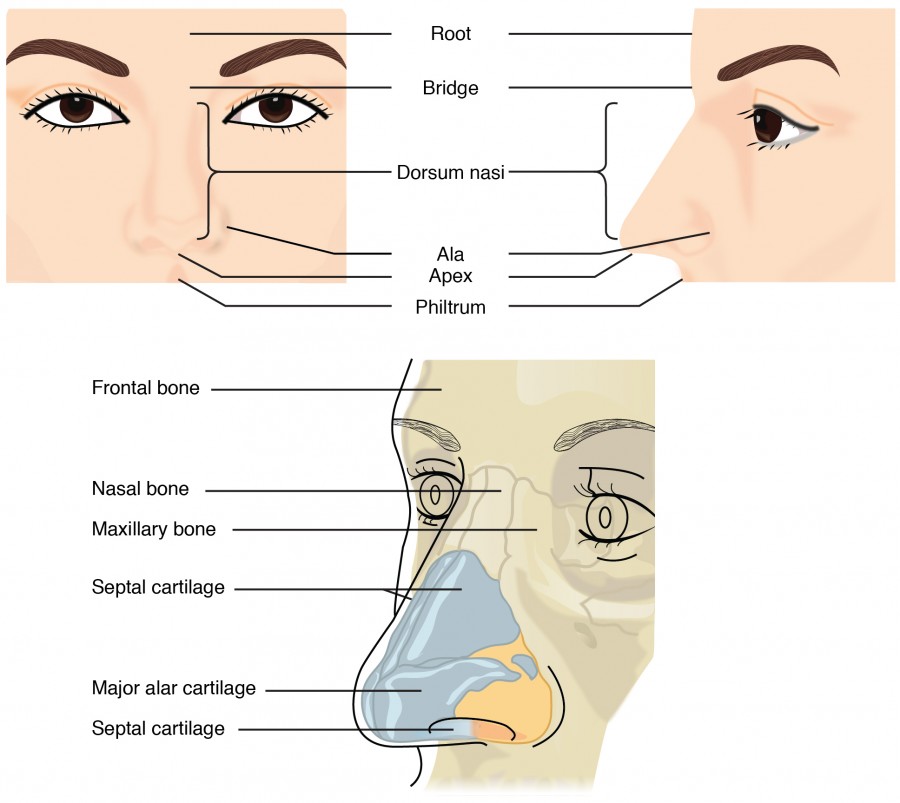
This figure shows the human nose. The top left panel shows the front view, and the top right panel shows the side view. The bottom panel shows the cartilaginous components of the nose.

Figure 2. This illustration shows features of the external nose (top) and skeletal features of the nose (bottom).

Underneath the thin skin of the nose are its skeletal features. While the root and bridge of the nose consist of bone, the protruding portion of the nose is composed of cartilage. As a result, when looking at a skull, the nose is missing. The nasal bone is one of a pair of bones that lies under the root and bridge of the nose. The nasal bone articulates superiorly with the frontal bone and laterally with the maxillary bones. Septal cartilage is flexible hyaline cartilage connected to the nasal bone, forming the dorsum nasi. The alar cartilage consists of the apex of the nose; it surrounds the naris.

This figure shows a cross section view of the nose and throat. The major parts are labeled.

Figure 3. Upper Airway

The nares open into the nasal cavity, which is separated into left and right sections by the nasal septum. The nasal septum is formed anteriorly by a portion of the septal cartilage (the flexible portion you can touch with your fingers) and posteriorly by the perpendicular plate of the ethmoid bone (a cranial bone located just posterior to the nasal bones) and the thin vomer bones (whose name refers to its plough shape). Each lateral wall of the nasal cavity has three bony projections, called the superior, middle, and inferior nasal conchae. The inferior conchae are separate bones, whereas the superior and middle conchae are portions of the ethmoid bone. Conchae serve to increase the surface area of the nasal cavity and to disrupt the flow of air as it enters the nose, causing air to bounce along the epithelium, where it is cleaned and warmed. The conchae and meatuses also conserve water and prevent dehydration of the nasal epithelium by trapping water during exhalation. The floor of the nasal cavity is composed of the palate. The hard palate at the anterior region of the nasal cavity is composed of bone. The soft palate at the posterior portion of the nasal cavity consists of muscle tissue. Air exits the nasal cavities via the internal nares and moves into the pharynx.

Several bones that help form the walls of the nasal cavity have air-containing spaces called the paranasal sinuses, which serve to warm and humidify incoming air. Sinuses are lined with a mucosa. Each paranasal sinus is named for its associated bone: frontal sinus, maxillary sinus, sphenoidal sinus, and ethmoidal sinus. The sinuses produce mucus and lighten the weight of the skull.

The nares and anterior portion of the nasal cavities are lined with mucous membranes, containing sebaceous glands and hair follicles that serve to prevent the passage of large debris, such as dirt, through the nasal cavity. An olfactory epithelium used to detect odors is found deeper in the nasal cavity.

The conchae, meatuses, and paranasal sinuses are lined by respiratory epithelium composed of pseudostratified ciliated columnar epithelium. The epithelium contains goblet cells, one of the specialized, columnar epithelial cells that produce mucus to trap debris. The cilia of the respiratory epithelium help remove the mucus and debris from the nasal cavity with a constant beating motion, sweeping materials towards the throat to be swallowed. Interestingly, cold air slows the movement of the cilia, resulting in accumulation of mucus that may in turn lead to a runny nose during cold weather. This moist epithelium functions to warm and humidify incoming air. Capillaries located just beneath the nasal epithelium warm the air by convection. Serous and mucus-producing cells also secrete the lysozyme enzyme and proteins called defensins, which have antibacterial properties. Immune cells that patrol the connective tissue deep to the respiratory epithelium provide additional protection.

This figure shows a micrograph of pseudostratified epithelium.

Figure 4. Respiratory epithelium is the pseudostratified ciliated columnar epithelium. Seromucous glands provide lubricating mucus. LM × 680. (Micrograph provided by the Regents of University of Michigan Medical School © 2012)

Pharynx

The pharynx is a tube formed by skeletal muscle and lined by mucous membrane that is continuous with that of the nasal cavities. The pharynx is divided into three major regions: the nasopharynx, the oropharynx, and the laryngopharynx.
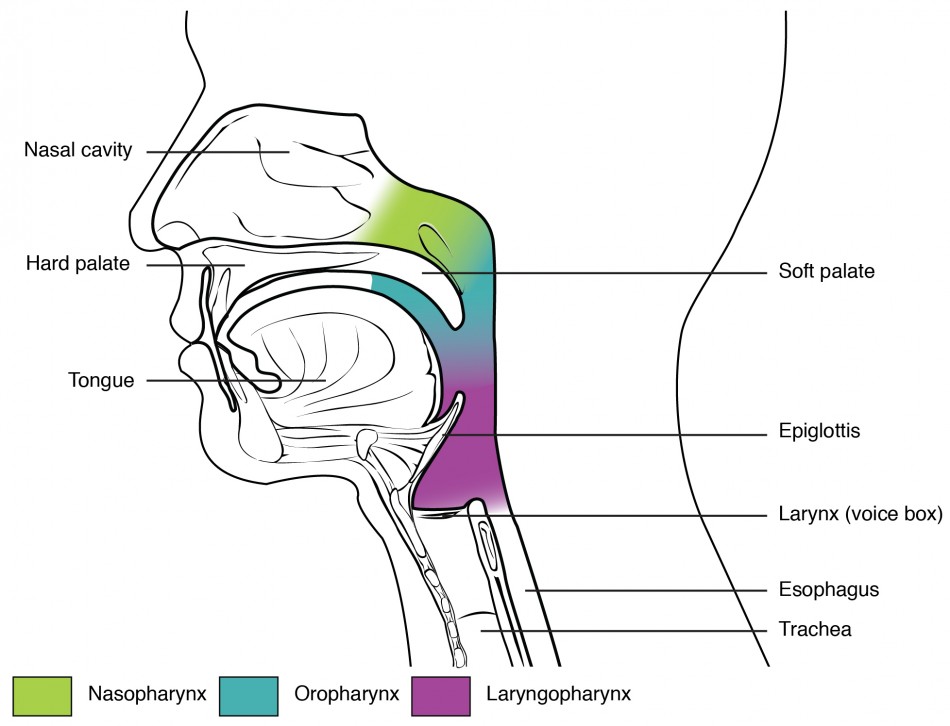
This figure shows the side view of the face. The different parts of the pharynx are color-coded and labeled.

Figure 5. The pharynx is divided into three regions: the nasopharynx, the oropharynx, and the laryngopharynx.

The nasopharynx is flanked by the conchae of the nasal cavity, and it serves only as an airway. At the top of the nasopharynx are the pharyngeal tonsils. A pharyngeal tonsil, also called an adenoid, is an aggregate of lymphoid reticular tissue similar to a lymph node that lies at the superior portion of the nasopharynx. The function of the pharyngeal tonsil is not well understood, but it contains a rich supply of lymphocytes and is covered with ciliated epithelium that traps and destroys invading pathogens that enter during inhalation. The pharyngeal tonsils are large in children, but interestingly, tend to regress with age and may even disappear. The uvula is a small bulbous, teardrop-shaped structure located at the apex of the soft palate. Both the uvula and soft palate move like a pendulum during swallowing, swinging upward to close off the nasopharynx to prevent ingested materials from entering the nasal cavity. In addition, auditory (Eustachian) tubes that connect to each middle ear cavity open into the nasopharynx. This connection is why colds often lead to ear infections.

The oropharynx is a passageway for both air and food. The oropharynx is bordered superiorly by the nasopharynx and anteriorly by the oral cavity. The fauces is the opening at the connection between the oral cavity and the oropharynx. As the nasopharynx becomes the oropharynx, the epithelium changes from pseudostratified ciliated columnar epithelium to stratified squamous epithelium. The oropharynx contains two distinct sets of tonsils, the palatine and lingual tonsils. A palatine tonsil is one of a pair of structures located laterally in the oropharynx in the area of the fauces. The lingual tonsil is located at the base of the tongue. Similar to the pharyngeal tonsil, the palatine and lingual tonsils are composed of lymphoid tissue, and trap and destroy pathogens entering the body through the oral or nasal cavities.

The laryngopharynx is inferior to the oropharynx and posterior to the larynx. It continues the route for ingested material and air until its inferior end, where the digestive and respiratory systems diverge. The stratified squamous epithelium of the oropharynx is continuous with the laryngopharynx. Anteriorly, the laryngopharynx opens into the larynx, whereas posteriorly, it enters the esophagus.

Larynx

The larynx is a cartilaginous structure inferior to the laryngopharynx that connects the pharynx to the trachea and helps regulate the volume of air that enters and leaves the lungs. The structure of the larynx is formed by several pieces of cartilage. Three large cartilage pieces—the thyroid cartilage (anterior), epiglottis (superior), and cricoid cartilage (inferior)—form the major structure of the larynx. The thyroid cartilage is the largest piece of cartilage that makes up the larynx. The thyroid cartilage consists of the laryngeal prominence, or “Adam’s apple,” which tends to be more prominent in males. The thick cricoid cartilage forms a ring, with a wide posterior region and a thinner anterior region. Three smaller, paired cartilages—the arytenoids, corniculate, and cuneiforms—attach to the epiglottis and the vocal cords and muscles that help move the vocal cords to produce speech.

The top panel of this figure shows the anterior view of the larynx, and the bottom panel shows the right lateral view of the larynx.

Figure 6. The larynx extends from the laryngopharynx and the hyoid bone to the trachea.

This diagram shows the cross section of the larynx. The different types of cartilages are labeled.

Figure 7. The true vocal cords and vestibular folds of the larynx are viewed inferiorly from the laryngopharynx.

The epiglottis, attached to the thyroid cartilage, is a very flexible piece of elastic cartilage that covers the opening of the trachea. When in the “closed” position, the unattached end of the epiglottis rests on the glottis. The glottis is composed of the vestibular folds, the true vocal cords, and the space between these folds. A vestibular fold, or false vocal cord, is one of a pair of folded sections of the mucous membrane. A true vocal cord is one of the white, membranous folds attached by muscle to the thyroid and arytenoid cartilages of the larynx on their outer edges. The inner edges of the true vocal cords are free, allowing oscillation to produce sound. The size of the membranous folds of the true vocal cords differs between individuals, producing voices with different pitch ranges. Folds in males tend to be larger than those in females, which creates a deeper voice. The act of swallowing causes the pharynx and larynx to lift upward, allowing the pharynx to expand and the epiglottis of the larynx to swing downward, closing the opening to the trachea. These movements produce a larger area for food to pass through while preventing food and beverages from entering the trachea.

Continuous with the laryngopharynx, the superior portion of the larynx is lined with stratified squamous epithelium, transitioning into pseudostratified ciliated columnar epithelium that contains goblet cells. Similar to the nasal cavity and nasopharynx, this specialized epithelium produces mucus to trap debris and pathogens as they enter the trachea. The cilia beat the mucus upward towards the laryngopharynx, where it can be swallowed down the esophagus.

Trachea

The trachea (windpipe) extends from the larynx toward the lungs. The trachea is formed by 16 to 20 stacked, C-shaped pieces of hyaline cartilage that are connected by dense connective tissue. The trachealis muscle and elastic connective tissue together form the fibroelastic membrane, a flexible membrane that closes the posterior surface of the trachea, connecting the C-shaped cartilages. The fibroelastic membrane allows the trachea to stretch and expand slightly during inhalation and exhalation, whereas the rings of cartilage provide structural support and prevent the trachea from collapsing. In addition, the trachealis muscle can be contracted to force air through the trachea during exhalation. The trachea is lined with pseudostratified ciliated columnar epithelium, which is continuous with the larynx. The esophagus borders the trachea posteriorly.

The top panel of this figure shows the trachea and its organs. The major parts including the larynx, trachea, bronchi, and lungs are labeled.

Figure 8. (a) The tracheal tube is formed by stacked, C-shaped pieces of hyaline cartilage. (b) The layer visible in this cross-section of tracheal wall tissue between the hyaline cartilage and the lumen of the trachea is the mucosa, which is composed of pseudostratified ciliated columnar epithelium that contains goblet cells. LM × 1220. (Micrograph provided by the Regents of University of Michigan Medical School © 2012)

Bronchial Tree

The trachea branches into the right and left primary bronchi at the carina. These bronchi are also lined by pseudostratified ciliated columnar epithelium containing mucus-producing goblet cells. The carina is a raised structure that contains specialized nervous tissue that induces violent coughing if a foreign body, such as food, is present. Rings of cartilage, similar to those of the trachea, support the structure of the bronchi and prevent their collapse. The primary bronchi enter the lungs at the hilum, a concave region where blood vessels, lymphatic vessels, and nerves also enter the lungs. The bronchi continue to branch into the bronchial a tree. A bronchial tree (or respiratory tree) is the collective term used for these multiple-branched bronchi. The main function of the bronchi, like other conducting zone structures, is to provide a passageway for air to move into and out of each lung. In addition, the mucous membrane traps debris and pathogens.

A bronchiole branches from the tertiary bronchi. Bronchioles, which are about 1 mm in diameter, further branch until they become the tiny terminal bronchioles, which lead to the structures of gas exchange. There are more than 1000 terminal bronchioles in each lung. The muscular walls of the bronchioles do not contain cartilage-like those of the bronchi. This muscular wall can change the size of the tubing to increase or decrease airflow through the tube.

Respiratory Zone

In contrast to the conducting zone, the respiratory zone includes structures that are directly involved in gas exchange. The respiratory zone begins where the terminal bronchioles join a respiratory bronchiole, the smallest type of bronchiole, which then leads to an alveolar duct, opening into a cluster of alveoli.

This image shows the bronchioles and alveolar sacs in the lungs and depicts the exchange of oxygenated and deoxygenated blood in the pulmonary blood vessels.

Figure 9. Bronchioles lead to alveolar sacs in the respiratory zone, where gas exchange occurs.

Alveoli

An alveolar duct is a tube composed of smooth muscle and connective tissue, which opens into a cluster of alveoli. An alveolus is one of the many small, grape-like sacs that are attached to the alveolar ducts.

An alveolar sac is a cluster of many individual alveoli that are responsible for gas exchange. An alveolus is approximately 200 mm in diameter with elastic walls that allow the alveolus to stretch during air intake, which greatly increases the surface area available for gas exchange. Alveoli are connected to their neighbors by alveolar pores, which help maintain equal air pressure throughout the alveoli and lung.

This figure shows the detailed structure of the alveolus. The top panel shows the alveolar sacs and the bronchioles. The middle panel shows a magnified view of the alveolus, and the bottom panel shows a micrograph of the cross section of a bronchiole.

Figure 10. (a) The alveolus is responsible for gas exchange. (b) A micrograph shows the alveolar structures within lung tissue. LM × 178. (Micrograph provided by the Regents of University of Michigan Medical School © 2012)

The alveolar wall consists of three major cell types: type I alveolar cells, type II alveolar cells, and alveolar macrophages. A type I alveolar cell is a squamous epithelial cell of the alveoli, which constitutes up to 97 percent of the alveolar surface area. These cells are about 25 nm thick and are highly permeable to gases. A type II alveolar cell is interspersed among the type I cells and secretes pulmonary surfactant, a substance composed of phospholipids and proteins that reduces the surface tension of the alveoli. Roaming around the alveolar wall is the alveolar macrophage, a phagocytic cell of the immune system that removes debris and pathogens that have reached the alveoli.

The simple squamous epithelium formed by type I alveolar cells is attached to a thin, elastic basement membrane. This epithelium is extremely thin and borders the endothelial membrane of capillaries. Taken together, the alveoli and capillary membranes form a respiratory membrane that is approximately 0.5 mm thick. The respiratory membrane allows gases to cross by simple diffusion, allowing oxygen to be picked up by the blood for transport and COto be released into the air of the alveoli.

DISEASES OF THE RESPIRATORY SYSTEM: ASTHMA

Asthma is a common condition that affects the lungs in both adults and children. Approximately 8.2 percent of adults (18.7 million) and 9.4 percent of children (7 million) in the United States suffer from asthma. In addition, asthma is the most frequent cause of hospitalization in children.

Asthma is a chronic disease characterized by inflammation and edema of the airway, and bronchospasms (that is, constriction of the bronchioles), which can inhibit air from entering the lungs. In addition, excessive mucus secretion can occur, which further contributes to airway occlusion. Cells of the immune system, such as eosinophils and mononuclear cells, may also be involved in infiltrating the walls of the bronchi and bronchioles.

Bronchospasms occur periodically and lead to an “asthma attack.” An attack may be triggered by environmental factors such as dust, pollen, pet hair, or dander, changes in the weather, mold, tobacco smoke, and respiratory infections, or by exercise and stress.

The top panel of this figure shows normal lung tissue, and the bottom panel shows lung tissue inflamed by asthma.

Figure 11. (a) Normal lung tissue does not have the characteristics of lung tissue during (b) an asthma attack, which include thickened mucosa, increased mucus-producing goblet cells, and eosinophil infiltrates.


Symptoms of an asthma attack involve coughing, shortness of breath, wheezing, and tightness of the chest. Symptoms of a severe asthma attack that requires immediate medical attention would include difficulty breathing that results in blue (cyanotic) lips or face, confusion, drowsiness, a rapid pulse, sweating, and severe anxiety. The severity of the condition, frequency of attacks, and identified triggers influence the type of medication that an individual may require. Longer-term treatments are used for those with more severe asthma. Short-term, fast-acting drugs that are used to treat an asthma attack are typically administered via an inhaler. For young children or individuals who have difficulty using an inhaler, asthma medications can be administered via a nebulizer.

In many cases, the underlying cause of the condition is unknown. However, recent research has demonstrated that certain viruses, such as human rhinovirus C (HRVC), and the bacteria Mycoplasma pneumoniae and Chlamydia pneumoniae that are contracted in infancy or early childhood, may contribute to the development of many cases of asthma.

PRACTICE QUESTION

Watch this video to learn more about what happens during an asthma attack. What are the three changes that occur inside the airways during an asthma attack?

Chapter Review

The respiratory system is responsible for obtaining oxygen and getting rid of carbon dioxide and aiding in speech production and in sensing odors. From a functional perspective, the respiratory system can be divided into two major areas: the conducting zone and the respiratory zone. The conducting zone consists of all of the structures that provide passageways for air to travel into and out of the lungs: the nasal cavity, pharynx, trachea, bronchi, and most bronchioles. The nasal passages contain the conchae and meatuses that expand the surface area of the cavity, which helps to warm and humidify incoming air, while removing debris and pathogens. The pharynx is composed of three major sections: the nasopharynx, which is continuous with the nasal cavity; the oropharynx, which borders the nasopharynx and the oral cavity; and the laryngopharynx, which borders the oropharynx, trachea, and esophagus. The respiratory zone includes the structures of the lung that are directly involved in gas exchange: the terminal bronchioles and alveoli.

The lining of the conducting zone is composed mostly of pseudostratified ciliated columnar epithelium with goblet cells. The mucus traps pathogens and debris, whereas beating cilia move the mucus superiorly toward the throat, where it is swallowed. As the bronchioles become smaller and smaller, and nearer the alveoli, the epithelium thins and is simple squamous epithelium in the alveoli. The endothelium of the surrounding capillaries, together with the alveolar epithelium, forms the respiratory membrane. This is a blood-air barrier through which gas exchange occurs by simple diffusion.

Self Check

Answer the question(s) below to see how well you understand the topics covered in the previous section.

CRITICAL THINKING QUESTIONS

  1. Describe the three regions of the pharynx and their functions.
  2. If a person sustains an injury to the epiglottis, what would be the physiological result?
  3. Compare and contrast the conducting and respiratory zones.

Glossary

ala: (plural = alae) small, flaring structure of a nostril that forms the lateral side of the nares

alar cartilage: cartilage that supports the apex of the nose and helps shape the nares; it is connected to the septal cartilage and connective tissue of the alae

alveolar duct: small tube that leads from the terminal bronchiole to the respiratory bronchiole and is the point of attachment for alveoli

alveolar macrophage: immune system cell of the alveolus that removes debris and pathogens

alveolar pore: opening that allows airflow between neighboring alveoli

alveolar sac: cluster of alveoli

alveolus: small, grape-like sac that performs gas exchange in the lungs

apex: tip of the external nose

bronchial tree: collective name for the multiple branches of the bronchi and bronchioles of the respiratory system

bridge: portion of the external nose that lies in the area of the nasal bones

bronchiole: branch of bronchi that are 1 mm or less in diameter and terminate at alveolar sacs

bronchus: tube connected to the trachea that branches into many subsidiaries and provides a passageway for air to enter and leave the lungs

conducting zone: region of the respiratory system that includes the organs and structures that provide passageways for air and are not directly involved in gas exchange

cricoid cartilage: portion of the larynx composed of a ring of cartilage with a wide posterior region and a thinner anterior region; attached to the esophagus

dorsum nasi: intermediate portion of the external nose that connects the bridge to the apex and is supported by the nasal bone

epiglottis: leaf-shaped piece of elastic cartilage that is a portion of the larynx that swings to close the trachea during swallowing

external nose: region of the nose that is easily visible to others

fauces: portion of the posterior oral cavity that connects the oral cavity to the oropharynx

fibroelastic membrane: specialized membrane that connects the ends of the C-shape cartilage in the trachea; contains smooth muscle fibers

glottis: opening between the vocal folds through which air passes when producing speech

laryngeal prominence: region where the two lamina of the thyroid cartilage join, forming a protrusion known as “Adam’s apple”

laryngopharynx: portion of the pharynx bordered by the oropharynx superiorly and esophagus and trachea inferiorly; serves as a route for both air and food

larynx: cartilaginous structure that produces the voice, prevents food and beverages from entering the trachea, and regulates the volume of air that enters and leaves the lungs

lingual tonsil: lymphoid tissue located at the base of the tongue

meatus: one of three recesses (superior, middle, and inferior) in the nasal cavity attached to the conchae that increase the surface area of the nasal cavity

naris: (plural = nares) opening of the nostrils

nasal bone: bone of the skull that lies under the root and bridge of the nose and is connected to the frontal and maxillary bones

nasal septum: wall composed of bone and cartilage that separates the left and right nasal cavities

nasopharynx: portion of the pharynx flanked by the conchae and oropharynx that serves as an airway

oropharynx: portion of the pharynx flanked by the nasopharynx, oral cavity, and laryngopharynx that is a passageway for both air and food

palatine tonsil: one of the paired structures composed of lymphoid tissue located anterior to the uvula at the roof of isthmus of the fauces

paranasal sinus: one of the cavities within the skull that is connected to the conchae that serve to warm and humidify incoming air, produce mucus, and lighten the weight of the skull; consists of frontal, maxillary, sphenoidal, and ethmoidal sinuses

pharyngeal tonsil: structure composed of lymphoid tissue located in the nasopharynx

pharynx: region of the conducting zone that forms a tube of skeletal muscle lined with respiratory epithelium; located between the nasal conchae and the esophagus and trachea

philtrum: concave surface of the face that connects the apex of the nose to the top lip

pulmonary surfactant: substance composed of phospholipids and proteins that reduces the surface tension of the alveoli; made by type II alveolar cells

respiratory bronchiole: specific type of bronchiole that leads to alveolar sacs

respiratory epithelium: ciliated lining of much of the conducting zone that is specialized to remove debris and pathogens, and produce mucus

respiratory membrane: alveolar and capillary wall together, which form an air-blood barrier that facilitates the simple diffusion of gases

respiratory zone: includes structures of the respiratory system that are directly involved in gas exchange

root: region of the external nose between the eyebrows

thyroid cartilage: largest piece of cartilage that makes up the larynx and consists of two lamina

trachea: tube composed of cartilaginous rings and supporting tissue that connects the lung bronchi and the larynx; provides a route for air to enter and exit the lung

trachealis muscle: smooth muscle located in the fibroelastic membrane of the trachea

true vocal cord: one of the pair of folded, white membranes that have a free inner edge that oscillates as air passes through to produce sound

type I alveolar cell: squamous epithelial cells that are the major cell type in the alveolar wall; highly permeable to gases

type II alveolar cell: cuboidal epithelial cells that are the minor cell type in the alveolar wall; secrete pulmonary surfactant

vestibular fold: part of the folded region of the glottis composed of mucous membrane; supports the epiglottis during swallowing

References

ByRx Harun

Conducting Zone of Nose and Paranasal Sinuses

Conducting Zone of the respiratory tract is the subdivision of the respiratory system involved with the process of respiration in mammals. The respiratory tract is lined with respiratory mucosa or respiratory epithelium.[rx]

Air is breathed in through the nose to the nasal cavity, where a layer of nasal mucosa acts as a filter and traps pollutants and other harmful substances found in the air. Next, air moves into the pharynx, a passage that contains the intersection between the esophagus and the larynx. The opening of the larynx has a special flap of cartilage, the epiglottis, that opens to allow air to pass through but closes to prevent food from moving into the airway.

Nose and Paranasal Sinuses

The shape of the nose is determined by the ethmoid bone and the nasal septum.

KEY TAKEAWAYS

Key Points

  • The shape of the nose is determined by the ethmoid bone and the nasal septum, which consists mostly of cartilage and separates the nostrils.
  • The nose and paranasal sinuses are part of the upper respiratory tract.
  • The functions of the nose include the sense of smell and conditioning of inhaled air by warming it and making it more humid.
  • Hairs inside the nose prevent large particles from entering the lungs.
  • Nasal mucosa and cilia help prevent pathogens and dust from reaching the lungs. Sneezing helps remove foreign particles that irritate the nasal mucosa.
  • The paranasal sinuses are air-filled spaces around the nasal cavity that have many possible functions.
  • The mucosa of the upper respiratory tract contain antimicrobial proteins that are a barrier component of the innate immune system.

Key Terms

  • nostril: Either of the two orifices located on the nose (or on the beak of a bird); used as a passage for air and other gases to travel the nasal passages.
  • paranasal sinuses: Four air-filled spaces around the nasal cavity that perform many functions, such as draining mucus from the nose.

The nose and paranasal sinuses form much of the upper respiratory tract, along with the pharynx. The upper respiratory tract is the entrance to the respiratory system, where air first enters the body. The overall function of the upper respiratory tract is to provide a pathway for air to reach the lower respiratory tract, where gas exchange occurs.

Anatomy and Physiology of the Nose

This is an internal diagram of the human nose. It shows how air flows in through the nasal passage and out through the nasopharynx on the posterior side.

Internal diagram of the human nose: Air flows in through the nasal passage on the right and out through the nasopharynx on the posterior side.

The external part of the human nose is the protruding part of the face that bears the nostrils. The shape of the nose is determined by the ethmoid bone and the nasal septum.

The ethmoid bone is the bone that separates the nose from the brain and supports the shape and structure of the nasal and orbital cavities. The nasal septum is a wall of cartilage that separates the right and left nostril chambers from each other. On average, the nose of a male is larger than that of a female, due to differences in facial bone structure between genders.

The interior of the nasal cavity is lined with mucous membranes, nasal hairs, and cilia (microscopic hairs), that perform many of the specialized functions of the nose. The macroscopic nasal hairs prevent large particles from reaching the lungs, while the cilia and mucus trap pathogens and dust to take them to the pharynx, where they can be destroyed by digestion.

Another function of the nose is the conditioning of inhaled air, warming it and making it more humid. Sneezing occurs from irritation of the nasal mucus, which expels foreign particles, but can also spread microbial and viral infections between humans.

Finally, the nose has an area of specialized cells that are responsible for smelling, which is considered a nervous system function rather than a respiratory system function.

Anatomy and Physiology of the Paranasal Sinuses

The paranasal sinuses are a group of four, paired, air-filled spaces, lined with respiratory epithelium (ciliated columnar epithelium). These are named according to the bones within which the sinuses lie: surrounding the nasal cavity (maxillary sinuses), above the eyes (frontal sinuses), between the eyes (ethmoid sinuses), and behind the ethmoid bone (sphenoid sinuses).

This is a diagram of the locations of the four paranasal sinuses. They are named according to the bones within which the sinuses lie: surrounding the nasal cavity (maxillary sinuses), above the eyes (frontal sinuses), between the eyes (ethmoid sinuses), and behind the ethmoid bone (sphenoid sinuses).

Locations of the paranasal sinuses: The paranasal sinuses are four airspaces around the nasal cavity.

The functions of the sinuses are not fully understood, but there are many possible functions. The most important function is the sinuses’ role in draining mucus from the nasal cavity to the nasopharynx, which helps regulate pressure inside the nasal cavity. This may be a component of the barrier defenses of the innate immune system because of antimicrobial proteins found in the mucosa.

Other possible sinus functions include giving resonance to the voice, supporting the structure of the skull and facial bones, heating and humidifying inhaled air, and protecting the face from injury.

Pharynx

The human pharynx is part of the digestive system and also respiratory system.

KEY TAKEAWAYS

Key Points

  • The human pharynx (plural: pharynges) is part of the digestive system and also respiratory system. It is situated immediately posterior to (behind) the mouth and nasal cavity, and superior to (above) the esophagus and larynx.
  • The human pharynx is conventionally divided into three sections: the nasopharynx (epipharynx), the oropharynx (nasopharynx), and the laryngopharynx (hypopharynx).
  • The Eustachian tubes connect the middle ear to the nasopharynx and serve to equalize the barometric pressure in the middle ear with that of the ambient atmosphere.
  • Because both food and air pass through the pharynx, a flap of connective tissue called the epiglottis closes over the glottis when food is swallowed to prevent food from getting into the lungs.
  • The laryngopharynx includes three major sites: the pyriform sinus, postcricoid area, and the posterior pharyngeal wall.
  • Tonsils (lymphoid tissue) exist in the pharynx. Two of the major sets of tonsils are the adenoids in the nasopharynx and the palatine tonsils in the oropharynx.
  • The oropharynx is the middle chamber of the pharynx that passes food from the mouth into the laryngopharynx. The nasopharynx opens above it as well.
  • The laryngopharynx is the bottom part of the pharynx that marks the branching pathway between the digestive and respiratory systems.

Key Terms

  • nasopharynx: The upper part of the pharynx that connects the nasal cavity to the throat.
  • tonsils: Masses of lymphoid tissue found in the pharynx that play a small role in immune system function.
  • laryngopharynx: The lower part of the pharynx above the larynx and below the oropharynx.
  • oropharynx: The middle part of the pharynx that connects to the oral cavity and the other two chambers of the pharynx.

The Pharynx

This figure illustrates the three main subdivisions of the pharynx: the nasopharynx, the oropharynx, and the laryngopharynx.

The three main sections of the pharynx: This figure illustrates the three main subdivisions of the pharynx.

The human pharynx (plural: pharynges) is the part of the throat situated immediately posterior to the mouth and nasal cavity, and superior to the esophagus and larynx.

The human pharynx is divided into three sections: the nasopharynx (epipharynx), the oropharynx (mesopharynx), and the laryngopharynx (hypopharynx), which are all innervated by the pharyngeal plexus.

The pharynx is part of both the digestive system and the respiratory system. As a component of the upper respiratory tract, the pharynx is part of the conducting zone for air into the lungs. Therefore, one of its primary functions is to warm and humidify the air before it reaches the lungs.

The Nasopharynx

This is a detailed, hand-drawn diagram of the pharynx from Gray's Anatomy, showing the major structures each part of the pharynx.

The Pharynx: This is a detailed diagram of the pharynx from Gray’s Anatomy, showing the major structures in each part of the pharynx.

The nasopharynx is the upper region of the pharynx. It extends from the base of the skull to the upper surface of the soft palate above the oral cavity. The nasopharynx connects the nasal cavity with the throat.

The nasopharynx connects to the eustachian tubes of the middle ear, which allows the nasopharynx to help balance pressure within the ear. However, it also allows infections to spread easily between the nasopharynx and ear. The nasopharynx contains pseudo-stratified squamous cell epithelial tissue that is ciliated (covered in tiny hairs that move mucus).

The adenoids (pharyngeal tonsils) are a mass of lymphatic tissue found in the roof of the nasopharynx. The adenoids play a minor role in embyonic development and have a minor role in producing T-lymphocytes for the immune system after birth.

The adenoids are often removed in childhood due to infection or hypertrophy (enlargement of the cells in its tissues), which can obstruct the flow of air from the nose to the lung if left untreated. While loss of the adenoids does not make a significant difference in immune system function, the procedure occasionally has complications.

The lateral walls of the nasopharynx are made of the pharyngeal Ostia (bone) of the auditory tube and supported by the torus Subarus, a mound of cartilage tissue from the auditory tube. Two folds arise from the cartilaginous opening of the auditory tube.

The salpingopharyngeal fold is a vertical fold of mucous membrane extending from the inferior part of the torus and is made up of salpingopharyngeus muscle. The salpingopalatine fold is a smaller fold extending from the superior part of the torus to the palate; it contains the levator veli palatini muscle.

Behind the bone of the auditory tube is a deep recess, the pharyngeal recess. Above the adenoid, in the midline, is an irregular flask-shaped depression of the mucous membrane called the pharyngeal bursa.

The Oropharynx

The oropharynx (nasopharynx) is the middle portion of the pharynx. It lies between the oral cavity, below the nasopharynx, and above the laryngopharynx, and has an opening to each of these other cavities. The anterior wall of the oropharynx consists of the base of the tongue and the superior wall consists of the bottom surface of the soft palate and the uvula.

The oropharynx is lined by non-keratinized squamous stratified epithelium, which is thicker than the epithelium found in other parts of the respiratory tract in order to prevent damage from food, but not as thick as skin as it lacks keratin.

The epiglottis lies between the oropharynx and the laryngopharynx, and it is a flap of elastic cartilage that closes during swallowing to ensure food enters the esophagus rather than the trachea.

The oropharynx contains the palatine tonsils, which are masses of lymphoid tissue found on the lateral walls of the oropharynx. Compared to the adenoids of the nasopharynx, the palatine tonsils contain many folds (called crypts), and aren’t ciliated like the adenoids are. These tonsils are also occasionally removed in people with infection or enlargement.

The Laryngopharynx

The laryngopharynx or hypopharynx is the caudal part of the pharynx; it is the part of the throat that connects to the esophagus and trachea. It lies inferior to the epiglottis and marks the division between the respiratory and digestive system pathways.

During swallowing, the epiglottis closes over the trachea and air passage temporarily stops. The laryngopharynx naturally continues into the esophagus tissue and is made up of a similar type of stratified squamous epithelium tissue.

The laryngopharynx itself has a few important demarcations and regions. The formal superior boundary that separates the laryngopharynx from the oropharynx is at the level of the hyoid bone.

The laryngopharynx includes three major regions: the pyriform sinus, the postcricoid area, and the posterior pharyngeal wall, which are separated by small folds of cartilage. Unlike the nasopharynx and oropharynx, there are no tonsils in the laryngopharynx.

Larynx

The larynx is an organ in the neck involved in breathing, sound production, and protecting the trachea against food aspiration.

KEY TAKEAWAYS

Key Points

  • In adult humans, the larynx is found in the anterior neck at the level of the C3–C6 vertebrae and consists of nine cartilages: three single (epiglottic, thyroid, and cricoid) and three paired (arytenoid, corniculate, and cuneiform).
  • Its interior can be divided in the supraglottis, glottis, and subglottis.
  • The larynx houses the vocal folds—commonly but improperly termed the vocal cords. They are situated just below where the tract of the pharynx splits into the trachea and the esophagus; they are essential for phonation.
  • The vocal folds are closed together by adducting the arytenoid cartilages so that they vibrate (see phonation).
  • The vocal folds are controlled by the action of the vagus nerve.
  • The larynx closes and rises during swallowing to move the epiglottis over the trachea.
  • The larynx closes during a coughing reflex to protect the lungs from inhaling something that could damage it, and to remove foreign material from the trachea and lungs.

Key Terms

  • vocal cords: Two folds of tissue located in the larynx that vibrates when air passes over them, producing the sound waves associated with talking and singing.
  • cough reflex: This occurs when the larynx closes as it forces air out of the lungs to protect the lungs from aspirated materials.
  • larynges: Part of the respiratory tract between the pharynx and the trachea, having walls of cartilage and muscle and containing the vocal cords enveloped in folds of mucous membrane.

The larynx (plural: larynges), commonly called the voice box, is an organ in the neck of humans and most animals that is involved in breathing, sound production, coughing, and protecting the trachea against food aspiration during eating.

This figure is a detailed view of the external aspect of the larynx. It depicts the bone, ligaments, cartilages, and trachea, as well as the superior laryngeal nerve and artery, and the cricothyroid muscle and joint.

External view of the larynx: This figure is a detailed view of the external aspect of the larynx.

Anatomy of the Larynx

In adult humans, the larynx is found in the anterior neck at the level of the C3–C6 vertebrae in the backbone. It connects the inferior part of the pharynx (laryngopharynx) with the trachea. The laryngeal skeleton consists of three single cartilages (thyroid, epiglottic, and cricoid).

  1. The thyroid cartilage is particularly notable for forming the Adam’s apple, the visible bulge made by the larynx when looking at the throat, and protects the larynx from injury.
  2. The epiglottic cartilage is the body of the epiglottis itself that connects to the larynx from above.
  3. The cricoid cartilage connects the larynx to the trachea from below.

There are also three sets of cartilages that are paired on either side of the larynx (arytenoid, corniculate, and cuneiform) that allow the position of the larynx to move during voice production.

The larynx connects to the hyoid bone (the bone that forms the floor of the mouth) from above. The larynx extends vertically from the tip of the epiglottis to the border of the cricoid cartilage that marks the formal beginning of the trachea.

The interior of the larynx consists of three regions, the supraglottis, glottis, and subglottis. The glottis is the midsection that contains the vocal folds (folds of muscular epithelium ), while the supraglottis and subglottis are the areas of the larynx that are above and below the glottis respectively. In newborn infants, the larynx is initially at the level of the C2–C3 vertebrae but descends as the child grows.

The glottis consists of two pairs of mucosal folds. These folds are false vocal folds (vestibular folds) and true vocal folds (folds). The false vocal folds are covered by respiratory epithelium, while the true vocal folds are covered by stratified squamous epithelium.

The false vocal folds are not responsible for sound production, but rather for resonance. These false vocal folds do not contain muscle, while the true vocal folds do have skeletal muscle. The two sets of folds are separated by the vocal ligament, with the false vocal folds above, and the true vocal cords below the ligament. The true vocal folds are often referred to as the vocal cords, however, the folds technically aren’t cords.

Physiology of the Larynx

The most notable and unique function of the larynx is phonation (voice production). The vocal folds of the larynx have two positions, open and closed. During breathing the folds remain open, but they close during swallowing or phonation.

When air from the lungs passes through closed folds during exhalation, the folds vibrate and create sound. The pitch produced depends on the length and tightness of the vocal folds.

The vagus nerves innervate the larynx and signal the muscles and paired cartilage (the arytenoid) of the larynx to work together to open and close the vocal folds as well as change their length and tension to alter pitch. Longer vocal folds have a lower pitch, which is part of the reason why men have deeper voices compared to women, because their larger larynxes have longer vocal folds.

Besides phonation, there are a few other important functions of the larynx. The folds of the larynx close and move upwards during swallowing, which causes the epiglottis to close off the trachea. This helps prevent aspiration of food into the lungs or choking from a blockage of food in the trachea.

The larynx closes off during coughing to help prevent harmful gasses from entering the lungs. During a cough reflex, air is forced out of the lungs, which can remove accumulated mucus, fluid, or blood from the lungs during injury, infection, or cancer of the lungs, as well as food or objects in the trachea during choking.

Finally, the larynx can be signaled to open its folds wider than usual to increase the flow of air into and out of the lungs during heavy breathing when the body requires more oxygen.

Structures Used in Voice Production

Voices produce sounds through a steady flow of air through the larynx, which causes vibrations and creates fluctuations in air pressure.

KEY TAKEAWAYS

Key Points

  • The three basic mechanisms of voice production are air supply, vibration, and resonance.
  • Pressure and air-flow speed through the larynx determine the strength and volume of voice.
  • The articulation of consonants involves parts of the vocal tract obstructing phonation, and can be active or passive.
  • A vowel is any articulation that comes from an open vocal tract.
  • Vowel articulation depends mainly on the shape of the lips, the position of the tongue, but the shape of the vocal folds are involved as well.

Key Terms

  • Resonance: The application of vibration by the structures of the upper respiratory tract, which can also influence the quality or tone of the sound.
  • Articulation: The process by which raw phonation from the vocal cords is refined into specific sounds, such as consonants and vowels.
  • glottis: An organ of speech located in the larynx and consisting of the true vocal cords and the opening between them.

Voice production is a complex process with many different layers and intricacies. The three basic mechanisms of voice production are air supply, vibration, and resonance.

Passive and active articulation shapes and refines phonation (vocal sound production) into the sounds and words used in communication. Voice production is an important physiological process because it enables complex communication between humans.

While the brain is responsible for higher organization and understanding language, the structures of the respiratory system are largely responsible for the production of sound itself.

Basic Mechanisms of Voice Production

Sound is produced by a combination of different structures of the respiratory system working together to create and resonate a sound. There are three basic mechanisms by which the human body produces a voice.

  1. Air Supply: In order for the voice to be produced, air must flow through the vocal folds. The supply of air for phonation comes from the lungs, and the speed and pressure by which it flows through the vocal folds is determined by the diaphragm. The speed of airflow also determines the strength and loudness of the voice.
  2. Vibration: The vocal folds in the glottis of the larynx vibrate as air passes through them. The vibration creates changes in air pressure that manifest as audible sound waves. They only vibrate if the vocal folds are in the closed position when the folds are held together by the movement of arytenoid cartilage. The pitch of the vibration depends on the length and tension of the vocal folds, which can be altered by muscle action.
  3. Resonance: The structures of the upper respiratory tract—particularly the soft palate of the mouth, the nasopharynx, and the paranasal sinuses —resonate and amplify the vibration of the vocal folds, making the sound louder and changing its tone. It works similarly to the way the sounding board of a guitar amplifies the vibration of the strings.

These basic mechanisms work together to create the voice. If they are altered, the produced voice will also be altered as well.

For example, during loud voice production, such as shouting or singing, a greater air supply and greater pressure for the flow of air through the vocal folds is required to produce the louder sound. The diaphragm must contract harder to support this greater flow of air compared to normal speech.

Similarly, whispering takes less air compared to normal speech, because the sound produced during whispering is much weaker in comparison.

Articulation

Articulation is the process by which phonation is refined into the specific consonants and vowels used to form words. The articulation of consonants occurs at a point of either active or passive articulation, which is a place in the vocal tract where an obstruction stops the sound.

After the sound is obstructed, the pressure from the air builds based on the shape of that obstruction, which changes the sound into the form it is vocalized as. Vowels are articulated sounds that do not come from obstruction, and instead come from an open vocal tract.

Passive Place of Articulation

The passive place of articulation is the place on the more stationary part of the vocal tract where the articulation occurs. It can be anywhere from the lips, upper teeth, gums, roof of the mouth, or the back of the throat. These areas are passive because no specific action or activity is involved within that area to pronounce the consonant.

Passive articulation is considered a continuum because the obstruction of many different places is needed to produce most of the consonants. There are also several different combinations of areas that can produce the same consonant; for example, many languages may distinguish consonants by articulating them in different areas. Passive places of articulation include:

  • The upper lip (labial).
  • The upper teeth, either on the edge of the teeth or inner surface (dental).
  • The alveolar ridge, the gum line just behind the teeth (alveolar).
  • The back of the alveolar ridge (post-alveolar).
  • The hard palate on the roof of the mouth (palatal).
  • The soft palate further back on the roof of the mouth (velar).
  • The uvula hanging down at the entrance to the throat (uvular).
  • The throat itself, also known as the pharynx (pharyngeal).
  • The epiglottis at the entrance to the windpipe, above the voice box (epiglottal).

Active Place of Articulation

The articulatory gesture of the active place of articulation involves the more mobile part of the vocal tract. This is typically some part of the tongue or lips. It is considered active because these areas change the consonant pronounced by moving or changing.

The active places of articulation are not considered a continuum (unlike passive articulation) because they work independently of each other, but they have the capacity to work together for certain consonants. Active places of articulation include:

  • The lower lip (labial).
  • Various parts of the front of the tongue.
  • The back of the tongue. The aryepiglottic folds at the entrance to the larynx (also epiglottal).
  • The glottis (laryngeal).

Vowels

A vowel is a sound that comes from an open vocal tract, and does involve strict obstruction of the sound as with consonants. Therefore, there is more variation in the mechanisms used to create vowels compared to consonants.  Vowels are mainly articulated by the shape of the lips, the position of the tongue (both vertical and horizontal), and by the phonation of the larynx itself.

This is a cutaway, profile of a face showing the places of active and passive articulation: 1. Exo-labial (outer part of lip), 2. Endo-labial (inner part of lip), 3. Dental (teeth), 4. Alveolar (front part of alveolar ridge), 5. Post-alveolar (rear part of alveolar ridge & slightly behind it), 6. Pre-palatal (front part of hard palate that arches upward), 7. Palatal (hard palate), 8. Velar (soft palate), 9. Uvular (a.k.a. Post-velar; uvula), 10. Pharyngeal (pharyngeal wall), 11. Glottal (a.k.a. Laryngeal; vocal folds), 12. Epiglottal (epiglottis), 13. Radical (tongue root), 14. Postero-dorsal (back of tongue body), 15. Antero-dorsal (front of tongue body), 16. Laminal (tongue blade), 17. Apical (apex or tongue tip), and 18. Sub-laminal (also known as sub-apical; underside of tongue).

Places of articulation for voice production: Places of articulation (active and passive): 1. Exo-labial (outer part of lip), 2. Endo-labial (inner part of lip), 3. Dental (teeth), 4. Alveolar (front part of alveolar ridge), 5. Post-alveolar (rear part of alveolar ridge & slightly behind it), 6. Pre-palatal (front part of hard palate that arches upward), 7. Palatal (hard palate), 8. Velar (soft palate), 9. Uvular (a.k.a. Post-velar; uvula), 10. Pharyngeal (pharyngeal wall), 11. Glottal (a.k.a. Laryngeal; vocal folds), 12. Epiglottal (epiglottis), 13. Radical (tongue root), 14. Postero-dorsal (back of tongue body), 15. Antero-dorsal (front of tongue body), 16. Laminal (tongue blade), 17. Apical (apex or tongue tip), and 18. Sub-laminal (also known as sub-apical; underside of tongue)

Trachea

The trachea, or windpipe, is a tube that connects the pharynx or larynx to the lungs, allowing the passage of air.

KEY TAKEAWAYS

Key Points

  • The trachea is lined with pseudostratified ciliated columnar epithelium cells with goblet cells that produce mucus.
  • There are about 15 to 20 C-shaped cartilaginous rings that reinforce the anterior and lateral sides of the trachea to protect and maintain the airway, leaving a membranous wall (pars membranacea) dorsally without cartilage where the C-shape is open.
  • The cartilaginous rings are C-shaped to allow the trachea to collapse slightly at the opening so that food can pass down the esophagus.
  • The trachealis muscle connects the ends of the open part of the C-shaped rings and contracts during coughing, reducing the size of the lumen of the trachea to increase the airflow rate.
  • The esophagus lies posteriorly to the trachea.
  • The mucociliary escalator helps prevent pathogens from entering the lungs.
  • The trachea is part of the conducting zone and contributes to anatomical dead space.

Key Terms

  • cilia: Tiny, hair-like projections from a cell.
  • mucociliary escalator: The ladder formed by mucus and cilia in the trachea that pushes mucus up the trachea and into the pharynx to prevent mucus pathogens from entering the lungs.
  • anatomical dead space: The space in the respiratory tract that isn’t involved in alveolar ventilation and is part of the normal conducting zone of the respiratory system.
This is the trachea in relation to the rest of the respiratory system. It shows the upper respiratory and lower respiratory tracts. The upper respiratory tract contains the nasal cavity, pharynx, and larynx. The lower respiratory tracts contains the trachea, primary bronchi, and lungs.

The trachea: This is the trachea in relation to the rest of the respiratory system.

The trachea, or windpipe, is a tube that connects the pharynx or larynx to the lungs, allowing the passage of air. It is lined with pseudostratified ciliated columnar epithelium cells with goblet cells that produce mucus. The trachea is part of the conducting zone for air into and out of the lungs.

Anatomy of the Trachea

The trachea is a long tube that extends from the pharynx and larynx to the bronchi of the lungs. It typically has an inner diameter of about 25.4 millimeters (1.00 in) and a length of about 10 to 16 centimeters.

The trachea commences at the lower border of the larynx, level with the sixth cervical vertebra, and bifurcates into the primary bronchi at the vertebral level of thoracic vertebra T5, or up to two vertebrae lower or higher, depending on breathing.

At the top of the trachea and bottom of the larynx is the cricoid cartilage, the only complete ring of cartilage in the trachea. Extending downward throughout the length of the tube are about fifteen to 20 C-shaped cartilaginous rings that reinforce the outer structure and shape of the trachea—the open part of each C-shaped ring reveals a membranous wall on the inside of the trachea.

A cross section of the trachea, showing the hyaline cartilage, mucus glands, and ciliated epithelium. The hyaline cartilage is wedged between two fibrous membranes. The submucous layer contains the mucous glands. The stratified ciliated ephithelium sits above it all, cushioned by longitudinal elastic fibers.

Histology of the Trachea: A cross section of the trachea, showing the hyaline cartilage, mucus glands, and ciliated epithelium.

The cartilage of the trachea is considered hyaline cartilage: simple, transparent, and made primarily of collagen. The trachealis muscle connects the open ends of the C-shaped rings of cartilage and contracts during coughing, reducing the size of the lumen of the trachea to increase the air flow rate.

The esophagus lies behind the trachea. The C-shaped cartilaginous rings allow the trachea to collapse slightly at its opening, so food can pass down the esophagus after swallowing.

The epiglottis closes the opening to the larynx during swallowing to prevent swallowed matter from entering the trachea.

Physiology of the Trachea

This mucus and cilia of the trachea from the mucociliary escalator, which lines the cells of the trachea with mucus to trap inhaled foreign particles. The cilia then waft upward toward the larynx and the pharynx, where it can be either swallowed into the stomach (and destroyed by acid) or expelled as phlegm.

The mucociliary escalator is one of the most important functions of the trachea and is also considered a barrier component of the immune system due to its role in preventing pathogens from entering the lungs. The epithelium and the mucociliary ladder can be damaged by smoking tobacco and alcohol consumption, which can make pneumonia (an infection of the alveoli of the lungs) from bacteria in the upper respiratory tract more likely to occur due to the loss of barrier function.

As a part of the conducting zone of the lungs, the trachea is important in warming and moistening air before it reaches the lungs. The trachea is also considered a part of normal anatomical dead space (space in the airway that isn’t involved in alveolar gas exchange) and its volume contributes to calculations of ventilation and physiological (total) dead space. It is not considered alveolar dead space, a term that refers to alveoli that don’t partake in gas exchange due to damage or lack of blood supply.

Or

Organs and Structures of the Respiratory System

By the end of this section, you will be able to:

  • List the structures that make up the respiratory system
  • Describe how the respiratory system processes oxygen and CO2
  • Compare and contrast the functions of upper respiratory tract with the lower respiratory tract

The major organs of the respiratory system function primarily to provide oxygen to body tissues for cellular respiration, remove the waste product carbon dioxide, and help to maintain acid-base balance. Portions of the respiratory system are also used for non-vital functions, such as sensing odors, speech production, and for straining, such as during childbirth or coughing.

This figure shows the upper half of the human body. The major organs in the respiratory system are labeled. 

Figure 1. The major respiratory structures span the nasal cavity to the diaphragm.

Functionally, the respiratory system can be divided into a conducting zone and a respiratory zone. The conducting zone of the respiratory system includes the organs and structures not directly involved in gas exchange. The gas exchange occurs in the respiratory zone.

Conducting Zone

The major functions of the conducting zone are to provide a route for incoming and outgoing air, remove debris and pathogens from the incoming air, and warm and humidify the incoming air. Several structures within the conducting zone perform other functions as well. The epithelium of the nasal passages, for example, is essential to sensing odors, and the bronchial epithelium that lines the lungs can metabolize some airborne carcinogens.

The Nose and its Adjacent Structures

The major entrance and exit for the respiratory system is through the nose. When discussing the nose, it is helpful to divide it into two major sections: the external nose, and the nasal cavity or internal nose.

The external nose consists of the surface and skeletal structures that result in the outward appearance of the nose and contribute to its numerous functions. The root is the region of the nose located between the eyebrows. The bridge is the part of the nose that connects the root to the rest of the nose. The dorsum nasi is the length of the nose. The apex is the tip of the nose. On either side of the apex, the nostrils are formed by the alae (singular = ala). An ala is a cartilaginous structure that forms the lateral side of each naris (plural = nares), or nostril opening. The philtrum is the concave surface that connects the apex of the nose to the upper lip.

This figure shows the human nose. The top left panel shows the front view, and the top right panel shows the side view. The bottom panel shows the cartilaginous components of the nose. 

Figure 2. This illustration shows features of the external nose (top) and skeletal features of the nose (bottom).

Underneath the thin skin of the nose are its skeletal features. While the root and bridge of the nose consist of bone, the protruding portion of the nose is composed of cartilage. As a result, when looking at a skull, the nose is missing. The nasal bone is one of a pair of bones that lies under the root and bridge of the nose. The nasal bone articulates superiorly with the frontal bone and laterally with the maxillary bones. Septal cartilage is flexible hyaline cartilage connected to the nasal bone, forming the dorsum nasi. The alar cartilage consists of the apex of the nose; it surrounds the naris.

This figure shows a cross section view of the nose and throat. The major parts are labeled. 

Figure 3. Upper Airway

The nares open into the nasal cavity, which is separated into left and right sections by the nasal septum. The nasal septum is formed anteriorly by a portion of the septal cartilage (the flexible portion you can touch with your fingers) and posteriorly by the perpendicular plate of the ethmoid bone (a cranial bone located just posterior to the nasal bones) and the thin vomer bones (whose name refers to its plough shape). Each lateral wall of the nasal cavity has three bony projections, called the superior, middle, and inferior nasal conchae. The inferior conchae are separate bones, whereas the superior and middle conchae are portions of the ethmoid bone. Conchae serve to increase the surface area of the nasal cavity and to disrupt the flow of air as it enters the nose, causing air to bounce along the epithelium, where it is cleaned and warmed. The conchae and meatuses also conserve water and prevent dehydration of the nasal epithelium by trapping water during exhalation. The floor of the nasal cavity is composed of the palate. The hard palate at the anterior region of the nasal cavity is composed of bone. The soft palate at the posterior portion of the nasal cavity consists of muscle tissue. Air exits the nasal cavities via the internal nares and moves into the pharynx.

Several bones that help form the walls of the nasal cavity have air-containing spaces called the paranasal sinuses, which serve to warm and humidify incoming air. Sinuses are lined with a mucosa. Each paranasal sinus is named for its associated bone: frontal sinus, maxillary sinus, sphenoidal sinus, and ethmoidal sinus. The sinuses produce mucus and lighten the weight of the skull.

The nares and anterior portion of the nasal cavities are lined with mucous membranes, containing sebaceous glands and hair follicles that serve to prevent the passage of large debris, such as dirt, through the nasal cavity. An olfactory epithelium used to detect odors is found deeper in the nasal cavity.

The conchae, meatuses, and paranasal sinuses are lined by respiratory epithelium composed of pseudostratified ciliated columnar epithelium. The epithelium contains goblet cells, one of the specialized, columnar epithelial cells that produce mucus to trap debris. The cilia of the respiratory epithelium help remove the mucus and debris from the nasal cavity with a constant beating motion, sweeping materials towards the throat to be swallowed. Interestingly, cold air slows the movement of the cilia, resulting in accumulation of mucus that may in turn lead to a runny nose during cold weather. This moist epithelium functions to warm and humidify incoming air. Capillaries located just beneath the nasal epithelium warm the air by convection. Serous and mucus-producing cells also secrete the lysozyme enzyme and proteins called defensins, which have antibacterial properties. Immune cells that patrol the connective tissue deep to the respiratory epithelium provide additional protection.

This figure shows a micrograph of pseudostratified epithelium. 

Figure 4. Respiratory epithelium is the pseudostratified ciliated columnar epithelium. Seromucous glands provide lubricating mucus. LM × 680. (Micrograph provided by the Regents of University of Michigan Medical School © 2012)

Pharynx

The pharynx is a tube formed by skeletal muscle and lined by mucous membrane that is continuous with that of the nasal cavities. The pharynx is divided into three major regions: the nasopharynx, the oropharynx, and the laryngopharynx.

This figure shows the side view of the face. The different parts of the pharynx are color-coded and labeled. 

Figure 5. The pharynx is divided into three regions: the nasopharynx, the oropharynx, and the laryngopharynx.

The nasopharynx is flanked by the conchae of the nasal cavity, and it serves only as an airway. At the top of the nasopharynx are the pharyngeal tonsils. A pharyngeal tonsil, also called an adenoid, is an aggregate of lymphoid reticular tissue similar to a lymph node that lies at the superior portion of the nasopharynx. The function of the pharyngeal tonsil is not well understood, but it contains a rich supply of lymphocytes and is covered with ciliated epithelium that traps and destroys invading pathogens that enter during inhalation. The pharyngeal tonsils are large in children, but interestingly, tend to regress with age and may even disappear. The uvula is a small bulbous, teardrop-shaped structure located at the apex of the soft palate. Both the uvula and soft palate move like a pendulum during swallowing, swinging upward to close off the nasopharynx to prevent ingested materials from entering the nasal cavity. In addition, auditory (Eustachian) tubes that connect to each middle ear cavity open into the nasopharynx. This connection is why colds often lead to ear infections.

The oropharynx is a passageway for both air and food. The oropharynx is bordered superiorly by the nasopharynx and anteriorly by the oral cavity. The fauces is the opening at the connection between the oral cavity and the oropharynx. As the nasopharynx becomes the oropharynx, the epithelium changes from pseudostratified ciliated columnar epithelium to stratified squamous epithelium. The oropharynx contains two distinct sets of tonsils, the palatine and lingual tonsils. A palatine tonsil is one of a pair of structures located laterally in the oropharynx in the area of the fauces. The lingual tonsil is located at the base of the tongue. Similar to the pharyngeal tonsil, the palatine and lingual tonsils are composed of lymphoid tissue, and trap and destroy pathogens entering the body through the oral or nasal cavities.

The laryngopharynx is inferior to the oropharynx and posterior to the larynx. It continues the route for ingested material and air until its inferior end, where the digestive and respiratory systems diverge. The stratified squamous epithelium of the oropharynx is continuous with the laryngopharynx. Anteriorly, the laryngopharynx opens into the larynx, whereas posteriorly, it enters the esophagus.

Larynx

The larynx is a cartilaginous structure inferior to the laryngopharynx that connects the pharynx to the trachea and helps regulate the volume of air that enters and leaves the lungs. The structure of the larynx is formed by several pieces of cartilage. Three large cartilage pieces—the thyroid cartilage (anterior), epiglottis (superior), and cricoid cartilage (inferior)—form the major structure of the larynx. The thyroid cartilage is the largest piece of cartilage that makes up the larynx. The thyroid cartilage consists of the laryngeal prominence, or “Adam’s apple,” which tends to be more prominent in males. The thick cricoid cartilage forms a ring, with a wide posterior region and a thinner anterior region. Three smaller, paired cartilages—the arytenoids, corniculate, and cuneiforms—attach to the epiglottis and the vocal cords and muscles that help move the vocal cords to produce speech.

The top panel of this figure shows the anterior view of the larynx, and the bottom panel shows the right lateral view of the larynx. 

Figure 6. The larynx extends from the laryngopharynx and the hyoid bone to the trachea.

This diagram shows the cross section of the larynx. The different types of cartilages are labeled. 

Figure 7. The true vocal cords and vestibular folds of the larynx are viewed inferiorly from the laryngopharynx.

The epiglottis, attached to the thyroid cartilage, is a very flexible piece of elastic cartilage that covers the opening of the trachea. When in the “closed” position, the unattached end of the epiglottis rests on the glottis. The glottis is composed of the vestibular folds, the true vocal cords, and the space between these folds. A vestibular fold, or false vocal cord, is one of a pair of folded sections of the mucous membrane. A true vocal cord is one of the white, membranous folds attached by muscle to the thyroid and arytenoid cartilages of the larynx on their outer edges. The inner edges of the true vocal cords are free, allowing oscillation to produce sound. The size of the membranous folds of the true vocal cords differs between individuals, producing voices with different pitch ranges. Folds in males tend to be larger than those in females, which creates a deeper voice. The act of swallowing causes the pharynx and larynx to lift upward, allowing the pharynx to expand and the epiglottis of the larynx to swing downward, closing the opening to the trachea. These movements produce a larger area for food to pass through while preventing food and beverages from entering the trachea.

Continuous with the laryngopharynx, the superior portion of the larynx is lined with stratified squamous epithelium, transitioning into pseudostratified ciliated columnar epithelium that contains goblet cells. Similar to the nasal cavity and nasopharynx, this specialized epithelium produces mucus to trap debris and pathogens as they enter the trachea. The cilia beat the mucus upward towards the laryngopharynx, where it can be swallowed down the esophagus.

Trachea

The trachea (windpipe) extends from the larynx toward the lungs. The trachea is formed by 16 to 20 stacked, C-shaped pieces of hyaline cartilage that are connected by dense connective tissue. The trachealis muscle and elastic connective tissue together form the fibroelastic membrane, a flexible membrane that closes the posterior surface of the trachea, connecting the C-shaped cartilages. The fibroelastic membrane allows the trachea to stretch and expand slightly during inhalation and exhalation, whereas the rings of cartilage provide structural support and prevent the trachea from collapsing. In addition, the trachealis muscle can be contracted to force air through the trachea during exhalation. The trachea is lined with pseudostratified ciliated columnar epithelium, which is continuous with the larynx. The esophagus borders the trachea posteriorly.

The top panel of this figure shows the trachea and its organs. The major parts including the larynx, trachea, bronchi, and lungs are labeled. 

Figure 8. (a) The tracheal tube is formed by stacked, C-shaped pieces of hyaline cartilage. (b) The layer visible in this cross-section of tracheal wall tissue between the hyaline cartilage and the lumen of the trachea is the mucosa, which is composed of pseudostratified ciliated columnar epithelium that contains goblet cells. LM × 1220. (Micrograph provided by the Regents of University of Michigan Medical School © 2012)

Bronchial Tree

The trachea branches into the right and left primary bronchi at the carina. These bronchi are also lined by pseudostratified ciliated columnar epithelium containing mucus-producing goblet cells. The carina is a raised structure that contains specialized nervous tissue that induces violent coughing if a foreign body, such as food, is present. Rings of cartilage, similar to those of the trachea, support the structure of the bronchi and prevent their collapse. The primary bronchi enter the lungs at the hilum, a concave region where blood vessels, lymphatic vessels, and nerves also enter the lungs. The bronchi continue to branch into the bronchial a tree. A bronchial tree (or respiratory tree) is the collective term used for these multiple-branched bronchi. The main function of the bronchi, like other conducting zone structures, is to provide a passageway for air to move into and out of each lung. In addition, the mucous membrane traps debris and pathogens.

A bronchiole branches from the tertiary bronchi. Bronchioles, which are about 1 mm in diameter, further branch until they become the tiny terminal bronchioles, which lead to the structures of gas exchange. There are more than 1000 terminal bronchioles in each lung. The muscular walls of the bronchioles do not contain cartilage-like those of the bronchi. This muscular wall can change the size of the tubing to increase or decrease airflow through the tube.

Respiratory Zone

In contrast to the conducting zone, the respiratory zone includes structures that are directly involved in gas exchange. The respiratory zone begins where the terminal bronchioles join a respiratory bronchiole, the smallest type of bronchiole, which then leads to an alveolar duct, opening into a cluster of alveoli.

This image shows the bronchioles and alveolar sacs in the lungs and depicts the exchange of oxygenated and deoxygenated blood in the pulmonary blood vessels. 

Figure 9. Bronchioles lead to alveolar sacs in the respiratory zone, where gas exchange occurs.

Alveoli

An alveolar duct is a tube composed of smooth muscle and connective tissue, which opens into a cluster of alveoli. An alveolus is one of the many small, grape-like sacs that are attached to the alveolar ducts.

An alveolar sac is a cluster of many individual alveoli that are responsible for gas exchange. An alveolus is approximately 200 mm in diameter with elastic walls that allow the alveolus to stretch during air intake, which greatly increases the surface area available for gas exchange. Alveoli are connected to their neighbors by alveolar pores, which help maintain equal air pressure throughout the alveoli and lung.

This figure shows the detailed structure of the alveolus. The top panel shows the alveolar sacs and the bronchioles. The middle panel shows a magnified view of the alveolus, and the bottom panel shows a micrograph of the cross section of a bronchiole. 

Figure 10. (a) The alveolus is responsible for gas exchange. (b) A micrograph shows the alveolar structures within lung tissue. LM × 178. (Micrograph provided by the Regents of University of Michigan Medical School © 2012)

The alveolar wall consists of three major cell types: type I alveolar cells, type II alveolar cells, and alveolar macrophages. A type I alveolar cell is a squamous epithelial cell of the alveoli, which constitutes up to 97 percent of the alveolar surface area. These cells are about 25 nm thick and are highly permeable to gases. A type II alveolar cell is interspersed among the type I cells and secretes pulmonary surfactant, a substance composed of phospholipids and proteins that reduces the surface tension of the alveoli. Roaming around the alveolar wall is the alveolar macrophage, a phagocytic cell of the immune system that removes debris and pathogens that have reached the alveoli.

The simple squamous epithelium formed by type I alveolar cells is attached to a thin, elastic basement membrane. This epithelium is extremely thin and borders the endothelial membrane of capillaries. Taken together, the alveoli and capillary membranes form a respiratory membrane that is approximately 0.5 mm thick. The respiratory membrane allows gases to cross by simple diffusion, allowing oxygen to be picked up by the blood for transport and COto be released into the air of the alveoli.

DISEASES OF THE RESPIRATORY SYSTEM: ASTHMA

Asthma is a common condition that affects the lungs in both adults and children. Approximately 8.2 percent of adults (18.7 million) and 9.4 percent of children (7 million) in the United States suffer from asthma. In addition, asthma is the most frequent cause of hospitalization in children.

Asthma is a chronic disease characterized by inflammation and edema of the airway, and bronchospasms (that is, constriction of the bronchioles), which can inhibit air from entering the lungs. In addition, excessive mucus secretion can occur, which further contributes to airway occlusion. Cells of the immune system, such as eosinophils and mononuclear cells, may also be involved in infiltrating the walls of the bronchi and bronchioles.

Bronchospasms occur periodically and lead to an “asthma attack.” An attack may be triggered by environmental factors such as dust, pollen, pet hair, or dander, changes in the weather, mold, tobacco smoke, and respiratory infections, or by exercise and stress.

The top panel of this figure shows normal lung tissue, and the bottom panel shows lung tissue inflamed by asthma. 

Figure 11. (a) Normal lung tissue does not have the characteristics of lung tissue during (b) an asthma attack, which include thickened mucosa, increased mucus-producing goblet cells, and eosinophil infiltrates.


Symptoms of an asthma attack involve coughing, shortness of breath, wheezing, and tightness of the chest. Symptoms of a severe asthma attack that requires immediate medical attention would include difficulty breathing that results in blue (cyanotic) lips or face, confusion, drowsiness, a rapid pulse, sweating, and severe anxiety. The severity of the condition, frequency of attacks, and identified triggers influence the type of medication that an individual may require. Longer-term treatments are used for those with more severe asthma. Short-term, fast-acting drugs that are used to treat an asthma attack are typically administered via an inhaler. For young children or individuals who have difficulty using an inhaler, asthma medications can be administered via a nebulizer.

In many cases, the underlying cause of the condition is unknown. However, recent research has demonstrated that certain viruses, such as human rhinovirus C (HRVC), and the bacteria Mycoplasma pneumoniae and Chlamydia pneumoniae that are contracted in infancy or early childhood, may contribute to the development of many cases of asthma.

PRACTICE QUESTION

Watch this video to learn more about what happens during an asthma attack. What are the three changes that occur inside the airways during an asthma attack?


Chapter Review

The respiratory system is responsible for obtaining oxygen and getting rid of carbon dioxide and aiding in speech production and in sensing odors. From a functional perspective, the respiratory system can be divided into two major areas: the conducting zone and the respiratory zone. The conducting zone consists of all of the structures that provide passageways for air to travel into and out of the lungs: the nasal cavity, pharynx, trachea, bronchi, and most bronchioles. The nasal passages contain the conchae and meatuses that expand the surface area of the cavity, which helps to warm and humidify incoming air, while removing debris and pathogens. The pharynx is composed of three major sections: the nasopharynx, which is continuous with the nasal cavity; the oropharynx, which borders the nasopharynx and the oral cavity; and the laryngopharynx, which borders the oropharynx, trachea, and esophagus. The respiratory zone includes the structures of the lung that are directly involved in gas exchange: the terminal bronchioles and alveoli.

The lining of the conducting zone is composed mostly of pseudostratified ciliated columnar epithelium with goblet cells. The mucus traps pathogens and debris, whereas beating cilia move the mucus superiorly toward the throat, where it is swallowed. As the bronchioles become smaller and smaller, and nearer the alveoli, the epithelium thins and is simple squamous epithelium in the alveoli. The endothelium of the surrounding capillaries, together with the alveolar epithelium, forms the respiratory membrane. This is a blood-air barrier through which gas exchange occurs by simple diffusion.

Self Check

Answer the question(s) below to see how well you understand the topics covered in the previous section.

CRITICAL THINKING QUESTIONS

  1. Describe the three regions of the pharynx and their functions.
  2. If a person sustains an injury to the epiglottis, what would be the physiological result?
  3. Compare and contrast the conducting and respiratory zones.

Glossary

ala: (plural = alae) small, flaring structure of a nostril that forms the lateral side of the nares

alar cartilage: cartilage that supports the apex of the nose and helps shape the nares; it is connected to the septal cartilage and connective tissue of the alae

alveolar duct: small tube that leads from the terminal bronchiole to the respiratory bronchiole and is the point of attachment for alveoli

alveolar macrophage: immune system cell of the alveolus that removes debris and pathogens

alveolar pore: opening that allows airflow between neighboring alveoli

alveolar sac: cluster of alveoli

alveolus: small, grape-like sac that performs gas exchange in the lungs

apex: tip of the external nose

bronchial tree: collective name for the multiple branches of the bronchi and bronchioles of the respiratory system

bridge: portion of the external nose that lies in the area of the nasal bones

bronchiole: branch of bronchi that are 1 mm or less in diameter and terminate at alveolar sacs

bronchus: tube connected to the trachea that branches into many subsidiaries and provides a passageway for air to enter and leave the lungs

conducting zone: region of the respiratory system that includes the organs and structures that provide passageways for air and are not directly involved in gas exchange

cricoid cartilage: portion of the larynx composed of a ring of cartilage with a wide posterior region and a thinner anterior region; attached to the esophagus

dorsum nasi: intermediate portion of the external nose that connects the bridge to the apex and is supported by the nasal bone

epiglottis: leaf-shaped piece of elastic cartilage that is a portion of the larynx that swings to close the trachea during swallowing

external nose: region of the nose that is easily visible to others

fauces: portion of the posterior oral cavity that connects the oral cavity to the oropharynx

fibroelastic membrane: specialized membrane that connects the ends of the C-shape cartilage in the trachea; contains smooth muscle fibers

glottis: opening between the vocal folds through which air passes when producing speech

laryngeal prominence: region where the two lamina of the thyroid cartilage join, forming a protrusion known as “Adam’s apple”

laryngopharynx: portion of the pharynx bordered by the oropharynx superiorly and esophagus and trachea inferiorly; serves as a route for both air and food

larynx: cartilaginous structure that produces the voice, prevents food and beverages from entering the trachea, and regulates the volume of air that enters and leaves the lungs

lingual tonsil: lymphoid tissue located at the base of the tongue

meatus: one of three recesses (superior, middle, and inferior) in the nasal cavity attached to the conchae that increase the surface area of the nasal cavity

naris: (plural = nares) opening of the nostrils

nasal bone: bone of the skull that lies under the root and bridge of the nose and is connected to the frontal and maxillary bones

nasal septum: wall composed of bone and cartilage that separates the left and right nasal cavities

nasopharynx: portion of the pharynx flanked by the conchae and oropharynx that serves as an airway

oropharynx: portion of the pharynx flanked by the nasopharynx, oral cavity, and laryngopharynx that is a passageway for both air and food

palatine tonsil: one of the paired structures composed of lymphoid tissue located anterior to the uvula at the roof of isthmus of the fauces

paranasal sinus: one of the cavities within the skull that is connected to the conchae that serve to warm and humidify incoming air, produce mucus, and lighten the weight of the skull; consists of frontal, maxillary, sphenoidal, and ethmoidal sinuses

pharyngeal tonsil: structure composed of lymphoid tissue located in the nasopharynx

pharynx: region of the conducting zone that forms a tube of skeletal muscle lined with respiratory epithelium; located between the nasal conchae and the esophagus and trachea

philtrum: concave surface of the face that connects the apex of the nose to the top lip

pulmonary surfactant: substance composed of phospholipids and proteins that reduces the surface tension of the alveoli; made by type II alveolar cells

respiratory bronchiole: specific type of bronchiole that leads to alveolar sacs

respiratory epithelium: ciliated lining of much of the conducting zone that is specialized to remove debris and pathogens, and produce mucus

respiratory membrane: alveolar and capillary wall together, which form an air-blood barrier that facilitates the simple diffusion of gases

respiratory zone: includes structures of the respiratory system that are directly involved in gas exchange

root: region of the external nose between the eyebrows

thyroid cartilage: largest piece of cartilage that makes up the larynx and consists of two lamina

trachea: tube composed of cartilaginous rings and supporting tissue that connects the lung bronchi and the larynx; provides a route for air to enter and exit the lung

trachealis muscle: smooth muscle located in the fibroelastic membrane of the trachea

true vocal cord: one of the pair of folded, white membranes that have a free inner edge that oscillates as air passes through to produce sound

type I alveolar cell: squamous epithelial cells that are the major cell type in the alveolar wall; highly permeable to gases

type II alveolar cell: cuboidal epithelial cells that are the minor cell type in the alveolar wall; secrete pulmonary surfactant

vestibular fold: part of the folded region of the glottis composed of mucous membrane; supports the epiglottis during swallowing

References

ByRx Harun

Respiratory Failure – Causes, Symptoms, Diagnosis, Treatment

Respiratory failure happens when the respiratory system fails to maintain gas exchange and is classified into type 1 and type 2 according to blood gases abnormalities. In type 1 (hypoxemic) respiratory failure, the partial pressure of arterial oxygen (PaO2) is less than 60 millimeters of mercury (mmHg), and the partial pressure of arterial carbon dioxide (PaCO2) may be either normal or low. In type 2 (hypercapnic) respiratory failure, the PaCO2 is greater than 50 mmHg, and PaO2 may be normal or, in the event of respiratory pump failure, low. This activity describes the evaluation, diagnosis, and management of respiratory failure and stresses the role of team-based interprofessional care for affected patients.

Respiratory failure is a clinical condition that happens when the respiratory system fails to maintain its main function, which is gas exchange, in which PaO2 lower than 60 mmHg and/or PaCO2 higher than 50 mmHg.

Respiratory failure is classified according to blood gases abnormalities into type 1 and type 2.

Type 1 (hypoxemic) respiratory failure has a PaO2 < 60 mmHg with normal or subnormal PaCO2. In this type, the gas exchange is impaired at the level of the aveolo-capillary membrane. Examples of type I respiratory failures are carcinogenic or non-cardiogenic pulmonary edema and severe pneumonia.

Type 2 (hypercapnic) respiratory failure has a PaCO2 > 50 mmHg. Hypoxemia is common, and it is due to respiratory pump failure.

Also, respiratory failure is classified according to its onset, course, and duration into acute, chronic, and acute on top of chronic respiratory failure.

Causes of Respiratory Failure

Respiratory failure may be due to pulmonary or extra-pulmonary causes which include:

  • CNS causes due to depression of the neural drive to breath as in cases of overdose of a narcotic and sedative.
  • Disorders of the peripheral nervous system: Respiratory muscle and chest wall weakness as in cases of Guillian-Barre syndrome and myasthenia gravis.
  • Upper and lower airways obstruction: due to various causes as in cases of exacerbation of chronic obstructive pulmonary diseases and acute severe bronchial asthma
  • Abnormities of the alveoli that result in type 1 (hypoxemic) respiratory failure as in cases of pulmonary edema and severe pneumonia.

The main path physiologic mechanisms of respiratory failure are

  • Hypoventilation: in which PaCO2 and PaO2 and alveolar-arterial PO2 gradient is normal. Depression of CNS from drugs is an example of this condition.
  • V/P mismatch: this is the most common cause of hypoxemia. Administration of 100% O2 eliminates hypoxemia.
  • Shunt: in which there is persistent hypoxemia despite 100% O2 inhalation. In cases of a shunt, the deoxygenated blood (mixed venous blood) bypasses the alveoli without being oxygenated and mixes with oxygenated blood that has flowed through the ventilated alveoli, and this leads to hypoxemia as in cases of pulmonary edema (cardiogenic or noncardiogenic), pneumonia and atelectasis

Symptoms of Respiratory Failure

Symptoms and signs of hypoxemia

  • Dyspnea,irritability
  • Confusion, somnolence, fits
  • Tachycardia, arrhythmia
  • Tachypnea
  • Cyanosis

Symptoms and signs of hypercapnia

  • Headache
  • Change of behavior
  • Coma
  • Asterixis
  • Papilloedema
  • Warm extremities
  • Fever, cough, sputum production, chest pain in cases of pneumonia.

Diagnosis of Respiratory Failure

History of sepsis, polytrauma, burn, or blood transfusions before the onset of acute respiratory failure may point to acute respiratory distress syndrome.

Lab Test and Imaging

The following investigations are needed

  • Arterial blood gases (ABG) is mandatory to confirm the diagnosis of respiratory failure.
  • Chest radiography is needed as it can detect chest wall, pleural, and lung parenchymal Lesions.
  • Investigations needed for detecting the underlying cause of the respiratory failure may include:
    • Complete blood count (CBC)
    • Sputum, blood and urine culture
    • Blood electrolytes and thyroid function tests
    • Pulmonary function tests
    • Electrocardiography (ECG)
    • Echocardiography
    • Bronchoscopy

Treatment of Respiratory Failure

This includes supportive measures and treatment of the underlying cause.

Supportive measures depend on depending on airways management to maintain adequate ventilation and correction of the blood gases abnormalities

Correction of Hypoxemia

  • The goal is to maintain adequate tissue oxygenation, generally achieved with an arterial oxygen tension (PaO2) of 60 mm Hg or arterial oxygen saturation (SaO2), about 90%.
  • Un-controlled oxygen supplementation can result in oxygen toxicity and CO2 (carbon dioxide) narcosis. So the inspired oxygen concentration should be adjusted at the lowest level, which is sufficient for tissue oxygenation.
  • Oxygen can be delivered by several routes depending on the clinical situations in which we may use a nasal cannula, simple face mask nonrebreathing mask, or high flow nasal cannula.
  • Extracorporeal membrane oxygenation may be needed in refractory cases.

Correction of hypercapnia and respiratory acidosis

  • This may be achieved by treating the underlying cause or providing ventilatory support.

Ventilatory support for the patient with respiratory failure

The goals of ventilatory support in respiratory failure are:

  • Correct hypoxemia
  • Correct acute respiratory acidosis
  • Resting of ventilatory muscles

Common indications for mechanical ventilation include the following:

  • Apnea with respiratory arrest
  • Tachypnea with respiratory rate >30 breaths per minute
  • Disturbed conscious level or coma
  • Respiratory muscle fatigue
  • Hemodynamic instability
  • Failure of supplemental oxygen to increase PaO2 to 55-60  mm Hg
  • Hypercapnea with arterial pH less than 7.25.

The choice of invasive or noninvasive ventilatory support depends on the clinical situation, whether the condition is acute or chronic, and how severe it is. It also depends on the underlying cause. If there are no absolute indications for invasive mechanical ventilation or intubations and if there are no contraindications for noninvasive ventilation non-invasive ventilation is preferred particularly in cases of chronic obstructive pulmonary disease (COPD) exacerbation, Cardiogenic pulmonary edema and obesity hypoventilation syndrome.

Complications

Complications from respiratory failure may be a result of blood gases disturbances or from the therapeutic approach itself

  • Lung complications: for example, pulmonary embolism irreversible scarring of the lungs, pneumothorax, and dependence on a ventilator.
  • Cardiac complications: for example, heart failure arrhythmias and acute myocardial infarction.
  • Neurological complications: a prolonged period of brain hypoxia can lead to irreversible brain damage and brain death.
  • Renal:  acute renal failure may occur due to hypoperfusion and/or nephrotoxic drugs.
  • Gastro-intestinal: stress ulcer, ileus, and hemorrhage
  • Nutritional: malnutrition, diarrhea hypoglycemia, electrolyte disturbances

References

ByRx Harun

Dead Space – Anatomy, Structure, Functions

Dead space of the respiratory system refers to the space in which oxygen (O2) and carbon dioxide (CO2) gasses are not exchanged across the alveolar membrane in the respiratory tract. Anatomic dead space specifically refers to the volume of air located in the respiratory tract segments that are responsible for conducting air to the alveoli and respiratory bronchioles but do not take part in the process of gas exchange itself. These segments of the respiratory tract include the upper airways, trachea, bronchi, and terminal bronchioles. On the other hand, alveolar dead space refers to the volume of air in alveoli that are ventilated but not perfused, and thus gas exchange does not take place.

Physiologic dead space (VDphys) is the sum of the anatomic (VDana) and alveolar (VDalv) dead space.

  • VDphys = VDana + VDalv (L)

Dead space ventilation (VD) is then calculated by multiplying VDphys by the respiratory rate (RR).

  • VD = VDphys x RR (L/min)

Total ventilation (VE) is, therefore, the sum of alveolar ventilation (Valv) and VD.

  • VE = Valv + VD (L/min)

Enghoff’s equation compiles these variables with PaCO2, tidal volume (TV), and expired CO2 (PECO2). It is then implied that VDphys/VT represents the portion of a tidal volume that does not participate in gas exchange.

  • VDphys/VT = (PaCO2 – PECO2)/PaCO2

Dead space has particular significance in the concept of ventilation (V) and perfusion (Q) in the lung, represented by the V/Q ratio. Alveoli with no perfusion have a V/Q of infinity (Q=0), whereas alveoli with no ventilation have a V/Q of 0 (V=0). Therefore, in situations (i.e., V/Q =infinity) in which the alveoli are ventilated but not perfused, gas exchange cannot occur, such as when pulmonary embolism increases alveolar dead space.

Structure and Function of Dead space

The function of a seemingly wasteful design for ventilation that includes dead space is as follows:

  • Carbon dioxide is retained, resulting in bicarbonate-buffered blood and interstitium.
  • Inspired air is raised or lowered to body temperature, increasing the affinity of hemoglobin for O2, and improving O2 uptake.
  • Particulate matter is trapped in the mucus that lines the conducting airways, allowing it to be removed by mucociliary transport.
  • Inspired air is humidified, thus improving the quality of airway mucus.

Physiologic Variants and Dead space

Alveolar dead space typically is negligible in a healthy individual. Anatomic, and therefore physiological, dead space normally is estimated at 2mL/kg of body weight and comprises 1/3 of the TV in a healthy adult patient; it is even higher in pediatric patients. Effectively, 1/3 of a TV of inhaled air is rebreathed due to dead space. At the end of expiration, the dead volume consists of a gas mixture high in CO2 and low in O2 compared to ambient air. End-expiratory dead volume: 5-6% CO2, 15-16% O2; Ambient air: 0.04% CO2, 21% O2

Numerous physiologic factors can influence dead space

  • Respiratory Cycle: Inhalation increases bronchial diameter and length, effectively increasing the anatomic dead space. Likewise, exhalation decreases the amount of anatomic dead space by “deflating” the bronchial tree.
  • Positioning: Dead space decreases with the supine position and increases during a sitting position. The upright position allows a mismatched ratio of ventilation (V) and perfusion (Q) to occur, in which the apices of the lungs can not be as well perfused as ventilated (due to gravity’s greater effect on blood than air), so wasted ventilation occurs and effectively increases dead space volume.
  • Sleep: Anatomic dead space is believed to decrease during sleep and be the primary physiologic cause of observed decreases in tidal volume, minute ventilation, and respiratory rate during sleep.
  • Maxilla: Variation also can occur in patients with maxillary defects or those who have undergone maxillectomy procedures. These patients have an increased anatomic dead space due to communication between the nasal and oral cavities, ultimately affecting respiratory function.

Surgical Considerations

In patients with disease-free lungs who are undergoing general anesthesia for procedures non-affective of the thoracic cavity or diaphragm, dead space and compliance of the lungs has enabled physicians to tailor patients’ PEEP to optimal levels, with the reasoning that the point of minimum dead space with maximum compliance represents the point at which the maximum amount of alveoli are opened for ventilation. Increasing VD, however, can signify that alveoli may be over-distending from overly aggressive ventilation parameters. Lung recruitment maneuvers in adjunct to PEEP in mechanical ventilation has been shown to significantly increase functional residual capacity, compliance, and PaO2 with decreases in dead space compared to PEEP alone.

Clinical Significance

Dead space can be affected by various clinical scenarios:

  • Lung Disease: Emphysema destroys alveolar tissue and leads to air trapping and decreased diffusion surface area, thereby increasing dead space volume. Acute Respiratory Distress Syndrome (ARDS) creates disturbances in the pulmonary microvasculature, theoretically increasing dead space. However, it is poorly understood if these portions of the lung are ventilated sufficiently to be considered dead space. VDphys/VT measured by Enghoff’s equation increases in ARDS; however, due to the ratio being reflective of V/Q changes, which occur in pulmonary shunting mechanisms (perfusion without ventilation).
  • V/Q Mismatch/Decreased Perfusion: Perfusion to the alveoli is decreased in clinical scenarios such as pulmonary embolism and hypotension, increasing the V/Q ratio and creating dead space ventilation.
  • Mechanical Ventilation: Tubing from the ventilator increases dead space volume by adding volume to the effective space, not participating in gas exchange.
  • PEEP: Excessive PEEP can over-distend alveoli and result in lung barotrauma, increasing the dead space volume.
  • Hypoxia: Bronchoconstriction and vasoconstriction from hypoxia decrease dead space volume.
  • Anesthesia: Bronchodilation from anesthetic gases increases dead space volume.

Estimating the dead space can be of significant value in clinical situations for diagnostic, prognostic, and therapeutic value. Dead space is an integral part of volume capnography, which measures expired CO2 and dead space (VDphys/VT) on a breath-by-breath basis for efficient monitoring of patient ventilation. Despite that the VDphys/VT ratio measured by Enghoff’s equation is adversely affected by pulmonary shunting in ARDS, VDphys/VT has been shown to be a significant predictor of mortality during early-phase acute respiratory distress syndrome (ARDS), and increases in the VDphys/VT ratio correlated with poorer patient outcomes. Measurement of this dead space provides a quantifiable indicator of overall lung function for physicians to assess throughout the course of ARDS patients’ hospital course. PEEP, an integral part of ARDS ventilation management, can be titrated to a patient’s specific need based on capnography and dead space monitoring, but this finding has not been consistently shown in multiple studies.

Physicians with patients suspected of pulmonary embolism can use dead space and capnography findings to exclude the diagnosis with elevated D-dimer, a sensitive but not specific test for an embolism. Furthermore, capnography can be used for periodic monitoring of thrombolysis treatment in pulmonary embolism by trending changes in dead space measurements. Dead space and capnography can prove to be useful tools, minimizing unnecessary tests by ruling out pulmonary embolism with simple capnography measurements.

Clearance of the anatomic dead space is believed to play a significant role in using nasal high flow cannulas. It is believed that high nasal flow allows dead space to be cleared more rapidly and subsequently decreasing the portion of dead space that is rebreathed, increasing alveolar ventilation.

References

ByRx Harun

Respiratory System – Anatomy, Types, Structure, Functions

The respiratory system is composed primarily of the nose, oropharynx, larynx, trachea, bronchi, bronchioles, and lungs. The lungs further divide into individual lobes, which ultimately subdivide into over 300 million alveoli. The alveoli are the primary location for gas exchange. The diaphragm is the primary respiratory muscle and receives innervation by the nerve roots of C3, C4, and C5 via the phrenic nerve.  The external intercostals are inspiratory muscles used primarily during exercise and respiratory distress. The significant lung volumes/capacities and their definitions are listed below:

  • Inspiratory reserve volume (IRV): Volume that can be breathed after a normal inspiration
  • Tidal volume (TV): Volume inspired and expired with each breath
  • Expiratory reserve volume (ERV): Volume that can be expired after a normal breath
  • Residual volume (RV): Volume remaining in lung after maximal expiration (cannot be measured by spirometry)
  • Inspiratory capacity (IC): Volume that can be breathed after normal exhalation
  • Functional residual capacity (FRC): Volume remaining in the lungs after normal expiration
  • Vital capacity (VC): Maximum volume able to be expired after maximal inspiration
  • Total lung capacity (TLC): Volume of air in the lungs after maximal inspiration
  • Forced expiratory volume (FEV1): Volume that can be expired in 1 second of maximum forced expiration

The lung is a primary location for a large proportion of human diseases. Lung disease further classifies into obstructive and restrictive diseases.

Obstructive Disease

The definition of obstructive disease is lung disease with impaired expiration. It presents with decreased FVC, decreased FEV1, and most notably, a dramatic decrease in FEV1/FVC. In obstructive disease, the air that should be expired is not, which leads to air trapping and an increased FRC. The two major examples of obstructive disease are listed below:

Asthma: a multifactorial disease characterized by chronic bronchial inflammation leading to eventual air trapping. Several key characteristics are as follows.

  • Airway disease is mostly reversible (i.e., with the administration of a beta-agonist).
  • Can cause chronic cough, wheeze, tachypnea, and dyspnea.

Chronic obstructive pulmonary disorder (COPD): a constellation of clinical symptoms that share features of both emphysema and chronic bronchitis leading to expiratory airflow limitation.

  • Chronic bronchitis demonstrates long-term airway inflammation causing excessive cough and sputum production.
  • Emphysema characteristically shows enlarged airspaces (loss of alveolar elasticity) leading to chronic dyspnea. The overly-distended airspaces prevent the lungs from adequately emptying.
  • Smoking is the primary cause of the disease and is directly related to the severity of the disease course.
  • Cigarettes induce inflammation in the lungs.
  • Airways show small airway disease and parenchymal destruction.

Restrictive Disease

Restrictive lung disease is lung disease in which restricted lung expansion causes decreased lung volumes. Its characteristics include both a decreased FVC and decreased FEV1; however, the FEV1 is more reduced than FVC, causing FEV1/FVC to increase. Several examples of restrictive lung disease are listed below

  • Idiopathic pulmonary fibrosis
  • Pneumoconiosis
  • Sarcoidosis

The respiratory tract describes the organs of the respiratory tract that allow airflow during ventilation. They reach from the nares and buccal opening to the blind end of the alveolar sacs. They are subdivided into different regions with various organs and tissues to perform specific functions. The airway can be subdivided into the upper and lower airway, each of which has numerous subdivisions as follows.

Upper Airway

The pharynx is the mucous membrane-lined portion of the airway between the base of the skull and the esophagus and is subdivided as follows:

  • The nasopharynx, also known as the rhino-pharynx, post-nasal space, is the muscular tube from the nares, including the posterior nasal cavity, divide from the oropharynx by the palate and lining the skull base superiorly
  • The oro-pharynx connects the naso and hypopharynx. It is the region between the palate and the hyoid bone, anteriorly divided from the oral cavity by the tonsillar arch
  • The hypopharynx connects the oropharynx to the esophagus and the larynx, the region of the pharynx below the hyoid bone.

The larynx is the portion of the airway between the pharynx and the trachea, contains the organs for the production of speech. Formed of a cartilaginous skeleton of nine cartilages, it includes the important organs of the epiglottis and the vocal folds (vocal cords) which are the opening to the glottis.

Lower Airway

The trachea is a ciliated pseudostratified columnar epithelium-lined tubular structure supported by C-shaped rings of hyaline cartilage. The flat open surface of these C rings opposes the esophagus to allow its expansion during swallowing. The trachea bifurcates and therefore terminates, superior to the heart at the level of the sternal angle.

The bronchi, the main bifurcation of the trachea, are similar in structure but have complete circular cartilage rings.

  • Main bronchi: There are two supplying ventilation to each lung. The right main bronchus has a larger diameter and is aligned more vertically than the left
  • Lobar bronchi: Two on the left and three on the right supply each of the main lobes of the lung
  • Segmental bronchi supply individual bronchopulmonary segments of the lungs.

Bronchioles lack supporting cartilage skeletons and have a diameter of around 1 mm. They are initially ciliated and graduate to the simple columnar epithelium and their lining cells no longer contain mucous producing cells.

  • Conducting bronchioles conduct airflow but do not contain any mucous glands or seromucous glands
  • Terminal bronchioles are the last division of the airway without respiratory surfaces
  • Respiratory bronchioles contain occasional alveoli and have surface surfactant-producing They each give rise to between two and 11 alveolar ducts.

The alveolar is the final portion of the airway and is lined with a single-cell layer of pneumocytes and in proximity to capillaries. They contain surfactant-producing type II pneumocytes and Clara cells.

  • Alveolar ducts are tubular portions with respiratory surfaces from which the alveolar sacs bud.
  • Alveolar sacs are the blind-ended spaces from which the alveoli clusters are formed and to where they connect. These are connected by pores which allow air pressure to equalize between them. Together, with the capillaries, they form the air-blood barrier.

To allow this and to maintain homeostasis and adequate protection from the external environment they must also perform other barrier functions.

  • A moisture barrier is the mucous lining of the airway that provides a barrier to prevent loss of excessive moisture during ventilation by increasing the humidity of the air in the upper airway
  • Temperature barrier is relative to body temperature as the external environment is nearly always colder, and the increased vasculature and structures such as nasal turbinates warm air as it enters the airways
  • A barrier to infection as the airways are lined with a rich lymphatic system including mucosa-associated lymphoid tissue (MALT) that prevents early access to any invading pathogens. Macrophages also patrol the respiratory surfaces providing an important component of the “air-blood barrier.”

Cellular

Oxygen transport is the primary means by which the circulatory system perfuses tissue. Oxygen gets carried in the body in two major forms: bound to hemoglobin and dissolved. Hemoglobin is the major oxygen carrier in the body. The formula for the oxygen content of blood is as follows:

  • CaO2 = 1.34 x [Hgb] x (SaO2 / 100) + 0.003 x PaO2
  • CaO2 = oxygen content in blood
  • [Hb] = hemoglobin concentration
  • SaO2 = percentage of heme groups that are bound to oxygen
  • PaO2 = Partial pressure of oxygen

Four subunits comprise hemoglobin, each containing a heme-moiety that binds to iron. One molecule of O2 can bind to each iron atom of the heme group; therefore, each hemoglobin group can bind to four molecules of O2.

Structure

The conduction portion of the lung begins at the trachea and extends to the terminal bronchioles. Outside the lungs, the conduction system consists of the nasal cavities, nasopharynx, larynx, and trachea. Within the lungs, the conducting portion spits into paired main bronchi. The bronchi begin as a branching pattern, splitting next into lobar (secondary) bronchial branches and then again into segmental (tertiary) bronchi. The tertiary bronchi continue to divide into small bronchioles where the first change in histology takes place as cartilage is no longer present in the bronchioles. The end of the conduction portion of the lungs is at the final segment called the terminal bronchioles. The terminal bronchioles open into the respiratory bronchioles . This is the start of the respiration portion of the lung.

The conducting portion provides the pathway for the movement and conditioning of the air entering the lung. Specialized cells collaborate to warm, moisturize, and remove particles that enter. These cells are the respiratory epithelium and comprise the entire respiratory tree. Most of the respiratory epithelium is the ciliated pseudostratified columnar epithelium. The following five types of cells are in this region:

  • Ciliated cells
  • Goblet cells
  • Basal cells
  • Brush cells
  • Neuroendocrine cells

The ciliated cells are the most abundant. They control the actions of the mucociliary escalator , a primary defense mechanism of the lungs that removes debris. While the mucus provided by the goblet cells traps inhaled particles, the cilia beat to move the material towards the pharynx to swallow or cough out.

Goblet cells, so named for their goblet-shaped appearance, are filled with mucin granules at their apical surface with the nucleus remaining towards the basilar layer. Goblet cells decrease in number as the respiratory tree gets progressively smaller and are eventually replaced by club cells (previously Clara cells) when they reach the respiratory bronchioles.

The basal cells connect to the basement membrane and provide the attachment layer of the ciliated cells and goblet cells. They may be thought of as the stem cells of the respiratory epithelium as they maintain the ability to potentiate ciliated cells and goblet cells .

Brush cells, occasionally referred to as type III pneumocyte cells are sparsely distributed in all areas of respiratory mucosa. Brush cells may be columnar, or flask-like and are identified by their short microvilli-covered apical layer–resembling a push broom or appropriately, a brush. No function has been officially assigned to the brush cells though there are many proposed mechanisms. One popular proposal suggests they have a chemoreceptor function, monitoring air quality, due to their association with unmyelinated nerve endings. 

The bronchial mucosa also contains a small cluster of neuroendocrine cells, also known as Kulchitsky cells . They have neurosecretory type granules and can secrete several factors. This includes catecholamine and polypeptide hormones, such as serotonin, calcitonin, and gastrin-releasing factors (bombesin). Like brush cells, these neuroendocrine cells make up only a small portion of mucosal epithelium, around 3%.

Within the bronchial submucosa are submucosal glands. These glands are composed of a mixture of serous and mucinous cells, similar to salivary gland tissue.  The secretions are emptied into ducts and then on the bronchial mucosa. Older individuals may show oncocytic metaplasia of these glands.  Smooth muscle bundles are present at all levels of the airway to allow for regulation of airflow. There are progressively fewer smooth muscle fibers progressing from bronchi to alveoli.

The Reason for Breathing

Breathing allows for the delivery of oxygen to internal tissues and cells where it is needed and allows for the removal of CO2.

Key Points

Breathing is the process that moves air in and out of the lungs of terrestrial vertebrates, to take in oxygen and remove carbon dioxide.

Aerobic organisms require oxygen to release energy via respiration, in the form of metabolized, energy-rich molecules such as glucose.

Another key role of respiration is to maintain proper blood pH —too much carbon dioxide causes acidosis, and too little carbon dioxide causes alkalosis.

Once these dissolved gases are in the blood, the circulatory system transports them around the body, thereby bringing oxygen to the tissues, and carbon dioxide to the lungs.

Key Terms

  • passive diffusion: Net movement of material from an area of high concentration to an area of lower concentration without any energy input.
  • alkalosis: When blood pH becomes alkaline due to too few hydrogen ions and too little carbon dioxides.
  • acidosis: When blood pH becomes acidic due to too many hydrogen ions and too much carbon dioxide.

The Purpose of Breathing

Breathing is the physiological process that moves air in and out of the lungs in terrestrial vertebrates. Respiration is often referred to as breathing, but it can also mean cellular respiration, which is the main reason why breathing is important.

Cells require oxygen from the air to extract energy from glucose through respiration, which produces carbon dioxide and water as waste products. Therefore, oxygen is vital for every part of normal cellular function, and oxygen deficiency can have severe pathological consequences.

The respiratory system facilitates breathing. In the alveoli tissue of the lungs, the exchange of oxygen and carbon dioxide molecules between the air and the bloodstream occur by passive transport, so that oxygen is taken in and carbon dioxide and water are removed.

Passive diffusion (also called bulk flow) is the term for the movement of these gases between the air and bloodstream based on their relative concentration, with the gas with the greater concentration moving across to the area with the lower concentration. This process consumes no energy.

The circulatory system is deeply connected with the respiratory system because it distributes the dissolved oxygen to the tissues of the body and the waste carbon dioxide to the lungs.

Breathing Controls Blood Chemistry

Another key role of respiration is maintaining proper blood pH. The concentration of hydrogen ions in blood is partially determined by the amount of dissolved carbon dioxide in the blood, so that more carbon dioxide results in more hydrogen, causing the blood to have a lower pH and be more acidic.

When the blood becomes acidic, respiratory acidosis occurs, which can cause tissue damage if too severe. Acidosis can be caused by hypoventilation (too little breathing), which reduces the removal rate of carbon dioxide, causing it to build up in the bloodstream along with hydrogen. There are many symptoms of acidosis, such as headache, confusion, increased heart rate, and muscle weakness.

Respiratory alkalosis happens when the opposite effect occurs. When the blood pH becomes too high, from too few hydrogen ions because of too little carbon dioxide, the blood will become alkaline, which is also harmful to the body. Alkalosis can happen from hyperventilation (too much breathing) which removes too much carbon dioxide from the bloodstream.

Thankfully, negative feedback mechanisms exist so that hyperventilation and hypoventilation can be corrected. These feedback mechanisms can fail in people with chronic respiratory diseases like emphysema and bronchitis, or from the side effects of certain drugs, in which acidosis and alkalosis will occur regardless.

This is a cutaway view showing the symptoms of acidosis and alkalosis on various body systems. The systems affected by acidosis are: the central nervous system, with symptoms of headache, sleepiness, confusion, loss of consciousness, and coma. Respiratory system symptoms include shortness of breath and coughing. Heart symptoms include arrhythmia and increased heart rate. Muscular system symptoms include seizures and weakness. Digestive system symptoms are nausea, vomiting, or diarrhea. The systems affected by alkalosis are: the central nervous system, with symptoms of confusion, light-headedness, stupor, and coma. Peripheral nervous system symptoms include hand tremor and numbness or tingling in the face, hands, or feet. Muscular system symptoms include twitching and prolonged spasms. Digestive system symptoms are nausea and vomiting. 

Some Symptoms of Acidosis and Alkalosis: One of the primary reasons for breathing is to regulate blood pH so that respiratory acidosis and alkalosis don’t occur.

Functional Anatomy of the Respiratory System

The respiratory system includes the lungs, airways, and respiratory muscles. Ventilation is the rate at which gas enters or leaves the lung.

Key Points

  • Ventilation occurs under the control of the autonomic nervous system from parts of the brain stem—the medulla oblongata and the pons —that together form the respiration regulatory center.
  • The three types of ventilation are minute ventilation, alveolar ventilation, and dead space ventilation.
  • Inhalation is initiated by the diaphragm and supported by the external intercostal muscles. Additional accessory muscles include sternocleidomastoid, platysma, the scalene muscles of the neck, pectoral muscles, and the latissimus dorsi.
  • When the diaphragm contracts, the ribcage expands and the contents of the abdomen are moved downward, resulting in a larger thoracic volume and negative pressure (with respect to atmospheric pressure) inside the chest.
  • Exhalation is generally a passive process since the lungs have a natural elasticity; they recoil from the stretch of inhalation and air flows back out until the pressures in the chest and the atmosphere reach equilibrium.
  • Gas exchange occurs at the alveoli, the tiny sacs that are the basic functional component of the lungs. The alveoli are interwoven with capillaries that connect to the larger bloodstream.

Key Terms

  • elastic recoil: The lungs’ rebound from the stretch of inhalation that passively removes air from the lungs during exhalation.
  • Dead space: Any space in the airways that is not involved in alveolar gas exchange, such as the conducting zones.
  • ventilation: The bodily process of breathing, the inhalation of air to provide oxygen, and the exhalation of spent air to remove carbon dioxide.

The Respiratory System

The primary function of the respiratory system is gas exchange between the external environment and an organism’s circulatory system. In humans and other mammals, this exchange balances oxygenation of the blood with the removal of carbon dioxide and other metabolic wastes from circulation.

This is an illustration of bronchial anatomy. It shows a cutaway view of the pulmonary alveoli as the terminal ends of the respiratory tree, outcropping from either alveolar sacs or alveolar ducts, which are both sites of gas exchange with the blood.

Bronchial anatomy: The pulmonary alveoli are the terminal ends of the respiratory tree, outcropping from either alveolar sacs or alveolar ducts, which are both sites of gas exchange with the blood.

As gas exchange occurs, the acid-base balance of the body is maintained as part of homeostasis. If proper ventilation is not maintained, two opposing conditions could occur respiratory acidosis (a life-threatening condition) and respiratory alkalosis.

At the molecular level, gas exchange occurs in the alveoli—tiny sacs which are the basic functional component of the lungs. The alveolar epithelial tissue is extremely thin and permeable, allowing for gas exchange between the air inside the lungs and the capillaries of the bloodstream. Air moves according to pressure differences, in which air flows from areas of high pressure to areas of low pressure.

The Ventilation Rate

In respiratory physiology, the ventilation rate is the rate at which gas enters or leaves the lung. There are several different terms used to describe the nuances of the ventilation rate.

  • Minute Ventilation (VE): The amount of air entering the lungs per minute. It can be defined as tidal volume (the volume of air inhaled in a single breath) times the number of breaths in a minute.
  • Alveolar Ventilation (VA):  The amount of gas per unit of time that reaches the alveoli (the functional part of the lungs where gas exchange occurs). It is defined as tidal volume minus dead space (the space in the lungs where gas exchange does not occur) times the respiratory rate.
  • Dead Space Ventilation (VD): The amount of air per unit of time that doesn’t reach the alveoli. It is defined as the volume of dead spacetimes the respiratory rate.

Dead space is any space that isn’t involved in the alveolar gas exchange itself, and it typically refers to parts of the lungs that are conducting zones for air, such as the trachea and bronchioles.

If someone breathes through a snorkeling mask, the length of their conducting zones increases, which increases dead space and reduces alveolar ventilation. Feedback mechanisms increase the ventilation rate in such a case, but if dead space becomes too great, they won’t be able to counteract the effect.

The ventilation rate is controlled by several centers of the autonomic nervous system in the brain, primarily the medulla and the pons.

This image is a complete, schematic view of the human respiratory system with all its parts and functions labeled. It also zooms into to show the details of the alveolar gas exchange. 

The human respiratory system: A complete, schematic view of the human respiratory system with its parts and functions.

Mechanisms of Inhalation

Inhalation is initiated by the activity of the diaphragm and supported by the external intercostal muscles. A normal human respiratory rate is 10 to 18 breaths per minute.

During vigorous inhalation (at rates exceeding 35 breaths per minute), or in approaching respiratory failure, accessory muscles—such as the sternocleidomastoid, platysma, and the scalene muscles of the neck—are recruited to help sustain the increased respiratory rate. Pectoral muscles and latissimus dorsi are also accessory muscles for the activity of the lungs.

Under normal conditions, the diaphragm is the primary driver of inhalation. When the diaphragm contracts, the rib cage expands and the contents of the abdomen are moved downward, resulting in a larger thoracic volume and negative pressure (with respect to atmospheric pressure) inside the thorax.

As air moves from zones of high pressure to zones of low pressure, the contraction of the diaphragm allows the air to enter the conducting zone (such as the trachea, bronchioles, etc.), where it is filtered, warmed, and humidified as it flows to the lungs.

Mechanisms of Exhalation

Exhalation is generally a passive process. The lungs have a high degree of elastic recoil, so they rebound from the stretch of inhalation and air flows out until the pressures in the lungs and the atmosphere reach equilibrium.

The reason for the elastic recoil of the lung is the surface tension from water molecules on the epithelium of the lungs. A molecule called surfactant (secreted by the alveoli) prevents the surface tension from becoming too great and collapsing the lungs.

Active or forced exhalation is achieved by the abdominal and internal intercostal muscles. During this process, the air is forced or exhaled out. During forced exhalation, as when blowing out a candle, the expiratory muscles, including the abdominal muscles and internal intercostal muscles, generate abdominal and thoracic pressure that forces air out of the lungs.

Forced exhalation is often used as an indicator to measure airway health, as people with obstructive lung diseases (such as emphysema, asthma, and bronchitis) will not be able to actively exhale as much as a healthy person because of obstruction in the conducting zones from inhalation, or from a loss of elastic recoil of the lungs.

Blood Supply and Lymphatics

The main distinction is between the pulmonary artery and bronchial arteries. The pulmonary artery takes deoxygenated blood from the heart to be oxygenated by the lung parenchyma. However, the bronchial arteries provide oxygen for survival to the lung parenchyma.

The main pulmonary artery emerges from the right ventricle and bifurcates into the left main and right main pulmonary arteries. The pulmonary artery branches usually trail and expand along the branches of the bronchial tree and eventually become capillaries around the alveoli. The pulmonary veins receive oxygenated blood from the alveoli capillaries and deoxygenated blood from the bronchial arteries and visceral pleura. Four pulmonary veins come together at the right atrium.

Bronchial circulation is part of the systemic circulation. The left bronchial artery arises as two (superior and inferior) from the thoracic aorta. The right brachial artery usually comes from one of the following three: the right posterior intercostal artery, with the left superior bronchial artery off the aorta or directly from the aorta. The bronchial veins collect the deoxygenated blood and empty it into the azygos vein.

The superficial and deep lymphatic plexuses drain the lung. The lymph flow from the lung parenchyma first drains into the intraparenchymal nodes and then to the peribronchial nodes. Subsequently, the lymphatics will drain to the tracheobronchial, paratracheal lymph nodes, the bronchomediastinal trunk, and then into the thoracic duct.

Nerves

The phrenic nerve comes from C3,4,5 cervical nerve roots. It innervates the fibrous pericardium, portions of the visceral pleura, and the diaphragm.

The lung receives innervation from two main sources: the pulmonary plexus (a combination of parasympathetic and sympathetic innervation) and the phrenic nerve. The pulmonary plexus is at the root of the lung and consists of efferent and afferent autonomic nerve fibers. It consists of branches of the vagus nerve (parasympathetic) and sympathetic fibers—the plexus branches around the pulmonary vasculature and bronchi. The parasympathetic innervation causes constriction of the bronchi, dilation of the pulmonary vessels, and increase gland secretion. The sympathetic innervation causes dilation of the bronchi and constriction of the pulmonary vessels.

Function of respiratory system

Respiratory functions of lungs

  • Respiration – The lungs are the primary organs of respiration, where the exchange of gases takes place. In the alveoli, which are the functional units of the lungs, the oxygen is taken up, and carbon dioxide is removed from the bloodstream through the alveolar-capillary bed .
  • Air conditioning – The function of conducting part is not only to lead the air but also acts as an efficient air conditioner. This conditioning is done by warming/cooling the inhaled air to bring it to the level of body temperature, humidifying the air, and also removal of all the foreign particles present in it. The removal of foreign particles like dust, bacteria, virus, etc., is done by mucous secretion, which traps the suspended particles and beating of the cilia, which clears the mucus from the respiratory passage .

Non-respiratory functions of lungs

Even though the lungs are primarily for respiration, studies indicate that they have many non-respiratory functions. Some of the few important ones are mentioned below.

  • Converting an inactive chemical precursor into its active form, like turning angiotensin-I into angiotensin-II, help in raising of blood pressure .
  • It is also an essential site for degrading/inactivating important vasoactive chemical mediators like bradykinin, serotonin, and norepinephrine
  • The bronchial mucosa also contains a small cluster of neuroendocrine cells , also known as Kulchitsky cells that can secrete several factors, including catecholamine and polypeptide hormones, such as calcitonin, serotonin, and gastrin-releasing factors (bombesin)
  • Pulmonary epithelium acts as the first line of defense for the inspired air .

References

ByRx Harun

Cell-Mediated Immune Response – Anatomy, Types, Function

Cell-Mediated Immune Response is the body’s ability to stay safe by affording protection against harmful agents and involves lines of defense against most microbes as well as a specialized and highly specific response to a particular offender. This immune response classifies as either innate which is non-specific and adaptive acquired which is highly specific. The innate response, often our first line of defense against anything foreign,  defends the body against a pathogen in a similar fashion at all times. These natural mechanisms include the skin barrier, saliva, tears, various cytokines, complement proteins, lysozyme, bacterial flora, and numerous cells including neutrophils, basophils, eosinophils, monocytes, macrophages, reticuloendothelial system, natural killer cells (NK cells), epithelial cells, endothelial cells, red blood cells, and platelets.

The adaptive acquired immune response will utilize the ability of specific lymphocytes and their products (immunoglobulins, and cytokines) to generate a response against the  invading microbes and its typical features are:

  • Specificity: as the triggering mechanism is a particular pathogen, immunogen or antigen.
  • Heterogeneity: signifies the production of millions of different effectors of the immune response (antibodies) against millions of intruders.
  • Memory: The immune system has the ability not only to recognize the pathogen on its second contact but to generate a faster and stronger response.

The inflammatory immune response is an example of innate immunity as it blocks the entry of invading pathogens through the skin, respiratory or gastrointestinal tract. If pathogens can breach the epithelial surfaces, they encounter macrophages in the subepithelial tissues that will not only attempt to engulf them but also produce cytokines to amplify the inflammatory response.

Active immunity results from the immune system’s response to an antigen and therefore is acquired. Immunity resulting from the transfer of immune cells or antibodies from an immunized individual is passive immunity.

The immune system has evolved for the maintenance of homeostasis, as it can discriminate between foreign antigens and self; however, when this specificity is affected an autoimmune reaction or disease develops.

Clonal Selection and T-Cell Differentiation

Antigens are selected to form clones of themselves, both memory and effector.

Key Points

All T cells originate from hematopoietic stem cells in the bone marrow and generate a large population of immature thymocytes. The thymocytes progress from double-negative cells to become double-positive thymocytes (CD4+CD8+), and finally mature to single-positive (CD4+CD8- or CD4-CD8+).

Clonal selection is used during negative selection to destroy lymphocytes that may be able to bind with self-antigens.

Clonal selection is the theory that specific antigen receptors exist on lymphocytes before they are presented with an antigen due to random mutations during initial maturation and proliferation. After antigen presentation, selected lymphocytes undergo clonal expansion because they have the needed antigen receptor.

Clonal selection may explain why memory cells can initiate secondary immune responses more quickly than the primary immune response, due to increased binding affinity from clonal expansion.

During T cell differentiation, the naive T cell becomes a blast cell that proliferates by clonal expansion and differentiates into memory and effector T cells.

Many subsets of helper T cells are created during T cell differentiation and perform vastly different functions for the immune system.

Key Terms

  • Clonal selection: The idea that lymphocytes have antigen-specific binding receptors before they encounter an antigen, and are selected to proliferate because they have the specific antigen receptor needed during an adaptive immune response.

Clonal selection is a theory that attempts to explain why lymphocytes are able to respond to so many different types of antigens. T and B cells are able to respond to nearly all of the world’s vast variety of antigens upon presentation. Clonal selection assumes that lymphocytes are selected during antigen presentation because they already have receptors for that antigen.

Clonal Selection

In clonal selection, an antigen is presented to many circulating naive B and (via MHC) T cells, and the lymphocytes that match the antigen are selected to form both memory and effector clones of themselves. This mass production is termed “clonal expansion,” in which daughter cells proliferate into several generations of clones of the original parent cells. The theoretical basis of clonal selection is the assumption that lymphocytes bearing an antigen receptor for an antigen exist long before antigen presentation occurs, explained by the idea of random mutations (VDJ recombination) that occur during lymphocyte maturation. During antigen presentation, pre-existing lymphocytes that bear that antigen receptor are merely selected because they can bind with that antigen. It is also assumed that most lymphocytes never encounter the antigen for which they bear a receptor.

Clonal selection may also be used during negative selection during T cell maturation. Here, the body’s own epitopes are presented to the infant lymphocytes; those that react are recognized as auto-reactive and destroyed before they (and their future cloned daughter cells) can leave and wreak havoc in the body. This assumes that random mutations resulted in lymphocytes that were autoreactive instead of reactive to non-self antigens.

Following an adaptive immune response, memory cells are able to respond to a new infection of the same pathogen much more quickly than the original effector T cells during the formation of the adaptive immune response. Clonal selection is thought to cause mutations of antigen-binding affinity in memory cells during clonal expansion so that memory cells have greatly increased antigen-binding affinity than the effector cells during the first response. The increased binding affinity may be why memory cells can eliminate a pathogen more rapidly than the original generation of effector cells. This idea is still only a theory but explains many of the nuances of the adaptive immune system.

image 

Clonal selection of lymphocytes: A hematopoietic stem cell undergoes differentiation and genetic rearrangement to produce lymphocytes in the immune system. Clonal selection of lymphocytes: 1) A hematopoietic stem cell undergoes differentiation and genetic rearrangement to produce 2) immature lymphocytes with many different antigen receptors. Those that bind to 3) antigens from the body’s own tissues are destroyed, while the rest mature into 4) inactive lymphocytes. Most of these will never encounter a matching 5) foreign antigen, but those that do are activated and produce 6) many clones of themselves.

T Cell Differentiation

Following T cell maturation, naive T cells circulate through the circulatory and lymphatic systems of the body until presented with an antigen for which they bear the receptor. T cells are sorted to be either helper, cytotoxic, or regulatory variants during maturation, but may differentiate into subsets following T cell activation. Following antigen presentation, the T cell is activated and begins to differentiate. T cell differentiation happens via the following steps:

  • The activated T cell becomes a large blast cell.
  • The blast cell proliferates by clonal expansion.
  • Cloned daughter cells differentiate into either effector T cells or memory T cells.
  • Cytotoxic effector T cells are finished, but helper T cells continue to differentiate into individual subsets of helper T cells.

Many different subsets of helper T cells perform various functions. The most common subsets are Th1, which mediates cytotoxic T cell activity through cytokine release, and Th2, which presents antigens to B cells. Additionally, Th17, which only differentiates from effector cells if certain cytokines are present, is important in regulating and inhibiting T-reg cell activity. The effector cells are short-lived for the duration of the adaptive immune response while memory cells are long-lived and are the basis of the secondary immune response.

Specific T-Cell Roles

T helper cells assist the maturation of B cells and memory B cells while activating cytotoxic T cells and macrophages.

Key Points

Helper T cells secrete small proteins called cytokines that regulate or assist in the active immune response by activating other immune cells. They also present antigens to B cells.

Cytotoxic T cells (TC cells, or CTLs) destroy virus-infected cells and tumor cells and are implicated in transplant rejection and autoimmune disease.

Memory T cells persist long-term after an infection has resolved. They quickly expand to large numbers of effector T cells upon re-exposure to their antigens, thus providing the immune system with “memory” against past infections.

Regulatory T cells are crucial for the maintenance of immunological tolerance because they play a role in suppressing overactive immune responses.

Natural killer (NK) T cells bridge the adaptive immune system with the innate immune system by producing cytokines and binding to non-MHC or protein-bound antigens, such as glycolipids and lipids.

Key Terms

  • Natural Killer T cells: A heterogeneous group of T cells that shares properties of both T cells and natural killer (NK) cells, and recognizes the non-polymorphic CD1d molecule, an antigen-presenting molecule that binds self- and foreign lipids and glycolipids instead of MHC.

Many different categories and subsets of T cells perform various roles for the immune system. Differentiation for most categories of T cells occurs during the T cell maturation, but memory cell and helper T subset differentiation occurs after maturation following antigen presentation. The different categories of T cells are the basis for cell-mediated immune system activity.

Helper T Cells

Helper T cells assist other white blood cells in immunologic processes by facilitating cytokines that activate and direct other immune cells. Their primary functions include antigen presentation and activation of B cells, and activation of cytotoxic T cells and macrophages. These cells are also known as CD4+ T cells because they express the CD4 protein on their surfaces. Helper T cells become activated when presented with peptide antigens by MHC class II molecules, which are expressed on the surface of antigen-presenting cells. Once activated, they divide rapidly and secrete regulatory cytokines such as IFN-gamma and certain interleukins. These cells can differentiate into one of several subtypes, including TH1, TH2, TH3, TH17, or TFH, which secrete different cytokines to facilitate a different type of immune response. Differentiation into helper T cell subtypes occurs during clonal selection following T cell activation of naive T cells.

Cytotoxic T cells

Cytotoxic T cells (TC cells, or CTLs) destroy virus-infected cells and tumor cells and cause much of the damage in transplant rejection and autoimmune diseases. These cells are also known as CD8+ T cells since they express the CD8 glycoprotein at their surfaces. They recognize their targets by binding to antigens associated with MHC class I, which is present on the surface of nearly every cell of the body. Cytotoxic T cells recognize their antigen on pathogens through their T cell receptor and kill the pathogen through degranulation and cell-mediated apoptosis. The cytotoxic enzymes and proteases travel to their target cells through a microtubule cytoskeleton. Through IL-10, adenosine, and other anti-inflammatory cytokines secreted by regulatory T cells, the CD8+ cells can be inactivated to an anergic state, which can prevent or reduce the severity of autoimmune diseases.

Memory T Cells

Memory T cells are a subset of antigen-specific T cells that persist long after an infection has resolved. They rapidly proliferate to large numbers of effector T cells upon re-exposure to their antigens, thus providing the immune system with “memory” against past infections. The secondary immune response mediated by memory T cells is much faster and more effective at eliminating pathogens compared to the initial immune response. Memory T cells comprise two subtypes: central memory T cells (TCM cells) and effector memory T cells (TEM cells), which have different properties and release different cytokines. Effector memory cells may be either CD4+ or CD8+ and produce either helper or cytotoxic T cells in a secondary immune response.

Regulatory T Cells

Regulatory T cells (Treg cells), also known as suppressor T cells, are crucial for the maintenance of immunological tolerance. Their major role is to shut down T cell-mediated immunity toward the end of an immune reaction and suppress auto-reactive T cells that escaped the process of negative selection in the thymus. Most Treg cells are CD4+ and arise in the thymus. Naturally-occurring Treg cells can be distinguished from other T cells by the presence of an intracellular molecule called FoxP3. Mutations of the FOXP3 gene can prevent regulatory T cell development, causing the fatal autoimmune disease IPEX.

Natural Killer T Cells

Natural killer T cells (NKT cells – not to be confused with natural killer cells) bridge the adaptive immune system with the innate immune system. Unlike conventional T cells that recognize peptide antigens presented by major histocompatibility complex (MHC) molecules, NKT cells recognize glycolipid antigen presented by a molecule called CD1d. Once activated, these cells perform functions ascribed to both Th and Tc cells (i.e., cytokine production and release of cytolytic/cell killing molecules). They are also able to recognize and eliminate some tumor cells and cells infected with herpes viruses. They are among the least common type of T cells in the body and are found in the highest density in the liver. There is an association between NKT cell deficiency and the development of autoimmune diseases and chronic inflammatory diseases like asthma, but the exact mechanism of this association is not fully understood.

This diagram illustrates the process of T cell activation: T-cells are mobilized when they encounter a cell such as a dendritic cell or B-cell that has digested an antigen and is displaying antigen fragments bound to its MHC molecules. Cytokines help the T cell mature. The MHC-antigen complex activates the T-cell receptor and the T cell secretes cytokines.Some cytokines spur the growth of more T cells. Some T-cells become cytotoxic cells and track down cells infected with viruses. Some T-cells become helper cells andsecrete some cytokinesthat attract freshmacrophages,neutrophils, otherlymphocytes, and othercytokines to direct therecruits once they arriveon the scene. 

T cell Activation: T cells become activated upon encountering a pathogen and can become either cytotoxic T or helper T cells.

Active and Passive Humoral Immunity

The humoral immune response is the aspect of immunity mediated by secreted antibodies.

Key Points

Passive immunity is the transfer of active humoral immunity in the form of ready-made antibodies from one individual to another.

Naturally acquired passive immunity includes antibodies given from the mother to her child during fetal development or through breast milk after birth.

Artificially acquired passive immunity is a short-term immunization achieved by the transfer of antibodies and can be administered in several forms.

Active immunity is long-lasting immunity produced by the body’s own immune system and involves the production of long-lasting memory cells.

Active immunity can either be natural, such as from an infection or artificial, such as from vaccination.

Key Terms

  • Artificially acquired passive immunity: A short-lived form of immunity gained from the transfer of antibodies produced by another organism.

The humoral immune response (HIR) is the aspect of immunity mediated by secreted antibodies produced by B cells. Secreted antibodies bind to antigens on the surfaces of invading pathogens, which flag them for destruction. Humoral immunity is so named because it involves substances found in the humor or body fluids. There are two types of humoral immunity: active and passive.

Active Humoral Immunity

Active humoral immunity refers to any form of immunity that occurs as a result of the formation of an adaptive immune response from the body’s own immune system. Active immunity is long-term (sometimes lifelong) because memory cells with antigen-binding affinity maturation are produced during the lymphocyte differentiation and proliferation that occurs during the formation of an adaptive immune response. It also refers to the effector functions of antibodies, which include pathogen and toxin neutralization, classical complement activation, and opsonin promotion of phagocytosis and pathogen elimination.

Active immunity can either be naturally occurring or passive. Natural active immunity generally occurs as a result of infection with a pathogen, in which memory cells that remember the antigen of the infectious agent remain in the body. Artificial active immunity is the result of vaccination. During vaccination, the body is exposed to a weakened form of a pathogen that contains the same antigens as the live pathogen, but cannot mount an infection against the body in its weakened state. Vaccinations have become an effective form of disease prevention that is especially useful in preventing diseases that would normally have a high risk of mortality during infection, where relying on natural active immunity would prove dangerous. However, active immunity does not work to protect against all pathogens, because many can mutate and change their antigen structure over time, which enables them to evade the defenses of immunological memory.

Passive Immunity

Passive immunity is the transfer of active humoral immunity in the form of ready-made antibodies from one individual to another. Passive immunization is used when there is a high risk of infection and insufficient time for the body to develop its own immune response, or to reduce the symptoms of ongoing or immunosuppressive diseases. Unlike active immunity, passive immunity is short-lived (often only for a few months), because it does not involve the production and upkeep of memory cells.

Passive immunity can occur naturally or artificially. Maternal passive immunity is a type of naturally acquired passive immunity and refers to antibody-mediated immunity conveyed to a fetus by its mother during pregnancy. IgG is passed through the placenta to the developing fetus and is the only antibody isotype that can pass through the placenta. Because passive immunity is short-lived, vaccination is often required shortly the following birth to prevent diseases such as tuberculosis, hepatitis B, polio, and pertussis; however, maternal antibodies can inhibit the induction of protective vaccine responses throughout the first year of life. This effect is usually overcome by secondary responses to booster immunization. Passive immunity is also provided through the transfer of IgA antibodies found in breast milk, which are transferred to the gastrointestinal tract of the infant, protecting against bacterial infections until the newborn has produced enough matured B cells to synthesize its own antibodies.

Artificially-acquired passive immunity is a short-term immunization achieved by the transfer of antibodies, and can be administered in several forms: as human or animal blood (usual horse) plasma or serum, as pooled human immunoglobulin for intravenous (IVIG) or intramuscular (IG) use, and as monoclonal antibodies (MAb). Passive transfer is used to help treat those with immunodeficiency and for several types of severe acute infections that have no vaccine, such as the Ebola virus. Immunity derived from passive immunization lasts for only a short period of time, and there is a potential risk for hypersensitivity reactions and serum sickness, especially from gamma globulin of non-human origin. Passive immunity provides immediate protection, but the body does not develop memory; therefore, the patient is at risk of being infected by the same pathogen later.

image 

Innate and adaptive immunity in the immune system: This chart depicts the different divisions of immunity, including adaptive, innate, natural, artificial, passive (maternal), active (infection), passive (antibody transfer) and active (immunization).

While the immune system is meant to protect the individual against threats, at times an exaggerated immune response generates a reaction against self-antigens leading to autoimmunity. Also, the immune system is not able to defend against all threats at all times.

  • Transplantation rejections are immune-mediated responses, represent a hindrance to transplantation
  • The etiology of many autoimmune disorders is obscure – the reality is that the prevalence of these disorders increases and manifests more aggressively
  • Type-I hypersensitivity disorders are immune-mediated and include allergic bronchial asthma, food allergy, and anaphylactic shock
  • Immunodeficiency disorders are rare, but they affect some children

Vaccination is required to induce an adequate active immune response to specific pathogens:

  • Live attenuated vaccines: Induce both humoral and cellular response. Contraindicated in pregnancy and immunocompromised states. Examples include adenovirus, Polio (Sabin), Varicella, Smallpox, BCG, Yellow fever, Influenza (intranasal), MMR, Rotavirus, etc
  • Killed or inactivated vaccines: Induce only humoral response. Examples include rabies, influenza (injection), Polio (Salk), Hepatitis A, etc
  • Subunit vaccines: Examples include HBV, HPV (types 6,11,16 and 18), acellular pertussis, Neisseria meningitides, Streptococcus pneumonia, Hemophilus influenza type b, etc
  • Toxoid vaccine: Examples include Clostridium tetani, Corynebacterium diphtheria, etc.

Cellular

Cells of the innate immunity are:

  • Phagocytes (monocytes, macrophages, neutrophils, and dendritic cells)
  • Natural killer (NK) cells

Cells of the adaptive response are:

  • T Lymphocytes classified as  CD4+T cells and CD8+T cells
  • B Lymphocytes differentiate into plasma cells, which produce specific antibodies

Organ Systems Involved

The organ systems involved in the immune response are primarily lymphoid organs which include, spleen, thymus, bone marrow, lymph nodes, tonsils, and liver. The lymphoid organ system classifies according to the following:

  • Primary lymphoid organs (thymus and bone marrow), where T and B cells first express antigen receptors and become mature functionally.
  • Secondary lymphoid organs like the spleen, tonsils, lymph nodes, the cutaneous and mucosal immune system; this is where B and T lymphocytes recognize foreign antigens and develop appropriate immune responses.

T lymphocytes mature in the thymus, where these cells reach a stage of functional competence while B lymphocytes mature in the bone marrow the site of generation of all circulating blood cells. Excessive release of cytokines stimulated by these organisms can cause tissue damage, such as endotoxin shock syndrome.

Function

The immune system responds variedly to different microorganisms often determined by the features of the microorganism. These are some different ways in which the immune system acts

Immune Response to Bacteria

The response often depends on the pathogenicity of the bacteria:

  • Neutralizing antibodies are synthesized if the bacterial pathogenicity is due to a toxin
  • Opsonizing antibodies – produced as they are essential in destroying extracellular bacteria
  • The complement system is activated especially by gram-negative bacterial lipid layers
  • Phagocytes kill most bacteria utilizing positive chemotaxis, attachment, uptake and finally engulfing the bacteria
  •  CD8+ T cells can kill cells infected by bacteria

Immune Response to Fungi 

  • The innate immunity to fungi includes defensins and phagocytes
  •  CD4+ T helper cells are responsible for the adaptive immune response against fungi
  • Dendritic cells secrete IL-12 after ingesting fungi, and IL-12 activates the synthesis of gamma interferon which activates the cell-mediated immunity

Immune Response to Viruses 

  • Interferon, NK cells, and phagocytes prevent the spread of viruses in the early stage
  • Specific antibodies and complement proteins participate in viral neutralization and can limit spread and reinfection
  • Adaptive immunity is of foremost importance in the protection against viruses – these include CD8+ T cells that kill them and CD4+ T cells as the dominant effector cell population in response to many virus infections

Immune response to parasites

  • Parasitic infection stimulates various mechanisms of immunity due to their complex life cycle
  • Both CD4+ and CD8+ Cells protect against parasites
  • Macrophages, eosinophils, neutrophils, and platelets can kill protozoa and worms by releasing reactive oxygen radicals and nitric oxide
  • Increased eosinophil number and the stimulation of IgE by Th-2 CD4+ T cells are necessary for the killing of intestinal worms
  • Inflammatory responses also combat parasitic infections

Despite Immune response(s) generated by intact and functional Immune system we still fall sick, and this is often due to evasive mechanisms employed by these microbes. Here are some of those.

Strategies of Viruses to Evade the Immune System

Antigenic variation: It is a mutation in proteins that are typically recognized by antibodies and lymphocytes. HIV continually mutates, thus making it difficult for either the immune system to protect against it and also hinders the development of a vaccine.

By disrupting 2′,5′-oligoadenylate synthetase activity or by the production of soluble interferon receptors viruses disrupt the Interferon response.

By several mechanisms, Viruses affects the expression of MHC molecules.   

A virus can infect immune cells: Normal T and B cells are also sites of virus persistence. HIV hides in CD4+T cells and EBV in B cells.

Strategies of Bacteria to Evade the Immune System

Intracellular pathogens may hide in cells: Bacteria can live inside metabolically damaged host leukocytes, and escaping from phagolysosomes (Shigella spp).

Other mechanisms: 

  • Production of toxins that inhibit the phagocytosis
  • They are preventing killing by encapsulation
  • The release of catalase inactivates hydrogen peroxide
  • They infect cells and then cause impaired antigenic presentation
  • The organism may kill the phagocyte by apoptosis or necrosis

Strategies of Fungi to Evade the Immune System

  • Fungi produce a polysaccharide capsule, which inhibits the process of phagocytosis and overcoming opsonization, complement, and antibodies
  • Some fungi inhibit the activities of host T cells from delaying cell-mediated killing
  • Other organisms (e.g., Histoplasma capsulatum) evade macrophage killing by entering the cells via CR3 and them escape from phagosome formation

Strategies of Parasites to Evade the Immune System 

  • Parasites can resist destruction by complement
  • Intracellular parasites can avoid being killed by lysosomal enzymes and oxygen metabolites
  • Parasites disguise themselves as a protection mechanism
  • Antigenic variation (e.g., African trypanosome) is an essential mechanism to evade the immune system
  • Parasites release molecules that interfere with immune system normal function

Mechanism

The most important mechanisms of the immune system by which it generates immune response include:

Macrophages produce lysosomal enzymes and reactive oxygen species to eliminate the ingested pathogens. These cells produce cytokines that attract other leukocytes to the site of infection to protect the body. The innate response to viruses includes the synthesis and release of interferons and activation of natural killer cells that recognize and destroys the virus-infected cells. The innate immunity against bacterial consist of the activation of neutrophils that ingest pathogens and the movement of monocytes to the inflamed tissue where it becomes in macrophages. They can engulf, and process the antigen and then present it to a group of specialized cells of the acquired immune response. Eosinophils protect against parasitic infections by releasing the content of their granules.

Antibody-dependent cell-mediated cytotoxicity (ADCC): A cytotoxic reaction in which Fc-receptor expressing killer cells recognize target cells via specific antibodies.

Affinity maturation: The increase in average antibody affinity mostly seen during a secondary immune response.

Complement system: It is a molecular cascade of serum proteins involved in the control of inflammation, lytic attack on cell membranes, and activation of phagocytes. The system can undergo activation by interaction with IgG or IgM (classical pathway) or by involving factors B, D, H, P, I, and C3, which interact closely with an activator surface to generate an alternative pathway C3 convertase.

Anergy: It is the failure to induce an immune response following stimulation with a potential immunogen.

Antigen processing: Conversion of an antigen into a form that can be recognized by lymphocytes. It is the initial stimulus for the generation of an immune response.

Antigen presentation: It is a process in which specific cells of the immune system express antigenic peptides in their cell membrane along with alleles of the major histocompatibility complex (MHC) which is recognizable by lymphocytes.

Apoptosis: Programmed cell death involving nuclear fragmentation and the formation of apoptotic bodies.

Chemotaxis: Migration of cells in response to concentration gradients of chemotactic factors.

Hypersensitivity reaction: A robust immune response that causes tissue damage more considerable than the one caused by an antigen or pathogen that induced the response. For instance, allergic bronchial asthma and systemic lupus erythematosus are an example of type I and type III hypersensitivity reactions respectively.

Inflammation: Certain reactions that attract cells and molecules of the immune system to the site of infection or damage. It featured increased blood supply, vascular permeability and increased transendothelial migration of blood cells (leukocytes).

Opsonization: A process of facilitated phagocytosis by deposition of opsonins (IgG and C3b) on the antigen.

Phagocytosis: The process by which cells (e.g., macrophages and dendritic cells) take up or engulf an antigenic material or microbe and enclose it within a phagosome in the cytoplasm.

Immunological tolerance: A state of specific immunological unresponsiveness.

Hypersensitivity Reactions

They are overreactive immune responses to antigens that would not normally cause an immune reaction.

Type 1 hypersensitivity reactions: Initial exposure to the antigen causes stimulates Th2 cells. They release IL-4 leading the B cells to switch their production of IgM to IgE antibodies which are antigen-specific. The IgE antibodies bind to mast cells and basophils, sensitizing them to the antigen.

When the body is exposed to the allergen again, it cross-links the IgE bound to the sensitized mast cells and basophils, causing the degranulation and release of preformed mediators including histamine, leukotrienes, and prostaglandins. This causes systemic vasodilation, bronchoconstriction, and increased permeability of vascular endothelium.

The reaction can be divided into two stages – 1) Immediate, in which release of preformed mediators cause the immune response, and 2) Late-phase response 8-12 hours later, in which the cytokines released in the immediate stage stimulate basophils, eosinophils, and neutrophils even though the allergen is removed.

Type 2 hypersensitivity reactions (Antibody dependant cytotoxic hypersensitivity): Immune response against the antigens present on the cell surface. Antibodies binding to the cell surface, activate the complement system and cause the degranulation of neutrophils and destruction of the cell. Such reactions can be targeted at self or non-self antigens. ABO blood group incompatibility leading to acute hemolytic transfusion reactions is an example of Type 2 hypersensitivity.

Type 3 hypersensitivity reactions are also mediated by circulating antigen-antibody complex that may be deposited in and damage tissues. Antigens in type 3 relations are soluble as opposed to cell-bound antigens in type 2.

Type 4 hypersensitivity reactions (delayed-type hypersensitivity reactions): They are mediated by antigen-specific activated T-cells. When the antigen enters the body, it is processed by antigen-presenting cells and presented together with the MHC II to a Th1 cell. If the T-helper cell has already been sensitized to that particular antigen, it will be stimulated to release chemokines to recruit macrophages and cytokines such as interferon-γ to activate them. This causes local tissue damage. The reaction takes longer than all other types, around 24 to 72 hours. 

Transplant Rejection

  • Xenografts are grafts between members of different species, triggers the maximal immune response. Rapid rejection.
  • Allografts are grafts between members of the same species.
  • Autografts are grafts from one part of the body to another. No rejection.
  • Isografts are grafts between genetically identical individuals. No rejection.
  • Hyperacute Rejection: In hyperacute rejection, the transplanted tissue is rejected within minutes to hours because vascularization is rapidly destroyed. Hyperacute rejection is antibody-mediated and occurs because the recipient has preexisting antibodies against the graft, which can be due to prior blood transfusions, multiple pregnancies, prior transplantation, or xenografts. Activation of the complement system leads to thrombosis in the vessels preventing the vascularization of the graft.
  • Acute Rejection: Develops within weeks to months. Involves the activation of T lymphocytes against donor MHCs. May also involve humoral immune response, which antibodies developing after transplant. It manifests as vasculitis of graft vessels with dense interstitial lymphocytic infiltrate.
  • Chronic Rejection: Chronic rejection develops months to years after acute rejection episodes have subsided. Chronic rejections are both antibody- and cell-mediated. The use of immunosuppressive drugs and tissue-typing methods has increased the survival of allografts in the first year, but chronic rejection is not prevented in most cases. It generally presents as fibrosis and scarring. In heart transplants, chronic rejection manifests as accelerated atherosclerosis. In transplanted lungs, it manifests as bronchiolitis obliterans. In liver transplants, it manifests as vanishing bile duct syndrome. In kidney recipients, it manifests as fibrosis and glomerulopathy.
  • Graft-versus-host Disease: The onset of the disorder varies. Grafted immunocompetent T cells proliferate in the immunocompromised host and reject host cells which they consider ‘nonself’ leading to severe organ dysfunction. It is a type 4 hypersensitivity reaction and manifests as maculopapular rash, jaundice, diarrhea, hepatosplenomegaly. Usually occurs in the bone marrow and liver transplants, which are rich in lymphocytes.

Related Testing

The immunological investigations for the study of innate and adaptive immunity are listed below and include the assessment of immunoglobulins, B and T-lymphocyte counts, lymphocyte stimulation assays, quantification of components of the complement system, and phagocytic activity.

Quantitative Serum Immunoglobulins

  • IgG
  • IgM
  • IgA
  • IgE

IgG Sub-Classes

  • IgG1
  • IgG2
  • IgG3
  • IgG4

Antibody Activity 

IgG antibodies (post-immunization)

  • Tetanus toxoid
  • Diphtheria toxoid
  • Pneumococcal polysaccharide
  • Polio

IgG antibodies (post-exposure)

  • Rubella
  • Measles
  • Varicella Zoster

Detection of isohemagglutinins (IgM)

  • Anti-type A blood
  • Anti-type B blood

Other assays

  • Test for heterophile antibody
  • Anti-streptolysin O titer
  • Immunodiagnosis of infectious diseases (HIV, hepatitis B, and C, HTLV and dengue)
  • Serum protein electrophoresis

Blood Lymphocyte Subpopulations

  • Total lymphocyte count
  • T lymphocytes (CD3, CD4, and CD8)
  • B lymphocytes (CD19 and CD20)
  • CD4/CD8 ratio

Lymphocyte Stimulation Assays

  • Phorbol ester and ionophore
  • Phytohemagglutinin
  • Antiserum to CD3

Phagocytic Function

Nitroblue tetrazolium (NBT) test (before and after stimulation with endotoxin)

  • Unstimulated
  • Stimulated

Neutrophil mobility

  • In medium alone
  • In the presence of chemoattractant

Complement System Evaluation

Measurement of individuals components by immunoprecipitation tests, ELISA, or Western blotting

  • C3 serum levels
  • C4 serum levels
  • Factor B serum levels
  • C1 inhibitor serum levels

Hemolytic assays

  • CH50
  • CH100
  • AH50

Complement system functional studies

  • Classical pathway assay (using IgM on a microtiter plate)
  • Alternative pathway assay (using LPS on a microtiter plate)
  • Mannose pathway assay (using mannose on a microtiter plate)

Measurement of complement-activating agents

  • Circulating immune complexes
  • Cold agglutinins

Assays for complement-binding

  • C1q autoantibody ELISA
  • C1 inhibitor autoantibody ELISA

Others complement assays

  • LPS activation assay
  • Specific properdin test
  • C1 inhibitor activity test

Autoimmunity Studies

  • Anti-nuclear antibodies (ANA)
  • Detection of specific auto-immune antibodies for systemic disorders (anti-ds DNA, rheumatoid factor, anti-histones, anti-Smith, anti-(SS-A) and anti-(SS-B)
  • Detection of anti-RBC, antiplatelet, and anti-neutrophil
  • Testing for organ-specific auto-immune antibodies

Microbiological Studies

  • Blood (bacterial culture, HIV by PCR, HTLV testing)
  • Urine (testing for cytomegalovirus, sepsis, and proteinuria)
  • Nasopharyngeal swab (testing for Rhinovirus)
  • Stool (testing for viral, bacterial or parasitic infection)
  • Sputum (bacterial culture and pneumocystis PCR)
  • Cerebrospinal fluid (culture, chemistry, and histopathology)

Coagulation Tests 

  • Factor V assay
  • Fibrinogen level
  • Prothrombin time
  • Thrombin time
  • Bleeding time

Other Investigations 

  • Complete blood cell count
  • Tuberculin test
  • Bone marrow biopsy
  • Histopathological studies
  • Liver function test
  • Blood chemistry
  • Tumoral markers
  • Serum levels of cytokines
  • Chest x-ray
  • Diagnostic ultrasound
  • CT scan
  • Fluorescent in situ hybridization (FISH)
  • DNA testing (for most congenital disorders)

Pathophysiology

The immune system protects the body against many diseases including recurrent infections, allergies, tumors, and autoimmunity. The consequences of an altered immunity will manifest in the development of many immunological disorders some of which are listed below:

  • X- linked agammaglobulinemia (Bruton disease)
  • Selective IgA Deficiency
  • Selective IgG deficiency
  • Congenital thymic aplasia (DiGeorge Syndrome)
  • Chronic mucocutaneous candidiasis
  • Hyper-IgM syndrome
  • Interleukin-12 receptor deficiency
  • Severe combined immunodeficiency disease (SCID)
  • ZAP-70 deficiency
  • Janus kinase 3 deficiency
  • RAG1 and RAG2 deficiency
  • Wiskott-Aldrich syndrome
  • Immunodeficiency with ataxia-telangiectasia
  • MHC deficiency (bare leukocyte syndrome)
  • Complement system deficiencies
  • Hereditary angioedema
  • Chronic granulomatous disease (CGD)
  • Leukocyte adhesion deficiency syndrome
  • Job syndrome
  • Chediak Higashi syndrome
  • Acquired immunodeficiency syndrome
  • Anaphylaxis
  • Allergic bronchial asthma
  • Allergic rhinitis
  • Allergic conjunctivitis
  • Food allergy
  • Atopic eczema
  • Drug allergy
  • Immune thrombocytopenia
  • Autoimmune hemolytic anemia
  • Autoimmune neutropenia
  • Systemic lupus erythematosus
  • Rheumatoid arthritis
  • Autoimmune hepatitis
  • Hemolytic disease of the fetus and the newborn (erythroblastosis fetalis)
  • Myasthenia gravis
  • Goodpasture syndrome
  • Pemphigus
  • Tuberculosis
  • Contact dermatitis
  • Leprosy
  • Insulin-dependent diabetes mellitus
  • Schistosomiasis
  • Sarcoidosis
  • Crohn disease
  • Autoimmune lymphoproliferative syndrome
  • X-linked lymphoproliferative disorder
  • Common variable immunodeficiency
  • B-cell chronic lymphocytic leukemia
  • B-cell prolymphocytic leukemia
  • Non-Hodgkin lymphoma (including mantle cell lymphoma) in leukemic phase
  • Hairy cell leukemia
  • Multiple myeloma
  • Splenic lymphoma with villous lymphocytes
  • Sezary syndrome
  • T-cell prolymphocytic leukemia
  • Adult T-cell leukemia-lymphoma
  • Large granulated lymphocyte leukemia
  • Leukocyte adhesion deficiency syndrome
  • Chronic active hepatitis
  • Coccidioidomycosis
  • Behcet disease
  • Aphthous stomatitis
  • Familial keratoacanthoma
  • Autoimmune polyendocrinopathy candidiasis ectodermal dystrophy
  • Idiopathic CD4+ lymphocytopenia
  • Complement system deficiencies
  • ADA-SCID
  • Artemis SCID
  • Newly diagnosed non-germinal center B-cell subtype of diffuse large B-cell lymphoma
  • Melanoma
  • Chagas disease

References

Translate »