Category Archive Research

ByRx Harun

Pes Cavus – Causes, Symptoms, Diagnosis, Treatment

Pes cavus, also known as a high arch, is a human foot type in which the sole of the foot is distinctly hollow when bearing weight. That is, there is a fixed plantar flexion of the foot. A high arch is the opposite of a flat foot and is somewhat less common.

Pes cavus is an orthopedic condition that manifests in both children and adults. Pes cavus and pes cavovarus are often used interchangeably as the most common manifestation of the cavus foot is the cavovarus presentation. Pes cavus is a deformity that is typically characterized by cavus (elevation of the longitudinal plantar arch of the foot), plantar flexion of the first ray, forefoot pronation, and valgus, hindfoot varus, and forefoot adduction. Pes cavus is frequently a manifestation of an underlying neurological process, but there has been literature that discusses a subset of patients in whom a more subtle form of the cavus foot may present without an underlying disease process.

Types of Pes Cavus

The term pes cavus encompasses a broad spectrum of foot deformities. Three main types of pes cavus are regularly described in the literature: pes cavovarus, pes calcaneocavus, and ‘pure’ pes cavus. The three types of pes cavus can be distinguished by their etiology, clinical signs, and radiological appearance.[rx][rx]

  • Pes cavovarus – the most common type of pes cavus, is seen primarily in neuromuscular disorders such as Charcot-Marie-Tooth disease and, in cases of unknown etiology, is conventionally termed ‘idiopathic’.[rx] Pes cavovarus presents with the calcaneus in varus, the first metatarsal plantarflexed, and a claw-toe deformity.[rx] Radiological analysis of pes cavus in Charcot-Marie-Tooth disease shows the forefoot is typically plantarflexed in relation to the rearfoot.[rx]
  • In the pes calcaneocavus foot – which is seen primarily following paralysis of the triceps surae due to poliomyelitis, the calcaneus is dorsiflexed and the forefoot is plantarflexed.[rx] Radiological analysis of pes calcaneocavus reveals a large talocalcaneal angle.
  • In ‘pure’ pes cavus – the calcaneus is neither dorsiflexed nor in varus and is highly arched due to a plantarflexed position of the forefoot on the rearfoot.[rx] A combination of any or all of these elements can also be seen in a ‘combined’ type of pes cavus that may be further categorized as flexible or rigid.[rx] Despite various presentations and descriptions of pes cavus, not all incarnations are characterized by an abnormally high medial longitudinal arch, gait disturbances, and resultant foot pathology.

 Causes of Pes Cavus

Pes cavus is seen in both adult and pediatric populations. When it is found to be bilateral, it is often from a hereditary or congenital source. A unilateral presentation is more typical for post-traumatic conditions. In the absence of such a cause, a unilateral presentation of pea cavus mandates MRI of the brain and spinal cord, to exclude treatable progressive lesions such as a brain tumor or, during growth, a tethered spinal cord. There are four primary causes of the cavovarus foot.

  • Neurologic conditions – hereditary motor and sensory neuropathies (HMSN), cerebral palsy, post-stroke symptoms, anterior horn disease, spinal cord lesions, poliomyelitis, myelomeningocele, polyneuritis syndromes, Parkinson disease, Huntington chorea, Friedreich ataxia, amyotrophic lateral sclerosis, leprosy, Roussy-Levy syndrome, Stumpell-Lorrain disease, Pierre-Marie hereditary
  • Traumatic – compartment syndrome, talar neck malunion, peroneal nerve injury, knee dislocation, scar tissue, burns, vascular lesions, hindfoot instability, tibial fractures (distal), or calcaneal malunion

    • Post-traumatic bone deformities or ligamentous imbalance or instability often lead to a deformity in this post-traumatic setting.
  • Untreated or undertreated clubfoot
  • Idiopathic or other causes include tarsal coalition, rheumatoid arthritis, ankle osteoarthritis, plantar fibromatosis, varus subtalar joint axis, diabetic foot syndrome. The subtle cavus foot is often categorized within the idiopathic group.

Symptoms of Pes Cavus

Cavus foot, even subtle deformity, can cause various problems throughout the foot and ankle. Metatarsalgia due to forefoot overload is related to the combined effect of cavus foot and tight heel cord. When examining a patient with metatarsalgia, cavus foot should be in the list of differential diagnoses along with Morton’s neuroma and long metatarsals. Overload on the 1st metatarsal head can lead to sesamoiditis or sesamoid fractures. Overload on the lateral border can result in a stress fracture of the 5th metatarsal. Stress fracture of the 5th metatarsal is difficult to treat without addressing the underlying cavus deformity.

[stextbox id=’custom’]

Clinical manifestations associated with a cavus foot.

Forefoot and Midfoot
     Metatarsalgia
     Callus under 1st, 5th metatarsal heads
     Morton’s neuroma
     Sesamoid problems (sesamoiditis, chondromalacia, avascular necrosis)
     Stress fracture of metatarsal bones
     Metatarsus adductus
     Midfoot arthritis
Ankle and hindfoot
     Plantar fasciitis
     Achilles tendinitis
     Chronic lateral ankle instability
     Subtalar instability
     Peroneal tendon problems (tear or split, rupture, tendinopathy)
     Enlarged or posteriorly placed distal fibular
     Recurrent dislocation of the peroneal tendons
     Painful os perineum syndrome
     Painful Haglund deformity
     Varus ankle arthritis


[/stextbox]

Reduced shock absorption due to rigid hindfoot and tight heel cord can lead to plantar fasciitis or Achilles tendinitis. Haglund deformity can become symptomatic more easily if the heel is in varus because the posterior superior calcaneal tuberosity will become more prominent. Rigid joints can progress to joint destruction and develop arthritis over time.

Chronic lateral ankle instability and recurrent sprain are inevitable in a patient with a cavus foot. Prolonged lateral overload and recurrent sprain can lead to peroneal tendon problems. Any attempt to repair the lateral ligamentous problems will not be successful if the bony structure has remained in varus. If left untreated, prolonged cavus foot will eventually lead to varus ankle osteoarthritis.

Diagnosis of Pes Cavus

The following radiographic features can help in considering the diagnosis of a cavus foot [rx, rx, rx, rx]  Increased calcaneal pitch (angle between a line along the undersurface of the calcaneus and the floor; normal is <30°). Increased Memory angle (due to the plantarflexed first metatarsal, the angle between a line drawn along the axis of the first metatarsal and that of the talus is increased. Normal is 0 ± 5°)

Increased Hibbs angle (angle between a line through the axis of the calcaneus and the first metatarsal; normal is <45°; cavus is near 90°). Increased navicular height. Posterior position of the fibula (the fibula appears more posterior to the tibia than normal due to the varus hindfoot position and external rotation of the lower limb.). Subtalar view (Due to the inversion of the hindfoot, the posterior facet of the subtalar joint is clearly visible in a lateral foot radiograph).

In order to correctly measure some of the angles mentioned above, true dorsoplantar and lateral weight-bearing foot radiographs are required. However, when the deformity is severe, the talus and calcaneus tilt into varus, making it impossible to draw a correct axis of the bone. Therefore, the reference values mentioned above are to be used as guidelines rather than definitive diagnostic criteria.

The Coleman block test is a critical portion of the examination as one of the major goals of the physical exam is to determine the rigidity of the deformity. The test was first described in 1977 and has remained an essential tool for the evaluation of the cavus foot.

The Coleman block test is performed by placing a roughly 1-inch block (or 2.5 cm) or a book under the lateral side of the forefoot and heel. The first metatarsal head should hang off the edge of the block, thus removing its effects on the tripod. The examiner must then evaluate the hindfoot to determine if removing the first metatarsal’s deforming effects has allowed the hindfoot to correct from varus to valgus. If the hindfoot varus does not correct, the deformity is rigid and fixed, and this has different surgical implications than a flexible deformity. If the block test restores hindfoot valgus, then the deformity is flexible and driven by the forefoot.

Evaluation should include palpation along the lesser metatarsals and fifth metatarsal for signs and symptoms of stress fractures. Examination of the ankle for stability, joint tenderness, and peroneal tendinopathy should also be undertaken. Anterior ankle pain is common due to the impingement of the relatively dorsiflexed talus.

A major clinical sign of the subtle cavus foot is the “peek-a-boo” heel first described by It has been described as the ability to see the heel pad easily from the front with the patient standing and both feet pointing ahead. In the normal foot, the heel pad should not be visible when viewed from the front due to the natural valgus alignment of the hindfoot.

Evaluation

Plain film radiographs are the first investigation for the cavus foot. Recommended views include:

  • Weight-bearing views of the foot and ankle
  • Calcaneal axial view (others have suggested that the Colby view may be more helpful in the evaluation of hindfoot alignment).
  • A standard evaluation for fractures, dislocations, and degenerative changes should begin any radiographic assessment, other specific lines, geographic measurements, and angles can help the clinician determine the relative position of the foot to its other components. Some of the more commonly used examples are listed below:
  • One can determine the presence of cavus by evaluating the relative position of the inferior aspect of the medial cuneiform and the fifth metatarsal base on a lateral x-ray of the foot. When the 5th metatarsal base is closer to the floor, the foot is in cavus.
  • Mary’s line (a line measured along the long axis of the talus and first metatarsal) is normally zero, but in the cavus foot, the first metatarsal is plantarflexed, increasing the angle. A mild cavus foot may have Mary’s angle of five to ten degrees, with severe cavus feet having angles greater than twenty degrees.
  • A Hibb angle may also be used. This is a measurement between the longitudinal axis of the calcaneus and the first metatarsal. Values in normal feet are generally less than 45 degrees. In patients in pes cavus deformities, the angle is often greater than 90 degrees.
  • A talocalcaneal angle on the AP radiograph will show a divergent talus and calcaneus in a normal foot with an angle of twenty to forty degrees. When the angle is decreased, this indicates that the talus and calcaneus are more parallel, and the foot is in cavus.
  • The Djian-Annonier angle (the angle of the medial arch) is widely used in France and is found to be less than one-hundred and twenty degrees in the cavus foot. This angle is measured from where the calcaneus rests against the ground, to the talonavicular joint at the apex and to the medial sesamoid where it contacts the ground again.

Other Imaging

  • Computed tomography (CT) scans may also be performed to allow for evaluation of the joints for arthrosis for surgical planning and a complete evaluation of the hindfoot position.
  • Magnetic resonance imaging has been described for the evaluation of the lateral ligamentous complex, peroneal tendon pathology, osteochondral lesions, and evaluation of fifth metatarsal base fractures.
  • In cases of suspected HMSNs, patients may benefit from evaluation by a neurologist for possible electromyogram and/or genetic testing.
  • Unilateral pes cavus without obvious explanation should prompt MRI of the brain and spinal cord.

Treatment of Pes Cavus

Nonsurgical Treatment

Patients with milder symptoms associated with a cavus deformity can benefit from conservative treatment consisting of gastrocnemius muscle stretching exercise and specialized foot orthotics. The aim of applying an orthotic is to realign the hindfoot correctly to offload the lateral border of the foot. Therefore, an ideal orthotic for a subtle cavus foot should support the lateral hindfoot and midfoot with a wedge [rx]. Medial arch support should be minimized since it can further tilt the foot in supination [rx].

Surgical Reconstruction

When considering an operative treatment for a cavus foot, the goal is to obtain a stable plantigrade foot with the preservation of joints if possible. In order to do that, one should recognize the muscle imbalance and understand the structural alterations in the foot. The foot will not be balanced with any uncorrected structural deformity and the deformity will recur if the foot is not balanced. So, for any cavus foot, one has to correct the muscle imbalance and correct any structural deformity.

Since every deformity is unique, there is no such thing as a standard protocol that can be applied universally. Instead, there is a list of many procedures and surgical options that we can choose from to optimally reconstruct each cavus foot.

[stextbox id=’info’]

List of surgical procedures for cavus foot.

Correction of the structural deformity
   Soft tissue procedures
     Achilles tendon lengthening
     Plantar fascia release
     Abductor hallucis fascia release
     Deltoid ligament release
     Lateral ankle ligament reconstruction
   Osteotomies
     First metatarsal dorsiflexion osteotomy
     Midtarsal closing wedge osteotomy
     Calcaneal valgizational osteotomy
   Arthrodesis
     Double or Triple fusion
     First tarsometatarsal fusion
     Naviculocuneiform arthrodesis
Correction of dynamic muscle imbalance
   Tendon transfers
     Peroneus longus tendon transfer to peroneus brevis
     Posterior tibial tendon transfer to dorsum of foot
     Anterior tibial tendon transfer to the middle of the foot
     Extensor hallucis longus transfer to 1st metatarsal (Jones procedure)
Correction of the structural deformity
Correction of claw toes
     Soft tissue release
     Resection arthroplasty
     Proximal interphalangeal joint fusion
     Girdlestone Taylor transfer


[/stextbox]

Soft Tissue Releases

Prolonged cavovarus deformities are almost always accompanied by tight heel cord and contracted medial and plantar soft tissues. Since it is impossible to correct structural deformity in the presence of contracted soft tissues, the release of tight soft tissues must be preceded to any other procedures.

Tight Achilles tendon can be lengthened by percutaneous triple hemisection, open Z-plasty, or by gastrocnemius recession. Silfverskiold test is useful to determine the components of Achilles tendon that require lengthening. Once the Achilles tendon is lengthened, a more accurate assessment of the residual varus deformity becomes possible.

Plantar fascia should be completely released. It can be performed through a 3 cm long incision over its calcaneal insertion. In severe cavus feet, the abductor hallucis fascia may also require a release, which can be performed through the same incision. Care should be exerted not to injure the medial calcaneal branch of the tibial nerve as well as the nerve branch that inserts to the abductor hallucis muscle.

In severe cavovarus cases, additional release of posteromedial structures including flexor hallucis longus, flexor digitorum longus, the posterior tibialis tendon can also be necessary. Release of the deltoid ligament can be performed if there is a talar tilt in the ankle joint due to deltoid contracture.

Bony Reconstruction

Correction of structural deformity requires either osteotomy or arthrodesis. If the hindfoot is flexible, determined by the positive Coleman block test, an osteotomy can realign the cavovarus without scarifying the joint. Whenever possible, osteotomies are preferred over fusions. However, if the hindfoot varus is rigid, arthrodesis may be inevitable.

A positive Coleman block sign implies that the hindfoot varus is due to the plantarflexed 1st ray and the hindfoot is flexible. Therefore, removing the deforming force by elevating the first ray must be performed. It can be achieved by a dorsiflexion osteotomy at the base of the first metatarsal. A dorsal wedge is removed at a point 10mm distally from the first tarsometatarsal joint. If the apex of the deformity is more proximal, arthrodesis of the 1st tarsometatarsal joint or closing wedge osteotomy at the medial cuneiform can be considered.

If hindfoot varus is fully corrected with 1st metatarsal osteotomy, then calcaneal osteotomy is not necessary. However, if there is residual varus after the dorsiflexion osteotomy, or if the Coleman block did not completely correct the hindfoot varus, a calcaneal osteotomy must be done. For a mild varus, a Dwyer closing wedge osteotomy [rx] may be sufficient. For a greater amount of correction, lateralization osteotomy is necessary. An oblique osteotomy has the advantage of three-dimensional correction as the posterior fragment can be rotated, translated, and elevated. Rotation can be achieved with additional resection of a lateral based wedge. Elevation of the posterior fragment is helpful to decrease the calcaneal pitch. A Z osteotomy [rx] is another powerful tool to correct the heel varus. The osteotomy primarily allows translation, but a little bit of rotation can be added by removing small wedges. Since the center of rotation is more anterior, the Z osteotomy allows a greater degree of correction compared to Dwyer osteotomy.

Salvaging joints wherever possible is beneficial because it allows more flexibility and shock absorption. However, rigid or severe cavus foot can only be reconstructed using arthrodesis. For a triple arthrodesis, the subtalar, talonavicular, and calcaneocuboid joints are denuded and fixed in a mild heel valgus position. The forefoot should be supinated through the Chopart joint [rx]. When performing a triple arthrodesis, the cuboid can slide slightly beneath the calcaneus due to the natural shape of the calcaneocuboid joint. This causes a painful bony bump on weight-bearing. To avoid this, it is useful to flat cut the calcaneocuboid joint with a saw. Excluding the calcaneocuboid joint in a triple fusion is also feasible since the calcaneocuboid joint is rarely arthritic. This is also beneficial because it reduces the potential of problematic nonunion of the calcaneocuboid joint.

 Muscle Balancing

If the deformity is originated from or related to any kind of muscle imbalance, a tendon transfer is always necessary. Without well-balanced muscle power, the deformity will recur and the correction will eventually fail

Peroneus longus transfer to brevis is the most commonly performed tendon transfer. Since peroneus longus plantar flexes the 1st metatarsal, removing this deforming force is essential in preventing the recurrence. It is also beneficial because the transferred peroneus longus tendon augments the peroneus brevis, which is frequently weakened or problematic. If the peroneus brevis is severely torn or degenerated, the pathologic portion should be repaired or excised before the transfer.

Posterior tibial tendon produces an unopposed pull in the presence of the peroneus brevis dysfunction. As a result, foot inversion and progressive contracture of the medial soft tissues will develop. Therefore, the goal of the posterior tibial tendon transfer is to weaken the deforming power and to strengthen the deficient function of the foot. The transferred posterior tibial tendon is inserted into one of the cuneiforms, where it functions as an ankle dorsiflexor.

In less severe deformities, the anterior tibial tendon can be transferred laterally to the middle cuneiform. Lateralizing the anterior tibial tendon reduces the supination vector while maintaining the dorsiflexion power. If the strength of the anterior tibial muscle is maintained, an isolated transfer is performed. If the tendon is weak, augmentation with the simultaneous transfer of the extensor digitorum longus can be considered [rx].

Besides tendon transfers, repairing or augmenting the lateral ankle ligaments is frequently performed since lateral ankle instability is almost always accompanied in a cavus foot. Ligament repair with extensor retinaculum augmentation is the procedure of choice. Peroneus transfer to brevis also augments the lateral stability.

References

ByRx Harun

Bone Spurs – Causes, Symptoms, Diagnosis, Treatment

Bone spurs also called osteophytes, are outgrowths of bone that develop along the edges of bones, often where two or more bones meet. They can form in the back, hip, sole, or heel of the foot, spine, neck, shoulder, or knee. Most bone spurs are caused by tissue damage brought on by osteoarthritis. Many are silent, meaning they cause no symptoms and only detected by an x-ray or other test for another condition. Others cause problems and require treatment.

Bone spurs (also called osteophytes) are smooth, hard bumps of extra bone that form on the ends of bones. They often pop up in the joints — the places where two bones meet.

What areas of the body are affected by bone spurs?

The most common problem areas for bone spurs are:

  • Knees – Over time, bone spurs may cause pain, stiffness, and reduced range of motion (how far a joint can move).
  • Hip – Spurs may cause pain and reduced range of motion.
  • Spine – Bone spurs on the vertebrae can be a factor in the development of spinal stenosis, a narrowing of the spine in the lower back. This can pinch nerves, causing pain, numbness, and weakness in the legs.
  • Shoulder – Motion in the shoulder may be affected by bone spurs rubbing against tendons and muscles in the shoulder’s rotator cuff. This can lead to tendinitis (an inflammation or irritation of a tendon) and a tear in the rotator cuff.
  • Hands – Bone spurs can form in the finger joints. This can cause loss of motion and give the fingers a knobby appearance.
  • Foot and ankle – Bone spurs may form at the back or bottom of the heel (heel spurs). They may be painful and may require shoe inserts, stretching, or, as a last resort, surgery. Bone spurs are also common in the mid-foot and great toe. Inserts and changes in shoes are the treatments before surgery is considered.

Causes Of Bone Spurs

Bone spurs typically cause back pain one of three ways:

  • Joint inflammation – Bone spurs of the joints of the spine (facet joints) can cause adjacent vertebrae to grind against each other, resulting in friction and inflammation. The inflammation can lead to pain, stiffness, and other symptoms.
  • Compression of a nerve root – The development of bone spurs can cause narrowing of the neural foramina, where the nerve roots exit the spinal column. With less space, the nerve roots may become compressed. Nerve root compression can cause paresthesia (tingling) if they become compressed. If the nerve root becomes inflamed, pain may occur.
  • Compression of the spinal cord – Bone spurs can grow into the spinal canal, where the spinal cord travels, leaving less space for the spinal cord. Compression of the spinal cord can cause weakness, strength loss, pain and other symptoms.
  • Osteophyte formation has been classically related to any sequential and consequential changes in bone formation that is due to aging, degeneration, mechanical instability, and disease (such as diffuse idiopathic skeletal hyperostosis). Often osteophytes form in osteoarthritic joints as a result of damage and wear from inflammation. Calcification and new bone formation can also occur in response to mechanical damage in joints.[rx]
  • Osteophytes tend to form when the joints have been affected by arthritis.
  • Osteoarthritis damages cartilage, the tough, white, flexible tissue that lines the bones and allows the joints to move easily.
  • Osteoarthritis is most common in the knees, hips, spine and small joints of the hands and base of the big toe.
  • As the joints become increasingly damaged, new bone may form around the joints. These bony growths are called osteophytes.
  • Osteophytes can also form in the spine as a result of ankylosing spondylitis, a type of arthritis that specifically affects the spine.
  • Increased age
  • Disc degeneration
  • Joint degeneration
  • Sports injury or another joint injury
  • Poor posture
  • Genetics
  • Congenital skeletal abnormalities

How Does a Degenerated Disc Lead to Bone Spurs?

A degenerated disc is likely to lead to instability in the spine, and instability is likely to lead to the type of bone spurs called enthesophytes.

  • An enthesis is a piece of connective tissue that attaches another soft tissue, such as a ligament, to a bone.
  • As intervertebral disc material slowly wears out, nearby ligaments holding vertebra together loosen. The spine loses some stability.
  • Instability puts extra stress on the ligaments, causing them to become inflamed. They may also naturally thicken to decrease excess motion and regain some stability.
  • Inflammation occurs at the enthesis.
  • The inflammation at the enthesis affects the vertebra’s bone growth. Vertebral bone cells are deposited where they would not be normally, causing the enthesis tissue to calcify.
  • This calcification forms a bone spur.

Symptoms of Bone Spurs

Symptoms vary depending on where the spur is located:

  • Pain in the affected joint
  • Pain or stiffness when you try to bend or move the affected joint
  • Weakness, numbness, or tingling in your arms or legs if the bone spur presses on nerves in your spine
  • Muscle spasms, cramps, or weakness
  • Bumps under your skin, seen mainly in the hands and fingers
  • Other symptoms may include: numbness, burning, and pins and needle sensations that may affect the shoulders, arms, hands, buttocks, legs or feet
  • Pain that eases with rest and worsens with activity
  • Muscle spasms
  • Cramping
  • Weakness
  • Rub against other bone or tissue
  • Restrict movement
  • Squeeze nearby nerves
  • Trouble controlling your bladder or bowels if the bone spur presses on certain nerves in your spine (a symptom that’s seen very rarely)
  • Heel pain when standing, walking, jogging, or running. Some people describe the pain as feeling like pins sticking into the bottom of their feet.
  • Knee pain when extending or bend the leg.
  • Hip pain when moving the hip, and a reduction in the hip’s range of motion.
  • Spine weakness or numbness in the arms or legs caused by the bone spur pinching the spinal cord or its nerve roots.
  • Shoulder limited movement of the shoulder; swelling or tears in the rotator cuff.
  • Finger pain when moving the finger; the finger joint may look enlarged and knobby.

Bone Spurs in the Neck (Cervical Spine)

Depending on the location of bone spurs in the neck, people may notice:

  • Dull, achy pain in the neck that gets better with rest
  • Radiating pain into one or both shoulders
  • Pain, numbness, or tingling in one or both arms
  • Weakness in the upper limbs
  • Headaches that originate with a dull ache at the back or one side of the neck and travel up the back of the head
  • Numbness, tingling, and weakness in both shoulders, arms, and/or hands may be signs of spinal stenosis, commonly caused by bone spurs.
  • Develop slowly over time
  • Are made worse with activity
  • Improve with rest

Bone Spurs in the Low Back (Lumbar Spine)

When bone spurs cause spinal stenosis in the lower spine, people may report feeling:

  • Dull pain in lower back when standing or walking
  • Pain, numbness, or tingling into the buttocks and back of the thigh(s)
  • Weakness in one or both legs
  • Pain relief when bending forward and flexing at the waist, such as leaning over a shopping cart or over a cane.

Diagnosis of Bone Spurs

Medical Imaging

Diagnostic medical imaging may also be ordered:

  • X-rays – of the spine can show bone spur formation and signs of spinal degeneration. X-rays can also help the physician determine if additional medical imaging, such as a CT or MRI scan, is needed.
  • A computerized tomography scan (CT scan) – is the preferred test to accurately assess bony anatomy, especially in a spine that has had prior surgery. A CT scan provides multiple cross-sectional x-rays of the body. When used with contrast injected into the fluid that normally bathes the spine, the cerebrospinal fluid (located in the intrathecal space), CT scans better demonstrate nerves and soft tissue in addition to bone. A CT scan with contrast is called a CT myelogram.
  • MRI scan – is the preferred test to observe soft tissues such as discs, nerve roots, ligaments, muscles, tendons and cartilage. Unlike x-rays and CT scans, MRIs do not involve radiation. MRIs take more time and tend to be more expensive than x-rays and CT scans.
  • Electrodiagnostic Tests – Occasionally, electrodiagnostic tests are ordered in addition to medical imaging. These tests are used to confirm the location and gauge the severity of a nerve injury.
  • The EMG and nerve conduction (EMG/NCV) tests – may help determine if symptoms are due to compression of the spinal nerve or peripheral nerve. For example, the test may show whether symptoms affecting the hand stem from problems in the cervical spine or the compression of peripheral nerves in the wrist.

Treatment of Bone Spurs

Non-pharmacologic treatments include specific exercises, physical therapy, bracing, acupuncture, and weight reduction.

  • Short periods of rest – Activity may flare up inflammation in the joints. Short periods of rest can give the inflammation time to recede.
  • Physical therapy and exercise – Physical therapy, exercise, and manipulation (performed by chiropractors [DC], osteopaths [DO], and physical therapists [PT]), may alleviate back pain associated with bone spurs. These rehabilitation therapies attempt to restore flexibility and strength to the spine, improve posture and decrease nerve root compression.
  • Spinal manipulation – If the pain and inflammation caused by bone spurs are related to abnormal alignment and movement patterns in the spine, a spinal adjustment may help relieve symptoms. Chiropractors, osteopaths, and physical therapists use their hands or small instruments to apply pressure over the skin of vertebrae and manipulate the spine. The goal is to increase range of motion, reduce nerve irritability, and improve function. Spinal manipulation is not appropriate for everyone. A careful medical history, physical examination, and discussion of the risks and benefits of manipulation should occur prior to this type of treatment.
  • Weight loss – Losing excess weight can take the pressure off the spine, reducing friction between the vertebrae’s facet joints and decreasing the likelihood of pain. Achieving an appropriate weight is especially effective in taking pressure off the lower back.
  • Physical therapy – A physiotherapist may also be able to help you by recommending exercises that can strengthen the muscles surrounding the problem area, and by helping to improve your range of movement.
  • Physical therapy; combining passive and active modalities
  • Chiropractic
  • Acupuncture

Medication

  • NSAIDs (nonsteroidal anti-inflammatory drugs) – If you’re in pain, painkillers you can buy from a pharmacy or shop, such as paracetamol or ibuprofen, may help. Ibuprofen is a non-steroidal anti-inflammatory drug (NSAID), which can also help reduce any swelling and inflammation. Frequently used medications include oral and topical non-steroidal anti-inflammatory drugs (NSAIDs), topical capsaicin, and duloxetine. Corticosteroids can be injected directly into the joint.
  • Duloxetine – can be useful for patients that have medical contraindications to NSAID use. If both non-pharmacological and pharmacological management fails, intra-articular corticosteroid injections might provide symptom relief. Opioids should be avoided. 
  • Analgesics (painkillers)
  • Muscle relaxant
  • Steroid Injections
  • Injections – Fluoroscopically guided, contrast-enhanced spinal injection procedures that target the presumptive source of spinal pain can help decrease pain and inflammation. In addition, depending on whether local anesthetic is used as part of the injection into the spine, the procedure can help an astute clinician identify or narrow down the source of a patient’s pain.
  • A spinal injection – may not completely relieve a patient’s pain but may provide enough relief to allow the progression of rehabilitation. Patients should avoid receiving more than 3 injections into any one joint over a short period of time. In addition, if the first injection provides no relief, there is no evidence that further injections into the same structure will provide a better result.

If these nonsurgical treatments fail to treat pain due to bone spurs, a patient may be referred to a spinal surgeon.

Spine Surgery for Bone Spurs

Spine surgery may be recommended if the nerve or spinal cord compression is causing unremitting pain and/or loss of motor/sensory function. Surgery for bone spurs involves removing tissue to relieve pressure on the spinal cord and/or nerve roots. For example:

  • Bone spur removal – During this surgery special tools are used to remove bone spurs from the vertebra(e). Since it is possible for the bone spurs to grow back, and because there may be more than just bone spurs contributing to symptoms, a surgeon may suggest another surgical procedure, such as a laminectomy or foraminotomy.
  • Laminectomy – A laminectomy is designed to relieve pressure on the spinal cord caused by central spinal stenosis. During surgery, a portion of the affected vertebra called the lamina and spinous process at the back of the spine is removed. With this small piece of the spinal canal wall removed, there is more room for the spinal cord.
  • Foraminotomy – A foraminotomy is designed to relieve pressure on a nerve root. Every nerve root passes through an intervertebral foramen, a bony, hollow archway between 2 adjacent vertebrae. During a foraminotomy, bone tissue around the foramen is cut away or shaved down, enlarging the foramen space. This procedure creates more space for the nerve root, relieving nerve root compression.

Prevention

Take the following steps to help control your bone spur pain:

  • Lose weight, if you’re overweight or obese, to relieve the burden on your joints.
  • Wear shoes that offer good foot support to cushion your feet and other joints when you walk.
  • Start physical therapy to learn exercises that will strengthen the muscles around the joint and stabilize it, too.
  • Maintain proper posture when standing or sitting to help preserve back strength and keep your spine properly aligned.
  • Use over-the-counter painkillers, such as ibuprofen, when inflammation and pain flare up because of a bone spur. Ask your doctor before taking an anti-inflammatory drug.
  • Wear shoes with a wide toe box, good arch support, and enough cushion to pad each step. Get your shoes fitted by a professional so they don’t rub against your feet when you walk. Wear thick socks to prevent your shoes from rubbing.
  • Eat a well-rounded diet with plenty of calcium and vitamin D to protect your bones.
  • Do regular weight-bearing exercises like walking or stair-climbing to keep your bones strong.
  • Try to keep the extra pounds off.

References

Bone spurs

ByRx Harun

Slipped Disc – Causes, Symptoms, Diagnosis, Treatment

A Slipped Disc is when a soft cushion of tissue between the bones in your spine pushes out. It’s painful if it presses on nerves. It usually gets better slowly with rest, gentle exercise and painkillers.

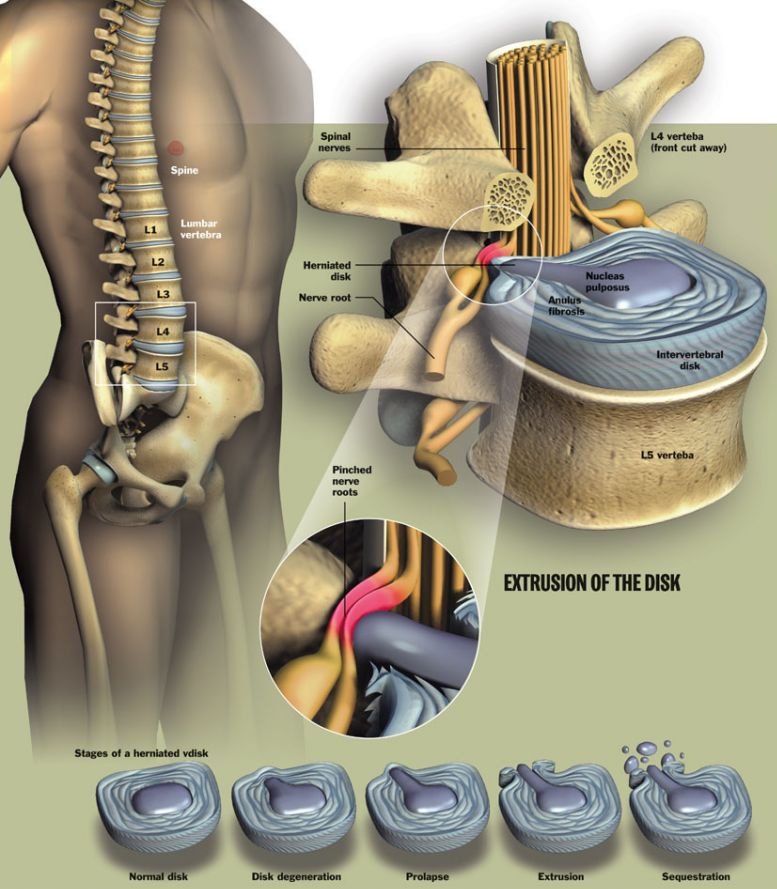
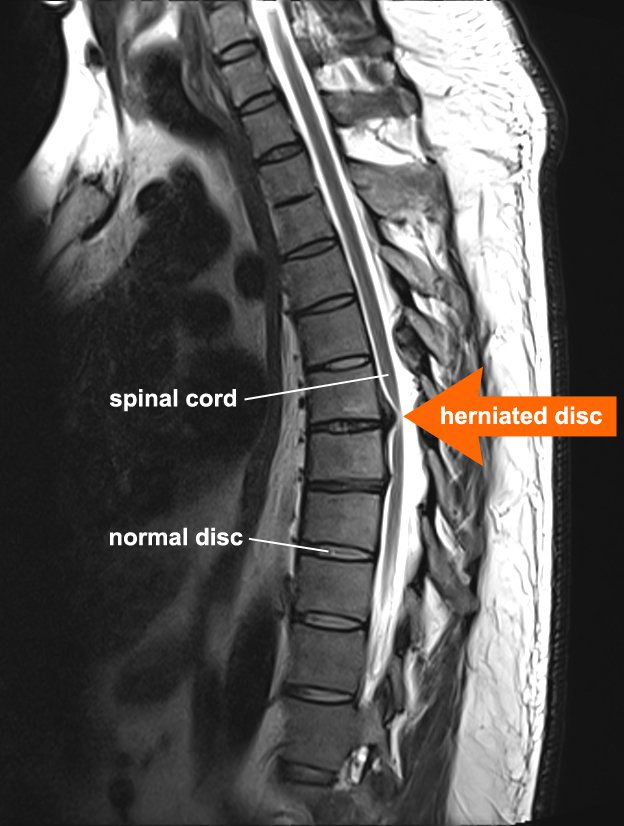
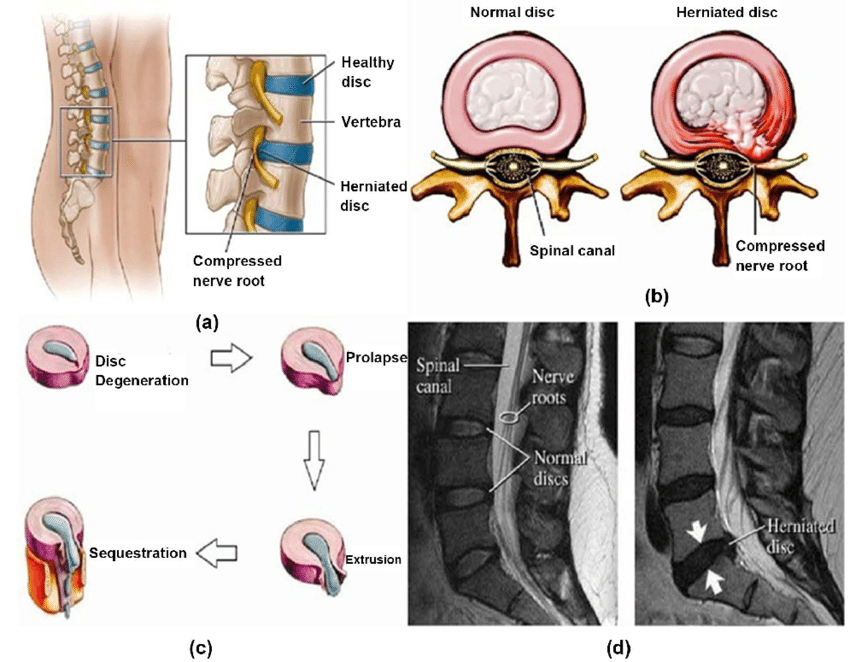
Intervertebral Disc Herniation is a common problem in the lumbar and cervical spine that can cause varying symptoms such as pain, numbness, and weakness of both the upper and lower extremities. Intervertebral disc herniation/ slipped disc is defined as a condition in which the nucleus pulposus is protruding past the annulus fibrosus. This slipped disc can be on a spectrum of partial to complete depending upon how much of the NP  slipped disc through the AF.lipped disc is most common in the lumbar spine followed by the cervical spine. A high rate of slipped disc/disc herniation in the lumbar and cervical spine can be explained by an understanding of the biomechanical forces in the flexible part of the spine. The thoracic spine has a lower rate of disc herniation.

Herniated lumbar disc is a displacement of disc material (nucleus pulposus or annulus fibrosis) beyond the intervertebral disc space. The diagnosis can be confirmed by radiological examination. However, magnetic resonance imaging findings of a herniated disc are not always accompanied by clinical symptoms. This review covers the treatment of people with clinical symptoms relating to confirmed or suspected disc herniation. It does not include the treatment of people with spinal cord compression, or people with cauda equina syndrome, which require emergency intervention. [

Slipped Disc

Anatomy Of Slipped Disc

We summarize the anatomy, motor function, sensitive distribution, and reflex of the most commons nerve roots involved in cervical and lumbosacral nucleus pulposus herniation:

Cervical

  • C5 nerve root – Exits between C4 and C5 foramina, innervates deltoids and biceps (with C6), sensory distribution: lateral arm (axillary nerve) and is assessed with biceps reflex.
  • C6 nerve root– Exits between C5 and C6 foramina, innervates biceps (with C5) and wrist extensors, sensory distribution – lateral forearm (musculocutaneous nerve), assessed with brachioradialis reflex.
  • C7 nerve root – Exits between C6 and C7 foramina, innervates triceps, wrist flexors, and finger extensors, sensory distribution, middle finger, assessed with triceps reflex.
  • C8 nerve root – Exits between C7 and T1 foramina, innervates interosseus muscles and finger flexors, sensory distribution: ring and little fingers and distal half of the forearm (ulnar side), no reflex.

Lumbosacral

  • L1 nerve root – Exits between L1 and L2 foramina, innervates iliopsoas muscle, sensory distribution: upper third thigh, assessed with the cremasteric reflex (male).
  • L2 nerve root – Exits between L2 and L3 foramina, innervates iliopsoas muscle, hip adductor, and quadriceps, sensory distribution: middle third thigh, no reflex.
  • L3 nerve root – Exits between L3 and L4 foramina, innervates iliopsoas muscle, hip adductor, and quadriceps, sensory distribution: lower third thigh, no reflex.
  • L4 nerve root – Exits between L4 and L5 foramina, innervates quadriceps and tibialis anterior, sensory distribution: anterior knee, medial side of the leg, assessed with patellar reflex.
  • L5 nerve root – Exits between L5 and S1 foramina, innervates extensor hallucis longus, extensor digitorum longus, and brevis, and gluteus medius, sensory distribution: anterior leg, lateral leg, and dorsum of the foot, no reflex.
  • S1 nerve root – Exits between S1 and S2 foramina, innervates gastrocnemius, soleus, and gluteus maximus, sensitive distribution: posterior thigh, plantar region, assessed with Achilles reflex.

Disc herniation/ slipped disc material  (i.e. herniated nucleus pulposus, HNP)

  • Varying degrees of HNP is recognized, from disc protrusion (annulus remains intact), extrusion (annular compromise, but herniated material remains continuous with disc space), to sequestered (free) fragments
  • HNP material predictably is resorbed over time, with the sequestered fragment demonstrating the highest degree of resorption potential
  • In general, 90% of patients will have an asymptomatic improvement in radicular symptoms within 3 months following nonoperative protocols alone

Hypertrophy/expansion of degenerative tissues

  • Common sources include ligamentum flavum and the facet joint.  The facet joint itself undergoes degenerative changes (just like any other joint in the body) and synovial hypertrophy and/or associated cysts can compromise surrounding nerve roots.

Slipped Disc


Types of Slipped Disc

Doctors categorize slipped disks by severity

  • Disc Degeneration – Chemical changes associated with aging causes discs to weaken, but without a herniation.
  • Bulging disk – With age, the intervertebral disk may lose fluid and become dried out. As this happens, the spongy disk (which is located between the bony parts of the spine and acts as a “shock absorber”) becomes compressed. This may lead to the breakdown of the tough outer ring. This lets the nucleus, or the inside of the ring, to bulge out. This is called a bulging disk.
  • Protrusion –The disk bulges out between the vertebrae, but its outermost layer is still intact.
  • Extrusion – There is a tear in the outermost layer of the spinal disk, causing spinal disk tissue to spill out. But the tissue that has come out is still connected to the disk.
  • Sequestration – Spinal disk tissue has entered the spinal canal and is no longer directly attached to the disk.
  • Ruptured or herniated disk – As the disk continues to break down, or with continued stress on the spine, the inner nucleus pulposus may actually rupture out from the annulus. This is a ruptured, or herniated, disk. The fragments of disc material can then press on the nerve roots located just behind the disk space. This can cause pain, weakness, numbness, or changes in sensation.

A disc herniation /slipped disc at the L5/S1 level can have two overlapping presentations

  • L5 at the L5/S1 level – a disc herniation far laterally into the left/right neural foramen would compress the L5 nerve, resulting in weakness of hip abduction muscles, ankle dorsiflexion (anterior tibialis muscle) and/or extension of the great toe (extensor hallucis longus muscle).
  • S1 at the L5/S1 level – a disc herniation centrally into the canal would compress the S1 nerve, resulting in weakness of ankle plantar flexion (gastrocnemius muscle).
  • Asymptomatic Annular Tear – If the annular tear or fissure is identified incidentally, most commonly on MRI imaging, then no treatment is warranted. Such annular fissures may resolve spontaneously over time and are frequently due to the stresses applied to the spine. It is posited that some asymptomatic annular tears may become symptomatic with time, but there is currently no definitive evidence that the treatment of asymptomatic annular tears provides any benefit or prevents any future issues.
  • Symptomatic Annular Tear without Disc Protrusion or Herniation  – An annular fissure or tear can be symptomatic without disc protrusion or herniation/slipped disc. It is suspected that local inflammatory reactions from the annulus fibrosus tear or fissure lead to irritation of adjacent nerve fibers or traversing nerve roots. The mainstay of treatment for such situations is non-steroidal anti-inflammatory medications as well as low-impact physical therapy.

Slipped Disc

Causes of Slipped Disc

The differential diagnosis for lumbosacral radiculopathy should include (but is not limited to) the following

Degenerative conditions of the spine (most common causes)

  • Spondylolisthesis – in the degenerative setting, this occurs as a result of a pathologic cascade including intervertebral disc degeneration, ensuing intersegmental instability, and facet joint arthropathy
  • Spinal stenosis
  • Adult isthmic spondylolisthesis – is typically caused by an acquired defect in the par interarticularis
    • Pars defects (i.e. spondylolysis) in adults are most often secondary to repetitive microtrauma.
Trauma (e.g. burst fractures with bony fragment retropulsion)
  • Clinicians should recognize spinal fractures can occur in younger, healthy patient populations secondary to high-energy injuries (e.g. MVA, fall from height) or secondary low energy injuries and spontaneous fractures in the elderly populations, including any patient with osteoporosis
  • Associated hemorrhage from the injury can result in a deteriorating clinical and neurologic exam.
  • Benign or malignant tumors

    • Metastatic tumors (most common)
    • Primary tumors
    • Ependymoma
    • Schwannoma
    • Neurofibroma
    • Lymphoma
    • Lipomas
    • Paraganglioma
    • Ganglioneuroma
    • Osteoblastoma
  • Infection

    • Osteodiscitis
    • Osteomyelitis
    • Epidural abscess
    • Fungal infections (e.g. Tuberculosis)
    • Other infections: lyme disease, HIV/AIDS-defining ilnesses, Herpes zoster (HZ)
  • Vascular conditions

    • Hemangioblastoma, aterior-venous malformations (AVM)

Adults:

  • Cauda equina syndrome

    • History: Progressive motor/sensory loss, new urinary retention or incontinence, new fecal incontinence
    • Physical exam: Saddle anesthesia, anal sphincter atony, significant motor deficits of multiple myotomes
  • Fracture

    • History: Significant trauma (relative to age), Prolonged corticosteroid use, osteoporosis, and age greater than 70 years
    • Physical exam: Contusions, abrasions, tenderness to palpation over spinous processes
  • Infection

    • History: Spinal procedure within the last 12 months, Intravenous drug use, Immunosuppression, prior lumbar spine surgery
    • Physical exam: Fever, wound in the spinal region, localized pain, and tenderness
  • Malignancy

    • History: History of metastatic cancer, unexplained weight loss
    • Physical exam: Focal tenderness to palpation in the setting of risk factors

Pediatric red flags are the same as adults with a few notable differences:

  • Malignancy

    • History: age less than 4 years, nighttime pain
  • Infectious

    • History: age less than 4 years, nighttime pain, history of tuberculosis exposure
  • Inflammatory

    • History: age less than 4 years, morning stiffness for greater than 30min, improving with activity or hot showers
  • Fracture

    • History: activities with repetitive lumber hyperextension (sports such as cheerleading, gymnastics, wrestling, or football linemen)
    • Physical exam: Tenderness to palpation over spinous process, positive Stork test

Evaluating clinicians must first rule out associated “red flag” symptoms including:

  • Thoracic pain
  • Fever/unexplained weight loss
  • Night sweats
  • Bowel or bladder dysfunction
  • Malignancy (document/record any previous surgeries, chemo/radiation, recent scans and bloodwork, and history of metastatic disease)
  • Can be seen in association with pain at night, pain at rest, unexplained weight loss, or night sweats
  • Significant medical comorbidities
  • Neurologic deficit or serial exam deterioration
  • Gait ataxia
  • Saddle anesthesia
  • Age of onset (bimodal — Age < 20 years or Age > 55 years)

Symptoms of Slipped Disc

Cervical and thoracic Slipped Disc can also exhibit symptoms of myelopathy such as spasticity, clumsiness, wide-based gate, and weakness, on physical examination hyperreflexia is the most important sign. The Lhermitte sign is the presence of an electric shock-like sensation towards the back and lower extremities, especially by flexing the neck. Bowel and bladder dysfunction may indicate poor prognosis.

The primary signs and symptoms of

  • LDH is radicular pain – sensory abnormalities, and weakness in the distribution of one or more lumbosacral nerve roots [, ]. Focal paresis, restricted trunk flexion, and increases in leg pain with straining, coughing, and sneezing are also indicative [, ]. Patients frequently report increased pain when sitting, which is known to increase disc pressure by nearly 40% [].
  • Pain that is relieved with sitting for forwarding flexion – is more consistent with lumbar spinal stenosis (LSS), as the latter motion increases disc pressure by 100–400% and would likely increase pain in isolated LDH []. Rainville et al. recently compared signs of LDH with LSS and found that LSS patients are more likely to have increased medical comorbidities, lower levels of disability and leg pain, abnormal Achilles reflexes, and pain primarily in the posterior knee [].

The type and location of your symptoms depend on the location and direction of the herniated disc, and the amount of pressure on nearby nerves. A herniated disc may cause no pain at all. Or, it can cause any of the following symptoms:

  • Numbness or tingling  – People who have a herniated disk often have radiating numbness or tingling in the body part served by the affected nerves.
  • Weakness – Muscles served by the affected nerves tend to weaken. This can cause you to stumble, or affect your ability to lift or hold items.
  • Pain in the neck, back, low back, arms, or legs
  • Inability to bend or rotate the neck or back
  • Numbness or tingling in the neck, shoulders, arms, hands, hips, legs, or feet
  • Weakness in the arms or legs
  • Limping when walking
  • Increased pain when coughing, sneezing, reaching, or sitting
  • Inability to stand up straight; being “stuck” in a position, such as stooped forward or leaning to the side
  • Difficulty getting up from a chair
  • Inability to remain in 1 position for a long period of time, such as sitting or standing, due to pain
  • Pain that is worse in the morning
  • This is a sharp, often shooting pain that extends from the buttock down the back of one leg. It is caused by pressure on the spinal nerve.
  • Numbness or a tingling sensation in the leg and/or foot
  • Weakness in the leg and/or foot
  • Loss of bladder or bowel control. This is extremely rare and may indicate a more serious problem called cauda equina syndrome. This condition is caused by the spinal nerve roots being compressed.

The affect dermatome varies based on the level of herniation as well as herniation type. In paracentral herniation, the transversing nerve root is affected versus in far lateral herniations, the exiting nerve root is affected. For example, a paracentral herniation at L4-5 would cause L5 radiculopathy whereas a far lateral herniation at the same level would cause L4 radiculopathy.

Diagnosis of Slipped Disc

History

As part of the evaluation of neck pain, it is important to identify certain red flags that could be features of underlying inflammatory conditions, malignancy, or infection. These include:

  • Fever, chills
  • Night sweats
  • Unexplained weight loss
  • History of inflammatory arthritis, malignancy, systemic infection, tuberculosis, HIV, immunosuppression, or drug use
  • Unrelenting pain
  • Point tenderness over a vertebral body
  • Cervical lymphadenopathy

Physical Examination

  • The clinician should assess the patient’s range of motion (ROM), as this can indicate the severity of pain and degeneration. A thorough neurological examination is necessary to evaluate sensory disturbances, motor weakness, and deep tendon reflex abnormalities. Careful attention should also focus on any sign of spinal cord dysfunction.

Typical findings of solitary nerve lesions due to compression by a herniated disc in the cervical spine

  • C2 Nerve – eye or ear pain, headache. History of rheumatoid arthritis or atlantoaxial instability
  • C3, C4 Nerve – vague neck, and trapezial tenderness and muscle spasms
  • C5 Nerve – neck, shoulder, and scapula pain. Lateral arm paresthesia. Primary motions affected include shoulder abduction and elbow flexion. May also observe weakness with shoulder flexion, external rotation, and forearm supination. Diminished biceps reflex.
  • C6 Nerve – neck, shoulder, and scapula pain. Paresthesia of the lateral forearm, lateral hand, and lateral two digits. Primary motions affected include elbow flexion and wrist extension. May also observe weakness with shoulder abduction, external rotation, and forearm supination and pronation — diminished brachioradialis reflex.
  • C7 Nerve – neck and shoulder pain. Paresthesia of the posterior forearm and third digit. Primary motions affected include elbow extension and wrist flexion. Diminished triceps reflex
  • C8 Nerve – neck and shoulder pain. Paresthesia of the medial forearm, medial hand, and medial two digits. Weakness during finger flexion, handgrip, and thumb extension.
  • T1 Nerve – Neck and shoulder pain. Paresthesia of the medial forearm. A weakness of finger abduction and adduction.

Special Tests

  • Lasègue’s Test
  • Slump Test
  • Muscle Weakness or Paresis
  • Reflexes
  • Hyperextension Test The patient needs to passively mobilize the trunk over the full range of extension, while the knees stay extended. The test indicates that the radiant pain is caused by disc herniation/slipped disc if the pan deteriorates.
  • Manual Testing and Sensory Testing Look for hypoaesthesia, hypoalgesia, tingling, or numbness.

Lab Values

  • RBS
  • Serum creatinine
  • ESR and CRP – These are inflammatory markers that should be obtained If a chronic inflammatory condition is suspected (rheumatoid arthritis, polymyalgia rheumatic, seronegative spondyloarthropathy). These can also be beneficial if an infectious etiology is suspected.
  • CBC with differential – Useful to obtain in instances when infection or malignancy is suspected.

Radiological Imaging

  • X-rays – The first test typically performed and one that is very accessible at most clinics and outpatient offices. Three views (AP, lateral, and oblique) views help assess the overall alignment of the spine as well as for the presence of any degenerative or spondylotic changes. These can be further supplemented with lateral flexion and extension views to assess for the presence of instability. If imaging demonstrates an acute fracture, this requires additional investigation using a CT scan or MRI. If there is a concern for atlantoaxial instability, the open mouth (odontoid) view may assist in diagnosis.
  • CT Scan – This imaging is the most sensitive test to examine the bony structures of the spine. It can also show calcified herniated discs/slipped discs or any insidious process that may result in bony loss or destruction. In patients that are unable to or are otherwise ineligible to undergo an MRI, CT myelography can be used as an alternative to visualize a herniated disc.
  • MRI – The preferred imaging modality and the most sensitive study to visualize a slipped disc, as it has the most significant ability to demonstrate soft-tissue structures and the nerve as it exits the foramen.
  • Electrodiagnostic testing – (Electromyography and nerve conduction studies) can be an option in patients that demonstrate equivocal symptoms or imaging findings as well as to rule out the presence of a peripheral mononeuropathy. The sensitivity of detecting cervical radiculopathy with electrodiagnostic testing ranges from 50% to 71%.
  • The straight leg raise test – With the patient lying supine, the examiner slowly elevates the patient’s led at an increasing angle, while keeping the leg straight at the knee joint. The test is positive if it reproduces the patient’s typical pain and paresthesia.
  • The contralateral (crossed) straight leg raise test – As in the straight leg raise test, the patient is lying supine, and the examiner elevates the asymptomatic leg. The test is positive if the maneuver reproduces the patient’s typical pain and paresthesia. The test has a specificity greater than 90%.
  • Myelography – An X-ray of the spinal canal following the injection of contrast material into the surrounding cerebrospinal fluid spaces will reveal the displacement of the contrast material. It can show the presence of structures that can cause pressure on the spinal cord or nerves, such as herniated discs, tumors, or bone spurs.
  • Transcranial Magnetic Stimulation (TMS) – The presence and severity of myelopathy can be evaluated by means of transcranial magnetic stimulation (TMS), a neurophysiological method that measures the time required for a neural impulse to cross the pyramidal tracts, starting from the cerebral cortex and ending at the anterior horn cells of the cervical, thoracic, or lumbar spinal cord. This measurement is called the central conduction time (CCT).
  • Electromyography and nerve conduction studies (EMG/NCS) –  measure the electrical impulses along with nerve roots, peripheral nerves, and muscle tissue. Tests can indicate if there is ongoing nerve damage, if the nerves are in a state of healing from a past injury, or if there is another site of nerve compression. EMG/NCS studies are typically used to pinpoint the sources of nerve dysfunction distal to the spine.
  • Other Studies – Patients with equivocal studies may opt for a discography when conservative measures fail. Electrophysiological studies can be performed to evaluate and elucidate the nerve roots affected by the injured cervical disc.

Differential Diagnosis

The differential diagnosis for back pain is very broad, especially when considering the pediatric population. Below is a review of the more common diagnoses along with history or physical exam features that may increase your index of suspicion. This list is not comprehensive but represents the more likely and more concerning conditions that make up the differential.

Adults

  • Lumbosacral muscle strains/sprains

    • Presentation: follows traumatic incident or repetitive overuse, pain worse with movement, better with rest, restricted range of motion, tenderness to palpation of muscles
  • Lumbar spondylosis

    • Presentation: patient typically is greater than 40years old, pain may be present or radiate from hips, pain with extension or rotation, the neurologic exam is usually normal
  • Disk herniation

    • Presentation: usually involves the L4 to S1 segments, may include paresthesia, sensory change, loss of strength or reflexes depending on severity and nerve root involved
  • Spondylolysis, Spondylolisthesis

    • Presentation: similar to pediatrics, spondylolisthesis may present back pain with radiation to the buttock and posterior thighs, neuro deficits are usually in the L5 distribution
  • Vertebral compression fracture

    • Presentation: localized back pain worse with flexion, point tenderness on palpation, may be acute or occur insidiously over time, age, chronic steroid use, and osteoporosis are risk factors
  • Spinal stenosis

    • Presentation: back pain which can be accompanied by sensory loss or weakness in legs relieved with rest (neurologic claudication), neuro exam normal.
  • Tumor

    • Presentation: a history of metastatic cancer, unexplained weight loss, focal tenderness to palpation in the setting of risk factors
    • Clinical note: 97% of spinal tumors are metastatic disease; however, the provider should keep multiple myeloma in the differential
  • Infection – vertebral osteomyelitis, discitis, septic sacroiliitis, epidural abscess, paraspinal muscle abscess

    • Presentation: Spinal procedure within the last 12 months, Intravenous drug use, Immunosuppression, prior lumbar spine surgery, fever, wound in the spinal region, localized pain, and tenderness
    • Clinical note: Granulomatous disease may represent as high as one-third of cases in developing countries.
  • Fracture

    • Presentation: Significant trauma (relative to age), Prolonged corticosteroid use, osteoporosis, and age greater than 70 years, Contusions, abrasions, tenderness to palpation over spinous processes.

Pediatrics

  • Tumor

    • Presentation: fever, malaise, weight loss, nighttime pain, recent onset scoliosis
    • Clinical note: Osteoid osteoma is the most common tumor that presents with back pain – classically, the pain is promptly relieved with anti-inflammatory drugs such as NSAIDs
  • Infection –  vertebral osteomyelitis, discitis, septic sacroiliitis, epidural abscess, paraspinal muscle abscess

    • Presentation: fever, malaise, weight loss, nighttime pain, recent onset scoliosis
    • Clinical notes: Epidural abscess should be a consideration with the presence of fever, spinal pain, and neurologic deficits or radicular pain; discitis may present with a patient refusing to walk or crawl
  • A herniated disk, slipped apophysis

    • Presentation: Acute pain, radicular pain, positive straight leg raise test, pain with spinal forward flexion, recent onset scoliosis
  • Spondylolysis, spondylolisthesis – lesion or injury to the posterior arch

    • Presentation: Acute pain, radicular pain, positive straight leg raise test, pain with spinal extension, tight hamstrings
  • Vertebral fracture

    • Presentation: acute pain, other injuries, traumatic mechanism of injury, neurologic loss
  • Muscle strain

    • Presentation: acute pain, muscle tenderness without radiation
  • Scheuermann’s kyphosis

    • Presentation: chronic pain, rigid kyphosis
  • Inflammatory spondyloarthropathies

    • Presentation: chronic pain, morning stiffness lasting greater than 30min, sacroiliac joint tenderness
  • Psychological Disorder – (conversion, somatization disorder)

    • Presentation: normal evaluation but persistent subjective pain
  • Idiopathic Scoliosis

    • Presentation: positive Adam’s test (for larger angle curvature), most commonly asymptomatic
    • Clinical note: Of note, no definitive evidence that scoliosis causes pain, but patients with scoliosis have more frequently reported pain; therefore the provider should rule out other causes before attributing pain to scoliosis

Slipped Disc

Treatment Of Slipped Disc

Patient Education

  • Use of hot or cold packs for comfort and to decreased inflammation
  • Avoidance of inciting activities or prolonged sitting/standing
  • Practicing good, erect posture
  • Engaging in exercises to increase core strength
  • Gentle stretching of the lumbar spine and hamstrings
  • Regular light exercises such as walking, swimming, or aromatherapy
  • Use of proper lifting techniques

Non-Pharmacological Treatment

Conservative Treatments – Acute cervical or lumber radiculopathies secondary to a herniated disc are typically managed with non-surgical treatments as the majority of patients (75 to 90%) will improve. Modalities that can be used include:

  • Rest the area by avoiding any activity that causes worsening symptoms in the arms or legs.
  • Stay active around the house, and go on short walks several times per day. The movement will decrease pain and stiffness and help you feel better.
  • Apply ice packs to the affected area for 15 to 20 minutes every 2 hours.
  • Sit in firm chairs. Soft couches and easy chairs may make your problems worse.
  • Deep tissue massage may be helpful
  • Acupuncture – In acupuncture, the therapist inserts fine needles into certain points on the body with the aim of relieving pain.
  • Reiki – Reiki is a Japanese treatment that aims to relieve pain by using specific hand placements.
  • Moxibustion – This method is used heat specific parts of the body (called “therapy points”) by using glowing sticks made of mugwort (“Moxa”) or heated needles that are put close to the therapy points.
  • Massages – Various massage techniques are used to relax muscles and ease tension.
  • Heating and cooling – This includes the use of hot packs and plasters, a hot bath, going to the sauna, or using an infrared lamp. Heat can also help relax tense muscles. Cold packs, like cold wraps or gel packs, are also used to help with irritated nerves.
  • Ultrasound therapy – Here the lower back is treated with sound waves. The small vibrations that are produced generate heat to relax body tissue.
  • Cervical Manipulation – There is limited evidence suggesting that cervical manipulation may provide short-term benefits for neck pain and cervicogenic headaches. Complications from manipulation are rare and can include worsening radiculopathy, myelopathy, spinal cord injury, and vertebral artery injury. These complications occur ranging from 5 to 10 per 10 million manipulations.
  • Lumbar Corset or Collar for Immobilization – In patients with acute neck pain, a short course (approximately one week) of collar immobilization may be beneficial during the acute inflammatory period.
  • Traction – May be beneficial in reducing the radicular symptoms associated with disc herniations. Theoretically, traction would widen the neuroforamen and relieve the stress placed on the affected nerve, which, in turn, would result in the improvement of symptoms. This therapy involves placing approximately 8 to 12 lbs of traction at an angle of approximately 24 degrees of neck flexion over a period of 15 to 20 minutes.

Physical Therapy

Commonly prescribed after a short period of rest and immobilization. Modalities include a range of motion exercises, strengthening exercises, ice, heat, ultrasound, and electrical stimulation therapy. Despite their frequent use, no evidence demonstrates their efficacy over placebo. However, there is no proven harm, and with a possible benefit, their use is recommended in the absence of myelopathy.
  • Exercising in water – can be a great way to stay physically active when other forms of exercise are painful. Exercises that involve lots of twisting and bending may or may not benefit you. Your physical therapist will design an individualized exercise program to meet your specific needs.
  • Weight-training exercises – though very important, need to be done with proper form to avoid stress to the back and neck.
  • Reduce pain and other symptoms – Your physical therapist will help you understand how to avoid or modify the activities that caused the injury, so healing can begin. Your physical therapist may use different types of treatments and technologies to control and reduce your pain and symptoms.
  • Improve posture –If your physical therapist finds that poor posture has contributed to your herniated disc/slipped disc, the therapist will teach you how to improve your posture so that pressure is reduced in the injured area, and healing can begin and progress as rapidly as possible.
  • Improve motion – Your physical therapist will choose specific activities and treatments to help restore normal movement in any stiff joints. These might begin with “passive” motions that the physical therapist performs for you to move your spine, and progress to “active” exercises and stretches that you do yourself. You can perform these motions at home and in your workplace to help hasten healing and pain relief.
  • Improve flexibility – Your physical therapist will determine if any of the involved muscles are tight, start helping you to stretch them, and teach you how to stretch them at home.
  • Improve strength – If your physical therapist finds any weak or injured muscles, your physical therapist will choose, and teach you, the correct exercises to steadily restore your strength and agility. For neck and back disc herniations, “core strengthening” is commonly used to restore the strength and coordination of muscles around your back, hips, abdomen, and pelvis.
  • Improve endurance – Restoring muscular endurance is important after an injury. Your physical therapist will develop a program of activities to help you regain the endurance you had before the injury, and improve it.
  • Learn a home program – Your physical therapist will teach you strengthening, stretching, and pain-reduction exercises to perform at home. These exercises will be specific for your needs; if you do them as prescribed by your physical therapist, you can speed your recovery.

Eat Nutritiously During Your Recovery

  • All bones and tissues in the body need certain nutrients in order to heal properly and in a timely manner. Eating a nutritious and balanced diet that includes lots of minerals and vitamins are proven to help heal broken bones of all types. Therefore focus on eating lots of fresh produce (fruits and veggies), whole grains, lean meats, and fish to give your body the building blocks needed to properly repair your. In addition, drink plenty of purified water, milk, and other dairy-based beverages to augment what you eat.
  • Broken bones need ample minerals (calcium, phosphorus, magnesium, boron) and protein to become strong and healthy again.
  • Excellent sources of minerals/protein include dairy products, tofu, beans, broccoli, nuts and seeds, sardines, and salmon.
  • Important vitamins that are needed for bone healing include vitamin C (needed to make collagen), vitamin D (crucial for mineral absorption), and vitamin K (binds calcium to bones and triggers collagen formation).
  • Conversely, don’t consume food or drink that is known to impair bone/tissue healing, such as alcoholic beverages, sodas, most fast food items, and foods made with lots of refined sugars and preservatives.

Medication

Pharmacotherapy – There is no evidence to demonstrate the efficacy of non-steroidal anti-inflammatories (NSAIDs) in the treatment of cervical radiculopathy. However, they are commonly used and can be beneficial for some patients. The use of COX-1 versus COX-2 inhibitors does not alter the analgesic effect, but there may be decreased gastrointestinal toxicity with the use of COX-2 inhibitors. Clinicians can consider steroidal anti-inflammatories (typically in the form of prednisone) in severe acute pain for a short period. A typical regimen is prednisone 60 to 80 mg/day for five days, which can then be slowly tapered off over the following 5 m to 14 days. Another regimen involves a prepackaged tapered dose of Methylprednisolone that tapers from 24 mg to 0 mg over 7 days.

  • Non-steroidal anti-inflammatory drugs (NSAIDs) These painkillers belong to the same group of drugs as acetylsalicylic acid (ASA, the drug in medicines like “Aspirin”). NSAIDs that may be an option for the treatment of sciatica include diclofenac, ibuprofen, and naproxen. Anti-inflammatory drugs are drugs that reduce inflammation. This includes substances produced by the body itself like cortisone. It also includes artificial substances like ASA – acetylsalicylic acid (or “aspirin”) or ibuprofen –, which relieve pain and reduce fever as well as reducing inflammation.
  • Acetaminophen (paracetamol) – Acetaminophen (paracetamol) is also a painkiller, but it is not an NSAID. It is well tolerated and can be used as an alternative to NSAIDs – especially for people who do not tolerate NSAID painkillers because of things like stomach problems or asthma. But higher doses of acetaminophen can cause liver and kidney damage. The package insert advises adults not to take more than 4 grams (4000 mg) per day. This is the amount in, for example, 8 tablets containing 500 milligrams each. It is not only important to take the right dose, but also to wait long enough between doses.
  • Opioids Strong painkillers that may only be used under medical supervision. Opioids are available in many different strengths, and some are available in the form of a patch. Morphine, for example, is a very strong drug, while tramadol is a weaker opioid. These drugs may have a number of different side effects, some of which are serious. They range from nausea, vomiting and constipation to dizziness, breathing problems, and blood pressure fluctuation. Taking these drugs for a long time can lead to habitual use and physical dependence.
  • Skeletal Muscle relaxant – If muscle spasms are prominent, the addition of a muscle relaxant may merit consideration for a short period. For example, cyclobenzaprine is an option at a dose of 5 mg taken orally three times daily. Antidepressants (amitriptyline) and anticonvulsants (gabapentin and pregabalin) have been used to treat neuropathic pain, and they can provide a moderate analgesic effect.
  • Steroids Anti-inflammatory drugs that can be used to treat various diseases systemically. That means that they are taken as tablets or injected. The drug spreads throughout the entire body to soothe inflammation and relieve pain. Steroids may increase the risk of gastric ulcers, osteoporosis, infections, skin problems, glaucoma, and glucose metabolism disorders.
  • Muscle relaxants Sedatives which also relax the muscles. Like other psychotropic medications, they can cause fatigue and drowsiness, and affect your ability to drive. Muscle relaxants can also affect liver functions and cause gastro-intestinal complications. Drugs from the benzodiazepine group, such as tetrazepam, can lead to dependency if they are taken for longer than two weeks.
  • Nerve Relaxant and Neuropathic Agents – Drugs(pregabalin & gabapentin) or Vitamin B1 B6, B12 and mecobalamin that address neuropathic—or nerve-related pain remover. This includes burning, numbness, and tingling.
  • Anticonvulsants These medications are typically used to treat epilepsy, but some are approved for treating nerve pain (neuralgia). Their side effects include drowsiness and fatigue. This can affect your ability to drive.
  • Antidepressants These drugs are usually used for treating depression. Some of them are also approved for the treatment of pain. Possible side effects include nausea, dry mouth, low blood pressure, irregular heartbeat, and fatigue.
  • Topical Medications – These prescription-strength creams, gels, ointments, patches, and sprays help relieve pain and inflammation through the skin.
  • Calcium & vitamin D3 – to improve bone health and healing fracture. As a general rule, men and women age 50 and older should consume 1,200 milligrams of calcium a day, and 600 international units of vitamin D a day.
  • Glucosamine & DiacereinChondroitin sulfate – can be used to tightening the loose tension, cartilage, ligament, and cartilage, ligament regenerate cartilage or inhabit the further degeneration of cartilage, ligament
  • Injections near the spine – Injection therapy uses mostly local anesthetics and/or anti-inflammatory medications like corticosteroids (for example cortisone). These drugs are injected into the area immediately surrounding the affected nerve root. There are different ways of doing this:
    • In lumbar spinal nerve analgesia (LSPA) – the medication is injected directly at the point where the nerve root exits the spinal canal. This has a numbing effect on the nerve root.
    • In lumbar epidural analgesia – the medication is injected into what is known as the epidural space (“epidural injection”). The epidural space surrounds the spinal cord and the spinal fluid in the spinal canal. This is also where the nerve roots are located. During this treatment, the spine is monitored using computer tomography or X-rays to make sure that the injection is placed at exactly the right spot.
    • Interventional Treatments – Spinal steroid injections are a common alternative to surgery. Perineural injections (translaminar and transforaminal epidurals, selective nerve root blocks) are an option with pathological confirmation by MRI. These procedures should take place under radiologic guidance.

Surgical Treatments

  • Total Disc Replacement (TDR) and Anterior Cervical Discectomy and Fusion (ACDF) – Surgical exposure of the desired vertebral level is achieved through an anterior cervical incision. Subcutaneous dissection is performed to allow for adequate mobilization to tissue incision. The discectomy is performed with pituitary rongeurs, a curette, and a burr drill to remove affected disc. The posterior longitudinal ligament can be left in situ depending on the severity of the herniation.
  • Laminectomy – Cervical laminectomy removes the lamina on one or both sides to increase the axial space available for the spinal cord. Clinically indicated for spinal stenosis or cervical disc disease involving more than three levels of disc degeneration with anterior spinal cord compression. Single-level cervical disc herniation is usually managed with the anterior approach. The complications of the posterior approach include instability resulting in kyphosis, recalcitrant myofascial pain, and occipital headaches.
  • Laminoplasty – The kyphotic deformity is a well-known complication of laminectomy. To preserve the posterior wall of the spinal canal while decompressing the spinal canal a Z-plasty technique for the lamina was developed. The variant of the procedure uses a hinged door for the lamina. Laminoplasty is commonly indicated for multilevel spondylotic myelopathy. Nerve root injury is seen in about 11% of the surgeries. This complication is unique to laminoplasty, and the suggested etiology is traction on the nerve root with the posterior migration of the spinal cord.
  • Anterior cervical discectomy and fusion – A procedure that reaches the cervical spine (neck) through a small incision in the front of the neck. The intervertebral disc is removed and replaced with a small plug of bone or another graft substitute, and in time, that will fuse the vertebrae.
  • Cervical corpectomy – A procedure that removes a portion of the vertebra and adjacent intervertebral discs to allow for decompression of the cervical spinal cord and spinal nerves. A bone graft, and in some cases a metal plate and screws, are used to stabilize the spine.
  • Dynamic Stabilisation – Following a discectomy, a stabilization implant is implanted with a ‘dynamic’ component. This can be with the use of Pedicle screws (such as Dynesys or a flexible rod) or an interspinous spacer with bands (such as a Wallis ligament). These devices offload pressure from the disc by rerouting pressure through the posterior part of the spinal column. Like a fusion, these implants allow maintaining mobility to the segment by allowing flexion and extension.
  • Facetectomy – A procedure that removes a part of the facet to increase the space.
  • Foraminotomy – A procedure that enlarges the vertebral foramen to increase the size of the nerve pathway. This surgery can be done alone or with a laminotomy.
  • Intervertebral disc annuloplasty (IDET) – A procedure wherein the disc is heated to 90 °C for 15 minutes in an effort to seal the disc and perhaps deaden nerves irritated by the degeneration.
  • Intervertebral disc arthroplasty – also called Artificial Disc Replacement (ADR), or Total Disc Replacement (TDR), is a type of arthroplasty. It is a surgical procedure in which degenerated intervertebral discs in the spinal column are replaced with artificial ones in the lumbar (lower) or cervical (upper) spine.
  • Laminoplasty – A procedure that reaches the cervical spine from the back of the neck. The spinal canal is then reconstructed to make more room for the spinal cord.
  • Laminotomy – A procedure that removes only a small portion of the lamina to relieve pressure on the nerve roots.
  • Microdiscectomy – A minimally invasive surgical procedure in which a portion of a herniated nucleus pulposus is removed by way of a surgical instrument or laser while using an operating microscope or loupe for magnification.
  • Percutaneous disc decompression – A procedure that reduces or eliminates a small portion of the bulging disc through a needle inserted into the disc, minimally invasive.
  • Spinal decompression – A non-invasive procedure that temporarily (a few hours) enlarges the intervertebral foramen (IVF) by aiding in the rehydration of the spinal discs.
  • Spinal laminectomy – A procedure for treating spinal stenosis by relieving pressure on the spinal cord. A part of the lamina is removed or trimmed to widen the spinal canal and create more space for the spinal nerves.

Rehabilitation of Slipped Disc

Physical Therapy Management

Physical therapy often plays a major role in herniated disc recovery. Involving below key points

  • Ambulation and resumption of exercise
  • Pain control
  • Education re maintaining a healthy weight

Physical therapy programs are often recommended for the treatment of pain and restoration of functional and neurological deficits associated with symptomatic disc herniation.

Active exercise therapy is preferred to passive modalities.

There are a number of exercise programs for the treatment of symptomatic disc herniation eg

  • aerobic activity (eg, walking, cycling)
  • directional preference (McKenzie approach)
  • flexibility exercises (eg, yoga and stretching)
  • proprioception/coordination/balance (medicine ball and wobble/tilt board),
  • strengthening exercises.
  • motor control exercises MCEs

MCEs (stabilization/core stability exercises) are a common type of therapeutic exercise prescribed for patients with symptomatic disc herniation[rx].

  • designed to re-educate the co-activation pattern of abdominals, paraspinal, gluteals, pelvic floor musculature and diaphragm
  • The biological rationale for MCEs is primarily based on the idea that the stability and control of the spine are altered in patients with LBP.
  • the program begins with the recognition of the natural position of the spine (mid-range between lumbar flexion and extension range of motion), considered to be the position of balance and power for improving performance in various sports
  • Initial low-level sustained isometric contraction of trunk-stabilizing musculature and their progressive integration into functional tasks is the requirement of MCEs
  • MCE is usually delivered in 1:1 supervised treatment sessions and sometimes includes palpation, ultrasound imaging and/or the use of pressure biofeedback units to provide feedback on the activation of trunk musculature
  • A core stability program decreases pain level, improves functional status, increases the health-related quality of life, and static endurance of trunk muscles in lumbar disc herniation patients[rx]. Individual high-quality trials found moderate evidence that stabilization exercises are more effective than no treatment[rx].

Different studies have shown that a combination of different techniques will form the optimal treatment for a herniated disc. Exercise and ergonomic programs should be considered as very important components of this combined therapy[rx].

Physiotherapy Modalities and the evidence for their use in disc herniation

  • Stretching – There is low-quality evidence found to suggest that adding hyperextension to an intensive exercise program might not be more effective than intensive exercise alone for functional status or pain outcomes. There were also no clinically relevant or statistically significant differences found in disability and pain between combined strength training and stretching, and strength training alone[rx].
  • Muscle Strengthening – Strong muscles are a great support system for your spine and better handle pain. If core stability is totally regained and fully under control, strength and power can be trained. But only when this is necessary for the patient’s functioning/activities. This power needs to be avoided during the core stability exercises because of the combination of its two components: force and velocity. This combination forms a higher risk to gain back problems and back pain[rx].
  • Traditional Chinese Medicine for Low Back Pain – has been demonstrated to be effective. Reviews have demonstrated that acupressure, acupuncture, and cupping can be efficacious in pain and disability for chronic low back pain included disc herniation[rx][rx].
  • Spinal Manipulative Therapy and Mobilization – Spinal manipulative therapy and mobilization lead to short-term pain relief when suffering from acute low back pain. When looking at chronic low back pain, manipulation has an effect similar to NSAID[rx].
  • Behavioural Graded Activity Programme – A global perceived recovery was better after a standard physiotherapy program than after a behavioral graded activity program in the short term, however, no differences were noted in the long term[rx].
  • Transcutaneous Electrical Nerve Stimulation (TENS) – TENS therapy contributes to pain relief and improvement of function and mobility of the lumbosacral spine[rx].
  • Manipulative Treatment – Manipulative treatment on lumbar disc herniation appears to be safe, effective, and it seems to be better than other therapies. However high-quality evidence is needed to be further investigated[rx].
  • Traction – A recent study has shown that traction therapy has positive effects on pain, disability, and SLR on patients with intervertebral disc herniation[rx]. Also, one trial found some additional benefit from adding mechanical traction to medication and electrotherapy[rx].
  • Aquatic Vertical Traction – In patients with low back pain and signs of nerve root compression this method had greater effects on spinal height, the relieving of pain, lowering the centralization response, and lowering the intensity of pain than the assuming of a supine flexing position on land[rx].
  • Hot Therapies – may use heat to increase blood flow to the target area. Blood helps heal the area by delivering extra oxygen and nutrients. Blood also removes waste byproducts from muscle spasms.

Example of Protocol for Rehabilitation Following a Lumbar Microdiscectomy

The following program is an example of a protocol for rehabilitation following a lumbar microdiscectomy

  • Duration of a rehabilitation program – 4 weeks
  • Frequency – every day
  • Duration of one session – approximately 60 minutes
  • Treatment – dynamic lumbar stabilization exercises + home exercises
  • Exercises – Prior to the DLS training session patients are provided with instruction or technique to ensure and protect a neutral spine position. During the first 15 minutes of each session stretching of back extensors, hip flexors, hamstrings and Achilles tendon should be performed.
  • DLS consists of – Quadratus exercises Abdominal strengthening Bridging with ball Straightening of external abdominal oblique muscle Lifting one leg in crawling position Lifting crossed arms and legs in crawling position Lunges)
  • Home Exercises  – should be added to the treatment. These should be performed every day. 5 repetitions during the first week up to 10-15 reps in the following weeks

Post Surgical Intervention – In the case of surgery, programs start regularly 4-6 weeks post-surgery

  • Offer information about the rehabilitation program they will follow the next few weeks.
  • The patients are instructed and accompanied in daily activities such as: coming out of bed, going to the bathroom and clothing
  • Patients have to pay attention on the ergonomics of the back throughout back school[rx][rx][rx][rx].

Studies show various forms of post-operation treatment show

  • Rehabilitation programs that start four to six weeks post-surgery with exercises versus no treatment found that exercise programs are more effective than no treatment in terms of short-term follow-up for pain
  • High-intensity exercise programs are slightly more effective for pain and in terms of functional status in the short term compared with low-intensity exercise programs.
  • Long-term follow-up results for both pain and functional status showed no significant differences between groups.
  • No significant differences between supervised exercise programs and home exercise programs in terms of short-term pain relief[rx].

Complications of Slipped Disc

Complications from steroid injections are typically mild and range between 3% to 35% of cases. Other, more serious complications can include

  • Nerve injury
  • Infection
  • Epidural hematoma
  • Epidural abscess
  • Spinal cord infarction
  • Bleeding
  • Recurrence of disease or symptoms
  • Infection
  • Worsening neurological deficits
  • Failed operation

Complications from surgical intervention include

  • Infection
  • Recurrent laryngeal, superior laryngeal, and hypoglossal nerve injuries
  • Esophageal injury
  • Vertebral and carotid injuries
  • Dysphagia
  • Horner syndrome
  • Pseudoarthrosis
  • Adjacent segment degeneration

 A team approach is an ideal way to limit the complications of such an injury

  • Evaluation of a patient with lumbar radicular pain by the primary care provider to rule out severe radiculopathy or alarm symptoms is the recommended first step.
  • Conservative management should commence when symptoms are mild or moderate; including moderate activity, stretches, and pharmacological management. A pharmacist should evaluate dosing and perform medication reconciliation to preclude any drug-drug interactions, and alert the healthcare team regarding any concerns.
  • The patient should follow up with primary care physicians one to two weeks following initial injury to monitor for progression of the nerve damage.
  • If symptoms worsen on follow up or there is a concern for the development of a severe radiculopathy referral to neurosurgery or hospitalization for possible spinal decompression.
  • If radicular symptoms persist three weeks after injury, physical therapy referral can be a consideration.
  • When symptoms persist for greater than six-week duration, imaging such as MRI or CT can are options for better visualization of the nerve roots.
  • The patient should consult with a dietitian and eat a healthy diet and maintain a healthy weight.
  • The pharmacist should encourage the patient to quit smoking, as this may help with the healing process. Further, the pharmacist should educate the patient on pain management and available options.
  • Persistent pain at six weeks follows up may warrant a referral to interventional pain management or neurosurgery for an epidural steroid injection.
  • If mild to moderate symptoms continue at three months following the onset of symptoms, referral for possible surgical intervention merits consideration as well.

Prevention

To prevent experiencing a herniated disc, individuals should:

  • Use proper body mechanics when lifting, pushing, pulling, or performing any action that puts extra stress on your spine.
  • Maintain a healthy weight. This will reduce the stress on your spine.
  • Stop smoking.
  • Discuss your occupation with a physical therapist, who can provide an analysis of your job tasks and offer suggestions for reducing your risk of injury.
  • Keep your muscles strong and flexible. Participate in a consistent program of physical activity to maintain a healthy fitness level.
  • Many physical therapy clinics offer “back schools,” which teach people how to take care of their backs and necks and prevent injury. Ask your physical therapist about programs in your area. If you don’t have a physical therapist.

To prevent recurrence of a herniated disc, follow the above advice, and:

  • Continue the new posture and movement habits that you learned from your physical therapist, to keep your back healthy.
  • Continue to do the home-exercise program your physical therapist taught you, to help maintain your improvements.
  • Continue to be physically active and stay fit.

References

Slipped Disc

ByRx Harun

Systemic Lupus Erythematosus – Symptoms, Treatment

The Systemic Lupus Erythematosus (SLE) is a systemic autoimmune disease, with multisystemic involvement. The disease has several phenotypes, with varying clinical presentations in patients ranging from mild mucocutaneous manifestations to multiorgan and severe central nervous system involvement. Several immunopathogenic pathways play a role in the development of SLE. The lupus erythematosus (LE cell) was described by Hargraves in 1948. Several pathogenic autoantibodies have since been identified.

The systemic lupus erythematosus (SLE) is characterized by overt polyclonal B-cell activation and autoantibody (Ab) production. By contrast, cellular immune responses against all- or recall antigens are significantly impaired. Many pieces of evidence indicate that IL-10 overproduction plays a pivotal role in the disease and the contribution of the IL-10/IL-12 imbalance to the pathophysiology of SLE will be extensively discussed. The authors will further summarize the available data about the involvement of IFN-γ, TNF-α, TGF-β, and TALL-1. Other cytokines (IL-1, IL-2, IL-4, IL-6, IL-16, IL-17, and IL-18) will be briefly discussed.

Systemic Lupus Erythematosus

Types of Systemic Lupus Erythematosus

About 25% of patients with systemic lupus erythematosus (SLE) initially present with skin involvement. It is important to correctly classify cutaneous lupus erythematosus (CLE), as it helps determine the underlying type and severity of SLE. About 5–10% of patients with CLE develop SLE, and CLE is associated with less severe forms of SLE.

Skin manifestations of lupus erythematosus are commonly divided into lupus erythematosus–specific and non–specific disease. Note that four of the nine American College of Rheumatology criteria for SLE are skin signs (ie, malar/butterfly rashdiscoid plaquesphotosensitivity, and oral ulcers).

Lupus erythematosus–specific disease

Acute cutaneous lupus erythematosus

Forms of acute CLE include the following:

  • Localised acute CLE — this presents with malar or ‘butterfly’ rash (symmetrical erythema and edema of the cheeks, forehead, chin, and V of the neck but sparing the nasolabial folds or ‘smile lines’)
  • Generalised acute CLE — this presents with a widespread exanthematous eruption on the extensor surfaces, trunk, sun-exposed areas, and hands (but sparing the knuckles)
  • Toxic epidermal necrolysis-like acute CLE — this is a life-threatening variant of acute CLE that presents with a massive epidermal injury; it occurs predominantly on sun-exposed skin and has a gradual, insidious onset, unlike toxic epidermal necrolysis.

Acute CLE is typically triggered or exacerbated by exposure to ultraviolet (UV) radiation. On recovery, there may be postinflammatory hyperpigmentation without scarring.

Subacute cutaneous lupus erythematosus

The subacute cutaneous lupus erythematosus (SCLE) starts as macules or papules that progress to hyperkeratotic plaques. SCLE is photosensitive so plaques usually occur on sun-exposed skin; these plaques do not lead to scarring but can result in postinflammatory hyperpigmentation or hypopigmentation. SCLE should be monitored to exclude any progression to SLE.

Forms of SCLE include:

  • Annular SCLE — this subtype presents with slightly raised red lesions with central clearing
  • Papulosquamous SCLE — this subtype presents with eczematous or psoriasis-like lesions on sun-exposed skin.

Chronic cutaneous lupus erythematosus

Chronic CLE is not as photosensitive as acute CLE or SCLE. Forms of chronic CLE include:

  • The discoid lupus erythematosus (DLE) — this affects the face, outer ears, neck, sun-exposed areas and lips, and presents with discoid plaques (erythematous, well-demarcated plaques covered by scale) that become hyperkeratotic, leading to atrophy and scarring; there is follicular involvement, causing both reversible and irreversible (scarring) alopecia (hair loss); depigmentation of the peripheries is also common in certain ethnicities (Asian, Indian).
  • Hypertrophic or verrucous lupus erythematosus — this is a rare form of CLE presenting with severe hyperkeratosis of the extensor surfaces of the arms, upper back and face; it has overlapping features with lichen planus.
  • Mucosal lupus erythematosus — this affects 25% of patients with CLE; most commonly, painless erythematous patches on the oral mucosa develop into chronic plaques that can centrally ulcerate and also affect nasal, conjunctival and genital mucosa; oral lupus erythematosus rarely degrades to oral cancer (squamous cell carcinoma).

Drug-induced lupus erythematosus

Many drugs are thought to induce SLE and drug-induced lupus erythematosus often includes cutaneous signs. Drugs that induce lupus erythematosus include:

  • Hydralazine
  • Isoniazid
  • Chlorpromazine
  • Procainamide
  • Phenytoin
  • Minocycline
  • Anti–tumour necrosis factor medications.

Rarer types of lupus erythematosus

The rarer types of lupus erythematosus include:

  • Lupus profundus/lupus panniculitis — this is a rare form of chronic CLE with firm nodules in the lower dermis and subcutaneous tissue that causes lipodystrophy; some use the term lupus panniculitis to refer to subcutaneous involvement only, and lupus profundus when there is a combination of lupus panniculitis with DLE.
  • Chilblain lupus erythematosus — this presents with purple-red patches, papules and plaques on toes, fingers and face, and is associated with nail fold telangiectasia; it is precipitated by exposure to the cold, so often presents in winter.
  • Lupus erythematosus tumidus —this is a variant of chronic CLE with succulent or indurated erythematous plaques without surface change.

Lupus erythematosus — non–specific disease

Lupus erythematosus-nonspecific disease can relate to SLE or another autoimmune disease, but nonspecific cutaneous features are most often associated with SLE.

Common cutaneous features seen include:

  • Photosensitivity — this is an abnormal response to UV radiation that is present in 50–93% of patients with SLE
  • Mouth ulcers — these are present in 25–45% of patients with SLE
  • Non–scarring hair loss in SLE — presenting as coarse, dry hair with increased fragility (also referred to as ‘lupus hair’).

Cutaneous vascular disease is also common. Forms of cutaneous vascular disease include

  • Raynaud phenomenon — this presents with focal ulceration in the fingertips and periungual areas that can cause pitted scarring, hemorrhage and other nail fold complications
  • Vasculitis — leukocytoclastic vasculitis: urticarial vasculitis presenting with tender papules and plaques over bony prominences; and medium or large vessel vasculitis can occur, presenting with purpuric plaques with stellate borders, often with necrosis and ulceration or subcutaneous nodules
  • Thromboembolic vasculopathy — these may have a similar clinical presentation to vasculitis, but vessel occlusion is due to blood clots
  • Livedo reticularis — characterized by net-like blanching red-purple rings that commonly arise on the lower limbs
  • Erythromelalgia — characterized by burning pain in the feet and hands, and with macular erythema; it is associated with heat exposure.

Specific cutaneous SLE

Cutaneous lupus (CLE) has specific acute, subacute and chronic manifestations.

  • Typically, SLE presents with acute CLE.
  • About half of patients with subacute cutaneous LE develop mild SLE
  • Only 5% of patients with chronic CLE have SLE, as CLE presents as a skin problem without the involvement of other organs.

Acute CLE

  • Central face malar or “butterfly” violaceous erythema with a sharp cutoff at lateral margins, resolves without scarring (may result in persistent telangiectasia)
  • Bullous systemic lupus erythematosus: a blistering rash, if severe, this may resemble toxic epidermal necrolysis
  • maculopapular rash resembling morbilliform drug eruption
  • Mucosal erosions and ulcerations (lips, nose, mouth, genitals)
  • Photosensitivity: lupus rashes are mainly on sun-exposed sites. Photosensitivity can be mild to very severe with the rash appearing after minimal light exposure.
  • Diffuse hair loss (nonscarring alopecia) with brittle hair shafts

Subacute cutaneous LE

  • Flat, scaly patches resembling psoriasis, often in a network pattern
  • Annular (ring-shaped) polycyclic (overlapping circular) lesions
  • Lesions resolve with minimal scarring
  • Affects trunk and arms
  • Flares on exposure to the sun, but usually spares face and hands

Chronic CLE

  • Chronic CLE affects 25% of patients with SLE
  • Classic discoid lupus is most common: indurated hyperpigmented plaques
  • Localized (above the neck in 80%) or generalized (above and below the neck in 20%)
  • Hypertrophic (warty) lupus
  • Tumid lupus
  • Lupus panniculitis/profundus
  • Mucosal lupus (lips, nose, mouth, genitals)
  • Chilblain lupus erythematosus
  • Discoid lupus/lichen planus overlap
  • Discoid lesions and panniculitis resolve with scarring

A more thorough categorization of lupus includes the following types

  • acute cutaneous lupus erythematosus
  • subacute cutaneous lupus erythematosus
  • the discoid lupus erythematosus (chronic cutaneous
      • childhood discoid lupus erythematosus
      • generalized discoid lupus erythematosus
      • localized discoid lupus erythematosus
    • the chilblain lupus erythematosus (Hutchinson)
    • lupus erythematosus-lichen planus overlap syndrome
    • lupus erythematosus panniculitis (lupus erythematosus profundus)
    • tumid lupus erythematosus
    • the verrucous lupus erythematosus (hypertrophic lupus erythematosus)
    • cutaneous lupus mucinosis
  • complement deficiency syndromes
  • drug-induced lupus erythematosus
  • neonatal lupus erythematosus
  • systemic lupus erythematosus
The lupus erythematosus (LE)-specific cutaneous manifestations (Duesseldorf classification of cutaneous lupus erythematosus)*
Subtype Characteristics
The acute cutaneous lupus erythematosus (ACLE)
  • Localized: “butterfly rash“
  • Generalized: maculopapular exanthema
  • Oral mucous membrane: erosions, ulcers
  • Diffuse thinning of hairline (“lupus hair“)
The subacute cutaneous lupus erythematosus (SCLE)
  • Annular and/or papulosquamous/psoriasiform with the polycyclic confluence
  • Healing without scarring, vitiligo-like hypopigmentation
  • High photosensitivity
  • 70–90% anti-Ro/SSA and in 30–50% anti-La/SSB antibodies
  • ≥ 4 ACR criteria in 50%, development of a mild form of systemic lupus erythematosus in 10–15% (rare involvement of kidneys and central nervous system)
The chronic cutaneous lupus erythematosus (CCLE)
The discoid lupus erythematosus (DLE)
  • Localized (ca. 80%) or disseminated (ca. 20%)
  • Discoid erythematous plaques with firmly adherent follicular hyperkeratoses
  • Healing with scarring (on the scalp, scarring alopecia)
Chilblain lupus erythematosus (CHLE)
  • Tender, livid red swelling, sometimes with erosion/ulceration
  • Localization: symmetrical, cold-exposed areas of extremities
Lupus erythematosus profundus/panniculitis (LEP)
  • Subcutaneous, nodular/plaque-like, dense infiltrates
  • Ulceration and calcification possible, healing with scarring and deep lipoatrophy
The intermittent cutaneous lupus erythematosus (ICLE)
Lupus erythematosus tumidus (LET)
  • Erythematous, urticaria-like, edematous plaques without epidermal involvement
  • High photosensitivity
  • Variable course, healing without scarring


Causes of Systemic Lupus Erythematosus

Factors leading to SLE include:

  • Genetic predisposition, including haplotype HLA-B8, -DR3
  • Exposure to sunlight
  • Viral infection, particularly Epstein-Barr virus
  • Hormones
  • Toxins such as cigarette smoke
  • Drugs in drug-induced LE
  • Emotional upset.

The manifestations of SLE are due to loss of regulation of the patient’s immune system.

  • Nuclear proteins are not processed properly.
  • Nuclear debris accumulates within the cell.
  • This leads to the production of autoantibodies against nuclear proteins.
  • Immune complexes are not removed.
  • The complement system is activated.
  • Inflammation leads to cell and tissue injury.

Symptoms of Systemic Lupus Erythematosus

Common symptoms include:

  • Chest pain during respiration
  • Joint pain
  • Oral ulcer
  • Fatigue
  • Weight loss
  • Fever with no other cause
  • General discomfort, uneasiness, or ill feeling (malaise)
  • Hair loss
  • Sensitivity to sunlight
  • A “butterfly” facial rash, seen in about half people with SLE
  • Swollen lymph nodes

Photosensitivity

Photosensitivity is a known symptom of lupus, but its relationship to and influence on other aspects of the disease remain to be defined.[rx] Causes of photosensitivity may include:

  • Change in autoantibody location
  • Cytotoxicity
  • Induction of apoptosis with autoantigens in apoptotic blebs
  • Upregulation of adhesion molecules and cytokines
  • Induction of nitric oxide synthase expression
  • Ultraviolet-generated antigenic DNA.
  • Tumor necrosis factor-alpha

Other symptoms include

  • General – tiredness, malaise, chronic pain, fever with flares
  • Joints – arthritis or synovitis causing swelling, pain and morning stiffness
  • Lungs – pleurisy or pleural effusions
  • Heart – pericarditis or pericardial effusions
  • Kidneys – protein, casts in urine, glomerulonephritis
  • Brain – seizures, psychosis, confusion
  • Nervous system – mono neuritis multiplex, myelitis, peripheral neuropathy
  • Blood – reduced numbers of red cells, white cells and platelets
  • Cutaneous mucinosis  – characterized by indurated papules, nodules, or plaques on the trunk or arms
  • Lupus nail dystrophy presenting as nail pitting, ridging, leukonychiaonycholysis, and red lunula
  • Spontaneous chronic urticaria
  • Lichen planus
  • Acanthosis nigricans
  • Sclerodactyly (spindle-shaped fingers)
  • Erythema multiforme
  • Cutis laxa
  • Rheumatoid nodules.

Classification of SLE: the Systemic Lupus International Collaborating Clinics (SLICC) Classification Criteria

Clinical criteria

  • The acute cutaneous lupus erythematosus (including “butterfly rash“)
  • The chronic cutaneous lupus erythematosus (e.g., localized or generalized discoid lupus erythematosus)
  • Oral ulcers (on palate and/or nose)
  • Non-scarring alopecia
  • Synovitis (≥ 2 joints) or tenderness on palpation (≥ 2 joints) and morning stiffness (≥ 30 min)
  • Serositis (pleurisy or pericardial pain for more than 1 day)
  • Renal involvement (single urine: protein/creatinine ratio or 24-hour urine protein, >0.5 g)
  • Neurological involvement (e.g., seizures, psychosis, myelitis)
  • Hemolytic anemia
  • Leukopenia (<4000/μL) or lymphopenia (<1000/μL)
  • Thrombocytopenia (<100 000/μL)

Immunological criteria

  • ANA level above the laboratory reference range
  • Anti-dsDNA antibodies
  • Anti-Sm antibodies
  • Antiphospholipid antibodies (anticardiolipin and anti- β 2-glycoprotein I [IgA-, IgG- or IgM-] antibodies; false-positive VDRL [Venereal Disease Research Laboratory] test)
  • Low complement (C3, C4, or CH50)
  • Direct Coombs test (in the absence of hemolytic anemia)

systemic lupus erythematosus

Diagnosis of Systemic Lupus Erythematosus

Investigations in suspected systemic lupus erythematosus (SLE) and monitoring after diagnosis

Screening laboratory tests

  • Erythrocyte sedimentation rate
  • Blood count, differential blood count
  • Creatinine
  • Urinary status and sediment
  • Antinuclear antibodies (ANA) (HEp-2 cell test with fluorescence pattern)

Further laboratory tests after positive screening*1 (particularly in case of positive ANA)

  • Further differentiation of ANA (particularly anti-Sm, -Ro/SSA, -La/SSB, -U1RNP antibodies, etc.)
  • Anti-dsDNA antibodies (ELISA; confirmation by radioimmunoassay or immunofluorescence test with Crithidia luciliae)
  • Complement C3, C4
  • Antiphospholipid antibodies, lupus anticoagulant
  • Glomerular filtration rate; 24-hour urine (if urine protein positive), alternatively: protein/creatinine ratio in single urine sample; investigation for dysmorphic erythrocytes in sediment
  • Liver enzymes; lactate dehydrogenase; creatine kinase in presence of muscular symptoms
  • Further laboratory tests depending on clinical symptoms
  • Screening for comorbidities
  • Assessment of vaccination status (vaccination recommendations [in German] at [rx)

Follow-up (SLE: every 3 to 6 months depending on disease course; lupus nephritis: initially every 2 to 4 weeks for the first 2 to 4 months)*2

  • Medical history (including new symptoms, comedication, infections), physical examination
  • Evaluate disease activity with standardized score
  • Evaluate damage according to standardized score (1 ×/year)
  • Repeat screening for comorbidities (at least 1 ×/year)
  • Ocular examination in patients taking hydroxychloroquine or chloroquine: baseline, then every 6 months (currently being revised by the German Society of Rheumatology in light of recommendations from the USA) (, )

Laboratory tests

  • Erythrocyte sedimentation rate
  • C-reactive protein (in suspected infection or pleurisy)
  • Urine tests for hyaline casts, creatinine, protein and blood
  • Blood pressure
  • Chest X-ray, ultrasoundCT and MRI scans
  • Electrocardiograph (ECG) and echocardiography
  • Nerve and muscle testing
  • Ophthalmological examination
  • Endoscopy of the gastrointestinal tract
  • Kidney biopsy.
  • Blood count, differential blood count
  • Creatinine
  • Liver enzymes
  • Urinary status (protein/creatinine ratio, 24-hour urine and microscopic examination of urinary sediment as needed)
  • Complement C3, C4
  • Anti-dsDNA antibodies
  • Instrument-based diagnostics as needed

Modified after (2, 8), modified after (, , , , )

Using the SLICC criteria, SLE is diagnosed if the patient has either of the following over time:

  • Four criteria including ≥ one clinical criterion and ≥ one immunological criterion
  • Biopsy-proven lupus nephritis and antinuclear antibodies or anti-double-stranded DNA antibodies

These criteria depend on history, clinical examination, exclusion of other causes of the symptoms, and the results of investigations—including blood tests and biopsy of the affected tissue. Four of the 17 SLICC criteria relate to the skin.

Clinical criteria

  • Acute or subacute cutaneous lupus
  • Chronic cutaneous lupus
  • Oral ulcers
  • Nonscarring alopecia
  • Synovitis involving 2 or more joints
  • Serositis involving lungs or heart
  • Renal involvement
  • Neurological involvement
  • Hemolytic anemia
  • leukopenia or lymphopenia
  • Thrombocytopenia

Immunological criteria

  • Raised ANA level
  • A raised anti-dsDNA antibody level
  • Presence of anti-Sm
  • Positive antiphospholipid antibody (lupus anticoagulant, false-positive rapid plasma reagin, high-titer anticardiolipin antibody, positive anti–2-glycoprotein I)
  • Low complement levels
  • Positive direct Coombs’ test

SLICC Systemic Lupus International Collaborating Clinics; ANA antinuclear antibody; anti-dsDNA anti-double-stranded DNA

Cutaneous Lupus Erythematosus Disease Area and Severity Index (CLASI)

The Cutaneous Lupus Erythematosus Disease Area and Severity Index (CLASI) was developed in an attempt to classify the severity of CLE. [2] A score of activity and damage due to the disease is calculated in each of 12 anatomical locations (refer to the original published paper for details).

The total activity score is made up of:

  • The degree of redness (0–3) and scale (0–2)
  • Mucous membrane involvement (0–1)
  • Recent hair loss (0–1), nonscarring alopecia (0–3)

Total damage score is made up of:

  • The degree of dyspigmentation (0–2), and scarring (0–2)
  • Persistence of dyspigmentation more than 12 months doubles the depigmentation score
  • Scalp scarring (0,3,4,5,6)

Biopsy findings

Patients with SLE often undergo skin biopsy.

  • Acute CLE: nonspecific dermatitis.
  • Subacute CLE: features of lupus noted in the epidermis and superficial dermis
  • Chronic discoid CLE: typical features of lupus with atrophy and scarring
  • Direct immunofluorescence is positive in sun-protected healthy skin in SLE

Blood tests

Multiple autoantibodies are typically present in SLE, often in high titre (see immunological criteria above). Relating to skin disease in SLE:

  • About 70% of patients with subacute CLE have positive extractable nuclear antibodies anti-Ro (also called anti-SSA) and anti-La (also called anti-SSB).
  • Anti Ro/La is also associated with Sjogren syndrome and neonatal lupus.
  • Low serum complement in SLE has been associated with urticarial vasculitis and renal disease.
  • Antiphospholipid antibodies are associated with livedo reticularis, thrombosis, and pregnancy complications (antiphospholipid syndrome).
  • Anti-annexin 1 antibodies may be a diagnostic marker for discoid CLE

Patients with SLE should also have renal, liver, and thyroid function and markers of inflammation performed, such as C-reactive protein (CRP), immunoglobulins, and rheumatoid factor.

Photoprovocation tests

  • Photoprovocation tests  – are sometimes carried out to confirm that a skin eruption is precipitated by exposure to particular wavelengths of ultraviolet or visible radiation.
  • Echocardiogram – Echocardiogram shows Pericardial effusion, mitral valve prolapse, left ventricular hypertrophy, and changes secondary to pulmonary hypertension.
  • EKG – Abnormal EKG findings include hemiblock, bundle branch block, atrioventricular block, changes secondary to pericarditis, and pericardial effusion.
  • Pulmonary function testing – Reduction in diffusion capacity for carbon monoxide, forced vital capacity, forced expiratory volume, and six-minute walk tests occur in ILD.
  • Computed tomogram – High resolution computed tomogram is very sensitive in diagnosing ILD. Common findings include ground-glass opacities, linear opacities, subpleural micronodules, septal thickening, traction bronchiectasis usually with peripheral and lower lobe predominance. Honeycombing, airspace consolidation, emphysema, and centrilobular nodules are less common findings.
  • Angiogram – Medium-sized arterial occlusions can occur in patients with Raynaud phenomenon.
  • Right heart catheterization – Definitive diagnosis of pulmonary hypertension in MCTD requires right heart catheterization demonstrating mean pulmonary arterial pressure at rest greater than 25mmHg.

Organ-specific diagnostics as required

Skin/oral mucous membrane

  • Biopsy: histology, immunofluorescence if indicated

Joints

  • Conventional X-ray
  • Arthrosonography
  • Magnetic resonance imaging (MRI)

Muscle

  • Creatine kinase
  • Electromyography
  • MRI
  • Muscle biopsy

Kidney

  • Sonography
  • Renal biopsy

Lung/heart

  • Chest X-ray
  • Thoracic high-resolution computed tomography (HR-CT)
  • Lung function test including diffusion capacity
  • Bronchoalveolar lavage
  • (Transesophageal) echocardiography
  • Cardiac catheterization
  • Cardiac MRI
  • Myocardial scintigraphy
  • Coronary angiography

Eye

  • Funduscopy/special investigations in patients on antimalarials

Central and peripheral nervous system

  • Electroencephalography
  • Primarily cranial MRI, special MRI techniques if indicated
  • Computed tomography
  • Cerebrospinal fluid analysis
  • Transcranial Doppler/angiography
  • Neuropsychiatric examination
  • Measurement of nerve conduction velocity

Treatment of Systemic Lupus Erythematosus

  • Nonsteroidal anti-inflammatory drugs (NSAIDs) Over-the-counter NSAIDs, such as naproxen sodium (Aleve) and ibuprofen (Advil, Motrin IB, others), may be used to treat pain, swelling, and fever associated with lupus. Stronger NSAIDs are available by prescription. Side effects of NSAIDs include stomach bleeding, kidney problems, and an increased risk of heart problems.
  • Antimalarial drugs – Medications commonly used to treat malaria, such as hydroxychloroquine (Plaquenil), affect the immune system and can help decrease the risk of lupus flares. Side effects can include stomach upset and, very rarely, damage to the retina of the eye. Regular eye exams are recommended when taking these medications.
  • Corticosteroids – Prednisone and other types of corticosteroids can counter the inflammation of lupus. High doses of steroids such as methylprednisolone (A-Methapred, Medrol) are often used to control serious disease that involves the kidneys and brain. Side effects include weight gain, easy bruising, thinning bones (osteoporosis), high blood pressure, diabetes, and increased risk of infection. The risk of side effects increases with higher doses and longer-term therapy.
  • Immunosuppressants Drugs that suppress the immune system may be helpful in serious cases of lupus. Examples include azathioprine (Imuran, Azasan), mycophenolate mofetil (CellCept), and methotrexate (Trexall). Potential side effects may include an increased risk of infection, liver damage, decreased fertility and an increased risk of cancer.
  • Biologics – A different type of medication, belimumab (Benlysta) administered intravenously, also reduces lupus symptoms in some people. Side effects include nausea, diarrhea and infections. Rarely, the worsening of depression can occur.
  • Rituximab (Rituxan) –  can be beneficial in cases of resistant lupus. Side effects include allergic reaction to the intravenous infusion and infections.
  • Hydroxychloroquine – Commonly used to help keep mild lupus-related problems, such as skin and joint disease, under control. This drug is also effective at preventing lupus flares.
  • Cyclophosphamide  A chemotherapy drug that has very powerful effects on reducing the activity of the immune system. It is used to treat severe forms of lupus, such as those affecting the kidneys or brain.
  • Azathioprine A medication originally used to prevent the rejection of transplanted organs. It is commonly used to treat the more serious features of lupus.
  • Methotrexate Another chemotherapy drug used to suppress the immune system. Its use is becoming increasingly popular for skin disease, arthritis, and other non-life-threatening forms of disease that have not responded to medications such as hydroxychloroquine or low doses of prednisone.
  • Belimumab – This drug weakens the immune system by targeting a protein that may reduce the abnormal B cells thought to contribute to lupus. People with active, autoantibody-positive lupus may benefit from Benlysta when given in addition to standard drug therapy.
  • Mycophenolate mofetil A drug that suppresses the immune system and is also used to prevent the rejection of transplanted organs. It is being used increasingly to treat serious features of lupus, especially those previously treated by Cytoxan.

systemic lupus erythematosus

[stextbox id=’grey’]

Treatment recommendations for systemic lupus erythematosus (SLE) with no, mild, and/or moderate organ manifestations (e.g., skin, joints, serositis)
Indication Medication Level of evidence Strength of statement Dosage
First-line and basic treatment Hydroxychloroquine
or
ChloroquineIf indicated, initial non-steroidal anti-inflammatory drugs
and/or
glucocorticoids
2 ()

2

A ()

D

A

≤ 6.0–6.5 mg/kg ideal body weight/day

≤ 3.5–4.0 mg/kg ideal body weight/day
Calculation of ideal body weight:

  • Men: [Height minus 100] minus 10%

  • Women: [Height minus 100] minus 15%

If no response or no reduction of glucocorticoids ≤ 7.5 mg possible in the long term Azathioprine
or
methotrexate
or
mycophenolate mofetil*
4 ()

2 ()

6 ()

B ()

A ()

D ()

2–3 mg/kg body weight/day

15–20 mg/week (preferably s.c.)

2 g/day

Adjunct treatment in autoantibody-positive SLE with high disease activity despite standard treatment () Belimumab 10 mg/kg body weight i.v. infusion (1 h) initially, then after 14 days and subsequently every 4 weeks
Remarks:

  • According to expert opinion, not only low-dose prednisone but also hydroxychloroquine and azathioprine (particularly in lupus nephritis []) can be administered in pregnancy ().

  • In case of comedication with mycophenolate mofetil and proton pump inhibitors, the bioavailability of mycophenolate mofetil is reduced; a switch to mycophenolic acid is advisable ().

  • Proton pump inhibitors may lower the efficacy of hydroxychloroquine/chloroquine ().

  • Treatment and monitoring instructions of the DGRh (in German) for the above-mentioned medications for use by patients and physicians can be found at [rxl

Commonly Used Medications in the Treatment of Systemic Lupus Erythematosus

Drug Class Mechanism of Action Commonly Used Agents and Dosage Potential Adverse Effects Common Monitoring Parameters
NSAIDs (including salicylates) Block prostaglandin synthesis through inhibition of cyclooxygenase enzymes, producing anti-inflammatory, analgesic, and antipyretic effects Various agents and dosages Gastrointestinal irritation and bleeding, renal toxicity, hepatic toxicity, hypertension Nausea, vomiting, abdominal pain, dark/tarry stool; baseline and annual CBC, SCr, LFTs, urinalysis
Antimalarials Unclear; may interfere with T-cell activation and inhibit cytokine activity; also thought to inhibit intracellular TLRs Hydroxychloroquine PO 200–400 mg daily Macular damage, muscle weakness Funduscopy and visual field examination at baseline and every 6 to 12 months
Corticosteroids Multiple effects on immune system (e.g., blocking cytokine activation and inhibiting interleukins, γ-interferon and tumor necrosis factor-α) Prednisone PO 0.5–2 mg/kg per day
Methylprednisolone IV 500–1,000 mg daily for 3 to 6 days (acute flare)
Weight gain, hypertension, hyperglycemia, hyperlipidemia, osteoporosis, cataracts, edema, hypokalemia, muscle weakness, growth suppression, increased risk of infection, glaucoma Baseline blood pressure, bone density, glucose, potassium, lipid panel; glucose every 3 to 6 months; annual lipid panel and bone density
Immunosuppressants Multiple suppressive effect on immune system (e.g., reduction of T-cell and B-cell proliferation; DNA and RNA disruption) Cyclophosphamide PO 1–3 mg/kg per day or 0.5–1 g/m2 IV monthly with or without a corticosteroid
Azathioprine PO 1–3 mg/kg per day
Mycophenolate PO 1–3 g daily
Myelosuppression, hepatotoxicity, renal dysfunction, infertility, increased risk of infection and cancer Baseline and routine CBC, platelet count, SCr, LFTs, and urinalysis (depends on individual drug)
Monoclonal antibodies Block binding of BLyS to receptors on B cells, inhibiting survival of B cells, and reducing B-cell differentiation into immunoglobulin-producing plasma cells Belimumab IV 10 mg/kg (over a period of 1 hour), every 2 weeks for the first three doses, then every 4 weeks Nausea, diarrhea, pyrexia, nasopharyngitis, insomnia, extremity pain, depression, migraine, gastroenteritis, infection (e.g., pneumonia, UTI, cellulitis, bronchitis) Gastrointestinal complaints, infectious signs and symptoms, mood or behavioral changes, infusion reactions

BLyS = B-lymphocyte stimulator protein; CBC = complete blood count; DNA = deoxyribonucleic acid; IV = intravenous; LFTs = liver function tests; NSAIDs = nonsteroidal anti-inflammatory drugs; PO = by mouth; RNA = ribonucleic acid; SCr = serum creatinine; TLRs = toll-like receptors; UTI = urinary tract infection.

[/stextbox]

Preventative measures

The following measures are essential to reduce the chance of flares and organ damage.

  • Careful protection from sun exposure using clothing, accessories and SPF 50+ broad-spectrum sunscreens. Sunscreens alone are not adequate.
  • Smoking cessation
  • Rest when needed.

Topical therapy

Intermittent courses of potent topical corticosteroids are important in the treatment of CLE. They should be applied accurately to the skin lesions.

The calcineurin inhibitors tacrolimus ointment and pimecrolimus cream can also be used.

Systemic therapy

Treatment of SLE depends on which are the predominant organs involved in the disease. Typically, any of the following drugs may be used alone or in combination.

  • Systemic corticosteroids, such as prednisone or prednisolone. These are the mainstay of treatment in a seriously ill patient with acute LE.
  • Hydroxychloroquine and other antimalarials—response rates are about 80% in CLE.
  • Methotrexate—best response in subacute CLE and discoid CLE
  • Immunosuppressives such as azathioprine, mycophenolate and cyclophosphamide
  • Intravenous immunoglobulin
  • Aspirin is recommended for antiphospholipid syndrome.
  • Targeted biologic therapies under evaluation for SLE include belimumab (intravenous and subcutaneous formulations were registered by FDA for use in SLE in 2017) and off-label rituximab, abatacept, tocilizumab and eculizumab.

CLE is also sometimes treated with

  • Retinoids (isotretinoin and acitretin)
  • Dapsone.

Lifestyle and Home Remedies

Take steps to care for your body if you have lupus. Simple measures can help you prevent lupus flares and, should they occur, better cope with the signs and symptoms you experience. Try to:

  • See your doctor regularly – Having regular checkups instead of only seeing your doctor when your symptoms worsen may help your doctor prevent flare-ups, and can be useful in addressing routine health concerns, such as stress, diet and exercise that can be helpful in preventing lupus complications.
  • Be sun smart – Because ultraviolet light can trigger a flare, wear protective clothing — such as a hat, long-sleeved shirt and long pants — and use sunscreens with a sun protection factor (SPF) of at least 55 every time you go outside.
  • Get regular exercise – Exercise can help keep your bones strong, reduce your risk of heart attack and promote general well-being.
  • Don’t smoke – Smoking increases your risk of cardiovascular disease and can worsen the effects of lupus on your heart and blood vessels.
  • Eat a healthy diet – A healthy diet emphasizes fruits, vegetables and whole grains. Sometimes you may have dietary restrictions, especially if you have high blood pressure, kidney damage or gastrointestinal problems.
  • Ask your doctor if you need vitamin D and calcium supplements – There is some evidence to suggest that people with lupus may benefit from supplemental vitamin D. A 1,200- to 1,500-milligram calcium supplement taken daily may help keep your bones healthy.

Complications

Inflammation caused by lupus can affect many areas of your body, including your:

  • Kidneys – Lupus can cause serious kidney damage, and kidney failure is one of the leading causes of death among people with lupus.
  • Brain and central nervous system – If your brain is affected by lupus, you may experience headaches, dizziness, behavior changes, vision problems, and even strokes or seizures. Many people with lupus experience memory problems and may have difficulty expressing their thoughts.
  • Blood and blood vessels – Lupus may lead to blood problems, including anemia and an increased risk of bleeding or blood clotting. It can also cause inflammation of the blood vessels (vasculitis).
  • Lungs – Having lupus increases your chances of developing an inflammation of the chest cavity lining (pleurisy), which can make breathing painful. Bleeding into the lungs and pneumonia also are possible.
  • Heart – Lupus can cause inflammation of your heart muscle, your arteries, or heart membrane (pericarditis). The risk of cardiovascular disease and heart attacks increases greatly as well.
  • Infection – People with lupus are more vulnerable to infection because both the disease and its treatments can weaken the immune system.
  • Cancer – Having lupus appears to increase your risk of cancer; however, the risk is small.
  • Bone tissue death (avascular necrosis) – This occurs when the blood supply to a bone diminishes, often leading to tiny breaks in the bone and eventually to the bone’s collapse.
  • Pregnancy complications – Women with lupus have an increased risk of miscarriage. Lupus increases the risk of high blood pressure during pregnancy (preeclampsia) and preterm birth. To reduce the risk of these complications, doctors often recommend delaying pregnancy until your disease has been under control for at least six months.

References

ByRx Harun

Intervertebral Disc Herniation – Causes, Symptoms, Treatment

Intervertebral Disc Herniation is a common problem in the lumbar and cervical spine that can cause varying symptoms such as pain, numbness, and weakness of both the upper and lower extremities. Intervertebral disc herniation is defined as a condition in which the nucleus pulposus is protruding past the annulus fibrosus. This herniation can be on a spectrum of partial to complete depending upon how much of the NP herniates through the AF.Disc herniation is most common in the lumbar spine followed by the cervical spine. A high rate of disc herniation in the lumbar and cervical spine can be explained by an understanding of the biomechanical forces in the flexible part of the spine. The thoracic spine has a lower rate of disc herniation.

Herniated lumbar disc is a displacement of disc material (nucleus pulposus or annulus fibrosis) beyond the intervertebral disc space. The diagnosis can be confirmed by radiological examination. However, magnetic resonance imaging findings of a herniated disc are not always accompanied by clinical symptoms. This review covers the treatment of people with clinical symptoms relating to confirmed or suspected disc herniation. It does not include the treatment of people with spinal cord compression, or people with cauda equina syndrome, which require emergency intervention. [

Intervertebral Disc Herniation

Anatomy Of Intervertebral Disc Herniation

We summarize the anatomy, motor function, sensitive distribution, and reflex of the most commons nerve roots involved in cervical and lumbosacral nucleus pulposus herniation:

Cervical

  • C5 nerve root – Exits between C4 and C5 foramina, innervates deltoids and biceps (with C6), sensory distribution: lateral arm (axillary nerve) and is assessed with biceps reflex.
  • C6 nerve root– Exits between C5 and C6 foramina, innervates biceps (with C5) and wrist extensors, sensory distribution – lateral forearm (musculocutaneous nerve), assessed with brachioradialis reflex.
  • C7 nerve root – Exits between C6 and C7 foramina, innervates triceps, wrist flexors, and finger extensors, sensory distribution, middle finger, assessed with triceps reflex.
  • C8 nerve root – Exits between C7 and T1 foramina, innervates interosseus muscles and finger flexors, sensory distribution: ring and little fingers and distal half of the forearm (ulnar side), no reflex.

Lumbosacral

  • L1 nerve root – Exits between L1 and L2 foramina, innervates iliopsoas muscle, sensory distribution: upper third thigh, assessed with the cremasteric reflex (male).
  • L2 nerve root – Exits between L2 and L3 foramina, innervates iliopsoas muscle, hip adductor, and quadriceps, sensory distribution: middle third thigh, no reflex.
  • L3 nerve root – Exits between L3 and L4 foramina, innervates iliopsoas muscle, hip adductor, and quadriceps, sensory distribution: lower third thigh, no reflex.
  • L4 nerve root – Exits between L4 and L5 foramina, innervates quadriceps and tibialis anterior, sensory distribution: anterior knee, medial side of the leg, assessed with patellar reflex.
  • L5 nerve root – Exits between L5 and S1 foramina, innervates extensor hallucis longus, extensor digitorum longus, and brevis, and gluteus medius, sensory distribution: anterior leg, lateral leg, and dorsum of the foot, no reflex.
  • S1 nerve root – Exits between S1 and S2 foramina, innervates gastrocnemius, soleus, and gluteus maximus, sensitive distribution: posterior thigh, plantar region, assessed with Achilles reflex.

Disc herniation material  (i.e. herniated nucleus pulposus, HNP)

  • Varying degrees of HNP is recognized, from disc protrusion (annulus remains intact), extrusion (annular compromise, but herniated material remains continuous with disc space), to sequestered (free) fragments
  • HNP material predictably is resorbed over time, with the sequestered fragment demonstrating the highest degree of resorption potential
  • In general, 90% of patients will have an asymptomatic improvement in radicular symptoms within 3 months following nonoperative protocols alone

Hypertrophy/expansion of degenerative tissues

  • Common sources include ligamentum flavum and the facet joint.  The facet joint itself undergoes degenerative changes (just like any other joint in the body) and synovial hypertrophy and/or associated cysts can compromise surrounding nerve roots.

Types of Intervertebral Disc Herniation

Doctors categorize slipped disks by severity

  • Disc Degeneration – Chemical changes associated with aging causes discs to weaken, but without a herniation.
  • Bulging disk – With age, the intervertebral disk may lose fluid and become dried out. As this happens, the spongy disk (which is located between the bony parts of the spine and acts as a “shock absorber”) becomes compressed. This may lead to the breakdown of the tough outer ring. This lets the nucleus, or the inside of the ring, to bulge out. This is called a bulging disk.
  • Protrusion –The disk bulges out between the vertebrae, but its outermost layer is still intact.
  • Extrusion – There is a tear in the outermost layer of the spinal disk, causing spinal disk tissue to spill out. But the tissue that has come out is still connected to the disk.
  • Sequestration – Spinal disk tissue has entered the spinal canal and is no longer directly attached to the disk.
  • Ruptured or herniated disk – As the disk continues to break down, or with continued stress on the spine, the inner nucleus pulposus may actually rupture out from the annulus. This is a ruptured, or herniated, disk. The fragments of disc material can then press on the nerve roots located just behind the disk space. This can cause pain, weakness, numbness, or changes in sensation.

A disc herniation at the L5/S1 level can have two overlapping presentations

  • L5 at the L5/S1 level – a disc herniation far laterally into the left/right neural foramen would compress the L5 nerve, resulting in weakness of hip abduction muscles, ankle dorsiflexion (anterior tibialis muscle) and/or extension of the great toe (extensor hallucis longus muscle).
  • S1 at the L5/S1 level – a disc herniation centrally into the canal would compress the S1 nerve, resulting in weakness of ankle plantar flexion (gastrocnemius muscle).
  • Asymptomatic Annular Tear – If the annular tear or fissure is identified incidentally, most commonly on MRI imaging, then no treatment is warranted. Such annular fissures may resolve spontaneously over time and are frequently due to the stresses applied to the spine. It is posited that some asymptomatic annular tears may become symptomatic with time, but there is currently no definitive evidence that the treatment of asymptomatic annular tears provides any benefit or prevents any future issues.
  • Symptomatic Annular Tear without Disc Protrusion or Herniation  – An annular fissure or tear can be symptomatic without disc protrusion or herniation. It is suspected that local inflammatory reactions from the annulus fibrosus tear or fissure lead to irritation of adjacent nerve fibers or traversing nerve roots. The mainstay of treatment for such situations is non-steroidal anti-inflammatory medications as well as low-impact physical therapy.

Intervertebral Disc Herniation

Causes of Intervertebral Disc Herniation

The differential diagnosis for lumbosacral radiculopathy should include (but is not limited to) the following

Degenerative conditions of the spine (most common causes)

  • Spondylolisthesis – in the degenerative setting, this occurs as a result of a pathologic cascade including intervertebral disc degeneration, ensuing intersegmental instability, and facet joint arthropathy
  • Spinal stenosis
  • Adult isthmic spondylolisthesis – is typically caused by an acquired defect in the par interarticularis

    • Pars defects (i.e. spondylolysis) in adults are most often secondary to repetitive microtrauma.
Trauma (e.g. burst fractures with bony fragment retropulsion)
  • Clinicians should recognize spinal fractures can occur in younger, healthy patient populations secondary to high-energy injuries (e.g. MVA, fall from height) or secondary low energy injuries and spontaneous fractures in the elderly populations, including any patient with osteoporosis
  • Associated hemorrhage from the injury can result in a deteriorating clinical and neurologic exam.
  • Benign or malignant tumors

    • Metastatic tumors (most common)
    • Primary tumors
    • Ependymoma
    • Schwannoma
    • Neurofibroma
    • Lymphoma
    • Lipomas
    • Paraganglioma
    • Ganglioneuroma
    • Osteoblastoma
  • Infection

    • Osteodiscitis
    • Osteomyelitis
    • Epidural abscess
    • Fungal infections (e.g. Tuberculosis)
    • Other infections: lyme disease, HIV/AIDS-defining ilnesses, Herpes zoster (HZ)
  • Vascular conditions

    • Hemangioblastoma, aterior-venous malformations (AVM)

Adults:

  • Cauda equina syndrome

    • History: Progressive motor/sensory loss, new urinary retention or incontinence, new fecal incontinence
    • Physical exam: Saddle anesthesia, anal sphincter atony, significant motor deficits of multiple myotomes
  • Fracture

    • History: Significant trauma (relative to age), Prolonged corticosteroid use, osteoporosis, and age greater than 70 years
    • Physical exam: Contusions, abrasions, tenderness to palpation over spinous processes
  • Infection

    • History: Spinal procedure within the last 12 months, Intravenous drug use, Immunosuppression, prior lumbar spine surgery
    • Physical exam: Fever, wound in the spinal region, localized pain, and tenderness
  • Malignancy

    • History: History of metastatic cancer, unexplained weight loss
    • Physical exam: Focal tenderness to palpation in the setting of risk factors

Pediatric red flags are the same as adults with a few notable differences:

  • Malignancy

    • History: age less than 4 years, nighttime pain
  • Infectious

    • History: age less than 4 years, nighttime pain, history of tuberculosis exposure
  • Inflammatory

    • History: age less than 4 years, morning stiffness for greater than 30min, improving with activity or hot showers
  • Fracture

    • History: activities with repetitive lumber hyperextension (sports such as cheerleading, gymnastics, wrestling, or football linemen)
    • Physical exam: Tenderness to palpation over spinous process, positive Stork test

Evaluating clinicians must first rule out associated “red flag” symptoms including:

  • Thoracic pain
  • Fever/unexplained weight loss
  • Night sweats
  • Bowel or bladder dysfunction
  • Malignancy (document/record any previous surgeries, chemo/radiation, recent scans and bloodwork, and history of metastatic disease)

    • Can be seen in association with pain at night, pain at rest, unexplained weight loss, or night sweats
  • Significant medical comorbidities
  • Neurologic deficit or serial exam deterioration
  • Gait ataxia
  • Saddle anesthesia
  • Age of onset (bimodal — Age < 20 years or Age > 55 years)

Intervertebral Disc Herniation

Symptoms of Intervertebral Disc Herniation

Cervical and thoracic disc herniation can also exhibit symptoms of myelopathy such as spasticity, clumsiness, wide-based gate, and weakness, on physical examination hyperreflexia is the most important sign. The Lhermitte sign is the presence of an electric shock-like sensation towards the back and lower extremities, especially by flexing the neck. Bowel and bladder dysfunction may indicate poor prognosis.

The primary signs and symptoms of

  • LDH is radicular pain – sensory abnormalities, and weakness in the distribution of one or more lumbosacral nerve roots [, ]. Focal paresis, restricted trunk flexion, and increases in leg pain with straining, coughing, and sneezing are also indicative [, ]. Patients frequently report increased pain when sitting, which is known to increase disc pressure by nearly 40% [].
  • Pain that is relieved with sitting for forwarding flexion – is more consistent with lumbar spinal stenosis (LSS), as the latter motion increases disc pressure by 100–400% and would likely increase pain in isolated LDH []. Rainville et al. recently compared signs of LDH with LSS and found that LSS patients are more likely to have increased medical comorbidities, lower levels of disability and leg pain, abnormal Achilles reflexes, and pain primarily in the posterior knee [].

The type and location of your symptoms depend on the location and direction of the herniated disc, and the amount of pressure on nearby nerves. A herniated disc may cause no pain at all. Or, it can cause any of the following symptoms:

  • Numbness or tingling  – People who have a herniated disk often have radiating numbness or tingling in the body part served by the affected nerves.
  • Weakness – Muscles served by the affected nerves tend to weaken. This can cause you to stumble, or affect your ability to lift or hold items.
  • Pain in the neck, back, low back, arms, or legs
  • Inability to bend or rotate the neck or back
  • Numbness or tingling in the neck, shoulders, arms, hands, hips, legs, or feet
  • Weakness in the arms or legs
  • Limping when walking
  • Increased pain when coughing, sneezing, reaching, or sitting
  • Inability to stand up straight; being “stuck” in a position, such as stooped forward or leaning to the side
  • Difficulty getting up from a chair
  • Inability to remain in 1 position for a long period of time, such as sitting or standing, due to pain
  • Pain that is worse in the morning
  • This is a sharp, often shooting pain that extends from the buttock down the back of one leg. It is caused by pressure on the spinal nerve.
  • Numbness or a tingling sensation in the leg and/or foot
  • Weakness in the leg and/or foot
  • Loss of bladder or bowel control. This is extremely rare and may indicate a more serious problem called cauda equina syndrome. This condition is caused by the spinal nerve roots being compressed.

The affect dermatome varies based on the level of herniation as well as herniation type. In paracentral herniation, the transversing nerve root is affected versus in far lateral herniations, the exiting nerve root is affected. For example, a paracentral herniation at L4-5 would cause L5 radiculopathy whereas a far lateral herniation at the same level would cause L4 radiculopathy.

Diagnosis of Intervertebral Disc Herniation

History

As part of the evaluation of neck pain, it is important to identify certain red flags that could be features of underlying inflammatory conditions, malignancy, or infection. These include:

  • Fever, chills
  • Night sweats
  • Unexplained weight loss
  • History of inflammatory arthritis, malignancy, systemic infection, tuberculosis, HIV, immunosuppression, or drug use
  • Unrelenting pain
  • Point tenderness over a vertebral body
  • Cervical lymphadenopathy

Physical Examination

  • The clinician should assess the patient’s range of motion (ROM), as this can indicate the severity of pain and degeneration. A thorough neurological examination is necessary to evaluate sensory disturbances, motor weakness, and deep tendon reflex abnormalities. Careful attention should also focus on any sign of spinal cord dysfunction.

Typical findings of solitary nerve lesions due to compression by a herniated disc in the cervical spine

  • C2 Nerve – eye or ear pain, headache. History of rheumatoid arthritis or atlantoaxial instability
  • C3, C4 Nerve – vague neck, and trapezial tenderness and muscle spasms
  • C5 Nerve – neck, shoulder, and scapula pain. Lateral arm paresthesia. Primary motions affected include shoulder abduction and elbow flexion. May also observe weakness with shoulder flexion, external rotation, and forearm supination. Diminished biceps reflex.
  • C6 Nerve – neck, shoulder, and scapula pain. Paresthesia of the lateral forearm, lateral hand, and lateral two digits. Primary motions affected include elbow flexion and wrist extension. May also observe weakness with shoulder abduction, external rotation, and forearm supination and pronation — diminished brachioradialis reflex.
  • C7 Nerve – neck and shoulder pain. Paresthesia of the posterior forearm and third digit. Primary motions affected include elbow extension and wrist flexion. Diminished triceps reflex
  • C8 Nerve – neck and shoulder pain. Paresthesia of the medial forearm, medial hand, and medial two digits. Weakness during finger flexion, handgrip, and thumb extension.
  • T1 Nerve – Neck and shoulder pain. Paresthesia of the medial forearm. A weakness of finger abduction and adduction.

Special Tests

  • Lasègue’s Test
  • Slump Test
  • Muscle Weakness or Paresis
  • Reflexes
  • Hyperextension Test The patient needs to passively mobilize the trunk over the full range of extension, while the knees stay extended. The test indicates that the radiant pain is caused by disc herniation if the pan deteriorates.
  • Manual Testing and Sensory Testing Look for hypoaesthesia, hypoalgesia, tingling, or numbness.

Lab Values

  • RBS
  • Serum creatinine
  • ESR and CRP – These are inflammatory markers that should be obtained If a chronic inflammatory condition is suspected (rheumatoid arthritis, polymyalgia rheumatic, seronegative spondyloarthropathy). These can also be beneficial if an infectious etiology is suspected.
  • CBC with differential – Useful to obtain in instances when infection or malignancy is suspected.

Radiological Imaging

  • X-rays – The first test typically performed and one that is very accessible at most clinics and outpatient offices. Three views (AP, lateral, and oblique) views help assess the overall alignment of the spine as well as for the presence of any degenerative or spondylotic changes. These can be further supplemented with lateral flexion and extension views to assess for the presence of instability. If imaging demonstrates an acute fracture, this requires additional investigation using a CT scan or MRI. If there is a concern for atlantoaxial instability, the open mouth (odontoid) view may assist in diagnosis.
  • CT Scan – This imaging is the most sensitive test to examine the bony structures of the spine. It can also show calcified herniated discs or any insidious process that may result in bony loss or destruction. In patients that are unable to or are otherwise ineligible to undergo an MRI, CT myelography can be used as an alternative to visualize a herniated disc.
  • MRI – The preferred imaging modality and the most sensitive study to visualize a herniated disc, as it has the most significant ability to demonstrate soft-tissue structures and the nerve as it exits the foramen.
  • Electrodiagnostic testing – (Electromyography and nerve conduction studies) can be an option in patients that demonstrate equivocal symptoms or imaging findings as well as to rule out the presence of a peripheral mononeuropathy. The sensitivity of detecting cervical radiculopathy with electrodiagnostic testing ranges from 50% to 71%.
  • The straight leg raise test – With the patient lying supine, the examiner slowly elevates the patient’s led at an increasing angle, while keeping the leg straight at the knee joint. The test is positive if it reproduces the patient’s typical pain and paresthesia.
  • The contralateral (crossed) straight leg raise test – As in the straight leg raise test, the patient is lying supine, and the examiner elevates the asymptomatic leg. The test is positive if the maneuver reproduces the patient’s typical pain and paresthesia. The test has a specificity greater than 90%.
  • Myelography – An X-ray of the spinal canal following the injection of contrast material into the surrounding cerebrospinal fluid spaces will reveal the displacement of the contrast material. It can show the presence of structures that can cause pressure on the spinal cord or nerves, such as herniated discs, tumors, or bone spurs.
  • Transcranial Magnetic Stimulation (TMS) – The presence and severity of myelopathy can be evaluated by means of transcranial magnetic stimulation (TMS), a neurophysiological method that measures the time required for a neural impulse to cross the pyramidal tracts, starting from the cerebral cortex and ending at the anterior horn cells of the cervical, thoracic, or lumbar spinal cord. This measurement is called the central conduction time (CCT).
  • Electromyography and nerve conduction studies (EMG/NCS) –  measure the electrical impulses along with nerve roots, peripheral nerves, and muscle tissue. Tests can indicate if there is ongoing nerve damage, if the nerves are in a state of healing from a past injury, or if there is another site of nerve compression. EMG/NCS studies are typically used to pinpoint the sources of nerve dysfunction distal to the spine.
  • Other Studies – Patients with equivocal studies may opt for a discography when conservative measures fail. Electrophysiological studies can be performed to evaluate and elucidate the nerve roots affected by the injured cervical disc.

Intervertebral Disc Herniation

Differential Diagnosis

The differential diagnosis for back pain is very broad, especially when considering the pediatric population. Below is a review of the more common diagnoses along with history or physical exam features that may increase your index of suspicion. This list is not comprehensive but represents the more likely and more concerning conditions that make up the differential.

Adults

  • Lumbosacral muscle strains/sprains

    • Presentation: follows traumatic incident or repetitive overuse, pain worse with movement, better with rest, restricted range of motion, tenderness to palpation of muscles
  • Lumbar spondylosis

    • Presentation: patient typically is greater than 40years old, pain may be present or radiate from hips, pain with extension or rotation, the neurologic exam is usually normal
  • Disk herniation

    • Presentation: usually involves the L4 to S1 segments, may include paresthesia, sensory change, loss of strength or reflexes depending on severity and nerve root involved
  • Spondylolysis, Spondylolisthesis

    • Presentation: similar to pediatrics, spondylolisthesis may present back pain with radiation to the buttock and posterior thighs, neuro deficits are usually in the L5 distribution
  • Vertebral compression fracture

    • Presentation: localized back pain worse with flexion, point tenderness on palpation, may be acute or occur insidiously over time, age, chronic steroid use, and osteoporosis are risk factors
  • Spinal stenosis

    • Presentation: back pain which can be accompanied by sensory loss or weakness in legs relieved with rest (neurologic claudication), neuro exam normal.
  • Tumor

    • Presentation: a history of metastatic cancer, unexplained weight loss, focal tenderness to palpation in the setting of risk factors
    • Clinical note: 97% of spinal tumors are metastatic disease; however, the provider should keep multiple myeloma in the differential
  • Infection – vertebral osteomyelitis, discitis, septic sacroiliitis, epidural abscess, paraspinal muscle abscess

    • Presentation: Spinal procedure within the last 12 months, Intravenous drug use, Immunosuppression, prior lumbar spine surgery, fever, wound in the spinal region, localized pain, and tenderness
    • Clinical note: Granulomatous disease may represent as high as one-third of cases in developing countries.
  • Fracture

    • Presentation: Significant trauma (relative to age), Prolonged corticosteroid use, osteoporosis, and age greater than 70 years, Contusions, abrasions, tenderness to palpation over spinous processes.

Pediatrics

  • Tumor

    • Presentation: fever, malaise, weight loss, nighttime pain, recent onset scoliosis
    • Clinical note: Osteoid osteoma is the most common tumor that presents with back pain – classically, the pain is promptly relieved with anti-inflammatory drugs such as NSAIDs
  • Infection –  vertebral osteomyelitis, discitis, septic sacroiliitis, epidural abscess, paraspinal muscle abscess

    • Presentation: fever, malaise, weight loss, nighttime pain, recent onset scoliosis
    • Clinical notes: Epidural abscess should be a consideration with the presence of fever, spinal pain, and neurologic deficits or radicular pain; discitis may present with a patient refusing to walk or crawl
  • A herniated disk, slipped apophysis

    • Presentation: Acute pain, radicular pain, positive straight leg raise test, pain with spinal forward flexion, recent onset scoliosis
  • Spondylolysis, spondylolisthesis – lesion or injury to the posterior arch

    • Presentation: Acute pain, radicular pain, positive straight leg raise test, pain with spinal extension, tight hamstrings
  • Vertebral fracture

    • Presentation: acute pain, other injuries, traumatic mechanism of injury, neurologic loss
  • Muscle strain

    • Presentation: acute pain, muscle tenderness without radiation
  • Scheuermann’s kyphosis

    • Presentation: chronic pain, rigid kyphosis
  • Inflammatory spondyloarthropathies

    • Presentation: chronic pain, morning stiffness lasting greater than 30min, sacroiliac joint tenderness
  • Psychological Disorder – (conversion, somatization disorder)

    • Presentation: normal evaluation but persistent subjective pain
  • Idiopathic Scoliosis

    • Presentation: positive Adam’s test (for larger angle curvature), most commonly asymptomatic
    • Clinical note: Of note, no definitive evidence that scoliosis causes pain, but patients with scoliosis have more frequently reported pain; therefore the provider should rule out other causes before attributing pain to scoliosis

Intervertebral Disc Herniation

Treatment Of Intervertebral Disc Herniation

Patient Education

  • Use of hot or cold packs for comfort and to decreased inflammation
  • Avoidance of inciting activities or prolonged sitting/standing
  • Practicing good, erect posture
  • Engaging in exercises to increase core strength
  • Gentle stretching of the lumbar spine and hamstrings
  • Regular light exercises such as walking, swimming, or aromatherapy
  • Use of proper lifting techniques

Non-Pharmacological Treatment

Conservative Treatments – Acute cervical or lumber radiculopathies secondary to a herniated disc are typically managed with non-surgical treatments as the majority of patients (75 to 90%) will improve. Modalities that can be used include:

  • Rest the area by avoiding any activity that causes worsening symptoms in the arms or legs.
  • Stay active around the house, and go on short walks several times per day. The movement will decrease pain and stiffness and help you feel better.
  • Apply ice packs to the affected area for 15 to 20 minutes every 2 hours.
  • Sit in firm chairs. Soft couches and easy chairs may make your problems worse.
  • Deep tissue massage may be helpful
  • Acupuncture – In acupuncture, the therapist inserts fine needles into certain points on the body with the aim of relieving pain.
  • Reiki – Reiki is a Japanese treatment that aims to relieve pain by using specific hand placements.
  • Moxibustion – This method is used heat specific parts of the body (called “therapy points”) by using glowing sticks made of mugwort (“Moxa”) or heated needles that are put close to the therapy points.
  • Massages – Various massage techniques are used to relax muscles and ease tension.
  • Heating and cooling – This includes the use of hot packs and plasters, a hot bath, going to the sauna, or using an infrared lamp. Heat can also help relax tense muscles. Cold packs, like cold wraps or gel packs, are also used to help with irritated nerves.
  • Ultrasound therapy – Here the lower back is treated with sound waves. The small vibrations that are produced generate heat to relax body tissue.
  • Cervical Manipulation – There is limited evidence suggesting that cervical manipulation may provide short-term benefits for neck pain and cervicogenic headaches. Complications from manipulation are rare and can include worsening radiculopathy, myelopathy, spinal cord injury, and vertebral artery injury. These complications occur ranging from 5 to 10 per 10 million manipulations.
  • Lumbar Corset or Collar for Immobilization – In patients with acute neck pain, a short course (approximately one week) of collar immobilization may be beneficial during the acute inflammatory period.
  • Traction – May be beneficial in reducing the radicular symptoms associated with disc herniations. Theoretically, traction would widen the neuroforamen and relieve the stress placed on the affected nerve, which, in turn, would result in the improvement of symptoms. This therapy involves placing approximately 8 to 12 lbs of traction at an angle of approximately 24 degrees of neck flexion over a period of 15 to 20 minutes.

Physical Therapy

Commonly prescribed after a short period of rest and immobilization. Modalities include a range of motion exercises, strengthening exercises, ice, heat, ultrasound, and electrical stimulation therapy. Despite their frequent use, no evidence demonstrates their efficacy over placebo. However, there is no proven harm, and with a possible benefit, their use is recommended in the absence of myelopathy.
  • Exercising in water – can be a great way to stay physically active when other forms of exercise are painful. Exercises that involve lots of twisting and bending may or may not benefit you. Your physical therapist will design an individualized exercise program to meet your specific needs.
  • Weight-training exercises – though very important, need to be done with proper form to avoid stress to the back and neck.
  • Reduce pain and other symptoms – Your physical therapist will help you understand how to avoid or modify the activities that caused the injury, so healing can begin. Your physical therapist may use different types of treatments and technologies to control and reduce your pain and symptoms.
  • Improve posture –If your physical therapist finds that poor posture has contributed to your herniated disc, the therapist will teach you how to improve your posture so that pressure is reduced in the injured area, and healing can begin and progress as rapidly as possible.
  • Improve motion – Your physical therapist will choose specific activities and treatments to help restore normal movement in any stiff joints. These might begin with “passive” motions that the physical therapist performs for you to move your spine, and progress to “active” exercises and stretches that you do yourself. You can perform these motions at home and in your workplace to help hasten healing and pain relief.
  • Improve flexibility – Your physical therapist will determine if any of the involved muscles are tight, start helping you to stretch them, and teach you how to stretch them at home.
  • Improve strength – If your physical therapist finds any weak or injured muscles, your physical therapist will choose, and teach you, the correct exercises to steadily restore your strength and agility. For neck and back disc herniations, “core strengthening” is commonly used to restore the strength and coordination of muscles around your back, hips, abdomen, and pelvis.
  • Improve endurance – Restoring muscular endurance is important after an injury. Your physical therapist will develop a program of activities to help you regain the endurance you had before the injury, and improve it.
  • Learn a home program – Your physical therapist will teach you strengthening, stretching, and pain-reduction exercises to perform at home. These exercises will be specific for your needs; if you do them as prescribed by your physical therapist, you can speed your recovery.

Eat Nutritiously During Your Recovery

  • All bones and tissues in the body need certain nutrients in order to heal properly and in a timely manner. Eating a nutritious and balanced diet that includes lots of minerals and vitamins are proven to help heal broken bones of all types. Therefore focus on eating lots of fresh produce (fruits and veggies), whole grains, lean meats, and fish to give your body the building blocks needed to properly repair your. In addition, drink plenty of purified water, milk, and other dairy-based beverages to augment what you eat.
  • Broken bones need ample minerals (calcium, phosphorus, magnesium, boron) and protein to become strong and healthy again.
  • Excellent sources of minerals/protein include dairy products, tofu, beans, broccoli, nuts and seeds, sardines, and salmon.
  • Important vitamins that are needed for bone healing include vitamin C (needed to make collagen), vitamin D (crucial for mineral absorption), and vitamin K (binds calcium to bones and triggers collagen formation).
  • Conversely, don’t consume food or drink that is known to impair bone/tissue healing, such as alcoholic beverages, sodas, most fast food items, and foods made with lots of refined sugars and preservatives.

Medication

Pharmacotherapy – There is no evidence to demonstrate the efficacy of non-steroidal anti-inflammatories (NSAIDs) in the treatment of cervical radiculopathy. However, they are commonly used and can be beneficial for some patients. The use of COX-1 versus COX-2 inhibitors does not alter the analgesic effect, but there may be decreased gastrointestinal toxicity with the use of COX-2 inhibitors. Clinicians can consider steroidal anti-inflammatories (typically in the form of prednisone) in severe acute pain for a short period. A typical regimen is prednisone 60 to 80 mg/day for five days, which can then be slowly tapered off over the following 5 m to 14 days. Another regimen involves a prepackaged tapered dose of Methylprednisolone that tapers from 24 mg to 0 mg over 7 days.

  • Non-steroidal anti-inflammatory drugs (NSAIDs) These painkillers belong to the same group of drugs as acetylsalicylic acid (ASA, the drug in medicines like “Aspirin”). NSAIDs that may be an option for the treatment of sciatica include diclofenac, ibuprofen, and naproxen. Anti-inflammatory drugs are drugs that reduce inflammation. This includes substances produced by the body itself like cortisone. It also includes artificial substances like ASA – acetylsalicylic acid (or “aspirin”) or ibuprofen –, which relieve pain and reduce fever as well as reducing inflammation.
  • Acetaminophen (paracetamol) – Acetaminophen (paracetamol) is also a painkiller, but it is not an NSAID. It is well tolerated and can be used as an alternative to NSAIDs – especially for people who do not tolerate NSAID painkillers because of things like stomach problems or asthma. But higher doses of acetaminophen can cause liver and kidney damage. The package insert advises adults not to take more than 4 grams (4000 mg) per day. This is the amount in, for example, 8 tablets containing 500 milligrams each. It is not only important to take the right dose, but also to wait long enough between doses.
  • Opioids Strong painkillers that may only be used under medical supervision. Opioids are available in many different strengths, and some are available in the form of a patch. Morphine, for example, is a very strong drug, while tramadol is a weaker opioid. These drugs may have a number of different side effects, some of which are serious. They range from nausea, vomiting and constipation to dizziness, breathing problems, and blood pressure fluctuation. Taking these drugs for a long time can lead to habitual use and physical dependence.
  • Skeletal Muscle relaxant – If muscle spasms are prominent, the addition of a muscle relaxant may merit consideration for a short period. For example, cyclobenzaprine is an option at a dose of 5 mg taken orally three times daily. Antidepressants (amitriptyline) and anticonvulsants (gabapentin and pregabalin) have been used to treat neuropathic pain, and they can provide a moderate analgesic effect.
  • Steroids Anti-inflammatory drugs that can be used to treat various diseases systemically. That means that they are taken as tablets or injected. The drug spreads throughout the entire body to soothe inflammation and relieve pain. Steroids may increase the risk of gastric ulcers, osteoporosis, infections, skin problems, glaucoma, and glucose metabolism disorders.
  • Muscle relaxants Sedatives which also relax the muscles. Like other psychotropic medications, they can cause fatigue and drowsiness, and affect your ability to drive. Muscle relaxants can also affect liver functions and cause gastro-intestinal complications. Drugs from the benzodiazepine group, such as tetrazepam, can lead to dependency if they are taken for longer than two weeks.
  • Nerve Relaxant and Neuropathic Agents – Drugs(pregabalin & gabapentin) or Vitamin B1 B6, B12 and mecobalamin that address neuropathic—or nerve-related pain remover. This includes burning, numbness, and tingling.
  • Anticonvulsants These medications are typically used to treat epilepsy, but some are approved for treating nerve pain (neuralgia). Their side effects include drowsiness and fatigue. This can affect your ability to drive.
  • Antidepressants These drugs are usually used for treating depression. Some of them are also approved for the treatment of pain. Possible side effects include nausea, dry mouth, low blood pressure, irregular heartbeat, and fatigue.
  • Topical Medications – These prescription-strength creams, gels, ointments, patches, and sprays help relieve pain and inflammation through the skin.
  • Calcium & vitamin D3 – to improve bone health and healing fracture. As a general rule, men and women age 50 and older should consume 1,200 milligrams of calcium a day, and 600 international units of vitamin D a day.
  • Glucosamine & DiacereinChondroitin sulfate – can be used to tightening the loose tension, cartilage, ligament, and cartilage, ligament regenerate cartilage or inhabit the further degeneration of cartilage, ligament
  • Injections near the spine – Injection therapy uses mostly local anesthetics and/or anti-inflammatory medications like corticosteroids (for example cortisone). These drugs are injected into the area immediately surrounding the affected nerve root. There are different ways of doing this:
    • In lumbar spinal nerve analgesia (LSPA) – the medication is injected directly at the point where the nerve root exits the spinal canal. This has a numbing effect on the nerve root.
    • In lumbar epidural analgesia – the medication is injected into what is known as the epidural space (“epidural injection”). The epidural space surrounds the spinal cord and the spinal fluid in the spinal canal. This is also where the nerve roots are located. During this treatment, the spine is monitored using computer tomography or X-rays to make sure that the injection is placed at exactly the right spot.
    • Interventional Treatments – Spinal steroid injections are a common alternative to surgery. Perineural injections (translaminar and transforaminal epidurals, selective nerve root blocks) are an option with pathological confirmation by MRI. These procedures should take place under radiologic guidance.

Surgical Treatments

  • Total Disc Replacement (TDR) and Anterior Cervical Discectomy and Fusion (ACDF) – Surgical exposure of the desired vertebral level is achieved through an anterior cervical incision. Subcutaneous dissection is performed to allow for adequate mobilization to tissue incision. The discectomy is performed with pituitary rongeurs, a curette, and a burr drill to remove affected disc. The posterior longitudinal ligament can be left in situ depending on the severity of the herniation.
  • Laminectomy – Cervical laminectomy removes the lamina on one or both sides to increase the axial space available for the spinal cord. Clinically indicated for spinal stenosis or cervical disc disease involving more than three levels of disc degeneration with anterior spinal cord compression. Single-level cervical disc herniation is usually managed with the anterior approach. The complications of the posterior approach include instability resulting in kyphosis, recalcitrant myofascial pain, and occipital headaches.
  • Laminoplasty – The kyphotic deformity is a well-known complication of laminectomy. To preserve the posterior wall of the spinal canal while decompressing the spinal canal a Z-plasty technique for the lamina was developed. The variant of the procedure uses a hinged door for the lamina. Laminoplasty is commonly indicated for multilevel spondylotic myelopathy. Nerve root injury is seen in about 11% of the surgeries. This complication is unique to laminoplasty, and the suggested etiology is traction on the nerve root with the posterior migration of the spinal cord.
  • Anterior cervical discectomy and fusion – A procedure that reaches the cervical spine (neck) through a small incision in the front of the neck. The intervertebral disc is removed and replaced with a small plug of bone or another graft substitute, and in time, that will fuse the vertebrae.
  • Cervical corpectomy – A procedure that removes a portion of the vertebra and adjacent intervertebral discs to allow for decompression of the cervical spinal cord and spinal nerves. A bone graft, and in some cases a metal plate and screws, are used to stabilize the spine.
  • Dynamic Stabilisation – Following a discectomy, a stabilization implant is implanted with a ‘dynamic’ component. This can be with the use of Pedicle screws (such as Dynesys or a flexible rod) or an interspinous spacer with bands (such as a Wallis ligament). These devices offload pressure from the disc by rerouting pressure through the posterior part of the spinal column. Like a fusion, these implants allow maintaining mobility to the segment by allowing flexion and extension.
  • Facetectomy – A procedure that removes a part of the facet to increase the space.
  • Foraminotomy – A procedure that enlarges the vertebral foramen to increase the size of the nerve pathway. This surgery can be done alone or with a laminotomy.
  • Intervertebral disc annuloplasty (IDET) – A procedure wherein the disc is heated to 90 °C for 15 minutes in an effort to seal the disc and perhaps deaden nerves irritated by the degeneration.
  • Intervertebral disc arthroplasty – also called Artificial Disc Replacement (ADR), or Total Disc Replacement (TDR), is a type of arthroplasty. It is a surgical procedure in which degenerated intervertebral discs in the spinal column are replaced with artificial ones in the lumbar (lower) or cervical (upper) spine.
  • Laminoplasty – A procedure that reaches the cervical spine from the back of the neck. The spinal canal is then reconstructed to make more room for the spinal cord.
  • Laminotomy – A procedure that removes only a small portion of the lamina to relieve pressure on the nerve roots.
  • Microdiscectomy – A minimally invasive surgical procedure in which a portion of a herniated nucleus pulposus is removed by way of a surgical instrument or laser while using an operating microscope or loupe for magnification.
  • Percutaneous disc decompression – A procedure that reduces or eliminates a small portion of the bulging disc through a needle inserted into the disc, minimally invasive.
  • Spinal decompression – A non-invasive procedure that temporarily (a few hours) enlarges the intervertebral foramen (IVF) by aiding in the rehydration of the spinal discs.
  • Spinal laminectomy – A procedure for treating spinal stenosis by relieving pressure on the spinal cord. A part of the lamina is removed or trimmed to widen the spinal canal and create more space for the spinal nerves.


Rehabilitation

Physical Therapy Management

Physical therapy often plays a major role in herniated disc recovery. Involving below key points

  • Ambulation and resumption of exercise
  • Pain control
  • Education re maintaining a healthy weight

Physical therapy programs are often recommended for the treatment of pain and restoration of functional and neurological deficits associated with symptomatic disc herniation.

Active exercise therapy is preferred to passive modalities.

There are a number of exercise programs for the treatment of symptomatic disc herniation eg

  • aerobic activity (eg, walking, cycling)
  • directional preference (McKenzie approach)
  • flexibility exercises (eg, yoga and stretching)
  • proprioception/coordination/balance (medicine ball and wobble/tilt board),
  • strengthening exercises.
  • motor control exercises MCEs

MCEs (stabilization/core stability exercises) are a common type of therapeutic exercise prescribed for patients with symptomatic disc herniation[rx].

  • designed to re-educate the co-activation pattern of abdominals, paraspinal, gluteals, pelvic floor musculature and diaphragm
  • The biological rationale for MCEs is primarily based on the idea that the stability and control of the spine are altered in patients with LBP.
  • the program begins with the recognition of the natural position of the spine (mid-range between lumbar flexion and extension range of motion), considered to be the position of balance and power for improving performance in various sports
  • Initial low-level sustained isometric contraction of trunk-stabilizing musculature and their progressive integration into functional tasks is the requirement of MCEs
  • MCE is usually delivered in 1:1 supervised treatment sessions and sometimes includes palpation, ultrasound imaging and/or the use of pressure biofeedback units to provide feedback on the activation of trunk musculature
  • A core stability program decreases pain level, improves functional status, increases the health-related quality of life, and static endurance of trunk muscles in lumbar disc herniation patients[rx]. Individual high-quality trials found moderate evidence that stabilization exercises are more effective than no treatment[r].

Different studies have shown that a combination of different techniques will form the optimal treatment for a herniated disc. Exercise and ergonomic programs should be considered as very important components of this combined therapy[24].

Physiotherapy Modalities and the evidence for their use in disc herniation

  • Stretching – There is low-quality evidence found to suggest that adding hyperextension to an intensive exercise program might not be more effective than intensive exercise alone for functional status or pain outcomes. There were also no clinically relevant or statistically significant differences found in disability and pain between combined strength training and stretching, and strength training alone[rx].
  • Muscle Strengthening – Strong muscles are a great support system for your spine and better handle pain. If core stability is totally regained and fully under control, strength and power can be trained. But only when this is necessary for the patient’s functioning/activities. This power needs to be avoided during the core stability exercises because of the combination of its two components: force and velocity. This combination forms a higher risk to gain back problems and back pain[rx].
  • Traditional Chinese Medicine for Low Back Pain – has been demonstrated to be effective. Reviews have demonstrated that acupressure, acupuncture, and cupping can be efficacious in pain and disability for chronic low back pain included disc herniation[rx][rx].
  • Spinal Manipulative Therapy and Mobilization – Spinal manipulative therapy and mobilization lead to short-term pain relief when suffering from acute low back pain. When looking at chronic low back pain, manipulation has an effect similar to NSAID[rx].
  • Behavioural Graded Activity Programme – A global perceived recovery was better after a standard physiotherapy program than after a behavioral graded activity program in the short term, however, no differences were noted in the long term[rx].
  • Transcutaneous Electrical Nerve Stimulation (TENS) – TENS therapy contributes to pain relief and improvement of function and mobility of the lumbosacral spine[rx].
  • Manipulative Treatment – Manipulative treatment on lumbar disc herniation appears to be safe, effective, and it seems to be better than other therapies. However high-quality evidence is needed to be further investigated[rx].
  • Traction – A recent study has shown that traction therapy has positive effects on pain, disability, and SLR on patients with intervertebral disc herniation[rx]. Also, one trial found some additional benefit from adding mechanical traction to medication and electrotherapy[rx].
  • Aquatic Vertical Traction – In patients with low back pain and signs of nerve root compression this method had greater effects on spinal height, the relieving of pain, lowering the centralization response, and lowering the intensity of pain than the assuming of a supine flexing position on land[rx].
  • Hot Therapies – may use heat to increase blood flow to the target area. Blood helps heal the area by delivering extra oxygen and nutrients. Blood also removes waste byproducts from muscle spasms.

Example of Protocol for Rehabilitation Following a Lumbar Microdiscectomy

The following program is an example of a protocol for rehabilitation following a lumbar microdiscectomy

  • Duration of rehabilitation program: 4 weeks
  • Frequency – every day
  • Duration of one session – approximately 60 minutes
  • Treatment – dynamic lumbar stabilization exercises + home exercises
  • Exercises – Prior to the DLS training session patients are provided with instruction or technique to ensure and protect a neutral spine position. During the first 15 minutes of each session stretching of back extensors, hip flexors, hamstrings and Achilles tendon should be performed.
  • DLS consists of – Quadratus exercises Abdominal strengthening Bridging with ball Straightening of external abdominal oblique muscle Lifting one leg in crawling position Lifting crossed arms and legs in crawling position Lunges)
  • Home Exercises  – should be added to the treatment. These should be performed every day. 5 repetitions during the first week up to 10-15 reps in the following weeks

Post Surgical Intervention – In the case of surgery, programs start regularly 4-6 weeks post-surgery

  • Offer information about the rehabilitation program they will follow the next few weeks.
  • The patients are instructed and accompanied in daily activities such as: coming out of bed, going to the bathroom and clothing
  • Patients have to pay attention on the ergonomics of the back throughout back school[rx][rx][rx][rx].

Studies show various forms of post-operation treatment show

  • Rehabilitation programs that start four to six weeks post-surgery with exercises versus no treatment found that exercise programs are more effective than no treatment in terms of short-term follow-up for pain
  • High-intensity exercise programs are slightly more effective for pain and in terms of functional status in the short term compared with low-intensity exercise programs.
  • Long-term follow-up results for both pain and functional status showed no significant differences between groups.
  • No significant differences between supervised exercise programs and home exercise programs in terms of short-term pain relief[rx].

Complications of Intervertebral Disc Herniation

Complications from steroid injections are typically mild and range between 3% to 35% of cases. Other, more serious complications can include

  • Nerve injury
  • Infection
  • Epidural hematoma
  • Epidural abscess
  • Spinal cord infarction
  • Bleeding
  • Recurrence of disease or symptoms
  • Infection
  • Worsening neurological deficits
  • Failed operation

Complications from surgical intervention include

  • Infection
  • Recurrent laryngeal, superior laryngeal, and hypoglossal nerve injuries
  • Esophageal injury
  • Vertebral and carotid injuries
  • Dysphagia
  • Horner syndrome
  • Pseudoarthrosis
  • Adjacent segment degeneration

 A team approach is an ideal way to limit the complications of such an injury

  • Evaluation of a patient with lumbar radicular pain by the primary care provider to rule out severe radiculopathy or alarm symptoms is the recommended first step.
  • Conservative management should commence when symptoms are mild or moderate; including moderate activity, stretches, and pharmacological management. A pharmacist should evaluate dosing and perform medication reconciliation to preclude any drug-drug interactions, and alert the healthcare team regarding any concerns.
  • The patient should follow up with primary care physicians one to two weeks following initial injury to monitor for progression of the nerve damage.
  • If symptoms worsen on follow up or there is a concern for the development of a severe radiculopathy referral to neurosurgery or hospitalization for possible spinal decompression.
  • If radicular symptoms persist three weeks after injury, physical therapy referral can be a consideration.
  • When symptoms persist for greater than six-week duration, imaging such as MRI or CT can are options for better visualization of the nerve roots.
  • The patient should consult with a dietitian and eat a healthy diet and maintain a healthy weight.
  • The pharmacist should encourage the patient to quit smoking, as this may help with the healing process. Further, the pharmacist should educate the patient on pain management and available options.
  • Persistent pain at six weeks follows up may warrant a referral to interventional pain management or neurosurgery for an epidural steroid injection.
  • If mild to moderate symptoms continue at three months following the onset of symptoms, referral for possible surgical intervention merits consideration as well.

Prevention

To prevent experiencing a herniated disc, individuals should:

  • Use proper body mechanics when lifting, pushing, pulling, or performing any action that puts extra stress on your spine.
  • Maintain a healthy weight. This will reduce the stress on your spine.
  • Stop smoking.
  • Discuss your occupation with a physical therapist, who can provide an analysis of your job tasks and offer suggestions for reducing your risk of injury.
  • Keep your muscles strong and flexible. Participate in a consistent program of physical activity to maintain a healthy fitness level.

Many physical therapy clinics offer “back schools,” which teach people how to take care of their backs and necks and prevent injury. Ask your physical therapist about programs in your area. If you don’t have a physical therapist.

To prevent recurrence of a herniated disc, follow the above advice, and:

  • Continue the new posture and movement habits that you learned from your physical therapist, to keep your back healthy.
  • Continue to do the home-exercise program your physical therapist taught you, to help maintain your improvements.
  • Continue to be physically active and stay fit.

You Can Prevent Lumbar Disc Herniation By Exercise Regular With This Machine


References

Intervertebral Disc Herniation

ByRx Harun

Knee Dislocation – Causes, Symptoms, Diagnosis, Treatment

Knee Dislocation is a potentially devastating injury and is often a surgical emergency. This injury requires prompt identification, evaluation with appropriate imaging, and consultation with surgery for definitive treatment. Vascular injury and compartment syndrome are dreaded complications that the clinician should not miss in the workup of a knee dislocation. Note that this is in distinct contrast to patellar dislocations, which generally do not require immediate surgical or vascular intervention.

knee dislocation is a knee injury in which there is a complete disruption of the joint between the tibia and the femur. Symptoms include knee pain and instability of the knee. Complications may include injury to an artery around the knee, most commonly the artery behind the knee, or compartment syndrome.[rx][rx][rx]

Knee Dislocation

Types /Classification of Knee Dislocation

They may be divided into five types: anterior, posterior, lateral, medial, and rotatory. This classification is based on the movement of the tibia with respect to the femur. Anterior dislocations are the most common, followed by posterior dislocations. They may also be classified based on what ligaments are damaged.[rx]

Kennedy classification based on the direction of displacement of the tibia

Anterior (30-50%)

  • most common
  • due to hyperextension injury
  • usually involves tear of PCL
  • an arterial injury is generally an intimal tear due to traction
  • the highest rate of peroneal nerve injury

Posterior (30-40%)

  • 2nd most common
  • due to axial load to the flexed knee (dashboard injury)

The highest rate of vascular injury (25%) based on Kennedy classification

  • has highest incidence of a complete tear of the popliteal artery

Lateral (13%)

  • due to a varus or valgus force
  • usually involves tears of both ACL and PCL

Medial (3%)

  • varus or valgus force
  • usually disrupted PLC and PCL

Rotational (4%)

  • posterolateral is most common rotational dislocation
  • usually irreducible
  • buttonholing of femoral condyle through the capsule

Anatomic Classification System

TYPE DESCRIPTION
KDI Dislocation with single cruciate + single collateral ligament
KDII Both cruciate ligaments torn, collateral ligaments intact
KDIIIM ACL + PCL + MCL
L ACL + PCL + LCL/PLC
KDIV Both cruciate ligaments + both collateral ligaments torn
KDV Fracture-dislocation

The letters C and N can be added to denote arterial and neurologic injury, respectively.

Schenck Classification

  • based on a pattern of multi ligamentous injury of knee dislocation (KD)

The Schenck and Wascher classifications of knee dislocations.

Group Sub-Group Definition
KD-I Single cruciate only
KD-II Bicruciate disruption only (rare)
KD-III Bicruciate and posteromedial or posterolateral disruption (common)
KD-IV Bicruciate and posteromedial and posterolateral disruption
KD-V Dislocation with associated fracture
KD-V1 Single cruciate only
KD-V2 Bicruciate disruption only
KD-V3M Bicruciate and posteromedial disruption
KD-V3L Bicruciate and posterolateral disruption
KD-V4 Bicruciate and posteromedial and posterolateral disruption
C Indicates associated arterial injury when suffixed to main group
N Indicates associated neural injury when suffixed to main group

Causes of Knee Dislocation

  • Car accidents – If you bang your knee against a hard surface like your dashboard, the force of the blow may be strong enough to dislocate your knee.
  • Sports injuries – This is less common than car accidents, but it’s possible to dislocate your knee if you collide with great force with another player or with the ground when your knee is bent, or if you over-extend your knee (bend it back farther than it’s supposed to go).
  • Hard falls – It may happen to skiers or runners who lose control and fall on a bent or overextended knee. You may even dislocate your knee if you fall after stepping into a hole in the ground by mistake.
  • Result of major trauma – and about half occur as a result of minor trauma.[rx] Major trauma may include mechanisms like falls from a significant height, motor vehicle collisions, or a pedestrian being hit by a motor vehicle.
  • Major trauma – often have other injuries.[rx] Minor trauma may include tripping while walking or while playing sports. Risk factors include obesity.[rx] The condition may also occur in a number of genetic disorders such as Ellis–van Creveld syndrome, Larsen syndrome, and Ehlers–Danlos syndrome.[rx]
  • Sudden forceful  fall down
  • Road traffic accident
  • Falls – Falling onto an outstretched hand is one of the most common causes of the broken or dislocation knee.
  • Sports injuries – Many cervical spine fractures occur during contact sports or sports in which you might fall onto an outstretched hand — such as in-line skating or snowboarding.
  • Motor vehicle crashes – Motor vehicle crashes can cause the knee dislocation to break, sometimes into many pieces, and often require surgical repair.
  • Have osteoporosis –  a disease that weakens your bones
  • Eave low muscle mass or poor muscle strength – or lack agility and have poor balance (these conditions make you more likely to fall)
  • Walk or do other activities in the snow or on the ice – or do activities that require a lot of forwarding momenta, such as in-line skating and skiing.
  • Previous fractures record.
  • Wave an inadequate intake of calcium or vitamin D.
  • Football or soccer, especially on artificial turf
  • Athletic injury with a sports injury.
Knee Dislocation

The ligamentum patellae. Attached above to the lower border of the patella and below to the tuberosity of the tibia. A continuation of the central portion of the common tendon of the quadriceps femoris muscle. The oblique popliteal ligament. A tendinous expansion derived from the semimembranosus muscle. It strengthens the posterior aspect of the capsule.

Symptoms of Knee Dislocation

CT angiogram 3D reconstruction, posterior view showing a normal artery on the left, and occlusion to right popliteal artery as a result of a knee dislocation
  • Symptoms include knee pain. The joint may also be obviously out of place. A joint effusion is not always present.[rx]
  • Hearing a “popping” sound at the time of injury
  • Severe pain in the area of the knee
  • A visible deformity at the knee joint
  • Instability of the knee joint, or feeling like your knee joint is “giving way”
  • Limitations in the range of movement of your knee
  • Inability to continue with activities, whether they involve day-to-day tasks or sports
  • Feeling the kneecap shift or slide out of the groove
  • Feeling the knee buckle or give way
  • Hearing a popping sound when the patella dislocates
  • Swelling
  • A change in the knee’s appearance — the knee may appear misshapen or deformed
  • Apprehension or fear when running or changing direction.


Diagnosis of Knee Dislocation

Vascular exam (especially popliteal artery distribution)

Perfusion Assessment

  • Dorsalis pedis pulse
  • Posterior tibial pulse
  • Capillary Refill
  • Ankle-Brachial Index (ABI) – Normal ABI (as well as pulses, Capillary Refill) may not exclude popliteal artery disruption

Hard signs of vascular injury

  • Distal pulse loss or ischemia (e.g. pallor, coolness)
  • Active bleeding
  • Expanding hematoma
  • Palpable thrill or bruit over the popliteal artery

Neurologic Exam (especially peroneal nerve)

  • First web space and dorsal foot sensation
  • Ankle dorsiflexion

Multidirectional instability

  • Multidirectional instability may be only finding if knee spontaneously reduced prior to presentation
  • Three of four ligaments are likely injured (ACL Tear, PCL Tear, LCL tear, MCL tear)

Skin changes

  • Dimple Sign – Anteromedial skinfold at medial joint line. Seen in posterolateral dislocation (not reducible without surgery)
  • Skin necrosis – Entrapped skin at femoral condyle
  • Overlying Laceration – Suggests open Knee Dislocation (accompanies 20-30% of Knee Dislocations)

Others exam may include

  • Checking the pulse in several places on your leg and knee – This is called checking posterior tibial and dorsal pedal pulses, which are located in the region of the knee and foot. Lower pulses in your injured leg could indicate an injury to a blood vessel in your leg.
  • Checking the blood pressure in your leg – Called the ankle-brachial index (ABI), this test compares the blood pressure measured in your arm to the blood pressure measured in your ankle. A low ABI measurement can indicate poor blood flow to your lower extremities.
  • Checking your sense of touch or sensation – Your doctor will assess the feeling in the injured leg versus the unaffected leg.
  • Checking nerve conduction – Tests like electromyography (EMG) or nerve conduction velocity (NCV) will measure the function of the nerves in your leg and knee.
  • Checking your skin color and temperature – If your leg is cold or changing colors, there may be blood vessel problems.
  • X-rays – These tests create clear pictures of bone. Your doctor may order x-rays to look for skeletal abnormalities in the knee, such as a shallow groove in the femur.
  • Magnetic resonance imaging (MRI) scans – These scans create better pictures of the soft structures surrounding the knee, like ligaments. An MRI is seldom necessary because the doctor can usually diagnose a dislocated patella through an examination and x-rays. However, if your doctor needs additional, more detailed images, he or she may order an MRI.

Knee Dislocation

Treatment of Knee Dislocation

Nonoperative

  • Immobilization Your doctor may recommend that your child wear a brace for 3 to 4 weeks. This stabilizes the knee while it heals.
  • Weightbearing –  Because putting weight on the knee may cause pain and slow the healing process, your doctor may recommend using crutches for the first week or two after the injury.
  • Physical therapy Once the knee has started to heal, your child’s doctor will recommend physical therapy to help your child regain normal motion. Specific exercises will strengthen the thigh muscles holding the knee joint in place. Your child’s commitment to the exercise program is important for a successful recovery. Typically, children return to activity 3 to 6 weeks after the injury.
  • Emergent closed reduction followed by vascular assessment/consult – indications to considered an orthopedic emergency, vascular consult indicated if pulses are absent or diminished following reduction if arterial injury confirmed by arterial duplex ultrasound or CT angiography
  • Immobilization as definitive management – successful closed reduction without vascular compromise, most cases require some form of surgical stabilization following reduction, outcomes of worse outcomes are seen with nonoperative management/prolonged immobilization will lead to loss of ROM with persistent instability.
  • Rest Your Leg – Once you’re discharged from the hospital in a legislating, your top priority is to rest your and not further inflame the injury. Of course, the arm sling not only provides support, but it also restricts movement, which is why you should keep it on even during sleep. Avoiding the temptation to move your will help the bone mend quicker and the pain fades away sooner.
    • Depending on what you do for a living and if the injury is to your dominant side, you may need to take a couple of weeks off work to recuperate.
    • Healing takes between four to six weeks in younger people and up to 12 weeks in the elderly, but it depends on the severity of the radial head fractures.
    • Athletes in good health are typically able to resume their sporting activities within two months of breaking they’re ulnar styloid depending on the severity of the break and the specific sport.
    • Sleeping on your back (with the sling on) is necessary to keep the pressure off your shoulder and prevent stressing the hip injury.

Eat Nutritiously During Your Recovery

  • All bones and tissues in the body need certain nutrients in order to heal properly and in a timely manner. Eating a nutritious and balanced diet that includes lots of minerals and vitamins are proven to help heal broken bones of all types. Therefore focus on eating lots of fresh produce (fruits and veggies), whole grains, lean meats, and fish to give your body the building blocks needed to properly repair your. In addition, drink plenty of purified water, milk, and other dairy-based beverages to augment what you eat.
  • Broken bones need ample minerals (calcium, phosphorus, magnesium, boron) and protein to become strong and healthy again.
  • Excellent sources of minerals/protein include dairy products, tofu, beans, broccoli, nuts and seeds, sardines, and salmon.
  • Important vitamins that are needed for bone healing include vitamin C (needed to make collagen), vitamin D (crucial for mineral absorption), and vitamin K (binds calcium to bones and triggers collagen formation).
  • Conversely, don’t consume food or drink that is known to impair bone/tissue healing, such as alcoholic beverages, sodas, most fast food items and foods made with lots of refined sugars and preservatives.

Physical Therapy

  • Although there will be some pain, it is important to maintain arm motion to prevent stiffness. Often, patients will begin doing exercises for elbow motion immediately after the injury.  It is common to lose some leg strength. Once the bone begins to heal, your pain will decrease and your doctor may start gentle hip, knee exercises. These exercises will help prevent stiffness and weakness. More strenuous exercises will be started gradually once the fracture is completely healed.

Follow-Up Care

  • You will need to see your doctor regularly until your fracture heals. During these visits, he or they will take x-rays to make sure the bone is healing in a good position. After the bone has healed, you will be able to gradually return to your normal activities.

Medication

Surgical Treatment

Open reduction

  • irreducible knee
  • posterolateral dislocation
  • open fracture-dislocation
  • obesity (may be difficult to obtain closed)
  • vascular injury

External fixation

  • vascular repair (takes precedence)
  • open fracture-dislocation
  • compartment syndrome
  • obese (if difficult to maintain reduction)
  • polytrauma patient

Delayed ligamentous reconstruction/repair

  • instability will require some kind of ligamentous repair or fixation
  • patients can be placed in a knee immobilizer until treated operatively
  • improved outcomes with early treatment (within 3 weeks)

Arthroscopy +/- open debridement

  • Arthroscopic or open debridement with removal of any loose bodies may be necessary for displaced osteochondral fractures or loose bodies.

MPFL re-attachment or reconstruction (proximal realignment)

  • Proximal realignment constitutes the reconstruction of the MPFL. In brief, to repair the ligament, a longitudinal incision is made at the border of the VMO, just anterior to the medial epicondyle. The ligament is usually re-attached to the femur using bone anchors. If the patient has had recurrent dislocations, then reconstruction may be necessary by harvesting gracilis or semitendinosus which are then attached to the patella and femur.
  • Isolated repair/reconstruction of the MPFL is not a recommendation in those with bony abnormalities including TT-TG distance greater than 20mm, convex trochlear dysplasia, severe patella alta, advanced cartilage degeneration or severe femoral anteversion.

Lateral release (distal realignment)

  • A lateral release cuts the retinaculum on the lateral aspect of the knee joint. The aim is to improve the alignment of the patella by reducing the lateral pull.

Osteotomy (distal realignment)

  • Where there is abnormal anatomy contributing to poor patella tracking and a high TT-TG distance, the alignment correction can be through an osteotomy. The most common procedure of this type is known as the Fulkerson-type osteotomy and involves an osteotomy as well as removing the small portion of bone to which the tendon attaches and repositioning it in a more anteromedial position on the tibia.

Trochleoplasty

  • Trochleoplasty is indicated in recurrent dislocators with a convex or flat trochlea. The trochlear groove is deepened to create a groove for the patella to glide through; this may take place alongside an MPFL reconstruction. Studies suggest it is not advisable in those with open growth plates or severely degenerative joints. This procedure is uncommon except in refractory cases.

Complications of Knee Dislocation

Vascular compromise

  • incidence of – 5-15% in all dislocations. 40-50% in anterior or posterior dislocations
  • risk factors – KD IV injuries have the highest rate of vascular injuries
  • treatment-emergent vascular repair and prophylactic fasciotomies

Stiffness (arthrofibrosis)

  • incidence – most common complication (38%)
  • risk factors – more common with delayed mobilization
  • avoid stiffness with early reconstruction and motion
  • arthroscopic lysis of adhesion
  • manipulation under anesthesia

Laxity and instability 

  • incidence – 37% of some instability, however, redislocation is uncommon
  • treatment – arthroscopic lysis of adhesion, manipulation under anesthesia

Peroneal nerve injury 

  • incidence- 25% occurrence of a peroneal nerve injury, 50% recover partially
  • posterolateral dislocations

Treatment

  • A to prevent equinus contracture
  • neurolysis or exploration at the time of reconstruction
  • nerve repair or reconstruction or tendon transfers if chronic nerve palsy persists
  • a dynamic tendon transfer involves transferring the posterior tibial tendon (PTT) to the foot


References


ByRx Harun

Hantavirus Infection – Causes, Symptoms, Treatment

Hantavirus are a family of viruses spread mainly by rodents and can cause varied disease syndromes in people worldwide.  Infection with any hantavirus can produce hantavirus disease in people. Hantaviruses in the Americas are known as “New World” hantaviruses and may cause hantavirus pulmonary syndrome (HPS). Other hantaviruses, known as “Old World” hantaviruses, are found mostly in Europe and Asia and may cause hemorrhagic fever with renal syndrome (HFRS).

Each hantavirus serotype has a specific rodent host species and is spread to people via an aerosolized virus that is shed in urine, feces, and saliva, and less frequently by a bite from an infected host. The most important hantavirus in the United States that can cause HPS is the Sin Nombre virus, spread by the deer mouse.

Name and Nature of Infecting Organism of Hantavirus Infection

The term hantavirus refers to a genus covering several tens of species or genotypes globally; six so far in Europe, differing in their virulence to humans. Each hantavirus has a specific rodent host species or a group of closely related host species. Hantaviruses are expanding in Europe: they are found in new areas and the incidence has increased in several established endemic regions.

The most common European hantavirus disease is caused by Puumala hantavirus, carried by the bank vole (Myodes glareolus). The virus is widespread across most of the continent, except for the UK, the Mediterranean coastal regions and the northernmost areas.

Dobrava hantavirus, carried by the yellow-necked mouse (Apodemus flavicollis), is found only in south-east Europe, as far as the Czech Republic and southernmost Germany in the north, though the carrier species has a much wider distribution in Europe to the west and north.
Other hantaviruses in Europe, but with less public health importance, include Saaremaa hantavirus, carried by the striped field mouse (Apodemus agrarius) and found in eastern and central Europe and the Baltic states; Seoul hantavirus, carried by rats (Rattus norvegicusR. rattus); Tula hantavirus, carried by Microtus voles; and Seewis hantavirus, common in shrews (Sorex araneus), and only recently found in Europe.

Clinical illness results in hemorrhagic fever with renal syndrome (also called “nephropatia epidemic”) and causes less than 0.5% mortality.

Transmission of Hantavirus Infection

Where Hantavirus is Found

Cases of human hantavirus infection occur sporadically, usually in rural areas where forests, fields, and farms offer suitable habitat for the virus’s rodent hosts. Areas around the home or work where rodents may live (for example, houses, barns, outbuildings, and sheds) are potential sites where people may be exposed to the virus. In the US and Canada, the Sin Nombre hantavirus is responsible for the majority of cases of hantavirus infection. The host of the Sin Nombre virus is the deer mouse (Peromyscus maniculatus), present throughout the western and central US and Canada.

Several other hantaviruses are capable of causing hantavirus infection in the US. The New York hantavirus, carried by the white-footed mouse, is associated with HPS cases in the northeastern US. The Black Creek hantavirus, carried by the cotton rat, is found in the southeastern US. Cases of HPS have been confirmed elsewhere in the Americas, including Canada, Argentina, Bolivia, Brazil, Chile, Panama, Paraguay, and Uruguay.

Can pets transmit HPS to humans?

The hantaviruses that cause human illness in the United States are not known to be transmitted by any types of animals other than certain species of rodents. Dogs and cats are not known to carry hantavirus; however, they may bring infected rodents into contact with people if they catch such animals and carry them home.

How People Become Infected with Hantaviruses

In the United States, deer mice (along with cotton rats and rice rats in the southeastern states and the white-footed mouse in the Northeast) are reservoirs of the hantaviruses. The rodents shed the virus in their urine, droppings, and saliva. The virus is mainly transmitted to people when they breathe in air contaminated with the virus.

When fresh rodent urine, droppings, or nesting materials are stirred up, tiny droplets containing the virus get into the air. This process is known as “airborne transmission“.

There are several other ways rodents may spread hantavirus to people:

  • If a rodent with the virus bites someone, the virus may be spread to that person, but this type of transmission is rare.
  • Scientists believe that people may be able to get the virus if they touch something that has been contaminated with rodent urine, droppings, or saliva, and then touch their nose or mouth.
  • Scientists also suspect people can become sick if they eat food contaminated by urine, droppings, or saliva from an infected rodent.

The hantaviruses that cause human illness in the United States cannot be transmitted from one person to another. For example, you cannot get these viruses from touching or kissing a person who has HPS or from a health care worker who has treated someone with the disease.

In Chile and Argentina, rare cases of person-to-person transmission have occurred among close contacts of a person who was ill with a type of hantavirus called Andes virus.

Reservoir

Rodents like the bank voles and the yellow-necked mouse are the reservoir for hantaviruses. In the northern part of Europe, human epidemics occur during the cyclic population peaks of the host species. In temperate Europe, on the other hand, human epidemics are related to the (irregular) occurrence of mast years, i.e. years with heavy seed crops of oak and beech leading to an abundance of seed-eating rodents species including A. flavicollis. Carrier rodents often invade the human settlements in the autumn thus increasing risk. During rodent peak years, a high proportion of rodents can be seropositive. After being infected, bank voles start to shed the virus after 5–6 days, and the excretion continues for about two months.

Transmission mode

The rodents excrete hantaviruses in the urine, feces, and saliva, and human infection takes place mostly via inhalation of aerosolized virus-contaminated rodent excreta. Therefore rodent-infested dusty places are risk sites. No human-to-human transmission is known for European hantaviruses. No arthropod vectors are known for hantaviruses.

People at Risk for Hantavirus Infection

Anyone who comes into contact with rodents that carry hantavirus is at risk of HPS. Rodent infestation in and around the home remains the primary risk for hantavirus exposure. Even healthy individuals are at risk for HPS infection if exposed to the virus.

Any activity that puts you in contact with rodent droppings, urine, saliva, or nesting materials can place you at risk for infection. Hantavirus is spread when virus-containing particles from rodent urine, droppings, or saliva are stirred into the air. It is important to avoid actions that raise dust, such as sweeping or vacuuming. Infection occurs when you breathe in virus particles.

According to the Centers for Disease Control and Prevention (CDC), hantaviruses are a family of viruses that are spread mainly by rodents and can cause varied diseases in people.

“Hantaviruses in the Americas are known as “New World” hantaviruses and may cause hantaviruses pulmonary syndrome (HPS). Other hantaviruses, known as “Old World” hantavirus, are found mostly in Europe and Asia and may cause hemorrhagic fever with renal syndrome (HFRS)”

What Occupations Are At Risk For Hantavirus Infection

Cases of Hantavirus infection contracted in Canada and the United States have been associated with these activities:

  • Sweeping out a barn and other ranch buildings.
  • Trapping and studying mice.
  • Using compressed air and dry sweeping to clean up wood waste in a sawmill.
  • Handling grain contaminated with mouse droppings and urine.
  • Entering a barn infested with mice.
  • Planting or harvesting field crops.
  • Occupying previously vacant dwellings.
  • Disturbing rodent-infested areas while hiking or camping.
  • Living in dwellings with a sizable indoor rodent population.

For workers that might be exposed to rodents as part of their normal job duties, employers are required to comply with relevant occupational health and safety regulations in their jurisdiction. Typically, employers are required to develop and implement an exposure control plan to eliminate or reduce the risk and hazard of Hantavirus in their workplace.

Causes of Hantavirus Infection

Each type of hantavirus has a preferred rodent carrier. The deer mouse is the primary carrier of the virus responsible for most cases of hantavirus pulmonary syndrome in North America. Other hantavirus carriers include the white-tailed mouse, cotton rat and rice rat.

Inhalation: Main route of transmission

Hantaviruses are transmitted to people primarily through the aerosolization of viruses shed in infected rodents’ droppings, urine or saliva. Aerosolization occurs when a virus is kicked up into the air, making it easy for you to inhale. For example, a broom used to clean up mouse droppings in an attic may nudge into the air tiny particles of feces containing hantaviruses, which you can then easily inhale.

After you inhale hantaviruses, they reach your lungs and begin to invade tiny blood vessels called capillaries, eventually causing them to leak. Your lungs then flood with fluid, which can trigger any of the respiratory problems associated with hantavirus pulmonary syndrome.

Person-to-person transmission

People who become infected with the North American strain of hantavirus pulmonary syndrome aren’t contagious to other people. However, certain outbreaks in South America have shown evidence of being transmitted from person to person, which illustrates variation across strains in different regions.

Symptoms of Hantavirus Infection

Early symptoms include fatigue, fever and muscle aches, especially in the large muscle groups—thighs, hips, back, and sometimes shoulders. These symptoms are universal.

  • There may also be headaches, dizziness, chills, and abdominal problems, such as nausea, vomiting, diarrhea, and abdominal pain.
  • Early symptoms of HPS include fever, fatigue, muscle aches, as well as headaches, dizziness, chills and abdominal problems. If left untreated, it can lead to coughing and shortness of breath which can be fatal. HPS has a mortality rate of 38 percent.

Overall, three syndromes are caused by hantaviruses

  • (1) Hemorrhagic fever with renal syndrome (HFRS), mainly in Europe and Asia;
  • (2) Nephropathy epidemic (NE), a mild form of HFRS, caused by Puumala hantavirus, and occurring in Europe;
  • (3) Hantavirus cardiopulmonary syndrome (HCPS), in the Americas.

The clinical features in patients with hantavirus disease are quite variable, from asymptomatic to severe. The incubation period is relatively long, mostly 2–3 weeks, but maybe up to six weeks. In endemic areas hantavirus infection should be suspected if acute fever is accompanied by thrombocytopenia, headache, often very severe, and abdominal and back pains without clear respiratory tract symptoms.

  • The case fatality rate due to Puumala virus infection ranges between less than 0.1 and 0.4%. Recovery usually begins during the second week of illness and is accompanied by improvement of urinary output resulting in polyuria. Full recovery may, however, take weeks. Longer-lasting complications are rare and include glomerulonephritis, Guillain-Barré syndrome, hypopituitarism, and hypertension.
  • The initial symptoms of HFRS are the same as HPS. HFRS causes low blood pressure, acute shock, vascular leakage, and acute kidney failure.
  • HPS cannot be transmitted from person to person, while HFRS transmission between people is extremely rare.

Late Symptoms

Four to 10 days after the initial phase of illness, the late symptoms of HPS appear. These include coughing and shortness of breath, with the sensation of, as one survivor put it, a “…tight band around my chest and a pillow over my face” as the lungs fill with fluid.

  • nausea and vomiting
  • muscle or body aches
  • tiredness and fatigue
  • appetite loss
  • sore throat, and
  • diarrhea.

Diagnosis of Hantavirus Infection

Hantavirus infection is diagnosed on the basis of a positive serological test and the confirmation of viral antigen in the tissue of the infected patients or the presence of viral RNA sequences in the patient’s blood or tissue, along with a compatible history of the disease.

Serologic assays

During the 1993 hantavirus outbreak, cross-reactive antibodies to the previously known hantaviruses, such as, Hantaan, Seoul, Puumala, and Prospect Hill virus were found in the acute- and convalescent-phase sera of some HPS patients. Since then, tests based on specific viral antigens from SNV have been developed and are widely used for the routine diagnosis of HPS. Enzyme-linked immunosorbent assay (ELISA) is the popular test for the detection of IgM antibodies in the patient’s blood that are raised against Hantaviruses during infection.

An IgG test in conjunction with the IgM-capture test is also used for the diagnosis of Hantavirus disease. Acute and convalescent-phase sera should reflect a fourfold rise in IgG antibody titer or the presence of IgM in acute-phase sera for positive hantavirus infection. It may be noted that acute-phase serum used as an initial diagnostic specimen may not yet have IgG. IgG is a long-lasting antibody, retained for many years after infection. Thus, SNV IgG ELISA has been used in serologic investigations of the epidemiology of the disease and appears to be appropriate for this purpose. Rapid immunoblot strip assay (RIBA) is an investigational prototype assay for the identification of serum antibodies to recombinant proteins and peptides specific for SNV and other hantaviruses. Also, neutralizing plaque assays have recently been performed for the serological confirmation of SNV infections. However, these specific assays are not commercially available. Isolation of hantaviruses from human sources is difficult and no isolates of SNV-like viruses have been recovered from humans. Thus, isolation of hantavirus is not considered for diagnostic purposes.

Immunohistochemistry (IHC)

IHC testing of formalin-fixed tissues with specific monoclonal and polyclonal antibodies can be used to detect hantavirus antigens and has proven to be a sensitive method for laboratory confirmation of hantaviral infections. IHC has an important role in the diagnosis of HPS in patients from whom serum samples and frozen tissues are unavailable for diagnostic testing and in the retrospective assessment of disease prevalence in a defined geographic region.

Polymerase Chain Reaction (PCR)

Reverse transcriptase-polymerase chain reaction (RT-PCR) is a very sensitive assay and can be used for the detection of hantaviral RNA in infected samples, such as lung tissues and blood clots from infected patients. However, RT-PCR is very prone to cross-contamination and should be considered an experimental technique with limited use for diagnostic purposes of hantavirus infections.

Differential diagnosis

A variety of Infectious etiologies, such as pneumonia, sepsis with ARDS, and acute bacterial endocarditis can often be confused with HPS. Other conditions commonly found in the southwest United States have presentations similar to HPS, such as septicemic plague, tularemia, histoplasmosis, and coccidioidomycosis. In addition, noninfectious conditions, including myocardial infarction with pulmonary edema and Goodpasture’s syndrome should also be considered.

Treatment of Hantavirus Infection

There is no specific treatment, cure, or vaccine for hantavirus infection. However, we do know that if infected individuals are recognized early and receive medical care in an intensive care unit, they may do better. In intensive care, patients are intubated and given oxygen therapy to help them through a period of severe respiratory distress.

The earlier the patient is brought in to intensive care, the better. If a patient is experiencing full distress, it is less likely the treatment will be effective.

Initial supportive care includes the use of antipyretics and analgesics. Patients are immediately transferred to the intensive care unit (ICU) if preliminary symptoms indicate a higher probability of HPS. ICU management should include careful assessment, monitoring and adjustment of volume status and cardiac function, including inotropic and vasopressor support if needed. Fluids should be administrated carefully due to higher chances of capillary leakage. Supplemental oxygen is necessary for hypoxic patients. Due to high risks of respiratory failure, ICU management should keep equipment and materials for intubation and mechanical ventilation readily available. Patients with severe HPS quickly progress to respiratory failure, and in the absence of ECMO (extracorporeal membrane oxygenation), almost all patients die within 24-48 hours of the onset of this severe phase.

Antiviral therapy including the use of ribavirin, a guanosine analog, has not been shown to be effective for the treatment of HPS. However, efficacy trials in HFRS patients in China have shown significant beneficial effects of ribavirin if started early in the disease course. Although ribavirin perturbs SNV replication in vitro, neither an open-label trial conducted during the 1993 outbreak nor an attempted placebo-controlled trial demonstrated clinical benefit for HPS. However, it has been suggested that ribavirin efficacy may depend on the phase of infection and the severity of the disease at the time of administration. Ribavirin is not recommended for the treatment of HPS and is not available for this use.

Supportive therapy

People with severe cases need immediate treatment in an intensive care unit. Intubation and mechanical ventilation may be needed to support breathing and to help manage fluid in the lungs (pulmonary edema). Intubation involves placing a breathing tube through your nose or mouth into the windpipe (trachea) to help keep your airways open and functioning.

Blood oxygenation

In extremely severe cases of pulmonary distress, you’ll need a method called extracorporeal membrane oxygenation (ECMO) to help ensure you retain a sufficient supply of oxygen. This involves continuously pumping your blood through a machine that removes carbon dioxide and adds oxygen. The oxygenated blood is then returned to your body.

Therefore, if you have been around rodents and have symptoms of fever, deep muscle aches, and severe shortness of breath, see your doctor immediately. Be sure to tell your doctor that you have been around rodents—this will alert your physician to look closely for any rodent-carried disease, such as HPS.

Prevention of Hantavirus Infection

Keeping rodents out of your home and workplace can help reduce your risk of hantavirus infection. Try these tips:

  • Block access – Mice can squeeze through holes as small as 1/4 inch (6 millimeters) wide. Seal holes with wire screening, metal flashing or cement.
  • Close the food buffet – Wash dishes promptly, clean counters and floors, and store your food — including pet food — in rodent-proof containers. Use tightfitting lids on garbage cans.
  • Reduce nesting material – Clear brush, grass, and junk away from the building’s foundation.
  • Set traps – Spring-loaded traps should be set along baseboards. Exercise caution while using poison-bait traps, as the poison also can harm people and pets.
  • Storing food (including pet food), water and garbage in heavy plastic or metal containers with tight-fitting lids.
  • Sealing any holes in structures where mice may enter.
  • Cutting back thick brush and keep the grass short. Keep woodpiles away from the building.
  • Using a rubber or plastic gloves when cleaning up signs of rodents, handling dead rodents, or other materials.  When finished, clean gloves with soapy water before taking them off. Wash hands with soapy water (again) after removing the gloves.
  • Setting traps when necessary.  Put rodents in a plastic bag, seal the bag, and dispose of.

or

  • Perform hand hygiene frequently, especially before touching the mouth, nose or eyes. Wash hands with liquid soap and water, and rub for at least 20 seconds. Then rinse with water and dry with a disposable paper towel or hand dryer. If hand washing facilities are not available, or when hands are not visibly soiled, hand hygiene with 70 to 80% alcohol-based hand rub is an effective alternative.
  • Eliminate sources of food and nesting places for rodents in our living environment:
    • Store food properly and handle pet food carefully so that it will not become food for rodents. Store all refuse and food remnants in dustbins with well-fitted cover. Dustbins must be emptied daily.
    • Keep premises, especially refuse rooms and stairways, clean. Avoid the accumulation of articles.
    • Inspect regularly all flowerbeds and pavements for rodent infestation.
  • Avoid the following high-risk activities to reduce contact with rodent
    • Handling live or dead rodents with bare hands; entering rodent-infested space; handling rodent excreta or nests; keeping wild rodents as pets; handling equipment or machinery kept in areas found with rodents, hand plowing or planting; lying on the ground, and living in residence frequented by rodents.
  • Travelers to places endemic for hantavirus infection should avoid visiting or living in places with poor environmental hygiene and avoid contacting rodents or their excreta.  Adventure travelers and campers should take precautions to exclude rodents from tents or other accommodation and to protect all food from contamination by rodents.

How do I prevent Hantavirus pulmonary syndrome?

Keep rodents out of your home and workplace. Always take precautions when cleaning, sealing and trapping rodent-infested areas.

Seal up cracks and gaps in buildings that are larger than 1/4 inch including window and door sills, under sinks around the pipes, in foundations, attics and any potential rodent entry point.

  • Trap indoor rats and mice with snap traps.
  • Remove rodent food sources. Keep food (including pet food) in rodent-proof containers.

Clean up rodent-infested areas

  • Wear rubber, latex, vinyl or nitrile gloves. Note that dust mask may provide some protection against dust encountered during cleaning, but does not protect against viruses.
  • Do not stir up dust by vacuuming, sweeping, or any other means.
  • Thoroughly wet contaminated areas including trapped mice, droppings, and nests with a 10% hypochlorite (bleach) solution: Mix 1½ cups of household bleach in 1 gallon of water (or 1 part bleach to 9 parts water). Once everything is soaked for 10 minutes, remove all of the nest material, mice or droppings with a damp towel and then mop or sponge the area with bleach solution.
  • Steam clean or shampoo upholstered furniture and carpets with evidence of rodent exposure.
  • Spray dead rodents with disinfectant and then double-bag along with all cleaning materials. Bury, burn or throw out rodents in an appropriate waste disposal system.
  • Disinfect gloves with disinfectant or soap and water before taking them off.
  • After taking off the clean gloves, thoroughly wash hands with soap and water (or use a waterless alcohol-based hand rub when soap is not available).

What precautions should I use working, hiking, or camping outdoors?

  • Avoid coming into contact with rodents and rodent burrows or disturbing dens.
  • Air out cabins and shelters, then check for signs of rodent infestation. Do not sweep out infested cabins. Instead, use the guidelines above for disinfecting cabins or shelters before sleeping in them.
  • Do not pitch tents or place sleeping bags near rodent droppings or burrows.
  • If possible, do not sleep on the bare ground. Use tents with floors or ground cloth.
  • Keep food in rodent-proof containers!
  • Handle trash according to site restrictions and keep it in rodent-proof containers until disposed of.
  • Do not handle or feed wild rodents.

WHO Risk Assessment

HPS is a zoonotic, viral respiratory disease. The causative agent belongs to the genus Hantavirus, family Bunyaviridae. The infection is acquired primarily through inhalation of aerosols or contact with infected rodent excreta, droppings, or saliva of infected rodents. Cases of human hantavirus infection usually occur in rural areas (e.g. forests, fields, and farms) where sylvatic rodents hosting the virus might be found and where persons may be exposed to the virus. This disease is characterized by headache, dizziness, chills fever, myalgia, and gastrointestinal problems, such as nausea, vomiting, diarrhea, and abdominal pain, followed by sudden onset of respiratory distress and hypotension. Symptoms of HPS typically occur from two to four weeks after initial exposure to the virus. However, symptoms may appear as early as one week and as late as eight weeks following exposure. The case-fatality rate can reach 35-50%.

In the Americas, HPS cases have been reported in several countries. Environmental and ecological factors affecting rodent populations can have a seasonal impact on disease trends. Since the reservoir for hantavirus is sylvatic rodents, mainly Sigmodontinae species, transmission can occur when people come in contact with the rodent habitat. Limited human-to-human transmission of HPS due to the Andes virus in Argentina has been previously documented. There are no specific evidence-based procedures for HP’s patient isolation. Standard precautions1 should always be put in place, as well as rodent control measures.

WHO Advices

PAHO/WHO recommends that the Member States continue efforts of detection, investigation, reporting, and case management for the prevention and control of infections caused by hantavirus.

Particular attention should be paid towards travelers returning from the affected areas. Early identification and timely medical care greatly improve clinical outcomes. To raise awareness regarding potential HPS cases, clinicians should consult epidemiological data for the guidance of the possible exposure, and be vigilant of patients presenting with suspicious clinical signs and symptoms such as fever, myalgia, and thrombocytopenia.

Care during the initial stages of the disease should include antipyretics and analgesics as needed. In some situations, patients should receive broad-spectrum antibiotics while confirming the etiologic agent. Given the rapid progression of HPS, clinical management should focus on monitoring the patient’s hemodynamic status, fluid management, and ventilation support. Severe cases should be immediately transferred to intensive care units (ICU).

Ribavirin, an antiviral agent, is not approved for either treatment or prophylaxis of hantavirus pulmonary syndrome infection.

Health awareness campaigns must aim to increase the detection and timely treatment of the illness and prevent its occurrence by reducing people’s exposure. Preventive measures should cover occupational and eco-tourism related hazards. Most usual tourism activities pose little or no risk of exposure of travelers to rodents or their excreta. However, people who engage in outdoor activities such as camping or hiking should take precautions to reduce possible exposure to potentially infectious materials.

HP’s surveillance should be part of a comprehensive national surveillance system and must include clinical, laboratory and environmental components. The implementation of integrated environmental management, with the goal of reducing rodent populations, is recommended.

References

ByRx Harun

COVID-19 Roche starts clinical trial as UK cases continue to rise

COVID-19 Roche starts clinical trial as UK cases continue to rise. As of this morning – Thursday 19th March – the current recorded case count for COVID-19 (coronavirus) in the UK has hit 2,626, with 104 deaths and 65 recoveries.

As defense secretary Ben Wallace has announced a new military force ready to support public services as required during the crisis, pharma companies are continuing to pitch in with help where they can.

Roche has now announced the initiation of a Phase III clinical trial of Actemra/RoActemra (tocilizumab) in hospitalized patients with severe COVID-19 pneumonia.

The pharma giant says that it is working with the Food & Drug Administration (FDA) to initiate the randomized, double-blind, placebo-controlled study, to evaluate the safety and efficacy of the drug in combo with the standard of care.

This is the first global study of Actemra/RoActemra in this setting and is expected to begin enrolling as soon as possible in early April with a target of approximately 330 patients globally, including the US.

Roche has confirmed that primary and secondary endpoints include clinical status, mortality, mechanical ventilation and intensive care unit (ICU) variables.

The trial is in order to “better establish the potential role for Actemra/RoActemra in fighting this disease,” said Levi Garraway, Roche’s chief medical officer and head of Global Product Development. “In these unprecedented times, today’s announcement is an important example of how industry and regulators can collaborate quickly to address the COVID-19 pandemic, and we will share the results as soon as possible.”

The news comes as a survey has revealed that  51% of millennials think fewer than half (40% or less) of the UK population will become infected, despite Government warnings this figure could rise to as much as 80%.

The findings, published by OVID Health and Deltapoll, focuses on how different generations are responding to the outbreak of COVID-19 and reveals that many millennials are not heeding official Government advice to wash their hands more regularly to slow the spread of the virus.

Further to the findings, the companies claim that one in five (21%) of 18-24-year olds have stockpiled food or other items; compared to only 11% of those aged 65+.

The World Health Organisation (WHO) urges the public to stay aware of the latest information on the COVID-19 outbreak, with information available through your national and local public health authority.

Wash your hands frequently

Regularly and thoroughly clean your hands with an alcohol-based hand rub or wash them with soap and water.

Maintain social distancing

Maintain at least one meter (three feet) distance between yourself and anyone who is coughing or sneezing.

If you have fever, cough and difficulty breathing, seek medical care early

Stay home if you feel unwell. If you have a fever, cough and difficulty breathing, seek medical attention and call in advance. Follow the directions of your local health authority.

COVID-19: Sanofi, Moderna, BioNTech give updates

Following government issued advice to avoid all non-essential travel and contact in the UK, various pharmaceutical companies are stepping up to offer vaccine candidates, funding and more.

The announcements come as Boris Johnson has made it explicitly clear that anyone who can be working from home, and up to 1.5 million people with the “most serious health conditions” must avoid almost all social contact for 12 weeks, from this weekend.

He also urged against gathering in places such as pubs and bars, leaving the hospitality sector at large to ponder over its future and ability to survive in the unprecedented circumstances.

In response to the growing outbreak, now officially classified a pandemic by the World Health Organisation (WHO), Sanofi and Regeneron Pharmaceuticals have announced that they have initiated a clinical program evaluating whether IL-6 inhibition with Kevzara (sarilumab) is better than current supportive care alone for patients hospitalized with severe COVID-19.

Regeneron says it is set to begin enrolling patients in Phase II/III study, while Sanofi’s global R&D chief John Reed said: “we expect to rapidly initiate trials outside the US in the coming weeks, including areas most affected by the pandemic, such as Italy.”

The companies detailed that in the Phase II part of the study, participants will be randomized to receive a low or high dose of Kevzara or placebo, with he primary endpoint being the reduction of fever, while the secondary goal is decreased need for supplemental oxygen.

Kevzara, which is approved to treat patients with moderately to severely active rheumatoid arthritis, was jointly developed by Sanofi and Regeneron under a global collaboration agreement signed in 2007.

BioNTech and Fosun Pharmaceutical have also detailed plans to advance BioNTech’s mRNA vaccine candidate BNT162 in China for the prevention of infections.

Fosun Pharma says that it will pay BioNTech up to $135 million in upfront and potential future investment and milestone payments, with the companies sharing any eventual profits from the sale of the vaccine in China.

The companies say the collaboration as an “important step in our global effort to expedite the development of our mRNA vaccine to prevent COVID-19 infection,” commented BioNTech chief executive officer Ugur Sahin, noting that Fosun Pharma “brings deep development experience and an extensive network in the pharmaceutical market in China.”

The two businesses will work jointly on the development of BNT162 in China, leveraging Fosun Pharma’s clinical development, regulatory and commercial capabilities in the country.

Another company pitching in is Moderna, who announced the dosing of a first subject in its Phase I study of experimental mRNA vaccine mRNA-1273 against SARS-CoV-2.

The American company says that the study aims to recruit a total of 45 healthy adults, ages 18 to 55 years, over a period of approximately six weeks, evaluating three dose levels of mRNA-1273.

“This study is the first step in the clinical development of an mRNA vaccine against SARS-CoV-2,” remarked Moderna’s chief medical officer Tal Zaks, adding “we are actively preparing for a potential Phase II study.” The company noted that manufacturing is currently underway for mRNA-1273 material that would be used in a potential mid-stage trial, which could begin “in a few months.”

The Coalition for Epidemic Preparedness Innovations (CEPI) also recently warned that a funding gap of about $2 billion could potentially hamper the development of a vaccine against COVID-19.v

References

ByRx Harun

Arenaviruses – Causes, Symptoms, Treatment, Risks

Arenaviruses are enveloped viruses (about 120 nm diameter) with a bi-segmented negative-strand RNA genome. The typical image in electronic microscopy showing grainy ribosomal particles (“arena” in Latin) inside the virions gave the name to this family of viruses.

In 1933, the first virus of the Arenaviridae family, the Lymphocytic Choriomeningitis (LCM) virus, was isolated in North America from a human with aseptic meningitis. Other viruses causing hemorrhagic fevers were reported in South America: Machupo in 1956 in the Beni province of Bolivia, Junín in north Argentina, Guanarito in Portuguesa state in Venezuela in 1989, Sabia in Brazil in 1990 and more recently Chapare in 2004 in Bolivia. Lassa fever was identified in Nigeria in 1969.

Distribution

Cases caused by LCM occur worldwide. Thousands of cases of Lassa fever occur each year in Sierra Leone, Liberia, Guinea and Nigeria. However, limited data is available to assess the real incidence of Lassa fever in West Africa. In Southern America, Junín, Machupo, Guanarito, and Sabia viruses cause sporadic cases or limited outbreaks.

Clinical symptoms of diseases caused by arenaviruses

Arenaviruses cause diseases with two types of clinical presentations: neurological and hemorrhagic fever. However, asymptomatic arenavirus infections may occur.

Neurological – aseptic meningitis, encephalitis or meningoencephalitis, caused by the LCM virus. Overall case fatality is <1%. Fetal infections can result in congenital abnormalities or death. Immunosuppressed patients, such as organ transplant recipients, can develop the fatal hemorrhagic fever-like disease. Transmission of LCMV and an LCMV-like arenavirus via organ transplantation has been documented.

Viral hemorrhagic fever – Lassa fever usually presents as a nonspecific illness: fever, headache, dizziness, asthenia, sore throat, pharyngitis, cough, retrosternal and abdominal pain, and vomiting. In severe forms, facial edema is associated with hemorrhagic conjunctivitis, moderate bleedings (nose, gums, vagina…), and exanthema. Neurological signs may develop and progress to confusion, convulsion, coma and death. Severe prognosis is associated with a high viremia, a serum AST level >150 IU/L (aspartate aminotransferase), bleedings, encephalitis, and edema. There is a very high risk of fetal mortality in pregnant women during the third trimester of pregnancy. Case fatality rates range from 5 to 20% for hospitalized cases.

Clinical symptoms of infection by other arenaviruses in South America are similar to those described for Lassa. Case fatality rates may be higher, up to 30% for the Guanarito virus, although the available epidemiological data is very limited.

Treatment

Ribavirin treatment has been shown to be efficient for Lassa fever. It is more effective when started within the first 6 days of illness. It is presently contraindicated in pregnancy, although it may be warranted if the mother’s life is at risk.

Incubation period

The incubation period is about 10 days (3-21 days).

Vaccine

There is currently no vaccine for Lassa fever but several candidates are under development studies with successful trials in primates. One available vaccine is licensed in Argentina for Junín virus.

Reservoir of Arenavirus

Mastomys natalensis (a peridomestic rodent) is the reservoir of Lassa virus. Its geographic distribution is much wider in sub-Saharan Africa that the presently known area of Lassa transmission. The reported incidence of human Lassa fever cases in West African countries is increased during the dry season.

In the New world, Machupo was identified in wild rodent Calomys callosus in Bolivia, Junín from Calomys musculinus and C. laucha in Argentina , Guanarito from a cotton rat (Sigmodon alstoni) in Venezuela. Many other arenaviruses had been identified in the New World including North America (Whitewater Arroyo, Tamiami…) without any link with a recognized disease in humans.

The identification in 2008 of a new arenavirus, Chapare, from a fatal case in Bolivia showed the importance of fully investigating suspect cases of hemorrhagic fever.

Other arenaviruses had been isolated in Africa from rodents without evidence of disease in humans (Mopeia in Mozambique from the same rodent species Mastomys natalensis, Mobile in the Central African Republic, Kodoko in Guinea from a shrew… ).

Transmission

Arenaviruses are associated with rodents, their natural hosts. Some of these viruses can be transmitted to humans by contact with feces/urine from infected rodents or with dust containing infective particles.

They may cause severe diseases with potential risks of human-to-human transmission via body fluids or droplets. Fatal nosocomial and laboratory infections by arenaviruses have been frequently reported. Contamination occurs via direct contact with body fluids or via droplets. Specific procedures were taken from the 1970s for handling these viruses (now categorized as class 4 agents), including the building of dedicated biosafety laboratories (BSL-4), with containment equipment for all activities involving the virus, infectious or potentially infectious body fluids or tissues

References

  1. https://www.ecdc.europa.eu/en/arenavirus-infection/facts
ByRx Harun

Latest Update of Coronavirus – Symptoms and Risks

Latest Update of Coronavirus/Coronavirus (CoV) are a large family of viruses that cause illness ranging from the common cold to more severe diseases such as Middle East Respiratory Syndrome (MERS-CoV) and Severe Acute Respiratory Syndrome (SARS-CoV). A novel coronavirus (nCoV) is a new strain that has not been previously identified in humans.

Coronaviruses are zoonotic, meaning they are transmitted between animals and people.  Detailed investigations found that SARS-CoV was transmitted from civet cats to humans and MERS-CoV from dromedary camels to humans. Several known coronaviruses are circulating in animals that have not yet infected humans.

Common signs of infection include respiratory symptoms, fever, cough, shortness of breath and breathing difficulties. In more severe cases, the infection can cause pneumonia, severe acute respiratory syndrome, kidney failure and even death.

Standard recommendations to prevent infection spread include regular hand washing, covering mouth and nose when coughing and sneezing, thoroughly cooking meat and eggs. Avoid close contact with anyone showing symptoms of respiratory illness such as coughing and sneezing.

In one of the first reports on the disease, Huang et al. illustrated that patients suffered from fever, malaise, dry cough, and dyspnea.

Countries around the world are stepping up efforts to tackle the new coronavirus that has killed thousands.

As the world further shuts down in the wake of the coronavirus pandemic, more cases are now being recorded outside of China, where the virus was first detected in the central city of Wuhan, than outside.

As of March 19, at least 8,648 people worldwide have died of COVID-19, the disease caused by the coronavirus. More than 207,000 people have tested positive for COVID-19.

What is coronavirus?

According to the WHO, coronaviruses are a family of viruses that cause illnesses ranging from the common cold to more severe diseases such as severe acute respiratory syndrome (SARS) and the Middle East respiratory syndrome (MERS).

These viruses were originally transmitted from animals to people. SARS, for instance, was transmitted from civet cats to humans while MERS moved to humans from a type of camel.

Several known coronaviruses are circulating in animals that have not yet infected humans.

The name coronavirus comes from the Latin word corona, meaning crown or halo. Under an electron microscope, the looks like it is surrounded by a solar corona.

The novel coronavirus, identified by Chinese authorities on January 7 and since named SARS-CoV-2, is a new strain that had not been previously identified in humans. Little is known about it, although human-to-human transmission has been confirmed.

What are the symptoms?

Latest Update of Coronavirus

According to the WHO, signs of infection include fever, cough, shortness of breath and breathing difficulties.

In more severe cases, it can lead to pneumonia, multiple organ failure, and even death.

Current estimates of the incubation period – the time between infection and the onset of symptoms – range from one to 14 days. Most infected people show symptoms within five to six days.

However, infected patients can also be asymptomatic, meaning they do not display any symptoms despite having the virus in their systems.

Read more on what the coronavirus does to your body if you catch it here.

Latest Update of Coronavirus

How deadly is it?

With more than 8,600 recorded deaths, the number of fatalities from this new coronavirus has surpassed the toll of the 2002-2003 SARS outbreak, which also originated in China.

SARS killed about 9 percent of those it infected – nearly 800 people worldwide and more than 300 in China alone. MERS, which did not spread as widely, was more deadly, killing one-third of those infected.

While the new coronavirus is more widespread than SARS in terms of case numbers, the mortality rate remains considerably lower at approximately 3.4 percent, according to the WHO.

Where have cases been reported?

Since March 16, more cases were registered outside mainland China than inside, marking a new milestone in the spread of the global pandemic.

Deaths have been reported in several countries, with Bahrain recording the first fatality in the Gulf on Monday.

The virus has spread from China all around the world, prompting the WHO to designate the COVID-19 outbreak as a pandemic

Human-to-human transmissions became evident after cases were recorded with no apparent link to China.

Read about which countries have confirmed cases here.

What is being done to stop it from spreading?

Scientists around the globe are racing to develop a vaccine but have warned it is not likely one will be available for mass distribution before 2021.

Meanwhile, Chinese authorities have effectively sealed off Wuhan and placed restrictions on travel to and from several other cities, affecting some 60 million people. Other countries have since followed suit with total lockdowns, closing schools, restaurants, bars, and sports clubs, and also issuing mandatory work-from-home decrees.

International airlines have canceled flights the world over. Some countries have banned non-citizens from entering their territories, and several more have evacuated their citizens from abroad.

Where did the virus originate?

Chinese health authorities are still trying to determine the origin of the virus, which they say likely came from a seafood market in Wuhan, China where wildlife was also traded illegally.

On February 7, Chinese researchers said the virus could have spread from an infected animal species to humans through illegally-trafficked pangolins, which are prized in Asia for food and medicine.

Scientists have pointed to either bats or snakes as possible sources of the virus.

Is this a global emergency?

Yes, this outbreak is a global health emergency, the WHO said on January 30, raising the alarm further on March 11 when it declared the crisis a pandemic.

The international health alert is a call to countries around the world to coordinate their response under the guidance of the WHO.

There have been five global health emergencies since 2005 when the declaration was formalized swine flu in 2009, polio in 2014, Ebola in 2014, Zika in 2016 and Ebola again in 2019.

Latest Update of Coronavirus

Coronavirus live updates: Italy overtakes China’s death toll

Italy’s death toll from coronavirus pandemic rose to 3,405 overtaking a total number of deaths so far registered in China

The death toll from an outbreak of coronavirus in Italy rose in the last 24 hours by 427 to 3,405, overtaking the total number of deaths so far registered in China, officials said on Thursday.

Thursday’s figure represented a slight improvement on the day before, when Italy recorded 475 deaths from COVID-19, while the world has stepped up efforts against the coronavirus pandemic by closing schools, shutting down cities and imposing strict border controls.

Nearly 220,000 people have now been confirmed with the coronavirus globally, of which at least 84,000 have recovered from COVID-19, while more than 8,800 have died, according to data from Johns Hopkins University in the US.


Click here for Friday 20 March updates

20:00 GMT – Potential coronavirus treatment touted by Trump already in shortage -pharmacists

Supply of a malaria treatment that has been tried with some success against the new coronavirus is in short supply as demand surges amid the fast-spreading outbreak, according to independent pharmacies and the American Society of Health-System Pharmacists (ASHP).

The ASHP, which maintains a list of drugs in shortage independent of the U.S. Food and Drug Administration’s list, plans to add the generic malaria drug hydroxychloroquine to its list of shortages later on Thursday, according to Erin Fox, senior director of drug information at the University of Utah Health, who maintains the shortages list for the ASHP.

The FDA could not be immediately reached for comment, but hydroxychloroquine is not currently on its list of drugs in shortage.

President Donald Trump on Thursday called on US health regulators to expedite potential therapies aimed at treating COVID-19 for which there are no approved treatments or vaccines.

19:55 GMT – US sick leave aid leaves millions of workers in the cold

It’s usually standing room only at O’Duffy’s Pub on St Patrick’s Day, as patrons clad in green pack into the bar to share a drink or two and plenty of food. But this year, owner Jamie Kavanaugh and one of his bartenders sat alone on the holiday that commemorates Ireland’s patron saint. Like restaurants across the country, Kavanaugh’s Kalamazoo, Michigan, bar is now only allowed to serve takeout food as part of social distancing ordinances meant to curb the coronavirus pandemic.

“People are usually celebrating, smiling, toasting one another, sharing hugs and smiles. Instead, the pub is empty,” Kavanaugh told Al Jazeera. “People that came in for takeout didn’t even want to come in the door, and they’re afraid to use the pen to sign.”

Read more here.

19:50 GMT – Amazon shutters NYC warehouse after worker catches coronavirus

Amazon said it was closing a small New York City warehouse temporarily after one of its associates tested positive for the coronavirus, a move that highlights the operational risk it faces as the disease spreads.

The company said it has sent associates home from the delivery station with full pay as it sanitises the facility, its first in the United States known to have a case of the virus.

Read more here.

19:48 GMT – Israelis ordered to stay at home to halt coronavirus spread

Israeli Prime Minister Benjamin Netanyahu tightened a national stay-at-home policy, announcing guidelines aimed at halting the spread of the coronavirus would now be enforced by police under emergency orders.

“Under these orders, you, Israel’s citizens, are required to stay at home. It is no longer a request, it is not a recommendation, it is an obligatory directive that will be enforced by enforcement authorities,” Netanyahu said in a televised address.

The measures stopped short of a total national lockdown: Netanyahu said Israelis would still be allowed to shop for food and medicine, and some workers would be exempted from the restrictions.

Israel’s Health Ministry has reported 573 confirmed cases of coronavirus infection. 47 cases have been reported among Palestinians in the occupied West Bank.

19:40 GMT – US slaps sanctions on UAE-based firms over Iran oil purchases

The United States on Thursday slapped sanctions on five United Arab Emirates-based companies, accusing them of having collectively purchased hundreds of thousands of metric tons of petroleum products from Iran last year.

The move was the latest sign that Washington is showing no signs of backing away from squeezing Iran’s economy, even as the Islamic Republic struggles to battle the coronavirus outbreak.

Read more here.

19:18 GMT – Eight new coronavirus cases reported in Qatar, 10 recoveries

Qatar has announced eight new cases of COVID-19, and the recovery of 10, bringing the number of confirmed cases to 460, the ministry of health said.

The ministry also approved home quarantine as a second option for families arriving from abroad after passing a mandatory medical examination.

Until now 9,460 people have been tested for COVID-19 in Qatar.

19:05 GMT – France reports a huge spike in coronavirus deaths, raising total to 237

French SMUR rescue team wearing protective suits carry a patient at Strasbourg University hospital as France faces an aggressive progression of the coronavirus disease [Christian Hartmann/Reuters]

French health authorities reported 108 new deaths from coronavirus, taking the total to 372 or an increase of almost 41 percent, the toll rising sharply yet again as the country was in its third day of a lockdown aimed at containing the outbreak.

During a press conference, health agency director Jerome Salomon added the number of cases had risen to 10,995, up from 9,134 on Tuesday, which is a rise of 20 percent in 24 hours.

Salomon said 1,122 people were in a serious condition, needing life support, up 20.5 percent compared to Wednesday.

It is estimated France has around 5,000 beds equipped with the necessary gear but these are unevenly spread around the country.

Latest Update of Coronavirus

19:00 GMT – Coronavirus cases in Ireland rises to 557 from 366

The total number of confirmed cases of coronavirus in Ireland rose to 557 on Thursday from 366 a day earlier, the highest daily increase so far, the health department said.

“In broad terms, the total number of cases is not out of line with what we have predicted for the course of the week,” Ireland’s chief medical officer, Tony Holohan, told a news conference.

18:48 GMT – Number of coronavirus deaths in UK rises to 144

The number of people in the United Kingdom who have died after contracting the coronavirus rose to 144, up 40 percent in a day, the health ministry said.

The number of positive cases increased by 643, or 25 percent, to 3,269.

18:00 GMT – UK Queen urges Britons to ‘work as one’ to beat virus

Latest Update of Coronavirus

Queen Elizabeth II has moved to Windsor Castle outside of London due to coronavirus [File: Anadolu Agency]

Queen Elizabeth II said that “we all have a vitally important part to play” in battling the coronavirus crisis, in her first official message on the outbreak.

The Queen, who has been moved to Windsor Castle outside of London due to the virus, called on Britons to draw on their past as they enter “a period of great concern and uncertainty.”

“I am reminded that our nation’s history has been forged by people and communities coming together to work as one, concentrating our combined efforts with a focus on the common goal,” she said in a statement issued by Buckingham Palace.

“I am certain we are up to that challenge. You can be assured that my family and I stand ready to play our part,” she added.

17:40 GMT – 9,800 people in quarantine in Turkey

Latest Update of Coronavirus
A man looks out from a dormitory where he is placed in quarantine in response to the spreading of COVID-19 after returning from abroad, in Istanbul [Umit Bektas/Reuters]

Due to the COVID-19 outbreak, 9,800 people are currently under quarantine in Turkey, the interior minister said.

Speaking to the reporters in the parliament, Suleyman Soylu said the number of quarantined people, including pilgrims who returned from their Islamic pilgrimage of Umrah in Saudi Arabia, is 9,800 across the country.

Soylu also said 64 of 242 suspects allegedly posting fake and provocative coronavirus posts on social media were detained.

Turkey has so far reported 191 cases, with three deaths.

17:30 GMT – US CDC reports 10,491 coronavirus cases, 150 deaths

The US Centers for Disease Control and Prevention (CDC) has reported 10,491 cases of coronavirus, an increase of 3,404 cases from its previous count, and said the death toll had risen by 53 to 150.

Coronavirus cases have been reported in all 50 states and the District of Columbia.

The CDC figures do not necessarily reflect cases reported by individual states.

17:25 GMT – Italy overtakes China’s death toll

Italy’s death toll from an outbreak of coronavirus rose in the last 24 hours by 427 to 3,405, overtaking the total number of deaths so far registered in China, officials said.

Thursday’s figure represented a slight improvement on the day before, when Italy recorded 475 deaths.

Some 3,245 people have died in China since the virus first emerged there late last year. Italy’s outbreak came to light in the north of the country on February 21.

The total number of cases in Italy rose to 41,035 from a previous 35,713, up 14.9 percent, a faster rate of growth than seen over the last three days, the Civil Protection Agency said.

17:20 GMT – Trump presses FDA to fast-track potential coronavirus drugs

President Donald Trump called on US health regulators to expedite potential therapies aimed at treating COVID-19 amid the fast-spreading coronavirus outbreak, saying it could lead to a breakthrough while a vaccine is still under development.

Trump, speaking at a news conference, pointed to efforts on Gilead Sciences Inc’s experimental antiviral drug Remdesivir and the generic antimalarial drug hydroxychloroquine, saying he had called on the US Food and Drug Administration to streamline its regulatory approval process.

“We have to remove every barrier,” Trump said.

Trials on potential coronavirus therapies are already in the works and it was unclear how Trump’s call for faster experimental testing process could further expedite an effective treatment.

17:05 GMT – Egypt shuts all airports, suspends flights

Egypt has shut down its airports and air travel until March 31 to contain the outbreak of the coronavirus.

The new measures will heavily impact the country’s economy and tourism sectors, with some 138,000 jobs immediately at risk and a loss of $1bn in airline revenues, according to IATA.

No tourists were in sight near Giza’s pyramids, Egypt’s iconic landmarks, and coffee shops and restaurants were shuttered in Cairo, a city of over 20 million.

Egypt, which has reported nearly 210 cases and six deaths from the virus, has suspended flights, closed schools, and is quarantining more than 300 families in a Nile Delta village, and imposed a lockdown in the Red Sea resort town of Hurghada.

16:55 GMT – Sharp increase in Moscow pneumonia cases

A reported sharp increase in pneumonia cases in the Russian capital and contradictory information around the issue is fuelling fears about the accuracy of official coronavirus data as it remains much lower than many European countries.

Russia, which has a population of 144 million, has reported just 199 coronavirus cases and some doctors have questioned how far the official data reflects reality, given what they say is the patchy nature and quality of testing.

A spike in pneumonia cases in Moscow, Russia’s biggest transport hub and a city with a population of about 13 million, has further raised doubts.

“I have a feeling they [the authorities] are lying to us,” said Anastasia Vasilyeva, head of Russia’s Doctor’s Alliance trade union.

The government, however, says its statistics are accurate and President Vladimir Putin has complained that Russia is being targeted by fake news to sow panic.

16:42 GMT – South Africa to erect 40km fence on Zimbabwe border

South African authorities announced they would erect a fence along its border with Zimbabwe to prevent undocumented immigrants from entering and spreading the coronavirus.

President Ramaphosa has already ordered 35 out of 53 land entry points closed.

“This measure will … not be effective if the fences at the border are not secure, which in many places, they are not,” Public Works Minister Patricia de Lille said in a statement.

South Africa has long sought to reduce irregular migration from Zimbabwe, which it sees as a threat to local jobs in a country with unemployment of around 30 percent.

15:45 GMT – ‘Quarantine shaming’: US navigates radical new social norms

“Quarantine shaming” – calling out those not abiding by social distancing rules – is part of a new and startling reality for Americans who must navigate a world of rapidly evolving social norms in the age of COVID-19.

As schools close and shelter-in-place orders sweep across the US, the divide between those who are stringently practicing self-isolation and those still trying to go about some semblance of normal life has never been clearer.

Complicating matters, what was socially acceptable even 48 hours ago may now be taboo, as government officials race to contain the virus with ever-expanding circles of social isolation.

“The time matrix seems to be shifting. I’ve never known several days to go by so slowly and watching the collective conscience move more and more in one direction day by day,” said Paula Flakser, who lost her bartending job when California’s Mammoth Mountain ski resort closed this week.

15:30 GMT – Africa sees ‘extremely rapid evolution’ of the pandemic, UN says

More African countries closed their borders on Thursday as the coronavirus’s local spread threatened to turn the continent of 1.3 billion people into an alarming new front for the pandemic.

“About 10 days ago we had about five countries” with the virus, WHO’s Africa chief Dr Matshidiso Moeti told reporters. Now 34 of Africa’s 54 countries have cases, with the total close to 650. It is an “extremely rapid evolution”, she said.

15:05 GMT – Iran’s death toll from coronavirus rises to 1,284

Members of firefighters wear protective face masks amid fear of COVID-19, as they disinfect the streets before the Iranian New Year Nowruz in Tehran [Ali Khara/ WANA via Reuters]

The new coronavirus is killing one person every 10 minutes in Iran, a health ministry spokesman said, as the death toll in the Middle East’s worst-affected country climbed to 1,284.

“Based on our information, every 10 minutes one person dies from the coronavirus and some 50 people become infected with the virus every hour in Iran,” Kianush Jahanpur tweeted.

Iran’s Deputy Health Minister Alireza Raisi said the total number of infections had reached 18,407 in the Islamic republic.

The virus has also dampened Iran’s celebrations for the Nowruz New Year that begins on Friday. Authorities have urged people to stay home and avoid traveling during the holiday period to help contain the spread.

14:45 GMT – English Premier League further postponed until April 30

Latest Update of Coronavirus
A view inside the Premier League headquarters in London [Justin Setterfield/Getty Images]

The FA, Premier League and EFL announced that the suspension of English football has been extended until at least April 30 amid the coronavirus pandemic. The statement also revealed that the current season will be “extended indefinitely”.

“The progress of Covid-19 remains unclear and we can reassure everyone the health and welfare of players, staff and supporters are our priority,” a statement said.

The FA’s rules and regulations state the season shall terminate no later than the June 1 but it was agreed this can be “extended indefinitely” for the 2019-20 campaign.

14:30 GMT – Wall Street and Main Street on watch to see if Trump gains erased

US stocks extended their losses on Thursday, opening lower on the heels of Wednesday’s session that saw the Dow Jones Industrial Average close below 20,000 for the first time since February 2017 – a hair’s breadth from erasing all of its gains since President Donald Trump took office.

Trump has touted the performance of the Dow throughout his presidency, taking credit for the economy’s continued expansion – now in its 11th year – and for the stock market marking new record highs. But what went up, coronavirus is now bringing down – with a vengeance.

Read more here.

14:25 GMT – France says no hugging loved ones

A couple sits in a restaurant, as France's Prime Minister announced to close most all non-indispensable locations, notably cafes, restaurants, cinemas, nightclubs and shops from midnight in Nice
A couple sit in a restaurant in Nice, France even as the country closed almost all non-indispensable locations, notably cafes, restaurants, cinemas, nightclubs and shops due to concerns over the coronavirus disease [File: Eric Gaillard/Reuters]

French Prime Minister Edouard Philippe pleaded for people to keep their distance from one another to avoid spreading the virus, even as the crisis pushed them to seek comfort.

“When you love someone, you should avoid taking them in your arms,” he said in parliament. “It’s counterintuitive, and it’s painful; the psychological consequences, the way we are living, are very disturbing – but it’s what we must do.”

14:15 GMT – Italy’s death toll nears China’s

Italy, a country of 60 million, registered 2,978 deaths on Wednesday after 475 people died in a day. Given that Italy has been averaging more than 350 deaths a day since March 15, it is likely to overtake China’s 3,249 dead – in a country of 1.4 billion – when Thursday’s figures are released.

The United Nations and Italian health authorities have cited a variety of reasons for Italy’s high toll, key among them its large elderly population that is particularly susceptible to developing serious complications from the virus. Italy has the world’s second-oldest population after Japan and the vast majority of Italy’s dead – 87 percent – were over age 70.

Jonas Schmidt-Chanasit, a virologist at Germany’s Bernhard Nocht Institute for Tropical Medicine, said Italy’s high death rate could be explained in part by the almost total collapse of the health system in some parts.

“And then people die who wouldn’t have died with timely intervention,” he said. “That’s what happens when the health system collapses.”

14:00 GMT – Thousands rush to leave the Philippines amid month-long lockdown

Passengers wearing masks stand by with their luggage outside the Ninoy Aquino International Airport in Paranaque, Metro Manila
Passengers wearing masks stand by with their luggage outside the Ninoy Aquino International Airport in Paranaque, Metro Manila, amid fears of COVID-19 spreading in the Philippines [Eloisa Lopez/Reuters]

Thousands of people have rushed to the main international airport of the Philippines in a bid to get out of the country amid a month-long lockdown on the main island designed to stop the spread of the new coronavirus.

Foreigners and Filipinos crowded Ninoy Aquino International Airport in Manila to try to get on a flight out of the country, where 217 cases of COVID-19 have been confirmed, with 17 deaths.

The exodus came as Foreign Secretary Teodoro Locsin announced the Philippines was temporarily suspending the issuance of visas to all foreigners.

“Starting today, all our embassies and consulates will temporarily suspend visa issuance to all foreign nationals as well as the visa-free entry privileges of all foreign nationals,” he said.

13:45 GMT – Panic buying forces South African supermarkets to ration food

A supermarkets vegetable racks are empty as people stock up on food after the government announced measures to curb coronavirus infections in Hillcrest
A supermarket’s vegetable racks are empty as people stock up on food after the government announced measures to curb coronavirus infections in Hillcrest, South Africa [Rogan Ward/Reuters]

South Africa’s biggest supermarket Shoprite said it will limit the purchase of some food products and medicines as frantic shoppers emptied shelves to prepare for possible isolation during the coronavirus outbreak.

As the spread of the infection triggers panic buying across the world, South African retailers are saying they are working with their suppliers to ensure a consistent supply of products like meat and canned food, and medicine.

To ensure more people have access to everyday essentials, Shoprite said it is now rationing the sale of toilet paper, tissues, wipes, liquid soap, hand sanitizer as well as some tinned foods, cereals, antiseptic disinfectant liquids, medicines and vitamins.

13:32 GMT – South Asia snapshot: How bad is the coronavirus outbreak?

South Asian countries are beginning to see their first deaths from the coronavirus outbreak, with COVID19 claiming at least six lives across the region amid a spike in cases in Pakistan and elsewhere.

The outbreak does not appear to have reached the widespread secondary contact stage seen in Europe and the US – and earlier in China and South Korea – yet, but cases are continuing to rise as governments across the region scramble to enforce social distancing guidelines.

Read more here.

13:28 GMT – Dutch PM tells citizens there is enough toilet paper for 10 years

The prime minister of the Netherlands told citizens on Thursday there is no shortage of toilet paper.

“Yes, I have enough,” Mark Rutte told a shopper in an informal exchange while visiting a supermarket to show support for workers. “They have it [on shelves] again.”

“But there’s enough in the whole country for the coming 10 years,” he said. “We can all poop for 10 years.”

Dutch supermarkets’ shelves have mostly refilled following a stockpiling episode last week.

12:40 GMT – Experts say Somalia under great coronavirus risk

Medical experts and analysts warn that the coronavirus pandemic could kill more people in Somalia than anywhere else if preventive measures are not put in place urgently.

The East African country confirmed its first case of COVID-19 on Monday in a student who returned from China.

Read more here.

12:33 GMT – EU’s top Brexit negotiator Barnier tests positive

The European Union’s chief negotiator for Brexit, Michel Barnier, said he had tested positive for COVID-19, the disease caused by the novel coronavirus.

“I would like to inform you that I have tested positive for COVID-19. I am doing well and in good spirits. I am following all the necessary instructions, as is my team,” he said on Twitter.

I would like to inform you that I have tested positive for #COVID19. I am doing well and in good spirits. I am following all the necessary instructions, as is my team.

For all those affected already, and for all those currently in isolation, we will get through this together.

— Michel Barnier (@MichelBarnier) March 19, 2020

12:10 GMT – India bars international commercial passenger flights

India’s government said it will ban all scheduled international commercial passenger flights from landing in the country from March 22 for one week to contain the spread of the coronavirus.

India has already suspended visas for the vast majority of foreigners seeking to enter the country.

11:52 GMT – Spain’s coronavirus death toll climbs by over 200 in a day

Spain’s health ministry said the death toll from the coronavirus epidemic soared by 209 to 767 fatalities from the previous day.

A total of 17,147 people have contracted the disease in the country, a roughly 25 percent increase over the previous day, according to the health ministry, with the figure expected to rise further in the coming days as testing for COVID-19 becomes more readily available.

There were 13,716 cases in Spain on Wednesday.

11:40 GMT – Africa told to prepare for worst

From imposing travel bans to prohibiting mass gatherings and shutting down schools, governments across Africa are increasingly adopting sweeping measures in a bid to curb the spread of the new coronavirus.

However, experts warn that the number of cases in the continent was likely higher and urge African countries to “wake up” to the increasing threat.

Read more here.

Latest Update of Coronavirus

Experts say African countries should prepare for the worst [Feisal Omar/Reuters]

11:26 GMT – the Netherlands tests blood samples for unseen coronavirus spread

Dutch health authorities have begun a major project testing blood donation samples to see how many people in the Netherlands may have already had the new coronavirus.

The project is being carried out on 10,000 blood donation samples a week by blood bank Sanquin, in cooperation with the country’s National Institute for Health (RIVM).

“It’s possible that you had coronavirus without being sick,” Sanquin spokesman Merlijn van Hasselt told national broadcaster NOS. “If we test for antibodies, we can see whether you’ve already had it … and over time get a picture of how that’s evolving.”

So far there have been 2,051 cases in the Netherlands of COVID-19 and 58 deaths [Jean-Pierre Geusens/ANP/AFP]

11:20 GMT – Coronavirus coping mechanisms from around the world

People around the world are trying to cope with the coronavirus pandemic as it rapidly spreads.

Here is a collection of wonderful and sometimes odd coping mechanisms from around the globe.

10:58 GMT – South Korea pledges $39bn funding for small businesses

Latest Update of Coronavirus

South Korean President Moon Jae-in pledged 50 trillion won ($39bn) in emergency financing for small businesses and other stimulus measures to prop up the coronavirus-hit economy.

The package is the latest in a string of steps the South Korean government has taken to curb pressure on Asia’s fourth-largest economy, including an interest rate cut, an extra 11.7 trillion won ($9.12bn) budget and more dollar supplies.

The government will issue loan guarantees for struggling small businesses with less than 100 million won ($78,000) in annual revenue to ensure they can easily and cheaply get access to credit, Moon said.

09:57 GMT – Sri Lanka defers elections

Sri Lanka will not conduct the parliamentary elections as scheduled on April 25 due to the coronavirus outbreak, Mahinda Deshapriya, the chairman of the country’s election commission, said.

The government earlier this week banned all incoming flights for two weeks and imposed a curfew in some areas to rein in the spread of the disease.

There have been over 50 confirmed cases of coronavirus in Sri Lanka so far.

09:55 GMT -Trump defends calling coronavirus the ‘Chinese virus’

US President Donald Trump has been criticised for repeatedly referring to the coronavirus as the “Chinese Virus”, with critics saying he is “fuelling bigotry” and putting Asian-American communities at risk.

However, Trump defends his labelling of the pandemic. Here is how:

09:43 GMT – Thailand reports 60 new cases

Thailand recorded 60 new coronavirus cases in the biggest daily jump in the number of cases so far to take its total infections to 272, a health official said.

The new cases fall into two groups, the first consists of 43 cases linked to earlier cases, while the second group involves 17 new patients including arrivals from countries such as Italy, Malaysia, Japan, Iran and Taiwan, Suwannachai Wattanayingcharoenchai, director-general of Department of Disease Control at the Ministry of Health, told a news conference.

Thailand has recorded one death since the outbreak, with 42 patients having recovered and gone home and 229 still being treated in hospital.

09:22 GMT – Israel: Palestinian prisoners contracted coronavirus

Israeli authorities and Palestinian local media said that four Palestinian prisoners had coronavirus infection.

The cases were contracted in Megiddo prison in Israel, reports said.

09:22 GMT – Malaysia reports 110 new cases

Malaysia reported 110 new coronavirus cases, with the total number of cases increasing to 900.

Most of the new cases were linked to a religious gathering at a mosque attended by 16,000 people, the health ministry said.

epaselect epa08302952 Security officers check the tempature of visitors inside a closed shopping mall during the first day of a movement control order issued by the Malaysia government, Malaysia, 18 M
Security officers check the temperature of visitors inside a mall during the first day of a movement control order issued by the Malaysia government [Fazry Ismail/EPA]

09:15 GMT – A journalist’s story of making her way home before lockdown

Manila-based journalist Ana Santos was attending a training program in El Salvador when the coronavirus pandemic started around the world.

The program was canceled and she had to return to her country, the Philippines, immediately.

She had a little more than 48 hours to take a nearly 24-hour-long flight to Manila before the whole country was sealed off.

Here, she describes the hurdles she went through trying to get home as the pandemic accelerated.

08:53 GMT – All you need to know about coronavirus

According to the WHO, coronaviruses are a family of viruses that cause illnesses ranging from the common cold to more severe diseases such as severe acute respiratory syndrome (SARS) and the Middle East respiratory syndrome (MERS).

WHO says signs of infection include fever, cough, shortness of breath and breathing difficulties.

Here is all you need to know about the coronavirus.

08:40 GMT – PM Conte: Italy to prolong anti-coronavirus lockdown

Italy will remain under lockdown beyond previous deadlines due to expire later this month and in early April, Prime Minister Giuseppe Conte said.

In comments to the Corriere della Sera newspaper, Conte said measures taken to close schools, universities and to impose severe restrictions on movement would have to be prolonged.

Under current measures, Italy’s 60 million people are only allowed to travel for work, medical reasons or emergencies under an order that runs until April 3, while most shops, except those selling food and pharmacies, are supposed to remain closed until March 25.

07:10 GMT – Russia reports first coronavirus death

Russia said a 79-year-old woman with underlying health issues, who tested positive for the new coronavirus, had died from pneumonia, the country’s first confirmed death resulting from the virus.

Russia has so far reported 147 cases of the coronavirus.

Read more here.

06:35 GMT – Up to 20,000 UK military personnel to go on standby

Up to 20,000 British military service personnel will be put on standby to help tackle the coronavirus outbreak, the defence ministry said.

The number represented a doubling of service personnel who are on standby.

06:15 GMT – Medical volunteers spread coronavirus awareness in Syria

As the coronavirus takes a firmer hold across the Middle East, there is growing concern that war-torn Syria might face a major outbreak.

As concerns over a possible catastrophic prospect grow, a group of medical volunteers in northern Syria teach displaced Syrians how to help prevent catching coronavirus.

06:00 GMT – German minister tested negative for coronavirus

German Finance Minister Olaf Scholz said that his test for the coronavirus came back negative.

Scholz added in a tweet that his cold was subsiding slowly and that he would join discussions at Chancellor Angela Merkel’s office on Thursday.

“The #corona crisis is challenging us all – together we can weather it. Our country can do it,” Scholz added. Die Stimme ist noch mitgenommen, die Erkältung geht etwas zurück und der Test war negativ. Vielen Dank für die vielen guten Wünsche. Heute kein Homeoffice, sondern Beratungen im Kanzleramt. Die #Corona-Krise fordert und alle – gemeinsam stehen wir das durch. Unser Land kann das.

— Olaf Scholz (@OlafScholz) March 19, 2020

05:45 GMT – Lufthansa: Airlines might not survive without state aid

Lufthansa said that the airline industry may not survive without state aid if the coronavirus epidemic lasts for a long time.

The German airline group has slashed capacity, proposed short-time working and suspended its dividend, saying it was impossible to forecast the impact of coronavirus on profitability.

“The spread of the coronavirus has placed the entire global economy and our company as well in an unprecedented state of emergency,” CEO Carsten Spohr said in a statement.

“At present, no one can foresee the consequences.”

04:55 GMT – India’s PM to address nation

India’s Prime Minister Narendra Modi will make a national address on the coronavirus at 8pm (14:30 GMT), he announced on his official Twitter account.

04:50 GMT – World Bank increases virus response package to $14bn

The World Bank has increased its support package for businesses and economies struggling with the impact of the coronavirus.

04:10 GMT – Hokkaido ending state of emergency

Japanese public broadcaster NHK is reporting that an expert panel guiding Japan’s coronavirus response may advise a relaxation of controls in regions that have not seen outbreaks, as the northern island of Hokkaido ends its state of emergency.

The infectious disease experts are due to meet later on Thursday.

Japan, which is due to host the Olympics in July, has insisted it will press ahead with the games even though the pandemic has brought the sports world almost to a standstill.

Latest Update of Coronavirus
Japan’s northern island of Hokkaido is lifting a state of emergency declared over the coronavirus [File: Issei Kato/Reuters]

Hokkaido had 154 infections as of Wednesday. Among Japan’s 47 prefectures, 22 have had fewer than 5 coronavirus cases, according to health ministry data.

04:00 GMT – WHO responds on ibuprofen concerns

The WHO has said it is discussing concerns about the use of ibuprofen to treat fever in patients with COVID-19 and is not aware of any negative effects.

It is not recommending against its use.

Q: Could #ibuprofen worsen disease for people with #COVID19?

A: Based on currently available information, WHO does not recommend against the use of of ibuprofen. pic.twitter.com/n39DFt2amF

— World Health Organization (WHO) (@WHO) March 18, 2020

03:55 GMT – Indonesia must ramp up testing – Joko Widodo

Indonesia’s President Joko Widodo says the Southeast Asian nation needs to immediately widen its testing for coronavirus after the country reported 55 new cases on Wednesday.

“I ask that the number of testing kits and the number of test centers are increased and we get more hospitals involved,” Widodo said.

Indonesia has recorded a total of 227 cases so far.

02:30 GMT – Government steps in to call off mass Muslim event in Indonesia

Indonesian authorities have succeeded in convincing a group of Muslim pilgrims to call off a mass rally amid fears it could fuel the spread of the coronavirus.

Officials have spent days trying to get Ijtima Asia, part of the global Tablighi Jama’at movement, to stop the event with 8,500 people already gathering near Makassar in eastern Indonesia.

A similar event in Malaysia which attracted more than 16,000 people led to a surge in cases, not only in Malaysia but also in other Southeast Asian countries.

02:20 GMT – Qantas to halt all international flights from late March

Two-thirds of staff at Australian airline Qantas have been told to go home, with the airline stopping all international flights from the end of March until at least the end of May.

“This is a terrible day that we have to make these decisions on the survival of the national carrier,” the airline’s chief executive Alan Joyce told reporters. “I never thought as a CEO I would have to stand down two-thirds of our people.”

Some domestic flights will continue.

02:10 GMT – New Zealand tells citizens ‘Do not travel’

New Zealanders have been told not to travel given the heightened risk of contracting the coronavirus overseas.

“We are raising our travel alert to the highest level: do not travel,” Foreign Minister Winston Peters said in a statement. “This is the first time, the New Zealand government has advised New Zealanders against traveling anywhere overseas. That reflects the seriousness of the situation we are facing with COVID-19.”

He also urged New Zealanders already overseas to return home.

02:05 GMT – South Korea reports jump in cases after four days of slowing infections

Latest data from South Korea shows a jump in new coronavirus cases with a new outbreak emerging n a nursing home in the hardest-hit city of Daegu.

The Korea Centers for Disease Control and Prevention reported 152 new cases, taking the national tally to 8,565.

The country had recorded fewer than 100 new infections for four days in a row until Wednesday.

Among the new cases, 97 are from Daegu, where the KCDC said at least 74 patients at a nursing home tested positive for the virus this week.

The KCDC did not specify how many of the new cases were linked to the nursing home directly.

The fresh outbreak has prompted Daegu officials to launch extensive checks on all other nursing homes.

01:45 GMT – China reports only imported cases, mostly in Beijing

China’s new cases of coronavirus underscore how the nature of the outbreak has shifted.

The National Health Commission says while there were no domestic cases reported on Wednesday, there were 34 confirmed cases among people returning from overseas. That compares with 13 the day before.

Of the 34 imported infections, 21 were in Beijing.

That brings the total number of confirmed cases in mainland China so far to 80,928.

The death toll rose by eight to 3,245 as of the end of Wednesday.

01:30 GMT – Wuhan and Hubei report no new cases of coronavirus for first time

China’s central city of Wuhan and its surrounding province of Hubei have reported no new cases of coronavirus for the first time.

COVID-19 is thought to have originated in a now-closed seafood market that also sold wildlife late last year.

NO new infections of the novel #coronavirus were reported on Wednesday in #Wuhan, marking a notable first in the city’s months-long battle with the virus. pic.twitter.com/vJ33KQviV9

— Global Times (@globaltimesnews) March 19, 2020

00:30 GMT – US and Canada close border to all but essential traffic

The US and Canada have closed their border to non-essential traffic.

Latest Update of Coronavirus

The US and Canada have closed their border to all but essential traffic [Rebecca Cook/Reuters]

00:20 GMT – Trump signs coronavirus response bill

The White House says US President Donald Trump has signed the coronavirus response bill that will allow for free testing and paid sick leave for those working in companies with below 500 employees.

That excludes giant firms like Amazon, McDonald’s and Walmart.

00:05 GMT – Hong Kong introduces compulsory quarantine for all overseas arrivals

Hong Kong has tightened rules for people arriving from overseas.

The territory’s reported a rising number of imported cases and all arrivals will now be required to spend 14 days in quarantine on their arrival in Hong Kong.

The authorities are also urging the city’s residents not to travel.

00:00 GMT – UK to close schools from Friday

The United Kingdom is to close all schools from Friday and cancel national exams, as it ramps up efforts to curb the spread of the coronavirus.

Education Secretary Gavin Williamson told parliament that the situation had become increasingly challenging.

“The spike of the virus is increasing at a faster pace than anticipated,” he said.

In London, which has reported nearly 1,000 cases of the coronavirus, the underground service’s night network – a more limited service – will also be closed down.

I’mKate Mayberryin Kuala Lumpur with Al Jazeera’s continuing coverage of the unfolding coronavirus pandemic.

For all the updates from yesterday (March 18), please click here.

ByRx Harun

Pyrexia – Causes, Symptoms, Diagnosis, Treatment

Pyrexia/Fever also is known as pyrexia and febrile response is defined as having a temperature above the normal range due to an increase in the body’s temperature set-point. There is not a single agreed-upon upper limit for normal temperature with sources using values between 37.5 and 38.3 °C (99.5 and 100.9 °F). The increase in set-point triggers increased muscle contractions and causes a feeling of cold. This results in greater heat production and efforts to conserve heat. When the set-point temperature returns to normal, a person feels hot, becomes flushed, and may begin to sweat. Rarely a fever may trigger a febrile seizure. This is more common in young children. Fevers do not typically go higher than 41 to 42 °C (105.8 to 107.6 °F).

[stextbox id=’custom’]


An analog medical thermometer showing a temperature of 38.8 °C or 101.8 °F
Specialty Infectious disease, pediatrics
Symptoms Initially: shivering, feeling cold
Later: flushed, sweating
Complications Febrile seizure
Causes Increase in the body’s temperature set-point
Diagnostic method Temperature > between 37.5 and 38.3 °C (99.5 and 100.9 °F)
Differential diagnosis Hyperthermia
Treatment Based on the underlying cause, not required for fever itself
Medication Ibuprofen, paracetamol(acetaminophen)
Frequency Common


[/stextbox]

Types of Pyrexia

Fevers can be classified according to how long they last, whether or not they come and go, and how high they are.

Severity

A fever can be

  • low grade, from 100.5–102.1°F or 38.1–39°C
  • moderate, from 102.2–104.0°F or 39.1–40°C
  • high, from 104.1–106.0°F to or 40.1-41.1°C
  • hyperpyrexia, above 106.0°F or 41.1°C

The height of the temperature may help indicate what type of problem is causing it.

Length of time

A fever can be

  • acute if it lasts less than 7 days
  • sub-acute, if it lasts up to 14 days
  • chronic or persistent, if it persists for over 14 days

Depending on the performance of the various types of fever

  • a) Fever continues
  • b) Fever continues to abrupt onset and remission
  • c) Remittent fever
  • d) Intermittent fever
  • e) Undulant fever
  • f) Relapsing fever

The pattern of temperature changes may occasionally hint at the diagnosis

  • Continuous fever – Temperature remains above normal throughout the day and does not fluctuate more than 1 °C in 24 hours, e.g. lobar pneumonia, typhoid, meningitis, urinary tract infection, or typhus. Typhoid fever may show a specific fever pattern (Wunderlich curve of typhoid fever), with a slow stepwise increase and a high plateau. (Drops due to fever-reducing drugs are excluded.)
  • Intermittent fever – The temperature elevation is present only for a certain period, later cycling back to normal, e.g. malaria, kala-azar, pyemia, or septicemia. Following are its types
    • Quotidian fever, with a periodicity of 24 hours, typical of Plasmodium falciparum or Plasmodium knowlesi malaria
    • Tertian fever (48-hour periodicity), typical of Plasmodium vivax or Plasmodium ovale malaria
    • Quartan fever (72-hour periodicity), typical of Plasmodium malaria.
  • Remittent fever – Temperature remains above normal throughout the day and fluctuates more than 1 °C in 24 hours, e.g., infective endocarditis, brucellosis.
  • Pel-Ebstein fever – A specific kind of fever associated with Hodgkin’s lymphoma, is high for one week and low for the next week and so on. However, there is some debate as to whether this pattern truly exists.

A neutropenic fever, also called febrile neutropenia, is a fever in the absence of normal immune system function. Because of the lack of infection-fighting neutrophils, a bacterial infection can spread rapidly; this fever is, therefore, usually considered to require urgent medical attention. This kind of fever is more commonly seen in people receiving immune-suppressing chemotherapy than in apparently healthy people.

Febricula is an old term for a low-grade fever, especially if the cause is unknown, no other symptoms are present, and the patient recovers fully in less than a week

Symptoms of Pyrexia

Diagnosis of Fever

Fever is a common symptom of many medical conditions:

  • Infectious disease, e.g., influenza, primary HIV infection, malaria, Ebola, infectious mononucleosis, gastroenteritis, Lyme disease
  • Various skin inflammations, e.g., boils, abscess
  • Immunological diseases, e.g., lupus erythematosus, sarcoidosis, inflammatory bowel diseases, Kawasaki disease, Still disease, Horton disease, granulomatosis with polyangiitis, autoimmune hepatitis, relapsing polychondritis
  • Tissue destruction – which can occur in hemolysis, surgery, infarction, crush syndrome, rhabdomyolysis, cerebral bleeding, etc.
  • Reaction – to incompatible blood products
  • Cancers – most commonly kidney cancer and leukemia and lymphomas
  • Metabolic disorders – gout, porphyria
  • Inherited metabolic disorders,

Treatment of Fever/Pyrexia

The following fever-reducing medications may be used at home:

  • Acetaminophen (Tylenol and others) can be used to lower a fever. The recommended pediatric dose can be suggested by the child’s pediatrician. Adults without liver disease or other health problems can take 1,000 mg (two “extra-strength” tablets) every six hours or as directed by a physician. The makers of Tylenol state the maximum recommended dose of acetaminophen per day is 3,000 mg, or six extra-strength tablets per 24 hours unless directed by a doctor. Regular-strength Tylenol tablets are 325 mg; the recommended dosage for these is two tablets every four to six hours, not to exceed 10 tablets per 24 hours. If your fever is accompanied by vomiting and you are unable to keep oral medications down, ask a pharmacist for acetaminophen suppositories, which are available without a prescription.
  • Ibuprofen can also be used to break a fever in patients over 6 months of age. Discuss the best dose with a doctor. For adults, generally, 400 mg to 600 mg (two to three 200 mg tablets) can be used every six hours as fever reducers.
  • Naproxen is another nonsteroidal anti-inflammatory drug (NSAID) that can temporarily reduce fever. The adult dose is two tablets every 12 hours.
  • Aspirin should not be used for fever in children or adolescents. Aspirin use in children and adolescents during a viral illness (especially chickenpox and influenza, or flu) has been associated with Reye’s syndrome. Reye’s syndrome is a dangerous illness that causes prolonged vomiting, confusion, and even coma and liver failure.

References

Pyrexia


ByRx Harun

COVID-19 – Causes, Symptoms, Treatment

COVID-19/Coronavirus (CoV) are a large family of viruses that cause illness ranging from the common cold to more severe diseases such as Middle East Respiratory Syndrome (MERS-CoV) and Severe Acute Respiratory Syndrome (SARS-CoV). A novel coronavirus (nCoV) is a new strain that has not been previously identified in humans.

Coronaviruses are zoonotic, meaning they are transmitted between animals and people.  Detailed investigations found that SARS-CoV was transmitted from civet cats to humans and MERS-CoV from dromedary camels to humans. Several known coronaviruses are circulating in animals that have not yet infected humans.

Common signs of infection include respiratory symptoms, fever, cough, shortness of breath and breathing difficulties. In more severe cases, the infection can cause pneumonia, severe acute respiratory syndrome, kidney failure and even death.

Standard recommendations to prevent infection spread include regular hand washing, covering mouth and nose when coughing and sneezing, thoroughly cooking meat and eggs. Avoid close contact with anyone showing symptoms of respiratory illness such as coughing and sneezing.

In one of the first reports on the disease, Huang et al. illustrated that patients suffered from fever, malaise, dry cough, and dyspnea.

Causes of Coronavirus Infection

Humans first get a coronavirus from contact with animals. Then, it can spread from human to human. Health officials do not know what animal caused COVID-19.

  • The COVID-19 virus can be spread through contact with certain bodily fluids, such as droplets in a cough. It might also be caused by touching something an infected person has touched and then touching your hand to your mouth, nose, or eyes.
  • The virus can cause pneumonia. Those who have fallen ill are reported to suffer coughs, fever and breathing difficulties. In severe cases, there can be organ failure. As this is viral pneumonia, antibiotics are of no use. The antiviral drugs we have against the flu will not work. Recovery depends on the strength of the immune system. Many of those who have died were already in poor health.

How COVID-19 Spreads

  • COVID-19 is a new disease and we are still learning how it spreads, the severity of illness it causes, and to what extent it may spread in the United States.

Person-to-person spread

The virus is thought to spread mainly from person-to-person.

  • Between people who are in close contact with one another (within about 6 feet).
  • Respiratory droplets produced when an infected person coughs or sneezes.

These droplets can land in the mouths or noses of people who are nearby or possibly be inhaled into the lungs.

Can someone spread the virus without being sick?

  • People are thought to be most contagious when they are most symptomatic (the sickest).
  • Some spread might be possible before people show symptoms; there have been reports of this occurring with this new coronavirus, but this is not thought to be the main way the virus spreads.

Spread from contact with contaminated surfaces or objects

  • It may be possible that a person can get COVID-19 by touching a surface or object that has the virus on it and then touching their own mouth, nose, or possibly their eyes, but this is not thought to be the main way the virus spreads.

How easily the virus spreads

  • How easily a virus spreads from person-to-person can vary. Some viruses are highly contagious (spread easily), like measles, while other viruses do not spread as easily. Another factor is whether the spread is sustained, spreading continually without stopping.
  • The virus that causes COVID-19 seems to be spreading easily and sustainably in the community (“community spread”) in some affected geographic areas.
  • Community spread means people have been infected with the virus in an area, including some who are not sure how or where they became infected.

Symptoms of Coronavirus Infection

Reported illnesses have ranged from mild symptoms to severe illness and death for confirmed coronavirus disease 2019 (COVID-19) cases.

The following symptoms may appear 2-14 days after exposure.[rx]

Symptoms of coronavirus infections include

Symptoms of COVID-19 are usually milder than those of SARS and MERS.

The symptoms of COVID-19 include

  • Fever
  • Cough
  • Shortness of breath
  • Itchy eyes? Runny nose? You probably have allergies — or a garden variety cold – The issue with seasonal allergies is that they affect the nose and eye. They tend to be nasal, and most symptoms are localized to the head unless you also experience a rash.
  • Coronavirus and flu symptoms tend to be more systemic – That is, they affect the whole body. The flu and the novel coronavirus, these affect other systems and the lower respiratory tract. You probably won’t have a runny nose, but what you might have is a sore throat, a cough, a fever or shortness of breath. So it’s a subtly different clinical diagnosis. Pay attention to your temperature, Poland says it’s very unlikely that allergies would result in a fever. They usually don’t cause shortness of breath either, unless you have a preexisting condition like asthma.
  • Allergy symptoms are regularly occurring, and usually mild – if you’ve had the same symptoms around the same time, year after year, you’re probably experiencing seasonal allergies. In that case, over the counter medication and other regular health precautions will help you feel better.
  • Coronavirus and flu symptoms can put you out of commission – If you have an acute case of coronavirus or flu, you will feel so tired, so achy, you’d basically be driven to bed. Everybody would see the difference, Allergies may make you feel tired, but they’re not going to cause severe muscle or joint ache.”
  • Cold and mild flu symptoms usually resolve themselves – With normal illnesses, you’ll start feeling better with rest and proper care within a few days (unless you are elderly or have other health conditions, in which case even mild illnesses may take longer to pass).
  • Coronavirus and acute flu symptoms could get worse over time – If you have a nasty case of the flu or coronavirus, you may get worse when you expect to get better. This is a sure sign to seek medical care.
  • Early symptoms of allergies, colds, flu, and coronavirus could be similar – Unfortunately, the initial stages of colds, flu, and the coronavirus can be very similar, and some coronavirus and flu cases can be so mild they don’t raise any red flags. That’s why you have to pay attention to see if your symptoms persist, especially if you are in an at-risk group.

If you have symptoms and have not traveled to areas where infection rates have been high or been exposed to someone who has, it’s highly unlikely that you have one of these new coronaviruses. You may have another type of virus, such as the flu. The flu is much more common in the United States than the new coronaviruses.

Monitor your symptoms

  • Seek medical attention – to seek prompt medical attention if your illness is worsening (e.g., difficulty breathing).
  • Call your doctor – Before seeking care, call your healthcare provider and tell them that you have, or are being evaluated for, COVID-19.
  • Wear a facemask when sick – Put on a facemask before you enter the facility. These steps will help the healthcare provider’s office to keep other people in the office or waiting room from getting infected or exposed.
  • Alert health department – Ask your healthcare provider to call the local or state health department. Persons who are placed under active monitoring or facilitated self-monitoring should follow instructions provided by their local health department or occupational health professionals, as appropriate.

Diagnosis of Coronavirus Infection

  • The clinical spectrum of COVID-19 varies from asymptomatic or paucisymptomatic forms to clinical conditions characterized by respiratory failure that necessitates mechanical ventilation and support in an intensive care unit (ICU), to multiorgan and systemic manifestations in terms of sepsis, septic shock, and multiple organ dysfunction syndromes (MODS).

What is coronavirus testing?

Coronavirus testing looks for signs of coronavirus infection in nasal secretions, blood, or other body fluids. Coronaviruses are types of viruses that infect the respiratory system. They are found in both animals and people. Coronavirus infections in people are common throughout the world. They don’t usually cause serious illness.

Sometimes a coronavirus that infects animals will change and turn into a new coronavirus that can infect people. These coronaviruses can be more serious and sometimes lead to pneumonia. Pneumonia is a life-threatening condition in which fluid builds up in the lungs.

Three of these new coronaviruses have been discovered in recent years

  • SARS (severe acute respiratory syndrome) – a serious and sometimes fatal respiratory illness. It was first discovered in China in 2002 and spread around the world. An international effort helped quickly contain the spread of disease. There have been no new cases reported anywhere in the world since 2004.
  • MERS (Middle East respiratory syndrome) – a severe respiratory illness discovered in Saudi Arabia in 2012. The illness has spread to 27 countries. Only two cases have been reported in the United States. All cases have been linked to travel or residence in or around the Arabian Peninsula.
  • COVID-19 (coronavirus disease 2019) – It was discovered in late 2019 in Wuhan City, in the Hubei Province of China. Most infections have occurred in China or are related to travel from Hubei Province. There have been some cases reported in the United States. The outbreak is being closely monitored by the Centers for Disease Control (CDC) and the World Health Organization (WHO).

Coronavirus testing is used to help diagnose infections and help prevent the spread of disease. You may need testing if you have symptoms of infection and have recently traveled to parts of the world where infection rates are high. You may also need testing if you have had close contact with someone who has traveled to one of those areas.

Chest computerized tomography (CT) scans showed pneumonia with abnormal findings in all cases. About a third of those (13, 32%) required ICU care, and there were 6 (15%) fatal cases.

What happens during coronavirus testing?

If your provider thinks you may have COVID-19, he or she will contact the CDC or your local health department for instructions on testing. You may be told to go to a special lab for your test. Only certain labs have been allowed to do tests for COVID-19.

There are a few ways that a lab may get a sample for testing.

  • Swab test – A health care provider will use a special swab to take a sample from your nose or throat.
  • Nasal aspirate – A health care provider will inject a saline solution into your nose, then remove the sample with gentle suction.
  • Tracheal aspirate – A health care provider will put a thin, lighted tube called a bronchoscope down your mouth and into your lungs, where a sample will be collected.
  • Sputum test – Sputum is a thick mucus that is coughed up from the lungs. You may be asked to cough up sputum into a special cup, or a special swab may be used to take a sample from your nose.
  • Blood – A health care professional will take a blood sample from a vein in your arm.

The FDA has approved more widespread use of a rapid test for COVID-19. The test, which was developed by the CDC, uses samples from the nose, throat, or lungs. It enables fast, accurate diagnosis of the virus. The test is now allowed to be used at any CDC-approved lab across the country.

Will I need to do anything to prepare for this test and risk?

  • Your health care provider may ask you to wear a facemask to your appointment. Your provider will let you know if you should take other steps to prevent the spread of infection.
  • You may feel a tickle or a gagging sensation when your nose or throat is swabbed. The nasal aspirate may feel uncomfortable. These effects are temporary.
  • There is a minor risk of bleeding or infection from a tracheal aspiration.
  • There is very little risk of having a blood test. You may have slight pain or bruise at the spot where the needle was put in, but most symptoms go away quickly.

Daily risk assessment on COVID-19, 9 March 2020

The risk associated with COVID-19 infection for people in the EU/EEA and UK is currently considered moderate to high

This assessment is based on the following factors

  • Most cases reported in the EU/EEA and the UK outside some regions in Italy have identified epidemiological links. However, there is an increasing number of cases without a defined chain of transmission. Extraordinary public health measures have been implemented in Italy and other EU/EEA countries and the UK, and strong efforts are being made to identify, isolate and test contacts in order to contain the outbreak. Despite contact tracing measures initiated to contain the further spread, there continue to be cases exported between EU/EEA countries, and an increasing number of sporadic cases across EU/EEA countries. The probability of further transmission in the EU/EEA and the UK is considered high. There is still a level of uncertainty regarding several unpredictable factors in a situation that is still evolving.
  • The possibility of new introductions from other countries outside China into the EU/EEA appears to be increasing as the number of countries reporting cases continues to rise.
  • The evidence from analyses of cases to date is that COVID-19 infection causes mild disease (i.e. non-pneumonia or mild pneumonia) in about 80% of cases and in most cases recover, 14 % have more severe disease and 6% experience critical illness. The great majority of the most severe illnesses, and deaths, have occurred among the elderly and those with other chronic underlying conditions. In addition to the public health impacts with substantial fatal outcomes in high-risk groups, COVID-19 outbreaks can cause huge economic and societal disruptions.

The risk of acquiring the disease for people from the EU/EEA and the UK traveling/resident in areas with no cases, or multiple imported cases, or limited local transmission, is currently considered low to moderate

  • This is assuming surveillance in the area is activated, tests are carried out on suspected cases and that there is sufficient testing capacity in the area. If these surveillance and case detection conditions are not met, the risk is considered moderate to high, but with a high level of uncertainty.

The risk for people from the EU/EEA and the UK traveling/resident in areas with the more widespread local transmission is currently considered to be high

This assessment is based on the following factors:

  • The overall number of reported cases in areas with the more widespread local transmission is high or increasing. However, there are significant uncertainties regarding transmissibility and under-detection, particularly among mild or asymptomatic cases.
  • The evidence from analyses of cases to date is that COVID-19 infection causes mild disease (i.e. non-pneumonia or mild pneumonia) in about 80% of cases and in most cases recover, 14 % have more severe disease and 6% experience critical illness. The great majority of the most severe illnesses and deaths have occurred among the elderly and those with other chronic underlying conditions. The areas with local transmission are also likely to increase as importations in unaffected areas keep occurring.

The risk of the occurrence of clusters associated with COVID-19 in other countries in the EU/EEA and the UK is currently considered moderate to high

This assessment is based on the following factors:

  • The current event in Italy indicates that local transmission may have resulted in several clusters. The accumulated evidence from clusters reported in the EU/EEA and the UK indicates that once imported, the virus causing COVID-19 can be transmitted rapidly. It is plausible that a proportion of transmissions occur from cases with mild symptoms that do not provoke healthcare-seeking behavior. The increase in case numbers and the number of countries outside China reporting those cases increases the potential routes of importation of the infection into the EU/EEA and the UK. Importations from other European countries have already occurred.
  • The impact of such clusters in the EU/EEA would be high, especially if hospitals were affected and a large number of healthcare workers had to be isolated. The impact on vulnerable groups in the affected hospitals or healthcare facilities would be severe, in particular for the elderly.
  • The rigorous public health measures that were implemented immediately after identifying the Italian COVID-19 cases will reduce but not exclude the probability of further spread.

The risk of widespread and sustained transmission of COVID-19 in the EU/EEA and the UK in the coming weeks is moderate to high with more countries reporting more cases and clusters

This assessment is based on the following factors:

  • There is an increasing number of countries with local or widespread local transmission around the world and in Europe that are exporting cases to unaffected areas. These exportations have caused transmission in previously unaffected areas. The control measures have up to now been able to only slow the further spread, but not to stop it.
  • Cases with mild symptoms are numerous and able to transmit the infection. Cases with mild symptoms are not always aware of their potential infectivity and have sought medical care, infecting healthcare workers.
  • Previously unaffected areas are reporting cases with travel history to a country that did not appear to have widespread local transmission.
  • The WHO increased its assessment of the risk of spread and the risk of the impact of COVID-19 to very high at a global level.

The risk for healthcare system capacity in the EU/EEA and the UK in the coming weeks is considered moderate to high.

This assessment is based on the following factors:

  • As the number of reported COVID-19 cases in the EU/EEA and the UK is increasing, the probability of widespread infection is increasing from low to moderate.
  • The majority of countries reported widespread influenza activity for week 8/2020, but the proportion of specimens tested positive in sentinel surveillance is slightly decreasing; some EU/EEA countries might have already moved past the peak period of high influenza circulation.
  • If there is a significant increase in COVID-19 cases in the coming weeks, the potential impact on public health and overall healthcare systems would be high. Increasing numbers of imported cases and local transmission chains would require additional resources for case management, surveillance, and contact tracing. Risk communication to concerned members of the public and healthcare professionals would tie up further resources. Further increased transmission could result in a significant increase in hospital admissions at a time when healthcare systems are may already be under pressure from the current influenza season. This would be exacerbated if substantial numbers of healthcare workers became infected. Specimens for COVID-19 could, therefore, lead to bottlenecks not only in healthcare but also in a diagnostic capacity. Containment measures intended to slow down the spread of the virus in the population are therefore extremely important as outlined below in the ‘Options for response’ and recent ECDC guidance documents.

Treatment of Coronavirus Infection

There is currently no specific treatment for coronavirus.

  • Antibiotics do not help, as they do not work against viruses.
  • Treatment aims to relieve the symptoms while your body fights the illness. You’ll need to stay in isolation away from other people until you’ve recovered.
  • There is currently no vaccine or treatment for COVID-19. Symptoms of a coronavirus usually go away on their own. If symptoms feel worse than a common cold, contact your doctor. He or she may prescribe pain or fever medication.
  • As with a cold or the flu, drink fluids and get plenty of rest. If you are having trouble breathing, seek immediate medical care.
  • When possible, avoid contact with others when you are sick. If you have COVID-19, wear a facemask to prevent spreading the virus to others. The CDC does not recommend wearing a mask if you do not have COVID-19.

On January 28, 2020, the WHO released a document summarizing WHO guidelines and scientific evidence derived from the treatment of previous epidemics from HCoVs. This document addresses measures for recognizing and sorting patients with severe acute respiratory disease; strategies for infection prevention and control; early supportive therapy and monitoring; a guideline for laboratory diagnosis; management of respiratory failure and ARDS; management of septic shock; prevention of complications; treatments; and considerations for pregnant patients.

Among these recommendations, we report the strategies for addressing respiratory failure, including protective mechanical ventilation and high-flow nasal oxygen (HFNO) or non-invasive ventilation (NIV).

Intubation and protective mechanical ventilation

Special precautions are necessary during intubation. The procedure should be executed by an expert operator who uses personal protective equipment (PPE) such as FFP3 or N95 mask, protective goggles, disposable gown long sleeve raincoat, disposable double socks, and gloves. If possible, rapid sequence intubation (RSI) should be performed. Preoxygenation (100% O2 for 5 minutes) should be performed via the continuous positive airway pressure (CPAP) method. Heat and moisture exchanger (HME) must be positioned between the mask and the circuit of the fan or between the mask and the ventilation balloon.

Mechanical ventilation should be with lower tidal volumes (4 to 6 ml/kg predicted body weight, PBW) and lower inspiratory pressures, reaching a plateau pressure (Pplat) < 28 to 30 cm H2O. PEEP must be as high as possible to maintain the driving pressure (Pplat-PEEP) as low as possible (< 14 cmH2O). Moreover, disconnections from the ventilator must be avoided for preventing loss of PEEP and atelectasis. Finally, the use of paralytics is not recommended unless PaO2/FiO2 < 150 mmHg. The prone ventilation for > 12 hours per day, and the use of a conservative fluid management strategy for ARDS patients without tissue hypoperfusion (strong recommendation) are emphasized.

Non-invasive ventilation

Concerning HFNO or non-invasive ventilation (NIV), the experts’ panel, points out that these approaches performed by systems with good interface fitting do not create widespread dispersion of exhaled air, and their use can be considered at low risk of airborne transmission. Practically, non-invasive techniques can be used in non-severe forms of respiratory failure. However, if the scenario does not improve or even worsen within a short period of time (1–2 hours) the mechanical ventilation must be preferred.

Other therapies

Among other therapeutic strategies, systemic corticosteroids for the treatment of viral pneumonia or acute respiratory distress syndrome (ARDS) are not recommended. Moreover, unselective or inappropriate administration of antibiotics should be avoided. Although no antiviral treatments have been approved, alpha-interferon (e.g., 5 million units by aerosol inhalation twice per day), and lopinavir/ritonavir have been suggested. Preclinical studies suggested that remdesivir (GS5734) — an inhibitor of RNA polymerase with in vitro activity against multiple RNA viruses, including Ebola — could be effective for both prophylaxis and therapy of HCV infections. This drug was positively tested in a rhesus macaque model of MERS-CoV infection.

When the disease results in complex clinical pictures of MOD, organ function support in addition to respiratory support, is mandatory. Extracorporeal membrane oxygenation (ECMO) for patients with refractory hypoxemia despite lung-protective ventilation should merit consideration after a case-by-case analysis. It can be suggested for those with poor results to prone position ventilation.

Alternative Treatments of Coronavirus Infection

The Centers for Disease Control and Prevention (CDC) also recommends everyday preventive actions to help prevent the spread of this and other respiratory viruses, including the following:

  • Wash your hands often with soap and water for at least 20 seconds, especially after going to the bathroom; before eating; and after blowing your nose, coughing, or sneezing.
  • If soap and water are not readily available, use an alcohol-based hand sanitizer with at least 60% alcohol. Always wash hands with soap and water if hands are visibly dirty.
  • Avoid touching your eyes, nose, and mouth with unwashed hands.
  • Avoid close contact with people who are sick.
  • Stay home when you are sick, and keep children home from school when they are sick.
  • Cover your cough or sneeze with a tissue, then throw the tissue in the trash.
  • Clean and disinfect frequently touched objects and surfaces using a regular household cleaning spray or wipe.

If you feel sick with fever, cough, or difficulty breathing, and have traveled to high-risk countries or regions or were in close contact with someone with COVID-19 in the 14 days before you began to feel sick, seek medical care. Before you go to a doctor’s office or emergency room, call ahead and tell them about your recent travel or exposure and your symptoms

Prevention of Coronavirus Infection

Although there is no vaccine available to prevent infection with the new coronavirus, you can take steps to reduce your risk of infection. WHO and CDC recommend following the standard precautions for avoiding respiratory viruses:

  • Wash your hands often with soap and water, or use an alcohol-based hand sanitizer.
  • Cover your mouth and nose with your elbow or tissue when you cough or sneeze.
  • Avoid touching your eyes, nose, and mouth if your hands aren’t clean.
  • Avoid close contact with anyone who is sick.
  • Avoid sharing dishes, glasses, bedding and other household items if you’re sick.
  • Clean and disinfect surfaces you often touch.
  • Stay home from work, school, and public areas if you’re sick.

CDC doesn’t recommend that healthy people wear a facemask to protect themselves from respiratory illnesses, including COVID- 19. Only wear a mask if a health care provider tells you to do so.

WHO also recommends that you

  • Avoid eating raw or undercooked meat or animal organs.
  • Avoid contact with live animals and surfaces they may have touched if you’re visiting live markets in areas that have recently had new coronavirus cases.

Travel

If you’re planning to travel internationally, first check the CDC and WHO websites for updates and advice. Also, look for any health advisories that may be in the place where you plan to travel. You may also want to talk with your doctor if you have health conditions that make you more susceptible to respiratory infections and complications.

Steps to Prevent Illness

There is currently no vaccine to prevent coronavirus disease in 2019 (COVID-19).
The best way to prevent illness is to avoid being exposed to this virus.

The virus is thought to spread mainly from person-to-person.

  • Between people who are in close contact with one another (within about 6 feet).
  • Respiratory droplets produced when an infected person coughs or sneezes.

These droplets can land in the mouths or noses of people who are nearby or possibly be inhaled into the lungs.

Take steps to protect yourself

Illustration: washing hands with soap and water

Clean your hands often

  • Wash your hands often with soap and water for at least 20 seconds especially after you have been in a public place, or after blowing your nose, coughing, or sneezing.
  • If soap and water are not readily available, use a hand sanitizer that contains at least 60% alcohol. Cover all surfaces of your hands and rub them together until they feel dry.
  • Avoid touching your eyes, nose, and mouth with unwashed hands.

Illustration: Woman quarantined to her home

Avoid close contact

Take steps to protect others

man in bed

Stay home if you’re sick

  • Stay home if you are sick, except to get medical care. Learn what to do if you are sick.

woman covering their mouth when coughing

Cover coughs and sneezes

  • Cover your mouth and nose with a tissue when you cough or sneeze or use the inside of your elbow.
  • Throw used tissues in the trash.
  • Immediately wash your hands with soap and water for at least 20 seconds. If soap and water are not readily available, clean your hands with a hand sanitizer that contains at least 60% alcohol.

man wearing a mask

Wear a facemask if you are sick

  • If you are sick – You should wear a facemask when you are around other people (e.g., sharing a room or vehicle) and before you enter a healthcare provider’s office. If you are not able to wear a facemask (for example, because it causes trouble breathing), then you should do your best to cover your coughs and sneezes, and people who are caring for you should wear a facemask if they enter your room. [rx]
  • If you are NOT sick – You do not need to wear a facemask unless you are caring for someone who is sick (and they are not able to wear a facemask). Facemasks may be in short supply and they should be saved for caregivers.

cleaning a counter

Clean and disinfect

  • Clean AND disinfect frequently touched surfaces daily. This includes tables, doorknobs, light switches, countertops, handles, desks, phones, keyboards, toilets, faucets, and sinks.
  • If surfaces are dirty, clean them: Use detergent or soap and water prior to disinfection.

To disinfect

Most common EPA-registered household disinfectants will work. Use disinfectants appropriate for the surface.

Options include:

  • Diluting your household bleach – To make a bleach solution, mix:
  • 5 tablespoons (1/3rd cup) bleach per gallon of water
    OR
  • 4 teaspoons bleach per quart of water. Follow the manufacturer’s instructions for application and proper ventilation. Check to ensure the product is not past its expiration date. Never mix household bleach with ammonia or any other cleanser. Unexpired household bleach will be effective against coronaviruses when properly diluted.
  • Alcohol solutions – Ensure the solution has at least 70% alcohol.
  • Other common EPA-registered household disinfectants.
    Products with EPA-approved emerging viral pathogens pdf icon[7 pages]external icon claims are expected to be effective against COVID-19 based on data for harder to kill viruses. Follow the manufacturer’s instructions for all cleaning and disinfection products (e.g., concentration, application method and contact time, etc.).

Environmental Cleaning and Disinfection Recommendations

Interim Recommendations for US Households with Suspected/Confirmed Coronavirus Disease 2019

There is much to learn about the novel coronavirus that causes coronavirus disease 2019 (COVID-19). Based on what is currently known about the novel coronavirus and similar coronaviruses that cause SARS and MERS, spread from person-to-person with these viruses happens most frequently among close contacts (within about 6 feet). This type of transmission occurs via respiratory droplets. On the other hand, the transmission of novel coronavirus to persons from surfaces contaminated with the virus has not been documented. Transmission of coronavirus occurs much more commonly through respiratory droplets than through fomites. Current evidence suggests that novel coronavirus may remain viable for hours to days on surfaces made from a variety of materials. Cleaning of visibly dirty surfaces followed by disinfection is a best practice measure for the prevention of COVID-19 and other viral respiratory illnesses in households and community settings.

Purpose

This guidance provides recommendations on the cleaning and disinfection of households where persons under investigation (PUI) or those with confirmed COVID-19 reside or maybe in self-isolation. It is aimed at limiting the survival of the virus in the environment. These recommendations will be updated if additional information becomes available.

These guidelines are focused on household settings and are meant for the general public.

  • Cleaning refers to the removal of germs, dirt, and impurities from surfaces. Cleaning does not kill germs, but by removing them, it lowers their numbers and the risk of spreading infection.
  • Disinfecting refers to using chemicals to kill germs on surfaces. This process does not necessarily clean dirty surfaces or remove germs, but by killing germs on a surface after cleaning, it can further lower the risk of spreading infection.
General Recommendations for Routine Cleaning and Disinfection of Households

Community members can practice routine cleaning of frequently touched surfaces (for example tables, doorknobs, light switches, handles, desks, toilets, faucets, sinks) with household cleaners and EPA-registered disinfectants that are appropriate for the surface, following label instructions. Labels contain instructions for safe and effective use of the cleaning product including precautions you should take when applying the product, such as wearing gloves and making sure you have good ventilation during the use of the product. General Recommendations for Cleaning and Disinfection of Households with People Isolated in Home Care (e.g. Suspected/Confirmed to have COVID-19)

  • Household members should educate themselves about COVID-19 symptoms and preventing the spread of COVID-19 in homes.
  • Clean and disinfect high-touch surfaces daily in household common areas (e.g. tables, hard-backed chairs, doorknobs, light switches, remotes, handles, desks, toilets, sinks)
    • In the bedroom/bathroom dedicated to an ill person: consider reducing cleaning frequency to as-needed (e.g., soiled items and surfaces) to avoid unnecessary contact with the ill person.
      • As much as possible, an ill person should stay in a specific room and away from other people in their home, following home care guidance.
      • The caregiver can provide personal cleaning supplies for an ill person’s room and bathroom unless the room is occupied by a child or another person for whom such supplies would not be appropriate. These supplies include tissues, paper towels, cleaners and EPA-registered disinfectants (examples at this link pdf icon external icon).
      • If a separate bathroom is not available, the bathroom should be cleaned and disinfected after each use by an ill person. If this is not possible, the caregiver should wait as long as practical after use by an ill person to clean and disinfect the high-touch surfaces.
  • Household members should follow home care guidance when interacting with persons with suspected/confirmed COVID-19 and their isolation rooms/bathrooms.

How to clean and disinfect

Surfaces

  • Wear disposable gloves when cleaning and disinfecting surfaces. Gloves should be discarded after each cleaning. If reusable gloves are used, those gloves should be dedicated to cleaning and disinfection of surfaces for COVID-19 and should not be used for other purposes. Consult the manufacturer’s instructions for cleaning and disinfection products used. Clean hands immediately after gloves are removed.
  • If surfaces are dirty, they should be cleaned using a detergent or soap and water prior to disinfection.
  • For disinfection, diluted household bleach solutions, alcohol solutions with at least 70% alcohol, and most common EPA-registered household disinfectants should be effective.
    • Diluted household bleach solutions can be used if appropriate for the surface. Follow the manufacturer’s instructions for application and proper ventilation. Check to ensure the product is not past its expiration date. Never mix household bleach with ammonia or any other cleanser. Unexpired household bleach will be effective against coronaviruses when properly diluted.
    • Prepare a bleach solution by mixing: 5 tablespoons (1/3rd cup) bleach per gallon of water or 4 teaspoons bleach per quart of water
    • Products with EPA-approved emerging viral pathogens claims pdf icon external icon is expected to be effective against COVID-19 based on data for harder to kill viruses. Follow the manufacturer’s instructions for all cleaning and disinfection products (e.g., concentration, application method and contact time, etc.).
  • For soft (porous) surfaces such as carpeted floor, rugs, and drapes, remove visible contamination if present and clean with appropriate cleaners indicated for use on these surfaces. After cleaning:
    • Launder items as appropriate in accordance with the manufacturer’s instructions. If possible, launder items using the warmest appropriate water setting for the items and dry items completely, or
      Use products with the EPA-approved emerging viral pathogens claims.

 Clothing, towels, linens and other items that go in the laundry

  • Wear disposable gloves when handling dirty laundry from an ill person and then discard after each use. If using reusable gloves, those gloves should be dedicated to cleaning and disinfection of surfaces for COVID-19 and should not be used for other household purposes. Clean hands immediately after gloves are removed.
    • If no gloves are used when handling dirty laundry, be sure to wash hands afterward.
    • If possible, do not shake dirty laundry. This will minimize the possibility of dispersing the virus through the air.
    • Launder items as appropriate in accordance with the manufacturer’s instructions. If possible, launder items using the warmest appropriate water setting for the items and dry items completely. Dirty laundry from an ill person can be washed with other people’s items.
    • Clean and disinfect clothes hampers according to the guidance above for surfaces. If possible, consider placing a bag liner that is either disposable (can be thrown away) or can be laundered.

Hand hygiene and other preventive measures

  • Household members should clean hands often, including immediately after removing gloves and after contact with an ill person, by washing hands with soap and water for 20 seconds. If soap and water are not available and hands are not visibly dirty, an alcohol-based hand sanitizer that contains at least 60% alcohol may be used. However, if hands are visibly dirty, always wash hands with soap and water.
  • Household members should follow normal preventive actions while at work and home including recommended hand hygiene and avoiding touching eyes, nose, or mouth with unwashed hands.
    • Additional key times to clean hands include:
      • After blowing one’s nose, coughing, or sneezing
      • After using the restroom
      • Before eating or preparing food
      • After contact with animals or pets
      • Before and after providing routine care for another person who needs assistance (e.g. a child)

Other considerations

  • The ill person should eat/be fed in their room if possible. Non-disposable food service items used should be handled with gloves and washed with hot water or in a dishwasher. Clean hands after handling used food service items.
  • If possible, dedicate a lined trash can for the ill person. Use gloves when removing garbage bags, handling, and disposing of trash. Wash hands after handling or disposing of trash.
  • Consider consulting with your local health department about trash disposal guidance if available.

WHO Director-General’s opening remarks at the media briefing on COVID-19 – 9 March 2020

First, I’d like to start with a brief update on the Ebola epidemic in DRC. It’s now three weeks since the last case was reported, and a week since the last survivor left the treatment center. We are now in the countdown to the end of the outbreak.

  • We continue to investigate alerts and vaccinate contacts every day, and the security situation in North Kivu remains fragile.
  • In previous Ebola outbreaks, we have seen flare-ups even after the end of the outbreak, so we are continuing to provide follow-up care for more than 1100 survivors, and keeping teams on the ground to respond quickly to flare-ups if needed.

The outbreak may be ending – but our determination is not.

  • And nor is our commitment to combating the COVID-19 epidemic. As you know, over the weekend we crossed 100,000 reported cases of COVID-19 in 100 countries. It’s certainly troubling that so many people and countries have been affected, so quickly.
  • Now that the virus has a foothold in so many countries, the threat of a pandemic has become very real. But it would be the first pandemic in history that could be controlled.
  • The bottom line is: we are not at the mercy of this virus.

The great advantage we have is that the decisions we all make – as governments, businesses, communities, families and individuals – can influence the trajectory of this epidemic.

  • We need to remember that with decisive, early action, we can slow down the virus and prevent infections. Among those who are infected, most will recover. Of the 80,000 reported cases in China, more than 70% have recovered and been discharged. It’s also important to remember that looking only at the total number of reported cases and the total number of countries doesn’t tell the full story.
  • Of all the cases reported globally so far, 93% are from just four countries. This is an uneven epidemic at a global level. Different countries are in different scenarios, requiring a tailored response.

It’s not about containment or mitigation – which is a false dichotomy. It’s about both.

  • All countries must take a comprehensive blended strategy for controlling their epidemics and pushing this deadly virus back.
  • Countries that continue finding and testing cases and tracing their contacts not only protect their own people, they can also affect what happens in other countries and globally.
  • WHO has consolidated our guidance for countries in 4 categories: those with no cases; those with sporadic cases; those with clusters; and those with community transmission.
  • For all countries, the aim is the same: stop transmission and prevent the spread of the virus.
  • For the first three categories, countries must focus on finding, testing, treating and isolating individual cases, and following their contacts.
  • In areas with community spread, testing every suspected case and tracing their contacts becomes more challenging. Action must be taken to prevent transmission at the community level to reduce the epidemic to manageable clusters.
  • Depending on their context, countries with community transmission could consider closing schools, canceling mass gatherings and other measures to reduce exposure.

The fundamental elements of the response are the same for all countries:

  • Emergency response mechanisms;
  • Risk communications and public engagement;
  • Case finding and contact tracing;
  • Public health measures such as hand hygiene, respiratory etiquette, and social distancing;

China, Italy, Japan, the Republic of Korea, the United States of America and many others have activated emergency measures.

Singapore is a good example of an all-of-government approach – Prime Minister Lee Hsien Loong’s regular videos are helping to explain the risks and reassure people.

  • The Republic of Korea has increased efforts to identify all cases and contacts, including drive-through temperature testing to widen the net and catch cases that might otherwise be missed.
  • Nigeria, Senegal, and Ethiopia have strengthened surveillance and diagnostic capacity to find cases quickly.
  • Further details on specific actions countries should take in specific contexts are available on the WHO’s website.

WHO is continuing to support countries in all four scenarios.

  • We’re also working with our colleagues across the UN system to support countries to develop their preparedness and response plans, according to the 8 pillars. And we have set up a partner platform to match country needs with contributions from donors.
  • As you know, more funds are being made available for the response, and we’re very grateful to all countries and partners who have contributed. Just since Friday, Azerbaijan, China, the Republic of Korea, and the Kingdom of Saudi Arabia has announced contributions.
  • Almost 300 million U.S. dollars has now been pledged to WHO’s Strategic Preparedness and Response Plan.
  • We are encouraged by these signs of global solidarity. And we continue to call on all countries to take early and aggressive action to protect their people and save lives. For the moment, only a handful of countries have signs of sustained community transmission.
  • Most countries still have sporadic cases or defined clusters. We must all take heart from that.
  • As long as that’s the case, those countries have the opportunity to break the chains of transmission, prevent community transmission and reduce the burden on their health systems.
  • Of the four countries with the most cases, China is bringing its epidemic under control and there is now a decline in new cases being reported from the Republic of Korea. Both these countries demonstrate that it’s never too late to turn back the tide on this virus.

The rule of the game is – never give up.

We’re encouraged that Italy is taking aggressive measures to contain its epidemic, and we hope that those measures prove effective in the coming days.

  • Let hope be the antidote to fear.
  • Let solidarity be the antidote to blame.
  • Let our shared humanity be the antidote to our shared threat.

References

Translate »