Category Archive Fracture of Bone A-Z

ByRx Harun

Total Knee Replacement (TKR) Techniques

Total Knee Replacement(TKR) is a viable treatment for symptomatic osteoarthritis of the knee refractory to conservative measures. In those with end-stage degenerative changes compromising the articular cartilage affecting multiple compartments of the knee, the literature has yet to identify a potentially viable alternative option for the regeneration of cartilage.  Thus, TKA has demonstrated reproducible, long-term, successful results in such patients concerning outcomes of decreased pain and improved overall quality of life.

Recent estimates project that by the year 2030 there will be 3.48 million TKAs performed annually.  Although it is an extremely common and increasingly routine surgery, attention to detail is critical during the procedure to ensure that a well-balanced and functional TKA is performed to mitigate the risks of implanting components that might otherwise be subject to increased wear and early failure. Even with appropriate technique, new technologic advances, and a better understanding of knee kinematics, approximately 1 out of 5 people that undergo a TKA will remain unsatisfied. There are numerous TKA designs and different levels of constraint that may be necessary for particular cases. Unicompartmental arthroplasty, cruciate-retaining, and posterior stabilizing implants are typically used as potential index procedure options. However, in patients with significant varus/valgus instability, those undergoing revision surgery including component revisions, patients with the pre-existing poor bone quality, or in the setting of appreciable osseous defects, more constrained prosthetic components are given consideration.  These include, but are not limited to semi-constrained, hinged, or distal femoral replacement options.

Anatomy and Physiology of Total Knee Replacement

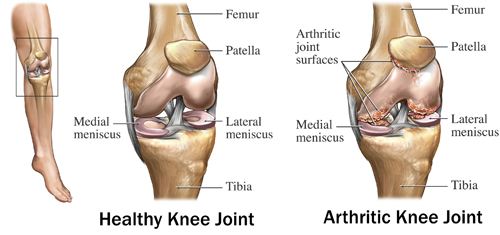
The knee is made up of 3 separate compartments

  • Medial tibiofemoral joint
  • Lateral tibiofemoral joint
  • Patellofemoral joint

The knee is typically described as a hinged joint; however, there are more complex and subtle motion and dynamic considerations.  Physiologically, the knee also undergoes axial rotation and femoral “rollback” in deeper degrees of flexion. Additionally, terminal rotatory motion, known as the “screw home mechanism,” occurs as the tibia externally rotates when the knee goes into terminal extension. The lateral tibial plateau is convex and sits more proximal than the medial tibial plateau which is concave. The medial femoral condyle is larger than the lateral side. 60% of the force through the knee joint occurs on the medial tibial plateau. Thus, the medial tibial plateau is of more dense bone, and this is also why the more common wear pattern seen in osteoarthritis occurs on the medial side.

Numerous ligaments act on the knee to provide stability of the joint including:

  • An anterior cruciate ligament (ACL) – Important for axial rotation as well as preventing anterior translation of the tibia on the femur
  • A posterior cruciate ligament (PCL) – Important for preventing posterior translation of the tibia on the femur, as well as allowing for femoral rollback.
  • Lateral collateral ligament (LCL) – Varus restraint, and is typically attenuated in significant varus deformity
  • Medial collateral ligament (MCL) – Valgus restraint, and is typically attenuated in significant valgus deformity
  •  Posterolateral corner (PLC) – The primary stabilizer of external tibial rotation

Mechanical Alignment

  • The distal femur is in approximately 9 degrees of anatomic valgus relative to the joint line while the proximal tibia in 3 degrees of anatomic varus relative to the joint line.
  • The typical patellar Q angle is between 13 degrees and 19 degrees, with an increased Q angle increases the risk of patellar maltracking and dislocation.

Indications of Total Knee Replacement

The most common underlying diagnosis and indication for TKA are end-stage, degenerative osteoarthritis of the knee, with approximately 94- 97% of knee replacements performed for primary or post-traumatic osteoarthritis. These patients must have degenerative changes with pain and limitation of function in the knee that has failed conservative and non-operative measures. Other underlying diagnoses that may be treatable with a knee replacement include rheumatoid arthritis, peri-articular fractures, or malignancy. However, patients with malignancy may commonly require mega prostheses.

TKA is an elective procedure that is, in most cases, reserved for patients experiencing chronic, debilitating symptoms that continue to persist despite the exhaustion of all conservative and nonoperative treatment modalities.

Clinical symptoms of osteoarthritis include

  • Knee pain
  • Pain with activity and improving with rest
  • The pain gradually worsens over time
  • Decreased ambulatory capacity

Clinical evaluation includes

  • Full knee exam including a range of motion and ligamentous testing
  • Knee radiographs include standing anteroposterior, lateral, 45-degree posteroanterior, and skyline view of the patella

Radiographic evidence of osteoarthritis include

  • Joint space narrowing
  • Subchondral sclerosis
  • Subchondral cysts
  • Osteophyte formation

Conservative treatment includes

  • Non-steroidal anti-inflammatory medication
  • Weight loss
  • Activity modification
  • Bracing
  • Physical therapy
  • Viscosupplementation
  • Intra-articular steroid injection
  • Decreased ambulatory capacity

Clinical evaluation includes

  • Full knee exam including a range of motion and ligamentous testing
  • Knee radiographs include standing anteroposterior, lateral, 45-degree posteroanterior, and skyline view of the patella

Radiographic evidence of osteoarthritis include

  • Joint space narrowing
  • Subchondral sclerosis
  • Subchondral cysts
  • Osteophyte formation

Contraindications of Total Knee Replacement

There are few absolute contraindications for TKA including an active infection in the joint, and remote infection, or bacteremia. Relative contraindications include a significant vascular disease that may lead to poor wound healing and increased risk for infection. There is currently discussion and controversy in the literature as to risk stratification and increased complications associated with obesity. Patients with a BMI greater than 30 have an increased risk of infection and medical complications compared to non-obese patients. This risk further increases for those with a BMI  greater than 40. Patients with BMI over 40 were found to have a statistically significant increase in superficial infection, deep infection, operative time, deep vein thrombosis (DVT), length of stay, renal insufficiency, reoperation, and wound dehiscence.

TKA is contraindicated in the following clinical scenarios

  • Local knee infection or sepsis
  • Remote (extra-articular), active, ongoing infection or bacteremia
  • Severe cases of vascular dysfunction

Absolute

  • Active or latent (less than 1 year) knee sepsis
  • Presence of active infection elsewhere in body
  • Extensor mechanism dysfunction
  • Medically unstable patient

Relative

  • Neuropathic joint
  • Poor overlying skin condition
  • Morbid obesity
  • Noncompliance due to major psychiatric disorder, alcohol, or drug abuse
  • Insufficient bone stock for reconstruction
  • Poor patient motivation or unrealistic expectation
  • Severe peripheral vascular disease

Equipment

Each implant company has a specific system with trays that come with the necessary tools and trial components. Basic equipment that will be used in all cases and will improve the efficiency and safety of the case include:

  • Standard operating table
  • De Mayo leg holder, paint roller, or other equivalent patient positioning instrumentation
  • Tourniquet

    • Overall use remains debated in the literature
    • Use and duration is surgeon-specific
  • Retractors
  • Osteotomes
  • Sagittal saw
  • Mallet
  • Lamina spreaders
  • Cement-specific equipment

    • Cement mixer system
    • Pressurizing gun
  • Pulse lavage irrigation
  • Suction
  • Bovie electrocautery

In revision cases, may also require other equipment including

  • Currettes
  • Reamers
  • Cones
  • Sleeves
  • Stemmed options including offset adjusting capabilities
  • Bone grafting options

Implant Types

Implant types have continued to evolve since the 1950s.  Insall et al. initially described in the 1970s the different models of knee prostheses. He placed them into two categories; condylar replacements that spared ligaments, and hinged-type components that sacrificed the ligaments. Four models were described, with increasing complexity in each model:

  • Unicondylar
  • Duocondylar
  • Geometric
  • Guepar

In modern arthroplasty, most implants are a derivative of these models that were initially described. From least complex to most complex they include unicompartmental, cruciate retaining, posterior stabilizing, constrained non-hinged, constrained hinged prosthetic components.

Cruciate Retaining (CR)

The ACL is sacrificed, overall feasibility mandates a competent and functional PCL.

Can be used in those with mild varus/valgus deformity. Should be avoided in those with inflammatory arthritis due to increased risk for short-term or delayed rupture of PCL.

Benefits

  • fewer patellar complications (theoretical)
  • Increased quadriceps strength (controversial, depends in part on surgical exposure utilized)
  • Improved stair climbing
  • Preserved PCL proprioception (theoretical)
  • Lower shear forces on the tibial component
  • Improved femoral bone stock preservation
  • Preserves near-normal knee kinematics
  • Avoids cam-post jump complication that exists in posterior stabilized prosthetic components

Disadvantages

  • Risk of postoperative PCL degeneration or rupture that can lead to flexion instability
  • Tight PCL can lead to increased wear on polyethylene and dysfunctional TKA kinematics

Posterior Stabilizing (PS)

Can be used in those with absent PCL, inflammatory arthritis, and may be beneficial in those with a previous patellectomy as it can add some anteroposterior stability that is absent due to the weak extensor mechanism. PS femoral prosthetic component contains a box in the femoral component with a post on the polyethylene liner that substitutes for the resected PCL.

Benefits

  • Can theoretically be easier to achieve ligamentous balance in the knee without having to worry about accounting for the physiologic effects of the intact PCL
  • Greater deformity correction compared to cruciate-retaining implants
  • Theoretically improved knee range of motion
  • Decreased polyethylene wear due to congruent articular surfaces

Disadvantages

  • Cam-post jump of the post over the femoral box, typically due to mid-late flexion instability
  • Polyethylene wear on post can lead to osteolysis
  • Patellar clunk that may occur due to a soft tissue nodule and is present when going from flexion into extension
  • The increased theoretical risk of technical error which can involve elevating the joint line

Overall, multiple studies have not demonstrated a significant difference in function, satisfaction or implant survival between cruciate-retaining and posterior stabilizing implants.

Constrained Non-Hinged

Varus-valgus constrained design is used in cases where there is LCL or MCL deficiency, moderate bone loss, or flexion gap laxity. This implant has a large tibial post with a deep femoral box.

Benefits

  • Allows for coronal stability in severe coronal bone deformities

Disadvantages

  • Increased femoral bone loss and is a poor option in younger patients unless necessary.
  • Increased risk of aseptic loosening due to increased constraint
  • Increased polyethylene wear and increased risk of cam fracture

Constrained Hinge

Rotating hinge prostheses are used in complex revision arthroplasty cases with significant bone loss, ligamentous laxity, or in oncologic cases. Femoral and tibial components link with an axle and the tibial bearing can rotate around the tibial platform. This rotation allows for a lower constraint and therefore a decreased risk of aseptic loosening. Early implants were uniplanar without allowing rotation and had a high rate of aseptic loosening.

Advantages

  • Very versatile and has application for many salvage cases

Disadvantages

  • Significant bone resection needed for implant
  • Although lower with a rotating hinge, still at risk for aseptic loosening due to increased constraint

Personnel

Total joint arthroplasty has transitioned from a fee for service to a bundled payment to incentivize quality of care over the quantity of cases. In 2015, the Center for Medicare and Medicaid Services (CMS) announced the Comprehensive Care for Joint Replacement Model (CJR). Bozic et al. in 2014 demonstrated that 70% of the total cost was post-discharge and they have created CJR in hopes of stimulating a reduction in cost and complications.  This effort has led to the development of standardized protocols and an interprofessional approach for patients undergoing knee replacement. At our institution, personnel integral to the success of a knee replacement include:

  • Primary care physician
  • Joint class instructor
  • Pre-operative intra-operative and post-anesthesia nurses
  • Scrub technician, circulating RN
  • Implant representative
  • Physician assistant/first assistant
  • Resident physician
  • Orthopedic surgeon
  • Case manager
  • Inpatient occupational and physical therapist 
  • Outpatient physical therapist
  • Home health nurse

Preparation

Non-Operative Management

Numerous non-operative treatments are employed in the pre-surgical management of knee arthroplasty. Treatments include both pharmacologic and non-pharmacologic options. Multiple studies have investigated these different treatment options, and guidelines have been put in place by the American Academy of Orthopaedic Surgeons in the 2013 evidence-based guidelines, 2nd edition.

The AAOS recommends with strong evidence for low-impact aerobic exercises, neuromuscular education, and strengthening. They also recommend strongly for the use of NSAIDs and tramadol.

The AAOS recommends moderate weight loss in patients with a BMI greater than 25.

The AAOS recommends strongly against acupuncture, glucosamine/chondroitin, viscosupplementation.

The AAOS recommends moderate against lateral wedge insoles.

The AAOS cannot recommend for or against manual therapy (i.e., chiropractic, joint manipulation), physical agents including electrotherapeutic modalities, biologic injections, corticosteroid injections, valgus directing force brace, acetaminophen, opioids, or pain patches.

Pre-operative Evaluation

A review of the literature did not demonstrate a uniform protocol as to what pre-operative evaluation is necessary before knee replacement. A thorough history and physical exam are necessary. Co-morbidities, smoking status, alcohol consumption, and mental status should all undergo evaluation. The patient risk for the development of thromboembolic events should be a consideration. However, typically, most patients will undergo an evaluation and pre-operative clearance by their primary care provider and potentially cardiologist if significant cardiac co-morbidities are present. Other subspecialty pre-operative evaluations may be necessary depending on patients’ other co-morbidities (i.e., rheumatology, nephrology, neurology). Bernstein et al.  developed a protocol that assessed patients for 19 different risk factors. Identifying these risk factors allowed for pre-operative intervention and these patients were found to have a statistically significant shorter length of stay, and lower average total direct variable cost. No difference was noted in the patients’ 90-day readmission rate.

Pre-operative Surgical Planning

It is essential to assess for previous surgical incisions, patients limb-lengths, limb deformity, the range of motion, ligamentous stability and gait. Patients neurovascular status should also be considered, Ankle-brachial index may be a prudent screening, and if less than 0.9, avascular consultation should be obtained. Patients with pre-existing peripheral vascular disease should also have their PAD assessed.

Plain radiography typically provides sufficient detail, and further studies are typically not necessary. Weight-bearing AP, lateral and sunrise views should be routinely performed. AP hip to ankle x-rays allow for the evaluation of extra-articular deformities and allow for assessment of the mechanical axis. Radiographic markers can be placed during imaging to allow for the use of templating software to assess for estimated implant sizing and positioning. A lateral patellar shift of more than 3mm was an independent risk factor for patellar maltracking. Images should be interpreted to assess for the Insall-Salvati ratio, a pre-existing slope of the tibial plateau, and coronal alignment. Custom implants are made based on CT or MRI sequences, and these studies should be performed when a custom implant is desired. Custom implants can be particularly helpful in patients with significant deformity where intramedullary or extra-medullary guides will not work, as well as in patients with pre-existing hardware.

Laboratory testing

Basic pre-operative labs should be performed such as CBC, BMP, HbA1c in diabetic patients. A goal of HbA1c of less than 7.0 is desirable; however, studies have shown that an HbA1c under 8.0 is acceptable to avoid excessive delay and complications in knee replacement. Many centers also perform a pre-operative urinalysis and nasal swabs/decolonization in potential MRSA carriers.  Other considerations include checking a total lymphocyte count (TLC) and serum albumin as these are markers of potential underlying malnutrition that may increase the risk of wound complications following the elective TKA procedure.

Technique

Surgical Technique

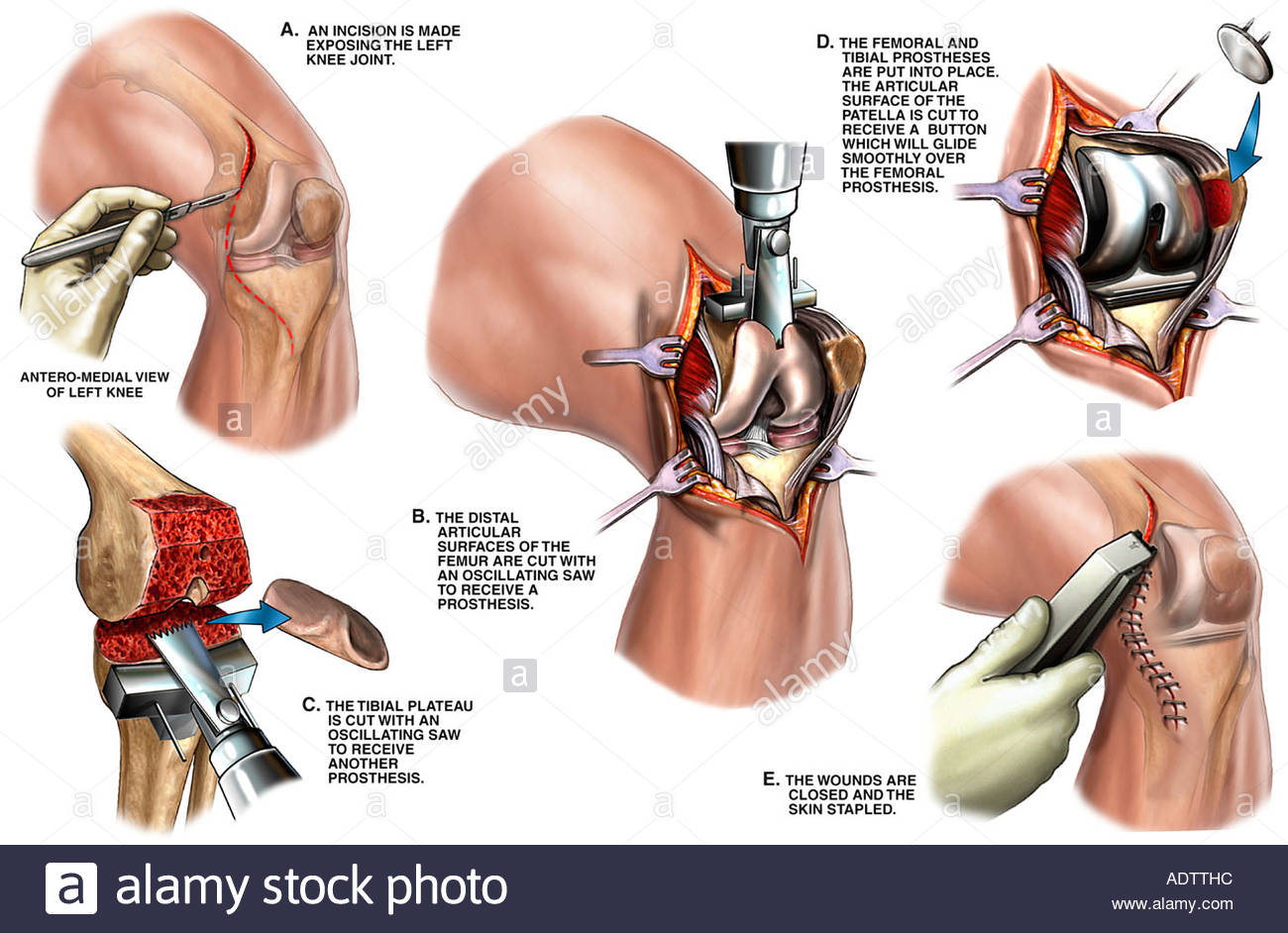
Patients are typically placed supine on the operative table; a general or spinal anesthetic is administered. A systematic review performed by Johnson et al. found no statistically significant differences between the two including mortality, surgical duration, or nerve palsy. Typically a standard midline incision with a medial parapatellar arthrotomy is used. However, other approaches include the lateral parapatellar approach, midvastus, and subcastes approach. More extensile approaches include the quadriceps snip, V-Y turndown, and tibial tubercle osteotomy. It is essential during the approach to maintain thick skin flaps and to respect the blood flow that comes from medial to lateral. Maintaining a small cuff is necessary during the arthrotomy to allow for adequate repair at the conclusion of the procedure. The medial soft tissues at the proximal tibia are skeletonized off of the bone, and a soft tissue release is performed medially. The same procedure is performed on the lateral side. However, most cases involve varus deformities, and a more extensive medial release is the choice. The infrapatellar fat pad can either be partially or completely excised. The medial and lateral meniscus, as well as ACL, will require excision. The PCL should also be sacrificed if a posterior stabilizing implant is desired. It is not necessary to resurface the patella in all cases. However, in patients with significant anterior knee pain or patellofemoral arthritis, it should be. It is worth noting that the revision rate and incidence of anterior knee pain are higher in those that do not undergo resurfacing. But those with resurfacing have a higher chance of complications such as tendon injury or fracture. Overall the patient satisfaction rates are equal between the two treatments.

The sequence of steps during knee arthroplasty will be dependent on the technique selected by the operative surgeon. These techniques include:

 Measured Resection

  • Traditionally was associated with cruciate-retaining implants, however, can also be used for PS implants as well.
  • Most surgeons desire a neutral mechanical axis, and the femur is cut in 5 to 7 degrees of valgus with approximately 9 to 10mm of bony resection distally. The tibia is cut perpendicularly to the tibial axis. Typically an intramedullary guide is utilized on the femur, and an extramedullary guide is utilized on the tibia. The anatomic slope of the tibial plateau is restored if CR implant is to be used. Should be a neutral tibial plateau cut if PS implant is being used due to risk for CAM jump phenomenon with an increased tibial slope.
  • Anatomic landmarks are used to reference a neutral femoral implant rotation.

    1. Transepicondylar axis(TEA): Connects lateral condyle prominence to sulcus of the medial epicondyle. Implants placed parallel to this will provide a rectangular flexion gap and result in improved patellofemoral tracking, femorotibial kinematics, and coronal stability.
    2. Whiteside line(AP axis of femur): Starts at the center of the trochlear sulcus and ends posteriorly at the midpoint of intercondylar notch and typically is perpendicular to TEA.
    3. Posterior Condylar axis (PCA): Goes based upon a line connecting posterior condyles, in most cases externally rotating the posterior condylar axis by 3 degrees will create a line parallel to the TEA. This, however, can be very deceiving in patients with a valgus knee and hypoplastic lateral femoral condyle and can lead to malrotation of the implant.
  • Osteophytes should be removed before any bone cuts.
  • The pitfall of the technique is that it is difficult to perform soft-tissue releases after performing bony cuts. Ligament releases after bony cuts can affect the flexion/extension gaps and lead to poor balancing. Changing ligament tension in extension will affect the flexion gap and vice versa.
  • There is an increased incidence of femoral condylar liftoff in this technique compared to gap balancing

Gap Balancing

  • Traditionally associated with PS implants, but can be used for CR as well.
  • Before any bony cuts or soft tissue release, the removal of all osteophytes is necessary; this is particularly important in gap balancing because removing osteophytes after balancing will change the ligamentous tension and will affect flexion/extension gaps.
  • Typically a proximal tibial cut is performed then lamina spreaders are placed on medial and lateral sides to assess tension on both sides in extension. Structures are released until a neutral alignment, and symmetric extension gap is achieved.
  • The same steps are then performed with the knee at 90 degrees of flexion. A rectangular flexion gap equal to the extension gap is desired, the posterior femoral condyle cuts are then performed.
  • Joint line elevation is a potential pitfall of this technique and can lead to abnormal contact forces on the patellofemoral joint as well as mid-flexion instability.

Hybrid Technique

  • The hybrid technique is a blend of the two techniques described above.

Patellar maltracking is one of the most common complications encountered in knee arthroplasty. Iatrogenic causes of the complication can be avoided by:

  • Lateralizing femoral and tibial implants
  • Avoiding internal rotation of the femoral and tibial prosthesis
  • Avoiding overstuffing or under-sizing patellar component
  • Medializing patellar component

A uniform strategy for wound closure does not exist, and many studies have found different materials to be superior. Typically a heavy ethibond suture or barbed suture is used for arthrotomy closure. Followed by absorbable suture or barbed suture is used for the deep and superficial dermis. Skin closure can be with either a running non-braided absorbable suture with either derma bond/steri-strips or staples. Silver lined dressings can be used and should be maintained for several days without being removed until drainage has stopped. For complex revisions or in high-risk patients, incisional wound vacs or negative pressure dressings are also an option.

Complications

  • Periprosthetic Fracture 

Periprosthetic fractures can occur in the distal femur, proximal tibia, or patella. They are most commonly located in the supracondylar region of the distal femur. The most common classification system used for periprosthetic fractures of the distal femur is the Lewis and Rorabeck classification. In this classification system, type-I is non-displaced with a stable component; type-II has more than 5mm of displacement or greater than 5 degrees of angulation with a stable component, and type-III has a loose component. There are several additional classification systems; All of which fail to classify intra-operative periprosthetic fractures.  The anatomic location is typically used to describe these fractures. Risk factors that may predispose patients to periprosthetic fractures include:

  • Anterior notching of the femur
  • Osteoporosis, osteolysis
  • Implant loosening
  • Rheumatoid arthritis
  • Neurologic disorder
  • Corticosteroid use
  • Increased age
  • Female sex

Treatment options can include open reduction internal fixation, knee immobilizer, revision arthroplasty if components are loose, or distal femoral replacement, if there is not adequate bone stock or significant comminution, is present.

Prosthetic Joint infection

  • Occurs in 1 to 2% of primary knee replacements
  • Most common pathogens:

    • Staphylococcus aureus
    • Staphylococcus epidermidis
  • Acute infection

    • Within 6 weeks of surgery
  • Chronic infection

    • After 6 weeks of surgery
  • Laboratory evaluation

    • CBC
    • ESR
    • CRP
    • IL-6
    • Synovial analysis

      • WBC count

        • 27800 is the cutoff in the first 6 weeks after surgery
        • Following 6 weeks, WBC count of 1100 is suggestive of infection
      • Culture
      • Gram stain
      • Alpha-defensin
  • Imaging:

    • Can demonstrate periosteal reaction, implant loosening, or osteolysis.
    • The bone scan is useful if other tests are equivocal. Its sensitivity is 99%%, however, has very poor specificity (30 to 40%)
  • Treatment:

    • IV antibiotics for 12 weeks
    • In acute infections, a polyethylene liner exchange in addition to synovectomy and irrigation and debridement can be attempted.

      • 50 to 55% success rate
    • In chronic infections or those that have failed other treatments a two-stage revision is recommended and is the gold standard in the United States. In Europe, a one stage revision is routinely performed.
    • Two-stage revision involves the placement of an antibiotic spacer for approximately 2 to 3 months.

      • These spacers typically have 3 grams of vancomycin and 4 grams of tobramycin per 40-gram bag of cement used.
      • Spacers can be either static or articulating.
      • With two stage revision, repeat frozen section should be performed before reimplantation.

        • Persistence of infection is demonstrated by greater than 5 PMN per hpf in 5 hpf at x400 magnification

Other Complication

ByRx Harun

Indications of Total Knee Arthroplasty

Indications of Total Knee Arthroplasty/Total Knee Arthroplasty (TKA) is one of the most cost-effective and consistently successful surgeries performed in orthopedics. Patient-reported outcomes are shown to improve dramatically with respect to pain relief, functional restoration, and improved quality of life. TKA provides reliable outcomes for patients’ suffering from end-stage, tri-compartmental, degenerative osteoarthritis (OA). While OA affects millions of Americans, the knee is the most commonly affected joint plagued by this progressive condition which is hallmarked by a gradual degeneration and loss of articular cartilage. The most common clinical diagnosis associated with TKA is primary OA, but other potential underlying diagnoses include inflammatory arthritis, fracture (post-traumatic OA and/or deformity), dysplasia, and malignancy.

Types of Total Knee Arthroplasty

There are 2 main types of surgery:

  • Total knee replacement – both sides of your knee joint are replaced
  • Partial (half) knee replacement – only 1 side of your joint is replaced in a smaller operation with a shorter hospital stay and recovery period.

Anatomy and Physiology

The knee is a synovial hinge joint with minimal rotational motion. It is comprised of the distal femur, proximal tibia, and the patella. There are 3 separate articulations and compartments: medial femorotibial, lateral femorotibial, and patellofemoral. The stability of the knee joint is provided by the congruity of the joint as well as by the collateral ligaments. The capsule surrounds the entire joint and extends proximally into the suprapatellar pouch. Articular cartilage covers the femoral condyles, tibial plateaus, trochlear groove, and patellar facets. Menisci are interposed in the medial and lateral compartments between the femur and tibia which act to protect the articular cartilage and support the knee.

The mechanical axis of the femur, defined by a line drawn from the center of the femoral head to the center of the knee, is 3 degrees valgus to the vertical axis. The anatomic axis of the femur, defined by a line bisecting the femoral shaft, is 6 degrees valgus to the mechanical axis of the femur and 9 degrees valgus to the vertical axis. The proximal tibia is oriented to 3 degrees of varus. The varus position of the proximal tibia, along with the offset of the hip center of rotation, results in the weight-bearing surface of the tibia is parallel to the ground. The sagittal alignment of the proximal tibia is sloped posteriorly approximately 5 to 7 degrees. The asymmetry of the natural bony anatomy maintains the alignment of the joint and ligamentous tension. The knee is comprised of 2 separate joints: the tibiofemoral and patellofemoral joints.

Patellofemoral Joint

The patellofemoral joint (PFJ) functions to increase the lever arm of the extensor mechanism. The patella transmits the tensile forces generated by the quadriceps tendon to the patellar tendon. The maximum contact force between the patella and femoral trochlea occurs at 45 degrees of knee flexion, and joint reaction forces reach 7-times body weight in the position of deep squatting.

The quadriceps muscles provide dynamic stability of the PFJ, and passive anatomic restraints include the following:

  • Medial patellofemoral ligament: Primary passive restraint against lateral translation at 20 degrees of flexion
  • Medial patellomeniscal ligament: Contributes 10% to 15% of the total restraining force
  • Lateral retinaculum: Provides 10% of the total restraining force

Tibiofemoral Articulation

The tibiofemoral articulation transmits body weight from the femur to the tibia and generates joint reaction forces of 3 and 4-times body weight during walking and climbing, respectively. Motion occurs in the sagittal plane from 10 degrees of hyperextension to about 140 to 150 degrees of hyperflexion. Extremes of flexion are often limited secondary to direct contact between the posterior thigh and calf. The tibiofemoral contact point and femoral center of rotation move posteriorly with increasing degrees of flexion in order to optimize knee flexion prior to impingement. Normal gait only requires a range of motion (ROM) from 0 to 75 degrees.

Knee stability in the coronal plane is provided by the lateral collateral ligament (LCL), which resists varus stresses, and the medial collateral ligament, which resists valgus stress forces. In addition, the anterior cruciate ligament (ACL) and posterior cruciate ligament (PCL) provide resistance to anteriorly directed and posteriorly directed forces at the knee, respectively.  Resistance to external rotatory forces is provided by the posterolateral corner structures (PLC).

Indications of Total Knee Arthroplasty

Once considered a procedure reserved for the elderly, low-demand patient population, primary TKA is offered more frequently and provides consistent positive outcomes in younger cohorts of patients.  In general, the most common underlying diagnosis associated with performing TKAs across all patient age groups is primary, end-stage, tri-compartmental osteoarthritis.

TKA is an elective procedure that is, in most cases, reserved for patients experiencing chronic, debilitating symptoms that continue to persist despite the exhaustion of all conservative and nonoperative treatment modalities.

Clinical symptoms of osteoarthritis include

  • Knee pain
  • Pain with activity and improving with rest
  • The pain gradually worsens over time
  • Decreased ambulatory capacity

Clinical evaluation includes

  • Full knee exam including a range of motion and ligamentous testing
  • Knee radiographs include standing anteroposterior, lateral, 45-degree posteroanterior, and skyline view of the patella

Radiographic evidence of osteoarthritis include

  • Joint space narrowing
  • Subchondral sclerosis
  • Subchondral cysts
  • Osteophyte formation

Conservative treatment includes

  • Non-steroidal anti-inflammatory medication
  • Weight loss
  • Activity modification
  • Bracing
  • Physical therapy
  • Viscosupplementation
  • Intra-articular steroid injection
  • Decreased ambulatory capacity

Clinical evaluation includes

  • Full knee exam including range of motion and ligamentous testing
  • Knee radiographs include standing anteroposterior, lateral, 45-degree posteroanterior, and skyline view of the patella

Radiographic evidence of osteoarthritis include

  • Joint space narrowing
  • Subchondral sclerosis
  • Subchondral cysts
  • Osteophyte formation

Contraindications of Total Knee Arthroplasty

TKA is contraindicated in the following clinical scenarios

  • Local knee infection or sepsis
  • Remote (extra-articular), active, ongoing infection or bacteremia
  • Severe cases of vascular dysfunction

Absolute

  • Active or latent (less than 1 year) knee sepsis
  • Presence of active infection elsewhere in body
  • Extensor mechanism dysfunction
  • Medically unstable patient

Relative

  • Neuropathic joint
  • Poor overlying skin condition
  • Morbid obesity
  • Noncompliance due to major psychiatric disorder, alcohol, or drug abuse
  • Insufficient bone stock for reconstruction
  • Poor patient motivation or unrealistic expectation
  • Severe peripheral vascular disease

Equipment of Total Knee Arthroplasty

TKA prosthesis designs have been evolving since the 1950s, beginning with Walldius’ design of the first hinged-knee replacement. In the early 1970s, the total condylar prosthesis (TCP) was the first TKA prosthesis designed to resurface all 3 compartments of the knee. The TCP was a posterior-stabilized design. The 4 main categories of TKA prosthesis designs are listed below in the order of increasing levels of constraint by design.

A TKA system will consist of instrumentation that helps the surgeon prepare the ends of the femur, tibia, and patella to receive an implant.  The instrumentation will be specific to the brand and type of implant being used with each company and model having specific intricacies.

In general, the instrumentation will consist of:

  • Intramedullary femoral guide to help establish the distal femoral alignment
  • The distal femoral cutting guide
  • Femoral sizing guide
  • The 4-in-1 femoral cutting guide
  • The extramedullary or intramedullary tibial guide
  • The proximal tibial cutting guide
  • Patella sizing guide
  • Femoral component trial
  • Tibial baseplate trial
  • Patellar button trial
  • Trial plastic bearing

The final implants will come in individual sterile packages and will consist of

  • Femoral component, typically made of cobalt-chrome
  • The tibial component, typically made of cobalt-chrome or titanium
  • Tibial polyethylene bearing, made of an ultra-high molecular weight (UHMW) polyethylene
  • Patellar button, made of UHMW polyethylene

Personnel

  • Anesthesia team
  • Operating room nurse
  • Surgical technician
  • Surgical assistant

Cruciate-Retaining

The cruciate-retaining TKA prosthesis depends on an intact PCL to provide stability inflection. Thus, its use is contraindicated in patients with pre-existing or intra-operatively recognized PCL insufficiency.  Caution is given to any patient presenting with at least moderate instability in any plane of motion, especially PLC instability patients.  PLC instability predisposes the native PCL in a cruciate-retaining TKA to abnormally high stresses and forces, ultimately leading to early failure and TKA instability requiring revision.  Cruciate-retaining TKA is contraindicated in patients suffering from inflammatory arthritic conditions given the increased risk of early PCL attenuation (e.g. Rheumatoid Arthritis).

Proposed advantages of the cruciate-retaining TKA design include:

  • Avoidance of tibial post-cam impingement and dislocation
  • Retaining more normal anatomy theoretically resembles normal knee kinematics
  • Preserved bone stock (less distal femur resected compared to PS TKA prosthesis)
  • Native PCL proprioception

Proposed disadvantages of the cruciate-retaining TKA design include:

  • A tight PCL can lead to early/accelerated polyethylene wear
  • Loose/ruptured PCL results in flexion instability and possible subluxation/dislocation

Multiple meta-analyses have demonstrated satisfactory survivorship and similar outcomes comparing the cruciate-retaining and posterior-stabilized TKA prosthesis designs.

Posterior-Stabilized

The posterior-stabilized TKA design is slightly more constrained and requires the surgeon to sacrifice the PCL. The femoral component contains a cam that is designed to engage the tibial polyethylene post as the knee flexes.

Proposed advantages of the posterior-stabilized TKA design include:

  • Facilitates overall balancing of the knee in the setting of an absent PCL
  • Theoretically, better knee flexion
  • Lower ranges of axial rotation and condylar translation

Proposed disadvantages of the posterior-stabilized TKA design include:

  • Cam jump that can result secondary to a loose flexion gap, or in knee hyperextension
  • Patellar clunk syndrome
  • Tibial post wear and/or fracture

Constrained Nonhinged Design

The constrained nonhinged prosthesis employs a larger tibial post and deeper femoral box, yielding more stability and constraint (within 2 to 3 degrees) in both varus-valgus and internal-external rotatory planes. Indications include collateral ligament attenuation or deficiency, flexion gap laxity, and moderate bone loss in the setting of neuropathic arthropathy. Downsides to this design include not only increased risk of earlier aseptic loosening secondary to the increased inter-component constraint, but also the requirement of more femoral bone resection to accommodate the components.

Constrained Hinged Design

The constrained hinged design is comprised of linked femoral and tibial components. Rotating hinge options allow the tibial bearing to rotate around a yoke that theoretically mitigates the risk of aseptic loosening at the expense of increasing levels of prosthetic constraint. Indications include global ligamentous deficiencies, resections in the setting of tumors, and massive bone loss in the setting of a neuropathic joint.

Other Component Considerations

Modularity and mobile-bearing designs are other noteworthy additional prosthetic design considerations.

Mobile bearing designs allow polyethylene rotation on the tibial baseplate. Although this design concept remains controversial in terms of its generation of reproducibly superior patient-reported outcome measures, advocates cite its utilization and relative indications in younger patient populations secondary to improved wear rates.  However, one notable disadvantage includes the potential for bearing spin-out, which is seen especially in the setting of a loose flexion gap.

All-polyethylene tibial base plates contrast the conventional metal tray with polyethylene inserts (i.e. tibial component modularity) that allow surgeons more flexibility for intra-operative adjustments for fine-tuning TKA stability. A surgeon is able to upsize or downsize the polyethylene after the final tibial implant fixation has been achieved between the metal implant and cement (or bone) interfaces. This allows for a final check and balance step which many TKA surgeons appreciate. In contrast, advocates for the all-polyethylene base plates cite significant cost savings and decreased rates of osteolysis when comparing TKA cohorts, especially in the elderly TKA patient populations.

Preparation

  • Full medical and drug history before surgery
  • Appropriate pre-surgical workup, clearance, and optimization
  • Pre-operative radiographs of the affected knee
  • Pre-operative templating of the affected knee to estimate the component size
  • Primary TKA system of choice
  • Have various final implant sizes ready and available in the hospital
  • Have increasing prosthesis constraint options ready and available in the hospital
  • Have revision total knee replacement system of choice ready and available if needed
  • +/- antibiotic cement, surgeon preference

Nonoperative Treatment Modalities

According to the 2011 American Academy of Orthopaedic Surgeons (AAOS), Evidence-Based Clinical Guidelines for the treatment of symptomatic hip or knee osteoarthritis, strong or moderately strong recommendations for nonoperative treatment modalities include weight loss, physical activity, physical therapy programs, and NSAIDs and/or tramadol. Other modalities that were not supported by moderate or strong evidence but are often considered reasonable alternative treatment options include but are not limited to acupuncture, chondroitin supplementation, hyaluronic acid injections, corticosteroid injections, lateral wedge insoles, and offloading braces.

  • tibial component: high-density polyethylene spacer
  • femoral component: metallic component, surfaces contoured similarly to the femoral condyles and trochlea
  • patellar component: high-density polyethylene; may be metal-backed

Most designs use polymethylmethacrylate (PMMA) cement for fixation. Cementless designs are available, where fixation is achieved initially by friction, then by ingrowth of bone into the prosthesis.

There are many designs in use, but broadly speaking, TKA is characterized by the degree of constraint, polyethylene spacer fixation, and posterior cruciate ligament (PCL) retention or removal.

  • unconstrained prostheses – most widely used; the patient’s supporting soft tissues help maintain stability
  • semi-constrained implants – more stable, decreased range of motion; closely conforming tibial and femoral components
  • constrained implants – hinged mechanism; most stable, but most limited range of motion, meaning more mechanical stress and susceptibility to wear, fatigue, and loosening; usually used in:
    • revision arthroplasty
    • elderly patients with highly unstable ligaments
    • combination with tumor resection
  • fixed bearing: the tibial spacer is fixed in a metal tibial tray
  • mobile bearing: a mobile polyethylene insert glides along the surface of the metallic tibial component

The PCL, an important knee stabilizer, can be:

  • retained; this is usually the case with unconstrained prostheses
  • removed
  • removed and substituted for by a PCL-substituting mechanism in the prosthesis

The decision whether to retain or remove the PCL depends mostly on the surgeon’s preference and experience.

The most cost-effective and commonest method of follow-up. Baseline radiographs should be obtained immediately post-operation.

Normal appearance on routine views:

  • AP
    • mechanical axis corrected to 0 degrees, results in femoral component placed 5-9 degrees valgus to long axis of femur
    • tibial component: aligned perpendicular to long axis of tibia
    • polyethylene (radiolucent) spacer in tibiofemoral joint space: equal width medially and laterally; NB: beam angle, patient positioning or post-op flexion contracture may distort this
  • lateral
    • femoral component: perpendicular to long femoral axis, unless surgeon has chosen to flex component by up to 3 degrees
    • tibial component: perpendicular to long tibial axis or posteriorly inclined by up to 5 degrees
    • patella: anterior and articular sides parallel to each other. Oblique patella on true lateral view suspicious for subluxation, patella Alta for patellar tendon rupture, and significant patella baja for quadriceps tendon rupture
  • skyline Merchant view
    • for assessing patellofemoral alignment: patellar component should be centered above femoral component trochlea

True axial imaging allows assessing for the rotational alignment of the femoral component. To this end, two lines are drawn, which should be parallel:

  • transepycondylar line, or axis: drawn between the sulcus of medial epicondyle and peak of the lateral epicondyle
  • a second line is drawn across the posterior margins of the femoral component
  • if the lines diverge medially, the component is externally rotated: can cause an increased medial flexion gap and result in flexion instability
  • if they diverge laterally, the component is internally rotated: early or delayed patellofemoral complications may ensue, especially if internal rotation exceeds 5 degrees

Preoperative Evaluation: Clinical Examination

A thorough history and physical examination are required before performing a TKA in any patient. Patients should be asked about any and all previous interventions and treatments. Prior joint replacements, arthroscopic procedures, or other surgeries around the knee should be considered. Old surgical scars can affect the planned surgical approach. In addition, patients with a history of prior injuries or procedures can present with mechanical axis deformities, retained hardware, or knee instability in any plane. A multitude of factors can impact the TKA prosthesis of choice that is most appropriate for the patient.

We recommend each patient pursuing elective TKA surgery first receive a comprehensive medical evaluation with any appropriate medical optimization tests performed before the TKA procedure. A surgeon must consider the relevant risks and potential benefits of performing TKA on a case-by-case basis.

Physical examination includes evaluation of the overall mechanical axis of the limb. It is critical to ensure hip pathology is either ruled out or at least considered before performing any surgery around the knee. The vascular status of the limb should also be assessed by observing the skin for any chronic venous stasis changes, cellulitis, or even wounds/ulcerations that may be present on the extremity. Distally, the pulses should be symmetric and palpable. Consideration should be given for a vascular surgeon consultation in the preoperative setting in any patient presenting with peripheral vascular disease (PVD). The surgeon should also be aware of the possibility of PVD presenting as knee pain out of proportion in the setting of relatively benign radiographs.

The preoperative range of motion should be noted at the knee and adjacent joints (hip, ankle). The soft tissues should be examined for evidence of gross atrophy, overall symmetry, and ligamentous stability in all planes at the knee joint. It is essential to document the presence of any laxity in the varus/valgus plane and the ability to correct the deformity. These parameters help prepare the surgeon for soft tissue releases that may be required to facilitate mechanical axis correction, as well as plan for additional bone resection that may be needed in the setting of significant contractures.

Preoperative Evaluation: Radiographs

Preoperative radiographs, including a weight-bearing anteroposterior (AP) view, are evaluated for overall mechanical alignment, the presence of deformity, and bone loss. The tibiofemoral angle can help estimate the magnitude of coronal deformity. The femoral resection angle is calculated as the difference between the mechanical and anatomic axis of the femur. The lateral view of the knee is essential for appreciating the native posterior slope of the proximal tibia as well as the presence of posterior osteophytes on the femoral condyles.

The patellofemoral radiographic view is not necessary for TKA templating but allows the surgeon to evaluate the magnitude of patellofemoral arthritis and deformity. In cases of advanced patellofemoral deformity, osteophyte removal may be needed prior to attempting to evert the patella during the procedure. In addition, a surgeon can plan for a possible lateral release to improve patellar tracking.

Technique

The goal of TKA is the same regardless of surgeon, implant, or technique. The variability in the procedure lies in the technique.  Some of the variations in the operative technique for TKA are listed below.

  • General anesthesia versus regional anesthesia
  • Tourniquet versus tourniquet-less surgery
  • Standard versus patient-specific instrumentation
  • Standard versus patient-specific implants
  • Traditional versus robotic-assisted TKA
  • Traditional versus navigation-assisted TKA
  • Traditional versus sensor-assisted TKA
  • Measured resection versus gap balancing
  • Cruciate-retaining implant versus cruciate stabilized the implant
  • Resurfaced versus non-resurfaced patella
  • Cement versus cement-less (press fit) TKA

Surgical Approaches

The most common approaches for the standard primary TKA procedure include the medial parapatellar, midvastus, and subcastes approach.  The medial parapatellar approach is commonly utilized and entails proximal dissection through a medial cuff of the quadriceps tendon to facilitate superior tissue quality closure at the conclusion of the procedure. Distally, a meticulous, continuous medial subperiosteal dissection sleeve is performed while maintaining intimacy with the proximal tibial bone. The extent of dissection is often dictated by the anticipated amount of deformity to be corrected. In general, this medial release is aggressive in cases of severe varus deformity, and most minimal in cases of moderate to advanced valgus knee deformity. The medial meniscus is also resected with this sleeve of soft tissue.

Alternatives to the standard medial parapatellar arthrotomy include the midvastus and subvastus approaches. The midvastus approach spares the quadriceps tendon. Instead, the vastus medialis obliquus (VMO) muscle belly is dissected along a trajectory directed toward the superomedial aspect of the proximal pole of the patella.

The subvastus approach also spares the quadriceps tendon and lifts the muscle belly of the VMO off the intermuscular septum. The subvastus approach preserves the vascularity of the patella and is cautioned as it can limit exposure in particularly challenging cases or in particularly obese patients.

Procedural Steps

Depending on surgeon preference, the specific order of bone resections and soft tissue releases will vary. However, a general overview of a preferred method is the goal of this technical summary of the TKA procedure.

Once the arthrotomy is complete, the patella is everted, and the knee is flexed with additional soft tissue releases required prior to achieving knee dislocation.  If the surgeon elects to proceed with the femur first, an intramedullary (IM) drill is utilized in order to gain access to the femoral canal for the utilization of a distal femoral IM jig. The angle set on the guide is based on the patient-specific preoperative evaluation (AP Xray), generally yielding 5 or 7 degrees of valgus. Although system-specific, most surgeons prefer resecting 9 to 10 mm of the distal femur.

Next, the proximal tibia is cut utilizing an IM or extramedullary (EM) guide with the goal of cutting the bone perpendicular (or within 2 to 3 degrees of varus for surgeons aiming for an “anatomic” TKA procedure) to the tibial axis. We prefer an IM guide and a perpendicular tibial cut. The rotation is set referencing the medial one-third of the tibial tubercle (proximally) and a point slightly medial to the center of the ankle joint (distally). This alignment is also referenced with the second ray of the foot and the tibial crest.

Once the tibial cut is performed, the extension gap can be assessed. A spacer block is then inserted with the knee in full extension, and the overall balance of the knee is assessed using an alignment rod to facilitate and verify overall varus-valgus and tibial slope parameters achieved.

Next, the flexion gap is attained after utilizing an AP sizing guide that is positioned with respect to the bony landmarks on the femur (usually Whiteside’s line or the native transepicondylar axis [TEA]). Depending on the anterior or posterior referencing style of the operating surgeon, the flexion gap is set and adjusted as needed utilizing the system-specific incremental sizing adjustments available with respect to the cutting guides. Prior to making the bony cuts, the flexion gap should be visualized, and soft tissue balancing appreciated. A spacer block can facilitate this assessment. The surgeon should ensure a rectangular flexion gap will be the ultimate result after the bone resections. After satisfactory check and balancing steps are verified, the anterior, posterior, anterior chamfer and posterior chamfer cuts are made. Care is taken to protect the collateral soft tissue structures (LCL, MCL) with retractors.

Next, the intercondylar notch cut is made perpendicular to the TEA. The attention is again turned back to the proximal tibia to finish preparation, sizing, and rotational alignment. One must be cautious to avoid internal rotation and/or component overhang which can lead to inferior TKA results. The femoral and tibial trial implants are impacted, and a provisional spacer trial is inserted. The knee is reduced and assessed for stability from 0 degrees of extension through mid-flexion stability.

If planning to resurface the patella, the resection is recommended after first appreciating the native anatomy and size of the entire patellofemoral joint. Inferior TKA outcomes can result from either over-resection, which can compromise implant-bone stock and lead to patella fracture, or under-resection, which can lead to chronic postoperative pain secondary to an overstuffed PFJ.

Finally, the stability parameters are again verified, and patellar tracking is appreciated and must pass intraoperative tracking tests. Most surgeons either use a natural range of motion tracking test to ensure the TKA passes the “no thumb” test, or a towel clip technique can be used.

Patellar maltracking, most commonly occurring laterally, can most often be corrected with a standard lateral release. In more severe cases or in scenarios consistent with component malalignment, consideration should be given to the correction of component position(s).

Wound Closure

The most recent literature remains controversial with respect to the ideal position of the knee and suture material utilized during the TKA closure. Attention to detail is required and a methodical closure is unanimously advocated. A preferred method includes closure with uni- or bi-directional barbed suture for the arthrotomy, deep fascial, and deep dermal/subcutaneous layers. Staples or monocryl can be used for the skin. A sterile dressing is then applied and left in place without being changed for the first 7 days. In addition, a minimal website/ace soft wrap dressing is applied to the knee for, at most, 24 hours to facilitate the appropriate balance between wound healing and postoperative movement of the knee.

Other Considerations

Topical tranexamic acid (TXA) is the preferred application while waiting for the cement to fully harden and prior to dropping the tourniquet. In addition, other controversial technical modalities in TKA include the use of a tourniquet, cementing the patella, femoral, and/or tibial components, as well as incorporating a betadine soak to the wound as part of the copious saline irrigation that is applied prior to closure of the arthrotomy and surgical wound. Preferred techniques include the use of a tourniquet, cementing all components, and saline-only copious pulsatile irrigation prior to arthrotomy closure.

Post-operative Rehabilitation

The length of postoperative hospitalization is 5 days on average depending on the health status of the patient and the amount of support available outside the hospital setting.[rx] Protected weight bearing on crutches or a walker is required until specified by the surgeon[rx] because of weakness in the quadriceps muscle[rx] In the immediate post-operative period, up to 39% of knee replacement patients experience inadequate pain control.[rx]

To increase the likelihood of a good outcome after surgery, multiple weeks of physical therapy is necessary. In these weeks, the therapist will help the patient return to normal activities, as well as prevent blood clots, improve circulation, increase range of motion, and eventually strengthen the surrounding muscles through specific exercises. Whether techniques such as neuromuscular electrical stimulation are effective at promoting gains in knee muscle strength after surgery are unclear.[rx] Often a range of motion (to the limits of the prosthesis) is recovered over the first two weeks (the earlier the better). Over time, patients are able to increase the amount of weight-bearing on the operated leg, and eventually are able to tolerate full weight-bearing with the guidance of the physical therapist.[rx] After about ten months, the patient should be able to return to normal daily activities, although the operated leg may be significantly weaker than the non-operated leg.[rx]

For post-operative knee replacement patients, immobility is a factor precipitated by pain and other complications. Mobility is known as an important aspect of human biology that has many beneficial effects on the body system.[rx] It is well documented in the literature that physical immobility affects every body system and contributes to functional complications of prolonged illness.[rx] In most medical-surgical hospital units that perform knee replacements, ambulation is a key aspect of nursing care that is promoted to patients. Early ambulation can decrease the risk of complications associated with immobilization such as pressure ulcers, deep vein thrombosis (DVT), impaired pulmonary function, and loss of functional mobility.[rx] Nurses’ promotion and execution of early ambulation on patients has found that it greatly reduces the complications listed above, as well as decreases length of stay and costs associated with further hospitalization.[rx] Nurses may also work with teams such as physical therapy and occupational therapy to accomplish ambulation goals and reduce complications.[rx]

Continuous passive motion (CPM) is a postoperative therapy approach that uses a machine to move the knee continuously through a specific range of motion, with the goal of preventing joint stiffness and improving recovery.[rx][rx] There is no evidence that CPM therapy leads to a clinically significant improvement in range of motion, pain, knee function, or quality of life.[rx] CPM is inexpensive, convenient, and assists patients in therapeutic compliance. However, CPM should be used in conjunction with traditional physical therapy.[rx] In unusual cases where the person has a problem that prevents standard mobilization treatment, then CPM may be useful.[rx]

Cryotherapy, also known as ‘cold therapy’ is sometimes recommended after surgery for pain relief and to limit swelling of the knee. Cryotherapy involves the application of ice bags or cooled water to the skin of the knee joint. However, the evidence that cryotherapy reduces pain and swelling is very weak and the benefits after total knee replacement surgery have been shown to be very small.[rx]

Some physicians and patients may consider having ultrasonography for deep venous thrombosis after knee replacement.[rx] However, this kind of screening should be done only when indicated because to perform it routinely would be unnecessary health care.[rx] If a medical condition exists that could cause deep vein thrombosis, a physician can choose to treat patients with cryotherapy and intermittent pneumatic compression as a preventive measure.

Neither gabapentin nor pregabalin has been found to be useful for pain following a knee replacement.[rx] A Cochrane review concluded that early multidisciplinary rehabilitation programs may produce better results at the rate of activity and participation.[rx]

Complications

TKA complications result in inferior outcomes and patient-reported satisfaction scores. Although TKA remains a reliable and reproducibly successful surgery in patients suffering from debilitating advanced degenerative arthritic knees, reports still cite that up to 1 in 5 patients who have undergone primary TKA remain dissatisfied with the outcome.

Periprosthetic Fracture

TKA periprosthetic fractures (PPFs) are further characterized by location and residual stability of the implants. Distal femur PPFs occur at a 1% to 2% rate, and risk factors include compromised patient bone quality, increased constrained TKA components, and while controversial, anterior femoral notching is a potential risk factor for postoperative fracture.

Tibial PPFs occur at a 0.5% to 1% rate, and risk factors include a prior tibial tubercle osteotomy, component malposition and/or loosening, as well as utilization of long-stemmed components. Patellar PPFs occur less frequently in unresurfaced TKA cases, and incidence rates range from 0.2% up rates as high as 15% or 20%. Risk factors for fracture include osteonecrosis, technical errors in asymmetric or over-resection, and implant-related associations including the following:

  • Central, single peg implants
  • Uncemented fixation
  • Metal-backed components

Aseptic Loosening

TKA aseptic loosening occurs secondary to a macrophage-induced inflammatory response resulting in eventual bone loss and TKA component loosening. Patients often present with pain that is increased during weight-bearing activity and/or recurrent effusions. Patients may have minimal pain at rest or with range of motion. Serial imaging and infectious labs are required to appropriately work up these conditions which eventually are treated with revision surgery if symptoms persist and the patient is considered a reasonable surgical candidate. The steps in aseptic loosening include: particulate debris formation, macrophage-induced osteolysis, micromotion of the components, and dissemination of particulate debris.

Wound Complications

The TKA postoperative wound complication spectrum ranges from superficial surgical infections (SSIs) such as cellulitis, superficial dehiscence and/or delayed wound healing to deep infections resulting in full-thickness necrosis resulting in returns to the operating room for irrigation, debridement (incision and drainage), and rotational flap coverage.

Periprosthetic Joint Infection

The incidence of prosthetic total knee infection (TKA PJI) following primary TKA is approximately 1% to 2% as reported in the literature.  Risk factors include patient-specific lifestyle factors (morbid obesity, smoking, intravenous [IV] drug use and abuse, alcohol abuse, and poor oral hygiene) and patients with a past medical history consisting of uncontrolled diabetes, chronic renal and/or liver disease, malnutrition, and HIV (CD4 counts less than 400). PJI is the most common reason for revision surgery.

The most common offending bacterial organisms in the acute setting include Staphylococcus aureusStaphylococcus epidermidis, and in chronic TKA PJI cases, coagulase-negative staphylococcus bacteria.  Treatment in the acute setting (less than 3 weeks after index surgery) can be limited to incision and drainage, polyethylene exchange, and retention of components. In addition, IV antibiotics are utilized for up to 4 to 6 weeks duration. Outcomes vary and are often influenced by multiple intraoperative, patient-related factors, and offending bacterial organism, but studies site a 55% successful outcome rate.

More aggressive treatments, especially in the setting of presentation beyond the acute (3 to 4-week time point) include a 1 or 2-stage revision TKA procedure with interval antibiotic spacer placement. The surgeon must ensure and document evidence of infection eradication.

Other Complications and Considerations

Other potential complications after TKA are beyond the scope of this review but include:

  • TKA instability – can occur in the coronal or sagittal plane(s).  Also, consideration is given for patellar maltracking or other PFJ issues (for example, overstuffing the joint) in the postoperative setting when patients complain of persistent anterior knee pain
  • Extensor mechanism disruption or rupture
  • Patellar clunk syndrome – Often occurs 12 months after TKA and is associated with popping, catching during knee extension. It is caused by nodule formation on the posterior quad tendon near its insertion on the patella. Patellar clunk syndrome is associated with posterior stabilized knee design. The cause of scar tissue formation is unknown but the pain results from tissue entrapment in the intercondylar notch. Treatment is surgical, either arthroscopic or open debridement/synovectomy. Conservative measures are often unsuccessful. physical therapy may help with quad strengthening after surgery but is not curative. Recurrence after surgical treatment is rare. More aggressive intervention such as revision TKA is often not warranted in the absence of component malposition.
  • Peroneal nerve palsy – One of the most common complications after TKA to correct the valgus deformity. During soft tissue balancing of a valgus knee, the iliotibial band preferentially affects the extension space more than flexion space and inserts on Gerdy’s tubercle. The popliteus is preferentially affected flexion space more than extension space.
  • Stiffness
  • Vascular injury and bleeding
  • Metal hypersensitivity
  • Heterotopic ossification
  • Infection, superficial and deep
  • Blood clot
  • Pulmonary embolism
  • Fracture
  • Dislocation
  • Instability
  • Osteolysis resulting in component loosening
  • Pain
  • Stiffness
  • Vascular injury
  • Nerve injury

Commonly Required and Suggested Home Preparations

Deep bending and squatting can lead to knee injuries during the recovery period. A patient can minimize these risks by making advanced arrangements and preparing his or her home. For example:

  • Arrange for a spouse, friend or other caregiver to provide meals and help around the house.
  • Arrange for transportation, as most patients cannot drive for the first 4 to 6 weeks after surgery.
  • Stock up on pre-made meals and toiletry items to avoid having to run errands post-surgery.
  • If possible, arrange to spend sleeping and waking hours on the same floor in order to avoid stairs.
  • If possible, adjust the bed height (not too high or too low) to help ease the transition in and out of bed.
  • Take away or move anything that might be tripped over, such as area rugs or electrical cords.
  • Make sure all stairs have sturdy railings.
  • Install small rails or grab bars near toilets and in showers.
  • Install a modified toilet seat; a higher seat will put less stress on the knees and make it easier to sit down and get up.
  • Put a small stool in shower to avoid standing on a slippery surface.
  • Have a comfortable, supportive chair with an ottoman to keep leg elevated for intervals.
  • Have cold packs on hand to help alleviate swelling.
  • Consider practicing using walkers, canes and other assistive devices ahead of time to ensure proficiency using them.

References

ByRx Harun

Causes of Total Knee Arthroplasty

Causes of Total Knee Arthroplasty/Total Knee Arthroplasty (TKA) is one of the most cost-effective and consistently successful surgeries performed in orthopedics. Patient-reported outcomes are shown to improve dramatically with respect to pain relief, functional restoration, and improved quality of life. TKA provides reliable outcomes for patients’ suffering from end-stage, tri-compartmental, degenerative osteoarthritis (OA). While OA affects millions of Americans, the knee is the most commonly affected joint plagued by this progressive condition which is hallmarked by a gradual degeneration and loss of articular cartilage. The most common clinical diagnosis associated with TKA is primary OA, but other potential underlying diagnoses include inflammatory arthritis, fracture (post-traumatic OA and/or deformity), dysplasia, and malignancy.

Types of Total Knee Arthroplasty

There are 2 main types of surgery:

  • Total knee replacement – both sides of your knee joint are replaced
  • Partial (half) knee replacement – only 1 side of your joint is replaced in a smaller operation with a shorter hospital stay and recovery period.

Anatomy and Physiology

The knee is a synovial hinge joint with minimal rotational motion. It is comprised of the distal femur, proximal tibia, and the patella. There are 3 separate articulations and compartments: medial femorotibial, lateral femorotibial, and patellofemoral. The stability of the knee joint is provided by the congruity of the joint as well as by the collateral ligaments. The capsule surrounds the entire joint and extends proximally into the suprapatellar pouch. Articular cartilage covers the femoral condyles, tibial plateaus, trochlear groove, and patellar facets. Menisci are interposed in the medial and lateral compartments between the femur and tibia which act to protect the articular cartilage and support the knee.

The mechanical axis of the femur, defined by a line drawn from the center of the femoral head to the center of the knee, is 3 degrees valgus to the vertical axis. The anatomic axis of the femur, defined by a line bisecting the femoral shaft, is 6 degrees valgus to the mechanical axis of the femur and 9 degrees valgus to the vertical axis. The proximal tibia is oriented to 3 degrees of varus. The varus position of the proximal tibia, along with the offset of the hip center of rotation, results in the weight-bearing surface of the tibia is parallel to the ground. The sagittal alignment of the proximal tibia is sloped posteriorly approximately 5 to 7 degrees. The asymmetry of the natural bony anatomy maintains the alignment of the joint and ligamentous tension. The knee is comprised of 2 separate joints: the tibiofemoral and patellofemoral joints.

Patellofemoral Joint

The patellofemoral joint (PFJ) functions to increase the lever arm of the extensor mechanism. The patella transmits the tensile forces generated by the quadriceps tendon to the patellar tendon. The maximum contact force between the patella and femoral trochlea occurs at 45 degrees of knee flexion, and joint reaction forces reach 7-times body weight in the position of deep squatting.

The quadriceps muscles provide dynamic stability of the PFJ, and passive anatomic restraints include the following:

  • Medial patellofemoral ligament: Primary passive restraint against lateral translation at 20 degrees of flexion
  • Medial patellomeniscal ligament: Contributes 10% to 15% of the total restraining force
  • Lateral retinaculum: Provides 10% of the total restraining force

Tibiofemoral Articulation

The tibiofemoral articulation transmits body weight from the femur to the tibia and generates joint reaction forces of 3 and 4-times body weight during walking and climbing, respectively. Motion occurs in the sagittal plane from 10 degrees of hyperextension to about 140 to 150 degrees of hyperflexion. Extremes of flexion are often limited secondary to direct contact between the posterior thigh and calf. The tibiofemoral contact point and femoral center of rotation move posteriorly with increasing degrees of flexion in order to optimize knee flexion prior to impingement. Normal gait only requires a range of motion (ROM) from 0 to 75 degrees.

Knee stability in the coronal plane is provided by the lateral collateral ligament (LCL), which resists varus stresses, and the medial collateral ligament, which resists valgus stress forces. In addition, the anterior cruciate ligament (ACL) and posterior cruciate ligament (PCL) provide resistance to anteriorly directed and posteriorly directed forces at the knee, respectively.  Resistance to external rotatory forces is provided by the posterolateral corner structures (PLC).

Indications of Total Knee Arthroplasty

Once considered a procedure reserved for the elderly, low-demand patient population, primary TKA is offered more frequently and provides consistent positive outcomes in younger cohorts of patients.  In general, the most common underlying diagnosis associated with performing TKAs across all patient age groups is primary, end-stage, tri-compartmental osteoarthritis.

TKA is an elective procedure that is, in most cases, reserved for patients experiencing chronic, debilitating symptoms that continue to persist despite the exhaustion of all conservative and nonoperative treatment modalities.

Clinical symptoms of osteoarthritis include

  • Knee pain
  • Pain with activity and improving with rest
  • The pain gradually worsens over time
  • Decreased ambulatory capacity

Clinical evaluation includes

  • Full knee exam including a range of motion and ligamentous testing
  • Knee radiographs include standing anteroposterior, lateral, 45-degree posteroanterior, and skyline view of the patella

Radiographic evidence of osteoarthritis include

  • Joint space narrowing
  • Subchondral sclerosis
  • Subchondral cysts
  • Osteophyte formation

Conservative treatment includes

  • Non-steroidal anti-inflammatory medication
  • Weight loss
  • Activity modification
  • Bracing
  • Physical therapy
  • Viscosupplementation
  • Intra-articular steroid injection
  • Decreased ambulatory capacity

Clinical evaluation includes

  • Full knee exam including range of motion and ligamentous testing
  • Knee radiographs include standing anteroposterior, lateral, 45-degree posteroanterior, and skyline view of the patella

Radiographic evidence of osteoarthritis include

  • Joint space narrowing
  • Subchondral sclerosis
  • Subchondral cysts
  • Osteophyte formation

Contraindications of Total Knee Arthroplasty

TKA is contraindicated in the following clinical scenarios

  • Local knee infection or sepsis
  • Remote (extra-articular), active, ongoing infection or bacteremia
  • Severe cases of vascular dysfunction

Absolute

  • Active or latent (less than 1 year) knee sepsis
  • Presence of active infection elsewhere in body
  • Extensor mechanism dysfunction
  • Medically unstable patient

Relative

  • Neuropathic joint
  • Poor overlying skin condition
  • Morbid obesity
  • Noncompliance due to major psychiatric disorder, alcohol, or drug abuse
  • Insufficient bone stock for reconstruction
  • Poor patient motivation or unrealistic expectation
  • Severe peripheral vascular disease

Equipment of Total Knee Arthroplasty

TKA prosthesis designs have been evolving since the 1950s, beginning with Walldius’ design of the first hinged-knee replacement. In the early 1970s, the total condylar prosthesis (TCP) was the first TKA prosthesis designed to resurface all 3 compartments of the knee. The TCP was a posterior-stabilized design. The 4 main categories of TKA prosthesis designs are listed below in the order of increasing levels of constraint by design.

A TKA system will consist of instrumentation that helps the surgeon prepare the ends of the femur, tibia, and patella to receive an implant.  The instrumentation will be specific to the brand and type of implant being used with each company and model having specific intricacies.

In general, the instrumentation will consist of:

  • Intramedullary femoral guide to help establish the distal femoral alignment
  • The distal femoral cutting guide
  • Femoral sizing guide
  • The 4-in-1 femoral cutting guide
  • The extramedullary or intramedullary tibial guide
  • The proximal tibial cutting guide
  • Patella sizing guide
  • Femoral component trial
  • Tibial baseplate trial
  • Patellar button trial
  • Trial plastic bearing

The final implants will come in individual sterile packages and will consist of

  • Femoral component, typically made of cobalt-chrome
  • The tibial component, typically made of cobalt-chrome or titanium
  • Tibial polyethylene bearing, made of an ultra-high molecular weight (UHMW) polyethylene
  • Patellar button, made of UHMW polyethylene

Personnel

  • Anesthesia team
  • Operating room nurse
  • Surgical technician
  • Surgical assistant

Cruciate-Retaining

The cruciate-retaining TKA prosthesis depends on an intact PCL to provide stability inflection. Thus, its use is contraindicated in patients with pre-existing or intra-operatively recognized PCL insufficiency.  Caution is given to any patient presenting with at least moderate instability in any plane of motion, especially PLC instability patients.  PLC instability predisposes the native PCL in a cruciate-retaining TKA to abnormally high stresses and forces, ultimately leading to early failure and TKA instability requiring revision.  Cruciate-retaining TKA is contraindicated in patients suffering from inflammatory arthritic conditions given the increased risk of early PCL attenuation (e.g. Rheumatoid Arthritis).

Proposed advantages of the cruciate-retaining TKA design include:

  • Avoidance of tibial post-cam impingement and dislocation
  • Retaining more normal anatomy theoretically resembles normal knee kinematics
  • Preserved bone stock (less distal femur resected compared to PS TKA prosthesis)
  • Native PCL proprioception

Proposed disadvantages of the cruciate-retaining TKA design include:

  • A tight PCL can lead to early/accelerated polyethylene wear
  • Loose/ruptured PCL results in flexion instability and possible subluxation/dislocation

Multiple meta-analyses have demonstrated satisfactory survivorship and similar outcomes comparing the cruciate-retaining and posterior-stabilized TKA prosthesis designs.

Posterior-Stabilized

The posterior-stabilized TKA design is slightly more constrained and requires the surgeon to sacrifice the PCL. The femoral component contains a cam that is designed to engage the tibial polyethylene post as the knee flexes.

Proposed advantages of the posterior-stabilized TKA design include:

  • Facilitates overall balancing of the knee in the setting of an absent PCL
  • Theoretically, better knee flexion
  • Lower ranges of axial rotation and condylar translation

Proposed disadvantages of the posterior-stabilized TKA design include:

  • Cam jump that can result secondary to a loose flexion gap, or in knee hyperextension
  • Patellar clunk syndrome
  • Tibial post wear and/or fracture

Constrained Nonhinged Design

The constrained nonhinged prosthesis employs a larger tibial post and deeper femoral box, yielding more stability and constraint (within 2 to 3 degrees) in both varus-valgus and internal-external rotatory planes. Indications include collateral ligament attenuation or deficiency, flexion gap laxity, and moderate bone loss in the setting of neuropathic arthropathy. Downsides to this design include not only increased risk of earlier aseptic loosening secondary to the increased inter-component constraint, but also the requirement of more femoral bone resection to accommodate the components.

Constrained Hinged Design

The constrained hinged design is comprised of linked femoral and tibial components. Rotating hinge options allow the tibial bearing to rotate around a yoke that theoretically mitigates the risk of aseptic loosening at the expense of increasing levels of prosthetic constraint. Indications include global ligamentous deficiencies, resections in the setting of tumors, and massive bone loss in the setting of a neuropathic joint.

Other Component Considerations

Modularity and mobile-bearing designs are other noteworthy additional prosthetic design considerations.

Mobile bearing designs allow polyethylene rotation on the tibial baseplate. Although this design concept remains controversial in terms of its generation of reproducibly superior patient-reported outcome measures, advocates cite its utilization and relative indications in younger patient populations secondary to improved wear rates.  However, one notable disadvantage includes the potential for bearing spin-out, which is seen especially in the setting of a loose flexion gap.

All-polyethylene tibial base plates contrast the conventional metal tray with polyethylene inserts (i.e. tibial component modularity) that allow surgeons more flexibility for intra-operative adjustments for fine-tuning TKA stability. A surgeon is able to upsize or downsize the polyethylene after the final tibial implant fixation has been achieved between the metal implant and cement (or bone) interfaces. This allows for a final check and balance step which many TKA surgeons appreciate. In contrast, advocates for the all-polyethylene base plates cite significant cost savings and decreased rates of osteolysis when comparing TKA cohorts, especially in the elderly TKA patient populations.

Preparation

  • Full medical and drug history before surgery
  • Appropriate pre-surgical workup, clearance, and optimization
  • Pre-operative radiographs of the affected knee
  • Pre-operative templating of the affected knee to estimate the component size
  • Primary TKA system of choice
  • Have various final implant sizes ready and available in the hospital
  • Have increasing prosthesis constraint options ready and available in the hospital
  • Have revision total knee replacement system of choice ready and available if needed
  • +/- antibiotic cement, surgeon preference

Nonoperative Treatment Modalities

According to the 2011 American Academy of Orthopaedic Surgeons (AAOS), Evidence-Based Clinical Guidelines for the treatment of symptomatic hip or knee osteoarthritis, strong or moderately strong recommendations for nonoperative treatment modalities include weight loss, physical activity, physical therapy programs, and NSAIDs and/or tramadol. Other modalities that were not supported by moderate or strong evidence but are often considered reasonable alternative treatment options include but are not limited to acupuncture, chondroitin supplementation, hyaluronic acid injections, corticosteroid injections, lateral wedge insoles, and offloading braces.

  • tibial component: high-density polyethylene spacer
  • femoral component: metallic component, surfaces contoured similarly to the femoral condyles and trochlea
  • patellar component: high-density polyethylene; may be metal-backed

Most designs use polymethylmethacrylate (PMMA) cement for fixation. Cementless designs are available, where fixation is achieved initially by friction, then by ingrowth of bone into the prosthesis.

There are many designs in use, but broadly speaking, TKA is characterized by the degree of constraint, polyethylene spacer fixation, and posterior cruciate ligament (PCL) retention or removal.

  • unconstrained prostheses – most widely used; the patient’s supporting soft tissues help maintain stability
  • semi-constrained implants – more stable, decreased range of motion; closely conforming tibial and femoral components
  • constrained implants – hinged mechanism; most stable, but most limited range of motion, meaning more mechanical stress and susceptibility to wear, fatigue, and loosening; usually used in:
    • revision arthroplasty
    • elderly patients with highly unstable ligaments
    • combination with tumor resection
  • fixed bearing: the tibial spacer is fixed in a metal tibial tray
  • mobile bearing: a mobile polyethylene insert glides along the surface of the metallic tibial component

The PCL, an important knee stabilizer, can be:

  • retained; this is usually the case with unconstrained prostheses
  • removed
  • removed and substituted for by a PCL-substituting mechanism in the prosthesis

The decision whether to retain or remove the PCL depends mostly on the surgeon’s preference and experience.

The most cost-effective and commonest method of follow-up. Baseline radiographs should be obtained immediately post-operation.

Normal appearance on routine views:

  • AP
    • mechanical axis corrected to 0 degrees, results in femoral component placed 5-9 degrees valgus to long axis of femur
    • tibial component: aligned perpendicular to long axis of tibia
    • polyethylene (radiolucent) spacer in tibiofemoral joint space: equal width medially and laterally; NB: beam angle, patient positioning or post-op flexion contracture may distort this
  • lateral
    • femoral component: perpendicular to long femoral axis, unless surgeon has chosen to flex component by up to 3 degrees
    • tibial component: perpendicular to long tibial axis or posteriorly inclined by up to 5 degrees
    • patella: anterior and articular sides parallel to each other. Oblique patella on true lateral view suspicious for subluxation, patella Alta for patellar tendon rupture, and significant patella baja for quadriceps tendon rupture
  • skyline Merchant view
    • for assessing patellofemoral alignment: patellar component should be centered above femoral component trochlea

True axial imaging allows assessing for the rotational alignment of the femoral component. To this end, two lines are drawn, which should be parallel:

  • transepycondylar line, or axis: drawn between the sulcus of medial epicondyle and peak of the lateral epicondyle
  • a second line is drawn across the posterior margins of the femoral component
  • if the lines diverge medially, the component is externally rotated: can cause an increased medial flexion gap and result in flexion instability
  • if they diverge laterally, the component is internally rotated: early or delayed patellofemoral complications may ensue, especially if internal rotation exceeds 5 degrees

Preoperative Evaluation: Clinical Examination

A thorough history and physical examination are required before performing a TKA in any patient. Patients should be asked about any and all previous interventions and treatments. Prior joint replacements, arthroscopic procedures, or other surgeries around the knee should be considered. Old surgical scars can affect the planned surgical approach. In addition, patients with a history of prior injuries or procedures can present with mechanical axis deformities, retained hardware, or knee instability in any plane. A multitude of factors can impact the TKA prosthesis of choice that is most appropriate for the patient.

We recommend each patient pursuing elective TKA surgery first receive a comprehensive medical evaluation with any appropriate medical optimization tests performed before the TKA procedure. A surgeon must consider the relevant risks and potential benefits of performing TKA on a case-by-case basis.

Physical examination includes evaluation of the overall mechanical axis of the limb. It is critical to ensure hip pathology is either ruled out or at least considered before performing any surgery around the knee. The vascular status of the limb should also be assessed by observing the skin for any chronic venous stasis changes, cellulitis, or even wounds/ulcerations that may be present on the extremity. Distally, the pulses should be symmetric and palpable. Consideration should be given for a vascular surgeon consultation in the preoperative setting in any patient presenting with peripheral vascular disease (PVD). The surgeon should also be aware of the possibility of PVD presenting as knee pain out of proportion in the setting of relatively benign radiographs.

The preoperative range of motion should be noted at the knee and adjacent joints (hip, ankle). The soft tissues should be examined for evidence of gross atrophy, overall symmetry, and ligamentous stability in all planes at the knee joint. It is essential to document the presence of any laxity in the varus/valgus plane and the ability to correct the deformity. These parameters help prepare the surgeon for soft tissue releases that may be required to facilitate mechanical axis correction, as well as plan for additional bone resection that may be needed in the setting of significant contractures.

Preoperative Evaluation: Radiographs

Preoperative radiographs, including a weight-bearing anteroposterior (AP) view, are evaluated for overall mechanical alignment, the presence of deformity, and bone loss. The tibiofemoral angle can help estimate the magnitude of coronal deformity. The femoral resection angle is calculated as the difference between the mechanical and anatomic axis of the femur. The lateral view of the knee is essential for appreciating the native posterior slope of the proximal tibia as well as the presence of posterior osteophytes on the femoral condyles.

The patellofemoral radiographic view is not necessary for TKA templating but allows the surgeon to evaluate the magnitude of patellofemoral arthritis and deformity. In cases of advanced patellofemoral deformity, osteophyte removal may be needed prior to attempting to evert the patella during the procedure. In addition, a surgeon can plan for a possible lateral release to improve patellar tracking.

Technique

The goal of TKA is the same regardless of surgeon, implant, or technique. The variability in the procedure lies in the technique.  Some of the variations in the operative technique for TKA are listed below.

  • General anesthesia versus regional anesthesia
  • Tourniquet versus tourniquet-less surgery
  • Standard versus patient-specific instrumentation
  • Standard versus patient-specific implants
  • Traditional versus robotic-assisted TKA
  • Traditional versus navigation-assisted TKA
  • Traditional versus sensor-assisted TKA
  • Measured resection versus gap balancing
  • Cruciate-retaining implant versus cruciate stabilized the implant
  • Resurfaced versus non-resurfaced patella
  • Cement versus cement-less (press fit) TKA

Surgical Approaches

The most common approaches for the standard primary TKA procedure include the medial parapatellar, midvastus, and subcastes approach.  The medial parapatellar approach is commonly utilized and entails proximal dissection through a medial cuff of the quadriceps tendon to facilitate superior tissue quality closure at the conclusion of the procedure. Distally, a meticulous, continuous medial subperiosteal dissection sleeve is performed while maintaining intimacy with the proximal tibial bone. The extent of dissection is often dictated by the anticipated amount of deformity to be corrected. In general, this medial release is aggressive in cases of severe varus deformity, and most minimal in cases of moderate to advanced valgus knee deformity. The medial meniscus is also resected with this sleeve of soft tissue.

Alternatives to the standard medial parapatellar arthrotomy include the midvastus and subvastus approaches. The midvastus approach spares the quadriceps tendon. Instead, the vastus medialis obliquus (VMO) muscle belly is dissected along a trajectory directed toward the superomedial aspect of the proximal pole of the patella.

The subvastus approach also spares the quadriceps tendon and lifts the muscle belly of the VMO off the intermuscular septum. The subvastus approach preserves the vascularity of the patella and is cautioned as it can limit exposure in particularly challenging cases or in particularly obese patients.

Procedural Steps

Depending on surgeon preference, the specific order of bone resections and soft tissue releases will vary. However, a general overview of a preferred method is the goal of this technical summary of the TKA procedure.

Once the arthrotomy is complete, the patella is everted, and the knee is flexed with additional soft tissue releases required prior to achieving knee dislocation.  If the surgeon elects to proceed with the femur first, an intramedullary (IM) drill is utilized in order to gain access to the femoral canal for the utilization of a distal femoral IM jig. The angle set on the guide is based on the patient-specific preoperative evaluation (AP Xray), generally yielding 5 or 7 degrees of valgus. Although system-specific, most surgeons prefer resecting 9 to 10 mm of the distal femur.

Next, the proximal tibia is cut utilizing an IM or extramedullary (EM) guide with the goal of cutting the bone perpendicular (or within 2 to 3 degrees of varus for surgeons aiming for an “anatomic” TKA procedure) to the tibial axis. We prefer an IM guide and a perpendicular tibial cut. The rotation is set referencing the medial one-third of the tibial tubercle (proximally) and a point slightly medial to the center of the ankle joint (distally). This alignment is also referenced with the second ray of the foot and the tibial crest.

Once the tibial cut is performed, the extension gap can be assessed. A spacer block is then inserted with the knee in full extension, and the overall balance of the knee is assessed using an alignment rod to facilitate and verify overall varus-valgus and tibial slope parameters achieved.

Next, the flexion gap is attained after utilizing an AP sizing guide that is positioned with respect to the bony landmarks on the femur (usually Whiteside’s line or the native transepicondylar axis [TEA]). Depending on the anterior or posterior referencing style of the operating surgeon, the flexion gap is set and adjusted as needed utilizing the system-specific incremental sizing adjustments available with respect to the cutting guides. Prior to making the bony cuts, the flexion gap should be visualized, and soft tissue balancing appreciated. A spacer block can facilitate this assessment. The surgeon should ensure a rectangular flexion gap will be the ultimate result after the bone resections. After satisfactory check and balancing steps are verified, the anterior, posterior, anterior chamfer and posterior chamfer cuts are made. Care is taken to protect the collateral soft tissue structures (LCL, MCL) with retractors.

Next, the intercondylar notch cut is made perpendicular to the TEA. The attention is again turned back to the proximal tibia to finish preparation, sizing, and rotational alignment. One must be cautious to avoid internal rotation and/or component overhang which can lead to inferior TKA results. The femoral and tibial trial implants are impacted, and a provisional spacer trial is inserted. The knee is reduced and assessed for stability from 0 degrees of extension through mid-flexion stability.

If planning to resurface the patella, the resection is recommended after first appreciating the native anatomy and size of the entire patellofemoral joint. Inferior TKA outcomes can result from either over-resection, which can compromise implant-bone stock and lead to patella fracture, or under-resection, which can lead to chronic postoperative pain secondary to an overstuffed PFJ.

Finally, the stability parameters are again verified, and patellar tracking is appreciated and must pass intraoperative tracking tests. Most surgeons either use a natural range of motion tracking test to ensure the TKA passes the “no thumb” test, or a towel clip technique can be used.

Patellar maltracking, most commonly occurring laterally, can most often be corrected with a standard lateral release. In more severe cases or in scenarios consistent with component malalignment, consideration should be given to the correction of component position(s).

Wound Closure

The most recent literature remains controversial with respect to the ideal position of the knee and suture material utilized during the TKA closure. Attention to detail is required and a methodical closure is unanimously advocated. A preferred method includes closure with uni- or bi-directional barbed suture for the arthrotomy, deep fascial, and deep dermal/subcutaneous layers. Staples or monocryl can be used for the skin. A sterile dressing is then applied and left in place without being changed for the first 7 days. In addition, a minimal website/ace soft wrap dressing is applied to the knee for, at most, 24 hours to facilitate the appropriate balance between wound healing and postoperative movement of the knee.

Other Considerations

Topical tranexamic acid (TXA) is the preferred application while waiting for the cement to fully harden and prior to dropping the tourniquet. In addition, other controversial technical modalities in TKA include the use of a tourniquet, cementing the patella, femoral, and/or tibial components, as well as incorporating a betadine soak to the wound as part of the copious saline irrigation that is applied prior to closure of the arthrotomy and surgical wound. Preferred techniques include the use of a tourniquet, cementing all components, and saline-only copious pulsatile irrigation prior to arthrotomy closure.

Post-operative Rehabilitation

The length of postoperative hospitalization is 5 days on average depending on the health status of the patient and the amount of support available outside the hospital setting.[rx] Protected weight bearing on crutches or a walker is required until specified by the surgeon[rx] because of weakness in the quadriceps muscle[rx] In the immediate post-operative period, up to 39% of knee replacement patients experience inadequate pain control.[rx]

To increase the likelihood of a good outcome after surgery, multiple weeks of physical therapy is necessary. In these weeks, the therapist will help the patient return to normal activities, as well as prevent blood clots, improve circulation, increase range of motion, and eventually strengthen the surrounding muscles through specific exercises. Whether techniques such as neuromuscular electrical stimulation are effective at promoting gains in knee muscle strength after surgery are unclear.[rx] Often a range of motion (to the limits of the prosthesis) is recovered over the first two weeks (the earlier the better). Over time, patients are able to increase the amount of weight-bearing on the operated leg, and eventually are able to tolerate full weight-bearing with the guidance of the physical therapist.[rx] After about ten months, the patient should be able to return to normal daily activities, although the operated leg may be significantly weaker than the non-operated leg.[rx]

For post-operative knee replacement patients, immobility is a factor precipitated by pain and other complications. Mobility is known as an important aspect of human biology that has many beneficial effects on the body system.[rx] It is well documented in the literature that physical immobility affects every body system and contributes to functional complications of prolonged illness.[rx] In most medical-surgical hospital units that perform knee replacements, ambulation is a key aspect of nursing care that is promoted to patients. Early ambulation can decrease the risk of complications associated with immobilization such as pressure ulcers, deep vein thrombosis (DVT), impaired pulmonary function, and loss of functional mobility.[rx] Nurses’ promotion and execution of early ambulation on patients has found that it greatly reduces the complications listed above, as well as decreases length of stay and costs associated with further hospitalization.[rx] Nurses may also work with teams such as physical therapy and occupational therapy to accomplish ambulation goals and reduce complications.[rx]

Continuous passive motion (CPM) is a postoperative therapy approach that uses a machine to move the knee continuously through a specific range of motion, with the goal of preventing joint stiffness and improving recovery.[rx][rx] There is no evidence that CPM therapy leads to a clinically significant improvement in range of motion, pain, knee function, or quality of life.[rx] CPM is inexpensive, convenient, and assists patients in therapeutic compliance. However, CPM should be used in conjunction with traditional physical therapy.[rx] In unusual cases where the person has a problem that prevents standard mobilization treatment, then CPM may be useful.[rx]

Cryotherapy, also known as ‘cold therapy’ is sometimes recommended after surgery for pain relief and to limit swelling of the knee. Cryotherapy involves the application of ice bags or cooled water to the skin of the knee joint. However, the evidence that cryotherapy reduces pain and swelling is very weak and the benefits after total knee replacement surgery have been shown to be very small.[rx]

Some physicians and patients may consider having ultrasonography for deep venous thrombosis after knee replacement.[rx] However, this kind of screening should be done only when indicated because to perform it routinely would be unnecessary health care.[rx] If a medical condition exists that could cause deep vein thrombosis, a physician can choose to treat patients with cryotherapy and intermittent pneumatic compression as a preventive measure.

Neither gabapentin nor pregabalin has been found to be useful for pain following a knee replacement.[rx] A Cochrane review concluded that early multidisciplinary rehabilitation programs may produce better results at the rate of activity and participation.[rx]

Complications

TKA complications result in inferior outcomes and patient-reported satisfaction scores. Although TKA remains a reliable and reproducibly successful surgery in patients suffering from debilitating advanced degenerative arthritic knees, reports still cite that up to 1 in 5 patients who have undergone primary TKA remain dissatisfied with the outcome.

Periprosthetic Fracture

TKA periprosthetic fractures (PPFs) are further characterized by location and residual stability of the implants. Distal femur PPFs occur at a 1% to 2% rate, and risk factors include compromised patient bone quality, increased constrained TKA components, and while controversial, anterior femoral notching is a potential risk factor for postoperative fracture.

Tibial PPFs occur at a 0.5% to 1% rate, and risk factors include a prior tibial tubercle osteotomy, component malposition and/or loosening, as well as utilization of long-stemmed components. Patellar PPFs occur less frequently in unresurfaced TKA cases, and incidence rates range from 0.2% up rates as high as 15% or 20%. Risk factors for fracture include osteonecrosis, technical errors in asymmetric or over-resection, and implant-related associations including the following:

  • Central, single peg implants
  • Uncemented fixation
  • Metal-backed components

Aseptic Loosening

TKA aseptic loosening occurs secondary to a macrophage-induced inflammatory response resulting in eventual bone loss and TKA component loosening. Patients often present with pain that is increased during weight-bearing activity and/or recurrent effusions. Patients may have minimal pain at rest or with range of motion. Serial imaging and infectious labs are required to appropriately work up these conditions which eventually are treated with revision surgery if symptoms persist and the patient is considered a reasonable surgical candidate. The steps in aseptic loosening include: particulate debris formation, macrophage-induced osteolysis, micromotion of the components, and dissemination of particulate debris.

Wound Complications

The TKA postoperative wound complication spectrum ranges from superficial surgical infections (SSIs) such as cellulitis, superficial dehiscence and/or delayed wound healing to deep infections resulting in full-thickness necrosis resulting in returns to the operating room for irrigation, debridement (incision and drainage), and rotational flap coverage.

Periprosthetic Joint Infection

The incidence of prosthetic total knee infection (TKA PJI) following primary TKA is approximately 1% to 2% as reported in the literature.  Risk factors include patient-specific lifestyle factors (morbid obesity, smoking, intravenous [IV] drug use and abuse, alcohol abuse, and poor oral hygiene) and patients with a past medical history consisting of uncontrolled diabetes, chronic renal and/or liver disease, malnutrition, and HIV (CD4 counts less than 400). PJI is the most common reason for revision surgery.

The most common offending bacterial organisms in the acute setting include Staphylococcus aureusStaphylococcus epidermidis, and in chronic TKA PJI cases, coagulase-negative staphylococcus bacteria.  Treatment in the acute setting (less than 3 weeks after index surgery) can be limited to incision and drainage, polyethylene exchange, and retention of components. In addition, IV antibiotics are utilized for up to 4 to 6 weeks duration. Outcomes vary and are often influenced by multiple intraoperative, patient-related factors, and offending bacterial organism, but studies site a 55% successful outcome rate.

More aggressive treatments, especially in the setting of presentation beyond the acute (3 to 4-week time point) include a 1 or 2-stage revision TKA procedure with interval antibiotic spacer placement. The surgeon must ensure and document evidence of infection eradication.

Other Complications and Considerations

Other potential complications after TKA are beyond the scope of this review but include:

  • TKA instability – can occur in the coronal or sagittal plane(s).  Also, consideration is given for patellar maltracking or other PFJ issues (for example, overstuffing the joint) in the postoperative setting when patients complain of persistent anterior knee pain
  • Extensor mechanism disruption or rupture
  • Patellar clunk syndrome – Often occurs 12 months after TKA and is associated with popping, catching during knee extension. It is caused by nodule formation on the posterior quad tendon near its insertion on the patella. Patellar clunk syndrome is associated with posterior stabilized knee design. The cause of scar tissue formation is unknown but the pain results from tissue entrapment in the intercondylar notch. Treatment is surgical, either arthroscopic or open debridement/synovectomy. Conservative measures are often unsuccessful. physical therapy may help with quad strengthening after surgery but is not curative. Recurrence after surgical treatment is rare. More aggressive intervention such as revision TKA is often not warranted in the absence of component malposition.
  • Peroneal nerve palsy – One of the most common complications after TKA to correct the valgus deformity. During soft tissue balancing of a valgus knee, the iliotibial band preferentially affects the extension space more than flexion space and inserts on Gerdy’s tubercle. The popliteus is preferentially affected flexion space more than extension space.
  • Stiffness
  • Vascular injury and bleeding
  • Metal hypersensitivity
  • Heterotopic ossification
  • Infection, superficial and deep
  • Blood clot
  • Pulmonary embolism
  • Fracture
  • Dislocation
  • Instability
  • Osteolysis resulting in component loosening
  • Pain
  • Stiffness
  • Vascular injury
  • Nerve injury

Commonly Required and Suggested Home Preparations

Deep bending and squatting can lead to knee injuries during the recovery period. A patient can minimize these risks by making advanced arrangements and preparing his or her home. For example:

  • Arrange for a spouse, friend or other caregiver to provide meals and help around the house.
  • Arrange for transportation, as most patients cannot drive for the first 4 to 6 weeks after surgery.
  • Stock up on pre-made meals and toiletry items to avoid having to run errands post-surgery.
  • If possible, arrange to spend sleeping and waking hours on the same floor in order to avoid stairs.
  • If possible, adjust the bed height (not too high or too low) to help ease the transition in and out of bed.
  • Take away or move anything that might be tripped over, such as area rugs or electrical cords.
  • Make sure all stairs have sturdy railings.
  • Install small rails or grab bars near toilets and in showers.
  • Install a modified toilet seat; a higher seat will put less stress on the knees and make it easier to sit down and get up.
  • Put a small stool in shower to avoid standing on a slippery surface.
  • Have a comfortable, supportive chair with an ottoman to keep leg elevated for intervals.
  • Have cold packs on hand to help alleviate swelling.
  • Consider practicing using walkers, canes and other assistive devices ahead of time to ensure proficiency using them.

References

ByRx Harun

Total Knee Arthroplasty – Indications, Contraindications

Total Knee Arthroplasty (TKA) is one of the most cost-effective and consistently successful surgeries performed in orthopedics. Patient-reported outcomes are shown to improve dramatically with respect to pain relief, functional restoration, and improved quality of life. TKA provides reliable outcomes for patients’ suffering from end-stage, tri-compartmental, degenerative osteoarthritis (OA). While OA affects millions of Americans, the knee is the most commonly affected joint plagued by this progressive condition which is hallmarked by a gradual degeneration and loss of articular cartilage. The most common clinical diagnosis associated with TKA is primary OA, but other potential underlying diagnoses include inflammatory arthritis, fracture (post-traumatic OA and/or deformity), dysplasia, and malignancy.

Types of Total Knee Arthroplasty

There are 2 main types of surgery:

  • Total knee replacement – both sides of your knee joint are replaced
  • Partial (half) knee replacement – only 1 side of your joint is replaced in a smaller operation with a shorter hospital stay and recovery period.

Anatomy and Physiology

The knee is a synovial hinge joint with minimal rotational motion. It is comprised of the distal femur, proximal tibia, and the patella. There are 3 separate articulations and compartments: medial femorotibial, lateral femorotibial, and patellofemoral. The stability of the knee joint is provided by the congruity of the joint as well as by the collateral ligaments. The capsule surrounds the entire joint and extends proximally into the suprapatellar pouch. Articular cartilage covers the femoral condyles, tibial plateaus, trochlear groove, and patellar facets. Menisci are interposed in the medial and lateral compartments between the femur and tibia which act to protect the articular cartilage and support the knee.

The mechanical axis of the femur, defined by a line drawn from the center of the femoral head to the center of the knee, is 3 degrees valgus to the vertical axis. The anatomic axis of the femur, defined by a line bisecting the femoral shaft, is 6 degrees valgus to the mechanical axis of the femur and 9 degrees valgus to the vertical axis. The proximal tibia is oriented to 3 degrees of varus. The varus position of the proximal tibia, along with the offset of the hip center of rotation, results in the weight-bearing surface of the tibia is parallel to the ground. The sagittal alignment of the proximal tibia is sloped posteriorly approximately 5 to 7 degrees. The asymmetry of the natural bony anatomy maintains the alignment of the joint and ligamentous tension. The knee is comprised of 2 separate joints: the tibiofemoral and patellofemoral joints.

Patellofemoral Joint

The patellofemoral joint (PFJ) functions to increase the lever arm of the extensor mechanism. The patella transmits the tensile forces generated by the quadriceps tendon to the patellar tendon. The maximum contact force between the patella and femoral trochlea occurs at 45 degrees of knee flexion, and joint reaction forces reach 7-times body weight in the position of deep squatting.

The quadriceps muscles provide dynamic stability of the PFJ, and passive anatomic restraints include the following:

  • Medial patellofemoral ligament: Primary passive restraint against lateral translation at 20 degrees of flexion
  • Medial patellomeniscal ligament: Contributes 10% to 15% of the total restraining force
  • Lateral retinaculum: Provides 10% of the total restraining force

Tibiofemoral Articulation

The tibiofemoral articulation transmits body weight from the femur to the tibia and generates joint reaction forces of 3 and 4-times body weight during walking and climbing, respectively. Motion occurs in the sagittal plane from 10 degrees of hyperextension to about 140 to 150 degrees of hyperflexion. Extremes of flexion are often limited secondary to direct contact between the posterior thigh and calf. The tibiofemoral contact point and femoral center of rotation move posteriorly with increasing degrees of flexion in order to optimize knee flexion prior to impingement. Normal gait only requires a range of motion (ROM) from 0 to 75 degrees.

Knee stability in the coronal plane is provided by the lateral collateral ligament (LCL), which resists varus stresses, and the medial collateral ligament, which resists valgus stress forces. In addition, the anterior cruciate ligament (ACL) and posterior cruciate ligament (PCL) provide resistance to anteriorly directed and posteriorly directed forces at the knee, respectively.  Resistance to external rotatory forces is provided by the posterolateral corner structures (PLC).

Indications of Total Knee Arthroplasty

Once considered a procedure reserved for the elderly, low-demand patient population, primary TKA is offered more frequently and provides consistent positive outcomes in younger cohorts of patients.  In general, the most common underlying diagnosis associated with performing TKAs across all patient age groups is primary, end-stage, tri-compartmental osteoarthritis.

TKA is an elective procedure that is, in most cases, reserved for patients experiencing chronic, debilitating symptoms that continue to persist despite the exhaustion of all conservative and nonoperative treatment modalities.

Clinical symptoms of osteoarthritis include

  • Knee pain
  • Pain with activity and improving with rest
  • The pain gradually worsens over time
  • Decreased ambulatory capacity

Clinical evaluation includes

  • Full knee exam including a range of motion and ligamentous testing
  • Knee radiographs include standing anteroposterior, lateral, 45-degree posteroanterior, and skyline view of the patella

Radiographic evidence of osteoarthritis include

  • Joint space narrowing
  • Subchondral sclerosis
  • Subchondral cysts
  • Osteophyte formation

Conservative treatment includes

  • Non-steroidal anti-inflammatory medication
  • Weight loss
  • Activity modification
  • Bracing
  • Physical therapy
  • Viscosupplementation
  • Intra-articular steroid injection
  • Decreased ambulatory capacity

Clinical evaluation includes

  • Full knee exam including range of motion and ligamentous testing
  • Knee radiographs include standing anteroposterior, lateral, 45-degree posteroanterior, and skyline view of the patella

Radiographic evidence of osteoarthritis include

  • Joint space narrowing
  • Subchondral sclerosis
  • Subchondral cysts
  • Osteophyte formation

Contraindications of Total Knee Arthroplasty

TKA is contraindicated in the following clinical scenarios

  • Local knee infection or sepsis
  • Remote (extra-articular), active, ongoing infection or bacteremia
  • Severe cases of vascular dysfunction

Absolute

  • Active or latent (less than 1 year) knee sepsis
  • Presence of active infection elsewhere in body
  • Extensor mechanism dysfunction
  • Medically unstable patient

Relative

  • Neuropathic joint
  • Poor overlying skin condition
  • Morbid obesity
  • Noncompliance due to major psychiatric disorder, alcohol, or drug abuse
  • Insufficient bone stock for reconstruction
  • Poor patient motivation or unrealistic expectation
  • Severe peripheral vascular disease

Equipment of Total Knee Arthroplasty

TKA prosthesis designs have been evolving since the 1950s, beginning with Walldius’ design of the first hinged-knee replacement. In the early 1970s, the total condylar prosthesis (TCP) was the first TKA prosthesis designed to resurface all 3 compartments of the knee. The TCP was a posterior-stabilized design. The 4 main categories of TKA prosthesis designs are listed below in the order of increasing levels of constraint by design.

A TKA system will consist of instrumentation that helps the surgeon prepare the ends of the femur, tibia, and patella to receive an implant.  The instrumentation will be specific to the brand and type of implant being used with each company and model having specific intricacies.

In general, the instrumentation will consist of:

  • Intramedullary femoral guide to help establish the distal femoral alignment
  • The distal femoral cutting guide
  • Femoral sizing guide
  • The 4-in-1 femoral cutting guide
  • The extramedullary or intramedullary tibial guide
  • The proximal tibial cutting guide
  • Patella sizing guide
  • Femoral component trial
  • Tibial baseplate trial
  • Patellar button trial
  • Trial plastic bearing

The final implants will come in individual sterile packages and will consist of

  • Femoral component, typically made of cobalt-chrome
  • The tibial component, typically made of cobalt-chrome or titanium
  • Tibial polyethylene bearing, made of an ultra-high molecular weight (UHMW) polyethylene
  • Patellar button, made of UHMW polyethylene

Personnel

  • Anesthesia team
  • Operating room nurse
  • Surgical technician
  • Surgical assistant

Cruciate-Retaining

The cruciate-retaining TKA prosthesis depends on an intact PCL to provide stability inflection. Thus, its use is contraindicated in patients with pre-existing or intra-operatively recognized PCL insufficiency.  Caution is given to any patient presenting with at least moderate instability in any plane of motion, especially PLC instability patients.  PLC instability predisposes the native PCL in a cruciate-retaining TKA to abnormally high stresses and forces, ultimately leading to early failure and TKA instability requiring revision.  Cruciate-retaining TKA is contraindicated in patients suffering from inflammatory arthritic conditions given the increased risk of early PCL attenuation (e.g. Rheumatoid Arthritis).

Proposed advantages of the cruciate-retaining TKA design include:

  • Avoidance of tibial post-cam impingement and dislocation
  • Retaining more normal anatomy theoretically resembles normal knee kinematics
  • Preserved bone stock (less distal femur resected compared to PS TKA prosthesis)
  • Native PCL proprioception

Proposed disadvantages of the cruciate-retaining TKA design include:

  • A tight PCL can lead to early/accelerated polyethylene wear
  • Loose/ruptured PCL results in flexion instability and possible subluxation/dislocation

Multiple meta-analyses have demonstrated satisfactory survivorship and similar outcomes comparing the cruciate-retaining and posterior-stabilized TKA prosthesis designs.

Posterior-Stabilized

The posterior-stabilized TKA design is slightly more constrained and requires the surgeon to sacrifice the PCL. The femoral component contains a cam that is designed to engage the tibial polyethylene post as the knee flexes.

Proposed advantages of the posterior-stabilized TKA design include:

  • Facilitates overall balancing of the knee in the setting of an absent PCL
  • Theoretically, better knee flexion
  • Lower ranges of axial rotation and condylar translation

Proposed disadvantages of the posterior-stabilized TKA design include:

  • Cam jump that can result secondary to a loose flexion gap, or in knee hyperextension
  • Patellar clunk syndrome
  • Tibial post wear and/or fracture

Constrained Nonhinged Design

The constrained nonhinged prosthesis employs a larger tibial post and deeper femoral box, yielding more stability and constraint (within 2 to 3 degrees) in both varus-valgus and internal-external rotatory planes. Indications include collateral ligament attenuation or deficiency, flexion gap laxity, and moderate bone loss in the setting of neuropathic arthropathy. Downsides to this design include not only increased risk of earlier aseptic loosening secondary to the increased inter-component constraint, but also the requirement of more femoral bone resection to accommodate the components.

Constrained Hinged Design

The constrained hinged design is comprised of linked femoral and tibial components. Rotating hinge options allow the tibial bearing to rotate around a yoke that theoretically mitigates the risk of aseptic loosening at the expense of increasing levels of prosthetic constraint. Indications include global ligamentous deficiencies, resections in the setting of tumors, and massive bone loss in the setting of a neuropathic joint.

Other Component Considerations

Modularity and mobile-bearing designs are other noteworthy additional prosthetic design considerations.

Mobile bearing designs allow polyethylene rotation on the tibial baseplate. Although this design concept remains controversial in terms of its generation of reproducibly superior patient-reported outcome measures, advocates cite its utilization and relative indications in younger patient populations secondary to improved wear rates.  However, one notable disadvantage includes the potential for bearing spin-out, which is seen especially in the setting of a loose flexion gap.

All-polyethylene tibial base plates contrast the conventional metal tray with polyethylene inserts (i.e. tibial component modularity) that allow surgeons more flexibility for intra-operative adjustments for fine-tuning TKA stability. A surgeon is able to upsize or downsize the polyethylene after the final tibial implant fixation has been achieved between the metal implant and cement (or bone) interfaces. This allows for a final check and balance step which many TKA surgeons appreciate. In contrast, advocates for the all-polyethylene base plates cite significant cost savings and decreased rates of osteolysis when comparing TKA cohorts, especially in the elderly TKA patient populations.

Preparation

  • Full medical and drug history before surgery
  • Appropriate pre-surgical workup, clearance, and optimization
  • Pre-operative radiographs of the affected knee
  • Pre-operative templating of the affected knee to estimate the component size
  • Primary TKA system of choice
  • Have various final implant sizes ready and available in the hospital
  • Have increasing prosthesis constraint options ready and available in the hospital
  • Have revision total knee replacement system of choice ready and available if needed
  • +/- antibiotic cement, surgeon preference

Nonoperative Treatment Modalities

According to the 2011 American Academy of Orthopaedic Surgeons (AAOS), Evidence-Based Clinical Guidelines for the treatment of symptomatic hip or knee osteoarthritis, strong or moderately strong recommendations for nonoperative treatment modalities include weight loss, physical activity, physical therapy programs, and NSAIDs and/or tramadol. Other modalities that were not supported by moderate or strong evidence but are often considered reasonable alternative treatment options include but are not limited to acupuncture, chondroitin supplementation, hyaluronic acid injections, corticosteroid injections, lateral wedge insoles, and offloading braces.

  • tibial component: high-density polyethylene spacer
  • femoral component: metallic component, surfaces contoured similarly to the femoral condyles and trochlea
  • patellar component: high-density polyethylene; may be metal-backed

Most designs use polymethylmethacrylate (PMMA) cement for fixation. Cementless designs are available, where fixation is achieved initially by friction, then by ingrowth of bone into the prosthesis.

There are many designs in use, but broadly speaking, TKA is characterized by the degree of constraint, polyethylene spacer fixation, and posterior cruciate ligament (PCL) retention or removal.

  • unconstrained prostheses – most widely used; the patient’s supporting soft tissues help maintain stability
  • semi-constrained implants – more stable, decreased range of motion; closely conforming tibial and femoral components
  • constrained implants – hinged mechanism; most stable, but most limited range of motion, meaning more mechanical stress and susceptibility to wear, fatigue, and loosening; usually used in:
    • revision arthroplasty
    • elderly patients with highly unstable ligaments
    • combination with tumor resection
  • fixed bearing: the tibial spacer is fixed in a metal tibial tray
  • mobile bearing: a mobile polyethylene insert glides along the surface of the metallic tibial component

The PCL, an important knee stabilizer, can be:

  • retained; this is usually the case with unconstrained prostheses
  • removed
  • removed and substituted for by a PCL-substituting mechanism in the prosthesis

The decision whether to retain or remove the PCL depends mostly on the surgeon’s preference and experience.

The most cost-effective and commonest method of follow-up. Baseline radiographs should be obtained immediately post-operation.

Normal appearance on routine views:

  • AP
    • mechanical axis corrected to 0 degrees, results in femoral component placed 5-9 degrees valgus to long axis of femur
    • tibial component: aligned perpendicular to long axis of tibia
    • polyethylene (radiolucent) spacer in tibiofemoral joint space: equal width medially and laterally; NB: beam angle, patient positioning or post-op flexion contracture may distort this
  • lateral
    • femoral component: perpendicular to long femoral axis, unless surgeon has chosen to flex component by up to 3 degrees
    • tibial component: perpendicular to long tibial axis or posteriorly inclined by up to 5 degrees
    • patella: anterior and articular sides parallel to each other. Oblique patella on true lateral view suspicious for subluxation, patella Alta for patellar tendon rupture, and significant patella baja for quadriceps tendon rupture
  • skyline Merchant view
    • for assessing patellofemoral alignment: patellar component should be centered above femoral component trochlea

True axial imaging allows assessing for the rotational alignment of the femoral component. To this end, two lines are drawn, which should be parallel:

  • transepycondylar line, or axis: drawn between the sulcus of medial epicondyle and peak of the lateral epicondyle
  • a second line is drawn across the posterior margins of the femoral component
  • if the lines diverge medially, the component is externally rotated: can cause an increased medial flexion gap and result in flexion instability
  • if they diverge laterally, the component is internally rotated: early or delayed patellofemoral complications may ensue, especially if internal rotation exceeds 5 degrees

Preoperative Evaluation: Clinical Examination

A thorough history and physical examination are required before performing a TKA in any patient. Patients should be asked about any and all previous interventions and treatments. Prior joint replacements, arthroscopic procedures, or other surgeries around the knee should be considered. Old surgical scars can affect the planned surgical approach. In addition, patients with a history of prior injuries or procedures can present with mechanical axis deformities, retained hardware, or knee instability in any plane. A multitude of factors can impact the TKA prosthesis of choice that is most appropriate for the patient.

We recommend each patient pursuing elective TKA surgery first receive a comprehensive medical evaluation with any appropriate medical optimization tests performed before the TKA procedure. A surgeon must consider the relevant risks and potential benefits of performing TKA on a case-by-case basis.

Physical examination includes evaluation of the overall mechanical axis of the limb. It is critical to ensure hip pathology is either ruled out or at least considered before performing any surgery around the knee. The vascular status of the limb should also be assessed by observing the skin for any chronic venous stasis changes, cellulitis, or even wounds/ulcerations that may be present on the extremity. Distally, the pulses should be symmetric and palpable. Consideration should be given for a vascular surgeon consultation in the preoperative setting in any patient presenting with peripheral vascular disease (PVD). The surgeon should also be aware of the possibility of PVD presenting as knee pain out of proportion in the setting of relatively benign radiographs.

The preoperative range of motion should be noted at the knee and adjacent joints (hip, ankle). The soft tissues should be examined for evidence of gross atrophy, overall symmetry, and ligamentous stability in all planes at the knee joint. It is essential to document the presence of any laxity in the varus/valgus plane and the ability to correct the deformity. These parameters help prepare the surgeon for soft tissue releases that may be required to facilitate mechanical axis correction, as well as plan for additional bone resection that may be needed in the setting of significant contractures.

Preoperative Evaluation: Radiographs

Preoperative radiographs, including a weight-bearing anteroposterior (AP) view, are evaluated for overall mechanical alignment, the presence of deformity, and bone loss. The tibiofemoral angle can help estimate the magnitude of coronal deformity. The femoral resection angle is calculated as the difference between the mechanical and anatomic axis of the femur. The lateral view of the knee is essential for appreciating the native posterior slope of the proximal tibia as well as the presence of posterior osteophytes on the femoral condyles.

The patellofemoral radiographic view is not necessary for TKA templating but allows the surgeon to evaluate the magnitude of patellofemoral arthritis and deformity. In cases of advanced patellofemoral deformity, osteophyte removal may be needed prior to attempting to evert the patella during the procedure. In addition, a surgeon can plan for a possible lateral release to improve patellar tracking.

Technique

The goal of TKA is the same regardless of surgeon, implant, or technique. The variability in the procedure lies in the technique.  Some of the variations in the operative technique for TKA are listed below.

  • General anesthesia versus regional anesthesia
  • Tourniquet versus tourniquet-less surgery
  • Standard versus patient-specific instrumentation
  • Standard versus patient-specific implants
  • Traditional versus robotic-assisted TKA
  • Traditional versus navigation-assisted TKA
  • Traditional versus sensor-assisted TKA
  • Measured resection versus gap balancing
  • Cruciate-retaining implant versus cruciate stabilized the implant
  • Resurfaced versus non-resurfaced patella
  • Cement versus cement-less (press fit) TKA

Surgical Approaches

The most common approaches for the standard primary TKA procedure include the medial parapatellar, midvastus, and subcastes approach.  The medial parapatellar approach is commonly utilized and entails proximal dissection through a medial cuff of the quadriceps tendon to facilitate superior tissue quality closure at the conclusion of the procedure. Distally, a meticulous, continuous medial subperiosteal dissection sleeve is performed while maintaining intimacy with the proximal tibial bone. The extent of dissection is often dictated by the anticipated amount of deformity to be corrected. In general, this medial release is aggressive in cases of severe varus deformity, and most minimal in cases of moderate to advanced valgus knee deformity. The medial meniscus is also resected with this sleeve of soft tissue.

Alternatives to the standard medial parapatellar arthrotomy include the midvastus and subvastus approaches. The midvastus approach spares the quadriceps tendon. Instead, the vastus medialis obliquus (VMO) muscle belly is dissected along a trajectory directed toward the superomedial aspect of the proximal pole of the patella.

The subvastus approach also spares the quadriceps tendon and lifts the muscle belly of the VMO off the intermuscular septum. The subvastus approach preserves the vascularity of the patella and is cautioned as it can limit exposure in particularly challenging cases or in particularly obese patients.

Procedural Steps

Depending on surgeon preference, the specific order of bone resections and soft tissue releases will vary. However, a general overview of a preferred method is the goal of this technical summary of the TKA procedure.

Once the arthrotomy is complete, the patella is everted, and the knee is flexed with additional soft tissue releases required prior to achieving knee dislocation.  If the surgeon elects to proceed with the femur first, an intramedullary (IM) drill is utilized in order to gain access to the femoral canal for the utilization of a distal femoral IM jig. The angle set on the guide is based on the patient-specific preoperative evaluation (AP Xray), generally yielding 5 or 7 degrees of valgus. Although system-specific, most surgeons prefer resecting 9 to 10 mm of the distal femur.

Next, the proximal tibia is cut utilizing an IM or extramedullary (EM) guide with the goal of cutting the bone perpendicular (or within 2 to 3 degrees of varus for surgeons aiming for an “anatomic” TKA procedure) to the tibial axis. We prefer an IM guide and a perpendicular tibial cut. The rotation is set referencing the medial one-third of the tibial tubercle (proximally) and a point slightly medial to the center of the ankle joint (distally). This alignment is also referenced with the second ray of the foot and the tibial crest.

Once the tibial cut is performed, the extension gap can be assessed. A spacer block is then inserted with the knee in full extension, and the overall balance of the knee is assessed using an alignment rod to facilitate and verify overall varus-valgus and tibial slope parameters achieved.

Next, the flexion gap is attained after utilizing an AP sizing guide that is positioned with respect to the bony landmarks on the femur (usually Whiteside’s line or the native transepicondylar axis [TEA]). Depending on the anterior or posterior referencing style of the operating surgeon, the flexion gap is set and adjusted as needed utilizing the system-specific incremental sizing adjustments available with respect to the cutting guides. Prior to making the bony cuts, the flexion gap should be visualized, and soft tissue balancing appreciated. A spacer block can facilitate this assessment. The surgeon should ensure a rectangular flexion gap will be the ultimate result after the bone resections. After satisfactory check and balancing steps are verified, the anterior, posterior, anterior chamfer and posterior chamfer cuts are made. Care is taken to protect the collateral soft tissue structures (LCL, MCL) with retractors.

Next, the intercondylar notch cut is made perpendicular to the TEA. The attention is again turned back to the proximal tibia to finish preparation, sizing, and rotational alignment. One must be cautious to avoid internal rotation and/or component overhang which can lead to inferior TKA results. The femoral and tibial trial implants are impacted, and a provisional spacer trial is inserted. The knee is reduced and assessed for stability from 0 degrees of extension through mid-flexion stability.

If planning to resurface the patella, the resection is recommended after first appreciating the native anatomy and size of the entire patellofemoral joint. Inferior TKA outcomes can result from either over-resection, which can compromise implant-bone stock and lead to patella fracture, or under-resection, which can lead to chronic postoperative pain secondary to an overstuffed PFJ.

Finally, the stability parameters are again verified, and patellar tracking is appreciated and must pass intraoperative tracking tests. Most surgeons either use a natural range of motion tracking test to ensure the TKA passes the “no thumb” test, or a towel clip technique can be used.

Patellar maltracking, most commonly occurring laterally, can most often be corrected with a standard lateral release. In more severe cases or in scenarios consistent with component malalignment, consideration should be given to the correction of component position(s).

Wound Closure

The most recent literature remains controversial with respect to the ideal position of the knee and suture material utilized during the TKA closure. Attention to detail is required and a methodical closure is unanimously advocated. A preferred method includes closure with uni- or bi-directional barbed suture for the arthrotomy, deep fascial, and deep dermal/subcutaneous layers. Staples or monocryl can be used for the skin. A sterile dressing is then applied and left in place without being changed for the first 7 days. In addition, a minimal website/ace soft wrap dressing is applied to the knee for, at most, 24 hours to facilitate the appropriate balance between wound healing and postoperative movement of the knee.

Other Considerations

Topical tranexamic acid (TXA) is the preferred application while waiting for the cement to fully harden and prior to dropping the tourniquet. In addition, other controversial technical modalities in TKA include the use of a tourniquet, cementing the patella, femoral, and/or tibial components, as well as incorporating a betadine soak to the wound as part of the copious saline irrigation that is applied prior to closure of the arthrotomy and surgical wound. Preferred techniques include the use of a tourniquet, cementing all components, and saline-only copious pulsatile irrigation prior to arthrotomy closure.

Post-operative Rehabilitation

The length of postoperative hospitalization is 5 days on average depending on the health status of the patient and the amount of support available outside the hospital setting.[rx] Protected weight bearing on crutches or a walker is required until specified by the surgeon[rx] because of weakness in the quadriceps muscle[rx] In the immediate post-operative period, up to 39% of knee replacement patients experience inadequate pain control.[rx]

To increase the likelihood of a good outcome after surgery, multiple weeks of physical therapy is necessary. In these weeks, the therapist will help the patient return to normal activities, as well as prevent blood clots, improve circulation, increase range of motion, and eventually strengthen the surrounding muscles through specific exercises. Whether techniques such as neuromuscular electrical stimulation are effective at promoting gains in knee muscle strength after surgery are unclear.[rx] Often a range of motion (to the limits of the prosthesis) is recovered over the first two weeks (the earlier the better). Over time, patients are able to increase the amount of weight-bearing on the operated leg, and eventually are able to tolerate full weight-bearing with the guidance of the physical therapist.[rx] After about ten months, the patient should be able to return to normal daily activities, although the operated leg may be significantly weaker than the non-operated leg.[rx]

For post-operative knee replacement patients, immobility is a factor precipitated by pain and other complications. Mobility is known as an important aspect of human biology that has many beneficial effects on the body system.[rx] It is well documented in the literature that physical immobility affects every body system and contributes to functional complications of prolonged illness.[rx] In most medical-surgical hospital units that perform knee replacements, ambulation is a key aspect of nursing care that is promoted to patients. Early ambulation can decrease the risk of complications associated with immobilization such as pressure ulcers, deep vein thrombosis (DVT), impaired pulmonary function, and loss of functional mobility.[rx] Nurses’ promotion and execution of early ambulation on patients has found that it greatly reduces the complications listed above, as well as decreases length of stay and costs associated with further hospitalization.[rx] Nurses may also work with teams such as physical therapy and occupational therapy to accomplish ambulation goals and reduce complications.[rx]

Continuous passive motion (CPM) is a postoperative therapy approach that uses a machine to move the knee continuously through a specific range of motion, with the goal of preventing joint stiffness and improving recovery.[rx][rx] There is no evidence that CPM therapy leads to a clinically significant improvement in range of motion, pain, knee function, or quality of life.[rx] CPM is inexpensive, convenient, and assists patients in therapeutic compliance. However, CPM should be used in conjunction with traditional physical therapy.[rx] In unusual cases where the person has a problem that prevents standard mobilization treatment, then CPM may be useful.[rx]

Cryotherapy, also known as ‘cold therapy’ is sometimes recommended after surgery for pain relief and to limit swelling of the knee. Cryotherapy involves the application of ice bags or cooled water to the skin of the knee joint. However, the evidence that cryotherapy reduces pain and swelling is very weak and the benefits after total knee replacement surgery have been shown to be very small.[rx]

Some physicians and patients may consider having ultrasonography for deep venous thrombosis after knee replacement.[rx] However, this kind of screening should be done only when indicated because to perform it routinely would be unnecessary health care.[rx] If a medical condition exists that could cause deep vein thrombosis, a physician can choose to treat patients with cryotherapy and intermittent pneumatic compression as a preventive measure.

Neither gabapentin nor pregabalin has been found to be useful for pain following a knee replacement.[rx] A Cochrane review concluded that early multidisciplinary rehabilitation programs may produce better results at the rate of activity and participation.[rx]

Complications

TKA complications result in inferior outcomes and patient-reported satisfaction scores. Although TKA remains a reliable and reproducibly successful surgery in patients suffering from debilitating advanced degenerative arthritic knees, reports still cite that up to 1 in 5 patients who have undergone primary TKA remain dissatisfied with the outcome.

Periprosthetic Fracture

TKA periprosthetic fractures (PPFs) are further characterized by location and residual stability of the implants. Distal femur PPFs occur at a 1% to 2% rate, and risk factors include compromised patient bone quality, increased constrained TKA components, and while controversial, anterior femoral notching is a potential risk factor for postoperative fracture.

Tibial PPFs occur at a 0.5% to 1% rate, and risk factors include a prior tibial tubercle osteotomy, component malposition and/or loosening, as well as utilization of long-stemmed components. Patellar PPFs occur less frequently in unresurfaced TKA cases, and incidence rates range from 0.2% up rates as high as 15% or 20%. Risk factors for fracture include osteonecrosis, technical errors in asymmetric or over-resection, and implant-related associations including the following:

  • Central, single peg implants
  • Uncemented fixation
  • Metal-backed components

Aseptic Loosening

TKA aseptic loosening occurs secondary to a macrophage-induced inflammatory response resulting in eventual bone loss and TKA component loosening. Patients often present with pain that is increased during weight-bearing activity and/or recurrent effusions. Patients may have minimal pain at rest or with range of motion. Serial imaging and infectious labs are required to appropriately work up these conditions which eventually are treated with revision surgery if symptoms persist and the patient is considered a reasonable surgical candidate. The steps in aseptic loosening include: particulate debris formation, macrophage-induced osteolysis, micromotion of the components, and dissemination of particulate debris.

Wound Complications

The TKA postoperative wound complication spectrum ranges from superficial surgical infections (SSIs) such as cellulitis, superficial dehiscence and/or delayed wound healing to deep infections resulting in full-thickness necrosis resulting in returns to the operating room for irrigation, debridement (incision and drainage), and rotational flap coverage.

Periprosthetic Joint Infection

The incidence of prosthetic total knee infection (TKA PJI) following primary TKA is approximately 1% to 2% as reported in the literature.  Risk factors include patient-specific lifestyle factors (morbid obesity, smoking, intravenous [IV] drug use and abuse, alcohol abuse, and poor oral hygiene) and patients with a past medical history consisting of uncontrolled diabetes, chronic renal and/or liver disease, malnutrition, and HIV (CD4 counts less than 400). PJI is the most common reason for revision surgery.

The most common offending bacterial organisms in the acute setting include Staphylococcus aureusStaphylococcus epidermidis, and in chronic TKA PJI cases, coagulase-negative staphylococcus bacteria.  Treatment in the acute setting (less than 3 weeks after index surgery) can be limited to incision and drainage, polyethylene exchange, and retention of components. In addition, IV antibiotics are utilized for up to 4 to 6 weeks duration. Outcomes vary and are often influenced by multiple intraoperative, patient-related factors, and offending bacterial organism, but studies site a 55% successful outcome rate.

More aggressive treatments, especially in the setting of presentation beyond the acute (3 to 4-week time point) include a 1 or 2-stage revision TKA procedure with interval antibiotic spacer placement. The surgeon must ensure and document evidence of infection eradication.

Other Complications and Considerations

Other potential complications after TKA are beyond the scope of this review but include:

  • TKA instability – can occur in the coronal or sagittal plane(s).  Also, consideration is given for patellar maltracking or other PFJ issues (for example, overstuffing the joint) in the postoperative setting when patients complain of persistent anterior knee pain
  • Extensor mechanism disruption or rupture
  • Patellar clunk syndrome – Often occurs 12 months after TKA and is associated with popping, catching during knee extension. It is caused by nodule formation on the posterior quad tendon near its insertion on the patella. Patellar clunk syndrome is associated with posterior stabilized knee design. The cause of scar tissue formation is unknown but the pain results from tissue entrapment in the intercondylar notch. Treatment is surgical, either arthroscopic or open debridement/synovectomy. Conservative measures are often unsuccessful. physical therapy may help with quad strengthening after surgery but is not curative. Recurrence after surgical treatment is rare. More aggressive intervention such as revision TKA is often not warranted in the absence of component malposition.
  • Peroneal nerve palsy – One of the most common complications after TKA to correct the valgus deformity. During soft tissue balancing of a valgus knee, the iliotibial band preferentially affects the extension space more than flexion space and inserts on Gerdy’s tubercle. The popliteus is preferentially affected flexion space more than extension space.
  • Stiffness
  • Vascular injury and bleeding
  • Metal hypersensitivity
  • Heterotopic ossification
  • Infection, superficial and deep
  • Blood clot
  • Pulmonary embolism
  • Fracture
  • Dislocation
  • Instability
  • Osteolysis resulting in component loosening
  • Pain
  • Stiffness
  • Vascular injury
  • Nerve injury

Commonly Required and Suggested Home Preparations

Deep bending and squatting can lead to knee injuries during the recovery period. A patient can minimize these risks by making advanced arrangements and preparing his or her home. For example:

  • Arrange for a spouse, friend or other caregiver to provide meals and help around the house.
  • Arrange for transportation, as most patients cannot drive for the first 4 to 6 weeks after surgery.
  • Stock up on pre-made meals and toiletry items to avoid having to run errands post-surgery.
  • If possible, arrange to spend sleeping and waking hours on the same floor in order to avoid stairs.
  • If possible, adjust the bed height (not too high or too low) to help ease the transition in and out of bed.
  • Take away or move anything that might be tripped over, such as area rugs or electrical cords.
  • Make sure all stairs have sturdy railings.
  • Install small rails or grab bars near toilets and in showers.
  • Install a modified toilet seat; a higher seat will put less stress on the knees and make it easier to sit down and get up.
  • Put a small stool in shower to avoid standing on a slippery surface.
  • Have a comfortable, supportive chair with an ottoman to keep leg elevated for intervals.
  • Have cold packs on hand to help alleviate swelling.
  • Consider practicing using walkers, canes and other assistive devices ahead of time to ensure proficiency using them.

References

ByRx Harun

Avascular Necrosis of Bone – Causes, Symptoms, Treatment

Avascular Necrosis of Bone/Osteonecrosis of the hip commonly known as avascular necrosis (AVN) of the hip, is the death of the femoral head as a result of vascular disruption. AVN of the hip results in pain around the hip which is insidious in onset. The cause is generally multifactorial and more commonly seen in males compared to females. Furthermore, the age of presentation from symptomatic AVN of the hip is younger than that of osteoarthritis. The treatment of AVN of the hip is controversial, and as such, there are many different treatment options for AVN. The ideal treatment option depends on the severity and stage of the disease.

Osteonecrosis is a degenerative bone condition characterized by the death of cellular components of the bone secondary to an interruption of the subchondral blood supply. Also known as avascular necrosis, it typically affects the epiphysis of long bones at weight-bearing joints. Advanced disease may result in the subchondral collapse which threatens the viability of the joint involved. Therefore, early recognition and treatment of osteonecrosis are essential. This activity discusses the etiology and pathogenesis of the disease, presentation, and treatment options of the most common forms of osteonecrosis.

Synonyms of Osteonecrosis

  • aseptic necrosis
  • avascular necrosis of bone
  • ischemic necrosis of bone

Types of Avascular Necrosis (AVN)

Osteonecrosis of the Hip

  • Femoral head osteonecrosis falls into two classes: traumatic or atraumatic. Of the atraumatic cases, up to 70% may be bilateral. Common classifications that map the phases of osteonecrosis of the hip include the Fiat and Arlet classification and the Steinberg classification. Fiat and Arlet describe the four stages of disease progression based on clinical and radiographic findings. Stage 1 is the initiation of the disease without radiological findings. Stage IV is the end-stage with femoral head collapse, flattening, and narrowing of the joint space. The Steinberg classification incorporates the use of MRI to detect a pre-clinical lesion and also to assess the size of the lesion.

Osteonecrosis of the Knee

  • Spontaneous osteonecrosis of the knee (SONK) is the most common type. Secondary osteonecrosis is commoner in a younger population and often associated with a number of risk factors common to all kinds of osteonecrosis as previously discussed. The third and rarest type is called post arthroscopic osteonecrosis and has been seen in 4% of patients having undergone an arthroscopic meniscectomy.
  • SONK typically presents in the sixth decade of life and is more common in the female population. Classically it affects the medial femoral condyle, and subsequent cadaveric studies have demonstrated a watershed area of the medial femoral condyle.

Osteonecrosis of the Shoulder

  • Osteonecrosis of the shoulder most frequently results from trauma however it can arise from the causes outlined above, for instance, prolonged high-dose corticosteroid usage. Most of those fracture patterns with an increased risk of avascular necrosis had an anatomic neck component. Interestingly fracture-dislocations and degree of displacement of the fragments do not predict an increased incidence of avascular necrosis of the humeral head although contradictory evidence does exist.

Osteonecrosis of the Talus

  • Most commonly caused by trauma resulting in displaced fractures to the neck of the talus. The incidence of avascular necrosis increases with co-existing dislocation at the ankle joint or subtalar joint. The Hawkins classification best describes this relationship. If osteonecrosis is to occur the pathognomonic subchondral lucency known as Hawkins sign will be absent on plain radiographs at 6-8 weeks.

Osteonecrosis of the Lunate

  • More commonly known as Keinbock’s disease involves a collapse of the lunate due to vascular insufficiency and osteonecrosis. A history of repetitive trauma, biomechanical factors related to ulna variance, and anatomic factors such as the presence of both dorsal and palmar blood supply may contribute to the risk of avascular necrosis. The Lichtman staging of Keinbock’s disease uses four stages.

Causes of Avascular Necrosis (AVN)

The widely accepted view in the literature is that a reduction in subchondral blood supply is responsible for osteonecrosis. However, there are numerous risk factors and theories on the development of this vascular impairment. Shah et al. succinctly categorizes these into six groups:

Idiopathic causes

  • In a small percentage of cases mutations in the COL2A1 gene which codes for type 2 collagen production has demonstrated autosomal dominant inheritance patterns.
  • However, in many cases, a cause cannot be identified, and these patients receive the designation of idiopathic osteonecrosis.

Direct cellular toxicity

  • Chemotherapy
  • Radiotherapy
  • Thermal injury
  • Smoking

Extraosseous arterial fracture

  • Hip dislocation
  • Femoral neck fracture
  • Iatrogenic post surgery
  • Congenital arterial abnormalities

Extraosseous venous

  • Venous abnormalities
  • Venous stasis

Intraosseous extravascular compression

  • Hemorrhage
  • Elevated bone marrow pressure
  • Fatty infiltration of bone marrow due to prolonged high-dose corticosteroid use
  • Cellular hypertrophy and marrow infiltration (Gaucher’s disease)
  • Bone marrow edema
  • Displaced fractures

Intraosseous intravascular occlusion

  • Coagulation disorders such as thrombophilias and hypofibrinolysis
  • Sickle cell crises
  • Multifactorial

Traumatic-associated risk factors

  • Femoral neck fracture
  • Dislocation or fracture-dislocation
  • Sickle cell disease
  • Hemoglobinopathies
  • Caisson disease (dysbarism)
  • Gaucher disease
  • Radiation

Atraumatic-associated risk factors

  • Corticosteroid administration
  • Alcohol use
  • Systemic lupus erthyematosus
  • Cushing disease
  • Hypersecretion of cortisol (rare)
  • Chronic renal failure/hemodialysis
  • Pancreatitis
  • Pregnancy
  • Hyperlipidemia
  • Organ transplantation
  • Intravascular coagulation
  • Thrombophlebitis
  • Cigarette smoking
  • Hyperuricemia/gout
  • HIV

Osteonecrosis of Hip

Other potential risk factors

Risk Factors

  • Irradiation
  • Trauma
  • Hematologic disease (leukemia, lymphoma)
  • Dysbaric (Caisson disease)
  • Marrow-replacing diseases (Gaucher disease)
  • Sickle cell disease
  • Alcoholism
  • Hypercoagulable states
  • Steroids
  • Systemic lupus erythematosus (SLE)
  • Transplant patient
  • Viral (CMV, hepatitis, HIV, rubella, rubeola, varicella)
  • Protease inhibitors
  • Pancreatitis
  • Vascular insult
  • Subacute bacterial endocarditis
  • Polyarteritis nodosa
  • Rheumatoid Arthritis
  • Giant cell arteritis
  • Sarcoidosis
  • Idiopathic

The risk of femoral head collapse with AVN can be stratified into three groups based on the modified Kerboul combined necrotic angle. This is calculated by the summation of the arc of femoral head necrosis on mid-sagittal and midcoronal MR images.

  • Low-risk group – combined necrotic angle less than 190 degrees
  • Moderate-risk group – the combined necrotic angle between 190 and 240 degrees
  • High-risk group – combined necrotic angle greater than 240 degrees

Symptoms of Avascular Necrosis of Bone

  • As the disease progresses, however, most patients experience joint pain – at first, only when putting weight on the affected joint, and then even when resting.
  • Pain usually develops gradually and may be mild or severe. If osteonecrosis progresses and the bone and surrounding joint surface collapse, pain may develop or increase dramatically.
  • Pain may be severe enough to cause joint stiffness by limiting the range of motion in the affected joint. Disabling osteoarthritis may develop in the affected joint.
  • Pain in the joint that may increase over time and becomes severe if the bone collapses
  • Pain that occurs even at rest
  • Limited range of motion
  • Groin pain, if the hip joint is affected
  • Limping, if the condition occurs in the leg
  • Difficulty with overhead movement, if the shoulder joint is affected

Diagnosis of Avascular Necrosis of Bone

History and Physical Exam

  • It is essential to obtain a full, detailed history pertaining to the symptomatology including onset, location of the pain, duration of symptoms, the characteristics of the pain, alleviating and aggravating symptoms, radiation of symptoms, and timing of symptoms. It is equally important to obtain a detailed medical and surgical history to identify any of the risk factors associated with AVN.
  • Patients with AVN of the femoral head will present with symptoms of hip pain with insidious onset. Typically, the pain will be associated with standing from a seated position, stairs, inclines, and impact loading. The pain will tend to be more noticeable in the anterior hip or groin as opposed to the buttock or greater trochanter.

Osteonecrosis of Hip

Radiography And Imaging

  • X-Ray – An x-ray is a common tool that the doctor may use to help diagnose the cause of joint pain. It is a simple way to produce pictures of bones. The x-ray of a person with early osteonecrosis is likely to be normal because x-rays are not sensitive enough to detect the bone changes in the early stages of the disease. X-rays can show bone damage in the later stages, and once the diagnosis is made, they are often used to monitor the course of the condition.
  • Bone Scan – Also known as bone scintigraphy, bone scans should not be used for the diagnosis of osteonecrosis because they may miss 20 to 40% of the bone locations affected.
  • Computed/Computerized Tomography (CT) – A CT scan is an imaging technique that provides the doctor with a three-dimensional picture of the bone. It also shows “slices” of the bone, making the picture much clearer than x-rays and bone scans. CT scans usually do not detect early osteonecrosis as early as MRI scans but are the best way to show a crack in the bone. Occasionally it may be useful in determining the extent of bone or joint surface collapse.
  • Biopsy – A biopsy is a surgical procedure in which tissue from the affected bone is removed and studied. It is rarely used for diagnosis, as the other imaging studies are usually sufficiently distinct to make the diagnosis with a high level of confidence.
  • Nuclear medicine – Bone scintigraphy is also quite sensitive (~85%) and is the second option after MRI. It is a choice when multiple sites of involvement must be assessed in patients with risk factors, such as sickle cell disease. The findings are different accordingly to the time of the scan:
    • early disease: often represented by a cold area likely representing the vascular interruption
    • late disease: may show a “doughnut sign”: a cold spot with surrounding high uptake ring (surrounding hyperemia and adjacent synovitis)
  • Magnetic Resonance Imaging (MRI) – MRI is a common method for diagnosing osteonecrosis. Unlike x-rays, bone scans, and CT (computed/computerized tomography) scans, MRI detects chemical changes in the bone marrow and can show osteonecrosis in its earliest stages before it is seen on an x-ray. MRI provides the doctor with a picture of the area affected and the bone rebuilding process. In addition, MRI may show diseased areas that are not yet causing any symptoms. An MRI uses a magnetic field and radio waves to produce cross-sectional images of organs and bodily tissues. MRI is the most sensitive (~95%) modality and demonstrates changes well before plain films changes are visible.
    • reactive interface line: focal serpentine low signal line with fatty center (most common appearance and first sign on MRI)
    • double line sign: T2WI serpentine peripheral/outer dark (sclerosis) and inner bright (granulation tissue) line is diagnostic (the line extends usually to the subchondral bone plate, which helps to differentiate it from subchondral fracture)
    • diffuse edema: edema is not an early sign; instead, studies show that edema occurs in advanced stages and is directly correlated with pain
    • rim sign: osteochondral fragmentation
    • secondary degenerative change (i.e. osteoarthritis)
    • on contrast-enhanced images non-viable marrow does not enhance
    • in case of radiation necrosis, there is edema or fatty replacement of the adjacent bone marrow (depending on the interval between the examination and radiotherapy)

Staging

Steinberg Classification for staging AVN of the femoral head (modification of the Ficat classification)

  • Stage 0 – Normal or nondiagnostic radiograph and MRI
  • Stage 1 – Normal radiograph, abnormal MRI
  • Stage 2 – Abnormal radiograph showing cystic and sclerotic changes in the femoral head, abnormal MRI
  • Stage 3 – Abnormal radiograph showing subchondral collapse, producing a crescent sign, abnormal MRI
  • Stage 4 – Abnormal radiograph showing flattening of the femoral head, abnormal MRI
  • Stage 5 – Abnormal radiograph showing joint narrowing with or without acetabular involvement, abnormal MRI
  • Stage 6 – abnormal radiograph showing advanced degenerative changes, abnormal MRI

There is no specific staging system for dysbaric osteonecrosis itself. However, the Ficat classification as below is utilized when staging osteonecrosis of the proximal femur.

  • Stage 0: Normal x-ray, normal MRI, no symptoms
  • Stage 1: Normal or minor osteopenia on x-ray, edema on MRI, increased uptake on bone scan, pain in the groin
  • Stage 2: Mixed osteopenia/sclerosis on x-ray, a defect on MRI, increased uptake on bone scan, groin pain and stiffness on exam
  • Stage 3: Presents with “crescent” sign or some cortical collapse on x-ray, MRI has same findings as x-ray, Increased uptake on bone scan, patient has pain radiating to knee and walks with a limp
  • Stage 4: X-ray shows end-stage collapse with secondary arthrosis of the hip joint, MRI shows similar findings as x-ray, bone scan shows increased uptake, patient presents with pain and a limp.

[stextbox id=’alert’]

Steinberg staging system

Stage   Features

0          Normal radiograph, bone scan, and MRI

I          Normal radiograph, abnormal bone scan and or magnetic resonance imaging

IA Mild (involves less than 15% of the femoral head).

IB Moderate (involves 15% to 30% of the femoral head)

IC Severe (involves over 30% of the femoral head)

II         Cystic and sclerotic change of the femoral head

IIA Mild (involves less than 15% of the femoral head)

IIB Moderate (involves 15% to 30% of the femoral head)

IIC Severe (involves more than than 30% of the femoral head)

III       Subchondral collapse (crescent sign) without flattening of the femoral head

IIIA Mild (involves under 15% of the femoral head)

IIIB Moderate (involves 15% to 30% of the femoral head)

IIIC Severe (involves over 30% of the femoral head)

IV        Flattening of the femoral head/femoral head collapse

IVA Mild (involves under 15% of the femoral head)

IVB Moderate (involves 15% to 30% of the femoral head)

IVC Severe (involves greater than 30% of the femoral head)

V         Joint space narrowing and/or acetabular changes

VA Mild

VB Moderate

VC Severe

VI        Advanced degenerative joint disease


Steinberg staging system

Stage Features
0 Normal radiograph, bone scan and magnetic resonance imaging
I Normal radiograph, abnormal bone scan and or magnetic resonance imaging
IA Mild (involves < 15% of femoral head)
IB Moderate (involves 15% to 30% of femoral head)
IC Severe (involves > 30% of femoral head)
II Cystic and sclerotic changes in the femoral head
IIA Mild (involves < 15% of femoral head)
IIB Moderate (involves 15% to 30% of femoral head)
IIC Severe (involves > 30% of femoral head)
III Subchondral collapse (crescent sign) without flattening of the femoral head
IIIA Mild (involves < 15% of femoral head)
IIIB Moderate (involves 15% to 30% of femoral head)
IIIC Severe (involves > 30% of femoral head)
IV Flattening of the femoral head/femoral head collapse
IVA Mild (involves < 15% of femoral head)
IVB Moderate (involves 15% to 30% of femoral head)
IVC Severe (involves > 30% of femoral head)
V Joint space narrowing and/or acetabular changes
VA Mild
VB Moderate
VC Severe
VI Advanced degenerative joint disease

[/stextbox]

Treatment of Avascular Necrosis of Bone

Aetna considers the following adjunctive treatments experimental and investigational for the treatment of avascular necrosis of any joint because the effectiveness of these approaches has not been established (not an all-inclusive list):

  • Autologous bone marrow mononuclear cells/bone marrow concentrate/bone marrow stem cells
  • Autologous platelet concentrate
  • Bisphosphonates
  • Bone morphogenic proteins (e.g., rhBMP-2)
  • Demineralized bone matrix
  • Erythropoietin
  • Growth factors
  • Laser therapy
  • Mesenchymal stem cells
  • Ozone therapy
  • Parathyroid hormone
  • Platelet-rich fibrin
  • Platelet-rich plasma (PRP)
  • PRP combined with stem cells
  • PRP combined with mesenchymal stem cells and synthetic bone graft
  • Synthetic bone graft substitute (e.g., calcium sulphate and calcium phosphate).

Nonoperative Treatment (Stages 0-2)

  • Bisphosphonates – This is largely limited to small lesions, less than 10% involvement of the femoral head, without evidence of collapse. The evidence is inconclusive on whether or not bisphosphonates prevent femoral head collapse.
  • Rest – Stay off the joint. This can help slow damage. You might need to hold back on physical activity or use crutches for several months.
  • Exercise – A physical therapist can show you the right moves to get a range of motion back in your joint.
  • Electrical stimulation – An electrical current could jump-start new bone growth. Your doctor might use it during surgery or give you a special gadget for it.
  • Faradic currents – Electrical currents might encourage your body to grow new bone to replace the damaged bone. Electrical stimulation can be used during surgery and applied directly to the damaged area. Or it can be administered through electrodes attached to your skin.
  • Physical Therapy – Physical therapy may provide relief and alleviate some symptoms but generally will not preclude progressive hip ON from advancing to later stages.[rx] Similarly, restricting weight-bearing with the use of assistive devices such as crutches or a cane may be useful to control symptoms of pain, weakness, and antalgic gait. Physical therapy is not appropriate if the goal of treatment is to prevent the hip from requiring THA, and to date there is no evidence that weight-bearing restrictions are helpful in preventing progressive ON disease from advancing to end-stage disease.

Medications

Investigational medication options currently being used but that are not proven or reliably used to treat ON include 1) anticoagulants, 2) bisphosphonate antiresorptive agents, 3) cholesterol lowering statins, and 4) hyperbaric oxygen. If the doctor knows what’s causing your avascular necrosis, treatment will include efforts to manage it. This can include

  • Nonsteroidal anti-inflammatory drugs (NSAIDs) – These will help with the pain. Medications, such as ibuprofen (Advil, Motrin IB, others) or naproxen sodium (Aleve) might help relieve the pain associated with avascular necrosis.
  • Cholesterol drugs – They cut the amount of cholesterol and fat in your blood, which can help prevent the blockages that lead to AVN.
  • Osteoporosis drugs – Medications, such as alendronate (Fosamax, Binosto), might slow the progression of avascular necrosis, but the evidence is mixed.
  • Cholesterol-lowering drugs – Reducing the amount of cholesterol and fat in your blood might help prevent the vessel blockages that can cause avascular necrosis.
  • Blood thinners – If you have a clotting disorder, blood thinners, such as warfarin (Coumadin, Jantoven), might be recommended to prevent clots in the vessels feeding your bones.
  • Regenerative medicine treatment. Bone marrow aspirate and concentration is a newer procedure that might be appropriate for early-stage avascular necrosis of the hip. Stem cells are harvested from your bone marrow. During surgery, a core of dead hipbone is removed and stem cells inserted in its place, potentially allowing for the growth of new bone. More study is needed.
  • Bisphosphonates  – significantly reduce the incidence of the collapse of the FH in osteonecrotic hips by reducing osteoclast activity. Alendronate has been shown to prevent early collapse of the FH in Steinberg stages II and III non-traumatic ON at 24-28 mo follow up and has been reported to diminish the amount of pain at one year follow up when it is compared with placebo treatment[,]. Alendronate has been used as adjunctive therapy with surgical procedures and has been found to reduce pain and the risk of collapse in the early stages of ONFH[]. Evidence for prevention of THR and reduction of AVN progression still remains controversial[].
  • Biophysical treatments include extracorporeal shockwave therapy (ESWT) – pulsed electromagnetic therapy, and hyperbaric oxygen (HBO) therapy. ESWT has been shown to restore tissue oxygenation, reduce edema, and induce angiogenesis and may offer an alternative to the invasive modalities for FH necrosis in the earlier stages[,]. ESWT has also been associated with improvement in both pain and function and has been found to result in a reduction of lesion size and bone marrow edema at 1-year follow up. Long term (8-9 years) improvement in pain and Harris Hip scores has also been demonstrated in the ESWT group treatment when compared with the core decompression group treatment[].

Surgery

  • Core decompression of the femoral head with or without stem cell injection
  • Vascularized free-fibula grafting
  • Total hip resurfacing
  • Total hip arthroplasty

Osteonecrosis of Hip

Surgical Options in Early-Stage Hip Osteonecrosis

Core Decompression

  • Core decompression is a minimally invasive surgical technique performed to manage symptoms in early stages (precollapse) of the condition (eg, Ficat and Arlet Stages I and II). The procedure involves drilling holes into the femoral head to relieve pressure and create channels for new blood vessels to nourish the affected areas. The published success rates of core decompression vary greatly from 40% to 100%, depending on patient population.[rx]
  • Higher success rates after core decompression are seen in patients with the earliest disease stages. Patients with successful core decompression procedures typically return to unassisted ambulation after several months and can have complete pain relief.[rx]

Bone grafting procedures

  • Non-vascularized bone grafts from different sources (allograft, autograft or artificial) have been used to fill the necrotic area in the FH. The grafting can be performed through the core decompression tract, which is the most common technique, but also through a window in the FH or in the femoral neck[].
  • This latter technique, also referred to as the trapdoor procedure, requires a surgical dislocation of the hip in order to graft the defect through a cartilage window in the FH.A standard technique uses an autograft that involves taking bone from one part of the body and moving it to another part of the body. A bone graft that is harvested from a donor or cadaver is called an allograft and is typically acquired through a bone bank.

Bone Marrow Aspirate Concentration

  • The bone marrow aspirate concentration injection procedure with core decompression involves the use of concentrated bone marrow that is injected into the dead bone of the hip. This investigational technique harvests stem cells from a patient’s bone marrow and injects them into the area of ON.[rx]
  • The bone marrow aspirate concentration procedure is hypothesized to prevent further progression of the disease and to stimulate new bone growth.[rx]

Percutaneous Drilling

  • Another surgical option is percutaneous drilling. In this procedure, a hole is drilled percutaneously through the femoral neck to the affected site in the femoral head. One report on 45 hips with a mean follow-up of 24 months reported 24 (80%) of 30 hips with Ficat and Arlet Stage I disease had successful outcomes (defined as Harris Hip Score < 70).[rx] A more recent study comparing multiple drilling vs standard core decompression showed favorable results in favor of percutanteous drilling.[rx]

Surgical Options in Advanced-Stage Hip Osteonecrosis

Vascularized Bone Graft

  • A vascularized fibula graft is a more involved surgical procedure in which a segment of bone is taken from the fibula with its blood supply. The graft is then transplanted into a hole created in the femoral neck and head, and the artery and vein are reattached to help heal the area of ON.[rx]

Osteotomy

  • Osteotomy in hip ON can be performed to remove necrotic bone away from primary weight-bearing areas. Although this operation may delay THA surgery, it is most useful in patients with idiopathic ON who demonstrate small precollapse or early postcollapse of the femoral head.
  • A consequence of osteotomies, however, is that they make subsequent THA more challenging and are often associated with an increased risk of nonunion of the bone.

Nonvascularized Bone Graft

  • There are 3 types of nonvascularized bone grafting surgeries: 1) trapdoor procedure, 2) lightbulb technique, and 3) Phemister technique. The trapdoor procedure is one in which autogenous cancellous and cortical bone grafting have been successful in Ficat and Arlet Stage III hip ON in patients with small- to medium-sized lesions.
  • A review of the results of 30 trapdoor operations performed on 23 patients with Ficat and Arlet Stage III or Stage IV ON of the femoral head performed through a so-called trapdoor made in the femoral head revealed a good or excellent result as determined by the Harris Hip Score system.[rx]

Lightbulb Technique

  • The lightbulb technique uses a cortical window in the anterior aspect of the femoral neck. Necrotic bone can be removed using this window, which can be later packed with nonvascularized bone graft. Wang et al[rx] evaluated 110 patients (138 hips) who underwent the lightbulb procedure.
  • At mean follow-up of 25 months, mean Harris Hip Scores improved from 62 to 79 points. A total of 94 hips (68%) were considered to have successful outcomes at latest follow-up. Radiographic improvements were noted in 100% of Association Research Circulation Osseous Stage IIa patients, 77% in stage IIb patients, and 51% in stage IIc and IIIa patients.[rx]

Phemister Technique

  • In the Phemister technique, a trephine is inserted through the femoral neck to create a tract to the lesion. A second trephine is then inserted to create another tract to the lesion site. A cortical strut graft can then be placed in the lesion. A recent review reports this procedure to have a clinical success rate ranging from 36% to 90%.25

Total Hip Arthroplasty

  • Once the femoral head has undergone major collapse, replacing the hip joint is the only practical operative option and offers the most predictable pain relief in advanced ON. THA is successful in relieving pain and restoring function in the majority of patients.[rxrx] In THA, the diseased cartilage and bone constituting the hip joint is replaced with artificial implants made of metal and plastic.

Biological agents

  • There is considerable enthusiasm in the development of biological therapies that can enhance core decompression with osteogenic (mesenchymal stem cells) and/or osteoinductive agents (bone morphogenic protein) that have the potential to produce better results for larger lesions.
  • It has been hypothesized that there is an insufficient supply of progenitor cells in patients with AVN, which are required to enhance remodeling in areas of ON[].

Tantalum implants

  • Porous tantalum implants in combination with core decompression offers the advantage of providing structural support without the risk of autograft harvest or the infectious complications of bone allograft[]. Veillete et al[] reported an overall survival rate of 91.8% at twenty-four months, and 68.1% at forty-eight months after evaluating fifty-four patients with ONFH treated with core decompression and the insertion of a porous tantalum rod.

FHRP

Although FHSP may provide good clinical results in patients with small pre-collapse lesions, these interventions are less predictable in patients with larger lesions or in FH collapse. These patients are therefore better candidates for FHRP.

Hemi-resurfacing arthroplasty and hemipolar/bipolar hip replacement

  • Hemi-resurfacing arthroplasty is a significant treatment option when the joint surface is still preserved and the articular cartilage is minimally damaged. Possible indications include a Ficat III, early stage Ficat IV, or early failure of a free vascularized fibula graft. With good patient selection and surgical technique this procedure can restore patient function although pain relief may not be as predictable as after THR[].
  • Hemi-resurfacing arthroplasty causes little distortion of the anatomy, preserves bone, and produces minimal particle debris. Accurate evaluation of the acetabular articular cartilage and its longevity with this component poses a difficult challenge.

Hemi-arthroplasty

  • The replacements are an alternative treatment strategy as they preserve the acetabular bone stock. The major concerns with this procedure are the incidence of protrusion and polyethylene wear that can lead to particle-induced osteolysis and femoral stem loosening[,]. Nevertheless, either hemi-resurfacing arthroplasty or proximal femoral osteotomies are preferred to hemi-arthroplasty.

THA

  • Arthroplasty is typically reserved for patients with late-stage ONFH, as well as older patients and those with more advanced arthritis []. Arthroplasty is the only treatment that has been proven to reduce pain and restore mobility. In the United States, it is estimated that approximately 10% of all THRs are done in symptomatic hip ON[,].

Prevention

To lower your risk of AVN

  • Cut back on alcohol – Heavy drinking is a leading risk factor for AVN.
  • Keep your cholesterol in check – Small bits of fat are the most common thing blocking blood supply to you bones.
  • Use steroids carefully – Your doctor should keep tabs on you while you’re taking these medications. Let them know if you’ve used them in the past. Taking them over and over again can worsen bone damage.
  • Don’t smoke – It boosts your AVN risk.
  • Avoid drinking excessive amounts of alcohol.
  • When possible, avoid high doses and long-term use of corticosteroids.
  • Follow safety measures when diving to avoid decompression sickness.
  • Ahlback disease – medial femoral condyle, i.e. SONK
  • Brailsford disease – head of the radius
  • Buchman disease – iliac crest
  • Burns disease – distal ulna
  • Caffey disease – entire carpus or intercondylar spines of the tibia
  • Dias disease – trochlea of the talus
  • Dietrich disease – head of metacarpals
  • Freiberg infraction – head of the second metatarsal
  • Friedrich disease – medial clavicle
  • Hass disease – humeral head
  • Iselin disease – base of 5th metatarsal
  • Kienböck disease – lunate
  • Köhler disease – patella or navicular (children)
  • Kümmell disease – vertebral body
  • Legg-Calvé-Perthes disease – femoral head
  • Mandl disease – greater trochanter
  • Mauclaire disease – metacarpal heads
  • Milch disease – ischial apophysis
  • Mueller-Weiss disease – navicular (adult)
  • Panner disease – capitellum of the humerus
  • Pierson disease – symphysis pubis
  • Preiser disease – scaphoid
  • Sever disease – calcaneal epiphysis
  • Siffert-Arkin disease – distal tibia
  • Thiemann disease – base of phalanges
  • van Neck-Odelberg disease – ischiopubic synchondrosis

References

ByRx Harun

Osteonecrosis – Causes, Symptoms, Treatment

Osteonecrosis also known as avascular necrosis or aseptic necrosis, is a disease of impaired osseous blood flow. Osteonecrosis is not a specific disease entity but the final common pathway of a number of conditions mostly leading to an impairment of the blood supply to the bone

Osteonecrosis of the hip commonly known as avascular necrosis (AVN) of the hip, is the death of the femoral head as a result of vascular disruption. AVN of the hip results in pain around the hip which is insidious in onset. The cause is generally multifactorial and more commonly seen in males compared to females. Furthermore, the age of presentation from symptomatic AVN of the hip is younger than that of osteoarthritis. The treatment of AVN of the hip is controversial, and as such, there are many different treatment options for AVN. The ideal treatment option depends on the severity and stage of the disease.

Osteonecrosis is a degenerative bone condition characterized by the death of cellular components of the bone secondary to an interruption of the subchondral blood supply. Also known as avascular necrosis, it typically affects the epiphysis of long bones at weight-bearing joints. Advanced disease may result in the subchondral collapse which threatens the viability of the joint involved. Therefore, early recognition and treatment of osteonecrosis are essential. This activity discusses the etiology and pathogenesis of the disease, presentation, and treatment options of the most common forms of osteonecrosis.

Synonyms of Osteonecrosis

  • aseptic necrosis
  • avascular necrosis of bone
  • ischemic necrosis of bone

Types of Osteonecrosis

Osteonecrosis of the Hip

  • Femoral head osteonecrosis falls into two classes: traumatic or atraumatic. Of the atraumatic cases, up to 70% may be bilateral. Common classifications that map the phases of osteonecrosis of the hip include the Fiat and Arlet classification and the Steinberg classification. Fiat and Arlet describe the four stages of disease progression based on clinical and radiographic findings. Stage 1 is the initiation of the disease without radiological findings. Stage IV is the end-stage with femoral head collapse, flattening, and narrowing of the joint space. The Steinberg classification incorporates the use of MRI to detect a pre-clinical lesion and also to assess the size of the lesion.

Osteonecrosis of the Knee

  • Spontaneous osteonecrosis of the knee (SONK) is the most common type. Secondary osteonecrosis is commoner in a younger population and often associated with a number of risk factors common to all kinds of osteonecrosis as previously discussed. The third and rarest type is called post arthroscopic osteonecrosis and has been seen in 4% of patients having undergone an arthroscopic meniscectomy.
  • SONK typically presents in the sixth decade of life and is more common in the female population. Classically it affects the medial femoral condyle, and subsequent cadaveric studies have demonstrated a watershed area of the medial femoral condyle.

Osteonecrosis of the Shoulder

  • Osteonecrosis of the shoulder most frequently results from trauma however it can arise from the causes outlined above, for instance, prolonged high-dose corticosteroid usage. Most of those fracture patterns with an increased risk of avascular necrosis had an anatomic neck component. Interestingly fracture-dislocations and degree of displacement of the fragments do not predict an increased incidence of avascular necrosis of the humeral head although contradictory evidence does exist.

Osteonecrosis of the Talus

  • Most commonly caused by trauma resulting in displaced fractures to the neck of the talus. The incidence of avascular necrosis increases with co-existing dislocation at the ankle joint or subtalar joint. The Hawkins classification best describes this relationship. If osteonecrosis is to occur the pathognomonic subchondral lucency known as Hawkins sign will be absent on plain radiographs at 6-8 weeks.

Osteonecrosis of the Lunate

  • More commonly known as Keinbock’s disease involves a collapse of the lunate due to vascular insufficiency and osteonecrosis. A history of repetitive trauma, biomechanical factors related to ulna variance, and anatomic factors such as the presence of both dorsal and palmar blood supply may contribute to the risk of avascular necrosis. The Lichtman staging of Keinbock’s disease uses four stages.

Causes of Osteonecrosis

The widely accepted view in the literature is that a reduction in subchondral blood supply is responsible for osteonecrosis. However, there are numerous risk factors and theories on the development of this vascular impairment. Shah et al. succinctly categorizes these into six groups:

Idiopathic causes

  • In a small percentage of cases mutations in the COL2A1 gene which codes for type 2 collagen production has demonstrated autosomal dominant inheritance patterns.
  • However, in many cases, a cause cannot be identified, and these patients receive the designation of idiopathic osteonecrosis.

Direct cellular toxicity

  • Chemotherapy
  • Radiotherapy
  • Thermal injury
  • Smoking

Extraosseous arterial fracture

  • Hip dislocation
  • Femoral neck fracture
  • Iatrogenic post surgery
  • Congenital arterial abnormalities

Extraosseous venous

  • Venous abnormalities
  • Venous stasis

Intraosseous extravascular compression

  • Hemorrhage
  • Elevated bone marrow pressure
  • Fatty infiltration of bone marrow due to prolonged high-dose corticosteroid use
  • Cellular hypertrophy and marrow infiltration (Gaucher’s disease)
  • Bone marrow edema
  • Displaced fractures

Intraosseous intravascular occlusion

  • Coagulation disorders such as thrombophilias and hypofibrinolysis
  • Sickle cell crises
  • Multifactorial

Traumatic-associated risk factors

  • Femoral neck fracture
  • Dislocation or fracture-dislocation
  • Sickle cell disease
  • Hemoglobinopathies
  • Caisson disease (dysbarism)
  • Gaucher disease
  • Radiation

Atraumatic-associated risk factors

  • Corticosteroid administration
  • Alcohol use
  • Systemic lupus erthyematosus
  • Cushing disease
  • Hypersecretion of cortisol (rare)
  • Chronic renal failure/hemodialysis
  • Pancreatitis
  • Pregnancy
  • Hyperlipidemia
  • Organ transplantation
  • Intravascular coagulation
  • Thrombophlebitis
  • Cigarette smoking
  • Hyperuricemia/gout
  • HIV

Osteonecrosis of Hip

Other potential risk factors

Risk Factors

  • Irradiation
  • Trauma
  • Hematologic disease (leukemia, lymphoma)
  • Dysbaric (Caisson disease)
  • Marrow-replacing diseases (Gaucher disease)
  • Sickle cell disease
  • Alcoholism
  • Hypercoagulable states
  • Steroids
  • Systemic lupus erythematosus (SLE)
  • Transplant patient
  • Viral (CMV, hepatitis, HIV, rubella, rubeola, varicella)
  • Protease inhibitors
  • Pancreatitis
  • Vascular insult
  • Subacute bacterial endocarditis
  • Polyarteritis nodosa
  • Rheumatoid Arthritis
  • Giant cell arteritis
  • Sarcoidosis
  • Idiopathic

The risk of femoral head collapse with AVN can be stratified into three groups based on the modified Kerboul combined necrotic angle. This is calculated by the summation of the arc of femoral head necrosis on mid-sagittal and midcoronal MR images.

  • Low-risk group – combined necrotic angle less than 190 degrees
  • Moderate-risk group – the combined necrotic angle between 190 and 240 degrees
  • High-risk group – combined necrotic angle greater than 240 degrees

Symptoms of Osteonecrosis

  • As the disease progresses, however, most patients experience joint pain – at first, only when putting weight on the affected joint, and then even when resting.
  • Pain usually develops gradually and may be mild or severe. If osteonecrosis progresses and the bone and surrounding joint surface collapse, pain may develop or increase dramatically.
  • Pain may be severe enough to cause joint stiffness by limiting the range of motion in the affected joint. Disabling osteoarthritis may develop in the affected joint.
  • Pain in the joint that may increase over time and becomes severe if the bone collapses
  • Pain that occurs even at rest
  • Limited range of motion
  • Groin pain, if the hip joint is affected
  • Limping, if the condition occurs in the leg
  • Difficulty with overhead movement, if the shoulder joint is affected

Diagnosis of Osteonecrosis of Hip

History and Physical Exam

  • It is essential to obtain a full, detailed history pertaining to the symptomatology including onset, location of the pain, duration of symptoms, the characteristics of the pain, alleviating and aggravating symptoms, radiation of symptoms, and timing of symptoms. It is equally important to obtain a detailed medical and surgical history to identify any of the risk factors associated with AVN.
  • Patients with AVN of the femoral head will present with symptoms of hip pain with insidious onset. Typically, the pain will be associated with standing from a seated position, stairs, inclines, and impact loading. The pain will tend to be more noticeable in the anterior hip or groin as opposed to the buttock or greater trochanter.

Osteonecrosis of Hip

Radiography And Imaging

  • X-Ray – An x-ray is a common tool that the doctor may use to help diagnose the cause of joint pain. It is a simple way to produce pictures of bones. The x-ray of a person with early osteonecrosis is likely to be normal because x-rays are not sensitive enough to detect the bone changes in the early stages of the disease. X-rays can show bone damage in the later stages, and once the diagnosis is made, they are often used to monitor the course of the condition.
  • Bone Scan – Also known as bone scintigraphy, bone scans should not be used for the diagnosis of osteonecrosis because they may miss 20 to 40% of the bone locations affected.
  • Computed/Computerized Tomography (CT) – A CT scan is an imaging technique that provides the doctor with a three-dimensional picture of the bone. It also shows “slices” of the bone, making the picture much clearer than x-rays and bone scans. CT scans usually do not detect early osteonecrosis as early as MRI scans but are the best way to show a crack in the bone. Occasionally it may be useful in determining the extent of bone or joint surface collapse.
  • Biopsy – A biopsy is a surgical procedure in which tissue from the affected bone is removed and studied. It is rarely used for diagnosis, as the other imaging studies are usually sufficiently distinct to make the diagnosis with a high level of confidence.
  • Nuclear medicine – Bone scintigraphy is also quite sensitive (~85%) and is the second option after MRI. It is a choice when multiple sites of involvement must be assessed in patients with risk factors, such as sickle cell disease. The findings are different accordingly to the time of the scan:
    • early disease: often represented by a cold area likely representing the vascular interruption
    • late disease: may show a “doughnut sign”: a cold spot with surrounding high uptake ring (surrounding hyperemia and adjacent synovitis)
  • Magnetic Resonance Imaging (MRI) – MRI is a common method for diagnosing osteonecrosis. Unlike x-rays, bone scans, and CT (computed/computerized tomography) scans, MRI detects chemical changes in the bone marrow and can show osteonecrosis in its earliest stages before it is seen on an x-ray. MRI provides the doctor with a picture of the area affected and the bone rebuilding process. In addition, MRI may show diseased areas that are not yet causing any symptoms. An MRI uses a magnetic field and radio waves to produce cross-sectional images of organs and bodily tissues. MRI is the most sensitive (~95%) modality and demonstrates changes well before plain films changes are visible.
    • reactive interface line: focal serpentine low signal line with fatty center (most common appearance and first sign on MRI)
    • double line sign: T2WI serpentine peripheral/outer dark (sclerosis) and inner bright (granulation tissue) line is diagnostic (the line extends usually to the subchondral bone plate, which helps to differentiate it from subchondral fracture)
    • diffuse edema: edema is not an early sign; instead, studies show that edema occurs in advanced stages and is directly correlated with pain
    • rim sign: osteochondral fragmentation
    • secondary degenerative change (i.e. osteoarthritis)
    • on contrast-enhanced images non-viable marrow does not enhance
    • in case of radiation necrosis, there is edema or fatty replacement of the adjacent bone marrow (depending on the interval between the examination and radiotherapy)

Staging

Steinberg Classification for staging AVN of the femoral head (modification of the Ficat classification)

  • Stage 0 – Normal or nondiagnostic radiograph and MRI
  • Stage 1 – Normal radiograph, abnormal MRI
  • Stage 2 – Abnormal radiograph showing cystic and sclerotic changes in the femoral head, abnormal MRI
  • Stage 3 – Abnormal radiograph showing subchondral collapse, producing a crescent sign, abnormal MRI
  • Stage 4 – Abnormal radiograph showing flattening of the femoral head, abnormal MRI
  • Stage 5 – Abnormal radiograph showing joint narrowing with or without acetabular involvement, abnormal MRI
  • Stage 6 – abnormal radiograph showing advanced degenerative changes, abnormal MRI

There is no specific staging system for dysbaric osteonecrosis itself. However, the Ficat classification as below is utilized when staging osteonecrosis of the proximal femur.

  • Stage 0: Normal x-ray, normal MRI, no symptoms
  • Stage 1: Normal or minor osteopenia on x-ray, edema on MRI, increased uptake on bone scan, pain in the groin
  • Stage 2: Mixed osteopenia/sclerosis on x-ray, a defect on MRI, increased uptake on bone scan, groin pain and stiffness on exam
  • Stage 3: Presents with “crescent” sign or some cortical collapse on x-ray, MRI has same findings as x-ray, Increased uptake on bone scan, patient has pain radiating to knee and walks with a limp
  • Stage 4: X-ray shows end-stage collapse with secondary arthrosis of the hip joint, MRI shows similar findings as x-ray, bone scan shows increased uptake, patient presents with pain and a limp.

[stextbox id=’alert’]

Steinberg staging system

Stage   Features

0          Normal radiograph, bone scan, and MRI

I          Normal radiograph, abnormal bone scan and or magnetic resonance imaging

IA Mild (involves less than 15% of the femoral head).

IB Moderate (involves 15% to 30% of the femoral head)

IC Severe (involves over 30% of the femoral head)

II         Cystic and sclerotic change of the femoral head

IIA Mild (involves less than 15% of the femoral head)

IIB Moderate (involves 15% to 30% of the femoral head)

IIC Severe (involves more than than 30% of the femoral head)

III       Subchondral collapse (crescent sign) without flattening of the femoral head

IIIA Mild (involves under 15% of the femoral head)

IIIB Moderate (involves 15% to 30% of the femoral head)

IIIC Severe (involves over 30% of the femoral head)

IV        Flattening of the femoral head/femoral head collapse

IVA Mild (involves under 15% of the femoral head)

IVB Moderate (involves 15% to 30% of the femoral head)

IVC Severe (involves greater than 30% of the femoral head)

V         Joint space narrowing and/or acetabular changes

VA Mild

VB Moderate

VC Severe

VI        Advanced degenerative joint disease


Steinberg staging system

Stage Features
0 Normal radiograph, bone scan and magnetic resonance imaging
I Normal radiograph, abnormal bone scan and or magnetic resonance imaging
IA Mild (involves < 15% of femoral head)
IB Moderate (involves 15% to 30% of femoral head)
IC Severe (involves > 30% of femoral head)
II Cystic and sclerotic changes in the femoral head
IIA Mild (involves < 15% of femoral head)
IIB Moderate (involves 15% to 30% of femoral head)
IIC Severe (involves > 30% of femoral head)
III Subchondral collapse (crescent sign) without flattening of the femoral head
IIIA Mild (involves < 15% of femoral head)
IIIB Moderate (involves 15% to 30% of femoral head)
IIIC Severe (involves > 30% of femoral head)
IV Flattening of the femoral head/femoral head collapse
IVA Mild (involves < 15% of femoral head)
IVB Moderate (involves 15% to 30% of femoral head)
IVC Severe (involves > 30% of femoral head)
V Joint space narrowing and/or acetabular changes
VA Mild
VB Moderate
VC Severe
VI Advanced degenerative joint disease

[/stextbox]

Treatment of Osteonecrosis

Aetna considers the following adjunctive treatments experimental and investigational for the treatment of avascular necrosis of any joint because the effectiveness of these approaches has not been established (not an all-inclusive list):

  • Autologous bone marrow mononuclear cells/bone marrow concentrate/bone marrow stem cells
  • Autologous platelet concentrate
  • Bisphosphonates
  • Bone morphogenic proteins (e.g., rhBMP-2)
  • Demineralized bone matrix
  • Erythropoietin
  • Growth factors
  • Laser therapy
  • Mesenchymal stem cells
  • Ozone therapy
  • Parathyroid hormone
  • Platelet-rich fibrin
  • Platelet-rich plasma (PRP)
  • PRP combined with stem cells
  • PRP combined with mesenchymal stem cells and synthetic bone graft
  • Synthetic bone graft substitute (e.g., calcium sulphate and calcium phosphate).

Nonoperative Treatment (Stages 0-2)

  • Bisphosphonates – This is largely limited to small lesions, less than 10% involvement of the femoral head, without evidence of collapse. The evidence is inconclusive on whether or not bisphosphonates prevent femoral head collapse.
  • Rest – Stay off the joint. This can help slow damage. You might need to hold back on physical activity or use crutches for several months.
  • Exercise – A physical therapist can show you the right moves to get a range of motion back in your joint.
  • Electrical stimulation – An electrical current could jump-start new bone growth. Your doctor might use it during surgery or give you a special gadget for it.
  • Faradic currents – Electrical currents might encourage your body to grow new bone to replace the damaged bone. Electrical stimulation can be used during surgery and applied directly to the damaged area. Or it can be administered through electrodes attached to your skin.
  • Physical Therapy – Physical therapy may provide relief and alleviate some symptoms but generally will not preclude progressive hip ON from advancing to later stages.[rx] Similarly, restricting weight-bearing with the use of assistive devices such as crutches or a cane may be useful to control symptoms of pain, weakness, and antalgic gait. Physical therapy is not appropriate if the goal of treatment is to prevent the hip from requiring THA, and to date there is no evidence that weight-bearing restrictions are helpful in preventing progressive ON disease from advancing to end-stage disease.

Medications

Investigational medication options currently being used but that are not proven or reliably used to treat ON include 1) anticoagulants, 2) bisphosphonate antiresorptive agents, 3) cholesterol lowering statins, and 4) hyperbaric oxygen. If the doctor knows what’s causing your avascular necrosis, treatment will include efforts to manage it. This can include

  • Nonsteroidal anti-inflammatory drugs (NSAIDs) – These will help with the pain. Medications, such as ibuprofen (Advil, Motrin IB, others) or naproxen sodium (Aleve) might help relieve the pain associated with avascular necrosis.
  • Cholesterol drugs – They cut the amount of cholesterol and fat in your blood, which can help prevent the blockages that lead to AVN.
  • Osteoporosis drugs – Medications, such as alendronate (Fosamax, Binosto), might slow the progression of avascular necrosis, but the evidence is mixed.
  • Cholesterol-lowering drugs – Reducing the amount of cholesterol and fat in your blood might help prevent the vessel blockages that can cause avascular necrosis.
  • Blood thinners – If you have a clotting disorder, blood thinners, such as warfarin (Coumadin, Jantoven), might be recommended to prevent clots in the vessels feeding your bones.
  • Regenerative medicine treatment. Bone marrow aspirate and concentration is a newer procedure that might be appropriate for early-stage avascular necrosis of the hip. Stem cells are harvested from your bone marrow. During surgery, a core of dead hipbone is removed and stem cells inserted in its place, potentially allowing for the growth of new bone. More study is needed.
  • Bisphosphonates  – significantly reduce the incidence of the collapse of the FH in osteonecrotic hips by reducing osteoclast activity. Alendronate has been shown to prevent early collapse of the FH in Steinberg stages II and III non-traumatic ON at 24-28 mo follow up and has been reported to diminish the amount of pain at one year follow up when it is compared with placebo treatment[,]. Alendronate has been used as adjunctive therapy with surgical procedures and has been found to reduce pain and the risk of collapse in the early stages of ONFH[]. Evidence for prevention of THR and reduction of AVN progression still remains controversial[].
  • Biophysical treatments include extracorporeal shockwave therapy (ESWT) – pulsed electromagnetic therapy, and hyperbaric oxygen (HBO) therapy. ESWT has been shown to restore tissue oxygenation, reduce edema, and induce angiogenesis and may offer an alternative to the invasive modalities for FH necrosis in the earlier stages[,]. ESWT has also been associated with improvement in both pain and function and has been found to result in a reduction of lesion size and bone marrow edema at 1-year follow up. Long term (8-9 years) improvement in pain and Harris Hip scores has also been demonstrated in the ESWT group treatment when compared with the core decompression group treatment[].

Surgery

  • Core decompression of the femoral head with or without stem cell injection
  • Vascularized free-fibula grafting
  • Total hip resurfacing
  • Total hip arthroplasty

Osteonecrosis of Hip

Surgical Options in Early-Stage Hip Osteonecrosis

Core Decompression

  • Core decompression is a minimally invasive surgical technique performed to manage symptoms in early stages (precollapse) of the condition (eg, Ficat and Arlet Stages I and II). The procedure involves drilling holes into the femoral head to relieve pressure and create channels for new blood vessels to nourish the affected areas. The published success rates of core decompression vary greatly from 40% to 100%, depending on patient population.[rx]
  • Higher success rates after core decompression are seen in patients with the earliest disease stages. Patients with successful core decompression procedures typically return to unassisted ambulation after several months and can have complete pain relief.[rx]

Bone grafting procedures

  • Non-vascularized bone grafts from different sources (allograft, autograft or artificial) have been used to fill the necrotic area in the FH. The grafting can be performed through the core decompression tract, which is the most common technique, but also through a window in the FH or in the femoral neck[].
  • This latter technique, also referred to as the trapdoor procedure, requires a surgical dislocation of the hip in order to graft the defect through a cartilage window in the FH.A standard technique uses an autograft that involves taking bone from one part of the body and moving it to another part of the body. A bone graft that is harvested from a donor or cadaver is called an allograft and is typically acquired through a bone bank.

Bone Marrow Aspirate Concentration

  • The bone marrow aspirate concentration injection procedure with core decompression involves the use of concentrated bone marrow that is injected into the dead bone of the hip. This investigational technique harvests stem cells from a patient’s bone marrow and injects them into the area of ON.[rx]
  • The bone marrow aspirate concentration procedure is hypothesized to prevent further progression of the disease and to stimulate new bone growth.[rx]

Percutaneous Drilling

  • Another surgical option is percutaneous drilling. In this procedure, a hole is drilled percutaneously through the femoral neck to the affected site in the femoral head. One report on 45 hips with a mean follow-up of 24 months reported 24 (80%) of 30 hips with Ficat and Arlet Stage I disease had successful outcomes (defined as Harris Hip Score < 70).[rx] A more recent study comparing multiple drilling vs standard core decompression showed favorable results in favor of percutanteous drilling.[rx]

Surgical Options in Advanced-Stage Hip Osteonecrosis

Vascularized Bone Graft

  • A vascularized fibula graft is a more involved surgical procedure in which a segment of bone is taken from the fibula with its blood supply. The graft is then transplanted into a hole created in the femoral neck and head, and the artery and vein are reattached to help heal the area of ON.[rx]

Osteotomy

  • Osteotomy in hip ON can be performed to remove necrotic bone away from primary weight-bearing areas. Although this operation may delay THA surgery, it is most useful in patients with idiopathic ON who demonstrate small precollapse or early postcollapse of the femoral head.
  • A consequence of osteotomies, however, is that they make subsequent THA more challenging and are often associated with an increased risk of nonunion of the bone.

Nonvascularized Bone Graft

  • There are 3 types of nonvascularized bone grafting surgeries: 1) trapdoor procedure, 2) lightbulb technique, and 3) Phemister technique. The trapdoor procedure is one in which autogenous cancellous and cortical bone grafting have been successful in Ficat and Arlet Stage III hip ON in patients with small- to medium-sized lesions.
  • A review of the results of 30 trapdoor operations performed on 23 patients with Ficat and Arlet Stage III or Stage IV ON of the femoral head performed through a so-called trapdoor made in the femoral head revealed a good or excellent result as determined by the Harris Hip Score system.[rx]

Lightbulb Technique

  • The lightbulb technique uses a cortical window in the anterior aspect of the femoral neck. Necrotic bone can be removed using this window, which can be later packed with nonvascularized bone graft. Wang et al[rx] evaluated 110 patients (138 hips) who underwent the lightbulb procedure.
  • At mean follow-up of 25 months, mean Harris Hip Scores improved from 62 to 79 points. A total of 94 hips (68%) were considered to have successful outcomes at latest follow-up. Radiographic improvements were noted in 100% of Association Research Circulation Osseous Stage IIa patients, 77% in stage IIb patients, and 51% in stage IIc and IIIa patients.[rx]

Phemister Technique

  • In the Phemister technique, a trephine is inserted through the femoral neck to create a tract to the lesion. A second trephine is then inserted to create another tract to the lesion site. A cortical strut graft can then be placed in the lesion. A recent review reports this procedure to have a clinical success rate ranging from 36% to 90%.25

Total Hip Arthroplasty

  • Once the femoral head has undergone major collapse, replacing the hip joint is the only practical operative option and offers the most predictable pain relief in advanced ON. THA is successful in relieving pain and restoring function in the majority of patients.[rxrx] In THA, the diseased cartilage and bone constituting the hip joint is replaced with artificial implants made of metal and plastic.

Biological agents

  • There is considerable enthusiasm in the development of biological therapies that can enhance core decompression with osteogenic (mesenchymal stem cells) and/or osteoinductive agents (bone morphogenic protein) that have the potential to produce better results for larger lesions.
  • It has been hypothesized that there is an insufficient supply of progenitor cells in patients with AVN, which are required to enhance remodeling in areas of ON[].

Tantalum implants

  • Porous tantalum implants in combination with core decompression offers the advantage of providing structural support without the risk of autograft harvest or the infectious complications of bone allograft[]. Veillete et al[] reported an overall survival rate of 91.8% at twenty-four months, and 68.1% at forty-eight months after evaluating fifty-four patients with ONFH treated with core decompression and the insertion of a porous tantalum rod.

FHRP

Although FHSP may provide good clinical results in patients with small pre-collapse lesions, these interventions are less predictable in patients with larger lesions or in FH collapse. These patients are therefore better candidates for FHRP.

Hemi-resurfacing arthroplasty and hemipolar/bipolar hip replacement

  • Hemi-resurfacing arthroplasty is a significant treatment option when the joint surface is still preserved and the articular cartilage is minimally damaged. Possible indications include a Ficat III, early stage Ficat IV, or early failure of a free vascularized fibula graft. With good patient selection and surgical technique this procedure can restore patient function although pain relief may not be as predictable as after THR[].
  • Hemi-resurfacing arthroplasty causes little distortion of the anatomy, preserves bone, and produces minimal particle debris. Accurate evaluation of the acetabular articular cartilage and its longevity with this component poses a difficult challenge.

Hemi-arthroplasty

  • The replacements are an alternative treatment strategy as they preserve the acetabular bone stock. The major concerns with this procedure are the incidence of protrusion and polyethylene wear that can lead to particle-induced osteolysis and femoral stem loosening[,]. Nevertheless, either hemi-resurfacing arthroplasty or proximal femoral osteotomies are preferred to hemi-arthroplasty.

THA

  • Arthroplasty is typically reserved for patients with late-stage ONFH, as well as older patients and those with more advanced arthritis []. Arthroplasty is the only treatment that has been proven to reduce pain and restore mobility. In the United States, it is estimated that approximately 10% of all THRs are done in symptomatic hip ON[,].

Prevention

To lower your risk of AVN

  • Cut back on alcohol – Heavy drinking is a leading risk factor for AVN.
  • Keep your cholesterol in check – Small bits of fat are the most common thing blocking blood supply to you bones.
  • Use steroids carefully – Your doctor should keep tabs on you while you’re taking these medications. Let them know if you’ve used them in the past. Taking them over and over again can worsen bone damage.
  • Don’t smoke – It boosts your AVN risk.
  • Avoid drinking excessive amounts of alcohol.
  • When possible, avoid high doses and long-term use of corticosteroids.
  • Follow safety measures when diving to avoid decompression sickness.
  • Ahlback disease – medial femoral condyle, i.e. SONK
  • Brailsford disease – head of the radius
  • Buchman disease – iliac crest
  • Burns disease – distal ulna
  • Caffey disease – entire carpus or intercondylar spines of the tibia
  • Dias disease – trochlea of the talus
  • Dietrich disease – head of metacarpals
  • Freiberg infraction – head of the second metatarsal
  • Friedrich disease – medial clavicle
  • Hass disease – humeral head
  • Iselin disease – base of 5th metatarsal
  • Kienböck disease – lunate
  • Köhler disease – patella or navicular (children)
  • Kümmell disease – vertebral body
  • Legg-Calvé-Perthes disease – femoral head
  • Mandl disease – greater trochanter
  • Mauclaire disease – metacarpal heads
  • Milch disease – ischial apophysis
  • Mueller-Weiss disease – navicular (adult)
  • Panner disease – capitellum of the humerus
  • Pierson disease – symphysis pubis
  • Preiser disease – scaphoid
  • Sever disease – calcaneal epiphysis
  • Siffert-Arkin disease – distal tibia
  • Thiemann disease – base of phalanges
  • van Neck-Odelberg disease – ischiopubic synchondrosis

References

ByRx Harun

Osteonecrosis of Hip – Causes, Symptom, Diagnosis, Treatment

Osteonecrosis also known as avascular necrosis or aseptic necrosis, is a disease of impaired osseous blood flow. Osteonecrosis is not a specific disease entity but the final common pathway of a number of conditions mostly leading to an impairment of the blood supply to the bone

Osteonecrosis of the hip commonly known as avascular necrosis (AVN) of the hip, is the death of the femoral head as a result of vascular disruption. AVN of the hip results in pain around the hip which is insidious in onset. The cause is generally multifactorial and more commonly seen in males compared to females. Furthermore, the age of presentation from symptomatic AVN of the hip is younger than that of osteoarthritis. The treatment of AVN of the hip is controversial, and as such, there are many different treatment options for AVN. The ideal treatment option depends on the severity and stage of the disease.

Osteonecrosis is a degenerative bone condition characterized by the death of cellular components of the bone secondary to an interruption of the subchondral blood supply. Also known as avascular necrosis, it typically affects the epiphysis of long bones at weight-bearing joints. Advanced disease may result in the subchondral collapse which threatens the viability of the joint involved. Therefore, early recognition and treatment of osteonecrosis are essential. This activity discusses the etiology and pathogenesis of the disease, presentation, and treatment options of the most common forms of osteonecrosis.

Synonyms of Osteonecrosis

  • aseptic necrosis
  • avascular necrosis of bone
  • ischemic necrosis of bone

Types of Osteonecrosis of Hip

Osteonecrosis of the Hip

  • Femoral head osteonecrosis falls into two classes: traumatic or atraumatic. Of the atraumatic cases, up to 70% may be bilateral. Common classifications that map the phases of osteonecrosis of the hip include the Fiat and Arlet classification and the Steinberg classification. Fiat and Arlet describe the four stages of disease progression based on clinical and radiographic findings. Stage 1 is the initiation of the disease without radiological findings. Stage IV is the end-stage with femoral head collapse, flattening, and narrowing of the joint space. The Steinberg classification incorporates the use of MRI to detect a pre-clinical lesion and also to assess the size of the lesion.

Osteonecrosis of the Knee

  • Spontaneous osteonecrosis of the knee (SONK) is the most common type. Secondary osteonecrosis is commoner in a younger population and often associated with a number of risk factors common to all kinds of osteonecrosis as previously discussed. The third and rarest type is called post arthroscopic osteonecrosis and has been seen in 4% of patients having undergone an arthroscopic meniscectomy.
  • SONK typically presents in the sixth decade of life and is more common in the female population. Classically it affects the medial femoral condyle, and subsequent cadaveric studies have demonstrated a watershed area of the medial femoral condyle.

Osteonecrosis of the Shoulder

  • Osteonecrosis of the shoulder most frequently results from trauma however it can arise from the causes outlined above, for instance, prolonged high-dose corticosteroid usage. Most of those fracture patterns with an increased risk of avascular necrosis had an anatomic neck component. Interestingly fracture-dislocations and degree of displacement of the fragments do not predict an increased incidence of avascular necrosis of the humeral head although contradictory evidence does exist.

Osteonecrosis of the Talus

  • Most commonly caused by trauma resulting in displaced fractures to the neck of the talus. The incidence of avascular necrosis increases with co-existing dislocation at the ankle joint or subtalar joint. The Hawkins classification best describes this relationship. If osteonecrosis is to occur the pathognomonic subchondral lucency known as Hawkins sign will be absent on plain radiographs at 6-8 weeks.

Osteonecrosis of the Lunate

  • More commonly known as Keinbock’s disease involves a collapse of the lunate due to vascular insufficiency and osteonecrosis. A history of repetitive trauma, biomechanical factors related to ulna variance, and anatomic factors such as the presence of both dorsal and palmar blood supply may contribute to the risk of avascular necrosis. The Lichtman staging of Keinbock’s disease uses four stages.

Causes of Osteonecrosis of Hip

The widely accepted view in the literature is that a reduction in subchondral blood supply is responsible for osteonecrosis. However, there are numerous risk factors and theories on the development of this vascular impairment. Shah et al. succinctly categorizes these into six groups:

Idiopathic causes

  • In a small percentage of cases mutations in the COL2A1 gene which codes for type 2 collagen production has demonstrated autosomal dominant inheritance patterns.
  • However, in many cases, a cause cannot be identified, and these patients receive the designation of idiopathic osteonecrosis.
Direct cellular toxicity

  • Chemotherapy
  • Radiotherapy
  • Thermal injury
  • Smoking

Extraosseous arterial fracture

  • Hip dislocation
  • Femoral neck fracture
  • Iatrogenic post surgery
  • Congenital arterial abnormalities

Extraosseous venous

  • Venous abnormalities
  • Venous stasis

Intraosseous extravascular compression

  • Hemorrhage
  • Elevated bone marrow pressure
  • Fatty infiltration of bone marrow due to prolonged high-dose corticosteroid use
  • Cellular hypertrophy and marrow infiltration (Gaucher’s disease)
  • Bone marrow edema
  • Displaced fractures

Intraosseous intravascular occlusion

  • Coagulation disorders such as thrombophilias and hypofibrinolysis
  • Sickle cell crises
  • Multifactorial

Traumatic-associated risk factors

  • Femoral neck fracture
  • Dislocation or fracture-dislocation
  • Sickle cell disease
  • Hemoglobinopathies
  • Caisson disease (dysbarism)
  • Gaucher disease
  • Radiation

Atraumatic-associated risk factors

  • Corticosteroid administration
  • Alcohol use
  • Systemic lupus erthyematosus
  • Cushing disease
  • Hypersecretion of cortisol (rare)
  • Chronic renal failure/hemodialysis
  • Pancreatitis
  • Pregnancy
  • Hyperlipidemia
  • Organ transplantation
  • Intravascular coagulation
  • Thrombophlebitis
  • Cigarette smoking
  • Hyperuricemia/gout
  • HIV

Osteonecrosis of Hip

Other potential risk factors

Risk Factors

  • Irradiation
  • Trauma
  • Hematologic disease (leukemia, lymphoma)
  • Dysbaric (Caisson disease)
  • Marrow-replacing diseases (Gaucher disease)
  • Sickle cell disease
  • Alcoholism
  • Hypercoagulable states
  • Steroids
  • Systemic lupus erythematosus (SLE)
  • Transplant patient
  • Viral (CMV, hepatitis, HIV, rubella, rubeola, varicella)
  • Protease inhibitors
  • Pancreatitis
  • Vascular insult
  • Subacute bacterial endocarditis
  • Polyarteritis nodosa
  • Rheumatoid Arthritis
  • Giant cell arteritis
  • Sarcoidosis
  • Idiopathic

The risk of femoral head collapse with AVN can be stratified into three groups based on the modified Kerboul combined necrotic angle. This is calculated by the summation of the arc of femoral head necrosis on mid-sagittal and midcoronal MR images.

  • Low-risk group – combined necrotic angle less than 190 degrees
  • Moderate-risk group – the combined necrotic angle between 190 and 240 degrees
  • High-risk group – combined necrotic angle greater than 240 degrees

Symptoms of Osteonecrosis of Hip

  • As the disease progresses, however, most patients experience joint pain – at first, only when putting weight on the affected joint, and then even when resting.
  • Pain usually develops gradually and may be mild or severe. If osteonecrosis progresses and the bone and surrounding joint surface collapse, pain may develop or increase dramatically.
  • Pain may be severe enough to cause joint stiffness by limiting the range of motion in the affected joint. Disabling osteoarthritis may develop in the affected joint.
  • Pain in the joint that may increase over time and becomes severe if the bone collapses
  • Pain that occurs even at rest
  • Limited range of motion
  • Groin pain, if the hip joint is affected
  • Limping, if the condition occurs in the leg
  • Difficulty with overhead movement, if the shoulder joint is affected

Diagnosis of Osteonecrosis of Hip

History and Physical Exam

  • It is essential to obtain a full, detailed history pertaining to the symptomatology including onset, location of the pain, duration of symptoms, the characteristics of the pain, alleviating and aggravating symptoms, radiation of symptoms, and timing of symptoms. It is equally important to obtain a detailed medical and surgical history to identify any of the risk factors associated with AVN.
  • Patients with AVN of the femoral head will present with symptoms of hip pain with insidious onset. Typically, the pain will be associated with standing from a seated position, stairs, inclines, and impact loading. The pain will tend to be more noticeable in the anterior hip or groin as opposed to the buttock or greater trochanter.

Osteonecrosis of Hip

Radiography And Imaging

  • X-Ray – An x-ray is a common tool that the doctor may use to help diagnose the cause of joint pain. It is a simple way to produce pictures of bones. The x-ray of a person with early osteonecrosis is likely to be normal because x-rays are not sensitive enough to detect the bone changes in the early stages of the disease. X-rays can show bone damage in the later stages, and once the diagnosis is made, they are often used to monitor the course of the condition.
  • Bone Scan – Also known as bone scintigraphy, bone scans should not be used for the diagnosis of osteonecrosis because they may miss 20 to 40% of the bone locations affected.
  • Computed/Computerized Tomography (CT) – A CT scan is an imaging technique that provides the doctor with a three-dimensional picture of the bone. It also shows “slices” of the bone, making the picture much clearer than x-rays and bone scans. CT scans usually do not detect early osteonecrosis as early as MRI scans but are the best way to show a crack in the bone. Occasionally it may be useful in determining the extent of bone or joint surface collapse.
  • Biopsy – A biopsy is a surgical procedure in which tissue from the affected bone is removed and studied. It is rarely used for diagnosis, as the other imaging studies are usually sufficiently distinct to make the diagnosis with a high level of confidence.
  • Nuclear medicine – Bone scintigraphy is also quite sensitive (~85%) and is the second option after MRI. It is a choice when multiple sites of involvement must be assessed in patients with risk factors, such as sickle cell disease. The findings are different accordingly to the time of the scan:
    • early disease: often represented by a cold area likely representing the vascular interruption
    • late disease: may show a “doughnut sign”: a cold spot with surrounding high uptake ring (surrounding hyperemia and adjacent synovitis)
  • Magnetic Resonance Imaging (MRI) – MRI is a common method for diagnosing osteonecrosis. Unlike x-rays, bone scans, and CT (computed/computerized tomography) scans, MRI detects chemical changes in the bone marrow and can show osteonecrosis in its earliest stages before it is seen on an x-ray. MRI provides the doctor with a picture of the area affected and the bone rebuilding process. In addition, MRI may show diseased areas that are not yet causing any symptoms. An MRI uses a magnetic field and radio waves to produce cross-sectional images of organs and bodily tissues. MRI is the most sensitive (~95%) modality and demonstrates changes well before plain films changes are visible.
    • reactive interface line: focal serpentine low signal line with fatty center (most common appearance and first sign on MRI)
    • double line sign: T2WI serpentine peripheral/outer dark (sclerosis) and inner bright (granulation tissue) line is diagnostic (the line extends usually to the subchondral bone plate, which helps to differentiate it from subchondral fracture)
    • diffuse edema: edema is not an early sign; instead, studies show that edema occurs in advanced stages and is directly correlated with pain
    • rim sign: osteochondral fragmentation
    • secondary degenerative change (i.e. osteoarthritis)
    • on contrast-enhanced images non-viable marrow does not enhance
    • in case of radiation necrosis, there is edema or fatty replacement of the adjacent bone marrow (depending on the interval between the examination and radiotherapy)

Staging

Steinberg Classification for staging AVN of the femoral head (modification of the Ficat classification)

  • Stage 0 – Normal or nondiagnostic radiograph and MRI
  • Stage 1 – Normal radiograph, abnormal MRI
  • Stage 2 – Abnormal radiograph showing cystic and sclerotic changes in the femoral head, abnormal MRI
  • Stage 3 – Abnormal radiograph showing subchondral collapse, producing a crescent sign, abnormal MRI
  • Stage 4 – Abnormal radiograph showing flattening of the femoral head, abnormal MRI
  • Stage 5 – Abnormal radiograph showing joint narrowing with or without acetabular involvement, abnormal MRI
  • Stage 6 – abnormal radiograph showing advanced degenerative changes, abnormal MRI

There is no specific staging system for dysbaric osteonecrosis itself. However, the Ficat classification as below is utilized when staging osteonecrosis of the proximal femur.

  • Stage 0: Normal x-ray, normal MRI, no symptoms
  • Stage 1: Normal or minor osteopenia on x-ray, edema on MRI, increased uptake on bone scan, pain in the groin
  • Stage 2: Mixed osteopenia/sclerosis on x-ray, a defect on MRI, increased uptake on bone scan, groin pain and stiffness on exam
  • Stage 3: Presents with “crescent” sign or some cortical collapse on x-ray, MRI has same findings as x-ray, Increased uptake on bone scan, patient has pain radiating to knee and walks with a limp
  • Stage 4: X-ray shows end-stage collapse with secondary arthrosis of the hip joint, MRI shows similar findings as x-ray, bone scan shows increased uptake, patient presents with pain and a limp.

[stextbox id=’alert’]

Steinberg staging system

Stage   Features

0          Normal radiograph, bone scan, and MRI

I          Normal radiograph, abnormal bone scan and or magnetic resonance imaging

IA Mild (involves less than 15% of the femoral head).

IB Moderate (involves 15% to 30% of the femoral head)

IC Severe (involves over 30% of the femoral head)

II         Cystic and sclerotic change of the femoral head

IIA Mild (involves less than 15% of the femoral head)

IIB Moderate (involves 15% to 30% of the femoral head)

IIC Severe (involves more than than 30% of the femoral head)

III       Subchondral collapse (crescent sign) without flattening of the femoral head

IIIA Mild (involves under 15% of the femoral head)

IIIB Moderate (involves 15% to 30% of the femoral head)

IIIC Severe (involves over 30% of the femoral head)

IV        Flattening of the femoral head/femoral head collapse

IVA Mild (involves under 15% of the femoral head)

IVB Moderate (involves 15% to 30% of the femoral head)

IVC Severe (involves greater than 30% of the femoral head)

V         Joint space narrowing and/or acetabular changes

VA Mild

VB Moderate

VC Severe

VI        Advanced degenerative joint disease


Steinberg staging system

Stage Features
0 Normal radiograph, bone scan and magnetic resonance imaging
I Normal radiograph, abnormal bone scan and or magnetic resonance imaging
IA Mild (involves < 15% of femoral head)
IB Moderate (involves 15% to 30% of femoral head)
IC Severe (involves > 30% of femoral head)
II Cystic and sclerotic changes in the femoral head
IIA Mild (involves < 15% of femoral head)
IIB Moderate (involves 15% to 30% of femoral head)
IIC Severe (involves > 30% of femoral head)
III Subchondral collapse (crescent sign) without flattening of the femoral head
IIIA Mild (involves < 15% of femoral head)
IIIB Moderate (involves 15% to 30% of femoral head)
IIIC Severe (involves > 30% of femoral head)
IV Flattening of the femoral head/femoral head collapse
IVA Mild (involves < 15% of femoral head)
IVB Moderate (involves 15% to 30% of femoral head)
IVC Severe (involves > 30% of femoral head)
V Joint space narrowing and/or acetabular changes
VA Mild
VB Moderate
VC Severe
VI Advanced degenerative joint disease

[/stextbox]

Treatment of Osteonecrosis of Hip

Aetna considers the following adjunctive treatments experimental and investigational for the treatment of avascular necrosis of any joint because the effectiveness of these approaches has not been established (not an all-inclusive list):

  • Autologous bone marrow mononuclear cells/bone marrow concentrate/bone marrow stem cells
  • Autologous platelet concentrate
  • Bisphosphonates
  • Bone morphogenic proteins (e.g., rhBMP-2)
  • Demineralized bone matrix
  • Erythropoietin
  • Growth factors
  • Laser therapy
  • Mesenchymal stem cells
  • Ozone therapy
  • Parathyroid hormone
  • Platelet-rich fibrin
  • Platelet-rich plasma (PRP)
  • PRP combined with stem cells
  • PRP combined with mesenchymal stem cells and synthetic bone graft
  • Synthetic bone graft substitute (e.g., calcium sulphate and calcium phosphate).

Nonoperative Treatment (Stages 0-2)

  • Bisphosphonates – This is largely limited to small lesions, less than 10% involvement of the femoral head, without evidence of collapse. The evidence is inconclusive on whether or not bisphosphonates prevent femoral head collapse.
  • Rest – Stay off the joint. This can help slow damage. You might need to hold back on physical activity or use crutches for several months.
  • Exercise – A physical therapist can show you the right moves to get a range of motion back in your joint.
  • Electrical stimulation – An electrical current could jump-start new bone growth. Your doctor might use it during surgery or give you a special gadget for it.
  • Faradic currents – Electrical currents might encourage your body to grow new bone to replace the damaged bone. Electrical stimulation can be used during surgery and applied directly to the damaged area. Or it can be administered through electrodes attached to your skin.
  • Physical Therapy – Physical therapy may provide relief and alleviate some symptoms but generally will not preclude progressive hip ON from advancing to later stages.[rx] Similarly, restricting weight-bearing with the use of assistive devices such as crutches or a cane may be useful to control symptoms of pain, weakness, and antalgic gait. Physical therapy is not appropriate if the goal of treatment is to prevent the hip from requiring THA, and to date there is no evidence that weight-bearing restrictions are helpful in preventing progressive ON disease from advancing to end-stage disease.

Medications

Investigational medication options currently being used but that are not proven or reliably used to treat ON include 1) anticoagulants, 2) bisphosphonate antiresorptive agents, 3) cholesterol lowering statins, and 4) hyperbaric oxygen. If the doctor knows what’s causing your avascular necrosis, treatment will include efforts to manage it. This can include

  • Nonsteroidal anti-inflammatory drugs (NSAIDs) – These will help with the pain. Medications, such as ibuprofen (Advil, Motrin IB, others) or naproxen sodium (Aleve) might help relieve the pain associated with avascular necrosis.
  • Cholesterol drugs – They cut the amount of cholesterol and fat in your blood, which can help prevent the blockages that lead to AVN.
  • Osteoporosis drugs – Medications, such as alendronate (Fosamax, Binosto), might slow the progression of avascular necrosis, but the evidence is mixed.
  • Cholesterol-lowering drugs – Reducing the amount of cholesterol and fat in your blood might help prevent the vessel blockages that can cause avascular necrosis.
  • Blood thinners – If you have a clotting disorder, blood thinners, such as warfarin (Coumadin, Jantoven), might be recommended to prevent clots in the vessels feeding your bones.
  • Regenerative medicine treatment. Bone marrow aspirate and concentration is a newer procedure that might be appropriate for early-stage avascular necrosis of the hip. Stem cells are harvested from your bone marrow. During surgery, a core of dead hipbone is removed and stem cells inserted in its place, potentially allowing for the growth of new bone. More study is needed.
  • Bisphosphonates  – significantly reduce the incidence of collapse of the FH in osteonecrotic hips by reducing osteoclast activity. Alendronate has been shown to prevent early collapse of the FH in Steinberg stages II and III non-traumatic ON at 24-28 mo follow up and has been reported to diminish the amount of pain at one year follow up when it is compared with placebo treatment[,]. Alendronate has been used as an adjunctive therapy with surgical procedures and has been found to reduce pain and the risk of collapse in early stages of ONFH[]. Evidence for prevention of THR and reduction of AVN progression still remains controversial[].
  • Biophysical treatments include extracorporeal shockwave therapy (ESWT) – pulse electromagnetic therapy, and hyperbaric oxygen (HBO) therapy. ESWT has been shown to restore tissue oxygenation, reduce edema, and induce angiogenesis and may offer an alternative to the invasive modalities for FH necrosis in the earlier stages[,]. ESWT has also been associated with improvement in both pain and function, and has been found to result in a reduction of lesion size and bone marrow edema at 1-year follow up. Long term (8-9 years) improvement in pain and Harris Hip scores has also been demonstrated in the ESWT group treatment when compared with the core decompression group treatment[].

Surgery

  • Core decompression of the femoral head with or without stem cell injection
  • Vascularized free-fibula grafting
  • Total hip resurfacing
  • Total hip arthroplasty

Osteonecrosis of Hip


Surgical Options in Early-Stage Hip Osteonecrosis

Core Decompression

  • Core decompression is a minimally invasive surgical technique performed to manage symptoms in early stages (precollapse) of the condition (eg, Ficat and Arlet Stages I and II). The procedure involves drilling holes into the femoral head to relieve pressure and create channels for new blood vessels to nourish the affected areas. The published success rates of core decompression vary greatly from 40% to 100%, depending on patient population.[rx]
  • Higher success rates after core decompression are seen in patients with the earliest disease stages. Patients with successful core decompression procedures typically return to unassisted ambulation after several months and can have complete pain relief.[rx]

Bone grafting procedures

  • Non-vascularized bone grafts from different sources (allograft, autograft or artificial) have been used to fill the necrotic area in the FH. The grafting can be performed through the core decompression tract, which is the most common technique, but also through a window in the FH or in the femoral neck[].
  • This latter technique, also referred to as the trapdoor procedure, requires a surgical dislocation of the hip in order to graft the defect through a cartilage window in the FH.A standard technique uses an autograft that involves taking bone from one part of the body and moving it to another part of the body. A bone graft that is harvested from a donor or cadaver is called an allograft and is typically acquired through a bone bank.

Bone Marrow Aspirate Concentration

  • The bone marrow aspirate concentration injection procedure with core decompression involves the use of concentrated bone marrow that is injected into the dead bone of the hip. This investigational technique harvests stem cells from a patient’s bone marrow and injects them into the area of ON.[rx]
  • The bone marrow aspirate concentration procedure is hypothesized to prevent further progression of the disease and to stimulate new bone growth.[rx]

Percutaneous Drilling

  • Another surgical option is percutaneous drilling. In this procedure, a hole is drilled percutaneously through the femoral neck to the affected site in the femoral head. One report on 45 hips with a mean follow-up of 24 months reported 24 (80%) of 30 hips with Ficat and Arlet Stage I disease had successful outcomes (defined as Harris Hip Score < 70).[rx] A more recent study comparing multiple drilling vs standard core decompression showed favorable results in favor of percutanteous drilling.[rx]

Surgical Options in Advanced-Stage Hip Osteonecrosis

Vascularized Bone Graft

  • A vascularized fibula graft is a more involved surgical procedure in which a segment of bone is taken from the fibula with its blood supply. The graft is then transplanted into a hole created in the femoral neck and head, and the artery and vein are reattached to help heal the area of ON.[rx]

Osteotomy

  • Osteotomy in hip ON can be performed to remove necrotic bone away from primary weight-bearing areas. Although this operation may delay THA surgery, it is most useful in patients with idiopathic ON who demonstrate small precollapse or early postcollapse of the femoral head.
  • A consequence of osteotomies, however, is that they make subsequent THA more challenging and are often associated with an increased risk of nonunion of the bone.

Nonvascularized Bone Graft

  • There are 3 types of nonvascularized bone grafting surgeries: 1) trapdoor procedure, 2) lightbulb technique, and 3) Phemister technique. The trapdoor procedure is one in which autogenous cancellous and cortical bone grafting have been successful in Ficat and Arlet Stage III hip ON in patients with small- to medium-sized lesions.
  • A review of the results of 30 trapdoor operations performed on 23 patients with Ficat and Arlet Stage III or Stage IV ON of the femoral head performed through a so-called trapdoor made in the femoral head revealed a good or excellent result as determined by the Harris Hip Score system.[rx]

Lightbulb Technique

  • The lightbulb technique uses a cortical window in the anterior aspect of the femoral neck. Necrotic bone can be removed using this window, which can be later packed with nonvascularized bone graft. Wang et al[rx] evaluated 110 patients (138 hips) who underwent the lightbulb procedure.
  • At mean follow-up of 25 months, mean Harris Hip Scores improved from 62 to 79 points. A total of 94 hips (68%) were considered to have successful outcomes at latest follow-up. Radiographic improvements were noted in 100% of Association Research Circulation Osseous Stage IIa patients, 77% in stage IIb patients, and 51% in stage IIc and IIIa patients.[rx]

Phemister Technique

  • In the Phemister technique, a trephine is inserted through the femoral neck to create a tract to the lesion. A second trephine is then inserted to create another tract to the lesion site. A cortical strut graft can then be placed in the lesion. A recent review reports this procedure to have a clinical success rate ranging from 36% to 90%.25

Total Hip Arthroplasty

  • Once the femoral head has undergone major collapse, replacing the hip joint is the only practical operative option and offers the most predictable pain relief in advanced ON. THA is successful in relieving pain and restoring function in the majority of patients.[rxrx] In THA, the diseased cartilage and bone constituting the hip joint is replaced with artificial implants made of metal and plastic.

Biological agents

  • There is considerable enthusiasm in the development of biological therapies that can enhance core decompression with osteogenic (mesenchymal stem cells) and/or osteoinductive agents (bone morphogenic protein) that have the potential to produce better results for larger lesions.
  • It has been hypothesized that there is an insufficient supply of progenitor cells in patients with AVN, which are required to enhance remodeling in areas of ON[].

Tantalum implants

  • Porous tantalum implants in combination with core decompression offers the advantage of providing structural support without the risk of autograft harvest or the infectious complications of bone allograft[]. Veillete et al[] reported an overall survival rate of 91.8% at twenty-four months, and 68.1% at forty-eight months after evaluating fifty-four patients with ONFH treated with core decompression and the insertion of a porous tantalum rod.

FHRP

Although FHSP may provide good clinical results in patients with small pre-collapse lesions, these interventions are less predictable in patients with larger lesions or in FH collapse. These patients are therefore better candidates for FHRP.

Hemi-resurfacing arthroplasty and hemipolar/bipolar hip replacement

  • Hemi-resurfacing arthroplasty is a significant treatment option when the joint surface is still preserved and the articular cartilage is minimally damaged. Possible indications include a Ficat III, early stage Ficat IV, or early failure of a free vascularized fibula graft. With good patient selection and surgical technique this procedure can restore patient function although pain relief may not be as predictable as after THR[].
  • Hemi-resurfacing arthroplasty causes little distortion of the anatomy, preserves bone, and produces minimal particle debris. Accurate evaluation of the acetabular articular cartilage and its longevity with this component poses a difficult challenge.

Hemi-arthroplasty

  • The replacements are an alternative treatment strategy as they preserve the acetabular bone stock. The major concerns with this procedure are the incidence of protrusion and polyethylene wear that can lead to particle-induced osteolysis and femoral stem loosening[,]. Nevertheless, either hemi-resurfacing arthroplasty or proximal femoral osteotomies are preferred to hemi-arthroplasty.

THA

  • Arthroplasty is typically reserved for patients with late-stage ONFH, as well as older patients and those with more advanced arthritis []. Arthroplasty is the only treatment that has been proven to reduce pain and restore mobility. In the United States, it is estimated that approximately 10% of all THRs are done in symptomatic hip ON[,].

Prevention

To lower your risk of AVN

  • Cut back on alcohol – Heavy drinking is a leading risk factor for AVN.
  • Keep your cholesterol in check – Small bits of fat are the most common thing blocking blood supply to you bones.
  • Use steroids carefully – Your doctor should keep tabs on you while you’re taking these medications. Let them know if you’ve used them in the past. Taking them over and over again can worsen bone damage.
  • Don’t smoke – It boosts your AVN risk.
  • Avoid drinking excessive amounts of alcohol.
  • When possible, avoid high doses and long-term use of corticosteroids.
  • Follow safety measures when diving to avoid decompression sickness.
  • Ahlback disease – medial femoral condyle, i.e. SONK
  • Brailsford disease – head of the radius
  • Buchman disease – iliac crest
  • Burns disease – distal ulna
  • Caffey disease – entire carpus or intercondylar spines of the tibia
  • Dias disease – trochlea of the talus
  • Dietrich disease – head of metacarpals
  • Freiberg infraction – head of the second metatarsal
  • Friedrich disease – medial clavicle
  • Hass disease – humeral head
  • Iselin disease – base of 5th metatarsal
  • Kienböck disease – lunate
  • Köhler disease – patella or navicular (children)
  • Kümmell disease – vertebral body
  • Legg-Calvé-Perthes disease – femoral head
  • Mandl disease – greater trochanter
  • Mauclaire disease – metacarpal heads
  • Milch disease – ischial apophysis
  • Mueller-Weiss disease – navicular (adult)
  • Panner disease – capitellum of the humerus
  • Pierson disease – symphysis pubis
  • Preiser disease – scaphoid
  • Sever disease – calcaneal epiphysis
  • Siffert-Arkin disease – distal tibia
  • Thiemann disease – base of phalanges
  • van Neck-Odelberg disease – ischiopubic synchondrosis

References

ByRx Harun

What Is Total Hip Arthroplasty?

What Is Total Hip Arthroplasty?/Total Hip Arthroplasty (THA) is one of the most cost-effective and consistently successful surgeries performed in orthopedics.  THA provides reliable outcomes for patients’ suffering from end-stage degenerative hip osteoarthritis (OA), specifically pain relief, functional restoration, and overall improved quality of life. Other underlying diagnoses include hip osteonecrosis (ON), congenital hip disorders, and inflammatory arthritis[rx][rx][rx]

Total hip arthroplasty, or surgical replacement of the hip joint with an artificial prosthesis, is a reconstructive procedure that has improved the management of those diseases of the hip joint that have responded poorly to conventional medical therapy.

Anatomy of Total Hip Arthroplasty

The hip is a ball-and-socket type diarthrodial joint. Hip joint stability is achieved via a dynamic interplay from osseous and soft tissue anatomic components. Osseous components include the proximal femur (head, neck, trochanters), and the acetabulum, which is formed from 3 separate ossification centers (the ilium, ischium, and pubic bones). The native acetabulum is oriented in 15 to 20 degrees of anteversion and 40 degrees of abduction. The femoral neck is oriented in 15 to 20 degrees of anteversion and is angled 125 degrees with respect to its diaphysis[rx].

Soft tissue structures involved in hip joint stability include the labrum and joint capsule. The iliofemoral ligament (IFL) is the strongest of the 3 divisions of capsular ligaments. The IFL functions to restrict extension and external rotation of the hip. The other 2 components are the ischiofemoral and pubofemoral ligaments. The acetabular labrum is anchored at the periphery of the outer rim and functions to maintain negative joint pressure and deepen the hip socket[rx].

Types and Approaches of Total Hip Arthroplasty

There are several different surgical approaches described in the literature

Posterior 

The posterior (Moore or Southern) approach accesses the joint and capsule through the back, taking piriformis muscle and the short external rotators of the femur. This approach gives excellent access to the acetabulum and femur and preserves the hip abductors and thus minimizes the risk of abductor dysfunction postoperatively. It has the advantage of becoming a more extensile approach if needed. Critics cite a higher dislocation rate, although repair of the capsule, piriformis, and the short external rotators along with the use of modern large diameter head balls reduces this risk. Limited evidence suggests that the posterior approach may cause less nerve damage.[rx]

Posterolateral

This is the most common approach for primary and revision THA cases. This dissection does not utilize a true inner nervous plane. The intermuscular interval involves blunt dissection of the gluteus maximus fibers and sharp incision of the fascia lata distally. The deep dissection involves meticulous dissection of the short external rotators and capsule. Care is taken to protect these structures as they are later repaired back to the proximal femur via trans-osseous tunnels.

Anterior

The DA approach is becoming increasingly popular among THA surgeons. The inner nervous interval is between the tensor fascia lata (TFL) and sartorius on the superficial end, and the gluteus medius and rectus femoris (RF) on the deep side. DA THA advocates cite the theoretical decreased hip dislocation rates in the postoperative period and the avoidance of the hip abduction musculature.

Anterolateral

Compared to the other approaches, the anterolateral (AL) approach is the least commonly used approach secondary to its violation of the hip abductor mechanism. The interval exploited includes that of the TFL and gluteus medius musculature; this may lead to a postoperative limp at the tradeoff of a theoretically decreased dislocation rate.

Lateral 

The lateral approach is also commonly used for hip replacement. The approach requires elevation of the hip abductors (gluteus medius and gluteus minimus) to access the joint. The abductors may be lifted up by osteotomy of the greater trochanter and reapplying it afterward using wires (as per Charnley) or may be divided at their tendinous portion, or through the functional tendon (as per Hardinge) and repaired using sutures. Although this approach has a lower dislocation risk than the posterior approach, critics note that occasionally the abductor’s muscles do not heal back on, leading to pain and weakness which is often very difficult to treat.

Minimally invasive approaches

The dual incision approach and other minimally invasive surgery seek to reduce soft tissue damage by reducing the size of the incision. However, component positioning accuracy and visualization of the bone structures can be significantly impaired as the approaches get smaller. This can result in unintended fractures and soft tissue injury. The majority of current orthopedic surgeons use a “minimally invasive” approach compared to traditional approaches which were quite large comparatively.

Indications of Total Hip Arthroplasty

The most common indication for THA includes end-stage, symptomatic hip OA. In addition, hip ON, congenital hip disorders including hip dysplasia, and inflammatory arthritic conditions are not uncommon reasons for performing THA. Hip ON, on average, presents in the younger patient population (35 to 50 years of age) and accounts for approximately 10% of annual THAs [rx].

Total hip replacement is most commonly used to treat joint failure caused by osteoarthritis. Other indications include

  • Rheumatoid arthritis
  • Avascular necrosis
  • Traumatic arthritis
  • Protrusio acetabuli
  • Certain hip fractures
  • Benign and malignant bone tumors
  • Arthritis associated with Paget’s disease
  • Ankylosing spondylitis and juvenile rheumatoid arthritis.
  • The aims of the procedure are pain relief and improvement in hip function.
  • Hip replacement is usually considered only after other therapies, such as physical therapy and pain medications, have recently failed.

Contraindications of Total Hip Arthroplasty

THA is contraindicated in the following clinical scenarios

  • Local – Hip infection or sepsis
  • Remote – (i.e. extra-articularticular) active, ongoing infection or bacteremia
  • Severe cases – of vascular dysfunction

Equipment

Historical Timeline 

THA prosthetic designs have been evolving since the late 1800s when Dr. Themistocles Gluck continuously experimented with various options for joint replacements in preliminary animal experiments.  In 1890, one of Dr. Gluck’s reported 14 total joint arthroplasties included an ivory femoral head replacement in a human patient. In 1940, Dr. Austin Moore collaborated with trauma surgeon Dr. Harold Bohlman in developing the first hip hemiarthroplasty (endoprosthesis) for the treatment of displaced femoral neck fractures. In 1952, Dr. Moore developed his prestigious, “Austin Moore prosthesis” as an off-the-shelf joint replacement available worldwide. Sir John Charnley entered the scene in the 1960s when he introduced the concept of “low-friction arthroplasty” by utilizing a metallic femoral stem and small femoral head articulating with a cemented polyethylene acetabular component.[rx][rx]

Titanium in medical applications

Titanium is a better alternative to steel in medical implants because of improved biocompatibility, the strength to density ratio, corrosion resistance, and a lower modulus of elasticity. Titanium alloys further enhance the properties of pure titanium and are classified according to microstructure as alpha (α), near-(α), alpha-beta (α-β), metastable β, and stable β. β alloys are best for use in the medical field because of higher strength, superior corrosion resistance, and low elastic modulus. The most common β alloy is Ti-6AL-4V, which additionally contains aluminum (an α phase stabilizer) and vanadium (a β phase stabilizer).

Modern Implants and Bearing Surfaces

Contemporary THA techniques have evolved into press-fit femoral and acetabular components. In general, femoral stems can be categorized into the following general designs:

  • Press-fit, proximally coated, distal taper (dual or single tapered in medial-lateral and/or anterior-posterior planes)
  • Press-fit, extensively coated, diaphyseal engaging
  • Press-fit, Modular stems: Modularity junction options include: (1) head-neck, (2) neck-stem, (3) stem-sleeve, and (4) mid-stem
  • Cemented femoral stems: Cobalt-chrome stems are the preferred material to promote cement bonding[rx][rx]

Options for bearing surfaces include

  • Metal-on-polyethylene (MoP) – MoP has the longest track record of all bearing surfaces at the lowest cost
  • Ceramic-on-polyethylene (CoP) – becoming an increasingly popular option
  • Ceramic-on-ceramic (CoC) – CoC has the best wear properties of all THA bearing surfaces
  • Metal-on-metal (MoM) – Although falling out of favor, MoM has historically demonstrated better wear properties from its MoP counterpart. MoM has lower linear-wear rates and a decreased volume of particles generated. However, the potential for pseudotumor development as well as metallosis-based reactions (type-IV delayed hypersensitivity reactions) has resulted in a decline in the use of MoM. MoM is also contraindicated in pregnant women, patients with renal disease, and patients at risk of metal hypersensitivity[rx][rx]

One THA prosthesis includes a press-fit acetabular component, neutral polyethylene liner, and either an MoP, CoP, or CoC head/liner construct depending on patient age and projected activity level. In addition, patients with poor bone quality are often considered for a cemented femoral stem option. This concept is particularly relevant in the THA treatment for active, elderly patients with displaced femoral neck fractures.

Preparation of Total Hip Arthroplasty

Nonoperative Treatment Modalities

According to the most recent American Academy of Orthopaedic Surgeons’ (AAOS) Guidelines for the treatment of symptomatic osteoarthritis of the hip or knee, strong or moderately strong recommendations for nonoperative treatment was endorsed for the following modalities:

  • Weight loss programs

    • indicated as first-line treatment for all patients with symptomatic hip arthritis
    • indication emphasized in all patients with a BMI greater than 25
  • Physical activity and physical therapy programs
  • Non-steroidal anti-inflammatory medications (NSAIDs) and tramadol[rx][rx]

Corticosteroid injections can be therapeutic and/or diagnostic for symptomatic patients. This modality can be particularly beneficial in patients when confounding conditions of lower back pain and lumbar spinal stenosis with or without radicular symptoms[rx][rx][rx] potentially add clinical ambiguity to the diagnostic workup.  In addition, a walking cane has the ability to decrease the joint reaction forces generated in the hip. When patients present with unilateral hip pain, they should be instructed to use the cane with the contralateral upper extremity.[rx][rx][rx]

Other modalities for symptomatic management that were not supported but are often considered reasonable alternative treatment measures to help manage symptoms secondary to hip arthritis include but are not limited to acupuncture, viscoelastic joint injections, and glucosamine and chondroitin supplements.

Preoperative Evaluation: Clinical Examination

A comprehensive history and physical examination are required prior to considering performing a THA in any patient. Patients should be questioned about prior interventions and treatments. Prior joint replacements, arthroscopic procedures, or other surgeries around the hip should be considered as prior surgical incisions or the presence of hardware in the femur or acetabulum can significantly impact the planned surgery and/or prosthesis design utilized.  In addition, a comprehensive medical evaluation should also be performed, and medical clearance and risk stratification are recommended for all patients prior to THA consideration [rx][rx]

Other considerations include patient body habitus, prior functional activity and goals/expectations following surgery, the pattern of arthritic involvement, and any history of prior hip trauma. The hip should be inspected for any skin discoloration, wounds, or previous scars. The soft tissues should be examined for evidence of gross atrophy, overall symmetry, and stability.  Atypical leg discomfort and pain at rest are common symptoms of peripheral vascular disease (PVD).  While up to 50% of patients are estimated to be asymptomatic at presentation[rx], clinical suspicion of PVD may warrant preoperative vascular surgery consultation.

Physical examination also includes an evaluation of the mechanical axis and overall alignment of the limb. It is critical to ensure spine and/or knee pathology is ruled out or at least considered prior to performing any surgery around the hip. Any leg length discrepancy (LLD) should also be noted. It is critical to also consider the impact of any of the following conditions in addition to actual or apparent LLD:

  • Hyperlordotic spine conditions
  • Pelvic obliquity
  • Hip flexion contractures: The patient may not be able to stand upright
  • Trendelenburg gait or Trendelenburg sign

A preoperative range of motion (ROM) should also be noted. Patients with end-stage arthritis more frequently present with a combination of hip adduction and flexion contractures. Any appreciable flexion contracture greater than 5 degrees and lack of flexion beyond 90 to 100 degrees should be documented. In addition, rotational arc ROM is typically limited, especially in the internal rotation. The neurovascular exam should also include the positive/negative status of a straight leg raise test.

Preoperative Evaluation: Radiographs

Preoperative radiographs, including a standing anteroposterior (AP) pelvis plus AP/lateral of the involved hip(s), is recommended. A false profile view is considered in cases of hip dysplasia. When the surgeon is faced with cases of severe hip dysplasia, and when considering the use of customized components, we recommend obtaining a preoperative CT scan with thin (1-mm) cuts.[rx]

On imaging, the hip joint is assessed for joint space narrowing, the presence of osteophytes, and the presence of subchondral sclerosis and/or degenerative cysts. Particular attention is paid to the planned center of hip rotation (COR) in relation to the native COR. The surgeon should also have an idea of planned cup medialization and corresponding reaming required to ensure appropriate medialization of the acetabular implant. Finally, any appreciable LLD can also be calculated utilizing any combination of described methods.

The Technique of Total Hip Arthroplasty

Procedural steps

After the surgical approach is completed, the next step required prior to visualizing the acetabulum is the femoral neck osteotomy. This is most commonly with a reciprocating saw beginning at a starting point about 1-cm to 2-cm proximal to the lesser trochanter. This is continued in a proximal-lateral direction toward the base of the greater trochanter.  Once the neck osteotomy is completed, the femoral head and neck are freed of all soft tissue attachments and removed.

Acetabular visualization is accomplished with a combination of retractors. Some surgeons prefer the anterior retractor placement at the 2 o’clock (right hip) or 10 o’clock (left hip) position, in addition to bent Hohmann retractors at the 12’ o-clock (both hips) and 8’ o-clock (right hip) or 4’ o-clock (left hip) positions. A blunt Hohmann (or “No. 3”) retractor is placed in the extra-capsular position at the level of the trans-acetabular ligament (TAL). The ligamentum teres/fibrofatty pulvinar remnants are excised to expose the acetabular teardrop, followed by removal of the labrum (if present) to ensure efficient use of the acetabular reamers.

Preferred reaming methods consist of starting small (i.e., size 44) and focusing on appropriate medialization of the cup with exposure of the medial wall without protruding. Once medialization is achieved, sequential reaming in the planned position of the press-fit implanted cup becomes the major focus. Most commonly, this is in the 35 to 40 degrees of inclination and 15 to 20 degrees of anteversion range. Once all sclerotic bone is reamed and a healthy bleeding bony bed is established, the acetabular component is inserted in press-fit fashion followed by insertion of the corresponding liner.

The femur is then prepared with a ream and/or broach system-specific instrumentation. This is continued until provisional press-fit stability is achieved. Then with the trial femoral stem in place, the hip should be reduced and evaluated for stability utilizing a combination of standard or increasing neck offset trial implants. The head can also be adjusted based on the specific system used. Most implants offer a variety of “plus” and “minus” head size options to add or subtract additional length based on trial total hip stability.

One method for intraoperative THA stability parameters includes the following:

  • A shuck test is utilized to free any potential interposed soft tissue and to also evaluate stability with axial traction
  • Equal leg lengths: The patella and heels are compared to the contralateral extremity via direct palpation
  • With the hip at zero degrees of extension, the hip is externally rotated, and avoidance of posterior impingement is ensured
  • The hip should be ranged in abduction and external rotation to ensure avoidance of posterior impingement and anterior subluxation
  • The hip should be brought to 90 degrees of flexion with additional adduction and internal rotation to about 70 to 90 degrees and remain stable

Direct lateral (Hardinge)

This approach, also known as the trangluteal approach, does not use a true inner nervous plane. Superficial dissection splits the fascia lata to reach the gluteus medius. The superior gluteal nerve enters the gluteal medius muscle belly at approximately 3-5 cm proximal to the greater trochanter. Proximal dissection may result in nerve injury, leading to postoperative Trendelenburg gait, characterized by compensatory movements to address hip abductor weakness. The transgluteal approach has been cited as having the lowest dislocation rate at 0.55%, compared to 3.23% for the posterior approach and 2.18% for the anterolateral approach [rx].

Wound Closure

Attention to detail is required, and a methodical closure is unanimously advocated. A nonabsorbable, braided, sterile, surgical suture composed of ethylene terephthalate suture is used to repair the capsule and/or short external rotators to the proximal femur via two trans-osseous tunnels. One protocol includes the use of a unidirectional or bi-directional barbed suture for the deep fascial, deep fat, and deep dermal/subcutaneous layers. Staples or monocryl can be used for the skin. Some surgeons prefer using a running barbed monocrystal-based suture augmented by a mesh dressing and skin glue closure. A sterile dressing is then applied and left in place without being changed for the first seven days. An abduction pillow placed and patient education about the appropriate hip flexion precautions and activity restrictions in the early postoperative period is important. Topical tranexamic acid (TXA) application prior to pulsatile saline lavage and commencement of the closure is also recommended.

Pharmacologic modalities for DVT prophylaxis

Although the most effective agent for prophylaxis against DVT and venous thromboembolic events (VTE) remains debated, many surgeons have started using aspirin which has been demonstrated suitable efficacy and equivalent outcomes with respect prophylaxis against symptomatic PE in select groups of total joint patients [rx] compared to other agents such as low molecular weight heparin (LMWH) [rx].

Postoperative pain management

Medication

If pain is severe and intolerable following medicine may be considered to prescribe to control pain and postoperative healing.

Complications of Total Hip Arthroplasty

The following are some major complications following THA.

THA Dislocation

About 70% of THA dislocations occur within the first month following index surgery. The overall incidence is about 1% to 3%. Risk factors include: [rx]

  • Prior to hip surgery (a most significant independent risk factor for dislocation)
  • Elderly age (older than 70 years)
  • Component malpositioning: Excessive anteversion results in anterior dislocation and excessive retroversion results in posterior dislocation
  • Neuromuscular conditions/disorders (for example, Parkinson disease)
  • Drug/alcohol abuse[rx][rx]

Recurrent THA dislocations often result in revision THA surgery with component revision.

The surgical approach is also associated with the risk of dislocation. Masonis and Bourne [rx] found that the direct lateral approach had the lowest dislocation rate at 0.55%, compared to 3.23% for the posterior approach. Kwon et al. [rx] similarly found the lowest rate of dislocation with a direct lateral approach (0.43%) compared to anterolateral (0.7%) and posterior approach with soft tissue repair (1.01%).

THA Periprosthetic Fracture 

THA periprosthetic fractures (PPFs) are increasing in incidence with the overall increased incidence of procedures in younger patient populations.

Intraoperative fractures can occur and involve either the acetabulum and/or femur. Acetabular fractures occur in 0.4% of press-fit acetabular implant components, most often during component impaction. Risk factors include under reaming more than 2 mm, poor patient bone quality, and dysplastic conditions. Intraoperative femur fractures occur in up to 5% of primary THA cases as reported in some series. Risk factors include technical errors, press-fit implants, poor patient bone quality, and revision surgery.[rx]

Treatment of fractures surrounding the femoral stem is reliably managed using the Vancouver classification system.

THA Aseptic Loosening

As in its counterpart TKA procedure, aseptic loosening is the result of a confluence of steps involving particulate debris formation, prosthesis micromotion, and macrophage activated osteolysis. Treatment requires serial imaging and radiographs and/or CT imaging for preoperative planning. Persistent pain requires revision THA surgery.[rx]

Wound Complications

The THA postoperative wound complication spectrum ranges from superficial surgical infections (SSIs) such as cellulitis, superficial dehiscence, and/or delayed wound healing, to deep infections resulting in full-thickness necrosis. Deep infections result in returns to the operating room for irrigation, debridement (incision and drainage) and depending on the timing of the infection, may require explant of THA components.

THA Prosthetic Joint Infection (PJI)

The incidence of prosthetic total hip infection (THA PJI) following primary THA is approximately 1% to 2% as reported in the literature.  Risk factors include patient-specific lifestyle factors (morbid obesity, smoking, intravenous [IV] drug use and abuse, alcohol abuse, and poor oral hygiene). Other risk factors include patients with a past medical history consisting of uncontrolled diabetes, chronic renal and/or liver disease, malnutrition, and HIV (CD4 counts less than 400).[rx]

The most common offending bacterial organisms in the acute setting include Staphylococcus aureusStaphylococcus epidermidis, and in chronic THA PJI cases, coagulase-negative Staphylococcus bacteria.  Treatment in the acute setting (less than 3 weeks after index surgery) can be limited to I and D, polyethylene exchange, and retention of components. This is commonly referred to as the “I and D, head/liner exchange” treatment modality. In addition, IV antibiotics are utilized for up to 4 to 6 weeks duration. Outcomes vary and are often influenced by multiple intraoperative, patient-related factors, and offending bacterial organism, but studies site a 55% successful outcome rate.

More aggressive treatments, especially in the setting of presentation beyond the acute (3- to 4-week time mark) includes a 1 or 2-stage revision THA procedure with interval antibiotic spacer placement. The surgeon must ensure and document evidence of infection eradication.

Venous thromboembolism events (VTE)

Pulmonary embolism (PE) and deep vein thrombosis (DVT), together referred to as venous thromboembolism (VTE), comprise the most dreaded complications following THA[rx].  The median incidence on in-hospital VTE events during the index admission following THA is approximately 0.6%, increasing to up to 2.5% in total joint revision surgeries[rx].

Other Complications and Considerations

Other potential THA complications include the following:

  • Sciatic nerve palsy
  • Leg Length Discrepancy (LLD)
  • Iliopsoas impingement
  • Heterotopic ossification
  • Vascular injury

Material and Methods of Total Hip Arthroplasty

Femoral Stem Shape

In this research, a curved stem is chosen. Micromotion in the interface of bone-implant is one of the causes of implant loosening. When micromotion is as much as 40 μm there will be a kind of bone ingrowth in the bone-implant interface. But if this micromotion exceeds a threshold of 150 μm, it prevents bone ingrowth.[rx] Callaghan.[rx] found when large torsional moments (22Nm) were applied to both straight and curved femoral stem, less motion occurred at the bone-implant interface of curved stem prosthesis. The curved stem has more compatibility with the geometry of a bone and also sharp corners of curved prosthesis contribute rotational stability.[rx]

Femoral stem shapes: (a) straight stem, (b) curved stem[rx]

Femoral Stem Geometry

According to tapered stem, geometry was selected. In tapered stems, there is a deviation between the proximal and distal regions. This triple taper shape supports axial and distal stability. It achieves proximal fixation and the clinical reports have shown that tapered stems are successful prostheses.[rx]

Cross-section of Femoral Stem

Among all different shapes of the femoral stem, the trapezoidal cross-section is more recommended. With the fixation of four corners, rotational stability is provided.[rx]

Optimum Length of Femoral Stem

Short stems may restore biomechanical properties better than conventional stems.[rx] The advantages of shorter stems are mentioned.

For curved stem prosthesis, the optimum length range is recommended between 80 and 105 mm. By choosing this length range, micro-motion remains about 20 μm. When patients do heavy activities like fast walking or stair climbing, micro-motion increases up to 100 μm. It’s still below the threshold of 150 μm.[rx]

Role of Calcar Support

Calcar is a kind of collar that is placed between the neck and proximal stem. Calcar is a controversial design criterion for the femoral stem.[rx] Calcar provides physiologic stress but it is only possible when it’s in a focalized compact bone state. In surgeries, it is not usually probable to accomplish proper templating and neck cut. If adequate contact between calcar and proximal femur couldn’t be achieved, designing of calcar is not suggested. Meding [rx] found: although the calcar is a feature of many modern implants, there is no considerable difference in prosthesis function, thigh pain, and radiographic image between collared and collarless uncemented femoral stem.

Implant Offset

As shown in the offset is the horizontal distance between the femoral stem shaft and the center of implant ball. Providing optimum offset is a significant part of implant design.

Femoral prosthesis.[rx] (a) Femoral ball, (b) neck length, (c) calcar, (d) neck support angle, and (e) neck-shaft angle

The suitable offset should be chosen according to the anthropometric ratio. The stem should derive rotational stability from a contact in the calcar region; fit in this region is also a priority. A study of 497 X-rays conducted in Switzerland confirmed that the optimum offset range is between 37 and 45 mm. A total of 40 mm offset distance covers nearly many of measured patients offset; 70 out of the 497 have exactly the offset length of 40 mm.[rx]

Implant Angles

Two angles play a considerable role in femoral stem design: neck support angle (D) and neck-shaft angle (E).

A desirable range of 135 < θ < 145° is proposed for the neck-shaft angle. And also neck support of 35 to 30. These angles reduce the torque at the area during every load cycle. Finding precise value for the neck support angle is not easy due to the stem’s curvature. In this study, a value of 45° is appointed for neck support angle, but in some researches, this angle has been reported with −10° difference.[rx]

References

ByRx Harun

Total Hip Arthroplasty – Indications, Contraindication

Total Hip Arthroplasty (THA) is one of the most cost-effective and consistently successful surgeries performed in orthopedics.  THA provides reliable outcomes for patients’ suffering from end-stage degenerative hip osteoarthritis (OA), specifically pain relief, functional restoration, and overall improved quality of life. Other underlying diagnoses include hip osteonecrosis (ON), congenital hip disorders, and inflammatory arthritis[rx][rx][rx]

Total hip arthroplasty, or surgical replacement of the hip joint with an artificial prosthesis, is a reconstructive procedure that has improved the management of those diseases of the hip joint that have responded poorly to conventional medical therapy.

Anatomy of Total Hip Arthroplasty

The hip is a ball-and-socket type diarthrodial joint. Hip joint stability is achieved via a dynamic interplay from osseous and soft tissue anatomic components. Osseous components include the proximal femur (head, neck, trochanters), and the acetabulum, which is formed from 3 separate ossification centers (the ilium, ischium, and pubic bones). The native acetabulum is oriented in 15 to 20 degrees of anteversion and 40 degrees of abduction. The femoral neck is oriented in 15 to 20 degrees of anteversion and is angled 125 degrees with respect to its diaphysis[rx].

Soft tissue structures involved in hip joint stability include the labrum and joint capsule. The iliofemoral ligament (IFL) is the strongest of the 3 divisions of capsular ligaments. The IFL functions to restrict extension and external rotation of the hip. The other 2 components are the ischiofemoral and pubofemoral ligaments. The acetabular labrum is anchored at the periphery of the outer rim and functions to maintain negative joint pressure and deepen the hip socket[rx].

Types and Approaches of Total Hip Arthroplasty

There are several different surgical approaches described in the literature

Posterior 

The posterior (Moore or Southern) approach accesses the joint and capsule through the back, taking piriformis muscle and the short external rotators of the femur. This approach gives excellent access to the acetabulum and femur and preserves the hip abductors and thus minimizes the risk of abductor dysfunction postoperatively. It has the advantage of becoming a more extensile approach if needed. Critics cite a higher dislocation rate, although repair of the capsule, piriformis, and the short external rotators along with the use of modern large diameter head balls reduces this risk. Limited evidence suggests that the posterior approach may cause less nerve damage.[rx]

Posterolateral

This is the most common approach for primary and revision THA cases. This dissection does not utilize a true inner nervous plane. The intermuscular interval involves blunt dissection of the gluteus maximus fibers and sharp incision of the fascia lata distally. The deep dissection involves meticulous dissection of the short external rotators and capsule. Care is taken to protect these structures as they are later repaired back to the proximal femur via trans-osseous tunnels.

Anterior 

The DA approach is becoming increasingly popular among THA surgeons. The inner nervous interval is between the tensor fascia lata (TFL) and sartorius on the superficial end, and the gluteus medius and rectus femoris (RF) on the deep side. DA THA advocates cite the theoretical decreased hip dislocation rates in the postoperative period and the avoidance of the hip abduction musculature.

Anterolateral

Compared to the other approaches, the anterolateral (AL) approach is the least commonly used approach secondary to its violation of the hip abductor mechanism. The interval exploited includes that of the TFL and gluteus medius musculature; this may lead to a postoperative limp at the tradeoff of a theoretically decreased dislocation rate.

Lateral 

The lateral approach is also commonly used for hip replacement. The approach requires elevation of the hip abductors (gluteus medius and gluteus minimus) to access the joint. The abductors may be lifted up by osteotomy of the greater trochanter and reapplying it afterward using wires (as per Charnley) or may be divided at their tendinous portion, or through the functional tendon (as per Hardinge) and repaired using sutures. Although this approach has a lower dislocation risk than the posterior approach, critics note that occasionally the abductor’s muscles do not heal back on, leading to pain and weakness which is often very difficult to treat.

Minimally invasive approaches

The dual incision approach and other minimally invasive surgery seek to reduce soft tissue damage by reducing the size of the incision. However, component positioning accuracy and visualization of the bone structures can be significantly impaired as the approaches get smaller. This can result in unintended fractures and soft tissue injury. The majority of current orthopedic surgeons use a “minimally invasive” approach compared to traditional approaches which were quite large comparatively.

Indications of Total Hip Arthroplasty

The most common indication for THA includes end-stage, symptomatic hip OA. In addition, hip ON, congenital hip disorders including hip dysplasia, and inflammatory arthritic conditions are not uncommon reasons for performing THA. Hip ON, on average, presents in the younger patient population (35 to 50 years of age) and accounts for approximately 10% of annual THAs [rx].

Total hip replacement is most commonly used to treat joint failure caused by osteoarthritis. Other indications include

  • Rheumatoid arthritis
  • Avascular necrosis
  • Traumatic arthritis
  • Protrusio acetabuli
  • Certain hip fractures
  • Benign and malignant bone tumors
  • Arthritis associated with Paget’s disease
  • Ankylosing spondylitis and juvenile rheumatoid arthritis.
  • The aims of the procedure are pain relief and improvement in hip function.
  • Hip replacement is usually considered only after other therapies, such as physical therapy and pain medications, have recently failed.

Contraindications of Total Hip Arthroplasty

THA is contraindicated in the following clinical scenarios

  • Local – Hip infection or sepsis
  • Remote – (i.e. extra-articularticular) active, ongoing infection or bacteremia
  • Severe cases – of vascular dysfunction

Equipment

Historical Timeline 

THA prosthetic designs have been evolving since the late 1800s when Dr. Themistocles Gluck continuously experimented with various options for joint replacements in preliminary animal experiments.  In 1890, one of Dr. Gluck’s reported 14 total joint arthroplasties included an ivory femoral head replacement in a human patient. In 1940, Dr. Austin Moore collaborated with trauma surgeon Dr. Harold Bohlman in developing the first hip hemiarthroplasty (endoprosthesis) for the treatment of displaced femoral neck fractures. In 1952, Dr. Moore developed his prestigious, “Austin Moore prosthesis” as an off-the-shelf joint replacement available worldwide. Sir John Charnley entered the scene in the 1960s when he introduced the concept of “low-friction arthroplasty” by utilizing a metallic femoral stem and small femoral head articulating with a cemented polyethylene acetabular component.[rx][rx]

Titanium in medical applications

Titanium is a better alternative to steel in medical implants because of improved biocompatibility, the strength to density ratio, corrosion resistance, and a lower modulus of elasticity. Titanium alloys further enhance the properties of pure titanium and are classified according to microstructure as alpha (α), near-(α), alpha-beta (α-β), metastable β, and stable β. β alloys are best for use in the medical field because of higher strength, superior corrosion resistance, and low elastic modulus. The most common β alloy is Ti-6AL-4V, which additionally contains aluminum (an α phase stabilizer) and vanadium (a β phase stabilizer).

Modern Implants and Bearing Surfaces

Contemporary THA techniques have evolved into press-fit femoral and acetabular components. In general, femoral stems can be categorized into the following general designs:

  • Press-fit, proximally coated, distal taper (dual or single tapered in medial-lateral and/or anterior-posterior planes)
  • Press-fit, extensively coated, diaphyseal engaging
  • Press-fit, Modular stems: Modularity junction options include: (1) head-neck, (2) neck-stem, (3) stem-sleeve, and (4) mid-stem
  • Cemented femoral stems: Cobalt-chrome stems are the preferred material to promote cement bonding[rx][rx]

Options for bearing surfaces include

  • Metal-on-polyethylene (MoP) – MoP has the longest track record of all bearing surfaces at the lowest cost
  • Ceramic-on-polyethylene (CoP) – becoming an increasingly popular option
  • Ceramic-on-ceramic (CoC) – CoC has the best wear properties of all THA bearing surfaces
  • Metal-on-metal (MoM) – Although falling out of favor, MoM has historically demonstrated better wear properties from its MoP counterpart. MoM has lower linear-wear rates and a decreased volume of particles generated. However, the potential for pseudotumor development as well as metallosis-based reactions (type-IV delayed hypersensitivity reactions) has resulted in a decline in the use of MoM. MoM is also contraindicated in pregnant women, patients with renal disease, and patients at risk of metal hypersensitivity[rx][rx]

One THA prosthesis includes a press-fit acetabular component, neutral polyethylene liner, and either an MoP, CoP, or CoC head/liner construct depending on patient age and projected activity level. In addition, patients with poor bone quality are often considered for a cemented femoral stem option. This concept is particularly relevant in the THA treatment for active, elderly patients with displaced femoral neck fractures.

Preparation of Total Hip Arthroplasty

Nonoperative Treatment Modalities

According to the most recent American Academy of Orthopaedic Surgeons’ (AAOS) Guidelines for the treatment of symptomatic osteoarthritis of the hip or knee, strong or moderately strong recommendations for nonoperative treatment was endorsed for the following modalities:

  • Weight loss programs

    • indicated as first-line treatment for all patients with symptomatic hip arthritis
    • indication emphasized in all patients with a BMI greater than 25
  • Physical activity and physical therapy programs
  • Non-steroidal anti-inflammatory medications (NSAIDs) and tramadol[rx][rx]

Corticosteroid injections can be therapeutic and/or diagnostic for symptomatic patients. This modality can be particularly beneficial in patients when confounding conditions of lower back pain and lumbar spinal stenosis with or without radicular symptoms[rx][rx][rx] potentially add clinical ambiguity to the diagnostic workup.  In addition, a walking cane has the ability to decrease the joint reaction forces generated in the hip. When patients present with unilateral hip pain, they should be instructed to use the cane with the contralateral upper extremity.[rx][rx][rx]

Other modalities for symptomatic management that were not supported but are often considered reasonable alternative treatment measures to help manage symptoms secondary to hip arthritis include but are not limited to acupuncture, viscoelastic joint injections, and glucosamine and chondroitin supplements.

Preoperative Evaluation: Clinical Examination

A comprehensive history and physical examination are required prior to considering performing a THA in any patient. Patients should be questioned about prior interventions and treatments. Prior joint replacements, arthroscopic procedures, or other surgeries around the hip should be considered as prior surgical incisions or the presence of hardware in the femur or acetabulum can significantly impact the planned surgery and/or prosthesis design utilized.  In addition, a comprehensive medical evaluation should also be performed, and medical clearance and risk stratification are recommended for all patients prior to THA consideration [rx][rx]

Other considerations include patient body habitus, prior functional activity and goals/expectations following surgery, the pattern of arthritic involvement, and any history of prior hip trauma. The hip should be inspected for any skin discoloration, wounds, or previous scars. The soft tissues should be examined for evidence of gross atrophy, overall symmetry, and stability.  Atypical leg discomfort and pain at rest are common symptoms of peripheral vascular disease (PVD).  While up to 50% of patients are estimated to be asymptomatic at presentation[rx], clinical suspicion of PVD may warrant preoperative vascular surgery consultation.

Physical examination also includes an evaluation of the mechanical axis and overall alignment of the limb. It is critical to ensure spine and/or knee pathology is ruled out or at least considered prior to performing any surgery around the hip. Any leg length discrepancy (LLD) should also be noted. It is critical to also consider the impact of any of the following conditions in addition to actual or apparent LLD:

  • Hyperlordotic spine conditions
  • Pelvic obliquity
  • Hip flexion contractures: The patient may not be able to stand upright
  • Trendelenburg gait or Trendelenburg sign

A preoperative range of motion (ROM) should also be noted. Patients with end-stage arthritis more frequently present with a combination of hip adduction and flexion contractures. Any appreciable flexion contracture greater than 5 degrees and lack of flexion beyond 90 to 100 degrees should be documented. In addition, rotational arc ROM is typically limited, especially in the internal rotation. The neurovascular exam should also include the positive/negative status of a straight leg raise test.

Preoperative Evaluation: Radiographs

Preoperative radiographs, including a standing anteroposterior (AP) pelvis plus AP/lateral of the involved hip(s), is recommended. A false profile view is considered in cases of hip dysplasia. When the surgeon is faced with cases of severe hip dysplasia, and when considering the use of customized components, we recommend obtaining a preoperative CT scan with thin (1-mm) cuts.[rx]

On imaging, the hip joint is assessed for joint space narrowing, the presence of osteophytes, and the presence of subchondral sclerosis and/or degenerative cysts. Particular attention is paid to the planned center of hip rotation (COR) in relation to the native COR. The surgeon should also have an idea of planned cup medialization and corresponding reaming required to ensure appropriate medialization of the acetabular implant. Finally, any appreciable LLD can also be calculated utilizing any combination of described methods.

The Technique of Total Hip Arthroplasty

Procedural steps

After the surgical approach is completed, the next step required prior to visualizing the acetabulum is the femoral neck osteotomy. This is most commonly with a reciprocating saw beginning at a starting point about 1-cm to 2-cm proximal to the lesser trochanter. This is continued in a proximal-lateral direction toward the base of the greater trochanter.  Once the neck osteotomy is completed, the femoral head and neck are freed of all soft tissue attachments and removed.

Acetabular visualization is accomplished with a combination of retractors. Some surgeons prefer the anterior retractor placement at the 2 o’clock (right hip) or 10 o’clock (left hip) position, in addition to bent Hohmann retractors at the 12’ o-clock (both hips) and 8’ o-clock (right hip) or 4’ o-clock (left hip) positions. A blunt Hohmann (or “No. 3”) retractor is placed in the extra-capsular position at the level of the trans-acetabular ligament (TAL). The ligamentum teres/fibrofatty pulvinar remnants are excised to expose the acetabular teardrop, followed by removal of the labrum (if present) to ensure efficient use of the acetabular reamers.

Preferred reaming methods consist of starting small (i.e., size 44) and focusing on appropriate medialization of the cup with exposure of the medial wall without protruding. Once medialization is achieved, sequential reaming in the planned position of the press-fit implanted cup becomes the major focus. Most commonly, this is in the 35 to 40 degrees of inclination and 15 to 20 degrees of anteversion range. Once all sclerotic bone is reamed and a healthy bleeding bony bed is established, the acetabular component is inserted in press-fit fashion followed by insertion of the corresponding liner.

The femur is then prepared with a ream and/or broach system-specific instrumentation. This is continued until provisional press-fit stability is achieved. Then with the trial femoral stem in place, the hip should be reduced and evaluated for stability utilizing a combination of standard or increasing neck offset trial implants. The head can also be adjusted based on the specific system used. Most implants offer a variety of “plus” and “minus” head size options to add or subtract additional length based on trial total hip stability.

One method for intraoperative THA stability parameters includes the following:

  • A shuck test is utilized to free any potential interposed soft tissue and to also evaluate stability with axial traction
  • Equal leg lengths: The patella and heels are compared to the contralateral extremity via direct palpation
  • With the hip at zero degrees of extension, the hip is externally rotated, and avoidance of posterior impingement is ensured
  • The hip should be ranged in abduction and external rotation to ensure avoidance of posterior impingement and anterior subluxation
  • The hip should be brought to 90 degrees of flexion with additional adduction and internal rotation to about 70 to 90 degrees and remain stable

Direct lateral (Hardinge)

This approach, also known as the trangluteal approach, does not use a true inner nervous plane. Superficial dissection splits the fascia lata to reach the gluteus medius. The superior gluteal nerve enters the gluteal medius muscle belly at approximately 3-5 cm proximal to the greater trochanter. Proximal dissection may result in nerve injury, leading to postoperative Trendelenburg gait, characterized by compensatory movements to address hip abductor weakness. The transgluteal approach has been cited as having the lowest dislocation rate at 0.55%, compared to 3.23% for the posterior approach and 2.18% for the anterolateral approach [rx].

Wound Closure

Attention to detail is required, and a methodical closure is unanimously advocated. A nonabsorbable, braided, sterile, surgical suture composed of ethylene terephthalate suture is used to repair the capsule and/or short external rotators to the proximal femur via two trans-osseous tunnels. One protocol includes the use of a unidirectional or bi-directional barbed suture for the deep fascial, deep fat, and deep dermal/subcutaneous layers. Staples or monocryl can be used for the skin. Some surgeons prefer using a running barbed monocrystal-based suture augmented by a mesh dressing and skin glue closure. A sterile dressing is then applied and left in place without being changed for the first seven days. An abduction pillow placed and patient education about the appropriate hip flexion precautions and activity restrictions in the early postoperative period is important. Topical tranexamic acid (TXA) application prior to pulsatile saline lavage and commencement of the closure is also recommended.

Pharmacologic modalities for DVT prophylaxis

Although the most effective agent for prophylaxis against DVT and venous thromboembolic events (VTE) remains debated, many surgeons have started using aspirin which has been demonstrated suitable efficacy and equivalent outcomes with respect prophylaxis against symptomatic PE in select groups of total joint patients [rx] compared to other agents such as low molecular weight heparin (LMWH) [rx].

Postoperative pain management

Medication

If pain is severe and intolerable following medicine may be considered to prescribe to control pain and postoperative healing.

Complications of Total Hip Arthroplasty

The following are some major complications following THA.

THA Dislocation

About 70% of THA dislocations occur within the first month following index surgery. The overall incidence is about 1% to 3%. Risk factors include: [rx]

  • Prior to hip surgery (a most significant independent risk factor for dislocation)
  • Elderly age (older than 70 years)
  • Component malpositioning: Excessive anteversion results in anterior dislocation and excessive retroversion results in posterior dislocation
  • Neuromuscular conditions/disorders (for example, Parkinson disease)
  • Drug/alcohol abuse[rx][rx]

Recurrent THA dislocations often result in revision THA surgery with component revision.

The surgical approach is also associated with the risk of dislocation. Masonis and Bourne [rx] found that the direct lateral approach had the lowest dislocation rate at 0.55%, compared to 3.23% for the posterior approach. Kwon et al. [rx] similarly found the lowest rate of dislocation with a direct lateral approach (0.43%) compared to anterolateral (0.7%) and posterior approach with soft tissue repair (1.01%).

THA Periprosthetic Fracture 

THA periprosthetic fractures (PPFs) are increasing in incidence with the overall increased incidence of procedures in younger patient populations.

Intraoperative fractures can occur and involve either the acetabulum and/or femur. Acetabular fractures occur in 0.4% of press-fit acetabular implant components, most often during component impaction. Risk factors include under reaming more than 2 mm, poor patient bone quality, and dysplastic conditions. Intraoperative femur fractures occur in up to 5% of primary THA cases as reported in some series. Risk factors include technical errors, press-fit implants, poor patient bone quality, and revision surgery.[rx]

Treatment of fractures surrounding the femoral stem is reliably managed using the Vancouver classification system.

THA Aseptic Loosening

As in its counterpart TKA procedure, aseptic loosening is the result of a confluence of steps involving particulate debris formation, prosthesis micromotion, and macrophage activated osteolysis. Treatment requires serial imaging and radiographs and/or CT imaging for preoperative planning. Persistent pain requires revision THA surgery.[rx]

Wound Complications

The THA postoperative wound complication spectrum ranges from superficial surgical infections (SSIs) such as cellulitis, superficial dehiscence, and/or delayed wound healing, to deep infections resulting in full-thickness necrosis. Deep infections result in returns to the operating room for irrigation, debridement (incision and drainage) and depending on the timing of the infection, may require explant of THA components.

THA Prosthetic Joint Infection (PJI)

The incidence of prosthetic total hip infection (THA PJI) following primary THA is approximately 1% to 2% as reported in the literature.  Risk factors include patient-specific lifestyle factors (morbid obesity, smoking, intravenous [IV] drug use and abuse, alcohol abuse, and poor oral hygiene). Other risk factors include patients with a past medical history consisting of uncontrolled diabetes, chronic renal and/or liver disease, malnutrition, and HIV (CD4 counts less than 400).[rx]

The most common offending bacterial organisms in the acute setting include Staphylococcus aureusStaphylococcus epidermidis, and in chronic THA PJI cases, coagulase-negative Staphylococcus bacteria.  Treatment in the acute setting (less than 3 weeks after index surgery) can be limited to I and D, polyethylene exchange, and retention of components. This is commonly referred to as the “I and D, head/liner exchange” treatment modality. In addition, IV antibiotics are utilized for up to 4 to 6 weeks duration. Outcomes vary and are often influenced by multiple intraoperative, patient-related factors, and offending bacterial organism, but studies site a 55% successful outcome rate.

More aggressive treatments, especially in the setting of presentation beyond the acute (3- to 4-week time mark) includes a 1 or 2-stage revision THA procedure with interval antibiotic spacer placement. The surgeon must ensure and document evidence of infection eradication.

Venous thromboembolism events (VTE)

Pulmonary embolism (PE) and deep vein thrombosis (DVT), together referred to as venous thromboembolism (VTE), comprise the most dreaded complications following THA[rx].  The median incidence on in-hospital VTE events during the index admission following THA is approximately 0.6%, increasing to up to 2.5% in total joint revision surgeries[rx].

Other Complications and Considerations

Other potential THA complications include the following:

  • Sciatic nerve palsy
  • Leg Length Discrepancy (LLD)
  • Iliopsoas impingement
  • Heterotopic ossification
  • Vascular injury

Material and Methods of Total Hip Arthroplasty

Femoral Stem Shape

In this research, a curved stem is chosen. Micromotion in the interface of bone-implant is one of the causes of implant loosening. When micromotion is as much as 40 μm there will be a kind of bone ingrowth in the bone-implant interface. But if this micromotion exceeds a threshold of 150 μm, it prevents bone ingrowth.[rx] Callaghan.[rx] found when large torsional moments (22Nm) were applied to both straight and curved femoral stem, less motion occurred at the bone-implant interface of curved stem prosthesis. The curved stem has more compatibility with the geometry of a bone and also sharp corners of curved prosthesis contribute rotational stability.[rx]

Femoral stem shapes: (a) straight stem, (b) curved stem[rx]

Femoral Stem Geometry

According to tapered stem, geometry was selected. In tapered stems, there is a deviation between the proximal and distal regions. This triple taper shape supports axial and distal stability. It achieves proximal fixation and the clinical reports have shown that tapered stems are successful prostheses.[rx]

Cross-section of Femoral Stem

Among all different shapes of the femoral stem, the trapezoidal cross-section is more recommended. With the fixation of four corners, rotational stability is provided.[rx]

Optimum Length of Femoral Stem

Short stems may restore biomechanical properties better than conventional stems.[rx] The advantages of shorter stems are mentioned.

For curved stem prosthesis, the optimum length range is recommended between 80 and 105 mm. By choosing this length range, micro-motion remains about 20 μm. When patients do heavy activities like fast walking or stair climbing, micro-motion increases up to 100 μm. It’s still below the threshold of 150 μm.[rx]

Role of Calcar Support

Calcar is a kind of collar that is placed between the neck and proximal stem. Calcar is a controversial design criterion for the femoral stem.[rx] Calcar provides physiologic stress but it is only possible when it’s in a focalized compact bone state. In surgeries, it is not usually probable to accomplish proper templating and neck cut. If adequate contact between calcar and proximal femur couldn’t be achieved, designing of calcar is not suggested. Meding [rx] found: although the calcar is a feature of many modern implants, there is no considerable difference in prosthesis function, thigh pain, and radiographic image between collared and collarless uncemented femoral stem.

Implant Offset

As shown in the offset is the horizontal distance between the femoral stem shaft and the center of implant ball. Providing optimum offset is a significant part of implant design.

Femoral prosthesis.[rx] (a) Femoral ball, (b) neck length, (c) calcar, (d) neck support angle, and (e) neck-shaft angle

The suitable offset should be chosen according to the anthropometric ratio. The stem should derive rotational stability from a contact in the calcar region; fit in this region is also a priority. A study of 497 X-rays conducted in Switzerland confirmed that the optimum offset range is between 37 and 45 mm. A total of 40 mm offset distance covers nearly many of measured patients offset; 70 out of the 497 have exactly the offset length of 40 mm.[rx]

Implant Angles

Two angles play a considerable role in femoral stem design: neck support angle (D) and neck-shaft angle (E).

A desirable range of 135 < θ < 145° is proposed for the neck-shaft angle. And also neck support of 35 to 30. These angles reduce the torque at the area during every load cycle. Finding precise value for the neck support angle is not easy due to the stem’s curvature. In this study, a value of 45° is appointed for neck support angle, but in some researches, this angle has been reported with −10° difference.[rx]

References

ByRx Harun

Intracranial Hemorrhage – Causes, Symptoms, Treatment

Intracranial Hemorrhage encompasses four broad types of hemorrhage: epidural hemorrhage, subdural hemorrhage, subarachnoid hemorrhage, and intraparenchymal hemorrhage. Each type of hemorrhage is different concerning etiology, findings, prognosis, and outcome. This article provides a broad overview of the types of intracranial hemorrhage.

Types of Intracranial Hemorrhage

intracranial hemorrhage

Intra-axial hemorrhage

  • signs and formulas
      • ABC/2 (volume estimation)
      • CTA spot sign
      • swirl sign
  • By region or type
      • basal ganglia hemorrhage
      • cerebellar hemorrhage
        • remote cerebellar hemorrhage
      • cerebral contusions
      • cerebral microhemorrhage
      • ​hemorrhagic venous infarct
      • hemorrhagic transformation of an ischemic infarct
        • cerebral intraparenchymal hyperattenuations post thrombectomy
      • hypertensive intracranial hemorrhage
      • intraventricular hemorrhage (IVH)
      • jet hematoma
      • lobar hemorrhage
        • cerebral amyloid angiopathy
      • pontine hemorrhage
        • Duret hemorrhage
  • Extra-axial hemorrhage
    • extradural versus subdural hemorrhage
    • extradural hemorrhage (EDH)
      • venous extradural hemorrhage
    • intralaminar dural hemorrhage
    • subdural hemorrhage (SDH)
      • calcified chronic subdural hemorrhage
    • subarachnoid hemorrhage (SAH)
      • types
        • ruptured berry aneurysm
          • berry aneurysm
          • fusiform aneurysm
          • mycotic aneurysm
        • convexal subarachnoid hemorrhage
        • traumatic subarachnoid hemorrhage (TSAH)
        • perimesencephalic subarachnoid hemorrhage (PMSAH)
      • vasospasm following SAH
      • grading systems
        • Hunt and Hess grading system
        • Fisher scale
        • modified Fisher scale
        • SDASH score
        • WFNS grading system
    • subpial hemorrhage

Causes of Intracranial Hemorrhage

There are several risk factors and causes of brain hemorrhages. The most common include:

  • Head trauma –  Head trauma, caused by a fall, car accident, sports accident or another type of blow to the head.
  • Injury is the most common cause of bleeding in the brain for those younger than age 50.
  • High blood pressure – This chronic condition can, over a long period of time, weaken blood vessel walls. Untreated high blood pressure is a major preventable cause of brain hemorrhages. High blood pressure (hypertension), which can damage the blood vessel walls and cause the blood vessel to leak or burst.
  • Aneurysm – This is a weakening in a blood vessel wall that swells. It can burst and bleed into the brain, leading to a stroke.
  • Blood vessel abnormalities – (Arteriovenous malformations) Weaknesses in the blood vessels in and around the brain may be present at birth and diagnosed only if symptoms develop.
  • Amyloid angiopathy – This is an abnormality of the blood vessel walls that sometimes occurs with aging and high blood pressure. It may cause many small, unnoticed bleeds before causing a large one.
  • Blood or bleeding disorders – Hemophilia and sickle cell anemia can both contribute to decreased levels of blood platelets.
  • Liver disease – This condition is associated with increased bleeding in general.
  • The buildup of fatty deposits in the arteries (atherosclerosis).
  • A blood clot that formed in the brain or traveled to the brain from another part of the body, which damaged the artery and caused it to leak.
  • A ruptured cerebral aneurysm (a weak spot in a blood vessel wall that balloons out and bursts).
  • The buildup of amyloid protein within the artery walls of the brain (cerebral amyloid angiopathy).
  • A leak from abnormally formed connections between arteries and veins (arteriovenous malformation).
  • Bleeding disorders or treatment with anticoagulant therapy (blood thinners).
  • A brain tumor that presses on brain tissue causing bleeding.
  • Smoking, heavy alcohol use, or use of illegal drugs such as cocaine.
  • Conditions related to pregnancy or childbirth, including eclampsia, postpartum vasculopathy, or neonatal intraventricular hemorrhage.
  • Conditions related to abnormal collagen formation in the blood vessel walls that can cause to walls to be weak, resulting in a rupture of the vessel wall.

Epidural Hematoma

An epidural hematoma can either be arterial or venous in origin. The classical arterial epidural hematoma occurs after blunt trauma to the head, typically the temporal region. They may also occur after a penetrating head injury. There is typically a skull fracture with damage to the middle meningeal artery causing arterial bleeding into the potential epidural space. Although the middle meningeal artery is the classically described artery, any meningeal artery can lead to arterial epidural hematoma.

A venous epidural hematoma occurs when there is a skull fracture, and the venous bleeding from the skull fracture fills the epidural space. Venous epidural hematomas are common in pediatric patients.

Subdural Hematoma 

Subdural hemorrhage occurs when blood enters the subdural space which is anatomically the arachnoid space. Commonly subdural hemorrhage occurs after a vessel traversing between the brain and skull is stretched, broken, or torn and begins to bleed into the subdural space. These most commonly occur after a blunt head injury but may also occur after penetrating head injuries or spontaneously.

Subarachnoid Hemorrhage

A subarachnoid hemorrhage is bleeding into the subarachnoid.  Subarachnoid hemorrhage is divided into traumatic versus non-traumatic subarachnoid hemorrhage. A second categorization scheme divides subarachnoid hemorrhage into an aneurysmal and non-aneurysmal subarachnoid hemorrhage. Aneurysmal subarachnoid hemorrhage occurs after the rupture of a cerebral aneurysm allowing for bleeding into the subarachnoid space. Non-aneurysmal subarachnoid hemorrhage is bleeding into the subarachnoid space without identifiable aneurysms. Non-aneurysmal subarachnoid hemorrhage most commonly occurs after trauma with a blunt head injury with or without penetrating trauma or sudden acceleration changes to the head.

Intraparenchymal Hemorrhage

Intraparenchymal hemorrhage is bleeding into the brain parenchyma proper. There is a wide variety of reasons due to which hemorrhage can occur including, but not limited to, hypertension, arteriovenous malformation, amyloid angiopathy, aneurysm rupture, tumor, coagulopathy, infection, vasculitis, and trauma.

Pathophysiology

Epidural Hematoma

Epidural hematomas occur when blood dissects into the potential space between the dura and inner table of the skull. Most commonly this occurs after a skull fracture (85% to 95% of cases). There can be damage to an arterial or venous vessel which allows blood to dissect into the potential epidural space resulting in the epidural hematoma. The most common vessel damaged it the middle meningeal artery underlying the temporoparietal region of the skull.

Subdural Hematoma

Subdural hematoma has multiple causes including head trauma, coagulopathy, vascular abnormality rupture, and spontaneous. Most commonly head trauma causes motion of the brain relative to the skull which can stretch and break blood vessels traversing from the brain to the skull. If the blood vessels are damaged, they bleed into the subdural space.

Subarachnoid Hemorrhage

Subarachnoid hemorrhage most commonly occurs after trauma where cortical surface vessels are injured and bleed into the subarachnoid space. Non-traumatic subarachnoid hemorrhage is most commonly due to the rupture of a cerebral aneurysm. When aneurysm ruptures, blood can flow into the subarachnoid space. Other causes of subarachnoid hemorrhage include arteriovenous malformations (AVM), use of blood thinners, trauma, or idiopathic causes.

Intraparenchymal Hemorrhage

Non-traumatic intraparenchymal hemorrhage most often occurs secondary to hypertensive damage to cerebral blood vessels which eventually burst and bleed into the brain. Other causes include rupture of an arteriovenous malformation, rupture of an aneurysm, arteriopathy, tumor, infection, or venous outflow obstruction. Penetrating and non-penetrating trauma may also cause intraparenchymal hemorrhage.

Symptoms of Intracranial Hemorrhage

Symptoms of a brain hemorrhage depend on the area of the brain involved. In general, symptoms of brain bleeds can include:

  • Sudden tingling, weakness, numbness, or paralysis of the face, arm or leg, particularly on one side of the body.
  • Headache. (Sudden, severe “thunderclap” headache occurs with subarachnoid hemorrhage.)
  • Nausea and vomiting.
  • Confusion.
  • Dizziness.
  • Seizures.
  • Increasing headache
  • A sudden severe headache
  • Seizures with no previous history of seizures
  • Weakness in an arm or leg
  • Decreased alertness; lethargy
  • Changes in vision
  • Tingling or numbness
  • Difficulty speaking or understanding speech
  • Difficulty swallowing
  • Difficulty writing or reading
  • Loss of fine motor skills, such as hand tremors
  • Loss of coordination
  • Loss of balance
  • An abnormal sense of taste
  • Drowsiness and progressive loss of consciousness
  • Unequal pupil size
  • Slurred speech
  • Loss of balance or coordination.
  • Stiff neck and sensitivity to light.
  • Abnormal or slurred speech.
  • Difficulty reading, writing or understanding speech.
  • Change in level of consciousness or alertness, lack of energy, sleepiness or coma.
  • Trouble breathing and abnormal heart rate (if the bleed is located in the brainstem).

Diagnosis of Intracranial Hemorrhage

Epidural Hematoma

Patients with epidural hematoma report a history of a focal head injury such as blunt trauma from a hammer or baseball bat, fall, or motor vehicle collision. The classic presentation of an epidural hematoma is a loss of consciousness after the injury, followed by a lucid interval then neurologic deterioration. This classic presentation only occurs in less than 20% of patients. Other symptoms that are common include severe headache, nausea, vomiting, lethargy, and seizure.

Subdural Hematoma

A history of either major or minor head injury can often be found in cases of subdural hematoma. In older patients, a subdural hematoma can occur after trivial head injuries including bumping of the head on a cabinet or running into a door or wall. An acute subdural can present with recent trauma, headache, nausea, vomiting, altered mental status, seizure, and/or lethargy. A chronic subdural hematoma can present with a headache, nausea, vomiting, confusion, decreased consciousness, lethargy, motor deficits, aphasia, seizure, or personality changes. A physical exam may demonstrate a focal motor deficit, neurologic deficits, lethargy, or altered consciousness.

Subarachnoid Hemorrhage

A thunderclap headache (sudden severe headache or worst headache of life) is the classic presentation of subarachnoid hemorrhage. Other symptoms include dizziness, nausea, vomiting, diplopia, seizures, loss of consciousness, or nuchal rigidity. Physical exam findings may include focal neurologic deficits, cranial nerve palsies, nuchal rigidity, or decreased or altered consciousness.

Intraparenchymal Hemorrhage

Non-traumatic intraparenchymal hemorrhages typically present with a history of sudden onset of stroke symptoms including a headache, nausea, vomiting, focal neurologic deficits, lethargy, weakness, slurred speech, syncope, vertigo, or changes in sensation.

Epidural Hematoma

Initial evaluation includes airway, breathing, and circulation as patients can rapidly deteriorate and require intubation. A detailed neurologic examination helps identify neurologic deficits. With increasing intracranial pressure there may be a Cushing response (hypertension, bradycardia, and bradypnea). Emergent CT head without contrast is the imaging choice of the test due to its high sensitivity and specificity for identifying significant epidural hematomas. Historically cerebral angiography could identify the shift in cerebral blood vessels, but cerebral angiography has been supplanted by CT imaging.

Laboratory studies should also be considered including a complete blood count to check for thrombocytopenia, coagulation studies (PTT, PT/INR) to check for coagulopathy and basic metabolic panel to check for electrolyte abnormalities.

Subdural Hematoma

After ensuring the medical stability of the patient, a detailed neurologic exam can help identify any specific neurologic deficits. Most commonly a computed tomography (CT) scan of the head without contrast is the first imaging test of choice. An acute subdural hematoma is typically hyperdense with chronic subdural being hypodense. A subacute subdural may be isodense to the brain and more difficult to identify.

Laboratory studies should also be considered including a complete blood count to check for thrombocytopenia, coagulation studies (PTT, PT/INR) to check for coagulopathy and basic metabolic panel to check for electrolyte abnormalities.

Subarachnoid Hemorrhage

Initial evaluation includes assessing and stabilizing the airway, breathing, and circulation (ABCs). Patients with subarachnoid hemorrhage can rapidly deteriorate and may need emergent intubation. A thorough neurologic examination can help identify any neurologic deficits.

The initial imaging for patients with subarachnoid hemorrhage is computed tomography (CT) head without contrast. If the patient is given contrast, this can obscure the subarachnoid hemorrhage. Acute subarachnoid hemorrhage is typically hyperdense on CT imaging. If the CT head is negative and there is still strong suspicion for subarachnoid hemorrhage a lumbar puncture should be considered. The results of the lumbar puncture may show xanthochromia. A lumbar puncture performed before 6 hours of the subarachnoid hemorrhage may fail to show xanthochromia. Additionally, lumbar puncture results may be confounded if a traumatic tap is encountered.

Identifying the cause of non-traumatic subarachnoid hemorrhage will help guide further treatment. Common workup includes either a CT angiogram (CTA) of the head and neck, magnetic resonance angiography (MRA) of the head and neck, or diagnostic cerebral angiogram of the head and neck done emergently to look for an aneurysm, AVM or another source of subarachnoid hemorrhage.

Laboratory studies should also be considered including a complete blood count to check for thrombocytopenia, coagulation studies (PTT, PT/INR) to check for coagulopathy and basic metabolic panel to check for electrolyte abnormalities.

Intraparenchymal Hemorrhage

Once the medical stability of the patient is ensured, CT head without contrast is the first diagnostic test most commonly performed. The imaging should be able to identify acute intraparenchymal hemorrhage as hyperdense within the parenchyma. Depending on the history, physical and imaging findings and patient an MRI brain with and without contrast should be considered as tumors within the brain may present as intraparenchymal hemorrhage. Other imaging to consider include CTA, MRA or diagnostic cerebral angiogram to look for cerebrovascular causes of the intraparenchymal hemorrhage.  Evaluation should also include a complete neurologic exam to identify any neurologic deficits.

Laboratory studies should also be considered including a complete blood count to check for thrombocytopenia, coagulation studies (PTT, PT/INR) to check for coagulopathy and basic metabolic panel to check for electrolyte abnormalities.

Treatment of Intracranial Hemorrhage

Treatment depends substantially on the type of ICH. Rapid CT scan and other diagnostic measures are used to determine proper treatment, which may include both medication and surgery.

  • Tracheal intubation is indicated in people with a decreased level of consciousness or another risk of airway obstruction.[rx]
  • IV fluids are given to maintain fluid balance, using isotonic rather than hypotonic fluids.[rx]

Medication

  • One review found that antihypertensive therapy to bring down the blood pressure in acute phases appears to improve outcomes.[rx] Other reviews found an unclear difference between intensive and less intensive blood pressure control.[rx][rx] The American Heart Association and American Stroke Association guidelines in 2015 recommended decreasing the blood pressure to a SBP of 140 mmHg.[1] However, the evidence finds tentative usefulness as of 2015.[rx]
  • Giving Factor VIIa within 4 hours limits the bleeding and formation of a hematoma. However, it also increases the risk of thromboembolism.[rx] It thus overall does not result in better outcomes in those without hemophilia.[rx]
  • Frozen plasma, vitamin K, protamine, or platelet transfusions may be given in case of a coagulopathy. Platelets however appear to worsen outcomes in those with spontaneous intracerebral bleeding on antiplatelet medication.[rx]
  • Fosphenytoin or other anticonvulsant is given in case of seizures or lobar hemorrhage.[rx]
  • H2 antagonists or proton pump inhibitors are commonly given for to try to prevent stress ulcers, a condition linked with ICH.[rx]
  • Corticosteroids were thought to reduce swelling. However, in large controlled studies, corticosteroids have been found to increase mortality rates and are no longer recommended.

Surgery

Surgery is required if the hematoma is greater than 3 cm (1 in), if there is a structural vascular lesion or lobar hemorrhage in a young patient.[rx]

  • A catheter may be passed into the brain vasculature to close off or dilate blood vessels, avoiding invasive surgical procedures.[rx]
  • Aspiration by stereotactic surgery or endoscopic drainage may be used in basal ganglia hemorrhages, although successful reports are limited.[rx]
  • A craniectomy may take place, were part of the skull is removed to allow a swelling brain room to expand without being squeezed.
ByRx Harun

Penetrating Brain Injury – Causes, Symptoms, Treatment

Penetrating brain injury (PBI) is a traumatic brain injury (TBI) which is a significant cause of mortality in young individuals. PBI includes all traumatic brain injuries other than blunt head trauma and constitutes the most severe of traumatic brain injuries.

Causes of Penetrating Brain Injury

Based on the speed of penetration, it can be classified into two categories:

  • High-velocity penetration: Examples include injuries caused by bullets or shell fragments, from direct trauma or shockwave injury to surrounding brain tissue due to a stretch injury.
  • Low-velocity penetration: Examples include a knife or other sharp objects, with direct trauma to brain tissue.

Pathophysiology

The consequences of penetrating head injury depend on the following factors:

  • Intracranial path and location: High mortality resulting from those that cross the midline, pass through the ventricles, or come to rest in the posterior fossa
  • Energy and speed of entry: These factors depend on the properties of the weapon or missile. They result from energy being transferred from an object to the human skull and the underlying brain tissue. There is a high mortality rate associated with high-velocity projectiles. The kinetic energy involved is related to the square of the velocity. Three mechanisms of injuries have been reported.
  1. Laceration and crushing
  2. Cavitation
  3. Shockwaves
  • Size and type of the penetrating object: Usually, large missiles or missiles that fragment within the cranial vault cause more fatalities
  • Circumstances or events surrounding the injury
  • Other associated injuries

Primary injuries occur immediately. Secondary injuries occur following the time of the injury. The final neurologic outcome is influenced by the extent and degree of secondary brain injury. Therefore, the primary goal in the emergency department is to prevent or reduce conditions that can worsen outcomes, such as hypotension, hypoxia, anemia, and hyperpyrexia.

The amount of damage to the brain depends on the kinetic energy imparted to the brain tissue. This, in turn, depends on the following factors:

  • Trajectories of both the missile and the bone fragments through the brain
  • Changes in intracranial pressure at the time of impact.

Diagnosis of Penetrating Brain Injury

The presentation depends on the mechanism, site of the lesions, and associated injuries.

History should include:

  • Date and time of injury
  • Duration of loss of consciousness (LOC) if present
  • Seizure at the time of impact
  • Any co-morbidity (if existing)
  • Anticoagulants and antiplatelet agents used

Initial physical examination includes primary and secondary trauma survey with the evaluation of other distracting injuries. A complete physical examination should be performed including a neurological examination. This should include documentation of the Glasgow coma scale (GCS). The involvement of cranial nerves should be assessed, and motor/sensory examination should be performed. It is important to realize that neurologic injury may be manifest distant to the site of impact. If unable to fully and formally assess cranial nerves secondary to lack of patient cooperation, it is important to, at least, document any findings relevant to the patient’s neurology.

Evaluation

In the pre-hospital setting, or in non-trauma facilities, stabilize, but, do not remove penetrating objects such as knives. Patients should be transported quickly to a location capable of providing definitive care. Early recognition of high-risk mechanisms, early imaging, and early evaluation at a level 1 trauma center may improve outcomes.

In the emergency department, resuscitation and stabilization should be provided. Manage ABCDE’s using Advanced Trauma Life Support (ATLS) guidelines. Perform a primary survey to identify any life-threatening injury. Stabilize, focusing on the airway, breathing, and circulation, including external hemorrhage, while establishing and maintaining cervical spine immobilization. Early activation of a trauma team may help to provide prompt recognition of polytrauma. The target is to maintain a systolic blood pressure of at least 90 mm Hg.

Following initial resuscitation and stabilization, an inspection of the superficial wound should be performed. Identify the entrance wound (and exit wounds, if present). Beware that blood-matted hair may cover these wounds. When a patient presents with a gunshot wound to the head, the other parts of the body including neck, chest, and abdomen should be inspected carefully for other gunshot wounds. Beware that injuries to the heart or great vessels in the chest or abdomen may be even more life-threatening.

A subgaleal hematoma can become extensive because blood easily dissects through the loose areolar tissue; such a hematoma can be a cause of hemodynamic compromise. Apply a sterile dressing to both the entrance and exit wounds. Assess whether there is any oozing of cerebrospinal fluid (CSF), blood, or brain parenchyma from the wound. Evaluate for hemotympanum, which may indicate a basilar skull fracture. Examine all orifices for retention of foreign bodies, the missile, teeth, and bone fragments.

Perform neurological examination, including GCS and document well. Evaluating for signs suggesting raised intracranial pressure is critical. The initial signs and symptoms may be nonspecific and include a headache, nausea, vomiting, and papilledema.

Perform a careful examination of the neck, chest, abdomen, pelvis, and extremities. Assume multiple injuries in cases of penetrating trauma. Obtain a detailed history including the “AMPLE” history with an emphasis on events surrounding the injury. Also, determine the weapon type and/or caliber of the weapon.

CT Scan

If the patient is hemodynamically stable, obtain a Computed Tomography (CT) scan of the head to evaluate for the presence of a mass lesion (hematoma) or cerebral edema. It can be obtained when the patient is stabilized and ready to be transported to the radiology department. A CT scan can adequately identify the extent of the intracranial injury and can also determine the relationship between the penetrating object and the intracranial structures. However, a radiolucent object, such as a wooden object, maybe missed by the CT scan. In patients with penetrating head trauma, a large mass or hematoma may be evident. If ICP is increased, aqueductal stenosis is present, and the third but not fourth ventricle is enlarged.

Certain factors are important in critical decision making and have prognostic implications. These may include the following:

  • Sites of entry and exit wounds
  • Presence of intracranial fragments
  • Missile track and its relationship to both blood vessels and air-containing skull-base structures
  • Presence of intracranial air
  • Trans-ventricular injury
  • Basal ganglia and brain stem injury
  • Whether the missile track cross the midline
  • Presence of multi-lobar injury
  • Presence of basal cistern effacement
  • Brain parenchymal herniation
  • Presence of any associated mass effects

Plain Radiograph

Maybe useful as it provides information about the following:

  • Shape of the penetrating object
  • Skull fractures (if present)
  • An intracranial foreign object (if present)

Computed Tomographic Angiography (CTA)

  • If a vascular injury is suspected, noninvasive investigative CTA should be obtained after patient stabilization.

Magnetic Resonance Imaging (MRI) Scan

  • Additionally, an MRI Scan may be obtained if penetrating objects are suspected to be wooden objects. It should not be performed if intracranial metallic fragments are present. Such a procedure is contraindicated. However, if no bullets or intracranial metallic fragments are present, then an MRI scan of the brain can be performed in a stable patient. This can provide information about the posterior fossa structures and the extent of possible shared injuries.

Treatment of Penetrating Brain Injury

Patients with penetrating head trauma require both medical and surgical management.

Antibiotics – Intravenous co-amoxiclav 1.2g q8h OR intravenous cefuroxime 1.5g, then 750mg q8h AND intravenous metronidazole 500mg q8h for 7-14 days

Anticonvulsants – Prophylactic phenytoin, carbamazepine, valproate, or phenobarbital is usually given in the first week after an injurySeizures may happen – The doctor may give you antiseizure medicines. Strong pain relievers, like opioids, may be given through an IV.

Medical Management

A low threshold for obtaining surgical consultation should be considered in cases of penetrating head trauma. Beware that many patients with penetrating head trauma will likely require operative intervention.

Indeed, do not remove any penetrating object from the skull in the emergency department until trauma and neurosurgical evaluation is obtained. Also, the protruding object should be stabilized, and provision should be made to protect it from moving during transportation of the patient, to prevent further injury.

Assess the need for endotracheal intubation.

  • Inability to maintain adequate ventilation
  • Inability to protect the airway due to depressed level of consciousness
  • Neck or pharyngeal injury

Normalize PCO2. Avoid hyperventilation, because it leads to vasoconstriction and a subsequent reduction in the cerebral perfusion pressure (CPP). This may worsen long-term neurological outcome. Beware that hyperventilation is only a temporizing measure for the reduction of elevated intracranial pressure (ICP). Avoid hyperventilation during the first 24 hours after injury when cerebral blood flow (CBF) often is reduced.

Monitor intracranial pressure (ICP) particularly in patients with GCS less than 8. Consider head elevation to 30 degrees. This can improve venous drainage and may decrease ICP. The target is to maintain intracranial pressure (ICP) less than 20 mmHg to 25 mmHg and CPP greater than 70 mmHg. Since cerebral blood flow (CBF) is difficult to measure continuously, the CPP is measured as a surrogate. Treatment typically is indicated for ICP greater than or equal to 20 mmHg to 25 mmHg, with guideline goals of ICP less than 20 mmHg and cerebral perfusion pressure (CPP) 50 mmHg to 70 mmHg.

Surgical Management

A major reason for surgical intervention is the presence of a hematoma. Large hematomas should be evacuated promptly. Early decompression with conservative debridement of the brain may be needed. In most cases, the removal of a deep-seated bullet may not be required. However, there are certain indications when removal should be considered. These are:

  • Penetrating injury through pterion, orbit, or posterior fossa
  • Presence of intracranial hematoma
  • Presence of pseudoaneurysm at the time of initial exploration

A craniotomy is needed for low-velocity missile wounds in which the object is still protruding from the head. Some critical factors can determine the outcome for those who survive the initial injury; they depend on prompt and early surgical intervention as well as the ability to provide high-level neurocritical care.

A neurosurgeon may need to:

  • Remove skull pieces that broke off—A bullet or other object may also need to be removed
  • Remove part of the skull—The brain often swells after a severe injury. Removing a part of the skull gives it room to expand
  • Make burr holes in the scalp and skull to drain clotting blood from a hematoma .
  • Place a tube into the brain to drain fluid

The doctor may also put monitoring devices in the brain to check the:

  • Pressure in the brain
  • The temperature of the brain and the oxygen levels

Rehabilitation

After your health has improved, the doctors will create a program that may mean working with:

  • A physical therapist
  • An occupational therapist
  • A doctor who specializes in physical medicine and rehabilitation
  • A neurologist
  • A psychologist

The goal is to help you get back as much function as possible.

Prevention

Here are ways to prevent this type of injury:

  • Reduce the risk of gun accidents by:
    • Keeping guns unloaded and in a locked cabinet or safe
    • Storing ammunition in a separate location that is also locked
  • Reduce the risk of falls, especially if you are elderly, by:
    • Using handrails when walking up and down stairs
    • Using grab bars in the bathroom and placing non-slip mats in the bathroom
  • Reduce the risk of motor vehicle accidents by:
    • Not drinking and driving or getting into a vehicle with someone who is under the influence of drugs or alcohol
    • Obeying speed limits and other driving laws
    • Using seatbelts and placing children in proper child safety seats
    • Wearing a helmet when participating in certain sports and when riding on a motorcycle
    • Avoiding taking medications that make you sleepy, especially when driving

You can also prevent brain injuries by getting help if you are in a violent setting.

References

ByRx Harun

Head Injury – Causes, Symptoms, Diagnosis, Treatment

A Head Injury is any injury that results in trauma to the skull or brain. The terms traumatic brain injury and head injury are often used interchangeably in the medical literature. Because head injuries cover such a broad scope of injuries, there are many causes including accidents, falls, physical assault, or traffic accidents that can cause head injuries.

Head injuries include injuries to the brain and those to other parts of the head, such as the scalp and skull. Head injuries can be closed or open. A closed (non-missile) head injury is where the dura mater remains intact. The skull can be fractured, but not necessarily. A penetrating head injury occurs when an object pierces the skull and breaches the dura mater. Brain injuries may be diffuse, occurring over a wide area, or focal, located in a small, specific area. A head injury may cause a skull fracture, which may or may not be associated with injury to the brain. Some patients may have linear or depressed skull fractures. If intracranial hemorrhage occurs, a hematoma within the skull can put pressure on the brain. Types of intracranial hemorrhage include subdural, subarachnoid, extradural, and intraparenchymal hematoma. Craniotomy surgeries are used in these cases to lessen the pressure by draining off the blood.

Traumatic brain injury (TBI) is a common presentation in emergency departments, which accounts for more than one million visits annually. It is a common cause of death and disability among children and adults.

Based on the Glasgow Coma Scale (GCS) score, it is classified as:

  • Mild = GCS 13 to 15, also called concussion
  • Moderate = GCS 9 to 12
  • Severe = GCS 3 to 8

Types of Head Injury

TBI can be classified as primary injury and secondary injury

Primary Injury

Primary injury includes injury upon the initial impact that causes displacement of the brain due to direct impact, rapid acceleration-deceleration, or penetration. These injuries may cause contusions, hematomas, or axonal injuries.

  • Contusion (bruise on the brain parenchyma)
  • Hematoma (subdural, epidural, intraparenchymal, intraventricular, and subarachnoid)
  • Diffuse axonal injury (stress or damage to axons)

Secondary Injury/Secondary Neurotoxic Cascade

Secondary injury consists of the changes that occur after the initial insult. It can be due to

  • Systemic hypotension
  • Hypoxia
  • Increase in ICP

After a primary brain injury, a cascade of cellular and biochemical events occurs which include the release of glutamate into the presynaptic space resulting in activation of N-methyl-D-aspartate, a-amino-3-hydroxy-5-methyl-4-isoxazole propionic acid, and other receptors. This ionic shift may activate cytoplasmic and nuclear enzymes, resulting in mitochondrial damage, and cell death and necrosis.

Brain Herniation

Herniation occurs due to increased ICP. The following are the types of herniations.

1) Uncal transtentorial

  • The uncus is the most medial portion of the hemisphere, and the first structure to shift below the tentorium.
  • Compression of parasympathetic fibers running with the third cranial nerve
  • Ipsilateral fixed and dilated pupil with contralateral hemiparesis

2) Central transtentorial

  • Midline lesions, such as lesions of the frontal or occipital lobes or vertex
  • Bilateral pinpoint pupils, bilateral Babinski signs, and increased muscle tone. Fixed midpoint pupils follow along with prolonged hyperventilation and decorticate posturing

3) Cerebellar tonsillar

  • Cerebellar tonsils herniate in a downward direction through the foramen magnum
  • Compression on the lower brainstem and upper cervical spinal cord
  • Pinpoint pupils, flaccid paralysis, and sudden death

4) Upward posterior fossa/cerebellar herniation

  • The cerebellum is displaced in an upward direction through the tentorial opening
  • Conjugate downward gaze with an absence of vertical eye movements and pinpoint pupils

Pathophysiology

The following concepts are involved in the regulation of blood flow and should be considered.

1) Monroe-Kellie Doctrine

  • Related to the understanding of intracranial pressure (ICP) dynamics.
  • Any individual component of the intracranial vault may undergo alterations, but the total volume of intracranial contents remains constant since the space within the skull is fixed. In other words, the brain has a compensatory mechanism to maintain an equilibrium thereby maintaining normal intracranial pressure.
  • According to this, the displacement of cerebrospinal fluid (CSF) or blood occurs to maintain normal ICP. A rise in ICP will occur when the compensatory mechanisms are exhausted.

2) Regulation of Cerebral Blood Flow (CBF) (Autoregulation)

  • Under normal circumstances, the brain maintains CBF via auto-regulation which maintains equilibrium between oxygen delivery and metabolism.
  • Autoregulation adjusts Cerebral perfusion pressure (CPP) from 50 to 150 mm Hg. Beyond this range, autoregulation is lost, and blood flow is only dependent on blood pressure.
  • Severe brain injury may disrupt the autoregulation of CBF.

3) Cerebral Perfusion Pressure (CPP)

  • The difference between the mean arterial pressure (MAP) and the ICP (CPP = MAP – ICP)
  • Target CPP is 55 mm Hg  to 60 mm Hg
  • An increase in ICP can decrease the CPP
  • A decrease in ICP may improve CPP
  • Remember, lowering MAP in a hypotensive patient may lower CPP.
  • A minimum CPP should be maintained to avoid cerebral insult. It is age-dependent and is as follows: Infants – 50 mm Hg, Children – 60 mm Hg, and Adults – 70 mm Hg.
  • CBF is quite sensitive to oxygen and carbon dioxide.
  • Hypoxia causes vasodilation and therefore increases CBF and may worsen ICP.
  • Hypercarbia also results in vasodilation and can alter ICP via effects on cerebrospinal fluid (CSF) pH and increases CBF.

4) Mean arterial pressure (MAP)

  • Maintain = 80 mm Hg
  • 60 mm Hg = cerebral vessels maximally dilated
  • < 60 mm Hg = cerebral ischemia
  • > 150mmHg =  increased ICP

5) Intracranial pressure (ICP)

  • An increase in ICP can decrease CPP.
  • ICP is dependent on the volume of the following compartments:
  • Brain parenchyma (< 1300 mL)
  • Cerebrospinal fluid (100 – 150 mL)
  • Intravascular blood (100 – 150 mL)
  • Cushing reflex (hypertension, bradycardia, and respiratory irregularity) due to an increase in ICP
  • Normal ICP is age-dependent (adult younger than ten years old, child 3-7 years old, infant 1.5-6 years old)
  • > 20 mm Hg= increased morbidity and mortality and should be treated. It is perhaps more important to maintain an adequate CPP.

Causes of Head Injury

The leading causes of head trauma are

  • (1) motor vehicle-related injuries,
  • (2) falls, and
  • (3) assaults.

Based on the mechanism, head trauma is classified as

  • (1) blunt (the most common mechanism),
  • (2) penetrating (most fatal injuries),
  • (3) blast.

Specific problems after a head injury can include

  • Skull fracture
  • Lacerations to the scalp and resulting hemorrhage of the skin
  • Traumatic subdural hematoma, bleeding below the dura mater which may develop slowly
  • Traumatic extradural, or epidural hematoma, bleeding between the dura mater and the skull
  • Traumatic subarachnoid hemorrhage
  • Cerebral contusion, a bruise of the brain
  • Concussion, a loss of function due to trauma
  • Dementia pugilistica, or “punch-drunk syndrome”, caused by repetitive head injuries, for example in boxing or other contact sports
  • A severe injury may lead to a coma or death
  • Shaken baby syndrome – a form of child abuse

Symptoms of Head Injury

Three categories used for classifying the severity of brain injuries are mild, moderate or severe.

Mild brain injuries

Symptoms of a mild brain injury include

  • headaches,
  • confusion
  • ringing ears
  • fatigue
  • changes in sleep patterns, mood, or behavior.
  • the trouble with memory,
  • concentration,
  • attention or thinking.
  • Mental fatigue is a common debilitating experience and may not be linked by the patient to the original (minor) incident.
  • Narcolepsy and sleep disorders are common misdiagnoses.

Moderate/severe brain injuries

Cognitive symptoms include

  • confusion
  • aggressive
  • abnormal behavior
  • slurred speech, and coma or other disorders of consciousness.
  • headaches that do not go away or worsen,
  • vomiting or nausea,
  • convulsions or seizures,
  • abnormal dilation of the eyes,
  • inability to awaken from sleep,
  • weakness in the extremities and loss of coordination
  • neurocognitive deficits,
  • delusions (often, to be specific, monothematic delusions),
  • speech or movement problems, and intellectual disability.
  • There may also be personality changes.
  • The most severe cases result in a coma or even persistent vegetative state.

Diagnosis of Head Injury

Evaluation

CT scan is required in patients with head trauma

  • Moderate (GCS score 9 to 12)
  • Severe (GCS score < 8)

For patients who are at low risk for intracranial injuries, there are two externally validated rules for when to obtain a head CT scan after TBI.It is important to understand that no individual history and physical examination findings can eliminate the possibility of intracranial injury in head trauma patients. Skull x-rays are only used to assess for foreign bodies, gunshots or stab wounds

New Orleans Criteria

  • Headache
  • Vomiting (any)
  • Age > 60 years
  • Drug or alcohol intoxication
  • Trauma visible above clavicles
  • Short-term memory deficits

Canadian CT Head Rule

  • Dangerous mechanism of injury
  • Vomiting = two times
  • Age > 65 years
  • GCS score < 15, 2-hours post-injury
  • Any sign of basal skull fracture
  • Possible open or depressed skull fracture
  • Amnesia for events 30 minutes before injury

Level A Recommendation

With the loss of consciousness or posttraumatic amnesia only if one or more of the following symptoms are present:

  • Headache
  • Vomiting
  • Age > 60 years
  • Drug or alcohol intoxication
  • Deficits in short-term memory
  • Physical findings suggestive of trauma above the clavicle
  • Posttraumatic seizure
  • GCS score < 15
  • Focal neurologic deficit
  • Coagulopathy

Level B Recommendation

Without loss of consciousness or posttraumatic amnesia if one of the following specific symptoms presents:

  • Focal neurologic deficit
  • Vomiting
  • Severe headache
  • Age > 65 years
  • Physical signs of a basilar skull fracture
  • GCS score < 15
  • Coagulopathy
  • Dangerous mechanism of injury
  • Ejection from a motor vehicle (such as Pedestrian struck or a fall from a height > three feet or five stairs)

The risk of intracranial injury when clinical decision rule results are negative is less than 1%. For children, Pediatric Emergency Care Applied Research Network (PECARN) decision rules exist to rule out the presence of clinically important traumatic brain injuries. However, this rule applies only to children with GCS > 14.

CT Scan

  • If the patient is hemodynamically stable, obtain a Computed Tomography (CT) scan of the head to evaluate for the presence of a mass lesion (hematoma) or cerebral edema. It can be obtained when the patient is stabilized and ready to be transported to the radiology department.
  • A CT scan can adequately identify the extent of the intracranial injury and can also determine the relationship between the penetrating object and the intracranial structures. However, a radiolucent object, such as a wooden object, maybe missed by the CT scan.
  • In patients with penetrating head trauma, a large mass or hematoma may be evident. If ICP is increased, aqueductal stenosis is present, and the third but not fourth ventricle is enlarged.

Certain factors are important in critical decision making and have prognostic implications. These may include the following:

  • Sites of entry and exit wounds
  • Presence of intracranial fragments
  • Missile track and its relationship to both blood vessels and air-containing skull-base structures
  • Presence of intracranial air
  • Trans-ventricular injury
  • Basal ganglia and brain stem injury
  • Whether the missile track cross the midline
  • Presence of multi-lobar injury
  • Presence of basal cistern effacement
  • Brain parenchymal herniation
  • Presence of any associated mass effects

Plain Radiograph

Maybe useful as it provides information about the following:

  • Shape of the penetrating object
  • Skull fractures (if present)
  • An intracranial foreign object (if present)

Computed Tomographic Angiography (CTA)

  • If a vascular injury is suspected, noninvasive investigative CTA should be obtained after patient stabilization.

Magnetic Resonance Imaging (MRI) Scan

  • MRI Scan may be obtained if penetrating objects are suspected to be wooden objects. It should not be performed if intracranial metallic fragments are present. Such a procedure is contraindicated. However, if no bullets or intracranial metallic fragments are present, then an MRI scan of the brain can be performed in a stable patient. This can provide information about the posterior fossa structures and the extent of possible shared injuries.

Treatment of Head Injury

The most important goal is to prevent secondary brain injuries. This can be achieved by the following:

  • Maintain airway and ventilation
  • Maintain cerebral perfusion pressure
  • Prevent secondary injuries (by recognizing and treating hypoxia, hypercapnia, or hypoperfusion)
  • Evaluate and manage for increased ICP
  • Obtain urgent neurosurgical consultation for intracranial mass lesions
  • Identify and treat other life-threatening injuries or conditions (if they exist)

A relatively higher systemic blood pressure is needed:

  • Increase in intracranial pressure
  • Loss of autoregulation of cerebral circulation

Priorities remain the same:  the ABC also applies to TBI. The purpose is to optimize perfusion and oxygenation.

Positioning

  • Though it is unclear whether elevating the head of the bed is clearly beneficial, elevation to 30 degrees is recommended in the setting of suspected increased ICP.

Airway and Breathing

Identify any condition which might compromise the airway, such as pneumothorax. For sedation, consider using short-acting agents having minimal effect on blood pressure or ICP:

  • Induction agents:  Etomidate or propofol
  • Paralytic agents: Succinylcholine or Rocuronium

Consider endotracheal intubation in the following situations:

  • Inadequate ventilation or gas exchange such as hypercarbia, hypoxia, or apnea
  • Severe injury (GCS score of = 8)
  • Inability to protect the airway
  • Agitated patient
  • Need for patient transport

The cervical spine should be maintained in-line during intubation. Nasotracheal intubation should be avoided in patients with facial trauma or basilar skull fracture.

Targets:   

  • Oxygen saturation > 90
  • PaO2 > 60
  • PCO at 35 – 45

Circulation

Avoid hypotension. Normal blood pressure may not be adequate to maintain adequate flow and CPP if ICP is elevated.

Target

  • Systolic blood pressure > 90 mm Hg
  • MAP > 80 mm Hg

Isolated head trauma usually does not cause hypotension. Look for another cause if the patient is in shock.

Increased ICP

Increased ICP can occur in head trauma patients resulting in the mass occupying lesion. Utilize a team approach to manage impending herniation.

Signs and symptoms:

  • Change in mental status
  • Irregular pupils
  • Focal neurologic finding
  • Posturing: decerebrate or decorticate
  • Papilledema (may not be apparent with a rapid elevation of ICP)

CT scan findings:

  • Attenuation of sulci and gyri
  • Poor gray/white matter demarcation

General Measures

  • Head Position – Raise the head of the bed and maintain the head in midline position at 30 degrees: potential to improve cerebral blood flow by improving cerebral venous drainage.
  • Lower cerebral blood volume – (CBV) can lower ICP.
  • Temperature Control – Fever should be avoided as it increases cerebral metabolic demand and affects ICP.
  • Seizure prophylaxis – Seizures should be avoided as they can also worsen CNS injury by increasing the metabolic requirement and may potentially increase ICP. Consider administering fosphenytoin at a loading dose of 20mg/kg. Only use an anticonvulsant when it is necessary, as it may inhibit brain recovery.
  • Fluid management – The goal is to achieve euvolemia. This will help to maintain adequate cerebral perfusion. Hypovolemia in head trauma patients is harmful. Isotonic fluid such as normal saline or Ringer Lactate should be used. Also, avoid hypotonic fluid.
  • Sedation – Consider sedation as agitation and muscular activity may increase ICP.
  • Fentanyl – Safe in intubated patients
  • Propofol – A short-acting agent with good sedative properties, the potential to lower ICP, possible risk of hypotension and fatal acidosis
  • Versed – sedative, anxiolytic, possible hypotension
  • Ketamine – Avoid as it may increase ICP.
  • Muscle relaxants – Vecuronium or Rocuronium are the best options for intubation; Succinylcholine should not be used as ICP may rise with fasciculations.

 ICP monitoring

  • Severe head injury
  • Moderate head injury with increased risk factors such as abnormal CT scan finding
  • Patients who cannot be evaluated with serial neurological examination
  • ICP monitoring is often done in patients with severe trauma with a GCS of less than 9. The reference range for normal CIP is 2-15 mmHg. In addition, the waveform of the tracing is important.

Hyperventilation

  • Normocarbia is desired in most head trauma patients. The goal is to maintain PaCO between 35-45 mmHg. Judicious hyperventilation helps to reduce PaCO2 and causes cerebral vasoconstriction. Beware that, if extreme, it may reduce CPP to the point that exacerbation of secondary brain injury may occur. Avoid hypercarbia: PaCO > 45 may cause vasodilatation and increases ICP.

Mannitol

  • A potent osmotic diuretic with net intravascular volume loss
  • Reduces ICP and improves cerebral blood flow, CPP, and brain metabolism
  • Expands plasma volume and can improve oxygen-carrying capacity
  • The onset of action is within 30 minutes
  • Duration of action is from two to eight hours
  • Dose is 0.25-1 g/kg (maximum: 4 g/kg/day)

Avoid serum sodium > 145 m Eq/L

  • Serum sodium > 145 m Eq/L
  • Serum osmolality > 315 mOsm

Relative contraindication

  • hypotension does not lower ICP in hypovolemic patients.

Hypertonic saline – May be used in hypotensive patients or patients who are not adequately resuscitated.

  • The dose is 250 mL over 30 minutes.
  • Serum osmolality and serum sodium should be monitored.
  • Hypothermia may be used to lower cerebral metabolism but it is important to be aware that hypothermia also makes the patient susceptible to infections and hypotension.

Initial treatment should focus on the ABCs with the goal of maintaining cerebral perfusion and oxygenation.

Glucose

  • In patients with moderate to severe TBI, avoiding hyperglycemia is recommended. An insulin drip may be needed to maintain a goal of 100-180 mg/dL.

Temperature

  • As fever can increase the metabolic demand of the brain, and may increase ICP, treat fever aggressively with a goal of normothermia. At this time, therapeutic hypothermia for TBI is not recommended.

Seizures

  • Since seizures are a common sequela of CHI and may worsen secondary injury, treat acute seizures with benzodiazepines. Seizure prophylaxis is more controversial but is recommended in patients with GCS <10, penetrating injury, depressed skull fracture, cortical contusion, intracranial hematoma, or seizure within the first 24 hours of head injury. Levetiracetam has shown to be as effective as phenytoin, but there is currently no recommendation as to the superiority of either agent to prevent seizures.

Elevated ICP and Herniation

  • Early consultation with neurosurgery in the setting of moderate to severe TBI is recommended. Neurosurgery will help to direct surgical interventions and ICP assessment and monitoring with devices such as an intracranial bolt or external ventricular drain (EVD).

A sustained ICP >20 mmHg is associated with increased morbidity and mortality,  The Brain Trauma Foundation lists the following indications for invasive intracranial pressure monitoring:

  • 1) Moderate to severe TBI in patients who cannot be accurately serially assessed by physical examination (for example intubated patients);
  • 2) Severe head injury with abnormal CT scan;
  • 3) Severe head injury with a normal CT if 2 of the following: age >40, systolic BP <90 mmHg, or abnormal motor posturing.

References

Translate »