Category Archive Anatomy A – Z

ByRx Harun

Test Diagnosis of Supraspinatus Tendonitis

Test Diagnosis of Supraspinatus Tendonitis/Supraspinatus Tendonitis is not only a relatively common lesion but an extremely painful one. In spite of this, the diagnosis is seldom made and the condition suffers from general neglect. These records covered fifteen years, and in them were listed six hundred and fifty varied types of painful shoulders. The diagnosis of complete rupture of the supraspinatus tendon was not made in a single case. This finding aroused great curiosity, and as a result personal conversations were held with twenty leading orthopedic surgeons in the middle and far west in the eight months that followed. Without a single exception, they readily admitted never having made the diagnosis of a complete rupture, and consequently, they had never seen or repaired such a rupture.

Musculotendinous rupture of the supraspinatus is an unusual lesion of the rotator cuff. With incomplete injuries, recovery can be anticipated with nonsurgical management. However, in the case of a complete rupture with muscle retraction, nonoperative management leads to unsatisfactory outcomes.
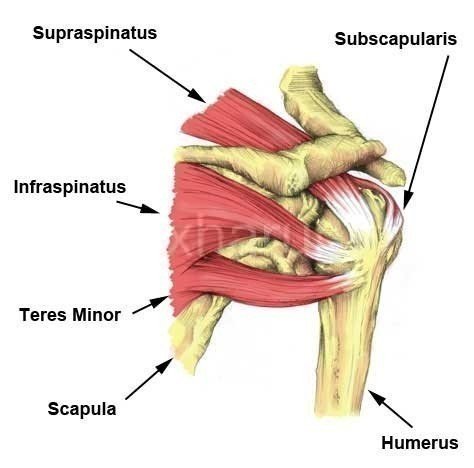
Anatomy

  • Origin – medial 2/3 of supraspinatus fossa above the spine of scapula;
  • Insertion – the superior surface of greater tuberosity of humerus and capsule of the shoulder joint;
  • Dimensions – supraspinatus averages 25 mm wide and has a medial-to-lateral footprint (tendon attachment) of 12.1 mm at the mid-end
  • Action – the abduction of the humerus at GHJ: stabilization of glenohumeral joint
  • Nerve supply – suprascapular, C4, C5
  • Synergist – deltoid;
  • Injury – overuse of supraspinatus & resulting fatigue can subject amateur athlete to shoulder injuries.
  • Exam – the supraspinatus muscle is tested with the shoulder abducted 90 degrees, flexed 30 deg and then maximally internally rotated; downward pressure is resisted primarily by the supraspinatus
  • Function – The supraspinatus muscle performs abduction of the arm, and pulls the head of the humerus medially towards the glenoid cavity.[rx] It independently prevents the head of the humerus to slip inferiorly.[rx ] The supraspinatus works in cooperation with the deltoid muscle to perform abduction, including when the arm is in the adducted position.[rx] Beyond 15 degrees the deltoid muscle becomes increasingly more effective at abducting the arm and becomes the main propagator of this action.[rx]

Causes of Supraspinatus Tendonitis

  • Sudden forceful  fall down
  • Road traffic accident
  • Falls – Falling onto an outstretched hand is one of the most common causes of tendinitis.
  • Sports injuries – Many Injury occurs during contact sports or sports in which you might fall onto an outstretched hand — such as in-line skating or snowboarding.
  • Motor vehicle crashes – Motor vehicle crashes can cause necks of femur fracture to break, sometimes into many pieces, and often require surgical repair.
  • Have osteoporosis –  a disease that weakens your bones
  • Eave low muscle mass or poor muscle strength – or lack agility and have poor balance (these conditions make you more likely to fall)
  • Walk or do other activities in the snow or on the ice – or do activities that require a lot of forwarding momenta, such as in-line skating and skiing
  • Wave an inadequate intake of calcium or vitamin D
  • Football or soccer, especially on artificial turf
  • Rugby
  • Horseback riding
  • Hockey
  • Skiing
  • Snowboarding
  • In-line skating
  • Jumping on a trampoline

Symptoms of Supraspinatus Tendonitis

In Acute Stage

  • Many rotator cuff tears have no symptoms. Both partial and full-thickness tears have been found on post mortem and MRI studies in those without any history of shoulder pain or symptoms.
  • However, the most common presentation is shoulder pain or discomfort. This may occur with activity, particularly shoulder activity above the horizontal position, but may also be present at rest in bed.
  • Pain-restricted movement above the horizontal position may be present, as well as weakness with shoulder flexion and abduction.
  • Severe pain that might worsen when gripping or squeezing or moving.
  • Inability to move immediately after a fall
  • Inability to put weight on your hand on the side of your injured thighs.
  • Stiffness, bruising and swelling in and around your hip area
  • Shorter leg on the side of your injured thighs.
  • Turning outward of your leg on the side of your injured
  • Swelling
  • Tenderness
  • Bruising

Chronic Stage

  • You have Pain in the shoulder when doing a repetitive shoulder activity that eventually becomes noticeable when the shoulder is at rest.
  • You are experiencing Atrophy (loss of Range of Motion)or weakening of the tendons and muscles in the rotator cuff.
  • You have pain that starts as a dull ache and progresses to radiating pain from the shoulder, especially when sleeping.
  • You have Sudden pain when reaching above the head or bringing the arm out to the side.
  • You are experiencing Muscle spasm and weakness in the arm and shoulder area with a limited range of motion.
  • You are experiencing a crackling sensation that may be felt as the condition worsens.

Diagnosis of Supraspinatus Tendonitis

A modification of the original Codman classification system published in 1930:

  • Full-thickness rotator cuff tear (FTRCT)
  • Complete cuff tear: full-thickness as well as full-width tear
  • Vertical with a connection from joint to the bursa, not involving the whole breadth of the tendon
  • Partial-thickness rotator cuff tear (PTRCT) bursal surface tear and articular surface tear
  • Critical zone tear partial or full-thickness
  • Rim rent tear: articular surface tear of the footprint
  • Intratendinous tear / central tears: not in communication with the joint surface or with the bursal surface of the tendon; also known as tendon delamination or interstitial tear; if the gap is filled with fluid then it is called cleavage tear of the rotator cuff tendon

Exact features depend on the type of tear, general features include Typically these are normal in acute tears with chronic tears showing degenerative-type changes

  • May show a decreased acromiohumeral interval
    • < 7 mm on true AP shoulder radiograph in chronic tears
    • < 2 mm on an ‘active abduction’ view in acute tears
  • May show decreased supraspinatus opacity and decreased bulk due to fatty atrophy in chronic tears
  • Humeral subluxation superiorly may be seen in chronic tears
  • May show features of acromial impingement
    • spur formation on the undersurface of acromioclavicular joint
    • acromion with an inferolateral tilt seen on outlet view (i.e. modified ‘Y’ view)
    • type III acromion
  • Secondary degenerative changes: sclerosis, subchondral cysts, osteolysis, and notching/pitting of greater tuberosity
  • In the hands of a good radiologist, ultrasound may have up to 90% sensitivity and specificity. It can also reveal other mimics like tendinosis, calcific tendinitis, subacromial-subdeltoid bursitis, greater tuberosity fracture, and adhesive capsulitis.
  • Full-thickness tears extend from bursal to the articular surface, while partial-thickness tears are focal defects in the tendon that involve either the bursal or articular surface. Full-thickness appear on ultrasound as hypoechoic/anechoic defects in the tendon. Due to the fluid replacing tendon, cartilage shadow gets accentuated giving a ‘double cortex’ or ‘cartilage interface sign.

Direct signs are:

  • Non-visualization of the supraspinatus tendon
  • Hypoechoic discontinuity in tendon

Indirect signs are:

  • Double cortex sign
  • Sagging peribursal fat sign
  • Compressibility
  • Muscle atrophy

Secondary associated signs are:

  • Cortical irregularity of greater tuberosity
  • Shoulder joint effusion
  • Fluid along the biceps tendon
  • Fluid in the axillary pouch and posterior recess
  • Complete tears are easier to diagnose on MRI than a full-thickness tear. Hyperintense signal area within the tendon on T2W, fat-suppressed and GRE sequences, usually corresponding to fluid signal is seen.
  • Clinical judgment, rather than over-reliance on MRI or any other modality, is strongly advised in determining the cause of shoulder pain, or planning its treatment since rotator cuff tears are also found in some without pain or symptoms.
  • The role of X-ray, MRI, and ultrasound, is adjunctive to clinical assessment and serves to confirm a diagnosis provisionally made by a thorough history and physical examination. Over-reliance on imaging may lead to overtreatment or distract from the true dysfunction causing symptoms.[rx]

Treatment of Supraspinatus Tendonitis

What can the athlete do?

  • Rest – Continuing to use your arm when it is painful prevents your supraspinatus tear from healing.
  • For a partial rupture – complete rest is best. Your shoulder should be immobilized in a sling or similar. See a sports injury specialist or doctor who can advise on treatment and rehabilitation.
  • When your injury – has healed and you are pain-free, begin rotator cuff rehabilitation exercises. These should include mobility, strengthening and functional or sports specific exercises that should be done.
  • Apply ice – after you get home from the hospital (regardless if you had surgery or not), you should apply a bag of crushed ice (or something cold) to your injured in order to reduce the swelling and numb the pain. Ice therapy is effective for acute (recent) injuries that involve swelling because it reduces blood flow by constricting local blood vessels. Apply the crushed ice to your injured area for 15 minutes three to five times daily until the soreness and inflammation eventually fade away or Ice can be applied for 15 minutes every 2 hours for the first day or two. From then on the frequency can be gradually reduced over a period of days.
  • Lightly exercise after the pain fades – after a couple of weeks when the swelling has subsided and the pain has faded away, remove your arm sling for short periods and carefully move in all different directions. Don’t aggravate the necks but gently reintroduce movements to the involved joints and muscles. Start cautiously, maybe starting with light and then progress to holding light weights (five-pound weights to start).
  • Practice stretching and strengthening exercises – of the fingers, leg if your doctor recommends them.
  • A splint – which you might use for a few days to a week while the swelling goes down; if a splint is used initially, a cast is usually put on about a week later.
  • A cast – which you might need for six to eight weeks or longer, depending on how bad the break is (you might need a second cast if the first one gets too loose after the swelling goes away.)
  • Get a referral to physical therapy – Once you’ve recovered and able to remove your arm sling splint for good, you’ll likely notice that the muscles surrounding your shoulder joint look smaller and feel weaker. That’s because muscle tissue atrophies without movement. If this occurs, then you’ll need to get a referral for some physical rehabilitation. Rehab can start once you are cleared by your orthopedist, are pain-free, and can perform all the basic arm and necks of femur fracture movements. A physiotherapist or athletic trainer can show you specific rehabilitation exercises and stretches to restore your muscle strength, joint movements, and flexibility

Medication


Physiotherapy of Supraspinatus Tendonitis

Benefits attributed to Electromagnetic Energy (the energy used in TShellz Wraps):

Generally, it is accepted that heat on soft tissue (muscles, tendons, ligaments) provides the following desirable therapeutic effects:

  • Electromagnetic heat increases the extensibility of collagen tissues – Tissues heated to 45 degrees Celsius and then stretched exhibit a nonelastic residual elongation of about 0.5 to 0.9 percent that persists after the stretch is removed. This does not occur in these same tissues when stretched at normal tissue temperatures. Therefore 20 stretching sessions can produce a 10 to 18 percentage increase in the length of tissues heated and stretched.
    Stretching of tissue in the presence of heat would be especially valuable in working with ligaments, joint capsules, tendons, fascia, and synovium that have become scarred, thickened, or contracted. Such stretching at 45 degrees Celsius caused much less weakening in stretched tissues for a given elongation than a similar elongation produced at normal tissue temperatures.
    Experiments cited clearly showed low-force stretching could produce significant residual elongation when heat is applied together with stretching or range-of-motion exercises. This is safer than stretching tissues at normal tissue temperatures.
  • Electromagnetic heat decreases joint stiffness –There was a 20 percent decrease in rheumatoid finger joint stiffness at 45 degrees Celsius (112 degrees Fahrenheit) as compared with 33 degrees Celsius (92 degrees Fahrenheit), which correlated perfectly to both subjective and objective observation of stiffness. Speculation has it that any stiffened joint and thickened connective tissues may respond in a similar fashion.
  • Electromagnetic heat relieves muscle spasms – Muscle spasms have long been observed to be reduced through the use of heat, be they secondary to underlying skeletal, joint, or neuropathological conditions. This result is possibly produced by the combined effect of heat on both primary and secondary afferent nerves from spindle cells and from its effects on Golgi tendon organs. The results produced demonstrated their peak effect within the therapeutic temperature range obtainable with electromagnetic heat.
  • Electromagnetic heat treatment leads to pain relief – Pain may be relieved via the reduction of attendant or secondary spasms. Pain is also at times related to ischemia (lack of blood supply) due to tension or spasm that can be improved by the hyperemia that heat-induced vasodilatation produces, thus breaking the feedback loop in which the ischemia leads to further spasm and then more pain.
    The heat has been shown to reduce pain sensation by direct action on both free-nerve endings in tissues and on peripheral nerves. In one dental study, repeated heat applications led finally to the abolishment of the whole nerve response responsible for pain arising from dental pulp.
    Localized electromagnetic therapy using lamps tuned to the 2 to 25-micron waveband is used for the treatment and relief of pain by over 40 reputable Chinese medical institutes.
  • Electromagnetic heat increases blood flow – Heating muscles produces an increased blood flow level similar to that seen during exercise. Temperature elevation also produces an increased blood flow and dilation directly in capillaries, arterioles, and venules, probably through direct action on their smooth muscles. The release of bradykinin, released as a consequence of sweat-gland activity, also produces increased blood flow and vasodilatation.
  • Electromagnetic heat assists in resolution of inflammatory infiltrate, edema and exudates Increased peripheral circulation provides the transport needed to help evacuate edema, which can help inflammation, decrease pain, and help speed healing.
  • Electromagnetic heat affects soft tissue injury – Electromagnetic healing is now becoming leading-edge care for soft tissue injuries to promote both reliefs in chronic or intractable “permanent” cases and accelerated healing in newer injuries.

Exercise Physiotherapy

  • Weighted pendulum exercise – Sit or stand holding a 5- to 10-pound weight in the hand of the affected shoulder. Use a hand weight or make one from a gallon container filled with water. Relax the shoulder, and allow the arm to hang straight down. Lean forward at a 20- to a 25-degree angle (if you’re standing, bend your knees slightly for a base of support), and swing your arm gently in a small circle, about one foot in diameter. Perform 10 circles in each direction, once or twice a day. As symptoms improve, you can make the circle wider — but never force it.
  • Towel stretch – Grasp a dishtowel behind your back and hold it at a 45-degree angle. Use your good arm to gently pull the affected arm up toward the lower back. Do this stretch 10 to 20 times per day. You can also perform this exercise while holding the towel horizontally.
  • Cross-body stretch – Sitting or standing, use the unaffected arm to lift the affected arm at the elbow and bring it up and across your body. Press gently, just above the elbow, to stretch the shoulder. Hold the stretch for 15 to 20 seconds. Do this exercise 10 to 20 times per day.
  • Finger walk – Stand facing a wall at a distance of about three-quarters of an arm’s length away. With the affected arm, reach out and touch the wall at about waist level. Slowly walk your fingers up the wall, spider-like, as far as you comfortably can or until you raise your arm to shoulder level. Your fingers should be doing most of the work, not your shoulder muscles. Keep the elbow slightly bent. Slowly lower the arm — with the help of your good arm, if necessary. Perform this exercise 10 to 20 times a day. You can also try this exercise with the affected side facing the wall.
  • Isometric muscle toning exercises – Heat and stretch your shoulder joint before doing these exercises. Use flexible rubber tubing, a bungee cord, or a large rubber band to provide resistance.
  • Inward rotation – Hook or tie one end of the cord or band to the doorknob of a closed door. Holding your elbow close to your side and bent at a 90-degree angle, grasp the band (it should be neither slack nor taut) and pull it in toward your waist, like a swinging door. Hold for five seconds.
  • Outward rotation – Hold your elbows close to your sides at a 90-degree angle. Grasp the band in both hands and move your forearms apart two to three inches. Hold for five seconds.  Do 15 to 20 sets of these exercises each day.


Associate

  • Supraspinatus Tendonitis
  • Subacromial Impingement
  • Supraspinatus Tear

References

Supraspinatus Tendonitis


ByRx Harun

Does a supraspinatus tendinitis tear require surgery?

Does a supraspinatus tendinitis tear require surgery?/Supraspinatus Tendonitis is not only a relatively common lesion but an extremely painful one. In spite of this, the diagnosis is seldom made and the condition suffers from general neglect. These records covered fifteen years, and in them were listed six hundred and fifty varied types of painful shoulders. The diagnosis of complete rupture of the supraspinatus tendon was not made in a single case. This finding aroused great curiosity, and as a result personal conversations were held with twenty leading orthopedic surgeons in the middle and far west in the eight months that followed. Without a single exception, they readily admitted never having made the diagnosis of a complete rupture, and consequently, they had never seen or repaired such a rupture.

Musculotendinous rupture of the supraspinatus is an unusual lesion of the rotator cuff. With incomplete injuries, recovery can be anticipated with nonsurgical management. However, in the case of a complete rupture with muscle retraction, nonoperative management leads to unsatisfactory outcomes.

Anatomy

  • Origin – medial 2/3 of supraspinatus fossa above the spine of scapula;
  • Insertion – the superior surface of greater tuberosity of humerus and capsule of the shoulder joint;
  • Dimensions – supraspinatus averages 25 mm wide and has a medial-to-lateral footprint (tendon attachment) of 12.1 mm at the mid-end
  • Action – the abduction of the humerus at GHJ: stabilization of glenohumeral joint
  • Nerve supply – suprascapular, C4, C5
  • Synergist – deltoid;
  • Injury – overuse of supraspinatus & resulting fatigue can subject amateur athlete to shoulder injuries.
  • Exam – the supraspinatus muscle is tested with the shoulder abducted 90 degrees, flexed 30 deg and then maximally internally rotated; downward pressure is resisted primarily by the supraspinatus
  • Function – The supraspinatus muscle performs abduction of the arm, and pulls the head of the humerus medially towards the glenoid cavity.[rx] It independently prevents the head of the humerus to slip inferiorly.[rx ] The supraspinatus works in cooperation with the deltoid muscle to perform abduction, including when the arm is in the adducted position.[rx] Beyond 15 degrees the deltoid muscle becomes increasingly more effective at abducting the arm and becomes the main propagator of this action.[rx]

Causes of Supraspinatus Tendonitis

  • Sudden forceful  fall down
  • Road traffic accident
  • Falls – Falling onto an outstretched hand is one of the most common causes of tendinitis.
  • Sports injuries – Many Injury occurs during contact sports or sports in which you might fall onto an outstretched hand — such as in-line skating or snowboarding.
  • Motor vehicle crashes – Motor vehicle crashes can cause necks of femur fracture to break, sometimes into many pieces, and often require surgical repair.
  • Have osteoporosis –  a disease that weakens your bones
  • Eave low muscle mass or poor muscle strength – or lack agility and have poor balance (these conditions make you more likely to fall)
  • Walk or do other activities in the snow or on the ice – or do activities that require a lot of forwarding momenta, such as in-line skating and skiing
  • Wave an inadequate intake of calcium or vitamin D
  • Football or soccer, especially on artificial turf
  • Rugby
  • Horseback riding
  • Hockey
  • Skiing
  • Snowboarding
  • In-line skating
  • Jumping on a trampoline

Symptoms of Supraspinatus Tendonitis

In Acute Stage

  • Many rotator cuff tears have no symptoms. Both partial and full-thickness tears have been found on post mortem and MRI studies in those without any history of shoulder pain or symptoms.
  • However, the most common presentation is shoulder pain or discomfort. This may occur with activity, particularly shoulder activity above the horizontal position, but may also be present at rest in bed.
  • Pain-restricted movement above the horizontal position may be present, as well as weakness with shoulder flexion and abduction.
  • Severe pain that might worsen when gripping or squeezing or moving.
  • Inability to move immediately after a fall
  • Inability to put weight on your hand on the side of your injured thighs.
  • Stiffness, bruising and swelling in and around your hip area
  • Shorter leg on the side of your injured thighs.
  • Turning outward of your leg on the side of your injured
  • Swelling
  • Tenderness
  • Bruising

Chronic Stage

  • You have Pain in the shoulder when doing a repetitive shoulder activity that eventually becomes noticeable when the shoulder is at rest.
  • You are experiencing Atrophy (loss of Range of Motion)or weakening of the tendons and muscles in the rotator cuff.
  • You have pain that starts as a dull ache and progresses to radiating pain from the shoulder, especially when sleeping.
  • You have Sudden pain when reaching above the head or bringing the arm out to the side.
  • You are experiencing Muscle spasm and weakness in the arm and shoulder area with a limited range of motion.
  • You are experiencing a crackling sensation that may be felt as the condition worsens.

Diagnosis of Supraspinatus Tendonitis

A modification of the original Codman classification system published in 1930:

  • Full-thickness rotator cuff tear (FTRCT)
  • Complete cuff tear: full-thickness as well as full-width tear
  • Vertical with a connection from joint to the bursa, not involving the whole breadth of the tendon
  • Partial-thickness rotator cuff tear (PTRCT) bursal surface tear and articular surface tear
  • Critical zone tear partial or full-thickness
  • Rim rent tear: articular surface tear of the footprint
  • Intratendinous tear / central tears: not in communication with the joint surface or with the bursal surface of the tendon; also known as tendon delamination or interstitial tear; if the gap is filled with fluid then it is called cleavage tear of the rotator cuff tendon

Exact features depend on the type of tear, general features include Typically these are normal in acute tears with chronic tears showing degenerative-type changes

  • May show a decreased acromiohumeral interval
    • < 7 mm on true AP shoulder radiograph in chronic tears
    • < 2 mm on an ‘active abduction’ view in acute tears
  • May show decreased supraspinatus opacity and decreased bulk due to fatty atrophy in chronic tears
  • Humeral subluxation superiorly may be seen in chronic tears
  • May show features of acromial impingement
    • spur formation on the undersurface of acromioclavicular joint
    • acromion with an inferolateral tilt seen on outlet view (i.e. modified ‘Y’ view)
    • type III acromion
  • Secondary degenerative changes: sclerosis, subchondral cysts, osteolysis, and notching/pitting of greater tuberosity
  • In the hands of a good radiologist, ultrasound may have up to 90% sensitivity and specificity. It can also reveal other mimics like tendinosis, calcific tendinitis, subacromial-subdeltoid bursitis, greater tuberosity fracture, and adhesive capsulitis.
  • Full-thickness tears extend from bursal to the articular surface, while partial-thickness tears are focal defects in the tendon that involve either the bursal or articular surface. Full-thickness appear on ultrasound as hypoechoic/anechoic defects in the tendon. Due to the fluid replacing tendon, cartilage shadow gets accentuated giving a ‘double cortex’ or ‘cartilage interface sign.

Direct signs are:

  • Non-visualization of the supraspinatus tendon
  • Hypoechoic discontinuity in tendon

Indirect signs are:

  • Double cortex sign
  • Sagging peribursal fat sign
  • Compressibility
  • Muscle atrophy

Secondary associated signs are:

  • Cortical irregularity of greater tuberosity
  • Shoulder joint effusion
  • Fluid along the biceps tendon
  • Fluid in the axillary pouch and posterior recess
  • Complete tears are easier to diagnose on MRI than a full-thickness tear. Hyperintense signal area within the tendon on T2W, fat-suppressed and GRE sequences, usually corresponding to fluid signal is seen.
  • Clinical judgment, rather than over-reliance on MRI or any other modality, is strongly advised in determining the cause of shoulder pain, or planning its treatment since rotator cuff tears are also found in some without pain or symptoms.
  • The role of X-ray, MRI, and ultrasound, is adjunctive to clinical assessment and serves to confirm a diagnosis provisionally made by a thorough history and physical examination. Over-reliance on imaging may lead to overtreatment or distract from the true dysfunction causing symptoms.[rx]

Treatment of Supraspinatus Tendonitis

What can the athlete do?

  • Rest – Continuing to use your arm when it is painful prevents your supraspinatus tear from healing.
  • For a partial rupture – complete rest is best. Your shoulder should be immobilized in a sling or similar. See a sports injury specialist or doctor who can advise on treatment and rehabilitation.
  • When your injury – has healed and you are pain-free, begin rotator cuff rehabilitation exercises. These should include mobility, strengthening and functional or sports specific exercises that should be done.
  • Apply ice – after you get home from the hospital (regardless if you had surgery or not), you should apply a bag of crushed ice (or something cold) to your injured in order to reduce the swelling and numb the pain. Ice therapy is effective for acute (recent) injuries that involve swelling because it reduces blood flow by constricting local blood vessels. Apply the crushed ice to your injured area for 15 minutes three to five times daily until the soreness and inflammation eventually fade away or Ice can be applied for 15 minutes every 2 hours for the first day or two. From then on the frequency can be gradually reduced over a period of days.
  • Lightly exercise after the pain fades – after a couple of weeks when the swelling has subsided and the pain has faded away, remove your arm sling for short periods and carefully move in all different directions. Don’t aggravate the necks but gently reintroduce movements to the involved joints and muscles. Start cautiously, maybe starting with light and then progress to holding light weights (five-pound weights to start).
  • Practice stretching and strengthening exercises – of the fingers, leg if your doctor recommends them.
  • A splint – which you might use for a few days to a week while the swelling goes down; if a splint is used initially, a cast is usually put on about a week later.
  • A cast – which you might need for six to eight weeks or longer, depending on how bad the break is (you might need a second cast if the first one gets too loose after the swelling goes away.)
  • Get a referral to physical therapy – Once you’ve recovered and able to remove your arm sling splint for good, you’ll likely notice that the muscles surrounding your shoulder joint look smaller and feel weaker. That’s because muscle tissue atrophies without movement. If this occurs, then you’ll need to get a referral for some physical rehabilitation. Rehab can start once you are cleared by your orthopedist, are pain-free, and can perform all the basic arm and necks of femur fracture movements. A physiotherapist or athletic trainer can show you specific rehabilitation exercises and stretches to restore your muscle strength, joint movements, and flexibility

Medication


Physiotherapy of Supraspinatus Tendonitis

Benefits attributed to Electromagnetic Energy (the energy used in TShellz Wraps):

Generally, it is accepted that heat on soft tissue (muscles, tendons, ligaments) provides the following desirable therapeutic effects:

  • Electromagnetic heat increases the extensibility of collagen tissues – Tissues heated to 45 degrees Celsius and then stretched exhibit a nonelastic residual elongation of about 0.5 to 0.9 percent that persists after the stretch is removed. This does not occur in these same tissues when stretched at normal tissue temperatures. Therefore 20 stretching sessions can produce a 10 to 18 percentage increase in the length of tissues heated and stretched.
    Stretching of tissue in the presence of heat would be especially valuable in working with ligaments, joint capsules, tendons, fascia, and synovium that have become scarred, thickened, or contracted. Such stretching at 45 degrees Celsius caused much less weakening in stretched tissues for a given elongation than a similar elongation produced at normal tissue temperatures.
    Experiments cited clearly showed low-force stretching could produce significant residual elongation when heat is applied together with stretching or range-of-motion exercises. This is safer than stretching tissues at normal tissue temperatures.
  • Electromagnetic heat decreases joint stiffness –There was a 20 percent decrease in rheumatoid finger joint stiffness at 45 degrees Celsius (112 degrees Fahrenheit) as compared with 33 degrees Celsius (92 degrees Fahrenheit), which correlated perfectly to both subjective and objective observation of stiffness. Speculation has it that any stiffened joint and thickened connective tissues may respond in a similar fashion.
  • Electromagnetic heat relieves muscle spasms – Muscle spasms have long been observed to be reduced through the use of heat, be they secondary to underlying skeletal, joint, or neuropathological conditions. This result is possibly produced by the combined effect of heat on both primary and secondary afferent nerves from spindle cells and from its effects on Golgi tendon organs. The results produced demonstrated their peak effect within the therapeutic temperature range obtainable with electromagnetic heat.
  • Electromagnetic heat treatment leads to pain relief – Pain may be relieved via the reduction of attendant or secondary spasms. Pain is also at times related to ischemia (lack of blood supply) due to tension or spasm that can be improved by the hyperemia that heat-induced vasodilatation produces, thus breaking the feedback loop in which the ischemia leads to further spasm and then more pain.
    The heat has been shown to reduce pain sensation by direct action on both free-nerve endings in tissues and on peripheral nerves. In one dental study, repeated heat applications led finally to the abolishment of the whole nerve response responsible for pain arising from dental pulp.
    Localized electromagnetic therapy using lamps tuned to the 2 to 25-micron waveband is used for the treatment and relief of pain by over 40 reputable Chinese medical institutes.
  • Electromagnetic heat increases blood flow – Heating muscles produces an increased blood flow level similar to that seen during exercise. Temperature elevation also produces an increased blood flow and dilation directly in capillaries, arterioles, and venules, probably through direct action on their smooth muscles. The release of bradykinin, released as a consequence of sweat-gland activity, also produces increased blood flow and vasodilatation.
  • Electromagnetic heat assists in resolution of inflammatory infiltrate, edema and exudates Increased peripheral circulation provides the transport needed to help evacuate edema, which can help inflammation, decrease pain, and help speed healing.
  • Electromagnetic heat affects soft tissue injury – Electromagnetic healing is now becoming leading-edge care for soft tissue injuries to promote both reliefs in chronic or intractable “permanent” cases and accelerated healing in newer injuries.

Exercise Physiotherapy

  • Weighted pendulum exercise – Sit or stand holding a 5- to 10-pound weight in the hand of the affected shoulder. Use a hand weight or make one from a gallon container filled with water. Relax the shoulder, and allow the arm to hang straight down. Lean forward at a 20- to a 25-degree angle (if you’re standing, bend your knees slightly for a base of support), and swing your arm gently in a small circle, about one foot in diameter. Perform 10 circles in each direction, once or twice a day. As symptoms improve, you can make the circle wider — but never force it.
  • Towel stretch – Grasp a dishtowel behind your back and hold it at a 45-degree angle. Use your good arm to gently pull the affected arm up toward the lower back. Do this stretch 10 to 20 times per day. You can also perform this exercise while holding the towel horizontally.
  • Cross-body stretch – Sitting or standing, use the unaffected arm to lift the affected arm at the elbow and bring it up and across your body. Press gently, just above the elbow, to stretch the shoulder. Hold the stretch for 15 to 20 seconds. Do this exercise 10 to 20 times per day.
  • Finger walk – Stand facing a wall at a distance of about three-quarters of an arm’s length away. With the affected arm, reach out and touch the wall at about waist level. Slowly walk your fingers up the wall, spider-like, as far as you comfortably can or until you raise your arm to shoulder level. Your fingers should be doing most of the work, not your shoulder muscles. Keep the elbow slightly bent. Slowly lower the arm — with the help of your good arm, if necessary. Perform this exercise 10 to 20 times a day. You can also try this exercise with the affected side facing the wall.
  • Isometric muscle toning exercises – Heat and stretch your shoulder joint before doing these exercises. Use flexible rubber tubing, a bungee cord, or a large rubber band to provide resistance.
  • Inward rotation – Hook or tie one end of the cord or band to the doorknob of a closed door. Holding your elbow close to your side and bent at a 90-degree angle, grasp the band (it should be neither slack nor taut) and pull it in toward your waist, like a swinging door. Hold for five seconds.
  • Outward rotation – Hold your elbows close to your sides at a 90-degree angle. Grasp the band in both hands and move your forearms apart two to three inches. Hold for five seconds.  Do 15 to 20 sets of these exercises each day.


Associate

  • Supraspinatus Tendonitis
  • Subacromial Impingement
  • Supraspinatus Tear

References

Does a supraspinatus tendinitis tear require surgery?


ByRx Harun

Can supraspinatus tendon heal itself?

Can supraspinatus tendon heal itself?/Supraspinatus Tendonitis is not only a relatively common lesion but an extremely painful one. In spite of this, the diagnosis is seldom made and the condition suffers from general neglect. These records covered fifteen years, and in them were listed six hundred and fifty varied types of painful shoulders. The diagnosis of complete rupture of the supraspinatus tendon was not made in a single case. This finding aroused great curiosity, and as a result personal conversations were held with twenty leading orthopedic surgeons in the middle and far west in the eight months that followed. Without a single exception, they readily admitted never having made the diagnosis of a complete rupture, and consequently, they had never seen or repaired such a rupture.

Musculotendinous rupture of the supraspinatus is an unusual lesion of the rotator cuff. With incomplete injuries, recovery can be anticipated with nonsurgical management. However, in the case of a complete rupture with muscle retraction, nonoperative management leads to unsatisfactory outcomes.

Anatomy

  • Origin – medial 2/3 of supraspinatus fossa above the spine of scapula;
  • Insertion – the superior surface of greater tuberosity of humerus and capsule of the shoulder joint;
  • Dimensions – supraspinatus averages 25 mm wide and has a medial-to-lateral footprint (tendon attachment) of 12.1 mm at the mid-end
  • Action – the abduction of the humerus at GHJ: stabilization of glenohumeral joint
  • Nerve supply – suprascapular, C4, C5
  • Synergist – deltoid;
  • Injury – overuse of supraspinatus & resulting fatigue can subject amateur athlete to shoulder injuries.
  • Exam – the supraspinatus muscle is tested with the shoulder abducted 90 degrees, flexed 30 deg and then maximally internally rotated; downward pressure is resisted primarily by the supraspinatus
  • Function – The supraspinatus muscle performs abduction of the arm, and pulls the head of the humerus medially towards the glenoid cavity.[rx] It independently prevents the head of the humerus to slip inferiorly.[rx ] The supraspinatus works in cooperation with the deltoid muscle to perform abduction, including when the arm is in the adducted position.[rx] Beyond 15 degrees the deltoid muscle becomes increasingly more effective at abducting the arm and becomes the main propagator of this action.[rx]

Causes of Supraspinatus Tendonitis

  • Sudden forceful  fall down
  • Road traffic accident
  • Falls – Falling onto an outstretched hand is one of the most common causes of tendinitis.
  • Sports injuries – Many Injury occurs during contact sports or sports in which you might fall onto an outstretched hand — such as in-line skating or snowboarding.
  • Motor vehicle crashes – Motor vehicle crashes can cause necks of femur fracture to break, sometimes into many pieces, and often require surgical repair.
  • Have osteoporosis –  a disease that weakens your bones
  • Eave low muscle mass or poor muscle strength – or lack agility and have poor balance (these conditions make you more likely to fall)
  • Walk or do other activities in the snow or on the ice – or do activities that require a lot of forwarding momenta, such as in-line skating and skiing
  • Wave an inadequate intake of calcium or vitamin D
  • Football or soccer, especially on artificial turf
  • Rugby
  • Horseback riding
  • Hockey
  • Skiing
  • Snowboarding
  • In-line skating
  • Jumping on a trampoline

Symptoms of Supraspinatus Tendonitis

In Acute Stage

  • Many rotator cuff tears have no symptoms. Both partial and full-thickness tears have been found on post mortem and MRI studies in those without any history of shoulder pain or symptoms.
  • However, the most common presentation is shoulder pain or discomfort. This may occur with activity, particularly shoulder activity above the horizontal position, but may also be present at rest in bed.
  • Pain-restricted movement above the horizontal position may be present, as well as weakness with shoulder flexion and abduction.
  • Severe pain that might worsen when gripping or squeezing or moving.
  • Inability to move immediately after a fall
  • Inability to put weight on your hand on the side of your injured thighs.
  • Stiffness, bruising and swelling in and around your hip area
  • Shorter leg on the side of your injured thighs.
  • Turning outward of your leg on the side of your injured
  • Swelling
  • Tenderness
  • Bruising

Chronic Stage

  • You have Pain in the shoulder when doing a repetitive shoulder activity that eventually becomes noticeable when the shoulder is at rest.
  • You are experiencing Atrophy (loss of Range of Motion)or weakening of the tendons and muscles in the rotator cuff.
  • You have pain that starts as a dull ache and progresses to radiating pain from the shoulder, especially when sleeping.
  • You have Sudden pain when reaching above the head or bringing the arm out to the side.
  • You are experiencing Muscle spasm and weakness in the arm and shoulder area with a limited range of motion.
  • You are experiencing a crackling sensation that may be felt as the condition worsens.

Diagnosis of Supraspinatus Tendonitis

A modification of the original Codman classification system published in 1930:

  • Full-thickness rotator cuff tear (FTRCT)
  • Complete cuff tear: full-thickness as well as full-width tear
  • Vertical with a connection from joint to the bursa, not involving the whole breadth of the tendon
  • Partial-thickness rotator cuff tear (PTRCT) bursal surface tear and articular surface tear
  • Critical zone tear partial or full-thickness
  • Rim rent tear: articular surface tear of the footprint
  • Intratendinous tear / central tears: not in communication with the joint surface or with the bursal surface of the tendon; also known as tendon delamination or interstitial tear; if the gap is filled with fluid then it is called cleavage tear of the rotator cuff tendon

Exact features depend on the type of tear, general features include Typically these are normal in acute tears with chronic tears showing degenerative-type changes

  • May show a decreased acromiohumeral interval
    • < 7 mm on true AP shoulder radiograph in chronic tears
    • < 2 mm on an ‘active abduction’ view in acute tears
  • May show decreased supraspinatus opacity and decreased bulk due to fatty atrophy in chronic tears
  • Humeral subluxation superiorly may be seen in chronic tears
  • May show features of acromial impingement
    • spur formation on the undersurface of acromioclavicular joint
    • acromion with an inferolateral tilt seen on outlet view (i.e. modified ‘Y’ view)
    • type III acromion
  • Secondary degenerative changes: sclerosis, subchondral cysts, osteolysis, and notching/pitting of greater tuberosity
  • In the hands of a good radiologist, ultrasound may have up to 90% sensitivity and specificity. It can also reveal other mimics like tendinosis, calcific tendinitis, subacromial-subdeltoid bursitis, greater tuberosity fracture, and adhesive capsulitis.
  • Full-thickness tears extend from bursal to the articular surface, while partial-thickness tears are focal defects in the tendon that involve either the bursal or articular surface. Full-thickness appear on ultrasound as hypoechoic/anechoic defects in the tendon. Due to the fluid replacing tendon, cartilage shadow gets accentuated giving a ‘double cortex’ or ‘cartilage interface sign.

Direct signs are:

  • Non-visualization of the supraspinatus tendon
  • Hypoechoic discontinuity in tendon

Indirect signs are:

  • Double cortex sign
  • Sagging peribursal fat sign
  • Compressibility
  • Muscle atrophy

Secondary associated signs are:

  • Cortical irregularity of greater tuberosity
  • Shoulder joint effusion
  • Fluid along the biceps tendon
  • Fluid in the axillary pouch and posterior recess
  • Complete tears are easier to diagnose on MRI than a full-thickness tear. Hyperintense signal area within the tendon on T2W, fat-suppressed and GRE sequences, usually corresponding to fluid signal is seen.
  • Clinical judgment, rather than over-reliance on MRI or any other modality, is strongly advised in determining the cause of shoulder pain, or planning its treatment since rotator cuff tears are also found in some without pain or symptoms.
  • The role of X-ray, MRI, and ultrasound, is adjunctive to clinical assessment and serves to confirm a diagnosis provisionally made by a thorough history and physical examination. Over-reliance on imaging may lead to overtreatment or distract from the true dysfunction causing symptoms.[rx]

Treatment of Supraspinatus Tendonitis

What can the athlete do?

  • Rest – Continuing to use your arm when it is painful prevents your supraspinatus tear from healing.
  • For a partial rupture – complete rest is best. Your shoulder should be immobilized in a sling or similar. See a sports injury specialist or doctor who can advise on treatment and rehabilitation.
  • When your injury – has healed and you are pain-free, begin rotator cuff rehabilitation exercises. These should include mobility, strengthening and functional or sports specific exercises that should be done.
  • Apply ice – after you get home from the hospital (regardless if you had surgery or not), you should apply a bag of crushed ice (or something cold) to your injured in order to reduce the swelling and numb the pain. Ice therapy is effective for acute (recent) injuries that involve swelling because it reduces blood flow by constricting local blood vessels. Apply the crushed ice to your injured area for 15 minutes three to five times daily until the soreness and inflammation eventually fade away or Ice can be applied for 15 minutes every 2 hours for the first day or two. From then on the frequency can be gradually reduced over a period of days.
  • Lightly exercise after the pain fades – after a couple of weeks when the swelling has subsided and the pain has faded away, remove your arm sling for short periods and carefully move in all different directions. Don’t aggravate the necks but gently reintroduce movements to the involved joints and muscles. Start cautiously, maybe starting with light and then progress to holding light weights (five-pound weights to start).
  • Practice stretching and strengthening exercises – of the fingers, leg if your doctor recommends them.
  • A splint – which you might use for a few days to a week while the swelling goes down; if a splint is used initially, a cast is usually put on about a week later.
  • A cast – which you might need for six to eight weeks or longer, depending on how bad the break is (you might need a second cast if the first one gets too loose after the swelling goes away.)
  • Get a referral to physical therapy – Once you’ve recovered and able to remove your arm sling splint for good, you’ll likely notice that the muscles surrounding your shoulder joint look smaller and feel weaker. That’s because muscle tissue atrophies without movement. If this occurs, then you’ll need to get a referral for some physical rehabilitation. Rehab can start once you are cleared by your orthopedist, are pain-free, and can perform all the basic arm and necks of femur fracture movements. A physiotherapist or athletic trainer can show you specific rehabilitation exercises and stretches to restore your muscle strength, joint movements, and flexibility

Medication


Physiotherapy of Supraspinatus Tendonitis

Benefits attributed to Electromagnetic Energy (the energy used in TShellz Wraps):

Generally, it is accepted that heat on soft tissue (muscles, tendons, ligaments) provides the following desirable therapeutic effects:

  • Electromagnetic heat increases the extensibility of collagen tissues – Tissues heated to 45 degrees Celsius and then stretched exhibit a nonelastic residual elongation of about 0.5 to 0.9 percent that persists after the stretch is removed. This does not occur in these same tissues when stretched at normal tissue temperatures. Therefore 20 stretching sessions can produce a 10 to 18 percentage increase in the length of tissues heated and stretched.
    Stretching of tissue in the presence of heat would be especially valuable in working with ligaments, joint capsules, tendons, fascia, and synovium that have become scarred, thickened, or contracted. Such stretching at 45 degrees Celsius caused much less weakening in stretched tissues for a given elongation than a similar elongation produced at normal tissue temperatures.
    Experiments cited clearly showed low-force stretching could produce significant residual elongation when heat is applied together with stretching or range-of-motion exercises. This is safer than stretching tissues at normal tissue temperatures.
  • Electromagnetic heat decreases joint stiffness –There was a 20 percent decrease in rheumatoid finger joint stiffness at 45 degrees Celsius (112 degrees Fahrenheit) as compared with 33 degrees Celsius (92 degrees Fahrenheit), which correlated perfectly to both subjective and objective observation of stiffness. Speculation has it that any stiffened joint and thickened connective tissues may respond in a similar fashion.
  • Electromagnetic heat relieves muscle spasms – Muscle spasms have long been observed to be reduced through the use of heat, be they secondary to underlying skeletal, joint, or neuropathological conditions. This result is possibly produced by the combined effect of heat on both primary and secondary afferent nerves from spindle cells and from its effects on Golgi tendon organs. The results produced demonstrated their peak effect within the therapeutic temperature range obtainable with electromagnetic heat.
  • Electromagnetic heat treatment leads to pain relief – Pain may be relieved via the reduction of attendant or secondary spasms. Pain is also at times related to ischemia (lack of blood supply) due to tension or spasm that can be improved by the hyperemia that heat-induced vasodilatation produces, thus breaking the feedback loop in which the ischemia leads to further spasm and then more pain.
    The heat has been shown to reduce pain sensation by direct action on both free-nerve endings in tissues and on peripheral nerves. In one dental study, repeated heat applications led finally to the abolishment of the whole nerve response responsible for pain arising from dental pulp.
    Localized electromagnetic therapy using lamps tuned to the 2 to 25-micron waveband is used for the treatment and relief of pain by over 40 reputable Chinese medical institutes.
  • Electromagnetic heat increases blood flow – Heating muscles produces an increased blood flow level similar to that seen during exercise. Temperature elevation also produces an increased blood flow and dilation directly in capillaries, arterioles, and venules, probably through direct action on their smooth muscles. The release of bradykinin, released as a consequence of sweat-gland activity, also produces increased blood flow and vasodilatation.
  • Electromagnetic heat assists in resolution of inflammatory infiltrate, edema and exudates Increased peripheral circulation provides the transport needed to help evacuate edema, which can help inflammation, decrease pain, and help speed healing.
  • Electromagnetic heat affects soft tissue injury – Electromagnetic healing is now becoming leading-edge care for soft tissue injuries to promote both reliefs in chronic or intractable “permanent” cases and accelerated healing in newer injuries.

Exercise Physiotherapy

  • Weighted pendulum exercise – Sit or stand holding a 5- to 10-pound weight in the hand of the affected shoulder. Use a hand weight or make one from a gallon container filled with water. Relax the shoulder, and allow the arm to hang straight down. Lean forward at a 20- to a 25-degree angle (if you’re standing, bend your knees slightly for a base of support), and swing your arm gently in a small circle, about one foot in diameter. Perform 10 circles in each direction, once or twice a day. As symptoms improve, you can make the circle wider — but never force it.
  • Towel stretch – Grasp a dishtowel behind your back and hold it at a 45-degree angle. Use your good arm to gently pull the affected arm up toward the lower back. Do this stretch 10 to 20 times per day. You can also perform this exercise while holding the towel horizontally.
  • Cross-body stretch – Sitting or standing, use the unaffected arm to lift the affected arm at the elbow and bring it up and across your body. Press gently, just above the elbow, to stretch the shoulder. Hold the stretch for 15 to 20 seconds. Do this exercise 10 to 20 times per day.
  • Finger walk – Stand facing a wall at a distance of about three-quarters of an arm’s length away. With the affected arm, reach out and touch the wall at about waist level. Slowly walk your fingers up the wall, spider-like, as far as you comfortably can or until you raise your arm to shoulder level. Your fingers should be doing most of the work, not your shoulder muscles. Keep the elbow slightly bent. Slowly lower the arm — with the help of your good arm, if necessary. Perform this exercise 10 to 20 times a day. You can also try this exercise with the affected side facing the wall.
  • Isometric muscle toning exercises – Heat and stretch your shoulder joint before doing these exercises. Use flexible rubber tubing, a bungee cord, or a large rubber band to provide resistance.
  • Inward rotation – Hook or tie one end of the cord or band to the doorknob of a closed door. Holding your elbow close to your side and bent at a 90-degree angle, grasp the band (it should be neither slack nor taut) and pull it in toward your waist, like a swinging door. Hold for five seconds.
  • Outward rotation – Hold your elbows close to your sides at a 90-degree angle. Grasp the band in both hands and move your forearms apart two to three inches. Hold for five seconds.  Do 15 to 20 sets of these exercises each day.


Associate

  • Supraspinatus Tendonitis
  • Subacromial Impingement
  • Supraspinatus Tear

References

Can supraspinatus tendon heal itself?


ByRx Harun

How long does it take for supraspinatus tendonitis to heal?

How long does it take for supraspinatus tendonitis to heal?/Supraspinatus Tendonitis is not only a relatively common lesion but an extremely painful one. In spite of this, the diagnosis is seldom made and the condition suffers from general neglect. These records covered fifteen years, and in them were listed six hundred and fifty varied types of painful shoulders. The diagnosis of complete rupture of the supraspinatus tendon was not made in a single case. This finding aroused great curiosity, and as a result personal conversations were held with twenty leading orthopedic surgeons in the middle and far west in the eight months that followed. Without a single exception, they readily admitted never having made the diagnosis of a complete rupture, and consequently, they had never seen or repaired such a rupture.

Musculotendinous rupture of the supraspinatus is an unusual lesion of the rotator cuff. With incomplete injuries, recovery can be anticipated with nonsurgical management. However, in the case of a complete rupture with muscle retraction, nonoperative management leads to unsatisfactory outcomes.

Anatomy

  • Origin – medial 2/3 of supraspinatus fossa above the spine of scapula;
  • Insertion – the superior surface of greater tuberosity of humerus and capsule of the shoulder joint;
  • Dimensions – supraspinatus averages 25 mm wide and has a medial-to-lateral footprint (tendon attachment) of 12.1 mm at the mid-end
  • Action – the abduction of the humerus at GHJ: stabilization of glenohumeral joint
  • Nerve supply – suprascapular, C4, C5
  • Synergist – deltoid;
  • Injury – overuse of supraspinatus & resulting fatigue can subject amateur athlete to shoulder injuries.
  • Exam – the supraspinatus muscle is tested with the shoulder abducted 90 degrees, flexed 30 deg and then maximally internally rotated; downward pressure is resisted primarily by the supraspinatus
  • Function – The supraspinatus muscle performs abduction of the arm, and pulls the head of the humerus medially towards the glenoid cavity.[rx] It independently prevents the head of the humerus to slip inferiorly.[rx ] The supraspinatus works in cooperation with the deltoid muscle to perform abduction, including when the arm is in the adducted position.[rx] Beyond 15 degrees the deltoid muscle becomes increasingly more effective at abducting the arm and becomes the main propagator of this action.[rx]

Causes of Supraspinatus Tendonitis

  • Sudden forceful  fall down
  • Road traffic accident
  • Falls – Falling onto an outstretched hand is one of the most common causes of tendinitis.
  • Sports injuries – Many Injury occurs during contact sports or sports in which you might fall onto an outstretched hand — such as in-line skating or snowboarding.
  • Motor vehicle crashes – Motor vehicle crashes can cause necks of femur fracture to break, sometimes into many pieces, and often require surgical repair.
  • Have osteoporosis –  a disease that weakens your bones
  • Eave low muscle mass or poor muscle strength – or lack agility and have poor balance (these conditions make you more likely to fall)
  • Walk or do other activities in the snow or on the ice – or do activities that require a lot of forwarding momenta, such as in-line skating and skiing
  • Wave an inadequate intake of calcium or vitamin D
  • Football or soccer, especially on artificial turf
  • Rugby
  • Horseback riding
  • Hockey
  • Skiing
  • Snowboarding
  • In-line skating
  • Jumping on a trampoline

Symptoms of Supraspinatus Tendonitis

In Acute Stage

  • Many rotator cuff tears have no symptoms. Both partial and full-thickness tears have been found on post mortem and MRI studies in those without any history of shoulder pain or symptoms.
  • However, the most common presentation is shoulder pain or discomfort. This may occur with activity, particularly shoulder activity above the horizontal position, but may also be present at rest in bed.
  • Pain-restricted movement above the horizontal position may be present, as well as weakness with shoulder flexion and abduction.
  • Severe pain that might worsen when gripping or squeezing or moving.
  • Inability to move immediately after a fall
  • Inability to put weight on your hand on the side of your injured thighs.
  • Stiffness, bruising and swelling in and around your hip area
  • Shorter leg on the side of your injured thighs.
  • Turning outward of your leg on the side of your injured
  • Swelling
  • Tenderness
  • Bruising

Chronic Stage

  • You have Pain in the shoulder when doing a repetitive shoulder activity that eventually becomes noticeable when the shoulder is at rest.
  • You are experiencing Atrophy (loss of Range of Motion)or weakening of the tendons and muscles in the rotator cuff.
  • You have pain that starts as a dull ache and progresses to radiating pain from the shoulder, especially when sleeping.
  • You have Sudden pain when reaching above the head or bringing the arm out to the side.
  • You are experiencing Muscle spasm and weakness in the arm and shoulder area with a limited range of motion.
  • You are experiencing a crackling sensation that may be felt as the condition worsens.

Diagnosis of Supraspinatus Tendonitis

A modification of the original Codman classification system published in 1930:

  • Full-thickness rotator cuff tear (FTRCT)
  • Complete cuff tear: full-thickness as well as full-width tear
  • Vertical with a connection from joint to the bursa, not involving the whole breadth of the tendon
  • Partial-thickness rotator cuff tear (PTRCT) bursal surface tear and articular surface tear
  • Critical zone tear partial or full-thickness
  • Rim rent tear: articular surface tear of the footprint
  • Intratendinous tear / central tears: not in communication with the joint surface or with the bursal surface of the tendon; also known as tendon delamination or interstitial tear; if the gap is filled with fluid then it is called cleavage tear of the rotator cuff tendon

Exact features depend on the type of tear, general features include Typically these are normal in acute tears with chronic tears showing degenerative-type changes

  • May show a decreased acromiohumeral interval
    • < 7 mm on true AP shoulder radiograph in chronic tears
    • < 2 mm on an ‘active abduction’ view in acute tears
  • May show decreased supraspinatus opacity and decreased bulk due to fatty atrophy in chronic tears
  • Humeral subluxation superiorly may be seen in chronic tears
  • May show features of acromial impingement
    • spur formation on the undersurface of acromioclavicular joint
    • acromion with an inferolateral tilt seen on outlet view (i.e. modified ‘Y’ view)
    • type III acromion
  • Secondary degenerative changes: sclerosis, subchondral cysts, osteolysis, and notching/pitting of greater tuberosity
  • In the hands of a good radiologist, ultrasound may have up to 90% sensitivity and specificity. It can also reveal other mimics like tendinosis, calcific tendinitis, subacromial-subdeltoid bursitis, greater tuberosity fracture, and adhesive capsulitis.
  • Full-thickness tears extend from bursal to the articular surface, while partial-thickness tears are focal defects in the tendon that involve either the bursal or articular surface. Full-thickness appear on ultrasound as hypoechoic/anechoic defects in the tendon. Due to the fluid replacing tendon, cartilage shadow gets accentuated giving a ‘double cortex’ or ‘cartilage interface sign.

Direct signs are:

  • Non-visualization of the supraspinatus tendon
  • Hypoechoic discontinuity in tendon

Indirect signs are:

  • Double cortex sign
  • Sagging peribursal fat sign
  • Compressibility
  • Muscle atrophy

Secondary associated signs are:

  • Cortical irregularity of greater tuberosity
  • Shoulder joint effusion
  • Fluid along the biceps tendon
  • Fluid in the axillary pouch and posterior recess
  • Complete tears are easier to diagnose on MRI than a full-thickness tear. Hyperintense signal area within the tendon on T2W, fat-suppressed and GRE sequences, usually corresponding to fluid signal is seen.
  • Clinical judgment, rather than over-reliance on MRI or any other modality, is strongly advised in determining the cause of shoulder pain, or planning its treatment since rotator cuff tears are also found in some without pain or symptoms.
  • The role of X-ray, MRI, and ultrasound, is adjunctive to clinical assessment and serves to confirm a diagnosis provisionally made by a thorough history and physical examination. Over-reliance on imaging may lead to overtreatment or distract from the true dysfunction causing symptoms.[rx]

Treatment of Supraspinatus Tendonitis

What can the athlete do?

  • Rest – Continuing to use your arm when it is painful prevents your supraspinatus tear from healing.
  • For a partial rupture – complete rest is best. Your shoulder should be immobilized in a sling or similar. See a sports injury specialist or doctor who can advise on treatment and rehabilitation.
  • When your injury – has healed and you are pain-free, begin rotator cuff rehabilitation exercises. These should include mobility, strengthening and functional or sports specific exercises that should be done.
  • Apply ice – after you get home from the hospital (regardless if you had surgery or not), you should apply a bag of crushed ice (or something cold) to your injured in order to reduce the swelling and numb the pain. Ice therapy is effective for acute (recent) injuries that involve swelling because it reduces blood flow by constricting local blood vessels. Apply the crushed ice to your injured area for 15 minutes three to five times daily until the soreness and inflammation eventually fade away or Ice can be applied for 15 minutes every 2 hours for the first day or two. From then on the frequency can be gradually reduced over a period of days.
  • Lightly exercise after the pain fades – after a couple of weeks when the swelling has subsided and the pain has faded away, remove your arm sling for short periods and carefully move in all different directions. Don’t aggravate the necks but gently reintroduce movements to the involved joints and muscles. Start cautiously, maybe starting with light and then progress to holding light weights (five-pound weights to start).
  • Practice stretching and strengthening exercises – of the fingers, leg if your doctor recommends them.
  • A splint – which you might use for a few days to a week while the swelling goes down; if a splint is used initially, a cast is usually put on about a week later.
  • A cast – which you might need for six to eight weeks or longer, depending on how bad the break is (you might need a second cast if the first one gets too loose after the swelling goes away.)
  • Get a referral to physical therapy – Once you’ve recovered and able to remove your arm sling splint for good, you’ll likely notice that the muscles surrounding your shoulder joint look smaller and feel weaker. That’s because muscle tissue atrophies without movement. If this occurs, then you’ll need to get a referral for some physical rehabilitation. Rehab can start once you are cleared by your orthopedist, are pain-free, and can perform all the basic arm and necks of femur fracture movements. A physiotherapist or athletic trainer can show you specific rehabilitation exercises and stretches to restore your muscle strength, joint movements, and flexibility

Medication


Physiotherapy of Supraspinatus Tendonitis

Benefits attributed to Electromagnetic Energy (the energy used in TShellz Wraps):

Generally, it is accepted that heat on soft tissue (muscles, tendons, ligaments) provides the following desirable therapeutic effects:

  • Electromagnetic heat increases the extensibility of collagen tissues – Tissues heated to 45 degrees Celsius and then stretched exhibit a nonelastic residual elongation of about 0.5 to 0.9 percent that persists after the stretch is removed. This does not occur in these same tissues when stretched at normal tissue temperatures. Therefore 20 stretching sessions can produce a 10 to 18 percentage increase in the length of tissues heated and stretched.
    Stretching of tissue in the presence of heat would be especially valuable in working with ligaments, joint capsules, tendons, fascia, and synovium that have become scarred, thickened, or contracted. Such stretching at 45 degrees Celsius caused much less weakening in stretched tissues for a given elongation than a similar elongation produced at normal tissue temperatures.
    Experiments cited clearly showed low-force stretching could produce significant residual elongation when heat is applied together with stretching or range-of-motion exercises. This is safer than stretching tissues at normal tissue temperatures.
  • Electromagnetic heat decreases joint stiffness –There was a 20 percent decrease in rheumatoid finger joint stiffness at 45 degrees Celsius (112 degrees Fahrenheit) as compared with 33 degrees Celsius (92 degrees Fahrenheit), which correlated perfectly to both subjective and objective observation of stiffness. Speculation has it that any stiffened joint and thickened connective tissues may respond in a similar fashion.
  • Electromagnetic heat relieves muscle spasms – Muscle spasms have long been observed to be reduced through the use of heat, be they secondary to underlying skeletal, joint, or neuropathological conditions. This result is possibly produced by the combined effect of heat on both primary and secondary afferent nerves from spindle cells and from its effects on Golgi tendon organs. The results produced demonstrated their peak effect within the therapeutic temperature range obtainable with electromagnetic heat.
  • Electromagnetic heat treatment leads to pain relief – Pain may be relieved via the reduction of attendant or secondary spasms. Pain is also at times related to ischemia (lack of blood supply) due to tension or spasm that can be improved by the hyperemia that heat-induced vasodilatation produces, thus breaking the feedback loop in which the ischemia leads to further spasm and then more pain.
    The heat has been shown to reduce pain sensation by direct action on both free-nerve endings in tissues and on peripheral nerves. In one dental study, repeated heat applications led finally to the abolishment of the whole nerve response responsible for pain arising from dental pulp.
    Localized electromagnetic therapy using lamps tuned to the 2 to 25-micron waveband is used for the treatment and relief of pain by over 40 reputable Chinese medical institutes.
  • Electromagnetic heat increases blood flow – Heating muscles produces an increased blood flow level similar to that seen during exercise. Temperature elevation also produces an increased blood flow and dilation directly in capillaries, arterioles, and venules, probably through direct action on their smooth muscles. The release of bradykinin, released as a consequence of sweat-gland activity, also produces increased blood flow and vasodilatation.
  • Electromagnetic heat assists in resolution of inflammatory infiltrate, edema and exudates Increased peripheral circulation provides the transport needed to help evacuate edema, which can help inflammation, decrease pain, and help speed healing.
  • Electromagnetic heat affects soft tissue injury – Electromagnetic healing is now becoming leading-edge care for soft tissue injuries to promote both reliefs in chronic or intractable “permanent” cases and accelerated healing in newer injuries.

Exercise Physiotherapy

  • Weighted pendulum exercise – Sit or stand holding a 5- to 10-pound weight in the hand of the affected shoulder. Use a hand weight or make one from a gallon container filled with water. Relax the shoulder, and allow the arm to hang straight down. Lean forward at a 20- to a 25-degree angle (if you’re standing, bend your knees slightly for a base of support), and swing your arm gently in a small circle, about one foot in diameter. Perform 10 circles in each direction, once or twice a day. As symptoms improve, you can make the circle wider — but never force it.
  • Towel stretch – Grasp a dishtowel behind your back and hold it at a 45-degree angle. Use your good arm to gently pull the affected arm up toward the lower back. Do this stretch 10 to 20 times per day. You can also perform this exercise while holding the towel horizontally.
  • Cross-body stretch – Sitting or standing, use the unaffected arm to lift the affected arm at the elbow and bring it up and across your body. Press gently, just above the elbow, to stretch the shoulder. Hold the stretch for 15 to 20 seconds. Do this exercise 10 to 20 times per day.
  • Finger walk – Stand facing a wall at a distance of about three-quarters of an arm’s length away. With the affected arm, reach out and touch the wall at about waist level. Slowly walk your fingers up the wall, spider-like, as far as you comfortably can or until you raise your arm to shoulder level. Your fingers should be doing most of the work, not your shoulder muscles. Keep the elbow slightly bent. Slowly lower the arm — with the help of your good arm, if necessary. Perform this exercise 10 to 20 times a day. You can also try this exercise with the affected side facing the wall.
  • Isometric muscle toning exercises – Heat and stretch your shoulder joint before doing these exercises. Use flexible rubber tubing, a bungee cord, or a large rubber band to provide resistance.
  • Inward rotation – Hook or tie one end of the cord or band to the doorknob of a closed door. Holding your elbow close to your side and bent at a 90-degree angle, grasp the band (it should be neither slack nor taut) and pull it in toward your waist, like a swinging door. Hold for five seconds.
  • Outward rotation – Hold your elbows close to your sides at a 90-degree angle. Grasp the band in both hands and move your forearms apart two to three inches. Hold for five seconds.  Do 15 to 20 sets of these exercises each day.


Associate

  • Supraspinatus Tendonitis
  • Subacromial Impingement
  • Supraspinatus Tear

References

Supraspinatus Tendonitis


ByRx Harun

Supraspinatus Tendonitis; Causes, Symptoms, Treatment

Supraspinatus Tendonitis is not only a relatively common lesion but an extremely painful one. In spite of this, the diagnosis is seldom made and the condition suffers from general neglect. These records covered fifteen years, and in them were listed six hundred and fifty varied types of painful shoulders. The diagnosis of complete rupture of the supraspinatus tendon was not made in a single case. This finding aroused great curiosity, and as a result personal conversations were held with twenty leading orthopedic surgeons in the middle and far west in the eight months that followed. Without a single exception, they readily admitted never having made the diagnosis of a complete rupture, and consequently, they had never seen or repaired such a rupture.

Musculotendinous rupture of the supraspinatus is an unusual lesion of the rotator cuff. With incomplete injuries, recovery can be anticipated with nonsurgical management. However, in the case of a complete rupture with muscle retraction, nonoperative management leads to unsatisfactory outcomes.

Anatomy

  • Origin – medial 2/3 of supraspinatus fossa above the spine of scapula;
  • Insertion – the superior surface of greater tuberosity of humerus and capsule of the shoulder joint;
  • Dimensions – supraspinatus averages 25 mm wide and has a medial-to-lateral footprint (tendon attachment) of 12.1 mm at the mid-end
  • Action – the abduction of the humerus at GHJ: stabilization of glenohumeral joint
  • Nerve supply – suprascapular, C4, C5
  • Synergist – deltoid;
  • Injury – overuse of supraspinatus & resulting fatigue can subject amateur athlete to shoulder injuries.
  • Exam – the supraspinatus muscle is tested with the shoulder abducted 90 degrees, flexed 30 deg and then maximally internally rotated; downward pressure is resisted primarily by the supraspinatus
  • Function – The supraspinatus muscle performs abduction of the arm, and pulls the head of the humerus medially towards the glenoid cavity.[rx] It independently prevents the head of the humerus to slip inferiorly.[rx ] The supraspinatus works in cooperation with the deltoid muscle to perform abduction, including when the arm is in the adducted position.[rx] Beyond 15 degrees the deltoid muscle becomes increasingly more effective at abducting the arm and becomes the main propagator of this action.[rx]

Causes of Supraspinatus Tendonitis

  • Sudden forceful  fall down
  • Road traffic accident
  • Falls – Falling onto an outstretched hand is one of the most common causes of tendinitis.
  • Sports injuries – Many Injury occurs during contact sports or sports in which you might fall onto an outstretched hand — such as in-line skating or snowboarding.
  • Motor vehicle crashes – Motor vehicle crashes can cause necks of femur fracture to break, sometimes into many pieces, and often require surgical repair.
  • Have osteoporosis –  a disease that weakens your bones
  • Eave low muscle mass or poor muscle strength – or lack agility and have poor balance (these conditions make you more likely to fall)
  • Walk or do other activities in the snow or on the ice – or do activities that require a lot of forwarding momenta, such as in-line skating and skiing
  • Wave an inadequate intake of calcium or vitamin D
  • Football or soccer, especially on artificial turf
  • Rugby
  • Horseback riding
  • Hockey
  • Skiing
  • Snowboarding
  • In-line skating
  • Jumping on a trampoline

Symptoms of Supraspinatus Tendonitis

In Acute Stage

  • Many rotator cuff tears have no symptoms. Both partial and full-thickness tears have been found on post mortem and MRI studies in those without any history of shoulder pain or symptoms.
  • However, the most common presentation is shoulder pain or discomfort. This may occur with activity, particularly shoulder activity above the horizontal position, but may also be present at rest in bed.
  • Pain-restricted movement above the horizontal position may be present, as well as weakness with shoulder flexion and abduction.
  • Severe pain that might worsen when gripping or squeezing or moving.
  • Inability to move immediately after a fall
  • Inability to put weight on your hand on the side of your injured thighs.
  • Stiffness, bruising and swelling in and around your hip area
  • Shorter leg on the side of your injured thighs.
  • Turning outward of your leg on the side of your injured
  • Swelling
  • Tenderness
  • Bruising

Chronic Stage

  • You have Pain in the shoulder when doing a repetitive shoulder activity that eventually becomes noticeable when the shoulder is at rest.
  • You are experiencing Atrophy (loss of Range of Motion)or weakening of the tendons and muscles in the rotator cuff.
  • You have pain that starts as a dull ache and progresses to radiating pain from the shoulder, especially when sleeping.
  • You have Sudden pain when reaching above the head or bringing the arm out to the side.
  • You are experiencing Muscle spasm and weakness in the arm and shoulder area with a limited range of motion.
  • You are experiencing a crackling sensation that may be felt as the condition worsens.

Diagnosis of Supraspinatus Tendonitis

A modification of the original Codman classification system published in 1930:

  • Full-thickness rotator cuff tear (FTRCT)
  • Complete cuff tear: full-thickness as well as full-width tear
  • Vertical with a connection from joint to the bursa, not involving the whole breadth of the tendon
  • Partial-thickness rotator cuff tear (PTRCT) bursal surface tear and articular surface tear
  • Critical zone tear partial or full-thickness
  • Rim rent tear: articular surface tear of the footprint
  • Intratendinous tear / central tears: not in communication with the joint surface or with the bursal surface of the tendon; also known as tendon delamination or interstitial tear; if the gap is filled with fluid then it is called cleavage tear of the rotator cuff tendon

Exact features depend on the type of tear, general features include Typically these are normal in acute tears with chronic tears showing degenerative-type changes

  • May show a decreased acromiohumeral interval
    • < 7 mm on true AP shoulder radiograph in chronic tears
    • < 2 mm on an ‘active abduction’ view in acute tears
  • May show decreased supraspinatus opacity and decreased bulk due to fatty atrophy in chronic tears
  • Humeral subluxation superiorly may be seen in chronic tears
  • May show features of acromial impingement
    • spur formation on the undersurface of acromioclavicular joint
    • acromion with an inferolateral tilt seen on outlet view (i.e. modified ‘Y’ view)
    • type III acromion
  • Secondary degenerative changes: sclerosis, subchondral cysts, osteolysis, and notching/pitting of greater tuberosity
  • In the hands of a good radiologist, ultrasound may have up to 90% sensitivity and specificity. It can also reveal other mimics like tendinosis, calcific tendinitis, subacromial-subdeltoid bursitis, greater tuberosity fracture, and adhesive capsulitis.
  • Full-thickness tears extend from bursal to the articular surface, while partial-thickness tears are focal defects in the tendon that involve either the bursal or articular surface. Full-thickness appear on ultrasound as hypoechoic/anechoic defects in the tendon. Due to the fluid replacing tendon, cartilage shadow gets accentuated giving a ‘double cortex’ or ‘cartilage interface sign.

Direct signs are:

  • Non-visualization of the supraspinatus tendon
  • Hypoechoic discontinuity in tendon

Indirect signs are:

  • Double cortex sign
  • Sagging peribursal fat sign
  • Compressibility
  • Muscle atrophy

Secondary associated signs are:

  • Cortical irregularity of greater tuberosity
  • Shoulder joint effusion
  • Fluid along the biceps tendon
  • Fluid in the axillary pouch and posterior recess
  • Complete tears are easier to diagnose on MRI than a full-thickness tear. Hyperintense signal area within the tendon on T2W, fat-suppressed and GRE sequences, usually corresponding to fluid signal is seen.
  • Clinical judgment, rather than over-reliance on MRI or any other modality, is strongly advised in determining the cause of shoulder pain, or planning its treatment since rotator cuff tears are also found in some without pain or symptoms.
  • The role of X-ray, MRI, and ultrasound, is adjunctive to clinical assessment and serves to confirm a diagnosis provisionally made by a thorough history and physical examination. Over-reliance on imaging may lead to overtreatment or distract from the true dysfunction causing symptoms.[rx]

Treatment of Supraspinatus Tendonitis

What can the athlete do?

  • Rest – Continuing to use your arm when it is painful prevents your supraspinatus tear from healing.
  • For a partial rupture – complete rest is best. Your shoulder should be immobilized in a sling or similar. See a sports injury specialist or doctor who can advise on treatment and rehabilitation.
  • When your injury – has healed and you are pain-free, begin rotator cuff rehabilitation exercises. These should include mobility, strengthening and functional or sports specific exercises that should be done.
  • Apply ice – after you get home from the hospital (regardless if you had surgery or not), you should apply a bag of crushed ice (or something cold) to your injured in order to reduce the swelling and numb the pain. Ice therapy is effective for acute (recent) injuries that involve swelling because it reduces blood flow by constricting local blood vessels. Apply the crushed ice to your injured area for 15 minutes three to five times daily until the soreness and inflammation eventually fade away or Ice can be applied for 15 minutes every 2 hours for the first day or two. From then on the frequency can be gradually reduced over a period of days.
  • Lightly exercise after the pain fades – after a couple of weeks when the swelling has subsided and the pain has faded away, remove your arm sling for short periods and carefully move in all different directions. Don’t aggravate the necks but gently reintroduce movements to the involved joints and muscles. Start cautiously, maybe starting with light and then progress to holding light weights (five-pound weights to start).
  • Practice stretching and strengthening exercises – of the fingers, leg if your doctor recommends them.
  • A splint – which you might use for a few days to a week while the swelling goes down; if a splint is used initially, a cast is usually put on about a week later.
  • A cast – which you might need for six to eight weeks or longer, depending on how bad the break is (you might need a second cast if the first one gets too loose after the swelling goes away.)
  • Get a referral to physical therapy – Once you’ve recovered and able to remove your arm sling splint for good, you’ll likely notice that the muscles surrounding your shoulder joint look smaller and feel weaker. That’s because muscle tissue atrophies without movement. If this occurs, then you’ll need to get a referral for some physical rehabilitation. Rehab can start once you are cleared by your orthopedist, are pain-free, and can perform all the basic arm and necks of femur fracture movements. A physiotherapist or athletic trainer can show you specific rehabilitation exercises and stretches to restore your muscle strength, joint movements, and flexibility

Medication


Physiotherapy of Supraspinatus Tendonitis

Benefits attributed to Electromagnetic Energy (the energy used in TShellz Wraps):

Generally, it is accepted that heat on soft tissue (muscles, tendons, ligaments) provides the following desirable therapeutic effects:

  • Electromagnetic heat increases the extensibility of collagen tissues – Tissues heated to 45 degrees Celsius and then stretched exhibit a nonelastic residual elongation of about 0.5 to 0.9 percent that persists after the stretch is removed. This does not occur in these same tissues when stretched at normal tissue temperatures. Therefore 20 stretching sessions can produce a 10 to 18 percentage increase in the length of tissues heated and stretched.
    Stretching of tissue in the presence of heat would be especially valuable in working with ligaments, joint capsules, tendons, fascia, and synovium that have become scarred, thickened, or contracted. Such stretching at 45 degrees Celsius caused much less weakening in stretched tissues for a given elongation than a similar elongation produced at normal tissue temperatures.
    Experiments cited clearly showed low-force stretching could produce significant residual elongation when heat is applied together with stretching or range-of-motion exercises. This is safer than stretching tissues at normal tissue temperatures.
  • Electromagnetic heat decreases joint stiffness –There was a 20 percent decrease in rheumatoid finger joint stiffness at 45 degrees Celsius (112 degrees Fahrenheit) as compared with 33 degrees Celsius (92 degrees Fahrenheit), which correlated perfectly to both subjective and objective observation of stiffness. Speculation has it that any stiffened joint and thickened connective tissues may respond in a similar fashion.
  • Electromagnetic heat relieves muscle spasms – Muscle spasms have long been observed to be reduced through the use of heat, be they secondary to underlying skeletal, joint, or neuropathological conditions. This result is possibly produced by the combined effect of heat on both primary and secondary afferent nerves from spindle cells and from its effects on Golgi tendon organs. The results produced demonstrated their peak effect within the therapeutic temperature range obtainable with electromagnetic heat.
  • Electromagnetic heat treatment leads to pain relief – Pain may be relieved via the reduction of attendant or secondary spasms. Pain is also at times related to ischemia (lack of blood supply) due to tension or spasm that can be improved by the hyperemia that heat-induced vasodilatation produces, thus breaking the feedback loop in which the ischemia leads to further spasm and then more pain.
    The heat has been shown to reduce pain sensation by direct action on both free-nerve endings in tissues and on peripheral nerves. In one dental study, repeated heat applications led finally to the abolishment of the whole nerve response responsible for pain arising from dental pulp.
    Localized electromagnetic therapy using lamps tuned to the 2 to 25-micron waveband is used for the treatment and relief of pain by over 40 reputable Chinese medical institutes.
  • Electromagnetic heat increases blood flow – Heating muscles produces an increased blood flow level similar to that seen during exercise. Temperature elevation also produces an increased blood flow and dilation directly in capillaries, arterioles, and venules, probably through direct action on their smooth muscles. The release of bradykinin, released as a consequence of sweat-gland activity, also produces increased blood flow and vasodilatation.
  • Electromagnetic heat assists in resolution of inflammatory infiltrate, edema and exudates Increased peripheral circulation provides the transport needed to help evacuate edema, which can help inflammation, decrease pain, and help speed healing.
  • Electromagnetic heat affects soft tissue injury – Electromagnetic healing is now becoming leading-edge care for soft tissue injuries to promote both reliefs in chronic or intractable “permanent” cases and accelerated healing in newer injuries.

Exercise Physiotherapy

  • Weighted pendulum exercise – Sit or stand holding a 5- to 10-pound weight in the hand of the affected shoulder. Use a hand weight or make one from a gallon container filled with water. Relax the shoulder, and allow the arm to hang straight down. Lean forward at a 20- to a 25-degree angle (if you’re standing, bend your knees slightly for a base of support), and swing your arm gently in a small circle, about one foot in diameter. Perform 10 circles in each direction, once or twice a day. As symptoms improve, you can make the circle wider — but never force it.
  • Towel stretch – Grasp a dishtowel behind your back and hold it at a 45-degree angle. Use your good arm to gently pull the affected arm up toward the lower back. Do this stretch 10 to 20 times per day. You can also perform this exercise while holding the towel horizontally.
  • Cross-body stretch – Sitting or standing, use the unaffected arm to lift the affected arm at the elbow and bring it up and across your body. Press gently, just above the elbow, to stretch the shoulder. Hold the stretch for 15 to 20 seconds. Do this exercise 10 to 20 times per day.
  • Finger walk – Stand facing a wall at a distance of about three-quarters of an arm’s length away. With the affected arm, reach out and touch the wall at about waist level. Slowly walk your fingers up the wall, spider-like, as far as you comfortably can or until you raise your arm to shoulder level. Your fingers should be doing most of the work, not your shoulder muscles. Keep the elbow slightly bent. Slowly lower the arm — with the help of your good arm, if necessary. Perform this exercise 10 to 20 times a day. You can also try this exercise with the affected side facing the wall.
  • Isometric muscle toning exercises – Heat and stretch your shoulder joint before doing these exercises. Use flexible rubber tubing, a bungee cord, or a large rubber band to provide resistance.
  • Inward rotation – Hook or tie one end of the cord or band to the doorknob of a closed door. Holding your elbow close to your side and bent at a 90-degree angle, grasp the band (it should be neither slack nor taut) and pull it in toward your waist, like a swinging door. Hold for five seconds.
  • Outward rotation – Hold your elbows close to your sides at a 90-degree angle. Grasp the band in both hands and move your forearms apart two to three inches. Hold for five seconds.  Do 15 to 20 sets of these exercises each day.


Associate

  • Supraspinatus Tendonitis
  • Subacromial Impingement
  • Supraspinatus Tear

References

Supraspinatus Tendonitis


ByRx Harun

Does a full thickness tear of the supraspinatus tendon need surgery?

Does a full thickness tear of the supraspinatus tendon need surgery?/Supraspinatus tendon rupture is not only a relatively common lesion but an extremely painful one. In spite of this, the diagnosis is seldom made and the condition suffers from general neglect. These records covered fifteen years, and in them were listed six hundred and fifty varied types of painful shoulders. The diagnosis of complete rupture of the supraspinatus tendon was not made in a single case. This finding aroused great curiosity, and as a result personal conversations were held with twenty leading orthopedic surgeons in the middle and far west in the eight months that followed. Without a single exception, they readily admitted never having made the diagnosis of a complete rupture, and consequently, they had never seen or repaired such a rupture.

Musculotendinous rupture of the supraspinatus is an unusual lesion of the rotator cuff. With incomplete injuries, recovery can be anticipated with nonsurgical management. However, in the case of a complete rupture with muscle retraction, nonoperative management leads to unsatisfactory outcomes.

Anatomy

  • Origin – medial 2/3 of supraspinatus fossa above the spine of scapula;
  • Insertion – the superior surface of greater tuberosity of humerus and capsule of the shoulder joint;
  • Dimensions – supraspinatus averages 25 mm wide and has a medial-to-lateral footprint (tendon attachment) of 12.1 mm at the mid-end
  • Action – the abduction of the humerus at GHJ: stabilization of glenohumeral joint
  • Nerve supply – suprascapular, C4, C5
  • Synergist – deltoid;
  • Injury – overuse of supraspinatus & resulting fatigue can subject amateur athlete to shoulder injuries.
  • Exam – the supraspinatus muscle is tested with the shoulder abducted 90 degrees, flexed 30 deg and then maximally internally rotated; downward pressure is resisted primarily by the supraspinatus
  • Function – The supraspinatus muscle performs abduction of the arm, and pulls the head of the humerus medially towards the glenoid cavity.[rx] It independently prevents the head of the humerus to slip inferiorly.[rx ] The supraspinatus works in cooperation with the deltoid muscle to perform abduction, including when the arm is in the adducted position.[rx] Beyond 15 degrees the deltoid muscle becomes increasingly more effective at abducting the arm and becomes the main propagator of this action.[rx]

Causes of Supraspinatus Tendon Rupture

  • Sudden forceful  fall down
  • Road traffic accident
  • Falls – Falling onto an outstretched hand is one of the most common causes of tendinitis.
  • Sports injuries – Many Injury occurs during contact sports or sports in which you might fall onto an outstretched hand — such as in-line skating or snowboarding.
  • Motor vehicle crashes – Motor vehicle crashes can cause necks of femur fracture to break, sometimes into many pieces, and often require surgical repair.
  • Have osteoporosis –  a disease that weakens your bones
  • Eave low muscle mass or poor muscle strength – or lack agility and have poor balance (these conditions make you more likely to fall)
  • Walk or do other activities in the snow or on the ice – or do activities that require a lot of forwarding momenta, such as in-line skating and skiing
  • Wave an inadequate intake of calcium or vitamin D
  • Football or soccer, especially on artificial turf
  • Rugby
  • Horseback riding
  • Hockey
  • Skiing
  • Snowboarding
  • In-line skating
  • Jumping on a trampoline

Symptoms of Supraspinatus Tendon Rupture

In Acute Stage

  • Many rotator cuff tears have no symptoms. Both partial and full-thickness tears have been found on post mortem and MRI studies in those without any history of shoulder pain or symptoms.
  • However, the most common presentation is shoulder pain or discomfort. This may occur with activity, particularly shoulder activity above the horizontal position, but may also be present at rest in bed.
  • Pain-restricted movement above the horizontal position may be present, as well as weakness with shoulder flexion and abduction.
  • Severe pain that might worsen when gripping or squeezing or moving.
  • Inability to move immediately after a fall
  • Inability to put weight on your hand on the side of your injured thighs.
  • Stiffness, bruising and swelling in and around your hip area
  • Shorter leg on the side of your injured thighs.
  • Turning outward of your leg on the side of your injured
  • Swelling
  • Tenderness
  • Bruising

Chronic Stage

  • You have Pain in the shoulder when doing a repetitive shoulder activity that eventually becomes noticeable when the shoulder is at rest.
  • You are experiencing Atrophy (loss of Range of Motion)or weakening of the tendons and muscles in the rotator cuff.
  • You have pain that starts as a dull ache and progresses to radiating pain from the shoulder, especially when sleeping.
  • You have Sudden pain when reaching above the head or bringing the arm out to the side.
  • You are experiencing Muscle spasm and weakness in the arm and shoulder area with a limited range of motion.
  • You are experiencing a crackling sensation that may be felt as the condition worsens.

Diagnosis of Supraspinatus Tendon Rupture

A modification of the original Codman classification system published in 1930:

  • Full-thickness rotator cuff tear (FTRCT)
  • Complete cuff tear: full-thickness as well as full-width tear
  • Vertical with a connection from joint to the bursa, not involving the whole breadth of the tendon
  • Partial-thickness rotator cuff tear (PTRCT) bursal surface tear and articular surface tear
  • Critical zone tear partial or full-thickness
  • Rim rent tear: articular surface tear of the footprint
  • Intratendinous tear / central tears: not in communication with the joint surface or with the bursal surface of the tendon; also known as tendon delamination or interstitial tear; if the gap is filled with fluid then it is called cleavage tear of the rotator cuff tendon

Exact features depend on the type of tear, general features include Typically these are normal in acute tears with chronic tears showing degenerative-type changes

  • May show a decreased acromiohumeral interval
    • < 7 mm on true AP shoulder radiograph in chronic tears
    • < 2 mm on an ‘active abduction’ view in acute tears
  • May show decreased supraspinatus opacity and decreased bulk due to fatty atrophy in chronic tears
  • Humeral subluxation superiorly may be seen in chronic tears
  • May show features of acromial impingement
    • spur formation on the undersurface of acromioclavicular joint
    • acromion with an inferolateral tilt seen on outlet view (i.e. modified ‘Y’ view)
    • type III acromion
  • Secondary degenerative changes: sclerosis, subchondral cysts, osteolysis, and notching/pitting of greater tuberosity
  • In the hands of a good radiologist, ultrasound may have up to 90% sensitivity and specificity. It can also reveal other mimics like tendinosis, calcific tendinitis, subacromial-subdeltoid bursitis, greater tuberosity fracture, and adhesive capsulitis.
  • Full-thickness tears extend from bursal to the articular surface, while partial-thickness tears are focal defects in the tendon that involve either the bursal or articular surface. Full-thickness appear on ultrasound as hypoechoic/anechoic defects in the tendon. Due to the fluid replacing tendon, cartilage shadow gets accentuated giving a ‘double cortex’ or ‘cartilage interface sign.

Direct signs are:

  • Non-visualization of the supraspinatus tendon
  • Hypoechoic discontinuity in tendon

Indirect signs are:

  • Double cortex sign
  • Sagging peribursal fat sign
  • Compressibility
  • Muscle atrophy

Secondary associated signs are:

  • Cortical irregularity of greater tuberosity
  • Shoulder joint effusion
  • Fluid along the biceps tendon
  • Fluid in the axillary pouch and posterior recess
  • Complete tears are easier to diagnose on MRI than a full-thickness tear. Hyperintense signal area within the tendon on T2W, fat-suppressed and GRE sequences, usually corresponding to fluid signal is seen.
  • Clinical judgment, rather than over-reliance on MRI or any other modality, is strongly advised in determining the cause of shoulder pain, or planning its treatment since rotator cuff tears are also found in some without pain or symptoms.
  • The role of X-ray, MRI, and ultrasound, is adjunctive to clinical assessment and serves to confirm a diagnosis provisionally made by a thorough history and physical examination. Over-reliance on imaging may lead to overtreatment or distract from the true dysfunction causing symptoms.[rx]

Treatment of a supraspinatus Tendon Rupture

What can the athlete do?

  • Rest – Continuing to use your arm when it is painful prevents your supraspinatus tear from healing.
  • For a partial rupture – complete rest is best. Your shoulder should be immobilized in a sling or similar. See a sports injury specialist or doctor who can advise on treatment and rehabilitation.
  • When your injury – has healed and you are pain-free, begin rotator cuff rehabilitation exercises. These should include mobility, strengthening and functional or sports specific exercises that should be done.
  • Apply ice – after you get home from the hospital (regardless if you had surgery or not), you should apply a bag of crushed ice (or something cold) to your injured in order to reduce the swelling and numb the pain. Ice therapy is effective for acute (recent) injuries that involve swelling because it reduces blood flow by constricting local blood vessels. Apply the crushed ice to your injured area for 15 minutes three to five times daily until the soreness and inflammation eventually fade away or Ice can be applied for 15 minutes every 2 hours for the first day or two. From then on the frequency can be gradually reduced over a period of days.
  • Lightly exercise after the pain fades – after a couple of weeks when the swelling has subsided and the pain has faded away, remove your arm sling for short periods and carefully move in all different directions. Don’t aggravate the necks but gently reintroduce movements to the involved joints and muscles. Start cautiously, maybe starting with light and then progress to holding light weights (five-pound weights to start).
  • Practice stretching and strengthening exercises – of the fingers, leg if your doctor recommends them.
  • A splint – which you might use for a few days to a week while the swelling goes down; if a splint is used initially, a cast is usually put on about a week later.
  • A cast – which you might need for six to eight weeks or longer, depending on how bad the break is (you might need a second cast if the first one gets too loose after the swelling goes away.)
  • Get a referral to physical therapy – Once you’ve recovered and able to remove your arm sling splint for good, you’ll likely notice that the muscles surrounding your shoulder joint look smaller and feel weaker. That’s because muscle tissue atrophies without movement. If this occurs, then you’ll need to get a referral for some physical rehabilitation. Rehab can start once you are cleared by your orthopedist, are pain-free, and can perform all the basic arm and necks of femur fracture movements. A physiotherapist or athletic trainer can show you specific rehabilitation exercises and stretches to restore your muscle strength, joint movements, and flexibility

Medication


Rehabilitation And Physiotherapy

Benefits attributed to Electromagnetic Energy (the energy used in TShellz Wraps):

Generally, it is accepted that heat on soft tissue (muscles, tendons, ligaments) provides the following desirable therapeutic effects:

  • Electromagnetic heat increases the extensibility of collagen tissues – Tissues heated to 45 degrees Celsius and then stretched exhibit a nonelastic residual elongation of about 0.5 to 0.9 percent that persists after the stretch is removed. This does not occur in these same tissues when stretched at normal tissue temperatures. Therefore 20 stretching sessions can produce a 10 to 18 percentage increase in the length of tissues heated and stretched.
    Stretching of tissue in the presence of heat would be especially valuable in working with ligaments, joint capsules, tendons, fascia, and synovium that have become scarred, thickened, or contracted. Such stretching at 45 degrees Celsius caused much less weakening in stretched tissues for a given elongation than a similar elongation produced at normal tissue temperatures.
    Experiments cited clearly showed low-force stretching could produce significant residual elongation when heat is applied together with stretching or range-of-motion exercises. This is safer than stretching tissues at normal tissue temperatures.
  • Electromagnetic heat decreases joint stiffness –There was a 20 percent decrease in rheumatoid finger joint stiffness at 45 degrees Celsius (112 degrees Fahrenheit) as compared with 33 degrees Celsius (92 degrees Fahrenheit), which correlated perfectly to both subjective and objective observation of stiffness. Speculation has it that any stiffened joint and thickened connective tissues may respond in a similar fashion.
  • Electromagnetic heat relieves muscle spasms – Muscle spasms have long been observed to be reduced through the use of heat, be they secondary to underlying skeletal, joint, or neuropathological conditions. This result is possibly produced by the combined effect of heat on both primary and secondary afferent nerves from spindle cells and from its effects on Golgi tendon organs. The results produced demonstrated their peak effect within the therapeutic temperature range obtainable with electromagnetic heat.
  • Electromagnetic heat treatment leads to pain relief – Pain may be relieved via the reduction of attendant or secondary spasms. Pain is also at times related to ischemia (lack of blood supply) due to tension or spasm that can be improved by the hyperemia that heat-induced vasodilatation produces, thus breaking the feedback loop in which the ischemia leads to further spasm and then more pain.
    The heat has been shown to reduce pain sensation by direct action on both free-nerve endings in tissues and on peripheral nerves. In one dental study, repeated heat applications led finally to the abolishment of the whole nerve response responsible for pain arising from dental pulp.
    Localized electromagnetic therapy using lamps tuned to the 2 to 25-micron waveband is used for the treatment and relief of pain by over 40 reputable Chinese medical institutes.
  • Electromagnetic heat increases blood flow – Heating muscles produces an increased blood flow level similar to that seen during exercise. Temperature elevation also produces an increased blood flow and dilation directly in capillaries, arterioles, and venules, probably through direct action on their smooth muscles. The release of bradykinin, released as a consequence of sweat-gland activity, also produces increased blood flow and vasodilatation.
  • Electromagnetic heat assists in resolution of inflammatory infiltrate, edema and exudates Increased peripheral circulation provides the transport needed to help evacuate edema, which can help inflammation, decrease pain, and help speed healing.
  • Electromagnetic heat affects soft tissue injury – Electromagnetic healing is now becoming leading-edge care for soft tissue injuries to promote both reliefs in chronic or intractable “permanent” cases and accelerated healing in newer injuries.


Associate

  • Supraspinatus Tendonitis
  • Subacromial Impingement
  • Supraspinatus Tear

References

Does a full thickness tear of the supraspinatus tendon need surgery?


ByRx Harun

Treatment of Supraspinatus Tendon Rupture

Treatment of Supraspinatus Tendon Rupture/Supraspinatus tendon rupture is not only a relatively common lesion but an extremely painful one. In spite of this, the diagnosis is seldom made and the condition suffers from general neglect. These records covered fifteen years, and in them were listed six hundred and fifty varied types of painful shoulders. The diagnosis of complete rupture of the supraspinatus tendon was not made in a single case. This finding aroused great curiosity, and as a result personal conversations were held with twenty leading orthopedic surgeons in the middle and far west in the eight months that followed. Without a single exception, they readily admitted never having made the diagnosis of a complete rupture, and consequently, they had never seen or repaired such a rupture.

Musculotendinous rupture of the supraspinatus is an unusual lesion of the rotator cuff. With incomplete injuries, recovery can be anticipated with nonsurgical management. However, in the case of a complete rupture with muscle retraction, nonoperative management leads to unsatisfactory outcomes.

http://rxharun.com/shoulder-pain-causes-symptoms-diagnosis-treatment/

Anatomy

  • Origin – medial 2/3 of supraspinatus fossa above the spine of scapula;
  • Insertion – the superior surface of greater tuberosity of humerus and capsule of the shoulder joint;
  • Dimensions – supraspinatus averages 25 mm wide and has a medial-to-lateral footprint (tendon attachment) of 12.1 mm at the mid-end
  • Action – the abduction of the humerus at GHJ: stabilization of glenohumeral joint
  • Nerve supply – suprascapular, C4, C5
  • Synergist – deltoid;
  • Injury – overuse of supraspinatus & resulting fatigue can subject amateur athlete to shoulder injuries.
  • Exam – the supraspinatus muscle is tested with the shoulder abducted 90 degrees, flexed 30 deg and then maximally internally rotated; downward pressure is resisted primarily by the supraspinatus
  • Function – The supraspinatus muscle performs abduction of the arm, and pulls the head of the humerus medially towards the glenoid cavity.[rx] It independently prevents the head of the humerus to slip inferiorly.[rx ] The supraspinatus works in cooperation with the deltoid muscle to perform abduction, including when the arm is in the adducted position.[rx] Beyond 15 degrees the deltoid muscle becomes increasingly more effective at abducting the arm and becomes the main propagator of this action.[rx]

Causes of Supraspinatus Tendon Rupture

  • Sudden forceful  fall down
  • Road traffic accident
  • Falls – Falling onto an outstretched hand is one of the most common causes of tendinitis.
  • Sports injuries – Many Injury occurs during contact sports or sports in which you might fall onto an outstretched hand — such as in-line skating or snowboarding.
  • Motor vehicle crashes – Motor vehicle crashes can cause necks of femur fracture to break, sometimes into many pieces, and often require surgical repair.
  • Have osteoporosis –  a disease that weakens your bones
  • Eave low muscle mass or poor muscle strength – or lack agility and have poor balance (these conditions make you more likely to fall)
  • Walk or do other activities in the snow or on the ice – or do activities that require a lot of forwarding momenta, such as in-line skating and skiing
  • Wave an inadequate intake of calcium or vitamin D
  • Football or soccer, especially on artificial turf
  • Rugby
  • Horseback riding
  • Hockey
  • Skiing
  • Snowboarding
  • In-line skating
  • Jumping on a trampoline

Symptoms of Supraspinatus Tendon Rupture

In Acute Stage

  • Many rotator cuff tears have no symptoms. Both partial and full-thickness tears have been found on post mortem and MRI studies in those without any history of shoulder pain or symptoms.
  • However, the most common presentation is shoulder pain or discomfort. This may occur with activity, particularly shoulder activity above the horizontal position, but may also be present at rest in bed.
  • Pain-restricted movement above the horizontal position may be present, as well as weakness with shoulder flexion and abduction.
  • Severe pain that might worsen when gripping or squeezing or moving.
  • Inability to move immediately after a fall
  • Inability to put weight on your hand on the side of your injured thighs.
  • Stiffness, bruising and swelling in and around your hip area
  • Shorter leg on the side of your injured thighs.
  • Turning outward of your leg on the side of your injured
  • Swelling
  • Tenderness
  • Bruising

Chronic Stage

  • You have Pain in the shoulder when doing a repetitive shoulder activity that eventually becomes noticeable when the shoulder is at rest.
  • You are experiencing Atrophy (loss of Range of Motion)or weakening of the tendons and muscles in the rotator cuff.
  • You have pain that starts as a dull ache and progresses to radiating pain from the shoulder, especially when sleeping.
  • You have Sudden pain when reaching above the head or bringing the arm out to the side.
  • You are experiencing Muscle spasm and weakness in the arm and shoulder area with a limited range of motion.
  • You are experiencing a crackling sensation that may be felt as the condition worsens.

Diagnosis of Supraspinatus Tendon Rupture

A modification of the original Codman classification system published in 1930:

  • Full-thickness rotator cuff tear (FTRCT)
  • Complete cuff tear: full-thickness as well as full-width tear
  • Vertical with a connection from joint to the bursa, not involving the whole breadth of the tendon
  • Partial-thickness rotator cuff tear (PTRCT) bursal surface tear and articular surface tear
  • Critical zone tear partial or full-thickness
  • Rim rent tear: articular surface tear of the footprint
  • Intratendinous tear / central tears: not in communication with the joint surface or with the bursal surface of the tendon; also known as tendon delamination or interstitial tear; if the gap is filled with fluid then it is called cleavage tear of the rotator cuff tendon

Exact features depend on the type of tear, general features include Typically these are normal in acute tears with chronic tears showing degenerative-type changes

  • May show a decreased acromiohumeral interval
    • < 7 mm on true AP shoulder radiograph in chronic tears
    • < 2 mm on an ‘active abduction’ view in acute tears
  • May show decreased supraspinatus opacity and decreased bulk due to fatty atrophy in chronic tears
  • Humeral subluxation superiorly may be seen in chronic tears
  • May show features of acromial impingement
    • spur formation on the undersurface of acromioclavicular joint
    • acromion with an inferolateral tilt seen on outlet view (i.e. modified ‘Y’ view)
    • type III acromion
  • Secondary degenerative changes: sclerosis, subchondral cysts, osteolysis, and notching/pitting of greater tuberosity
  • In the hands of a good radiologist, ultrasound may have up to 90% sensitivity and specificity. It can also reveal other mimics like tendinosis, calcific tendinitis, subacromial-subdeltoid bursitis, greater tuberosity fracture, and adhesive capsulitis.
  • Full-thickness tears extend from bursal to the articular surface, while partial-thickness tears are focal defects in the tendon that involve either the bursal or articular surface. Full-thickness appear on ultrasound as hypoechoic/anechoic defects in the tendon. Due to the fluid replacing tendon, cartilage shadow gets accentuated giving a ‘double cortex’ or ‘cartilage interface sign.

Direct signs are:

  • Non-visualization of the supraspinatus tendon
  • Hypoechoic discontinuity in tendon

Indirect signs are:

  • Double cortex sign
  • Sagging peribursal fat sign
  • Compressibility
  • Muscle atrophy

Secondary associated signs are:

  • Cortical irregularity of greater tuberosity
  • Shoulder joint effusion
  • Fluid along the biceps tendon
  • Fluid in the axillary pouch and posterior recess
  • Complete tears are easier to diagnose on MRI than a full-thickness tear. Hyperintense signal area within the tendon on T2W, fat-suppressed and GRE sequences, usually corresponding to fluid signal is seen.
  • Clinical judgment, rather than over-reliance on MRI or any other modality, is strongly advised in determining the cause of shoulder pain, or planning its treatment since rotator cuff tears are also found in some without pain or symptoms.
  • The role of X-ray, MRI, and ultrasound, is adjunctive to clinical assessment and serves to confirm a diagnosis provisionally made by a thorough history and physical examination. Over-reliance on imaging may lead to overtreatment or distract from the true dysfunction causing symptoms.[rx]

Treatment of a supraspinatus Tendon Rupture

What can the athlete do?

  • Rest – Continuing to use your arm when it is painful prevents your supraspinatus tear from healing.
  • For a partial rupture – complete rest is best. Your shoulder should be immobilized in a sling or similar. See a sports injury specialist or doctor who can advise on treatment and rehabilitation.
  • When your injury – has healed and you are pain-free, begin rotator cuff rehabilitation exercises. These should include mobility, strengthening and functional or sports specific exercises that should be done.
  • Apply ice – after you get home from the hospital (regardless if you had surgery or not), you should apply a bag of crushed ice (or something cold) to your injured in order to reduce the swelling and numb the pain. Ice therapy is effective for acute (recent) injuries that involve swelling because it reduces blood flow by constricting local blood vessels. Apply the crushed ice to your injured area for 15 minutes three to five times daily until the soreness and inflammation eventually fade away or Ice can be applied for 15 minutes every 2 hours for the first day or two. From then on the frequency can be gradually reduced over a period of days.
  • Lightly exercise after the pain fades – after a couple of weeks when the swelling has subsided and the pain has faded away, remove your arm sling for short periods and carefully move in all different directions. Don’t aggravate the necks but gently reintroduce movements to the involved joints and muscles. Start cautiously, maybe starting with light and then progress to holding light weights (five-pound weights to start).
  • Practice stretching and strengthening exercises – of the fingers, leg if your doctor recommends them.
  • A splint – which you might use for a few days to a week while the swelling goes down; if a splint is used initially, a cast is usually put on about a week later.
  • A cast – which you might need for six to eight weeks or longer, depending on how bad the break is (you might need a second cast if the first one gets too loose after the swelling goes away.)
  • Get a referral to physical therapy – Once you’ve recovered and able to remove your arm sling splint for good, you’ll likely notice that the muscles surrounding your shoulder joint look smaller and feel weaker. That’s because muscle tissue atrophies without movement. If this occurs, then you’ll need to get a referral for some physical rehabilitation. Rehab can start once you are cleared by your orthopedist, are pain-free, and can perform all the basic arm and necks of femur fracture movements. A physiotherapist or athletic trainer can show you specific rehabilitation exercises and stretches to restore your muscle strength, joint movements, and flexibility

Medication


Rehabilitation And Physiotherapy

Benefits attributed to Electromagnetic Energy (the energy used in TShellz Wraps):

Generally, it is accepted that heat on soft tissue (muscles, tendons, ligaments) provides the following desirable therapeutic effects:

  • Electromagnetic heat increases the extensibility of collagen tissues – Tissues heated to 45 degrees Celsius and then stretched exhibit a nonelastic residual elongation of about 0.5 to 0.9 percent that persists after the stretch is removed. This does not occur in these same tissues when stretched at normal tissue temperatures. Therefore 20 stretching sessions can produce a 10 to 18 percentage increase in the length of tissues heated and stretched.
    Stretching of tissue in the presence of heat would be especially valuable in working with ligaments, joint capsules, tendons, fascia, and synovium that have become scarred, thickened, or contracted. Such stretching at 45 degrees Celsius caused much less weakening in stretched tissues for a given elongation than a similar elongation produced at normal tissue temperatures.
    Experiments cited clearly showed low-force stretching could produce significant residual elongation when heat is applied together with stretching or range-of-motion exercises. This is safer than stretching tissues at normal tissue temperatures.
  • Electromagnetic heat decreases joint stiffness –There was a 20 percent decrease in rheumatoid finger joint stiffness at 45 degrees Celsius (112 degrees Fahrenheit) as compared with 33 degrees Celsius (92 degrees Fahrenheit), which correlated perfectly to both subjective and objective observation of stiffness. Speculation has it that any stiffened joint and thickened connective tissues may respond in a similar fashion.
  • Electromagnetic heat relieves muscle spasms – Muscle spasms have long been observed to be reduced through the use of heat, be they secondary to underlying skeletal, joint, or neuropathological conditions. This result is possibly produced by the combined effect of heat on both primary and secondary afferent nerves from spindle cells and from its effects on Golgi tendon organs. The results produced demonstrated their peak effect within the therapeutic temperature range obtainable with electromagnetic heat.
  • Electromagnetic heat treatment leads to pain relief – Pain may be relieved via the reduction of attendant or secondary spasms. Pain is also at times related to ischemia (lack of blood supply) due to tension or spasm that can be improved by the hyperemia that heat-induced vasodilatation produces, thus breaking the feedback loop in which the ischemia leads to further spasm and then more pain.
    The heat has been shown to reduce pain sensation by direct action on both free-nerve endings in tissues and on peripheral nerves. In one dental study, repeated heat applications led finally to the abolishment of the whole nerve response responsible for pain arising from dental pulp.
    Localized electromagnetic therapy using lamps tuned to the 2 to 25-micron waveband is used for the treatment and relief of pain by over 40 reputable Chinese medical institutes.
  • Electromagnetic heat increases blood flow – Heating muscles produces an increased blood flow level similar to that seen during exercise. Temperature elevation also produces an increased blood flow and dilation directly in capillaries, arterioles, and venules, probably through direct action on their smooth muscles. The release of bradykinin, released as a consequence of sweat-gland activity, also produces increased blood flow and vasodilatation.
  • Electromagnetic heat assists in resolution of inflammatory infiltrate, edema and exudates Increased peripheral circulation provides the transport needed to help evacuate edema, which can help inflammation, decrease pain, and help speed healing.
  • Electromagnetic heat affects soft tissue injury – Electromagnetic healing is now becoming leading-edge care for soft tissue injuries to promote both reliefs in chronic or intractable “permanent” cases and accelerated healing in newer injuries.


Associate

  • Supraspinatus Tendonitis
  • Subacromial Impingement
  • Supraspinatus Tear

References

Supraspinatus tendon rupture


ByRx Harun

Sign Symptoms of Supraspinatus Tendon Rupture

Sign Symptoms of Supraspinatus Tendon Rupture/Supraspinatus tendon rupture is not only a relatively common lesion but an extremely painful one. In spite of this, the diagnosis is seldom made and the condition suffers from general neglect. These records covered fifteen years, and in them were listed six hundred and fifty varied types of painful shoulders. The diagnosis of complete rupture of the supraspinatus tendon was not made in a single case. This finding aroused great curiosity, and as a result personal conversations were held with twenty leading orthopedic surgeons in the middle and far west in the eight months that followed. Without a single exception, they readily admitted never having made the diagnosis of a complete rupture, and consequently, they had never seen or repaired such a rupture.

Musculotendinous rupture of the supraspinatus is an unusual lesion of the rotator cuff. With incomplete injuries, recovery can be anticipated with nonsurgical management. However, in the case of a complete rupture with muscle retraction, nonoperative management leads to unsatisfactory outcomes.

Sign Symptoms of Supraspinatus Tendon Rupture

Anatomy

  • Origin – medial 2/3 of supraspinatus fossa above the spine of scapula;
  • Insertion – the superior surface of greater tuberosity of humerus and capsule of the shoulder joint;
  • Dimensions – supraspinatus averages 25 mm wide and has a medial-to-lateral footprint (tendon attachment) of 12.1 mm at the mid-end
  • Action – the abduction of the humerus at GHJ: stabilization of glenohumeral joint
  • Nerve supply – suprascapular, C4, C5
  • Synergist – deltoid;
  • Injury – overuse of supraspinatus & resulting fatigue can subject amateur athlete to shoulder injuries.
  • Exam – the supraspinatus muscle is tested with the shoulder abducted 90 degrees, flexed 30 deg and then maximally internally rotated; downward pressure is resisted primarily by the supraspinatus
  • Function – The supraspinatus muscle performs abduction of the arm, and pulls the head of the humerus medially towards the glenoid cavity.[rx] It independently prevents the head of the humerus to slip inferiorly.[rx ] The supraspinatus works in cooperation with the deltoid muscle to perform abduction, including when the arm is in the adducted position.[rx] Beyond 15 degrees the deltoid muscle becomes increasingly more effective at abducting the arm and becomes the main propagator of this action.[rx]

Causes of Supraspinatus Tendon Rupture

  • Sudden forceful  fall down
  • Road traffic accident
  • Falls – Falling onto an outstretched hand is one of the most common causes of tendinitis.
  • Sports injuries – Many Injury occurs during contact sports or sports in which you might fall onto an outstretched hand — such as in-line skating or snowboarding.
  • Motor vehicle crashes – Motor vehicle crashes can cause necks of femur fracture to break, sometimes into many pieces, and often require surgical repair.
  • Have osteoporosis –  a disease that weakens your bones
  • Eave low muscle mass or poor muscle strength – or lack agility and have poor balance (these conditions make you more likely to fall)
  • Walk or do other activities in the snow or on the ice – or do activities that require a lot of forwarding momenta, such as in-line skating and skiing
  • Wave an inadequate intake of calcium or vitamin D
  • Football or soccer, especially on artificial turf
  • Rugby
  • Horseback riding
  • Hockey
  • Skiing
  • Snowboarding
  • In-line skating
  • Jumping on a trampoline

Symptoms of Supraspinatus Tendon Rupture

In Acute Stage

  • Many rotator cuff tears have no symptoms. Both partial and full-thickness tears have been found on post mortem and MRI studies in those without any history of shoulder pain or symptoms.
  • However, the most common presentation is shoulder pain or discomfort. This may occur with activity, particularly shoulder activity above the horizontal position, but may also be present at rest in bed.
  • Pain-restricted movement above the horizontal position may be present, as well as weakness with shoulder flexion and abduction.
  • Severe pain that might worsen when gripping or squeezing or moving.
  • Inability to move immediately after a fall
  • Inability to put weight on your hand on the side of your injured thighs.
  • Stiffness, bruising and swelling in and around your hip area
  • Shorter leg on the side of your injured thighs.
  • Turning outward of your leg on the side of your injured
  • Swelling
  • Tenderness
  • Bruising

Chronic Stage

  • You have Pain in the shoulder when doing a repetitive shoulder activity that eventually becomes noticeable when the shoulder is at rest.
  • You are experiencing Atrophy (loss of Range of Motion)or weakening of the tendons and muscles in the rotator cuff.
  • You have pain that starts as a dull ache and progresses to radiating pain from the shoulder, especially when sleeping.
  • You have Sudden pain when reaching above the head or bringing the arm out to the side.
  • You are experiencing Muscle spasm and weakness in the arm and shoulder area with a limited range of motion.
  • You are experiencing a crackling sensation that may be felt as the condition worsens.

Diagnosis of Supraspinatus Tendon Rupture

A modification of the original Codman classification system published in 1930:

  • Full-thickness rotator cuff tear (FTRCT)
  • Complete cuff tear: full-thickness as well as full-width tear
  • Vertical with a connection from joint to the bursa, not involving the whole breadth of the tendon
  • Partial-thickness rotator cuff tear (PTRCT) bursal surface tear and articular surface tear
  • Critical zone tear partial or full-thickness
  • Rim rent tear: articular surface tear of the footprint
  • Intratendinous tear / central tears: not in communication with the joint surface or with the bursal surface of the tendon; also known as tendon delamination or interstitial tear; if the gap is filled with fluid then it is called cleavage tear of the rotator cuff tendon

Exact features depend on the type of tear, general features include Typically these are normal in acute tears with chronic tears showing degenerative-type changes

  • May show a decreased acromiohumeral interval
    • < 7 mm on true AP shoulder radiograph in chronic tears
    • < 2 mm on an ‘active abduction’ view in acute tears
  • May show decreased supraspinatus opacity and decreased bulk due to fatty atrophy in chronic tears
  • Humeral subluxation superiorly may be seen in chronic tears
  • May show features of acromial impingement
    • spur formation on the undersurface of acromioclavicular joint
    • acromion with an inferolateral tilt seen on outlet view (i.e. modified ‘Y’ view)
    • type III acromion
  • Secondary degenerative changes: sclerosis, subchondral cysts, osteolysis, and notching/pitting of greater tuberosity
  • In the hands of a good radiologist, ultrasound may have up to 90% sensitivity and specificity. It can also reveal other mimics like tendinosis, calcific tendinitis, subacromial-subdeltoid bursitis, greater tuberosity fracture, and adhesive capsulitis.
  • Full-thickness tears extend from bursal to the articular surface, while partial-thickness tears are focal defects in the tendon that involve either the bursal or articular surface. Full-thickness appear on ultrasound as hypoechoic/anechoic defects in the tendon. Due to the fluid replacing tendon, cartilage shadow gets accentuated giving a ‘double cortex’ or ‘cartilage interface sign.

Direct signs are:

  • Non-visualization of the supraspinatus tendon
  • Hypoechoic discontinuity in tendon

Indirect signs are:

  • Double cortex sign
  • Sagging peribursal fat sign
  • Compressibility
  • Muscle atrophy

Secondary associated signs are:

  • Cortical irregularity of greater tuberosity
  • Shoulder joint effusion
  • Fluid along the biceps tendon
  • Fluid in the axillary pouch and posterior recess
  • Complete tears are easier to diagnose on MRI than a full-thickness tear. Hyperintense signal area within the tendon on T2W, fat-suppressed and GRE sequences, usually corresponding to fluid signal is seen.
  • Clinical judgment, rather than over-reliance on MRI or any other modality, is strongly advised in determining the cause of shoulder pain, or planning its treatment since rotator cuff tears are also found in some without pain or symptoms.
  • The role of X-ray, MRI, and ultrasound, is adjunctive to clinical assessment and serves to confirm a diagnosis provisionally made by a thorough history and physical examination. Over-reliance on imaging may lead to overtreatment or distract from the true dysfunction causing symptoms.[rx]

Treatment of a supraspinatus Tendon Rupture

What can the athlete do?

  • Rest – Continuing to use your arm when it is painful prevents your supraspinatus tear from healing.
  • For a partial rupture – complete rest is best. Your shoulder should be immobilized in a sling or similar. See a sports injury specialist or doctor who can advise on treatment and rehabilitation.
  • When your injury – has healed and you are pain-free, begin rotator cuff rehabilitation exercises. These should include mobility, strengthening and functional or sports specific exercises that should be done.
  • Apply ice – after you get home from the hospital (regardless if you had surgery or not), you should apply a bag of crushed ice (or something cold) to your injured in order to reduce the swelling and numb the pain. Ice therapy is effective for acute (recent) injuries that involve swelling because it reduces blood flow by constricting local blood vessels. Apply the crushed ice to your injured area for 15 minutes three to five times daily until the soreness and inflammation eventually fade away or Ice can be applied for 15 minutes every 2 hours for the first day or two. From then on the frequency can be gradually reduced over a period of days.
  • Lightly exercise after the pain fades – after a couple of weeks when the swelling has subsided and the pain has faded away, remove your arm sling for short periods and carefully move in all different directions. Don’t aggravate the necks but gently reintroduce movements to the involved joints and muscles. Start cautiously, maybe starting with light and then progress to holding light weights (five-pound weights to start).
  • Practice stretching and strengthening exercises – of the fingers, leg if your doctor recommends them.
  • A splint – which you might use for a few days to a week while the swelling goes down; if a splint is used initially, a cast is usually put on about a week later.
  • A cast – which you might need for six to eight weeks or longer, depending on how bad the break is (you might need a second cast if the first one gets too loose after the swelling goes away.)
  • Get a referral to physical therapy – Once you’ve recovered and able to remove your arm sling splint for good, you’ll likely notice that the muscles surrounding your shoulder joint look smaller and feel weaker. That’s because muscle tissue atrophies without movement. If this occurs, then you’ll need to get a referral for some physical rehabilitation. Rehab can start once you are cleared by your orthopedist, are pain-free, and can perform all the basic arm and necks of femur fracture movements. A physiotherapist or athletic trainer can show you specific rehabilitation exercises and stretches to restore your muscle strength, joint movements, and flexibility

Medication


Rehabilitation And Physiotherapy

Benefits attributed to Electromagnetic Energy (the energy used in TShellz Wraps):

Generally, it is accepted that heat on soft tissue (muscles, tendons, ligaments) provides the following desirable therapeutic effects:

  • Electromagnetic heat increases the extensibility of collagen tissues – Tissues heated to 45 degrees Celsius and then stretched exhibit a nonelastic residual elongation of about 0.5 to 0.9 percent that persists after the stretch is removed. This does not occur in these same tissues when stretched at normal tissue temperatures. Therefore 20 stretching sessions can produce a 10 to 18 percentage increase in the length of tissues heated and stretched.
    Stretching of tissue in the presence of heat would be especially valuable in working with ligaments, joint capsules, tendons, fascia, and synovium that have become scarred, thickened, or contracted. Such stretching at 45 degrees Celsius caused much less weakening in stretched tissues for a given elongation than a similar elongation produced at normal tissue temperatures.
    Experiments cited clearly showed low-force stretching could produce significant residual elongation when heat is applied together with stretching or range-of-motion exercises. This is safer than stretching tissues at normal tissue temperatures.
  • Electromagnetic heat decreases joint stiffness –There was a 20 percent decrease in rheumatoid finger joint stiffness at 45 degrees Celsius (112 degrees Fahrenheit) as compared with 33 degrees Celsius (92 degrees Fahrenheit), which correlated perfectly to both subjective and objective observation of stiffness. Speculation has it that any stiffened joint and thickened connective tissues may respond in a similar fashion.
  • Electromagnetic heat relieves muscle spasms – Muscle spasms have long been observed to be reduced through the use of heat, be they secondary to underlying skeletal, joint, or neuropathological conditions. This result is possibly produced by the combined effect of heat on both primary and secondary afferent nerves from spindle cells and from its effects on Golgi tendon organs. The results produced demonstrated their peak effect within the therapeutic temperature range obtainable with electromagnetic heat.
  • Electromagnetic heat treatment leads to pain relief – Pain may be relieved via the reduction of attendant or secondary spasms. Pain is also at times related to ischemia (lack of blood supply) due to tension or spasm that can be improved by the hyperemia that heat-induced vasodilatation produces, thus breaking the feedback loop in which the ischemia leads to further spasm and then more pain.
    The heat has been shown to reduce pain sensation by direct action on both free-nerve endings in tissues and on peripheral nerves. In one dental study, repeated heat applications led finally to the abolishment of the whole nerve response responsible for pain arising from dental pulp.
    Localized electromagnetic therapy using lamps tuned to the 2 to 25-micron waveband is used for the treatment and relief of pain by over 40 reputable Chinese medical institutes.
  • Electromagnetic heat increases blood flow – Heating muscles produces an increased blood flow level similar to that seen during exercise. Temperature elevation also produces an increased blood flow and dilation directly in capillaries, arterioles, and venules, probably through direct action on their smooth muscles. The release of bradykinin, released as a consequence of sweat-gland activity, also produces increased blood flow and vasodilatation.
  • Electromagnetic heat assists in resolution of inflammatory infiltrate, edema and exudates Increased peripheral circulation provides the transport needed to help evacuate edema, which can help inflammation, decrease pain, and help speed healing.
  • Electromagnetic heat affects soft tissue injury – Electromagnetic healing is now becoming leading-edge care for soft tissue injuries to promote both reliefs in chronic or intractable “permanent” cases and accelerated healing in newer injuries.


Associate

  • Supraspinatus Tendonitis
  • Subacromial Impingement
  • Supraspinatus Tear

References

Supraspinatus tendon rupture


ByRx Harun

Anatomy A to Z; Types, Classification, Functions

Anatomy  is the branch of biology concerned with the study of the structure of organisms and their parts.[rx] Anatomy is a branch of natural science which deals with the structural organization of living things. It is an old science, having its beginnings in prehistoric times.[rx] Anatomy is inherently tied to developmental biology, embryology, comparative anatomy, evolutionary biology, and phylogeny,[rx] as these are the processes by which anatomy is generated over immediate (embryology) and long (evolution) timescales. Anatomy and physiology, which study (respectively) the structure and function of organisms and their parts, make a natural pair of related disciplines, and they are often studied together. Human anatomy is one of the essential basic sciences that are applied in medicine.[rx]

Anatomy: Lower Limb

skeleton of the lower limb >  pelvis

  • sacrum
  • innominate bones
    • ilium
    • ischium
    • pubis
  • pubic symphysis
  •  acetabulum
  • acetabular labrum
  • perilabral sulcus
  • acetabular notch
  • acetabular foramen
  • accessory superior acetabular notch
  • supra-acetabular fossa

Femur

  • calcar femorale
  • linea aspera

Patella

  • variants
  • bipartite patella
  • multipartite patella
  • absent patella
  • dorsal defect of the patella

Tibia

  • tibial plateau
  • intercondylar area
  • Gerdy’s tubercle
  • fibula
  • tarsal bones (mnemonic)
  •  calcaneus
    • peroneal tubercle
    • retrotrochlear eminence
    • sustentaculum tali
    • talus
    • navicular
    • medial cuneiform
    • intermediate cuneiform
    • lateral cuneiform
    • cuboid
    • variants

Tarsal coalition

    • talocalcaneal coalition
    • calcaneonavicular coalition
    • metatarsals
      • apophysis of the proximal 5th metatarsal
    • phalanges
      • symphalangism
    • ossicles of the lower limb
      • os acetabuli
      • os fabella
      • cyamella
    •  ossicles of the foot
      • accessory navicular
      • os peroneum
      • os subfibulare
      • os subtibiale
      • os trigonum
      • os calcaneus secundaris
      • os intermetatarseum
      • os supratalare
      • hallux sesamoid
        • multipartite hallux sesamoid
      • os supranaviculare
      • os vesalianum

Joints

  • hip joint
    • ligaments
      • iliofemoral ligament
      • pubofemoral ligament
      • ischiofemoral ligament
      • transverse acetabular ligament
      • transverse ligament of the hip
      • ligamentum teres of the hip
    • additional structures
      • hip joint capsule
      • zona orbicularis
      • iliotibial band
      • greater trochanteric bursa
    • ossification centers

Knee joint

  • ligaments
    • anterior cruciate ligament
    • posterior cruciate ligament
    • medial collateral ligament
    • lateral collateral ligament
    • meniscofemoral ligament (mnemonic)
    • posterolateral ligamentous complex
      • arcuate ligament​​​​
    • patellar tendon
    • anterolateral ligament
  • additional structures
    • extensor mechanism of the knee
      • fat pads
        • anterior knee fat pads
          • infrapatellar fat pad (of Hoffa)
          • posterior suprapatellar (prefemoral or supratrochlear) fat pad
          • anterior suprapatellar (quadriceps) fat pad
    • groove for the popliteus tendon
    • ​knee bursae
    • knee capsule
      • knee synovial membrane
      • synovial plicae of the knee
        • ligamentum mucosum
    • lateral patellar retinaculum
    • medial patellar retinaculum
    • menisci
      • discoid meniscus
      • ring meniscus
    • pes anserinus (mnemonic)
      • pes anserinus bursa
  • ossification centers
    • tibiofibular joints
      • proximal tibiofibular joint
      • distal tibiofibular syndesmosis

Ankle joint

    • regional anatomy
      • medial ankle
      • lateral ankle
      • anterior ankle
    • ligaments
      • medial collateral (deltoid) ligament
      • lateral collateral ligament
        • anterior talofibular ligament
        • posterior talofibular ligament
        • calcaneofibular ligament
      • additional structures
        • flexor retinaculum
        • extensor retinaculum (mnemonic)
        • peroneal retinaculum
      • ankle bursae
        • retrocalcaneal bursa
        • subcutaneous calcaneal bursa
      • ossification centers of the ankle
    • variants
      • ball and socket ankle joint

Foot joints

  • subtalar joint
      • articulations
        • talocalcaneal joint
        • talonavicular joint
      • ligaments
        • interosseous talocalcaneal ligament
        • spring ligament complex
        • bifurcate ligament
        • cervical ligament
        • collateral ligaments
      • associated structures
        • tarsal sinus
        • longitudinal arch
        • transverse arch
    • mid-tarsal (Chopart) joint
      • calcaneonavicular joint
      • calcaneocuboid joint
    • tarsometatarsal (Lisfranc) joint
      • ligaments
        • Lisfranc ligament
    • intermetatarsal joint
    • metatarsophalangeal joint
    • interphalangeal joint

Spaces of the lower limb

  • adductor canal
  • femoral sheath
    • femoral canal
      • femoral ring
    • femoral triangle (contents mnemonic | boundaries mnemonic)
    • foot subdivisions
      • hindfoot
      • midfoot
      • forefoot
    • popliteal fossa (mnemonic)
    • tarsal tunnel (mnemonic)
    • triangular space of cruciate ligaments

Muscles of the lower limb

  • muscles of the pelvic group
      • inner hip group
        • iliopsoas muscle
      • gluteal region
        • gluteal muscles
          • gluteus maximus muscle
          • gluteus medius muscle
          • gluteus minimus muscle
        • tensor fasciae latae muscle
      • lateral rotator group
        • piriformis muscle
        • superior gemellus muscle
        • obturator internus muscle
        • inferior gemellus muscle
        • quadratus femoris muscle

Muscles of the thigh

  • anterior compartment of the thigh
    • sartorius muscle
    • pectineus muscle
    • quadriceps group
      • rectus femoris muscle
      • vastus lateralis muscle
      • vastus intermedius muscle
      • vastus medialis muscle
    • articularis genu muscle
  • posterior compartment of the thigh (hamstrings)
    • biceps femoris muscle
    • semitendinosus muscle
      • tensor fasciae suralis muscle
    • semimembranosus muscle
      • accessory semimembranosus muscle
      • semimembranosus bursa
  • medial compartment of the thigh
    • obturator externus muscle
    • gracilis muscle
    • adductor longus muscle
    • adductor brevis muscle
    • adductor magnus muscle

Muscles of the leg

  • anterior compartment of the leg
        • tibialis anterior muscle
        • extensor hallucis longus muscle
        • extensor digitorum longus muscle
        • peroneus tertius muscle
  • posterior compartments of the leg
        • superficial posterior compartment of the leg (calf)
          • triceps surae
            • medial and lateral heads of the gastrocnemius muscle
            • soleus muscle
              • accessory soleus muscle
          • plantaris muscle
          • calcaneal tendon
  •  deep posterior compartment of the leg
    • accessory flexor digitorum longus muscle
    • flexor digitorum longus muscle
      • knot of Henry
    • flexor hallucis longus muscle
    • popliteus muscle
    • tibialis posterior muscle
    • lateral compartment of the leg
      • peroneus brevis muscle
      • peroneus longus muscle

Muscles of the foot

  • dorsal muscles
        • extensor hallucis brevis muscle
        • extensor digitorum brevis muscle
  • plantar muscles
        • 1st layer
          • abductor hallucis muscle
          • flexor digitorum brevis muscle
          • abductor digiti minimi muscle
        • 2nd layer
          • quadratus plantae muscle
          • lumbrical muscles
        • 3rd layer
          • flexor hallucis brevis muscle
          • adductor hallucis muscle
          • flexor digiti minimi brevis muscle
        • 4th layer
          • dorsal interossei muscles
          • plantar interossei muscles
    • accessory muscles
      • accessory peroneal muscles

Vascular supply

  • arterial supply of the lower limb
      • common femoral artery
        • profunda femoris artery (mnemonic)
          • medial circumflex femoral artery
          • lateral circumflex femoral artery
            • descending branch of the lateral circumflex
      • superficial femoral artery
        • descending geniculate artery
      • popliteal artery
        • anterior tibial artery
          • recurrent tibial arteries
          • anterior lateral malleolar artery
          • anterior medial malleolar artery
          • dorsalis pedis
        • tibioperoneal trunk
          • fibular artery (peroneal artery)
            • peroneal magnus artery
          • posterior tibial artery
            • circumflex fibular artery
            • medial plantar artery
            • lateral plantar artery
              • plantar arch
  • venous drainage of the lower limb
    • deep system
      • common femoral vein
        • femoral vein
          • deep femoral vein
          • popliteal vein
            • peroneal vein
            • posterior tibial vein
            • anterior tibial vein
  • superficial system
    • great saphenous vein
      • dorsal venous plexus
    • small saphenous vein
      • vein of Giacomini
  • innervation of the lower limb
    • lumbar plexus (mnemonic)
      • femoral nerve
        • saphenous nerve
      • obturator nerve
    • sacral plexus
      • sciatic nerve (motor distribution)
        • common peroneal nerve
          • superficial peroneal nerve
          • deep peroneal nerve
        • tibial nerve
          • sural nerve
          • medial calcaneal nerve
          • medial plantar nerve
          • lateral plantar nerve
  • lymphatics
    • superficial inguinal lymph nodes
    • deep inguinal lymph nodes
    • popliteal lymph nodes

Anatomy: Abdominopelvic

  • skeleton of the abdomen and pelvis
    • lumbar spine
    • bony pelvis
      • innominate bones
        • pubis
          • pubic symphysis
          • obturator foramen
        • ischium
          • greater sciatic notch
          • lesser sciatic notch
        • ilium
    • sacrum
      • sacral hiatus
      • sacrotuberous ligament
      • sacrospinous ligament
      • greater sciatic foramen
      • lesser sciatic foramen
    • coccyx
      • anterior angulation of the coccyx

Muscles of the abdomen and pelvis

  • diaphragm
      • sternocostal triangle
  • anterior abdominal wall
    • Scarpa’s fascia
    • muscles
      • external oblique muscle
        • inguinal ligament
        • lacunar ligament
      • internal oblique muscle
        • conjoint tendon
      • transversus abdominis muscle
      • rectus abdominis muscle
        • rectus sheath
        • linea alba
          • umbilicus
        • arcuate line
        • semilunar line
        • transversalis fascia
      • pyramidalis muscle

Surface anatomy

    • posterior abdominal wall
      • psoas major muscle
      • psoas minor muscle
      • quadratus lumborum muscle
      • iliacus muscle
    • pelvic floor
      • levator ani muscle
      • coccygeus muscle
      • piriformis muscle
      • internal obturator muscle

Spaces of the abdomen and pelvis

    • anterior abdominal wall
      • sternocostal triangle
    • posterior abdominal wall
      • superior lumbar triangle
      • inferior lumbar triangle
      • iliopsoas compartment

Abdominal cavity

  • peritoneum
    • peritoneal ligaments
      • left triangular ligament
      • right triangular ligament
      • falciform ligament
        • umbilical vein
          • ligamentum teres
        • veins of Sappey
      • omentum
        • hepatogastric ligament
      • gastrosplenic ligament
      • splenorenal ligament
  • mesentery
      • small bowel mesentery
        • root of the mesentery
      • mesoappendix
      • transverse mesocolon
      • sigmoid mesocolon
  • peritoneal spaces
      • supramesocolic space
        • right supramesocolic space
          • right subphrenic space
          • right subhepatic space
            • anterior right subhepatic space
            • posterior right subhepatic space (Morison pouch)
          • lesser sac
            • epiploic foramen (of Winslow)
  • left supramesocolic space (left perihepatic space)
          • left subhepatic space
            • anterior left subhepatic space
            • posterior left subhepatic space
          • left subphrenic space
            • anterior left subphrenic space
            • posterior left subphrenic (perisplenic) space
  • inframesocolic space
    • inguinal canal (mnemonic)
    • Hesselbach triangle
    • umbilical folds
      • median umbilical fold
      • medial umbilical folds
      • lateral umbilical folds
  • retroperitoneum
    • perirenal fascia
    • anterior pararenal space
    • perirenal space
      • perinephric bridging septa (of Kunin)
    • posterior pararenal space
      • properitoneal fat
    • great vessel space
    • lateroconal fascia

Pelvic cavity

      • pelvic peritoneal space
        • rectouterine pouch (pouch of Douglas)
        • rectovesical pouch
      • retropubic space (of Retzius)
      • paravesical space
        • lateral fossa
      • presacral space
      • canal of Nuck
      • pudendal canal
      • obturator canal
    • perineum
      • urogenital triangle
        • superficial perineal pouch
        • perineal membrane
        • deep perineal pouch
      • anal triangle
      • ischioanal fossa

Abdominal and pelvic viscera

    • gastrointestinal tract
      • esophagus
      • gastro-esophageal junction
      • stomach
        • rugal folds
      • small intestine
        • duodenum
          • Brunner gland
        • duodenojejunal flexure
        • jejunum
        • ileum
          • Meckel diverticulum
          • ileocecal valve
        • jejunum vs ileum
        • valvulae conniventes
      • large intestine
        • cecum
          • appendix
            • duplex appendix
        • colon
          • ascending colon
          • right colic flexure
          • descending colon
            • loop-to-loop colon
          • left colic flexure
          • transverse colon
          • sigmoid colon
        • rectum
          • mesorectal fascia
        • appendix epiploica
        • haustral folds
        • taeniae coli
      • anal canal
        • anal sphincters
  • Spleen
      • variants
        • splenunculus
        • wandering spleen
        • asplenia
        • polysplenia
        • splenogonadal fusion
        • retrorenal spleen
  • Hepatobiliary system
      • liver
        • beaver tail liver
        • ductus venosus
          • ligamentum venosum
        • porta hepatis
        • Riedel lobe
        • segmental liver anatomy (mnemonic)
        • supradiaphragmatic liver
      • biliary tree
        • common hepatic duct
        • cystic duct
          • ​common bile duct
            • ampulla of Vater
              • sphincter of Oddi
        • subvesical bile ducts
      • gallbladder
        • accessory gallbladder
          • gallbladder duplication
          • gallbladder triplication
        • gallbladder agenesis
        • Rokitansky-Aschoff sinuses
        • Phrygian cap

Endocrine system

  • adrenal gland
        • adrenal vessels
          • adrenal arteries
          • adrenal veins
        • chromaffin cells
        • variants
          • horseshoe adrenal gland
      • pancreas
        • pancreatic ducts
          • pancreatic duct diameter
          • variants
            • pancreas divisum
            • meandering main pancreatic duct
            • ansa pancreatica
            • anomalous pancreaticobiliary junction
        • variants
          • ectopic pancreatic tissue
          • annular pancreas
      • organs of Zuckerkandl

Urinary system

      • kidney
        • renal pelvis
          • extrarenal pelvis
        • renal sinus
        • avascular plane of Brodel
        • variants
          • number
            • renal agenesis
            • supernumerary kidney
          • fusion
            • horseshoe kidney
              • sigmoid kidney
            • crossed fused renal ectopia
            • pancake kidney
          • location
            • ectopic kidney
              • pelvic kidney
                • fused pelvic kidney
              • intrathoracic kidney
              • crossed renal ectopia
            • abnormal renal rotation
            • nephroptosis
          • shape
            • persistent fetal lobulation
            • hypertrophied column of Bertin
            • renal hilar lip
            • dromedary hump
            • faceless kidney
      • ureter
        • variants
          • ectopic ureter
          • duplex collecting system
            • Weigert-Meyer law
            • bifid ureter
            • ureteral duplication
          • retrocaval ureter
          • ureterocele
      • urinary bladder
        • detrusor
        • bladder neuroanatomy (micturition)
      • urethra
        • fossa navicularis
        • male urethra
          • verumontanum
          • prostatic utricle
        • female urethra
          • paraurethral glands
            • paraurethral ducts
      • embryology
        • metanephric blastema
        • ureteric bud
        • Wolffian duct
  • Male reproductive system
    • prostate
    • seminal vesicles
    • ejaculatory duct
    • bulbourethral glands
    • spermatic cord (mnemonic)
      • ductus deferens
      • cremaster muscle
    • scrotum (mnemonic)
      • dartos muscle
      • epididymis
      • testes
        • descent
        • tunica vaginalis
        • tunica albuginea
        • testicular appendages
          • appendix of testis
          • appendix epididymis
        • polyorchidism
          • bilobed testis
    • penis
  • Female reproductive system
      • vulva
        • mons pubis
        • labia majora
        • labia minora
        • clitoris
        • vestibular bulbs
        • vestibule of the vulva
        • vaginal opening
          • hymen
        • Bartholin glands
      • vagina
        • fornix
      • uterus
        • cervix
          • parametrium
        • chorion
        • placenta
          • basal plate
          • chorionic plate
          • variation in morphology
          • retroplacental complex
          • umbilical cord
            • Wharton jelly
        • variant anatomy
          • retroverted uterus
      • uterine tubes
      • ovaries
        • ovarian follicle
          • dominant ovarian follicle
          • primary follicle
          • secondary follicle
          • mature vesicular follicle
          • corpus luteum
          • corpus albicans
          • cumulus oophorus
      • broad ligament (mnemonic)
      • variant anatomy
        • congenital utero-vaginal anomalies
          • transverse vaginal septum
          • Mullerian duct anomalies
            • uterine duplication anomalies
              • uterus didelphys
              • bicornuate uterus
              • septate uterus
            • uterine agenesis
            • unicornuate uterus
            • arcuate uterus
            • T-shaped uterus
      • embryology
        • Mullerian duct
  • Blood supply of the abdomen and pelvis
    • arteries
      • abdominal aorta
        • inferior phrenic artery
          • superior suprarenal artery
        • celiac artery
          • common hepatic artery (variant anatomy)
            • hepatic artery proper
              • left hepatic artery
                • middle hepatic artery
              • right hepatic artery
                • cystic artery
            • gastroduodenal artery
              • right gastroepiploic artery
              • superior pancreaticoduodenal artery
            • right gastric artery
          • left gastric artery
          • splenic artery
            • left gastroepiploic artery
            • short gastric arteries
            • greater pancreatic artery
            • dorsal pancreatic artery
            • transverse pancreatic artery
        • superior mesenteric artery
          • inferior pancreaticoduodenal artery
          • jejunal and ileal branches
          • ileocolic artery
            • appendicular artery
            • accessory appendicular artery
          • right colic artery
          • middle colic artery
        • middle suprarenal artery
        • renal artery (variant anatomy)
          • inferior suprarenal artery
        • gonadal artery (ovarian artery | testicular artery)
        • inferior mesenteric artery
          • left colic artery
          • sigmoid arteries
          • superior rectal artery
        • lumbar arteries
        • median sacral artery
        • common iliac artery
          • external iliac artery
            • inferior epigastric artery
              • cremasteric artery
            • deep circumflex artery
          • internal iliac artery (mnemonic)
            • anterior division
              • umbilical artery
              • superior vesical artery
                • deferential artery
              • obturator artery
              • vaginal artery
              • inferior vesical artery
              • uterine artery
              • middle rectal artery
              • internal pudendal artery
              • inferior gluteal artery
            • posterior division (mnemonic)
              • iliolumbar artery
              • lateral sacral artery
              • superior gluteal artery
            • variant anatomy
              • persistent sciatic artery
              • corona mortis
    • portal venous system
      • portal vein
        • splenic vein
          • inferior mesenteric vein
        • superior mesenteric vein
        • left gastric vein (coronary vein)

Veins

  • inferior vena cava
      • hepatic veins
        • accessory right inferior hepatic vein
      • renal vein
        • ascending lumbar communicant vein
        • gonadal vein
          • pampiniform plexus
        • suprarenal vein
        • variant anatomy
          • retro-aortic left renal vein
            • double retroaortic left renal vein
          • circumaortic left renal vein

Common iliac vein

    • internal iliac vein
      • internal pudendal vein
      • obturator vein
      • prostatic venous plexus
      • vesical venous plexus
      • uterine venous plexus
      • vaginal venous plexus
    • external iliac vein

Variant caval anatomy

    • absent infrarenal inferior vena cava
    • azygos continuation
    • circumcaval ureter
    • circumaortic venous collar
    • Eustachian valve
    • left-sided IVC
    • IVC duplication

Anastomoses

    • arterio-arterial anastomoses
      • arc of Barkow
      • arc of Buhler
      • arc of Riolan
      • marginal artery of Drummond
    • portal-systemic venous collateral pathways
    • watershed areas
      • Griffiths point
      • Sudeck point

Lymphatics lymph node groups

      • para-aortic lymph nodes
      • pre-aortic lymph nodes
      • portal and portocaval lymph nodes
      • gastric lymph node stations
      • peripancreatic lymph nodes
      • common iliac lymph nodes
      • external iliac lymph nodes
      • internal iliac lymph nodes
    • cisterna chyli

Innervation of the abdomen and pelvis

    • lumbar plexus
      • subcostal nerve
      • Iliohypogastric nerve
      • ilioinguinal nerve
      • genitofemoral nerve
      • lateral femoral cutaneous nerve
      • femoral nerve
      • obturator nerve
      • lumbosacral trunk

Sacral plexus

    • lumbosacral trunk
    • sciatic nerve
    • superior gluteal nerve
    • inferior gluteal nerve
    • nerve to piriformis
    • perforating cutaneous nerve
    • posterior femoral cutaneous nerve
    • parasympathetic pelvic splanchnic nerves

pudendal nerve

  • perineal branch
  • inferior rectal nerve
  • dorsal nerve of the penis or clitoris
    • nerve to quadratus femoris and inferior gemellus
    • nerve to internal obturator and superior gemellus

References

Anatomy

Translate »