Category Archive Anatomy A – Z

ByRx Harun

What is the fastest way to heal Biceps Tendinopathy

Biceps Tendinopathy is a relatively common ailment that typically presents as pain, tenderness, and weakness in the tendon of the long head of the biceps brachii. Though it is often associated with degenerative processes of the rotator cuff and the joint, this is not always the case, thus, the etiology remains considerably unknown. There has been recent interest in elucidating the pathogenesis of tendinopathy, since it can be an agent of chronic pain, and is difficult to manage. The purpose of this article is to critically evaluate relevant published research that reflects the current understanding of pain and how it relates to biceps tendinopathy.

Biceps Brachii Muscles is a large, thick muscle on the ventral portion of the upper arm. The muscle is composed of a short head (caput breve) and a long head (caput longum).  The short head originates from the tip of the coracoid process, and the long head originates from the supraglenoid tubercle (tuberculum supraglenoidale) of the glenoid/scapula. Both heads course distally and become a confluent muscle belly before tapering across the anterior aspect of the elbow, eventually inserting on the radial tuberosity and the fascia of the forearm via the bicipital aponeurosis.   The antagonist of the biceps muscle is the triceps brachii muscle.

Anatomy of Biceps Tendinopathy

The LHBT origin, on average, is 9 cm in length. The tendon is widest at its labral origin, which is primarily posterior about 50% of the time. In 20% of cases, the origin is directly at the supraglenoid tubercle, and the remaining 30% of the time its origin is seen as a combination of the 2 sites. The tendon itself is intra-articular yet extra-synovial, and it progressively gets narrower as it passes obliquely from its origin and heads toward the bicipital groove. As it exits the distal bicipital groove in the upper arm, the LHBT joins the short head of the biceps tendon (SHBT) as both transitions into their respective muscle bellies in the central third of the upper arm. After crossing the volar aspect of the elbow, the biceps brachii inserts on the radial tuberosity and medial forearm fascia. The latter occurs via the bicipital aponeurosis.

[stextbox id=’black’]

The biceps is a two-headed muscle and is one of the chief flexors of the forearm. Here is the left side, seen from the front.
Details
Pronunciation bsɛpsˈbrki
Origin Short head: coracoid process of the scapula.
Long head: supraglenoid tubercle
Insertion Radial tuberosity and bicipital aponeurosis into deep fascia on medial part of forearm
Artery Brachial artery
Nerve Musculocutaneous nerve (C5–C7)
Actions
  • Flexes elbow
  • flexes and abducts shoulder [1]
  • supinates radioulnar joint in the forearm[1]
Antagonist Triceps brachii muscle
Identifiers
Latin musculus biceps brachii
TA A04.6.02.013
FMA 37670
Anatomical terms of muscle

Key facts
Origin Long head – supraglenoid tubercle of the scapula
Short head – apex of the coracoid process of the scapula
Insertion Radial tuberosity of the radius

Deep fascia of forearm (insertion of the bicipital aponeurosis)

Innervation Musculocutaneous nerve (C5- C6)
Function Flexion and supination of the forearm at the elbow joint, weak flexor of the arm at the glenohumeral joint

 The flexors of the shoulder

Muscle Nerve Spinal nerve root
Coracobrachialis Musculocutaneous C5, C6
Pectoralis major Pectoral C5–C8
Deltoid (anterior portion) Axillary C5 (C6)
Subscapularis Subscapular C5–C8
Biceps brachii Musculocutaneous C5, C6


[/stextbox]

Diagnosis of Biceps Tendinopathy


Grading

While histologic grading of the severity of tendinopathic changes remains separate from the clinical presentation and MRI and/or intra-operative findings, there are some noteworthy pathologic patterns associated with increasing grades of severity of tendinopathy.

Grade 0

  • Tenocytes are normal in appearance
  • Myxoid degenerative material not present
  • Collagen remains arranged in tight, cohesive bundles
  • Blood vessels arranged inconspicuously between collagen bundles

Grade I

  • Tenocytes are rounded
  • Myxoid degenerative material present in small amounts between collagen bundles
  • Collagen remains arranged in discrete bundles, but a slight separation between bundles becomes apparent
  • Capillary clustering is evident (less than 1 cluster per 10 high-power fields)

Grade II

  • Tenocytes are rounded and enlarged
  • Myxoid degenerative material evident in moderate to large amounts
  • Collagen bundles lose discrete organization as the separation between individual fibers and bundles increases
  • Capillary clustering is increased (1 to 2 clusters per 10 high-power fields)

Grade III

  • Tenocytes are rounded and enlarged with abundant cytoplasm and lacuna
  • Myxoid degenerative material abundant
  • Collagen disorganized, loss of microarchitecture
  • Capillary clustering is increased (greater than 2 clusters per 10 high-power fields)

Bicipital groove palpation Direct palpation over the patient’s bicipital groove elicits a painful response in the setting of pathology.

Speed’s test – A positive test consists of pain elicited in the bicipital groove when the patient attempts to forward elevate the shoulder against examiner resistance; the elbow is slightly flexed, and the forearm is supinated.

Uppercut test  The involved shoulder is positioned at neutral, the elbow is flexed to 90 degrees, the forearm is supinated, and the patient makes a fist.  The examiner instructs the patient to perform a boxing “uppercut” punch while placing his or her hand over the patient’s fist to resist the upward motion. A positive test is pain or a painful pop over the anterior shoulder near the bicipital groove region.

Ferguson’s test The arm is stabilized against the patient’s trunk, and the elbow is flexed to 90 degrees with the forearm pronated. The examiner manually resists supination while the patient also externally rotated the arm against resistance. A positive test is noted if the patient reports pain over the bicipital groove and/or subluxation of the LHB tendon.

Dynamic tests for bicipital groove symptoms

  • The examiner brings the patients shoulder to 90 degrees of abduction and 90 degrees of external rotation. The examiner passively rotates the shoulder at this position in an attempt to elicit the patient-reported audible “popping” or “clicking” sensations. Sometimes passively maneuvering the shoulder from the extension to cross-body plan is helpful in eliciting instability symptoms.
  • At the 90/90 shoulder abduction/external rotation position, the patient is asked to “throw forward” while the examiner resists this forward motion. A positive test for groove pain must be localized to the anterior aspect of the shoulder to enhance diagnostic sensitivity and specificity.

Other Changes Associated with Tendinopathy

Tenosynovium

  • Irrespective of histologic grade of tendinopathy, the surrounding bicipital sheath/synovium demonstrates varying degrees of synovial hypertrophy, hyperplasia, and proliferation

Low-Grade Degenerative Tendinopathy

  • Total cellularity (cell density, cells/ mm): Minimal increase
  • Apoptotic index (percent relative to the total number of cells counted): Minimal increase

Moderate Grade Degenerative Tendinopathy

  • Total cellularity (cell density, cells/ mm): Peak increase
  • Apoptotic index (percent relative to the total number of cells counted): Moderate increase

Severe Grade Degenerative Tendinopathy

  • Total cellularity (cell density, cells/ mm): Decreases
  • Apoptotic index (% relative to the total number of cells counted): Peak increase

Histologic studies have consistently reported that irrespective of patient age, the severity of symptoms, and duration of symptoms, acute inflammatory changes are rarely evident upon histologic specimen analysis.

In 2004, Habermeyer and colleagues identified 4 different subtypes of soft tissue injury groups. These types were similar to those described by Braun and colleagues, also noting 4 different types of soft tissue pulley lesions during shoulder arthroscopy.

  • Type I SGHL lesion, isolated
  • Type II SGHL lesion and partial articular-sided supraspinatus tendon tear
  • Type III – SGHL lesion and deep surface tear of the subscapularis tendon
  • Type IV – SGHL lesion combined with a partial articular-sided supraspinatus and subscapularis tendon tears

Bennett’s classification system subdivides biceps soft tissue pulley lesions into types I to V.

  • Type I  Intra-articular subscapularis injury
  • Type II – Medial band of CHL incompetent
  • Type III – Subscapularis and the medial band of the CHL are both compromised; LHBT dislocates intra-articularly, medially
  • Type IV  A lateral band of CHL along with a leading-edge injury of the subscapularis; Can lead to LHBT dislocation anterior to the subscapularis
  • Type V – All soft tissue pulley components are disrupted

Walch classified biceps pulley lesions based on the observed LHBT instability pattern.

  • Type I  SGHL/CHL injury; Superior LHBT subluxation at the proximal groove entrance; Subscapularis remains intact, preventing frank LHBT dislocation
  • Type II  At least partial subscapularis injury is seen in association with the onset of pathology; Medial LHBT subluxation or dislocation
  • Type III  Secondary to proximal humerus fracture; usually a lesser tuberosity fracture that is prone to malunion or nonunion

Ultrasound (US) 

Ultrasound (US) is highly operator-dependent but is touted as a fast, cost-effective tool for diagnosing LHBT pathology. Characteristic findings include tendon thickening, tenosynovitis, and synovial sheath hypertrophy, and fluid surrounding the tendon in the bicipital groove. The ability to perform a dynamic examination increases the sensitivity and specificity for detecting subtle instability.

Magnetic Resonance Imaging

Magnetic resonance imaging (MRI) is useful in evaluating the LHBT, bicipital groove, and any fluid or edema that may be indicative of pathology. MRI helps define other associated shoulder pathologies, and in the setting of LHBT instability, particular attention should be given to evaluating for concomitant subscapularis injury.

MR Arthrography

Many studies have suggested MR arthrography (MRA) as the best imaging modality for the detection of biceps soft tissue pulley lesions.  Walch previously described the “pulley sign” on MRA, suggesting a lesion to the soft tissue pulley structures.  The “pulley sign” is an extra-articular collection of contrast material anterior to the upper subscapularis muscle. A 2012 study established MRA criteria for diagnosing biceps pulley lesions. The findings on MRA included:

  • LHBT displacement relative to subscapularis tendon on oblique sagittal series; Up to 86% sensitive, 98% specific
  • LHBT tendinopathy on oblique sagittal image series; Up to 93% sensitive, 96% specific
  • Medial LHBT subluxation on axial image series; Up to 64% sensitive, 100% specific
  • Discontinuity of the SGHL; Up to 89% sensitive, 83% specific

Treatment Of Biceps Tendinopathy

Non-Pharmacological 

  • Rest – Rest, ice and heat are the initial steps to take to rehabilitate your muscles. Resting allows the muscle strain to heal, while ice reduces the inflammation and dulls your pain. Apply ice on a 15-minute on, 15-minute off schedule for the first day for grade 1 strains. Grade 1 strains are injuries that feel tight but do not produce pain or visible swelling of the shoulder area. Continue icing for several days for grade 2 and 3 strains. Strains of this severity will cause pain and hamper your mobility.
  • Stretching and Strengthening – Stretching and strengthening your can help you recover from an injury and prevent future strains. Stretching can begin as soon as you are pain-free, and include the barbell stretch. Stand with your arms at your sides. Bring your arms up to shoulder height, keeping your elbows straight and arms out in front of you.
  • Massage – Sports massage may be a part of your rehab program. A sports massage, administered by a certified professional, keeps your muscles loose and limber and warms the injured tissues. Grade 1 deltoid injuries may be massaged after the first two days of rest and icing; more severe strains or tears may require up to a week’s healing time before the massage is possible.
  • Ultrasound – Grade 3 injuries can benefit from more advanced rehab techniques, including ultrasound and electrical stimulation. These types of treatments must be performed by certified professionals and may include your athletic trainer or physical therapist. Ultrasound treatments send sound waves into the deltoid muscle; electrical stimulation provides the injured tissues a low-grade electrical current. Both of these treatments can reduce pain and inflammation.

Medication

In Severe Condition of the Biceps Tendinopathy

Physical Therapy Management

Physical therapy has been commonly used for the treatment of tendinopathies: initially focusing on unloading followed by reloading the affected tendon.

  • This may start with isometric training if the pain is the primary issue progressing into eccentric training and eventually concentric loading as with other forms of tendon rehab.
  • Stretching and strengthening programs are a common component of most therapy programs. Therapists also use other modalities, including ultrasound, iontophoresis, deep transverse friction massage, low-level laser therapy, and hyperthermia; however evidence for these modalities has low quality.
  • The physical therapist must consider both the patient’s subjective response to injury and the physiological mechanisms of tissue healing; both are essential in relation to a patient’s return to optimal performance.

As a preface to a discussion of the goals of treatment during injury rehabilitation, two points must be made:

  • Healing tissue must not be overstressed and a very slow heavy loading program should be undertaken. During tissue healing, controlled therapeutic stress is necessary to optimize collagen matrix formation, but too much stress can damage new structures and slow the patient’s rehabilitation
  • The patient must meet specific objectives to progress from one phase of healing to the next. These objectives may depend on ROM, strength, or activity. It is the responsibility of the physical therapist to establish these guidelines

Exercise therapy should include:

  • Restoring a pain-free range of motion – Pain-free range can be achieved with such activities as PROM, Active-Assisted Range of Motion (AAROM), and mobilization via manual therapy
  • Proper scapulothoracic rhythm.
  • Painful activities such as abduction and overhead activities should be avoided in the early stages of recovery as it can exacerbate symptoms
  • Strengthening program consisting of heavy slow loading should begin with emphasis on the scapular stabilizers, rotator cuff and biceps tendon
References

ByRx Harun

Biceps Tendinopathy; Causes, Symptoms, Treatment

Biceps Tendinopathy is a relatively common ailment that typically presents as pain, tenderness, and weakness in the tendon of the long head of the biceps brachii. Though it is often associated with degenerative processes of the rotator cuff and the joint, this is not always the case, thus, the etiology remains considerably unknown. There has been recent interest in elucidating the pathogenesis of tendinopathy, since it can be an agent of chronic pain, and is difficult to manage. The purpose of this article is to critically evaluate relevant published research that reflects the current understanding of pain and how it relates to biceps tendinopathy.

Biceps Brachii Muscles is a large, thick muscle on the ventral portion of the upper arm. The muscle is composed of a short head (caput breve) and a long head (caput longum).  The short head originates from the tip of the coracoid process, and the long head originates from the supraglenoid tubercle (tuberculum supraglenoidale) of the glenoid/scapula. Both heads course distally and become a confluent muscle belly before tapering across the anterior aspect of the elbow, eventually inserting on the radial tuberosity and the fascia of the forearm via the bicipital aponeurosis.   The antagonist of the biceps muscle is the triceps brachii muscle.

Anatomy of Biceps Tendinopathy

The LHBT origin, on average, is 9 cm in length. The tendon is widest at its labral origin, which is primarily posterior about 50% of the time. In 20% of cases, the origin is directly at the supraglenoid tubercle, and the remaining 30% of the time its origin is seen as a combination of the 2 sites. The tendon itself is intra-articular yet extra-synovial, and it progressively gets narrower as it passes obliquely from its origin and heads toward the bicipital groove. As it exits the distal bicipital groove in the upper arm, the LHBT joins the short head of the biceps tendon (SHBT) as both transitions into their respective muscle bellies in the central third of the upper arm. After crossing the volar aspect of the elbow, the biceps brachii inserts on the radial tuberosity and medial forearm fascia. The latter occurs via the bicipital aponeurosis.

[stextbox id=’black’]

The biceps is a two-headed muscle and is one of the chief flexors of the forearm. Here is the left side, seen from the front.
Details
Pronunciation bsɛpsˈbrki
Origin Short head: coracoid process of the scapula.
Long head: supraglenoid tubercle
Insertion Radial tuberosity and bicipital aponeurosis into deep fascia on medial part of forearm
Artery Brachial artery
Nerve Musculocutaneous nerve (C5–C7)
Actions
  • Flexes elbow
  • flexes and abducts shoulder [1]
  • supinates radioulnar joint in the forearm[1]
Antagonist Triceps brachii muscle
Identifiers
Latin musculus biceps brachii
TA A04.6.02.013
FMA 37670
Anatomical terms of muscle

Key facts
Origin Long head – supraglenoid tubercle of the scapula
Short head – apex of the coracoid process of the scapula
Insertion Radial tuberosity of the radius

Deep fascia of forearm (insertion of the bicipital aponeurosis)

Innervation Musculocutaneous nerve (C5- C6)
Function Flexion and supination of the forearm at the elbow joint, weak flexor of the arm at the glenohumeral joint

 The flexors of the shoulder

Muscle Nerve Spinal nerve root
Coracobrachialis Musculocutaneous C5, C6
Pectoralis major Pectoral C5–C8
Deltoid (anterior portion) Axillary C5 (C6)
Subscapularis Subscapular C5–C8
Biceps brachii Musculocutaneous C5, C6


[/stextbox]

Diagnosis of Biceps Tendinopathy


Grading

While histologic grading of the severity of tendinopathic changes remains separate from the clinical presentation and MRI and/or intra-operative findings, there are some noteworthy pathologic patterns associated with increasing grades of severity of tendinopathy.

Grade 0

  • Tenocytes are normal in appearance
  • Myxoid degenerative material not present
  • Collagen remains arranged in tight, cohesive bundles
  • Blood vessels arranged inconspicuously between collagen bundles

Grade I

  • Tenocytes are rounded
  • Myxoid degenerative material present in small amounts between collagen bundles
  • Collagen remains arranged in discrete bundles, but a slight separation between bundles becomes apparent
  • Capillary clustering is evident (less than 1 cluster per 10 high-power fields)

Grade II

  • Tenocytes are rounded and enlarged
  • Myxoid degenerative material evident in moderate to large amounts
  • Collagen bundles lose discrete organization as the separation between individual fibers and bundles increases
  • Capillary clustering is increased (1 to 2 clusters per 10 high-power fields)

Grade III

  • Tenocytes are rounded and enlarged with abundant cytoplasm and lacuna
  • Myxoid degenerative material abundant
  • Collagen disorganized, loss of microarchitecture
  • Capillary clustering is increased (greater than 2 clusters per 10 high-power fields)

Bicipital groove palpation Direct palpation over the patient’s bicipital groove elicits a painful response in the setting of pathology.

Speed’s test – A positive test consists of pain elicited in the bicipital groove when the patient attempts to forward elevate the shoulder against examiner resistance; the elbow is slightly flexed, and the forearm is supinated.

Uppercut test  The involved shoulder is positioned at neutral, the elbow is flexed to 90 degrees, the forearm is supinated, and the patient makes a fist.  The examiner instructs the patient to perform a boxing “uppercut” punch while placing his or her hand over the patient’s fist to resist the upward motion. A positive test is pain or a painful pop over the anterior shoulder near the bicipital groove region.

Ferguson’s test The arm is stabilized against the patient’s trunk, and the elbow is flexed to 90 degrees with the forearm pronated. The examiner manually resists supination while the patient also externally rotated the arm against resistance. A positive test is noted if the patient reports pain over the bicipital groove and/or subluxation of the LHB tendon.

Dynamic tests for bicipital groove symptoms

  • The examiner brings the patients shoulder to 90 degrees of abduction and 90 degrees of external rotation. The examiner passively rotates the shoulder at this position in an attempt to elicit the patient-reported audible “popping” or “clicking” sensations. Sometimes passively maneuvering the shoulder from the extension to cross-body plan is helpful in eliciting instability symptoms.
  • At the 90/90 shoulder abduction/external rotation position, the patient is asked to “throw forward” while the examiner resists this forward motion. A positive test for groove pain must be localized to the anterior aspect of the shoulder to enhance diagnostic sensitivity and specificity.

Other Changes Associated with Tendinopathy

Tenosynovium

  • Irrespective of histologic grade of tendinopathy, the surrounding bicipital sheath/synovium demonstrates varying degrees of synovial hypertrophy, hyperplasia, and proliferation

Low-Grade Degenerative Tendinopathy

  • Total cellularity (cell density, cells/ mm): Minimal increase
  • Apoptotic index (percent relative to the total number of cells counted): Minimal increase

Moderate Grade Degenerative Tendinopathy

  • Total cellularity (cell density, cells/ mm): Peak increase
  • Apoptotic index (percent relative to the total number of cells counted): Moderate increase

Severe Grade Degenerative Tendinopathy

  • Total cellularity (cell density, cells/ mm): Decreases
  • Apoptotic index (% relative to the total number of cells counted): Peak increase

Histologic studies have consistently reported that irrespective of patient age, the severity of symptoms, and duration of symptoms, acute inflammatory changes are rarely evident upon histologic specimen analysis.

In 2004, Habermeyer and colleagues identified 4 different subtypes of soft tissue injury groups. These types were similar to those described by Braun and colleagues, also noting 4 different types of soft tissue pulley lesions during shoulder arthroscopy.

  • Type I SGHL lesion, isolated
  • Type II SGHL lesion and partial articular-sided supraspinatus tendon tear
  • Type III – SGHL lesion and deep surface tear of the subscapularis tendon
  • Type IV – SGHL lesion combined with a partial articular-sided supraspinatus and subscapularis tendon tears

Bennett’s classification system subdivides biceps soft tissue pulley lesions into types I to V.

  • Type I  Intra-articular subscapularis injury
  • Type II – Medial band of CHL incompetent
  • Type III – Subscapularis and the medial band of the CHL are both compromised; LHBT dislocates intra-articularly, medially
  • Type IV  A lateral band of CHL along with a leading-edge injury of the subscapularis; Can lead to LHBT dislocation anterior to the subscapularis
  • Type V – All soft tissue pulley components are disrupted

Walch classified biceps pulley lesions based on the observed LHBT instability pattern.

  • Type I  SGHL/CHL injury; Superior LHBT subluxation at the proximal groove entrance; Subscapularis remains intact, preventing frank LHBT dislocation
  • Type II  At least partial subscapularis injury is seen in association with the onset of pathology; Medial LHBT subluxation or dislocation
  • Type III  Secondary to proximal humerus fracture; usually a lesser tuberosity fracture that is prone to malunion or nonunion

Ultrasound (US) 

Ultrasound (US) is highly operator-dependent but is touted as a fast, cost-effective tool for diagnosing LHBT pathology. Characteristic findings include tendon thickening, tenosynovitis, and synovial sheath hypertrophy, and fluid surrounding the tendon in the bicipital groove. The ability to perform a dynamic examination increases the sensitivity and specificity for detecting subtle instability.

Magnetic Resonance Imaging

Magnetic resonance imaging (MRI) is useful in evaluating the LHBT, bicipital groove, and any fluid or edema that may be indicative of pathology. MRI helps define other associated shoulder pathologies, and in the setting of LHBT instability, particular attention should be given to evaluating for concomitant subscapularis injury.

MR Arthrography

Many studies have suggested MR arthrography (MRA) as the best imaging modality for the detection of biceps soft tissue pulley lesions.  Walch previously described the “pulley sign” on MRA, suggesting a lesion to the soft tissue pulley structures.  The “pulley sign” is an extra-articular collection of contrast material anterior to the upper subscapularis muscle. A 2012 study established MRA criteria for diagnosing biceps pulley lesions. The findings on MRA included:

  • LHBT displacement relative to subscapularis tendon on oblique sagittal series; Up to 86% sensitive, 98% specific
  • LHBT tendinopathy on oblique sagittal image series; Up to 93% sensitive, 96% specific
  • Medial LHBT subluxation on axial image series; Up to 64% sensitive, 100% specific
  • Discontinuity of the SGHL; Up to 89% sensitive, 83% specific

Treatment Of Biceps Tendinopathy

Non-Pharmacological 

  • Rest – Rest, ice and heat are the initial steps to take to rehabilitate your muscles. Resting allows the muscle strain to heal, while ice reduces the inflammation and dulls your pain. Apply ice on a 15-minute on, 15-minute off schedule for the first day for grade 1 strains. Grade 1 strains are injuries that feel tight but do not produce pain or visible swelling of the shoulder area. Continue icing for several days for grade 2 and 3 strains. Strains of this severity will cause pain and hamper your mobility.
  • Stretching and Strengthening – Stretching and strengthening your can help you recover from an injury and prevent future strains. Stretching can begin as soon as you are pain-free, and include the barbell stretch. Stand with your arms at your sides. Bring your arms up to shoulder height, keeping your elbows straight and arms out in front of you.
  • Massage – Sports massage may be a part of your rehab program. A sports massage, administered by a certified professional, keeps your muscles loose and limber and warms the injured tissues. Grade 1 deltoid injuries may be massaged after the first two days of rest and icing; more severe strains or tears may require up to a week’s healing time before the massage is possible.
  • Ultrasound – Grade 3 injuries can benefit from more advanced rehab techniques, including ultrasound and electrical stimulation. These types of treatments must be performed by certified professionals and may include your athletic trainer or physical therapist. Ultrasound treatments send sound waves into the deltoid muscle; electrical stimulation provides the injured tissues a low-grade electrical current. Both of these treatments can reduce pain and inflammation.

Medication

In Severe Condition of the Biceps Tendinopathy

Physical Therapy Management

Physical therapy has been commonly used for the treatment of tendinopathies: initially focusing on unloading followed by reloading the affected tendon.

  • This may start with isometric training if the pain is the primary issue progressing into eccentric training and eventually concentric loading as with other forms of tendon rehab.
  • Stretching and strengthening programs are a common component of most therapy programs. Therapists also use other modalities, including ultrasound, iontophoresis, deep transverse friction massage, low-level laser therapy, and hyperthermia; however evidence for these modalities has low quality.
  • The physical therapist must consider both the patient’s subjective response to injury and the physiological mechanisms of tissue healing; both are essential in relation to a patient’s return to optimal performance.

As a preface to a discussion of the goals of treatment during injury rehabilitation, two points must be made:

  • Healing tissue must not be overstressed and a very slow heavy loading program should be undertaken. During tissue healing, controlled therapeutic stress is necessary to optimize collagen matrix formation, but too much stress can damage new structures and slow the patient’s rehabilitation
  • The patient must meet specific objectives to progress from one phase of healing to the next. These objectives may depend on ROM, strength, or activity. It is the responsibility of the physical therapist to establish these guidelines

Exercise therapy should include:

  • Restoring a pain-free range of motion – Pain-free range can be achieved with such activities as PROM, Active-Assisted Range of Motion (AAROM), and mobilization via manual therapy
  • Proper scapulothoracic rhythm.
  • Painful activities such as abduction and overhead activities should be avoided in the early stages of recovery as it can exacerbate symptoms
  • Strengthening program consisting of heavy slow loading should begin with emphasis on the scapular stabilizers, rotator cuff and biceps tendon


References

ByRx Harun

How do you build biceps Brachii?

What is the biceps muscle used for?/Biceps Brachii Muscles is a large, thick muscle on the ventral portion of the upper arm. The muscle is composed of a short head (caput breve) and a long head (caput longum).  The short head originates from the tip of the coracoid process, and the long head originates from the supraglenoid tubercle (tuberculum supraglenoidale) of the glenoid/scapula. Both heads course distally and become a confluent muscle belly before tapering across the anterior aspect of the elbow, eventually inserting on the radial tuberosity and the fascia of the forearm via the bicipital aponeurosis.   The antagonist of the biceps muscle is the triceps brachii muscle.

The biceps brachii is a prominent muscle on the front side of the upper arm. It originates in two places: the coracoid process, a protrusion of the scapula (shoulder blade); and the upper glenoid cavity, the hollow for the shoulder joint. The tendon of this muscle is attached to the inner protrusion near the head of the radius, a bone of the forearm. The biceps brachii bends the forearm toward the upper arm and is thus used in lifting and pulling movements. It also supinates the forearm (turns the palm forward or upward). The size of the biceps brachii is a conventional symbol of bodily strength.

Anatomy of Biceps Brachii Muscle

[stextbox id=’black’]

The biceps is a two-headed muscle and is one of the chief flexors of the forearm. Here is the left side, seen from the front.
Details
Pronunciation bsɛpsˈbrki
Origin Short head: coracoid process of the scapula.
Long head: supraglenoid tubercle
Insertion Radial tuberosity and bicipital aponeurosis into deep fascia on medial part of forearm
Artery Brachial artery
Nerve Musculocutaneous nerve (C5–C7)
Actions
  • Flexes elbow
  • flexes and abducts shoulder [1]
  • supinates radioulnar joint in the forearm[1]
Antagonist Triceps brachii muscle
Identifiers
Latin musculus biceps brachii
TA A04.6.02.013
FMA 37670
Anatomical terms of muscle

Key facts
Origin Long head – supraglenoid tubercle of the scapula
Short head – apex of the coracoid process of the scapula
Insertion Radial tuberosity of the radius

Deep fascia of forearm (insertion of the bicipital aponeurosis)

Innervation Musculocutaneous nerve (C5- C6)
Function Flexion and supination of the forearm at the elbow joint, weak flexor of the arm at the glenohumeral joint

 The flexors of the shoulder

Muscle Nerve Spinal nerve root
Coracobrachialis Musculocutaneous C5, C6
Pectoralis major Pectoral C5–C8
Deltoid (anterior portion) Axillary C5 (C6)
Subscapularis Subscapular C5–C8
Biceps brachii Musculocutaneous C5, C6


[/stextbox]

Biceps Conditions

  • Biceps strain – A pulled biceps results from overstretching and tearing some of the biceps muscle fibers and/or tendons. Pain and sometimes swelling are the usual symptoms.
  • Proximal biceps tendon rupture – This is when one of the two biceps tendons in the shoulder is torn away from the bone. Sudden shoulder pain and an odd-shaped bulge in the biceps are symptoms.
  • Distal biceps tendon rupture – A tear of the biceps tendon at the forearm is unusual. Sudden pain over the front of the elbow and forearm weakness are symptoms.
  • Proximal biceps tendinitis (tendonitis) – Repeated use of the biceps or problems in the shoulder can irritate the proximal biceps tendon. Pain in the shoulder and biceps is the main symptom.
  • Biceps contracture – The biceps become permanently contracted, with the elbow bent. Biceps contracture may occur after a severe stroke.

The function of Biceps Brachii Muscle

The biceps work across three joints.[rx] The most important of these functions is to supinate the forearm and flex the elbow. Besides, the long head of biceps prevents the upward displacement of the head of the humerus.[rx] In more detail, the actions are, by joint:[rx]

  • Proximal radioulnar joint of the elbow – The biceps brachii function as a powerful supinator of the forearm, i.e. it turns the palm upwards. This action, which is aided by the supinator muscle, requires the humeroulnar joint of the elbow to be at least partially flexed. If the humeroulnar joint, is fully extended, supination is then primarily carried out by the supinator muscle. The biceps is a particularly powerful supinator of the forearm due to the distal attachment of the muscle at the radial tuberosity, on the opposite side of the bone from the supinator muscle. When flexed, the biceps effectively pull the radius back into its neutral supinated position in concert with the supinator muscle.[rx]
  • The humeroulnar joint of the elbow – The biceps brachii also functions as an important flexor of the forearm, particularly when the forearm is supinated.[rx] Functionally, this action is performed when lifting an object, such as a bag of groceries or when performing a biceps curl. When the forearm is in pronation (the palm faces the ground), the brachialis, brachioradialis, and supinator function to flex the forearm, with minimal contribution from the biceps brachii. It is also important to note that regardless of forearm position, (supinated, pronated, or neutral) the force exerted by the biceps brachii remains the same; however, the brachioradialis has a much greater change in exertion depending on a position than the biceps during concentric contractions. That is, the biceps can only exert so much force, and as forearm position changes, other muscles must compensate.[rx]
  • Glenohumeral joint (shoulder joint) – Several weaker functions occur at the glenohumeral joint. The biceps brachii weakly assists in forwarding flexion of the shoulder joint (bringing the arm forward and upwards). It may also contribute to abduction (bringing the arm out to the side) when the arm is externally (or laterally) rotated. The short head of the biceps brachii also assists with horizontal adduction (bringing the arm across the body) when the arm is internally (or medially) rotated. Finally, the short head of the biceps brachii, due to its attachment to the scapula (or shoulder blade), assists with stabilization of the shoulder joint when a heavyweight is carried in the arm. The tendon of the long head of the biceps also assists in holding the head of the humerus in the glenoid cavity.[rx]


Biceps Brachii Muscle Tests

  • Physical examination – By examining and palpating (feeling) the biceps while it is moved into various positions, a health care provider collects clues to possible biceps conditions.
  • Speed’s test – A person holds her arm out with her elbow slightly bent and her palm up, while the health care provider presses downward on the arm. Pain in a specific area of the shoulder during Speed’s test suggests biceps tendinitis.
  • Ferguson’s test – A person bends the elbow 90 degrees (at a right angle) while gripping hands with the health care professional, who applies pressure to the arm. Pain in a specific shoulder area during the test suggests biceps tendinitis.
  • Computed tomography (CT scan) – A CT scanner takes multiple X-rays, and a computer compiles them into images of the interior of the biceps and nearby structures.
  • Magnetic resonance imaging (MRI scan) – An MRI scanner uses a high-powered magnet and a computer to create highly detailed images of the biceps and surrounding structures.
  • Biceps ultrasound – A device placed on the surface of the skin bounces high-frequency sound waves off structures in the biceps. The signals are converted into images on a video screen, allowing health care providers to see structures inside the body. Biceps ultrasound may help identify biceps tendon problems.

Biceps Treatments

  • PRICE therapy – Protecting, Resting, applying Ice, Compression (such as wrapping the area with an elastic bandage), and Elevation are enough treatment for most biceps strains.
  • Pain relievers – Over-the-counter pain medicines like Motrin (ibuprofen), Aleve (naproxen), and Tylenol (acetaminophen) may help relieve mild biceps pain. Severe biceps pain may require prescription pain relievers.
  • Physical therapy – A stretching and exercise program supervised by a physical therapist can improve recovery from some biceps injuries.
  • Biceps surgery – Surgery is occasionally recommended for biceps injuries. In people with severe biceps tendinitis and/or tendon tears or ruptures, surgery may be beneficial.
  • Biceps tenodesis – Biceps surgery to cut the biceps tendon where it attaches to the shoulder, and reattach it to the arm bone (humerus). Biceps tenodesis can relieve pain and inflammation from biceps tendinitis.
  • Biceps tenotomy – A surgeon severs an injured biceps tendon in the shoulder, to prevent ongoing pain and inflammation. The surgery relieves pain, but may result in some biceps weakness.

Surgery

Proximal biceps (LHBT) surgical considerations:

In the setting of advanced tendinopathy affecting the LHBT, and in the setting of persistent, debilitating symptoms despite exhausting all nonoperative treatment options, two common procedures can be performed.

Biceps tenotomy 

Arthroscopic inspection of the tendon allows for the estimation of the relative percentage of the LHB tendon that is compromised.  A popular classification system utilized for the intra-operative grade corresponding to the degree of LHB tendon macroscopic pathology is the Lafosse grading scale:

  • Grade 0: Normal tendon
  • Grade 1: Minor lesion (partial, localized areas of tendon erosion/fraying, focal areas affect <50% of the tendon width)
  • Grade 2: Major lesion (extensive tendon loss, compromising >50% of the tendon width)

Some surgeons solely debride the tendon in the setting of a <25%-50% tendinous compromise.  Arthroscopic biceps tenotomy is performed by releasing the tendon as close as possible to the superior labrum.  As long as the tendon is free from intimate soft tissue adhesions to surrounding structures, the tendon should retract distally toward the bicipital groove.  If adhesions are present, all efforts should be made to mobilize the tendon in order to allow for retraction following the tenotomy.  In cases where the LHB tendon is particularly hypertrophic and scarred to other soft tissue structures in the joint, this serves as a potential source of postoperative pain.

Biceps tenodesis 

  • Recommended over tenotomy in the setting of LHBT instability
  • The preferred technique in younger patients, athletes, laborers, and those patients specifically concerned with postoperative cosmetic (“popeye”) deformity
  • Optimizes the length-tension relationship of the biceps muscle; mitigates the postoperative risk of muscle atrophy, fatigue, and cramping


References

ByRx Harun

What is Biceps Brachii Muscles, Function, Nerve Supply

What is Biceps Brachii Muscles/Biceps Brachii Muscles is a large, thick muscle on the ventral portion of the upper arm. The muscle is composed of a short head (caput breve) and a long head (caput longum).  The short head originates from the tip of the coracoid process, and the long head originates from the supraglenoid tubercle (tuberculum supraglenoidale) of the glenoid/scapula. Both heads course distally and become a confluent muscle belly before tapering across the anterior aspect of the elbow, eventually inserting on the radial tuberosity and the fascia of the forearm via the bicipital aponeurosis.   The antagonist of the biceps muscle is the triceps brachii muscle.

The biceps brachii is a prominent muscle on the front side of the upper arm. It originates in two places: the coracoid process, a protrusion of the scapula (shoulder blade); and the upper glenoid cavity, the hollow for the shoulder joint. The tendon of this muscle is attached to the inner protrusion near the head of the radius, a bone of the forearm. The biceps brachii bends the forearm toward the upper arm and is thus used in lifting and pulling movements. It also supinates the forearm (turns the palm forward or upward). The size of the biceps brachii is a conventional symbol of bodily strength.

Anatomy of Biceps Brachii Muscle

[stextbox id=’black’]

The biceps is a two-headed muscle and is one of the chief flexors of the forearm. Here is the left side, seen from the front.
Details
Pronunciation bsɛpsˈbrki
Origin Short head: coracoid process of the scapula.
Long head: supraglenoid tubercle
Insertion Radial tuberosity and bicipital aponeurosis into deep fascia on medial part of forearm
Artery Brachial artery
Nerve Musculocutaneous nerve (C5–C7)
Actions
  • Flexes elbow
  • flexes and abducts shoulder [1]
  • supinates radioulnar joint in the forearm[1]
Antagonist Triceps brachii muscle
Identifiers
Latin musculus biceps brachii
TA A04.6.02.013
FMA 37670
Anatomical terms of muscle

Key facts
Origin Long head – supraglenoid tubercle of the scapula
Short head – apex of the coracoid process of the scapula
Insertion Radial tuberosity of the radius

Deep fascia of forearm (insertion of the bicipital aponeurosis)

Innervation Musculocutaneous nerve (C5- C6)
Function Flexion and supination of the forearm at the elbow joint, weak flexor of the arm at the glenohumeral joint

 The flexors of the shoulder

Muscle Nerve Spinal nerve root
Coracobrachialis Musculocutaneous C5, C6
Pectoralis major Pectoral C5–C8
Deltoid (anterior portion) Axillary C5 (C6)
Subscapularis Subscapular C5–C8
Biceps brachii Musculocutaneous C5, C6


[/stextbox]

Biceps Conditions

  • Biceps strain – A pulled biceps results from overstretching and tearing some of the biceps muscle fibers and/or tendons. Pain and sometimes swelling are the usual symptoms.
  • Proximal biceps tendon rupture – This is when one of the two biceps tendons in the shoulder is torn away from the bone. Sudden shoulder pain and an odd-shaped bulge in the biceps are symptoms.
  • Distal biceps tendon rupture – A tear of the biceps tendon at the forearm is unusual. Sudden pain over the front of the elbow and forearm weakness are symptoms.
  • Proximal biceps tendinitis (tendonitis) – Repeated use of the biceps or problems in the shoulder can irritate the proximal biceps tendon. Pain in the shoulder and biceps is the main symptom.
  • Biceps contracture – The biceps become permanently contracted, with the elbow bent. Biceps contracture may occur after a severe stroke.

The function of Biceps Brachii Muscle

The biceps work across three joints.[rx] The most important of these functions is to supinate the forearm and flex the elbow. Besides, the long head of biceps prevents the upward displacement of the head of the humerus.[11] In more detail, the actions are, by joint:[rx]

  • Proximal radioulnar joint of the elbow – The biceps brachii function as a powerful supinator of the forearm, i.e. it turns the palm upwards. This action, which is aided by the supinator muscle, requires the humeroulnar joint of the elbow to be at least partially flexed. If the humeroulnar joint, is fully extended, supination is then primarily carried out by the supinator muscle. The biceps is a particularly powerful supinator of the forearm due to the distal attachment of the muscle at the radial tuberosity, on the opposite side of the bone from the supinator muscle. When flexed, the biceps effectively pull the radius back into its neutral supinated position in concert with the supinator muscle.[rx]
  • The humeroulnar joint of the elbow – The biceps brachii also functions as an important flexor of the forearm, particularly when the forearm is supinated.[rx] Functionally, this action is performed when lifting an object, such as a bag of groceries or when performing a biceps curl. When the forearm is in pronation (the palm faces the ground), the brachialis, brachioradialis, and supinator function to flex the forearm, with minimal contribution from the biceps brachii. It is also important to note that regardless of forearm position, (supinated, pronated, or neutral) the force exerted by the biceps brachii remains the same; however, the brachioradialis has a much greater change in exertion depending on a position than the biceps during concentric contractions. That is, the biceps can only exert so much force, and as forearm position changes, other muscles must compensate.[rx]
  • Glenohumeral joint (shoulder joint) – Several weaker functions occur at the glenohumeral joint. The biceps brachii weakly assists in forwarding flexion of the shoulder joint (bringing the arm forward and upwards). It may also contribute to abduction (bringing the arm out to the side) when the arm is externally (or laterally) rotated. The short head of the biceps brachii also assists with horizontal adduction (bringing the arm across the body) when the arm is internally (or medially) rotated. Finally, the short head of the biceps brachii, due to its attachment to the scapula (or shoulder blade), assists with stabilization of the shoulder joint when a heavyweight is carried in the arm. The tendon of the long head of the biceps also assists in holding the head of the humerus in the glenoid cavity.[rx]


Biceps Brachii Muscle Tests

  • Physical examination – By examining and palpating (feeling) the biceps while it is moved into various positions, a health care provider collects clues to possible biceps conditions.
  • Speed’s test – A person holds her arm out with her elbow slightly bent and her palm up, while the health care provider presses downward on the arm. Pain in a specific area of the shoulder during Speed’s test suggests biceps tendinitis.
  • Ferguson’s test – A person bends the elbow 90 degrees (at a right angle) while gripping hands with the health care professional, who applies pressure to the arm. Pain in a specific shoulder area during the test suggests biceps tendinitis.
  • Computed tomography (CT scan) – A CT scanner takes multiple X-rays, and a computer compiles them into images of the interior of the biceps and nearby structures.
  • Magnetic resonance imaging (MRI scan) – An MRI scanner uses a high-powered magnet and a computer to create highly detailed images of the biceps and surrounding structures.
  • Biceps ultrasound – A device placed on the surface of the skin bounces high-frequency sound waves off structures in the biceps. The signals are converted into images on a video screen, allowing health care providers to see structures inside the body. Biceps ultrasound may help identify biceps tendon problems.

Biceps Treatments

  • PRICE therapy – Protecting, Resting, applying Ice, Compression (such as wrapping the area with an elastic bandage), and Elevation are enough treatment for most biceps strains.
  • Pain relievers – Over-the-counter pain medicines like Motrin (ibuprofen), Aleve (naproxen), and Tylenol (acetaminophen) may help relieve mild biceps pain. Severe biceps pain may require prescription pain relievers.
  • Physical therapy – A stretching and exercise program supervised by a physical therapist can improve recovery from some biceps injuries.
  • Biceps surgery – Surgery is occasionally recommended for biceps injuries. In people with severe biceps tendinitis and/or tendon tears or ruptures, surgery may be beneficial.
  • Biceps tenodesis – Biceps surgery to cut the biceps tendon where it attaches to the shoulder, and reattach it to the arm bone (humerus). Biceps tenodesis can relieve pain and inflammation from biceps tendinitis.
  • Biceps tenotomy – A surgeon severs an injured biceps tendon in the shoulder, to prevent ongoing pain and inflammation. The surgery relieves pain, but may result in some biceps weakness.

Surgery

Proximal biceps (LHBT) surgical considerations:

In the setting of advanced tendinopathy affecting the LHBT, and in the setting of persistent, debilitating symptoms despite exhausting all nonoperative treatment options, two common procedures can be performed.

Biceps tenotomy 

Arthroscopic inspection of the tendon allows for the estimation of the relative percentage of the LHB tendon that is compromised.  A popular classification system utilized for the intra-operative grade corresponding to the degree of LHB tendon macroscopic pathology is the Lafosse grading scale:

  • Grade 0: Normal tendon
  • Grade 1: Minor lesion (partial, localized areas of tendon erosion/fraying, focal areas affect <50% of the tendon width)
  • Grade 2: Major lesion (extensive tendon loss, compromising >50% of the tendon width)

Some surgeons solely debride the tendon in the setting of a <25%-50% tendinous compromise.  Arthroscopic biceps tenotomy is performed by releasing the tendon as close as possible to the superior labrum.  As long as the tendon is free from intimate soft tissue adhesions to surrounding structures, the tendon should retract distally toward the bicipital groove.  If adhesions are present, all efforts should be made to mobilize the tendon in order to allow for retraction following the tenotomy.  In cases where the LHB tendon is particularly hypertrophic and scarred to other soft tissue structures in the joint, this serves as a potential source of postoperative pain.

Biceps tenodesis 

  • Recommended over tenotomy in the setting of LHBT instability
  • The preferred technique in younger patients, athletes, laborers, and those patients specifically concerned with postoperative cosmetic (“popeye”) deformity
  • Optimizes the length-tension relationship of the biceps muscle; mitigates the postoperative risk of muscle atrophy, fatigue, and cramping


References

ByRx Harun

Exercise of Deltoid Muscle Strain, Treatment

Exercise of Deltoid Muscle Strain, Treatment/Deltoid Muscle Strain is the large muscle on the shoulder and has three parts: the anterior, posterior and the middle. The muscle performs the role of lifting the arm up sideways. The front part helps to lift the arm up forward, which is called shoulder flexion. The back part helps to lift the arm up backward, which is called shoulder extension.

Anatomy of Deltoid Muscle Strain

Each head of the deDeltoid Muscle Strainltoid has slightly different insertion points, allowing for more control and a full range of motion at the shoulder joint. The anterior head of the deltoid works closely with a pectoralis major, which allows for full stabilization near its more superior insertion on the clavicle.

  • The anterior deltoid – rotates the shoulder joint medially by drawing the arm inward. This flexion and medial rotation allow the arm to move forward, sometimes referred to as forwarding flexion. This action can be seen in a variety of functional tasks and is quite integral to the upper extremity movement. The forward-flexed motion moves the arm toward the insertion point of the anterior deltoid at the clavicle.
  • The lateral deltoid – rotates the shoulder joint laterally moving the arm outward, referred to as abduction. This is important while walking, reaching, and completing many other tasks in a lateral plane. This abduction moves the shoulder joint downward to accommodate the movement of the entire arm outward. The contraction of the lateral deltoid pushes the arm toward the insertion point of the lateral deltoid, which is on the proximal humerus.
  • The posterior deltoid rotates the joint laterally which moves the arm backward and outward. This moves the entire arm toward the spine, which is where this head of the deltoid inserts. This motion is seen often when dressing, reaching backward, or throwing, among other functional tasks.

Anterior Division

  • Origin –  anterior border of the lateral 1/3 of the clavicle;
  • insertion – deltoid tuberosity of the humerus;
  • Action – abduction, horizontal flexion and medial rotation of humerus at shoulder;
  • Nerve supply – axillary, C5, C6 ;
  • Synergists –  medial and posterior deltoid divisions, supraspinatus and pectoralis major clavicular division;

Deltoid: Medial Division

  • Origin – the superior surface of the acromion process;
  • Insertion – deltoid tuberosity of humerus;
  • Action – the abduction of the humerus at the shoulder
  • Nerve supply – axillary, C5, C6;
  • Synergists – anterior and posterior deltoid divisions, supraspinatus;

Deltoid: Posterior Division

  • Origin – inferior margin of the spine of scapula;
  • Insertion – deltoid tuberosity of humerus;
  • Action – abduction, horizontal extension & lateral rotation of humerus at shoulder;
  • Nerve supply – axillary, C5, C6;
  • Synergists – anterior and medial divisions of the deltoid, supraspinatus;

Insertion

  • From this extensive origin the fibers converge toward their insertion on the deltoid tuberosity on the middle of the lateral aspect of the shaft of the humerus; the middle fibers passing vertically, the anterior obliquely backward and laterally, and the posterior obliquely forward and laterally.

Blood supply

  • The deltoid is supplied by the posterior circumflex humeral artery and the deltoid branch of the thoracoacromial artery which branches from the axillary artery.[18]

Nerve supply

  • The deltoid is innervated by the axillary nerve. The axillary nerve originates from the anterior rami of the cervical nerves C5 and C6, via the superior trunk, posterior division of the superior trunk, and the posterior cord of the brachial plexus.[rx]

Causes of Deltoid Muscle Strain

Deltoid strains can be caused by numerous mechanisms. Most commonly they result from overuse of the muscle without adequate rest. This can lead to discomfort in the area of the deltoid muscle with associated swelling and loss of function. A forced eccentric contraction of the shoulder (lengthening of the muscle belly while contracting), can lead to strain of the deltoid muscle (ie: doing a “negative “while weight lifting). Less commonly, a direct traumatic blow to the shoulder can cause a deltoid strain.

  • Trauma – Injuries to the trapezius, such as a muscle tear from placing too much force on the muscle, can lead to pain.
  • Repetitive stress – Repeating the same shoulder motions, again and again, can stress your trapezius muscles and tendons. Baseball, tennis, rowing, and weightlifting are examples of sports activities that can put you at risk for overuse tears. Many jobs and routine chores can cause overuse of tears, as well.
  • Lack of blood supply – As we get older, the blood supply in our trapezius lessens. Without a good blood supply, the body’s natural ability to repair tendon damage is impaired. This can ultimately lead to a tendon tear.
  • Bone spurs – As we age, bone spurs (bone overgrowth) often develop on the underside of the acromion bone. When we lift our arms, the spurs rub on the trapezius muscle. This condition is called shoulder impingement, and over time will weaken the tendon and make it more likely to tear.
  • Sudden forceful  fall down
  • Road traffic accident
  • Falls – Falling onto an outstretched hand is one of the most common causes of injury.
  • Sports injuries – Many Injury occurs during contact sports or sports in which you might fall onto an outstretched hand — such as in-line skating or snowboarding.
  • Motor vehicle crashes – Motor vehicle crashes can cause necks of femur fracture to break, sometimes into many pieces, and often require surgical repair.
  • Have osteoporosis –  a disease that weakens your bones
  • Eave low muscle mass or poor muscle strength – or lack agility and have poor balance (these conditions make you more likely to fall)
  • Walk or do other activities in the snow or on the ice – or do activities that require a lot of forwarding momenta, such as in-line skating and skiing
  • Wave an inadequate intake of calcium or vitamin D
  • Football or soccer, especially on artificial turf
  • Rugby
  • Horseback riding
  • Hockey
  • Skiing
  • Snowboarding
  • In-line skating
  • Jumping on a trampoline

Symptoms of Deltoid Muscle Strain

Depending on the cause of your shoulder pain you may experience:

  • pain deep in the shoulder joint, in the back or the front of the shoulder and the upper part of the arm. Sometimes the pain in the shoulder can be described as a ‘catching pain’. The location and type of pain is likely to relate to the structure causing the pain
  • reduced movement, and pain when moving your shoulder.
  • weakness of the shoulder/upper arm. Depending on the condition, there may be a sensation of the joint slipping out and back into the joint socket, or the shoulder can become completely dislodged (dislocated)
  • sensations of pins and needles (tingling) and burning pain. This is more likely to be associated with nerves from the neck than the shoulder joint itself.
  • lack of movement after a shoulder dislocation. This is usually due to pain. Complete rotator cuff tears and injury to the axillary nerve both cause weakness in moving the arm away from the body. These problems require close clinical examination.

Symptoms of a Deltoid Contusion

  • Pain in the muscle after impact.
  • Pain and difficulty when lifting the arm to the side.
  • Tender to touch the muscle.
  • Bruising appears.
  • There may be some swelling.

Diagnosis of Deltoid Muscle Strain

The grades of deltoid strain are described below

Grade 1

  • Tightness in the muscles.
  • Mild pain in the deltoid
  • The general function is not a problem.
  • Increase in pain when weight-bearing with the arms.

Grade 2

  • Occasional twinges of pain during activity.
  • You may notice swelling.
  • Pressing into the deltoid itself can cause pain.
  • Lifting your arm up to the front, side or back against resistance can cause pain.

Grade 3

  • Unable to move your arm.
  • Severe pain.
  • Swelling.
  • Contracting the muscle is painful and there may be a bulge or gap in the muscle.

Or

When the deltoid muscle is injured, a person may feel pain or tenderness at the front, side, or back of the shoulder, especially when lifting the arm. In some cases, the deltoid muscle may be torn and cause swelling and bruising.

Strains are given a grade of 1–3, according to their severity:

  • Grade 1 – These mild strains are characterized by tightness in the muscle and minimal swelling. Using the arm may produce slight pain, but the range of movement is often not restricted.
  • Grade 2 – Increased pain, swelling, and limited movement are typically present with a grade 2 strain. In many cases, doing push-ups, presses, or lifting the arm in any direction can cause pain.
  • Grade 3 – These serious injuries can cause severe pain, swelling, and a muscle bulge or gap. Due to the pain, the movement of the arm may be severely limited or impossible.

Diagnosing shoulder pain

Health practitioners who treat shoulder pain are trained to investigate and identify the exact cause of the condition or injury causing the pain. They will do this by:

  • asking about your shoulder pain, including potential causes (e.g. recent injuries, other health conditions), if you have had shoulder pain before, things that make your pain worse, things that make it better
  • conducting a thorough physical exam.
  • From this information, they can work out the likelihood of particular structures in the shoulder being involved. Sometimes they will suggest that investigations or tests may be needed.

X-ray -m X-rays provide images of your bones and joints. They can show any changes caused by arthritis in the shoulder joint (e.g. bone spurs, narrowed joint space) or fractures. However, x-rays don’t show any changes or problems with your soft tissues (e.g. muscles, tendons).

Ultrasound – Ultrasounds are typically used to investigate your rotator cuff tendon for inflammation, tears or rupture. While it can be a helpful tool to use and can provide clues to identify the source of your pain, a diagnosis can’t be made using the ultrasound alone. If an ultrasound is ordered, then an x-ray should also be arranged. Both tests will provide more complete information about the state of your joints and the tendon.

CT and MRI – Computed tomography (CT) and magnetic resonance imaging (MRI) scans are usually not the first test used to investigate shoulder pain. They may be used when a fracture is suspected or an accident is involved. These scans will help determine the extent of the injury and whether further assessment and treatment by a surgeon is needed.

Treatment of Deltoid Muscle Strain

Non-Pharmacological 

  • Rest – Rest, ice and heat are the initial steps to take to rehabilitate your deltoid muscles. Resting allows the muscle strain to heal, while ice reduces the inflammation and dulls your pain. Apply ice on a 15-minute on, 15-minute off schedule for the first day for grade 1 strains. Grade 1 strains are injuries that feel tight but do not produce pain or visible swelling of the shoulder area. Continue icing for several days for grade 2 and 3 strains. Strains of this severity will cause pain and hamper your mobility. Introduce heat to the shoulder muscles after the first 24 hours with a grade 1 injury and after 3 to 5 days for injuries classified as grades 2 or 3.
  • Stretching and Strengthening – Stretching and strengthening your deltoids can help you recover from an injury and prevent future strains. Stretching can begin as soon as you are pain-free, and include the barbell stretch. Stand with your arms at your sides. Bring your arms up to shoulder height, keeping your elbows straight and arms out in front of you. Wrap one end of a resistance band around your left foot and hold the other end in your right hand to strengthen a right-hand deltoid injury reverse the directions to strengthen your left deltoid. Start with your right hand down at your side with your elbow straight. Keeping your elbow straight, pull against the band as you extend your arm up and out from your body. Picture yourself imitating an airplane with your arm outstretched at your side. Your hand should be shoulder level. Slowly bring your arm back down to your side.
  • Massage – Sports massage may be a part of your rehab program. A sports massage, administered by a certified professional, keeps your muscles loose and limber and warms the injured tissues. Grade 1 deltoid injuries may be massaged after the first two days of rest and icing; more severe strains or tears may require up to a week’s healing time before the massage is possible.
  • Ultrasound – Grade 3 deltoid injuries can benefit from more advanced rehab techniques, including ultrasound and electrical stimulation. These types of treatments must be performed by certified professionals and may include your athletic trainer or physical therapist. Ultrasound treatments send sound waves into the deltoid muscle; electrical stimulation provides the injured tissues a low-grade electrical current. Both of these treatments can reduce pain and inflammation.

Medication

In Severe Condition of the deltoid  Muscle Injury


Exercises

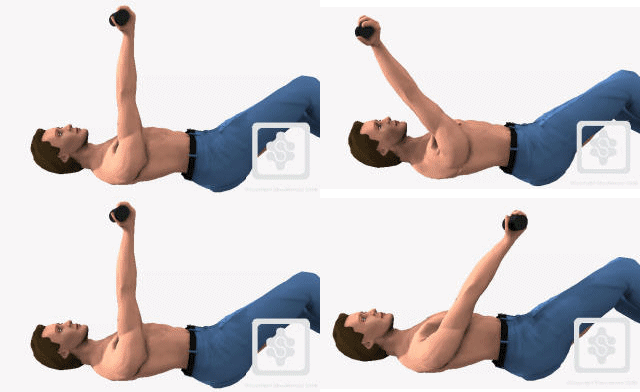
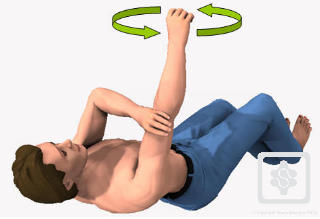
  • Supine active-assisted – Lie down flat on your back, with a pillow supporting your head.
    Bend your elbow as far as possible. Then raise your arm to 90 degrees vertical, using the stronger arm to assist if necessary. Once you have got to 90 degrees, you can straighten your elbow. Hold your arm in this upright position with its own strength.
  • Circles – Slowly with your fingers, wrist and elbow straight move the arm in small circular movements clockwise and counterclockwise. Gradually increase the circle as comfortable (this may take a few weeks to increase to bigger and bigger circles).
  • Progress to lightweight – As you get more confidence in controlling your shoulder movement, a lightweight e.g. a tin of beans or small paperweight should be held in the affected hand.
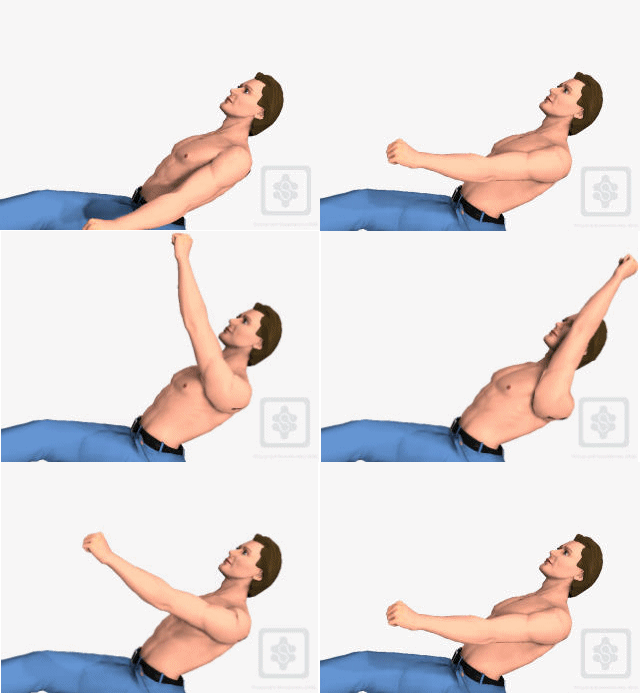
  • Progress to Sitting and Standing – Having more confidence in controlling your shoulder movement gradually goes from lying down to sitting and eventually standing. At this stage, you may recline the head of your bed or put some pillows underneath your back to recline your position. Repeat the same exercise again, this time against some gravity. Start again from holding your arm in the upright position with its own strength. Start first without any weights and progress to use the same lightweight you used before in the lying down position.
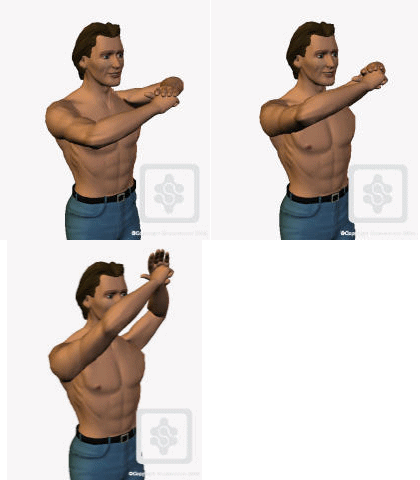
  • Resisted Exercise – For re-education of concentric contracture of the deltoid muscle. Make a fist with the hand of the affected side. The flat hand of the opposite side is providing resistance. Push your affected side hand against resistance from the other hand. Whilst doing this, you will notice that you can fully elevate your arm (above your head). Repeat these exercises in order to ‘learn’ and re-educate your Deltoid muscle to perform this ‘concentric contracture’ even without pushing against your other arm.

Exercises

Supine active-assisted

  • Lie down flat on your back, with a pillow supporting your head.
  • Bend your elbow as far as possible. Then raise your arm to 90 degrees vertical, using the stronger arm to assist if necessary.  Once you have got to 90 degrees, you can straighten your elbow.

  • Hold your arm in this upright position with its own strength.
    • Circles: Slowly with your fingers, wrist and elbow straight move the arm in small circular movements clockwise and counterclockwise. Gradually increase the circle as comfortable (this may take a few weeks to increase to bigger and bigger circles).

    • Secondly move the arm forwards and backwards in line with the outside leg (gentle movement from both sides of the arm upright position.)
  • Keep the movements smooth and continuous for 5 minutes or until fatigue.
  • As you get more confidence in controlling your shoulder movement, gradually increase the range of movement until your arm will move from the side of your thigh to above your head, touching the bed, and return.

Progress to lightweight:

  • As you get more confidence in controlling your shoulder movement, a lightweight e.g. a tin of beans or small paperweight should be held in the affected hand.
  • Repeat as above (5 and 6).

Progress to sitting and standing:

  • Having more confidence in controlling your shoulder movement gradually go from lying down to sitting and eventually standing.
  • At this stage you may recline the head of your bed or put some pillows underneath your back to recline your position.
  • Repeat the same exercise again, this time against some gravity.
  • Start again from holding your arm in the upright position with its own strength.
  • Repeat as above (5, 6 and 7).
  • Start first without any weights and progress to use the same lightweight you used before in the lying down position.

Resisted exercise:

  • For re-education of concentric contracture of the deltoid muscle.
  • Make a fist with the hand of the affected side.  The flat hand of the opposite side is providing resistance.  Push your affected side hand against resistance from the other hand.  Whilst doing this, you will notice that you can fully elevate your arm (above your head).
  • Repeat these exercises in order to ‘learn’ and re-educate your Deltoid muscle to perform this ‘concentric contracture’ even without pushing against your other arm.

  • You should repeat these exercises X 10 in a session, 3 to 5 sessions per day.
  • Stop exercising if your pain increases or you feel unwell.
  • You should expect to see some improvement by 6 and 12 weeks.

Surgical Considerations

The deltoid is a significant factor when considering the anterior surgical approach to gain access to the shoulder joint.  Some of these technical procedures include, but are not limited to the following:

  • Open Bankart repair/capsular reconstructions – indicated in the setting of recurrent anterior (or other directional) instability of the shoulder
  • Shoulder arthroplasty – indicated for cases of post-traumatic deformity, advanced degenerative arthritis, and/or avascular necros includes hemiarthroplasty, total shoulder arthroplasty (TSA), reverse total shoulder arthroplasty (TSA)
  • The long head of the biceps tendon (LHBT) repair-  versus tenotomy versus tenodesis procedures indicated in the setting of either LHBT/bicipital groove instability or advanced/end-stage LHBT tendinopathy and degeneration
  • Rotator cuff repair – contemporary indications remain somewhat controversial although most of these procedures are now being performed arthroscopically popular approaches (as opposed to the deltopectoral approach) include the mini-open approach (lateral deltoid-splitting approach)
  • Deltopectoral (DP) approach – When marking out the anatomic landmarks for the DP approach, the coracoid process is marked on the skin to plan out the trajectory for the surgical incision. From there, an incision is made which follows over the deltopectoral groove. The deltoid and pectoralis major muscle fibers are appreciated, and this most often includes direct visualization of a fat stripe which includes the cephalic vein in the center of the incision/approach. The deltoid is retracted laterally while the pectoralis major muscle is retracted medially. The cephalic vein is retracted either laterally or medially (depending on surgeon preference).
  • Other approaches – Other surgical approaches that involve the deltoid are the anterolateral and direct lateral approach to the shoulder.  A modified anterolateral approach can be preferred over the more anterior approach for humeral fractures because this may facilitate access to the specific fracture fragments.


REferences

Deltoid Muscle StrainE

ByRx Harun

Test Diagnosis Of Deltoid Muscle Strain

Test Diagnosis Of Deltoid Muscle Strain/Deltoid Muscle Strain is the large muscle on the shoulder and has three parts: the anterior, posterior and the middle. The muscle performs the role of lifting the arm up sideways. The front part helps to lift the arm up forward, which is called shoulder flexion. The back part helps to lift the arm up backward, which is called shoulder extension.

Anatomy of Deltoid Muscle Strain

Each head of the deDeltoid Muscle Strainltoid has slightly different insertion points, allowing for more control and a full range of motion at the shoulder joint. The anterior head of the deltoid works closely with a pectoralis major, which allows for full stabilization near its more superior insertion on the clavicle.

  • The anterior deltoid – rotates the shoulder joint medially by drawing the arm inward. This flexion and medial rotation allow the arm to move forward, sometimes referred to as forwarding flexion. This action can be seen in a variety of functional tasks and is quite integral to the upper extremity movement. The forward-flexed motion moves the arm toward the insertion point of the anterior deltoid at the clavicle.
  • The lateral deltoid – rotates the shoulder joint laterally moving the arm outward, referred to as abduction. This is important while walking, reaching, and completing many other tasks in a lateral plane. This abduction moves the shoulder joint downward to accommodate the movement of the entire arm outward. The contraction of the lateral deltoid pushes the arm toward the insertion point of the lateral deltoid, which is on the proximal humerus.
  • The posterior deltoid rotates the joint laterally which moves the arm backward and outward. This moves the entire arm toward the spine, which is where this head of the deltoid inserts. This motion is seen often when dressing, reaching backward, or throwing, among other functional tasks.

Anterior Division

  • Origin –  anterior border of the lateral 1/3 of the clavicle;
  • insertion – deltoid tuberosity of the humerus;
  • Action – abduction, horizontal flexion and medial rotation of humerus at shoulder;
  • Nerve supply – axillary, C5, C6 ;
  • Synergists –  medial and posterior deltoid divisions, supraspinatus and pectoralis major clavicular division;

Deltoid: Medial Division

  • Origin – the superior surface of the acromion process;
  • Insertion – deltoid tuberosity of humerus;
  • Action – the abduction of the humerus at the shoulder
  • Nerve supply – axillary, C5, C6;
  • Synergists – anterior and posterior deltoid divisions, supraspinatus;

Deltoid: Posterior Division

  • Origin – inferior margin of the spine of scapula;
  • Insertion – deltoid tuberosity of humerus;
  • Action – abduction, horizontal extension & lateral rotation of humerus at shoulder;
  • Nerve supply – axillary, C5, C6;
  • Synergists – anterior and medial divisions of the deltoid, supraspinatus;

Insertion

  • From this extensive origin the fibers converge toward their insertion on the deltoid tuberosity on the middle of the lateral aspect of the shaft of the humerus; the middle fibers passing vertically, the anterior obliquely backward and laterally, and the posterior obliquely forward and laterally.

Blood supply

  • The deltoid is supplied by the posterior circumflex humeral artery and the deltoid branch of the thoracoacromial artery which branches from the axillary artery.[18]

Nerve supply

  • The deltoid is innervated by the axillary nerve. The axillary nerve originates from the anterior rami of the cervical nerves C5 and C6, via the superior trunk, posterior division of the superior trunk, and the posterior cord of the brachial plexus.[rx]

Causes of Deltoid Muscle Strain

Deltoid strains can be caused by numerous mechanisms. Most commonly they result from overuse of the muscle without adequate rest. This can lead to discomfort in the area of the deltoid muscle with associated swelling and loss of function. A forced eccentric contraction of the shoulder (lengthening of the muscle belly while contracting), can lead to strain of the deltoid muscle (ie: doing a “negative “while weight lifting). Less commonly, a direct traumatic blow to the shoulder can cause a deltoid strain.

  • Trauma – Injuries to the trapezius, such as a muscle tear from placing too much force on the muscle, can lead to pain.
  • Repetitive stress – Repeating the same shoulder motions, again and again, can stress your trapezius muscles and tendons. Baseball, tennis, rowing, and weightlifting are examples of sports activities that can put you at risk for overuse tears. Many jobs and routine chores can cause overuse of tears, as well.
  • Lack of blood supply – As we get older, the blood supply in our trapezius lessens. Without a good blood supply, the body’s natural ability to repair tendon damage is impaired. This can ultimately lead to a tendon tear.
  • Bone spurs – As we age, bone spurs (bone overgrowth) often develop on the underside of the acromion bone. When we lift our arms, the spurs rub on the trapezius muscle. This condition is called shoulder impingement, and over time will weaken the tendon and make it more likely to tear.
  • Sudden forceful  fall down
  • Road traffic accident
  • Falls – Falling onto an outstretched hand is one of the most common causes of injury.
  • Sports injuries – Many Injury occurs during contact sports or sports in which you might fall onto an outstretched hand — such as in-line skating or snowboarding.
  • Motor vehicle crashes – Motor vehicle crashes can cause necks of femur fracture to break, sometimes into many pieces, and often require surgical repair.
  • Have osteoporosis –  a disease that weakens your bones
  • Eave low muscle mass or poor muscle strength – or lack agility and have poor balance (these conditions make you more likely to fall)
  • Walk or do other activities in the snow or on the ice – or do activities that require a lot of forwarding momenta, such as in-line skating and skiing
  • Wave an inadequate intake of calcium or vitamin D
  • Football or soccer, especially on artificial turf
  • Rugby
  • Horseback riding
  • Hockey
  • Skiing
  • Snowboarding
  • In-line skating
  • Jumping on a trampoline

Symptoms of Deltoid Muscle Strain

Depending on the cause of your shoulder pain you may experience:

  • pain deep in the shoulder joint, in the back or the front of the shoulder and the upper part of the arm. Sometimes the pain in the shoulder can be described as a ‘catching pain’. The location and type of pain is likely to relate to the structure causing the pain
  • reduced movement, and pain when moving your shoulder.
  • weakness of the shoulder/upper arm. Depending on the condition, there may be a sensation of the joint slipping out and back into the joint socket, or the shoulder can become completely dislodged (dislocated)
  • sensations of pins and needles (tingling) and burning pain. This is more likely to be associated with nerves from the neck than the shoulder joint itself.
  • lack of movement after a shoulder dislocation. This is usually due to pain. Complete rotator cuff tears and injury to the axillary nerve both cause weakness in moving the arm away from the body. These problems require close clinical examination.

Symptoms of a Deltoid Contusion

  • Pain in the muscle after impact.
  • Pain and difficulty when lifting the arm to the side.
  • Tender to touch the muscle.
  • Bruising appears.
  • There may be some swelling.

Diagnosis of Deltoid Muscle Strain

The grades of deltoid strain are described below

Grade 1

  • Tightness in the muscles.
  • Mild pain in the deltoid
  • The general function is not a problem.
  • Increase in pain when weight-bearing with the arms.

Grade 2

  • Occasional twinges of pain during activity.
  • You may notice swelling.
  • Pressing into the deltoid itself can cause pain.
  • Lifting your arm up to the front, side or back against resistance can cause pain.

Grade 3

  • Unable to move your arm.
  • Severe pain.
  • Swelling.
  • Contracting the muscle is painful and there may be a bulge or gap in the muscle.

Or

When the deltoid muscle is injured, a person may feel pain or tenderness at the front, side, or back of the shoulder, especially when lifting the arm. In some cases, the deltoid muscle may be torn and cause swelling and bruising.

Strains are given a grade of 1–3, according to their severity:

  • Grade 1 – These mild strains are characterized by tightness in the muscle and minimal swelling. Using the arm may produce slight pain, but the range of movement is often not restricted.
  • Grade 2 – Increased pain, swelling, and limited movement are typically present with a grade 2 strain. In many cases, doing push-ups, presses, or lifting the arm in any direction can cause pain.
  • Grade 3 – These serious injuries can cause severe pain, swelling, and a muscle bulge or gap. Due to the pain, the movement of the arm may be severely limited or impossible.

Diagnosing shoulder pain

Health practitioners who treat shoulder pain are trained to investigate and identify the exact cause of the condition or injury causing the pain. They will do this by:

  • asking about your shoulder pain, including potential causes (e.g. recent injuries, other health conditions), if you have had shoulder pain before, things that make your pain worse, things that make it better
  • conducting a thorough physical exam.
  • From this information, they can work out the likelihood of particular structures in the shoulder being involved. Sometimes they will suggest that investigations or tests may be needed.

X-ray -m X-rays provide images of your bones and joints. They can show any changes caused by arthritis in the shoulder joint (e.g. bone spurs, narrowed joint space) or fractures. However, x-rays don’t show any changes or problems with your soft tissues (e.g. muscles, tendons).

Ultrasound – Ultrasounds are typically used to investigate your rotator cuff tendon for inflammation, tears or rupture. While it can be a helpful tool to use and can provide clues to identify the source of your pain, a diagnosis can’t be made using the ultrasound alone. If an ultrasound is ordered, then an x-ray should also be arranged. Both tests will provide more complete information about the state of your joints and the tendon.

CT and MRI – Computed tomography (CT) and magnetic resonance imaging (MRI) scans are usually not the first test used to investigate shoulder pain. They may be used when a fracture is suspected or an accident is involved. These scans will help determine the extent of the injury and whether further assessment and treatment by a surgeon is needed.

Treatment of Deltoid Muscle Strain

Non-Pharmacological 

  • Rest – Rest, ice and heat are the initial steps to take to rehabilitate your deltoid muscles. Resting allows the muscle strain to heal, while ice reduces the inflammation and dulls your pain. Apply ice on a 15-minute on, 15-minute off schedule for the first day for grade 1 strains. Grade 1 strains are injuries that feel tight but do not produce pain or visible swelling of the shoulder area. Continue icing for several days for grade 2 and 3 strains. Strains of this severity will cause pain and hamper your mobility. Introduce heat to the shoulder muscles after the first 24 hours with a grade 1 injury and after 3 to 5 days for injuries classified as grades 2 or 3.
  • Stretching and Strengthening – Stretching and strengthening your deltoids can help you recover from an injury and prevent future strains. Stretching can begin as soon as you are pain-free, and include the barbell stretch. Stand with your arms at your sides. Bring your arms up to shoulder height, keeping your elbows straight and arms out in front of you. Wrap one end of a resistance band around your left foot and hold the other end in your right hand to strengthen a right-hand deltoid injury reverse the directions to strengthen your left deltoid. Start with your right hand down at your side with your elbow straight. Keeping your elbow straight, pull against the band as you extend your arm up and out from your body. Picture yourself imitating an airplane with your arm outstretched at your side. Your hand should be shoulder level. Slowly bring your arm back down to your side.
  • Massage – Sports massage may be a part of your rehab program. A sports massage, administered by a certified professional, keeps your muscles loose and limber and warms the injured tissues. Grade 1 deltoid injuries may be massaged after the first two days of rest and icing; more severe strains or tears may require up to a week’s healing time before the massage is possible.
  • Ultrasound – Grade 3 deltoid injuries can benefit from more advanced rehab techniques, including ultrasound and electrical stimulation. These types of treatments must be performed by certified professionals and may include your athletic trainer or physical therapist. Ultrasound treatments send sound waves into the deltoid muscle; electrical stimulation provides the injured tissues a low-grade electrical current. Both of these treatments can reduce pain and inflammation.

Medication

In Severe Condition of the deltoid  Muscle Injury


Exercises

  • Supine active-assisted – Lie down flat on your back, with a pillow supporting your head.
    Bend your elbow as far as possible. Then raise your arm to 90 degrees vertical, using the stronger arm to assist if necessary. Once you have got to 90 degrees, you can straighten your elbow. Hold your arm in this upright position with its own strength.
  • Circles – Slowly with your fingers, wrist and elbow straight move the arm in small circular movements clockwise and counterclockwise. Gradually increase the circle as comfortable (this may take a few weeks to increase to bigger and bigger circles).
  • Progress to lightweight – As you get more confidence in controlling your shoulder movement, a lightweight e.g. a tin of beans or small paperweight should be held in the affected hand.
  • Progress to Sitting and Standing – Having more confidence in controlling your shoulder movement gradually goes from lying down to sitting and eventually standing. At this stage, you may recline the head of your bed or put some pillows underneath your back to recline your position. Repeat the same exercise again, this time against some gravity. Start again from holding your arm in the upright position with its own strength. Start first without any weights and progress to use the same lightweight you used before in the lying down position.
  • Resisted Exercise – For re-education of concentric contracture of the deltoid muscle. Make a fist with the hand of the affected side. The flat hand of the opposite side is providing resistance. Push your affected side hand against resistance from the other hand. Whilst doing this, you will notice that you can fully elevate your arm (above your head). Repeat these exercises in order to ‘learn’ and re-educate your Deltoid muscle to perform this ‘concentric contracture’ even without pushing against your other arm.

Exercises

Supine active-assisted

  • Lie down flat on your back, with a pillow supporting your head.
  • Bend your elbow as far as possible. Then raise your arm to 90 degrees vertical, using the stronger arm to assist if necessary.  Once you have got to 90 degrees, you can straighten your elbow.

  • Hold your arm in this upright position with its own strength.
    • Circles: Slowly with your fingers, wrist and elbow straight move the arm in small circular movements clockwise and counterclockwise. Gradually increase the circle as comfortable (this may take a few weeks to increase to bigger and bigger circles).

    • Secondly move the arm forwards and backwards in line with the outside leg (gentle movement from both sides of the arm upright position.)
  • Keep the movements smooth and continuous for 5 minutes or until fatigue.
  • As you get more confidence in controlling your shoulder movement, gradually increase the range of movement until your arm will move from the side of your thigh to above your head, touching the bed, and return.

Progress to lightweight:

  • As you get more confidence in controlling your shoulder movement, a lightweight e.g. a tin of beans or small paperweight should be held in the affected hand.
  • Repeat as above (5 and 6).

Progress to sitting and standing:

  • Having more confidence in controlling your shoulder movement gradually go from lying down to sitting and eventually standing.
  • At this stage you may recline the head of your bed or put some pillows underneath your back to recline your position.
  • Repeat the same exercise again, this time against some gravity.
  • Start again from holding your arm in the upright position with its own strength.
  • Repeat as above (5, 6 and 7).
  • Start first without any weights and progress to use the same lightweight you used before in the lying down position.

Resisted exercise:

  • For re-education of concentric contracture of the deltoid muscle.
  • Make a fist with the hand of the affected side.  The flat hand of the opposite side is providing resistance.  Push your affected side hand against resistance from the other hand.  Whilst doing this, you will notice that you can fully elevate your arm (above your head).
  • Repeat these exercises in order to ‘learn’ and re-educate your Deltoid muscle to perform this ‘concentric contracture’ even without pushing against your other arm.

  • You should repeat these exercises X 10 in a session, 3 to 5 sessions per day.
  • Stop exercising if your pain increases or you feel unwell.
  • You should expect to see some improvement by 6 and 12 weeks.

Surgical Considerations

The deltoid is a significant factor when considering the anterior surgical approach to gain access to the shoulder joint.  Some of these technical procedures include, but are not limited to the following:

  • Open Bankart repair/capsular reconstructions – indicated in the setting of recurrent anterior (or other directional) instability of the shoulder
  • Shoulder arthroplasty – indicated for cases of post-traumatic deformity, advanced degenerative arthritis, and/or avascular necros includes hemiarthroplasty, total shoulder arthroplasty (TSA), reverse total shoulder arthroplasty (TSA)
  • The long head of the biceps tendon (LHBT) repair-  versus tenotomy versus tenodesis procedures indicated in the setting of either LHBT/bicipital groove instability or advanced/end-stage LHBT tendinopathy and degeneration
  • Rotator cuff repair – contemporary indications remain somewhat controversial although most of these procedures are now being performed arthroscopically popular approaches (as opposed to the deltopectoral approach) include the mini-open approach (lateral deltoid-splitting approach)
  • Deltopectoral (DP) approach – When marking out the anatomic landmarks for the DP approach, the coracoid process is marked on the skin to plan out the trajectory for the surgical incision. From there, an incision is made which follows over the deltopectoral groove. The deltoid and pectoralis major muscle fibers are appreciated, and this most often includes direct visualization of a fat stripe which includes the cephalic vein in the center of the incision/approach. The deltoid is retracted laterally while the pectoralis major muscle is retracted medially. The cephalic vein is retracted either laterally or medially (depending on surgeon preference).
  • Other approaches – Other surgical approaches that involve the deltoid are the anterolateral and direct lateral approach to the shoulder.  A modified anterolateral approach can be preferred over the more anterior approach for humeral fractures because this may facilitate access to the specific fracture fragments.


REferences

Test Diagnosis Of Deltoid Muscle Strain

ByRx Harun

How do you feel if you have a torn deltoid?

How do you feel if you have a torn deltoid?/Deltoid Muscle Strain is the large muscle on the shoulder and has three parts: the anterior, posterior and the middle. The muscle performs the role of lifting the arm up sideways. The front part helps to lift the arm up forward, which is called shoulder flexion. The back part helps to lift the arm up backward, which is called shoulder extension.

Anatomy of Deltoid Muscle Strain

Each head of the deDeltoid Muscle Strainltoid has slightly different insertion points, allowing for more control and a full range of motion at the shoulder joint. The anterior head of the deltoid works closely with a pectoralis major, which allows for full stabilization near its more superior insertion on the clavicle.

  • The anterior deltoid – rotates the shoulder joint medially by drawing the arm inward. This flexion and medial rotation allow the arm to move forward, sometimes referred to as forwarding flexion. This action can be seen in a variety of functional tasks and is quite integral to the upper extremity movement. The forward-flexed motion moves the arm toward the insertion point of the anterior deltoid at the clavicle.
  • The lateral deltoid – rotates the shoulder joint laterally moving the arm outward, referred to as abduction. This is important while walking, reaching, and completing many other tasks in a lateral plane. This abduction moves the shoulder joint downward to accommodate the movement of the entire arm outward. The contraction of the lateral deltoid pushes the arm toward the insertion point of the lateral deltoid, which is on the proximal humerus.
  • The posterior deltoid rotates the joint laterally which moves the arm backward and outward. This moves the entire arm toward the spine, which is where this head of the deltoid inserts. This motion is seen often when dressing, reaching backward, or throwing, among other functional tasks.

Anterior Division

  • Origin –  anterior border of the lateral 1/3 of the clavicle;
  • insertion – deltoid tuberosity of the humerus;
  • Action – abduction, horizontal flexion and medial rotation of humerus at shoulder;
  • Nerve supply – axillary, C5, C6 ;
  • Synergists –  medial and posterior deltoid divisions, supraspinatus and pectoralis major clavicular division;

Deltoid: Medial Division

  • Origin – the superior surface of the acromion process;
  • Insertion – deltoid tuberosity of humerus;
  • Action – the abduction of the humerus at the shoulder
  • Nerve supply – axillary, C5, C6;
  • Synergists – anterior and posterior deltoid divisions, supraspinatus;

Deltoid: Posterior Division

  • Origin – inferior margin of the spine of scapula;
  • Insertion – deltoid tuberosity of humerus;
  • Action – abduction, horizontal extension & lateral rotation of humerus at shoulder;
  • Nerve supply – axillary, C5, C6;
  • Synergists – anterior and medial divisions of the deltoid, supraspinatus;

Insertion

  • From this extensive origin the fibers converge toward their insertion on the deltoid tuberosity on the middle of the lateral aspect of the shaft of the humerus; the middle fibers passing vertically, the anterior obliquely backward and laterally, and the posterior obliquely forward and laterally.

Blood supply

  • The deltoid is supplied by the posterior circumflex humeral artery and the deltoid branch of the thoracoacromial artery which branches from the axillary artery.[18]

Nerve supply

  • The deltoid is innervated by the axillary nerve. The axillary nerve originates from the anterior rami of the cervical nerves C5 and C6, via the superior trunk, posterior division of the superior trunk, and the posterior cord of the brachial plexus.[rx]

Causes of Deltoid Muscle Strain

Deltoid strains can be caused by numerous mechanisms. Most commonly they result from overuse of the muscle without adequate rest. This can lead to discomfort in the area of the deltoid muscle with associated swelling and loss of function. A forced eccentric contraction of the shoulder (lengthening of the muscle belly while contracting), can lead to strain of the deltoid muscle (ie: doing a “negative “while weight lifting). Less commonly, a direct traumatic blow to the shoulder can cause a deltoid strain.

  • Trauma – Injuries to the trapezius, such as a muscle tear from placing too much force on the muscle, can lead to pain.
  • Repetitive stress – Repeating the same shoulder motions, again and again, can stress your trapezius muscles and tendons. Baseball, tennis, rowing, and weightlifting are examples of sports activities that can put you at risk for overuse tears. Many jobs and routine chores can cause overuse of tears, as well.
  • Lack of blood supply – As we get older, the blood supply in our trapezius lessens. Without a good blood supply, the body’s natural ability to repair tendon damage is impaired. This can ultimately lead to a tendon tear.
  • Bone spurs – As we age, bone spurs (bone overgrowth) often develop on the underside of the acromion bone. When we lift our arms, the spurs rub on the trapezius muscle. This condition is called shoulder impingement, and over time will weaken the tendon and make it more likely to tear.
  • Sudden forceful  fall down
  • Road traffic accident
  • Falls – Falling onto an outstretched hand is one of the most common causes of injury.
  • Sports injuries – Many Injury occurs during contact sports or sports in which you might fall onto an outstretched hand — such as in-line skating or snowboarding.
  • Motor vehicle crashes – Motor vehicle crashes can cause necks of femur fracture to break, sometimes into many pieces, and often require surgical repair.
  • Have osteoporosis –  a disease that weakens your bones
  • Eave low muscle mass or poor muscle strength – or lack agility and have poor balance (these conditions make you more likely to fall)
  • Walk or do other activities in the snow or on the ice – or do activities that require a lot of forwarding momenta, such as in-line skating and skiing
  • Wave an inadequate intake of calcium or vitamin D
  • Football or soccer, especially on artificial turf
  • Rugby
  • Horseback riding
  • Hockey
  • Skiing
  • Snowboarding
  • In-line skating
  • Jumping on a trampoline

Symptoms of Deltoid Muscle Strain

Depending on the cause of your shoulder pain you may experience:

  • pain deep in the shoulder joint, in the back or the front of the shoulder and the upper part of the arm. Sometimes the pain in the shoulder can be described as a ‘catching pain’. The location and type of pain is likely to relate to the structure causing the pain
  • reduced movement, and pain when moving your shoulder.
  • weakness of the shoulder/upper arm. Depending on the condition, there may be a sensation of the joint slipping out and back into the joint socket, or the shoulder can become completely dislodged (dislocated)
  • sensations of pins and needles (tingling) and burning pain. This is more likely to be associated with nerves from the neck than the shoulder joint itself.
  • lack of movement after a shoulder dislocation. This is usually due to pain. Complete rotator cuff tears and injury to the axillary nerve both cause weakness in moving the arm away from the body. These problems require close clinical examination.

Symptoms of a Deltoid Contusion

  • Pain in the muscle after impact.
  • Pain and difficulty when lifting the arm to the side.
  • Tender to touch the muscle.
  • Bruising appears.
  • There may be some swelling.

Diagnosis of Deltoid Muscle Strain

The grades of deltoid strain are described below

Grade 1

  • Tightness in the muscles.
  • Mild pain in the deltoid
  • The general function is not a problem.
  • Increase in pain when weight-bearing with the arms.

Grade 2

  • Occasional twinges of pain during activity.
  • You may notice swelling.
  • Pressing into the deltoid itself can cause pain.
  • Lifting your arm up to the front, side or back against resistance can cause pain.

Grade 3

  • Unable to move your arm.
  • Severe pain.
  • Swelling.
  • Contracting the muscle is painful and there may be a bulge or gap in the muscle.

Or

When the deltoid muscle is injured, a person may feel pain or tenderness at the front, side, or back of the shoulder, especially when lifting the arm. In some cases, the deltoid muscle may be torn and cause swelling and bruising.

Strains are given a grade of 1–3, according to their severity:

  • Grade 1 – These mild strains are characterized by tightness in the muscle and minimal swelling. Using the arm may produce slight pain, but the range of movement is often not restricted.
  • Grade 2 – Increased pain, swelling, and limited movement are typically present with a grade 2 strain. In many cases, doing push-ups, presses, or lifting the arm in any direction can cause pain.
  • Grade 3 – These serious injuries can cause severe pain, swelling, and a muscle bulge or gap. Due to the pain, the movement of the arm may be severely limited or impossible.

Diagnosing shoulder pain

Health practitioners who treat shoulder pain are trained to investigate and identify the exact cause of the condition or injury causing the pain. They will do this by:

  • asking about your shoulder pain, including potential causes (e.g. recent injuries, other health conditions), if you have had shoulder pain before, things that make your pain worse, things that make it better
  • conducting a thorough physical exam.
  • From this information, they can work out the likelihood of particular structures in the shoulder being involved. Sometimes they will suggest that investigations or tests may be needed.

X-ray -m X-rays provide images of your bones and joints. They can show any changes caused by arthritis in the shoulder joint (e.g. bone spurs, narrowed joint space) or fractures. However, x-rays don’t show any changes or problems with your soft tissues (e.g. muscles, tendons).

Ultrasound – Ultrasounds are typically used to investigate your rotator cuff tendon for inflammation, tears or rupture. While it can be a helpful tool to use and can provide clues to identify the source of your pain, a diagnosis can’t be made using the ultrasound alone. If an ultrasound is ordered, then an x-ray should also be arranged. Both tests will provide more complete information about the state of your joints and the tendon.

CT and MRI – Computed tomography (CT) and magnetic resonance imaging (MRI) scans are usually not the first test used to investigate shoulder pain. They may be used when a fracture is suspected or an accident is involved. These scans will help determine the extent of the injury and whether further assessment and treatment by a surgeon is needed.

Treatment of Deltoid Muscle Strain

Non-Pharmacological 

  • Rest – Rest, ice and heat are the initial steps to take to rehabilitate your deltoid muscles. Resting allows the muscle strain to heal, while ice reduces the inflammation and dulls your pain. Apply ice on a 15-minute on, 15-minute off schedule for the first day for grade 1 strains. Grade 1 strains are injuries that feel tight but do not produce pain or visible swelling of the shoulder area. Continue icing for several days for grade 2 and 3 strains. Strains of this severity will cause pain and hamper your mobility. Introduce heat to the shoulder muscles after the first 24 hours with a grade 1 injury and after 3 to 5 days for injuries classified as grades 2 or 3.
  • Stretching and Strengthening – Stretching and strengthening your deltoids can help you recover from an injury and prevent future strains. Stretching can begin as soon as you are pain-free, and include the barbell stretch. Stand with your arms at your sides. Bring your arms up to shoulder height, keeping your elbows straight and arms out in front of you. Wrap one end of a resistance band around your left foot and hold the other end in your right hand to strengthen a right-hand deltoid injury reverse the directions to strengthen your left deltoid. Start with your right hand down at your side with your elbow straight. Keeping your elbow straight, pull against the band as you extend your arm up and out from your body. Picture yourself imitating an airplane with your arm outstretched at your side. Your hand should be shoulder level. Slowly bring your arm back down to your side.
  • Massage – Sports massage may be a part of your rehab program. A sports massage, administered by a certified professional, keeps your muscles loose and limber and warms the injured tissues. Grade 1 deltoid injuries may be massaged after the first two days of rest and icing; more severe strains or tears may require up to a week’s healing time before the massage is possible.
  • Ultrasound – Grade 3 deltoid injuries can benefit from more advanced rehab techniques, including ultrasound and electrical stimulation. These types of treatments must be performed by certified professionals and may include your athletic trainer or physical therapist. Ultrasound treatments send sound waves into the deltoid muscle; electrical stimulation provides the injured tissues a low-grade electrical current. Both of these treatments can reduce pain and inflammation.

Medication

In Severe Condition of the deltoid  Muscle Injury


Exercises

  • Supine active-assisted – Lie down flat on your back, with a pillow supporting your head.
    Bend your elbow as far as possible. Then raise your arm to 90 degrees vertical, using the stronger arm to assist if necessary. Once you have got to 90 degrees, you can straighten your elbow. Hold your arm in this upright position with its own strength.
  • Circles – Slowly with your fingers, wrist and elbow straight move the arm in small circular movements clockwise and counterclockwise. Gradually increase the circle as comfortable (this may take a few weeks to increase to bigger and bigger circles).
  • Progress to lightweight – As you get more confidence in controlling your shoulder movement, a lightweight e.g. a tin of beans or small paperweight should be held in the affected hand.
  • Progress to Sitting and Standing – Having more confidence in controlling your shoulder movement gradually goes from lying down to sitting and eventually standing. At this stage, you may recline the head of your bed or put some pillows underneath your back to recline your position. Repeat the same exercise again, this time against some gravity. Start again from holding your arm in the upright position with its own strength. Start first without any weights and progress to use the same lightweight you used before in the lying down position.
  • Resisted Exercise – For re-education of concentric contracture of the deltoid muscle. Make a fist with the hand of the affected side. The flat hand of the opposite side is providing resistance. Push your affected side hand against resistance from the other hand. Whilst doing this, you will notice that you can fully elevate your arm (above your head). Repeat these exercises in order to ‘learn’ and re-educate your Deltoid muscle to perform this ‘concentric contracture’ even without pushing against your other arm.

Exercises

Supine active-assisted

  • Lie down flat on your back, with a pillow supporting your head.
  • Bend your elbow as far as possible. Then raise your arm to 90 degrees vertical, using the stronger arm to assist if necessary.  Once you have got to 90 degrees, you can straighten your elbow.

  • Hold your arm in this upright position with its own strength.
    • Circles: Slowly with your fingers, wrist and elbow straight move the arm in small circular movements clockwise and counterclockwise. Gradually increase the circle as comfortable (this may take a few weeks to increase to bigger and bigger circles).

    • Secondly move the arm forwards and backwards in line with the outside leg (gentle movement from both sides of the arm upright position.)
  • Keep the movements smooth and continuous for 5 minutes or until fatigue.
  • As you get more confidence in controlling your shoulder movement, gradually increase the range of movement until your arm will move from the side of your thigh to above your head, touching the bed, and return.

Progress to lightweight:

  • As you get more confidence in controlling your shoulder movement, a lightweight e.g. a tin of beans or small paperweight should be held in the affected hand.
  • Repeat as above (5 and 6).

Progress to sitting and standing:

  • Having more confidence in controlling your shoulder movement gradually go from lying down to sitting and eventually standing.
  • At this stage you may recline the head of your bed or put some pillows underneath your back to recline your position.
  • Repeat the same exercise again, this time against some gravity.
  • Start again from holding your arm in the upright position with its own strength.
  • Repeat as above (5, 6 and 7).
  • Start first without any weights and progress to use the same lightweight you used before in the lying down position.

Resisted exercise:

  • For re-education of concentric contracture of the deltoid muscle.
  • Make a fist with the hand of the affected side.  The flat hand of the opposite side is providing resistance.  Push your affected side hand against resistance from the other hand.  Whilst doing this, you will notice that you can fully elevate your arm (above your head).
  • Repeat these exercises in order to ‘learn’ and re-educate your Deltoid muscle to perform this ‘concentric contracture’ even without pushing against your other arm.

  • You should repeat these exercises X 10 in a session, 3 to 5 sessions per day.
  • Stop exercising if your pain increases or you feel unwell.
  • You should expect to see some improvement by 6 and 12 weeks.

Surgical Considerations

The deltoid is a significant factor when considering the anterior surgical approach to gain access to the shoulder joint.  Some of these technical procedures include, but are not limited to the following:

  • Open Bankart repair/capsular reconstructions – indicated in the setting of recurrent anterior (or other directional) instability of the shoulder
  • Shoulder arthroplasty – indicated for cases of post-traumatic deformity, advanced degenerative arthritis, and/or avascular necros includes hemiarthroplasty, total shoulder arthroplasty (TSA), reverse total shoulder arthroplasty (TSA)
  • The long head of the biceps tendon (LHBT) repair-  versus tenotomy versus tenodesis procedures indicated in the setting of either LHBT/bicipital groove instability or advanced/end-stage LHBT tendinopathy and degeneration
  • Rotator cuff repair – contemporary indications remain somewhat controversial although most of these procedures are now being performed arthroscopically popular approaches (as opposed to the deltopectoral approach) include the mini-open approach (lateral deltoid-splitting approach)
  • Deltopectoral (DP) approach – When marking out the anatomic landmarks for the DP approach, the coracoid process is marked on the skin to plan out the trajectory for the surgical incision. From there, an incision is made which follows over the deltopectoral groove. The deltoid and pectoralis major muscle fibers are appreciated, and this most often includes direct visualization of a fat stripe which includes the cephalic vein in the center of the incision/approach. The deltoid is retracted laterally while the pectoralis major muscle is retracted medially. The cephalic vein is retracted either laterally or medially (depending on surgeon preference).
  • Other approaches – Other surgical approaches that involve the deltoid are the anterolateral and direct lateral approach to the shoulder.  A modified anterolateral approach can be preferred over the more anterior approach for humeral fractures because this may facilitate access to the specific fracture fragments.


REferences

How do you tell if you have a torn deltoid?

ByRx Harun

Deltoid Muscle Strain; Causes, Symptoms, Treatment

Deltoid Muscle Strain is the large muscle on the shoulder and has three parts: the anterior, posterior and the middle. The muscle performs the role of lifting the arm up sideways. The front part helps to lift the arm up forward, which is called shoulder flexion. The back part helps to lift the arm up backward, which is called shoulder extension.

Anatomy of Deltoid Muscle Strain

Each head of the deDeltoid Muscle Strainltoid has slightly different insertion points, allowing for more control and a full range of motion at the shoulder joint. The anterior head of the deltoid works closely with a pectoralis major, which allows for full stabilization near its more superior insertion on the clavicle.

  • The anterior deltoid – rotates the shoulder joint medially by drawing the arm inward. This flexion and medial rotation allow the arm to move forward, sometimes referred to as forwarding flexion. This action can be seen in a variety of functional tasks and is quite integral to the upper extremity movement. The forward-flexed motion moves the arm toward the insertion point of the anterior deltoid at the clavicle.
  • The lateral deltoid – rotates the shoulder joint laterally moving the arm outward, referred to as abduction. This is important while walking, reaching, and completing many other tasks in a lateral plane. This abduction moves the shoulder joint downward to accommodate the movement of the entire arm outward. The contraction of the lateral deltoid pushes the arm toward the insertion point of the lateral deltoid, which is on the proximal humerus.
  • The posterior deltoid rotates the joint laterally which moves the arm backward and outward. This moves the entire arm toward the spine, which is where this head of the deltoid inserts. This motion is seen often when dressing, reaching backward, or throwing, among other functional tasks.

Anterior Division

  • Origin –  anterior border of the lateral 1/3 of the clavicle;
  • insertion – deltoid tuberosity of the humerus;
  • Action – abduction, horizontal flexion and medial rotation of humerus at shoulder;
  • Nerve supply – axillary, C5, C6 ;
  • Synergists –  medial and posterior deltoid divisions, supraspinatus and pectoralis major clavicular division;

Deltoid: Medial Division

  • Origin – the superior surface of the acromion process;
  • Insertion – deltoid tuberosity of humerus;
  • Action – the abduction of the humerus at the shoulder
  • Nerve supply – axillary, C5, C6;
  • Synergists – anterior and posterior deltoid divisions, supraspinatus;

Deltoid: Posterior Division

  • Origin – inferior margin of the spine of scapula;
  • Insertion – deltoid tuberosity of humerus;
  • Action – abduction, horizontal extension & lateral rotation of humerus at shoulder;
  • Nerve supply – axillary, C5, C6;
  • Synergists – anterior and medial divisions of the deltoid, supraspinatus;

Insertion

  • From this extensive origin the fibers converge toward their insertion on the deltoid tuberosity on the middle of the lateral aspect of the shaft of the humerus; the middle fibers passing vertically, the anterior obliquely backward and laterally, and the posterior obliquely forward and laterally.

Blood supply

  • The deltoid is supplied by the posterior circumflex humeral artery and the deltoid branch of the thoracoacromial artery which branches from the axillary artery.[18]

Nerve supply

  • The deltoid is innervated by the axillary nerve. The axillary nerve originates from the anterior rami of the cervical nerves C5 and C6, via the superior trunk, posterior division of the superior trunk, and the posterior cord of the brachial plexus.[rx]

Causes of Deltoid Muscle Strain

Deltoid strains can be caused by numerous mechanisms. Most commonly they result from overuse of the muscle without adequate rest. This can lead to discomfort in the area of the deltoid muscle with associated swelling and loss of function. A forced eccentric contraction of the shoulder (lengthening of the muscle belly while contracting), can lead to strain of the deltoid muscle (ie: doing a “negative “while weight lifting). Less commonly, a direct traumatic blow to the shoulder can cause a deltoid strain.

  • Trauma – Injuries to the trapezius, such as a muscle tear from placing too much force on the muscle, can lead to pain.
  • Repetitive stress – Repeating the same shoulder motions, again and again, can stress your trapezius muscles and tendons. Baseball, tennis, rowing, and weightlifting are examples of sports activities that can put you at risk for overuse tears. Many jobs and routine chores can cause overuse of tears, as well.
  • Lack of blood supply – As we get older, the blood supply in our trapezius lessens. Without a good blood supply, the body’s natural ability to repair tendon damage is impaired. This can ultimately lead to a tendon tear.
  • Bone spurs – As we age, bone spurs (bone overgrowth) often develop on the underside of the acromion bone. When we lift our arms, the spurs rub on the trapezius muscle. This condition is called shoulder impingement, and over time will weaken the tendon and make it more likely to tear.
  • Sudden forceful  fall down
  • Road traffic accident
  • Falls – Falling onto an outstretched hand is one of the most common causes of injury.
  • Sports injuries – Many Injury occurs during contact sports or sports in which you might fall onto an outstretched hand — such as in-line skating or snowboarding.
  • Motor vehicle crashes – Motor vehicle crashes can cause necks of femur fracture to break, sometimes into many pieces, and often require surgical repair.
  • Have osteoporosis –  a disease that weakens your bones
  • Eave low muscle mass or poor muscle strength – or lack agility and have poor balance (these conditions make you more likely to fall)
  • Walk or do other activities in the snow or on the ice – or do activities that require a lot of forwarding momenta, such as in-line skating and skiing
  • Wave an inadequate intake of calcium or vitamin D
  • Football or soccer, especially on artificial turf
  • Rugby
  • Horseback riding
  • Hockey
  • Skiing
  • Snowboarding
  • In-line skating
  • Jumping on a trampoline

Symptoms of Deltoid Muscle Strain

Depending on the cause of your shoulder pain you may experience:

  • pain deep in the shoulder joint, in the back or the front of the shoulder and the upper part of the arm. Sometimes the pain in the shoulder can be described as a ‘catching pain’. The location and type of pain is likely to relate to the structure causing the pain
  • reduced movement, and pain when moving your shoulder.
  • weakness of the shoulder/upper arm. Depending on the condition, there may be a sensation of the joint slipping out and back into the joint socket, or the shoulder can become completely dislodged (dislocated)
  • sensations of pins and needles (tingling) and burning pain. This is more likely to be associated with nerves from the neck than the shoulder joint itself.
  • lack of movement after a shoulder dislocation. This is usually due to pain. Complete rotator cuff tears and injury to the axillary nerve both cause weakness in moving the arm away from the body. These problems require close clinical examination.

Symptoms of a Deltoid Contusion

  • Pain in the muscle after impact.
  • Pain and difficulty when lifting the arm to the side.
  • Tender to touch the muscle.
  • Bruising appears.
  • There may be some swelling.

Diagnosis of Deltoid Muscle Strain

The grades of deltoid strain are described below

Grade 1

  • Tightness in the muscles.
  • Mild pain in the deltoid
  • The general function is not a problem.
  • Increase in pain when weight-bearing with the arms.

Grade 2

  • Occasional twinges of pain during activity.
  • You may notice swelling.
  • Pressing into the deltoid itself can cause pain.
  • Lifting your arm up to the front, side or back against resistance can cause pain.

Grade 3

  • Unable to move your arm.
  • Severe pain.
  • Swelling.
  • Contracting the muscle is painful and there may be a bulge or gap in the muscle.

Or

When the deltoid muscle is injured, a person may feel pain or tenderness at the front, side, or back of the shoulder, especially when lifting the arm. In some cases, the deltoid muscle may be torn and cause swelling and bruising.

Strains are given a grade of 1–3, according to their severity:

  • Grade 1 – These mild strains are characterized by tightness in the muscle and minimal swelling. Using the arm may produce slight pain, but the range of movement is often not restricted.
  • Grade 2 – Increased pain, swelling, and limited movement are typically present with a grade 2 strain. In many cases, doing push-ups, presses, or lifting the arm in any direction can cause pain.
  • Grade 3 – These serious injuries can cause severe pain, swelling, and a muscle bulge or gap. Due to the pain, the movement of the arm may be severely limited or impossible.

Diagnosing shoulder pain

Health practitioners who treat shoulder pain are trained to investigate and identify the exact cause of the condition or injury causing the pain. They will do this by:

  • asking about your shoulder pain, including potential causes (e.g. recent injuries, other health conditions), if you have had shoulder pain before, things that make your pain worse, things that make it better
  • conducting a thorough physical exam.
  • From this information, they can work out the likelihood of particular structures in the shoulder being involved. Sometimes they will suggest that investigations or tests may be needed.

X-ray -m X-rays provide images of your bones and joints. They can show any changes caused by arthritis in the shoulder joint (e.g. bone spurs, narrowed joint space) or fractures. However, x-rays don’t show any changes or problems with your soft tissues (e.g. muscles, tendons).

Ultrasound – Ultrasounds are typically used to investigate your rotator cuff tendon for inflammation, tears or rupture. While it can be a helpful tool to use and can provide clues to identify the source of your pain, a diagnosis can’t be made using the ultrasound alone. If an ultrasound is ordered, then an x-ray should also be arranged. Both tests will provide more complete information about the state of your joints and the tendon.

CT and MRI – Computed tomography (CT) and magnetic resonance imaging (MRI) scans are usually not the first test used to investigate shoulder pain. They may be used when a fracture is suspected or an accident is involved. These scans will help determine the extent of the injury and whether further assessment and treatment by a surgeon is needed.

Treatment of Deltoid Muscle Strain

Non-Pharmacological 

  • Rest – Rest, ice and heat are the initial steps to take to rehabilitate your deltoid muscles. Resting allows the muscle strain to heal, while ice reduces the inflammation and dulls your pain. Apply ice on a 15-minute on, 15-minute off schedule for the first day for grade 1 strains. Grade 1 strains are injuries that feel tight but do not produce pain or visible swelling of the shoulder area. Continue icing for several days for grade 2 and 3 strains. Strains of this severity will cause pain and hamper your mobility. Introduce heat to the shoulder muscles after the first 24 hours with a grade 1 injury and after 3 to 5 days for injuries classified as grades 2 or 3.
  • Stretching and Strengthening – Stretching and strengthening your deltoids can help you recover from an injury and prevent future strains. Stretching can begin as soon as you are pain-free, and include the barbell stretch. Stand with your arms at your sides. Bring your arms up to shoulder height, keeping your elbows straight and arms out in front of you. Wrap one end of a resistance band around your left foot and hold the other end in your right hand to strengthen a right-hand deltoid injury reverse the directions to strengthen your left deltoid. Start with your right hand down at your side with your elbow straight. Keeping your elbow straight, pull against the band as you extend your arm up and out from your body. Picture yourself imitating an airplane with your arm outstretched at your side. Your hand should be shoulder level. Slowly bring your arm back down to your side.
  • Massage – Sports massage may be a part of your rehab program. A sports massage, administered by a certified professional, keeps your muscles loose and limber and warms the injured tissues. Grade 1 deltoid injuries may be massaged after the first two days of rest and icing; more severe strains or tears may require up to a week’s healing time before the massage is possible.
  • Ultrasound – Grade 3 deltoid injuries can benefit from more advanced rehab techniques, including ultrasound and electrical stimulation. These types of treatments must be performed by certified professionals and may include your athletic trainer or physical therapist. Ultrasound treatments send sound waves into the deltoid muscle; electrical stimulation provides the injured tissues a low-grade electrical current. Both of these treatments can reduce pain and inflammation.

Medication

In Severe Condition of the deltoid  Muscle Injury


Exercises

  • Supine active-assisted – Lie down flat on your back, with a pillow supporting your head.
    Bend your elbow as far as possible. Then raise your arm to 90 degrees vertical, using the stronger arm to assist if necessary. Once you have got to 90 degrees, you can straighten your elbow. Hold your arm in this upright position with its own strength.
  • Circles – Slowly with your fingers, wrist and elbow straight move the arm in small circular movements clockwise and counterclockwise. Gradually increase the circle as comfortable (this may take a few weeks to increase to bigger and bigger circles).
  • Progress to lightweight – As you get more confidence in controlling your shoulder movement, a lightweight e.g. a tin of beans or small paperweight should be held in the affected hand.
  • Progress to Sitting and Standing – Having more confidence in controlling your shoulder movement gradually goes from lying down to sitting and eventually standing. At this stage, you may recline the head of your bed or put some pillows underneath your back to recline your position. Repeat the same exercise again, this time against some gravity. Start again from holding your arm in the upright position with its own strength. Start first without any weights and progress to use the same lightweight you used before in the lying down position.
  • Resisted Exercise – For re-education of concentric contracture of the deltoid muscle. Make a fist with the hand of the affected side. The flat hand of the opposite side is providing resistance. Push your affected side hand against resistance from the other hand. Whilst doing this, you will notice that you can fully elevate your arm (above your head). Repeat these exercises in order to ‘learn’ and re-educate your Deltoid muscle to perform this ‘concentric contracture’ even without pushing against your other arm.

Exercises

Supine active-assisted

  • Lie down flat on your back, with a pillow supporting your head.
  • Bend your elbow as far as possible. Then raise your arm to 90 degrees vertical, using the stronger arm to assist if necessary.  Once you have got to 90 degrees, you can straighten your elbow.

  • Hold your arm in this upright position with its own strength.
    • Circles: Slowly with your fingers, wrist and elbow straight move the arm in small circular movements clockwise and counterclockwise. Gradually increase the circle as comfortable (this may take a few weeks to increase to bigger and bigger circles).

    • Secondly move the arm forwards and backwards in line with the outside leg (gentle movement from both sides of the arm upright position.)
  • Keep the movements smooth and continuous for 5 minutes or until fatigue.
  • As you get more confidence in controlling your shoulder movement, gradually increase the range of movement until your arm will move from the side of your thigh to above your head, touching the bed, and return.

Progress to lightweight:

  • As you get more confidence in controlling your shoulder movement, a lightweight e.g. a tin of beans or small paperweight should be held in the affected hand.
  • Repeat as above (5 and 6).

Progress to sitting and standing:

  • Having more confidence in controlling your shoulder movement gradually go from lying down to sitting and eventually standing.
  • At this stage you may recline the head of your bed or put some pillows underneath your back to recline your position.
  • Repeat the same exercise again, this time against some gravity.
  • Start again from holding your arm in the upright position with its own strength.
  • Repeat as above (5, 6 and 7).
  • Start first without any weights and progress to use the same lightweight you used before in the lying down position.

Resisted exercise:

  • For re-education of concentric contracture of the deltoid muscle.
  • Make a fist with the hand of the affected side.  The flat hand of the opposite side is providing resistance.  Push your affected side hand against resistance from the other hand.  Whilst doing this, you will notice that you can fully elevate your arm (above your head).
  • Repeat these exercises in order to ‘learn’ and re-educate your Deltoid muscle to perform this ‘concentric contracture’ even without pushing against your other arm.

  • You should repeat these exercises X 10 in a session, 3 to 5 sessions per day.
  • Stop exercising if your pain increases or you feel unwell.
  • You should expect to see some improvement by 6 and 12 weeks.

Surgical Considerations

The deltoid is a significant factor when considering the anterior surgical approach to gain access to the shoulder joint.  Some of these technical procedures include, but are not limited to the following:

  • Open Bankart repair/capsular reconstructions – indicated in the setting of recurrent anterior (or other directional) instability of the shoulder
  • Shoulder arthroplasty – indicated for cases of post-traumatic deformity, advanced degenerative arthritis, and/or avascular necros includes hemiarthroplasty, total shoulder arthroplasty (TSA), reverse total shoulder arthroplasty (TSA)
  • The long head of the biceps tendon (LHBT) repair-  versus tenotomy versus tenodesis procedures indicated in the setting of either LHBT/bicipital groove instability or advanced/end-stage LHBT tendinopathy and degeneration
  • Rotator cuff repair – contemporary indications remain somewhat controversial although most of these procedures are now being performed arthroscopically popular approaches (as opposed to the deltopectoral approach) include the mini-open approach (lateral deltoid-splitting approach)
  • Deltopectoral (DP) approach – When marking out the anatomic landmarks for the DP approach, the coracoid process is marked on the skin to plan out the trajectory for the surgical incision. From there, an incision is made which follows over the deltopectoral groove. The deltoid and pectoralis major muscle fibers are appreciated, and this most often includes direct visualization of a fat stripe which includes the cephalic vein in the center of the incision/approach. The deltoid is retracted laterally while the pectoralis major muscle is retracted medially. The cephalic vein is retracted either laterally or medially (depending on surgeon preference).
  • Other approaches – Other surgical approaches that involve the deltoid are the anterolateral and direct lateral approach to the shoulder.  A modified anterolateral approach can be preferred over the more anterior approach for humeral fractures because this may facilitate access to the specific fracture fragments.


REferences

Deltoid Muscle Strain

ByRx Harun

Trapezius Muscle Spasticity; Causes, Symptoms, Treatment

Trapezius Muscle Spasticity/Trapezius myalgia (TM) is the complaint of pain, stiffness and tightness of the upper trapezius muscle. It is characterized by acute or persistent neck-shoulder pain.[rx]
TM is not a medical disorder or disease but rather a symptom of an existing underlying condition. The pain in the muscle can last a few days or longer.

The trapezius muscle is a large superficial back muscle that resembles a trapezoid. It extends from the external protuberance of the occipital bone to the lower thoracic vertebrae and laterally to the spine of the scapula. The trapezius has upper, middle, and lower groups of fibers. The trapezius has three functional parts: an upper (descending) part which supports the weight of the arm; a middle region (transverse), which retracts the scapula; and a lower (ascending) part which medially rotates and depresses the scapula.

Trapezius muscle, the large, superficial muscle at the back of the neck and the upper part of the thorax, or chest. The right and left trapezius together form a trapezium, an irregular four-sided figure. It originates at the occipital bone at the base of the skull, the ligaments on either side of the seven cervical (neck) vertebrae (ligament nuchae), and the seventh cervical and all thoracic vertebrae. It is inserted on the posterior of the clavicle (collarbone) and on the spine of the scapula (shoulder blade). Its chief action is the support of the shoulders and limbs and rotation of the scapula necessary to raise the arms above the shoulder level.

Anatomy of Trapezius Muscle Tendonitis

Trapezius Muscle Stiffness

Nerve supply

Motor function is supplied by the accessory nerve. Sensation, including pain and the sense of joint position (proprioception), travel via the ventral rami of the third (C3) and fourth (C4) cervical nerves. Since it is a muscle of the upper limb, the trapezius is not innervated by dorsal rami despite being placed superficially in the back.

[stextbox id=’alert’]

Area of Referred Pain Elicited by Referred Distribution Palpitation
Nerve Referred Distribution
C1-2 Occipital region of the head
C3 Temporal region of the head
C4,5 Shoulder
C6, 7 8, T1 Arm and hand
Key facts about the trapezius muscle
Origins Descending part: Medial third of superior nuchal line, External occipital protuberance, Spinous processes of cervical vertebrae/Nuchal ligament

Transverse part – Broad aponeurosis at spinous processes of vertebrae T1-T4 (or C7-T3)

Ascending part – Spinous processes of vertebrae T5-T12 (or T2-T12)

Insertions Descending part – Lateral third of the clavicle

Transverse part = Medial aspect of acromion, Superior crest of the spine of the scapula

Ascending part – Medial end of the spine of the scapula

Innervation Motor – Accessory nerve (CN XI)

Sensory – Anterior rami of spinal nerves C3-C4 (via cervical plexus)

Action Descending part – Scapulothoracic joint: Draws scapula superomedially; Atlantooccipital joint/ upper cervical vertebrae: Extension of head and neck, Lateral flexion of head and neck (ipsilateral); Altantoaxial joint: Rotation of head (contralateral);

Transverse part: Scapulothoracic joint: Draws scapula medially

Ascending part: Scapulothoracic joint: Draws scapula anteromedially (All parts support scapula)

Blood supply Occipital artery (upper part), superficial or transverse cervical artery (middle part), dorsal scapular artery (lower part)

[/stextbox]

Blood Supply and Lymphatics

Two main variants to the vascular supply to the trapezius develop from three common sources. The most common variant involves the main supply of blood from the transverse cervical artery, with collateral supply from the dorsal scapular artery for the superior portion, and the posterior intercostal arterial branches from the deep portions. The second less common variant has more blood supply from the dorsal scapular artery. 

Function

Contraction of the trapezius muscle can have two effects: movement of the scapulae when the spinal origins are stable, and movement of the spine when the scapulae are stable. Its main function is to stabilize and move the scapula.


Causes of Trapezius Muscle Tendonitis

There are several possible causes of trapezius pain, including:

  • Overuse – Pain in the trapezius often develops due to overuse. Repetitive activities that involve the shoulders can put stress on the muscle. These activities may include lifting heavy objects or participating in specific sports, such as swimming.
  • Poor posture – Prolonged poor posture can place added stress on the trapezius. Hunching over a desk or computer keyboard for many hours, for example, can result in the muscle becoming shortened and tight.
  • Trauma – Injuries to the trapezius, such as a muscle tear from placing too much force on the muscle, can lead to pain.
  • Repetitive stress – Repeating the same shoulder motions, again and again, can stress your trapezius muscles and tendons. Baseball, tennis, rowing, and weightlifting are examples of sports activities that can put you at risk for overuse tears. Many jobs and routine chores can cause overuse of tears, as well.
  • Lack of blood supply – As we get older, the blood supply in our trapezius lessens. Without a good blood supply, the body’s natural ability to repair tendon damage is impaired. This can ultimately lead to a tendon tear.
  • Bone spurs – As we age, bone spurs (bone overgrowth) often develop on the underside of the acromion bone. When we lift our arms, the spurs rub on the trapezius muscle. This condition is called shoulder impingement, and over time will weaken the tendon and make it more likely to tear.
  • Sudden forceful  fall down
  • Road traffic accident
  • Falls – Falling onto an outstretched hand is one of the most common causes of injury.
  • Sports injuries – Many Injury occurs during contact sports or sports in which you might fall onto an outstretched hand — such as in-line skating or snowboarding.
  • Motor vehicle crashes – Motor vehicle crashes can cause necks of femur fracture to break, sometimes into many pieces, and often require surgical repair.
  • Have osteoporosis –  a disease that weakens your bones
  • Eave low muscle mass or poor muscle strength – or lack agility and have poor balance (these conditions make you more likely to fall)
  • Walk or do other activities in the snow or on the ice – or do activities that require a lot of forwarding momenta, such as in-line skating and skiing
  • Wave an inadequate intake of calcium or vitamin D
  • Football or soccer, especially on artificial turf
  • Rugby
  • Horseback riding
  • Hockey
  • Skiing
  • Snowboarding
  • In-line skating
  • Jumping on a trampoline

Symptoms of Trapezius Muscle Tendonitis

It can contribute to the following pain symptoms. Click on the corresponding link to learn how to achieve relief.

  • Neck Pain may be chronic or recent in onset.  It may be confined to the neck or radiate to the arms.  It may be described as mild or severe and dull or sharp and better or worse with certain physical maneuvers.  These characteristics will help localize the issue and point towards its origin.  On occasion, the distribution of pain will suffice to establish the correct diagnosis.
  • Headache frequently accompanies cervical spine pathology and maybe the most prominent complaint.  The headache is usually daily, in the back of the skull and radiates forwards over the temples.  It is generally mild and relieved with minor pain medications.  When chronic, it can be quite severe and mistaken for “migraine”.
  • Numbness – into the arm in a particular location provides clues as to which nerve is involved and, perhaps, also the exact location where the nerve is involved.
  • Weakness – is less likely noticeable to the patient unless it is profound, although the neurologist will inquire if there are any particular muscles or groups of muscles that don’t seem to work well.  Weakness in the arms is generally less noticeable than in the legs.  Fatigue of certain motions may be more readily recognized and reported as a weakness.
  • Bowel, Bladder, Gait, and Balance – difficulties are clues to spinal cord injury and symptoms of this nature are quite important.
  • Episodes of pain are often experienced causing pain in the neck.
  • There may also be difficulty in the movement of the neck due to spasms.
  • After a prolonged period of pain due to trapezius, the pain becomes more troublesome and may appear often by the slightest trigger or strain in the trapezius.
  • Pain and tightness in the neck and trapezius muscle may last for usually 3 to 5 days in an individual.
  • During this phase of the trapezius, the patient might also complain of pain in their arms and hands.
  • In some conditions of the trapezius, particularly long-standing ones, chronic muscle spasm may also lead to nerve compression. This often results in further symptoms of trapezius like tingling, numbness or even weakness in the arms, hands, and fingers on the affected side.
  • Stiff neck
  • Pain in the area between the shoulder blades
  • Pain on the shoulder blade

Diagnosis of Trapezius Muscle Tendonitis

Testing of the accessory nerve is done as follows

ALWAYS inform the patient of what you will be doing, after introducing yourself and taking a detailed clinical history

  • When examining a patient, ensure you just observe the patient and try to identify if there is any obvious deformity or asymmetry of the shoulder and neck region. It may be that you will see an obvious weakness or asymmetrical position of the patient’s neck and/or upper limbs.
  • First, you can assess the sternocleidomastoid.
  • You can ask the patient to rotate their head to look to the left- and right-hand sides to identify any obvious abnormality.
  • Then, ask the patient to look to one side and test the muscle against resistance.
  • For example, if the patient looks to the right side, place the ball of your hand on their left mandible
  • Ask the patient to press into your hand.
  • Repeat this on the opposite side. Then, you need to assess the trapezius.
  • First, you can ask the patient to raise their shoulders, as in shrugging.
  • Observe any gross abnormality.
  • Then while the patient is raising their shoulders, gently press down on them as they lift their shoulders.
  • Assess any weakness which may be present, noting which side is affected.

Physical Examination

  • Motor Function – of almost all of the muscles in both the arms and legs are tested.  The maximum power that each muscle can generate and the loss of muscle bulk (atrophy) are assessed.
  • Sensory Function – is tested with either a pin-prick or light-touch method, looking for areas of numbness, tingling or burning.
  • Reflex Activity – of the arms and legs is tested with the rubber hammer to provide insight to the nerve, spinal cord, and muscle function.
  • Gait Assessment – is reviewed for balance and pattern of muscle power.
  • The coordination of both arms and legs is reviewed for both dexterity and balance.
  • Range of Motion – of the spine, both passively and actively, is performed while assessing the musculature and identifying whether any nerve, spinal cord or pain difficulties emerge.

Electrodiagnostic Testing

Electromyography (EMG) – is a test that reveals whether certain muscles are receiving the correct electrical signals from their nerves.  There are two parts to this test:

  • Nerve conductions are shocks that permit the reader to determine the rate of speed that the nerve is sending messages, and thus its general health.
  • Needle electrode testing is performed by sampling several muscles with an electrode to determine whether the muscles are receiving the correct electrical signals from any single nerve.  When a specific group of muscles does not test normally, this informs the neurologist as to where the problem lies and the severity of the injury.

Radiographic Imaging

  • X-ray – is the easiest means to image the spine.  X-ray reveals alignment and degenerative changes of the bones.  The spaces for the discs are seen as well, but no pictures are seen of the spinal cord, nerves or actual disc material.  Unsuspected bony pathology, such as fractures, dislocations, and cancer metastases, are quickly identified with an x-ray.
  • CT Scan – is useful for cross-sectional imaging of the spine and increased image detail of the spinal cord, nerves, and discs, but less so than MRI imaging.
  • MRI – is currently the best means of visualizing all of the important structures of the cervical spine.  With a good MRI study, considerable detail is available of the bones, discs, spinal cord, ligaments and even the nerves.  MRI studies are most likely the major determinant of the pathology causing the cervical spine difficulties, whatever their nature.
  • Blood work – may be ordered if suspicion of spinal cord disease is present.  Also, certain forms of arthritis (Rheumatoid) may be detected with blood work.
  • Bone density assessment – assists in the diagnosis of a loss of calcium as seen in osteopenia and osteoporosis, conditions that weaken the bone structure everywhere.
  • Ultrasound such as high-resolution ultrasonography (HRUS) – has been used to confirm the target nerve and visualize the structures surrounding the nerve. Ultrasound is meaningful in detecting some change to the muscles, such as atrophy, and reducing possible damage during the administration of injections and medication to the affected area by guiding to correct targeted area while visualizing with the ultrasound. Ultrasonography is not helpful in detecting the actual transaction of the nerve.
  • Electromyography (EMG) – and nerve conduction studies are unnecessary for the diagnosis; however, it would be helpful to distinguish and quantify the degree of damage by doing serial EMGs. Electromyography (EMG) has shown that the trapezius muscle is the main muscle responsible for shoulder elevation and, by means of its upper bundle, it participates in the arm elevation movement. Nonetheless, this movement also involves the participation of the deltoid, supra-spinal, and infra-spinal muscles.


Treatment of Trapezius Muscle Tendonitis

In Acute Stage

  • Apply ice – after you get home from the hospital (regardless if you had surgery or not), you should apply a bag of crushed ice (or something cold) to your injured in order to reduce the swelling and numb the pain. Ice therapy is effective for acute (recent) injuries that involve swelling because it reduces blood flow by constricting local blood vessels. Apply the crushed ice to your injured area for 15 minutes three to five times daily until the soreness and inflammation eventually fade away or Ice can be applied for 15 minutes every 2 hours for the first day or two. From then on the frequency can be gradually reduced over a period of days.
  • Rest – Continuing to use your arm when it is painful prevents your tear from healing.
  • Avoiding activities that aggravate the pain –  like overhead reaching or reaching behind the back
  • Keep your injured parts in a comfortable position – in front of and close to your body (avoid an arm sling, as you risk the development of a frozen shoulder)
  • Ice to reduce initial inflammation in tendonitis – (apply a cold pack to shoulder for 15 to 20 minutes every four to six hours)
  • For a partial rupture – complete rest is best. Your shoulder should be immobilized in a sling or similar. See a sports injury specialist or doctor who can advise on treatment and rehabilitation.
  • When your injury – has healed and you are pain-free, begin rehabilitation exercises. These should include mobility, strengthening and functional or sports specific exercises that should be done.
  • Lightly exercise after the pain fades – after a couple of weeks when the swelling has subsided and the pain has faded away, remove your arm sling for short periods and carefully move in all different directions. Don’t aggravate the necks but gently reintroduce movements to the involved joints and muscles. Start cautiously, maybe starting with light and then progress to holding light weights (five-pound weights to start).
  • Practice stretching and strengthening exercises – of the fingers, leg if your doctor recommends them.
  • A splint – which you might use for a few days to a week while the swelling goes down; if a splint is used initially, a cast is usually put on about a week later.
  • A cast – which you might need for six to eight weeks or longer, depending on how bad the break is (you might need a second cast if the first one gets too loose after the swelling goes away.)
  • Iontophoresis, transcutaneous electrical nerve stimulations (TENS) –  and other similar therapy modalities in the presence of FTTs, the committee reported a moderate recommendation grade for exercises and/or NSAIDs in the presence of RCS symptoms in the absence of FTTs.
  • Get a referral to physical therapy – Once you’ve recovered and able to remove your arm sling splint for good, you’ll likely notice that the muscles surrounding your shoulder joint look smaller and feel weaker. That’s because muscle tissue atrophies without movement. If this occurs, then you’ll need to get a referral for some physical rehabilitation. Rehab can start once you are cleared by your orthopedist, are pain-free, and can perform all the basic arm and necks of femur fracture movements. A physiotherapist or athletic trainer can show you specific rehabilitation exercises and stretches to restore your muscle strength, joint movements, and flexibility.
  • For RC tendonitis – the most utilized injection includes one into the subacromial space.  Patients can experience symptomatic relief almost instantaneously after the injection is given, allowing them to participate in subsequent PT therapy sessions ideally.

Medication

Physical Therapy of Trapezius Muscle Tendonitis

Raising awareness for at-risk groups of people

  • Repetitive movement jobs
  • Sedentary jobs (computer work
  • High work demands
  • Work posture
  • Vibration
  • Stress
  • Low activity level outside of work
  • Gender (women)

Exercise Therapy

Different forms of exercise are recommended for acute or persistent trapezius. [rx] Physical activity and exercise have been proven to give the most immediate and long-term pain relief in patients with TM[rx]

  • The neck bends – Look straight ahead with your shoulders relaxed. While lowering your right shoulder, bend your neck to the left, as if you’re trying to touch your left ear to your left shoulder. Hold for 20 seconds and repeat on the opposite side.
  • Scapula settings – Lie on your stomach. You can use a pillow or towel underneath your forehead to help you relax. With your arms flat at your sides, pull your shoulder blades together and back as far as you can go. Hold for 10 seconds and repeat 10 times.
  • Shoulder shrugs – Stand tall and hold dumbbells to the side in each hand. Elevate the shoulders while focusing on contracting the upper trapezius muscle. The subject is standing erect and holding the dumbbells to the side, then elevates the shoulders while focusing on contracting the upper trapezius muscle.
  • One-arm row – The subject bends their torso forward to approximately 30° from horizontal with one knee on the bench and the other foot on the floor. The subject now pulls the dumbbell towards the ipsilateral lower rib, while the contralateral arm is maintained extended and supports the body on the bench.
  • Upright row – The subject is standing erect and holding the dumbbells while the arms are hanging relaxed in front of the body. The dumbbells are lifted towards the chest in a vertical line close to the body while flexing the elbows and abducting the shoulder. The elbows are pointing out- and upwards.
  • Reverse flies – The subject is prone on a bench at a 45° angle from horizontal and the arms pointing towards the floor. The dumbbells are raised until the upper arm is horizontal, while the elbows are in a static slightly flexed position (~5°) during the entire range of motion.
  • Lateral raise – The subject is standing erect and holding the side of the dumbbell, and then abducts the shoulder joint until the upper arm is horizontal. The elbows are in a static slightly flexed position (5°) during the entire range of motion. Exercise has been shown to increase blood flow and therefore oxygenation to areas of the body with increased anaerobic muscle metabolism.

Stretches

  • Stretching can help keep the trapezius muscle from getting too tight. It may also prevent or relieve pain. When stretching, it is important to move in and out of the stretch gently, avoiding jerky movements and bouncing. Hold the stretch for about 15 to 30 seconds. A stretch should cause tension but no pain, so a person should avoid forcing any stretches. Below are some trapezius stretches to try.

Cat stretch

To do the cat stretch

  • Get into position on all fours on the floor.
  • Inhale and curl the spine up toward the ceiling while contracting the abdominal muscles.
  • Hold the position for 15 seconds.
  • Exhale and allow the belly to sink toward the floor, arching the back.

Ear-to-shoulder

To do an ear-to-shoulder stretch

  • Sit up straight in a chair.
  • Slowly bend the head over to the left side as though trying to touch the ear to the shoulder.
  • Place the left hand on the head and gently pull it down toward the shoulder for a deeper stretch.
  • Hold the stretch for 20 seconds.
  • Release the head and perform the same stretch on the right side.

Hug stretch


To do a huge stretch

  • Stand up straight.
  • Reach the right arm across the chest and hold the left shoulder. Do the opposite on the other side to hold the right shoulder with the left hand.
  • Press down on the left shoulder with the right hand while leaning the head to the right.
  • Hold the stretch for about 20 seconds.
  • Repeat on the other side.

Dry needling

  • Dry needling is a technique that involves inserting short, fine needles into the skin at specific trigger points. Proponents of dry needling claim that inserting the needles into trigger points release muscle knots and may decrease pain.

A small 2018 study involving 40 adult athletes with shoulder pain found that dry needling in the upper trapezius muscle decreased pain severity.

Applying ice and heat

  • Both hot and cold therapy may decrease the discomfort of muscle pain. Applying ice can help reduce inflammation and pain in the trapezius.
  • Heat can effectively reduce muscle spasms, increase blood flow to the area, and promote healing.

Taping

  • The use of kinesiology tape may also help ease trapezius pain. This technique involves applying a stretchy elastic tape over the painful area to decrease pressure on the muscle.
  • One small, short-term study recruited 73 participants with trapezius pain. A pain assessment took place before and after kinesiology taping. The participants also had a 24-hour follow-up assessment.
  • The study found that kinesiology taping significantly reduced subjective pain sensation.
  • Although the study was limited, kinesiology taping is a low-risk solution that may provide some relief.

Psychosocial involvement

  • The possible presence of psychosocial causative factors in patients with TM should be considered from the outset. Explanation of pain and the influence of psychosocial factors should also be included in the treatment of TM alongside exercise therapy. [rx]

Manual therapy

  • There is moderate evidence available for short-term relief of myofascial trigger points by Transcutaneous Electro Nerve Stimulation (TENS), acupuncture and magnet or laser therapy.[rx][rx]
  • Some studies have shown that in the short term acupuncture/dry needling can have the largest effect on pain. There is no evidence of effective treatment to reduce pain in the intermediate and long term periods.[rx]
  • There is conflicting evidence as to whether ultrasound therapy is no more effective than a placebo or somewhat more effective than other therapies in the treatment of myofascial trigger points. Ultrasound can, therefore, be used as a therapeutic modulation but is not recommended.[rx]

Biofeedback training

  • Biofeedback training can also be useful in the treatment of work-related neck and shoulder pain. A study has shown that six weeks of biofeedback training resulted in less pain and neck disability than active and passive treatment, which remained at 6 months post-intervention in the control.
  • Ischaemic compression, a stretch of the upper trapezius muscle and transverse friction massage are manual techniques to help patients with TM. These techniques appear to have an instant improvement in pain. Long-term effects have not yet been well investigated.


References

Trapezius Muscle Spasticity


ByRx Harun

Origins, Insertion of Trapezius Muscle, Functions

Origins, Insertion of Trapezius Muscle/Trapezius myalgia (TM) is the complaint of pain, stiffness and tightness of the upper trapezius muscle. It is characterized by acute or persistent neck-shoulder pain.[rx]
TM is not a medical disorder or disease but rather a symptom of an existing underlying condition. The pain in the muscle can last a few days or longer.

The trapezius muscle is a large superficial back muscle that resembles a trapezoid. It extends from the external protuberance of the occipital bone to the lower thoracic vertebrae and laterally to the spine of the scapula. The trapezius has upper, middle, and lower groups of fibers. The trapezius has three functional parts: an upper (descending) part which supports the weight of the arm; a middle region (transverse), which retracts the scapula; and a lower (ascending) part which medially rotates and depresses the scapula.

Trapezius muscle, the large, superficial muscle at the back of the neck and the upper part of the thorax, or chest. The right and left trapezius together form a trapezium, an irregular four-sided figure. It originates at the occipital bone at the base of the skull, the ligaments on either side of the seven cervical (neck) vertebrae (ligament nuchae), and the seventh cervical and all thoracic vertebrae. It is inserted on the posterior of the clavicle (collarbone) and on the spine of the scapula (shoulder blade). Its chief action is the support of the shoulders and limbs and rotation of the scapula necessary to raise the arms above the shoulder level.

Anatomy of Trapezius Muscle Tendonitis

Origins, Insertion of Trapezius Muscle

Nerve supply

Motor function is supplied by the accessory nerve. Sensation, including pain and the sense of joint position (proprioception), travel via the ventral rami of the third (C3) and fourth (C4) cervical nerves. Since it is a muscle of the upper limb, the trapezius is not innervated by dorsal rami despite being placed superficially in the back.

[stextbox id=’alert’]

Area of Referred Pain Elicited by Referred Distribution Palpitation
Nerve Referred Distribution
C1-2 Occipital region of the head
C3 Temporal region of the head
C4,5 Shoulder
C6, 7 8, T1 Arm and hand
Key facts about the trapezius muscle
Origins Descending part: Medial third of superior nuchal line, External occipital protuberance, Spinous processes of cervical vertebrae/Nuchal ligament

Transverse part – Broad aponeurosis at spinous processes of vertebrae T1-T4 (or C7-T3)

Ascending part – Spinous processes of vertebrae T5-T12 (or T2-T12)

Insertions Descending part – Lateral third of the clavicle

Transverse part = Medial aspect of acromion, Superior crest of the spine of the scapula

Ascending part – Medial end of the spine of the scapula

Innervation Motor – Accessory nerve (CN XI)

Sensory – Anterior rami of spinal nerves C3-C4 (via cervical plexus)

Action Descending part – Scapulothoracic joint: Draws scapula superomedially; Atlantooccipital joint/ upper cervical vertebrae: Extension of head and neck, Lateral flexion of head and neck (ipsilateral); Altantoaxial joint: Rotation of head (contralateral);

Transverse part: Scapulothoracic joint: Draws scapula medially

Ascending part: Scapulothoracic joint: Draws scapula anteromedially (All parts support scapula)

Blood supply Occipital artery (upper part), superficial or transverse cervical artery (middle part), dorsal scapular artery (lower part)

[/stextbox]

Blood Supply and Lymphatics

Two main variants to the vascular supply to the trapezius develop from three common sources. The most common variant involves the main supply of blood from the transverse cervical artery, with collateral supply from the dorsal scapular artery for the superior portion, and the posterior intercostal arterial branches from the deep portions. The second less common variant has more blood supply from the dorsal scapular artery. 

Function

Contraction of the trapezius muscle can have two effects: movement of the scapulae when the spinal origins are stable, and movement of the spine when the scapulae are stable. Its main function is to stabilize and move the scapula.


Causes of Trapezius Muscle Tendonitis

There are several possible causes of trapezius pain, including:

  • Overuse – Pain in the trapezius often develops due to overuse. Repetitive activities that involve the shoulders can put stress on the muscle. These activities may include lifting heavy objects or participating in specific sports, such as swimming.
  • Poor posture – Prolonged poor posture can place added stress on the trapezius. Hunching over a desk or computer keyboard for many hours, for example, can result in the muscle becoming shortened and tight.
  • Trauma – Injuries to the trapezius, such as a muscle tear from placing too much force on the muscle, can lead to pain.
  • Repetitive stress – Repeating the same shoulder motions, again and again, can stress your trapezius muscles and tendons. Baseball, tennis, rowing, and weightlifting are examples of sports activities that can put you at risk for overuse tears. Many jobs and routine chores can cause overuse of tears, as well.
  • Lack of blood supply – As we get older, the blood supply in our trapezius lessens. Without a good blood supply, the body’s natural ability to repair tendon damage is impaired. This can ultimately lead to a tendon tear.
  • Bone spurs – As we age, bone spurs (bone overgrowth) often develop on the underside of the acromion bone. When we lift our arms, the spurs rub on the trapezius muscle. This condition is called shoulder impingement, and over time will weaken the tendon and make it more likely to tear.
  • Sudden forceful  fall down
  • Road traffic accident
  • Falls – Falling onto an outstretched hand is one of the most common causes of injury.
  • Sports injuries – Many Injury occurs during contact sports or sports in which you might fall onto an outstretched hand — such as in-line skating or snowboarding.
  • Motor vehicle crashes – Motor vehicle crashes can cause necks of femur fracture to break, sometimes into many pieces, and often require surgical repair.
  • Have osteoporosis –  a disease that weakens your bones
  • Eave low muscle mass or poor muscle strength – or lack agility and have poor balance (these conditions make you more likely to fall)
  • Walk or do other activities in the snow or on the ice – or do activities that require a lot of forwarding momenta, such as in-line skating and skiing
  • Wave an inadequate intake of calcium or vitamin D
  • Football or soccer, especially on artificial turf
  • Rugby
  • Horseback riding
  • Hockey
  • Skiing
  • Snowboarding
  • In-line skating
  • Jumping on a trampoline

Symptoms of Trapezius Muscle Tendonitis

It can contribute to the following pain symptoms. Click on the corresponding link to learn how to achieve relief.

  • Neck Pain may be chronic or recent in onset.  It may be confined to the neck or radiate to the arms.  It may be described as mild or severe and dull or sharp and better or worse with certain physical maneuvers.  These characteristics will help localize the issue and point towards its origin.  On occasion, the distribution of pain will suffice to establish the correct diagnosis.
  • Headache frequently accompanies cervical spine pathology and maybe the most prominent complaint.  The headache is usually daily, in the back of the skull and radiates forwards over the temples.  It is generally mild and relieved with minor pain medications.  When chronic, it can be quite severe and mistaken for “migraine”.
  • Numbness – into the arm in a particular location provides clues as to which nerve is involved and, perhaps, also the exact location where the nerve is involved.
  • Weakness – is less likely noticeable to the patient unless it is profound, although the neurologist will inquire if there are any particular muscles or groups of muscles that don’t seem to work well.  Weakness in the arms is generally less noticeable than in the legs.  Fatigue of certain motions may be more readily recognized and reported as a weakness.
  • Bowel, Bladder, Gait, and Balance – difficulties are clues to spinal cord injury and symptoms of this nature are quite important.
  • Episodes of pain are often experienced causing pain in the neck.
  • There may also be difficulty in the movement of the neck due to spasms.
  • After a prolonged period of pain due to trapezius, the pain becomes more troublesome and may appear often by the slightest trigger or strain in the trapezius.
  • Pain and tightness in the neck and trapezius muscle may last for usually 3 to 5 days in an individual.
  • During this phase of the trapezius, the patient might also complain of pain in their arms and hands.
  • In some conditions of the trapezius, particularly long-standing ones, chronic muscle spasm may also lead to nerve compression. This often results in further symptoms of trapezius like tingling, numbness or even weakness in the arms, hands, and fingers on the affected side.
  • Stiff neck
  • Pain in the area between the shoulder blades
  • Pain on the shoulder blade

Diagnosis of Trapezius Muscle Tendonitis

Testing of the accessory nerve is done as follows

ALWAYS inform the patient of what you will be doing, after introducing yourself and taking a detailed clinical history

  • When examining a patient, ensure you just observe the patient and try to identify if there is any obvious deformity or asymmetry of the shoulder and neck region. It may be that you will see an obvious weakness or asymmetrical position of the patient’s neck and/or upper limbs.
  • First, you can assess the sternocleidomastoid.
  • You can ask the patient to rotate their head to look to the left- and right-hand sides to identify any obvious abnormality.
  • Then, ask the patient to look to one side and test the muscle against resistance.
  • For example, if the patient looks to the right side, place the ball of your hand on their left mandible
  • Ask the patient to press into your hand.
  • Repeat this on the opposite side. Then, you need to assess the trapezius.
  • First, you can ask the patient to raise their shoulders, as in shrugging.
  • Observe any gross abnormality.
  • Then while the patient is raising their shoulders, gently press down on them as they lift their shoulders.
  • Assess any weakness which may be present, noting which side is affected.

Physical Examination

  • Motor Function – of almost all of the muscles in both the arms and legs are tested.  The maximum power that each muscle can generate and the loss of muscle bulk (atrophy) are assessed.
  • Sensory Function – is tested with either a pin-prick or light-touch method, looking for areas of numbness, tingling or burning.
  • Reflex Activity – of the arms and legs is tested with the rubber hammer to provide insight to the nerve, spinal cord, and muscle function.
  • Gait Assessment – is reviewed for balance and pattern of muscle power.
  • The coordination of both arms and legs is reviewed for both dexterity and balance.
  • Range of Motion – of the spine, both passively and actively, is performed while assessing the musculature and identifying whether any nerve, spinal cord or pain difficulties emerge.

Electrodiagnostic Testing

Electromyography (EMG) – is a test that reveals whether certain muscles are receiving the correct electrical signals from their nerves.  There are two parts to this test:

  • Nerve conductions are shocks that permit the reader to determine the rate of speed that the nerve is sending messages, and thus its general health.
  • Needle electrode testing is performed by sampling several muscles with an electrode to determine whether the muscles are receiving the correct electrical signals from any single nerve.  When a specific group of muscles does not test normally, this informs the neurologist as to where the problem lies and the severity of the injury.

Radiographic Imaging

  • X-ray – is the easiest means to image the spine.  X-ray reveals alignment and degenerative changes of the bones.  The spaces for the discs are seen as well, but no pictures are seen of the spinal cord, nerves or actual disc material.  Unsuspected bony pathology, such as fractures, dislocations, and cancer metastases, are quickly identified with an x-ray.
  • CT Scan – is useful for cross-sectional imaging of the spine and increased image detail of the spinal cord, nerves, and discs, but less so than MRI imaging.
  • MRI – is currently the best means of visualizing all of the important structures of the cervical spine.  With a good MRI study, considerable detail is available of the bones, discs, spinal cord, ligaments and even the nerves.  MRI studies are most likely the major determinant of the pathology causing the cervical spine difficulties, whatever their nature.
  • Blood work – may be ordered if suspicion of spinal cord disease is present.  Also, certain forms of arthritis (Rheumatoid) may be detected with blood work.
  • Bone density assessment – assists in the diagnosis of a loss of calcium as seen in osteopenia and osteoporosis, conditions that weaken the bone structure everywhere.
  • Ultrasound such as high-resolution ultrasonography (HRUS) – has been used to confirm the target nerve and visualize the structures surrounding the nerve. Ultrasound is meaningful in detecting some change to the muscles, such as atrophy, and reducing possible damage during the administration of injections and medication to the affected area by guiding to correct targeted area while visualizing with the ultrasound. Ultrasonography is not helpful in detecting the actual transaction of the nerve.
  • Electromyography (EMG) – and nerve conduction studies are unnecessary for the diagnosis; however, it would be helpful to distinguish and quantify the degree of damage by doing serial EMGs. Electromyography (EMG) has shown that the trapezius muscle is the main muscle responsible for shoulder elevation and, by means of its upper bundle, it participates in the arm elevation movement. Nonetheless, this movement also involves the participation of the deltoid, supra-spinal, and infra-spinal muscles.


Treatment of Trapezius Muscle Tendonitis

In Acute Stage

  • Apply ice – after you get home from the hospital (regardless if you had surgery or not), you should apply a bag of crushed ice (or something cold) to your injured in order to reduce the swelling and numb the pain. Ice therapy is effective for acute (recent) injuries that involve swelling because it reduces blood flow by constricting local blood vessels. Apply the crushed ice to your injured area for 15 minutes three to five times daily until the soreness and inflammation eventually fade away or Ice can be applied for 15 minutes every 2 hours for the first day or two. From then on the frequency can be gradually reduced over a period of days.
  • Rest – Continuing to use your arm when it is painful prevents your tear from healing.
  • Avoiding activities that aggravate the pain –  like overhead reaching or reaching behind the back
  • Keep your injured parts in a comfortable position – in front of and close to your body (avoid an arm sling, as you risk the development of a frozen shoulder)
  • Ice to reduce initial inflammation in tendonitis – (apply a cold pack to shoulder for 15 to 20 minutes every four to six hours)
  • For a partial rupture – complete rest is best. Your shoulder should be immobilized in a sling or similar. See a sports injury specialist or doctor who can advise on treatment and rehabilitation.
  • When your injury – has healed and you are pain-free, begin rehabilitation exercises. These should include mobility, strengthening and functional or sports specific exercises that should be done.
  • Lightly exercise after the pain fades – after a couple of weeks when the swelling has subsided and the pain has faded away, remove your arm sling for short periods and carefully move in all different directions. Don’t aggravate the necks but gently reintroduce movements to the involved joints and muscles. Start cautiously, maybe starting with light and then progress to holding light weights (five-pound weights to start).
  • Practice stretching and strengthening exercises – of the fingers, leg if your doctor recommends them.
  • A splint – which you might use for a few days to a week while the swelling goes down; if a splint is used initially, a cast is usually put on about a week later.
  • A cast – which you might need for six to eight weeks or longer, depending on how bad the break is (you might need a second cast if the first one gets too loose after the swelling goes away.)
  • Iontophoresis, transcutaneous electrical nerve stimulations (TENS) –  and other similar therapy modalities in the presence of FTTs, the committee reported a moderate recommendation grade for exercises and/or NSAIDs in the presence of RCS symptoms in the absence of FTTs.
  • Get a referral to physical therapy – Once you’ve recovered and able to remove your arm sling splint for good, you’ll likely notice that the muscles surrounding your shoulder joint look smaller and feel weaker. That’s because muscle tissue atrophies without movement. If this occurs, then you’ll need to get a referral for some physical rehabilitation. Rehab can start once you are cleared by your orthopedist, are pain-free, and can perform all the basic arm and necks of femur fracture movements. A physiotherapist or athletic trainer can show you specific rehabilitation exercises and stretches to restore your muscle strength, joint movements, and flexibility.
  • For RC tendonitis – the most utilized injection includes one into the subacromial space.  Patients can experience symptomatic relief almost instantaneously after the injection is given, allowing them to participate in subsequent PT therapy sessions ideally.

Medication

Physical Therapy of Trapezius Muscle Tendonitis

Raising awareness for at-risk groups of people

  • Repetitive movement jobs
  • Sedentary jobs (computer work
  • High work demands
  • Work posture
  • Vibration
  • Stress
  • Low activity level outside of work
  • Gender (women)

Exercise Therapy

Different forms of exercise are recommended for acute or persistent trapezius. [rx] Physical activity and exercise have been proven to give the most immediate and long-term pain relief in patients with TM[rx]

  • The neck bends – Look straight ahead with your shoulders relaxed. While lowering your right shoulder, bend your neck to the left, as if you’re trying to touch your left ear to your left shoulder. Hold for 20 seconds and repeat on the opposite side.
  • Scapula settings – Lie on your stomach. You can use a pillow or towel underneath your forehead to help you relax. With your arms flat at your sides, pull your shoulder blades together and back as far as you can go. Hold for 10 seconds and repeat 10 times.
  • Shoulder shrugs – Stand tall and hold dumbbells to the side in each hand. Elevate the shoulders while focusing on contracting the upper trapezius muscle. The subject is standing erect and holding the dumbbells to the side, then elevates the shoulders while focusing on contracting the upper trapezius muscle.
  • One-arm row – The subject bends their torso forward to approximately 30° from horizontal with one knee on the bench and the other foot on the floor. The subject now pulls the dumbbell towards the ipsilateral lower rib, while the contralateral arm is maintained extended and supports the body on the bench.
  • Upright row – The subject is standing erect and holding the dumbbells while the arms are hanging relaxed in front of the body. The dumbbells are lifted towards the chest in a vertical line close to the body while flexing the elbows and abducting the shoulder. The elbows are pointing out- and upwards.
  • Reverse flies – The subject is prone on a bench at a 45° angle from horizontal and the arms pointing towards the floor. The dumbbells are raised until the upper arm is horizontal, while the elbows are in a static slightly flexed position (~5°) during the entire range of motion.
  • Lateral raise – The subject is standing erect and holding the side of the dumbbell, and then abducts the shoulder joint until the upper arm is horizontal. The elbows are in a static slightly flexed position (5°) during the entire range of motion. Exercise has been shown to increase blood flow and therefore oxygenation to areas of the body with increased anaerobic muscle metabolism.

Stretches

  • Stretching can help keep the trapezius muscle from getting too tight. It may also prevent or relieve pain. When stretching, it is important to move in and out of the stretch gently, avoiding jerky movements and bouncing. Hold the stretch for about 15 to 30 seconds. A stretch should cause tension but no pain, so a person should avoid forcing any stretches. Below are some trapezius stretches to try.

Cat stretch

To do the cat stretch

  • Get into position on all fours on the floor.
  • Inhale and curl the spine up toward the ceiling while contracting the abdominal muscles.
  • Hold the position for 15 seconds.
  • Exhale and allow the belly to sink toward the floor, arching the back.

Ear-to-shoulder

To do an ear-to-shoulder stretch

  • Sit up straight in a chair.
  • Slowly bend the head over to the left side as though trying to touch the ear to the shoulder.
  • Place the left hand on the head and gently pull it down toward the shoulder for a deeper stretch.
  • Hold the stretch for 20 seconds.
  • Release the head and perform the same stretch on the right side.

Hug stretch


To do a huge stretch

  • Stand up straight.
  • Reach the right arm across the chest and hold the left shoulder. Do the opposite on the other side to hold the right shoulder with the left hand.
  • Press down on the left shoulder with the right hand while leaning the head to the right.
  • Hold the stretch for about 20 seconds.
  • Repeat on the other side.

Dry needling

  • Dry needling is a technique that involves inserting short, fine needles into the skin at specific trigger points. Proponents of dry needling claim that inserting the needles into trigger points release muscle knots and may decrease pain.

A small 2018 study involving 40 adult athletes with shoulder pain found that dry needling in the upper trapezius muscle decreased pain severity.

Applying ice and heat

  • Both hot and cold therapy may decrease the discomfort of muscle pain. Applying ice can help reduce inflammation and pain in the trapezius.
  • Heat can effectively reduce muscle spasms, increase blood flow to the area, and promote healing.

Taping

  • The use of kinesiology tape may also help ease trapezius pain. This technique involves applying a stretchy elastic tape over the painful area to decrease pressure on the muscle.
  • One small, short-term study recruited 73 participants with trapezius pain. A pain assessment took place before and after kinesiology taping. The participants also had a 24-hour follow-up assessment.
  • The study found that kinesiology taping significantly reduced subjective pain sensation.
  • Although the study was limited, kinesiology taping is a low-risk solution that may provide some relief.

Psychosocial involvement

  • The possible presence of psychosocial causative factors in patients with TM should be considered from the outset. Explanation of pain and the influence of psychosocial factors should also be included in the treatment of TM alongside exercise therapy. [rx]

Manual therapy

  • There is moderate evidence available for short-term relief of myofascial trigger points by Transcutaneous Electro Nerve Stimulation (TENS), acupuncture and magnet or laser therapy.[rx][rx]
  • Some studies have shown that in the short term acupuncture/dry needling can have the largest effect on pain. There is no evidence of effective treatment to reduce pain in the intermediate and long term periods.[rx]
  • There is conflicting evidence as to whether ultrasound therapy is no more effective than a placebo or somewhat more effective than other therapies in the treatment of myofascial trigger points. Ultrasound can, therefore, be used as a therapeutic modulation but is not recommended.[rx]

Biofeedback training

  • Biofeedback training can also be useful in the treatment of work-related neck and shoulder pain. A study has shown that six weeks of biofeedback training resulted in less pain and neck disability than active and passive treatment, which remained at 6 months post-intervention in the control.
  • Ischaemic compression, a stretch of the upper trapezius muscle and transverse friction massage are manual techniques to help patients with TM. These techniques appear to have an instant improvement in pain. Long-term effects have not yet been well investigated.


References

Origins, Insertion of Trapezius Muscle


ByRx Harun

What is the best exercise for trapezius?

What is the best exercise for trapezius?/Trapezius myalgia (TM) is the complaint of pain, stiffness and tightness of the upper trapezius muscle. It is characterized by acute or persistent neck-shoulder pain.[rx]
TM is not a medical disorder or disease but rather a symptom of an existing underlying condition. The pain in the muscle can last a few days or longer.

The trapezius muscle is a large superficial back muscle that resembles a trapezoid. It extends from the external protuberance of the occipital bone to the lower thoracic vertebrae and laterally to the spine of the scapula. The trapezius has upper, middle, and lower groups of fibers. The trapezius has three functional parts: an upper (descending) part which supports the weight of the arm; a middle region (transverse), which retracts the scapula; and a lower (ascending) part which medially rotates and depresses the scapula.

Trapezius muscle, the large, superficial muscle at the back of the neck and the upper part of the thorax, or chest. The right and left trapezius together form a trapezium, an irregular four-sided figure. It originates at the occipital bone at the base of the skull, the ligaments on either side of the seven cervical (neck) vertebrae (ligament nuchae), and the seventh cervical and all thoracic vertebrae. It is inserted on the posterior of the clavicle (collarbone) and on the spine of the scapula (shoulder blade). Its chief action is the support of the shoulders and limbs and rotation of the scapula necessary to raise the arms above the shoulder level.

Anatomy of Trapezius Muscle Tendonitis

How long does it take for a strained trapezius muscle to heal?

Nerve supply

Motor function is supplied by the accessory nerve. Sensation, including pain and the sense of joint position (proprioception), travel via the ventral rami of the third (C3) and fourth (C4) cervical nerves. Since it is a muscle of the upper limb, the trapezius is not innervated by dorsal rami despite being placed superficially in the back.

[stextbox id=’alert’]

Area of Referred Pain Elicited by Referred Distribution Palpitation
Nerve Referred Distribution
C1-2 Occipital region of the head
C3 Temporal region of the head
C4,5 Shoulder
C6, 7 8, T1 Arm and hand
Key facts about the trapezius muscle
Origins Descending part: Medial third of superior nuchal line, External occipital protuberance, Spinous processes of cervical vertebrae/Nuchal ligament

Transverse part – Broad aponeurosis at spinous processes of vertebrae T1-T4 (or C7-T3)

Ascending part – Spinous processes of vertebrae T5-T12 (or T2-T12)

Insertions Descending part – Lateral third of the clavicle

Transverse part = Medial aspect of acromion, Superior crest of the spine of the scapula

Ascending part – Medial end of the spine of the scapula

Innervation Motor – Accessory nerve (CN XI)

Sensory – Anterior rami of spinal nerves C3-C4 (via cervical plexus)

Action Descending part – Scapulothoracic joint: Draws scapula superomedially; Atlantooccipital joint/ upper cervical vertebrae: Extension of head and neck, Lateral flexion of head and neck (ipsilateral); Altantoaxial joint: Rotation of head (contralateral);

Transverse part: Scapulothoracic joint: Draws scapula medially

Ascending part: Scapulothoracic joint: Draws scapula anteromedially (All parts support scapula)

Blood supply Occipital artery (upper part), superficial or transverse cervical artery (middle part), dorsal scapular artery (lower part)

[/stextbox]

Blood Supply and Lymphatics

Two main variants to the vascular supply to the trapezius develop from three common sources. The most common variant involves the main supply of blood from the transverse cervical artery, with collateral supply from the dorsal scapular artery for the superior portion, and the posterior intercostal arterial branches from the deep portions. The second less common variant has more blood supply from the dorsal scapular artery. 

Function

Contraction of the trapezius muscle can have two effects: movement of the scapulae when the spinal origins are stable, and movement of the spine when the scapulae are stable. Its main function is to stabilize and move the scapula.


Causes of Trapezius Muscle Tendonitis

There are several possible causes of trapezius pain, including:

  • Overuse – Pain in the trapezius often develops due to overuse. Repetitive activities that involve the shoulders can put stress on the muscle. These activities may include lifting heavy objects or participating in specific sports, such as swimming.
  • Poor posture – Prolonged poor posture can place added stress on the trapezius. Hunching over a desk or computer keyboard for many hours, for example, can result in the muscle becoming shortened and tight.
  • Trauma – Injuries to the trapezius, such as a muscle tear from placing too much force on the muscle, can lead to pain.
  • Repetitive stress – Repeating the same shoulder motions, again and again, can stress your trapezius muscles and tendons. Baseball, tennis, rowing, and weightlifting are examples of sports activities that can put you at risk for overuse tears. Many jobs and routine chores can cause overuse of tears, as well.
  • Lack of blood supply – As we get older, the blood supply in our trapezius lessens. Without a good blood supply, the body’s natural ability to repair tendon damage is impaired. This can ultimately lead to a tendon tear.
  • Bone spurs – As we age, bone spurs (bone overgrowth) often develop on the underside of the acromion bone. When we lift our arms, the spurs rub on the trapezius muscle. This condition is called shoulder impingement, and over time will weaken the tendon and make it more likely to tear.
  • Sudden forceful  fall down
  • Road traffic accident
  • Falls – Falling onto an outstretched hand is one of the most common causes of injury.
  • Sports injuries – Many Injury occurs during contact sports or sports in which you might fall onto an outstretched hand — such as in-line skating or snowboarding.
  • Motor vehicle crashes – Motor vehicle crashes can cause necks of femur fracture to break, sometimes into many pieces, and often require surgical repair.
  • Have osteoporosis –  a disease that weakens your bones
  • Eave low muscle mass or poor muscle strength – or lack agility and have poor balance (these conditions make you more likely to fall)
  • Walk or do other activities in the snow or on the ice – or do activities that require a lot of forwarding momenta, such as in-line skating and skiing
  • Wave an inadequate intake of calcium or vitamin D
  • Football or soccer, especially on artificial turf
  • Rugby
  • Horseback riding
  • Hockey
  • Skiing
  • Snowboarding
  • In-line skating
  • Jumping on a trampoline

Symptoms of Trapezius Muscle Tendonitis

It can contribute to the following pain symptoms. Click on the corresponding link to learn how to achieve relief.

  • Neck Pain may be chronic or recent in onset.  It may be confined to the neck or radiate to the arms.  It may be described as mild or severe and dull or sharp and better or worse with certain physical maneuvers.  These characteristics will help localize the issue and point towards its origin.  On occasion, the distribution of pain will suffice to establish the correct diagnosis.
  • Headache frequently accompanies cervical spine pathology and maybe the most prominent complaint.  The headache is usually daily, in the back of the skull and radiates forwards over the temples.  It is generally mild and relieved with minor pain medications.  When chronic, it can be quite severe and mistaken for “migraine”.
  • Numbness – into the arm in a particular location provides clues as to which nerve is involved and, perhaps, also the exact location where the nerve is involved.
  • Weakness – is less likely noticeable to the patient unless it is profound, although the neurologist will inquire if there are any particular muscles or groups of muscles that don’t seem to work well.  Weakness in the arms is generally less noticeable than in the legs.  Fatigue of certain motions may be more readily recognized and reported as a weakness.
  • Bowel, Bladder, Gait, and Balance – difficulties are clues to spinal cord injury and symptoms of this nature are quite important.
  • Episodes of pain are often experienced causing pain in the neck.
  • There may also be difficulty in the movement of the neck due to spasms.
  • After a prolonged period of pain due to trapezius, the pain becomes more troublesome and may appear often by the slightest trigger or strain in the trapezius.
  • Pain and tightness in the neck and trapezius muscle may last for usually 3 to 5 days in an individual.
  • During this phase of the trapezius, the patient might also complain of pain in their arms and hands.
  • In some conditions of the trapezius, particularly long-standing ones, chronic muscle spasm may also lead to nerve compression. This often results in further symptoms of trapezius like tingling, numbness or even weakness in the arms, hands, and fingers on the affected side.
  • Stiff neck
  • Pain in the area between the shoulder blades
  • Pain on the shoulder blade

Diagnosis of Trapezius Muscle Tendonitis

Testing of the accessory nerve is done as follows

ALWAYS inform the patient of what you will be doing, after introducing yourself and taking a detailed clinical history

  • When examining a patient, ensure you just observe the patient and try to identify if there is any obvious deformity or asymmetry of the shoulder and neck region. It may be that you will see an obvious weakness or asymmetrical position of the patient’s neck and/or upper limbs.
  • First, you can assess the sternocleidomastoid.
  • You can ask the patient to rotate their head to look to the left- and right-hand sides to identify any obvious abnormality.
  • Then, ask the patient to look to one side and test the muscle against resistance.
  • For example, if the patient looks to the right side, place the ball of your hand on their left mandible
  • Ask the patient to press into your hand.
  • Repeat this on the opposite side. Then, you need to assess the trapezius.
  • First, you can ask the patient to raise their shoulders, as in shrugging.
  • Observe any gross abnormality.
  • Then while the patient is raising their shoulders, gently press down on them as they lift their shoulders.
  • Assess any weakness which may be present, noting which side is affected.

Physical Examination

  • Motor Function – of almost all of the muscles in both the arms and legs are tested.  The maximum power that each muscle can generate and the loss of muscle bulk (atrophy) are assessed.
  • Sensory Function – is tested with either a pin-prick or light-touch method, looking for areas of numbness, tingling or burning.
  • Reflex Activity – of the arms and legs is tested with the rubber hammer to provide insight to the nerve, spinal cord, and muscle function.
  • Gait Assessment – is reviewed for balance and pattern of muscle power.
  • The coordination of both arms and legs is reviewed for both dexterity and balance.
  • Range of Motion – of the spine, both passively and actively, is performed while assessing the musculature and identifying whether any nerve, spinal cord or pain difficulties emerge.

Electrodiagnostic Testing

Electromyography (EMG) – is a test that reveals whether certain muscles are receiving the correct electrical signals from their nerves.  There are two parts to this test:

  • Nerve conductions are shocks that permit the reader to determine the rate of speed that the nerve is sending messages, and thus its general health.
  • Needle electrode testing is performed by sampling several muscles with an electrode to determine whether the muscles are receiving the correct electrical signals from any single nerve.  When a specific group of muscles does not test normally, this informs the neurologist as to where the problem lies and the severity of the injury.

Radiographic Imaging

  • X-ray – is the easiest means to image the spine.  X-ray reveals alignment and degenerative changes of the bones.  The spaces for the discs are seen as well, but no pictures are seen of the spinal cord, nerves or actual disc material.  Unsuspected bony pathology, such as fractures, dislocations, and cancer metastases, are quickly identified with an x-ray.
  • CT Scan – is useful for cross-sectional imaging of the spine and increased image detail of the spinal cord, nerves, and discs, but less so than MRI imaging.
  • MRI – is currently the best means of visualizing all of the important structures of the cervical spine.  With a good MRI study, considerable detail is available of the bones, discs, spinal cord, ligaments and even the nerves.  MRI studies are most likely the major determinant of the pathology causing the cervical spine difficulties, whatever their nature.
  • Blood work – may be ordered if suspicion of spinal cord disease is present.  Also, certain forms of arthritis (Rheumatoid) may be detected with blood work.
  • Bone density assessment – assists in the diagnosis of a loss of calcium as seen in osteopenia and osteoporosis, conditions that weaken the bone structure everywhere.
  • Ultrasound such as high-resolution ultrasonography (HRUS) – has been used to confirm the target nerve and visualize the structures surrounding the nerve. Ultrasound is meaningful in detecting some change to the muscles, such as atrophy, and reducing possible damage during the administration of injections and medication to the affected area by guiding to correct targeted area while visualizing with the ultrasound. Ultrasonography is not helpful in detecting the actual transaction of the nerve.
  • Electromyography (EMG) – and nerve conduction studies are unnecessary for the diagnosis; however, it would be helpful to distinguish and quantify the degree of damage by doing serial EMGs. Electromyography (EMG) has shown that the trapezius muscle is the main muscle responsible for shoulder elevation and, by means of its upper bundle, it participates in the arm elevation movement. Nonetheless, this movement also involves the participation of the deltoid, supra-spinal, and infra-spinal muscles.


Treatment of Trapezius Muscle Tendonitis

In Acute Stage

  • Apply ice – after you get home from the hospital (regardless if you had surgery or not), you should apply a bag of crushed ice (or something cold) to your injured in order to reduce the swelling and numb the pain. Ice therapy is effective for acute (recent) injuries that involve swelling because it reduces blood flow by constricting local blood vessels. Apply the crushed ice to your injured area for 15 minutes three to five times daily until the soreness and inflammation eventually fade away or Ice can be applied for 15 minutes every 2 hours for the first day or two. From then on the frequency can be gradually reduced over a period of days.
  • Rest – Continuing to use your arm when it is painful prevents your tear from healing.
  • Avoiding activities that aggravate the pain –  like overhead reaching or reaching behind the back
  • Keep your injured parts in a comfortable position – in front of and close to your body (avoid an arm sling, as you risk the development of a frozen shoulder)
  • Ice to reduce initial inflammation in tendonitis – (apply a cold pack to shoulder for 15 to 20 minutes every four to six hours)
  • For a partial rupture – complete rest is best. Your shoulder should be immobilized in a sling or similar. See a sports injury specialist or doctor who can advise on treatment and rehabilitation.
  • When your injury – has healed and you are pain-free, begin rehabilitation exercises. These should include mobility, strengthening and functional or sports specific exercises that should be done.
  • Lightly exercise after the pain fades – after a couple of weeks when the swelling has subsided and the pain has faded away, remove your arm sling for short periods and carefully move in all different directions. Don’t aggravate the necks but gently reintroduce movements to the involved joints and muscles. Start cautiously, maybe starting with light and then progress to holding light weights (five-pound weights to start).
  • Practice stretching and strengthening exercises – of the fingers, leg if your doctor recommends them.
  • A splint – which you might use for a few days to a week while the swelling goes down; if a splint is used initially, a cast is usually put on about a week later.
  • A cast – which you might need for six to eight weeks or longer, depending on how bad the break is (you might need a second cast if the first one gets too loose after the swelling goes away.)
  • Iontophoresis, transcutaneous electrical nerve stimulations (TENS) –  and other similar therapy modalities in the presence of FTTs, the committee reported a moderate recommendation grade for exercises and/or NSAIDs in the presence of RCS symptoms in the absence of FTTs.
  • Get a referral to physical therapy – Once you’ve recovered and able to remove your arm sling splint for good, you’ll likely notice that the muscles surrounding your shoulder joint look smaller and feel weaker. That’s because muscle tissue atrophies without movement. If this occurs, then you’ll need to get a referral for some physical rehabilitation. Rehab can start once you are cleared by your orthopedist, are pain-free, and can perform all the basic arm and necks of femur fracture movements. A physiotherapist or athletic trainer can show you specific rehabilitation exercises and stretches to restore your muscle strength, joint movements, and flexibility.
  • For RC tendonitis – the most utilized injection includes one into the subacromial space.  Patients can experience symptomatic relief almost instantaneously after the injection is given, allowing them to participate in subsequent PT therapy sessions ideally.

Medication

Physical Therapy of Trapezius Muscle Tendonitis

Raising awareness for at-risk groups of people

  • Repetitive movement jobs
  • Sedentary jobs (computer work
  • High work demands
  • Work posture
  • Vibration
  • Stress
  • Low activity level outside of work
  • Gender (women)

Exercise Therapy

Different forms of exercise are recommended for acute or persistent trapezius. [rx] Physical activity and exercise have been proven to give the most immediate and long-term pain relief in patients with TM[rx]

  • The neck bends – Look straight ahead with your shoulders relaxed. While lowering your right shoulder, bend your neck to the left, as if you’re trying to touch your left ear to your left shoulder. Hold for 20 seconds and repeat on the opposite side.
  • Scapula settings – Lie on your stomach. You can use a pillow or towel underneath your forehead to help you relax. With your arms flat at your sides, pull your shoulder blades together and back as far as you can go. Hold for 10 seconds and repeat 10 times.
  • Shoulder shrugs – Stand tall and hold dumbbells to the side in each hand. Elevate the shoulders while focusing on contracting the upper trapezius muscle. The subject is standing erect and holding the dumbbells to the side, then elevates the shoulders while focusing on contracting the upper trapezius muscle.
  • One-arm row – The subject bends their torso forward to approximately 30° from horizontal with one knee on the bench and the other foot on the floor. The subject now pulls the dumbbell towards the ipsilateral lower rib, while the contralateral arm is maintained extended and supports the body on the bench.
  • Upright row – The subject is standing erect and holding the dumbbells while the arms are hanging relaxed in front of the body. The dumbbells are lifted towards the chest in a vertical line close to the body while flexing the elbows and abducting the shoulder. The elbows are pointing out- and upwards.
  • Reverse flies – The subject is prone on a bench at a 45° angle from horizontal and the arms pointing towards the floor. The dumbbells are raised until the upper arm is horizontal, while the elbows are in a static slightly flexed position (~5°) during the entire range of motion.
  • Lateral raise – The subject is standing erect and holding the side of the dumbbell, and then abducts the shoulder joint until the upper arm is horizontal. The elbows are in a static slightly flexed position (5°) during the entire range of motion. Exercise has been shown to increase blood flow and therefore oxygenation to areas of the body with increased anaerobic muscle metabolism.

Stretches

  • Stretching can help keep the trapezius muscle from getting too tight. It may also prevent or relieve pain. When stretching, it is important to move in and out of the stretch gently, avoiding jerky movements and bouncing. Hold the stretch for about 15 to 30 seconds. A stretch should cause tension but no pain, so a person should avoid forcing any stretches. Below are some trapezius stretches to try.

Cat stretch

To do the cat stretch

  • Get into position on all fours on the floor.
  • Inhale and curl the spine up toward the ceiling while contracting the abdominal muscles.
  • Hold the position for 15 seconds.
  • Exhale and allow the belly to sink toward the floor, arching the back.

Ear-to-shoulder

To do an ear-to-shoulder stretch

  • Sit up straight in a chair.
  • Slowly bend the head over to the left side as though trying to touch the ear to the shoulder.
  • Place the left hand on the head and gently pull it down toward the shoulder for a deeper stretch.
  • Hold the stretch for 20 seconds.
  • Release the head and perform the same stretch on the right side.

Hug stretch


To do a huge stretch

  • Stand up straight.
  • Reach the right arm across the chest and hold the left shoulder. Do the opposite on the other side to hold the right shoulder with the left hand.
  • Press down on the left shoulder with the right hand while leaning the head to the right.
  • Hold the stretch for about 20 seconds.
  • Repeat on the other side.

Dry needling

  • Dry needling is a technique that involves inserting short, fine needles into the skin at specific trigger points. Proponents of dry needling claim that inserting the needles into trigger points release muscle knots and may decrease pain.

A small 2018 study involving 40 adult athletes with shoulder pain found that dry needling in the upper trapezius muscle decreased pain severity.

Applying ice and heat

  • Both hot and cold therapy may decrease the discomfort of muscle pain. Applying ice can help reduce inflammation and pain in the trapezius.
  • Heat can effectively reduce muscle spasms, increase blood flow to the area, and promote healing.

Taping

  • The use of kinesiology tape may also help ease trapezius pain. This technique involves applying a stretchy elastic tape over the painful area to decrease pressure on the muscle.
  • One small, short-term study recruited 73 participants with trapezius pain. A pain assessment took place before and after kinesiology taping. The participants also had a 24-hour follow-up assessment.
  • The study found that kinesiology taping significantly reduced subjective pain sensation.
  • Although the study was limited, kinesiology taping is a low-risk solution that may provide some relief.

Psychosocial involvement

  • The possible presence of psychosocial causative factors in patients with TM should be considered from the outset. Explanation of pain and the influence of psychosocial factors should also be included in the treatment of TM alongside exercise therapy. [rx]

Manual therapy

  • There is moderate evidence available for short-term relief of myofascial trigger points by Transcutaneous Electro Nerve Stimulation (TENS), acupuncture and magnet or laser therapy.[rx][rx]
  • Some studies have shown that in the short term acupuncture/dry needling can have the largest effect on pain. There is no evidence of effective treatment to reduce pain in the intermediate and long term periods.[rx]
  • There is conflicting evidence as to whether ultrasound therapy is no more effective than a placebo or somewhat more effective than other therapies in the treatment of myofascial trigger points. Ultrasound can, therefore, be used as a therapeutic modulation but is not recommended.[rx]

Biofeedback training

  • Biofeedback training can also be useful in the treatment of work-related neck and shoulder pain. A study has shown that six weeks of biofeedback training resulted in less pain and neck disability than active and passive treatment, which remained at 6 months post-intervention in the control.
  • Ischaemic compression, a stretch of the upper trapezius muscle and transverse friction massage are manual techniques to help patients with TM. These techniques appear to have an instant improvement in pain. Long-term effects have not yet been well investigated.


References

How long does it take for a strained trapezius muscle to heal?


ByRx Harun

Test Diagnosis of Trapezius Muscle Injury

Test Diagnosis of Trapezius Muscle Injury/Trapezius myalgia (TM) is the complaint of pain, stiffness and tightness of the upper trapezius muscle. It is characterized by acute or persistent neck-shoulder pain.[rx]
TM is not a medical disorder or disease but rather a symptom of an existing underlying condition. The pain in the muscle can last a few days or longer.

The trapezius muscle is a large superficial back muscle that resembles a trapezoid. It extends from the external protuberance of the occipital bone to the lower thoracic vertebrae and laterally to the spine of the scapula. The trapezius has upper, middle, and lower groups of fibers. The trapezius has three functional parts: an upper (descending) part which supports the weight of the arm; a middle region (transverse), which retracts the scapula; and a lower (ascending) part which medially rotates and depresses the scapula.

Trapezius muscle, the large, superficial muscle at the back of the neck and the upper part of the thorax, or chest. The right and left trapezius together form a trapezium, an irregular four-sided figure. It originates at the occipital bone at the base of the skull, the ligaments on either side of the seven cervical (neck) vertebrae (ligament nuchae), and the seventh cervical and all thoracic vertebrae. It is inserted on the posterior of the clavicle (collarbone) and on the spine of the scapula (shoulder blade). Its chief action is the support of the shoulders and limbs and rotation of the scapula necessary to raise the arms above the shoulder level.

Anatomy of Trapezius Muscle Tendonitis

What causes pain in the trapezius muscle?

Nerve supply

Motor function is supplied by the accessory nerve. Sensation, including pain and the sense of joint position (proprioception), travel via the ventral rami of the third (C3) and fourth (C4) cervical nerves. Since it is a muscle of the upper limb, the trapezius is not innervated by dorsal rami despite being placed superficially in the back.

[stextbox id=’alert’]

Area of Referred Pain Elicited by Referred Distribution Palpitation
Nerve Referred Distribution
C1-2 Occipital region of the head
C3 Temporal region of the head
C4,5 Shoulder
C6, 7 8, T1 Arm and hand
Key facts about the trapezius muscle
Origins Descending part: Medial third of superior nuchal line, External occipital protuberance, Spinous processes of cervical vertebrae/Nuchal ligament

Transverse part – Broad aponeurosis at spinous processes of vertebrae T1-T4 (or C7-T3)

Ascending part – Spinous processes of vertebrae T5-T12 (or T2-T12)

Insertions Descending part – Lateral third of the clavicle

Transverse part = Medial aspect of acromion, Superior crest of the spine of the scapula

Ascending part – Medial end of the spine of the scapula

Innervation Motor – Accessory nerve (CN XI)

Sensory – Anterior rami of spinal nerves C3-C4 (via cervical plexus)

Action Descending part – Scapulothoracic joint: Draws scapula superomedially; Atlantooccipital joint/ upper cervical vertebrae: Extension of head and neck, Lateral flexion of head and neck (ipsilateral); Altantoaxial joint: Rotation of head (contralateral);

Transverse part: Scapulothoracic joint: Draws scapula medially

Ascending part: Scapulothoracic joint: Draws scapula anteromedially (All parts support scapula)

Blood supply Occipital artery (upper part), superficial or transverse cervical artery (middle part), dorsal scapular artery (lower part)

[/stextbox]

Blood Supply and Lymphatics

Two main variants to the vascular supply to the trapezius develop from three common sources. The most common variant involves the main supply of blood from the transverse cervical artery, with collateral supply from the dorsal scapular artery for the superior portion, and the posterior intercostal arterial branches from the deep portions. The second less common variant has more blood supply from the dorsal scapular artery. 

Function

Contraction of the trapezius muscle can have two effects: movement of the scapulae when the spinal origins are stable, and movement of the spine when the scapulae are stable. Its main function is to stabilize and move the scapula.


Causes of Trapezius Muscle Tendonitis

There are several possible causes of trapezius pain, including:

  • Overuse – Pain in the trapezius often develops due to overuse. Repetitive activities that involve the shoulders can put stress on the muscle. These activities may include lifting heavy objects or participating in specific sports, such as swimming.
  • Poor posture – Prolonged poor posture can place added stress on the trapezius. Hunching over a desk or computer keyboard for many hours, for example, can result in the muscle becoming shortened and tight.
  • Trauma – Injuries to the trapezius, such as a muscle tear from placing too much force on the muscle, can lead to pain.
  • Repetitive stress – Repeating the same shoulder motions, again and again, can stress your trapezius muscles and tendons. Baseball, tennis, rowing, and weightlifting are examples of sports activities that can put you at risk for overuse tears. Many jobs and routine chores can cause overuse of tears, as well.
  • Lack of blood supply – As we get older, the blood supply in our trapezius lessens. Without a good blood supply, the body’s natural ability to repair tendon damage is impaired. This can ultimately lead to a tendon tear.
  • Bone spurs – As we age, bone spurs (bone overgrowth) often develop on the underside of the acromion bone. When we lift our arms, the spurs rub on the trapezius muscle. This condition is called shoulder impingement, and over time will weaken the tendon and make it more likely to tear.
  • Sudden forceful  fall down
  • Road traffic accident
  • Falls – Falling onto an outstretched hand is one of the most common causes of injury.
  • Sports injuries – Many Injury occurs during contact sports or sports in which you might fall onto an outstretched hand — such as in-line skating or snowboarding.
  • Motor vehicle crashes – Motor vehicle crashes can cause necks of femur fracture to break, sometimes into many pieces, and often require surgical repair.
  • Have osteoporosis –  a disease that weakens your bones
  • Eave low muscle mass or poor muscle strength – or lack agility and have poor balance (these conditions make you more likely to fall)
  • Walk or do other activities in the snow or on the ice – or do activities that require a lot of forwarding momenta, such as in-line skating and skiing
  • Wave an inadequate intake of calcium or vitamin D
  • Football or soccer, especially on artificial turf
  • Rugby
  • Horseback riding
  • Hockey
  • Skiing
  • Snowboarding
  • In-line skating
  • Jumping on a trampoline

Symptoms of Trapezius Muscle Tendonitis

It can contribute to the following pain symptoms. Click on the corresponding link to learn how to achieve relief.

  • Neck Pain may be chronic or recent in onset.  It may be confined to the neck or radiate to the arms.  It may be described as mild or severe and dull or sharp and better or worse with certain physical maneuvers.  These characteristics will help localize the issue and point towards its origin.  On occasion, the distribution of pain will suffice to establish the correct diagnosis.
  • Headache frequently accompanies cervical spine pathology and maybe the most prominent complaint.  The headache is usually daily, in the back of the skull and radiates forwards over the temples.  It is generally mild and relieved with minor pain medications.  When chronic, it can be quite severe and mistaken for “migraine”.
  • Numbness – into the arm in a particular location provides clues as to which nerve is involved and, perhaps, also the exact location where the nerve is involved.
  • Weakness – is less likely noticeable to the patient unless it is profound, although the neurologist will inquire if there are any particular muscles or groups of muscles that don’t seem to work well.  Weakness in the arms is generally less noticeable than in the legs.  Fatigue of certain motions may be more readily recognized and reported as a weakness.
  • Bowel, Bladder, Gait, and Balance – difficulties are clues to spinal cord injury and symptoms of this nature are quite important.
  • Episodes of pain are often experienced causing pain in the neck.
  • There may also be difficulty in the movement of the neck due to spasms.
  • After a prolonged period of pain due to trapezius, the pain becomes more troublesome and may appear often by the slightest trigger or strain in the trapezius.
  • Pain and tightness in the neck and trapezius muscle may last for usually 3 to 5 days in an individual.
  • During this phase of the trapezius, the patient might also complain of pain in their arms and hands.
  • In some conditions of the trapezius, particularly long-standing ones, chronic muscle spasm may also lead to nerve compression. This often results in further symptoms of trapezius like tingling, numbness or even weakness in the arms, hands, and fingers on the affected side.
  • Stiff neck
  • Pain in the area between the shoulder blades
  • Pain on the shoulder blade

Diagnosis of Trapezius Muscle Tendonitis

Testing of the accessory nerve is done as follows

ALWAYS inform the patient of what you will be doing, after introducing yourself and taking a detailed clinical history

  • When examining a patient, ensure you just observe the patient and try to identify if there is any obvious deformity or asymmetry of the shoulder and neck region. It may be that you will see an obvious weakness or asymmetrical position of the patient’s neck and/or upper limbs.
  • First, you can assess the sternocleidomastoid.
  • You can ask the patient to rotate their head to look to the left- and right-hand sides to identify any obvious abnormality.
  • Then, ask the patient to look to one side and test the muscle against resistance.
  • For example, if the patient looks to the right side, place the ball of your hand on their left mandible
  • Ask the patient to press into your hand.
  • Repeat this on the opposite side. Then, you need to assess the trapezius.
  • First, you can ask the patient to raise their shoulders, as in shrugging.
  • Observe any gross abnormality.
  • Then while the patient is raising their shoulders, gently press down on them as they lift their shoulders.
  • Assess any weakness which may be present, noting which side is affected.

Physical Examination

  • Motor Function – of almost all of the muscles in both the arms and legs are tested.  The maximum power that each muscle can generate and the loss of muscle bulk (atrophy) are assessed.
  • Sensory Function – is tested with either a pin-prick or light-touch method, looking for areas of numbness, tingling or burning.
  • Reflex Activity – of the arms and legs is tested with the rubber hammer to provide insight to the nerve, spinal cord, and muscle function.
  • Gait Assessment – is reviewed for balance and pattern of muscle power.
  • The coordination of both arms and legs is reviewed for both dexterity and balance.
  • Range of Motion – of the spine, both passively and actively, is performed while assessing the musculature and identifying whether any nerve, spinal cord or pain difficulties emerge.

Electrodiagnostic Testing

Electromyography (EMG) – is a test that reveals whether certain muscles are receiving the correct electrical signals from their nerves.  There are two parts to this test:

  • Nerve conductions are shocks that permit the reader to determine the rate of speed that the nerve is sending messages, and thus its general health.
  • Needle electrode testing is performed by sampling several muscles with an electrode to determine whether the muscles are receiving the correct electrical signals from any single nerve.  When a specific group of muscles does not test normally, this informs the neurologist as to where the problem lies and the severity of the injury.

Radiographic Imaging

  • X-ray – is the easiest means to image the spine.  X-ray reveals alignment and degenerative changes of the bones.  The spaces for the discs are seen as well, but no pictures are seen of the spinal cord, nerves or actual disc material.  Unsuspected bony pathology, such as fractures, dislocations, and cancer metastases, are quickly identified with an x-ray.
  • CT Scan – is useful for cross-sectional imaging of the spine and increased image detail of the spinal cord, nerves, and discs, but less so than MRI imaging.
  • MRI – is currently the best means of visualizing all of the important structures of the cervical spine.  With a good MRI study, considerable detail is available of the bones, discs, spinal cord, ligaments and even the nerves.  MRI studies are most likely the major determinant of the pathology causing the cervical spine difficulties, whatever their nature.
  • Blood work – may be ordered if suspicion of spinal cord disease is present.  Also, certain forms of arthritis (Rheumatoid) may be detected with blood work.
  • Bone density assessment – assists in the diagnosis of a loss of calcium as seen in osteopenia and osteoporosis, conditions that weaken the bone structure everywhere.
  • Ultrasound such as high-resolution ultrasonography (HRUS) – has been used to confirm the target nerve and visualize the structures surrounding the nerve. Ultrasound is meaningful in detecting some change to the muscles, such as atrophy, and reducing possible damage during the administration of injections and medication to the affected area by guiding to correct targeted area while visualizing with the ultrasound. Ultrasonography is not helpful in detecting the actual transaction of the nerve.
  • Electromyography (EMG) – and nerve conduction studies are unnecessary for the diagnosis; however, it would be helpful to distinguish and quantify the degree of damage by doing serial EMGs. Electromyography (EMG) has shown that the trapezius muscle is the main muscle responsible for shoulder elevation and, by means of its upper bundle, it participates in the arm elevation movement. Nonetheless, this movement also involves the participation of the deltoid, supra-spinal, and infra-spinal muscles.


Treatment of Trapezius Muscle Tendonitis

In Acute Stage

  • Apply ice – after you get home from the hospital (regardless if you had surgery or not), you should apply a bag of crushed ice (or something cold) to your injured in order to reduce the swelling and numb the pain. Ice therapy is effective for acute (recent) injuries that involve swelling because it reduces blood flow by constricting local blood vessels. Apply the crushed ice to your injured area for 15 minutes three to five times daily until the soreness and inflammation eventually fade away or Ice can be applied for 15 minutes every 2 hours for the first day or two. From then on the frequency can be gradually reduced over a period of days.
  • Rest – Continuing to use your arm when it is painful prevents your tear from healing.
  • Avoiding activities that aggravate the pain –  like overhead reaching or reaching behind the back
  • Keep your injured parts in a comfortable position – in front of and close to your body (avoid an arm sling, as you risk the development of a frozen shoulder)
  • Ice to reduce initial inflammation in tendonitis – (apply a cold pack to shoulder for 15 to 20 minutes every four to six hours)
  • For a partial rupture – complete rest is best. Your shoulder should be immobilized in a sling or similar. See a sports injury specialist or doctor who can advise on treatment and rehabilitation.
  • When your injury – has healed and you are pain-free, begin rehabilitation exercises. These should include mobility, strengthening and functional or sports specific exercises that should be done.
  • Lightly exercise after the pain fades – after a couple of weeks when the swelling has subsided and the pain has faded away, remove your arm sling for short periods and carefully move in all different directions. Don’t aggravate the necks but gently reintroduce movements to the involved joints and muscles. Start cautiously, maybe starting with light and then progress to holding light weights (five-pound weights to start).
  • Practice stretching and strengthening exercises – of the fingers, leg if your doctor recommends them.
  • A splint – which you might use for a few days to a week while the swelling goes down; if a splint is used initially, a cast is usually put on about a week later.
  • A cast – which you might need for six to eight weeks or longer, depending on how bad the break is (you might need a second cast if the first one gets too loose after the swelling goes away.)
  • Iontophoresis, transcutaneous electrical nerve stimulations (TENS) –  and other similar therapy modalities in the presence of FTTs, the committee reported a moderate recommendation grade for exercises and/or NSAIDs in the presence of RCS symptoms in the absence of FTTs.
  • Get a referral to physical therapy – Once you’ve recovered and able to remove your arm sling splint for good, you’ll likely notice that the muscles surrounding your shoulder joint look smaller and feel weaker. That’s because muscle tissue atrophies without movement. If this occurs, then you’ll need to get a referral for some physical rehabilitation. Rehab can start once you are cleared by your orthopedist, are pain-free, and can perform all the basic arm and necks of femur fracture movements. A physiotherapist or athletic trainer can show you specific rehabilitation exercises and stretches to restore your muscle strength, joint movements, and flexibility.
  • For RC tendonitis – the most utilized injection includes one into the subacromial space.  Patients can experience symptomatic relief almost instantaneously after the injection is given, allowing them to participate in subsequent PT therapy sessions ideally.

Medication

Physical Therapy of Trapezius Muscle Tendonitis

Raising awareness for at-risk groups of people

  • Repetitive movement jobs
  • Sedentary jobs (computer work
  • High work demands
  • Work posture
  • Vibration
  • Stress
  • Low activity level outside of work
  • Gender (women)

Exercise Therapy

Different forms of exercise are recommended for acute or persistent trapezius. [rx] Physical activity and exercise have been proven to give the most immediate and long-term pain relief in patients with TM[rx]

  • The neck bends – Look straight ahead with your shoulders relaxed. While lowering your right shoulder, bend your neck to the left, as if you’re trying to touch your left ear to your left shoulder. Hold for 20 seconds and repeat on the opposite side.
  • Scapula settings – Lie on your stomach. You can use a pillow or towel underneath your forehead to help you relax. With your arms flat at your sides, pull your shoulder blades together and back as far as you can go. Hold for 10 seconds and repeat 10 times.
  • Shoulder shrugs – Stand tall and hold dumbbells to the side in each hand. Elevate the shoulders while focusing on contracting the upper trapezius muscle. The subject is standing erect and holding the dumbbells to the side, then elevates the shoulders while focusing on contracting the upper trapezius muscle.
  • One-arm row – The subject bends their torso forward to approximately 30° from horizontal with one knee on the bench and the other foot on the floor. The subject now pulls the dumbbell towards the ipsilateral lower rib, while the contralateral arm is maintained extended and supports the body on the bench.
  • Upright row – The subject is standing erect and holding the dumbbells while the arms are hanging relaxed in front of the body. The dumbbells are lifted towards the chest in a vertical line close to the body while flexing the elbows and abducting the shoulder. The elbows are pointing out- and upwards.
  • Reverse flies – The subject is prone on a bench at a 45° angle from horizontal and the arms pointing towards the floor. The dumbbells are raised until the upper arm is horizontal, while the elbows are in a static slightly flexed position (~5°) during the entire range of motion.
  • Lateral raise – The subject is standing erect and holding the side of the dumbbell, and then abducts the shoulder joint until the upper arm is horizontal. The elbows are in a static slightly flexed position (5°) during the entire range of motion. Exercise has been shown to increase blood flow and therefore oxygenation to areas of the body with increased anaerobic muscle metabolism.

Stretches

  • Stretching can help keep the trapezius muscle from getting too tight. It may also prevent or relieve pain. When stretching, it is important to move in and out of the stretch gently, avoiding jerky movements and bouncing. Hold the stretch for about 15 to 30 seconds. A stretch should cause tension but no pain, so a person should avoid forcing any stretches. Below are some trapezius stretches to try.

Cat stretch

To do the cat stretch

  • Get into position on all fours on the floor.
  • Inhale and curl the spine up toward the ceiling while contracting the abdominal muscles.
  • Hold the position for 15 seconds.
  • Exhale and allow the belly to sink toward the floor, arching the back.

Ear-to-shoulder

To do an ear-to-shoulder stretch

  • Sit up straight in a chair.
  • Slowly bend the head over to the left side as though trying to touch the ear to the shoulder.
  • Place the left hand on the head and gently pull it down toward the shoulder for a deeper stretch.
  • Hold the stretch for 20 seconds.
  • Release the head and perform the same stretch on the right side.

Hug stretch


To do a huge stretch

  • Stand up straight.
  • Reach the right arm across the chest and hold the left shoulder. Do the opposite on the other side to hold the right shoulder with the left hand.
  • Press down on the left shoulder with the right hand while leaning the head to the right.
  • Hold the stretch for about 20 seconds.
  • Repeat on the other side.

Dry needling

  • Dry needling is a technique that involves inserting short, fine needles into the skin at specific trigger points. Proponents of dry needling claim that inserting the needles into trigger points release muscle knots and may decrease pain.

A small 2018 study involving 40 adult athletes with shoulder pain found that dry needling in the upper trapezius muscle decreased pain severity.

Applying ice and heat

  • Both hot and cold therapy may decrease the discomfort of muscle pain. Applying ice can help reduce inflammation and pain in the trapezius.
  • Heat can effectively reduce muscle spasms, increase blood flow to the area, and promote healing.

Taping

  • The use of kinesiology tape may also help ease trapezius pain. This technique involves applying a stretchy elastic tape over the painful area to decrease pressure on the muscle.
  • One small, short-term study recruited 73 participants with trapezius pain. A pain assessment took place before and after kinesiology taping. The participants also had a 24-hour follow-up assessment.
  • The study found that kinesiology taping significantly reduced subjective pain sensation.
  • Although the study was limited, kinesiology taping is a low-risk solution that may provide some relief.

Psychosocial involvement

  • The possible presence of psychosocial causative factors in patients with TM should be considered from the outset. Explanation of pain and the influence of psychosocial factors should also be included in the treatment of TM alongside exercise therapy. [rx]

Manual therapy

  • There is moderate evidence available for short-term relief of myofascial trigger points by Transcutaneous Electro Nerve Stimulation (TENS), acupuncture and magnet or laser therapy.[rx][rx]
  • Some studies have shown that in the short term acupuncture/dry needling can have the largest effect on pain. There is no evidence of effective treatment to reduce pain in the intermediate and long term periods.[rx]
  • There is conflicting evidence as to whether ultrasound therapy is no more effective than a placebo or somewhat more effective than other therapies in the treatment of myofascial trigger points. Ultrasound can, therefore, be used as a therapeutic modulation but is not recommended.[rx]

Biofeedback training

  • Biofeedback training can also be useful in the treatment of work-related neck and shoulder pain. A study has shown that six weeks of biofeedback training resulted in less pain and neck disability than active and passive treatment, which remained at 6 months post-intervention in the control.
  • Ischaemic compression, a stretch of the upper trapezius muscle and transverse friction massage are manual techniques to help patients with TM. These techniques appear to have an instant improvement in pain. Long-term effects have not yet been well investigated.


References

What causes pain in the trapezius muscle?


Translate »