Category Archive Anatomy A – Z

ByRx Harun

How do I stretch my Coracobrachialis?

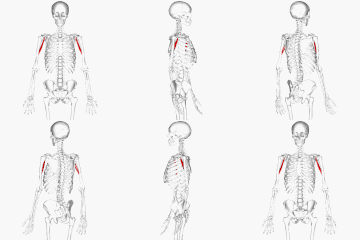
How do I stretch my Coracobrachialis?/Coracobrachialis Muscle is the smallest of the three muscles that attach to the coracoid process of the scapula. (The other two muscles are pectoralis minor and the short head of the biceps brachii.) It is situated at the upper and medial part of the arm. It arises from the apex of the coracoid process, in common with the short head of the biceps brachii, and from the intermuscular septum between the two muscles. It is inserted by means of a flat tendon into an impression at the middle of the medial surface and border of the body of the humerus (shaft of the humerus) between the origins of the triceps brachii and brachialis.

At a Glance Coracobrachialis

  • Function – Flexion and adduction of the arm
  • Origin – a Coracoid process
  • Insertion – Middle of the humerus, on its medial aspect
  • Innervation – Musculocutaneous nerve (C5, C6, C7)

[stextbox id=’custom’]

Position of coracobrachialis muscle (shown in red)
Details
Origin Coracoid process of the scapula
Insertion The anteromedial surface of humerus distal to the crest of the lesser tubercle
Artery Brachial artery
Nerve Musculocutaneous nerve (C5, C6, and C7)
Actions adducts humerus flexes the arm at glenohumeral joint
Identifiers
Latin musculus coracobrachialis
TA A04.6.02.017
FMA 37664
Anatomical terms of muscle


[/stextbox]

It arises from the apex of the coracoid process, in common with the short head of the biceps brachii, and from the intermuscular septum between the two muscles. It is inserted by means of a flat tendon into an impression at the middle of the medial surface and border of the body of the humerus (shaft of the humerus) between the origins of the triceps brachii and brachialis.

Nerve Supply of Coracobrachialis Muscle

  • It is perforated by and innervated by the musculocutaneous nerve which arises from the anterior division of the upper (C5, C6) & middle trunks (C7) of the brachial plexus.

Functions of Coracobrachialis Muscle

  • The action of the coracobrachialis is to flex and adduct the arm at the glenohumeral joint. Also, the coracobrachialis resists deviation of the arm from the frontal plane during the abduction.[rx] Therefore, the contraction of the coracobrachialis leads to two distinct movements at the shoulder joint.
  • It both draws the humerus forward, causing shoulder flexion, and draws the humerus toward the torso, causing shoulder adduction. To a smaller extent, it also turns the humerus inwards, causing internal rotation.[rx]
  • Another important function of the coracobrachialis is the stabilization of the humeral head within the shoulder joint, especially when the arm is hanging freely at a person’s side.[rx]


References

How do I stretch my Coracobrachialis?


ByRx Harun

What Is Coracobrachialis Muscle? Functions

What Is Coracobrachialis Muscle?/Coracobrachialis Muscle is the smallest of the three muscles that attach to the coracoid process of the scapula. (The other two muscles are pectoralis minor and the short head of the biceps brachii.) It is situated at the upper and medial part of the arm. It arises from the apex of the coracoid process, in common with the short head of the biceps brachii, and from the intermuscular septum between the two muscles. It is inserted by means of a flat tendon into an impression at the middle of the medial surface and border of the body of the humerus (shaft of the humerus) between the origins of the triceps brachii and brachialis.

At a Glance Coracobrachialis

  • Function – Flexion and adduction of the arm
  • Origin – a Coracoid process
  • Insertion – Middle of the humerus, on its medial aspect
  • Innervation – Musculocutaneous nerve (C5, C6, C7)

Position of coracobrachialis muscle (shown in red)
Details
Origin Coracoid process of the scapula
Insertion The anteromedial surface of humerus distal to the crest of the lesser tubercle
Artery Brachial artery
Nerve Musculocutaneous nerve (C5, C6, and C7)
Actions adducts humerus flexes the arm at glenohumeral joint
Identifiers
Latin musculus coracobrachialis
TA A04.6.02.017
FMA 37664
Anatomical terms of muscle


It arises from the apex of the coracoid process, in common with the short head of the biceps brachii, and from the intermuscular septum between the two muscles. It is inserted by means of a flat tendon into an impression at the middle of the medial surface and border of the body of the humerus (shaft of the humerus) between the origins of the triceps brachii and brachialis.

Nerve Supply of Coracobrachialis Muscle

  • It is perforated by and innervated by the musculocutaneous nerve which arises from the anterior division of the upper (C5, C6) & middle trunks (C7) of the brachial plexus.

Functions of Coracobrachialis Muscle

  • The action of the coracobrachialis is to flex and adduct the arm at the glenohumeral joint. Also, the coracobrachialis resists deviation of the arm from the frontal plane during the abduction.[rx] Therefore, the contraction of the coracobrachialis leads to two distinct movements at the shoulder joint.
  • It both draws the humerus forward, causing shoulder flexion, and draws the humerus toward the torso, causing shoulder adduction. To a smaller extent, it also turns the humerus inwards, causing internal rotation.[rx]
  • Another important function of the coracobrachialis is the stabilization of the humeral head within the shoulder joint, especially when the arm is hanging freely at a person’s side.[rx]


References

Coracobrachialis Muscle


ByRx Harun

Which Muscle Are Called Boxer’s Muscle

Which Muscle Are Called Boxer’s Muscle/Boxer’s Muscle/Serratus Anterior is a muscle that originates on the surface of the 1st to 8th ribs at the side of the chest and inserts along the entire anterior length of the medial border of the scapula. The serratus anterior acts to pull the scapula forward around the thorax. The muscle is named from Latin: serrate = to saw, referring to the shape, anterior = on the front side of the body.

The serratus anterior is occasionally called the “big swing muscle” or “boxer’s muscle” because it is largely responsible for the protraction of the scapula — that is, the pulling of the scapula forward and around the rib cage that occurs when someone throws a punch.

Serratus anterior normally originates by nine or ten slips (muscle branches) from either the first to the ninth ribs or the first to eighth ribs. Because two slips usually arise from the second rib, the number of slips is greater than the number of ribs from which they originate.[rx]

At a Glance of Serratus anterior Muscle

  • Function – fixes the scapula into the thoracic wall, and aids in rotation and abduction of the arm (90 to 180 degrees)
  • Origin – Surface of the upper eight ribs at the side of the chest
  • Insertion – Along the entire anterior length of the medial border of the scapula
  • Innervation – Long thoracic nerve (C5, C6, C7)

Anatomy of Serratus Anterior/Boxer’s Muscle

Which Muscle Are Called Big Swing Muscle

[stextbox id=’custom’]

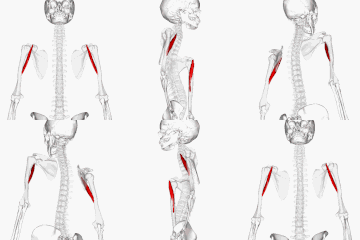
The left side of the thorax.
Details
Pronunciation /ˌsɪˈrtəsænˈtɪəriər/
Origin fleshy slips from the outer surface of upper 8 or 9 ribs
Insertion the costal aspect of the medial margin of the scapula
Artery lateral thoracic artery, superior thoracic artery (upper part), thoracodorsal artery (lower part)
Nerve long thoracic nerve (from roots of brachial plexus C5, 6, 7)
Actions protracts and stabilizes the scapula, assists in upward rotation.
Antagonist Rhomboid major, Rhomboid minor, Trapezius
Identifiers
Latin musculus serratus anterior, serratus lateralis
TA A04.4.01.008
FMA 13397
Anatomical terms of muscle


[/stextbox]

The muscle is inserted along the medial border of the scapula between the superior and inferior angles along with being inserted along the thoracic vertebrae. The muscle is divided into three named parts depending on their points of insertions:[rx]

  • the serratus anterior superior is inserted near the superior angle
  • the serratus anterior intermediate is inserted along the medial border
  • the serratus anterior inferior is inserted near the inferior angle.

The serratus anterior lies deep to the subscapularis, from which it is separated by the subscapularis (supraserratus) bursa.[rx] It is separated from the rib by the scapulothoracic (infraserratus) bursa.[rx]

Nerve Supply of Serratus Anterior/Boxer’s Muscle

  • The serratus anterior is innervated by the long thoracic nerve (Nerve of Bell), a branch of the brachial plexus. The long thoracic nerve travels inferiorly on the surface of the serratus. The nerve is especially vulnerable during certain types of surgery (for example, during lymph node clearance from the axilla (e.g., in case of axillary dissection in surgery for breast cancer)). Damage to this nerve can lead to a winged scapula.

Functions of Serratus Anterior/Boxer’s Muscle

  • All three parts described above pull the scapula forward around the thorax, which is essential for the anteversion of the arm. As such, the muscle is an antagonist to the rhomboids. However, when the inferior and superior parts act together, they keep the scapula pressed against the thorax together with the rhomboids and therefore these parts also act as synergists to the rhomboids. The inferior part can pull the lower end of the scapula laterally and forward and thus rotates the scapula to make elevation of the arm possible. Additionally, all three parts can lift the ribs when the shoulder girdle is fixed, and thus assist in respiration.[rx]
  • The serratus anterior also plays an important role in the upward rotation of the scapula, such as when lifting weight overhead. It performs this in sync with the upper and lower fibers of the trapezius.[rx]


References

Which Muscle Are Called Boxer's Muscle


ByRx Harun

Boxer’s Muscle; Origin, Nerve Supply, Functions

Boxer’s Muscle/Serratus Anterior is a muscle that originates on the surface of the 1st to 8th ribs at the side of the chest and inserts along the entire anterior length of the medial border of the scapula. The serratus anterior acts to pull the scapula forward around the thorax. The muscle is named from Latin: serrate = to saw, referring to the shape, anterior = on the front side of the body.

The serratus anterior is occasionally called the “big swing muscle” or “boxer’s muscle” because it is largely responsible for the protraction of the scapula — that is, the pulling of the scapula forward and around the rib cage that occurs when someone throws a punch.

Serratus anterior normally originates by nine or ten slips (muscle branches) from either the first to the ninth ribs or the first to eighth ribs. Because two slips usually arise from the second rib, the number of slips is greater than the number of ribs from which they originate.[rx]

At a Glance of Serratus anterior Muscle

  • Function – fixes the scapula into the thoracic wall, and aids in rotation and abduction of the arm (90 to 180 degrees)
  • Origin – Surface of the upper eight ribs at the side of the chest
  • Insertion – Along the entire anterior length of the medial border of the scapula
  • Innervation – Long thoracic nerve (C5, C6, C7)

Anatomy of Serratus Anterior/Boxer’s Muscle

Which Muscle Are Called Big Swing Muscle

[stextbox id=’info’]

The left side of the thorax.
Details
Pronunciation /ˌsɪˈrtəsænˈtɪəriər/
Origin fleshy slips from the outer surface of upper 8 or 9 ribs
Insertion the costal aspect of the medial margin of the scapula
Artery lateral thoracic artery, superior thoracic artery (upper part), thoracodorsal artery (lower part)
Nerve long thoracic nerve (from roots of brachial plexus C5, 6, 7)
Actions protracts and stabilizes the scapula, assists in upward rotation.
Antagonist Rhomboid major, Rhomboid minor, Trapezius
Identifiers
Latin musculus serratus anterior, serratus lateralis
TA A04.4.01.008
FMA 13397
Anatomical terms of muscle


[/stextbox]

The muscle is inserted along the medial border of the scapula between the superior and inferior angles along with being inserted along the thoracic vertebrae. The muscle is divided into three named parts depending on their points of insertions:[rx]

  • the serratus anterior superior is inserted near the superior angle
  • the serratus anterior intermediate is inserted along the medial border
  • the serratus anterior inferior is inserted near the inferior angle.

The serratus anterior lies deep to the subscapularis, from which it is separated by the subscapularis (supraserratus) bursa.[rx] It is separated from the rib by the scapulothoracic (infraserratus) bursa.[rx]

Nerve Supply of Serratus Anterior/Boxer’s Muscle

  • The serratus anterior is innervated by the long thoracic nerve (Nerve of Bell), a branch of the brachial plexus. The long thoracic nerve travels inferiorly on the surface of the serratus. The nerve is especially vulnerable during certain types of surgery (for example, during lymph node clearance from the axilla (e.g., in case of axillary dissection in surgery for breast cancer)). Damage to this nerve can lead to a winged scapula.

Functions of Serratus Anterior/Boxer’s Muscle

  • All three parts described above pull the scapula forward around the thorax, which is essential for the anteversion of the arm. As such, the muscle is an antagonist to the rhomboids. However, when the inferior and superior parts act together, they keep the scapula pressed against the thorax together with the rhomboids and therefore these parts also act as synergists to the rhomboids. The inferior part can pull the lower end of the scapula laterally and forward and thus rotates the scapula to make elevation of the arm possible. Additionally, all three parts can lift the ribs when the shoulder girdle is fixed, and thus assist in respiration.[rx]
  • The serratus anterior also plays an important role in the upward rotation of the scapula, such as when lifting weight overhead. It performs this in sync with the upper and lower fibers of the trapezius.[rx]


References

Boxer's Muscle


ByRx Harun

Which Muscle Are Called Big Swing Muscle

Which Muscle Are Called Big Swing Muscle/Big Swing Muscle/Serratus Anterior is a muscle that originates on the surface of the 1st to 8th ribs at the side of the chest and inserts along the entire anterior length of the medial border of the scapula. The serratus anterior acts to pull the scapula forward around the thorax. The muscle is named from Latin: serrate = to saw, referring to the shape, anterior = on the front side of the body.

The serratus anterior is occasionally called the “big swing muscle” or “boxer’s muscle” because it is largely responsible for the protraction of the scapula — that is, the pulling of the scapula forward and around the rib cage that occurs when someone throws a punch.

Serratus anterior normally originates by nine or ten slips (muscle branches) from either the first to the ninth ribs or the first to eighth ribs. Because two slips usually arise from the second rib, the number of slips is greater than the number of ribs from which they originate.[rx]

At a Glance of Serratus anterior Muscle

  • Function – fixes the scapula into the thoracic wall, and aids in rotation and abduction of the arm (90 to 180 degrees)
  • Origin – Surface of the upper eight ribs at the side of the chest
  • Insertion – Along the entire anterior length of the medial border of the scapula
  • Innervation – Long thoracic nerve (C5, C6, C7)

Anatomy of Serratus Anterior/Big Swing Muscle

Which Muscle Are Called Big Swing Muscle

[stextbox id=’custom’]

The left side of the thorax.
Details
Pronunciation /ˌsɪˈrtəsænˈtɪəriər/
Origin fleshy slips from the outer surface of upper 8 or 9 ribs
Insertion the costal aspect of the medial margin of the scapula
Artery lateral thoracic artery, superior thoracic artery (upper part), thoracodorsal artery (lower part)
Nerve long thoracic nerve (from roots of brachial plexus C5, 6, 7)
Actions protracts and stabilizes the scapula, assists in upward rotation.
Antagonist Rhomboid major, Rhomboid minor, Trapezius
Identifiers
Latin musculus serratus anterior, serratus lateralis
TA A04.4.01.008
FMA 13397
Anatomical terms of muscle


[/stextbox]

The muscle is inserted along the medial border of the scapula between the superior and inferior angles along with being inserted along the thoracic vertebrae. The muscle is divided into three named parts depending on their points of insertions:[rx]

  • the serratus anterior superior is inserted near the superior angle
  • the serratus anterior intermediate is inserted along the medial border
  • the serratus anterior inferior is inserted near the inferior angle.

The serratus anterior lies deep to the subscapularis, from which it is separated by the subscapularis (supraserratus) bursa.[rx] It is separated from the rib by the scapulothoracic (infraserratus) bursa.[rx]

Nerve Supply of Serratus Anterior

  • The serratus anterior is innervated by the long thoracic nerve (Nerve of Bell), a branch of the brachial plexus. The long thoracic nerve travels inferiorly on the surface of the serratus. The nerve is especially vulnerable during certain types of surgery (for example, during lymph node clearance from the axilla (e.g., in case of axillary dissection in surgery for breast cancer)). Damage to this nerve can lead to a winged scapula.

Functions of Serratus Anterior/Big Swing Muscle

  • All three parts described above pull the scapula forward around the thorax, which is essential for the anteversion of the arm. As such, the muscle is an antagonist to the rhomboids. However, when the inferior and superior parts act together, they keep the scapula pressed against the thorax together with the rhomboids and therefore these parts also act as synergists to the rhomboids. The inferior part can pull the lower end of the scapula laterally and forward and thus rotates the scapula to make elevation of the arm possible. Additionally, all three parts can lift the ribs when the shoulder girdle is fixed, and thus assist in respiration.[rx]
  • The serratus anterior also plays an important role in the upward rotation of the scapula, such as when lifting weight overhead. It performs this in sync with the upper and lower fibers of the trapezius.[rx]


References

Which Muscle Are Called Big Swing Muscle


ByRx Harun

Big Swing Muscle; Origin, Nerve Supply, Functions

Big Swing Muscle/Serratus Anterior is a muscle that originates on the surface of the 1st to 8th ribs at the side of the chest and inserts along the entire anterior length of the medial border of the scapula. The serratus anterior acts to pull the scapula forward around the thorax. The muscle is named from Latin: serrate = to saw, referring to the shape, anterior = on the front side of the body.

The serratus anterior is occasionally called the “big swing muscle” or “boxer’s muscle” because it is largely responsible for the protraction of the scapula — that is, the pulling of the scapula forward and around the rib cage that occurs when someone throws a punch.

Serratus anterior normally originates by nine or ten slips (muscle branches) from either the first to the ninth ribs or the first to eighth ribs. Because two slips usually arise from the second rib, the number of slips is greater than the number of ribs from which they originate.[rx]

At a Glance of Serratus anterior Muscle

  • Function – fixes the scapula into the thoracic wall, and aids in rotation and abduction of the arm (90 to 180 degrees)
  • Origin – Surface of the upper eight ribs at the side of the chest
  • Insertion – Along the entire anterior length of the medial border of the scapula
  • Innervation – Long thoracic nerve (C5, C6, C7)

Anatomy of Serratus Anterior/Big Swing Muscle

What Is Serratus Anterior Muscle?

[stextbox id=’info’]

The left side of the thorax.
Details
Pronunciation /ˌsɪˈrtəsænˈtɪəriər/
Origin fleshy slips from the outer surface of upper 8 or 9 ribs
Insertion the costal aspect of the medial margin of the scapula
Artery lateral thoracic artery, superior thoracic artery (upper part), thoracodorsal artery (lower part)
Nerve long thoracic nerve (from roots of brachial plexus C5, 6, 7)
Actions protracts and stabilizes the scapula, assists in upward rotation.
Antagonist Rhomboid major, Rhomboid minor, Trapezius
Identifiers
Latin musculus serratus anterior, serratus lateralis
TA A04.4.01.008
FMA 13397
Anatomical terms of muscle


[/stextbox]

The muscle is inserted along the medial border of the scapula between the superior and inferior angles along with being inserted along the thoracic vertebrae. The muscle is divided into three named parts depending on their points of insertions:[rx]

  • the serratus anterior superior is inserted near the superior angle
  • the serratus anterior intermediate is inserted along the medial border
  • the serratus anterior inferior is inserted near the inferior angle.

The serratus anterior lies deep to the subscapularis, from which it is separated by the subscapularis (supraserratus) bursa.[rx] It is separated from the rib by the scapulothoracic (infraserratus) bursa.[rx]

Nerve Supply of Serratus Anterior

  • The serratus anterior is innervated by the long thoracic nerve (Nerve of Bell), a branch of the brachial plexus. The long thoracic nerve travels inferiorly on the surface of the serratus. The nerve is especially vulnerable during certain types of surgery (for example, during lymph node clearance from the axilla (e.g., in case of axillary dissection in surgery for breast cancer)). Damage to this nerve can lead to a winged scapula.

Functions of Serratus Anterior/Big Swing Muscle

  • All three parts described above pull the scapula forward around the thorax, which is essential for the anteversion of the arm. As such, the muscle is an antagonist to the rhomboids. However, when the inferior and superior parts act together, they keep the scapula pressed against the thorax together with the rhomboids and therefore these parts also act as synergists to the rhomboids. The inferior part can pull the lower end of the scapula laterally and forward and thus rotates the scapula to make elevation of the arm possible. Additionally, all three parts can lift the ribs when the shoulder girdle is fixed, and thus assist in respiration.[rx]
  • The serratus anterior also plays an important role in the upward rotation of the scapula, such as when lifting weight overhead. It performs this in sync with the upper and lower fibers of the trapezius.[rx]


References

Big Swing Muscle


ByRx Harun

What Is Serratus Anterior Muscle? Functions

What Is Serratus Anterior Muscle?/Serratus Anterior is a muscle that originates on the surface of the 1st to 8th ribs at the side of the chest and inserts along the entire anterior length of the medial border of the scapula. The serratus anterior acts to pull the scapula forward around the thorax. The muscle is named from Latin: serrate = to saw, referring to the shape, anterior = on the front side of the body.

The serratus anterior is occasionally called the “big swing muscle” or “boxer’s muscle” because it is largely responsible for the protraction of the scapula — that is, the pulling of the scapula forward and around the rib cage that occurs when someone throws a punch.

Serratus anterior normally originates by nine or ten slips (muscle branches) from either the first to the ninth ribs or the first to eighth ribs. Because two slips usually arise from the second rib, the number of slips is greater than the number of ribs from which they originate.[rx]

At a Glance of Serratus anterior Muscle

  • Function – fixes the scapula into the thoracic wall, and aids in rotation and abduction of the arm (90 to 180 degrees)
  • Origin – Surface of the upper eight ribs at the side of the chest
  • Insertion – Along the entire anterior length of the medial border of the scapula
  • Innervation – Long thoracic nerve (C5, C6, C7)

Anatomy of Serratus Anterior

What Is Serratus Anterior Muscle?

[stextbox id=’alert’]

The left side of the thorax.
Details
Pronunciation /ˌsɪˈrtəsænˈtɪəriər/
Origin fleshy slips from the outer surface of upper 8 or 9 ribs
Insertion the costal aspect of the medial margin of the scapula
Artery lateral thoracic artery, superior thoracic artery (upper part), thoracodorsal artery (lower part)
Nerve long thoracic nerve (from roots of brachial plexus C5, 6, 7)
Actions protracts and stabilizes the scapula, assists in upward rotation.
Antagonist Rhomboid major, Rhomboid minor, Trapezius
Identifiers
Latin musculus serratus anterior, serratus lateralis
TA A04.4.01.008
FMA 13397
Anatomical terms of muscle


[/stextbox]

The muscle is inserted along the medial border of the scapula between the superior and inferior angles along with being inserted along the thoracic vertebrae. The muscle is divided into three named parts depending on their points of insertions:[rx]

  • the serratus anterior superior is inserted near the superior angle
  • the serratus anterior intermediate is inserted along the medial border
  • the serratus anterior inferior is inserted near the inferior angle.

The serratus anterior lies deep to the subscapularis, from which it is separated by the subscapularis (supraserratus) bursa.[rx] It is separated from the rib by the scapulothoracic (infraserratus) bursa.[rx]

Nerve Supply of Serratus Anterior

  • The serratus anterior is innervated by the long thoracic nerve (Nerve of Bell), a branch of the brachial plexus. The long thoracic nerve travels inferiorly on the surface of the serratus. The nerve is especially vulnerable during certain types of surgery (for example, during lymph node clearance from the axilla (e.g., in case of axillary dissection in surgery for breast cancer)). Damage to this nerve can lead to a winged scapula.

Functions of Serratus Anterior

  • All three parts described above pull the scapula forward around the thorax, which is essential for the anteversion of the arm. As such, the muscle is an antagonist to the rhomboids. However, when the inferior and superior parts act together, they keep the scapula pressed against the thorax together with the rhomboids and therefore these parts also act as synergists to the rhomboids. The inferior part can pull the lower end of the scapula laterally and forward and thus rotates the scapula to make elevation of the arm possible. Additionally, all three parts can lift the ribs when the shoulder girdle is fixed, and thus assist in respiration.[rx]
  • The serratus anterior also plays an important role in the upward rotation of the scapula, such as when lifting weight overhead. It performs this in sync with the upper and lower fibers of the trapezius.[rx]


References

What Is Serratus Anterior Muscle?


ByRx Harun

What Is Serratus Anterior; Nerve Supply, Functions

What Is Serratus Anterior/Serratus Anterior is a muscle that originates on the surface of the 1st to 8th ribs at the side of the chest and inserts along the entire anterior length of the medial border of the scapula. The serratus anterior acts to pull the scapula forward around the thorax. The muscle is named from Latin: serrate = to saw, referring to the shape, anterior = on the front side of the body.

The serratus anterior is occasionally called the “big swing muscle” or “boxer’s muscle” because it is largely responsible for the protraction of the scapula — that is, the pulling of the scapula forward and around the rib cage that occurs when someone throws a punch.

Serratus anterior normally originates by nine or ten slips (muscle branches) from either the first to the ninth ribs or the first to eighth ribs. Because two slips usually arise from the second rib, the number of slips is greater than the number of ribs from which they originate.[rx]

At a Glance of Serratus anterior Muscle

  • Function – fixes the scapula into the thoracic wall, and aids in rotation and abduction of the arm (90 to 180 degrees)
  • Origin – Surface of the upper eight ribs at the side of the chest
  • Insertion – Along the entire anterior length of the medial border of the scapula
  • Innervation – Long thoracic nerve (C5, C6, C7)

Anatomy of Serratus Anterior

What Is Serratus Anterior

[stextbox id=’info’]

The left side of the thorax.
Details
Pronunciation /ˌsɪˈrtəsænˈtɪəriər/
Origin fleshy slips from the outer surface of upper 8 or 9 ribs
Insertion the costal aspect of the medial margin of the scapula
Artery lateral thoracic artery, superior thoracic artery (upper part), thoracodorsal artery (lower part)
Nerve long thoracic nerve (from roots of brachial plexus C5, 6, 7)
Actions protracts and stabilizes the scapula, assists in upward rotation.
Antagonist Rhomboid major, Rhomboid minor, Trapezius
Identifiers
Latin musculus serratus anterior, serratus lateralis
TA A04.4.01.008
FMA 13397
Anatomical terms of muscle


[/stextbox]

The muscle is inserted along the medial border of the scapula between the superior and inferior angles along with being inserted along the thoracic vertebrae. The muscle is divided into three named parts depending on their points of insertions:[rx]

  • the serratus anterior superior is inserted near the superior angle
  • the serratus anterior intermediate is inserted along the medial border
  • the serratus anterior inferior is inserted near the inferior angle.

The serratus anterior lies deep to the subscapularis, from which it is separated by the subscapularis (supraserratus) bursa.[rx] It is separated from the rib by the scapulothoracic (infraserratus) bursa.[rx]

Nerve Supply of Serratus Anterior

  • The serratus anterior is innervated by the long thoracic nerve (Nerve of Bell), a branch of the brachial plexus. The long thoracic nerve travels inferiorly on the surface of the serratus. The nerve is especially vulnerable during certain types of surgery (for example, during lymph node clearance from the axilla (e.g., in case of axillary dissection in surgery for breast cancer)). Damage to this nerve can lead to a winged scapula.

Functions of Serratus Anterior

  • All three parts described above pull the scapula forward around the thorax, which is essential for the anteversion of the arm. As such, the muscle is an antagonist to the rhomboids. However, when the inferior and superior parts act together, they keep the scapula pressed against the thorax together with the rhomboids and therefore these parts also act as synergists to the rhomboids. The inferior part can pull the lower end of the scapula laterally and forward and thus rotates the scapula to make elevation of the arm possible. Additionally, all three parts can lift the ribs when the shoulder girdle is fixed, and thus assist in respiration.[rx]
  • The serratus anterior also plays an important role in the upward rotation of the scapula, such as when lifting weight overhead. It performs this in sync with the upper and lower fibers of the trapezius.[rx]


References

What Is Serratus Anterior


ByRx Harun

Serratus Anterior Muscle; Origin, Nerve Supply, Functions

Serratus Anterior Muscle/Serratus Anterior is a muscle that originates on the surface of the 1st to 8th ribs at the side of the chest and inserts along the entire anterior length of the medial border of the scapula. The serratus anterior acts to pull the scapula forward around the thorax. The muscle is named from Latin: serrate = to saw, referring to the shape, anterior = on the front side of the body.

The serratus anterior is occasionally called the “big swing muscle” or “boxer’s muscle” because it is largely responsible for the protraction of the scapula — that is, the pulling of the scapula forward and around the rib cage that occurs when someone throws a punch.

Serratus anterior normally originates by nine or ten slips (muscle branches) from either the first to the ninth ribs or the first to eighth ribs. Because two slips usually arise from the second rib, the number of slips is greater than the number of ribs from which they originate.[rx]

At a Glance of Serratus anterior Muscle

  • Function – fixes the scapula into the thoracic wall, and aids in rotation and abduction of the arm (90 to 180 degrees)
  • Origin – Surface of the upper eight ribs at the side of the chest
  • Insertion – Along the entire anterior length of the medial border of the scapula
  • Innervation – Long thoracic nerve (C5, C6, C7)

Anatomy of Serratus Anterior

Serratus Anterior Muscle

[stextbox id=’alert’]

The left side of the thorax.
Details
Pronunciation /ˌsɪˈrtəsænˈtɪəriər/
Origin fleshy slips from the outer surface of upper 8 or 9 ribs
Insertion the costal aspect of the medial margin of the scapula
Artery lateral thoracic artery, superior thoracic artery (upper part), thoracodorsal artery (lower part)
Nerve long thoracic nerve (from roots of brachial plexus C5, 6, 7)
Actions protracts and stabilizes the scapula, assists in upward rotation.
Antagonist Rhomboid major, Rhomboid minor, Trapezius
Identifiers
Latin musculus serratus anterior, serratus lateralis
TA A04.4.01.008
FMA 13397
Anatomical terms of muscle


[/stextbox]

The muscle is inserted along the medial border of the scapula between the superior and inferior angles along with being inserted along the thoracic vertebrae. The muscle is divided into three named parts depending on their points of insertions:[rx]

  • the serratus anterior superior is inserted near the superior angle
  • the serratus anterior intermediate is inserted along the medial border
  • the serratus anterior inferior is inserted near the inferior angle.

The serratus anterior lies deep to the subscapularis, from which it is separated by the subscapularis (supraserratus) bursa.[rx] It is separated from the rib by the scapulothoracic (infraserratus) bursa.[rx]

Nerve Supply of Serratus Anterior

  • The serratus anterior is innervated by the long thoracic nerve (Nerve of Bell), a branch of the brachial plexus. The long thoracic nerve travels inferiorly on the surface of the serratus. The nerve is especially vulnerable during certain types of surgery (for example, during lymph node clearance from the axilla (e.g., in case of axillary dissection in surgery for breast cancer)). Damage to this nerve can lead to a winged scapula.

Functions of Serratus Anterior

  • All three parts described above pull the scapula forward around the thorax, which is essential for the anteversion of the arm. As such, the muscle is an antagonist to the rhomboids. However, when the inferior and superior parts act together, they keep the scapula pressed against the thorax together with the rhomboids and therefore these parts also act as synergists to the rhomboids. The inferior part can pull the lower end of the scapula laterally and forward and thus rotates the scapula to make elevation of the arm possible. Additionally, all three parts can lift the ribs when the shoulder girdle is fixed, and thus assist in respiration.[rx]
  • The serratus anterior also plays an important role in the upward rotation of the scapula, such as when lifting weight overhead. It performs this in sync with the upper and lower fibers of the trapezius.[rx]


References

Serratus Anterior Muscle


ByRx Harun

Serratus Anterior; Origin, Nerve Supply, Functions

Serratus Anterior is a muscle that originates on the surface of the 1st to 8th ribs at the side of the chest and inserts along the entire anterior length of the medial border of the scapula. The serratus anterior acts to pull the scapula forward around the thorax. The muscle is named from Latin: serrate = to saw, referring to the shape, anterior = on the front side of the body.

The serratus anterior is occasionally called the “big swing muscle” or “boxer’s muscle” because it is largely responsible for the protraction of the scapula — that is, the pulling of the scapula forward and around the rib cage that occurs when someone throws a punch.

Serratus anterior normally originates by nine or ten slips (muscle branches) from either the first to the ninth ribs or the first to eighth ribs. Because two slips usually arise from the second rib, the number of slips is greater than the number of ribs from which they originate.[rx]

At a Glance of Serratus anterior Muscle

  • Function – fixes the scapula into the thoracic wall, and aids in rotation and abduction of the arm (90 to 180 degrees)
  • Origin – Surface of the upper eight ribs at the side of the chest
  • Insertion – Along the entire anterior length of the medial border of the scapula
  • Innervation – Long thoracic nerve (C5, C6, C7)

Anatomy of Serratus Anterior

Serratus Anterior


The left side of the thorax.
Details
Pronunciation /ˌsɪˈrtəsænˈtɪəriər/
Origin fleshy slips from the outer surface of upper 8 or 9 ribs
Insertion the costal aspect of the medial margin of the scapula
Artery lateral thoracic artery, superior thoracic artery (upper part), thoracodorsal artery (lower part)
Nerve long thoracic nerve (from roots of brachial plexus C5, 6, 7)
Actions protracts and stabilizes the scapula, assists in upward rotation.
Antagonist Rhomboid major, Rhomboid minor, Trapezius
Identifiers
Latin musculus serratus anterior, serratus lateralis
TA A04.4.01.008
FMA 13397
Anatomical terms of muscle


The muscle is inserted along the medial border of the scapula between the superior and inferior angles along with being inserted along the thoracic vertebrae. The muscle is divided into three named parts depending on their points of insertions:[rx]

  • the serratus anterior superior is inserted near the superior angle
  • the serratus anterior intermediate is inserted along the medial border
  • the serratus anterior inferior is inserted near the inferior angle.

The serratus anterior lies deep to the subscapularis, from which it is separated by the subscapularis (supraserratus) bursa.[rx] It is separated from the rib by the scapulothoracic (infraserratus) bursa.[rx]

Nerve Supply of Serratus Anterior

  • The serratus anterior is innervated by the long thoracic nerve (Nerve of Bell), a branch of the brachial plexus. The long thoracic nerve travels inferiorly on the surface of the serratus. The nerve is especially vulnerable during certain types of surgery (for example, during lymph node clearance from the axilla (e.g., in case of axillary dissection in surgery for breast cancer)). Damage to this nerve can lead to a winged scapula.

Functions of Serratus Anterior

  • All three parts described above pull the scapula forward around the thorax, which is essential for the anteversion of the arm. As such, the muscle is an antagonist to the rhomboids. However, when the inferior and superior parts act together, they keep the scapula pressed against the thorax together with the rhomboids and therefore these parts also act as synergists to the rhomboids. The inferior part can pull the lower end of the scapula laterally and forward and thus rotates the scapula to make elevation of the arm possible. Additionally, all three parts can lift the ribs when the shoulder girdle is fixed, and thus assist in respiration.[rx]
  • The serratus anterior also plays an important role in the upward rotation of the scapula, such as when lifting weight overhead. It performs this in sync with the upper and lower fibers of the trapezius.[rx]


References

Serratus Anterior


ByRx Harun

What Is Teres Minor Muscle? Functions

What Is Teres Minor Muscle?/Teres Minor is a narrow elongated muscle of the rotator cuff. The muscle originates from the lateral border and adjacent posterior surface of the corresponding right or left scapula and inserts at both the greater tubercle of the humerus and the posterior surface of the joint capsule.[rx]

The primary function of the teres minor is to modulate the action of the deltoid, preventing the humeral head from sliding upward as the arm is abducted. It also functions to rotate the humerus laterally. The teres minor is innervated by the axillary nerve.[rx]

At a Glance of Teres minor

  • Function – Lateral rotation of the arm, stabilize glenohumeral joint
  • Origin – Lateral/axillary border and adjacent posterior aspect of the scapula
  • Insertion – Inferior aspect of the greater tubercle on the humerus
  • Innervation – Axillary nerve (C5, C6)

[stextbox id=’custom’ defcaption=”true”]

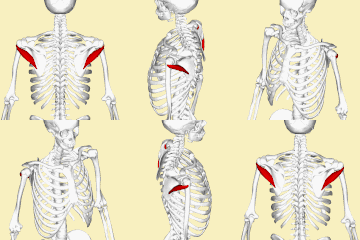
Muscles on the dorsum of the left scapula, and the Triceps brachii muscle:
Details
Origin the lateral border of the scapula
Insertion inferior facet of the greater tubercle of the humerus
Artery posterior circumflex humeral artery and the circumflex scapular artery
Nerve axillary nerve (C5-C6)
Actions laterally rotates the arm, stabilizes the humerus
Identifiers
Latin musculus teres minor
TA A04.6.02.010
FMA 32550
Anatomical terms of muscle


[/stextbox]

What Is Teres Minor?

Nerve Supply of Teres Minor

The muscle is innervated by the posterior branch of the axillary nerve where it forms a pseudoganglion.[rx] A pseudoganglion has no nerve cells but nerve fibers are present. Damage to the fibers innervating the teres minor is clinically significant. Sometimes a group of muscle fibers from teres minor may be fused with infraspinatus.

Functions of Teres Minor

The infraspinatus and teres minor attach to the head of the humerus; as part of the rotator cuff, they help hold the humeral head in the glenoid cavity of the scapula. They work in tandem with the posterior deltoid to externally (laterally) rotate the humerus, as well as adduction. Teres Minor can produce only very small scapular plane adduction during maximal contraction with an adductor moment arm of approximately 0.2 cm at 45° of shoulder internal rotation and approximately 0.1 cm at 45° of shoulder external rotation.


References

What Is Teres Minor Muscle?


ByRx Harun

Teres Minor Muscle; Origin, Nerve Supply, Functions

Teres Minor Muscle is a narrow elongated muscle of the rotator cuff. The muscle originates from the lateral border and adjacent posterior surface of the corresponding right or left scapula and inserts at both the greater tubercle of the humerus and the posterior surface of the joint capsule.[rx]

The primary function of the teres minor is to modulate the action of the deltoid, preventing the humeral head from sliding upward as the arm is abducted. It also functions to rotate the humerus laterally. The teres minor is innervated by the axillary nerve.[rx]

At a Glance of Teres minor

  • Function – Lateral rotation of the arm, stabilize glenohumeral joint
  • Origin – Lateral/axillary border and adjacent posterior aspect of the scapula
  • Insertion – Inferior aspect of the greater tubercle on the humerus
  • Innervation – Axillary nerve (C5, C6)

[stextbox id=’custom’ defcaption=”true”]

Muscles on the dorsum of the left scapula, and the Triceps brachii muscle:
Details
Origin the lateral border of the scapula
Insertion inferior facet of the greater tubercle of the humerus
Artery posterior circumflex humeral artery and the circumflex scapular artery
Nerve axillary nerve (C5-C6)
Actions laterally rotates the arm, stabilizes the humerus
Identifiers
Latin musculus teres minor
TA A04.6.02.010
FMA 32550
Anatomical terms of muscle


[/stextbox]

Teres Minor Muscle

Nerve Supply of Teres Minor Muscle

The muscle is innervated by the posterior branch of the axillary nerve where it forms a pseudoganglion.[rx] A pseudoganglion has no nerve cells but nerve fibers are present. Damage to the fibers innervating the teres minor is clinically significant. Sometimes a group of muscle fibers from teres minor may be fused with infraspinatus.

Functions of Teres Minor Muscle

The infraspinatus and teres minor attach to the head of the humerus; as part of the rotator cuff, they help hold the humeral head in the glenoid cavity of the scapula. They work in tandem with the posterior deltoid to externally (laterally) rotate the humerus, as well as adduction. Teres Minor can produce only very small scapular plane adduction during maximal contraction with an adductor moment arm of approximately 0.2 cm at 45° of shoulder internal rotation and approximately 0.1 cm at 45° of shoulder external rotation.


References

Teres Minor Muscle


Translate »