Category Archive Anatomy A – Z

ByRx Harun

What are the four abdominal muscles?

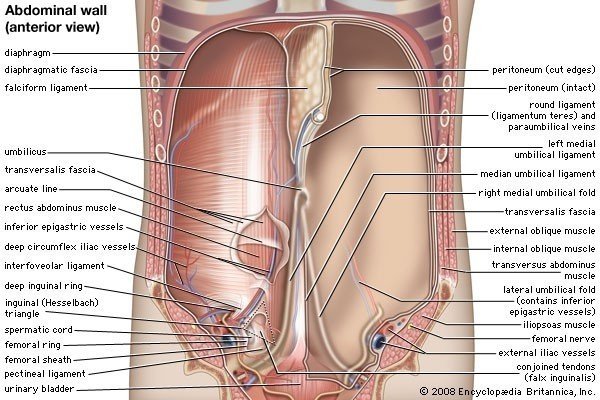
What are the four abdominal muscles?/Abdominal Muscles of the anterolateral wall consist of five, large, paired muscles. Beginning laterally and most superficially, the external oblique muscles are the first muscular layer originating from the fifth to twelfth ribs and inserting at the linea alba, pubic tubercle, and anterior half of iliac crest. It is responsible for compressing the abdominal viscera as well as the movement of the trunk by flexing and rotating. The fibers of the external oblique run anteromedially. The internal oblique in contrast to the external oblique runs superomedially from the thoracolumbar fascia, anterior two-thirds or iliac crest to the inferior borders of the tenth-twelfth ribs, linea alba, and pectin pubis via the conjoint tendon.
What are the four abdominal muscles?

Abdominal Muscle is the structure encasing the abdominal organs. It is the muscular layer of tissues that extends from the thoracic and lumbar spine to the anterior abdominal cavity. The boundary between the lateral and anterior wall is not defined, and therefore, the name anterolateral is used to describe the wall as it wraps from posterior to anterior. It serves to protect the internal organs of the digestive system as well as the alimentary tract. Multiple layers of fascia, muscle, nerves, and vasculature make up the anterolateral wall. The anterolateral wall demonstrates a vast degree of function as well as compliance for what the gastrointestinal tract needs. Throughout this article, we will explore the anatomy of the anterolateral abdominal wall, its function, as well as its embryologic origins.

Abdominal Muscles

The five muscles in the abdominal wall are divided into two groups

  • (1) two vertical muscles situated near the midline of the body and
  • (2) three flat muscles located laterally and stacked on top of each other. The three flat muscles include the external oblique, internal oblique, and transversus abdominis.
  • (3)The flat muscles flex and rotate the trunk. Because the fibers of these muscles criss-cross and interlink with each other, they also strengthen the abdominal wall and reduce the risk of herniation.

Flat Muscles

  • External Oblique – the most superficial and also the largest flat muscle of the abdominal wall. It runs in an inferior-medial direction and at the midline, its fibers form an aponeurosis and in the midline merge with the linea alba. This fibrous structure extends from the xiphoid process to the pubic symphysis.
  • Internal Oblique – located deeper to the external oblique and is much thinner and smaller. Its fibers run superomedial and near the midline form aponeurosis which contributes to the linea alba.
  • Transversus Abdominis – the deepest of the flat muscles and its fibers run transversely. It also continues to the linea alba in the midline. Just beneath the transversus abdominis muscle is the transversal fascia.

Vertical Muscles

  • Rectus Abdominis – long paired vertical muscle located on either side of the midline. It is divided into two segments by the linea alba. The lateral border of the muscle is called the linea semilunaris. At several locations, the muscle is intersected by fibrous intersections which give rise to the “six-pack” seen in athletes. The rectus abdominis compresses the abdominal viscera, prevents herniation, and stabilizes the pelvis during ambulation.
  • Pyramidalis – vertical muscle shaped like a triangle. It is located superficial to the rectus abdominis and located at the base of the pubic bone. The apex of the triangle attaches to the linea alba.


Rectus Sheath

The Rectus Sheath is an aponeurosis formed by the five muscles of the abdomen. It has an anterior and posterior wall for most of its length. The anterior wall is formed by the aponeurosis of the external oblique and half of the internal oblique. The posterior wall is formed by the aponeurosis of the half of the internal oblique and transversus abdominis.

This list may not reflect recent changes.

  • Abdominal external oblique muscle
  • Abdominal internal oblique muscle
  • The aponeurosis of the abdominal external oblique muscle
  • Bulbospongiosus muscle
  • Coccygeus muscle
  • Corrugator cutis ani muscle
  • Cremaster muscle
  • Detrusor muscle
  • Erector spinal muscles
  • External intercostal muscles
  • Iliocostalis
  • Innermost intercostal muscle
  • Intercostal muscle
  • Internal intercostal muscles
  • Interspinal muscles
  • Intertransversarii
  • Ischiocavernosus muscle
  • Levator ani
  • Lavatories costarum muscles
  • Longissimus
  • Multifidus muscle
  • Template: Muscles of the abdomen
  • Pectoral muscles
  • Pelvic floor
  • pubovaginal muscle
  • Pyramidalis muscle
  • Quadratus lumborum muscle
  • Rectococcygeal muscle
  • Rectus abdominis muscle
  • Rectus sheath
  • Rhomboid muscles
  • Rotatores muscles
  • Sebileau’s muscle
  • Semispinalis muscles
  • Serratus
  • Serratus anterior muscle
  • Serratus posterior inferior muscle
  • Serratus posterior superior muscle
  • Spinalis
  • Splenius capitis muscle
  • Splenius cervicis muscle
  • Splenius muscles
  • Subcostalis muscle
  • Thoracic diaphragm
  • Transverse abdominal muscle
  • Transversospinales
  • Transversus thoracis muscle
  • Urogenital hiatus

Blood Supply/Abdominal Muscles

Arterial Supply

The arterial supply to the abdominal wall is derived from the following:

Six Most Inferior Intercostal Arteries and Lumbar Arteries

  • Courses from lateral to medial in-between the transversus abdominis and internal oblique muscles along with the intercostal, iliohypogastric and ilioinguinal nerves. The branches pierce the lateral border of the rectus sheath and freely communicate with the epigastric arteries.

Superior Epigastric Arteries

  • A terminal branch of the internal mammary, also known as the internal thoracic, artery bilaterally. Descends within the rectus sheath (posterior to the rectus muscle but anterior to the posterior rectus sheath) to form an anastomosis with the inferior epigastric artery.

Inferior Epigastric Arteries

  • A branch of the external iliac artery just before it crosses the inguinal ligament. It courses superiorly in the pre-peritoneal space (space between the transversalis fascia and parietal peritoneum) to meet the superior epigastric vessels.

Deep Circumflex Iliac Arteries

  • Arises from the external iliac artery laterally just distal to the inferior epigastric artery branching; contributes blood to the abdominal wall via an ascending branch

Nerves of Abdominal Muscles

The autonomic nerves (sympathetic and parasympathetic systems) supply the visceral peritoneum, whereas the parietal peritoneum has spinal nerves deriving the somatic innervation. The visceral peritoneum senses dull, poorly localized pain when stretched out or distended and is associated with diaphoresis and nausea. Thus, a patient may perceive a vague abdominal pain in a general region. However, when the parietal peritoneum is involved, patients experience a sharp, localized type of pain in a specific area.

Abdomen

  • Left and right vagus nerve – parasympathetic innervation
  • Gastric nerves
  • Celiac plexus from spinal cord segments T6 to T9
  • Subcostal nerve
  • Iliohypogastric

Pelvis

  • Pelvic splanchnic
  • Obturator
  • Ilioinguinal
  • Genitofemoral
  • Superior gluteal
  • Inferior gluteal
  • Lateral femoral cutaneous nerve
  • Sacral plexus from L4 through S4: sciatic nerve, pudendal nerve, gluteal nerves, nerve to obturator internus, nerve to piriformis

 References

What are the four abdominal muscles?


ByRx Harun

What Is Abdominal Muscles? Origin, Nerve Supply, Functions

What Is Abdominal Muscles?/Abdominal Muscles of the anterolateral wall consist of five, large, paired muscles. Beginning laterally and most superficially, the external oblique muscles are the first muscular layer originating from the fifth to twelfth ribs and inserting at the linea alba, pubic tubercle, and anterior half of iliac crest. It is responsible for compressing the abdominal viscera as well as the movement of the trunk by flexing and rotating. The fibers of the external oblique run anteromedially. The internal oblique in contrast to the external oblique runs superomedially from the thoracolumbar fascia, anterior two-thirds or iliac crest to the inferior borders of the tenth-twelfth ribs, linea alba, and pectin pubis via the conjoint tendon.

abdominal muscles

Abdominal Muscle is the structure encasing the abdominal organs. It is the muscular layer of tissues that extends from the thoracic and lumbar spine to the anterior abdominal cavity. The boundary between the lateral and anterior wall is not defined, and therefore, the name anterolateral is used to describe the wall as it wraps from posterior to anterior. It serves to protect the internal organs of the digestive system as well as the alimentary tract. Multiple layers of fascia, muscle, nerves, and vasculature make up the anterolateral wall. The anterolateral wall demonstrates a vast degree of function as well as compliance for what the gastrointestinal tract needs. Throughout this article, we will explore the anatomy of the anterolateral abdominal wall, its function, as well as its embryologic origins.

Abdominal Muscles

The five muscles in the abdominal wall are divided into two groups

  • (1) two vertical muscles situated near the midline of the body and
  • (2) three flat muscles located laterally and stacked on top of each other. The three flat muscles include the external oblique, internal oblique, and transversus abdominis.
  • (3)The flat muscles flex and rotate the trunk. Because the fibers of these muscles criss-cross and interlink with each other, they also strengthen the abdominal wall and reduce the risk of herniation.

Flat Muscles

  • External Oblique – the most superficial and also the largest flat muscle of the abdominal wall. It runs in an inferior-medial direction and at the midline, its fibers form an aponeurosis and in the midline merge with the linea alba. This fibrous structure extends from the xiphoid process to the pubic symphysis.
  • Internal Oblique – located deeper to the external oblique and is much thinner and smaller. Its fibers run superomedial and near the midline form aponeurosis which contributes to the linea alba.
  • Transversus Abdominis – the deepest of the flat muscles and its fibers run transversely. It also continues to the linea alba in the midline. Just beneath the transversus abdominis muscle is the transversal fascia.

Vertical Muscles

  • Rectus Abdominis – long paired vertical muscle located on either side of the midline. It is divided into two segments by the linea alba. The lateral border of the muscle is called the linea semilunaris. At several locations, the muscle is intersected by fibrous intersections which give rise to the “six-pack” seen in athletes. The rectus abdominis compresses the abdominal viscera, prevents herniation, and stabilizes the pelvis during ambulation.
  • Pyramidalis – vertical muscle shaped like a triangle. It is located superficial to the rectus abdominis and located at the base of the pubic bone. The apex of the triangle attaches to the linea alba.


Rectus Sheath

The Rectus Sheath is an aponeurosis formed by the five muscles of the abdomen. It has an anterior and posterior wall for most of its length. The anterior wall is formed by the aponeurosis of the external oblique and half of the internal oblique. The posterior wall is formed by the aponeurosis of the half of the internal oblique and transversus abdominis.

This list may not reflect recent changes.

  • Abdominal external oblique muscle
  • Abdominal internal oblique muscle
  • The aponeurosis of the abdominal external oblique muscle
  • Bulbospongiosus muscle
  • Coccygeus muscle
  • Corrugator cutis ani muscle
  • Cremaster muscle
  • Detrusor muscle
  • Erector spinal muscles
  • External intercostal muscles
  • Iliocostalis
  • Innermost intercostal muscle
  • Intercostal muscle
  • Internal intercostal muscles
  • Interspinal muscles
  • Intertransversarii
  • Ischiocavernosus muscle
  • Levator ani
  • Lavatories costarum muscles
  • Longissimus
  • Multifidus muscle
  • Template: Muscles of the abdomen
  • Pectoral muscles
  • Pelvic floor
  • pubovaginal muscle
  • Pyramidalis muscle
  • Quadratus lumborum muscle
  • Rectococcygeal muscle
  • Rectus abdominis muscle
  • Rectus sheath
  • Rhomboid muscles
  • Rotatores muscles
  • Sebileau’s muscle
  • Semispinalis muscles
  • Serratus
  • Serratus anterior muscle
  • Serratus posterior inferior muscle
  • Serratus posterior superior muscle
  • Spinalis
  • Splenius capitis muscle
  • Splenius cervicis muscle
  • Splenius muscles
  • Subcostalis muscle
  • Thoracic diaphragm
  • Transverse abdominal muscle
  • Transversospinales
  • Transversus thoracis muscle
  • Urogenital hiatus

Blood Supply/Abdominal Muscles

Arterial Supply

The arterial supply to the abdominal wall is derived from the following:

Six Most Inferior Intercostal Arteries and Lumbar Arteries

  • Courses from lateral to medial in-between the transversus abdominis and internal oblique muscles along with the intercostal, iliohypogastric and ilioinguinal nerves. The branches pierce the lateral border of the rectus sheath and freely communicate with the epigastric arteries.

Superior Epigastric Arteries

  • A terminal branch of the internal mammary, also known as the internal thoracic, artery bilaterally. Descends within the rectus sheath (posterior to the rectus muscle but anterior to the posterior rectus sheath) to form an anastomosis with the inferior epigastric artery.

Inferior Epigastric Arteries

  • A branch of the external iliac artery just before it crosses the inguinal ligament. It courses superiorly in the pre-peritoneal space (space between the transversalis fascia and parietal peritoneum) to meet the superior epigastric vessels.

Deep Circumflex Iliac Arteries

  • Arises from the external iliac artery laterally just distal to the inferior epigastric artery branching; contributes blood to the abdominal wall via an ascending branch

Nerves of Abdominal Muscles

The autonomic nerves (sympathetic and parasympathetic systems) supply the visceral peritoneum, whereas the parietal peritoneum has spinal nerves deriving the somatic innervation. The visceral peritoneum senses dull, poorly localized pain when stretched out or distended and is associated with diaphoresis and nausea. Thus, a patient may perceive a vague abdominal pain in a general region. However, when the parietal peritoneum is involved, patients experience a sharp, localized type of pain in a specific area.

Abdomen

  • Left and right vagus nerve – parasympathetic innervation
  • Gastric nerves
  • Celiac plexus from spinal cord segments T6 to T9
  • Subcostal nerve
  • Iliohypogastric

Pelvis

  • Pelvic splanchnic
  • Obturator
  • Ilioinguinal
  • Genitofemoral
  • Superior gluteal
  • Inferior gluteal
  • Lateral femoral cutaneous nerve
  • Sacral plexus from L4 through S4: sciatic nerve, pudendal nerve, gluteal nerves, nerve to obturator internus, nerve to piriformis

 References

What Is Abdominal Muscles?


ByRx Harun

What Is Rhomboids Muscle? Origin, Nerve Supply, Functions

What Is Rhomboids Muscle?/The rhomboids are a collective group of muscles formed by the rhomboid major and minor. The rhomboids are important in the upper limb movement and stability of both the shoulder girdle and scapula. Both rhomboids receive innervation from the dorsal scapular nerve and supplied by the dorsal scapular artery. Variants in rhomboid musculature have been found but are very rare. While surgeries of the rhomboid musculature are infrequent, winged scapula and rhomboid palsy are clinical pathologies associated with the rhomboids.

Structure and Function of What Is Rhomboids Muscle?

The rhomboids consist of two separate muscles; the major and minor muscles which are found immediately deep to the trapezius. The rhomboid minor is a cylindrical muscle that originates at the ligament nuchae and C7 and T1 vertebra. It inserts at the scapula’s medial border near the base of the spine of the scapula. The rhomboid major is quadrangular muscle located inferior to the rhomboid minor. The origin of the rhomboid muscles is from the spinous processes of the T2-T5 vertebra and inserts on the medial border of the scapula, just inferior to the rhomboid minor. The rhomboids, with the assistance of many other muscles, help form the shoulder girdle. This group of muscles is important for the movement of the upper extremity and stabilization of the shoulder through articulation with the trunk. Functionally, the rhomboid muscles retract, elevate and rotate the scapula. They also protract the medial border of the scapula, keeping it in position at the posterior thoracic wall. Dysfunction, weakness or loss of nerve function to the rhomboids causes winging of the medial border of the scapula and inferior scapular angle rotation. The rhomboids are also vital to actions such as pulling and have been shown to play a large role in throwing and overhead arm movement.

Blood Supply and Lymphatics of What Is Rhomboids Muscle?

The rhomboid muscles are primarily supplied by the dorsal scapular artery (DSA), which generally arises from either the second or the third portion of the subclavian artery. Some studies have also shown variations where the DSA stems from the thyrocervical trunk. Regardless of its site of origin, the DSA passes through the brachial plexus where it joins and runs parallel to the dorsal scapular nerve. Together both the nerve and artery course inferiorly to supply the rhomboid muscles.

Nerves of Rhomboids of What Is Rhomboids Muscle?

The motor function of the rhomboid muscles is controlled by the dorsal scapular nerve (DSN). The DSN originates from the ventral ramus of the spinal nerve root C5, and courses posterior inferiorly through the middle scalene muscles and between the posterior scalene, levator scapulae (to which it also provides innervation), and the serratus posterior superior. It continues deep to the brachial plexus to innervate both the rhomboid minor and major muscles at their anterior border.

Muscles

The rhomboid major and minor are a group of deep intrinsic shoulder muscles that together with the sternocleidomastoid, trapezius, pectoralis muscles, latissimus dorsi, and serratus anterior, form the shoulder girdle. Furthermore, the serratus anterior, trapezius and rhomboid major and minor work with the rhomboids to anchor the scapula and prevent winging. Additionally, the serratus anterior is the antagonist muscle group to the rhomboids. The rhomboids also work in conjunction with the levator scapulae to elevate and retract the scapula.


References

Functions of Rhomboid Minor Muscle


ByRx Harun

What Is Teres Minor? Functions, Nerve Supply

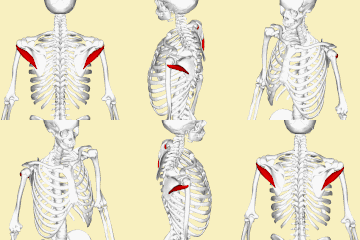
What Is Teres Minor?/Teres Minor is a narrow elongated muscle of the rotator cuff. The muscle originates from the lateral border and adjacent posterior surface of the corresponding right or left scapula and inserts at both the greater tubercle of the humerus and the posterior surface of the joint capsule.[rx]

The primary function of the teres minor is to modulate the action of the deltoid, preventing the humeral head from sliding upward as the arm is abducted. It also functions to rotate the humerus laterally. The teres minor is innervated by the axillary nerve.[rx]

At a Glance of Teres minor

  • Function – Lateral rotation of the arm, stabilize glenohumeral joint
  • Origin – Lateral/axillary border and adjacent posterior aspect of the scapula
  • Insertion – Inferior aspect of the greater tubercle on the humerus
  • Innervation – Axillary nerve (C5, C6)

[stextbox id=’custom’ defcaption=”true”]

Muscles on the dorsum of the left scapula, and the Triceps brachii muscle:
Details
Origin the lateral border of the scapula
Insertion inferior facet of the greater tubercle of the humerus
Artery posterior circumflex humeral artery and the circumflex scapular artery
Nerve axillary nerve (C5-C6)
Actions laterally rotates the arm, stabilizes the humerus
Identifiers
Latin musculus teres minor
TA A04.6.02.010
FMA 32550
Anatomical terms of muscle


[/stextbox]

What Is Teres Minor?

Nerve Supply of Teres Minor

The muscle is innervated by the posterior branch of the axillary nerve where it forms a pseudoganglion.[rx] A pseudoganglion has no nerve cells but nerve fibers are present. Damage to the fibers innervating the teres minor is clinically significant. Sometimes a group of muscle fibers from teres minor may be fused with infraspinatus.

Functions of Teres Minor

The infraspinatus and teres minor attach to the head of the humerus; as part of the rotator cuff, they help hold the humeral head in the glenoid cavity of the scapula. They work in tandem with the posterior deltoid to externally (laterally) rotate the humerus, as well as adduction. Teres Minor can produce only very small scapular plane adduction during maximal contraction with an adductor moment arm of approximately 0.2 cm at 45° of shoulder internal rotation and approximately 0.1 cm at 45° of shoulder external rotation.


References

What Is Teres Minor?


ByRx Harun

Lumbar Corset For Low Back Pain; Uses, Indications, Size

Lumbar Corset For Low Back Pain/Lumbar Corset is a device that is used to support your lower back. A corset is made of soft material. It is usually tightened with laces that may tie in the back, front, or side. You may also have metal pieces that keep the corset from bending easily. Some styles have straps that can be added to go over your shoulders. The straps will keep the corset up.

Lumbar corset products include all types of enhancements to improve their effectiveness. Originally, a lumbar corset brace featured double pulls on the sides that would be used to increase the amount of compression around your lumbar area.

Types of Lumbar Corset Brace

Our new lumbar-sacral corset styles include features for improved fit and performance around the lumbar region:

  • Pulley System – With today’s adjustable-style spine corsets, lumbar support and compression are adjusted through mechanical pulley systems attached to a single pulley cord.  These rank highest with customers for comfort and ease of use.
  • Fabric – Wearing a soft lumbar spine corset outside in the heat can feel like a sweaty, uncomfortable task.  Our medical-grade mesh fabrics breath to release heat for comfort and support.
  • Heights – Wearing the right height lumbar corset can make all the difference in comfort.  We carry 9” to 12” styles in a sized and adjustable one-size low back corset with a low-profile design to fit every size and shape comfortably.
  • Rigid braces – consist of a sturdy layer of material (typically cotton or canvas) that wraps around the torso, and includes rigid panels that cover the front, back, and sometimes sides of the brace. Some models include hard plastic or metal bars that cover the outside of the brace.
  • Semi-Rigid – A back brace that combines elements of both flexible and rigid orthoses may be referred to as a semi-rigid brace. For instance, a flexible lumbar belt may include additional padding or molded plastic inserts for some additional support and stability.
  • Soft Lumbar Corset – A soft lumbar corset is primarily used to provide low back muscular support. A lumbar corset may be used for individuals who have extensive arthritis or mild lumbar instability. Many times, additional muscular support provides low back pain relief. The corset may also act as a reminder to avoid excessive low back motion and may help encourage proper body mechanics, such as good posture.
  • Corset Braces (Elastic Braces) – This style of brace works by limiting back motion. Unlike rigid braces, they are made from light materials and are cool to wear. They function by limiting the user’s movements and working as a prompt for good body posture and the use of the leg muscles in cases when the user is picking something heavy up.
  • Hyper-extension braces – These lumbosacral supports are used after spinal fusion surgery. They are basically designed to prevent excessive bending of the back. This helps the spine to heal well. They are also proven to help in getting rid of frontal compression fractures by stretching the spine and helping it to stay constant. They treat pain that occurs when the upper back meets with the lower back. They limit the movement in these two regions of the spine.

Lumbar Corset For Herniated Disc

Indications of Lumbar Corset Brace

  • Low back pain syndrome– It involves lumbar vertebrae. It can be acute, subacute or chronic. An acute lower back injury may be caused by a traumatic event, like a car accident or a fall. In acute cases, the structures damaged will more than likely be soft tissue like intervertebral discs, muscles, ligaments, and tendons. With a serious accident, osteoporosis or other causes of weakened vertebral ones, vertebral fractures in the lumbar spine may also occur. Chronic lower back pain has a more insidious onset, occurring over a long period of time. Physical causes may include osteoarthritis, rheumatoid arthritis, degeneration of the discs between the vertebrae, or a spinal disc herniation, a vertebral fracture (such as from osteoporosis) or rarely, a tumor (including cancer) or infection. Flamingo lumbar corset belt gives you a great relief.
  • Post-operative healing – A rigid brace may be prescribed following spinal surgery with the goal of reducing pressure on the spinal column, adding stability, and limiting movements and micro-motions to provide a healthy healing environment. A questionnaire completed by spinal surgeons found the most common reason for post-surgical bracing was to limit activity and movement.
  • Isthmic spondylolisthesis Using a rigid back brace for isthmic spondylolisthesis has been shown to minimize the amount of vertebral slippage and significantly improve walking ability and pain levels. A rigid brace limits excess motion at the fractured segment, helping control pain and potentially lessening damage to the joints, nerves, and muscles.
  • Spondylolysis Similar to isthmic spondylolisthesis, a semi-rigid or rigid brace may be recommended to minimize painful micro-motions at a fractured vertebral level, reducing pain and potentially allowing the fracture to heal. It is thought that a lumbar brace can prevent or reduce vertebral slippage (isthmic spondylolisthesis).
  • OsteoarthritisInstability and painful micro-motions from spinal osteoarthritis may be reduced with the use of a rigid or semi-rigid back brace. Additionally, a brace can reduce pressure on the affected facet joints, alleviating pain and making everyday movements easier, such as moving from a seated to standing position, or vice versa.
  • Vertebral compression fractures – A rigid or semi-rigid back brace may be recommended for vertebral compression fractures in order to reduce micro-motions at the fracture or affected vertebral level, as well as reduce pressure on the spinal column.
  • Better for improve posture – our posture brace relieving tension and improving your posture. It works by training your muscles and spine to their natural alignment
  • Thickness uniform – elastic straps incorporating Velcro hook-and-loop fasteners allow tightening or loosening the degree of compression and pressure easily. Nonbulky and thin straps make the brace virtually invisible under clothing.
  • Degenerative disc disease/lumbar herniated disc – When a spinal disc breaks down and/or herniates, a rigid or semi-rigid back brace can help stabilize and reduce micro-motion at the affected spinal segment. A back brace may also be used to limit bending and twisting and assist in carrying some of the weight the discs normally withstand.
  • Spinal stenosis Bracing for lumbar spinal stenosis aims to reduce pressure on and limit micro-motions in the lower spine, both of which can cause nerve root irritation and radicular pain.
  • Posture support – This is the relative posture of the spine when one is in an upright position. For one to maintain a healthy back it is important for the spine to have proper alignment. Pain, injury, structural deformities and weakness can lead to an abnormal posture. Back braces can be used to maintain normal curvature and shape if the spine. It works by correcting the abnormal posture and reducing the chances of poor spine conditions.
  • Controlling of back painMost people who have back health problems complain of pain. This pain is caused by the movement of the spine in positions that are stressed and cause damage to the structure of the back. Back braces help to control the pain and limit the movements. They allow the damaged structures to heal. That also works by doing away with pain symptoms by compressing the abdominal area. This takes off the pressure from the intervertebral discs and other structures along the spinal column.
  • Immobilization – Some of the back conditions require the back to be stopped from moving for some period of time. These are such as fractures, and surgical fusions of the spine. The braces help to reduce motion around the affected area and allows healing to take place. Without these braces, the healing may take longer or even lack to take place. These braces work by reducing motion, such as rotation, flexion or extension depending on the type of injury.
  • Stabilizing the spine – This is needed, especially after spinal surgery. The back braces are used to help keep the spine in the correct position to allow a normal posture. The braces keep the back intact to allow healing of the spine with the correct position and avoid deformation.
  • Muscle tension and strain In relatively rare cases, a flexible back brace may be advised for low back muscle strain. A back brace can help alleviate muscle tension by reducing pressure on the spine, thereby reducing the amount of strength needed in the muscles to support the spinal column.
  • Provides enhanced support to the lumbar, sacral and pelvic region
  • Gives perfect immobilization to the lumbar, sacral and pelvic region
  • Offers improved comfort
  • Excellent design for posture improvement made by a professional posture corrector, this product is ergonomically effective in reducing back pain, lumbar pain and neck pain, promoting body muscle memory and correcting posture easily
  • Providing some added spinal support to take the pressure off of weakened or injured muscles
  • Moderately limiting the range of motion to allow for some bending and twisting. For instance, while wearing a flexible brace, it may be possible to bend forward enough to touch the top of the knee, but not past the knees
  • Reducing micro-motion at a loose or weakened joint through compression of the torso or pelvis (especially in lumbar and sacroiliac joint belts)
  • Relaxing tense muscles through the warmth of the brace


How Do I Use a Lumbar Corset Brace?

Before you get a lumbar corset, we recommend you contact a healthcare provider. You want to make sure you get the best support and getting consultation will help you understand which areas should be supported and how.

  • Talk to your healthcare provider about the fit of your corset – It is very important that your corset is the right size for you and that it fits properly. The corset should cover the areas that need support. Your healthcare provider will tell you how long the corset should be and how tight to make it.
  • Wear your corset as directed – You may need to wear your corset during certain activities or all the time. For example, you may need to wear it during any activity that could injure your back. Check the fit of the corset often. If it does not fit properly or moves out of place, it could cause more injury. Your healthcare provider may recommend that you wear a T-shirt under the corset to protect your skin.
  • Care for your corset – Inspect the corset often. Do not wear your corset if it is damaged or broken. You may need a new corset if the strings, laces, or buckles break.
  • Start to strengthen your lower back as directed – You may need to work with a physical therapist

Three Sizes – Choose Yours of Lumbar Corset

Standing in a relaxed position, measure the waist at the level of navel (belly button). Do not assume you know your size. Do not select by pants size.

  • Small Waist – 26″- 40″ / 66 – 100 cm; Typical Weight: up to 200 lbs
  • Medium – 40″ – 60″ / 100 – 152 cm; Typical Weight: 200 – 330 lbs
  • Large – 60″ – 72″ / 152 – 183 cm; Typical Weight: 330+ lbs

References


ByRx Harun

Lumbar Corset Back Brace; Uses, Indications, Size

Lumbar Corset Back Brace/Lumbar Corset is a device that is used to support your lower back. A corset is made of soft material. It is usually tightened with laces that may tie in the back, front, or side. You may also have metal pieces that keep the corset from bending easily. Some styles have straps that can be added to go over your shoulders. The straps will keep the corset up.

Lumbar corset products include all types of enhancements to improve their effectiveness. Originally, a lumbar corset brace featured double pulls on the sides that would be used to increase the amount of compression around your lumbar area.

Types of Lumbar Corset

Our new lumbar-sacral corset styles include features for improved fit and performance around the lumbar region:

  • Pulley System – With today’s adjustable-style spine corsets, lumbar support and compression are adjusted through mechanical pulley systems attached to a single pulley cord.  These rank highest with customers for comfort and ease of use.
  • Fabric – Wearing a soft lumbar spine corset outside in the heat can feel like a sweaty, uncomfortable task.  Our medical-grade mesh fabrics breath to release heat for comfort and support.
  • Heights – Wearing the right height lumbar corset can make all the difference in comfort.  We carry 9” to 12” styles in a sized and adjustable one-size low back corset with a low-profile design to fit every size and shape comfortably.
  • Rigid braces – consist of a sturdy layer of material (typically cotton or canvas) that wraps around the torso, and includes rigid panels that cover the front, back, and sometimes sides of the brace. Some models include hard plastic or metal bars that cover the outside of the brace.
  • Semi-Rigid – A back brace that combines elements of both flexible and rigid orthoses may be referred to as a semi-rigid brace. For instance, a flexible lumbar belt may include additional padding or molded plastic inserts for some additional support and stability.
  • Soft Lumbar Corset – A soft lumbar corset is primarily used to provide low back muscular support. A lumbar corset may be used for individuals who have extensive arthritis or mild lumbar instability. Many times, additional muscular support provides low back pain relief. The corset may also act as a reminder to avoid excessive low back motion and may help encourage proper body mechanics, such as good posture.
  • Corset Braces (Elastic Braces) – This style of brace works by limiting back motion. Unlike rigid braces, they are made from light materials and are cool to wear. They function by limiting the user’s movements and working as a prompt for good body posture and the use of the leg muscles in cases when the user is picking something heavy up.
  • Hyper-extension braces – These lumbosacral supports are used after spinal fusion surgery. They are basically designed to prevent excessive bending of the back. This helps the spine to heal well. They are also proven to help in getting rid of frontal compression fractures by stretching the spine and helping it to stay constant. They treat pain that occurs when the upper back meets with the lower back. They limit the movement in these two regions of the spine.

Indications of Lumbar Corset

  • Low back pain syndrome– It involves lumbar vertebrae. It can be acute, subacute or chronic. An acute lower back injury may be caused by a traumatic event, like a car accident or a fall. In acute cases, the structures damaged will more than likely be soft tissue like intervertebral discs, muscles, ligaments, and tendons. With a serious accident, osteoporosis or other causes of weakened vertebral ones, vertebral fractures in the lumbar spine may also occur. Chronic lower back pain has a more insidious onset, occurring over a long period of time. Physical causes may include osteoarthritis, rheumatoid arthritis, degeneration of the discs between the vertebrae, or a spinal disc herniation, a vertebral fracture (such as from osteoporosis) or rarely, a tumor (including cancer) or infection. Flamingo lumbar corset belt gives you a great relief.
  • Post-operative healing – A rigid brace may be prescribed following spinal surgery with the goal of reducing pressure on the spinal column, adding stability, and limiting movements and micro-motions to provide a healthy healing environment. A questionnaire completed by spinal surgeons found the most common reason for post-surgical bracing was to limit activity and movement.
  • Isthmic spondylolisthesis Using a rigid back brace for isthmic spondylolisthesis has been shown to minimize the amount of vertebral slippage and significantly improve walking ability and pain levels. A rigid brace limits excess motion at the fractured segment, helping control pain and potentially lessening damage to the joints, nerves, and muscles.
  • Spondylolysis Similar to isthmic spondylolisthesis, a semi-rigid or rigid brace may be recommended to minimize painful micro-motions at a fractured vertebral level, reducing pain and potentially allowing the fracture to heal. It is thought that a lumbar brace can prevent or reduce vertebral slippage (isthmic spondylolisthesis).
  • OsteoarthritisInstability and painful micro-motions from spinal osteoarthritis may be reduced with the use of a rigid or semi-rigid back brace. Additionally, a brace can reduce pressure on the affected facet joints, alleviating pain and making everyday movements easier, such as moving from a seated to standing position, or vice versa.
  • Vertebral compression fractures – A rigid or semi-rigid back brace may be recommended for vertebral compression fractures in order to reduce micro-motions at the fracture or affected vertebral level, as well as reduce pressure on the spinal column.
  • Better for improve posture – our posture brace relieving tension and improving your posture. It works by training your muscles and spine to their natural alignment
  • Thickness uniform – elastic straps incorporating Velcro hook-and-loop fasteners allow tightening or loosening the degree of compression and pressure easily. Nonbulky and thin straps make the brace virtually invisible under clothing.
  • Degenerative disc disease/lumbar herniated disc – When a spinal disc breaks down and/or herniates, a rigid or semi-rigid back brace can help stabilize and reduce micro-motion at the affected spinal segment. A back brace may also be used to limit bending and twisting and assist in carrying some of the weight the discs normally withstand.
  • Spinal stenosis Bracing for lumbar spinal stenosis aims to reduce pressure on and limit micro-motions in the lower spine, both of which can cause nerve root irritation and radicular pain.
  • Posture support – This is the relative posture of the spine when one is in an upright position. For one to maintain a healthy back it is important for the spine to have proper alignment. Pain, injury, structural deformities and weakness can lead to an abnormal posture. Back braces can be used to maintain normal curvature and shape if the spine. It works by correcting the abnormal posture and reducing the chances of poor spine conditions.
  • Controlling of back pain – Most people who have back health problems complain of pain. This pain is caused by the movement of the spine in positions that are stressed and cause damage to the structure of the back. Back braces help to control the pain and limit the movements. They allow the damaged structures to heal. That also works by doing away with pain symptoms by compressing the abdominal area. This takes off the pressure from the intervertebral discs and other structures along the spinal column.
  • Immobilization – Some of the back conditions require the back to be stopped from moving for some period of time. These are such as fractures, and surgical fusions of the spine. The braces help to reduce motion around the affected area and allows healing to take place. Without these braces, the healing may take longer or even lack to take place. These braces work by reducing motion, such as rotation, flexion or extension depending on the type of injury.
  • Stabilizing the spine – This is needed, especially after spinal surgery. The back braces are used to help keep the spine in the correct position to allow a normal posture. The braces keep the back intact to allow healing of the spine with the correct position and avoid deformation.
  • Muscle tension and strain In relatively rare cases, a flexible back brace may be advised for low back muscle strain. A back brace can help alleviate muscle tension by reducing pressure on the spine, thereby reducing the amount of strength needed in the muscles to support the spinal column.
  • Provides enhanced support to the lumbar, sacral and pelvic region
  • Gives perfect immobilization to the lumbar, sacral and pelvic region
  • Offers improved comfort
  • Excellent design for posture improvement made by a professional posture corrector, this product is ergonomically effective in reducing back pain, lumbar pain and neck pain, promoting body muscle memory and correcting posture easily
  • Providing some added spinal support to take the pressure off of weakened or injured muscles
  • Moderately limiting the range of motion to allow for some bending and twisting. For instance, while wearing a flexible brace, it may be possible to bend forward enough to touch the top of the knee, but not past the knees
  • Reducing micro-motion at a loose or weakened joint through compression of the torso or pelvis (especially in lumbar and sacroiliac joint belts)
  • Relaxing tense muscles through the warmth of the brace


How Do I Use a Lumbar Corset?

Before you get a lumbar corset, we recommend you contact a healthcare provider. You want to make sure you get the best support and getting consultation will help you understand which areas should be supported and how.

  • Talk to your healthcare provider about the fit of your corset – It is very important that your corset is the right size for you and that it fits properly. The corset should cover the areas that need support. Your healthcare provider will tell you how long the corset should be and how tight to make it.
  • Wear your corset as directed – You may need to wear your corset during certain activities or all the time. For example, you may need to wear it during any activity that could injure your back. Check the fit of the corset often. If it does not fit properly or moves out of place, it could cause more injury. Your healthcare provider may recommend that you wear a T-shirt under the corset to protect your skin.
  • Care for your corset – Inspect the corset often. Do not wear your corset if it is damaged or broken. You may need a new corset if the strings, laces, or buckles break.
  • Start to strengthen your lower back as directed – You may need to work with a physical therapist

Three Sizes – Choose Yours of Lumbar Corset

Standing in a relaxed position, measure the waist at the level of navel (belly button). Do not assume you know your size. Do not select by pants size.

  • Small Waist – 26″- 40″ / 66 – 100 cm; Typical Weight: up to 200 lbs
  • Medium – 40″ – 60″ / 100 – 152 cm; Typical Weight: 200 – 330 lbs
  • Large – 60″ – 72″ / 152 – 183 cm; Typical Weight: 330+ lbs

References


ByRx Harun

Functions of Sternocleidomastoid Muscle

Functions of Sternocleidomastoid Muscle/Sternocleidomastoid Muscle is one of the largest and most superficial cervical muscles. The primary actions of the muscle are a rotation of the head to the opposite side and flexion of the neck. The sternocleidomastoid is innervated by the accessory nerve. It is given the name sternocleidomastoid because it originates at the manubrium of the sternum (Sterno-) and the clavicle (cleido-), and has an insertion at the mastoid process of the temporal bone of the skull.

The sternocleidomastoid muscle originates from the sternum and clavicle and extends in a posterior diagonal fashion to insert onto the ipsilateral mastoid process and lateral portion of the occipital ridge. The muscles work together to flex the neck and work individually to turn the neck and elevate the chin. With the head rotated away from the observer, the sternocleidomastoid muscle becomes a prominent surface landmark that divides the neck into the anterior and posterior triangles. The muscle and the mastoid process are important landmarks used to identify the spinal accessory nerve at its most exposed location in the posterior triangle

What Is Sternocleidomastoid Muscle?

Anatomy of Sternocleidomastoid Muscle

[stextbox id=’info’]

​ sternocleidomastoid (right muscle shown) can be clearly observed when rotating the head.
Details
Pronunciation (/ˌstɜːrnˌkldəˈmæsˌtɔɪd,-nə-,-d-/)
Origin The manubrium and medial portion of the clavicle
Insertion Mastoid process of the temporal bone, superior nuchal line
Artery Occipital artery and the superior thyroid artery
Nerve Motor: spinal accessory nerve
sensory: cervical plexus
Proprioceptive: C2, C3 of ventral rami
Actions Unilaterally: contralateral cervical rotation, ipsilateral cervical flexion Bilaterally: cervical flexion, the elevation of sternum and assists in forced inhalation.
Identifiers
Latin Musculus sternocleidomastoideus
TA A04.2.01.008
FMA 13407
Anatomical terms of muscle


[/stextbox]

The sternocleidomastoid muscle originates from two locations: the manubrium of the sternum and the clavicle. It travels obliquely across the side of the neck and inserts at the mastoid process of the temporal bone of the skull. The sternocleidomastoid is thick and narrow at its center, and broader and thinner at either end.

The sternocleidomastoid muscle (SCM) divides the neck area into an anterior triangle and a posterior triangle. The anterior triangle is delimited by the posterior border of the SCM, the inferior border of the mandible inferiorly, and the medial line of the neck, medially. In the anterior triangle, we find the suprahyoid and infrahyoid muscles. The posterior triangle is delimited by the SCM anteriorly, by the clavicle inferiorly, and by the trapezius muscle posteriorly. Scalene muscles reside in the posterior triangle. The SCM is a large and easily recognizable and palpable muscle.

SCM can be divided into four portions

  • Sterno-mastoid
  • Sterno-occipital
  • Cleido-mastoid
  • Cleido-occipital

The muscle originates from the upper edge of the sternal manubrium, from the medial quarter of the upper face of the clavicle; the two muscle heads merge into a single muscle belly that is directed upwards and laterally. Insertions arrive at the mastoid process of the temporal bone and at the anterior portion of the superior nuchal line. SCM has fibers arranged in parallel; it is not a pennate muscle. SCM expresses greater strength and thickness in men than women; the sternomastoid portion is the muscle area that develops a greater percentage of contractile strength than the other portions. The cleido-occipital portion is the muscular area where less force develops.

Nerve supply of Sternocleidomastoid Muscle

The sternocleidomastoid is innervated by the accessory nerve of the same side. It supplies only motor fibers. The cervical plexus supplies sensation, including proprioception, from the ventral primary rami of C2 and C7.

Blood supply

The arterial blood to the sternocleidomastoid is mostly supplied by the branches of the external carotid artery, such as the sternocleidomastoid branch of the superior thyroid artery and the sternocleidomastoid branch of the occipital artery. The venous drainage from the sternocleidomastoid is provided by the sternocleidomastoid vein, which flows into the internal jugular or the superior thyroid vein.

Functions of Sternocleidomastoid Muscle

  • The function of this muscle is to rotate the head to the opposite side or obliquely rotate the head. It also flexes the neck. When both sides of the muscle act together, it flexes the neck and extends the head. When one side acts alone, it causes the head to rotate to the opposite side and flexes laterally to the same side (ipsilaterally). It also acts as an accessory muscle of respiration, along with the scalene muscles of the neck.
  • If the cervical spine is not fixed, this bilateral contraction determines a hyperlordosis of the cervical spine with an extension of the head and a bending of the cervical spine on the dorsal one.
  • If the cervical spine is rigid and rectilinear due to the contraction of the paravertebral muscles, the simultaneous contraction of the SCM determines the flexion of the cervical spine on the dorsal spine and a flexion of the head forward.


References

Functions of Sternocleidomastoid Muscle


ByRx Harun

What Is Sternocleidomastoid Muscle? Functions

What Is Sternocleidomastoid Muscle?/Sternocleidomastoid Muscle is one of the largest and most superficial cervical muscles. The primary actions of the muscle are a rotation of the head to the opposite side and flexion of the neck. The sternocleidomastoid is innervated by the accessory nerve. It is given the name sternocleidomastoid because it originates at the manubrium of the sternum (Sterno-) and the clavicle (cleido-), and has an insertion at the mastoid process of the temporal bone of the skull.

The sternocleidomastoid muscle originates from the sternum and clavicle and extends in a posterior diagonal fashion to insert onto the ipsilateral mastoid process and lateral portion of the occipital ridge. The muscles work together to flex the neck and work individually to turn the neck and elevate the chin. With the head rotated away from the observer, the sternocleidomastoid muscle becomes a prominent surface landmark that divides the neck into the anterior and posterior triangles. The muscle and the mastoid process are important landmarks used to identify the spinal accessory nerve at its most exposed location in the posterior triangle

What Is Sternocleidomastoid Muscle?

Anatomy of Sternocleidomastoid Muscle

[stextbox id=’info’]

​ sternocleidomastoid (right muscle shown) can be clearly observed when rotating the head.
Details
Pronunciation (/ˌstɜːrnˌkldəˈmæsˌtɔɪd,-nə-,-d-/)
Origin The manubrium and medial portion of the clavicle
Insertion Mastoid process of the temporal bone, superior nuchal line
Artery Occipital artery and the superior thyroid artery
Nerve Motor: spinal accessory nerve
sensory: cervical plexus
Proprioceptive: C2, C3 of ventral rami
Actions Unilaterally: contralateral cervical rotation, ipsilateral cervical flexion Bilaterally: cervical flexion, the elevation of sternum and assists in forced inhalation.
Identifiers
Latin Musculus sternocleidomastoideus
TA A04.2.01.008
FMA 13407
Anatomical terms of muscle


[/stextbox]

The sternocleidomastoid muscle originates from two locations: the manubrium of the sternum and the clavicle. It travels obliquely across the side of the neck and inserts at the mastoid process of the temporal bone of the skull. The sternocleidomastoid is thick and narrow at its center, and broader and thinner at either end.

The sternocleidomastoid muscle (SCM) divides the neck area into an anterior triangle and a posterior triangle. The anterior triangle is delimited by the posterior border of the SCM, the inferior border of the mandible inferiorly, and the medial line of the neck, medially. In the anterior triangle, we find the suprahyoid and infrahyoid muscles. The posterior triangle is delimited by the SCM anteriorly, by the clavicle inferiorly, and by the trapezius muscle posteriorly. Scalene muscles reside in the posterior triangle. The SCM is a large and easily recognizable and palpable muscle.

SCM can be divided into four portions

  • Sterno-mastoid
  • Sterno-occipital
  • Cleido-mastoid
  • Cleido-occipital

The muscle originates from the upper edge of the sternal manubrium, from the medial quarter of the upper face of the clavicle; the two muscle heads merge into a single muscle belly that is directed upwards and laterally. Insertions arrive at the mastoid process of the temporal bone and at the anterior portion of the superior nuchal line. SCM has fibers arranged in parallel; it is not a pennate muscle. SCM expresses greater strength and thickness in men than women; the sternomastoid portion is the muscle area that develops a greater percentage of contractile strength than the other portions. The cleido-occipital portion is the muscular area where less force develops.

Nerve supply of Sternocleidomastoid Muscle

The sternocleidomastoid is innervated by the accessory nerve of the same side. It supplies only motor fibers. The cervical plexus supplies sensation, including proprioception, from the ventral primary rami of C2 and C7.

Blood supply

The arterial blood to the sternocleidomastoid is mostly supplied by the branches of the external carotid artery, such as the sternocleidomastoid branch of the superior thyroid artery and the sternocleidomastoid branch of the occipital artery. The venous drainage from the sternocleidomastoid is provided by the sternocleidomastoid vein, which flows into the internal jugular or the superior thyroid vein.

Functions of Sternocleidomastoid Muscle

  • The function of this muscle is to rotate the head to the opposite side or obliquely rotate the head. It also flexes the neck. When both sides of the muscle act together, it flexes the neck and extends the head. When one side acts alone, it causes the head to rotate to the opposite side and flexes laterally to the same side (ipsilaterally). It also acts as an accessory muscle of respiration, along with the scalene muscles of the neck.
  • If the cervical spine is not fixed, this bilateral contraction determines a hyperlordosis of the cervical spine with an extension of the head and a bending of the cervical spine on the dorsal one.
  • If the cervical spine is rigid and rectilinear due to the contraction of the paravertebral muscles, the simultaneous contraction of the SCM determines the flexion of the cervical spine on the dorsal spine and a flexion of the head forward.


References

What Is Sternocleidomastoid Muscle?


ByRx Harun

Sternocleidomastoid Muscle; Origin, Nerve Supply, Function

Sternocleidomastoid Muscle is one of the largest and most superficial cervical muscles. The primary actions of the muscle are a rotation of the head to the opposite side and flexion of the neck. The sternocleidomastoid is innervated by the accessory nerve. It is given the name sternocleidomastoid because it originates at the manubrium of the sternum (Sterno-) and the clavicle (cleido-), and has an insertion at the mastoid process of the temporal bone of the skull.

The sternocleidomastoid muscle originates from the sternum and clavicle and extends in a posterior diagonal fashion to insert onto the ipsilateral mastoid process and lateral portion of the occipital ridge. The muscles work together to flex the neck and work individually to turn the neck and elevate the chin. With the head rotated away from the observer, the sternocleidomastoid muscle becomes a prominent surface landmark that divides the neck into the anterior and posterior triangles. The muscle and the mastoid process are important landmarks used to identify the spinal accessory nerve at its most exposed location in the posterior triangle

Sternocleidomastoid Muscle

Anatomy of Sternocleidomastoid Muscle

[stextbox id=’info’]

​ sternocleidomastoid (right muscle shown) can be clearly observed when rotating the head.
Details
Pronunciation (/ˌstɜːrnˌkldəˈmæsˌtɔɪd,-nə-,-d-/)
Origin The manubrium and medial portion of the clavicle
Insertion Mastoid process of the temporal bone, superior nuchal line
Artery Occipital artery and the superior thyroid artery
Nerve Motor: spinal accessory nerve
sensory: cervical plexus
Proprioceptive: C2, C3 of ventral rami
Actions Unilaterally: contralateral cervical rotation, ipsilateral cervical flexion Bilaterally: cervical flexion, the elevation of sternum and assists in forced inhalation.
Identifiers
Latin Musculus sternocleidomastoideus
TA A04.2.01.008
FMA 13407
Anatomical terms of muscle


[/stextbox]

The sternocleidomastoid muscle originates from two locations: the manubrium of the sternum and the clavicle. It travels obliquely across the side of the neck and inserts at the mastoid process of the temporal bone of the skull. The sternocleidomastoid is thick and narrow at its center, and broader and thinner at either end.

The sternocleidomastoid muscle (SCM) divides the neck area into an anterior triangle and a posterior triangle. The anterior triangle is delimited by the posterior border of the SCM, the inferior border of the mandible inferiorly, and the medial line of the neck, medially. In the anterior triangle, we find the suprahyoid and infrahyoid muscles. The posterior triangle is delimited by the SCM anteriorly, by the clavicle inferiorly, and by the trapezius muscle posteriorly. Scalene muscles reside in the posterior triangle. The SCM is a large and easily recognizable and palpable muscle.

SCM can be divided into four portions

  • Sterno-mastoid
  • Sterno-occipital
  • Cleido-mastoid
  • Cleido-occipital

The muscle originates from the upper edge of the sternal manubrium, from the medial quarter of the upper face of the clavicle; the two muscle heads merge into a single muscle belly that is directed upwards and laterally. Insertions arrive at the mastoid process of the temporal bone and at the anterior portion of the superior nuchal line. SCM has fibers arranged in parallel; it is not a pennate muscle. SCM expresses greater strength and thickness in men than women; the sternomastoid portion is the muscle area that develops a greater percentage of contractile strength than the other portions. The cleido-occipital portion is the muscular area where less force develops.

Nerve supply of Sternocleidomastoid Muscle

The sternocleidomastoid is innervated by the accessory nerve of the same side. It supplies only motor fibers. The cervical plexus supplies sensation, including proprioception, from the ventral primary rami of C2 and C7.

Blood supply

The arterial blood to the sternocleidomastoid is mostly supplied by the branches of the external carotid artery, such as the sternocleidomastoid branch of the superior thyroid artery and the sternocleidomastoid branch of the occipital artery. The venous drainage from the sternocleidomastoid is provided by the sternocleidomastoid vein, which flows into the internal jugular or the superior thyroid vein.

Functions of Sternocleidomastoid Muscle

  • The function of this muscle is to rotate the head to the opposite side or obliquely rotate the head. It also flexes the neck. When both sides of the muscle act together, it flexes the neck and extends the head. When one side acts alone, it causes the head to rotate to the opposite side and flexes laterally to the same side (ipsilaterally). It also acts as an accessory muscle of respiration, along with the scalene muscles of the neck.
  • If the cervical spine is not fixed, this bilateral contraction determines a hyperlordosis of the cervical spine with an extension of the head and a bending of the cervical spine on the dorsal one.
  • If the cervical spine is rigid and rectilinear due to the contraction of the paravertebral muscles, the simultaneous contraction of the SCM determines the flexion of the cervical spine on the dorsal spine and a flexion of the head forward.


References

Sternocleidomastoid Muscle


ByRx Harun

Functions of Subclavius Muscle, Origin

Functions of Subclavius Muscle/Subclavius Muscle is a small triangular muscle, placed between the clavicle and the first rib. Along with the pectoralis major and pectoralis minor muscles, the subclavius muscle makes up the Anterior Axioappendicular Muscles also known as an anterior wall of the axilla.

At a Glance of Subclavius

  • Function – Depression and stabilization of the clavicle
  • Origin – First rib medially
  • Insertion – Middle of the clavicle, inferiorly
  • Innervation – Nerve to subclavius (C5, C6)

[stextbox id=’info’]

Deep muscles of the chest and front of the arm, with the boundaries of the axilla. (Subclavius visible at upper left, above the first rib.)
Details
Origin first rib and cartilage
Insertion subclavian groove of the clavicle (inferior surface of middle one-third of the clavicle)
Artery thoracoacromial trunk, clavicular branch
Nerve subclavian nerve
Actions depression of clavicle
elevation of the first rib
Identifiers
Latin musculus subclavius
TA A04.4.01.007
FMA 13410
Anatomical terms of muscle


[/stextbox]

Subclavius Muscle

Anatomy of Subclavius Muscle

It arises by a short, thick tendon from the first rib and its cartilage at their junction, in front of the costoclavicular ligament. The fleshy fibers proceed obliquely superolateral, to be inserted into the groove on the undersurface of the clavicle.

Nerve Supply of Subclavius Muscle

  • The nerve to subclavius (or subclavian nerve) innervates the muscle. This arises from the junction of the fifth and sixth cervical nerves, from the Superior/upper trunk of the brachial plexus.
  • Insertion into the coracoid process instead of the clavicle or into both clavicle and coracoid process. Sternoscapular fasciculus to the upper border of the scapula. Sternoclavicular from manubrium to clavicle between the pectoralis major and coracoclavicular fascia.[rx]

Functions of Subclavius Muscle

  • The subclavius depresses the shoulder, carrying it downward and forward. It draws the clavicle inferiorly as well as anteriorly.
  • The subclavius protects the underlying brachial plexus and subclavian vessels from a broken clavicle – the most frequently broken long bone.
  • The main task of the subclavius muscle is the active stabilization of the clavicle in the sternoclavicular joint during movements of the shoulder and arm. Furthermore, its contraction leads to a depression of the clavicle and elevation of the first rib respectively. These movements, however, play a rather subordinate role.


References

Functions of Subclavius Muscle


ByRx Harun

What Is Subclavius Muscle? Insertion, Nerve Supply

What Is Subclavius Muscle?/Subclavius Muscle is a small triangular muscle, placed between the clavicle and the first rib. Along with the pectoralis major and pectoralis minor muscles, the subclavius muscle makes up the Anterior Axioappendicular Muscles also known as an anterior wall of the axilla.

At a Glance of Subclavius

  • Function – Depression and stabilization of the clavicle
  • Origin – First rib medially
  • Insertion – Middle of the clavicle, inferiorly
  • Innervation – Nerve to subclavius (C5, C6)

[stextbox id=’info’]

Deep muscles of the chest and front of the arm, with the boundaries of the axilla. (Subclavius visible at upper left, above the first rib.)
Details
Origin first rib and cartilage
Insertion subclavian groove of the clavicle (inferior surface of middle one-third of the clavicle)
Artery thoracoacromial trunk, clavicular branch
Nerve subclavian nerve
Actions depression of clavicle
elevation of the first rib
Identifiers
Latin musculus subclavius
TA A04.4.01.007
FMA 13410
Anatomical terms of muscle


[/stextbox]

Subclavius Muscle

Anatomy of Subclavius Muscle

It arises by a short, thick tendon from the first rib and its cartilage at their junction, in front of the costoclavicular ligament. The fleshy fibers proceed obliquely superolateral, to be inserted into the groove on the undersurface of the clavicle.

Nerve Supply of Subclavius Muscle

  • The nerve to subclavius (or subclavian nerve) innervates the muscle. This arises from the junction of the fifth and sixth cervical nerves, from the Superior/upper trunk of the brachial plexus.
  • Insertion into the coracoid process instead of the clavicle or into both clavicle and coracoid process. Sternoscapular fasciculus to the upper border of the scapula. Sternoclavicular from manubrium to clavicle between the pectoralis major and coracoclavicular fascia.[rx]

Functions of Subclavius Muscle

  • The subclavius depresses the shoulder, carrying it downward and forward. It draws the clavicle inferiorly as well as anteriorly.
  • The subclavius protects the underlying brachial plexus and subclavian vessels from a broken clavicle – the most frequently broken long bone.
  • The main task of the subclavius muscle is the active stabilization of the clavicle in the sternoclavicular joint during movements of the shoulder and arm. Furthermore, its contraction leads to a depression of the clavicle and elevation of the first rib respectively. These movements, however, play a rather subordinate role.


References

What Is Subclavius Muscle?


ByRx Harun

Subclavius Muscle; Origin, Nerve Supply, Functions

Subclavius Muscle is a small triangular muscle, placed between the clavicle and the first rib. Along with the pectoralis major and pectoralis minor muscles, the subclavius muscle makes up the Anterior Axioappendicular Muscles also known as an anterior wall of the axilla.

At a Glance of Subclavius

  • Function – Depression and stabilization of the clavicle
  • Origin – First rib medially
  • Insertion – Middle of the clavicle, inferiorly
  • Innervation – Nerve to subclavius (C5, C6)

[stextbox id=’info’]

Deep muscles of the chest and front of the arm, with the boundaries of the axilla. (Subclavius visible at upper left, above the first rib.)
Details
Origin first rib and cartilage
Insertion subclavian groove of the clavicle (inferior surface of middle one-third of the clavicle)
Artery thoracoacromial trunk, clavicular branch
Nerve subclavian nerve
Actions depression of clavicle
elevation of the first rib
Identifiers
Latin musculus subclavius
TA A04.4.01.007
FMA 13410
Anatomical terms of muscle


[/stextbox]

Subclavius Muscle

Anatomy of Subclavius Muscle

It arises by a short, thick tendon from the first rib and its cartilage at their junction, in front of the costoclavicular ligament. The fleshy fibers proceed obliquely superolateral, to be inserted into the groove on the undersurface of the clavicle.

Nerve Supply of Subclavius Muscle

  • The nerve to subclavius (or subclavian nerve) innervates the muscle. This arises from the junction of the fifth and sixth cervical nerves, from the Superior/upper trunk of the brachial plexus.
  • Insertion into the coracoid process instead of the clavicle or into both clavicle and coracoid process. Sternoscapular fasciculus to the upper border of the scapula. Sternoclavicular from manubrium to clavicle between the pectoralis major and coracoclavicular fascia.[rx]

Functions of Subclavius Muscle

  • The subclavius depresses the shoulder, carrying it downward and forward. It draws the clavicle inferiorly as well as anteriorly.
  • The subclavius protects the underlying brachial plexus and subclavian vessels from a broken clavicle – the most frequently broken long bone.
  • The main task of the subclavius muscle is the active stabilization of the clavicle in the sternoclavicular joint during movements of the shoulder and arm. Furthermore, its contraction leads to a depression of the clavicle and elevation of the first rib respectively. These movements, however, play a rather subordinate role.


References

Subclavius Muscle


Translate »